„Dieser Deal hätte nicht abgeschlossen werden sollen": Der CS-zu-Sales ICP-Feedback-Loop ohne Schuldzuweisungen
Turn this article into takeaways for your work.


Each assistant summarizes the article only for you and suggests best practices for your work.
Der Account ist in Monat 11 abgewandert. In der Nachbesprechung hatte das CSM-Team es bereits kommen sehen. Es hatte schon seit dem Kickoff-Call gewusst, dass dieser Kunde nie zu Mehrwert gelangen würde. Der Use Case passte nicht. Das Team war zu klein, um die Implementierung durchzuführen. Der Champion hatte keine echte Budgetautorität und wäre sowieso innerhalb von sechs Monaten gegangen.
Aber niemand hatte eine saubere Art zu sagen „dieser Deal hätte nicht abgeschlossen werden sollen." Nicht dem AE gegenüber, der damit sein Quota erfüllt hat. Nicht dem Sales-Leader gegenüber, der ihn gefeiert hat. Nicht dem Marketing, dessen ICP-Definition die Bedingungen dafür schuf, dass er überhaupt in den Funnel gelangte.
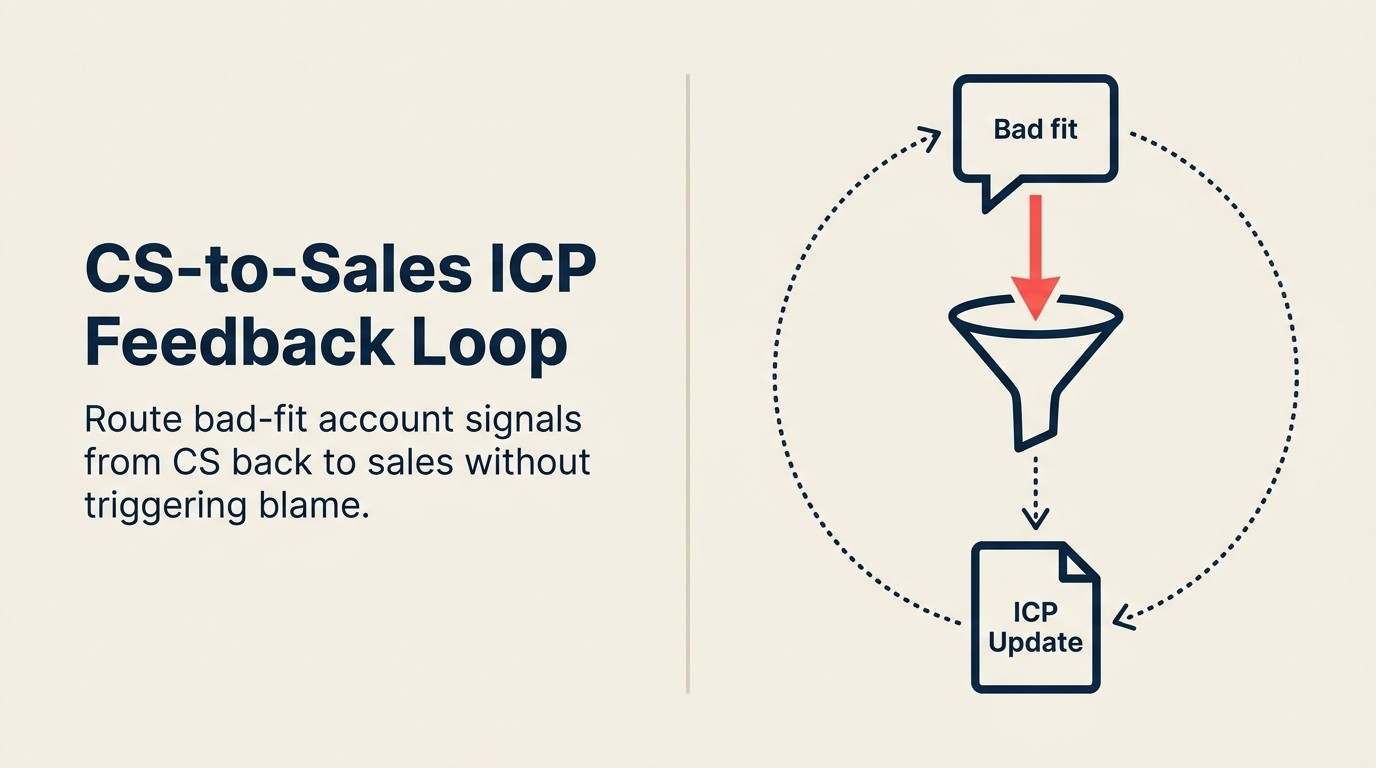
Also fließt das Feedback nicht. Dasselbe Profil wird nächstes Quartal wieder qualifiziert. CS verbrennt mehr Kapazität für einen weiteren Account, der keinen Mehrwert erreichen kann. Und der Zyklus wiederholt sich: still, teuer und ohne dass jemand technisch gesehen falsch liegt. Die McKinsey-Forschung zur Net Revenue Retention zeigt, dass NRR (Net Revenue Retention) zu den stärksten Prädiktoren für die Bewertung von B2B SaaS-Unternehmen zählt, und Bad-Fit-Churn gehört zu den schnellsten Wegen, sie zu drücken. Das Shared ICP Framework, das Marketing und Sales gemeinsam aufgebaut haben, ist der Ort, an dem dieser Zyklus durchbrochen wird, aber nur, wenn CS-Daten tatsächlich den Definitions-Review erreichen.
Das ist der am meisten vermiedene Feedback-Loop im SaaS. So führen Sie ihn ohne Streit.
Das „Bad Fit"-Feedback-Protokoll ist ein fünfstufiger Quartalsprozess, der CS-Churn-Erkenntnisse an Sales und Marketing zurückleitet, ohne Abwehrhaltung auszulösen. Es funktioniert, indem Churn-Fälle in drei Grundursachen eingeteilt werden: falscher ICP, misalignierter Use Case und überversprochen. Jede Kategorie hat einen definierten Owner, eine definierte Lösung und eine definierte Eskalationsschwelle, die einen ICP-Review mit Marketing, AE-Coaching oder Änderungen am Deal-Genehmigungsprozess auslöst.
Warum dieser Feedback-Loop der am meisten vermiedene im SaaS ist
Es gibt drei Parteien, die jeden Grund haben, dieses Gespräch nicht zu wollen.
Sales-Leader schützen AE-Urteilsvermögen und Quota-Erreichung. Wenn ein CS-Team sagt „dieser Account war von Anfang an ein schlechter Fit", ist die implizite Anschuldigung, dass der AE, der ihn abgeschlossen hat, entweder nicht richtig qualifiziert hat oder einen Deal über die Linie gedrückt hat, der das nicht hätte tun sollen. Keine der beiden Interpretationen ist für einen Sales-Leader öffentlich angenehm anzunehmen. Und wenn der AE mit diesem Deal sein Quota erfüllt hat, hat die Organisation das Verhalten bereits belohnt.
CS-Teams haben keinen definierten Kanal, um das Signal weiterzuleiten. Schlechte Fit-Beobachtungen stecken in Churn-Reports, nicht in Sales Playbooks. Es gibt keinen offiziellen Ort für einen CSM-Team-Lead, um eine „dieser Account war nicht zu gewinnen"-Notiz einzureichen, die den Sales Enablement Manager erreicht, geschweige denn einen ICP-Review auslöst. Sie taucht in Nebengesprächen auf. Sie geht in eine Churn-Analyse, die niemand liest. Sie erreicht nicht die Personen, die Qualifizierungsentscheidungen treffen.
Marketing möchte den ICP nicht in Frage gestellt sehen. Die ICP-Definition, die Sales verwendet, stammt oft von Marketing, basierend auf Kohortenanalyse, Forschung und Positionierungsarbeit. Wenn Post-Sale-Daten darauf hindeuten, dass der ICP eine falsche Annahme eingebaut hat, bittet man Marketing, ein Lieferergebnis zu überarbeiten, das es bereits als abgeschlossen betrachtet. Das ist keine willkommene Bitte.
Der Anreiz der Organisation ist es, den Churn-Fall abzuschließen, nicht die Akquisitionsfrage wieder zu öffnen. Und genau dieser Anreiz lässt den Zyklus sich wiederholen.
Schlüsselfakten: Kosten von schlechtem Fit beim Churn
- 23 % des B2B SaaS Churn ist auf schlechten Fit bei der Akquise zurückzuführen: Das Kundenprofil stimmte nie mit den Erfolgskriterien überein, laut Bain & Companys Kundenloyalitätsforschung.
- Unternehmen, die regelmäßige Post-Churn-ICP-Reviews durchführen, reduzieren schlechten Fit-Churn innerhalb von zwei Quartalen um 31 %, laut einer SiriusDecisions-Studie zu CS-zu-Sales-Feedback-Loops.
- 67 % der CSMs sagen, dass sie innerhalb der ersten 30 Tage des Onboardings wussten, dass ein Account wahrscheinlich nicht verlängern würde, aber weniger als 20 % hatten einen formalen Kanal, um dieses Signal an Sales zurückzumelden, laut Totangos jährlicher CS-Branchenumfrage.
Die Kosten, wenn man ihn überspringt
Wenn der Feedback-Loop nicht läuft, häufen sich die Folgen still an.
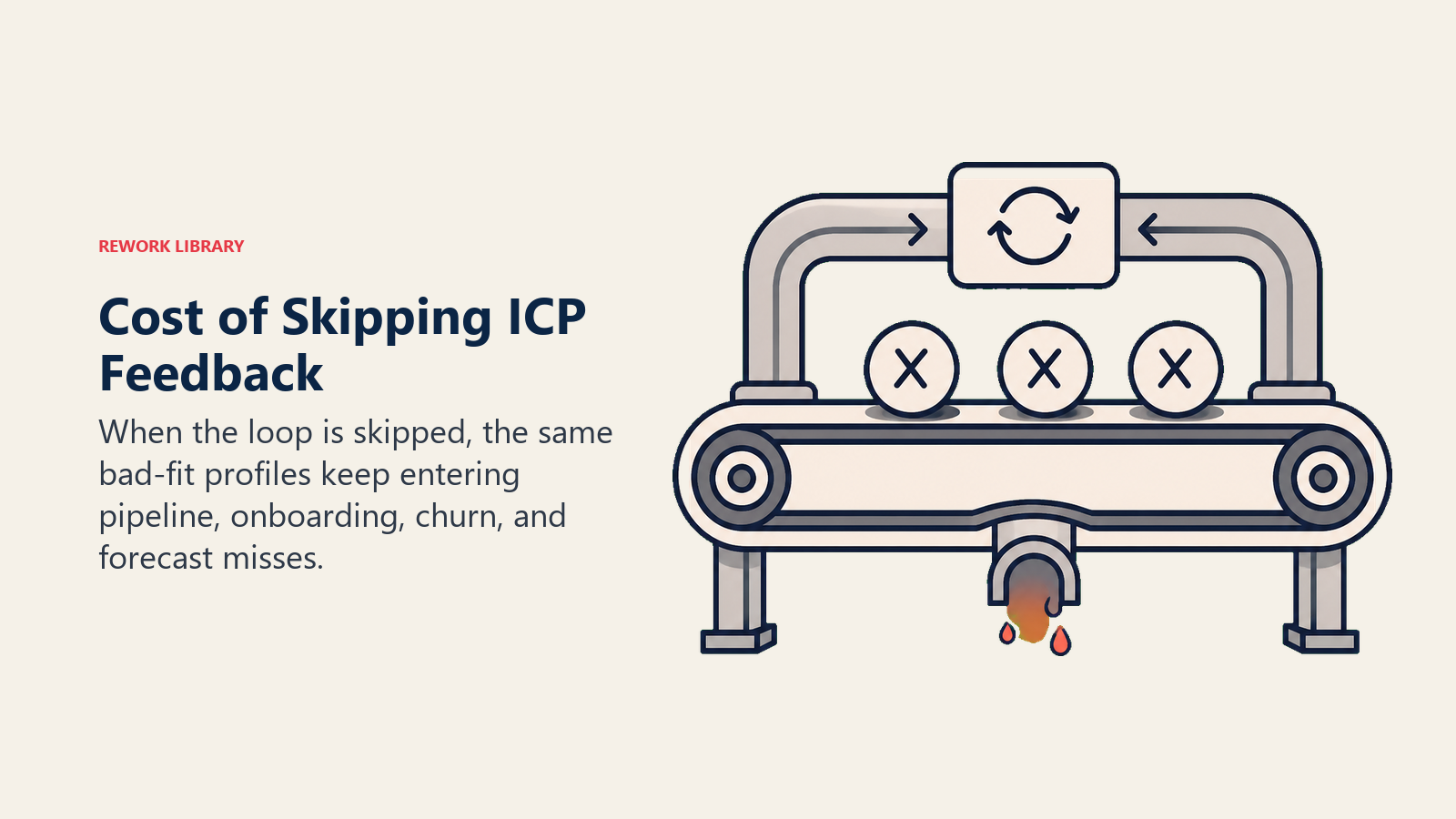
Dasselbe schlecht passende Profil wird nächstes Quartal wieder verkauft. Nichts im Lead-Scoring, in den Qualifizierungskriterien oder in den Discovery-Fragen ändert sich. AEs, die Deals abschließen wollen, schließen Deals ab. Wenn das Profil auf der Oberfläche attraktiv aussieht (richtige Unternehmensgröße, richtiger Titel, bereit zu unterschreiben), geht es an CS.
CS verbrennt weiterhin Kapazität für Accounts, die keinen Mehrwert erreichen können. Ein schlecht passender Account erfordert typischerweise mehr Onboarding-Unterstützung, mehr Eskalationsstunden und mehr Check-in-Calls als ein gut passender Account. Und er produziert keine Expansion. Das CS-Team weiß das. Aber ohne einen Feedback-Kanal können sie nur in internen Slack-Kanälen klagen oder es in einem Churn-Report dokumentieren, den Sales-Leadership nicht liest. Die 8 Warnsignale für Sales-CS-Misalignment, besonders die rund um die Closed-Lost-Attribution, sind in Organisationen, in denen dieser Loop nicht läuft, fast immer vorhanden.
NRR bleibt gedämpft. Nicht weil das Produkt kaputt ist, sondern weil die falschen Kunden es kaufen. Wenn schlecht passende Accounts 15–20 % der Neukundenkohorts in einem Quartal darstellen, ziehen sie die NRR nach unten, unabhängig davon, wie gut CS die gut passenden Accounts managed. Das ist die teuerste Version des Problems: Es sieht wie ein CS-Ausführungsproblem aus, wenn es eigentlich ein Akquisitionsproblem ist.
Und die Teams bauen Groll statt gemeinsame Intelligenz auf. CS glaubt, Sales kümmert sich nicht um das, was nach dem Abschluss passiert. Sales glaubt, CS gibt ihnen die Schuld für alles, was abwandert. Keines der Teams kann die Daten sehen, die ihnen helfen würden zu verstehen, welche Accounts strukturell nicht zu gewinnen waren versus welche CS-Ausführungsprobleme sind.
Zu verstehen, warum der Loop scheitert, ist nur das halbe Problem. Die andere Hälfte ist zu wissen, was „schlechter Fit" tatsächlich bedeutet, und zwar präzise genug, um darauf zu reagieren.
Was „schlechter Fit" wirklich bedeutet: drei unterschiedliche Kategorien
Nicht der gesamte schlechte Fit-Churn hat dieselbe Grundursache, und diese Unterscheidung ist wichtig, weil jede Kategorie zu einer anderen Lösung führt.
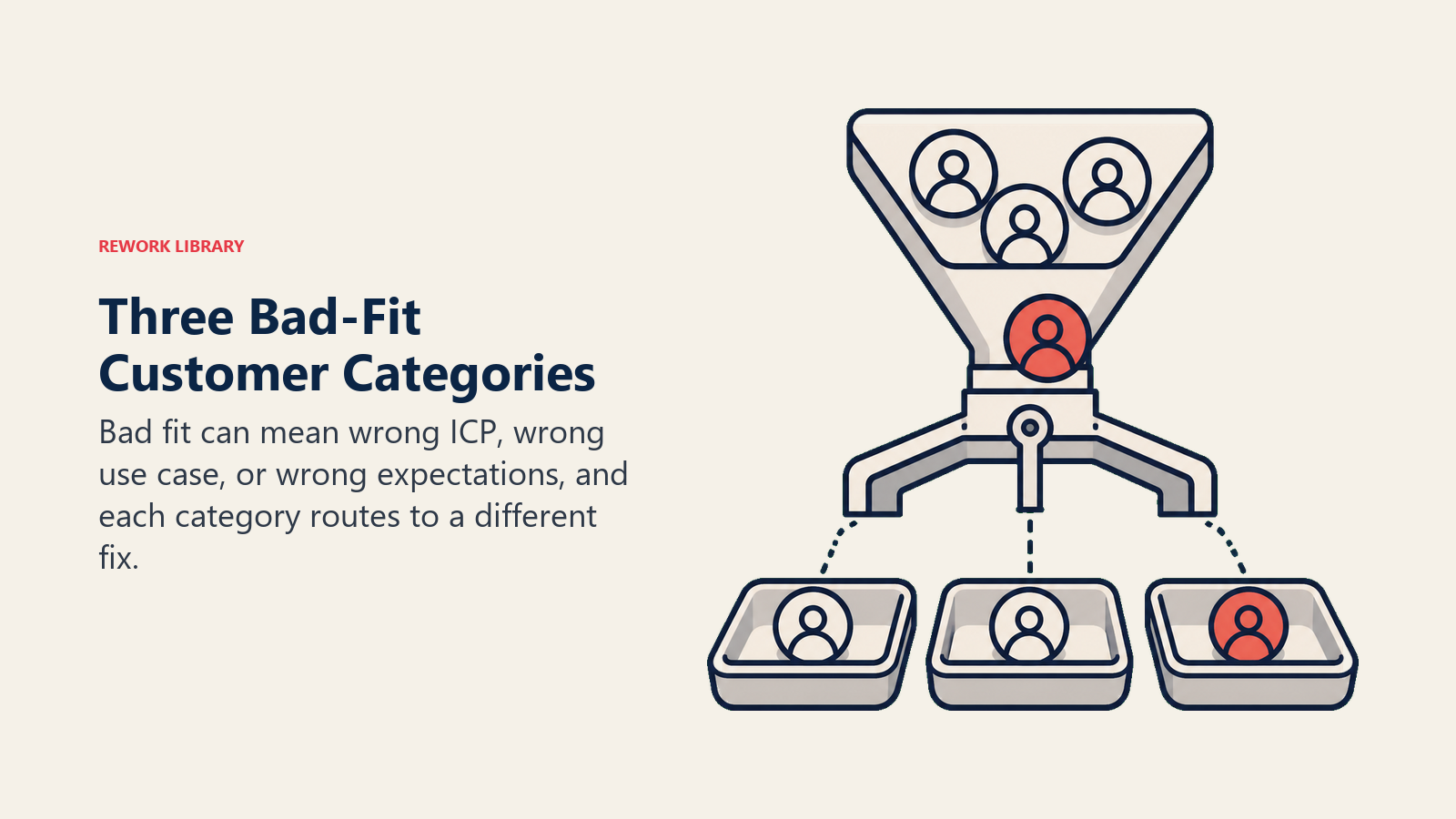
Kategorie 1: Falscher ICP. Das Unternehmensprofil lag außerhalb der Parameter, die Kundenerfolg vorhersagen. Zu klein, um die Implementierung durchzuführen. Falsche Branche für den Kern-Use-Case. Technische Stack-Inkompatibilität. Team-Reife, die das Produkt nicht unterstützen kann. Diese Accounts hatten nie einen realistischen Weg zu Mehrwert, unabhängig davon, was verkauft wurde oder wie gut CS sie ongebordet hat.
Führt zu: ICP-Definitions-Update. Wenn Kategorie-1-Accounts mehr als X % einer Churn-Kohorte darstellen, löst das einen formalen ICP-Review mit Marketing aus. Die Kriterien, die einen qualifizierten Lead definieren, müssen angepasst werden.
Kategorie 2: Misalignierter Use Case. Das Unternehmensprofil passte zum ICP, aber das Problem, das der Kunde lösen wollte, war nicht das Problem, das das Produkt tatsächlich löst. Gartners Forschung zum ICP-Framework nennt Use-Case-Alignment als eine der am häufigsten übersprungenen Dimensionen bei der ICP-Entwicklung: Unternehmen definieren den firmografischen Fit, validieren aber selten den verhaltensbezogenen und situativen Fit, bevor Deals voranschreiten. Der AE hat den Mismatch entweder nicht bemerkt oder ist darüber hinweggegangen. Der Kunde kommt beim Onboarding an und erwartet Funktionalität, die nicht in der benötigten Form existiert.
Führt zu: Sales Coaching und Discovery-Fragen-Review. Der AE mangelte entweder an Produktwissen oder hat den Use-Case-Fit zu locker qualifiziert. Die Lösung liegt in der Qualifizierungsphase: schärfere Discovery-Fragen, die Use-Case-Alignment vor dem Abschluss aufdecken, und Coaching für den beteiligten AE. Hier ist auch das Sales-CS Alignment Maturity Model nützlich. Teams auf niedrigeren Reifegraden können ein solches Kategorie-2-Signal in der Regel gar nicht routen.
Kategorie 3: Überversprochen. Der ICP war in Ordnung und der Use Case war real, aber der Deal wurde auf Zusagen abgeschlossen, die CS nicht einhalten kann. Der AE hat Behauptungen über Timeline, Features, Integrationen oder Support-Levels aufgestellt, die nicht der Realität entsprechen. Der Kunde kommt und fühlt sich in die Irre geführt.
Führt zu: Deal-Genehmigungsprozess-Review und AE-Coaching, privat abgewickelt, nicht öffentlich. Das ist die sensibelste Kategorie, weil sie spezifisches AE-Verhalten impliziert. Sie muss auf individueller Ebene behandelt werden, nicht in einem Team-Meeting.
Warum diese Taxonomie wichtig ist: Ohne Kategorien wird das „schlechter Fit"-Gespräch zu einem undifferenzierten Haufen Schuld. Mit Kategorien wird jedes Churn-Ereignis zu einer Routing-Entscheidung. Wohin führt das? Wer besitzt die Lösung? Was ändert sich nächstes Quartal?
Wie man den Feedback-Loop ohne Schuldzuweisungen operationalisiert
Das Ziel ist ein quartalsweiser Kohorten-Review, keine Fall-für-Fall-Beschuldigungssitzung. Hier ist die fünfstufige Struktur:
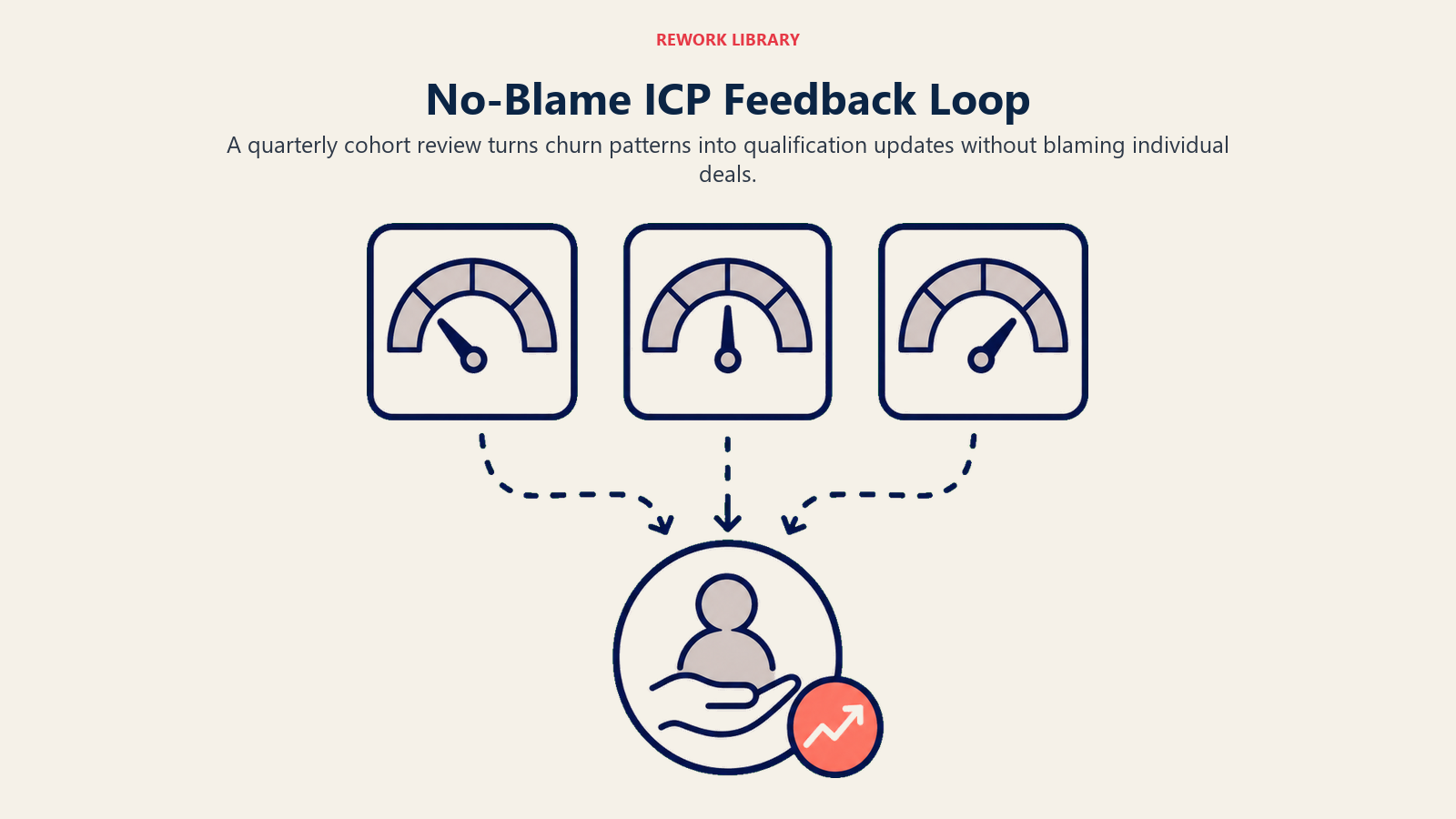
Schritt 1: Churn-Grundursache beim Abschluss taggen. Wenn ein Account abwandert, kodiert der CSM-Team-Lead ihn zu einer der drei obigen Kategorien, bevor der Datensatz geschlossen wird. Das ist ein Pflichtfeld in der CS-Plattform, keine optionale Notiz. Ohne strukturiertes Tagging gibt es keine Kohorte zu analysieren: nur eine Liste abgewanderter Accounts mit Freitext-Erklärungen, die nicht aggregiert werden können.
Schritt 2: Quartalsweise Bad-Fit-Review-Sitzung. CS bringt die getaggte Kohorte aus dem letzten Quartal in eine gemeinsame Sitzung mit Sales-Leadership und RevOps. Das Framing ist entscheidend: Das ist ein Muster-Meeting, kein Fall-Review. Sie fragen nicht „Warum hat Jamie den Acme-Deal abgeschlossen?" Sie fragen „Was haben diese sieben Churn-Fälle gemeinsam, worauf wir reagieren können?"
Schritt 3: ICP-Update-Auslöser. Wenn Kategorie-1-Accounts mehr als einen definierten Schwellenwert der Churn-Kohorte darstellen (sagen wir 25 %), löst das einen formalen ICP-Review mit Marketing aus. Dieser Review sollte innerhalb von 30 Tagen nach der Quartals-Sitzung stattfinden, nicht beim nächsten jährlichen Planungszyklus.
Schritt 4: Sales Coaching-Auslöser. Wenn Kategorie 3 (überversprochen) seinen Schwellenwert überschreitet, wird das auf AE-Level-Coaching geleitet. Keine Team-Ankündigung, keine neue Politik, kein Slack-Post. Der VP Sales und der direkte Manager des spezifischen AE führen ein privates Gespräch. Das Muster informiert zukünftige Trainings; das individuelle Gespräch adressiert das Verhalten.
Schritt 5: Den Loop mit CSMs schließen. Nach der Quartals-Sitzung teilt der CSM-Team-Lead dem CSM-Team mit, was sich geändert hat. Wenn Kategorie-1-Churn einen ICP-Update ausgelöst hat, wissen CSMs, dass dieses spezifische Profil jetzt früher in der Qualifizierung markiert wird. Wenn Kategorie-3-Churn Coaching-Änderungen ausgelöst hat, wissen CSMs, dass das Überversprechen-Muster adressiert wird. Der Feedback-Loop erhält sich nur aufrecht, wenn CSMs sehen können, dass ihr Input etwas beeinflusst hat.
Den Prozess richtig aufzusetzen, ist die Grundvoraussetzung. Ob Sales sich tatsächlich einbringt, entscheidet die Sprache, mit der Sie den Raum eröffnen.
Die Sprache, die es ohne Abwehrhaltung landet
Das Framing ist der Unterschied zwischen einem produktiven Quartals-Review und einer Beschuldigungssitzung, der niemand zustimmt, nächstes Quartal wieder anzusetzen. Drei Sprachprinzipien:
Als Kohortenmuster einrahmen, nicht als individuelles Versagen. „Drei unserer sieben Churn-Fälle dieses Quartals teilten diese Profilmarkierungen: Teams unter 25 Personen, keine dedizierte Ops-Funktion und ein Champion unter Director-Level" ist eine Datenbeobachtung über ein Muster. Forresters Forschung zur Ausrichtung von Teams an einem gemeinsamen ICP bestätigt, dass Reviews auf Musterebene, nicht Deal-für-Deal-Audits, ICP-Verbesserungen bewirken, die in Sales und CS tatsächlich Bestand haben. „Jamie hat einen schlechten Deal abgeschlossen" ist eine Anschuldigung. Das Erste lädt zur Problemlösung ein. Das Zweite löst Abwehrhaltung aus.
Mit NRR-Auswirkung führen, nicht mit Aufwandsbelastung. Zu sagen „diese Accounts haben CS 400 Stunden gekostet und keine Expansion produziert" ist ein Umsatzgespräch. Zu sagen „wir sind ausgebrannt vom Umgang mit schlecht passenden Accounts" ist eine Beschwerde. Sales-Leader reagieren auf Umsatzdaten. Präsentieren Sie den NRR-Beitrag der Kohorte (oder dessen Fehlen), bevor Sie über CS-Kapazität sprechen.
Sales einladen, die Lösung mitzuverantworten. „Was hat sich im Markt verändert, das dieses Profil dieses Quartal für AEs attraktiv erscheinen ließ?" behandelt das Sales-Team als Intelligenzquellen, nicht als Angeklagte. Sie bitten um ihre Einschätzung, warum diese Accounts abgeschlossen wurden, wozu sie möglicherweise echte Einblicke haben, statt sie aufzufordern, die Schuld für etwas zu akzeptieren, das bereits passiert ist. Diese Frage produziert normalerweise nützliche Informationen: Ein Wettbewerber hat Dringlichkeit erzeugt, eine neue Persona wurde angesprochen, eine Aktion hat künstliche Nachfrage geschaffen. Das sind behebbare Signale.
Zitierfähige Kernaussagen
„23 % des B2B SaaS Churn ist auf schlechten Fit bei der Akquise zurückzuführen: Das Kundenprofil stimmte nie mit den Erfolgskriterien überein, laut Bain & Companys Kundenloyalitätsforschung."
„67 % der CSMs sagen, dass sie innerhalb der ersten 30 Tage des Onboardings wussten, dass ein Account wahrscheinlich nicht verlängern würde. Aber weniger als 20 % hatten einen formalen Kanal, um dieses Signal an Sales zurückzumelden, laut Totangos jährlicher CS-Branchenumfrage."
„Ein einziger schlecht passender Enterprise-Account kostet durchschnittlich das 2,3-Fache an CS-Stunden eines gut passenden Accounts im selben ARR-Tier, laut Gainsights Customer Success Benchmark-Bericht."
Rework-Analyse: Bad-Fit-Churn sieht in der Pipeline-Prognose selten wie Churn aus. Er sieht bis Monat 9 wie ein gesunder Neukunde aus, bis der Health Score einbricht und der CSM plötzlich eine Eskalation bei einem Account managt, der nie erfolgreich sein würde. Unternehmen, die das „Bad Fit"-Feedback-Protokoll quartalsweise durchführen, den Churn nach Kategorie taggen, bevor der Account geschlossen wird, und diese Kohorte dann in einen gemeinsamen Review leiten, erkennen das Muster 2-3 Quartale früher als Unternehmen, die sich auf informelle Post-Mortems verlassen. Der Kostenunterschied bemisst sich in freigesetzter CSM-Kapazität, zurückgewonnenen NRR-Punkten und ICP-Definitionen, die aufhören, die falschen Käufer anzuziehen.
Die Brücke zum Marketing-Sales Alignment
Dieser Feedback-Loop hört nicht an der Sales-CS-Schnittstelle auf. CS ist der nachgelagerte Validator von ICP-Annahmen, die vorgelagert entstanden sind: in Marketing-Forschung, in Produkt-Positionierung, in den Kriterien, die Marketing verwendet, um zu definieren, wie ein qualifizierter Lead aussieht.
Wenn CS-Daten zeigen, dass ein spezifisches ICP-Profil keine erfolgreichen Kunden produziert, muss dieser Befund Marketing erreichen, nicht nur Sales. Der ICP Refinement Loop: CS Feedback to Sales deckt die Mechanik dieses Handoffs ab, aber der quartalsweise Bad-Fit-Review ist der Ursprungsort des Auslösers.
CS ist einzigartig positioniert, ICP-Annahmen zu validieren oder in Frage zu stellen, weil sie das einzige Team sind, das sieht, ob der Kunde, der die ICP-Kriterien erfüllte, tatsächlich ein erfolgreicher Kunde geworden ist. Marketing kann auf Profilmatch optimieren. Sales kann auf Deal-Abschluss optimieren. Nur CS weiß, ob diese optimierten Ergebnisse tatsächlich zu Mehrwert geführt haben.
Das verbindet sich direkt mit dem Shared ICP Framework, das Marketing und Sales gemeinsam pflegen. Der vollständige Loop läuft von Marketings ICP-Definition, durch Sales-Qualifizierung, durch CS-Post-Sale-Beobachtung und zurück zu Marketings nächster Revision. CS ist der nachgelagerte Validator in einem Loop, der vorgelagert beginnt. Der quartalsweise Bad-Fit-Review ist, wie dieses Validierungssignal formalisiert wird. Das Marketing-Sales Alignment Glossar definiert die ICP-Kriterien-Sprache, die in allen drei Teams konsistent sein sollte, wenn dieser Loop richtig funktioniert.
Anti-Patterns
Der jährliche ICP-Review, auf den niemand reagiert. Ein jährlicher ICP-Review ist zu weit von den Churn-Ereignissen entfernt, um das Verhalten im nächsten Quartal zu ändern. Wenn der jährliche Review stattfindet, sind die Churn-Daten sechs bis zwölf Monate alt, die AEs, die diese Deals abgeschlossen haben, sind möglicherweise gegangen, und die Marktbedingungen, die diese Profile attraktiv erscheinen ließen, haben sich geändert. Quartalsweiser Rhythmus ist die minimale viable Feedback-Frequenz.
CS-Churn-Reports, die bei „Produkt-Fit" stoppen, ohne Grundursachen auf Akquisitionsebene aufzuzeigen. Die meisten CS-Plattform-Churn-Reports kategorisieren Churn nach dem, was während des Kundenlebenszyklus passiert ist: Produktadoptions-Versagen, Support-Frustration, Budgetkürzung. Sie verfolgen selten zurück, was passiert ist, bevor der Kunde unterschrieben hat. Ein Churn, der als „Produkt-Fit-Problem" getaggt ist, könnte eigentlich ein Kategorie-1-Bad-Fit-Churn sein, der von der Qualifizierung an unvermeidlich war. Ohne die Drei-Kategorien-Taxonomie geht diese Unterscheidung verloren.
Den Feedback-Loop in einem Slack-Kanal ausführen. Asynchrone, informelle Kanäle produzieren informelle Informationen. Wenn der quartalsweise Bad-Fit-Review „CSM-Team-Lead postet eine Zusammenfassung in #revenue-ops und wartet auf Antworten" ist, passiert nichts. Die Sitzung braucht ein Datum im Kalender, RevOps im Raum und ein Dokument, das mit Entscheidungen aktualisiert wird. Die Struktur ist der Prozess.
Was Rework einfacher macht
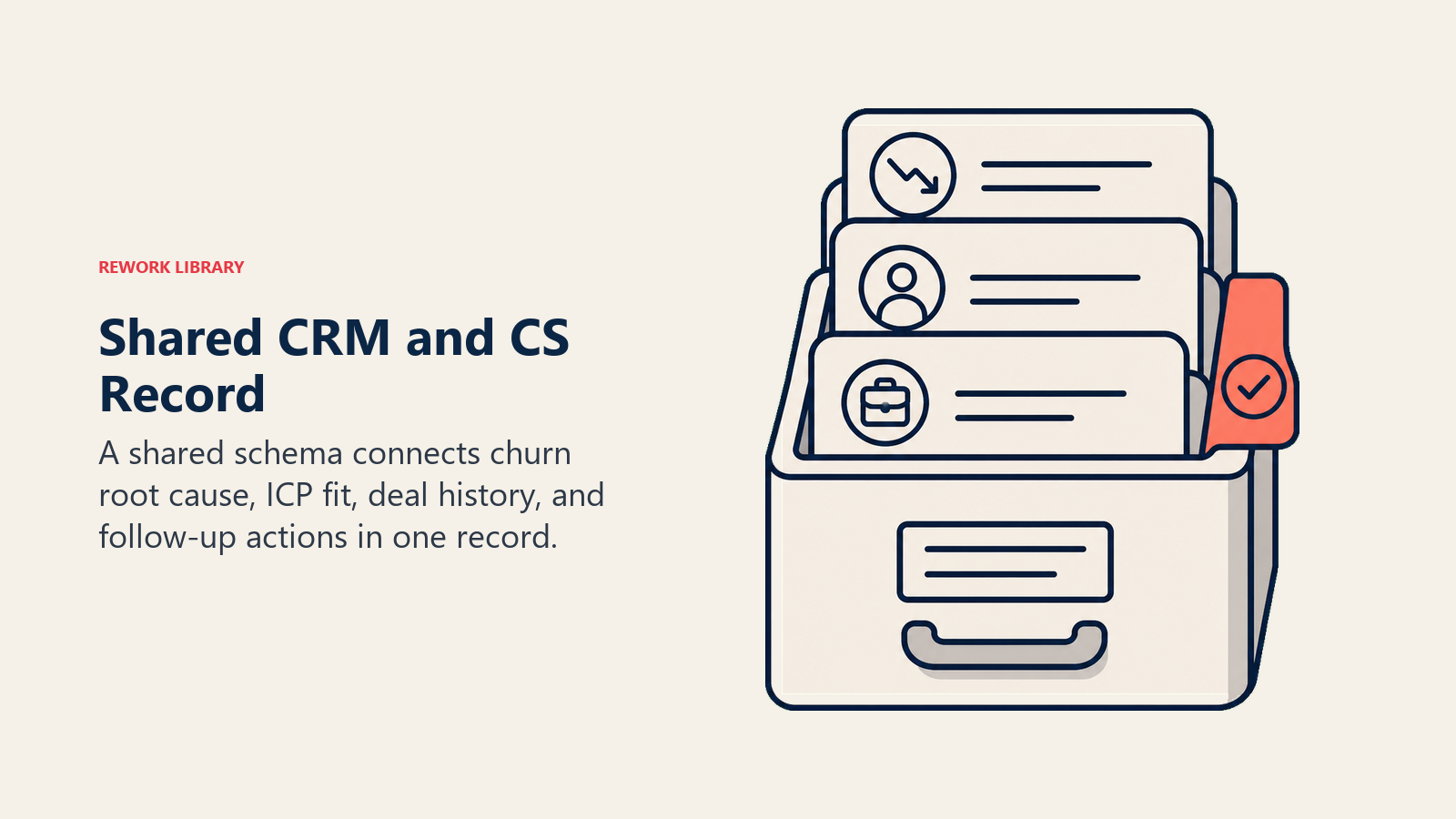
Wenn Deal-Datensätze im CRM und CS-Account-Datensätze ein gemeinsames Schema teilen, leben der Churn-Grundursachen-Tag und das Deal-Profil am selben Ort. RevOps kann einen Report ausführen, der „Kategorie-1-Churn" mit „ICP-Fit-Score beim Abschluss" verbindet, ohne manuell zwei Plattformen zu kreuzen. Die Quartals-Sitzung läuft von einem gemeinsamen Dashboard statt einer manuell zusammengestellten Tabelle. Für das architektonische Detail dahinter, siehe Shared Customer Record Architecture.
[faq title="Häufig gestellte Fragen zu "Dieser Deal hätte nicht abgeschlossen werden sollen""] Q: Wie bringen Sie „Bad Fit"-Feedback zu Sales, ohne dass es in Schuldzuweisungen endet? A: Rahmen Sie den Quartals-Review als Kohortenmuster-Meeting ein, nicht als Deal-Audit von Fall zu Fall. Die Frage lautet nicht „Warum hat dieser AE einen schlechten Deal abgeschlossen?" Sie lautet „Was haben diese sieben Churn-Fälle gemeinsam, worauf wir reagieren können?" Mit der NRR-Auswirkung statt mit dem CS-Aufwand zu führen, unterstreicht, dass es um ein Umsatzgespräch geht und nicht um eine Beschwerde. Sales-Leader reagieren auf Daten, die zeigen, dass bestimmte ICP-Profile nahezu keine Expansion und überproportionale CS-Kosten produzieren. Das „Bad Fit"-Feedback-Protokoll ist so angelegt, dass jede Diskussion zu einer Routing-Entscheidung wird: welche Kategorie, welche Lösung, welcher Owner, statt zu einem Urteil über individuelle Leistung.
Q: Wann sollte eine Bad-Fit-Churn-Kohorte ein ICP-Update auslösen? A: Wenn Kategorie-1-Accounts (falscher ICP: Unternehmensprofil außerhalb der Parameter, die Erfolg vorhersagen) mehr als einen definierten Schwellenwert der Churn-Kohorte darstellen, typischerweise 25 %, löst das innerhalb von 30 Tagen nach der Quartals-Sitzung einen formalen ICP-Review mit Marketing aus. Dieser Schwellenwert verhindert, dass ICP-Reviews durch jede Fehlbesetzung oder jeden Randfall-Abschluss ausgelöst werden, und stellt zugleich sicher, dass systemische Akquisitionsfehler schnell genug sichtbar werden, um das Qualifizierungsverhalten im nächsten Quartal zu ändern.
Q: Was sind die drei Kategorien von Bad-Fit-Churn? A: Kategorie 1 ist falscher ICP: Das Unternehmensprofil lag außerhalb der Parameter, die Erfolg vorhersagen (zu klein, falsche Branche, inkompatibler technischer Stack). Das führt zu einem ICP-Definitions-Update mit Marketing. Kategorie 2 ist misalignierter Use Case: Das Unternehmen passte zum ICP, aber das Problem, das es lösen wollte, war nicht das Problem, das das Produkt tatsächlich löst. Das führt zu Sales Coaching und schärferen Discovery-Fragen. Kategorie 3 ist überversprochen: ICP und Use Case waren in Ordnung, aber der AE hat Zusagen gemacht, die CS nicht einhalten kann. Das führt zu privatem AE-Coaching und einem Review des Deal-Genehmigungsprozesses.
Q: Wie oft sollte der Bad-Fit-Feedback-Loop laufen? A: Quartalsweise ist der minimale viable Rhythmus. Ein jährlicher ICP-Review ist zu selten. Bis er stattfindet, sind die Churn-Daten 6-12 Monate alt, und die AEs, die diese Deals abgeschlossen haben, sind möglicherweise gegangen. Ein quartalsweiser Rhythmus bedeutet, dass das Churn-Signal eines Quartals das Qualifizierungsverhalten innerhalb von 90 Tagen beeinflusst, statt in einem jährlichen Planungsdokument zu verschwinden, auf das während des Sales-Zyklus niemand schaut.
Q: Ist es Aufgabe des CSM-Teams oder der Sales-Leadership, Bad-Fit-Deals zu markieren? A: Beides, in unterschiedlichen Phasen. Der CSM-Team-Lead markiert einzelne Churn-Fälle und kodiert sie einer Kategorie zu, bevor der Datensatz geschlossen wird. Das ist die Verantwortung des CS-Teams. In der gemeinsamen Quartals-Sitzung (CS, Sales-Leadership, RevOps) werden diese kodierten Churn-Fälle zu umsetzbaren Mustern. Die Verantwortung der Sales-Leadership ist es, sich mit den Musterdaten auseinanderzusetzen und die Lösungen in ihrem Bereich zu verantworten: Coaching, Änderungen der Qualifizierungskriterien, Deal-Genehmigungsprozesse. Das Protokoll scheitert, wenn eines der Teams die Verantwortung des anderen als die einzig wichtige betrachtet.
Q: Wie verhindern Sie, dass der quartalsweise Bad-Fit-Review zu einer Beschuldigungssitzung wird? A: Drei sprachliche Disziplinen helfen. Erstens: Formulieren Sie jede Beobachtung als Kohortenmerkmal, nicht als individuelles Versagen. „Drei unserer sieben Churn-Fälle teilten diese Profilmarkierungen" sind Daten. „Jamie hat einen schlechten Deal abgeschlossen" ist eine Anschuldigung. Zweitens: Führen Sie mit der NRR-Auswirkung, nicht mit dem CS-Aufwand. Umsatzdaten kommen anders an als Kapazitätsbeschwerden. Drittens: Laden Sie Sales ein, die Diagnose mitzuverantworten, indem Sie fragen „Was hat sich im Markt verändert, das dieses Profil dieses Quartal für AEs attraktiv erscheinen ließ?" Diese Frage stellt Sales als Intelligenzquellen dar, nicht als Angeklagte, und liefert üblicherweise wirklich nützlichen Kontext zu Wettbewerbsdynamik, Aktionspreisen oder neu angesprochenen Personas.
[/faq]
Mehr erfahren

Principal Solution Architect
On this page
- Warum dieser Feedback-Loop der am meisten vermiedene im SaaS ist
- Die Kosten, wenn man ihn überspringt
- Was „schlechter Fit" wirklich bedeutet: drei unterschiedliche Kategorien
- Wie man den Feedback-Loop ohne Schuldzuweisungen operationalisiert
- Die Sprache, die es ohne Abwehrhaltung landet
- Zitierfähige Kernaussagen
- Die Brücke zum Marketing-Sales Alignment
- Anti-Patterns
- Was Rework einfacher macht
- Mehr erfahren