Der CRO über Sales und CS: Das Argument dafür, das Argument dagegen – und wann es wirklich funktioniert
Turn this article into takeaways for your work.


Each assistant summarizes the article only for you and suggests best practices for your work.
Der Reiz liegt auf der Hand. Sales und CS sind nicht aufeinander abgestimmt – der Handoff ist defekt, NRR ist unvorhersehbar, Expansion wird von beiden Teams beansprucht und von keinem geliefert. Stellen Sie beide unter einen Vorgesetzten, der für beide Ergebnisse verantwortlich ist, und das Nahtstellenproblem verschwindet.
Logisch auf dem Papier. In der Praxis komplizierter.
Die vereinheitlichte CRO-Struktur löst einige Alignment-Probleme. Sie schafft aber auch neue. Ob es in Ihrem Unternehmen funktioniert, hängt fast ausschließlich von Variablen ab, die nichts mit dem Organigramm zu tun haben – konkret: dem Hintergrund des CRO-Kandidaten, dem darunter liegenden Vergütungsdesign und ob die grundlegenden Voraussetzungen für Alignment überhaupt existieren.
Dieser Artikel beleuchtet beide Seiten, ohne einen Konsens herbeizureden, wo keiner besteht.
Was die CRO-Rolle hier eigentlich bedeutet
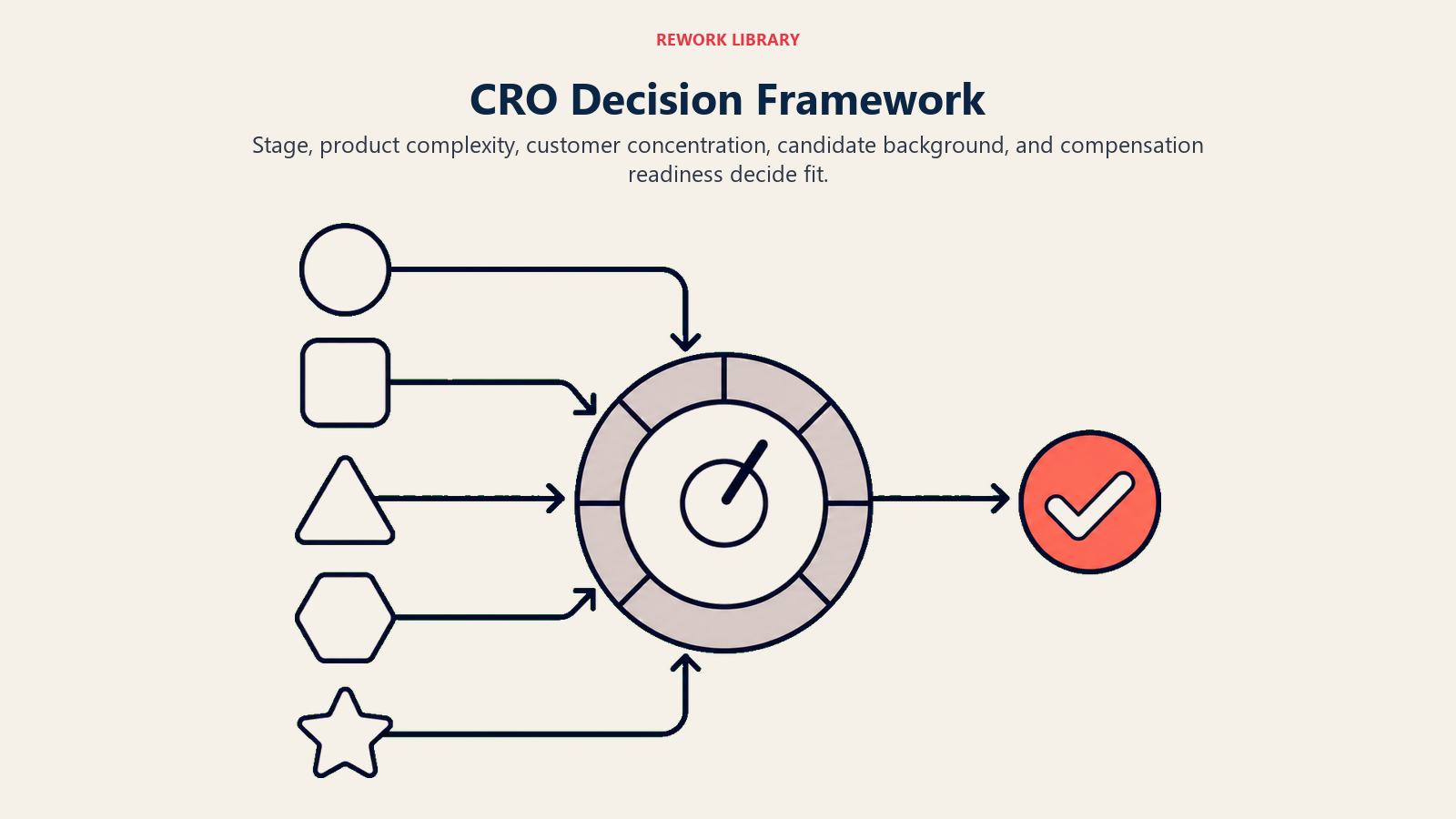
Rework Analyse: Das CRO-Entscheidungsframework lässt sich auf fünf Diagnosefragen reduzieren: (1) In welcher Unternehmensphase befinden Sie sich? (2) Wie komplex ist Ihr Produktmodell? (3) Wie hoch ist Ihre Kundenkonzentration? (4) Welchen Hintergrund und welches Mandat hat Ihr CRO-Kandidat? (5) Welcher Anteil der Netto-Neubuchungen stammt aus Expansion-Revenue? Jede Frage grenzt die Entscheidung weiter ein. Der Fehler, den die meisten Revenue-Führungskräfte machen: Sie behandeln die CRO-Struktur als universelle Alignment-Lösung statt als phasen- und kandidatenspezifische. Wenn alle fünf Bedingungen günstig sind, verstärkt die Struktur das Alignment. Wenn zwei oder mehr ungünstig sind, verstärkt dieselbe Struktur die Dysfunktion. CS wird unterfinanziert, CSMs kündigen, und das Nahtstellenproblem wird zu einem Führungsproblem.
Bevor wir zur Argumentation kommen, eine Definition. „CRO" wird in vielen Unternehmen locker verwendet und bedeutet oft nur VP Sales mit einem größeren Titel. Das ist nicht die Struktur, die dieser Artikel bewertet.
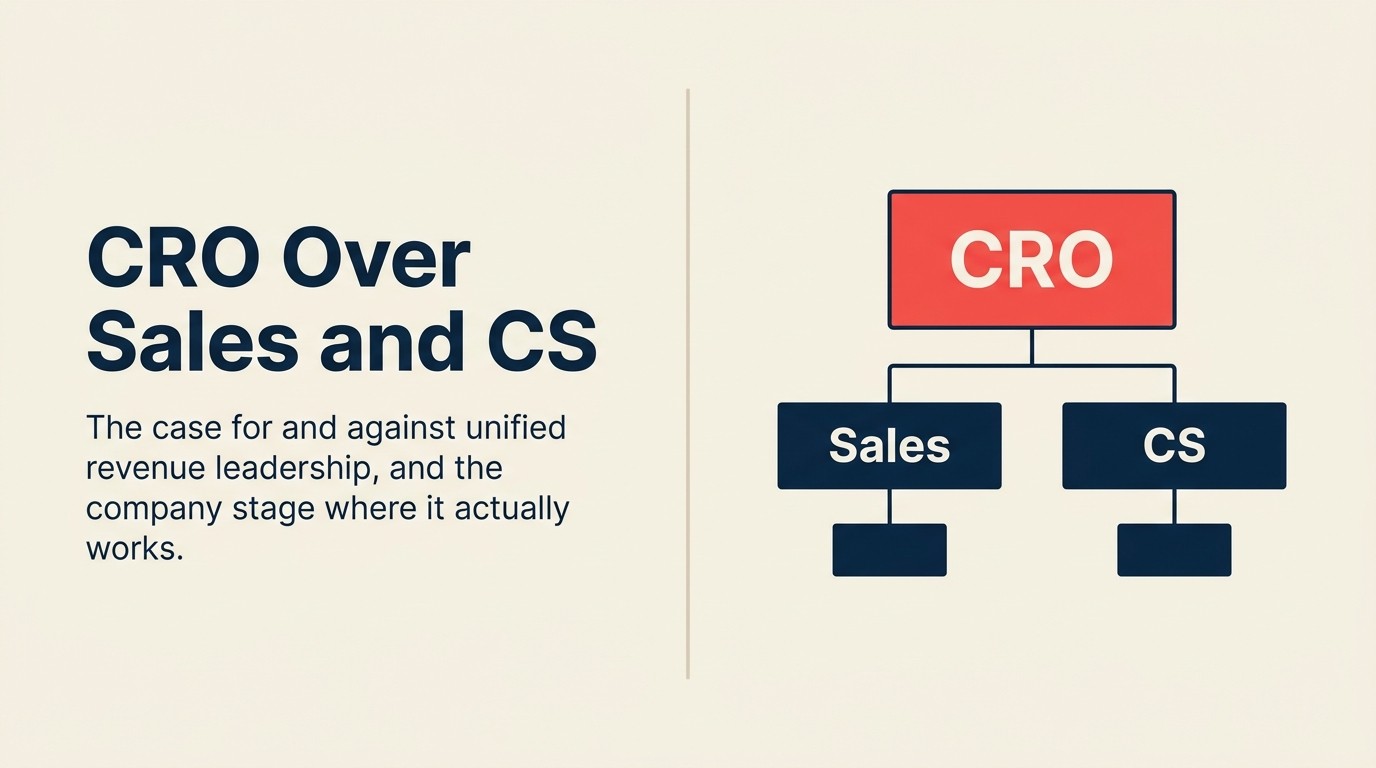
Die hier betrachtete Struktur ist spezifisch: ein CRO, der sowohl das neue Revenue (Sales, SDR, manchmal Marketing) als auch das gebundene und erweiterte Revenue (CS, AM, manchmal Onboarding) verantwortet. Das Wesensmerkmal ist, dass der CRO sowohl für NRR als auch für neues ARR verantwortlich ist.
Das ist etwas anderes als ein VP Sales, der zum CRO befördert wird, während CS weiterhin separat an CEO, COO oder CPO berichtet. Das ist eine Titeländerung, keine strukturelle Veränderung.
Die Frage lautet: Erzeugt einheitliche Verantwortung – eine Führungskraft, die den Churn nicht auf „die Funktion der anderen" schieben kann – eine bessere Ausrichtung als strukturelle Trennung? Das Sales-CS-Alignment-Glossar definiert die zentralen Begriffe, mit denen das Board die jeweils vorgeschlagene Struktur bewerten wird.
Wichtige Fakten: Einheitliche Revenue-Führung
- 68 % der SaaS-Unternehmen mit einem ARR von 10–50 Mio. USD haben inzwischen einen CRO oder einen entsprechenden Titel, der sowohl Sales als auch CS verantwortet – gegenüber 41 % im Jahr 2021, gemäß OpenViews SaaS-Benchmarks 2024.
- Doch die Organisationsstruktur erklärt nur rund 20 % der Varianz bei Sales-CS-Alignment-Ergebnissen – Vergütungsdesign und gemeinsame Metriken erklären die restlichen 80 %, gemäß SiriusDecisions-Forschung.
- Unternehmen, in denen der CRO einen CS-Hintergrund oder CS-Berufserfahrung mitbringt, melden eine 27 % höhere NRR als jene, bei denen der CRO ausschließlich aus dem Sales-Umfeld kommt, gemäß Gainsights Leadership-Benchmarks.
Das Argument für einen einheitlichen CRO
Ein Verantwortlicher für die gesamte Revenue-Zahl. Wenn Sales und CS an separate Führungskräfte berichten, gibt es ein strukturelles Ventil: Sales gibt CS die Schuld am Churn („sie haben die Produktakzeptanz nicht sichergestellt"), CS gibt Sales die Schuld („sie haben das Konto übersold"). Unter einem einheitlichen CRO findet dieses Gespräch intern statt, bevor es jemals das Board erreicht. Der CRO verantwortet beide Ergebnisse und hat jeden Anreiz, die Nahtstelle zu reparieren, statt sie zu bekämpfen.
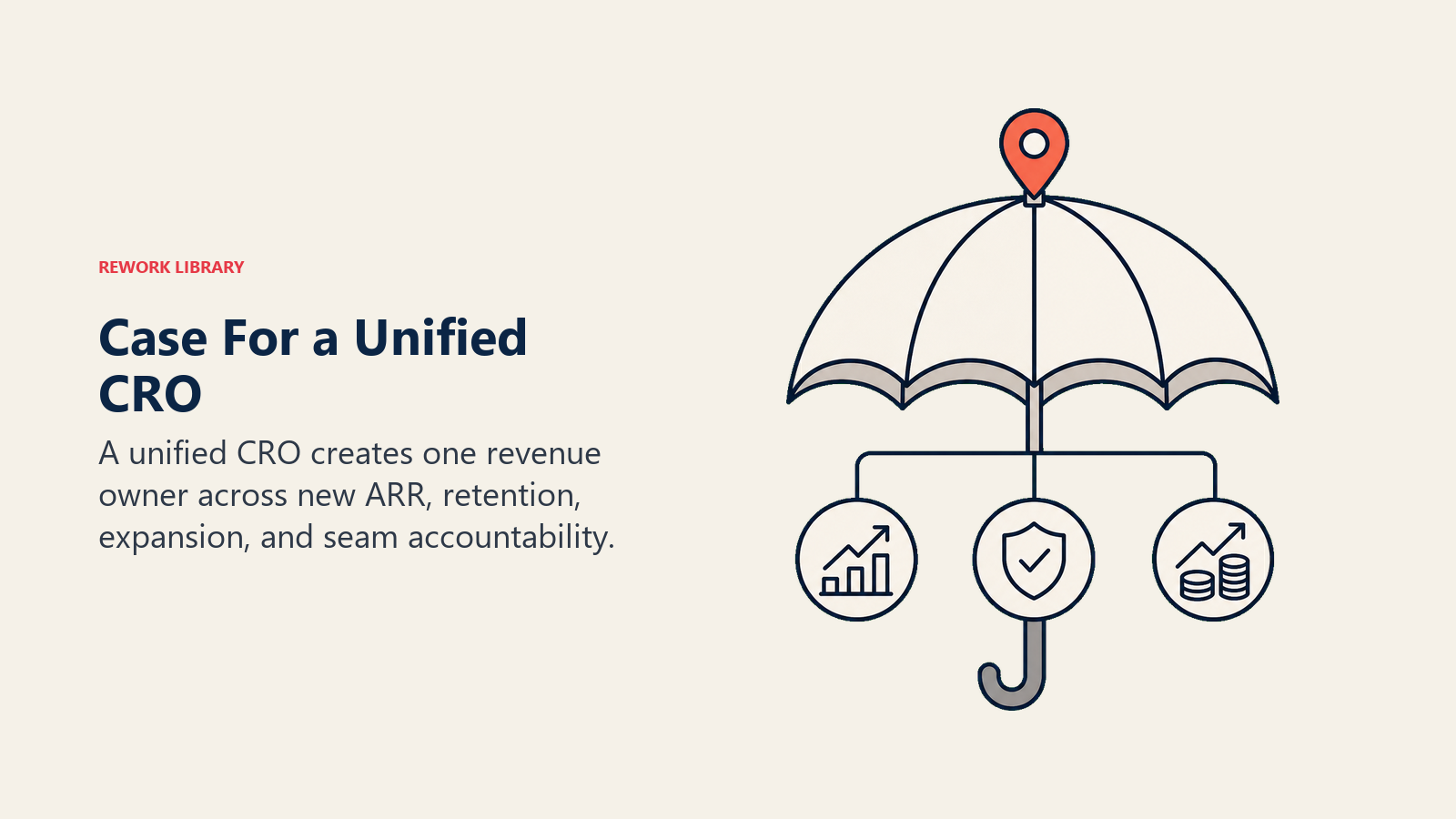
Nahtstellenreibung durch Entscheidungsautorität beseitigt. Die teuersten Alignment-Probleme – Vergütungsdesign, Erneuerungsmodell, Expansion-Pipeline-Attribution, Eskalationsprotokolle für gefährdete Konten – erfordern eine Entscheidung mit organisatorischer Rückendeckung. Wenn CS und Sales an separate Führungskräfte berichten, müssen sich zwei Personen einigen. Wenn sie an einen CRO berichten, muss eine Person entscheiden. Der Geschwindigkeitsunterschied ist in schnelllebigen Revenue-Situationen erheblich. Besonders deutlich wird das bei Eskalationen in Reviews gefährdeter Konten, wo das Fehlen einer einzelnen Entscheidungsinstanz die Rettungsmaßnahme verzögert.
NRR-Perspektive in das Sales-Verhalten eingebettet. Ein AE, der an einen für NRR verantwortlichen CRO berichtet, erhält andere Verhaltenssignale als einer, der an einen nur für neues ARR zuständigen VP Sales berichtet. Der CRO kann Vergütung, Quota-Strukturen und Pipeline-Reviews so gestalten, dass Kundenbindung und Expansion für Sales-Reps sichtbar werden – nicht als externe Einschränkungen, sondern als Teil der Leistungsbewertung.
Schnellerer Expansion-Prozess. Expansion-Signale aus CS müssen Sales schnell erreichen. Wenn beide Teams unter derselben Führungskraft sitzen, verkürzt sich der Signal-to-Action-Zyklus – weil der CRO den Workflow vorschreiben, die Handoff-Kriterien festlegen und beide Seiten für die Umsetzung verantwortlich machen kann.
Einfachere Board-Kommunikation. Eine Führungskraft verantwortet die Revenue-Geschichte, einschließlich Kundenbindung. Wenn etwas schiefläuft, hat das Board eine Ansprechperson. Wenn etwas gut läuft, erklärt eine Person, wie das gelungen ist. Diese Einfachheit ist unterschätzt – Revenue-Storys, die von zwei separaten Führungskräften erzählt werden, die intern über die Richtigkeit der Zahlen des jeweils anderen streiten, überzeugen Investoren nicht.
Das Argument dagegen
Sales-Bias-Risiko. Die meisten CROs kommen aus dem Sales-Umfeld. Dieser Hintergrund prägt Einstellungsentscheidungen, Budgetallokation, interne Kultur und die impliziten Prioritätssignale, die beide Teams erhalten. CS-Organisationen unter Sales-Hintergrund-CROs werden häufiger unterfinanziert, haben weniger Aufstiegschancen und werden anhand von Metriken bewertet, die die CS-Beiträge nicht widerspiegeln. Die „einheitliche Revenue-Funktion" kann schnell zu „Sales, mit CS im Anhang" werden.
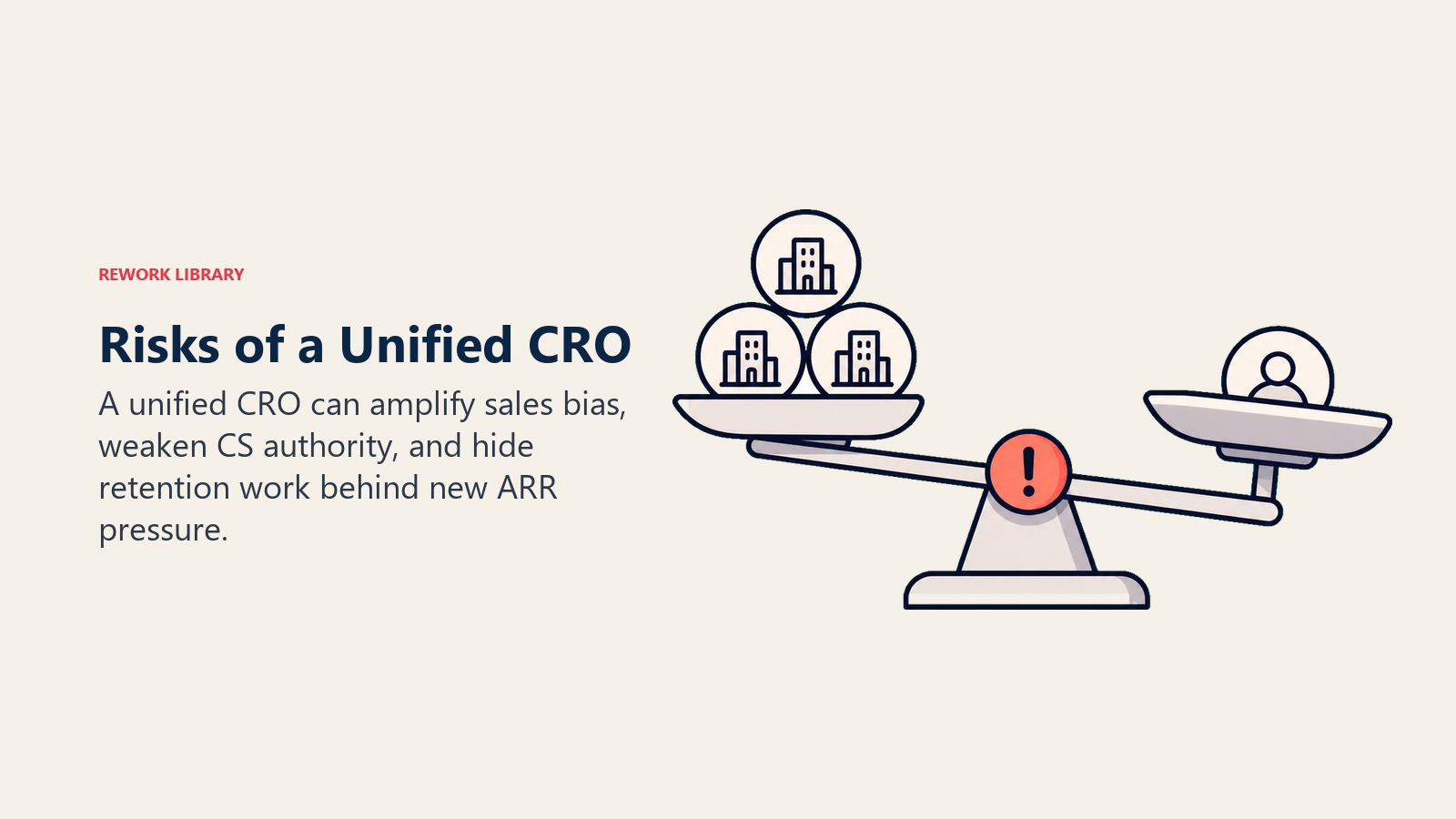
CS-Kultur-Erosion. Ein starkes CS-Team hat eine eigene Kultur: beziehungsorientiert, beratend, gemessen an langfristigen Kundenergebnissen. Diese Kultur braucht Schutz – Führung, die sie versteht, Einstellungsprozesse, die sie fördern, Metriken, die sie belohnen. Unter einem sales-getriebenen CRO, der Pipeline Velocity und Quota-Erreichung priorisiert, kann die CS-Kultur schnell erodieren. CSMs, die sich wie Quota-tragende Sales-Reps ohne Provisionsstruktur fühlen, kündigen. Und gute CS-Talente haben Alternativen.
Vergütungskonflikt ungelöst. Der CRO-Titel behebt das Vergütungsdesign darunter nicht automatisch. Wenn AEs weiterhin nur auf neues ARR vergütet werden, ohne Bindungs- oder Expansion-Metrik, bleibt das strukturelle Anreizproblem auf Rep-Ebene unverändert. Der CRO hat möglicherweise die Autorität, es zu beheben – aber Autorität und Umsetzung sind verschiedene Dinge. Viele einheitliche CRO-Strukturen werden angekündigt, bevor das Comp-Redesign abgeschlossen ist. Das Nahtstellenproblem besteht auf Rep-Ebene fort, während sich das Organigramm oben ändert.
Führungs-Span of Control bei Skalierung. Ein CRO, der ein 200-köpfiges Sales-Team UND ein 100-köpfiges CS-Team führt, trifft bewusste Kompromisse darüber, worauf er seine Aufmerksamkeit richtet. Die HBR-Forschung zur CRO-Fluktuation beziffert die durchschnittliche CRO-Amtszeit auf nur 25 Monate, kürzer als viele Enterprise-Sales-Zyklen. Span-of-Control-Probleme verschärfen sich also schnell, wenn die Struktur nicht auf Skalierung ausgelegt wurde. Bei dieser Größe wird eine Funktion aus der Distanz geführt. Es ist meist CS – weil Sales Quotas hat, Boards nach der Pipeline fragen und Investorenaufmerksamkeit dem neuen ARR folgt. CS wird genau dann zu wenig geführt, wenn es die meiste Aufmerksamkeit bräuchte.
VP-CS-Talentrisiko. Die besten VP-CS-Kandidaten wissen genau, was es bedeutet, an einen Sales-Hintergrund-CRO zu berichten. Manche werden dabei aufblühen – sie haben in integrierten Revenue-Organisationen gearbeitet und haben die Glaubwürdigkeit, standzuhalten. Andere werden die Stelle nicht annehmen. Und aktuelle VP-CS-Führungskräfte, die bisher an den CEO berichteten, könnten den Strukturwechsel als Degradierung empfinden. Bewerten Sie das Talentrisiko, bevor Sie die Ankündigung machen.
Die Entscheidungsfaktoren: Das CRO-Entscheidungsframework
Unternehmensphase. Series B bis Series C ist das natürliche Zeitfenster. Das Unternehmen ist komplex genug, dass Nahtstellenreibung echte Revenue-Konsequenzen hat – Churn ist messbar, Expansion ist ein bedeutender Wachstumsanteil, und das Handoff-Problem beeinflusst Deals, die das Board sieht. Aber die Organisation ist noch nicht so groß, dass der Span of Control zur Einschränkung wird. Vor Series B hat der CEO typischerweise die Kapazität und die Beziehungen, um die Nahtstelle direkt zu überbrücken. Nach Series C oder bei Skalierung rechtfertigt die Organisationsgröße in der Regel separate VPs mit CEO oder COO als gemeinsamer Entscheidungsinstanz.
Produktkomplexität. Einzelprodukt-, hochvolumige Modelle – bei denen Verlängerungen relativ transaktional sind und Expansion begrenzt ist – profitieren selten von einem einheitlichen CRO. Die Nahtstelle ist nicht komplex genug, um strukturelle Einheit zu erfordern. Mehrprodukt-, beratungsintensive Sales-Modelle – bei denen der Expansion-Pfad durch die CS-Beziehung verläuft, die Verlängerung mehrjährige Verhandlung beinhaltet und beide Teams dieselbe Produkt-Roadmap verstehen müssen – sind der Anwendungsfall, bei dem ein einheitlicher CRO echten Alignment-Wert schafft.
Kundenkonzentration. Wenn 20 % der Kunden 80 % des ARR ausmachen, sind die Kosten von Sales-CS-Misalignment bei einzelnen Konten erheblich. Der Alignment-Ausfall ist nicht „ein paar churnte SMBs" – es ist eine einzelne Enterprise-Verlängerung, die schiefläuft, weil AE und CSM nicht koordiniert waren. Bei hoher Konzentration ist der Fall für strukturelle Einheit stark.
CRO-Hintergrund und Mandat. Das ist die am häufigsten unterbewertete Bedingung in der Ankündigung „Wir implementieren eine einheitliche CRO-Struktur". Ein CRO, der CS geführt hat, eine integrierte Revenue-Organisation geleitet hat und für NRR als Board-Metrik echte Verantwortung trägt, ist eine andere Einstellung als ein starker VP Sales mit einem neuen Titel. Der Hintergrund zählt, weil er bestimmt, wessen Kultur gewinnt, wessen Metriken wichtig sind und welches Team die erste Aufmerksamkeit bekommt, wenn es schwierig wird.
Revenue-Modell. Wenn Expansion-Revenue mehr als 30 % der Netto-Neubuchungen ausmacht, schafft einheitliche Verantwortung mehr Klarheit als Trennung. Bains Bericht dazu, warum Customer Success bei Softwareunternehmen scheitert, dokumentiert, dass die NRR bei 75 % der Softwarefirmen trotz steigender CS-Investitionen gesunken ist. Dieses Muster hält eher an, wenn die Revenue-Verantwortung über mehrere Führungskräfte verteilt bleibt. Der Expansion-Prozess ist komplex genug – und wertvoll genug –, um eine einzelne Führungskraft die Handoff-, Vergütungs- und Priorisierungsentscheidungen treffen zu lassen.
Zitierfähig: Die Organisationsstruktur erklärt nur rund 20 % der Varianz bei Sales-CS-Alignment-Ergebnissen. Vergütungsdesign und gemeinsame Metriken erklären die restlichen 80 %. Eine einheitliche CRO-Struktur ohne Neugestaltung der Vergütung löst also das Organigramm-Problem, lässt das eigentliche Misalignment-Problem aber unberührt (SiriusDecisions-Forschung, 2024).
Zitierfähig: Unternehmen, in denen der CRO einen CS-Hintergrund oder CS-Berufserfahrung mitbringt, melden eine 27 % höhere NRR als jene, bei denen der CRO ausschließlich aus dem Sales-Umfeld kommt. Der Nutzen einer einheitlichen Struktur hängt damit fast vollständig davon ab, welche Kultur der CRO mitbringt (Gainsight-Leadership-Benchmarks, 2024).
Zitierfähig: 41 % der VP-CS-Abgänge in Unternehmen, die eine einheitliche CRO-Struktur eingeführt haben, nennen den Kulturkonflikt zwischen CS- und Sales-Führungsansatz als Hauptfaktor. Das Talentrisiko einer einheitlichen CRO-Struktur konzentriert sich auf die VP-CS-Ebene und verschärft sich in einem angespannten CS-Führungsmarkt schnell (Totango Exit Survey, 2024).
Alternative Strukturen, die es zu erwägen gilt
Der einheitliche CRO ist nicht der einzige Weg, das Nahtstellenproblem zu lösen. Drei Alternativen sind es wert, bewertet zu werden, bevor man zum Einzelführer-Modell greift.
Separate VP Sales und VP CS, die an den CEO berichten. Das funktioniert, wenn der CEO die Kapazität hat, die Nahtstelle selbst zu überbrücken, und wenn beide Teams reif genug sind, sich in operativen Entscheidungen selbst zu koordinieren. Das Nahtstellenrisiko besteht darin, dass der CEO zum Schiedsrichter für jeden funktionsübergreifenden Konflikt wird – was in Series A nachhaltig und in Series C nicht mehr tragfähig ist. Das Modell RevOps als Alignment-Kitt bietet eine strukturelle Alternative, die gemeinsame Verantwortung schafft, ohne die Berichtslinien zu ändern.
CRO über Sales und AM; CS berichtet an CEO oder COO. Das bewahrt die CS-Unabhängigkeit, während die Nahtstellenreibung bei kommerziellen Entscheidungen reduziert wird. Die AM-Schicht übernimmt kommerziell Expansion und Verlängerung; CS übernimmt Gesundheit, Akzeptanz und die Beratungsbeziehung. Das Nahtstellenrisiko besteht darin, dass CS und Sales weiterhin separate Eskalationswege haben und der „ein Verantwortlicher für die gesamte Revenue-Zahl"-Vorteil entfällt.
CRO mit einem starken VP CS, der echte Organisationsautorität hat. Der CRO setzt die Revenue-Strategie und verantwortet die Board-Zahl. Der VP CS verantwortet die CS-Ausführung und -Kultur, mit expliziter Befugnis, sales-getriebenen Entscheidungen entgegenzuwirken, die die CS-Kultur oder Kundenergebnisse gefährden würden. Dieses Modell funktioniert, wenn der VP CS direkten CRO-Zugang hat und nicht durch eine VP-Sales-Schicht geführt wird.
Was das Board hören muss, wenn man diese Änderung vorschlägt
Wenn Sie einen CRO-Strukturvorschlag ins Board bringen, werden vier Fragen kommen.
Das zu lösende Problem. Beginnen Sie mit konkreten Belegen für das Misalignment-Problem, nicht mit Philosophie. Churn, der auf Overselling zurückzuführen ist. Expansion-ARR, das verloren gegangen ist, weil das Upsell-Signal Sales nicht rechtzeitig erreicht hat. Ungenauigkeiten in der Verlängerungsprognose, die eine Board-Überraschung verursacht haben. Das Board wird die strukturelle Lösung anhand des spezifischen Problems bewerten, das sie lösen soll. Die Kosten eines defekten Handoffs in NRR-Begriffen beziffern das in einer Sprache, die das Board bereits verwendet.
Das Kandidatenprofil. Welchen Hintergrund hat Ihr CRO-Kandidat? Hat er CS geleitet? Hat er ein echtes NRR-Mandat, oder ist das effektiv ein VP Sales mit einem neuen Titel? Das Board sollte wissen, dass es ein spezifisches Kandidatenprofil bewertet, nicht nur ein Organigramm.
Die Vergütungsdesign-Änderung. Keine Board-Präsentation zu einer einheitlichen CRO-Struktur ist vollständig ohne das Vergütungsdesign, das sie real macht. Was ändert sich für AEs? Was ändert sich für CSMs? Welche NRR-Metrik ist in der eigenen Vergütung des CRO verankert? Struktur ohne Vergütungs-Alignment ist Theater.
Der CS-Talentbindungsplan. Wer ist gefährdet zu gehen, wenn die Struktur sich ändert? Der VP CS ist das offensichtliche Risiko – was ist der Plan für ihn oder sie? Gibt es erfahrene CS-Führungskräfte, die den Wechsel als Signal interpretieren werden, dass CS nicht wertgeschätzt wird? Das Board wird fragen.
Die ersten 90 Tage unter einem einheitlichen CRO
Was zuerst zu tun ist: Einigung auf die NRR-Prognose-Verantwortung, nicht auf das Organigramm. Die Organigramm-Änderung ist der einfache Teil. Die erste bedeutsame Alignment-Entscheidung lautet: Wer verantwortet welchen Anteil der NRR-Prognose, auf welchem Zeitplan, mit welchen Inputs von welchem Team? Gestalten Sie den gemeinsamen NRR-Prognose-Prozess in den ersten 30 Tagen, bevor andere strukturelle Entscheidungen getroffen werden.
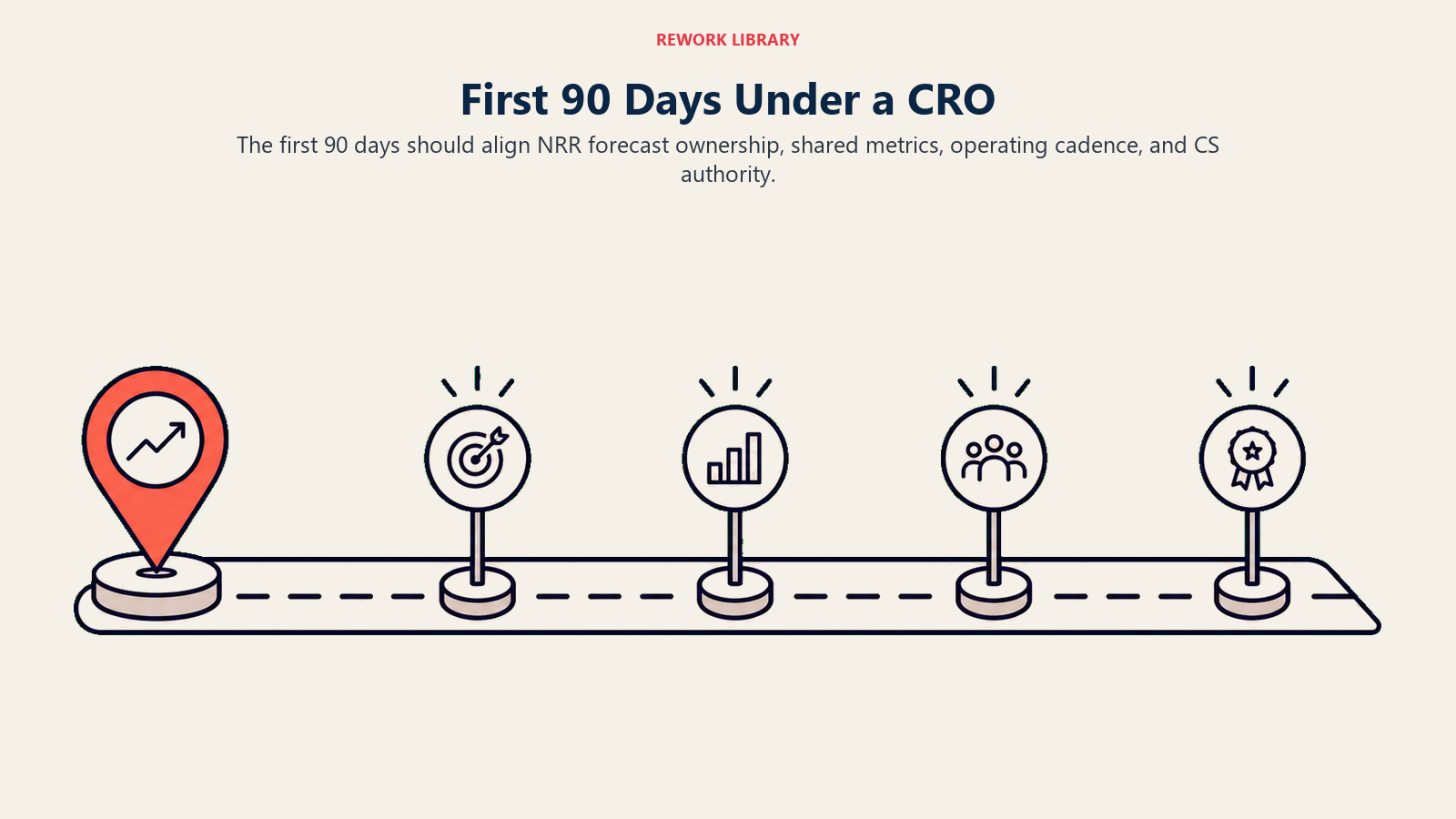
Die drei Nahtstellenentscheidungen, die in den ersten 30 Tagen zu treffen sind:
- Verlängerungs-Modell – welches der vier Modelle gilt für welche Konten?
- Expansion-Pipeline-Verantwortung – welches Team liefert das Signal, welches schließt ab, und wie funktioniert der Handoff?
- Vergütungsdesign – sind die Vergütungsänderungen live oder noch in Entwicklung?
Zeichen, dass die Struktur funktioniert:
- NRR-Prognosegenauigkeit verbessert sich innerhalb von zwei Quartalen
- AE- und CSM-Koordinationsaufwand sinkt (weniger Streitigkeiten über Kontoverantwortung)
- CS-Kulturmetriken bleiben stabil – CSM-Zufriedenheit, CS-Team-Bindung, Kundenbeziehungsqualität
- Expansion-Pipeline-Wachstum ist geteilt, nicht von einem Team beansprucht
Zeichen, dass CS absorbiert statt ausgerichtet wird:
- VP CS verbringt mehr Zeit in Sales-Pipeline-Reviews als in CS-Betriebsreviews
- CSM-Vergütung wird um Quota ohne entsprechende Investition in kommerzielle Schulung umgestaltet
- CS-Einstellung verlangsamt sich im Vergleich zu Sales
- CSM-Fluktuation steigt unter erfahrenen Mitarbeitern, die „Kulturwandel" als Grund nennen
Das Sales-CS-Alignment-Reifegradmodell gibt Ihnen eine strukturierte Methode an die Hand, um 90 Tage nach der Strukturänderung zu beurteilen, ob sich die Organisation auf echtes Alignment oder auf Absorption zubewegt.
Das ehrliche Urteil
Keine Struktur löst ein Kulturproblem oder ein Vergütungsdesign-Problem. Der einheitliche CRO ist ein Verstärker. Wenn die Grundvoraussetzungen stimmen – der richtige CRO-Hintergrund, das fertige Vergütungsdesign, ein VP CS mit echter Autorität und eine Organisation in der Series-B-bis-C-Phase, in der der Span of Control beherrschbar ist – verstärkt er das Alignment. Nahtstellenentscheidungen werden schneller getroffen, Anreize erreichen die richtigen Reps, und das Board hört eine kohärente Revenue-Geschichte.
Wenn die Bedingungen nicht stimmen – wenn der CRO vollständig aus Sales kommt, wenn das Vergütungsdesign unverändert geblieben ist, wenn der VP CS keine echte Autorität hat – verstärkt die Struktur Dysfunktion. CS wird unterfinanziert, CSMs fühlen sich wie Quota-tragende Reps ohne Provision, und das Nahtstellenproblem wandert von einem funktionsübergreifenden Streit zu einem Führungsproblem, das schwieriger zu beheben ist.
Die Frage ist nicht, ob ein einheitlicher CRO theoretisch überlegen ist. Sie ist, ob Ihre Organisation die Voraussetzungen hat, um es zum Funktionieren zu bringen. Diese Voraussetzungen sind es wert, ehrlich bewertet zu werden, bevor die Änderung angekündigt wird.
Häufig gestellte Fragen zum CRO über Sales und CS
Was ist das CRO-Entscheidungsframework für die Bündelung von Sales und CS unter einer Führungskraft?
Das CRO-Entscheidungsframework ist eine Diagnose mit fünf Faktoren, um zu beurteilen, ob eine einheitliche CRO-Struktur in einem konkreten Unternehmen zu Alignment oder zu Dysfunktion führt. Die fünf Faktoren sind: Unternehmensphase (Series B bis C ist das natürliche Zeitfenster), Komplexität des Produktmodells (beratungsintensive Mehrprodukt-Modelle sprechen für die Bündelung), Kundenkonzentration (hohe Konzentration erhöht den Einsatz bei Nahtstellen-Misalignment), Hintergrund und Mandat des CRO-Kandidaten (CS-Hintergrund oder CS-Berufserfahrung bringt 27 % höhere NRR als ein reiner Sales-Hintergrund) und Anteil des Expansion-Revenue (bei mehr als 30 % der Netto-Neubuchungen schafft einheitliche Verantwortung mehr Klarheit als Trennung). Alle fünf müssen bewertet werden. Wer einen Faktor falsch einschätzt, erhöht das Risiko von CS-Kultur-Erosion oder Unterinvestition erheblich.
Wann sollte man Sales und CS unter einem CRO zusammenlegen?
Die einheitliche CRO-Struktur funktioniert am zuverlässigsten zwischen Series B und Series C, wenn das Unternehmen komplex genug ist, dass Nahtstellenreibung messbare Revenue-Konsequenzen hat (Churn ist nachverfolgbar, Expansion ist bedeutend, das Handoff-Problem ist für das Board sichtbar), aber noch nicht so groß, dass der Span of Control zur Einschränkung wird. Am besten passt sie zu beratungsintensiven Mehrprodukt-Sales-Modellen, hoher Kundenkonzentration, einem CRO-Kandidaten mit CS-Hintergrund oder CS-Berufserfahrung und einem Expansion-Revenue von mehr als 30 % der Netto-Neubuchungen. Wenn alle fünf Bedingungen günstig sind, verstärkt die Struktur das Alignment. Wenn zwei oder mehr ungünstig sind, prüfen Sie zuerst alternative Strukturen.
Wann sollten Sales und CS getrennt bleiben?
Lassen Sie sie getrennt, wenn der CEO die Kapazität und die Beziehungen hat, die Nahtstelle direkt zu überbrücken (typischerweise in Series A tragfähig), wenn Ihr Sales-Modell hochvolumig ist und Verlängerungen transaktional sind, wenn die Kundenkonzentration gering ist und kein einzelner Kontoverlust ins Gewicht fällt, wenn Ihr verfügbarer CRO-Kandidat ausschließlich aus Sales kommt oder wenn der Expansion-Revenue unter 20 % der Netto-Neubuchungen liegt. Getrennte Berichtslinien funktionieren, wenn RevOps echte Alignment-Infrastruktur bereitstellt, einschließlich gemeinsamer Metriken, gemeinsamer Prognosen und Integrations-Tooling, statt nur die Datenbedürfnisse eines Teams zu bedienen.
Was bedeutet eine einheitliche CRO-Struktur für VP Sales und VP CS?
Für den VP Sales: Die CRO-Struktur erweitert in der Regel den Verantwortungsbereich um NRR neben neuem ARR, was die Metriken verändert, an denen die Leistung der Sales-Führung gemessen wird. Das ist im Allgemeinen positiv, wenn der VP Sales sich für Investitionen in die Expansion-Pipeline eingesetzt hat. Für den VP CS: Das Hauptrisiko besteht darin, über einen CRO mit Sales-Hintergrund statt direkt an den CEO zu berichten, was organisatorische Autorität, Budgetvertretung und kulturellen Schutz mindern kann. 41 % der VP-CS-Abgänge in Unternehmen, die eine einheitliche CRO-Struktur eingeführt haben, nennen Kulturkonflikt als Hauptfaktor (Totango, 2024). Der Talentbindungsplan für den VP CS muss Teil jeder CRO-Ankündigung sein.
Was sollten Sie in den ersten 90 Tagen nach Einführung einer einheitlichen CRO-Struktur tun?
Priorisieren Sie die Verantwortung für die NRR-Prognose vor Änderungen am Organigramm. Gestalten Sie in den ersten 30 Tagen den gemeinsamen NRR-Prognose-Prozess: Wer verantwortet welchen Anteil, auf welchem Zeitplan, mit welchen Inputs von welchem Team. Treffen Sie die drei Nahtstellenentscheidungen: Verlängerungs-Modell (welches der vier Modelle für welche Konten gilt), Verantwortung für die Expansion-Pipeline (wer liefert das Signal, wer schließt ab, wie funktioniert der Handoff) und Vergütungsdesign (sind die Vergütungsänderungen live oder noch in Entwicklung). Prüfen Sie monatlich auf Zeichen, dass CS absorbiert statt ausgerichtet wird, darunter ein VP CS, der mehr Zeit in Sales-Pipeline-Reviews als in CS-Betriebsreviews verbringt, ein im Vergleich zu Sales verlangsamtes CS-Hiring und steigende Fluktuation unter erfahrenen CSMs, die Kulturwandel als Grund nennen.
Was ist der Unterschied zwischen einem echten einheitlichen CRO und einem VP Sales mit neuem Titel?
Das Wesensmerkmal eines echten einheitlichen CRO ist die Verantwortung für NRR ebenso wie für neues ARR. Ein VP Sales, der zum CRO befördert wird, während CS eine separate Funktion bleibt (mit Berichtslinie an CEO, COO oder CPO), ist eine Titeländerung, keine strukturelle Veränderung. Der Test: Ist die Vergütung des CRO substanziell an NRR gekoppelt? Kann der CRO Vergütungsentscheidungen für AEs und CSMs treffen, ohne die Zustimmung einer parallelen Führungskraft einzuholen? Hat der CRO die Autorität, Nahtstellenkonflikte (Verantwortung für Verlängerungen, Expansion-Attribution, Eskalationsprotokolle für gefährdete Konten) zu entscheiden, ohne beide VPs zusammenzurufen? Lautet die Antwort auf eine dieser Fragen nein, ist die Struktur nominell, nicht funktional.
Mehr erfahren

Principal Solution Architect
On this page
- Was die CRO-Rolle hier eigentlich bedeutet
- Das Argument für einen einheitlichen CRO
- Das Argument dagegen
- Die Entscheidungsfaktoren: Das CRO-Entscheidungsframework
- Alternative Strukturen, die es zu erwägen gilt
- Was das Board hören muss, wenn man diese Änderung vorschlägt
- Die ersten 90 Tage unter einem einheitlichen CRO
- Das ehrliche Urteil
- Mehr erfahren