Closed Lost, aber von CS gerettet: Wenn Customer Success einen Deal wiederbelebt, den Sales aufgegeben hatte
Turn this article into takeaways for your work.


Each assistant summarizes the article only for you and suggests best practices for your work.
Der Deal wurde im Oktober als Closed Lost markiert. Der AE machte weiter. Der Interessent wurde als Sackgasse protokolliert und aus der Pipeline entfernt.
Im darauffolgenden April war dasselbe Unternehmen zahlender Kunde. Nicht weil Sales zu ihnen zurückgegangen war. Weil ein CSM beim Anbieter im Bild geblieben war – Fragen beantwortet, relevante Inhalte geteilt, verfügbar geblieben ohne zu pitchen – und sechs Monate später, als sich die Bedingungen im Unternehmen des Interessenten geändert hatten, war der CSM die Person, die sie anriefen.
Das passiert häufiger, als Revenue-Teams es verfolgen. Und wenn es passiert, behandeln die meisten Unternehmen es als Gewinn, ohne die wichtigere Frage zu stellen: Was sagt diese Wiederherstellung uns über den Grund des ursprünglichen Verlustes? HBR-Forschung zur Rückgewinnung verlorener B2B-Kunden hat gezeigt, dass eine erfolgreiche Rückgewinnung einem konsistenten Muster folgt: Unternehmen identifizieren die Ursache der Trennung, führen eine ehrliche Kosten-Nutzen-Analyse durch und gehen auf konkrete Anforderungen ein, statt die ursprüngliche Verkaufsbewegung zu wiederholen.
Darum geht es in diesem Artikel. Nicht die Jubelversion von „CS hat den Tag gerettet", sondern die analytische: Jede CS-geführte Wiederherstellung ist ein Post-Mortem des Akquisitionsprozesses. Unternehmen, die daraus lernen, schließen bessere Deals ab und brauchen weniger Rettungsaktionen.
Das Framework Die 4 Wiederherstellungstypen klassifiziert CS-geführte Deal-Wiederherstellungen nach der Ursache: Vertrauen (Versagen der AE-Beziehung), Timing (verfrühte Qualifizierung), Übertreibung (Zusagen, die CS nicht einlösen konnte) und Champion-Wechsel (Sponsor ist mitten im Zyklus ausgeschieden). Anschließend ordnet es jedem Typ eine konkrete Lösung zu. Das Framework macht aus Wiederherstellungen von Anekdoten strukturiertes Lernen: Jeder protokollierte Wiederherstellungstyp führt zu einer anderen Maßnahme im Sales-Coaching, bei den Qualifizierungskriterien oder in den Deal-Briefing-Vorlagen.
Warum das häufiger passiert, als Teams es verfolgen
In den meisten B2B-SaaS-Unternehmen ist der Sales-CS-Handoff eine Einbahnstraße. Der AE schließt den Deal ab (oder nicht), die Opportunity wechselt zu Closed Won oder Closed Lost, und das CS-Team übernimmt von dort. Für Closed Won ist der Handoff strukturiert. Für Closed Lost wird die Akte archiviert.
Aber CS-Teams – insbesondere in PLG-Bewegungen und Free-Trial-Kontexten – halten oft den Kontakt zu Interessenten auch nach einem Verlust aufrecht. Der ursprüngliche Kontakt hat noch Fragen. Er könnte sich auf einem kostenlosen Tier befinden. Er könnte eine persönliche Verbindung eines CSM sein. Die Beziehung endet nicht formal, wenn die Opportunity abgeschlossen wird. Die Post-Sale-Teamstrukturen Ihres Unternehmens bestimmen, ob ein CSM überhaupt die Kapazität und Rollendefinition hat, eine solche Beziehung aufrechtzuerhalten.
Inzwischen war der ursprüngliche Verlust häufig ein Timing-, Vertrauens- oder Kontextproblem – kein Produkt- oder Fit-Problem. Der Interessent war noch nicht bereit. Das Budget war noch nicht genehmigt. Eine Reorganisation hat die Entscheidung eingefroren. Der Champion war neu in der Rolle und hatte nicht die Autorität zu unterschreiben. Sechs Monate später haben sich diese Bedingungen geändert, und die Beziehung, die der CSM aufrechterhalten hat, ist der Weg zurück.
Das Problem ist, dass wenn die Wiederherstellung passiert, niemand sie katalogisiert. Das Unternehmen ist jetzt Kunde – hervorragend. RevOps protokolliert den neuen Deal. CS beginnt das Onboarding. Sales erhält die Provision (oder nicht, je nach Ihren Vergütungsregeln). Und die Information darüber, was der CSM getan hat, was ursprünglich kaputt war und was sich geändert hat, geht verloren. Der Gewinn wird zur Anekdote, nicht zur institutionellen Lektion.
Wichtige Fakten: Verlorene Deal-Wiederherstellung und was sie verrät
- 30–40 % der B2B-Deals, die in einem bestimmten Quartal als Closed Lost markiert werden, werden innerhalb von 12 Monaten erneut kontaktiert, so die B2B-Sales-Benchmarking-Forschung der RAIN Group. Aber weniger als 10 % werden formal verfolgt oder zugeordnet.
- CS-gepflegte Beziehungen mit verlorenen Interessenten konvertieren mit 2–4-facher Rate gegenüber kalten Outbound-Kontakten zu denselben Kontakten, so eine Winning-by-Design-Studie von 2024 über Post-Sale-Relationship-Intelligence.
- Nur 18 % der Revenue-Teams verfügen über einen definierten Prozess zum Protokollieren und Lernen aus CS-geführten Wiederherstellungen, so Gainsights Customer Success Industry Benchmark.
Die vier Typen von CS-geführten Wiederherstellungen
CS-geführte Wiederherstellungen sind nicht alle gleich. Sie entstehen aus unterschiedlichen ursprünglichen Versäumnissen und erfordern unterschiedliche Interventionen. Zu verstehen, welchen Typ man sich ansieht, ist der erste Schritt, etwas daraus zu lernen.
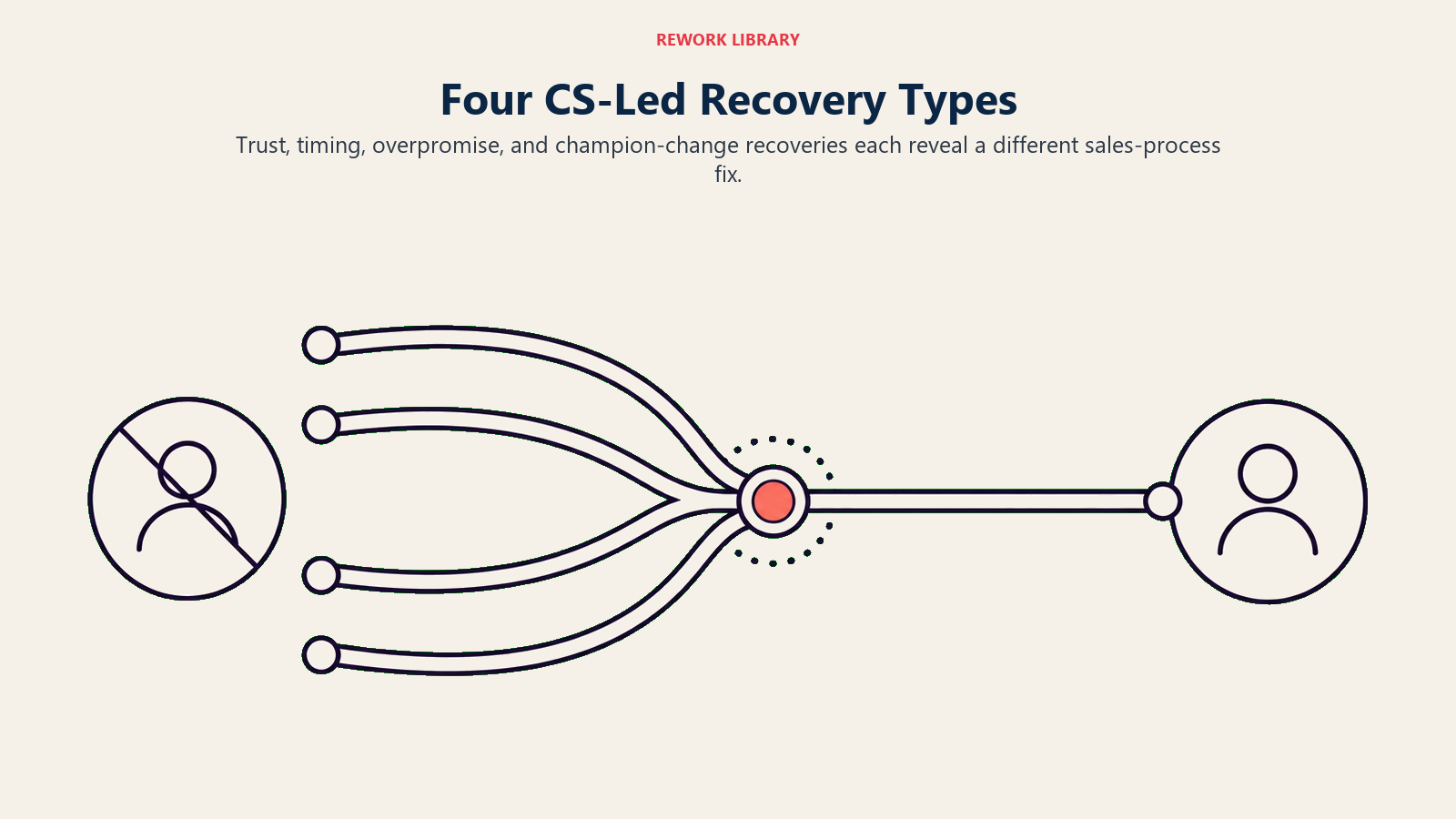
Typ 1: Vertrauenswiederherstellung. Der Deal wurde verloren, weil die AE-Beziehung zusammenbrach. Der Interessent fühlte sich gedrängt, irregeführt oder abgewiesen. Der CSM, der ohne Quotadruck und ohne Abschluss-Agenda kam, baute über mehrere Monate eine neue Beziehung mit demselben Kontakt auf. Der Interessent engagierte sich schließlich erneut, weil er dem CSM vertraute, auch wenn er dem vorangegangenen Verkaufsprozess nicht vertraute.
Was es verrät: Ein AE-Beziehungsproblem oder ein Verkaufsprozess-Problem. Etwas daran, wie der Deal geführt wurde – zu aggressiv, zu gehetzt, unzureichende Reaktionsfähigkeit – hat Vertrauen in dem Maße beschädigt, dass der Interessent mit einem neuen Gesicht von vorne beginnen musste. Sales-Leadership muss dieses Muster kennen, nicht um einen bestimmten AE zu beschuldigen, sondern um zu verstehen, ob der Verkaufsprozess systemisch Vertrauensdefizite schafft.
Typ 2: Timing-Wiederherstellung. Der Interessent war noch nicht bereit, als der Deal bearbeitet wurde. Das Budget war nicht genehmigt, interne Prioritäten waren anders, oder ein Projekt, von dem der Deal abhing, hatte noch nicht begonnen. HBRs Win/Loss-Analyse-Framework nennt die Timing-Bereitschaft als eine der drei Fragen, die Sales-Teams vor einem Abschluss am häufigsten nicht stellen, was Timing-Wiederherstellungen zu einer vorhersehbaren, weitgehend vermeidbaren Kategorie macht. Der CSM blieb durch eine Pflege-Phase hilfreich – Fragen beantwortet, relevante Inhalte geteilt, gelegentlich nachgehakt – und reaktivierte, als sich die Bedingungen änderten.
Was es verrät: Eine Qualifizierungslücke. Der Deal war in der Pipeline, bevor er hätte sein sollen. Jemand (entweder der AE oder das Lead-Scoring-Modell) hat diesen Interessenten als salesbereit definiert, als er noch 4–6 Monate von einer echten Entscheidung entfernt war. Die Qualifizierungskriterien müssen angepasst werden, um zu verhindern, dass dasselbe Muster die Pipeline mit Deals füllt, die im vorgesehenen Quartal nicht abgeschlossen werden können. Die Disziplin im Closing-Call, konkret wie AEs die Timeline-Bereitschaft vor den letzten Phasen prüfen, ist die Stelle, an der sich Timing-Fehlqualifizierung am häufigsten zeigt.
Typ 3: Übertreibungs-Reparatur. Sales hat Behauptungen aufgestellt, die einer genauen Prüfung während der Evaluierung nicht standhielten. Das Produkt funktionierte nicht wie beschrieben, der Implementierungs-Timeline war unrealistisch kurz, oder eine Funktion, die der AE versprochen hatte, existiert nicht in der dargestellten Form. Der Deal brach zusammen, als der Interessent die Behauptungen testete. Der CSM hat Erwartungen auf einen genaueren Anwendungsfall zurückgesetzt, gezeigt, was das Produkt tatsächlich gut macht, und zu anderen Bedingungen abgeschlossen.
Was es verrät: Ein systemisches Problem, das der Prozess zur Verhinderung von Sales-Übertreibungen adressieren soll. Das ist kein Einzel-Deal-Versagen – es ist ein Muster, das sich wiederholt, bis AE-Coaching und Deal-Review-Prozesse die Übertreibung abfangen, bevor sie den Interessenten erreicht.
Typ 4: Champion-Wechsel. Der ursprüngliche Champion hat das Unternehmen verlassen oder seine Autorität während des Verkaufszyklus verloren, und der Deal starb mit seinem Abgang. Der CSM hat eine Beziehung mit einem neuen Stakeholder in demselben Unternehmen aufgebaut – oft jemand, der nach dem Scheitern des ursprünglichen Deals hinzukam – und ein neues Gespräch mit einem frischen Sponsor eröffnet.
Was es verrät: Eine Deal-Qualifizierungslücke rund um Champion-Stabilität. Das ursprüngliche AE-Deal-Briefing enthielt keine Flags darüber, wie sicher die Rolle des Champions war oder wer der Backup-Sponsor sein könnte. Einen Deal durch einen Champion-Wechsel zu verlieren ist manchmal unvermeidbar. Aber Deals, bei denen der AE wusste, dass der Champion neu in der Rolle war, keinen Executive Sponsor hatte oder in einer politisch fragilen Position war, sollten ein Flag im CRM tragen, das eine Qualifizierungsüberprüfung auslöst, bevor der Deal voranschreitet. Alignment über mehrere Stakeholder aufzubauen, nicht nur beim Champion, ist die beste strukturelle Absicherung gegen Verluste vom Typ 4.
Was diese Wiederherstellungen über die Gründe des Verlustes verraten
Die nützliche Version dieser Analyse ist nicht „CS hat es gerettet" – es ist „das war oben in der Kette kaputt".
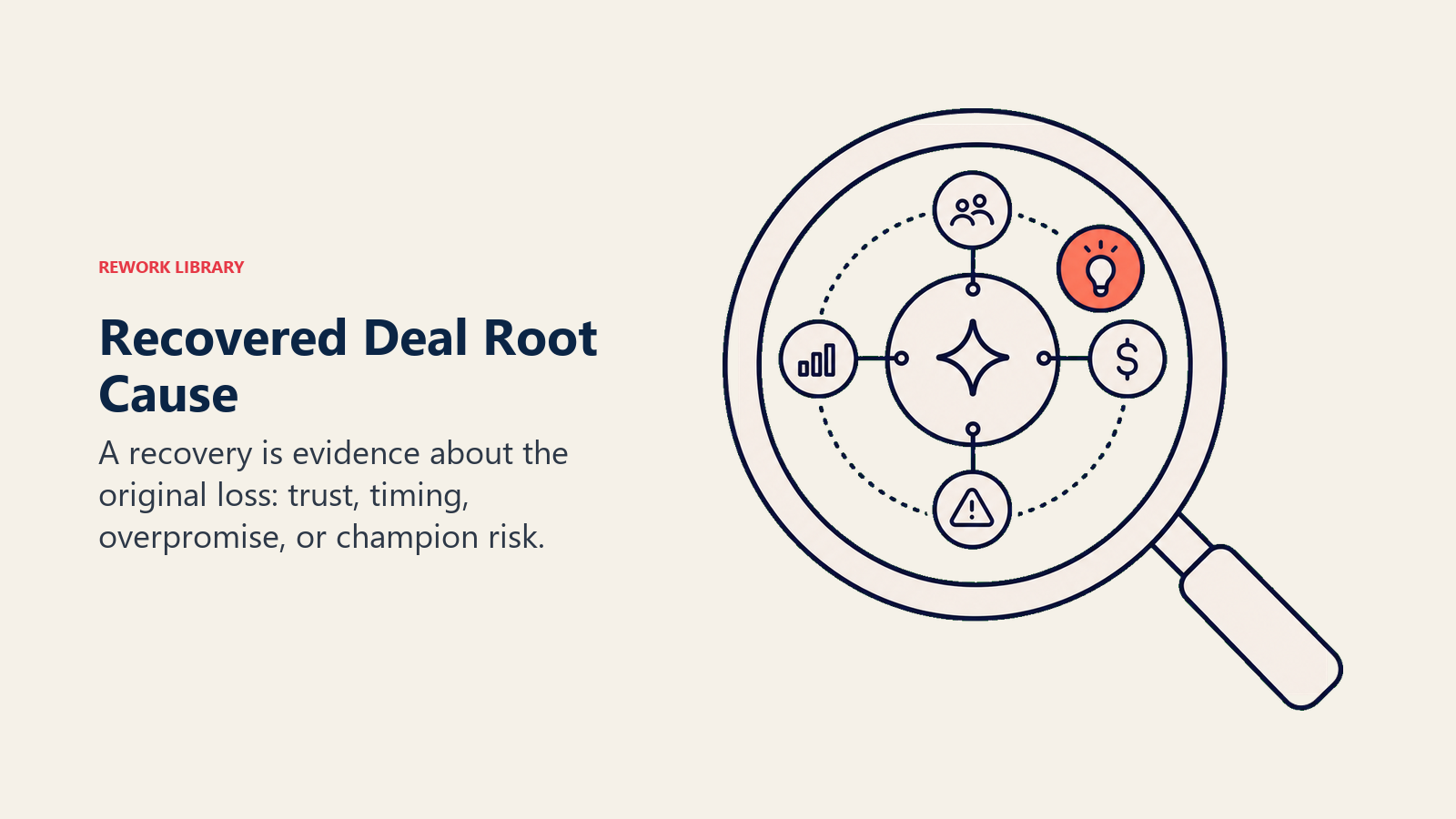
Vertrauensbrüche deuten auf AE-Beziehungs- oder Prozessprobleme hin, die Sales-Leadership ansprechen muss. Wenn mehrere Typ-1-Wiederherstellungen im selben Quartal passieren und um denselben AE oder dieselbe Stage des Verkaufsprozesses konzentriert sind, ist das ein Coaching-Gespräch – oder eine Prozess-Redesign-Frage.
Timing-Mismatch deutet auf Qualifizierungslücken hin. Wenn Ihre Pipeline regelmäßig Deals enthält, die 6–9 Monate nach der Qualifizierung nicht abgeschlossen werden, müssen die MQL- oder SQL-Kriterien verschärft werden. Das Lead-Scoring-Modell qualifiziert zu früh. Discovery-Fragen legen keine Timeline-Bereitschaft offen. Etwas im Qualifizierungsprozess schafft eine Pipeline, die voll aussieht, sich aber langsam bewegt – und ein Prozentsatz dieser Deals, die ablaufen, werden Wiederherstellungen anstatt Closed Won.
Übertreibungen deuten auf ein systemisches Muster hin, das der Artikel zur Verhinderung von Sales-Übertreibungen direkt adressiert. Eine Übertreibungs-Wiederherstellung ist ein individueller Coaching-Moment. Drei in einem Quartal sind ein Sales-Enablement-Problem. Der Artikel zur Verhinderung von Sales-Übertreibungen (verlinkt unter „Mehr erfahren“) behandelt dieses Muster direkt.
Champion-Verwundbarkeit deutet auf Deal-Briefings hin, die keine Champion-Stabilitäts-Flags enthielten. Jedes Deal-Briefing sollte eine Champion-Stabilitätsbewertung enthalten: wie lange ist diese Person schon in der Rolle, wer ist ihr Executive Sponsor, und was passiert, wenn sie geht? Deals, bei denen der Champion weniger als sechs Monate in der Rolle war oder keinen namentlich genannten Sponsor hat, tragen erhöhtes Champion-Wechsel-Risiko. Dieses Flag sollte eine Deal-Überprüfung auslösen, kein Closed-Lost-Protokoll. Aber nichts von diesem Lernen erreicht die Menschen, die es brauchen, ohne eine Feedback-Schleife, die die meisten Teams noch nicht gebaut haben.
Die Feedback-Schleife, die Sales fehlt
CS-geführte Wiederherstellungen tragen Intelligence, die Sales-Teams selten erfassen. Das geht verloren, wenn sie nicht verfolgt werden:
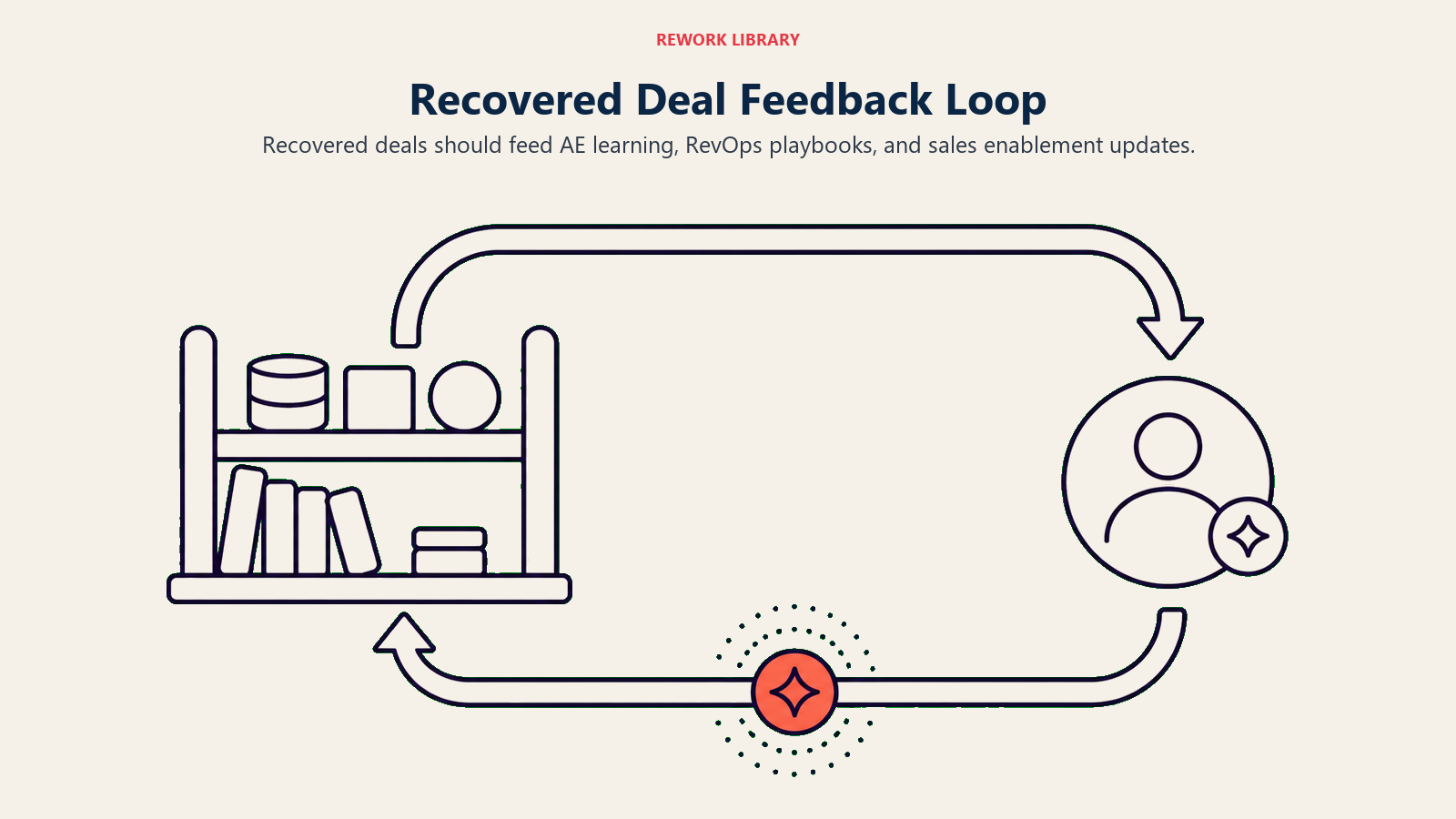
Der AE, der den Deal verloren hat, lernt nicht, was der CSM getan hat oder was kaputt war. Er sieht das Unternehmen sechs Monate später als neuen Kunden erscheinen und verbindet es möglicherweise nicht einmal mit dem Deal, den er verloren hat. Der spezifische Fehlermodus – Vertrauen, Timing, Übertreibung oder Champion-Verwundbarkeit – erreicht nie die Person, die ihr Verhalten anpassen muss. Das ist die Feedback-Lücke bei Churn-Ursachen, angewandt auf Deals, die vor dem Abschluss gescheitert sind: das strukturelle Fehlen eines Kanals von der CS-Intelligence zurück zum AE-Lernen.
RevOps kann aus Anekdoten kein Wiederherstellungs-Playbook aufbauen. Ohne strukturierte Protokollierung gibt es keine Möglichkeit, Muster zu identifizieren. „CS bleibt in Kontakt und manchmal kommen Interessenten zurück" ist kein Playbook. „Typ-2-Wiederherstellungen (Timing) sind am häufigsten im SMB-Segment, wenn Deals mehr als 45 Tage in der Pipeline waren, bevor das erste Demo stattfand" ist eine Qualifizierungskriterium-Änderung.
Sales-Enablement kann Training nicht ohne Daten aktualisieren. Wenn Typ-3-Wiederherstellungen (Übertreibung) um bestimmte Funktionen oder Versprechen konzentriert sind – die, die AEs konsistent falsch beschreiben – ist das eine spezifische Trainingslücke. Aber nur, wenn sowohl der Wiederherstellungstyp als auch der ursprüngliche Verlustgrund protokolliert sind.
Das CRM-Schema für wiederhergestellte Deals
Das sollte ein „Wiederhergestellter Deal"-Tag erfassen, wenn eine Closed-Lost-Opportunity als CS-gepflegte Beziehung wieder in die Pipeline eintritt:
| Feld | Verantwortlicher | Beschreibung |
|---|---|---|
| Ursprüngliches Abschlussdatum | RevOps | Wann der ursprüngliche Deal als Closed Lost protokolliert wurde |
| Ursprünglicher Verlustgrund | AE (zum Zeitpunkt des Verlustes) | Auswahl: Budget, Timing, Wettbewerber, Champion, Produkt-Fit, Beziehung |
| Wiederherstellungstyp | CSM | Auswahl: Vertrauen, Timing, Übertreibungs-Reparatur, Champion-Wechsel |
| CS-Intervention | CSM | Freitext: Was hat der CSM konkret getan, um die Beziehung aufrechtzuerhalten? |
| Was sich geändert hat | CSM | Freitext: Welche externe Bedingung hat sich im Unternehmen des Interessenten geändert und den Wiedereinstieg ermöglicht? |
| Wiederherstellungs-Timeline | RevOps | Monate von Closed Lost bis zum Re-Engagement |
| Ursprünglicher AE | RevOps | Verknüpft mit dem ursprünglichen Opportunity-Datensatz |
Wer überprüft: Quartalsweise gemeinsame Sitzung – VP Sales, VP CS, RevOps – gleiche Kadenz wie die Bad-Fit-Feedback-Schleife in „Dieser Deal hätte nicht abgeschlossen werden sollen“ (verlinkt unter „Mehr erfahren“). Beide Schleifen können in derselben Sitzung oder hintereinander laufen.
Was aktualisiert wird: Sales-Qualifizierungskriterien (wenn Timing-Mismatches systemisch sind), AE-Coaching (wenn Übertreibungsmuster spezifisch sind), Deal-Briefing-Vorlagen (wenn Champion-Verwundbarkeit nicht gekennzeichnet wird) und Handoff-SLAs (wenn Vertrauensbrüche um den Sales-CS-Übergang konzentriert sind). Die Frage, die dieses Schema aufwirft, ist, ob CS-Wiederherstellungen überhaupt ein Ziel für das Team sein sollten, oder ob das Setzen dieser Erwartung die Dynamik grundlegend verändert.
Zitierfähige Kernaussagen
„30–40 % der B2B-Deals, die in einem bestimmten Quartal als Closed Lost markiert werden, werden innerhalb von 12 Monaten erneut kontaktiert, so die B2B-Sales-Benchmarking-Forschung der RAIN Group. Weniger als 10 % werden formal verfolgt oder zugeordnet.“
„CS-gepflegte Beziehungen mit verlorenen Interessenten konvertieren mit 2–4-facher Rate gegenüber kalten Outbound-Kontakten zu denselben Kontakten, so eine Winning-by-Design-Studie von 2024 über Post-Sale-Relationship-Intelligence.“
„Nur 18 % der Revenue-Teams verfügen über einen definierten Prozess zum Protokollieren und Lernen aus CS-geführten Wiederherstellungen, so Gainsights Customer Success Industry Benchmark.“
Rework-Analyse: CS-geführte Wiederherstellungen sind unabhängig vom Ausgang des Deals teuer. Sie dauern 4–8 Monate länger als Erstabschlüsse und tragen einen niedrigeren initialen ACV, weil Wiederabschlüsse zu vorsichtigeren Bedingungen erfolgen. Aber der Intelligence-Wert ist erheblich: Die Kohorte wiederhergestellter Deals eines einzigen Quartals, klassifiziert nach den 4 Wiederherstellungstypen, offenbart typischerweise mindestens eine systemische Qualifizierungslücke (meist Timing-Fehlqualifizierung im SMB), ein AE-Coaching-Muster (meist Übertreibung bei einer bestimmten Funktion) und eine Deal-Briefing-Lücke (meist nicht gekennzeichnete Champion-Stabilität). Unternehmen, die das systematisch protokollieren, ändern ihre Qualifizierungskriterien innerhalb von zwei Quartalen. Unternehmen, die jede Wiederherstellung als einmaligen Erfolg behandeln, tun das nicht.
Die Grenze: Das ist keine CS-Sales-Bewegung
Eines muss klar gesagt werden.
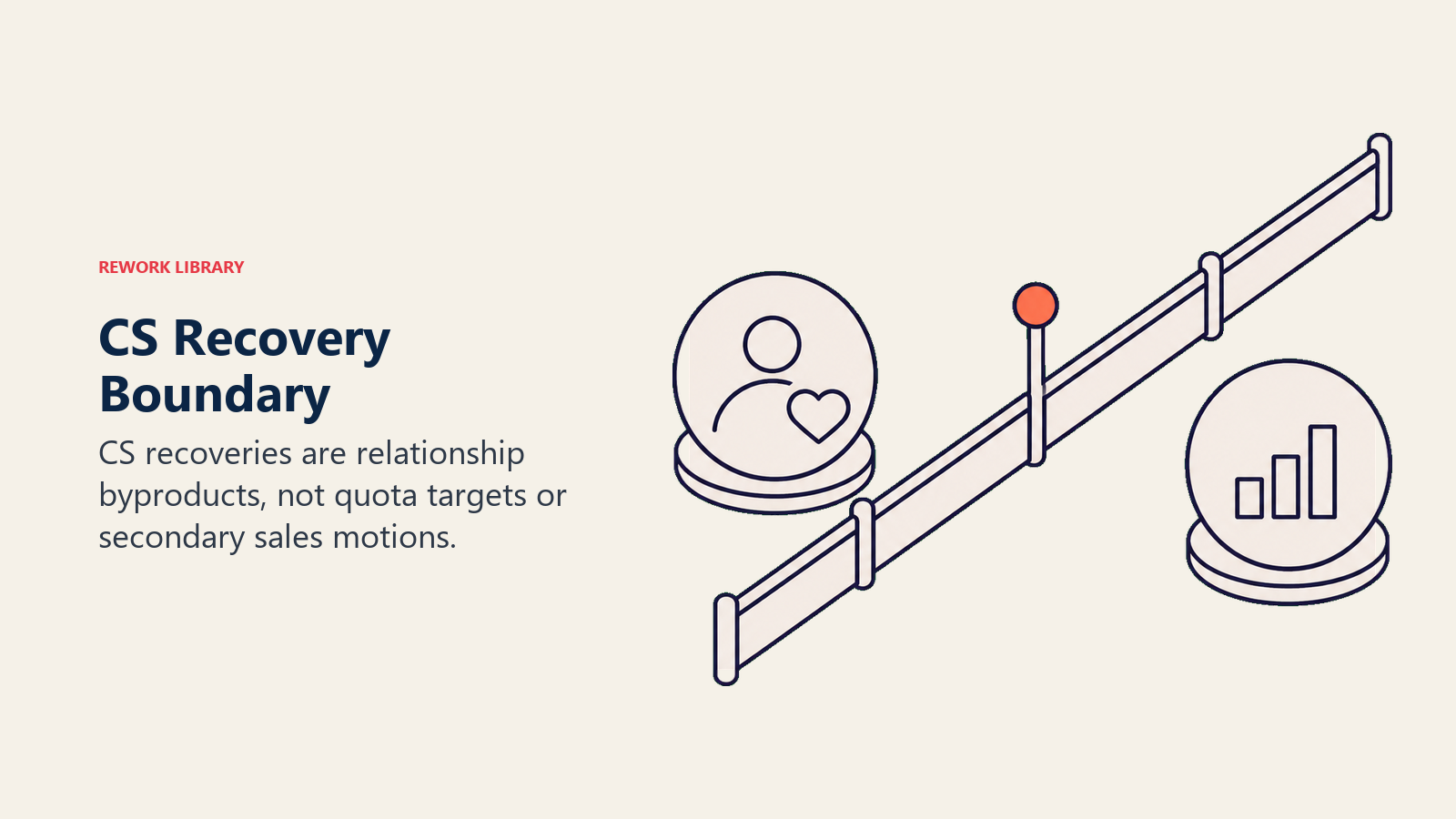
Ein Deal durch CS zu retten ist ein Nebenprodukt der Beziehungsqualität, kein Ziel. Wenn CSMs nach einem Closed Lost den Kontakt zu Interessenten aufrechterhalten – Fragen beantworten, hilfreich bleiben, verfügbar sein – ist die Wiederherstellung, wenn sie eintritt, zufällig. Sie ist das Ergebnis davon, die CS-Rolle gut auszuführen, nicht eine Pipeline zu bearbeiten.
CS sollte nicht an Pipeline-Wiederherstellung gemessen werden. Kein Quota für „wiedereröffnete Closed-Lost-Konten". Keine SPIFs für Wiederherstellungen. Kein Tracking von „CS-gequeueltem ARR aus zuvor verlorenen Deals" als Haupt-CS-Kennzahl. McKinseys Forschung zu Customer Success und Wachstum ist eindeutig: Customer-Success-Funktionen erzielen die beste Wirkung, wenn sie sich auf die Wertschöpfung für bestehende Kunden konzentrieren und nicht als zweite Verkaufsbewegung agieren. In dem Moment, in dem CS an Wiederherstellung gemessen wird, ändert sich das Verhalten: CSMs beginnen, verlorene Interessenten gegenüber bestehenden Kunden zu priorisieren, das Re-Engagement aggressiver zu verfolgen, als angemessen, und dieselben Vertrauensprobleme zu schaffen, die ursprünglich zum Verlust geführt haben.
CS sollte auch nicht dazu angereizt werden, Closed-Lost-Konten auf die Art und Weise zu verfolgen, wie ein BDR es würde. Die Beziehung, die ein CSM mit einem Interessenten aufrechterhält, der nicht gekauft hat, ist eine passive Beziehung – Check-ins, Content-Shares, Produktfragen beantworten. Es ist keine aktive Sales-Kampagne. Die Unterscheidung ist wichtig für das Setzen klarer Rollengrenzen und für die Aufrechterhaltung des Vertrauens, das die Wiederherstellung möglich macht, wenn die Bedingungen sich schließlich ändern.
Das Ziel des Verfolgens von Wiederherstellungen ist Intelligence, nicht Umsatzzuordnung. Die Frage ist nicht „wie viel Pipeline hat CS aus verlorenen Deals generiert?" Es ist „was sagen uns diese Wiederherstellungsmuster darüber, wo unser Verkaufsprozess versagt?" Das sind unterschiedliche Fragen mit unterschiedlichen Implikationen dafür, wie Sie die Daten nutzen.
Was Rework erleichtert
Wenn CRM und CS-Plattform einen gemeinsamen Konto-Datensatz teilen, sind die CS-Interaktionshistorie und der ursprüngliche Deal-Datensatz am selben Ort sichtbar. Ein CSM, der seine Beziehung mit einem zum Kunden gewordenen Interessenten überprüft, kann den ursprünglichen Deal-Kontext neben seinen eigenen Engagement-Notizen sehen – ohne manuell zwei Systeme abzugleichen. Wenn der wiederhergestellte Deal wieder in das CRM eintritt, sind die ursprünglichen Verlustdaten bereits mit dem neuen Opportunity-Datensatz verknüpft, was die Ursachenanalyse zu einer einzigen Suche macht anstatt einer plattformübergreifenden Datenabfrage.
Für das architektonische Detail darüber, wie gemeinsame Datensätze über die AE-CS-Schnittstelle funktionieren, siehe Shared Customer Record Architecture.
Anti-Muster
Die Wiederherstellung feiern, ohne zu fragen, warum sie notwendig war. Jede CS-geführte Wiederherstellung repräsentiert einen Deal, der einmal gescheitert ist. Der Gewinn, den Kunden zurückzubringen, ist real. Aber die nützlichere Frage ist: Warum ist der ursprüngliche Deal gescheitert, und was sagt uns der Wiederherstellungstyp über die Ursache? Das Ergebnis feiern, aber die Analyse nicht überspringen.
Den Erfolg der Persönlichkeit des CSM zuschreiben statt einem systemischen Versagen. „Alex ist einfach großartig mit Menschen, deshalb ist der Acme-Deal zurückgekommen" ist die Geschichte, die das Lernen verhindert. Die eigentliche Geschichte ist: Der Acme-Deal war eine Typ-1-Vertrauenswiederherstellung, der ursprüngliche AE hatte ein Muster aggressiver Abschluss-Taktiken, und drei der letzten fünf Alex-Wiederherstellungen hatten dieselbe Ursache. Das ist ein individuelles Coaching-Gespräch und möglicherweise eine Prozessfrage.
„CS rettet Deals" als Grund verwenden, den Verkaufsprozess nicht ausreichend zu resourcen. Wenn Wiederherstellungen als Beweis dafür angeführt werden, dass der Verkaufsprozess nicht behoben werden muss – „wir werden es schließlich durch CS-Beziehungen abschließen" – ist das ein Zeichen, dass die Feedback-Schleife nicht läuft. Wiederherstellungen sind teuer: Sie dauern 4–8 Monate länger als Erstabschlüsse, tragen einen niedrigeren initialen ACV (weil der Wiederabschluss typischerweise zu vorsichtigeren Bedingungen erfolgt) und verbrauchen CSM-Kapazität. Ein funktionierender Verkaufsprozess, der Deals beim ersten Mal abschließt, ist immer günstiger als ein Wiederherstellungsprogramm.
Häufig gestellte Fragen zu Closed Lost, aber von CS gerettet
Was sind die 4 Wiederherstellungstypen bei der CS-geführten Deal-Wiederherstellung?
Die vier Typen klassifizieren jede CS-geführte Wiederherstellung nach der Ursache des ursprünglichen Verlustes. Typ 1, Vertrauenswiederherstellung, bedeutet, dass die AE-Beziehung zusammenbrach: Der CSM baute sie ohne Quotadruck von Grund auf neu auf. Typ 2, Timing-Wiederherstellung, bedeutet, dass der Interessent noch nicht bereit war, als der Deal bearbeitet wurde: Der CSM blieb durch eine Pflege-Phase hilfreich, bis sich die Bedingungen änderten. Typ 3, Übertreibungs-Reparatur, bedeutet, dass das Produkt nicht so funktionierte, wie es verkauft wurde: Der CSM setzte die Erwartungen auf einen genaueren Anwendungsfall zurück. Typ 4, Champion-Wechsel, bedeutet, dass der ursprüngliche Sponsor ausschied: Der CSM baute eine Beziehung mit einem neuen Stakeholder im selben Unternehmen auf. Jeder Typ führt zu einer anderen Lösung: Sales-Coaching, Qualifizierungskriterien, AE-Deal-Review-Prozess oder Deal-Briefing-Vorlagen.
Ist eine CS-geführte Deal-Wiederherstellung ein Umsatzziel für das CS-Team?
Nein. Dass CS einen Closed-Lost-Deal zurückholt, ist ein Nebenprodukt der Beziehungsqualität, kein Sales-Ziel. CSMs, die nach einem Verlust den Kontakt zu Interessenten aufrechterhalten, tun das, indem sie Fragen beantworten, relevante Inhalte teilen und verfügbar bleiben, nicht indem sie eine Pipeline bearbeiten. Wird CS an Wiederherstellungsraten gemessen, ändert sich das Verhalten schädlich: CSMs beginnen, verlorene Interessenten gegenüber bestehenden Kunden zu priorisieren und das Re-Engagement zu aggressiv zu verfolgen, und schaffen damit dieselben Vertrauensprobleme, die zum ursprünglichen Verlust geführt haben. Das Ziel des Verfolgens von Wiederherstellungen ist Intelligence: zu verstehen, wo der Verkaufsprozess versagt, nicht Umsatzzuordnung aus CS-generierter Pipeline.
Wie sollte eine CS-geführte Wiederherstellung im CRM getaggt werden?
Das CRM-Schema für wiederhergestellte Deals sollte sieben Felder erfassen: ursprüngliches Abschlussdatum, ursprünglicher Verlustgrund (Auswahlliste des AE zum Zeitpunkt des Verlustes), Wiederherstellungstyp (Klassifizierung des CSM nach den 4 Wiederherstellungstypen), CS-Intervention (was hat der CSM konkret getan, um die Beziehung aufrechtzuerhalten), was sich im Unternehmen des Interessenten geändert hat und den Wiedereinstieg ermöglichte, Wiederherstellungs-Timeline in Monaten von Closed Lost bis zum Re-Engagement und der ursprüngliche AE, verknüpft mit der ursprünglichen Opportunity. Diese Felder ermöglichen es, Muster über die wiederhergestellten Deals eines Quartals zu aggregieren, statt jeden als isolierten Erfolg zu behandeln.
Wie lange dauern CS-geführte Wiederherstellungen typischerweise?
Die meisten wiederhergestellten Deals brauchen 4–8 Monate von Closed Lost bis zum Re-Engagement, wobei Timing-Wiederherstellungen (Typ 2) im längeren Bereich liegen, weil sich externe Bedingungen beim Interessenten ändern müssen. Unternehmen mit einem formalen Tagging-System für wiederhergestellte Deals verkürzen die durchschnittliche Wiederherstellungszeit um 35 % durch proaktives Re-Engagement: Der CSM weiß, wann er sich melden sollte, weil der ursprüngliche Verlustkontext protokolliert ist und nicht, weil er zufällig daran denkt. Ohne strukturierte Protokollierung ist das Re-Engagement zufällig und passiert meist, wenn der Interessent selbst Kontakt aufnimmt, was die Timeline um Monate verlängert.
Was passiert mit der Provision, wenn CS einen Closed-Lost-Deal zurückholt?
Das ist eine der am häufigsten vermiedenen Fragen im Gespräch über Wiederherstellungen. Die Antwort hängt von Ihrem Vergütungsdesign ab, aber das Prinzip sollte lauten: Schaffen Sie keinen Streit um Anrechnung, der CS davon abhält, Beziehungen zu verlorenen Interessenten zu pflegen. Die meisten Teams behandeln den wiederhergestellten Deal als neue Opportunity, bei der der CSM als Quelle angerechnet wird, mit der üblichen CS-Vergütung für diesen Kanal. Die konkreten Regeln sind weniger wichtig als das Prinzip: Stellen Sie sicher, dass CSMs nicht dafür bestraft oder daran gehindert werden, Beziehungen nach einem Verlust zu pflegen.
Wie verhindern Sie, dass die Erzählung „CS rettet Deals“ einen kaputten Verkaufsprozess verdeckt?
Indem Sie die Analyse der 4 Wiederherstellungstypen quartalsweise durchführen und die systemischen Muster hinter den Wiederherstellungen sichtbar machen, statt nur die Erfolge zu feiern. Machen Typ-2-Wiederherstellungen (Timing-Fehlqualifizierung) 60 % der Kohorte eines Quartals aus, ist das ein Problem der Qualifizierungskriterien, keine CS-Erfolgsgeschichte. Häufen sich Typ-3-Wiederherstellungen (Übertreibung) rund um dasselbe Funktionsset über mehrere AEs hinweg, ist das eine Sales-Enablement-Lücke. Das Wiederherstellungsvolumen selbst ist ein nachlaufender Indikator. Eine Organisation mit einem funktionierenden Verkaufsprozess braucht im Zeitverlauf weniger Wiederherstellungen, nicht mehr.
Mehr erfahren

Principal Solution Architect
On this page
- Warum das häufiger passiert, als Teams es verfolgen
- Die vier Typen von CS-geführten Wiederherstellungen
- Was diese Wiederherstellungen über die Gründe des Verlustes verraten
- Die Feedback-Schleife, die Sales fehlt
- Das CRM-Schema für wiederhergestellte Deals
- Zitierfähige Kernaussagen
- Die Grenze: Das ist keine CS-Sales-Bewegung
- Was Rework erleichtert
- Anti-Muster
- Mehr erfahren