Carta vs Pulley: Which Cap Table Platform Fits Your Startup in 2026?
Turn this article into takeaways for your work.


Each assistant summarizes the article only for you and suggests best practices for your work.
Updated August 2026
If you're a founder or finance lead putting Carta and Pulley side by side, you've probably already ruled out spreadsheets as your system of record and you're now trying to answer a narrower question: which platform gets your equity, your fundraising paperwork, and your 409A valuations right without turning into its own ongoing project. Both companies build software for the same core job, tracking who owns what, keeping option grants and SAFEs current, and producing a defensible valuation when the IRS asks for one. Neither is a stripped-down version of the other, and the real gap between them shows up less in feature checklists than in how each company chooses to sell you the product.
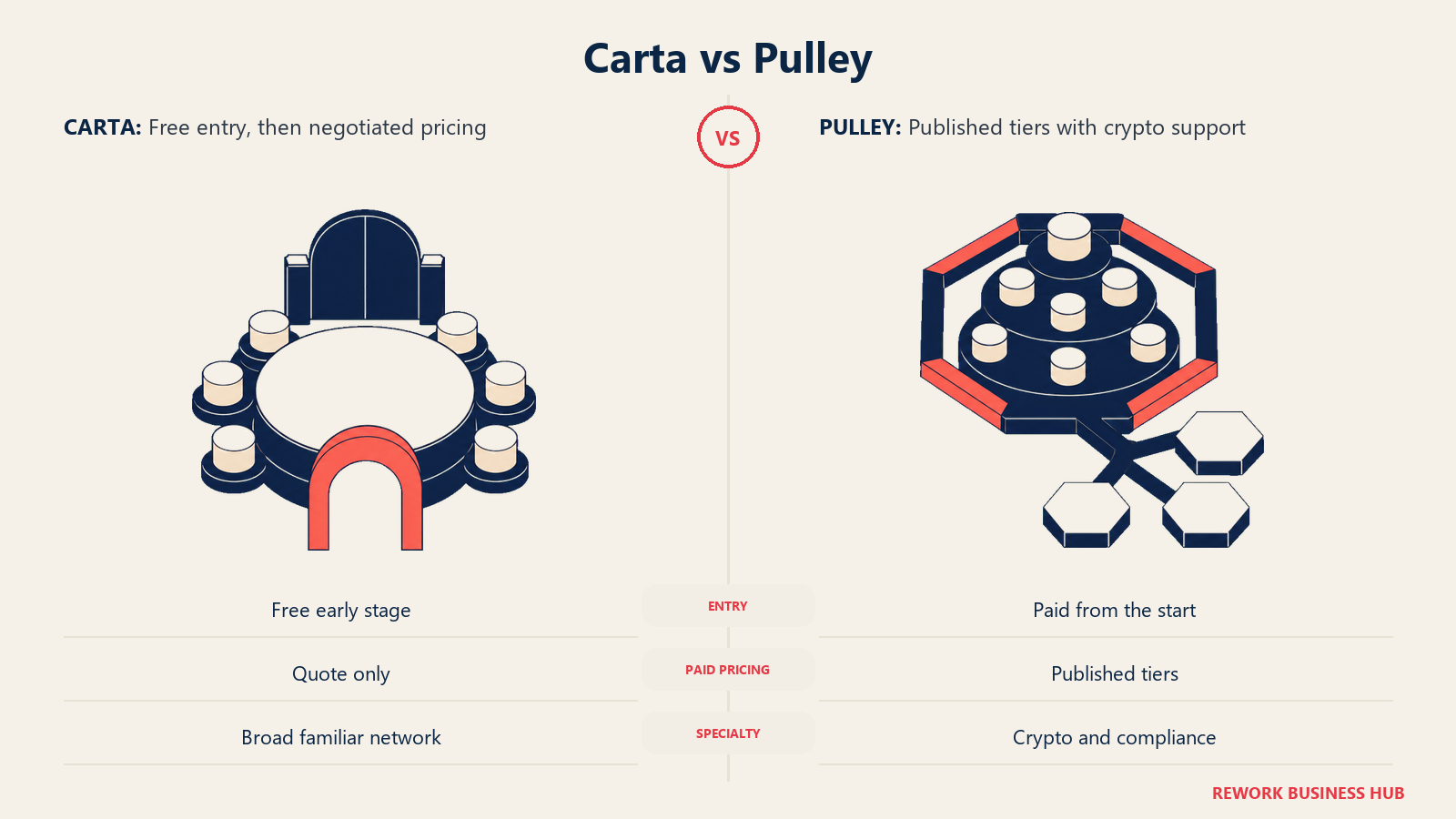
That gap is sharpest on price, and it's worth naming up front because most comparison pages get it backwards. Carta gives you a real, usable free tier, and then the moment you need more than 25 stakeholders or have raised past $1 million, it sends you into a sales conversation with no dollar figure attached to any paid plan. Pulley does the opposite: there's no free plan at any stakeholder count, but every paid tier, including its unusual crypto and token cap table line, is priced on the page in plain dollars. This comparison works through cap table depth, 409A handling, fundraising workflows, compliance, and the crypto capability that's a genuine Pulley differentiator, then closes with the pricing and transparency trade laid out honestly, because neither vendor actually lets you put both platforms on the same dollar axis.
TL;DR
| Carta | Pulley | |
|---|---|---|
| Free tier | Yes: Launch, up to 25 stakeholders and $1M raised | None, at any stakeholder count |
| Entry paid price | Not published. Build, Grow, and Scale are priced per stakeholder against a minimum annual fee, quote only | $1,200/year (Startup), first 25 stakeholders included |
| Mid tier | Not published (Grow, flexible stakeholder limit) | $3,500/year (Growth), first 40 stakeholders included, adds 409A valuations, option exercises, Rule 701, Form 3921, board approvals, HRIS integrations |
| Top published tier | Not published (Scale, flexible stakeholder limit) | Enterprise, contact us |
| Crypto / token cap tables | Not a core product line | Token Cap Table $4,500/year (25 stakeholders), Distributions $4,500/year, token valuations starting at $10,000 |
| Pricing transparency | Opaque past the free tier; every paid button routes to a sales call | Published for every standard tier and the crypto line |
| Reputation | Market-leading name recognition, largest cap table network | Modern interface, fast-moving product, transparent packaging |
| Best for | A startup happy to start free today and negotiate a number later | A startup that wants to know the annual bill before the first sales call |
Key Facts
- 6,411 U.S. companies now run an employee stock ownership plan, covering 15.1 million participants and holding more than $2 trillion in combined assets, per the most recent Department of Labor filings analyzed by the National Center for Employee Ownership (NCEO, Employee Ownership by the Numbers).
- U.S. venture firms closed 14,320 deals worth $215.4 billion in 2024, and every one of those rounds needed a cap table update the same week it closed (NVCA 2025 Yearbook).
- Median founding-team ownership falls from roughly 56% after a seed round to 36% at Series A, dilution that has to be tracked precisely, grant by grant, across every subsequent round (Carta, Founder Ownership Report 2026).
- 85% of companies with fewer than 750 employees have just one or no dedicated staff member administering their equity plan, exactly the staffing gap that cap table software is built to absorb (NASPP/Deloitte, 2025 Equity Administration Survey).
Who Each Platform Is Really For
Carta and Pulley both sell to the same broad category, venture-backed startups that have outgrown a spreadsheet cap table, but they don't sell to the same buyer inside that category. Carta's pitch leans on scale and familiarity: it's the platform your investors, your lawyers, and your last company probably already used, and it's free to start using regardless of how established or early-stage you are. Pulley's pitch leans on clarity: you know the price before you talk to anyone, and the product is built with a visibly newer interface aimed at founders who want to self-serve rather than wait on a sales cycle.
That difference in go-to-market shows up in who actually gets the most value from each tool. A founder who wants to move fast, doesn't want a sales call standing between them and setup, and can plan around a fixed annual number tends to land on Pulley. A founder or finance lead who's optimizing for investor familiarity, or who expects to grow past the free tier's 25-stakeholder ceiling and wants to negotiate a custom deal rather than accept a published rate card, tends to stay with Carta.
| Carta | Pulley | |
|---|---|---|
| Primary buyer | Founders and finance leads prioritizing investor familiarity and market presence | Founders and finance leads who want to self-serve and know the price up front |
| The question they're solving | "What's the platform my investors and lawyers already expect to see?" | "What does this actually cost, and can I start today without a sales call?" |
| Where the platform is strongest | Free-tier accessibility for very early startups, plus the largest network of cap tables in the market | Transparent packaging at every stakeholder count, including the unusual crypto and token line |
| Where it disappoints | The moment you outgrow the free tier, pricing becomes a negotiation with no public anchor | No free option, so even a pre-revenue company with a handful of stakeholders pays from day one |
| Buying trigger | Default choice for founders who haven't shopped, or who want the biggest network effect | A founder who compared pricing pages first and wants the number before the demo |
If you're weighing more than these two, the best Carta alternatives roundup and the best Pulley alternatives roundup both cover the wider field with the same verified-pricing standard used here.
Cap Table and Stakeholder Management Depth
Both platforms handle the fundamentals: shares, options, SAFEs, convertible notes, vesting schedules, and ownership percentages that update automatically as new grants and rounds land. Where they diverge is how stakeholder count is packaged and what it costs to grow.
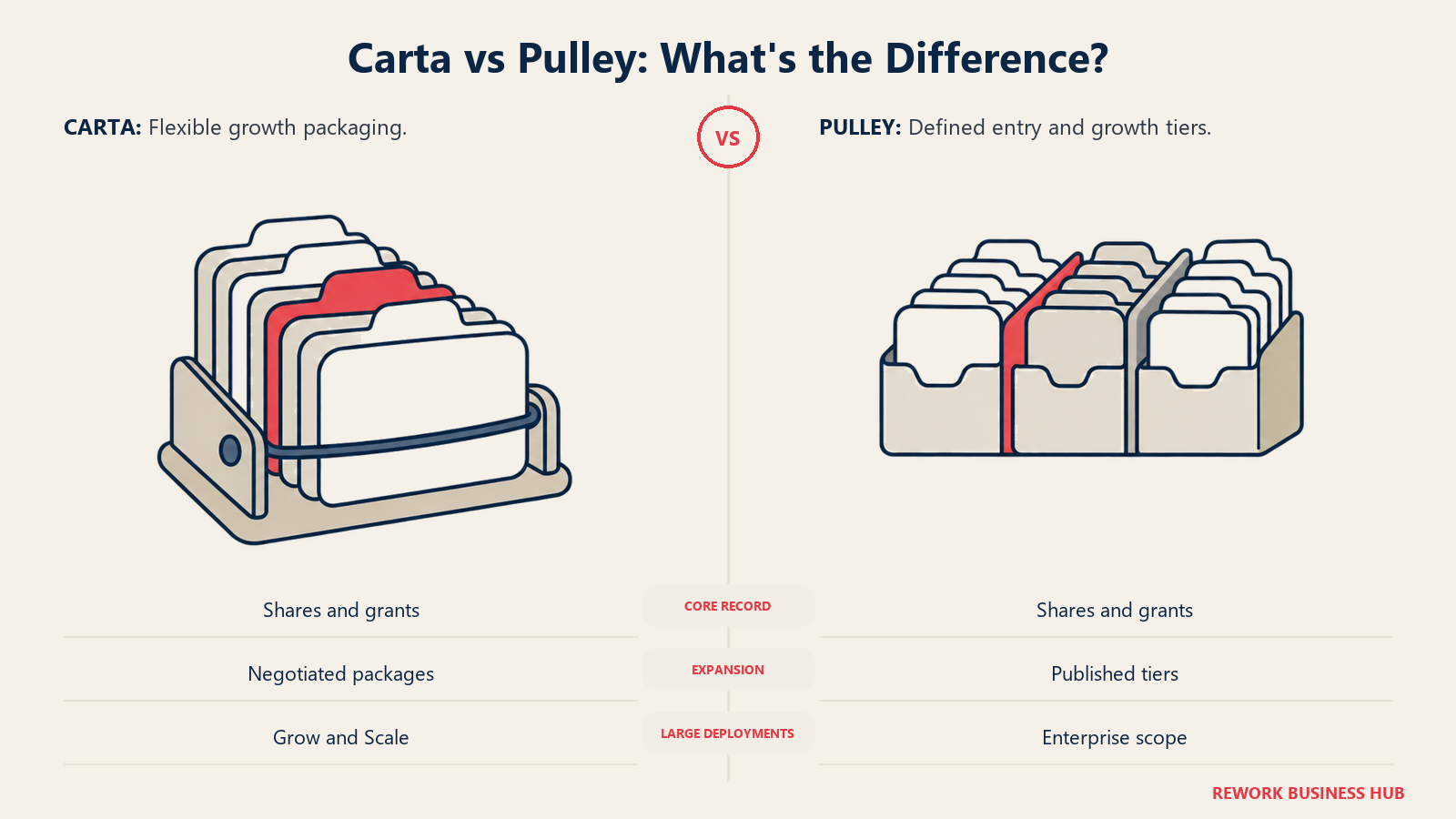
Carta's Launch tier is free for up to 25 stakeholders and $1 million raised. Above that, Carta moves you into Build (up to 50 stakeholders), then Grow and Scale, both described as having a flexible stakeholder limit rather than a hard cap. Carta's own pricing FAQ states that each paid package has a price per stakeholder with a minimum annual fee, but the company does not publish what that per-stakeholder rate or minimum actually is anywhere on its site. Every paid tier's call-to-action routes straight to a sales conversation.
Pulley skips the free tier entirely. Startup, its entry paid plan, is $1,200 per year and includes the first 25 stakeholders. Growth, at $3,500 per year, includes the first 40 stakeholders and layers on meaningfully more capability, not just a higher headcount ceiling: 409A valuations, option exercises, Rule 701 tracking, Form 3921 generation, board approvals, and HRIS integrations all become part of the package at that tier. Beyond Growth, Enterprise is contact-us pricing. One detail worth knowing before you count your own stakeholder list: Pulley counts an angel investor writing a check of $50,000 or less as half a stakeholder, which can meaningfully change where you actually land in a tier if your round includes several small angel checks.
| Stakeholder factor | Carta | Pulley |
|---|---|---|
| Entry tier stakeholder cap | 25 (Launch, free, also capped at $1M raised) | 25 (Startup, $1,200/year) |
| Mid tier stakeholder cap | 50 (Build, price not published) | 40 (Growth, $3,500/year) |
| Top tier stakeholder cap | Flexible (Grow, Scale, price not published) | Uncapped, custom (Enterprise, contact us) |
| How cost scales past the free tier | Per stakeholder against an undisclosed minimum annual fee | By which of three published tiers matches your headcount |
| Small-check angel investors | Not a published stakeholder-counting rule | Checks of $50,000 or less count as half a stakeholder |
409A Valuations and How Each Handles Them
Every venture-backed startup issuing options needs a 409A valuation to stay inside IRS safe harbor, and both platforms treat it as a paid capability rather than something bundled into every plan for free. The structural difference is where it sits.
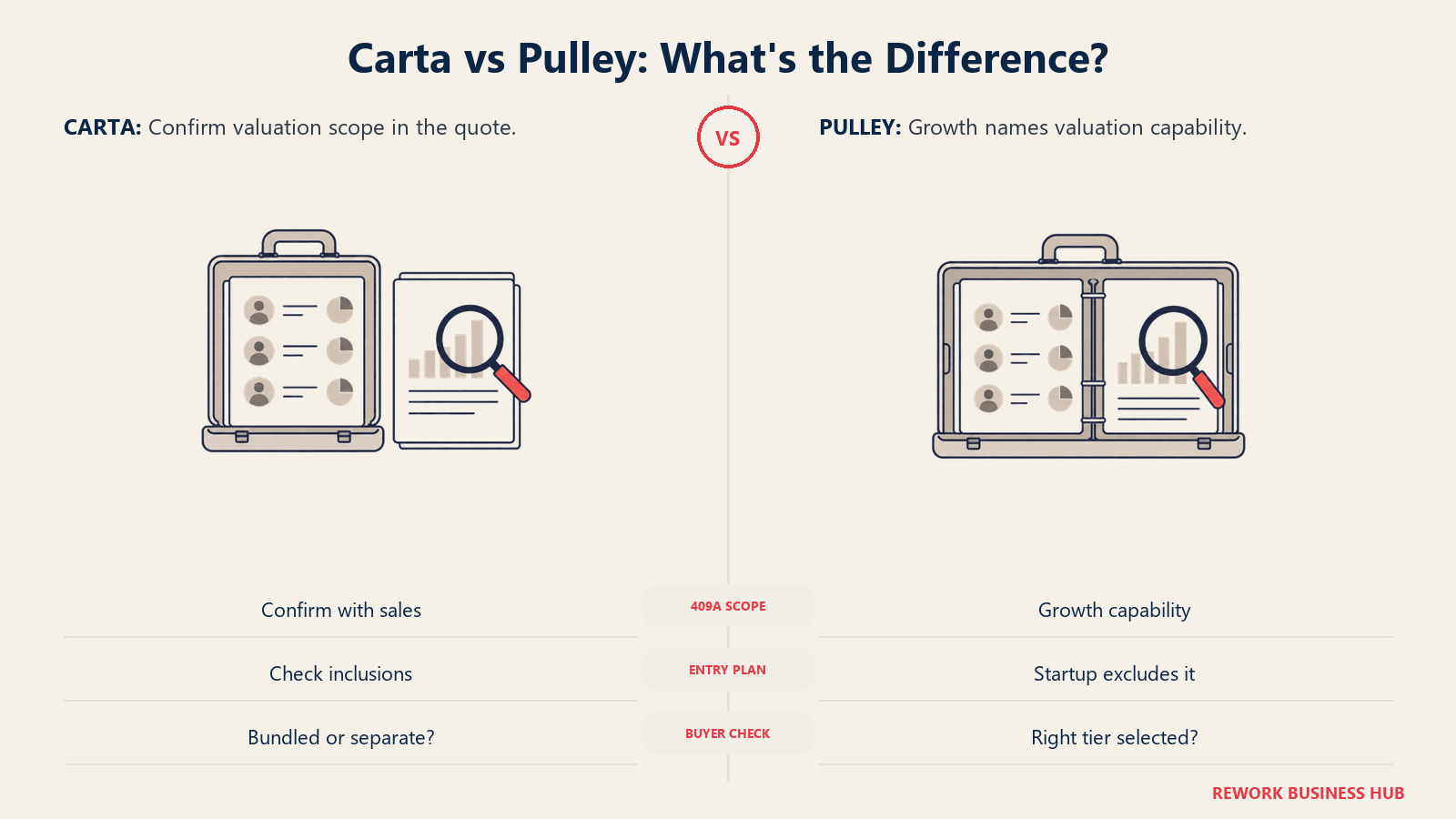
Carta runs 409A valuations as a distinct product line layered on top of the cap table rather than as a feature baked into a specific published tier. Because Carta doesn't publish paid-tier pricing at all, there's no way to say from the pricing page alone which tier, or what additional cost, gets you a 409A included versus billed separately; that detail is part of the same sales conversation that determines your per-stakeholder rate.
Pulley is explicit about where 409A sits in its structure: it's one of the named capabilities that Growth adds on top of Startup, alongside option exercises, Rule 701, Form 3921, board approvals, and HRIS integrations. If a 409A valuation is a near-term requirement, not a someday need, that tells you directly that Startup at $1,200 a year isn't enough on its own and you should be pricing against Growth at $3,500 a year instead.
| 409A factor | Carta | Pulley |
|---|---|---|
| Where it lives | A separate valuation product, cost undisclosed on the public pricing page | Named as one of Growth's included capabilities, starting at $3,500/year |
| Tier dependency | Not tied to a specific published tier since none carry public prices | Not included on Startup ($1,200/year); requires Growth or above |
| What to ask sales | Whether your quoted per-stakeholder rate already includes 409A or bills it separately | Confirm nothing; Growth's inclusion is already public |
| Best fit | Teams already committed to a Carta sales negotiation who can fold 409A into that conversation | Teams that want the 409A cost visible before they ever talk to sales |
Fundraising and SAFE Workflows
Both platforms are built to carry a startup through the mechanics of a round: SAFEs, convertible notes, priced equity rounds, and the waterfall modeling that shows founders and investors how ownership shifts under different scenarios.
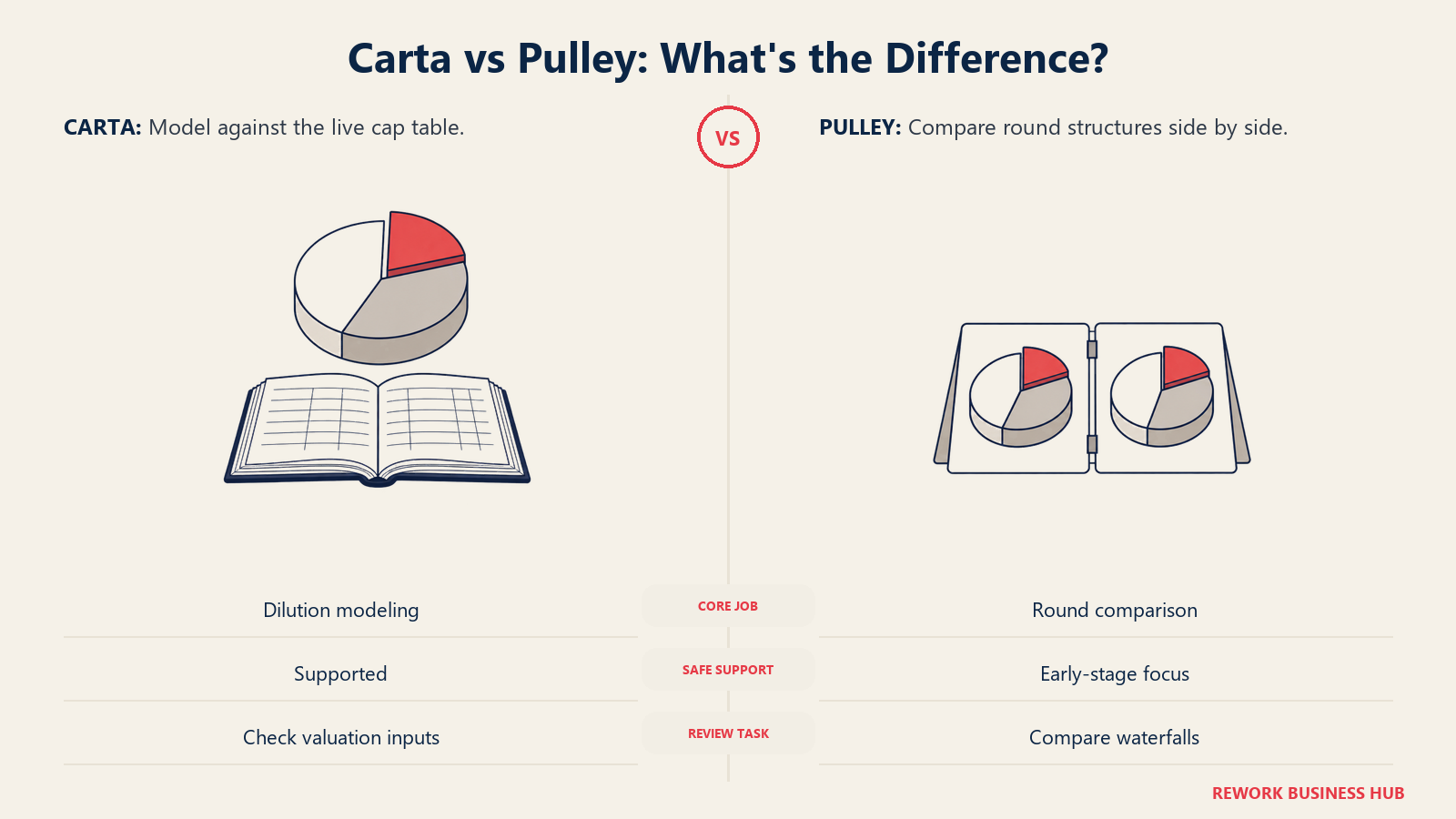
Carta's scenario modeling suite lets you forecast dilution, plan a fundraise, and model an exit directly against your live cap table, which avoids the spreadsheet errors that plague manual modeling. The tradeoff is that because 409A valuations run through a separate flow, the funding terms you model and the valuation data behind them don't always stay in sync automatically, which means double-checking the numbers by hand when a round and a valuation land close together.
Pulley leans hard into SAFE-heavy, early-stage cap tables specifically. Its modeling interface supports side-by-side waterfall comparisons, letting a founder line up multiple round structures next to each other before picking one, and both e-signature workflows for option grants and SAFEs are available starting at the Startup tier. For a company still doing its first or second SAFE-based raise, that side-by-side comparison view is a genuinely useful decision tool rather than a checkbox feature.
| Fundraising factor | Carta | Pulley |
|---|---|---|
| Scenario / waterfall modeling | Built into the core cap table, forecasts dilution and exit scenarios | Side-by-side waterfall comparison across multiple round structures |
| SAFE and convertible note support | Yes, standard cap table object types | Yes, with particular strength on SAFE-heavy early-stage structures |
| E-signature on grants and SAFEs | Available as part of the platform | Available starting at the Startup tier |
| Sync between valuation and modeling data | 409A runs as a separate flow; funding terms don't always sync automatically | 409A is tied to Growth and above, integrated with the same platform stakeholders already use |
| Best fit | Founders comfortable managing valuation and modeling as loosely connected workstreams | Founders who want round comparison and cap table math in one continuous view |
Employee Experience and the Equity Portal
The cap table is only half the product; the other half is what employees see when they log in to check their own equity, exercise options, or understand what a grant is actually worth. Both platforms give employees a self-serve portal rather than routing every question through finance or HR.
Carta's employee-facing side benefits from being the platform most job candidates and current employees have already seen at a previous company, which lowers the learning curve at onboarding. Pulley's portal is newer and built alongside a more modern overall interface, which shows up in how option exercise flows and vesting visualizations are presented, though it hasn't had the same years of employee familiarity to build on.
| Employee portal factor | Carta | Pulley |
|---|---|---|
| Employee familiarity | High; many employees have used Carta at a prior company | Lower; newer product, less prior exposure across the workforce |
| Option exercise flow | Self-serve through the employee portal | Self-serve, included as part of Growth-and-above's option exercise capability |
| Vesting visualization | Standard equity dashboard | Modern interface, built alongside the rest of Pulley's newer product design |
| Onboarding load for new hires | Lower, given prior exposure | Slightly higher for employees seeing an equity portal for the first time |
Compliance and Reporting: Rule 701, Form 3921, and ASC 718
Compliance is where the paid-tier gap matters most, because these aren't nice-to-have reports, they're the paperwork that keeps a company inside IRS and SEC exemption rules and keeps its financial statements defensible.
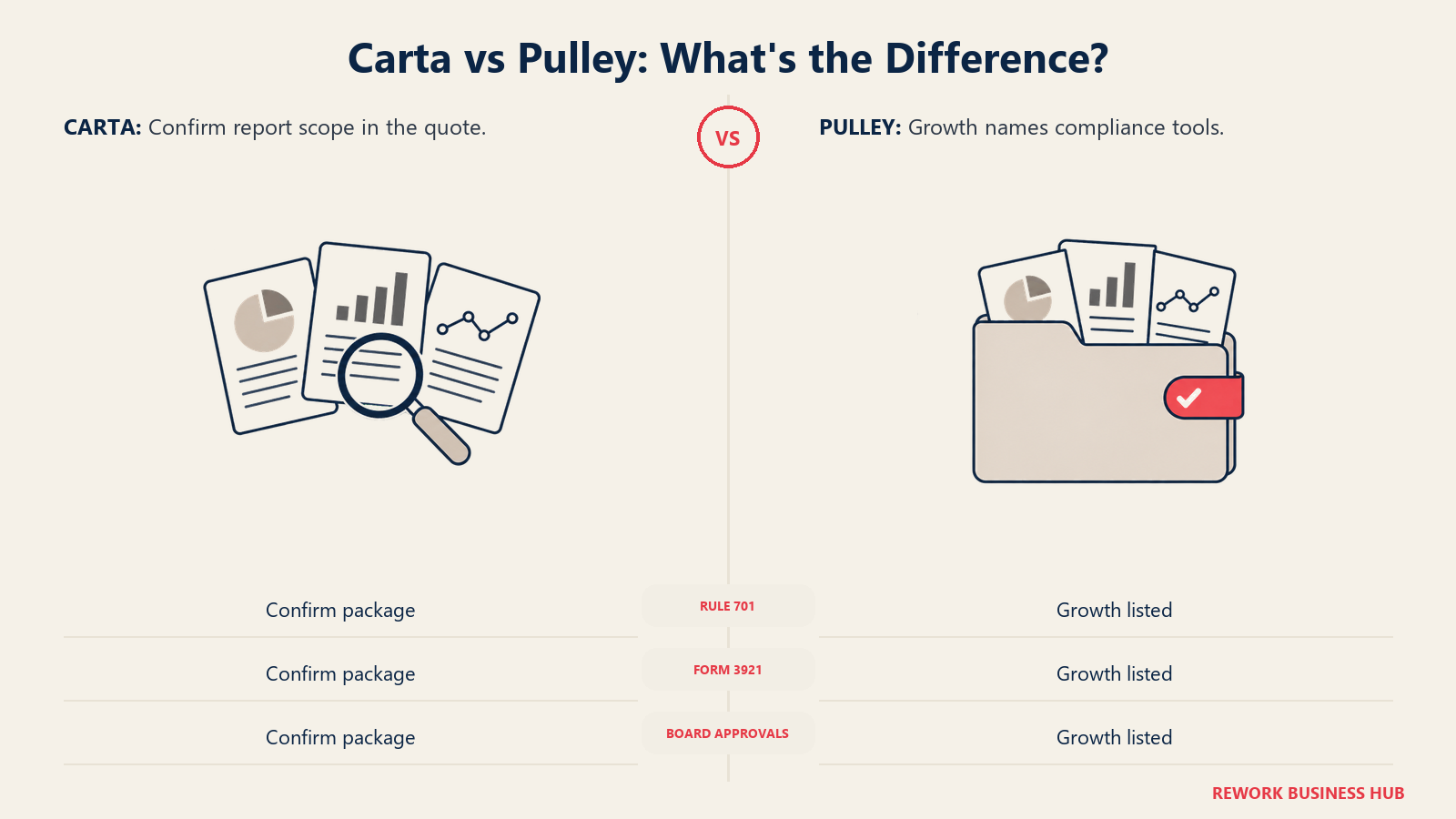
Rule 701 governs how much equity a private company can issue to employees without SEC registration, and it requires active tracking against a rolling threshold, not a one-time check. Form 3921 is the IRS form companies must file for each incentive stock option exercise. ASC 718 is the accounting standard governing how stock-based compensation gets expensed on the financial statements. Pulley names all three directly on its pricing page as part of what Growth adds beyond Startup: Rule 701 tracking, Form 3921 generation, and board approval workflows sit alongside option exercises and 409A valuations at that $3,500-a-year tier. Carta supports equivalent compliance capability as part of its platform, but because paid-tier pricing isn't published, there's no way to confirm from the pricing page alone which tier includes which compliance report, or whether any of them carry an additional cost.
| Compliance factor | Carta | Pulley |
|---|---|---|
| Rule 701 tracking | Supported as part of the platform; tier and cost not publicly confirmed | Named explicitly as part of Growth ($3,500/year) |
| Form 3921 generation | Supported as part of the platform; tier and cost not publicly confirmed | Named explicitly as part of Growth ($3,500/year) |
| ASC 718 / stock comp expensing | Supported as part of the platform | Supported; strongest as of the Growth tier where the fuller compliance set kicks in |
| Board approval workflows | Supported as part of the platform | Named explicitly as part of Growth ($3,500/year) |
| What to verify with sales | Which tier and price actually includes the specific compliance reports you need | Nothing extra; Growth's inclusion of Rule 701, Form 3921, and board approvals is already public |
Crypto and Token Cap Tables
This is the sharpest product difference between the two companies, and it's not a marginal one. Pulley built a dedicated crypto and token cap table product, sold as its own line separate from the standard equity tiers: Token Cap Table at $4,500 per year for 25 stakeholders, a separate Distributions product also at $4,500 per year, and token valuations starting at $10,000. That's real infrastructure for a company issuing tokens alongside, or instead of, traditional equity, covering token-specific ownership tracking and distribution mechanics that a standard cap table product was never built to handle.
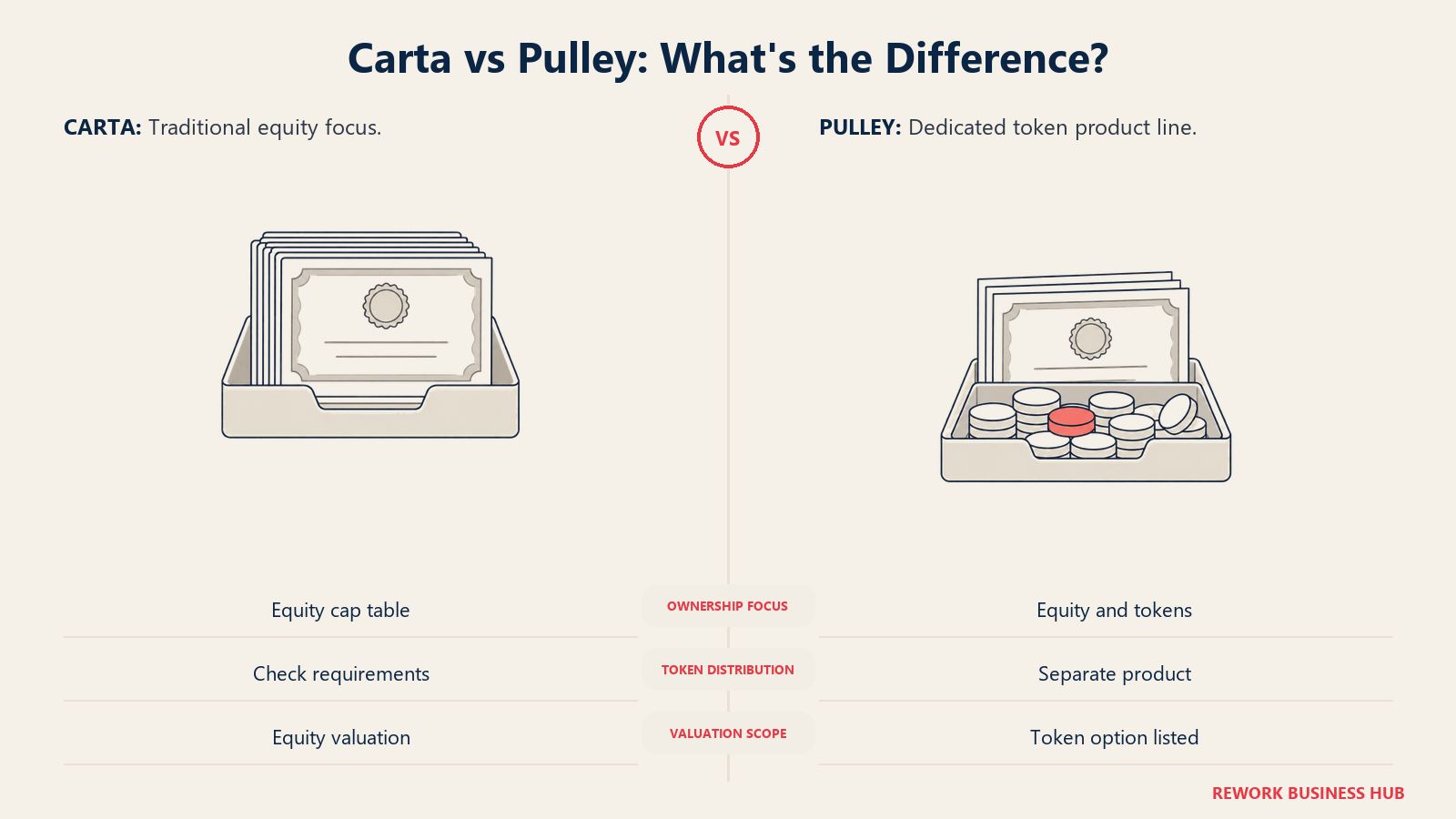
Carta has no equivalent published product line. If your company is issuing tokens, or expects to within its planning horizon, that's a structural gap in what Carta's pricing page offers today, not a feature you'd find behind a higher tier.
| Crypto factor | Carta | Pulley |
|---|---|---|
| Dedicated token cap table product | Not a published product line | Token Cap Table, $4,500/year for 25 stakeholders |
| Token distribution tooling | Not a published product line | Distributions, $4,500/year |
| Token valuations | Not a published product line | Starting at $10,000 |
| Who this matters to | Companies with no near-term token issuance plans | Startups issuing tokens alongside or instead of traditional equity |
If crypto and token cap tables are a genuine requirement, that alone is often enough to settle the decision before the rest of this comparison even matters.
Integrations
Both platforms connect into the HR, payroll, and accounting tools a finance team already runs, which matters because stakeholder data (new hires, terminations, title changes) needs to flow into the cap table without manual re-entry every time someone joins or leaves.
Carta offers native API integrations with common HRIS providers including Gusto and Rippling, and its HRIS sync is built to flag pending terminations and profile updates against existing stakeholders automatically. Pulley also connects to Gusto and Rippling, along with a wider list of HR and payroll providers, though its Rippling integration in particular requires an intentional "Sync Now" action rather than syncing automatically in the background, which is worth knowing if you're used to a fully passive integration elsewhere.
For the accounting side of the stack, neither vendor's cap table integration replaces a general ledger or AP/AR system; if you're separately evaluating that layer, the best accounting software guide for 2026 and the best QuickBooks alternatives roundup cover that adjacent decision. On the HR and payroll side specifically, the best HR software guide for 2026 and the best payroll software guide for 2026 are useful cross-references for the systems that actually feed stakeholder data into either cap table platform.
| Integration factor | Carta | Pulley |
|---|---|---|
| HRIS providers | Gusto, Rippling, and other HRIS providers via native API | Gusto, Rippling, and a broader list including Workday, Namely, and Paycom |
| Sync behavior | Flags pending terminations and profile updates against existing stakeholders | Available on Growth and above; Rippling sync in particular requires a manual "Sync Now" action |
| Included from which tier | Not tied to a specific published tier since none carry public prices | Named explicitly as part of Growth ($3,500/year) |
| Best fit | Teams wanting HRIS changes to flag automatically without a manual trigger | Teams comfortable running a periodic manual sync in exchange for transparent tier pricing |
The Pricing and Transparency Trade
This is the section that actually decides most Carta-versus-Pulley conversations, because the two vendors made structurally opposite decisions about what to publish, and neither one lets you build a single side-by-side dollar table the way you can for most SaaS comparisons.
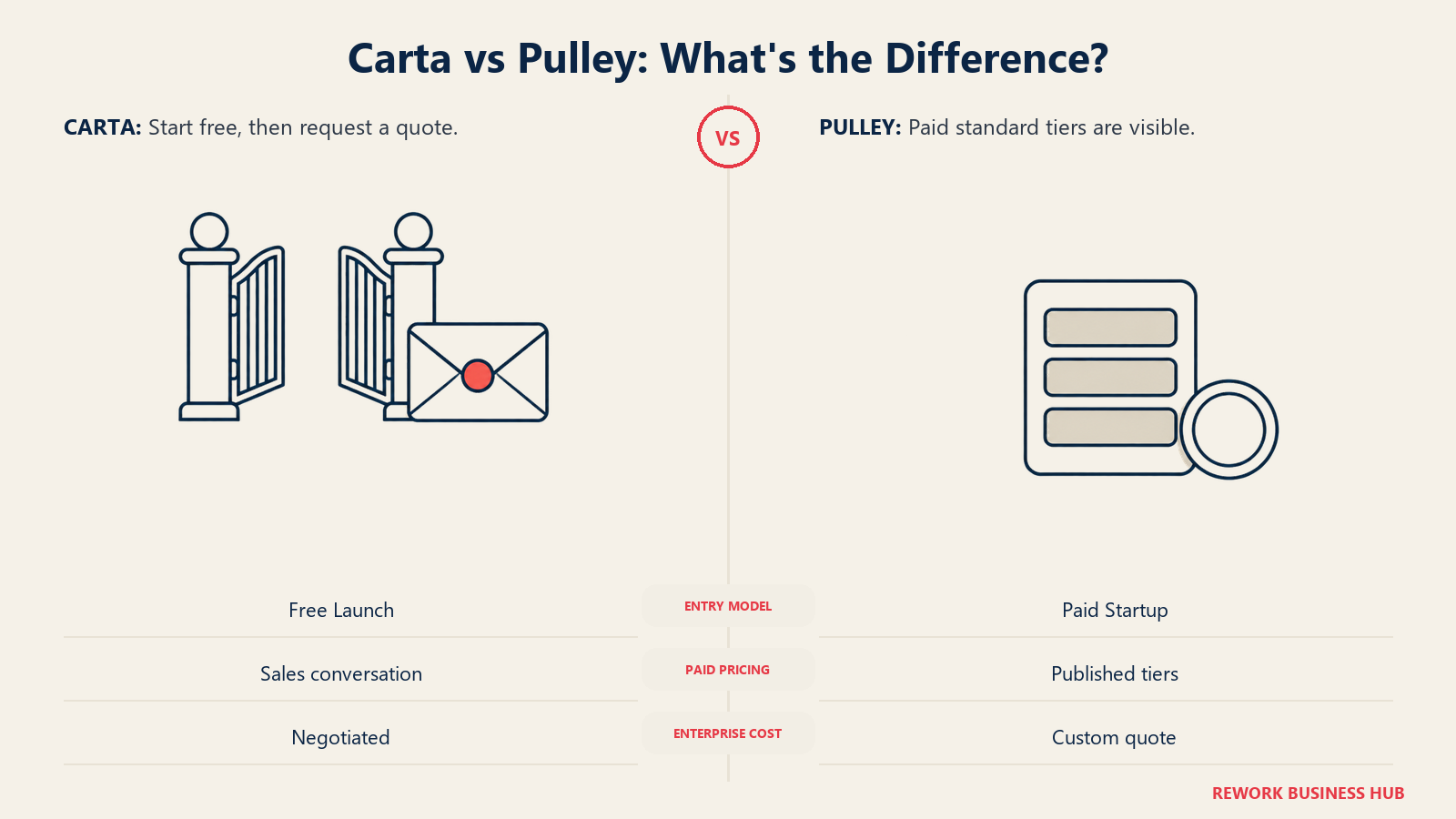
Carta publishes exactly one number: free, for Launch, up to 25 stakeholders and $1 million raised. Everything past that, Build (up to 50 stakeholders), Grow, and Scale (both described as flexible stakeholder limits), carries no dollar figure anywhere on Carta's pricing page. Carta's own pricing FAQ confirms that each paid package has a price per stakeholder with a minimum annual fee, but does not disclose either number, and every paid-tier button leads straight to a sales conversation rather than a checkout page. Third-party review sites and rival comparison blogs print conflicting estimates for what Carta's paid tiers actually cost, numbers in the low thousands on one site and the mid-teens-of-thousands on another, and none of those figures comes from Carta itself, so none of them belongs in an honest comparison.
Pulley takes the opposite approach at every tier. Startup is $1,200 per year with the first 25 stakeholders included. Growth is $3,500 per year with the first 40 stakeholders included, plus 409A valuations, option exercises, Rule 701, Form 3921, board approvals, and HRIS integrations bundled in at that price. Enterprise is contact-us, which is the one point where Pulley's pricing does go quiet, though even there the two lower tiers give you a real anchor for what a smaller deployment costs before you ever need Enterprise. Layered on top, Pulley's crypto and token cap table line is separately and fully priced: Token Cap Table at $4,500 per year for 25 stakeholders, Distributions at $4,500 per year, and token valuations starting at $10,000.
| What's published | Carta | Pulley |
|---|---|---|
| Free tier price | $0, Launch, up to 25 stakeholders and $1M raised | None; no free plan at any stakeholder count |
| Entry paid tier price | Not published | $1,200/year, Startup, 25 stakeholders included |
| Mid tier price | Not published | $3,500/year, Growth, 40 stakeholders included |
| Top tier price | Not published | Contact us, Enterprise |
| Crypto line price | Not applicable, no product line | $4,500/year Token Cap Table, $4,500/year Distributions, valuations from $10,000 |
| Billing basis | Per stakeholder against an undisclosed minimum annual fee | Annual, per tier, stated in dollars on the pricing page |
What actually drives the eventual number is worth separating from the number itself, since Carta's is undisclosed and Pulley's isn't. For Carta, cost scales along an axis you can't see from the outside: how many stakeholders you have past the free tier's 25, and where that lands against a per-stakeholder rate and minimum annual fee that only shows up once you're in a sales conversation. For Pulley, the scaling axis is fully visible: which of three published tiers your stakeholder count and feature needs actually require, and whether the crypto line applies on top of your standard equity tier.
| What drives the quote | Carta | Pulley |
|---|---|---|
| Primary cost driver | Stakeholder count past 25, against an undisclosed per-stakeholder rate | Which tier (Startup, Growth, Enterprise) matches your stakeholder count and feature needs |
| Secondary cost driver | Which package (Build, Grow, Scale) you negotiate into | Whether you also need the crypto line (Token Cap Table, Distributions, token valuations) |
| Where to ask for a discount | Directly in the sales conversation, since no published rate card exists to anchor against | Limited room to negotiate a published tier price, but Enterprise remains a real conversation |
| How to budget before talking to sales | You largely can't, beyond knowing the free tier's limits | Add your expected tier's annual price plus any crypto line you need |
The honest framing is asymmetric, and it's worth saying plainly rather than dressing it up as a tie. Carta gives you a genuinely usable free start, which is real value if you're pre-fundraise or barely past incorporation, and then goes opaque exactly when the stakes, and the dollars, get bigger. Pulley charges you from the very first stakeholder, so there's no free runway at all, but every number you'd need to budget against, from Startup through the crypto line, is sitting on the page in plain dollars before you ever pick up the phone.
Where you cannot compute Carta's cost at a given stakeholder count, the honest answer is that you can't, not from public information. Carta's per-stakeholder rate and minimum annual fee simply aren't disclosed anywhere, which means any number you see attached to Carta's paid tiers outside of Carta's own sales process is someone else's estimate, not a quote you can budget against.
Implementation and Migration
Neither vendor publishes a single implementation-duration figure, and the reason tracks back to the same structural split as pricing: Carta's rollout scope depends on a negotiated tier and stakeholder count you won't know until sales gets involved, while Pulley's rollout scope is knowable up front because the tier, and what it includes, is already public.
Migrating an existing cap table into either platform, whether from a spreadsheet or from the other vendor, means reconciling every historical grant, vesting schedule, and prior round against the new system before you trust it as the record of truth. That reconciliation work is comparable on both platforms; what differs is how early you know the total cost of the tier you're migrating into.
| Implementation factor | Carta | Pulley |
|---|---|---|
| Typical entry point | Free Launch tier, upgrade path negotiated later with sales | Paid from day one, tier chosen up front based on published pricing |
| What drives cost uncertainty | Undisclosed per-stakeholder rate and minimum fee on paid tiers | Almost none; Startup and Growth pricing is public, only Enterprise requires a conversation |
| Migration reconciliation work | Comparable to any cap table migration: grants, vesting, and rounds re-verified | Comparable to any cap table migration: grants, vesting, and rounds re-verified |
| Where cost risk sits | Discovering the actual per-stakeholder rate only after outgrowing the free tier | Underestimating your stakeholder count and landing a tier upgrade mid-year |
If you're also cleaning up adjacent back-office spend as part of a broader systems refresh, the best expense management software guide for 2026 is a useful parallel check, since equity administration and expense administration often get modernized in the same finance ops push.
Switching and Migration Considerations
If you're already on one platform and evaluating a move to the other, the friction is rarely the feature list itself. It's the historical data: every grant, every amendment, every vesting exception, and every prior 409A has to survive the move intact, or your new cap table isn't actually trustworthy as the record of truth.
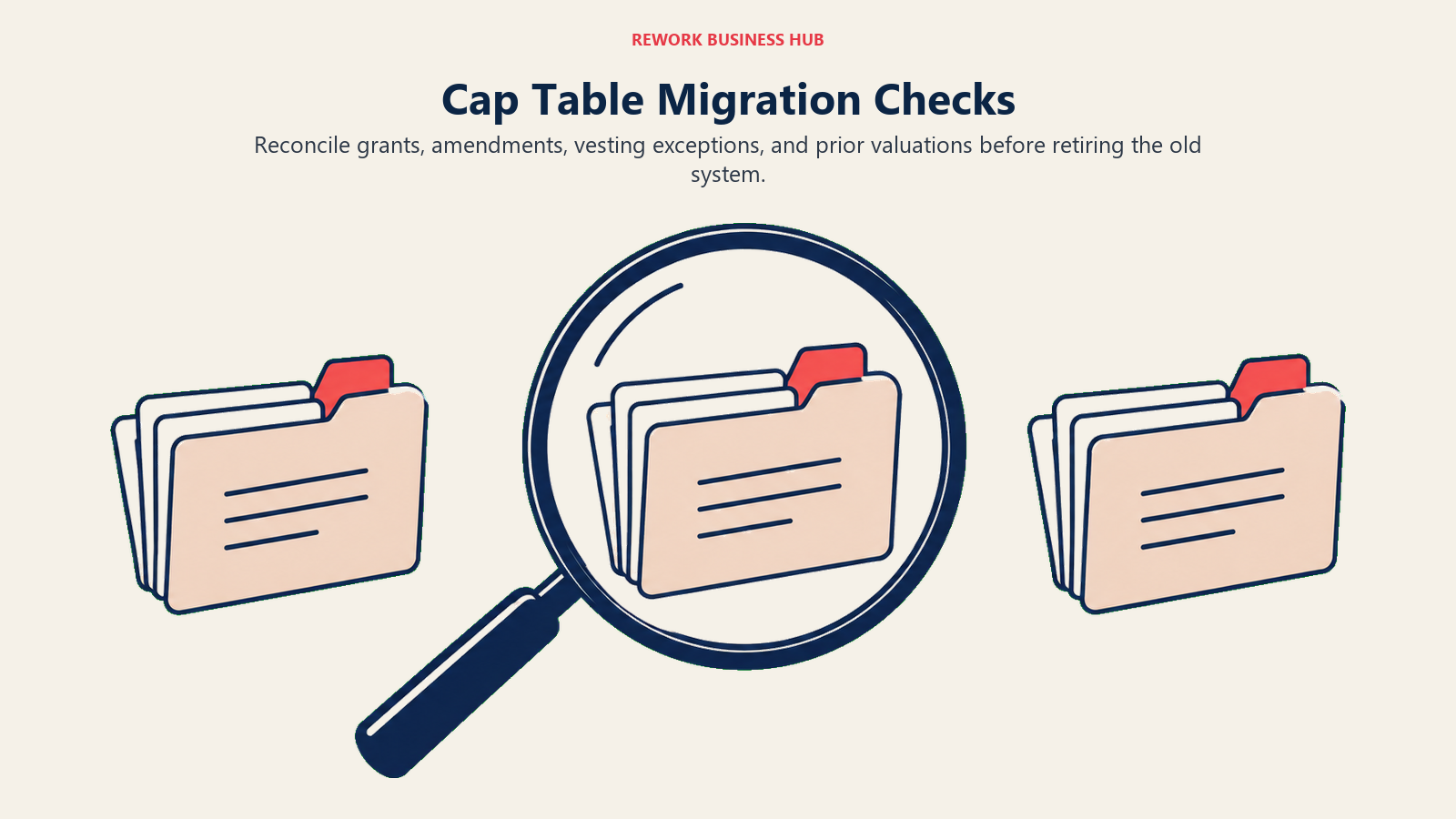
Moving off Carta toward Pulley means exporting a complete grant history, including any modifications or early exercises, and re-verifying it against Pulley's data model before you go live. Moving off Pulley toward Carta means the same reconciliation in reverse, plus accepting that you'll lose visibility into a published price the moment you land on a Carta paid tier. Neither direction is a simple data export and import; both require a careful side-by-side audit before you retire the old system of record.
| Switching factor | What to check |
|---|---|
| Grant history completeness | Confirm every option grant, SAFE, and amendment exports cleanly, including anything issued outside the current platform |
| 409A continuity | Verify your most recent valuation transfers with its full methodology and effective date, not just the final number |
| Vesting exception handling | Double-check any accelerated vesting, early exercise, or custom schedule migrates without silently reverting to a standard default |
| Stakeholder recount | Recalculate your stakeholder total under the new platform's counting rules, especially Pulley's half-stakeholder treatment for small angel checks |
| Pricing visibility change | Moving toward Carta trades a published number for a negotiated one; moving toward Pulley trades a negotiated number for a published one |
| Parallel run | Run both systems side by side through at least one full grant cycle before fully retiring the old platform |
A parallel run through at least one option grant cycle, or a full 409A refresh, is the safer path in either direction, especially if your company has any non-standard vesting or early-exercise history sitting in the old system.
Scale Ceiling: Who Actually Fits Each Platform
At small stakeholder counts, both platforms are genuinely comparable. The gap opens as headcount, round complexity, and reporting demands grow.
Carta's flexible stakeholder limits on Grow and Scale, and its position as the market's largest cap table network, make it the more common choice for companies planning to scale well past a few hundred stakeholders, provided you're willing to negotiate pricing as you grow into that scale. Pulley's published tiers top out, on the standard published side, at Growth's 40-stakeholder inclusion before moving to Enterprise, which signals it's built and priced primarily around startups from formation through mid-growth rather than late-stage companies with sprawling stakeholder lists.
| Scale factor | Carta | Pulley |
|---|---|---|
| Published top tier | Scale, flexible stakeholder limit, price not published | Growth's 40 included, then Enterprise (contact us) beyond that |
| Typical deployment range | Early-stage through large, multi-round companies with negotiated pricing | Formation through mid-growth startups on published tiers, larger deployments via Enterprise |
| What happens beyond the published range | Continues scaling through negotiated per-stakeholder pricing | Requires an Enterprise conversation once Growth's structure no longer fits |
| Best fit at scale | Later-stage companies already committed to negotiating Carta pricing as they grow | Startups that expect to stay inside a knowable, published tier structure for longer |
If your company has already outgrown either platform's practical ceiling, the best Ledgy alternatives roundup covers a European and investor-reporting-heavy option, and the best Shareworks alternatives roundup covers the enterprise end of the market that neither Carta nor Pulley is squarely built for. If Carta itself is the incumbent you're evaluating against something more enterprise-grade, Carta vs Shareworks is the direct matchup for that specific question.
Support
Support quality is harder to verify from a pricing page than a dollar figure, but the structural signal is the same one that shows up everywhere else in this comparison: Carta's support tier and responsiveness commitments aren't detailed on its public pricing page the way Pulley's tier-by-tier inclusions are, since Carta routes that conversation through sales alongside the rest of the paid-tier negotiation. Pulley's Growth tier bundling of 409A valuations, compliance reporting, and HRIS integrations under one published price implies a support model built to walk a customer through more of that complexity without a separate services conversation, though neither vendor publishes a support SLA figure worth quoting as fact.
| Support factor | Carta | Pulley |
|---|---|---|
| Support tier detail on pricing page | Not published; part of the sales conversation | Not itemized separately, but Growth's bundled compliance features imply broader guided support |
| Best fit | Teams that want support terms negotiated alongside their custom pricing | Teams that want support expectations to match a published, predictable tier |
When Carta Is the Right Call
- You're pre-fundraise or very early, and 25 stakeholders comfortably covers you. Carta's free Launch tier costs nothing and gives you a real, usable cap table from day one, not a stripped-down trial.
- You want the platform your investors and lawyers already expect. Carta's market presence and network size lower friction in diligence conversations where the other side has seen the product before.
- You're planning a large, multi-round company and you're comfortable negotiating pricing as you scale, rather than needing a published number to plan around today.
- You expect to grow well past 50 stakeholders and want a platform whose stakeholder limits flex with you, even if that flexibility comes without a public price tag attached.
When Pulley Is the Right Call
- You want to know the annual cost before you ever talk to a salesperson. Startup at $1,200/year and Growth at $3,500/year are both fully published, with exactly what each includes spelled out on the page.
- 409A valuations, Rule 701 tracking, Form 3921, and board approvals are near-term requirements, not someday features. Growth bundles all of them into one published price rather than making you negotiate each one separately.
- You're issuing tokens alongside or instead of traditional equity. Pulley's Token Cap Table and Distributions products, plus published token valuation pricing, are capability Carta doesn't publish an equivalent for.
- Your cap table is SAFE-heavy and you want to compare round structures side by side before committing to terms, rather than modeling one scenario at a time.
Decision Framework
| If this is true for you | Pick |
|---|---|
| You're pre-fundraise or very early and 25 stakeholders is enough | Carta, using the free Launch tier |
| You want every price published before you talk to sales | Pulley, using Startup or Growth |
| 409A valuations, Rule 701, Form 3921, and board approvals are needed now | Pulley, via Growth at $3,500/year |
| You're issuing tokens or building a token cap table | Pulley, via its dedicated crypto product line |
| You're planning a large, multi-round company and can negotiate pricing as you scale | Carta, via Grow or Scale |
| You want your investors and counsel to see a platform they already know | Carta |
| Your cap table is SAFE-heavy and you want side-by-side round comparison | Pulley |
| Neither published tier structure fits your scale | See the best Carta alternatives roundup or the best Pulley alternatives roundup for the wider field |
What to Do Next
- Count your real stakeholder number, including small angel checks. Pulley counts a $50,000-or-less angel check as half a stakeholder, which can change which tier you actually need before you even open a pricing page.
- Name your near-term compliance requirements. If a 409A valuation, Rule 701 tracking, or Form 3921 filing is needed inside the next 12 months, Pulley's Growth tier already tells you the price; Carta requires a sales conversation to find out.
- Decide whether token or crypto cap table support is a real requirement. If it is, that alone may settle the comparison, since only Pulley publishes a product for it.
- If you're leaning Carta, ask sales for the per-stakeholder rate and minimum annual fee in writing before assuming any number you saw on a third-party site is accurate. None of those third-party figures come from Carta itself.
- If you're leaning Pulley, confirm your stakeholder count against Startup's 25 and Growth's 40 before signing, since crossing either threshold means a plan change, not just a bigger invoice.
If neither platform is a clear fit once you have those numbers, our best cap table software roundup ranks 13 options on published pricing and free-tier caps.
Frequently Asked Questions about Carta vs Pulley
Does Carta publish pricing for its paid tiers?
No. Carta's Launch tier is free for up to 25 stakeholders and $1 million raised, but Build, Grow, and Scale carry no published dollar figures. Carta's own pricing FAQ says each paid package has a price per stakeholder with a minimum annual fee, without disclosing either number, and every paid-tier button routes to a sales call.
How much does Pulley cost?
Pulley's Startup tier is $1,200 per year with the first 25 stakeholders included. Growth is $3,500 per year with the first 40 stakeholders included, plus 409A valuations, option exercises, Rule 701, Form 3921, board approvals, and HRIS integrations bundled in. Enterprise is contact-us pricing.
Does Pulley have a free plan?
No. Pulley has no free tier at any stakeholder count. Every plan, including the entry-level Startup tier, is a paid annual subscription.
What's the real difference between Carta and Pulley on price?
Carta gives you a genuinely free start and then goes opaque the moment you need a paid tier, with no published per-stakeholder rate or minimum fee. Pulley has no free plan at all, but every paid tier, including its crypto and token cap table line, is priced in plain dollars on the page.
Does Carta or Pulley handle crypto and token cap tables?
Only Pulley publishes a dedicated product for this. Token Cap Table is $4,500 per year for 25 stakeholders, Distributions is a separate $4,500-per-year product, and token valuations start at $10,000. Carta does not publish an equivalent crypto or token cap table product line.
Which platform includes 409A valuations, Rule 701, and Form 3921?
Pulley names all three explicitly as part of its Growth tier at $3,500 per year, alongside option exercises and board approvals. Carta supports comparable compliance capability, but because its paid-tier pricing isn't published, there's no way to confirm from the pricing page which tier or price includes which specific report.
Which platform is better for a very early-stage startup with under 25 stakeholders?
Carta, if cost is the deciding factor, since its Launch tier is free at that stakeholder count. Pulley's Startup tier covers the same 25-stakeholder range but costs $1,200 per year starting immediately, so the choice comes down to whether you value the free entry point or the published, predictable price.
How does Pulley count angel investors toward its stakeholder limit?
Pulley counts an angel investor writing a check of $50,000 or less as half a stakeholder. That can meaningfully change which tier actually fits a round with several small angel checks, so it's worth recalculating your real stakeholder count with that rule before comparing it against a tier's included limit.

Principal Product Marketing Strategist
On this page
- TL;DR
- Key Facts
- Who Each Platform Is Really For
- Cap Table and Stakeholder Management Depth
- 409A Valuations and How Each Handles Them
- Fundraising and SAFE Workflows
- Employee Experience and the Equity Portal
- Compliance and Reporting: Rule 701, Form 3921, and ASC 718
- Crypto and Token Cap Tables
- Integrations
- The Pricing and Transparency Trade
- Implementation and Migration
- Switching and Migration Considerations
- Scale Ceiling: Who Actually Fits Each Platform
- Support
- When Carta Is the Right Call
- When Pulley Is the Right Call
- Decision Framework
- What to Do Next