Best Pulley Alternatives in 2026: 13 Cap Table Tools Compared on Real Pricing
Turn this article into takeaways for your work.


Each assistant summarizes the article only for you and suggests best practices for your work.
Updated August 2026
Founders pricing out Pulley usually land on a short list fast: Carta for brand recognition and a real free tier, Fidelity Private Shares for a bank-backed free plan with no dollar-figure surprises later, Astrella for fully published, stakeholder-banded pricing at every tier, and Ledgy for European reporting depth. What sends most of them shopping in the first place is a detail a lot of comparison sites still get wrong: Pulley has no free plan at any stakeholder count. Its pricing page shows three paid tiers and nothing else, Startup at $1,200 a year with the first 25 stakeholders included, Growth at $3,500 a year with the first 40 included, and Enterprise by quote. A founder expecting to start free, the way they can on Carta, Fidelity, Ledgy, Qapita, or Eqvista, hits a paywall on day one instead.
This guide covers 13 alternatives for founders, CFOs, controllers, and startup counsel evaluating what comes next, whether that means starting free and growing into a paid tier, locking in a fully published price the way Pulley does not offer, or moving to a platform built around a specific region or investor base. Every price below comes from the vendor's own pricing page, verified against vendor pricing pages in August 2026; where a vendor publishes nothing, this guide says so instead of guessing.
Key Facts
- Over 6,400 US companies sponsor an ESOP, and the 6,609 identified ESOP plans cover 15.1 million participants while holding more than $2 trillion in assets, per the National Center for Employee Ownership's most recent count, updated January 2026 (NCEO, Employee Ownership by the Numbers).
- Beyond ESOPs, an estimated 11.8 million employees hold some combination of stock options, restricted stock, or ESPP shares, which is the exact population a cap table platform has to track cleanly at every vesting event (NCEO, Employee Ownership by the Numbers).
- US venture capital firms deployed $320 billion across 15,352 deals in 2025, and every one of those rounds is a cap table event that has to be modeled, documented, and reconciled correctly (NVCA 2026 Yearbook).
- Researcher Raymond Panko's review of 88 operational spreadsheets found that 94% contained at least one error, with an average cell error rate of 5.2%, the exact risk a dedicated cap table platform is built to remove from equity records (Panko, "Spreadsheet Errors: What We Know. What We Think We Can Do").
- Startups on Carta alone raised nearly $120 billion in new funding in 2025, up 17% from 2024, and ran 396 tender offers, up 62% year over year, each one a secondary transaction that has to post correctly to a cap table (Carta's own reporting, labeled as vendor data: Carta, State of Private Markets: 2025 in Review).
Quick Comparison Table
| Tool | Best For | Starting Price | Key Strength | Key Limitation |
|---|---|---|---|---|
| Pulley (baseline) | Seed to Series A startups wanting a modern cap table with no free-tier crutch | $1,200/year (Startup, first 25 stakeholders), billed annually | Purpose-built 409A, option exercise, Rule 701, and HRIS workflows on Growth | No free plan at any stakeholder count |
| Carta | Founders who want the category's biggest name and a real free tier | Free (Launch, up to 25 stakeholders and $1M raised) | Largest brand recognition and investor familiarity | No dollar figure published for Build, Grow, or Scale |
| Fidelity Private Shares | Founders who want a bank-backed free tier plus an incorporation bundle | Free (Launch, up to 25 stakeholders, less than $1M raised) | Backed by Fidelity, with a $400 Delaware incorporation package | Startup and Growth tiers publish features but no dollar figures |
| Cake Equity | Teams that want published dollar pricing and bundled 409A valuations | $1,000/year (Build, 25 stakeholders), billed annually | Fully published pricing across every paid tier | Per-stakeholder overage climbs from $1 on Build to $5 on Team to $60 on Pro |
| Astrella by EQ | Buyers who want fully transparent, stakeholder-banded pricing | $1,200/year (Early Stage, 0-25 stakeholders) | Published price at every tier through 300+ stakeholders | No free tier at all |
| Eqvista | Very small teams under 20 stakeholders that want $0 to start | Free (Freemium, under 20 stakeholders) | Transparent, a la carte 409A pricing by funding round | Cap table plan pricing itself goes custom above 50 stakeholders |
| Ledgy | European companies that want reporting depth and a free entry tier | Free (Launch, up to 50 stakeholders) | Scale starts at a published EUR 5,000/year | Priced in euros, not dollars |
| Qapita | Asia-anchored startups that want a free tier plus per-stakeholder scaling | Free (Spark, up to 25 stakeholders, less than $1M raised) | Published base price plus a clear per-stakeholder overage rate | Overage fees change the real cost as headcount grows |
| EquityList | Early-stage companies that want a published price and an AI-assisted cap table | Free (10 stakeholders); Build $1,200/year (35 stakeholders) | Published monthly and annual figures at every named tier | Free tier caps at 10 stakeholders, tighter than most of this list |
| AngelList | Companies that also run a fund or SPV alongside their cap table | No published cap table price (fund administration pricing only) | Deep fund and SPV administration tooling | Not priced as a standalone cap table product, and since August 2025 new customers get only the rebuilt version |
| Shareworks (Morgan Stanley at Work) | Later-stage companies that want Morgan Stanley's brokerage infrastructure attached | No published pricing, quote only | Direct tie into Morgan Stanley wealth management and liquidity services | Entirely sales-led, no self-serve signup |
| Vestd (UK) | UK-incorporated companies running EMI option schemes | Self-Serve from GBP 2,200/year; Guided from GBP 4,200/year | Native two-way Companies House filing | GBP pricing plus VAT, on a minimum 12-month term |
| Capboard | Early-stage teams that want transparent add-on pricing even if the base plan isn't published | Base plan price not published; premium support $50/month | Published add-on pricing for support and 409A valuations | Cannot pre-qualify base plan budget at all |
| J.P. Morgan Workplace Solutions | Large multinational enterprises wanting J.P. Morgan's banking infrastructure | No published pricing, quote only | Enterprise-grade banking relationship behind the platform | Built for enterprise scale, not a startup-stage buyer |
Pulley's Free-Tier Gap: What Buyers Are Actually Comparing It Against
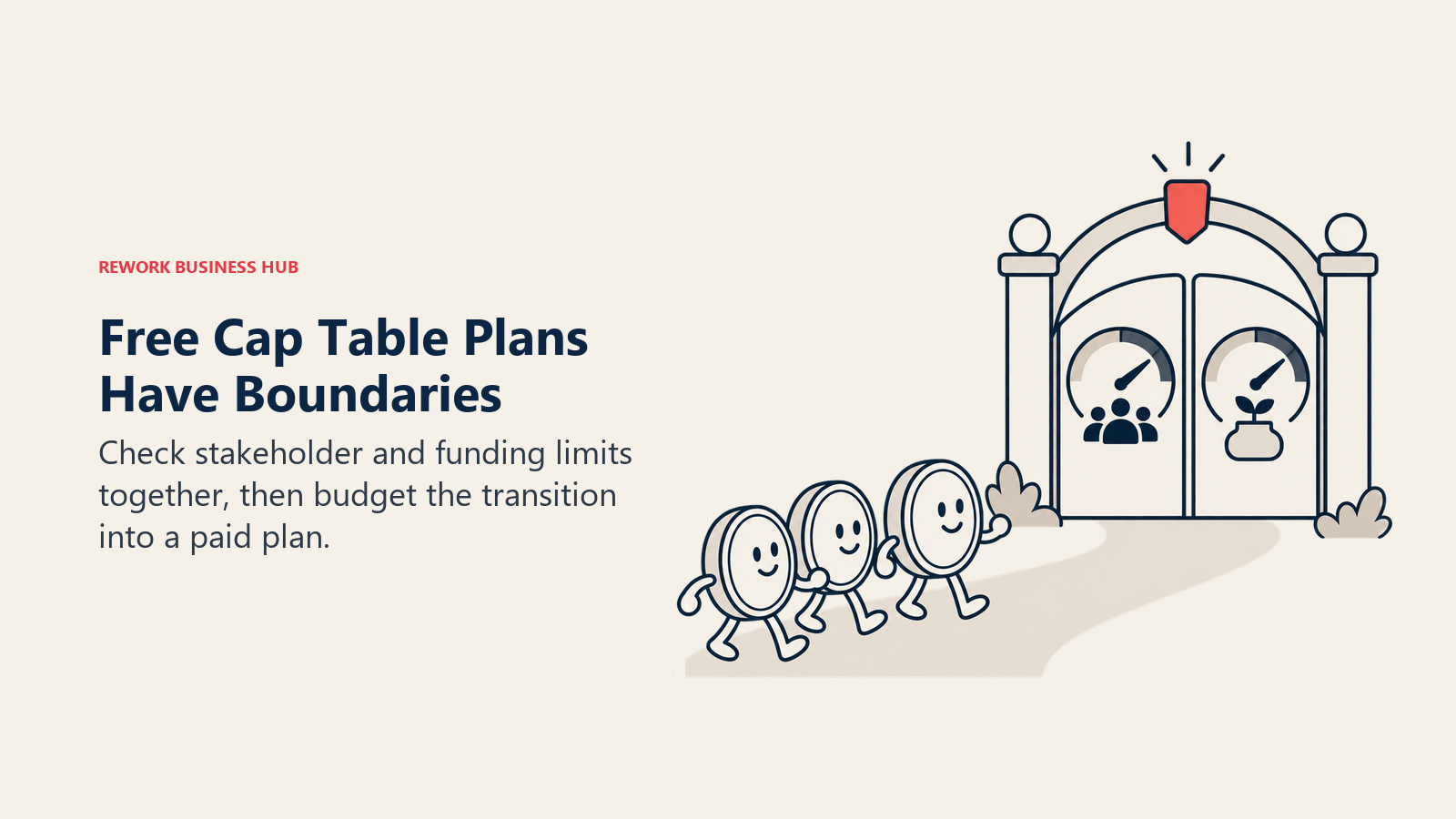
This is worth naming directly before the tool-by-tool breakdown, because it's the single most common factual error in Pulley coverage. Several older listicles describe Pulley as offering a free tier for small cap tables. It does not. The pricing page lists three paid tiers, Startup, Growth, and Enterprise, and nothing below them. Compare that against the rest of the category, where a free entry tier is closer to the norm than the exception.
| Tool | Free Tier | Cap |
|---|---|---|
| Pulley | None | Not applicable, paid from the first stakeholder |
| Carta | Launch, free | 25 stakeholders and $1M raised |
| Fidelity Private Shares | Launch, free | 25 stakeholders and less than $1M raised |
| Qapita | Spark, free | 25 stakeholders and less than $1M raised |
| Ledgy | Launch, free | 50 stakeholders |
| Cake Equity | Free | 5 stakeholders |
| Eqvista | Freemium, free | Under 20 stakeholders |
| EquityList | Free | 10 stakeholders |
| Astrella | None | Not applicable |
| AngelList | Not applicable | Prices fund administration, not cap table management |
| Shareworks | None | Quote only |
| Vestd | None | Not applicable, Self-Serve starts at GBP 2,200/year |
| Capboard | Not published | Not applicable |
| J.P. Morgan Workplace Solutions | None | Quote only |
Six of the 13 alternatives above offer some form of $0 entry point. Pulley and Astrella are the two vendors in this comparison that charge from stakeholder one, and Pulley's Startup tier and Astrella's Early Stage tier land at the identical $1,200-a-year starting price, so the real differentiator between them is pricing transparency structure, not cost.
Free-Tier Peers: Where Most Pulley Shoppers Look First
These two are the destinations for a founder whose real objection to Pulley is the missing free tier, not anything about its workflow. Both let you start at $0 and defer the pricing conversation until you outgrow a 25-stakeholder cap.
1. Carta: The Category Leader With an Undisclosed Ceiling
Carta remains the market leader by name recognition and cap table count, the platform most investors already expect to see a data room link to. Its free Launch tier covers up to 25 stakeholders and $1M raised, which puts it in reach of nearly any pre-seed company. Where Carta gets less transparent is everything above Launch. Build (up to 50 stakeholders), Grow, and Scale are all priced per stakeholder against a minimum annual fee, and Carta's own pricing FAQ confirms it: each paid package "has a price per stakeholder with a minimum annual fee." No dollar figure is published for any of them, and every paid-tier button routes straight to a sales call.

That opacity is exactly why a buyer might land here from a Pulley evaluation in the first place. Carta's scale shows up in its own reporting too: startups on Carta raised nearly $120 billion in 2025 and ran 396 tender offers, both figures Carta reports itself, so treat them as vendor data rather than independent research. For the direct side-by-side, see the full Carta vs. Pulley comparison, or start from the Carta alternatives guide if Carta itself is the incumbent you're shopping away from rather than a candidate on this list.
| Pros | Cons |
|---|---|
| Free Launch tier covers most pre-seed cap tables | No dollar figure published for Build, Grow, or Scale |
| Largest brand recognition among investors and counsel | Every paid tier requires a sales call to learn cost |
| Deep secondary-market and tender-offer tooling | Per-stakeholder pricing scales unpredictably as headcount grows |
Pricing: Launch is free for up to 25 stakeholders and $1M raised. Build, Grow, and Scale are priced per stakeholder against a minimum annual fee; Carta publishes no dollar figures for any of them.
Best for: A founder who wants the category's most recognized name and is comfortable running a sales call once the free tier's 25-stakeholder cap is outgrown.
2. Fidelity Private Shares: The Bank-Backed Free Tier
Fidelity Private Shares runs the same free-tier logic as Carta almost exactly: Launch covers up to 25 stakeholders and less than $1M raised, at no cost. The differentiator is what sits behind the Fidelity name and a genuinely useful bundle for pre-formation founders, a Delaware C-corp incorporation package priced at $400 flat, which covers filing fees, one year of registered agent service, and a free Launch subscription rolled together. For a founder who hasn't incorporated yet, that's a real head start most competitors on this list don't offer.
Above Launch, the transparency gap reappears. Startup and Growth are both published as feature lists with no dollar figures attached. Startup adds premier support, investor updates, and Form 3921 filing. Growth adds 409A valuations, priority onboarding, ASC 718 support, and HRIS and payroll integration, worth pairing with whichever payroll platform you land on; our payroll software roundup covers that decision on its own.
| Pros | Cons |
|---|---|
| Free Launch tier plus a $400 incorporation bundle for pre-formation founders | Startup and Growth publish features only, no dollar figures |
| Backed by Fidelity's financial-institution infrastructure | Incorporation bundle is only useful before a company forms |
| Growth tier bundles 409A valuations and HRIS/payroll integration | Same sales-call requirement as Carta above the free tier |
Pricing: Launch is free for up to 25 stakeholders and less than $1M raised. Startup and Growth are published as feature lists with no dollar figures. Delaware incorporation package is a flat $400.
Best for: A pre-incorporation or very early founder who wants Fidelity's backing and a bundled incorporation path alongside a free cap table.
Published-Price Challengers: Real Numbers, No Sales Call Required
These two do something neither Carta nor Fidelity's paid tiers do: put an actual dollar figure on the page at every level. If pricing opacity above the free tier is your real complaint about this category, start here.
3. Cake Equity: Published Pricing at Every Paid Tier
Cake Equity is one of the few vendors in this entire comparison, alongside Astrella, that publishes real dollar figures at every named tier rather than routing paid plans to a sales call. Free covers 5 stakeholders at $0, the tightest free-tier cap on this list but still a genuine no-cost starting point. Build runs $1,000 a year for 25 stakeholders, close to Pulley's own Startup price for a similar stakeholder count. Team steps up to $2,750 a year for 40 stakeholders and bundles two audit-ready 409A valuations that Cake sells separately at $1,500 each, effectively covering the subscription cost with the bundled valuations alone. Pro is custom-priced for 100 stakeholders.
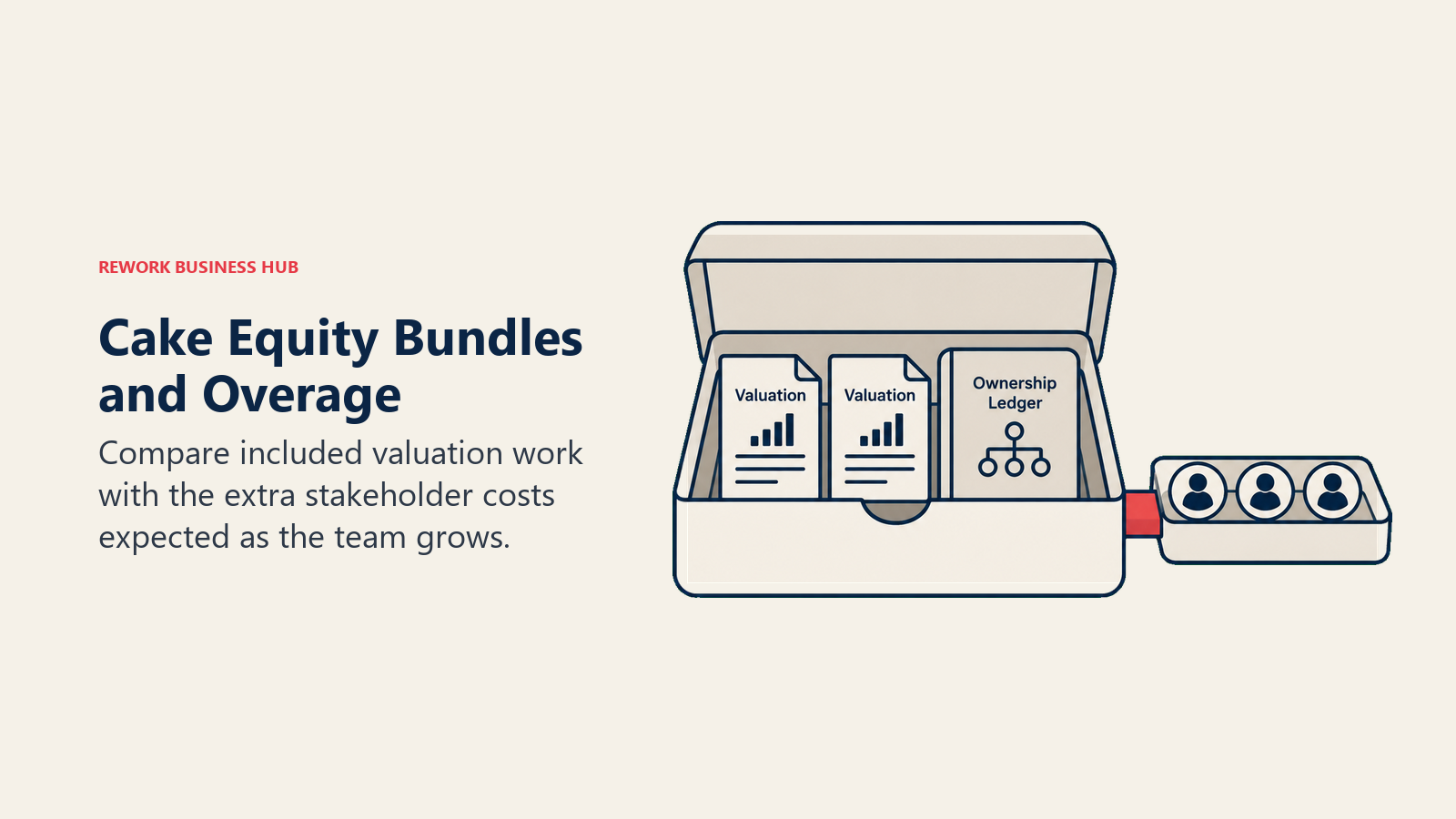
The per-stakeholder overage is not flat across tiers, and the spread is wide: $1 per additional stakeholder on Build, $5 on Team, and $60 on Pro. A team that expects to double from 25 to 50 stakeholders inside a year pays a modest $25 in overage on Build, so the sticker comparison against Pulley's Startup tier holds up better than the headline Pro rate suggests.
| Pros | Cons |
|---|---|
| Published dollar pricing across every tier, no sales-call requirement | $5-stakeholder free tier is the tightest cap in this comparison |
| Team tier's bundled 409A valuations largely offset the subscription cost | Per-stakeholder overage jumps sixtyfold between Build and Pro |
| Quarterly billing option available on the Pro tier | Pro tier itself is fully custom, no published ceiling |
Pricing: Free at $0 for 5 stakeholders. Build $1,000/year (25 stakeholders, $1 per additional stakeholder). Team $2,750/year (40 stakeholders, $5 per additional stakeholder, includes two audit-ready 409A valuations Cake sells separately at $1,500 each). Pro custom-priced for 100 stakeholders, $60 per additional stakeholder. Standalone 409A add-on: $1,500.
Best for: A team that wants Pulley-comparable pricing with published dollar figures at every tier and is willing to plan around the per-stakeholder overage fee.
4. Astrella by EQ: Fully Transparent, Stakeholder-Banded Pricing
Astrella, run by EQ Private Company Solutions with American Stock Transfer and Equiniti behind it, is the closest thing to a direct pricing mirror of Pulley in this entire list. It has no free tier, matching Pulley's own structure, but every paid tier publishes a real dollar figure banded by stakeholder count: Early Stage covers 0 to 25 stakeholders at $1,200 a year, identical to Pulley's Startup price for a comparable range. Emerging covers 26 to 100 stakeholders at $3,200 a year. Accelerate covers 101 to 300 stakeholders at $8,200 a year. Above 300 stakeholders, it's a custom quote.
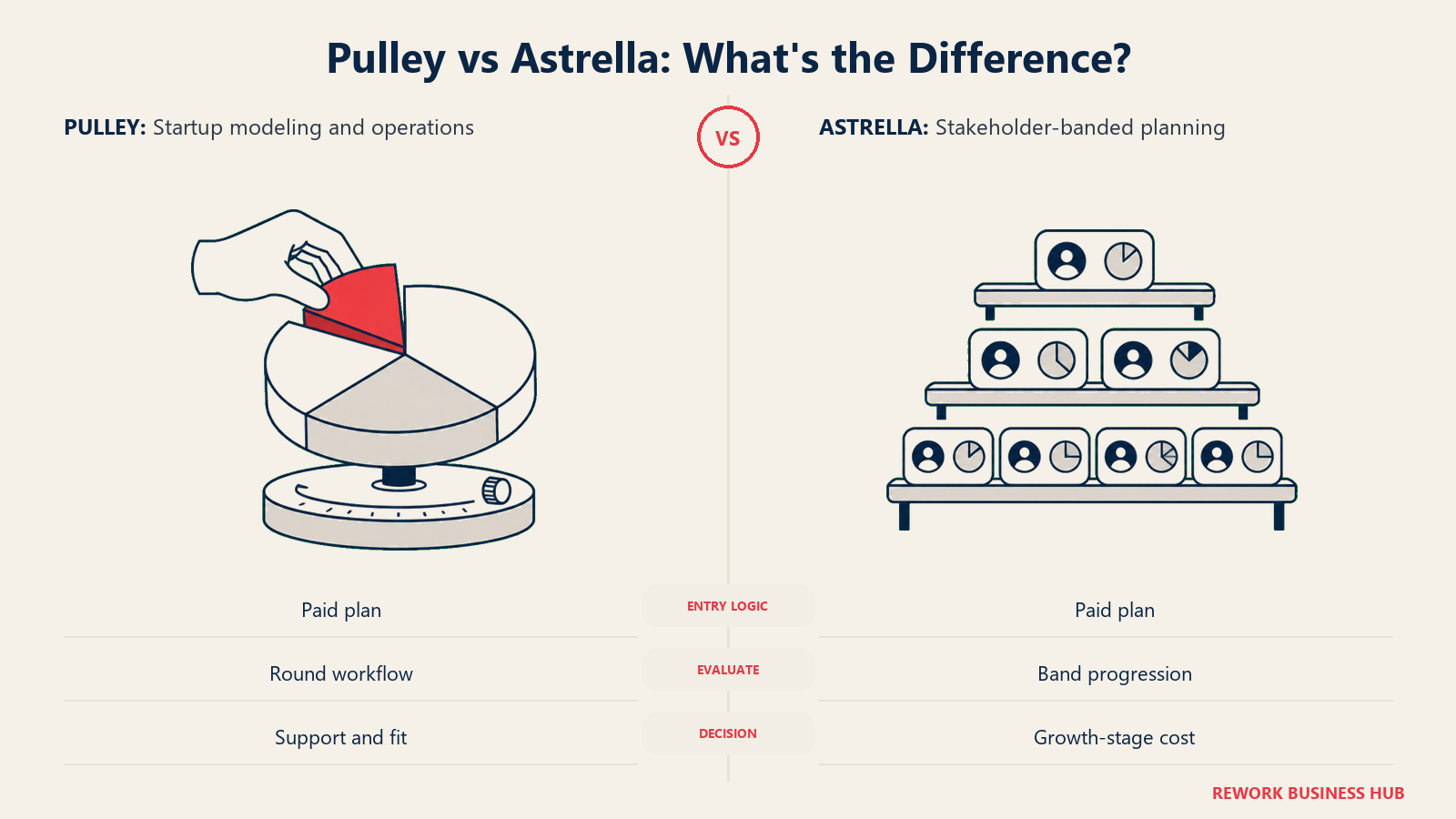
That means the actual choice between Pulley and Astrella at the entry tier isn't about cost, both land at $1,200 a year, but about which platform's workflow and support model fits better, since neither one gives a buyer a free trial period to answer that with a real cap table loaded in.
| Pros | Cons |
|---|---|
| Published, stakeholder-banded pricing at every tier through 300+ | No free tier at all, same as Pulley |
| EQ's transfer agent lineage adds financial stability | Less founder-facing brand recognition than Carta or Pulley |
| Entry price is identical to Pulley's, so the decision is workflow, not cost | Jump from Early Stage to Emerging (25 to 26 stakeholders) is a steep $2,000/year step |
Pricing: Early Stage $1,200/year (0-25 stakeholders). Emerging $3,200/year (26-100 stakeholders). Accelerate $8,200/year (101-300 stakeholders). 300+ stakeholders is a custom quote.
Best for: A buyer who wants Pulley's no-free-tier pricing structure but with every tier's price published upfront instead of learned tier by tier.
More Free-to-Start Platforms, Different Scaling Logic
These four all let you start at $0 the way Pulley won't, but each scales differently once you cross that free-tier line, by stakeholder count, by currency, by per-seat overage, or by funds raised rather than headcount at all. The differences matter more than the free tier itself once your company actually grows.
5. Eqvista: Free Under 20 Stakeholders, A La Carte 409A Pricing
Eqvista's Freemium tier is free for any company under 20 stakeholders, a slightly tighter cap than the 25-stakeholder free tiers Carta, Fidelity, and Qapita all offer, and well under Ledgy's 50, but with no funds-raised condition attached. Above 50 stakeholders, cap table plan pricing itself moves to a custom quote, so Eqvista's transparency is strongest at the small end of the market and thins out for a company scaling past that point.
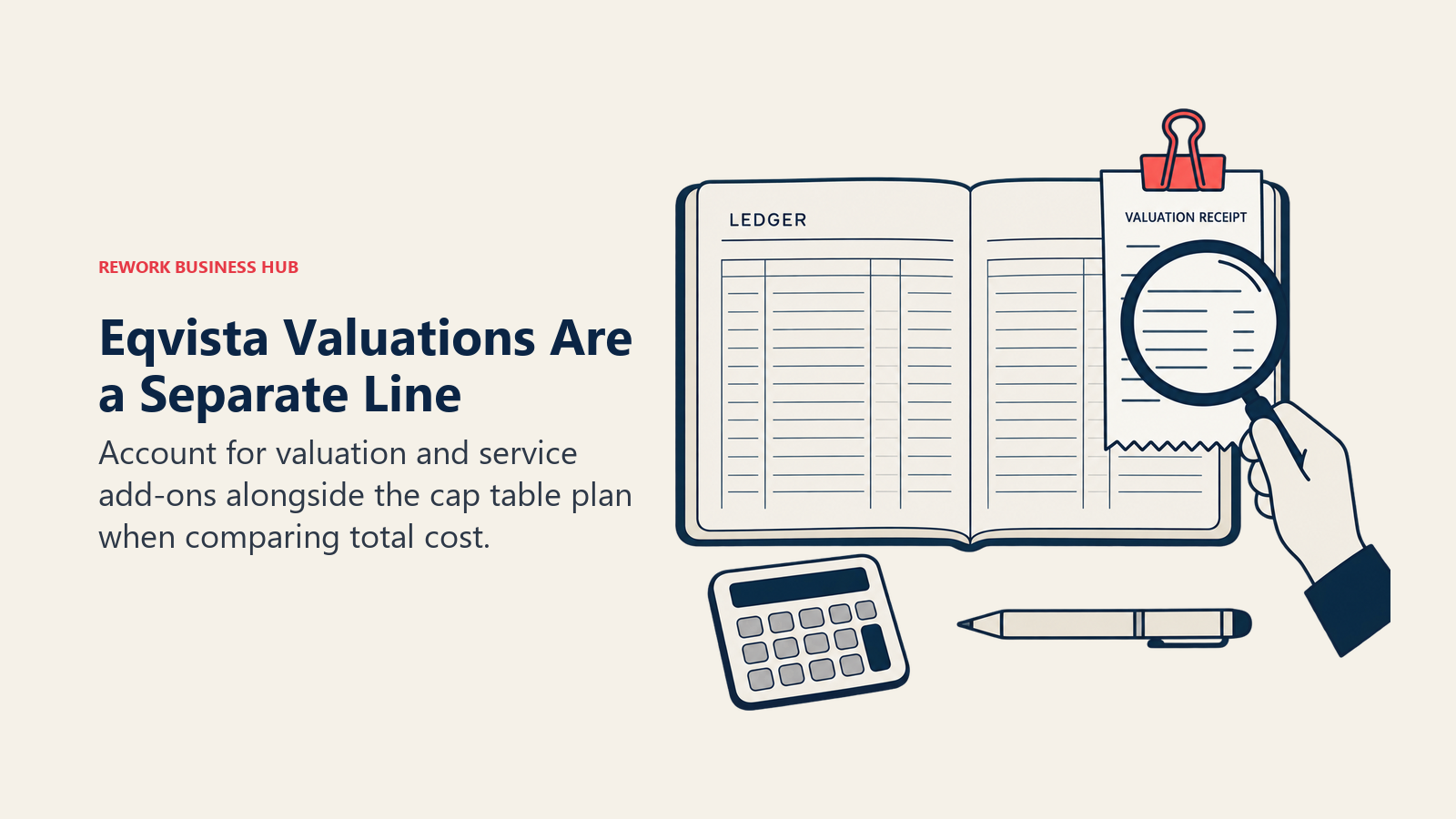
Where Eqvista stands out is 409A valuation pricing, priced separately from the cap table plan itself but genuinely a la carte and published by funding round: Startup or Pre-Revenue runs $990 a year, Friends and Family or Angel $1,290 a year, Seed $1,990 a year, Series A $2,590 a year, and Series B and later moves to custom. Additional add-ons carry their own published starting prices too: expedited processing from $490, QSBS attestation from $1,000, and ASC 718 support from $500.
| Pros | Cons |
|---|---|
| Free under 20 stakeholders with no funds-raised condition | Cap table plan pricing itself goes custom above 50 stakeholders |
| 409A valuations priced transparently by funding round | A la carte add-ons (QSBS, ASC 718, expedited processing) stack up fast |
| Clear published starting price at every 409A round stage | Free-tier cap is tighter than several 25-stakeholder peers |
Pricing: Freemium free under 20 stakeholders. Cap table plans move to custom pricing above 50 stakeholders. 409A valuations: $990/year (Startup/Pre-Revenue) through $2,590/year (Series A), custom for Series B+. Add-ons: expedited processing from $490, QSBS attestation from $1,000, ASC 718 from $500.
Best for: A very small team that wants a genuine $0 start and values transparent, a la carte 409A pricing over a bundled subscription.
6. Ledgy: European Reporting Depth, Priced in Euros
Ledgy is the strongest pick on this list for a European company, or a US company with meaningful European reporting requirements. Launch is free for up to 50 stakeholders, double Carta's cap and without Carta's $1M-raised condition. Above Launch, Scale starts at a published EUR 5,000 a year, and Enterprise starts at a published EUR 18,000 a year, both real published figures rather than a sales-call-only quote, a meaningful contrast to Carta and Fidelity's opaque paid tiers. A separate financial reporting add-on runs Essentials from EUR 3,000 a year or Advanced from EUR 5,000 a year, stacking on top of whichever base tier you're on.
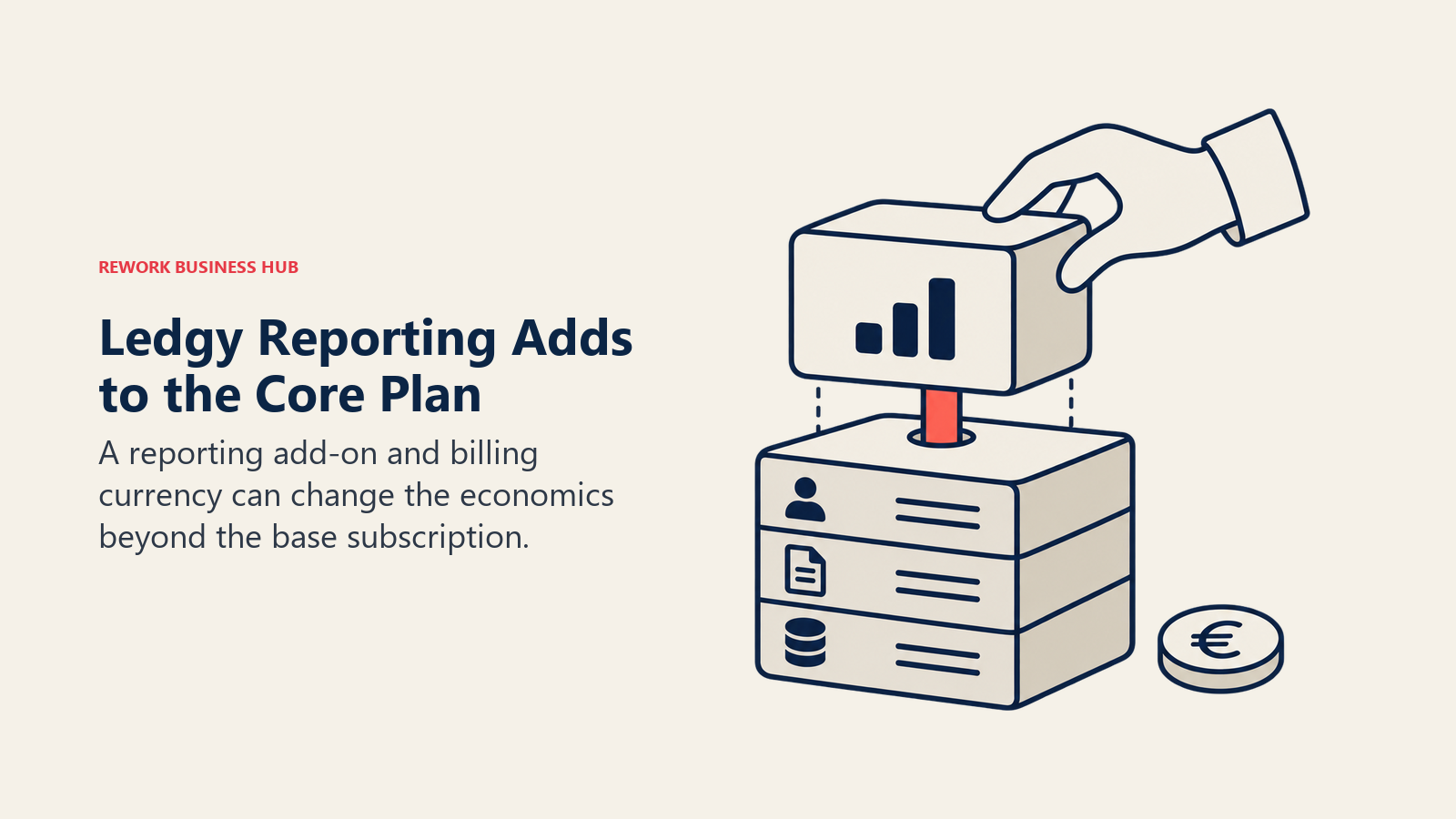
The catch for a US buyer is currency. Every figure above is quoted in euros, not dollars, so budget for exchange-rate movement on top of the sticker price, and confirm your renewal terms lock in a rate rather than floating with it. If you're evaluating Ledgy specifically as the incumbent rather than as a Pulley alternative, the dedicated Ledgy alternatives guide covers that angle directly, and pairing Ledgy's reporting add-on with a broader FP&A stack is worth a look through our FP&A software roundup if financial reporting depth is the deciding factor.
| Pros | Cons |
|---|---|
| Published starting prices at Scale and Enterprise, not sales-call-only | All figures are in euros, not dollars |
| Free Launch tier has no funds-raised condition, unlike Carta or Fidelity | Financial reporting add-on stacks on top of the base subscription |
| Strong European compliance and reporting depth | Less US investor-network familiarity than Carta or Pulley |
Pricing: Launch free for up to 25 stakeholders. Scale starts at EUR 5,000/year. Enterprise starts at EUR 18,000/year. Financial reporting add-on: Essentials from EUR 3,000/year, Advanced from EUR 5,000/year.
Best for: A European company, or a US company with European reporting needs, that wants a published starting price without a sales call.
7. Qapita: Free to Start, Per-Stakeholder Scaling After
Qapita's Spark tier mirrors Carta and Fidelity almost exactly: free for up to 25 stakeholders and less than $1M raised. Above that, the pricing model shifts to a base price plus a per-stakeholder overage rate, a structure worth modeling carefully. Surge runs $1,600 a year covering up to 40 stakeholders, plus $40 per stakeholder per year beyond that. Growth runs $3,000 a year covering up to 50 stakeholders, plus $60 per stakeholder per year beyond that, and adds a 409A valuation report, board consent workflows, and 83(b) election support. Service add-ons are billed hourly: analyst support at $125 an hour, full-service administration at $500 an hour.
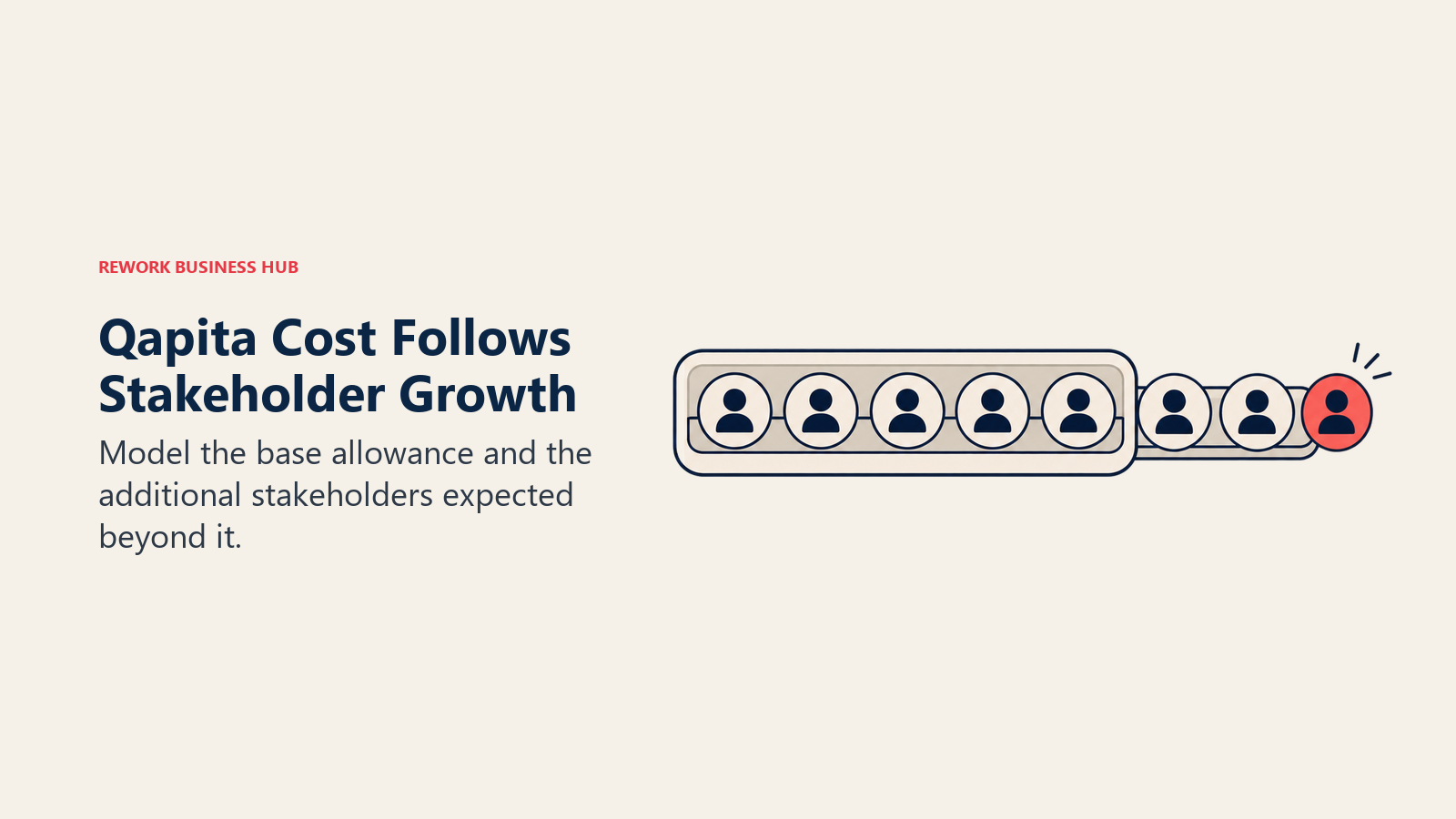
The per-stakeholder overage on both paid tiers means Qapita's real annual cost depends heavily on how close to the included cap your company sits. A 45-stakeholder company on Surge, for example, pays the $1,600 base plus overage on 5 stakeholders beyond the 40 included, a cost that's easy to underestimate from the headline price alone.
| Pros | Cons |
|---|---|
| Free tier matches Carta and Fidelity's 25-stakeholder, sub-$1M cap | Per-stakeholder overage fees change real cost as headcount grows |
| Published base price plus a clear overage rate at each paid tier | Service add-ons (analyst support, full administration) billed hourly |
| Growth tier bundles a 409A valuation report and 83(b) support | Overage math takes more modeling than a flat per-tier price |
Pricing: Spark free for up to 25 stakeholders and less than $1M raised. Surge $1,600/year (up to 40 stakeholders) plus $40/stakeholder/year overage. Growth $3,000/year (up to 50 stakeholders) plus $60/stakeholder/year overage. Analyst support $125/hour; full-service administration $500/hour.
Best for: A team comfortable modeling per-stakeholder overage costs in exchange for a free entry tier and bundled 409A support on Growth.
8. EquityList: A Published Rate Card With an AI Credit Allowance
EquityList repriced in 2026 into four tiers with a published figure at every named one, plus an AI credit allowance attached to each. Free covers 10 stakeholders at $0 with 1,000 lifetime AI credits and no funding condition at all, a tighter cap than Carta, Fidelity, or Qapita but with no raised-capital test to fail. Build runs $1,200 billed annually, or $125 a month billed monthly, and covers 35 stakeholders plus $35 per additional stakeholder per year. Growth runs $3,500 billed annually for 50 stakeholders plus $50 each beyond, and adds multi-entity support, a 409A valuation, and exercise workflows. Enterprise is custom.
Above the free cap, Build runs $1,200 billed annually or $125 a month billed monthly, covering 35 stakeholders plus $35 per additional stakeholder per year. Growth runs $3,500 billed annually, covering 50 stakeholders plus $50 each beyond, and adds multi-entity support, a 409A valuation, and exercise workflows. Enterprise is custom. Both published tiers print a monthly and an annual figure side by side, so confirm which basis a quoted price reflects before comparing it against Pulley's annual-only pricing.
| Pros | Cons |
|---|---|
| Free tier gated on funds raised only, no stakeholder cap | A highly-staffed, pre-$1M company is an edge case the free tier doesn't anticipate |
| Clear quarterly-vs-yearly toggle with a published 15% annual discount | Quarterly billing costs meaningfully more over a year than annual |
| 50 included stakeholders on Seed beats most 25-stakeholder free-adjacent tiers | Scale tier itself has no published ceiling |
Pricing: Free ($0, 10 stakeholders, 1,000 lifetime AI credits). Build $1,200/year billed annually, or $125/month billed monthly (35 stakeholders, $35 per additional stakeholder per year). Growth $3,500/year billed annually (50 stakeholders, $50 per additional stakeholder per year, adds multi-entity support, a 409A valuation, and exercise workflows). Enterprise: custom.
Best for: A company with a larger stakeholder list than a typical seed-stage cap table but still under the $1M-raised line.
The Platform-Adjacent Option
AngelList doesn't compete with Pulley as a standalone cap table product the way the other 12 do. It earns a spot on this list because a specific type of founder already lives inside its ecosystem for other reasons.
9. AngelList: Built for Fund Administration, Not a Standalone Cap Table
AngelList belongs on this list with a caveat most other roundups skip: it publishes pricing for fund administration, not for cap table management, and this guide isn't printing a cap table figure that doesn't exist. If your company is a straightforward operating business evaluating Pulley for its own equity records, AngelList is not a like-for-like swap.
There's a timing caveat worth knowing before you shortlist it. In an announcement dated 6 August 2025, AngelList said its rebuilt cap table, which integrates RUVs and Consolidation Vehicles, "will be the only option for new customers," and that it is no longer building new features on the older version. Existing customers who stay put keep the same software, support, and pricing, and AngelList points anyone who would rather move toward J.P. Morgan Workplace Solutions or Pulley.
Where it becomes genuinely relevant is a narrower case, a founder who also runs a venture fund, a rolling fund, or a syndicate of SPVs alongside the operating company's own cap table. AngelList's administration tooling is built specifically for that fund-side workload, entity formation, LP onboarding, capital calls, and fund accounting, work that Pulley, Carta, and every other tool on this list simply isn't built to do. For the operating-company cap table itself, most AngelList-adjacent founders still run a dedicated tool from this list alongside it.
| Pros | Cons |
|---|---|
| Purpose-built fund and SPV administration most cap table tools don't offer | No published cap table management pricing, or product, exists |
| Useful for a founder running a fund alongside an operating company | Not a substitute for Pulley if you only need an operating-company cap table |
| Deep LP and capital-call workflow support | A narrow fit compared to every other tool on this list |
Pricing: No published cap table pricing. AngelList publishes pricing for fund administration services, a different product line entirely.
Best for: A founder or operator who also runs a fund or SPV structure, not a company looking for a direct, standalone cap table replacement.
Institutional and Enterprise-Backed Platforms
Two entries on this list aren't built for a founder pre-qualifying budget on a pricing page. Shareworks appears here, and J.P. Morgan Workplace Solutions closes out the list further down; both are quote-only, sales-led products backed by major financial institutions, worth a look once your company or your board wants an equity platform with an institutional name attached.
10. Shareworks (Morgan Stanley at Work): Enterprise Brokerage Infrastructure
Shareworks traces back to Solium Shareworks, became Shareworks by Morgan Stanley after the 2019 acquisition, and is now sold under the Morgan Stanley at Work brand. There is no pricing published anywhere on the Shareworks or Morgan Stanley at Work sites. It's entirely sales-led, with no self-serve signup path at all, a sharp contrast to the six free-tier options earlier in this list.
That opacity buys real infrastructure once a company needs it: a direct tie into Morgan Stanley's wealth management and brokerage services, useful for a later-stage company whose employees are starting to need liquidity events, cashless exercises, or 10b5-1 plans handled by an institution rather than a startup vendor. For most Pulley-stage founders that's overkill; the fit sharpens closer to a growth or pre-IPO stage. See the direct Carta vs. Shareworks comparison for how it stacks up against the category leader, or the dedicated Shareworks alternatives guide if Shareworks itself is the tool you're evaluating away from.
| Pros | Cons |
|---|---|
| Direct tie into Morgan Stanley wealth management and brokerage services | No published pricing anywhere, entirely sales-led |
| Strong fit once employees need real liquidity and exercise infrastructure | No self-serve signup path at all |
| Backed by one of the largest financial institutions in this category | Likely overkill for a company still at Pulley's stage |
Pricing: No published pricing. Quote only, sales-led, no self-serve signup.
Best for: A growth-stage or pre-IPO company whose employees need brokerage and liquidity infrastructure a startup-focused vendor doesn't offer.
Region-Specific Specialists
These two solve for a specific jurisdiction rather than trying to be a global default, worth a serious look if your company is incorporated in the UK or continental Europe and your Pulley evaluation keeps running into US-centric assumptions.
11. Vestd: UK-Native Compliance, Add-Ons Published, Base Plan Isn't
Vestd is the clearest UK-native pick on this list, built specifically around EMI (Enterprise Management Incentive) option schemes and two-way electronic filing with Companies House, the UK's company registrar. That native compliance layer is functionality Pulley, Carta, and most of this list's US-built platforms don't replicate.
The pricing page is unusually complete for this category. Self-Serve starts at GBP 2,200 a year, or GBP 220 a month. Guided starts at GBP 4,200 a year, or GBP 420 a month. Only Full Service routes to an enquiry. Both published tiers carry VAT on top and a minimum 12-month term. The add-ons are published alongside them: InVestd Raise at GBP 150 a month, valuations from GBP 1,000, 409A valuations from GBP 700, a nominee structure from GBP 50 a month, live HMRC submission support at GBP 25 a month, and company incorporation at GBP 100. A UK founder can price the whole stack before speaking to anyone.
| Pros | Cons |
|---|---|
| Native EMI scheme support and two-way Companies House filing | Core plan price is not readable on the pricing page |
| Published, itemized add-on pricing (funding rounds, valuations, tax support) | US-based buyers get no compliance benefit from the UK-native features |
| Nominee structure and company formation available as priced add-ons | Requires a direct quote just to learn the base subscription cost |
Pricing: Base plan price not published on the pricing page. Verified add-ons: funding rounds GBP 150/month, valuations from GBP 1,000, US tax support from GBP 700, nominee structure from GBP 50/month, company formation from GBP 250.
Best for: A UK-incorporated company running EMI option schemes that wants native Companies House filing built in.
12. Capboard: Transparent Add-Ons, Unreadable Base Plan
Capboard's pricing page renders its plan prices from template variables that don't display as readable figures, so this guide isn't printing a Capboard plan price either. What is fixed and verifiable: premium support runs $50 a month, and a partner-delivered 409A valuation runs $1,800. Beyond those two line items, a prospective buyer needs a direct conversation to learn what the core subscription actually costs.
That's a real limitation for a founder trying to pre-qualify budget the way Astrella or Cake Equity's published tiers allow. Capboard is smaller and less brand-recognized than the other 12 tools on this list, which typically means a lighter, faster implementation for an early-stage team, but it also means less of a track record to lean on when comparing vendors.
| Pros | Cons |
|---|---|
| Published, fixed pricing on support and 409A valuation add-ons | Base plan pricing cannot be pre-qualified at all |
| Likely a lighter implementation for a small, early-stage team | Less brand recognition and track record than the rest of this list |
| Partner 409A valuation price is fixed and transparent at $1,800 | No published stakeholder bands to compare against Pulley or Astrella |
Pricing: Base plan price not published (renders as template variables). Verified add-ons: premium support $50/month, partner 409A valuation $1,800.
Best for: A very early-stage team willing to request a quote in exchange for a lighter platform and transparent add-on pricing.
13. J.P. Morgan Workplace Solutions: Enterprise Banking Infrastructure
J.P. Morgan Workplace Solutions, formerly Global Shares before J.P. Morgan acquired and rebranded it, is the second institutional, enterprise-backed platform on this list, alongside Shareworks earlier. It's built for enterprise scale, not a Pulley-stage startup. Pricing is quote-only with nothing published, consistent with an enterprise sales motion rather than a self-serve product.
The fit case is narrow but real: a large multinational company that wants its equity plan administration tied directly into J.P. Morgan's banking relationship, particularly one managing equity compensation across multiple countries and currencies where a startup-focused vendor's support model doesn't scale. For nearly every reader evaluating Pulley alternatives at seed through Series B, this is the one entry on the list to note and move past rather than shortlist seriously.
| Pros | Cons |
|---|---|
| Enterprise-grade banking relationship behind the platform | No published pricing anywhere, quote only |
| Built for multinational, multi-currency equity administration at scale | Not a realistic fit for a company at Pulley's typical stage |
| J.P. Morgan's institutional infrastructure and support | Sales cycle length and minimums assume enterprise scale |
Pricing: No published pricing. Enterprise, quote only.
Best for: A large multinational enterprise that wants equity plan administration tied to an existing J.P. Morgan banking relationship, not an early-stage startup.
Moving Off Pulley: What Actually Changes
Whichever direction you go, the free-tier gap is only the first thing that changes. Plan for what the switch actually costs once you're past the pricing page.
If you're moving to another paid-from-day-one platform like Astrella, the migration is mostly mechanical. Both charge from stakeholder one, so you're not trading a free tier away, and the cap table data itself, share classes, vesting schedules, option grants, transfers, tends to import cleanly between platforms built for the same startup-stage workflow. Budget days, not weeks, for that kind of move.
If you're moving to a free-tier platform like Carta, Fidelity Private Shares, Ledgy, or Qapita instead, the real work is different: reconciling exactly which stakeholders count toward the free tier's cap and confirming your total raised still qualifies. A company that closed a bridge note since its last Pulley pricing conversation might already be over a $1M-raised threshold that looked comfortable a few months earlier, which turns a "free forever" expectation into a paid-tier surprise on day one of the new platform instead.
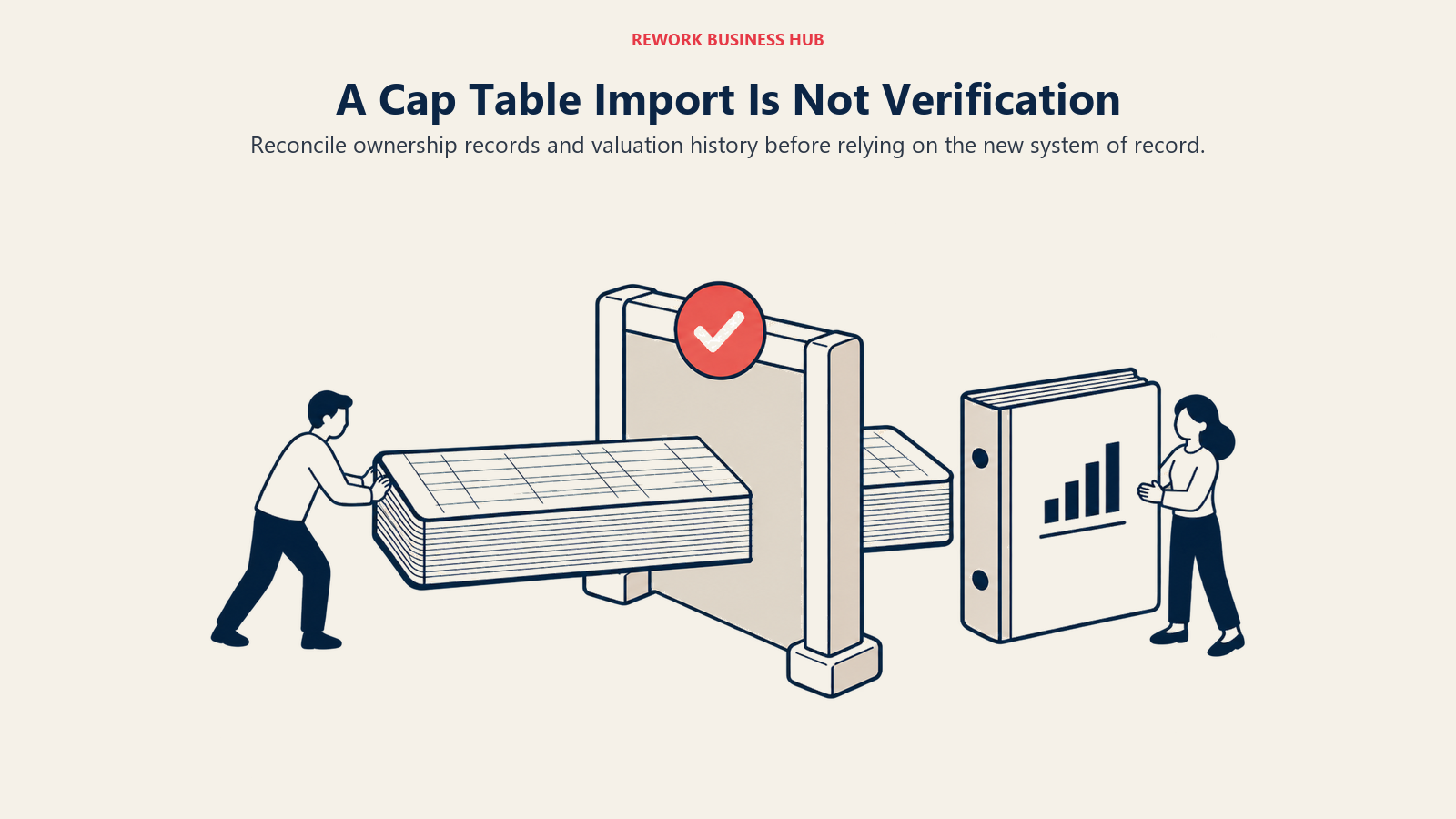
The bigger cost, on either path, is verification, not import. A 409A valuation, an 83(b) election, or a Rule 701 compliance threshold that was correct on Pulley needs to be re-confirmed on the new platform's own logic, not assumed to carry over automatically. Treat the first full board reporting cycle after a switch as a checkpoint, not a formality: reconcile the new platform's numbers against your last Pulley export line by line before you trust it as the system of record. That discipline matters more here than in most software categories, since an equity records error doesn't just cost time to fix, it can affect what an investor, an employee, or an auditor believes they actually own.
How to Choose: Decision Framework
| If you need... | Choose |
|---|---|
| The lowest-friction free tier with the widest brand recognition | Carta |
| A free tier plus a bundled incorporation package for a pre-formation company | Fidelity Private Shares |
| Published dollar pricing at every paid tier, with bundled 409A valuations | Cake Equity |
| Fully transparent, stakeholder-banded pricing that mirrors Pulley's own structure | Astrella |
| A genuine $0 start under 20 stakeholders with a la carte 409A pricing | Eqvista |
| European reporting depth with published starting prices, in euros | Ledgy |
| A published rate card at every tier plus a free plan with no funding test | EquityList |
| Fund or SPV administration alongside an operating-company cap table | AngelList |
| UK-native EMI scheme support and Companies House filing | Vestd |
| Enterprise brokerage or banking infrastructure attached to equity plan administration | Shareworks or J.P. Morgan Workplace Solutions |
Frequently Asked Questions about Pulley Alternatives
Does Pulley have a free plan?
No. Pulley's pricing page shows no free tier at any stakeholder count. Startup, the entry tier, runs $1,200 a year with the first 25 stakeholders included, and Growth runs $3,500 a year with the first 40 included. A number of older listicles still describe a free Pulley tier for small cap tables; that claim does not match the vendor's current pricing page.
What is the cheapest Pulley alternative with a published free tier?
Cake Equity's free tier is the tightest by stakeholder count but genuinely $0, covering 5 stakeholders with no funding condition. For a wider free-tier cap, Carta, Fidelity Private Shares, and Qapita all offer free entry at up to 25 stakeholders (with a sub-$1M-raised condition), and Ledgy goes furthest at 50 stakeholders with no funding condition at all.
Which Pulley alternative has the most transparent published pricing?
Astrella and Cake Equity are the two vendors on this list that publish real dollar figures at every paid tier rather than routing buyers to a sales call. Astrella's Early Stage tier is priced identically to Pulley's Startup tier at $1,200 a year for a comparable stakeholder range.
Is Carta a good alternative to Pulley?
Carta's free Launch tier is a real advantage over Pulley, which has no free plan at all. The tradeoff is that Carta's paid tiers, Build, Grow, and Scale, publish no dollar figures; Carta's own pricing FAQ confirms each package is priced per stakeholder against an undisclosed minimum annual fee. A buyer choosing Carta over Pulley is trading a free starting tier for pricing opacity later.
What happened to LTSE Equity and Capdesk?
LTSE exited the cap table business and directed its customers to Astrella; the sunset is complete, so LTSE Equity should not be evaluated as a live option in 2026. Capdesk was acquired by Carta in 2022 and rebranded Carta Europe in January 2025, so it's no longer an independent alternative to evaluate separately from Carta.
Which alternative is best for a UK-incorporated startup?
Vestd is the clearest UK-native pick, built around EMI option schemes with native two-way Companies House filing that Pulley and most of this list's US-built platforms don't replicate. It publishes its plan prices too: Self-Serve from GBP 2,200 a year and Guided from GBP 4,200 a year, both plus VAT and both on a minimum 12-month term.
Do any of these alternatives bundle a 409A valuation into the subscription price?
Yes. Cake Equity's Team tier bundles two 409A valuations the vendor itself values at $3,000 combined, and Qapita's Growth tier adds a 409A valuation report. Pulley's own Growth tier bundles 409A valuations too. Eqvista instead prices 409A valuations transparently and separately by funding round, starting at $990 a year.
How does Pulley's entry price compare to its closest-priced published alternative?
Astrella's Early Stage tier and Pulley's Startup tier both cost $1,200 a year for a comparable stakeholder range, 0-25 for Astrella and the first 25 included on Pulley. At that price point the decision comes down to platform workflow and support rather than cost.
Are there hidden per-stakeholder fees to watch for beyond the sticker price?
Yes, on several platforms. Cake Equity charges $60 for every stakeholder beyond a tier's included count. Qapita charges $40 per stakeholder on Surge and $60 per stakeholder on Growth once you pass the included cap. Pulley itself has a related quirk worth knowing: angel investors writing checks of $50,000 or less count as only half a stakeholder toward its tier limits. Model your actual headcount trajectory against each platform's overage terms before comparing headline prices alone.
What to Do Next
Start from the free-tier gap table above, not the feature list. If your company can operate under 25 stakeholders and less than $1M raised, Carta, Fidelity Private Shares, or Qapita let you defer the pricing decision entirely by starting free, something Pulley's pricing page doesn't offer at any headcount. If you've already outgrown that range or expect to soon, price Pulley's Startup tier directly against Astrella's identically-priced Early Stage tier and Cake Equity's published Build tier before you take a single sales call, since three of the vendors on this list will give you a real number without one.
If you would rather see this market ranked as a category than measured against Pulley, our best cap table software roundup covers the same platforms on their own terms.
Then load one real scenario, your actual next funding round or option grant, into your top two finalists before signing anything. Watch how each platform handles a 409A valuation trigger, a Rule 701 threshold, or an HRIS sync, whichever workflow actually drives your monthly cap table work. That single test will tell you more about fit than any pricing page, and it's worth pairing with a look at the rest of your finance stack while you're at it; our accounting software roundup and expense management roundup cover the adjacent systems most of these cap table platforms eventually need to sync with.
Finally, put the overage terms in writing before you sign, not just the base tier price. A per-stakeholder fee that looks negligible at your current headcount can move a platform from cheapest to most expensive within a year of hiring or granting options at a normal startup pace. The 13 tools above split roughly evenly between flat published tiers and per-stakeholder scaling, and that split, more than any single feature, is usually what determines whether a Pulley alternative actually saves money or just defers the cost to next year's renewal.
Camellia writes about equity administration and cap table tooling for B2B teams. Pricing verified against vendor pricing pages, September 2026.

Principal Product Marketing Strategist
On this page
- Key Facts
- Quick Comparison Table
- Pulley's Free-Tier Gap: What Buyers Are Actually Comparing It Against
- Free-Tier Peers: Where Most Pulley Shoppers Look First
- 1. Carta: The Category Leader With an Undisclosed Ceiling
- 2. Fidelity Private Shares: The Bank-Backed Free Tier
- Published-Price Challengers: Real Numbers, No Sales Call Required
- 3. Cake Equity: Published Pricing at Every Paid Tier
- 4. Astrella by EQ: Fully Transparent, Stakeholder-Banded Pricing
- More Free-to-Start Platforms, Different Scaling Logic
- 5. Eqvista: Free Under 20 Stakeholders, A La Carte 409A Pricing
- 6. Ledgy: European Reporting Depth, Priced in Euros
- 7. Qapita: Free to Start, Per-Stakeholder Scaling After
- 8. EquityList: A Published Rate Card With an AI Credit Allowance
- The Platform-Adjacent Option
- 9. AngelList: Built for Fund Administration, Not a Standalone Cap Table
- Institutional and Enterprise-Backed Platforms
- 10. Shareworks (Morgan Stanley at Work): Enterprise Brokerage Infrastructure
- Region-Specific Specialists
- 11. Vestd: UK-Native Compliance, Add-Ons Published, Base Plan Isn't
- 12. Capboard: Transparent Add-Ons, Unreadable Base Plan
- 13. J.P. Morgan Workplace Solutions: Enterprise Banking Infrastructure
- Moving Off Pulley: What Actually Changes
- How to Choose: Decision Framework
- What to Do Next