Best Cap Table Software in 2026: 13 Platforms for Founders and Finance Leads
Turn this article into takeaways for your work.


Each assistant summarizes the article only for you and suggests best practices for your work.
Updated September 2026
If you're a seed-stage founder who just needs the record to stay clean and cheap, start with Fidelity Private Shares or Ledgy on their free tiers. If you want a published price you can budget before a sales call, Astrella and Pulley both start at $1,200 a year. If you're a CFO at Series B or C with a real option pool and a board that asks for waterfall scenarios, Carta and Ledgy carry the most depth, and Shareworks takes over once you're staring at an exit. Cap table software exists to answer one question without a lawyer: who owns what, under what terms, as of today.
This guide covers 13 platforms judged on how well they hold the ownership record itself: share classes, SAFEs and convertibles, option pools and vesting, 409A valuations, waterfall modelling, and the investor and board reporting that gets pulled off the back of it. Every price below was checked against the vendor's own pricing page in September 2026, and where a vendor publishes nothing, this guide says that plainly instead of guessing. If your problem is administering grants rather than holding the record (participant portals, tax withholding, ASC 718 expensing, global mobility), the companion equity management software guide covers that side of the split.
Key Facts
- There are 6,609 employee stock ownership plans at 6,411 U.S. companies, covering 15.1 million participants and holding more than $2 trillion in assets (NCEO, Employee Ownership by the Numbers).
- U.S. venture firms closed 14,320 deals worth $215.4 billion in 2024, and each one of those rounds required a cap table update in the same week it closed (NVCA 2025 Yearbook).
- Convertible notes fell to a record-low 7% of pre-seed rounds in Q1 2026, meaning roughly 93% of pre-seed deals now run on SAFEs that sit unconverted on the cap table until a priced round (vendor data: Carta, State of Pre-Seed Q1 2026).
- Median founding-team ownership drops from about 56% after a seed round to about 36% after a Series A, and by Series C the employee option pool (16.8%) is larger than what the founders still hold (16.1%) (vendor data: Carta, Founder Ownership Report 2026).
- 85% of companies with fewer than 750 employees have one or no dedicated person administering their equity plan, which is exactly the gap this software fills (NASPP/Deloitte, 2025 Equity Administration Survey).
Quick Comparison Table
| Tool | Best For | Starting Price | Key Strength | Key Limitation |
|---|---|---|---|---|
| Carta | Companies that want the largest network of investors already reading their cap table | Free (Launch, up to 25 stakeholders and $1M raised); paid tiers priced per stakeholder against an undisclosed minimum annual fee | Deepest feature coverage from incorporation through late-stage secondaries | Build, Grow, and Scale publish no dollar figure at all |
| Pulley | Seed to Series A teams that want clean SAFE and priced-round modelling | $1,200/year (Startup, first 25 stakeholders) | Straightforward round modelling plus a dedicated token cap table product | No free tier at any stakeholder count |
| Fidelity Private Shares | Pre-seed founders who want a free record backed by a major custodian | Free (Launch, up to 25 stakeholders and under $1M raised) | Bundles Delaware incorporation and a free subscription for $400 | Startup, Growth, and Scale publish features but no prices |
| Ledgy | European and multi-entity companies needing investor-grade reporting | Free (Launch, max 50 stakeholders); Scale from EUR 5,000/year | The most generous free tier on this list at 50 stakeholders | Euro pricing and a large step up from free to Scale |
| Astrella by EQ | Buyers who want banded pricing published all the way to 300 stakeholders | $1,200/year (Early Stage, 0-25 stakeholders) | Every band up to 300 stakeholders carries a public number | No free tier, and above 300 stakeholders pricing goes custom |
| Cake Equity | APAC startups that want a cheap paid tier with option scheme tooling built in | Free ($0, 5 stakeholders); Build $1,000/year (25 stakeholders) | $1 per extra stakeholder on Build is the cheapest overage rate here | The free tier stops at 5 stakeholders, which is one founding team |
| Eqvista | Founders who want 409A valuations priced openly by funding round | Free (Freemium, under 20 stakeholders) | Round-based 409A pricing published from $990/year | Cap table pricing goes custom above 50 stakeholders |
| EquityList | Teams that want AI-assisted document handling on a low entry price | Free ($0, 10 stakeholders); Build $1,200/year (35 stakeholders) | 35 included stakeholders on the entry tier beats most rivals | Growth's per-stakeholder overage is $50/year, above peers |
| Qapita | India and Southeast Asia companies running active ESOP grants | Free (Spark, up to 25 stakeholders and under $1M raised) | Publishes a per-stakeholder overage rate on every paid tier | Priced in USD, so local buyers carry the FX movement |
| Capboard | European teams wanting a lighter, cheaper record than Ledgy | Plan prices do not render on the vendor's own pricing page | Flat $1,800 partner-sourced 409A and a published $300 onboarding fee | You cannot read a plan price on the site, so budgeting means asking |
| Vestd | UK companies running EMI schemes and filing at Companies House | GBP 2,200/year (Self-Serve, from GBP 220/month) | Two-way Companies House filing no US platform replicates | Priced in GBP plus VAT, on a minimum 12-month term |
| AngelList | Founders already running SPVs or fund formation through AngelList | No published cap table pricing (fund administration pricing only) | The cap table sits beside the vehicles investing in you | Since August 2025 new customers get only the rebuilt product |
| Shareworks (Morgan Stanley at Work) | Late-stage private and public companies preparing for liquidity | No published pricing, quote only | Institutional administration wired into Morgan Stanley's infrastructure | No self-serve signup and no published price anywhere |
The Default Shortlist: Broad Platforms Most Founders Compare First
These three show up on nearly every shortlist. Two of them give the record away free at the earliest stage, and the third charges from day one for a cleaner modelling experience. What separates them is less about features than about how much you can find out before you talk to a salesperson.
1. Carta: The Default Record Most Investors Already Read
Carta's bet from the beginning was that a cap table gets more valuable when everyone who touches it sits on the same system. It started as an electronic share certificate tool and grew into a stack that covers incorporation, SAFE issuance, 409A valuations, option exercises, waterfall modelling, secondaries, and fund administration on the investor side. That network effect is the honest reason Carta leads most shortlists: your lead investor probably already has a login, and your next one probably will too.
The friction is price discovery. Launch is free for up to 25 stakeholders and $1M raised, which covers a founding team and a first angel round. Everything above it publishes no dollar figure. Carta's own FAQ states that each package "has a price per stakeholder with a minimum annual fee," Build is capped at up to 50 stakeholders, and Grow and Scale are listed with a flexible stakeholder limit. Two of the three numbers that determine your bill are invisible until you're in a sales call, which is why so many founders shop the field first.
Target audience. Companies expecting heavy investor and auditor traffic on the record, where breadth and familiarity matter more than a published price.
Sizing fit. 1-10 on the free tier, 10-50 on Build, 50-200 and 200+ on Grow and Scale.
Stage fit. Incorporation through late-stage secondaries, the widest span on this list.
| Pros | Cons |
|---|---|
| Broadest feature coverage from formation through liquidity | No published dollar figure on any paid tier |
| Investors, auditors, and counsel are likely already on it | Build's 50-stakeholder cap arrives fast after a seed round |
| Publishes the private-market datasets the rest of the category cites | Per-stakeholder pricing plus a hidden minimum fee makes forecasting hard |
Pricing: Launch free, up to 25 stakeholders and $1M raised. Build, Grow, and Scale are priced per stakeholder against a minimum annual fee, with no published figures; Build is capped at up to 50 stakeholders while Grow and Scale carry a flexible stakeholder limit.
Best for: A company that wants the widest feature surface and the largest investor network, and can absorb a sales conversation to find out what it costs.
If the pricing opacity is what's pushing you to look elsewhere, the dedicated Carta alternatives guide works through the same field from that angle.
2. Pulley: Round Modelling Without a Free Tier to Fall Back On
Pulley's product argument is that modelling should be the part you never dread. SAFE stacks with different caps and discounts, priced rounds with a new option pool carved out pre-money, secondary sales, and the dilution each of those pushes onto every existing holder: Pulley builds all of that into scenarios a founder can run without a spreadsheet or a lawyer. For a company still deciding how big the next pool needs to be, that's the whole job.
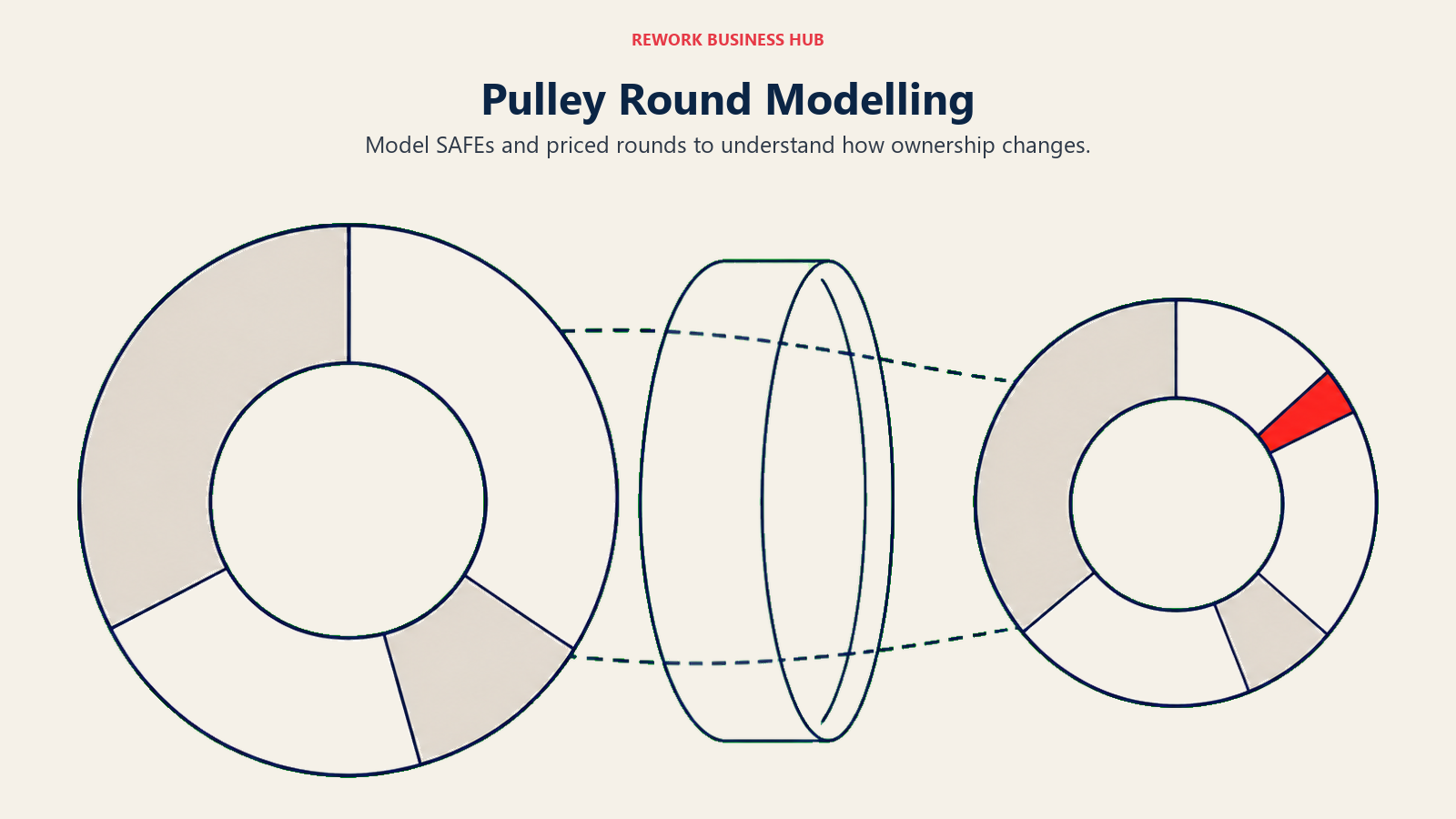
What Pulley doesn't do is give anything away. There's no free plan at any stakeholder count, and the only free entry is a trial aimed at companies switching off Carta. Startup runs $1,200 a year and includes the first 25 stakeholders. Growth runs $3,500 a year and includes the first 40, adding the operational layer a company needs once it grants options on a regular cadence. Enterprise is quote only, billed annually. Pulley publishes no per-extra-stakeholder rate, so the cost of crossing a tier boundary is a question you have to ask.
One counting quirk is worth planning around: angel investors writing checks for $50,000 or less count as half a stakeholder toward your limit. A party round of twenty small checks therefore consumes ten slots, not twenty.
Target audience. Seed and Series A teams that would rather pay from day one than manage a free-tier ceiling.
Sizing fit. 1-10 and 10-50 comfortably; past 50 stakeholders you're negotiating.
Stage fit. Strongest from the first priced round through Series B.
| Pros | Cons |
|---|---|
| SAFE and priced-round scenario modelling built for founders | No free tier at any stakeholder count |
| Growth adds option exercise and compliance workflow at a published price | The Startup to Growth step is a $2,300 a year jump |
| Separate token cap table product for companies issuing tokens | No published per-extra-stakeholder rate above the included count |
Pricing: Startup $1,200/year (first 25 stakeholders included). Growth $3,500/year (first 40 stakeholders included). Enterprise: contact us, billed annually. Token Cap Table $4,500/year and Token Distributions $4,500/year; token valuations from $10,000.
Best for: A founder who models rounds often, wants a published price, and doesn't need a free tier to start.
For the head-to-head against the incumbent, see Carta vs. Pulley. If Pulley is the platform you're shopping away from, the Pulley alternatives guide takes that angle.
3. Fidelity Private Shares: A Free Record With a Custodian Behind It
Fidelity Private Shares is the equity platform Fidelity built for private companies, and its opening move is deliberately aimed at the very earliest stage. Launch is free for up to 25 stakeholders and under $1M raised, matching Carta's free tier almost exactly, with a name behind it that a first-time founder's board and counsel will already recognise.
The move that no other platform on this list matches is the incorporation bundle: $400 covers Delaware C Corp filing fees, one year of registered agent service, and a complimentary Launch subscription. If you haven't incorporated yet, that folds entity formation and your ownership record into a single decision at a price below what most registered agents charge on their own.
The catch sits above the free tier. Startup, Growth, and Scale all publish feature lists and no dollar figures, so the moment you outgrow Launch you're back to a quote. Startup adds premier support, investor updates, and Form 3921 filing. Growth adds 409A valuations, priority onboarding, ASC 718 support, and HRIS and payroll integration. Those are the features most companies need at exactly the point they cross the free ceiling, so plan on a conversation somewhere between your seed and your Series A.
Target audience. Pre-seed and first-time founders who want an institution's name on the record and possibly the incorporation handled too.
Sizing fit. 1-10 free, 10-50 on Startup or Growth once you're through a quote.
Stage fit. Strongest right at formation, given the bundled incorporation package.
| Pros | Cons |
|---|---|
| Free Launch tier with Fidelity's infrastructure behind it | Every paid tier is a feature list without a price |
| $400 incorporation bundle includes a free Launch subscription | The $1M-raised condition ends the free tier fast after a seed |
| Growth carries 409A, ASC 718, and payroll integration | You cannot pre-qualify the cost of the tier you'll actually need |
Pricing: Launch free, up to 25 stakeholders and under $1M raised. Startup, Growth, and Scale publish feature lists only, with no dollar figures. Delaware C Corp incorporation package $400, including filing fees, one year of registered agent service, and a complimentary Launch subscription.
Best for: A founder incorporating now who wants formation and the ownership record bought together, from a name their investors already trust.
Getting the books started at the same time is a reasonable instinct; our accounting software roundup covers that decision for a company at this stage.
Published-Price Platforms You Can Budget Without a Sales Call
Six platforms print real numbers on their own pricing pages, which means you can build a three-year cost model before you ever fill in a contact form. They differ sharply on what the free tier covers, what a stakeholder over the line costs, and whether a 409A valuation is inside the subscription or billed separately.
4. Ledgy: The Most Generous Free Tier, and a Real Step Up After It
Ledgy is built for companies whose ownership record has to satisfy more than a founder. Its centre of gravity is reporting: investor updates, board packs, scenario and waterfall analysis, and financial reporting that finance teams and auditors can work from directly. It's also the most multi-entity-aware platform here, which matters if your holding company sits in one country and your operating entities sit in three others.
The free Launch tier caps at 50 stakeholders, double what Carta, Fidelity, and Qapita allow, and it comes with no funds-raised condition attached. For a company with a wide angel list and a modest raise, that's the longest free runway on this list by a distance.
The step up is real, though. Scale starts at EUR 5,000 a year and includes 50 or more stakeholders. Enterprise starts at EUR 18,000 a year and includes 200 or more. Public companies are quoted custom. The financial reporting module is priced separately: Essentials from EUR 3,000 a year and Advanced from EUR 5,000 a year, so a company that wants Ledgy specifically for its reporting depth should model the add-on, not just the plan.
Target audience. European and globally distributed companies where investors, auditors, and a board all read the same record.
Sizing fit. 1-50 free, 50-200 on Scale, 200+ on Enterprise.
Stage fit. Series A through pre-IPO, with the free tier covering everything before that.
| Pros | Cons |
|---|---|
| 50-stakeholder free tier with no funds-raised condition | The jump from free to Scale is EUR 5,000 a year |
| Deep investor, board, and financial reporting for finance teams | Financial reporting is a separately priced add-on |
| Strong multi-entity and multi-jurisdiction handling | Priced in euros, so non-eurozone buyers carry the FX risk |
Pricing: Launch free, maximum 50 stakeholders. Scale starts at EUR 5,000/year, 50+ stakeholders included. Enterprise starts at EUR 18,000/year, 200+ stakeholders included. Public companies: custom. Financial reporting add-on: Essentials from EUR 3,000/year, Advanced from EUR 5,000/year.
Best for: A European or multi-entity company that will outgrow a 25-stakeholder cap quickly and wants reporting an auditor can use.
If Ledgy is the platform you're already on and looking past, the Ledgy alternatives guide covers the switch in detail.
5. Astrella by EQ: Banded Pricing Published to 300 Stakeholders
Astrella is the equity platform from EQ, the share registrar and transfer agent group, and it's the clearest pricing page in this category. Three bands, three published numbers, all billed annually: Early Stage at $1,200 a year for 0 to 25 stakeholders, Emerging at $3,200 a year for 26 to 100, and Accelerate at $8,200 a year for 101 to 300. Above 300 stakeholders you're quoted. The page carries one caveat worth reading: pricing shown is standard pricing and may not reflect partnership or custom arrangements, so a partner referral could move it.
What that buys you is a cost model you can actually build. You can forecast the year your headcount crosses 100, know the bill goes from $3,200 to $8,200, and decide in advance whether that's acceptable. No other platform on this list lets you plan three tiers ahead without a phone call.
The tradeoff is the absence of a free tier. Astrella starts you on a paid plan from your first stakeholder, so a two-founder company pays $1,200 a year for a record that Ledgy or Fidelity would hold for nothing.
Target audience. Finance leads who need a defensible budget line more than they need a free tier.
Sizing fit. 1-25, 25-100, and 100-300 all carry published numbers; past 300 it's custom.
Stage fit. Seed through late-stage private, with the registrar relationship becoming more useful the closer you get to liquidity.
| Pros | Cons |
|---|---|
| Published prices across every band up to 300 stakeholders | No free tier, so day-one cost is $1,200 a year |
| Backed by EQ's registrar and transfer agent infrastructure | Above 300 stakeholders the published trail stops |
| Annual billing keeps the cost model simple | Standard pricing may not match what a partner referral gets you |
Pricing: Early Stage $1,200/year (0-25 stakeholders). Emerging $3,200/year (26-100 stakeholders). Accelerate $8,200/year (101-300 stakeholders). Above 300 stakeholders: custom quote. All tiers billed annually.
Best for: A CFO or controller who has to defend a three-year software budget and wants every number in it published.
6. Cake Equity: A Dollar Per Extra Stakeholder on the Entry Tier
Cake Equity comes out of Australia and is built around option and share scheme administration for APAC companies, with employee-facing tooling that makes a grant legible to the person receiving it. Its pricing is the most granular here, and one number stands out: on Build, an extra stakeholder beyond the included 25 costs $1. Not $40, not $50. One dollar a year.
That changes the shape of the decision for a company with a long tail of small holders. A 25-stakeholder Build plan at $1,000 a year that grows to 60 stakeholders costs $1,035, where the same growth on Qapita's Surge tier would add $40 per head. Team, at $2,750 a year with 40 stakeholders included, moves the overage rate to $5 and folds in an audit-ready 409A valuation. Pro is custom-priced with 100 stakeholders included, a $60 per additional stakeholder rate, and a 409A included; that $60 rate belongs to Pro, not Team, and it's the number that makes Pro expensive at the margin. A standalone 409A add-on runs $1,500.
The free tier is the thinnest on this list at 5 stakeholders, which is a founding team and nothing else. Build also saves 10% against quarterly billing, so annual is the cheaper commitment.
Target audience. APAC-headquartered startups granting options to employees and contractors across several countries.
Sizing fit. 1-10 free, 10-50 on Build, 50-200 on Team or Pro.
Stage fit. Seed through Series B, especially once the option pool has more heads in it than the cap table has investors.
| Pros | Cons |
|---|---|
| $1 per additional stakeholder on Build, the cheapest overage here | The free tier stops at 5 stakeholders |
| Team includes an audit-ready 409A valuation in the subscription | Pro's $60 per additional stakeholder rate is the steepest on this list |
| Employee-facing option scheme tooling built for APAC jurisdictions | Pro's base price is custom, so the top tier isn't budgetable |
Pricing: Free $0, 5 stakeholders included. Build $1,000 annually, 25 stakeholders included, $1 per additional stakeholder, saving 10% against quarterly billing. Team $2,750 annually, 40 stakeholders included, $5 per additional stakeholder, audit-ready 409A valuation included. Pro custom, 100 stakeholders included, $60 per additional stakeholder, 409A included. Standalone 409A add-on $1,500.
Best for: An APAC company with a long list of small holders, where a per-stakeholder overage rate decides the whole bill.
Once options are going to employees on a schedule, the grant record and the HR record need to agree; our HR software roundup covers the system on the other side of that handshake.
7. Eqvista: 409A Valuations Priced Openly by Funding Round
Eqvista inverts the usual model. Most platforms sell you a cap table subscription and treat the 409A valuation as an add-on or a tier upgrade. Eqvista publishes the 409A price first, banded by the round you've raised, and treats the cap table as the thing that comes with it.
The valuation ladder is public: $990 a year for a startup or pre-revenue company, $1,290 for friends and family or angel-stage, $1,990 for seed, $2,590 for Series A, and custom for Series B and beyond. Annual 409A packages include unlimited 409A updates across the year plus the premium cap table, which matters more than it sounds. A company that raises a bridge, issues a big grant, and then does a priced round in the same twelve months needs more than one valuation, and paying once for all of them is a genuine saving. Expedited processing starts at $490 and QSBS attestation starts at $1,000.
The cap table on its own is priced simply: Freemium is $0 for under 20 stakeholders with no credit card, and Premium runs $2 per stakeholder per month, moving to custom pricing above 50 stakeholders.
Target audience. US startups that need repeat 409A valuations and want the price visible before they commit.
Sizing fit. 1-20 free, 20-50 on Premium, custom above 50.
Stage fit. Pre-revenue through Series A, where the published valuation ladder still applies.
| Pros | Cons |
|---|---|
| 409A pricing published by funding round, starting at $990/year | Cap table pricing goes custom above 50 stakeholders |
| Annual 409A packages include unlimited updates plus the cap table | Per-stakeholder monthly billing adds up on a wide holder list |
| Freemium tier needs no credit card | Series B and beyond drops out of the published ladder |
Pricing: Freemium cap table $0, under 20 stakeholders, no credit card. Premium cap table $2/month per stakeholder, custom pricing above 50 stakeholders. 409A by round: startup or pre-revenue $990/year, friends and family or angel $1,290/year, seed $1,990/year, Series A $2,590/year, Series B and above custom. Expedited processing from $490. QSBS attestation from $1,000.
Best for: A company that expects to need more than one 409A this year and wants the total cost visible up front.
8. EquityList: Thirty-Five Included Stakeholders on the Entry Tier
EquityList repriced its lineup and the result is one of the better entry-tier deals in this category, so ignore any older write-up describing a "Seed" plan at $2,200 a year. The current shape is four tiers. Free is $0 with 10 stakeholders included and 1,000 lifetime AI credits for document parsing and data extraction, and it is no longer gated on how much you've raised, which makes it usable by a company that has already closed a seed round.
Build is $1,200 billed annually, which works out to $100 a month, and includes 35 stakeholders with additional stakeholders at $35 a year each. Billed monthly instead, Build is $125 a month with additional stakeholders at $4 a month, so the annual commitment is the cheaper path by $300 a year. Growth is $3,500 billed annually and includes 50 stakeholders with additional stakeholders at $50 a year. Enterprise is custom.
Thirty-five included stakeholders on a $1,200 entry tier is more headroom than Pulley (25), Astrella (25), or Cake's Build (25) give at a similar price. The place EquityList gets expensive is the Growth overage: $50 per stakeholder a year is above Qapita's $40 on Surge and far above Cake's $1 on Build, so a company with a wide holder list should model the overage carefully rather than reading the base price alone.
Target audience. Seed and Series A companies that want AI-assisted document handling and a wide included stakeholder count.
Sizing fit. 1-10 free, 10-50 on Build, 50-200 on Growth.
Stage fit. Post-seed through Series B.
| Pros | Cons |
|---|---|
| 35 included stakeholders on a $1,200 entry tier | $50 per stakeholder a year on Growth is above peer rates |
| Free tier no longer gated on funds raised | AI credits on the free tier are lifetime, not recurring |
| Annual billing on Build saves $300 against monthly | Enterprise pricing is custom with no published floor |
Pricing: Free $0, 10 stakeholders included, 1,000 lifetime AI credits. Build $1,200 billed annually (equivalent to $100/month), 35 stakeholders included, plus $35 per additional stakeholder per year; billed monthly Build is $125/month plus $4 per additional stakeholder per month. Growth $3,500 billed annually, 50 stakeholders included, plus $50 per additional stakeholder per year. Enterprise: custom.
Best for: A post-seed company with roughly 30 stakeholders that wants the widest included count at the lowest published entry price.
9. Qapita: ESOP Administration Built for India and Southeast Asia
Qapita is built around the ESOP mechanics that dominate India and Southeast Asia, where option grants, exercise windows, and buyback events follow local rules that a US-built platform models awkwardly at best. If your company is registered in India, Singapore, or Indonesia and running an active option plan, Qapita's grant and exercise workflows will feel like they were written for your paperwork, because they were.
Pricing is published in USD and billed annually. Spark is free for up to 25 stakeholders and under $1M raised. Surge is $1,600 a year for up to 40 stakeholders, with $40 per stakeholder per year beyond that. Growth is $3,000 a year for up to 50 stakeholders, with $60 per stakeholder per year beyond. Enterprise is custom. Publishing the overage rate on every paid tier is more transparency than Pulley, Astrella, or Carta offer, and it lets you price the year your ESOP doubles.
The USD denomination is worth noting for local buyers. A company earning in rupees or rupiah and paying an annual bill in dollars carries the currency movement, which on a $3,000 plan is small but not nothing across a three-year commitment.
Target audience. India and Southeast Asia companies with an active ESOP and a growing grantee list.
Sizing fit. 1-25 free, 25-50 on Surge or Growth, 50-200 with overage or Enterprise.
Stage fit. Seed through Series C, with ESOP administration becoming the main job from Series A onward.
| Pros | Cons |
|---|---|
| Every paid tier publishes its per-stakeholder overage rate | Priced in USD regardless of where you're incorporated |
| ESOP grant, exercise, and buyback workflows built for local rules | Growth's $60 per stakeholder a year is a steep overage |
| Free Spark tier matches Carta's 25-stakeholder cap | Enterprise pricing is custom with no published starting point |
Pricing: Spark free, up to 25 stakeholders and under $1M raised. Surge $1,600/year (USD), up to 40 stakeholders, plus $40 per stakeholder per year beyond. Growth $3,000/year (USD), up to 50 stakeholders, plus $60 per stakeholder per year beyond. Enterprise: custom. All tiers billed annually.
Best for: An Indian or Southeast Asian company whose main cap table workload is running an ESOP, not modelling the next priced round.
Regional Specialists Built Around Local Company Law
Two platforms here compete less on features than on jurisdiction. Their value is that they speak the local filing language natively, which a US-built platform simply doesn't, and that changes what your counsel has to do manually every quarter.
10. Capboard: A Lighter European Record With an Unreadable Price Page
Capboard positions itself as the smaller, simpler European option: a clean ownership record with vesting, scenario modelling, and stakeholder portals, aimed at companies that find Ledgy heavier and more expensive than their situation calls for. For a Spanish, French, or German startup with a couple of share classes and a modest option pool, that pitch lands.
The problem is that you can't price it. On Capboard's own pricing page the plan figures do not render at all: the page shows raw template placeholders where the numbers should be, along the lines of a monthly figure and an included stakeholder count that were never filled in. That's not a fetch failure on our end or a paywall; it's what the live page shows. So the plan cost is a conversation, not a published number.
What Capboard does publish is its add-ons, and those are useful for building a floor. Premium support runs $50 a month or EUR 50 a month. The onboarding package is a one-time $300 or EUR 300 for companies up to 100 stakeholders. And a 409A valuation through Capboard's partner is a flat $1,800, which is a real number to compare against Cake's $1,500 standalone and Capboard's more expensive US-focused rivals.
Target audience. Continental European startups that want a lighter record than Ledgy and don't mind asking for a quote.
Sizing fit. 1-10 and 10-50 are the natural range; the onboarding package is scoped to 100 stakeholders.
Stage fit. Pre-seed through Series A.
| Pros | Cons |
|---|---|
| Positioned as a cheaper, lighter alternative to Ledgy in Europe | Plan prices do not render on the vendor's own pricing page |
| Flat $1,800 partner-sourced 409A valuation | Support and onboarding are separately billed line items |
| Published one-time onboarding fee scoped up to 100 stakeholders | Thinner reporting depth than Ledgy at the growth stage |
Pricing: Plan prices do not render on Capboard's own pricing page, so a plan figure requires contacting the vendor. Published add-ons: premium support $50/month or EUR 50/month; onboarding package $300 or EUR 300 one-time for companies up to 100 stakeholders; 409A valuation $1,800 through a partner.
Best for: A European startup that wants a simpler record than Ledgy and is willing to trade a published plan price for it.
11. Vestd: Two-Way Companies House Filing for UK Companies
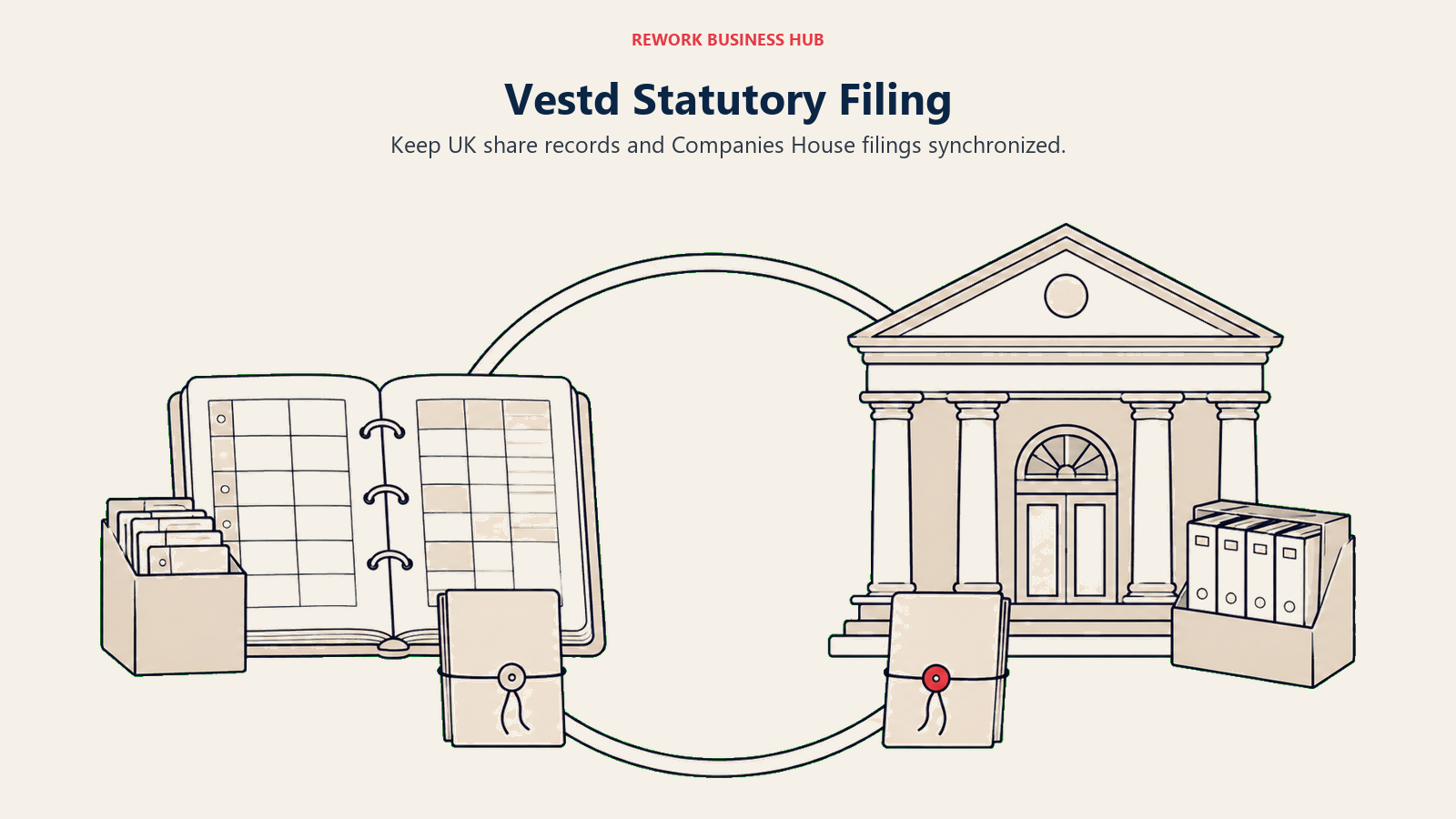
Vestd is the UK specialist, and the specialism is not cosmetic. It's built around EMI option schemes, the tax-advantaged structure most UK startups use, and it files in both directions with Companies House, so a share issue recorded in Vestd flows through to the statutory record rather than sitting in a parallel spreadsheet your accountant reconciles later. It handles growth shares and unapproved options too, and it supports live HMRC submissions as a paid add-on.
Vestd does publish plan prices, contrary to what several older roundups claim. Self-Serve starts at GBP 2,200 a year, or from GBP 220 a month if you'd rather pay monthly, and the annual commitment is the cheaper of the two. Guided starts at GBP 4,200 a year, or from GBP 420 a month, and adds hands-on help with scheme design and setup. Full Service is enquire-only. VAT is charged on top of all of it, and the minimum term is 12 months.
The add-on list is long and worth reading before you commit, because a UK company usually needs several of them: company incorporation adds GBP 100, InVestd Raise runs GBP 150 a month, additional valuations start at GBP 1,000, 409A valuations start at GBP 700, digitising an existing scheme starts at GBP 250, live HMRC submission support adds GBP 25 a month, new share classes start at GBP 250, Companies House reconciliations start at GBP 25 a month, a nominee structure covering up to 50 shareholders starts at GBP 50 a month, and share movement history starts at GBP 250.
Target audience. UK-incorporated companies running EMI schemes with statutory filing obligations.
Sizing fit. 10-50 and 50-200; the nominee structure add-on is scoped to 50 shareholders.
Stage fit. Seed through Series B, and useful from incorporation given the formation add-on.
| Pros | Cons |
|---|---|
| Two-way Companies House filing no US platform replicates | Priced in GBP with VAT charged on top |
| EMI, growth share, and unapproved option schemes handled natively | Minimum 12-month term with no free tier published |
| Plan prices published for both self-serve and guided tiers | A long add-on list means the headline price rarely stands alone |
Pricing: Self-Serve from GBP 2,200/year (from GBP 220/month). Guided from GBP 4,200/year (from GBP 420/month). Full Service: enquire. VAT charged in addition; minimum 12-month term. Add-ons include company incorporation +GBP 100, InVestd Raise GBP 150/month, additional valuations from GBP 1,000, 409A valuations from GBP 700, existing scheme digitisation from GBP 250, live HMRC submission support +GBP 25/month, new share classes from GBP 250, Companies House reconciliations from GBP 25/month, nominee structure (up to 50 shareholders) from GBP 50/month, and share movement history from GBP 250.
Best for: A UK company running an EMI scheme that wants its cap table and its statutory filings to be the same act, not two.
12. AngelList: A Cap Table Sitting Inside the Investing Stack
AngelList's cap table exists because AngelList already sits on the other side of the table. If your rounds come through AngelList syndicates and SPVs, or you're running a rolling fund or scout program on the platform, having the ownership record in the same place as the vehicles buying into it removes a reconciliation step that most companies do by email.
Two things to know before you shortlist it. First, AngelList publishes fund administration pricing only. There is no standalone cap table price anywhere on its site, so a company coming to AngelList purely for the cap table has no published figure to work from. Second, since August 2025 new customers receive only the rebuilt cap table product, so third-party reviews written before that date may describe features or an interface you won't get.
That makes AngelList a strong fit for a narrow group and an awkward one outside it. If AngelList is already your fundraising mechanism, the integration is genuinely valuable. If it isn't, you're adopting a cap table from a company whose main business is fund administration, without a published price to compare against the six platforms above that do publish one.
Target audience. Founders already running SPVs, syndicates, or fund formation through AngelList.
Sizing fit. 1-10 and 10-50, matching the stage where AngelList vehicles are most active.
Stage fit. Pre-seed through Series A.
| Pros | Cons |
|---|---|
| The record sits beside the vehicles investing in your company | No standalone cap table price published anywhere |
| Fund administration, SPVs, and cap table share one login | Fund administration is the main business, not the cap table |
| Familiar to a large pool of angel and syndicate investors | Since August 2025 new customers get only the rebuilt product |
Pricing: No published cap table pricing. AngelList publishes fund administration pricing only, so cap table cost requires a direct conversation.
Best for: A startup whose funding already flows through AngelList and wants one fewer system to reconcile.
13. Shareworks (Morgan Stanley at Work): The Institutional Record for Late-Stage and Public Companies
Shareworks is where cap tables go once the stakes change. Morgan Stanley at Work acquired Solium's Shareworks and wired it into the bank's wealth management and stock plan infrastructure, which means the platform is built for the problems that arrive late: thousands of participants, a tender offer or secondary program, transfer agent duties, public-company reporting obligations, and participants who want to sell shares through a brokerage relationship rather than a form.
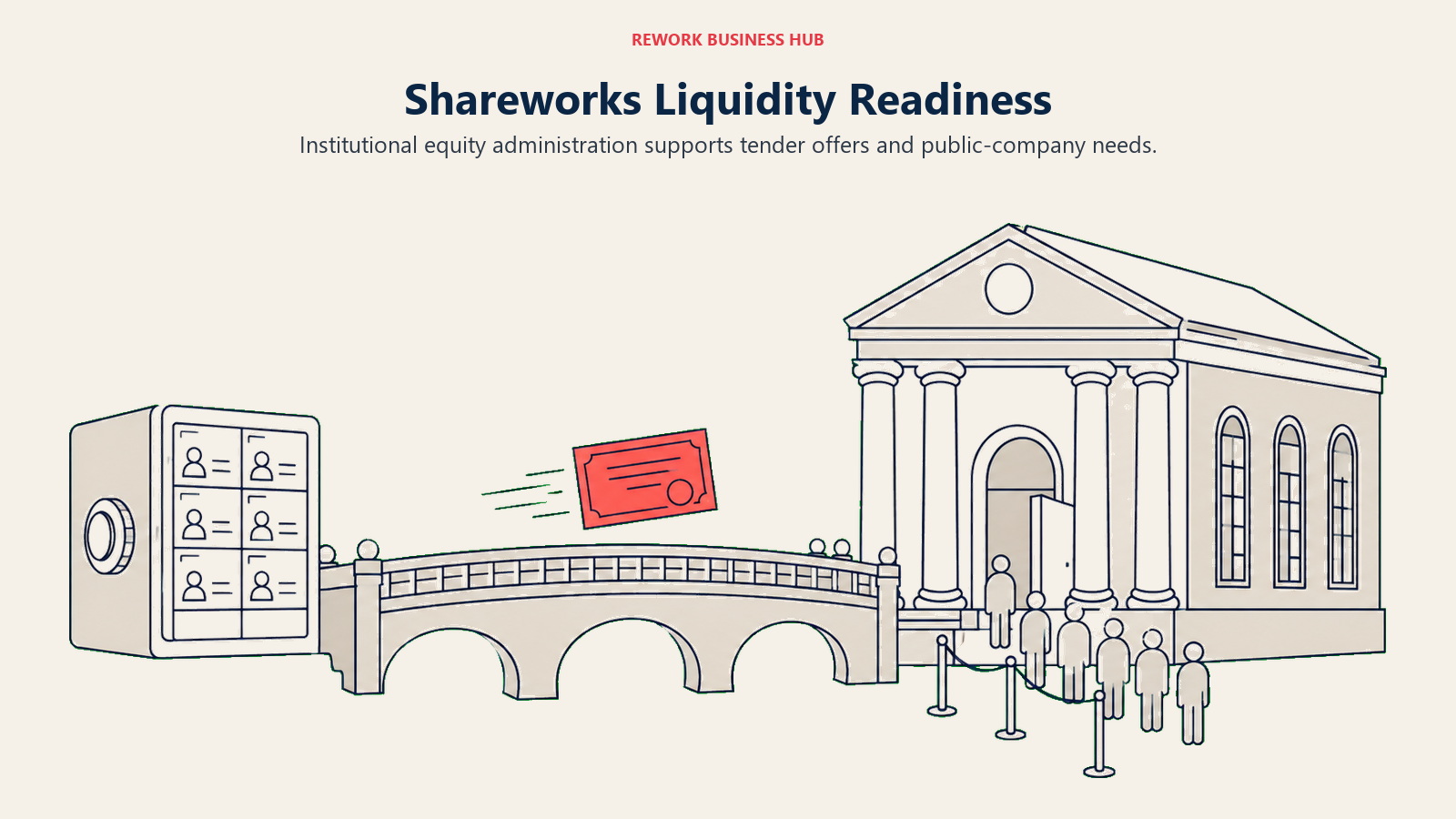
Nothing about it is self-serve. There's no published pricing anywhere, no signup flow, and no free tier. Buying Shareworks means a sales process, an implementation, and usually a broader Morgan Stanley at Work conversation covering retirement and financial wellness alongside equity. For a Series C company with a real liquidity event on the horizon, that's not a drawback; it's the point. For a seed-stage company with 18 stakeholders, it's an entirely wrong fit.
The practical question for most readers isn't whether Shareworks is good, it's when to move. The usual trigger is the first tender offer or the start of IPO readiness work, when the record stops being an internal document and starts being something a bank, an auditor, and eventually a regulator all read.
Target audience. Late-stage private and public companies with liquidity events, transfer agent needs, and thousands of participants.
Sizing fit. 200+ almost exclusively; below that the implementation weight outstrips the benefit.
Stage fit. Series C through public, and the platform most companies migrate to rather than start on.
| Pros | Cons |
|---|---|
| Institutional administration backed by Morgan Stanley's infrastructure | No published pricing and no self-serve signup |
| Built for tender offers, secondaries, and public-company reporting | Implementation is a project, not a weekend migration |
| Participant brokerage and wealth services in the same relationship | Far too heavy for anything below late-stage private |
Pricing: No published pricing. Quote only, with no self-serve signup available.
Best for: A late-stage or newly public company where the ownership record has to satisfy a bank, an auditor, and a regulator at the same time.
For the migration question specifically, Carta vs. Shareworks covers the point where one hands off to the other, and the Shareworks alternatives guide covers what else fits at that stage.
Free Tier Comparison: What Each Platform Gives Away Before You Pay
Seven of the 13 platforms hold your ownership record for nothing at some size, and the caps are further apart than most buyers assume. Ledgy's 50 stakeholders with no funding condition is double what Carta, Fidelity Private Shares, and Qapita allow, and ten times what Cake Equity's free tier covers. EquityList's free tier used to be gated on how much you'd raised; it isn't any more, which quietly makes it usable by a company that has already closed a seed round. Pulley and Astrella don't offer a free tier at all.
| Tool | Free Tier Cap | Condition |
|---|---|---|
| Ledgy | 50 stakeholders | None beyond the stakeholder count |
| Carta | 25 stakeholders | Under $1M raised |
| Fidelity Private Shares | 25 stakeholders | Under $1M raised |
| Qapita | 25 stakeholders | Under $1M raised |
| Eqvista | Under 20 stakeholders | None beyond the stakeholder count, no credit card |
| EquityList | 10 stakeholders | None beyond the stakeholder count, plus 1,000 lifetime AI credits |
| Cake Equity | 5 stakeholders | None beyond the stakeholder count |
| Pulley | No free tier | Free trial only, aimed at companies switching from Carta |
| Astrella by EQ | No free tier | Free trial only |
| Vestd | None published | Minimum 12-month term |
| Capboard | None published | Plan prices do not render on the vendor's page |
| AngelList | None published | No standalone cap table pricing |
| Shareworks (Morgan Stanley at Work) | No free tier | Quote only, no self-serve signup |
Stage Fit: Which Platform Matches Your Funding Round
The record you need at incorporation and the record you need before a tender offer are different products, and very few platforms are honestly good at both ends. This matrix is about fit, not quality: a "poor fit" for Shareworks at pre-seed says the implementation weight is wrong for that stage, not that the platform is weak.
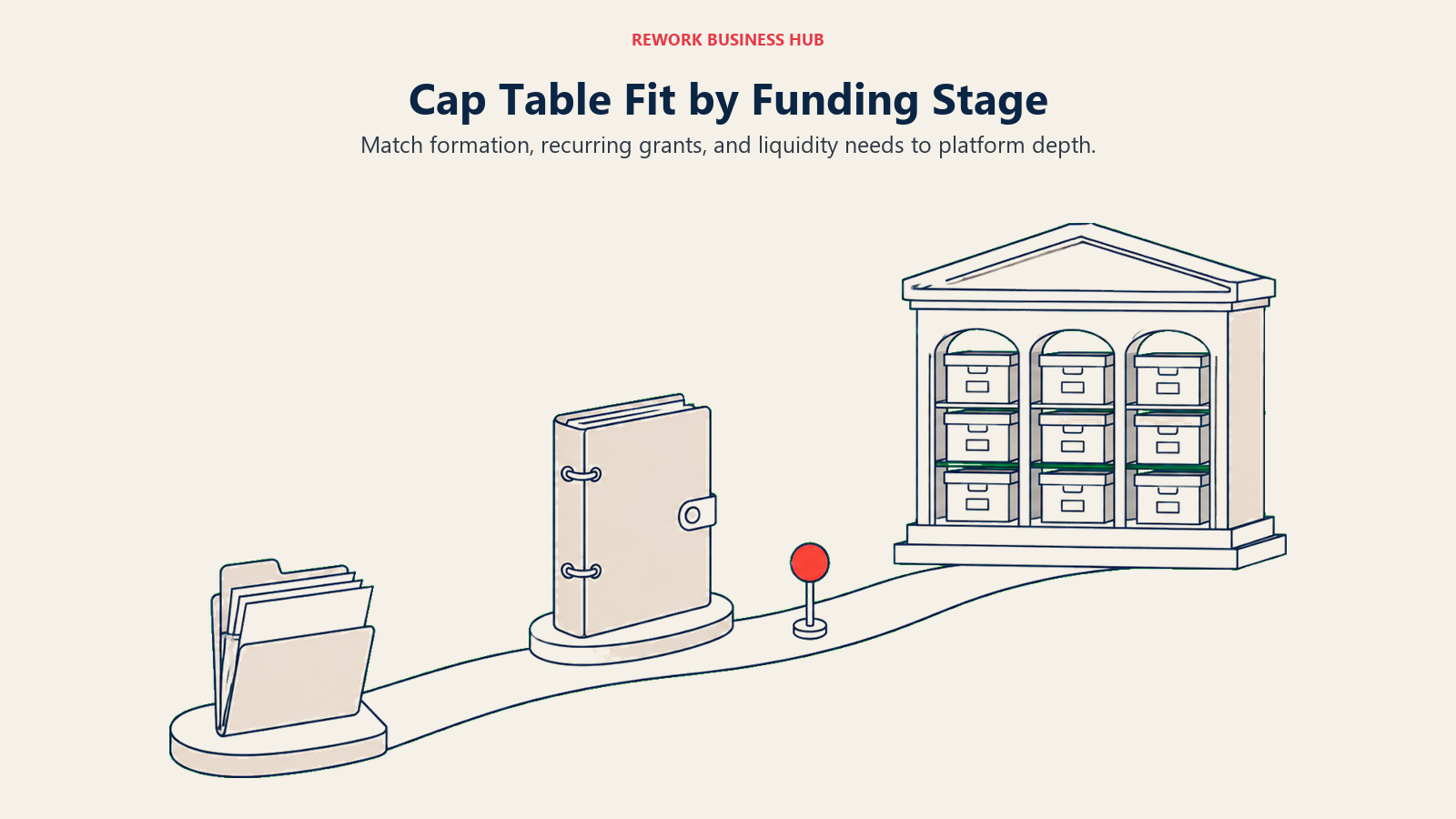
| Tool | Pre-seed | Seed to Series A | Series B to C | Late stage or public |
|---|---|---|---|---|
| Carta | Strong | Strong | Strong | Strong |
| Pulley | Workable | Strong | Strong | Poor fit |
| Fidelity Private Shares | Strong | Strong | Workable | Poor fit |
| Ledgy | Strong | Strong | Strong | Workable |
| Astrella by EQ | Workable | Strong | Strong | Workable |
| Cake Equity | Strong | Strong | Workable | Poor fit |
| Eqvista | Strong | Strong | Workable | Poor fit |
| EquityList | Strong | Strong | Workable | Poor fit |
| Qapita | Strong | Strong | Strong | Poor fit |
| Capboard | Strong | Workable | Poor fit | Poor fit |
| Vestd | Workable | Strong | Strong | Poor fit |
| AngelList | Strong | Workable | Poor fit | Poor fit |
| Shareworks (Morgan Stanley at Work) | Poor fit | Poor fit | Workable | Strong |
The step most companies underestimate sits between Series A and Series B, when option grants start flowing on a monthly cadence and the cap table has to agree with the HR record about who joined, who left, and when vesting stopped. That's the point where HRIS and payroll integration stops being a nice extra, and where choosing the payroll system on the other side of that sync starts to matter to your equity workflow.
409A and Valuation Costs: What Sits Inside the Subscription
A 409A valuation is the cost most buyers forget when comparing subscription prices, and it's often larger than the subscription itself. Some platforms fold it into a tier, some sell it as an add-on with a published number, and several publish nothing at all. Compare total annual cost, not plan price.
| Tool | 409A inside a plan? | Published valuation cost |
|---|---|---|
| Eqvista | Yes, annual 409A packages include unlimited updates plus the premium cap table | $990 pre-revenue, $1,290 angel, $1,990 seed, $2,590 Series A, custom above |
| Cake Equity | Yes, on Team ($2,750/year) and Pro | $1,500 standalone add-on |
| Pulley | Yes, on Growth ($3,500/year) | No standalone 409A figure published; token valuations from $10,000 |
| Fidelity Private Shares | Yes, on Growth | No figure published, since Growth itself has no published price |
| Carta | On paid tiers | No figure published |
| Capboard | No, sourced through a partner | $1,800 flat |
| Vestd | No, priced as an add-on | 409A valuations from GBP 700; other valuations from GBP 1,000 |
| Ledgy | Not stated in published pricing | No figure published |
| Astrella by EQ | Not stated in published pricing | No figure published |
| EquityList | Not stated in published pricing | No figure published |
| Qapita | Not stated in published pricing | No figure published |
| AngelList | Not stated in published pricing | No figure published |
| Shareworks (Morgan Stanley at Work) | Not stated in published pricing | No figure published |
Regional Fit: Where Each Platform's Compliance Actually Reaches
Cap table software is only as good as its grasp of the company law you're incorporated under. A US platform will hold a UK share register accurately and still leave your accountant filing at Companies House by hand.
| Tool | Primary region | What it handles natively |
|---|---|---|
| Carta | United States, with a European arm | Delaware structures, 409A, Rule 701, secondaries |
| Pulley | United States | US priced rounds, SAFEs, Rule 701, Form 3921, token cap tables |
| Fidelity Private Shares | United States | Delaware incorporation, 83(b), Rule 701, ASC 718 on Growth |
| Ledgy | Europe and global | Multi-entity European structures, investor and board reporting |
| Astrella by EQ | United States and United Kingdom | Registrar and transfer agent workflows through EQ |
| Cake Equity | Australia and wider APAC | APAC option and share schemes, employee-facing grant tooling |
| Eqvista | United States | Round-banded 409A valuations, QSBS attestation |
| EquityList | India, Singapore, and the United States | Multi-jurisdiction grants with AI-assisted document handling |
| Qapita | India and Southeast Asia | Local ESOP grant, exercise, and buyback mechanics |
| Capboard | Continental Europe | Lighter European share registers and stakeholder portals |
| Vestd | United Kingdom | EMI schemes, growth shares, two-way Companies House filing, HMRC submissions |
| AngelList | United States | SPVs, syndicates, and rolling funds alongside the cap table |
| Shareworks (Morgan Stanley at Work) | Global, enterprise | Transfer agent duties, tender offers, public-company administration |
Pricing Transparency: Published Figures Versus Quote Only
Transparency is not the same as being cheap, but it decides how much of your evaluation you can do alone. Astrella publishes every band to 300 stakeholders. Carta publishes only the free tier. Capboard publishes add-ons but not plans. That difference shapes how long your procurement takes more than the underlying software does.
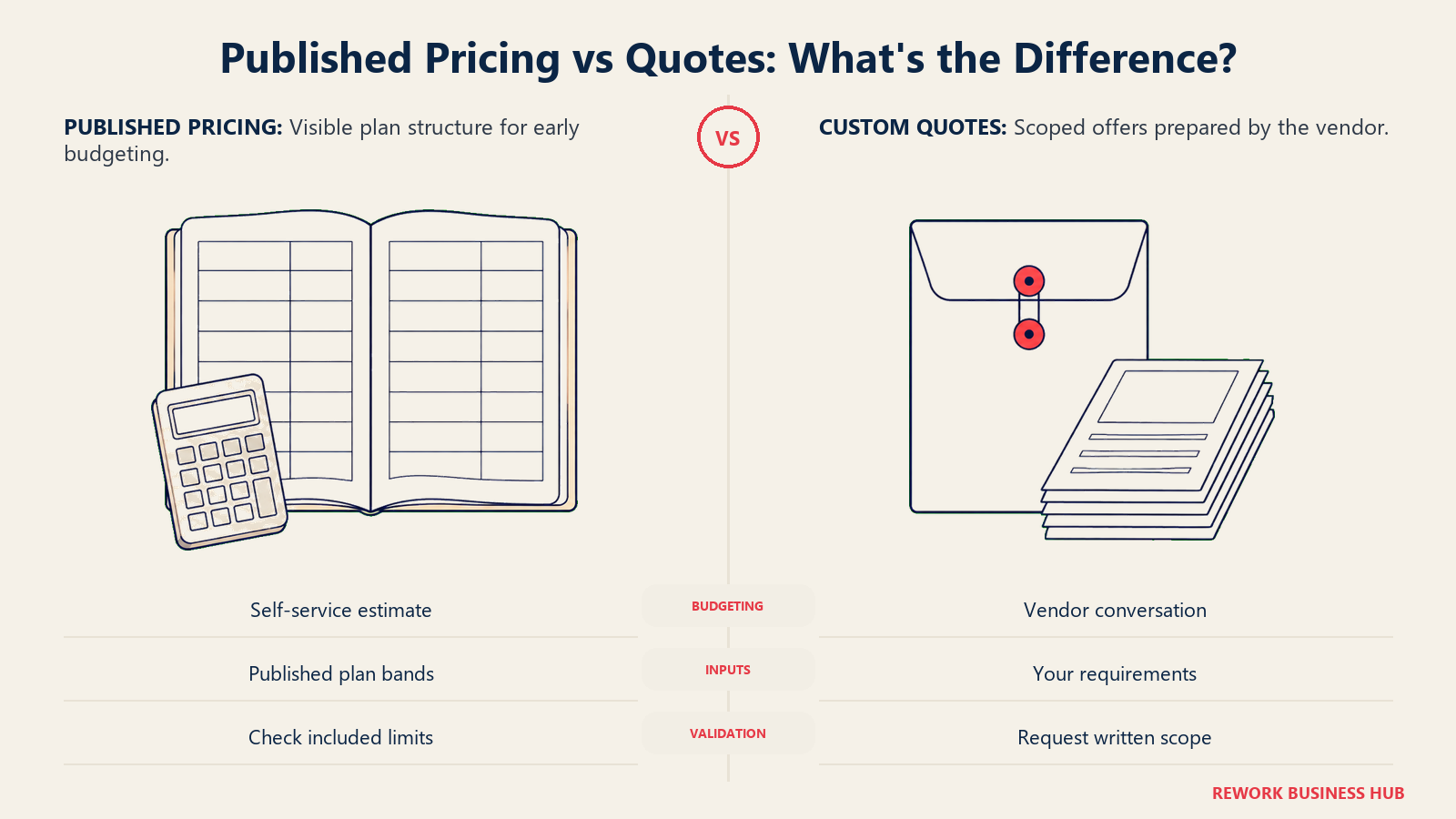
| Tool | Entry price published | Overage rate published | Top private tier published |
|---|---|---|---|
| Astrella by EQ | Yes, $1,200/year | Banded, not per stakeholder | Yes, $8,200/year to 300 stakeholders |
| Cake Equity | Yes, $1,000/year | Yes, $1 on Build, $5 on Team, $60 on Pro | No, Pro is custom |
| Qapita | Yes, $1,600/year | Yes, $40 on Surge, $60 on Growth | No, Enterprise is custom |
| EquityList | Yes, $1,200/year | Yes, $35 on Build, $50 on Growth | No, Enterprise is custom |
| Pulley | Yes, $1,200/year | No | No, Enterprise is custom |
| Eqvista | Yes, $2 per stakeholder per month | Yes, per stakeholder | No, custom above 50 stakeholders |
| Ledgy | Yes, from EUR 5,000/year | No | Yes, Enterprise from EUR 18,000/year |
| Vestd | Yes, from GBP 2,200/year | No | No, Full Service is enquire only |
| Carta | Free tier only | No | No |
| Fidelity Private Shares | Free tier only | No | No |
| Capboard | No, plan prices do not render | No | No |
| AngelList | No | No | No |
| Shareworks (Morgan Stanley at Work) | No | No | No |
How to Choose: Decision Framework
| If you need... | Choose |
|---|---|
| The longest free runway before you pay anything | Ledgy, at 50 stakeholders with no funding condition |
| A published price for every band up to 300 stakeholders | Astrella by EQ |
| The cheapest cost of adding stakeholders you didn't plan for | Cake Equity, at $1 per additional stakeholder on Build |
| Repeat 409A valuations priced openly before you commit | Eqvista, from $990 a year with unlimited updates |
| Incorporation and the ownership record bought together | Fidelity Private Shares, at $400 for the Delaware package |
| Native UK EMI schemes and Companies House filing | Vestd, from GBP 2,200 a year plus VAT |
| ESOP grant and exercise mechanics built for India or Southeast Asia | Qapita, or Cake Equity for Australia and wider APAC |
| Round modelling as the daily job, with a token cap table available | Pulley, from $1,200 a year |
| The widest feature surface and the largest investor network | Carta, accepting that every paid tier needs a sales call |
| Institutional administration for a tender offer or an IPO | Shareworks (Morgan Stanley at Work) |
What to Do Next
Write down two numbers before you look at another pricing page: your current stakeholder count, and what it will be twelve months from now if hiring and fundraising go the way you expect. Then take those two numbers to the free-tier table and the pricing transparency table above. Most buyers pick on the entry price and get surprised by the second number, because the tier boundary, not the plan, is what sets the real bill.
Then shortlist two platforms and ask each the same question: what does this cost at double my current stakeholder count, with a 409A valuation included? Cake Equity answers it for $35 of overage on Build. EquityList answers it for $50 a head a year on Growth. Carta and Fidelity Private Shares can't answer it from a public page at all. The vendors that can answer in writing are the ones you can plan around.
Camellia writes about equity management and cap table software for B2B teams. Pricing verified against vendor pricing pages in September 2026.

Principal Product Marketing Strategist
On this page
- Key Facts
- Quick Comparison Table
- The Default Shortlist: Broad Platforms Most Founders Compare First
- 1. Carta: The Default Record Most Investors Already Read
- 2. Pulley: Round Modelling Without a Free Tier to Fall Back On
- 3. Fidelity Private Shares: A Free Record With a Custodian Behind It
- Published-Price Platforms You Can Budget Without a Sales Call
- 4. Ledgy: The Most Generous Free Tier, and a Real Step Up After It
- 5. Astrella by EQ: Banded Pricing Published to 300 Stakeholders
- 6. Cake Equity: A Dollar Per Extra Stakeholder on the Entry Tier
- 7. Eqvista: 409A Valuations Priced Openly by Funding Round
- 8. EquityList: Thirty-Five Included Stakeholders on the Entry Tier
- 9. Qapita: ESOP Administration Built for India and Southeast Asia
- Regional Specialists Built Around Local Company Law
- 10. Capboard: A Lighter European Record With an Unreadable Price Page
- 11. Vestd: Two-Way Companies House Filing for UK Companies
- 12. AngelList: A Cap Table Sitting Inside the Investing Stack
- 13. Shareworks (Morgan Stanley at Work): The Institutional Record for Late-Stage and Public Companies
- Free Tier Comparison: What Each Platform Gives Away Before You Pay
- Stage Fit: Which Platform Matches Your Funding Round
- 409A and Valuation Costs: What Sits Inside the Subscription
- Regional Fit: Where Each Platform's Compliance Actually Reaches
- Pricing Transparency: Published Figures Versus Quote Only
- How to Choose: Decision Framework
- What to Do Next