Best Shareworks Alternatives in 2026: 13 Equity Administration Platforms Compared
Turn this article into takeaways for your work.


Each assistant summarizes the article only for you and suggests best practices for your work.
Updated August 2026
Companies shopping for a Shareworks alternative usually already know the shape of what they need: J.P. Morgan Workplace Solutions for another bank-backed, full-service platform built for global and public-company scale, Carta for the largest cap table base in the market, Ledgy for European compliance depth, and Astrella for equity administration built on a century of shareholder-services infrastructure. Shareworks by Morgan Stanley at Work built its reputation on white-glove plan administration, deep broker integration for liquidity events, and the kind of participant support a self-serve tool cannot match, and none of that has gone away. What has become a real friction point is price: there is no pricing page, no tier list, no self-serve signup, and no free tier anywhere on the Shareworks or Morgan Stanley at Work site. Every evaluation starts with a sales call and ends with a number the buyer cannot pre-qualify against budget.
This guide covers 13 alternatives for CFOs, finance directors, controllers, stock plan administrators, and general counsel weighing what comes next, whether that means a comparable full-service platform, a self-serve tool with a transparent price, or something sized for a company that has genuinely outgrown a spreadsheet. Every price below comes from the vendor's own pricing page as of August 2026; where a vendor publishes nothing, this guide says so instead of guessing. If Carta specifically is the tool on your shortlist, the direct Carta vs. Shareworks comparison covers that matchup in more depth, and the Carta alternatives guide is the cluster hub for this whole category if you have not narrowed your list yet.
Key Facts
- An estimated 11.8 million U.S. employees participate in equity compensation plans, including restricted stock, stock options, and employee stock purchase plans, per Rutgers Institute research presented in June 2023 (NCEO, Employee Ownership by the Numbers).
- 6,609 ESOPs at 6,411 companies cover 15.1 million participants and hold more than $2 trillion in assets, the most recent full count available (2023 data), per the National Center for Employee Ownership (NCEO, Employee Ownership by the Numbers).
- 71% of companies outsource at least some part of stock plan administration, and only 9% handle every function in-house, per the NASPP/Deloitte Equity Administration Survey (NASPP, Trends in Equity Plan Administration).
- The median ESPP participation rate is 38% of eligible employees, rising to 48% at companies that offer the full 15% purchase discount, per NASPP survey data (NASPP, The Case for ESPPs and Upping Participation).
- U.S. VC firms closed 14,320 deals worth $215.4 billion in 2024, each one a cap table event that needs new share classes, updated waterfalls, and clean stakeholder records, per the NVCA's 2025 Yearbook (NVCA, 2025 Yearbook Press Release).
Quick Comparison Table
| Tool | Best For | Starting Price | Key Strength | Key Limitation |
|---|---|---|---|---|
| Shareworks (baseline) | Full-service equity administration with Morgan Stanley wealth management attached | No published pricing anywhere, quote only, no self-serve signup | Deep broker and liquidity-event integration through Morgan Stanley | Cannot be pre-qualified against budget before a sales call |
| J.P. Morgan Workplace Solutions | Large private and public companies with a global workforce | No published pricing, enterprise quote only | Nearly $200 billion in assets under administration at acquisition, per J.P. Morgan | Same price opacity as Shareworks itself |
| Carta | Startups and growth companies wanting the largest cap table user base | Free Launch tier (up to 25 stakeholders, $1M raised); paid tiers unpriced | Widest name recognition and largest installed base in the category | Build, Grow, and Scale carry no published dollar figure |
| Ledgy | European companies needing multi-country compliance and reporting depth | Free Launch tier (up to 50 stakeholders); Scale from EUR 5,000/year | Strong European financial reporting and multi-country plan support | Pricing is quoted in euros, and Scale and Enterprise are quote-based |
| Astrella | Companies wanting equity administration backed by an established transfer agent | $1,200/year (Early Stage, 0-25 stakeholders) | Built on AST and Equiniti's shareholder-services history | Stakeholder bands above 300 move to a custom quote |
| Fidelity Private Shares | Companies that want a bank-backed free tier before committing to Shareworks pricing | Free Launch tier (up to 25 stakeholders, under $1M raised); paid tiers unpriced | Fidelity brand backing plus a $400 Delaware incorporation package | Startup and Growth tiers publish features, not dollar figures |
| Pulley | Startups running 409A valuations, option exercises, and board approvals in one tool | $1,200/year (Startup, 25 stakeholders included) | No free plan, but every paid tier is priced in the open | Entry tier requires payment from day one, no free stakeholder count |
| Eqvista | Bootstrapped and small startups wanting a low-cost cap table plus 409A bundle | Free under 20 stakeholders; paid plans move to custom above 50 | 409A valuations priced transparently by funding round | Custom pricing kicks in fast once a company crosses 50 stakeholders |
| Cake Equity | Australia and APAC-based companies wanting a published, per-stakeholder price | Free up to 5 stakeholders; Build $1,000/year (25 stakeholders) | Fully published pricing across every tier, plus bundled 409A valuations on Team | Per-stakeholder overage climbs from $1 on Build to $5 on Team to $60 on Pro |
| Qapita | Companies with an APAC-based cap table or employee base | Free (Spark) up to 25 stakeholders, under $1M raised; Surge $1,600/year | Published per-stakeholder pricing plus hourly full-service admin add-ons | Per-stakeholder fees on top of the base price change the real cost quickly |
| EquityList | Early-stage companies that want a published price and an AI-assisted cap table | Free (10 stakeholders); Build $1,200/year (35 stakeholders) | Published monthly and annual figures at every named tier | Newer entrant with a shorter market track record |
| Vestd | UK limited companies running EMI option schemes | Self-Serve from GBP 2,200/year; Guided from GBP 4,200/year | Direct two-way Companies House filing integration | GBP pricing plus VAT, on a minimum 12-month term |
| AngelList | Companies already inside the AngelList fund ecosystem | No published cap table price (AngelList publishes fund administration pricing only) | Deep native tie to RUVs and Consolidation Vehicles for VC-heavy cap tables | New customers get only the rebuilt cap table, and the older version is no longer getting new features |
| Diligent Equity | Companies that already run Diligent for board governance | No published pricing | Cap table sits inside the same suite as board consents and minutes | Niche pick outside companies already on the Diligent platform |
Full-Service Administration vs. Self-Serve Software: The Real Decision
Before the tool-by-tool breakdown, it helps to name the fork explicitly, because it is the same one sitting underneath most Shareworks evaluations.
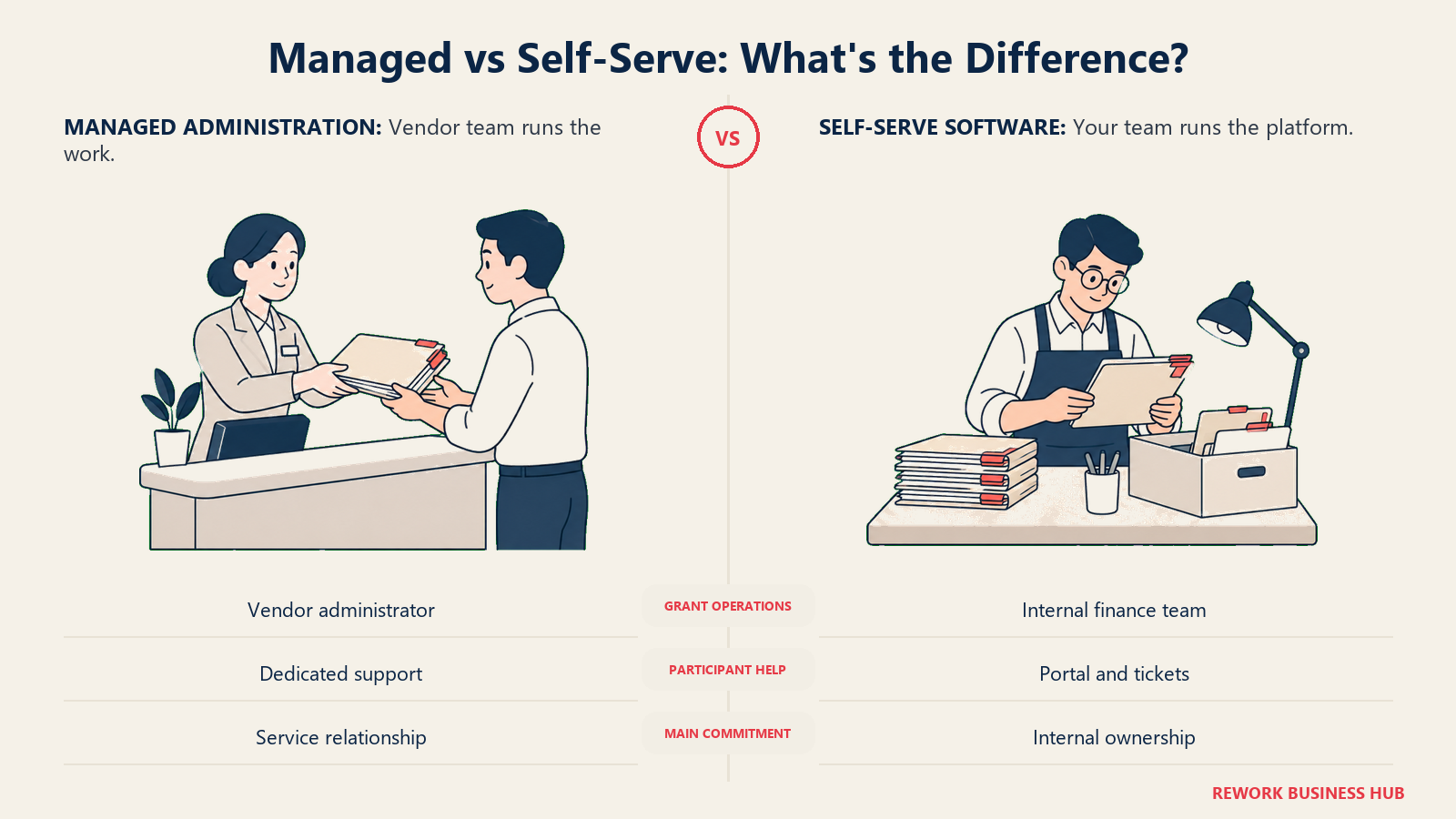
| Full-service administration (Shareworks, J.P. Morgan Workplace Solutions, Fidelity Private Shares) | Self-serve software (Carta, Pulley, Ledgy, Astrella, and most of the rest) | |
|---|---|---|
| Who does the work | A dedicated administration team handles grants, vesting, and participant questions | Your own finance or legal team runs the platform directly |
| Participant support | Employees can call or chat with a live plan administrator about their own equity | Support is typically ticket-based; participants self-serve through the app |
| Broker and liquidity integration | Built-in brokerage and transfer agent capability for exercises, sales, and IPOs | Varies by vendor; often bolted on through a partner rather than native |
| Multi-country tax and mobility | Usually included as part of the service, with tax withholding handled centrally | Ranges from strong (Ledgy, J.P. Morgan Workplace Solutions) to thin (smaller startup tools) |
| Where things break | Price opacity and long sales cycles before you see a number | Governance gaps if nobody on staff owns compliance and filings full time |
| Right move for a Shareworks buyer | J.P. Morgan Workplace Solutions or Fidelity Private Shares, if the complaint is price transparency, not the service model | Carta, Ledgy, Astrella, or Pulley, if you are ready to run administration in-house |
If your honest answer is "I still want someone else handling grants, vesting, and participant calls, I just want a clearer number before I sign," start with the two full-service picks below. If your answer is "we can run this ourselves with the right software," the self-serve platforms further down are the better fit.
The Bank-Backed and Enterprise-Scale Alternatives
These five compete most directly with Shareworks on the buyer profile that actually evaluates it: companies with global or fast-growing headcount, ESPP and RSU programs running at scale, and either a public listing on the horizon or one already behind them.
1. J.P. Morgan Workplace Solutions: The Direct Full-Service Rival
J.P. Morgan Workplace Solutions is the renamed Global Shares platform, following J.P. Morgan's completed acquisition in August 2022. At the time of acquisition, Global Shares served roughly 650 corporate clients, from early-stage startups to mature multinational public corporations, managing close to $200 billion in assets under administration across more than 800,000 corporate employee participants. That scale, plus a banking parent behind it, makes it the closest like-for-like comparison to Shareworks by Morgan Stanley in this whole list: full cap table management, vesting and options administration, compensation plan modeling, and a compliance and audit trail built for companies that already answer to auditors and regulators.
For a company evaluating Shareworks specifically because it wants a bank-backed, full-service platform rather than self-serve software, J.P. Morgan Workplace Solutions is usually the first call. It also functions as a landing spot for teams migrating off other closing platforms: AngelList itself names J.P. Morgan Workplace Solutions as a preferred migration partner for companies leaving its own cap table product, discussed further down this list.
| Pros | Cons |
|---|---|
| Nearly $200 billion in assets under administration and 800,000-plus participants at acquisition | No published pricing, same opacity problem as Shareworks itself |
| Full compliance, audit trail, and role-based permission set built for public and pre-IPO companies | Enterprise sales process, not a self-serve signup |
| Backed by J.P. Morgan's banking and wealth management infrastructure | Overbuilt for an early-stage company with a small, simple cap table |
Pricing: No published pricing. Enterprise, quote only.
Best for: A company that wants Shareworks' full-service, bank-backed model but is evaluating a second name in the same category before committing.
2. Carta: The Category's Largest User Base
Carta remains the name most buyers already know before they start comparing alternatives, and its free Launch tier, up to 25 stakeholders and $1M raised, is the easiest on-ramp on this entire list. Above that, Build (up to 50 stakeholders), Grow, and Scale are all priced per stakeholder against a minimum annual fee that Carta does not publish anywhere; every paid tier routes to a sales call, which is a smaller version of the exact price-opacity complaint that sends Shareworks buyers shopping in the first place. Carta also owns Carta Europe, the product formerly known as Capdesk before its 2022 acquisition and January 2025 rebrand, giving it real European reach alongside its US base.
For a company coming from Shareworks specifically because it wants to self-administer its cap table rather than pay for full-service support, Carta is usually the default first stop, if the buyer is willing to run a sales process to find out what the paid tiers actually cost.
| Pros | Cons |
|---|---|
| Largest name recognition and installed base in equity administration | No published price on any paid tier, only the free Launch plan |
| Carta Europe extends reach into the EU market under one company | Per-stakeholder pricing against an undisclosed minimum fee is hard to budget against |
| Broad ecosystem of integrations, 409A valuations, and liquidity tools | A company migrating off Shareworks loses the full-service support model entirely |
Pricing: Launch is free (up to 25 stakeholders, $1M raised). Build, Grow, and Scale are priced per stakeholder against an undisclosed minimum annual fee. No dollar figures published for any paid tier.
Best for: A company ready to self-administer its cap table and willing to run a sales process to price out Build, Grow, or Scale.
3. Ledgy: European Compliance Depth
Ledgy is built out of Europe and it shows in the product: multi-country equity plan support, scenario modeling and waterfalls built for European fundraising norms, and financial reporting add-ons aimed squarely at the compliance requirements that trip up US-built tools when a company has employees or investors across multiple EU jurisdictions. The free Launch tier caps at 50 stakeholders, double Carta's ceiling and the most generous free entry on this list, but everything above that is priced in euros rather than dollars, worth flagging early for a US buyer used to dollar-denominated software quotes.
Scale starts at EUR 5,000 a year, and Enterprise starts at EUR 18,000 a year, both quote-based beyond that starting figure. The financial reporting add-on runs two tiers of its own: Essentials starts at EUR 3,000 a year and Advanced starts at EUR 5,000 a year, layered on top of the base plan a company already pays for.
| Pros | Cons |
|---|---|
| Purpose-built for multi-country European compliance and reporting | Euro-denominated pricing complicates budgeting for US-headquartered buyers |
| Published starting prices for Scale and Enterprise, unlike most of this list | Financial reporting depth costs extra on top of the base plan |
| Free Launch tier matches the category's common 25-stakeholder ceiling | Less US-market brand recognition than Carta or Pulley |
Pricing: Launch is free (up to 25 stakeholders). Scale starts at EUR 5,000/year. Enterprise starts at EUR 18,000/year. Financial reporting add-on: Essentials from EUR 3,000/year, Advanced from EUR 5,000/year.
Best for: A company with employees, investors, or entities spread across multiple European jurisdictions that needs compliance depth Shareworks was not built around.
If Ledgy specifically is the tool you are comparing against Shareworks, the dedicated Ledgy alternatives guide covers that angle from the other direction.
4. Astrella: Built on a Transfer Agent's Shareholder-Services History
Astrella is a division of EQ Private Company Solutions, drawing on the shareholder-services history of American Stock Transfer & Trust and Equiniti, two names with more than a century of transfer agent and cap table infrastructure between them. That lineage matters for this list specifically because Astrella has taken on the customer base of LTSE Equity (formerly Captable.io), which exited the cap table business entirely and directed its customers to Astrella for migration. It is also one of the few platforms on this list with fully published, stakeholder-banded pricing rather than a quote-only page.

Early Stage runs $1,200 a year for companies with 0 to 25 stakeholders. Emerging runs $3,200 a year for 26 to 100 stakeholders. Accelerate runs $8,200 a year for 101 to 300 stakeholders. Past 300 stakeholders, pricing moves to a custom quote. That banded structure gives a growing company a real sense of what the next tier costs before it gets there, a level of transparency Shareworks does not offer at any size.
| Pros | Cons |
|---|---|
| Fully published, stakeholder-banded pricing across three tiers | Past 300 stakeholders, pricing reverts to a custom quote |
| Backed by AST and Equiniti's established transfer agent infrastructure | Less brand recognition among startups than Carta or Pulley |
| Direct migration path already built for former LTSE Equity customers | Fewer AI-driven modeling features than newer, venture-backed entrants |
Pricing: Early Stage $1,200/year (0-25 stakeholders). Emerging $3,200/year (26-100 stakeholders). Accelerate $8,200/year (101-300 stakeholders). 300-plus stakeholders: contact us.
Best for: A company that wants a published, predictable price tied to its actual stakeholder count instead of a quote-only sales process.
5. Fidelity Private Shares: A Bank-Backed Free Tier
Fidelity Private Shares gives a Shareworks-curious buyer a chance to test the bank-backed model without paying for it first. The free Launch tier covers up to 25 stakeholders and under $1M raised, structured almost identically to Carta's and Ledgy's free tiers. Above that, Startup and Growth are both published as feature lists rather than dollar figures: Startup adds premier support, investor updates, and Form 3921 handling, while Growth adds 409A valuations, priority onboarding, ASC 718 compliance, and HRIS and payroll integration.
One distinctive extra: Fidelity offers a Delaware C-corp incorporation package for $400, which bundles filing fees, one year of registered agent service, and a free Launch tier subscription, useful for a very early company that has not incorporated yet and wants its cap table tool and its incorporation handled by the same vendor from day one.
| Pros | Cons |
|---|---|
| Free Launch tier backed by Fidelity's brand and infrastructure | Startup and Growth publish features only, no dollar figures |
| $400 incorporation package bundles filing, registered agent, and Launch access | Less full-service depth than Shareworks or J.P. Morgan Workplace Solutions |
| ASC 718 and 409A support included at the Growth tier | Newer to the category than Carta, with a smaller installed base |
Pricing: Launch is free (up to 25 stakeholders, under $1M raised). Startup and Growth publish feature lists with no dollar figures. Delaware incorporation package: $400 (filing fees, one year registered agent, free Launch subscription included).
Best for: A very early company that wants a bank-backed free tier and a bundled incorporation option before it ever needs to price out Shareworks.
The Startup-Focused Alternatives
The next five trade some of the enterprise polish above for pricing that is easier to plan around, better suited to a company still building its first real cap table rather than administering one at scale.
6. Pulley: Every Tier Priced in the Open
Pulley's whole pitch is the opposite of Shareworks' pricing model: there is no free plan, but every tier that does exist is priced in the open. Startup runs $1,200 a year and includes the first 25 stakeholders. Growth runs $3,500 a year, includes the first 40 stakeholders, and adds 409A valuations, option exercises, Rule 701 compliance, Form 3921 handling, board approvals, and HRIS integrations, essentially the full administrative stack a growing company needs in one tier. Enterprise moves to a custom quote. Pulley also runs a distinct crypto product line for token-based cap tables, Token Cap Table and Distributions at $4,500 a year each (25 stakeholders included), with token valuations starting at $10,000, relevant only to companies issuing token-based equity.
One pricing detail worth knowing before you budget: angel investors writing checks of $50,000 or less count as half a stakeholder rather than a full one, which matters for a company with a long angel round on its cap table.
| Pros | Cons |
|---|---|
| Every published tier has a real dollar figure, no quote-only gate | No free plan at any stakeholder count |
| Growth tier bundles 409A, option exercises, Rule 701, and HRIS in one price | Enterprise still moves to custom quote once you outgrow Growth |
| Half-stakeholder counting for small angel checks keeps early rounds affordable | Crypto product line is a separate cost structure most buyers will not need |
Pricing: Startup $1,200/year (25 stakeholders). Growth $3,500/year (40 stakeholders, adds 409A valuations, option exercises, Rule 701, Form 3921, board approvals, HRIS integrations). Enterprise: contact us.
Best for: A company that wants every price on the table before it talks to sales, and does not need the full-service support model Shareworks provides.
If Pulley itself is the incumbent you are shopping away from, the Pulley alternatives guide covers that angle directly, and the Carta vs. Pulley comparison is worth reading if those two are your real shortlist.
7. Eqvista: A Transparent 409A Bundle for Small Teams
Eqvista's freemium tier covers companies under 20 stakeholders at no cost, and paid cap table plans move to custom pricing once a company crosses 50 stakeholders, a lower free ceiling than Carta or Ledgy but a genuinely free option below it. Where Eqvista stands out is 409A valuation pricing, published transparently and tied to funding stage rather than buried behind a quote form: Startup and Pre-Revenue runs $990 a year, Friends and Family or Angel runs $1,290 a year, Seed runs $1,990 a year, Series A runs $2,590 a year, and Series B and later moves to a custom quote.
Add-ons follow the same transparent pattern: expedited valuation processing starts at $490, QSBS attestation starts at $1,000, and ASC 718 compliance work starts at $500. For a bootstrapped or seed-stage company that wants to know its 409A cost before it commits to a full platform, that pricing clarity is rare in this category.
| Pros | Cons |
|---|---|
| Genuinely free tier under 20 stakeholders, no time limit mentioned | Above 50 stakeholders, pricing moves to a custom quote |
| 409A valuations priced transparently by funding round | Fewer enterprise-grade compliance features than Ledgy or Astrella |
| Add-on pricing (QSBS, ASC 718, expedited processing) published up front | Less brand recognition than Carta or Pulley among later-stage buyers |
Pricing: Freemium is free (under 20 stakeholders). Paid plans move to custom pricing above 50 stakeholders. 409A valuations: Startup/Pre-Revenue $990/year, Friends and Family/Angel $1,290/year, Seed $1,990/year, Series A $2,590/year, Series B and later custom.
Best for: A small or bootstrapped team that wants a genuinely free cap table plus a transparently priced 409A valuation, without a sales call.
8. Cake Equity: Fully Published Pricing at Every Tier
Cake Equity, built for Australia and the wider APAC market, is one of the few platforms on this list with a dollar figure published at every single tier, including the free one. Free covers up to 5 stakeholders. Build runs $1,000 a year and covers 25 stakeholders. Team runs $2,750 a year, covers 40 stakeholders, and bundles two audit-ready 409A valuations that Cake sells separately at $1,500 each, effectively discounting the tier once you account for what those valuations would otherwise cost. Pro moves to custom pricing but covers 100 stakeholders as a baseline. The per-stakeholder overage is not flat across tiers: $1 per additional stakeholder on Build, $5 on Team, and $60 on Pro. Billing is annual, and Build saves 10% against quarterly billing.
For a company that has grown frustrated with Shareworks' total lack of pricing transparency, Cake is close to the opposite experience: every number is on the page before you ever talk to sales.
| Pros | Cons |
|---|---|
| Every tier, including Free, carries a published dollar figure | $60-per-additional-stakeholder fee adds up fast for larger teams |
| Team tier bundles two 409A valuations worth $3,000 by Cake's own estimate | Smaller footprint outside Australia and APAC than the US-first tools |
| Quarterly billing option available on the Pro tier | Custom pricing still applies once you reach the Pro tier |
Pricing: Free (5 stakeholders). Build $1,000/year (25 stakeholders, $1 per additional stakeholder). Team $2,750/year (40 stakeholders, $5 per additional stakeholder, includes two audit-ready 409A valuations Cake sells separately at $1,500 each). Pro: custom (100 stakeholders baseline, $60 per additional stakeholder). Standalone 409A add-on: $1,500. Billed annually.
Best for: An Australia or APAC-headquartered company that wants every price on the page and values 409A valuations bundled directly into a mid-tier plan.
9. Qapita: Purpose-Built for APAC Cap Tables
Qapita is the clearest APAC-first pick on this list, built for companies with employees, investors, or headquarters across India and Southeast Asia. Spark, the free tier, covers up to 25 stakeholders for companies under $1M raised, matching Carta's cap though well short of Ledgy's 50. Surge runs $1,600 a year, covers up to 40 stakeholders, and adds $40 per stakeholder per year past that. Growth runs $3,000 a year, covers up to 50 stakeholders, adds $60 per stakeholder per year past that, and layers in a 409A valuation report, board consent workflows, and 83(b) election support.
Qapita also publishes hourly rates for full-service help when a company wants hands-on support without moving to a full-service platform like Shareworks: analyst support runs $125 an hour, and full-service administration runs $500 an hour, a middle path between pure self-serve software and a fully managed plan.
| Pros | Cons |
|---|---|
| Purpose-built for APAC cap table structures and stakeholder profiles | Per-stakeholder fees past the included count change real cost quickly |
| Published hourly rates for analyst or full-service support | Less depth in US-specific compliance (Rule 701, ASC 718) than domestic tools |
| Growth tier bundles 409A, board consents, and 83(b) support | Smaller US brand recognition than Carta, Pulley, or Fidelity |
Pricing: Spark is free (up to 25 stakeholders, under $1M raised). Surge $1,600/year (40 stakeholders, plus $40/stakeholder/year past that). Growth $3,000/year (50 stakeholders, plus $60/stakeholder/year past that). Add-ons: analyst support $125/hour, full-service administration $500/hour.
Best for: A company with a meaningful APAC employee or investor base that wants published pricing plus an hourly full-service option when needed.
10. EquityList: A Published Rate Card With an AI Credit Allowance
EquityList is the newest entrant on this list, and after a 2026 repricing its differentiator is transparency rather than feature depth: a published figure at every named tier, monthly and annual side by side, with the per-stakeholder overage stated. Free covers 10 stakeholders at $0 with 1,000 lifetime AI credits and no funding condition. Build runs $1,200 billed annually, or $125 a month billed monthly, and covers 35 stakeholders plus $35 per additional stakeholder per year. Growth runs $3,500 billed annually for 50 stakeholders plus $50 each beyond, and adds multi-entity support, a 409A valuation, and exercise workflows. Enterprise moves to a custom quote. Against Shareworks, which publishes nothing at all, that is the whole point of looking here.
Because EquityList is newer than most names on this list, it carries a shorter market track record, worth weighing against its pricing clarity if your company values a longer history of production use over the newest interface.
| Pros | Cons |
|---|---|
| Explicit Quarterly / Yearly pricing toggle with a published 15% yearly savings | Newer vendor with a shorter production track record than Carta or Pulley |
| Free tier for companies under $1M raised | Scale tier still moves to a custom quote past 100 stakeholders |
| Straightforward two-figure pricing (quarterly and yearly) at every published tier | Smaller ecosystem of integrations than the more established platforms |
Pricing: Free ($0, 10 stakeholders, 1,000 lifetime AI credits). Build $1,200/year billed annually, or $125/month billed monthly (35 stakeholders, $35 per additional stakeholder per year). Growth $3,500/year billed annually (50 stakeholders, $50 per additional stakeholder per year, adds multi-entity support, a 409A valuation, and exercise workflows). Enterprise: custom.
Best for: A company that wants to compare quarterly and yearly pricing side by side rather than guessing which basis a quote is built on.
Regional and Niche Specialists
These last three solve a narrower problem than the ten above: a UK-specific filing requirement, a VC-ecosystem tie-in currently in transition, and a governance-suite bundle for companies that already run board management software elsewhere.
11. Vestd: UK-Native, With Direct Companies House Filing
Vestd is built specifically for UK limited companies, and its standout feature is a two-way filing integration with Companies House, the UK's company registrar, something none of the US-first tools on this list offer natively. That matters most for EMI (Enterprise Management Incentive) option schemes, a UK-specific structure that requires precise, timely filing to keep its tax advantages intact.
Pricing is published in full, which stands out sharply against Shareworks. Self-Serve starts at GBP 2,200 a year, or GBP 220 a month. Guided starts at GBP 4,200 a year, or GBP 420 a month. Only Full Service routes to an enquiry. VAT is charged on top and every plan carries a minimum 12-month term. Add-ons are published alongside: InVestd Raise at GBP 150 a month, valuations from GBP 1,000, 409A valuations from GBP 700, a nominee structure from GBP 50 a month, live HMRC submission support at GBP 25 a month, and company incorporation at GBP 100.
| Pros | Cons |
|---|---|
| Direct, two-way Companies House filing, unmatched by US-first competitors | Plan headline prices are not published or readable on the pricing page |
| Purpose-built for UK EMI option scheme compliance | Add-on costs (funding rounds, valuations, US tax support) stack up separately |
| Nominee structure and company formation available as bundled add-ons | Narrow fit outside UK-incorporated companies |
Pricing: Plan prices not published. Confirmed add-ons: funding rounds GBP 150/month, valuations from GBP 1,000, US tax support from GBP 700, nominee structure from GBP 50/month, company formation from GBP 250.
Best for: A UK limited company running an EMI option scheme that wants direct Companies House filing built into its cap table tool.
12. AngelList: A Product in Transition, Worth Knowing Before You Sign
AngelList earns a place on this list with an important caveat up front. In an announcement dated 6 August 2025, CEO Avlok Kohli wrote that AngelList is rebuilding its cap table to integrate Rolling Venture Funds (RUVs) and Consolidation Vehicles at what he calls "the atomic level," and that the new version "will be the only option for new customers." Current customers can upgrade, or stay on the existing version with no change to software, support, or pricing, but AngelList says plainly that it is no longer building new features on that older version. Standalone RUVs and CVs are unaffected and keep working with any cap table provider.
For companies that would rather move than upgrade, AngelList names the exits itself: a partnership with J.P. Morgan that the post says offers strong pricing and automated migration through its Workplace Solutions business, and Pulley, which Kohli recommends by name. Both appear elsewhere on this list. AngelList does not publish a standalone dollar figure for cap table management on its pricing page; what it publishes is priced around fund administration instead, a different product line entirely.
| Pros | Cons |
|---|---|
| Deep native tie to RUVs and Consolidation Vehicles for VC-heavy cap tables | New customers get only the rebuilt cap table, per AngelList’s own August 2025 announcement |
| Existing customers keep the same software, support, and pricing if they stay put | No published cap table pricing, only fund administration pricing |
| Names J.P. Morgan Workplace Solutions and Pulley as migration routes | No new features are being built on the older version of the product |
Pricing: No published cap table pricing. AngelList's pricing page covers fund administration, a separate product line.
Best for: A company already deep in the AngelList fund ecosystem, or a useful data point on where its own recommended migration path leads if you are not.
13. Diligent Equity: Cap Table Inside a Governance Suite
Diligent Equity, formerly EquityEffect before its acquisition by Diligent, is the one platform on this list built primarily as an extension of board governance software rather than a standalone equity tool. Diligent is best known for board portals and governance, risk, and compliance software used by boards and general counsel; Diligent Equity folds cap table management, equity workflows, shareholder allocations, and board approvals into that same suite. For a company that already runs Diligent for board management, adding cap table administration inside the same login avoids running a separate tool for equity and a separate tool for board consents.
Diligent Equity publishes no pricing anywhere, and it is best treated as an optional, niche pick: worth evaluating specifically because you already use Diligent, not as a first stop for a company shopping purely on cap table features or price.
| Pros | Cons |
|---|---|
| Cap table, equity workflows, and board approvals live in one governance suite | No published pricing anywhere |
| Natural fit for a company already running Diligent for board management | Little reason to adopt it if you do not already use Diligent |
| Backed by Diligent's established governance and compliance customer base | Narrower equity-specific feature depth than dedicated cap table platforms |
Pricing: No published pricing.
Best for: A company already running Diligent for board governance that wants cap table management inside the same platform rather than a second login.
Sizing and Persona Fit
Headcount and how much administrative support you want to buy matter more here than any single feature.
| Headcount | Best fit | Why | Watch out for |
|---|---|---|---|
| Under 25 | Carta Launch, Fidelity Private Shares Launch, Qapita Spark, Eqvista Freemium, and Ledgy Launch (which runs to 50) | Most of these free tiers cap around the same 20-25 stakeholder line, with Ledgy the outlier at 50 | The moment you cross the free ceiling, most of these route straight to a quote |
| 25 to 100 | Pulley, Astrella, Cake Equity, EquityList | Published, stakeholder-banded pricing you can budget against before you grow into it | Per-stakeholder add-on fees (Qapita, Cake) change the real number fast |
| 100 to 500 | Astrella Accelerate, Ledgy Scale, J.P. Morgan Workplace Solutions | Where full-service support and multi-country compliance start to matter more than raw price | Quote-only pricing returns at this scale for most vendors on this list |
| 500-plus | Shareworks, J.P. Morgan Workplace Solutions, Diligent Equity (if already on the platform) | Bank-backed, full-service administration built for global, public-adjacent scale | Price opacity is close to universal once you reach this tier |
| Persona | What they optimize for | Strongest picks |
|---|---|---|
| Stock plan administrator leaving Shareworks for self-serve | A tool the team can run in-house without losing 409A, ASC 718, or Rule 701 support | Pulley, Carta, Astrella |
| CFO who wants a published, predictable price | A number on the page before a sales call, not after | Astrella, Cake Equity, Pulley, EquityList |
| General counsel managing a UK entity | Direct Companies House filing for EMI compliance | Vestd |
| Finance leader with employees across multiple EU countries | Multi-country reporting and compliance depth | Ledgy |
| Company already on Diligent for board governance | Cap table and board approvals in one suite | Diligent Equity |
| Company still deep in the AngelList fund ecosystem | RUV and Consolidation Vehicle-native cap table structure | AngelList, aware of its current transition |
Moving Off Shareworks: What Actually Changes
Whichever direction you move, the real cost of leaving Shareworks is rarely the software subscription itself.
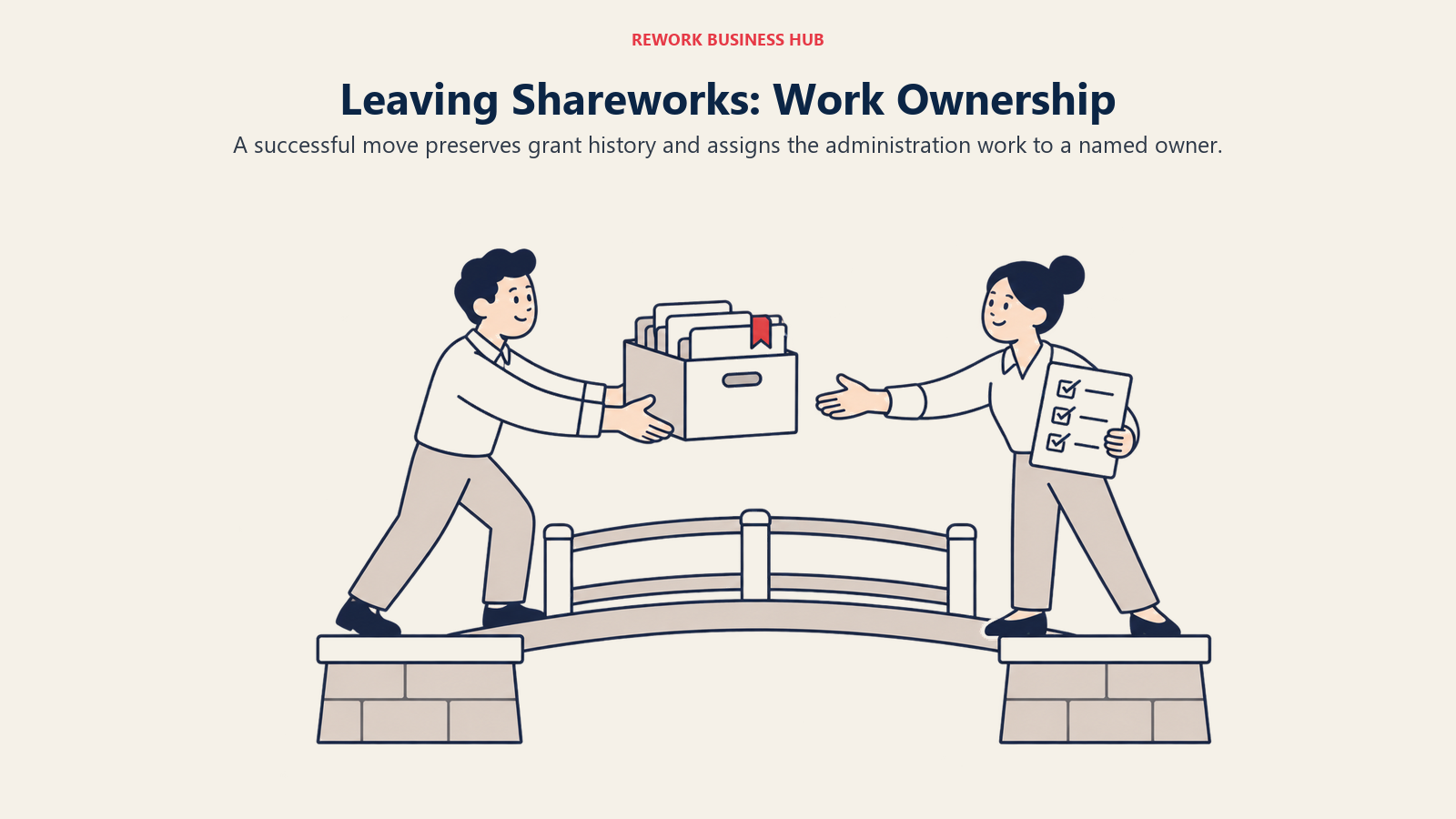
If you move to another full-service platform, J.P. Morgan Workplace Solutions or Fidelity Private Shares, the transition is mostly about the migration project: transferring historical grant data, vesting schedules, and participant records without losing accuracy, then re-establishing the broker and transfer agent relationships that made Shareworks useful for liquidity events in the first place. That is a real project, but it does not ask your team to change how equity administration gets done day to day, since someone else still runs it.
If you move to a self-serve platform instead, Carta, Pulley, Ledgy, Astrella, or any of the smaller names on this list, the bigger shift is who owns the work. A dedicated administrator or finance team member now runs grants, vesting confirmations, and compliance filings that a Shareworks administrator used to handle. Budget real time for that internal capability, not just implementation hours from the vendor, and make sure whoever owns it also owns the connections to payroll and HR systems that equity data has to flow through. Our payroll software roundup and HR software roundup are useful next stops if those integrations are the piece you have not mapped yet, and the Workday alternatives guide is worth a look if a broader HRIS decision is part of the same evaluation.
The third real cost is downstream: cap table and equity data feeds directly into financial planning, board reporting, and the general ledger. If you are re-platforming equity administration at the same time you are reworking your broader finance stack, the accounting software roundup, the NetSuite alternatives guide, and the FP&A software roundup all touch pieces of the same decision, since dilution modeling, headcount cost, and equity expense all eventually land in the same forecast.
How to Choose: Decision Framework
| If you need... | Choose |
|---|---|
| The closest full-service, bank-backed alternative to Shareworks itself | J.P. Morgan Workplace Solutions |
| The largest self-serve platform with the biggest name recognition | Carta |
| Multi-country European compliance and reporting depth | Ledgy |
| Fully published, stakeholder-banded pricing with no sales call required | Astrella |
| A free tier before you ever price out a full-service platform | Fidelity Private Shares or Carta |
| Every price on the page, no free plan but no quote-only gate either | Pulley |
| A transparent 409A bundle for a small or bootstrapped team | Eqvista |
| Fully published pricing across every tier, including bundled 409A valuations | Cake Equity |
| Purpose-built support for an APAC employee or investor base | Qapita |
| A published rate card at every tier, monthly or annual | EquityList |
| Direct Companies House filing for a UK EMI scheme | Vestd |
| Cap table management folded into board governance software you already run | Diligent Equity |
Frequently Asked Questions about Shareworks Alternatives
How much does Shareworks cost?
Shareworks by Morgan Stanley at Work publishes no pricing anywhere. There is no pricing page, no tier list, no self-serve signup, and no free tier on either the Shareworks or Morgan Stanley at Work site. Every buyer has to go through a sales conversation to get a number, which is the single biggest driver of Shareworks evaluations in the first place.
What is the cheapest Shareworks alternative with a published price?
Among the alternatives with a fully published starting price, Astrella's Early Stage tier at $1,200 a year (0-25 stakeholders) and Pulley's Startup tier at $1,200 a year (25 stakeholders) are the lowest confirmed figures. Several other platforms offer a free tier before any paid pricing applies: Carta, Fidelity Private Shares, and Qapita cap theirs around 25 stakeholders, and Ledgy runs to 50.
Which alternative is closest to Shareworks if I still want full-service administration?
J.P. Morgan Workplace Solutions is the closest match. It is the renamed Global Shares platform, acquired by J.P. Morgan in August 2022, and at acquisition served roughly 650 corporate clients with nearly $200 billion in assets under administration across more than 800,000 participants. Fidelity Private Shares also offers bank-backed administration, though with a published free tier that Shareworks and J.P. Morgan Workplace Solutions do not have.
Is AngelList still a viable option for cap table management?
With a caveat. In its own announcement of 6 August 2025, AngelList said the rebuilt cap table that integrates RUVs and Consolidation Vehicles "will be the only option for new customers," and that it is no longer building new features on the older version. Existing customers who stay put keep the same software, support, and pricing. AngelList itself points companies that would rather move toward J.P. Morgan Workplace Solutions and Pulley, both of which appear elsewhere on this list as standalone picks.
Should I move to a self-serve tool or another full-service platform?
It depends on whether your Shareworks complaint is about price or about the service model. If you still want a dedicated administrator handling grants, vesting, and participant questions but want clearer pricing, J.P. Morgan Workplace Solutions or Fidelity Private Shares are the closer matches. If you are ready to run administration in-house, Carta, Pulley, Ledgy, and Astrella are self-serve platforms with either a free tier or fully published pricing.
Which alternative handles multi-country tax and mobility best?
Ledgy is built specifically around multi-country compliance and reporting for companies with employees or investors across European jurisdictions, and it is the strongest fit on this list if that is your primary complaint about Shareworks. J.P. Morgan Workplace Solutions, given its scale and banking infrastructure, is the other strong option for global, multi-country equity plans.
Do I need a separate 409A valuation provider if I switch cap table platforms?
Not necessarily. Several alternatives bundle 409A valuations directly into a paid tier: Pulley's Growth plan, Cake Equity's Team plan (which bundles two valuations worth $3,000 by Cake's own estimate), and Qapita's Growth plan all include 409A support. Eqvista publishes standalone 409A pricing by funding round if you want that priced separately from your cap table subscription.
What changes operationally if I move equity administration in-house?
The biggest shift is ownership. A Shareworks administrator currently handles grants, vesting confirmations, and much of the compliance filing on your behalf. Moving to self-serve software like Carta, Pulley, or Astrella means someone on your finance or legal team now owns that work directly, plus the connections to payroll and HR systems that equity and vesting data need to flow through correctly.
What to Do Next
Start by deciding which side of the full-service-versus-self-serve fork you are actually on, since that single choice eliminates roughly half this list before you compare a single price. If you want to keep the service model Shareworks provides, request quotes from J.P. Morgan Workplace Solutions and Fidelity Private Shares in parallel; if you are ready to self-administer, request pricing from two or three of Carta, Pulley, Ledgy, and Astrella at the same time so you are comparing real numbers against each other instead of against Shareworks' silence.
If the decision is really about administration scope rather than replacing Shareworks specifically, our equity management software roundup ranks the full-service and self-serve options side by side, and the cap table software roundup covers the narrower ownership-record question.
Then run a real data migration test with your top two picks, not just a sales demo. Export your actual grant history, vesting schedules, and stakeholder list, and watch how cleanly each platform imports it. That exercise surfaces data quality problems your Shareworks account may be hiding, and it tells you more about implementation pain than any feature comparison on this page.
Camellia writes about equity administration and cap table software for B2B finance teams. Pricing verified against vendor pricing pages in September 2026.

Principal Product Marketing Strategist
On this page
- Key Facts
- Quick Comparison Table
- Full-Service Administration vs. Self-Serve Software: The Real Decision
- The Bank-Backed and Enterprise-Scale Alternatives
- 1. J.P. Morgan Workplace Solutions: The Direct Full-Service Rival
- 2. Carta: The Category's Largest User Base
- 3. Ledgy: European Compliance Depth
- 4. Astrella: Built on a Transfer Agent's Shareholder-Services History
- 5. Fidelity Private Shares: A Bank-Backed Free Tier
- The Startup-Focused Alternatives
- 6. Pulley: Every Tier Priced in the Open
- 7. Eqvista: A Transparent 409A Bundle for Small Teams
- 8. Cake Equity: Fully Published Pricing at Every Tier
- 9. Qapita: Purpose-Built for APAC Cap Tables
- 10. EquityList: A Published Rate Card With an AI Credit Allowance
- Regional and Niche Specialists
- 11. Vestd: UK-Native, With Direct Companies House Filing
- 12. AngelList: A Product in Transition, Worth Knowing Before You Sign
- 13. Diligent Equity: Cap Table Inside a Governance Suite
- Sizing and Persona Fit
- Moving Off Shareworks: What Actually Changes
- How to Choose: Decision Framework
- What to Do Next