Best Carta Alternatives in 2026: 13 Cap Table Platforms for Founders and Finance Leads
Turn this article into takeaways for your work.


Each assistant summarizes the article only for you and suggests best practices for your work.
Updated August 2026
Founders comparing cap table software after outgrowing a Carta free plan, or after a paid Carta quote came back higher than expected, land on a short list fast: Pulley for straightforward startup rounds, Fidelity Private Shares for a bank-backed free tier, Ledgy for European reporting depth, and Astrella for fully published, stakeholder-banded pricing. Carta remains the market leader by name recognition and cap table count, but its own pricing page publishes only the free Launch tier. Build, Grow, and Scale are all priced per stakeholder against a minimum annual fee that Carta does not disclose, which sends a lot of buyers shopping before they even get a quote.
This guide covers 13 alternatives for founders, CFOs, controllers, and startup counsel weighing what comes next, whether that means staying free longer, locking in a published price, or moving to a platform built around your region or your investor base. Every price below comes from the vendor's own pricing page as of August 2026; where a vendor publishes nothing, this guide says so instead of guessing.
Key Facts
- 6,411 U.S. companies now run an employee stock ownership plan, covering 15.1 million participants and holding more than $2 trillion in combined assets, per the most recent Department of Labor filings (NCEO, Employee Ownership by the Numbers).
- U.S. venture firms closed 14,320 deals worth $215.4 billion in 2024, and every one of those rounds needed a cap table update the same week it closed (NVCA 2025 Yearbook).
- Median founding-team ownership falls from 56.2% after a seed round to 36.1% at Series A and 23% at Series B, dilution that has to be tracked precisely across every subsequent round (Carta, Founder Ownership Report 2026).
- The down-round rate fell to 11.4% in Q1 2026, back to 2019-2020 levels, which means more startups are raising clean rounds that still need accurate 409A and option-pool math (Carta, State of Private Markets: Q1 2026).
- 85% of companies with fewer than 750 employees have just one or no dedicated staff member administering their equity plan, exactly the gap cap table software is built to close (NASPP/Deloitte, 2025 Equity Administration Survey).
Quick Comparison Table
Carta appears first as the baseline you're evaluating against, not as one of the 13 numbered picks below.
| Tool | Best For | Starting Price | Key Strength | Key Limitation |
|---|---|---|---|---|
| Carta | Startups defaulting to the market leader | Free (Launch, up to 25 stakeholders and $1M raised); paid tiers priced per stakeholder against a minimum annual fee, no published dollar figures | Broadest name recognition and the largest cap table network on the market | Build, Grow, and Scale all require a sales call with zero pre-qualifiable price |
| Pulley | Seed to Series A startups wanting a modern cap table without a free-tier crutch | $1,200/year (Startup, first 25 stakeholders included) | Purpose-built 409A, option exercise, Rule 701, and HRIS workflows on Growth | No free plan at any stakeholder count |
| Fidelity Private Shares | Early-stage founders who want a free tier backed by a major custodian | Free (Launch, up to 25 stakeholders and under $1M raised) | Fidelity's brand plus a bundled $400 Delaware incorporation package | Startup and Growth publish feature lists, not dollar figures |
| Ledgy | European and global growth-stage companies needing investor-grade reporting | Free (Launch, up to 50 stakeholders); Scale from EUR 5,000/year | Deep financial reporting and investor relations tooling built in | Priced in euros; Scale and Enterprise both require a quote |
| Astrella by EQ | Companies wanting EQ's enterprise backing and clear published bands | $1,200/year (Early Stage, 0-25 stakeholders) | Fully published, stakeholder-banded pricing all the way to 300 stakeholders | Past 300 stakeholders, pricing drops into an unpublished custom tier |
| Cake Equity | APAC-based startups wanting a free tier plus built-in ESOP tools | Free (5 stakeholders); Build $1,000/year (25 stakeholders) | Bundles two audit-ready 409A valuations into the Team tier, each sold separately at $1,500 | Per-stakeholder overage climbs steeply by tier, from $1 on Build to $60 on Pro |
| Eqvista | Budget-conscious U.S. startups wanting 409A pricing tied to funding round | Free (Freemium, under 20 stakeholders) | Transparent, round-based 409A pricing starting at $990/year | Cap table plans move to custom pricing above 50 stakeholders |
| Qapita | Startups in India and Southeast Asia running active ESOP programs | Free (Spark, up to 25 stakeholders and under $1M raised) | Published per-stakeholder add-on pricing on every paid tier | Growth tier's 409A report and board consents cost extra per head |
| EquityList | Early-stage companies that want a published price and an AI-assisted cap table | Free (10 stakeholders); Build $1,200/year (35 stakeholders) | Published monthly and annual figures at every named tier, with per-stakeholder overage stated | Free tier caps at 10 stakeholders, the tightest real cap on this list after Cake Equity |
| Shareworks (Morgan Stanley at Work) | Late-stage private and public companies wanting enterprise-grade administration | No published pricing, quote only | Backed by Morgan Stanley's wealth management and stock plan infrastructure | No self-serve signup and no published starting price anywhere |
| J.P. Morgan Workplace Solutions | Enterprises already banking with J.P. Morgan wanting equity administration under one roof | No published pricing, quote only | J.P. Morgan's balance sheet and enterprise support behind the platform | Rebranded from Global Shares, with a thinner public track record under its new name |
| AngelList | Startups already running fund formation, SPVs, or angel checks through AngelList | No published cap table pricing (AngelList publishes fund administration pricing only) | Cap table sits inside the same stack as AngelList's investing and fund tools | No standalone cap table price, and since August 2025 new customers get only the rebuilt version |
| Vestd | UK companies needing native EMI scheme support and Companies House filing | Self-Serve from GBP 2,200/year (GBP 220/month); Guided from GBP 4,200/year | Two-way Companies House filing built specifically for UK compliance | Priced in GBP with VAT on top and a minimum 12-month term |
| Capboard | European startups wanting a lighter-weight alternative to Ledgy | Plan pricing not published; premium support from $50/month | Partner-sourced 409A valuation available at a flat $1,800 | Plan prices are not readable or published on the vendor's site |
Direct Challengers: Startup-First Cap Table Platforms
These three compete with Carta on its own turf, cap tables built for founders still raising priced or SAFE rounds, not managing a public company's equity plan. The differences show up in what's free, what's published, and which region each platform is built around.
1. Pulley: The Modern Cap Table Without a Free Tier
Pulley built its reputation as the founder-friendly alternative to Carta: a cleaner interface, transparent SAFE and priced-round modeling, and support material that reads like it's written by operators who've raised rounds themselves. The tradeoff for that focus is pricing. Where Carta gives away a free Launch tier, Pulley has no free plan at any stakeholder count. Startup, the entry tier, runs $1,200 a year and includes the first 25 stakeholders. Growth steps up to $3,500 a year for the first 40 stakeholders and adds 409A valuations, option exercises, Rule 701 compliance, Form 3921 filing, board approval workflows, and HRIS integrations, the operational layer a company needs once it's granting options on a regular cadence rather than just tracking a handful of founder shares. Enterprise is quote-only. Pair that HRIS integration with your actual payroll platform if you haven't settled on one yet; our payroll software roundup covers that decision separately.
Pulley also runs a separate crypto product line worth knowing about if token issuance is on your roadmap: Token Cap Table and Token Distributions each run $4,500 a year for 25 stakeholders, with token valuations starting at $10,000. One quirk worth planning around: angel investors writing checks of $50,000 or less count as half a stakeholder toward your tier limit, a small mechanism that can meaningfully delay when a busy round pushes you into the next tier.
Target audience. Seed and Series A startups that have decided a cleaner modeling experience matters more than the free-tier savings from Carta or Fidelity Private Shares.
Sizing fit. Best from first priced round through roughly 50 employees, where the Growth tier's compliance features start paying for themselves.
Stage fit. A strong fit right after a startup starts granting options on a regular cadence, not just at incorporation.
| Pros | Cons |
|---|---|
| Purpose-built 409A, option exercise, and Rule 701 workflows on Growth | No free plan at any stakeholder count |
| Clean, founder-first interface with SAFE and priced-round modeling | Growth's compliance features are a $2,300/year jump from Startup |
| Dedicated crypto/token cap table product for web3 startups | Angel checks under $50K still count as half a stakeholder toward the tier limit |
Pricing: Startup $1,200/year (first 25 stakeholders). Growth $3,500/year (first 40 stakeholders, adds 409A valuations, option exercises, Rule 701, Form 3921, board approvals, HRIS integrations). Enterprise: contact us. Token Cap Table and Token Distributions: $4,500/year each (25 stakeholders); token valuations from $10,000.
Best for: A founder who wants Carta's core workflow with a cleaner interface and is fine paying from day one instead of starting free.
For the direct side-by-side, see the full Carta vs. Pulley comparison. If Pulley itself is the tool you're shopping away from, the Pulley alternatives guide covers that angle in more depth.
2. Fidelity Private Shares: A Free Tier Backed by a Name You Already Trust
Fidelity Private Shares is the equity management platform built by the brokerage giant, and it targets the earliest stage explicitly: Launch is free for up to 25 stakeholders and under $1M raised, a cap that lines up almost exactly with Carta's own free tier. Startup and Growth are both published as feature lists rather than dollar figures. Startup adds premier support, investor updates, and Form 3921 filing. Growth adds 409A valuations, priority onboarding, ASC 718 compliance work, and HRIS and payroll integration.
The differentiator most competitors can't match is a bundled Delaware C-corp incorporation package: $400, covering filing fees, one year of registered agent service, and a free Launch tier subscription thrown in. For a founder who hasn't incorporated yet, that folds two early decisions, entity formation and cap table software, into a single purchase. Pair that decision with your actual bookkeeping stack early too; our accounting software roundup is a natural next stop for a company this early.
Target audience. Pre-seed and first-time founders who want a name-brand backer, and possibly incorporation help bundled in from day one.
Sizing fit. Incorporation through roughly Series A, where Launch's 25-stakeholder cap and $1M-raised threshold stop applying.
Stage fit. Strongest right at company formation, given the bundled Delaware incorporation package.
| Pros | Cons |
|---|---|
| Free Launch tier backed by Fidelity's brand and infrastructure | Startup and Growth publish features only, not dollar figures |
| $400 Delaware incorporation package bundles formation and a free Launch subscription | Growth's 409A and ASC 718 tools require an unpublished-price upgrade |
| HRIS and payroll integration on Growth for teams past the earliest stage | Launch's $1M-raised condition pushes fast-growing companies out quickly |
Pricing: Launch: free, up to 25 stakeholders and under $1M raised. Startup and Growth: no published dollar figures, feature-list tiers only. Delaware C-corp incorporation package: $400 (filing fees, one year of registered agent service, free Launch tier subscription included).
Best for: A first-time founder who wants a trusted financial-services name behind their cap table and appreciates a bundled incorporation option.
3. Ledgy: The European Reporting Specialist
Ledgy is the platform most often named when a European or globally distributed company outgrows a US-centric cap table tool. Built to handle multiple share classes, jurisdictions, and currencies natively, it layers financial reporting and an investor-facing portal on top of the core cap table, useful once board decks and VC update requests become a recurring monthly task rather than an occasional favor.
Launch is free for up to 50 stakeholders, double Carta's own free cap. Scale starts at EUR 5,000 a year and includes 50-plus stakeholders; Enterprise starts at EUR 18,000 a year and includes 200-plus. Both are quote-adjusted from there. A separate financial reporting add-on runs Essentials from EUR 3,000 a year or Advanced from EUR 5,000 a year, stacked on top of whichever core tier you're on. Every figure on Ledgy's pricing page is quoted in euros, not dollars, worth flagging early so a US-based buyer isn't caught converting currency mid-negotiation.
Target audience. European-headquartered or globally distributed growth-stage companies with active investor relations and multi-jurisdiction cap tables.
Sizing fit. Launch fits the earliest stage; Scale and Enterprise are built for companies from roughly 50 to 1,000-plus employees.
Stage fit. Strongest once regular investor reporting, not just cap table bookkeeping, becomes part of the job.
| Pros | Cons |
|---|---|
| Deep financial reporting and investor relations tooling built in | Priced in euros, an extra conversion step for US-based buyers |
| Handles multiple share classes and jurisdictions natively | Scale and Enterprise both require a sales quote, the same friction as Carta |
| Financial reporting add-on scales independently of the core plan | Add-on stacking (EUR 3,000-5,000/year) can push total cost past Scale's base price alone |
Pricing: Launch: free, up to 25 stakeholders. Scale: from EUR 5,000/year. Enterprise: from EUR 18,000/year. Financial reporting add-on: Essentials from EUR 3,000/year, Advanced from EUR 5,000/year.
Best for: A European or globally distributed company that needs investor-grade reporting built into the cap table, not bolted on separately.
If Ledgy itself is the incumbent you're evaluating away from, the Ledgy alternatives guide covers that field directly.
Published-Price Challengers: Stakeholder-Banded Tiers You Can Pre-Qualify
The next five all do something Carta's paid tiers don't: put a number on the page. Each publishes tiers banded by stakeholder count, so you can estimate cost before a sales call rather than after one.
4. Astrella by EQ: Clear Published Bands With Enterprise Backing
Astrella is run by EQ Private Company Solutions, whose lineage runs through American Stock Transfer and Equiniti, two long-established transfer agent and shareholder services businesses, which gives it a stability argument that newer, VC-backed cap table startups can't match. It's also where LTSE Equity, formerly Captable.io, sent its customers when it completed its own cap table exit, so a former LTSE Equity user evaluating this list has a direct landing spot rather than a cold search.
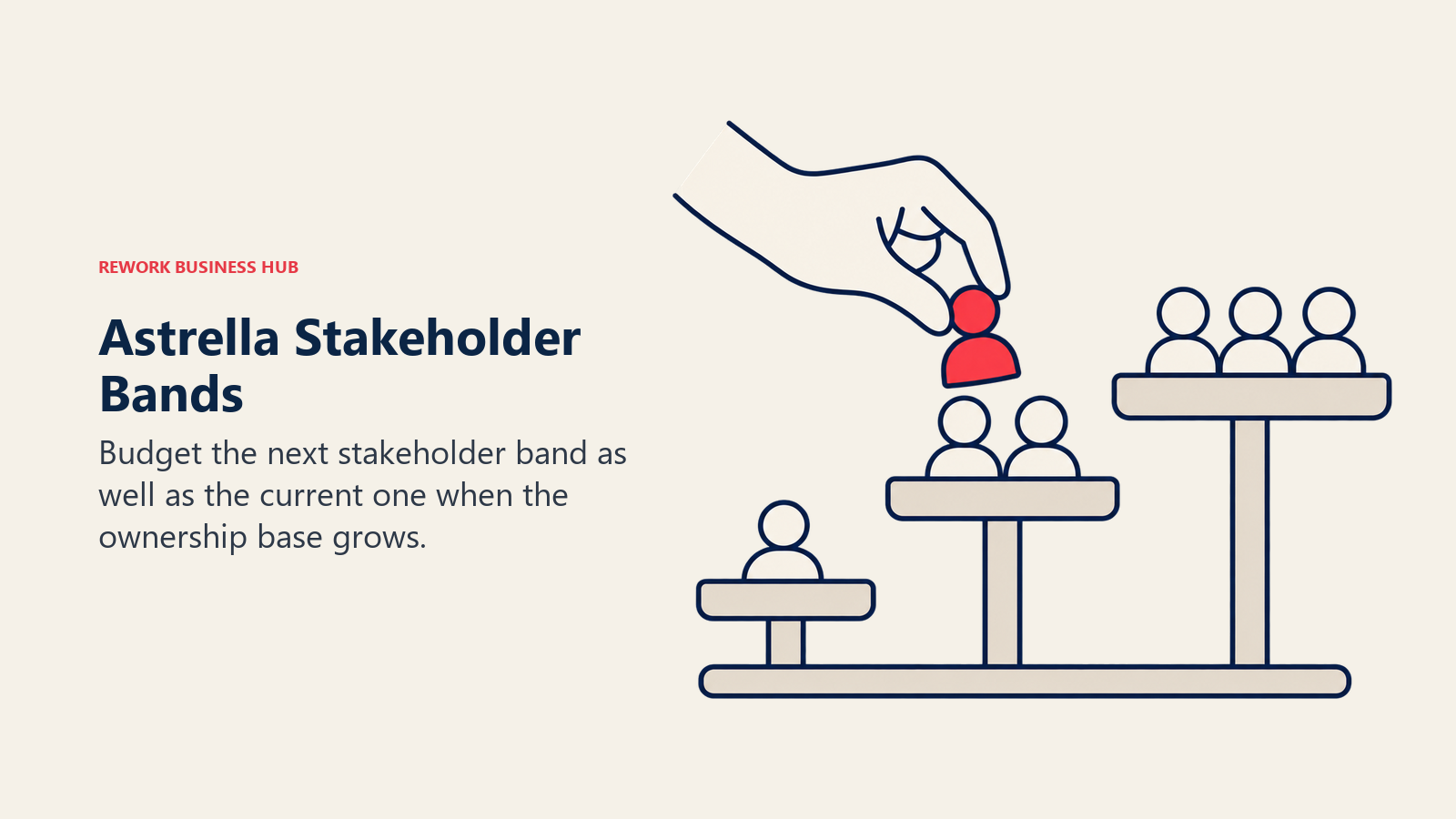
Pricing is the most straightforwardly published on this entire list: Early Stage covers 0-25 stakeholders at $1,200 a year, Emerging covers 26-100 stakeholders at $3,200 a year, and Accelerate covers 101-300 stakeholders at $8,200 a year. Past 300 stakeholders, pricing moves to a custom quote. That's three clean, stakeholder-banded tiers with real dollar figures at every step below the top, a level of transparency only a couple of other vendors on this list match.
Target audience. Companies that want to see their exact cost at every growth stage without a sales call, plus any former LTSE Equity customer choosing a permanent replacement.
Sizing fit. 0 to 300 stakeholders across three published bands; 300-plus moves to custom pricing.
Stage fit. A fit at almost any stage, since the banded pricing scales predictably alongside stakeholder growth rather than requiring a re-negotiation.
| Pros | Cons |
|---|---|
| Fully published, stakeholder-banded pricing through 300 stakeholders | Past 300 stakeholders, pricing drops into an unpublished custom tier |
| EQ's transfer agent lineage adds stability newer entrants lack | Less founder-facing brand recognition than Carta or Pulley |
| Direct landing spot for former LTSE Equity customers | Jump from Early Stage to Emerging ($1,200 to $3,200/year) is steep right at 26 stakeholders |
Pricing: Early Stage (0-25 stakeholders) $1,200/year. Emerging (26-100 stakeholders) $3,200/year. Accelerate (101-300 stakeholders) $8,200/year. 300-plus: contact us.
Best for: A company that wants to know its exact cost at every stakeholder band in advance, backed by an established enterprise fintech.
5. Cake Equity: A Free Tier Plus Built-In ESOP Tools for APAC Startups
Cake Equity is the clearest APAC-first name on this list, popular with startups across Australia and the broader region who want built-in ESOP administration rather than a bolt-on. Its free tier caps lower than most competitors, just 5 stakeholders, but it's genuinely free with no revenue or funding threshold attached, unlike Carta's or Fidelity's under-$1M-raised condition.
Build runs $1,000 a year for 25 stakeholders. Team steps up to $2,750 a year for 40 stakeholders and bundles two audit-ready 409A valuations that Cake sells separately at $1,500 each, effectively covering more than the tier's own cost in included value. Pro is custom-priced for 100 stakeholders and up. The per-stakeholder overage climbs sharply by tier rather than sitting flat: $1 per additional stakeholder on Build, $5 on Team, and $60 on Pro. Worth modeling before you commit if your cap table is growing fast, because the same extra head costs sixty times more on Pro than on Build. Paid tiers bill annually, and Build saves 10% against quarterly billing.
Target audience. Australian and broader APAC startups running active ESOP programs who want the equity plan and cap table in one platform.
Sizing fit. 5 to 100-plus stakeholders across four tiers, from a genuinely free entry point through custom enterprise pricing.
Stage fit. A fit from incorporation through growth stage, since the tier ladder scales with stakeholder count rather than funding raised.
| Pros | Cons |
|---|---|
| Genuinely free tier with no funding or revenue threshold attached | Free tier's 5-stakeholder cap is the lowest on this list |
| Team tier bundles two 409A valuations, sold separately at $1,500 each, into a $2,750/year plan | Per-stakeholder overage jumps from $1 on Build to $5 on Team to $60 on Pro |
| Purpose-built ESOP administration for the APAC market | Quarterly billing is only available on the top Pro tier |
Pricing: Free ($0, 5 stakeholders). Build $1,000/year (25 stakeholders, $1 per additional stakeholder). Team $2,750/year (40 stakeholders, $5 per additional stakeholder, bundles two audit-ready 409A valuations Cake sells separately at $1,500 each). Pro: custom (100 stakeholders, $60 per additional stakeholder). Standalone 409A add-on: $1,500.
Best for: An Australian or APAC startup that wants ESOP administration and cap table management in one platform, with a real, if small, free tier to start on.
6. Eqvista: 409A Pricing Tied Directly to Your Funding Round
Eqvista leads with price transparency on the line item that trips up a lot of first-time founders: 409A valuations. Rather than bundling valuations into a tier or quoting them per company, Eqvista prices them by funding round, Startup/Pre-Revenue at $990 a year, Friends and Family or Angel rounds at $1,290 a year, Seed at $1,990 a year, and Series A at $2,590 a year, with Series B and later moving to custom pricing. That round-based structure makes it unusually easy to budget a valuation cost months before you actually need one. If 409A budgeting is part of a broader planning process at your company, our FP&A software roundup covers the tools that forecast around it.
The core cap table product is Freemium, free for companies under 20 stakeholders. Between 20 and 50 stakeholders, plans are paid, though Eqvista does not publish that tier's price; above 50 stakeholders, pricing moves to a fully custom quote. A handful of service add-ons round out the price list: expedited valuation processing from $490, QSBS attestation from $1,000, and ASC 718 compliance work from $500.
Target audience. Budget-conscious U.S. startups, particularly ones that want to plan their 409A valuation cost by funding stage well in advance.
Sizing fit. Free under 20 stakeholders; paid but unpublished from 20 to 50; custom above 50.
Stage fit. Strongest from pre-revenue through Series A, where the round-based 409A pricing maps directly onto your fundraising calendar.
| Pros | Cons |
|---|---|
| 409A valuations priced transparently by funding round, from $990/year | Cap table plans for 20-50 stakeholders are paid but unpublished |
| Genuinely free cap table for companies under 20 stakeholders | Above 50 stakeholders, everything moves to a custom quote |
| Add-on pricing (QSBS, ASC 718, expedited processing) published upfront | Series B and later valuations drop out of the published round-based list |
Pricing: Freemium: free, under 20 stakeholders. Paid tiers (20-50 stakeholders): price not published. Above 50 stakeholders: custom. 409A valuations by round: Startup/Pre-Revenue $990/year, Friends & Family/Angel $1,290/year, Seed $1,990/year, Series A $2,590/year, Series B+ custom. Add-ons: expedited processing from $490, QSBS attestation from $1,000, ASC 718 from $500.
Best for: An early-stage founder who wants to know the exact cost of their next 409A valuation before they need it, not after a sales call.
7. Qapita: ESOP Administration for India and Southeast Asia
Qapita is the name most often mentioned alongside Cake Equity when a startup in India or Southeast Asia is choosing cap table and ESOP software built for that region rather than adapted from a US or European product. Spark, the free tier, mirrors Carta's cap closely: free for up to 25 stakeholders and under $1M raised.
Surge runs $1,600 a year for up to 40 stakeholders, plus $40 per additional stakeholder per year beyond that. Growth runs $3,000 a year for up to 50 stakeholders, plus $60 per additional stakeholder per year, and adds a 409A valuation report, board consent workflows, and 83(b) election support, the compliance layer a growth-stage company actually needs. Two service add-ons round things out: analyst support at $125 an hour and full-service administration at $500 an hour, useful for a lean finance team that wants Qapita's own staff to handle a specific one-off task. ESOP administration touches HR as much as finance; our HR software roundup is worth a look if new-hire equity grants aren't yet synced with onboarding.
Target audience. Startups in India and Southeast Asia running active ESOP programs who want regional compliance support built in.
Sizing fit. Free to 25 stakeholders, Surge to 40, Growth to 50, with clear per-stakeholder overage pricing past each cap.
Stage fit. A fit from incorporation through growth stage, particularly once ESOP grants and board consent workflows become a regular monthly task.
| Pros | Cons |
|---|---|
| Published per-stakeholder overage pricing on every paid tier ($40-$60/head) | Growth tier's 409A report and board consents are bundled, not itemized separately |
| Regional compliance support (83(b) elections) built into Growth | Smaller global brand recognition than Carta or Shareworks |
| Hourly service add-ons (analyst support, full administration) for lean teams | Per-stakeholder overage can outpace a flat-tier competitor's price at high headcount |
Pricing: Spark: free, up to 25 stakeholders and under $1M raised. Surge $1,600/year (up to 40 stakeholders, plus $40/stakeholder/year beyond that). Growth $3,000/year (up to 50 stakeholders, plus $60/stakeholder/year beyond that, adds 409A valuation report, board consents, 83(b) support). Add-ons: analyst support $125/hour, full-service administration $500/hour.
Best for: A startup in India or Southeast Asia that wants regional ESOP compliance support without hiring a dedicated equity administrator.
8. EquityList: A Published Price at Every Tier, Plus an AI Layer
EquityList repriced in 2026 around two things: a published figure at every named tier, and an AI credit allowance attached to each one. Where Carta routes all three paid tiers to a sales call, EquityList prints a monthly and an annual number side by side, states how many stakeholders each tier includes, and states what each additional stakeholder costs beyond that.
Free covers 10 stakeholders at $0, with a one-time allowance of 1,000 AI credits. Build runs $1,200 billed annually, or $125 a month billed monthly, and includes 35 stakeholders plus $35 per additional stakeholder per year. Growth runs $3,500 billed annually, includes 50 stakeholders plus $50 per additional stakeholder per year, and adds multi-entity support, a 409A valuation, and exercise workflows. Enterprise is custom. The AI credits are a real line item rather than marketing: every AI-run action draws them down, and running out pauses the AI layer without stopping the platform.
Target audience. Seed-stage companies that want either a genuine annual discount or the flexibility of quarterly payments, not a one-size cadence.
Sizing fit. Free under $1M raised, Seed to 50 stakeholders, Rise to 100, Scale custom past that.
Stage fit. Strongest right at the seed stage, when a company is deciding how much runway to commit to a single annual software payment.
| Pros | Cons |
|---|---|
| Real quarterly-versus-yearly billing choice with a genuine 15% annual discount | Scale tier drops to custom pricing at 100-plus stakeholders |
| Free tier tied to a clear, simple $1M-raised threshold | Free tier's stakeholder limit isn't published separately from the funding threshold |
| Transparent published pricing at both Seed and Rise | Smaller vendor with less enterprise-scale track record than Carta or Shareworks |
Pricing: Free ($0, 10 stakeholders, 1,000 lifetime AI credits). Build $1,200/year billed annually, or $125/month billed monthly (35 stakeholders, $35 per additional stakeholder per year). Growth $3,500/year billed annually (50 stakeholders, $50 per additional stakeholder per year, adds multi-entity support, a 409A valuation, and exercise workflows). Enterprise: custom.
Best for: A seed-stage company that wants a real choice between quarterly cash flow flexibility and a locked-in annual discount, spelled out clearly on the pricing page.
Institutional and Enterprise-Backed Platforms
The next two aren't built for a founder pre-qualifying budget on a pricing page. Both are quote-only, sales-led products backed by major financial institutions, worth a look once your company, or your board, wants an equity platform with an institutional name attached.
9. Shareworks (Morgan Stanley at Work): The Institutional Default for Late-Stage and Public Companies
Shareworks carries the deepest institutional lineage on this list. It started as Solium Shareworks, became Shareworks by Morgan Stanley after Morgan Stanley's 2019 acquisition, and is now sold under the broader Morgan Stanley at Work brand alongside the bank's other workplace financial benefits. That lineage matters for the buyer it's built for: a late-stage private company heading toward IPO, or an already-public company, that wants equity plan administration tied directly into Morgan Stanley's wealth management infrastructure, so employees can move vested shares straight into a brokerage relationship without a separate account-opening process.
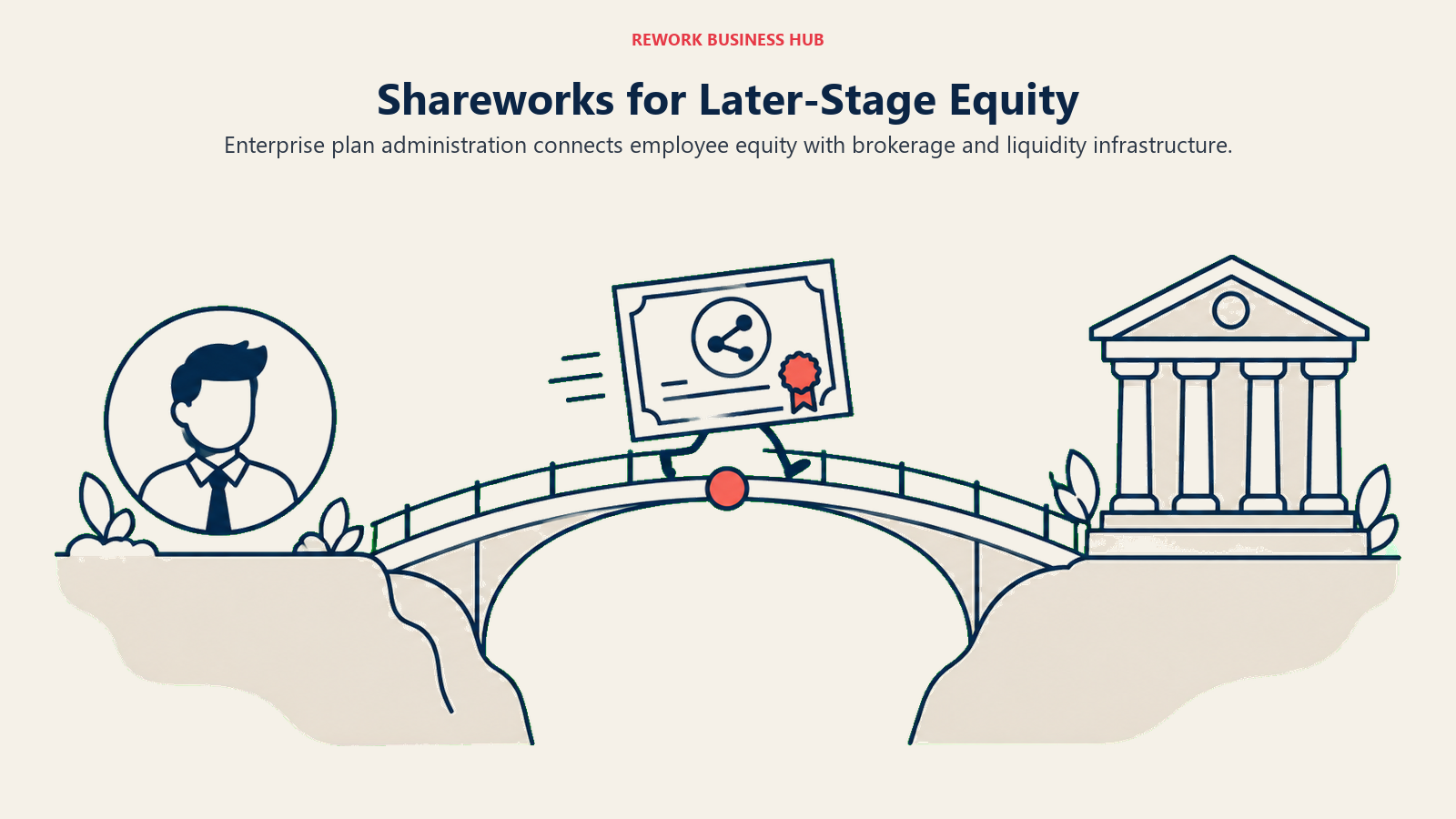
There is no published pricing anywhere on the Shareworks or Morgan Stanley at Work sites. It's entirely sales-led, with no self-serve signup path at all, a sharp contrast to Carta's free Launch tier or any of the published-price challengers earlier in this list. That's by design: Shareworks isn't competing for the same first-time founder Pulley or Fidelity Private Shares is chasing.
Target audience. Late-stage private companies on an IPO track and already-public companies wanting institutional-grade equity plan administration.
Sizing fit. Built for enterprise scale, typically several hundred employees and up.
Stage fit. Strongest once a company is managing a public or soon-to-be-public equity plan, not an early cap table.
| Pros | Cons |
|---|---|
| Direct tie into Morgan Stanley's wealth management and brokerage infrastructure | Zero published pricing, not even a starting figure or tier name |
| Built and proven for public-company equity plan complexity | No self-serve signup path at all, every evaluation starts with sales |
| Deepest institutional lineage on this list, dating back to Solium Shareworks | Overbuilt for an early-stage company that just needs a founder-friendly cap table |
Pricing: No published pricing. Quote only, sales-led, no self-serve signup.
Best for: A late-stage or public company that wants its equity plan tied directly into an established wealth management platform for its employees.
For the direct comparison, see Carta vs. Shareworks. If Shareworks is the incumbent you're evaluating away from, the Shareworks alternatives guide covers that field in more depth.
10. J.P. Morgan Workplace Solutions: Global Shares, Rebranded Under a Bigger Bank
J.P. Morgan Workplace Solutions occupies almost the same institutional lane as Shareworks, just under a different bank's umbrella. The product was Global Shares before J.P. Morgan acquired it and rebranded it under the Workplace Solutions name, folding equity plan administration into the same relationship a company might already have with J.P. Morgan for banking, treasury, or private banking services.
Like Shareworks, there's no published pricing. It's an enterprise, quote-only product, and the honest differentiator versus Shareworks is less about features and more about which bank your company, or your executives, already has a relationship with. A company already running treasury or corporate banking through J.P. Morgan gets a real consolidation argument here; a company with no existing J.P. Morgan relationship is choosing on the same undisclosed basis as any other enterprise cap table platform.
Target audience. Enterprises and late-stage companies that already bank with J.P. Morgan and want equity administration under the same institutional roof.
Sizing fit. Enterprise scale, comparable to Shareworks, typically several hundred employees and up.
Stage fit. Best for late-stage or public companies with an existing J.P. Morgan banking relationship to consolidate around.
| Pros | Cons |
|---|---|
| J.P. Morgan's balance sheet and enterprise support behind the platform | No published pricing anywhere, quote only |
| Real consolidation value for companies already banking with J.P. Morgan | Thinner public track record under the new name than under Global Shares |
| Enterprise-grade equity administration built for public and late-stage complexity | No meaningful differentiation from Shareworks without an existing J.P. Morgan relationship |
Pricing: No published pricing. Enterprise, quote only.
Best for: A late-stage or public company already banking with J.P. Morgan that wants one institutional relationship covering both banking and equity administration.
The Platform-Adjacent Option
AngelList doesn't compete with Carta as a standalone cap table product the way the other 12 do. It's worth including because a specific type of company already lives inside AngelList's ecosystem for other reasons.
11. AngelList: Cap Table Management Inside a Bigger Investing Stack
AngelList earns a spot on this list less as a head-to-head Carta competitor and more as a platform-adjacent option worth knowing about. Its core business is fund formation, SPVs, and angel investing infrastructure, and cap table management rides along as part of that broader stack rather than as a standalone product with its own pricing page. AngelList publishes pricing for fund administration; it does not publish a separate price for cap table management, so this guide prints no dollar figure for it.
There's a timing caveat worth knowing before you shortlist it. In an announcement dated 6 August 2025, AngelList said its rebuilt cap table, which integrates RUVs and Consolidation Vehicles, "will be the only option for new customers," and that it is no longer building new features on the older version. Existing customers who stay put keep the same software, support, and pricing, and AngelList points anyone who would rather move toward J.P. Morgan Workplace Solutions or Pulley.
The real case for AngelList is convenience for a specific company: one that's already raising through AngelList SPVs or rolling funds, or one whose earliest investors are already managing their stakes through AngelList's investor tooling. For that company, keeping the cap table in the same place as the fundraising mechanism avoids reconciling two separate systems. For a company raising through a traditional priced round with no AngelList involvement, there's little reason to route cap table management through it specifically.
Target audience. Startups already using AngelList to raise via SPVs or rolling funds, or whose investors are already active on the platform.
Sizing fit. Best at the earliest stage, pre-seed and seed, where the fundraising mechanism and the cap table naturally overlap.
Stage fit. A fit only while AngelList itself is the fundraising vehicle; less relevant once a company moves to traditional VC rounds with no AngelList involvement.
| Pros | Cons |
|---|---|
| Cap table sits in the same platform as fund formation, SPVs, and investor tooling | No standalone cap table pricing published to compare against a dedicated platform |
| Convenient for companies already raising through AngelList mechanisms | Not built as a primary, general-purpose cap table competitor to Carta |
| Investors already on AngelList can see their stake without a second login | Value drops sharply once a company's fundraising moves off the AngelList rails |
Pricing: No published cap table pricing. AngelList publishes pricing for fund administration only.
Best for: A company already raising through AngelList SPVs or rolling funds that wants its cap table in the same place as the fundraising mechanism itself.
Region-Specific Specialists
The last two solve for a specific jurisdiction rather than trying to be a global default, worth a serious look if your company is incorporated in the UK or continental Europe and your Carta evaluation keeps running into US-centric assumptions.
12. Vestd: Built Natively for UK Compliance
Vestd is the clearest UK-native pick on this list, built specifically around EMI (Enterprise Management Incentive) option schemes and two-way electronic filing with Companies House, the UK's company registrar, functionality a US-built platform like Carta or Pulley doesn't replicate natively. For a UK-incorporated company, that native compliance layer removes a manual filing step every other tool on this list would leave to your lawyers or accountants.
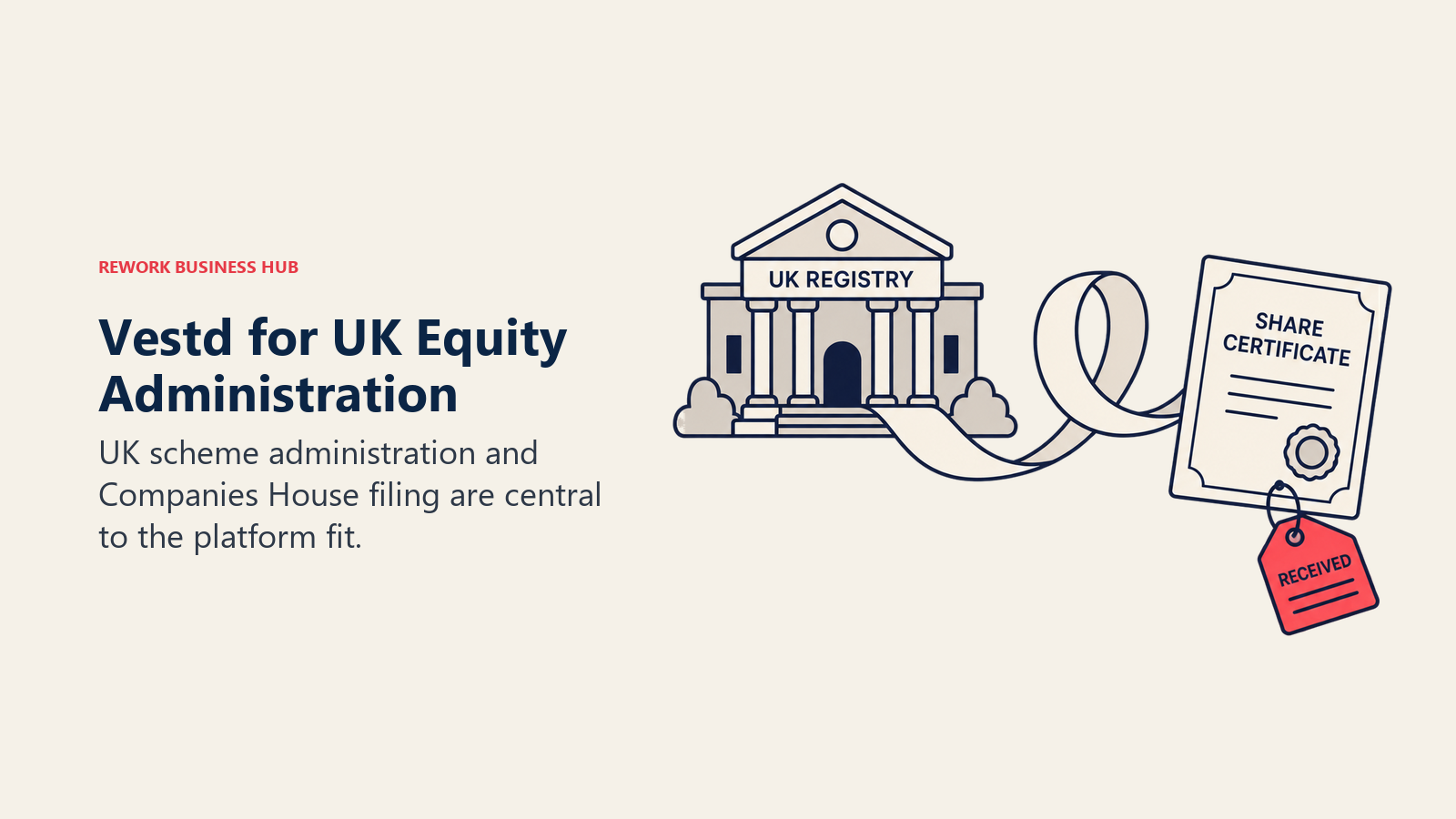
Vestd publishes its plan prices in the open, which not every name on this list does. Self-Serve starts at GBP 2,200 a year, or GBP 220 a month. Guided, the plan Vestd marks as most popular, starts at GBP 4,200 a year, or GBP 420 a month. Full Service is the only tier that routes to an enquiry. Two conditions apply to all of them: VAT is charged on top, and every plan carries a minimum 12-month term. Add-ons are published too: InVestd Raise at GBP 150 a month, additional valuations from GBP 1,000, 409A valuations from GBP 700, a nominee structure from GBP 50 a month, live HMRC submission support at GBP 25 a month, and company incorporation at GBP 100.
Target audience. UK-incorporated companies, especially ones running EMI option schemes, that want native Companies House filing.
Sizing fit. Best from UK company formation onward, given the bundled formation add-on.
Stage fit. A fit at almost any UK company stage, though the EMI-specific tooling matters most once options are actually being granted.
| Pros | Cons |
|---|---|
| Native two-way Companies House filing, built specifically for UK compliance | Headline plan prices don't render on the vendor's own pricing page |
| EMI scheme support most US-built platforms don't replicate natively | Only add-on prices are verifiable, not a base plan cost |
| Company formation and nominee structure add-ons bundle UK-specific setup work | Not a natural fit outside the UK, where EMI schemes don't apply |
Pricing: Plan pricing not published or readable on the vendor's site. Verified add-ons: funding rounds GBP 150/month, valuations from GBP 1,000, US tax support from GBP 700, nominee structure from GBP 50/month, company formation from GBP 250.
Best for: A UK-incorporated company running an EMI scheme that wants native Companies House filing without a US-built platform's workarounds.
13. Capboard: A Lighter European Alternative to Ledgy
Capboard rounds out the list as a lighter-weight European alternative, positioned for startups that want Ledgy-style cap table and investor tooling without Ledgy's enterprise-scale pricing tier structure. Capboard's plan pricing is not readable on its own site, the figures are rendered from template variables that don't resolve to visible dollar or euro amounts, so this guide cannot print a plan price for it.
What's confirmed: premium support runs $50 a month, and a partner-sourced 409A valuation is available at a flat $1,800. Both are real, fixed figures pulled directly from Capboard's site, even though the core plan pricing sits behind the same broken-template problem Vestd has. If Capboard is on your shortlist, budget time for a direct sales conversation to get an actual plan number, since the page itself won't give you one.
Target audience. European startups that want a smaller, lighter alternative to Ledgy without losing investor-facing cap table tooling.
Sizing fit. Best at early to mid-growth stage, sized more like a startup tool than an enterprise platform.
Stage fit. A fit once a European startup wants investor-grade reporting without committing to Ledgy's larger pricing tiers.
| Pros | Cons |
|---|---|
| Partner-sourced 409A valuation available at a flat, published $1,800 | Core plan prices are not readable on the vendor's own pricing page |
| Positioned as a lighter, less expensive alternative to Ledgy | Smaller vendor with less enterprise-scale reference base |
| Fixed, published premium support price at $50/month | Every plan-level cost still requires a direct sales conversation to confirm |
Pricing: Plan pricing not readable on the vendor's site. Verified fixed figures: premium support $50/month, partner 409A valuation $1,800.
Best for: A European startup that wants a lighter alternative to Ledgy and is willing to get an actual plan price directly from sales.
Free Tier Comparison: What Each Cap Table Platform Actually Gives Away
Carta's free Launch tier caps out at 25 stakeholders and $1M raised. Six of the alternatives above offer some form of free entry tier too, though the caps vary: Fidelity Private Shares and Qapita line up on Carta's 25-stakeholder mark, Ledgy doubles it at 50, Eqvista and Cake Equity set a different stakeholder ceiling of their own, and EquityList caps at 10 stakeholders with no funding condition. Pulley and Astrella skip a free tier entirely and start you on a paid plan from day one, and three vendors don't publish plan pricing at all.
| Tool | Free Tier Cap | Condition |
|---|---|---|
| Carta | 25 stakeholders | Under $1M raised |
| Fidelity Private Shares | 25 stakeholders | Under $1M raised |
| Ledgy | 50 stakeholders | None stated beyond stakeholder count |
| Qapita | 25 stakeholders | Under $1M raised |
| Eqvista | Under 20 stakeholders | None stated beyond stakeholder count |
| EquityList | 10 stakeholders | None, no funding condition attached |
| Cake Equity | 5 stakeholders | None stated beyond stakeholder count |
| Pulley | No free tier | Not applicable |
| Astrella | No free tier | Not applicable |
| Shareworks | No free tier | Not applicable |
| J.P. Morgan Workplace Solutions | No free tier | Not applicable |
| AngelList | No standalone cap table pricing | Not applicable |
| Vestd | None | Not applicable, Self-Serve starts at GBP 2,200/year |
| Capboard | Plan pricing not published | Not applicable |
How to Choose: Decision Framework
| If you need... | Choose |
|---|---|
| A free tier that lines up with Carta's 25-stakeholder cap almost exactly | Fidelity Private Shares or Qapita |
| Fully published, stakeholder-banded pricing with no sales call | Astrella |
| 409A valuations priced transparently by funding round | Eqvista |
| Deep investor-grade financial reporting for a European or global company | Ledgy |
| ESOP administration built for the APAC market | Cake Equity or Qapita |
| Institutional-grade administration tied to an existing bank relationship | Shareworks (Morgan Stanley at Work) or J.P. Morgan Workplace Solutions |
| Native UK compliance and Companies House filing | Vestd |
| A cap table that lives inside the same platform as your fundraising mechanism | AngelList |
Frequently Asked Questions about Carta Alternatives
How much does Carta cost?
Carta publishes only its free Launch tier: up to 25 stakeholders and $1M raised. Build, Grow, and Scale are all priced per stakeholder against a minimum annual fee, and Carta does not publish those figures anywhere on its site. Every paid tier routes to a "contact sales" button, so a firm number requires a sales conversation.
What is the cheapest Carta alternative with a published price?
Among the alternatives with a confirmed dollar figure, Astrella and Pulley's entry tiers both start at $1,200 a year (Astrella's Early Stage covers 0-25 stakeholders, Pulley's Startup covers the first 25). For a $0 starting point, Cake Equity's free tier covers 5 stakeholders with no funding condition attached, and Fidelity Private Shares and Qapita both offer free tiers at 25 stakeholders tied to a sub-$1M-raised condition, closely matching Carta's own free Launch cap. Ledgy's free Launch tier is the most generous on stakeholder count alone, at 50.
Which Carta alternative has the most generous free tier?
By stakeholder count alone, Ledgy is the most generous, at 50 stakeholders on its free Launch tier. Fidelity Private Shares and Qapita both match Carta's 25-stakeholder cap, and both attach the same sub-$1M-raised condition. EquityList's free tier caps at 10 stakeholders with no funding condition attached.
What happened to LTSE Equity and Capdesk?
Both have exited as independent cap table platforms. LTSE Equity, formerly Captable.io, sunset its cap table business and directed customers to Astrella. Capdesk was acquired by Carta in 2022 and rebranded Carta Europe in January 2025, so it now operates as part of Carta rather than as a separate alternative.
Which Carta alternative is best for a UK-incorporated company?
Vestd is the clearest UK-native option, built around EMI option schemes and two-way Companies House filing that a US-built platform doesn't replicate. It also publishes its prices: Self-Serve starts at GBP 2,200 a year and Guided at GBP 4,200 a year, both plus VAT and both on a minimum 12-month term. Budget for add-ons separately, since valuations start from GBP 1,000 and InVestd Raise runs GBP 150 a month.
Which Carta alternative is built for European companies outside the UK?
Ledgy and Capboard both target continental Europe specifically, with pricing quoted in euros. Ledgy is the more established of the two, with deeper financial reporting and a published Scale tier starting at EUR 5,000 a year. Capboard positions itself as a lighter, less expensive alternative to Ledgy, though its own plan prices aren't readable on its pricing page.
Do I need a separate 409A valuation provider on top of my cap table software?
It depends on the platform. Pulley's Growth tier, Fidelity's Growth tier, Cake Equity's Team tier, and Qapita's Growth tier all bundle 409A valuations into the subscription. Eqvista prices 409A valuations separately but transparently, by funding round, starting at $990 a year. If your chosen platform doesn't bundle one in, budget for it as a distinct line item rather than assuming it's included.
Which alternative fits a late-stage or public company best?
Shareworks (Morgan Stanley at Work) and J.P. Morgan Workplace Solutions are both built for that stage, tying equity plan administration into an existing bank relationship rather than a founder-friendly self-serve signup. Neither publishes pricing; both are quote-only, enterprise sales processes.
What to Do Next
Pull your current stakeholder count and total funding raised, then match them against the free-tier comparison table above before you talk to a single sales rep. If you land inside Fidelity Private Shares', Ledgy's, or Qapita's free caps, you can run a real side-by-side migration for $0 before committing to anything, including staying on Carta.
If you want the same 13 platforms ranked as a category rather than measured against Carta specifically, our best cap table software roundup does that, and the equity management software roundup covers the wider administration question once grants, participants, and tax withholding are in scope.
If your stakeholder count already exceeds every free tier on this list, request pricing from your two strongest candidates from the decision framework and ask each one the same question: what does this cost at double my current stakeholder count? That single question exposes which vendors' per-stakeholder or overage pricing scales gently, and which ones would see a single funding round double your bill.
Camellia writes about equity management and cap table software for B2B teams. Pricing verified against vendor pricing pages in September 2026.

Principal Product Marketing Strategist
On this page
- Key Facts
- Quick Comparison Table
- Direct Challengers: Startup-First Cap Table Platforms
- 1. Pulley: The Modern Cap Table Without a Free Tier
- 2. Fidelity Private Shares: A Free Tier Backed by a Name You Already Trust
- 3. Ledgy: The European Reporting Specialist
- Published-Price Challengers: Stakeholder-Banded Tiers You Can Pre-Qualify
- 4. Astrella by EQ: Clear Published Bands With Enterprise Backing
- 5. Cake Equity: A Free Tier Plus Built-In ESOP Tools for APAC Startups
- 6. Eqvista: 409A Pricing Tied Directly to Your Funding Round
- 7. Qapita: ESOP Administration for India and Southeast Asia
- 8. EquityList: A Published Price at Every Tier, Plus an AI Layer
- Institutional and Enterprise-Backed Platforms
- 9. Shareworks (Morgan Stanley at Work): The Institutional Default for Late-Stage and Public Companies
- 10. J.P. Morgan Workplace Solutions: Global Shares, Rebranded Under a Bigger Bank
- The Platform-Adjacent Option
- 11. AngelList: Cap Table Management Inside a Bigger Investing Stack
- Region-Specific Specialists
- 12. Vestd: Built Natively for UK Compliance
- 13. Capboard: A Lighter European Alternative to Ledgy
- Free Tier Comparison: What Each Cap Table Platform Actually Gives Away
- How to Choose: Decision Framework
- What to Do Next