Best AI Tools for Digital Marketing in 2026: 14 Tools Ranked by Function
Turn this article into takeaways for your work.


Each assistant summarizes the article only for you and suggests best practices for your work.
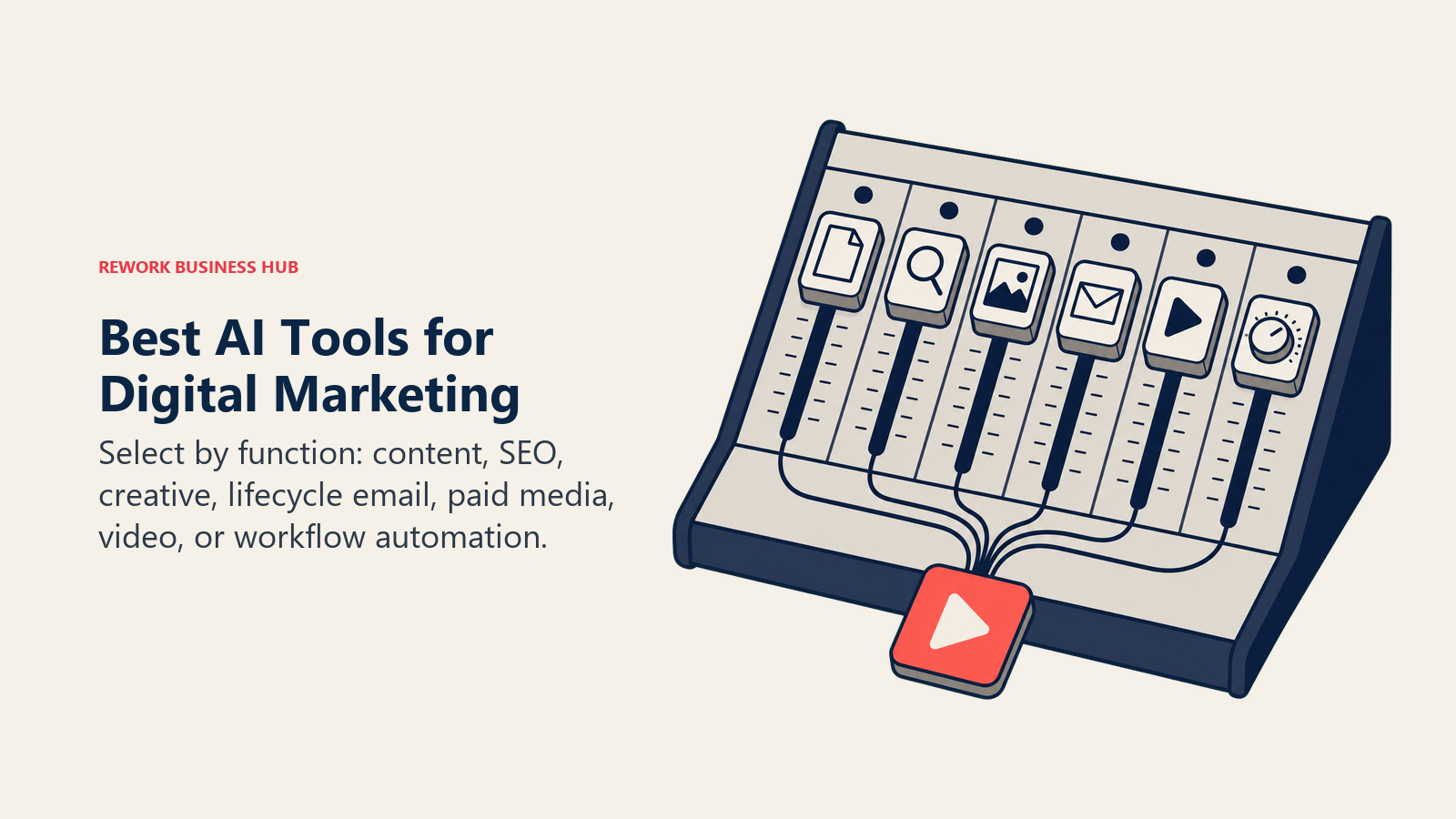
Jasper and ChatGPT lead for content, Surfer SEO and Clearscope lead for search optimization, AdCreative.ai and Canva's Magic Studio lead for creative production, and Klaviyo AI leads for lifecycle email, with HubSpot Breeze as the closest thing to an all-in-one AI marketing hub. No single tool covers every job a digital marketing team does in 2026, so this guide is organized by function instead of a single ranked list.
Each tool below was evaluated on real capability, pricing, and where it actually earns its keep versus where it's a nice-to-have.
Key Facts
- 78% of marketers worldwide now use AI tools in their daily workflow, per HubSpot's 2026 State of Marketing report.
- 87% of marketers use generative AI in at least one workflow in 2026, up from 51% in 2024, per Salesforce's State of Marketing report.
- Marketers who use generative AI say it saves them roughly five hours of work a week, over a month a year, per the same Salesforce report.
- CMOs now allocate 15.3% of marketing budgets to AI, but only 30% say their teams are actually ready to scale it, per Gartner's 2026 CMO Spend Survey.
- 88% of organizations now use AI in at least one business function, up from 72% in 2024, with marketing and sales among the most common use cases, per McKinsey's State of AI research.
Updated July 2026: What Changed
- OpenAI renamed ChatGPT Team to ChatGPT Business and shifted to $25/seat monthly or $20/seat on annual billing, with a two-seat minimum, effective April 2026.
- Zapier moved to model-tier pricing for AI steps starting June 15, 2026: Standard runs use 1x your task allowance, Advanced (the new default) uses 3x, and Premium uses 5x.
- Canva shipped Canva AI 2.0, a conversational design interface that builds fully editable design objects from a text or voice prompt, as its headline 2026 Magic Studio update.
- Gartner's 2026 CMO Spend Survey shows AI now eating a much bigger share of martech budgets, even as most teams admit they aren't ready to scale what they've bought.
Quick Comparison Table
| Tool | Best For | Standout Capability | Starting Price | Free Tier? |
|---|---|---|---|---|
| Jasper | Brand-consistent campaign content at volume | Brand Voice + multi-channel content engine | $39/mo (Creator, annual) | 7-day trial, no free tier |
| ChatGPT | General-purpose drafting, brainstorming, research | Fastest, most flexible chat interface | Free; Plus $20/mo | Yes |
| Canva Magic Studio | Fast, on-brand creative production | Conversational design (Canva AI 2.0) | Free; Pro $15/mo | Yes |
| Surfer SEO | On-page SEO optimization while writing | Real-time Content Editor scoring | $79/mo (Essential, annual) | No |
| Clearscope | Content briefs and topic research at agency scale | AI-generated content grades tied to real SERPs | $129/mo (Essentials) | No |
| Semrush AI (Copilot + ContentShake) | SEO-driven content plus full-suite data | Copilot bundled free across Semrush's paid tools | $139.95/mo (Pro) or $60/mo (ContentShake standalone) | Limited free plan |
| HubSpot Breeze | All-in-one AI layered across CRM + marketing | Breeze Agents (content, prospecting, data) | From $800/mo (Marketing Hub Pro) | No |
| Klaviyo AI | Ecommerce email and SMS lifecycle marketing | AI-generated segments and send-time content | Free under 250 profiles; $20/mo (Email) | Yes |
| AdCreative.ai | Generating and scoring paid ad creative | Creative Scoring AI predicts performance pre-spend | $20-39/mo (Starter) | 7-day trial |
| Mutiny | Website personalization for B2B | AI experimentation engine, no-code personalization | ~$50/mo (Business, limited credits) | Free tier (limited) |
| Optmyzr | AI-assisted PPC account management | Automated bid, budget, and Shopping campaign rules | $209/mo (Essentials, annual) | 14-day trial |
| Opus Clip | Repurposing long video into short clips | AI virality scoring per clip | Free (watermarked); $15/mo (Starter) | Yes |
| Descript | AI podcast and video editing | Edit video by editing a text transcript | Free; $16/mo (Hobbyist, annual) | Yes |
| Zapier AI | Connecting marketing tools and automating workflows | AI by Zapier steps with tool calling and web search | Free; $19.99/mo (Professional, annual) | Yes |
How to Choose: Decision Framework
Most teams don't need all 14 of these. Start from the job, not the tool.
By Marketing Function
| If you need... | Pick... | Why |
|---|---|---|
| High-volume, on-brand written content | Jasper | Brand Voice controls keep output consistent across writers and campaigns |
| Quick drafts, research, and brainstorming | ChatGPT | Fastest general-purpose model, cheapest entry point |
| On-page SEO optimization while drafting | Surfer SEO or Clearscope | Both score content against real ranking pages, not generic AI feedback |
| Full SEO suite plus AI content generation | Semrush AI | One subscription covers keyword research, audits, and content |
| Ad creative variations at scale | AdCreative.ai | Purpose-built for banner, social, and display ad generation and scoring |
| On-brand design without a designer | Canva Magic Studio | Fastest path from prompt to editable, publishable design |
| Website personalization for B2B buyers | Mutiny | No-code AI experimentation tied to intent and firmographic data |
| Ecommerce email and SMS at scale | Klaviyo AI | AI segments and content built directly into the platform you already use for sends |
| Managing paid search and Shopping campaigns | Optmyzr | Automates bid and budget decisions across Google, Microsoft, and Meta |
| Turning webinars or podcasts into social clips | Opus Clip or Descript | Opus Clip optimizes for virality; Descript is better for full editing control |
| Tying multiple marketing tools together | Zapier AI | Agentic steps that call tools and search the web inside existing workflows |
| One platform covering CRM, marketing, and AI agents | HubSpot Breeze | Only tool here where AI sits across the entire customer record, not one channel |
By Team Size and Budget
| Team Size | What to Prioritize | Realistic Monthly AI Tool Budget |
|---|---|---|
| 1-3 person marketing team | ChatGPT + Canva Pro + one SEO tool | $50-150/month |
| 4-10 person team | Add Jasper or Klaviyo AI, plus AdCreative.ai for paid social | $300-800/month |
| 10-30 person team | Layer in Semrush AI, Optmyzr, and Zapier Team for workflow glue | $1,000-2,500/month |
| 30+ person team or agency | HubSpot Breeze or a full Semrush Business stack, Mutiny for CRO | $2,500-6,000+/month |
None of these 14 tools manage what happens after a lead actually converts. If your marketing stack is generating more qualified leads than your CRM can track, that's a separate buying decision. Rework's CRM and Lead Ops modules handle that sales-side handoff, but it isn't an AI marketing tool and doesn't belong on this list.
1. Jasper: Brand Voice + Campaign Content at Volume
Jasper is built for marketing teams that need to produce a lot of on-brand content fast: blog posts, ad copy, email sequences, and product pages, all governed by Brand Voice profiles so a 20-person content team doesn't drift off-message. Jasper Chat, SEO mode, and a Canvas workspace for longer-form drafting round out the core product.
| Strengths | Limitations |
|---|---|
| Brand Voice keeps output consistent across writers | Business plan pricing is quote-only |
| Canvas + templates speed up campaign production | Long-form quality still needs a human editing pass |
| Jasper Agents (Business tier) handle research and personalization | Pro tier caps out at limited Brand Voices and Audiences |
Pricing: Creator $39/mo (annual) or $49/mo (monthly); Pro from $59/seat/mo (annual); Business is custom, quote-only. Source: jasper.ai/pricing.
Best for: Marketing teams of 10-200 running multiple content-heavy campaigns that need brand consistency at scale, not solo writers.
2. ChatGPT: The Fastest General-Purpose AI for Marketing Work
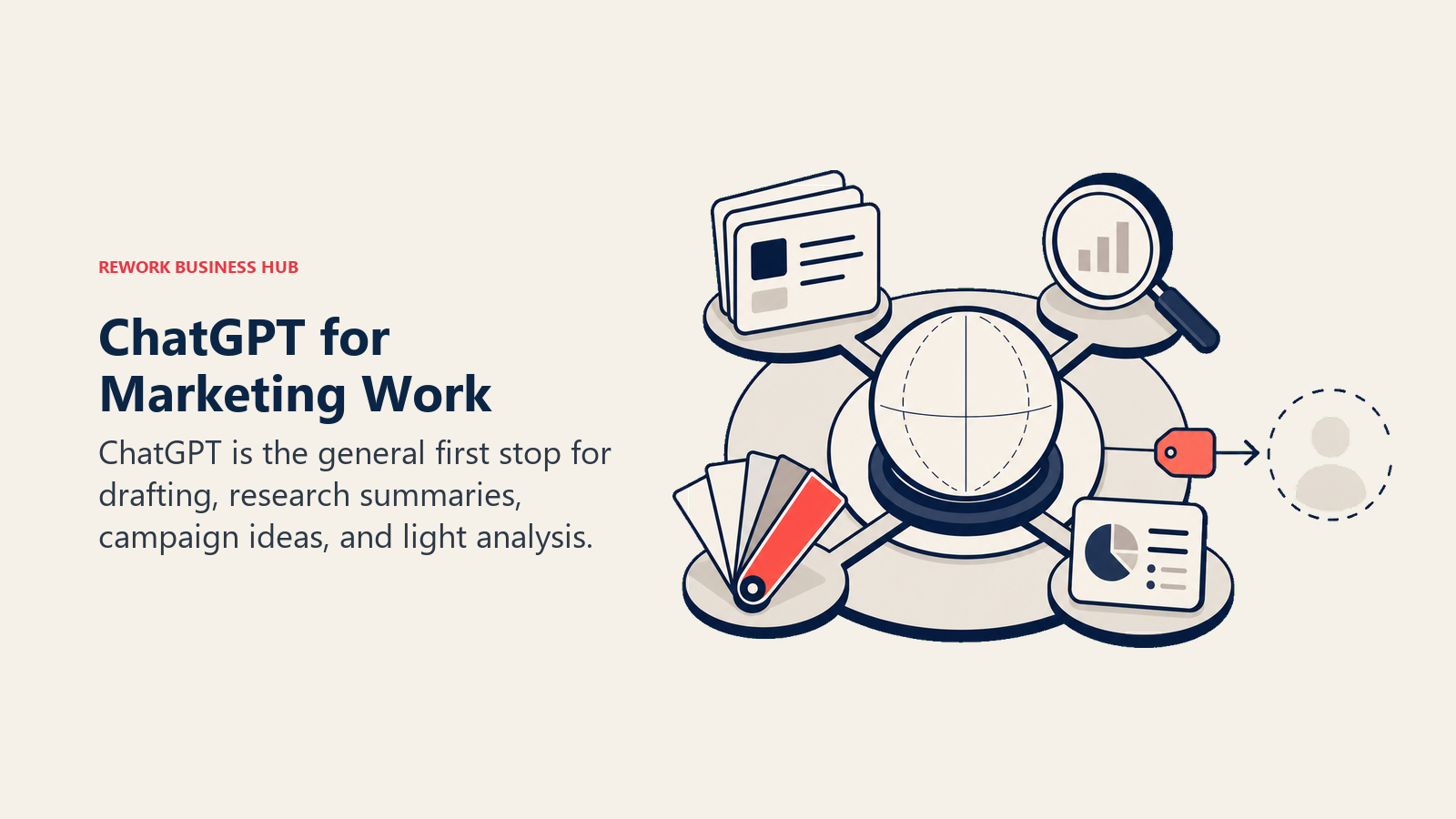
ChatGPT isn't a marketing-specific tool, and that's exactly why it belongs on this list. Most marketers use it as the default first stop for drafting, outlining, summarizing research, brainstorming campaign angles, and quick data analysis before a task graduates to a specialized tool. See our Claude vs ChatGPT vs Gemini comparison if you're deciding between the leading general models for a marketing team specifically.
| Strengths | Limitations |
|---|---|
| Cheapest, fastest way to get AI drafting into a workflow | No native brand voice memory across separate chats without setup |
| Broad capability: writing, research, light data analysis | Business/Enterprise pricing scales fast per seat |
| Custom GPTs can be built for repeatable marketing tasks | Not purpose-built for SEO scoring, ad creative, or email sends |
Pricing: Free; Go $8/mo; Plus $20/mo; Pro $100-200/mo depending on usage tier; Business $25/seat/mo monthly or $20/seat/mo annual (2-seat minimum); Enterprise is custom, commonly reported in the $45-75/seat/mo range on annual contracts. Source: chatgpt.com/pricing.
Best for: Every marketing team, as a baseline tool, but rarely the only AI tool a team should own.
3. Canva Magic Studio: Fast, On-Brand Creative Production
Canva's Magic Studio bundles its AI features under one umbrella: Dream Lab for image generation, Magic Write for copy, Magic Eraser and Magic Expand for editing, and the newer Canva AI 2.0 conversational interface that turns a text or voice prompt into a fully editable design rather than a flat image. For marketing teams without a dedicated designer, it's the fastest path from idea to publishable asset.
| Strengths | Limitations |
|---|---|
| Conversational design (Canva AI 2.0) builds editable objects, not flat images | AI credits are shared and can run out mid-month on Pro |
| Dream Lab supports style transfer from a reference image | Design depth still trails dedicated tools like Figma for complex work |
| Teams plan adds shared Brand Kits and approval workflows | Enterprise pricing and controls require a custom quote |
Pricing: Free tier; Pro $15/mo (500 AI credits/month); Teams $10/user/mo on annual billing (3-seat minimum); Enterprise custom. Source: Canva's published pricing and eesel AI's Canva pricing guide.
Best for: Lean marketing teams that need consistent, on-brand creative without waiting on a design queue.
4. Surfer SEO: Real-Time On-Page Optimization
Surfer SEO's Content Editor scores a draft against the actual top-ranking pages for a target keyword while you write, flagging missing terms, structure gaps, and length mismatches. It's built for teams that write a high volume of SEO content and want optimization built into the writing process, not a separate audit step.
| Strengths | Limitations |
|---|---|
| Real-time scoring inside the writing workflow | Essential plan caps out at 1 seat, 30 Content Editor articles |
| Insights tool (Scale plan) surfaces content gaps automatically | AI-generated articles still need editorial review |
| Bulk export and reporting on the Scale tier | Enterprise features (SSO, white-label) require the $999/mo tier |
Pricing: Essential $79/mo (annual) or $99/mo (monthly); Scale $175/mo (annual) or $219/mo (monthly); Enterprise from $999/mo (annual). Source: Surfer's published pricing and eesel AI's Surfer SEO pricing guide.
Best for: Content and SEO teams producing 10+ optimized articles a month who want scoring built into the draft, not bolted on after.
5. Clearscope: Content Briefs and Topic Research at Scale
Clearscope focuses on the research and briefing stage: it generates content grades tied to real SERP data, surfaces topic explorations, and tracks how existing content performs against target keywords over time. Agencies and in-house teams that manage freelance writers use it to hand off briefs without losing SEO quality control.
| Strengths | Limitations |
|---|---|
| Unlimited users and projects on every plan | AI Drafts stay capped at 20/month even on the Business tier |
| Content Inventory tracks how published pages perform over time | Essentials plan's 50-page inventory limit is tight for larger sites |
| Dedicated account manager included on Business | Meaningfully pricier than Surfer at the entry tier |
Pricing: Essentials $129/mo; Business $399/mo; Enterprise custom. Source: clearscope.io/pricing.
Best for: Agencies and content teams managing multiple writers who need consistent SEO briefs without micromanaging every draft.
6. Semrush AI (Copilot + ContentShake): SEO Data Plus AI Content in One Subscription
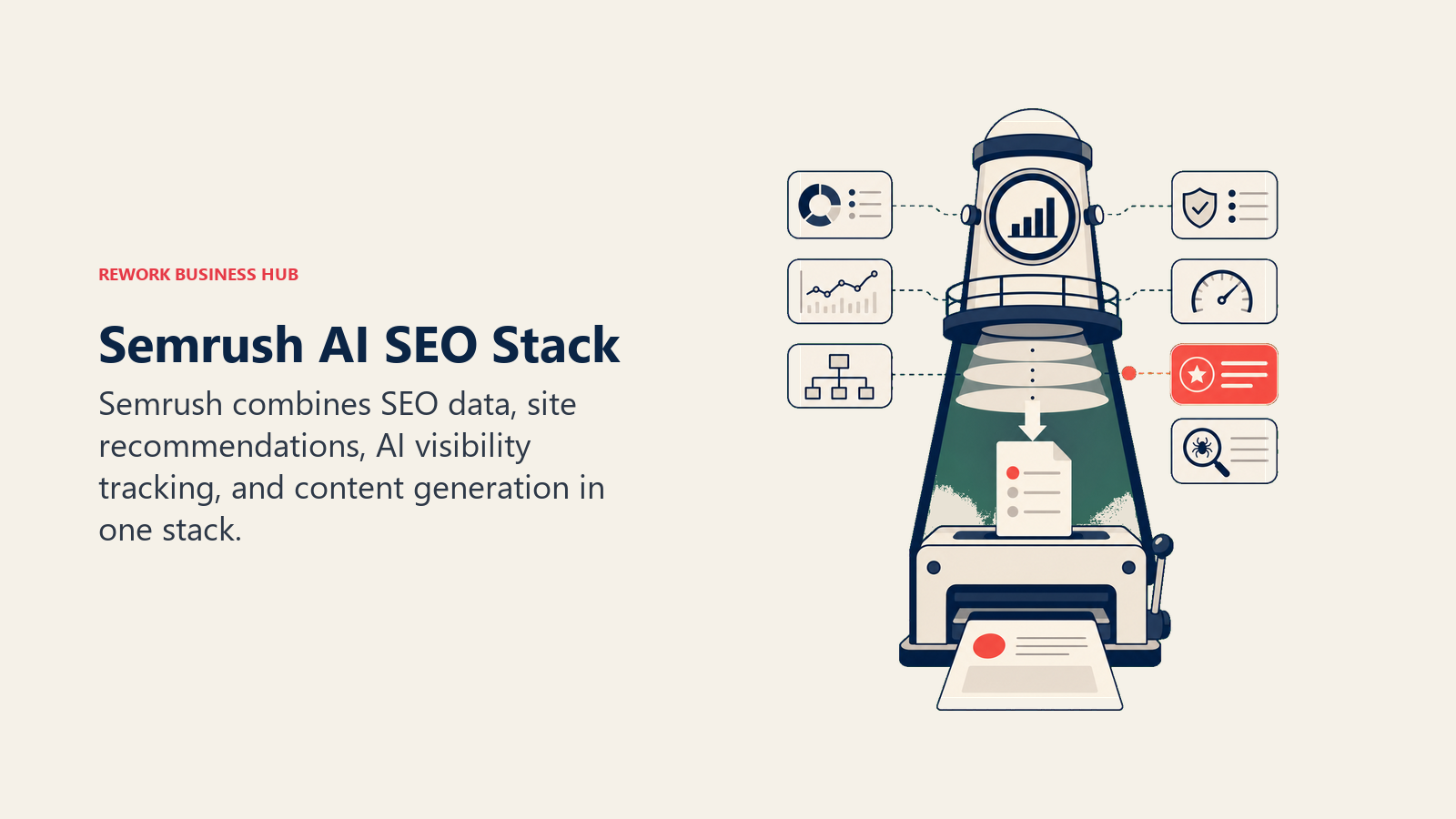
Semrush bundles two AI layers into its suite: Semrush Copilot, a free AI assistant that reads data across Semrush's core tools and surfaces recommendations, and ContentShake AI, a standalone content generator that turns keywords into publish-ready drafts. For teams that already lean on Semrush for keyword research and site audits, adding AI content generation doesn't mean adding a new vendor.
| Strengths | Limitations |
|---|---|
| Copilot is free across every paid Semrush plan | Full SEO + AI content stack (Guru + ContentShake) runs about $310/mo |
| ContentShake can run standalone for $60/mo without the full suite | Entry Pro tier lacks some of the deeper competitive research tools |
| AI Visibility Toolkit tracks brand mentions inside ChatGPT and Gemini | Learning curve is steeper than single-purpose tools like Surfer |
Pricing: Pro $139.95/mo; Guru $249.95/mo; Business $499.95/mo; ContentShake AI $60/mo standalone; AI Visibility Toolkit $99/mo per domain. Source: semrush.com/pricing.
Best for: Teams that want SEO research, site audits, and AI content generation under one login instead of stitching three tools together.
7. HubSpot Breeze: AI Layered Across CRM and Marketing Together
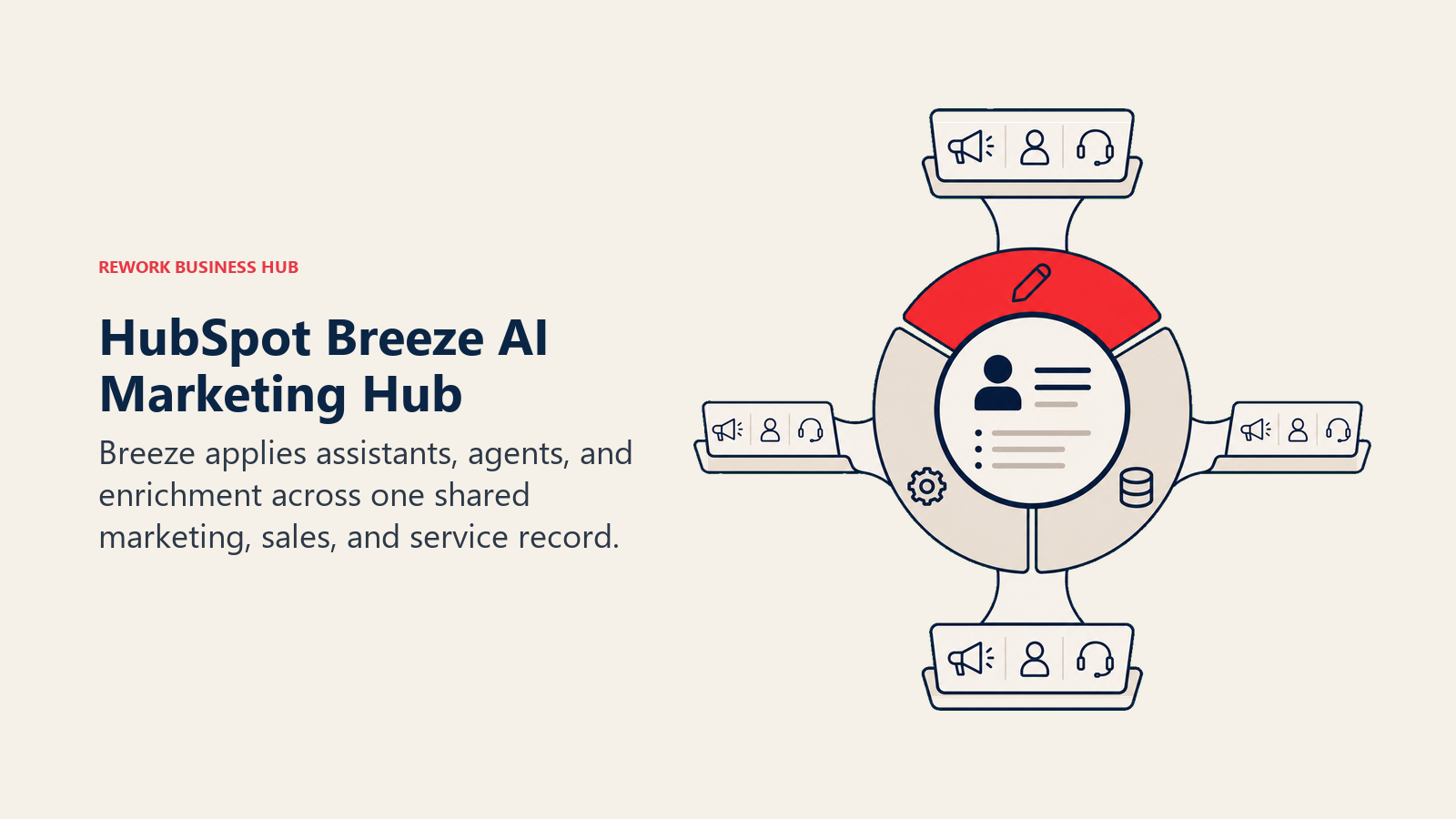
HubSpot Breeze is the AI layer built into HubSpot's Marketing, Sales, and Service Hubs: a Breeze Assistant for in-app drafting, Breeze Agents for outcome-based tasks like content production and lead prospecting, and Breeze Intelligence for data enrichment. It's the closest thing on this list to an all-in-one AI marketing hub, because the AI has access to the same contact record as sales and service. See Rework vs HubSpot Breeze for how its CRM-side AI compares to a dedicated Sales Ops platform.
| Strengths | Limitations |
|---|---|
| AI features work across the full customer record, not just content | Base subscription plus AI agent credits gets expensive fast |
| Breeze Content Agent meaningfully cuts blog production time | Mandatory onboarding fees apply on Professional and Enterprise tiers |
| Agent pricing is outcome-based (per resolved task), not a flat seat fee | Full value requires committing to the HubSpot ecosystem, not just AI |
Pricing: Marketing Hub Professional from $800/mo; Customer Platform Professional (Marketing + Sales + Service) from $1,300/mo; Customer Platform Enterprise $4,700/mo; AI agent credits from $10 per 1,000 credits, billed by outcome (for example, $0.50 per resolved customer conversation). Source: eesel AI's HubSpot AI pricing breakdown; verify current tier pricing directly with HubSpot before budgeting.
Best for: Mid-market and larger teams already committed to HubSpot who want AI working across marketing, sales, and service data at once, not just inside a content editor.
8. Klaviyo AI: Lifecycle Email and SMS for Ecommerce
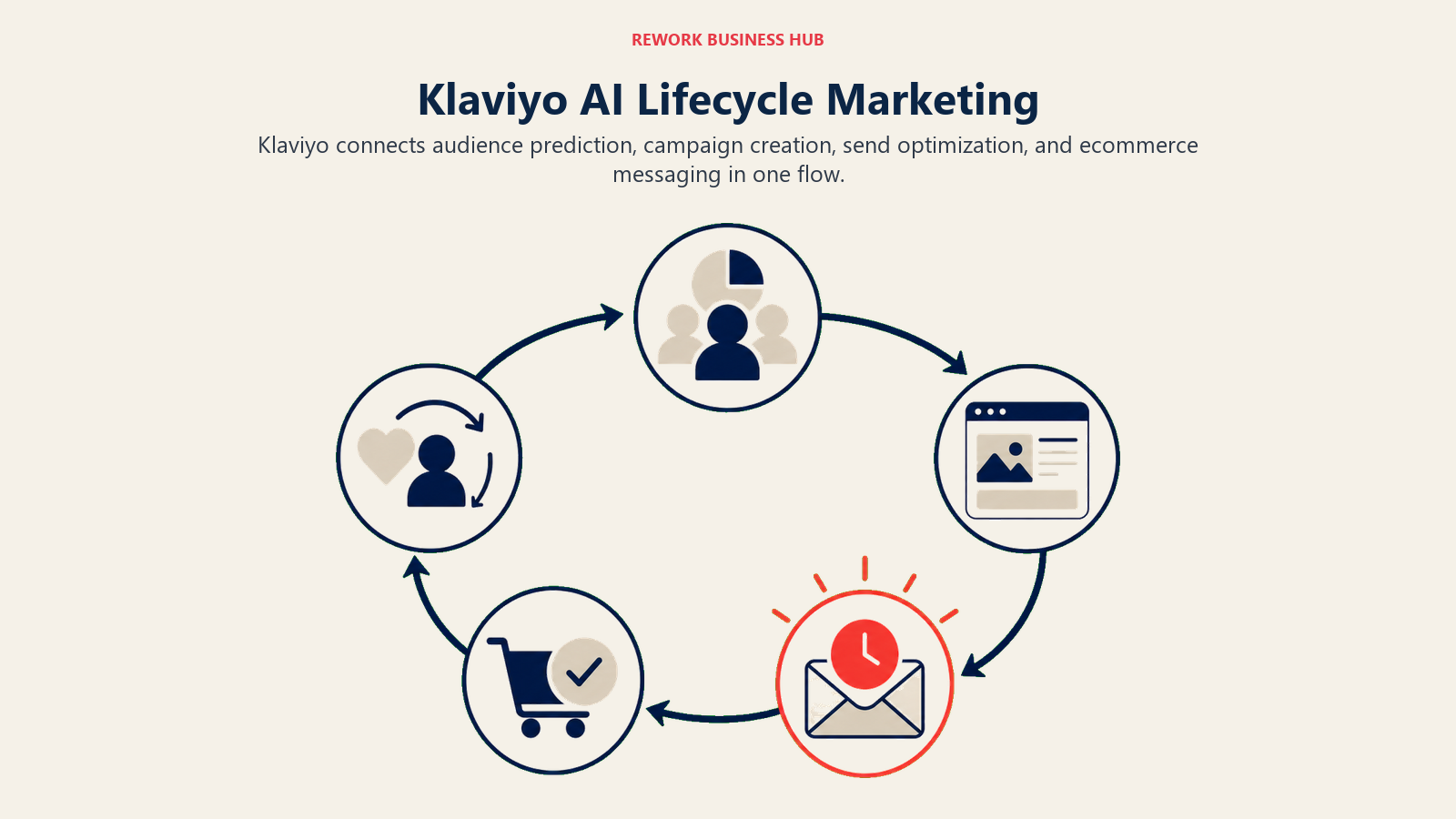
Klaviyo AI is built into the email and SMS platform ecommerce brands already use for lifecycle marketing: AI-generated audience segments, send-time and subject-line optimization, and a Marketing Agent that can draft full campaigns and flows. Because it lives inside the platform sending the messages, there's no export/import step between the AI output and the live campaign. See our best email marketing software roundup and best Klaviyo alternatives if you're still choosing the base platform.
| Strengths | Limitations |
|---|---|
| AI segments and content included at every paid tier, not an add-on | Pricing scales with active profiles, which can surprise fast-growing lists |
| Predictive analytics (churn risk, CLV) built into segmentation | Customer Agent (AI support responses) is a separate paid add-on |
| 350+ ecommerce platform integrations | Less suited to B2B or non-ecommerce lifecycle marketing |
Pricing: Free under 250 profiles; Email plan from $20/mo (500 profiles), scaling with list size to roughly $720/mo at 50,000 profiles; Email + Mobile plans add SMS/push credits on top; Customer Agent add-on from $140-200/mo. Source: Klaviyo pricing coverage from Omnisend; verify current tier pricing at klaviyo.com.
Best for: DTC and ecommerce brands that want AI-assisted email and SMS without adding a separate AI writing tool to the stack.
9. AdCreative.ai: Ad Creative Generation and Pre-Spend Scoring
AdCreative.ai generates banner, social, and display ad variations from a product feed or brand kit, then scores each creative for likely performance before any media budget is spent. For performance marketing teams running dozens of ad variants across Meta and Google, it replaces a chunk of manual design and A/B testing work.
| Strengths | Limitations |
|---|---|
| Creative Scoring AI predicts performance before you spend | Entry tiers cap monthly credits, which limits high-volume testing |
| Batch creative generation produces many variants in one run | Output still needs brand and compliance review before launch |
| Compliance checker AI flags platform policy issues pre-publish | Best value requires committing to quarterly or annual billing |
Pricing: Starter from $20/mo (annual) to $39/mo (monthly); Professional from $249/mo; higher tiers up to $399/mo; Ultimate and Enterprise tiers add more brands and seats at custom pricing. Source: AdCreative.ai pricing coverage; verify current tiers at adcreative.ai.
Best for: Performance marketing and paid social teams running high ad-variant volume who want creative scored before it goes live.
10. Mutiny: AI Website Personalization for B2B
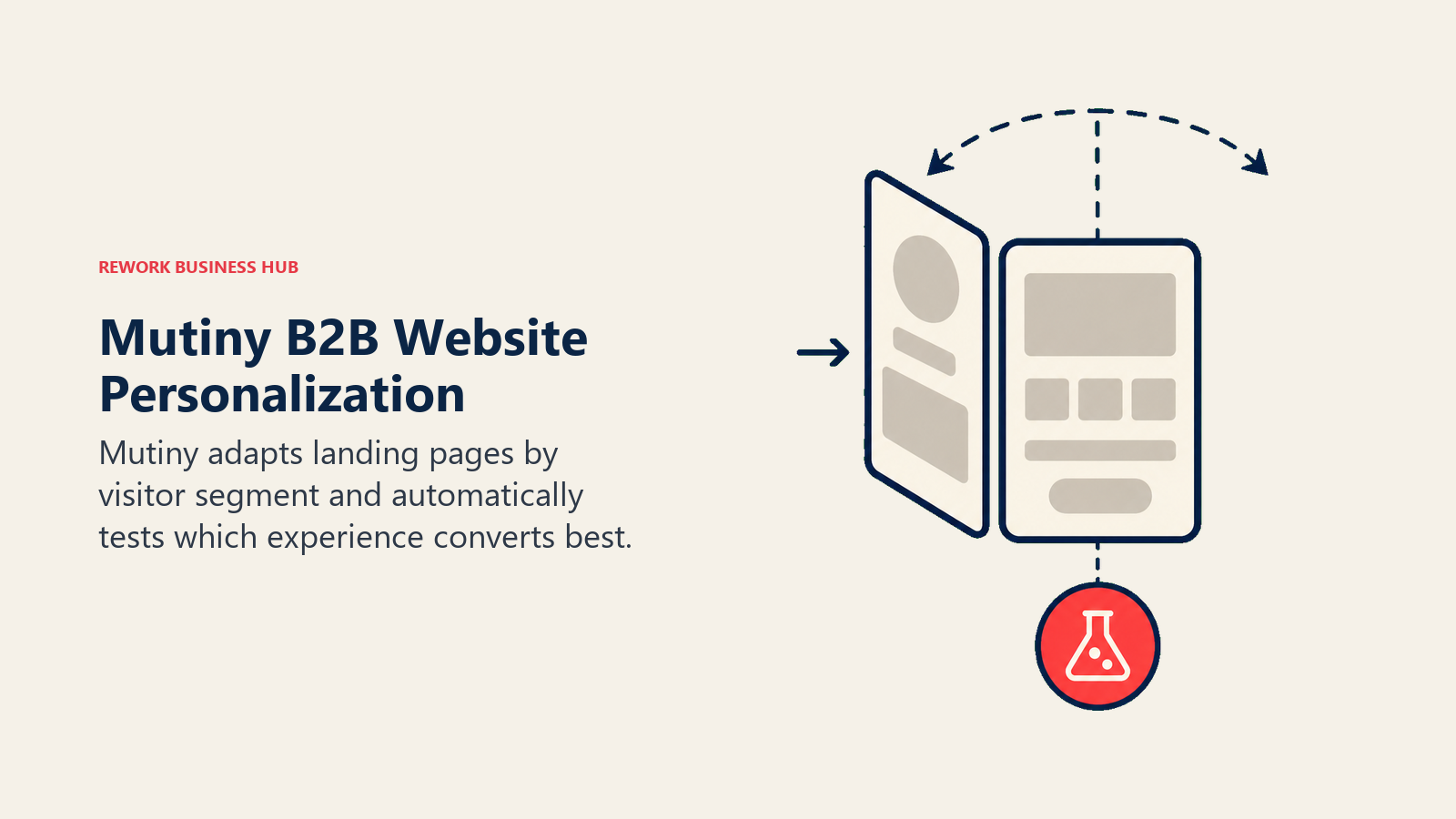
Mutiny personalizes website content for different visitor segments (by firmographic data, intent signals, or ad campaign source) without engineering work, using an AI experimentation engine to test and optimize variants automatically. It's a conversion-rate tool more than a content-generation tool: the AI decides what to show, not what to write from scratch.
| Strengths | Limitations |
|---|---|
| No-code visual editor for non-technical marketers | Enterprise contracts are the realistic entry point for most B2B teams |
| CRM and intent-data integrations built in | Business tier's credit-based pricing suits only very light usage |
| Quarterly strategy reviews included on larger contracts | Pricing is opaque until you talk to sales |
Pricing: Business tier around $50/mo for 50 credits, with additional 100-credit packs at $100; realistic Enterprise contracts run from roughly $25,000/year for smaller SaaS sites up to $150,000+/year for higher-traffic deployments, priced on monthly unique visitors. Source: Vendr's Mutiny pricing data; treat as directional, confirm directly with Mutiny.
Best for: B2B SaaS marketing teams with meaningful website traffic who want to personalize landing pages by segment without a developer backlog.
11. Optmyzr: AI-Assisted PPC Account Management
Optmyzr automates the repetitive parts of paid search management: bid adjustments, budget pacing, Shopping campaign structure, and cross-platform reporting across Google Ads, Microsoft Ads, Meta, LinkedIn, and Amazon Ads. It's built for PPC managers and agencies running multiple accounts who need rules-based automation rather than a fully autonomous black box.
| Strengths | Limitations |
|---|---|
| Supports Google, Microsoft, Meta, LinkedIn, and Amazon Ads in one tool | Pricing scales with managed ad spend, not just seats |
| Rule-based automation keeps a human in control of strategy | Accounts beyond the plan's spend ceiling push you into custom pricing |
| 14-day trial and a 30-day money-back guarantee | Less useful for teams managing a single small account |
Pricing: Essentials from $209/mo (annual), covering up to 25 ad accounts and $150,000 in monthly managed spend, with a $5/mo charge per account past 25; Premium raises the spend ceiling to $500,000 with unlimited accounts under fair use; above $500,000/month moves to custom Enterprise pricing. Source: optmyzr.com/pricing.
Best for: In-house PPC managers or agencies running $10,000-$500,000+ in monthly managed ad spend across multiple platforms.
12. Opus Clip: Turning Long Video Into Short-Form Clips
Opus Clip ingests long-form video (webinars, podcasts, YouTube videos) and automatically cuts it into short, captioned clips optimized for TikTok, Instagram Reels, and YouTube Shorts, scoring each clip's likely virality before you post. For marketing teams sitting on hours of unused long-form video, it's a fast way to feed short-form content channels without a video editor on staff.
| Strengths | Limitations |
|---|---|
| AI virality scoring helps prioritize which clips to post | Pricing is metered by source-video minutes, not clips produced |
| Multi-platform auto-posting on the Pro tier | Cancel and your projects disappear within 3 days, even with unused credits |
| Speaker detection works well for podcast-style content | Free tier output is watermarked and time-limited |
Pricing: Free (60 processing minutes/month, watermarked, exports expire after 3 days); Starter $15/mo (150 minutes, no watermark, 720p); Pro $29/mo (300 minutes, 1080p, multi-platform auto-posting); Business custom. Source: opus.pro/pricing.
Best for: Marketing and content teams that already produce long-form video or podcasts and want a repeatable short-form repurposing pipeline.
13. Descript: AI Video and Podcast Editing by Editing Text
Descript's core trick is editing audio and video by editing a text transcript: delete a sentence in the transcript and the corresponding clip disappears from the timeline. Beyond editing, it includes AI features for filler-word removal, studio-quality voice cleanup, and eye-contact correction. It's a heavier editing tool than Opus Clip, better suited to teams that need full creative control rather than just automated clip extraction.
| Strengths | Limitations |
|---|---|
| Transcript-based editing is dramatically faster than timeline editing | AI credits are metered and can run out on lower tiers with heavy use |
| Studio Sound and Eye Contact AI improve production value without a studio | 4K export requires the Creator tier or higher |
| Business tier adds Brand Studio and SLA support for teams | Still requires editorial judgment; not a fully autonomous editor |
Pricing: Free (about 60 media minutes/month, 100 AI credits); Hobbyist ~$16/mo (annual) or $24/mo (monthly); Creator ~$24/mo (annual) or $35/mo (monthly); Business ~$50/mo (annual) or $65/mo (monthly); Enterprise custom. Source: descript.com/pricing.
Best for: Teams producing branded podcasts, webinars, or video content who want full editorial control, not just automated short clips.
14. Zapier AI: Connecting Marketing Tools and Automating the Handoffs
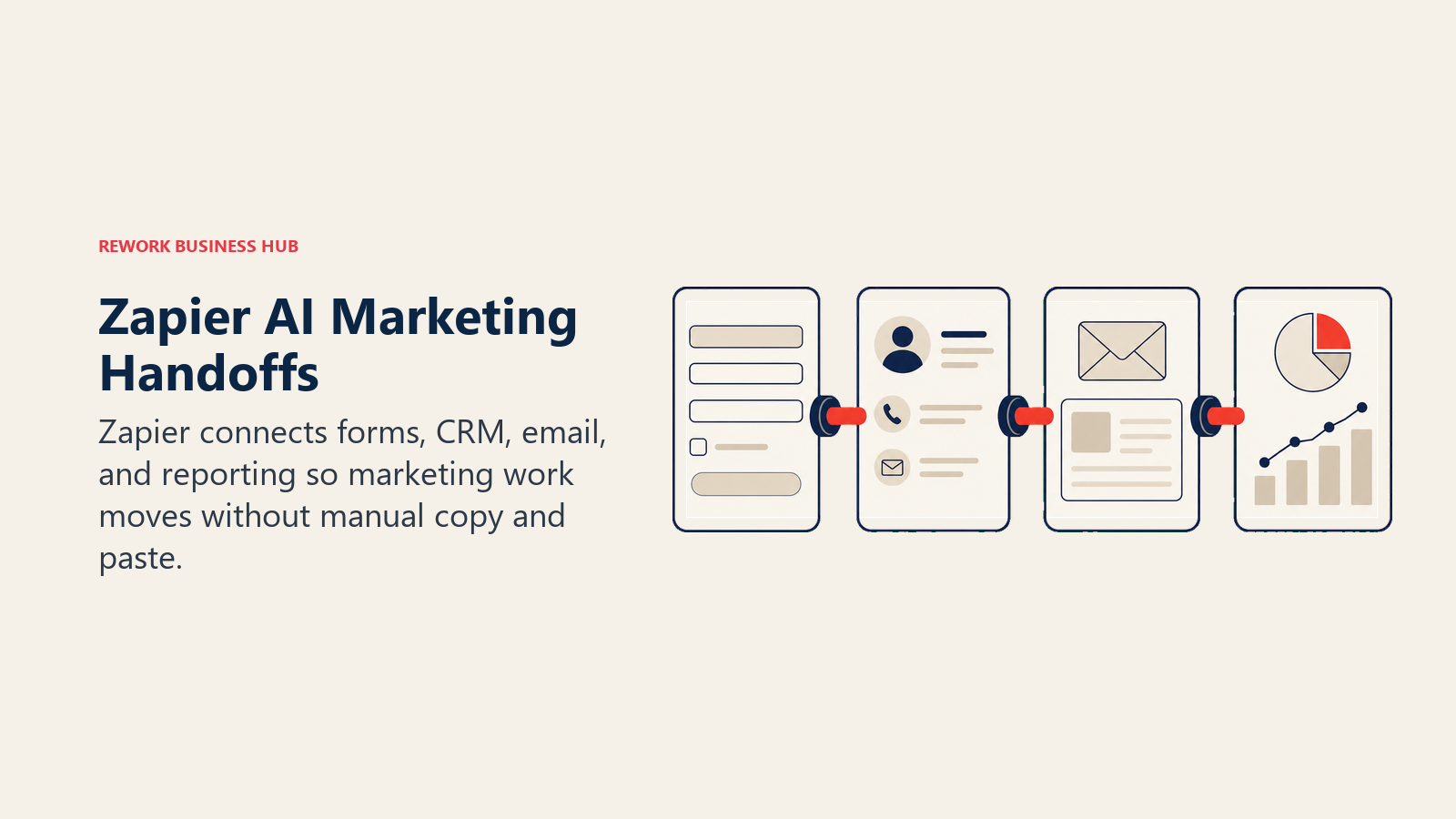
Zapier AI adds agentic steps, tool calling, looping, and web search, directly into the automated workflows (Zaps) that already move data between a marketing team's tools: form submissions into a CRM, new leads into an email sequence, campaign data into a reporting sheet. It's not a content or design tool; it's the connective layer that keeps every other tool on this list from becoming a manual copy-paste job. See our best Zapier alternatives if you've outgrown Zapier's task-based pricing.
| Strengths | Limitations |
|---|---|
| AI by Zapier steps bring agent-level reasoning into existing Zaps | Model-tier pricing (Standard/Advanced/Premium) makes AI step cost harder to predict |
| Free plan covers 100 tasks/month with unlimited Zaps | Zapier Agents and Chatbots are separate paid add-ons, not included |
| Works across thousands of app integrations already in most marketing stacks | Task-based pricing can get expensive fast at high automation volume |
Pricing: Free (100 tasks/month); Professional $19.99/mo (annual) or $29.99/mo (monthly), 750 tasks; Team $69/mo (annual); Enterprise custom. AI by Zapier steps use model-tier task multipliers starting June 15, 2026: Standard uses 1x tasks, Advanced (default) uses 3x, Premium uses 5x. Source: zapier.com/pricing and Zapier's AI pricing update notice.
Best for: Marketing teams running 3+ tools that need to talk to each other without manual data entry between them.
Category Breakdown
| Category | Tools | Who Needs This |
|---|---|---|
| Content & copywriting | Jasper, ChatGPT | Content and campaign teams writing at volume |
| SEO content optimization | Surfer SEO, Clearscope, Semrush AI | Teams whose content needs to rank, not just publish |
| Creative & ad production | Canva Magic Studio, AdCreative.ai | Teams producing design and paid ad assets in-house |
| Website personalization / CRO | Mutiny | B2B teams optimizing landing pages by segment |
| Email and lifecycle marketing | Klaviyo AI | Ecommerce and DTC brands running lifecycle campaigns |
| Paid media management | Optmyzr | PPC managers and agencies handling multiple ad accounts |
| Video and audio repurposing | Opus Clip, Descript | Teams turning long-form content into short-form assets |
| All-in-one AI marketing hub | HubSpot Breeze | Teams that want AI across CRM, marketing, and service data |
| Workflow automation | Zapier AI | Any team connecting three or more marketing tools |
Pricing at a Glance
| Tool | Entry Price | Mid-Tier | Free Tier |
|---|---|---|---|
| Jasper | $39/mo | $59/seat/mo (Pro) | No |
| ChatGPT | Free | $20/mo (Plus) | Yes |
| Canva Magic Studio | Free | $15/mo (Pro) | Yes |
| Surfer SEO | $79/mo | $175/mo (Scale) | No |
| Clearscope | $129/mo | $399/mo (Business) | No |
| Semrush AI | $60/mo (ContentShake) | $139.95/mo (Pro) | Limited |
| HubSpot Breeze | $800/mo | $1,300/mo (Customer Platform) | No |
| Klaviyo AI | Free (under 250 profiles) | $20/mo+ (scales with list) | Yes |
| AdCreative.ai | $20-39/mo | $249/mo (Professional) | 7-day trial |
| Mutiny | ~$50/mo (limited) | $25,000+/yr (Enterprise) | Limited |
| Optmyzr | $209/mo | Scales with managed spend | 14-day trial |
| Opus Clip | Free (watermarked) | $29/mo (Pro) | Yes |
| Descript | Free | $24/mo (Creator, annual) | Yes |
| Zapier AI | Free | $19.99/mo (Professional) | Yes |
Where This Category Is Heading
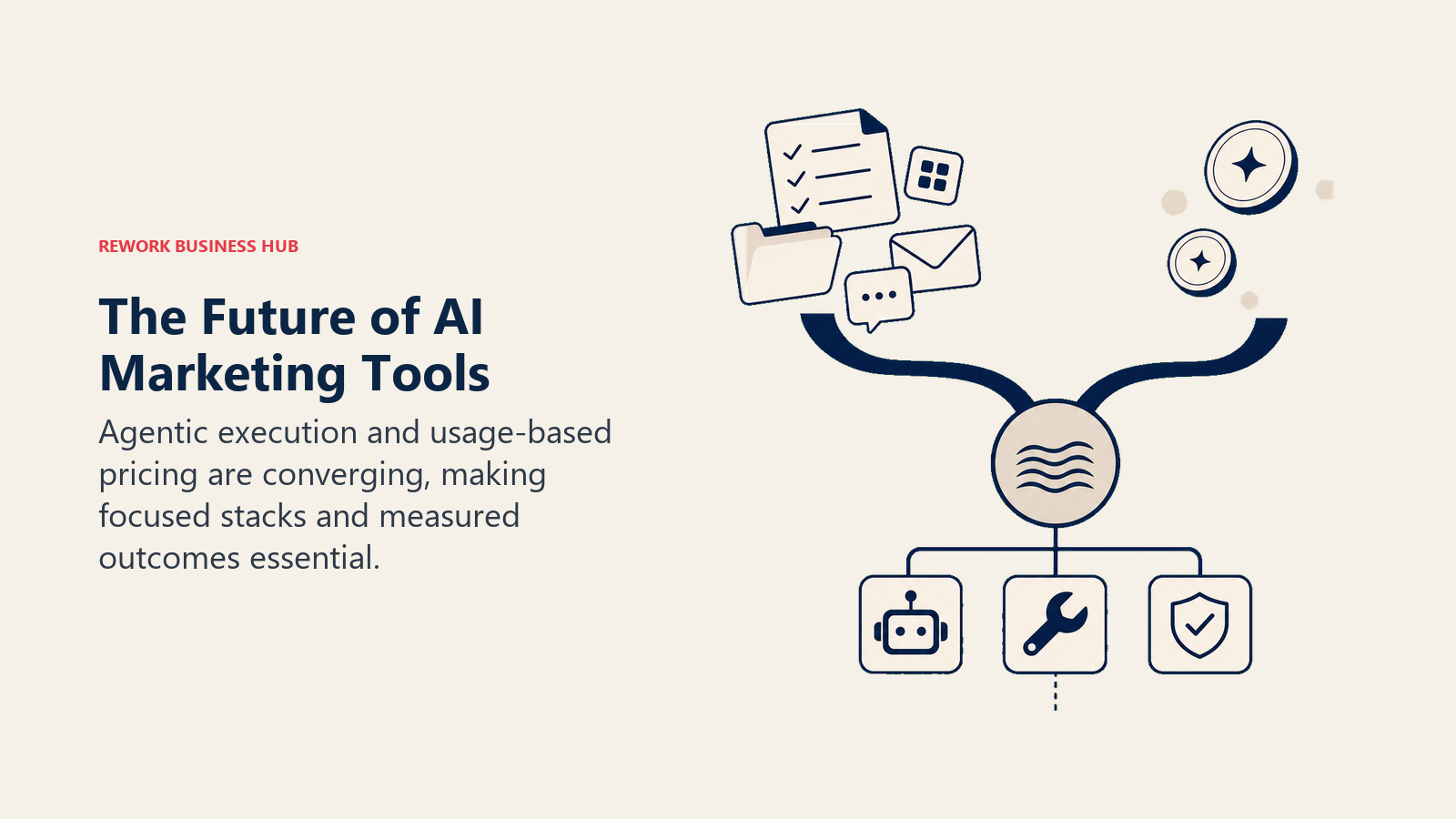
Two things are converging fast in 2026: AI is moving from single-purpose content generation into agentic tools that take multi-step action (Zapier's AI steps, HubSpot's Breeze Agents, Semrush's Copilot), and pricing is shifting from flat seats toward metered, outcome-based models tied to credits, tasks, or resolved actions. That makes AI marketing tool costs harder to forecast than a year ago, and it's why Gartner found most CMOs aren't confident their teams are ready to scale what they've already bought. The teams getting real value aren't the ones with the most AI subscriptions; they're the ones who picked two or three tools tied to a specific bottleneck and measured the time saved before adding a fourth.
Frequently Asked Questions about AI Tools for Digital Marketing
What is the best AI tool for digital marketing overall?
There's no single best tool because digital marketing spans too many distinct jobs. Jasper or ChatGPT cover content, Surfer SEO or Clearscope cover search optimization, AdCreative.ai and Canva Magic Studio cover creative, and Klaviyo AI covers ecommerce email. Most teams end up running two or three of these together, not one.
Are there good free AI marketing tools?
Yes. ChatGPT, Canva, Klaviyo (under 250 profiles), Opus Clip, Descript, and Zapier all offer usable free tiers. Free tiers are a reasonable starting point for a solo marketer or very small team, but most hit real limits (watermarks, task caps, credit limits) once volume grows.
Is ChatGPT enough, or do I need specialized marketing AI tools?
ChatGPT is a strong starting point for drafting and brainstorming, but it doesn't score content against real SERP data, generate scored ad creative, or send emails. Once a task becomes repeatable and high-volume, a specialized tool (Surfer for SEO, Klaviyo for email, AdCreative.ai for ads) usually pays for itself in saved time.
Which AI tool is best for SEO content specifically?
Surfer SEO and Clearscope both score drafts against real ranking pages. Surfer is generally the better fit for teams writing content directly inside the tool, while Clearscope is stronger for agencies briefing out writing to freelancers. Semrush AI is worth it if you already use Semrush for keyword research and want content generation under the same login.
How much should a small marketing team budget for AI tools in 2026?
A 1-3 person team can run a solid AI stack (ChatGPT, Canva Pro, one SEO tool) for roughly $50-150 a month. Per Gartner's 2026 CMO Spend Survey, CMOs overall now allocate about 15.3% of their total marketing budget to AI, so use that as a rough ceiling to check your own spend against as the team grows.
Do AI marketing tools replace a copywriter or SEO specialist?
No. Every tool in this guide still needs a human editing pass for brand voice, accuracy, and strategic judgment. What they replace is the blank-page problem and repetitive production work, not the person deciding what's worth saying.
Is my customer data safe with these AI marketing tools?
Data handling varies by vendor and plan, particularly around whether your inputs are used to train underlying models. Enterprise tiers from ChatGPT, HubSpot, and Klaviyo generally include stronger data controls than free or entry tiers. Read each vendor's data processing terms before connecting customer data, especially for tools touching email lists or CRM records.
Related Reading
- Jasper vs Copy.ai vs Writer: AI Writing Tools for Marketing Teams
- Claude vs ChatGPT vs Gemini: Which LLM Fits Your Business
- Perplexity vs ChatGPT Search vs Gemini: AI Research Tools for Executives
- Otter vs Fireflies vs Fathom: AI Meeting Tools for Sales Leaders
- Best Email Marketing Software in 2026
- Best Klaviyo Alternatives
- Best Mailchimp Alternatives
- Best ActiveCampaign Alternatives
- Best Zapier Alternatives
- Best CRM Software in 2026
- Rework vs HubSpot Breeze
What to Do Next
Pick the one function costing your team the most hours right now, whether that's content drafting, SEO optimization, or ad creative production, and pilot a single tool against it for two weeks with real output. Measure the time saved before adding a second tool. Stacking five AI subscriptions rarely outperforms one tool used well against a real bottleneck.

Principal Product Marketing Strategist
On this page
- Key Facts
- Updated July 2026: What Changed
- Quick Comparison Table
- How to Choose: Decision Framework
- By Marketing Function
- By Team Size and Budget
- 1. Jasper: Brand Voice + Campaign Content at Volume
- 2. ChatGPT: The Fastest General-Purpose AI for Marketing Work
- 3. Canva Magic Studio: Fast, On-Brand Creative Production
- 4. Surfer SEO: Real-Time On-Page Optimization
- 5. Clearscope: Content Briefs and Topic Research at Scale
- 6. Semrush AI (Copilot + ContentShake): SEO Data Plus AI Content in One Subscription
- 7. HubSpot Breeze: AI Layered Across CRM and Marketing Together
- 8. Klaviyo AI: Lifecycle Email and SMS for Ecommerce
- 9. AdCreative.ai: Ad Creative Generation and Pre-Spend Scoring
- 10. Mutiny: AI Website Personalization for B2B
- 11. Optmyzr: AI-Assisted PPC Account Management
- 12. Opus Clip: Turning Long Video Into Short-Form Clips
- 13. Descript: AI Video and Podcast Editing by Editing Text
- 14. Zapier AI: Connecting Marketing Tools and Automating the Handoffs
- Category Breakdown
- Pricing at a Glance
- Where This Category Is Heading
- Related Reading
- What to Do Next