Best AI Tools for Airlines in 2026: 14 Enterprise Tools for Revenue, Operations, and Maintenance
Turn this article into takeaways for your work.


Each assistant summarizes the article only for you and suggests best practices for your work.
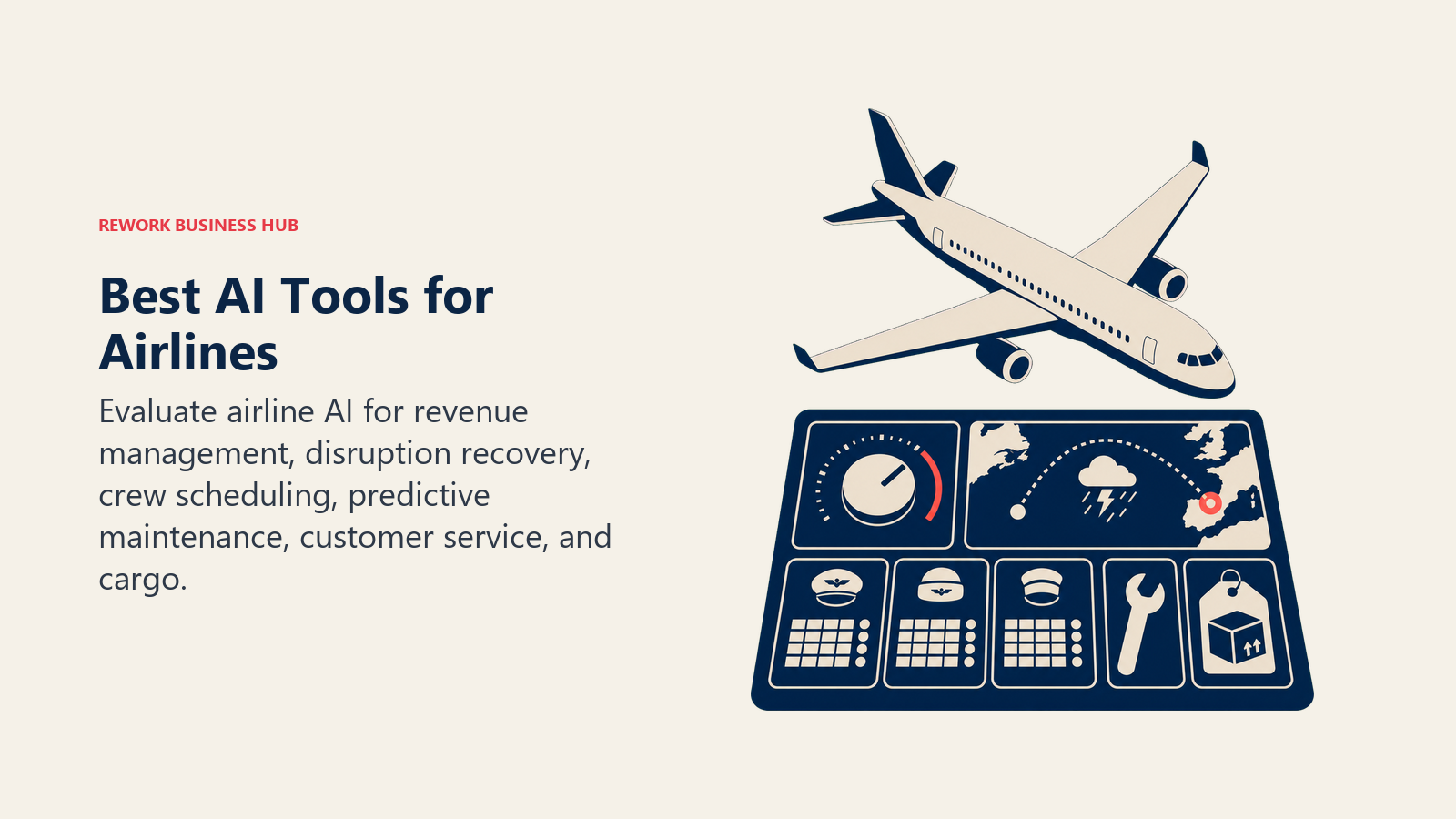
This guide is not about planning a flight. If you're looking for AI that helps a traveler pick a seat and a hotel, Best AI Tools for Travel Planning in 2026 covers ChatGPT, Mindtrip, Navan, and the other consumer and corporate trip-planning tools. This guide covers the AI airlines themselves run behind the scenes: pricing every seat in real time, replanning a whole day of operations when a storm hits Chicago, building legal and cost-efficient crew pairings, predicting which engine needs attention before it fails, handling passenger rebooking at scale, and moving cargo through digitized paperwork instead of a fax machine.
Fourteen tools made this list, grouped by the job they do: revenue management and dynamic pricing, disruption and operations recovery, crew scheduling, predictive maintenance, customer service, and cargo. Nearly every vendor here sells enterprise deployments with custom, quote-only pricing, so this guide focuses on what each platform actually does, which carriers use it, and how to tell it apart from its closest competitor.
Updated July 2026: What Changed
- Airbus merged Navblue and its Services Digital Trading business into a single unit called Skywise on April 1, 2026, consolidating predictive maintenance, flight operations, and eOperations under one brand and extending predictive coverage to non-Airbus aircraft for the first time.
- The FAA awarded Airspace Intelligence a 12-year, $875 million contract to deploy its Flyways-based Flow Management Data & Services (FMDS) and SMART programs, with initial operational deployment targeted for fall 2026, the largest AI commitment yet aimed at national airspace disruption management.
- Lufthansa Systems unveiled a new cloud-native NetLine Crew Pairing Application with an integrated optimizer in November 2025, and Eurowings became the first airline to run it live.
- Sabre's offer-optimization family is adding Bundle IQ to its existing Ancillary IQ and Upgrade IQ products in 2026, extending classless, continuous pricing from base fares into bundled and ancillary offers.
- Korean Air went live on IBS Software's iFlight platform in March 2026 to manage flight operations and crew together, and Air Canada Cargo selected CHAMP's Cargospot neo the same year to replace its legacy cargo management system.
Key Facts
- 63% of airlines now use AI in operations control to manage disruption, aircraft assignment, and crew availability simultaneously, per SITA's 2025 Air Transport IT Insights report, published April 16, 2026.
- 79% of airlines name generative AI and large language models as their top technology investment priority for the next 12 months, per the same SITA research.
- AI-enabled turnaround management cut departure delays by 25% and saved roughly $600 per turnaround at European airports, based on Assaia's 2025 Turnaround Report, which analyzed more than 450,000 AI-enabled turnarounds across 15 airports in Europe and North America.
- Only 17% of airlines use AI to monitor turnaround activity in real time, even as 53% of airports now apply AI to turnaround management, up from 36% in 2024, a gap flagged in SITA's 2025 Air Transport IT Insights report.
- The FAA's 12-year, $875 million contract with Airspace Intelligence, announced in 2026, is the largest AI-driven air-traffic disruption-management commitment on record, targeting a fall 2026 initial deployment.
- Predictive maintenance built on connected-aircraft data could unlock up to $4 billion a year in maintenance savings for operators by 2043, according to Airbus's own projection for its Skywise platform, which now tracks close to 12,000 connected aircraft; treat this as a vendor estimate, not an independent figure.
- Sabre reports up to a 5% combined revenue uplift across pricing, ancillary, and upgrade offers from its Mosaic retail suite, per Sabre's own published results; this is vendor-reported benchmark data, not an independent audit.
Quick Comparison Table
| Tool | Best For | Category | Starting Price |
|---|---|---|---|
| PROS | Real-time dynamic pricing overlaid on an existing PSS | Revenue management | Custom quote |
| Fetcherr | GenAI, algo-trading-style pricing at network scale | Revenue management | Custom quote |
| Amadeus Nevio | Full-service carriers rebuilding retailing on Amadeus's own stack | Revenue management / retailing | Custom quote |
| Sabre Mosaic | Airlines on Sabre wanting classless, continuous pricing | Revenue management / retailing | Custom quote |
| Airspace Intelligence (Flyways AI) | Network-wide traffic flow and disruption simulation | Disruption / ops recovery | Custom quote |
| Lufthansa Systems NetLine/Ops++ | Reinforcement-learning-based operations control recommendations | Disruption / ops recovery | Custom quote |
| IBS Software iFlight | Unified flight ops, crew, and disruption recovery in one platform | Disruption / ops recovery + crew | Custom quote |
| Lufthansa Systems NetLine/Crew | AI-optimized crew pairing and rostering | Crew scheduling | Custom quote |
| Airbus Skywise (Fleet Performance+) | Connected-fleet predictive maintenance, Airbus and beyond | Predictive maintenance | Custom quote (2-year free Core tier with new aircraft orders) |
| Aerogility | Multi-agent AI for fleet and heavy-maintenance planning | Predictive maintenance | Custom quote |
| Ultramain | Paperless MRO and electronic logbook with AI forecasting | Predictive maintenance / MRO | Custom quote |
| ASAPP | Generative AI agents that execute PSS actions, not just chat | Customer service | Custom quote |
| Parloa | Outcome-priced voice AI for contact centers | Customer service | ~$300,000+/year (enterprise) |
| CHAMP Cargosystems (Cargospot neo) | AI-driven cargo management, AWB automation, load planning | Cargo | Custom quote |
The Six Operational Problems This Guide Covers
Airline AI is not one shopping category. A revenue management team, an ops control center, a crew planning desk, an MRO shop, a contact center, and a cargo division are all buying different software to solve different problems, and mixing them up is how a procurement process stalls out talking to the wrong vendor.
| Operational Problem | What "Winning" Looks Like | Tools in This Guide |
|---|---|---|
| Revenue management and dynamic pricing | Real-time, demand-responsive fares instead of static booking classes | PROS, Fetcherr, Amadeus Nevio, Sabre Mosaic |
| Disruption and operations recovery | One shared operational picture that replans aircraft, crew, and passengers together instead of three teams working off different data | Airspace Intelligence, Lufthansa Systems NetLine/Ops++, IBS Software iFlight |
| Crew scheduling | Pairings and rosters optimized for cost, legality, and crew fatigue at once | Lufthansa Systems NetLine/Crew, IBS Software iFlight |
| Predictive maintenance | Failures flagged before they ground an aircraft, not diagnosed after | Airbus Skywise, Aerogility, Ultramain |
| Customer service | Contact center AI that can actually rebook, refund, and update a PNR, not just answer FAQs | ASAPP, Parloa |
| Cargo operations | Digitized air waybills, AI load planning, and real-time capacity visibility | CHAMP Cargosystems |
Part 1: Revenue Management and Dynamic Pricing
1. PROS: Real-Time Dynamic Pricing Overlaid on an Existing PSS
PROS built its airline business on a specific promise: continuous, demand-responsive pricing without forcing a carrier to rip out its existing passenger service system first. Its Real-Time Dynamic Pricing product uses Request-Specific Pricing, a neural-network model that analyzes demand signals, itinerary attributes, and market conditions to move an airline away from static fare-class buckets and toward class-free pricing at the individual search level.
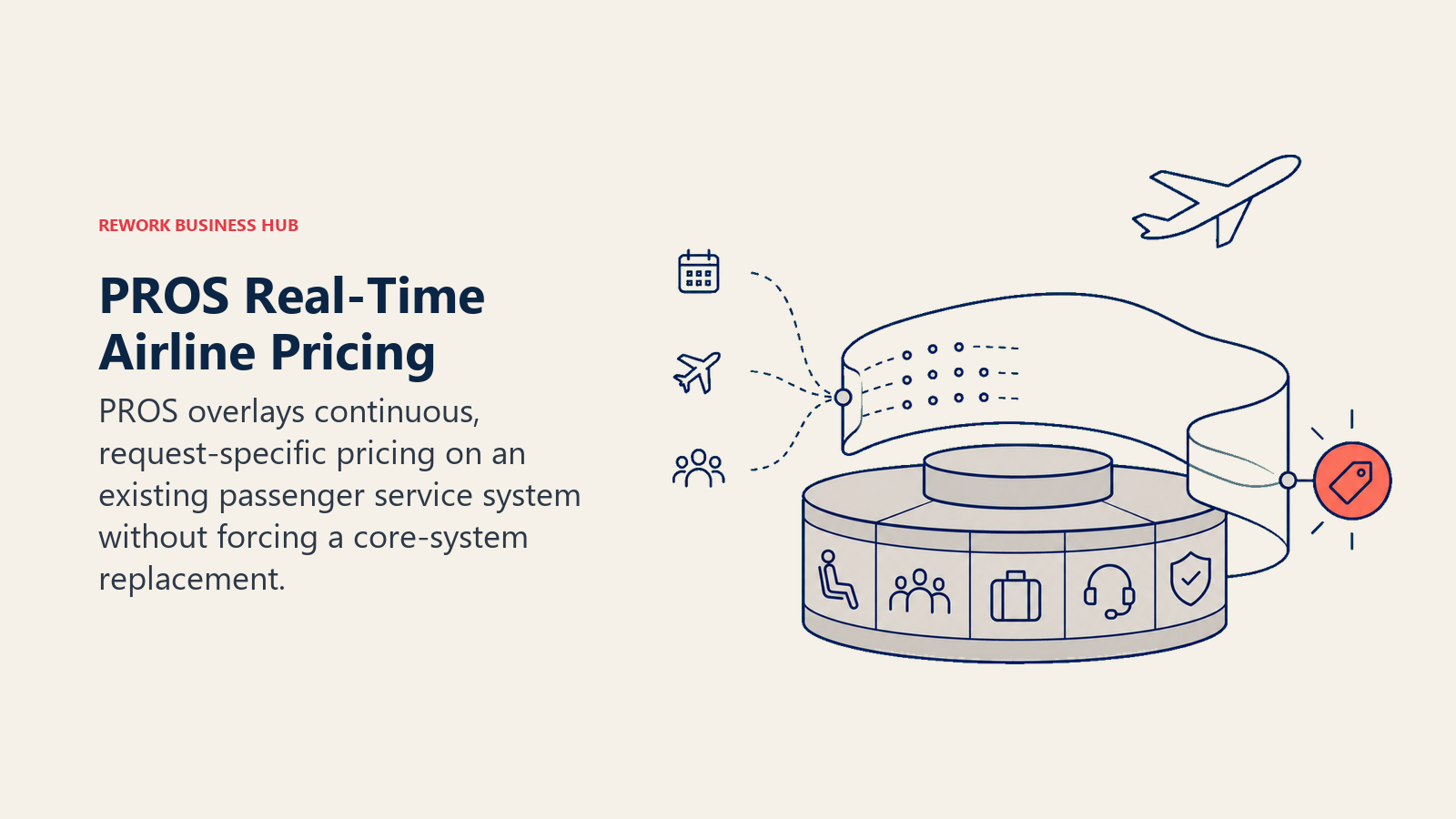
Early adopters are showing measurable results rather than a roadmap promise. Lufthansa and Air Canada report revenue uplifts of 1 to 3% along with faster pricing agility since deploying PROS RTDP, according to PhocusWire's coverage of PROS's revenue management approach.
| What you get | What you don't |
|---|---|
| Continuous, class-free pricing that overlays an existing PSS instead of replacing it | No public pricing; every deployment is a custom enterprise contract |
| Documented revenue uplift at major network carriers (Lufthansa, Air Canada) | Best suited to full-service and hybrid carriers with complex fare structures |
| Neural-network demand and price-elasticity modeling, not static rules | Implementation is a multi-quarter program, not a plug-in |
Pricing: Custom enterprise quote. See PROS Real-Time Dynamic Pricing.
Best for: Network carriers that want real-time, demand-responsive pricing without a full PSS replacement.
For the broader finance and pricing-analytics side of this decision, Best AI Tools for Finance Teams in 2026 covers general revenue and forecasting AI outside the aviation-specific category.
2. Fetcherr: GenAI, Algo-Trading-Style Pricing at Network Scale
Fetcherr takes a different technical approach than most of the category: its Large Market Model applies methods borrowed from algorithmic trading to airline pricing, moving decision-making from retrospective, rule-based analysis to real-time, predictive execution across an entire network. Founded in 2019, Fetcherr has raised $42 million through a March 2026 Series C round and counts Delta, Viva Aerobus, and Virgin Atlantic among its airline partners, per PhocusWire's funding coverage.
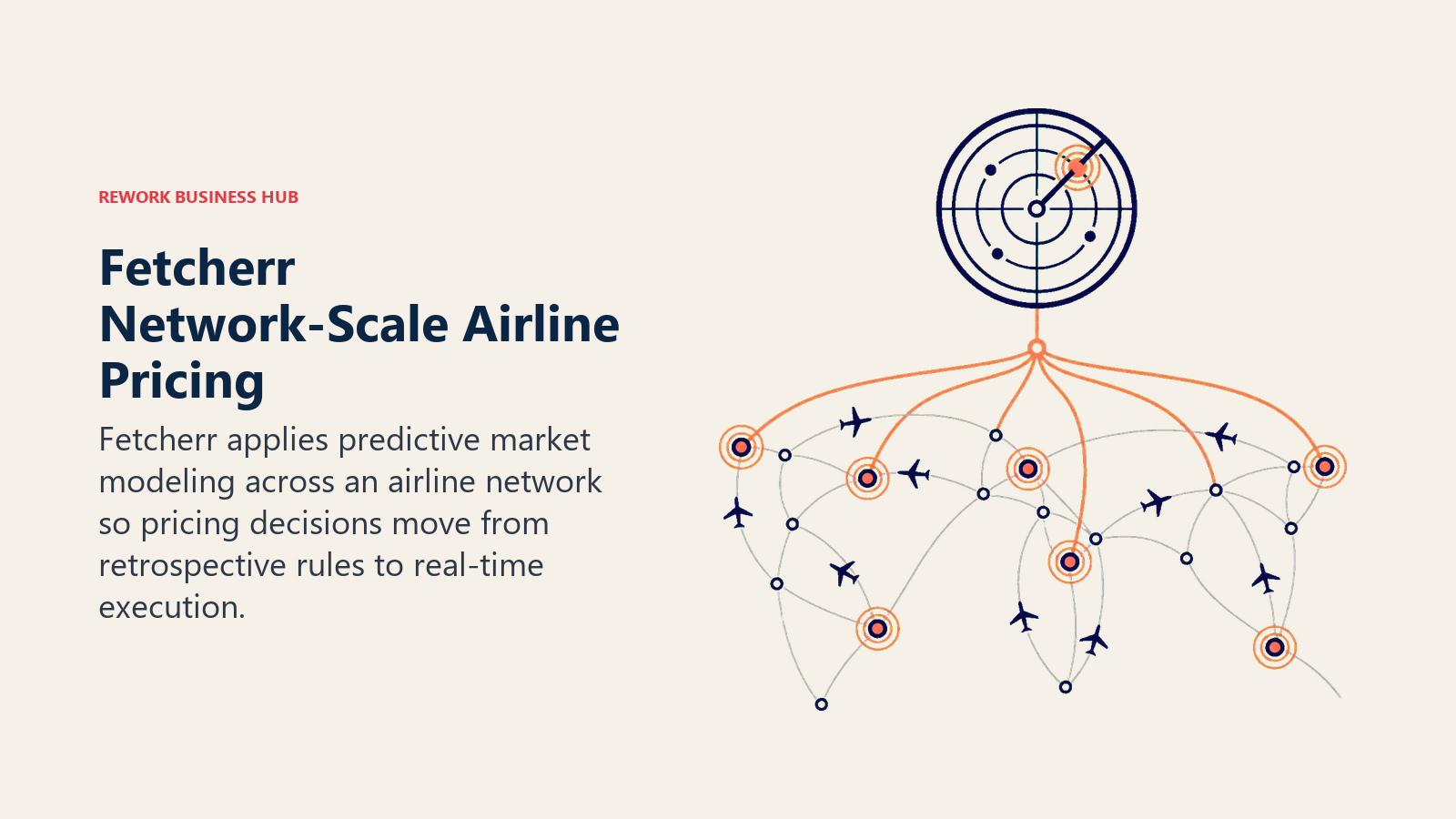
Fetcherr reports a 10% revenue increase for customers over the past three years; treat this as a vendor claim rather than an independently audited figure, since Fetcherr has not published the underlying methodology publicly.
| What you get | What you don't |
|---|---|
| GenAI pricing engine built specifically for network-wide, real-time decisions | Vendor-reported 10% revenue claim, not independently verified |
| Partnerships with major carriers including Delta and Virgin Atlantic | Custom-quote enterprise pricing with no public tiers |
| Backed by fresh capital ($42M Series C, March 2026) for continued expansion | Newer entrant than PROS or Sabre in the revenue management category |
Pricing: Custom enterprise quote. See Fetcherr.
Best for: Airlines wanting a GenAI-native pricing engine built on real-time market modeling rather than a legacy rules-based system extended with AI.
3. Amadeus Nevio: AI-Native Retailing for Full-Service Carriers
Nevio is Amadeus's rebuild of airline retailing from the ground up: a modular, cloud-native, AI-native suite that goes beyond the traditional offer-and-order model to cover network planning, dynamic pricing, and end-to-end retailing transformation. It's built specifically for full-service and hybrid full-service carriers already running on Amadeus's Altéa passenger service system.
Adoption is concentrated among the world's largest network carriers. Lufthansa Group, British Airways, Air France-KLM, Saudia, and Finnair are all engaged in Nevio programs, and roughly 25% of Altéa passenger boarding volume now runs through a Nevio program, per Amadeus's own program overview.
| What you get | What you don't |
|---|---|
| Deep integration with Amadeus's Altéa PSS, the platform most network carriers already run | Built for full-service carriers; a poor fit for pure low-cost operators |
| Adoption among the largest global network carriers (Lufthansa, BA, Air France-KLM) | Multi-year transformation program, not a fast add-on deployment |
| AI-native revenue management baked into offer and order management from the start | No public pricing; requires an existing or new Amadeus PSS relationship |
Pricing: Custom enterprise quote, tied to an Amadeus PSS relationship. See Amadeus Nevio.
Best for: Large full-service and hybrid carriers already on Amadeus's Altéa PSS who want a full retailing rebuild rather than a pricing overlay.
4. Sabre Mosaic: Classless Pricing and Offer Optimization for Sabre Carriers
Sabre Mosaic gives airlines an open, modular retail architecture with pre-built connectors that work alongside existing PSS, revenue management, and payment systems rather than forcing a rip-and-replace. Its Continuous Revenue Optimizer moves carriers toward continuous, classless pricing that adapts to real-time demand instead of static fare buckets, and it sits inside a broader offer-optimization family that includes Ancillary IQ, Upgrade IQ, and a new Bundle IQ launching in 2026.
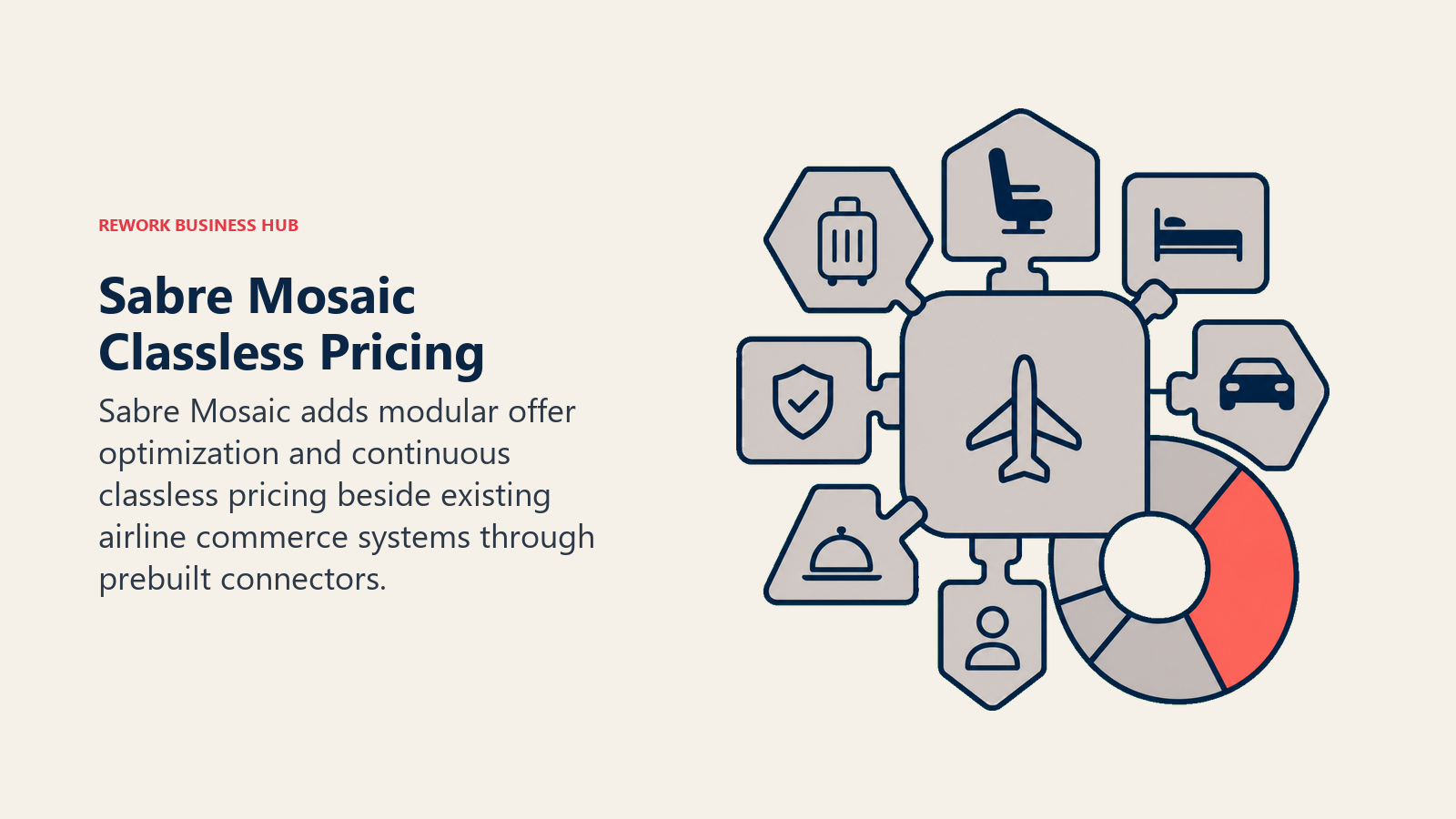
Sabre publishes some of the more specific vendor-reported uplift numbers in this category: up to 3% in airfare revenue from Air Price, up to 10% from Ancillary IQ, up to 20% from Upgrade IQ, up to 3.5% from Continuous Revenue Optimizer, and up to 5% combined across the full retailing lifecycle, according to Sabre's own published results. These are vendor benchmarks, not third-party audited figures.
| What you get | What you don't |
|---|---|
| Open, modular architecture that plugs into existing PSS and RM tools | Specific uplift figures are vendor-reported, not independently audited |
| Broad offer-optimization family (Ancillary IQ, Upgrade IQ, Bundle IQ) beyond base fares | Best fit is airlines already on or migrating to Sabre's ecosystem |
| Actively expanding in 2026 with new bundled-offer capability | Custom-quote pricing with no published tiers |
Pricing: Custom enterprise quote. See Sabre Mosaic.
Best for: Airlines on or migrating to the Sabre ecosystem that want classless pricing plus ancillary and upgrade optimization in one retail suite.
Part 2: Disruption Recovery, Crew Scheduling, and Predictive Maintenance
5. Airspace Intelligence (Flyways AI): Network-Wide Disruption Simulation
Airspace Intelligence built Flyways AI to solve a problem that spreads fast in aviation: different teams operating off different versions of the same operational reality. Flyways generates optimized combinations of traffic management initiatives to minimize delay and disruption, and lets traffic managers simulate the impact of a decision on the whole network before making it, rather than reacting after the fact.
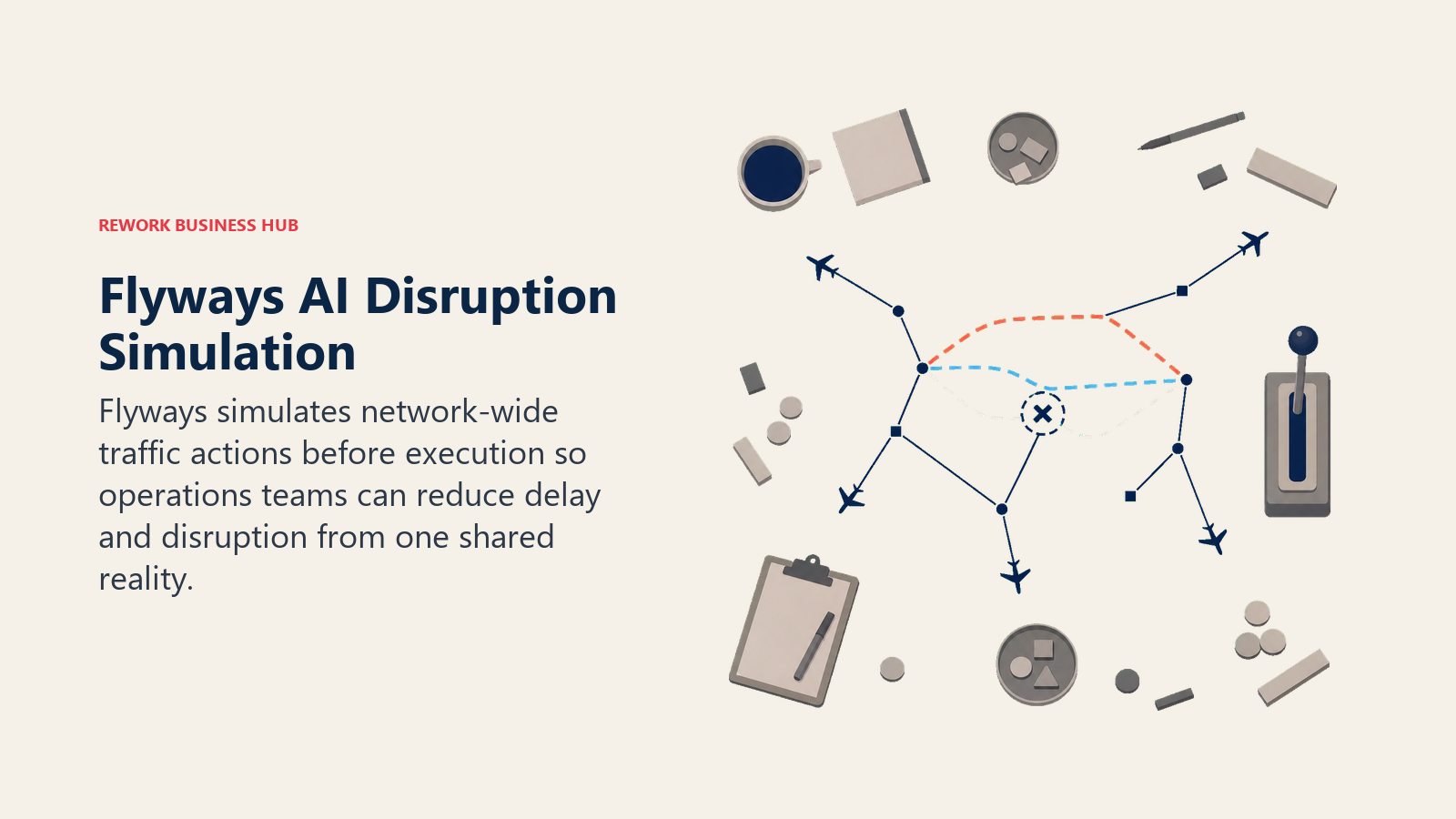
The platform's biggest 2026 validation came from outside any single airline. The FAA awarded Airspace Intelligence a 12-year, $875 million contract to deploy Flyways-based Flow Management Data & Services and SMART programs across the US national airspace system, with initial operational deployment targeted for fall 2026, per the official announcement. Flyways already supports live operations with major US airlines and the US Air Force.
| What you get | What you don't |
|---|---|
| Network-wide traffic flow simulation validated at national-airspace scale | Deepest value shows up at network-wide, multi-airline scale, not a single small carrier |
| FAA-scale credibility: a 12-year, $875M contract to modernize US airspace management | Custom-quote, enterprise-only engagement model |
| Already live with major US airlines and the US Air Force | Fall 2026 FAA deployment is still a targeted date, not a completed rollout |
Pricing: Custom enterprise quote. See Airspace Intelligence, Air Traffic Management.
Best for: Airlines and air navigation service providers needing network-wide disruption simulation validated at national-airspace scale.
If disruption recovery is one piece of a broader agentic AI strategy, Best AI Agents in 2026 covers the general-purpose autonomous AI tools this category builds on.
6. Lufthansa Systems NetLine/Ops++: Reinforcement-Learning Recovery Recommendations
NetLine/Ops++ is an AI-driven operations control system built to maximize efficiency and safety when something goes wrong mid-day. Lufthansa Systems positions itself as the first aviation IT provider to apply reinforcement learning to derive operational recommendations, a decision-assistant model that learns from outcomes rather than following a fixed rule tree.
That capability lines up directly with where the industry is actually spending: 63% of airlines now use AI in operations control to manage disruption, aircraft assignment, and crew availability simultaneously, per SITA's 2025 Air Transport IT Insights report, the exact multi-constraint problem NetLine/Ops++ is built to solve.
| What you get | What you don't |
|---|---|
| Reinforcement-learning recommendations, not a static rules engine | Best value comes from adopting the broader NetLine operations control suite, not one module alone |
| Built by Lufthansa Systems, with deployment experience across a major airline group | Custom-quote enterprise pricing, no public tiers |
| Solves the exact multi-constraint problem 63% of airlines report using AI for | Deepest fit is network and hybrid carriers with complex disruption scenarios |
Pricing: Custom enterprise quote. See Lufthansa Systems, Operations Control Center.
Best for: Network and hybrid carriers wanting reinforcement-learning-driven recovery recommendations across aircraft, crew, and passengers at once.
7. IBS Software iFlight: Unified Flight Ops, Crew, and Recovery in One Platform
IBS Software's iFlight platform takes a different structural approach than the point solutions above: it combines flight operations, crew planning and roster optimization, airport operations, fleet maintenance visibility, and disruption management into a single dynamic situational-awareness layer, using agent-like models to recover from disruption by analyzing available options and presenting alternatives when a delay or equipment issue cascades.
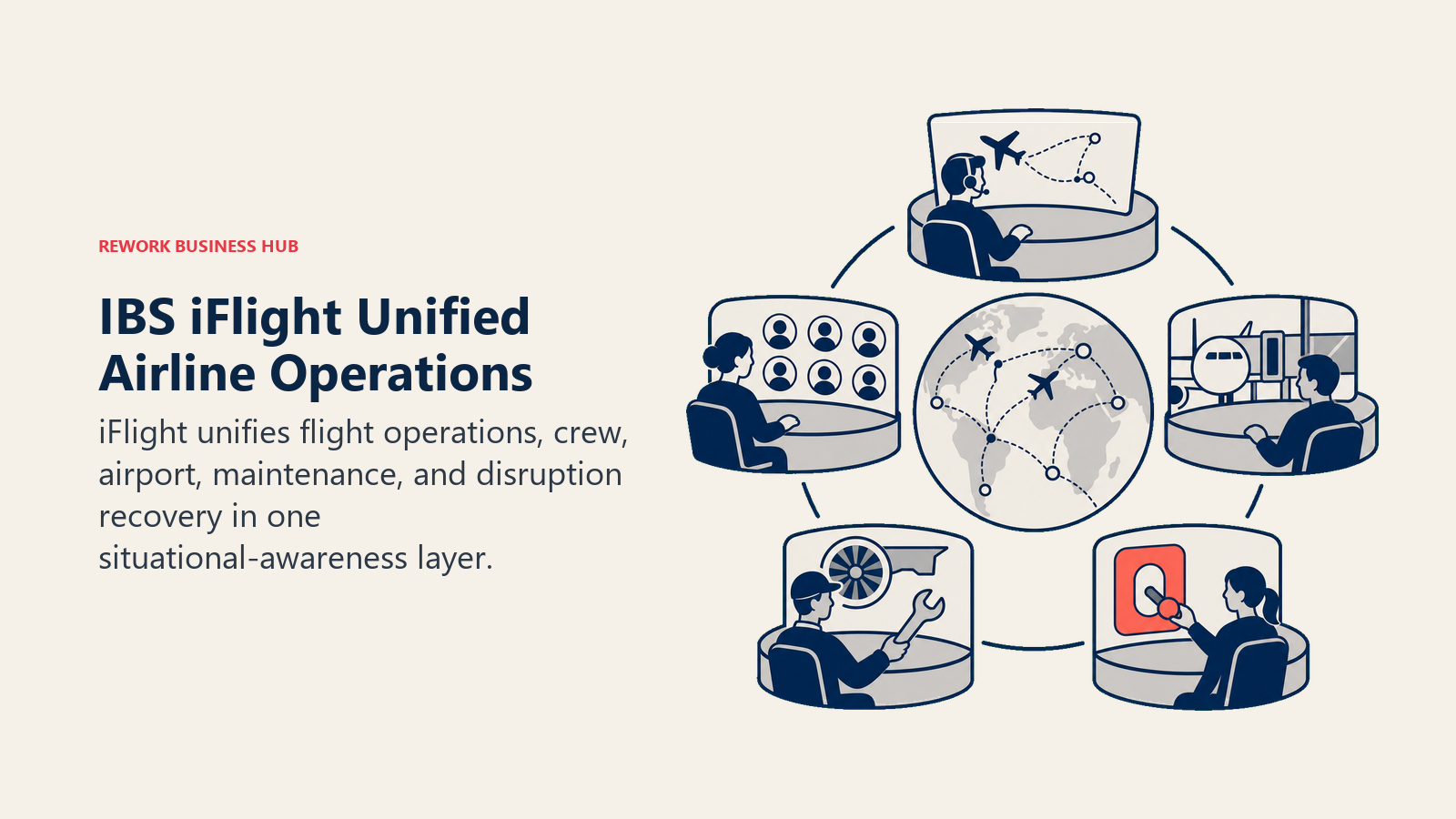
Adoption accelerated through 2026. Korean Air deployed iFlight as its mission-critical system for flight operations and crew management in March 2026, per the official announcement, and Aeroitalia began implementing iFlight Core in October 2025, positioning it as one of the first European airlines running AI-augmented operations management at scale.
| What you get | What you don't |
|---|---|
| One platform spanning flight ops, crew, airport ops, and maintenance visibility | A bigger, more complex deployment than a single-purpose disruption or crew tool |
| Agent-like disruption recovery that analyzes and presents alternative options | Custom-quote enterprise pricing, no public tiers |
| Recent large-carrier validation (Korean Air, March 2026) | Best suited to carriers ready to consolidate multiple ops systems into one |
Pricing: Custom enterprise quote. See IBS Software, Airline Operations Solutions.
Best for: Airlines wanting to consolidate flight ops, crew management, and disruption recovery into a single platform rather than stitching together point tools.
For the general operations AI landscape outside aviation-specific tooling, Best AI Tools for Operations in 2026 covers the adjacent category most ops teams are also evaluating.
8. Lufthansa Systems NetLine/Crew: AI-Optimized Crew Pairing and Rostering
NetLine/Crew replaces fragmented crew processes, spreadsheets for pairing, a separate system for rostering, manual tracking for day-of-ops changes, with one holistic crew management suite covering long-term pairing optimization, roster building, and real-time tracking and logistics.
The most significant 2026 update is the new NetLine Crew Pairing Application, a cloud-native tool with an integrated optimizer, unveiled in November 2025 as a ground-up renewal of the pairing engine, per Runway Girl Network's coverage. Eurowings became the first airline to run the renewed optimizer live.
| What you get | What you don't |
|---|---|
| Holistic crew suite: pairing, rostering, and real-time day-of-ops tracking in one system | Custom-quote enterprise pricing, no public tiers |
| New cloud-native pairing optimizer (November 2025), already live at Eurowings | Deepest value at scale, for airlines managing complex, multi-base crew pools |
| Built by a vendor with direct operational experience running a major airline group | A dedicated crew tool, not a full operations-recovery platform on its own |
Pricing: Custom enterprise quote. See Lufthansa Systems, NetLine Crew.
Best for: Airlines needing a dedicated, AI-optimized crew pairing and rostering system, especially multi-base carriers with complex legality and cost constraints.
9. Airbus Skywise (Fleet Performance+): Predictive Maintenance for Connected Fleets
Skywise became Airbus's unified digital brand on April 1, 2026, after merging its Navblue flight-operations subsidiary with its Services Digital Trading business, consolidating predictive maintenance, flight operations, and eOperations under one roof. Skywise Fleet Performance+ turns complex fleet data into predictive maintenance signals, and the platform now connects nearly 12,000 aircraft, per Airbus's own newsroom coverage.
SFP+ specifically is live for around 40 customers operating roughly 1,500 aircraft, and from 2026 Airbus is extending predictive coverage to non-Airbus aircraft for the first time, a meaningful shift for mixed-fleet operators. Emirates recently expanded its investment in Skywise SFP+ and the related Core X3 digital predictive maintenance solution, per Emirates's own announcement.
| What you get | What you don't |
|---|---|
| Predictive maintenance across a connected fleet of nearly 12,000 aircraft | SFP+ specifically is proven at around 40 customers and 1,500 aircraft so far |
| Expanding to non-Airbus aircraft starting in 2026, useful for mixed fleets | Custom-quote pricing; free tier is a limited-time new-order incentive, not standard |
| A 2-year free Skywise Core upgrade for any customer signing a new aircraft order | Deepest value tied to being an Airbus operator or fleet |
Pricing: Custom enterprise quote; Airbus offers a 2-year free Skywise Core upgrade to customers signing a new aircraft firm order. See Airbus Skywise, Fleet Performance.
Best for: Airbus operators, and increasingly mixed-fleet carriers, wanting predictive maintenance built on the largest connected-aircraft dataset in the category.
10. Aerogility: Multi-Agent AI for Fleet and Heavy-Maintenance Planning
Aerogility takes a modeling-first approach that's distinct from Skywise's connected-data approach: intelligent software agents represent aircraft, components, facilities, and personnel in a holistic simulation, letting operators rapidly test approaches that increase planning yield, cut costs, and reduce time-on-ground before committing to a real maintenance schedule.
Two 2026 deployments show the range of the use case. Wizz Air is partnering with Aerogility to optimize future heavy base maintenance planning as its fleet grows, and SAS is using Aerogility's cloud-based forecasting to plan maintenance and engineering requirements across its 125-aircraft fleet, starting with optimized workscopes for powerplant shop visits, per Aerogility's own case studies.
| What you get | What you don't |
|---|---|
| Multi-agent simulation modeling the whole fleet, not just individual aircraft signals | Best suited to heavy-maintenance and fleet-planning horizons, not day-of-ops recovery |
| Proven at mid-size network carriers (SAS, 125 aircraft) and fast-growing LCCs (Wizz Air) | Custom-quote SaaS pricing, no public tiers |
| Purpose-built for long-range planning: fleet growth, workscope optimization, shop visits | Complements rather than replaces a day-to-day predictive maintenance tool |
Pricing: Custom enterprise SaaS quote. See Aerogility.
Best for: Airlines planning heavy maintenance and fleet growth years out, not just flagging next week's line-maintenance risk.
11. Ultramain: Paperless MRO and Electronic Logbook With AI Forecasting
Ultramain covers the operational side of maintenance that Skywise and Aerogility's predictive layers eventually feed into: ULTRAMAIN v9 is a web-based, paperless M&E/MRO suite spanning engineering, materials management, technical records, and quality assurance, built for airlines, MRO providers, and Part 145 organizations that need day-to-day maintenance execution and compliance, not just forecasting.
The platform adds predictive analytics and AI-driven maintenance forecasting on top of that operational core, aimed at mid-to-large MRO organizations that need integrated maintenance management rather than a standalone prediction model bolted onto legacy paperwork.
| What you get | What you don't |
|---|---|
| Full paperless M&E/MRO suite: engineering, materials, technical records, compliance | Best fit for mid-to-large MRO organizations, not small operators |
| Electronic Logbook (ELB) plus AI-driven forecasting in one system | Custom-quote pricing, no published tiers |
| Built for the operational and compliance layer, not just the prediction layer | A maintenance-execution platform first, a pricing/network-optimization tool second |
Pricing: Custom enterprise quote. See Ultramain, M&E/MRO Software.
Best for: Airlines and MRO providers needing a paperless maintenance and compliance system with AI forecasting built in, not a bolt-on prediction layer alone.
For the data and forecasting layer underneath predictive maintenance more broadly, Best AI Tools for Data Analysis in 2026 covers general-purpose analytics AI outside the aviation-specific category.
Part 3: Customer Service and Cargo
12. ASAPP: Generative AI Agents That Execute PSS Actions, Not Just Chat
ASAPP's pitch to airlines is specific: a contact-center AI agent needs to do more than answer a question, it needs to write back into the airline's actual systems of record. Its GenerativeAgent product handles nuanced conversations and resolves complex issues autonomously, integrating directly with reservations, departure control, loyalty, and baggage platforms to execute real actions like rebooking, refunds, and EU261 or DOT compensation claims, with a per-action audit trail into the underlying PSS (Amadeus Altéa, Sabre, or Navitaire).
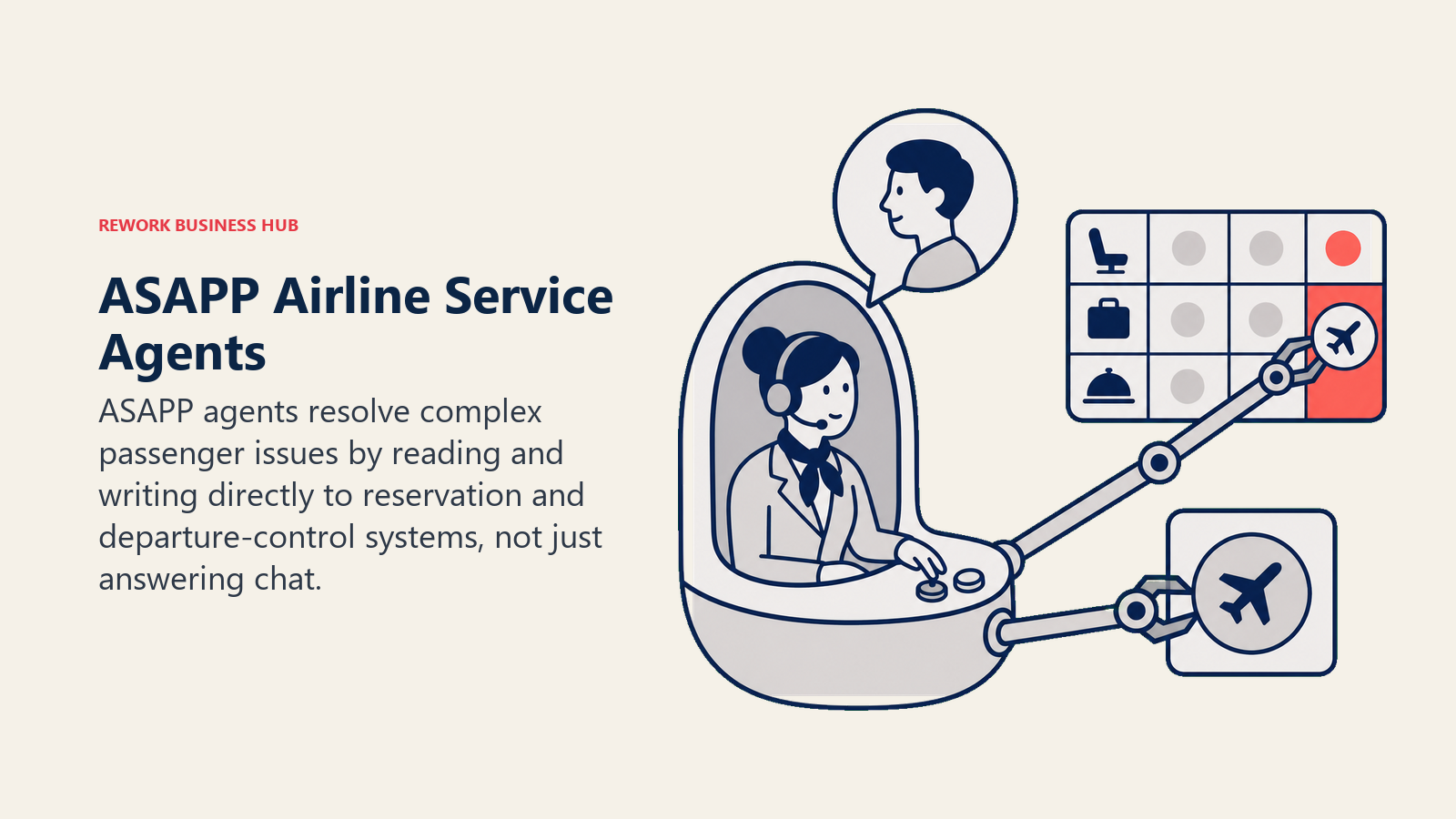
ASAPP also ships mature agent-assist tools (AutoTranscribe, AutoCompose, AutoSummary) already running at high volume in airline contact centers. JetBlue saw digital adoption grow 5x, and American Airlines raised customer satisfaction by 11%, using ASAPP's solutions, per AWS's partner network coverage of the deployment.
| What you get | What you don't |
|---|---|
| PSS write-back: rebooking, refunds, and compensation claims executed, not just discussed | Custom-quote enterprise pricing, no public tiers |
| Documented outcomes at major US carriers (JetBlue, American Airlines) | Deepest value requires deep PSS integration work upfront |
| Mature agent-assist tooling alongside the autonomous agent product | Best fit for high-volume contact centers already running Altéa, Sabre, or Navitaire |
Pricing: Custom enterprise quote. See ASAPP, Travel and Hospitality.
Best for: Airline contact centers wanting AI that can actually complete a rebooking or refund, not just answer FAQs and hand off to a human.
For the broader customer support AI category outside aviation, Best AI Tools for Customer Support in 2026 covers general-purpose contact-center AI most industries are also evaluating.
13. Parloa: Outcome-Priced Voice AI for Airline Contact Centers
Parloa's AI Agent Management Platform focuses on voice specifically: natural, low-latency conversations across more than 130 languages, locally tuned for regional nuance, with sub-2-second response times built for high-volume, multilingual airline contact centers. Parloa's agents already handle millions of conversations across travel, retail, and insurance.
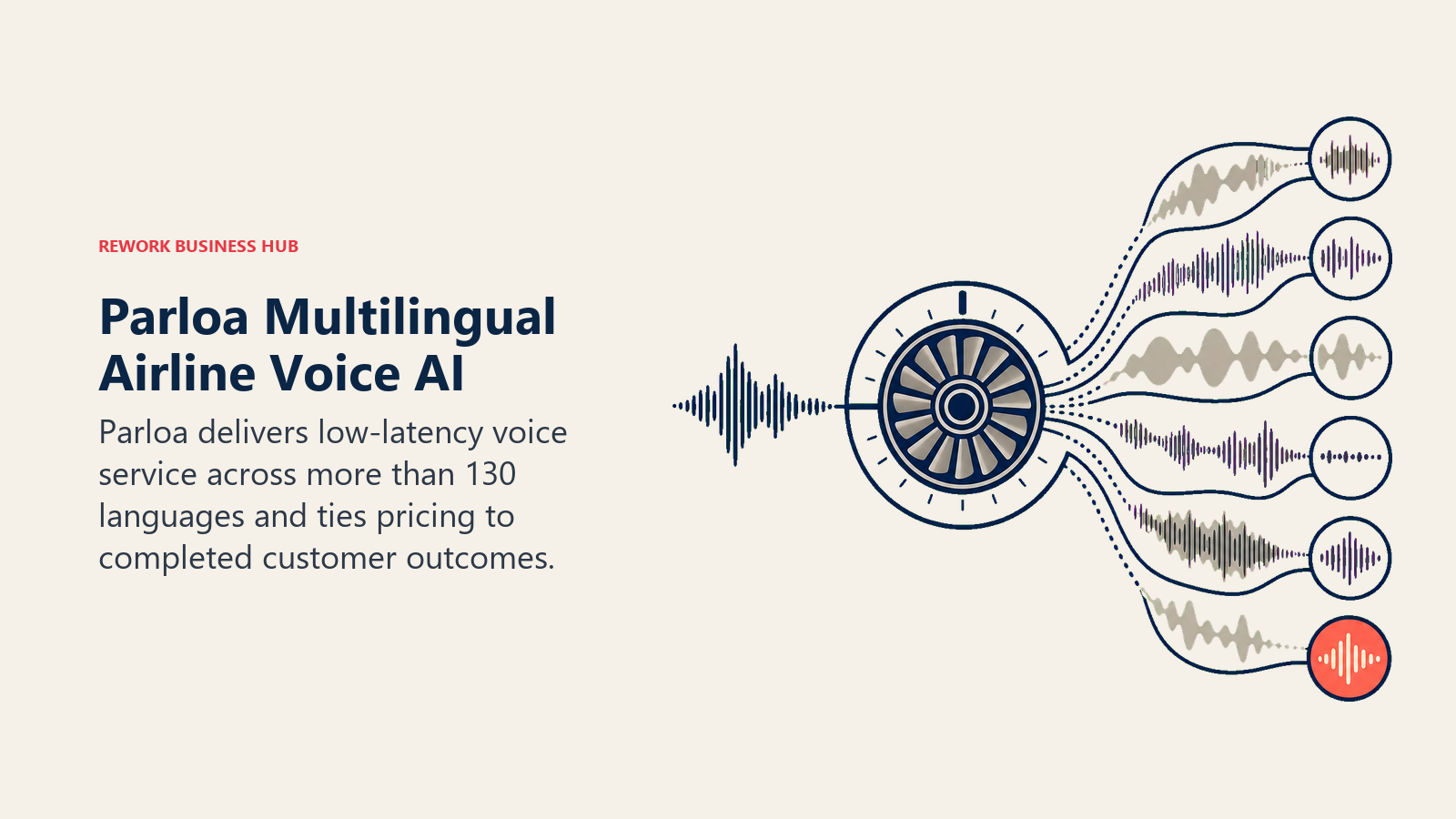
The pricing model is what sets Parloa apart in this list: it charges outcome-based, per successfully resolved conversation, and doesn't charge full price when a call escalates to a human agent. Independent estimates put typical enterprise deployments at $300,000 or more annually once platform licensing, implementation, and integration are included, per eesel AI's Parloa pricing breakdown, with ROI generally reported within 12 to 18 months for high-volume centers.
| What you get | What you don't |
|---|---|
| Outcome-based pricing: pay per resolved conversation, not a flat seat fee | Enterprise deployments still typically start around $300,000+/year |
| Sub-2-second voice response across 130+ languages | Pricing isn't published; the $300K+ figure comes from independent estimates, not Parloa directly |
| Reduced cost when calls escalate to a human, rather than full price regardless | Best suited to high call-volume centers where the outcome-based model pays off |
Pricing: Enterprise sales model, not publicly published; independent estimates put typical deployments at $300,000+/year. See Parloa.
Best for: Airlines with high call volume and multilingual support needs wanting an outcome-based pricing model instead of a flat per-seat license.
14. CHAMP Cargosystems (Cargospot neo): AI-Driven Air Cargo Operations
CHAMP has moved past exploratory AI pilots into production features across its Cargospot suite. Its A2Z Scan product uses AI to automatically process paper air waybills, scanning, extracting, and consolidating the data instead of manual entry, and its Cargospot Weight & Balance solution uses AI to generate instant, fuel-optimized load plans, with an "autoload" feature producing a complete plan in seconds.
Adoption accelerated through 2026 on both sides of the platform. Air Canada Cargo, Canada's largest air cargo provider by capacity, selected Cargospot neo as the core of its new cargo management system, per CHAMP's own press release, and IAG Cargo partnered with CHAMP to adopt A2Z Scan for AI-driven document automation.
| What you get | What you don't |
|---|---|
| AI-driven AWB automation (A2Z Scan) that cuts manual paper-to-digital data entry | Cargo-specific; doesn't touch passenger revenue management, ops, or crew at all |
| AI-optimized, fuel-efficient load planning with an "autoload" feature | Custom-quote enterprise pricing, no published tiers |
| Recent large-carrier validation (Air Canada Cargo, IAG Cargo in 2026) | Best fit for carriers with a standalone or growing cargo division |
Pricing: Custom enterprise quote. See CHAMP Cargosystems.
Best for: Airlines and cargo divisions wanting AI-driven AWB automation and load planning layered onto their existing cargo management system.
How to Choose: Decision Framework
| If your situation is... | Reach for... | Why |
|---|---|---|
| A network carrier wanting real-time pricing without replacing your PSS | PROS | Overlays existing systems; documented uplift at Lufthansa and Air Canada |
| A carrier wanting a GenAI-native pricing engine built for network-wide, real-time decisions | Fetcherr | Algo-trading-style model built specifically for real-time execution |
| A large full-service carrier already on Amadeus's Altéa PSS | Amadeus Nevio | Deepest native integration; adopted by Lufthansa Group, BA, Air France-KLM |
| A carrier on or migrating to Sabre wanting classless pricing plus ancillaries | Sabre Mosaic | Broadest offer-optimization family (fares, ancillaries, upgrades, bundles) |
| Network-wide disruption simulation validated at national-airspace scale | Airspace Intelligence | FAA-scale validation via a 12-year, $875M contract |
| Reinforcement-learning recovery recommendations across aircraft, crew, and passengers | Lufthansa Systems NetLine/Ops++ | First aviation vendor applying RL to operations control decisions |
| Consolidating flight ops, crew, and disruption recovery into one platform | IBS Software iFlight | Single platform; live at Korean Air since March 2026 |
| A dedicated, AI-optimized crew pairing and rostering system | Lufthansa Systems NetLine/Crew | New cloud-native pairing optimizer, live at Eurowings |
| Predictive maintenance across a large connected fleet, including mixed fleets | Airbus Skywise | Nearly 12,000 connected aircraft; expanding to non-Airbus aircraft in 2026 |
| Long-range fleet and heavy-maintenance planning, not day-of-ops alerts | Aerogility | Multi-agent modeling proven at Wizz Air and SAS |
| Paperless maintenance execution and compliance with AI forecasting built in | Ultramain | Full M&E/MRO suite, not a bolt-on prediction layer |
| Contact center AI that can rebook, refund, and write back to the PSS | ASAPP | Deep PSS integration; documented outcomes at JetBlue and American |
| High call-volume, multilingual support wanting outcome-based pricing | Parloa | Pay-per-resolved-conversation instead of a flat seat license |
| Digitizing air waybills and optimizing cargo load plans with AI | CHAMP Cargosystems | Production AI features live at Air Canada Cargo and IAG Cargo |
| A regional or low-cost carrier without a large IT or data science team | Start with one narrow module (crew pairing or contact center AI) before a full retailing rebuild | Multi-year platform transformations (Nevio, Mosaic) assume enterprise-scale implementation resources |
| A global alliance carrier running mixed fleets across multiple regions | Combine a connected-fleet maintenance tool (Skywise) with a fleet-planning tool (Aerogility) | Day-of-ops prediction and multi-year fleet planning solve different problems and aren't substitutes |
Pricing at a Glance
| Tool | Entry Price | Pricing Model | Free Tier? |
|---|---|---|---|
| PROS | Custom quote | Enterprise license | No |
| Fetcherr | Custom quote | Enterprise license | No |
| Amadeus Nevio | Custom quote | Enterprise, tied to Altéa PSS | No |
| Sabre Mosaic | Custom quote | Enterprise, modular license | No |
| Airspace Intelligence (Flyways AI) | Custom quote | Enterprise / government contract | No |
| Lufthansa Systems NetLine/Ops++ | Custom quote | Enterprise license | No |
| IBS Software iFlight | Custom quote | Enterprise license | No |
| Lufthansa Systems NetLine/Crew | Custom quote | Enterprise license | No |
| Airbus Skywise (Fleet Performance+) | Custom quote | Enterprise; 2-yr free Core with new aircraft order | Limited (promo) |
| Aerogility | Custom quote | Enterprise SaaS | No |
| Ultramain | Custom quote | Enterprise license | No |
| ASAPP | Custom quote | Enterprise license | No |
| Parloa | ~$300,000+/year (estimated) | Outcome-based, per resolved conversation | No |
| CHAMP Cargosystems | Custom quote | Enterprise license | No |
Mistakes to Avoid When Adding AI to Airline Operations
Most of the pain in this category comes from buying at the wrong layer or expecting too much autonomy too soon.
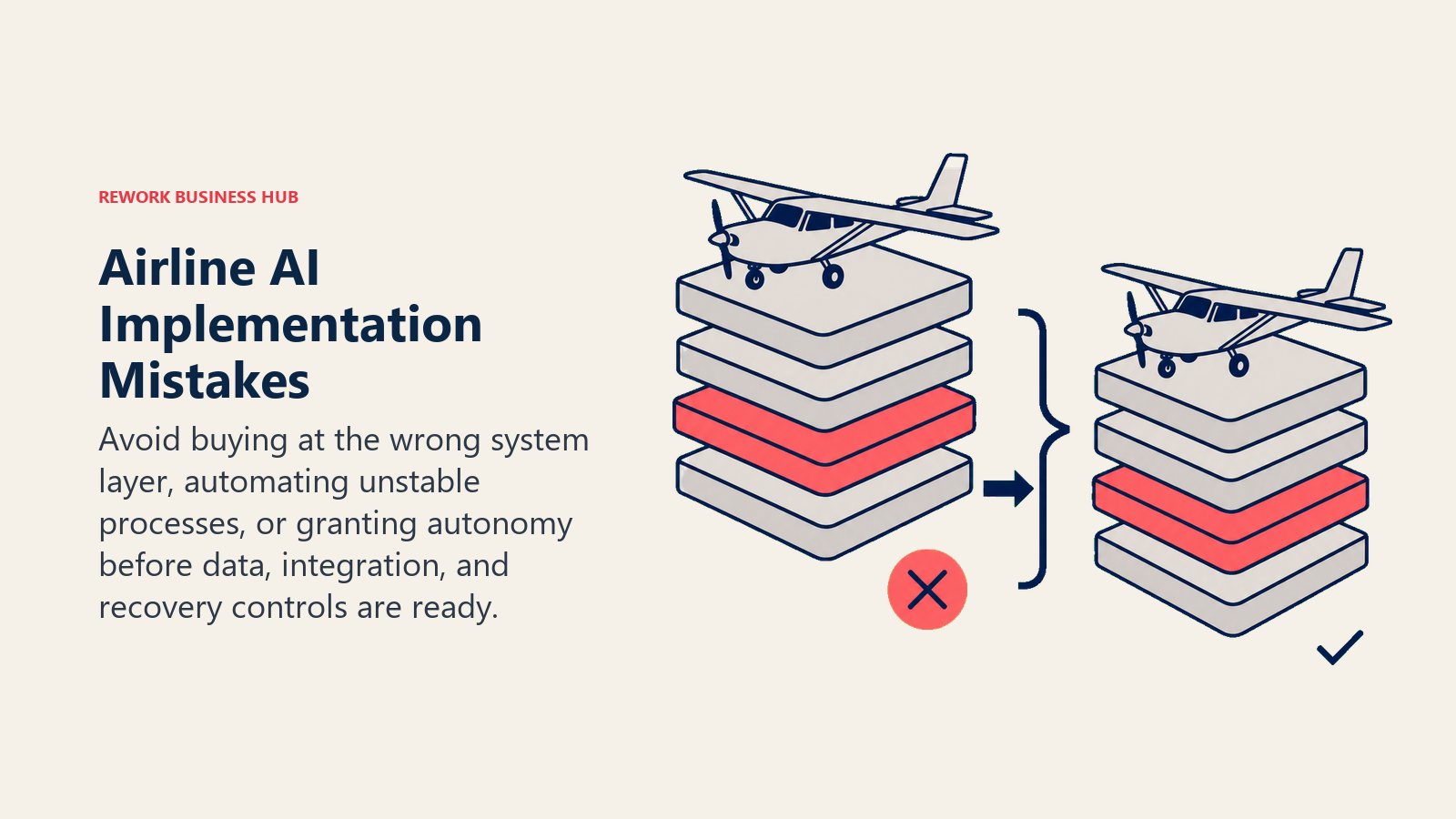
- Buying a full retailing rebuild (Amadeus Nevio, Sabre Mosaic) before validating a pricing overlay (PROS, Fetcherr) actually moves revenue for your network. The overlay approach is faster to test and doesn't require replacing your PSS.
- Assuming a disruption-recovery tool and a crew-scheduling tool are the same purchase. They solve related but distinct problems, and SITA's research shows 63% of airlines now handle them together in operations control, but the underlying software is still frequently separate.
- Treating vendor-reported revenue or ROI figures (Fetcherr's 10% claim, Sabre's uplift ranges) as independently audited numbers. They're real vendor data, not third-party verification, so build your own pilot metrics before committing to a network-wide rollout.
- Deploying a contact-center AI agent that can only answer questions, not execute PSS actions, then wondering why it didn't reduce call volume. The tools that move the needle (ASAPP, Parloa) write back into reservations, departure control, and loyalty systems directly.
- Signing an enterprise predictive-maintenance contract sized for a mixed, 100+ aircraft fleet when a regional carrier's actual need is a paperless MRO and compliance system (Ultramain) rather than fleet-wide connected-data modeling (Skywise).
- Ignoring the data-integration barrier SITA identified: 49% of airlines cite inconsistent data integration across the operation as the primary obstacle to getting value from AI investment already made. New AI software doesn't fix a fragmented data foundation underneath it.
Frequently Asked Questions about AI Tools for Airlines
What's the best AI tool for airline revenue management?
There's no single best tool. PROS and Fetcherr both overlay real-time dynamic pricing onto an existing PSS without a full replacement, while Amadeus Nevio and Sabre Mosaic are deeper retailing rebuilds best suited to carriers already on the Amadeus or Sabre ecosystem, respectively. Match the tool to how much of your existing PSS you're willing to touch.
Do these AI tools replace an airline's core reservation system (PSS)?
Mostly no. PROS, Fetcherr, and the disruption, crew, and maintenance tools on this list are designed to layer on top of an existing PSS (commonly Amadeus Altéa, Sabre, or Navitaire) rather than replace it. Amadeus Nevio and Sabre Mosaic are closer to full retailing platform transformations, but even those are built around the carrier's existing PSS relationship.
What's the difference between Airspace Intelligence and Lufthansa Systems for disruption management?
Airspace Intelligence's Flyways AI focuses on network-wide air traffic flow and disruption simulation, validated at national-airspace scale through its 12-year, $875 million FAA contract. Lufthansa Systems NetLine/Ops++ focuses on operations control recommendations at the individual airline level, using reinforcement learning to suggest recovery actions across aircraft, crew, and passengers. Large carriers often use tools like these together rather than choosing one over the other.
How much does airline AI software typically cost?
Nearly every tool in this category, aside from Parloa's outcome-based model, sells through custom enterprise contracts with no public pricing. Budget for a multi-quarter sales and implementation cycle rather than a self-serve signup, and expect pricing to scale with fleet size, passenger volume, or call volume depending on the category.
Can AI actually rebook and refund passengers on its own?
For a growing number of carriers, yes, within defined guardrails. ASAPP's GenerativeAgent and similar AI agent platforms write directly into an airline's PSS to execute rebookings, refunds, and compensation claims like EU261 or DOT payouts, with an audit trail on each action, rather than just recommending an action to a human agent.
What AI tools help with predictive aircraft maintenance?
Airbus Skywise (Fleet Performance+) is the largest connected-fleet platform, tracking close to 12,000 aircraft and expanding to non-Airbus aircraft starting in 2026. Aerogility takes a different, model-based approach focused on long-range fleet and heavy-maintenance planning rather than day-of-ops alerts. Ultramain covers the paperless maintenance-execution and compliance layer with AI forecasting built in. Most large carriers use more than one of these together.
Is this guide relevant to low-cost carriers, or only full-service airlines?
Both, but the fit differs. Full retailing rebuilds like Amadeus Nevio are built specifically for full-service carriers, while disruption, crew, maintenance, and customer service tools (Lufthansa Systems, ASAPP, Parloa, Ultramain) generally serve any airline size. Regional and low-cost carriers with smaller IT teams typically get more value starting with one narrow module, like crew pairing or contact center AI, before attempting a full retailing transformation.
How current is this pricing and tool list, and how was it compiled?
Tool positioning, features, and named airline deployments come from vendor pages, press releases, and independent aviation trade coverage (Runway Girl Network, PhocusWire, AviationPros, Air Cargo News). Nearly every tool in this category prices through custom enterprise contracts, so confirm current numbers directly with each vendor, and re-check positioning quarterly given how fast this category is moving.
What to Do Next
Start by identifying which of the six operational problems is actually costing you money or delay time right now, whether that's static pricing leaving revenue on the table, a disruption that cascades because ops and crew are working off different data, or a contact center that can answer questions but can't execute a rebooking. Shortlist one or two tools against the decision framework above rather than evaluating all fourteen at once, and push every vendor for a pilot or proof-of-concept scoped to your own network before signing a multi-year enterprise contract.
For AI buying decisions beyond aviation-specific tooling, Best AI Tools for Enterprise in 2026 covers the general enterprise AI landscape, and Best AI Tools in 2026 ranks 25 tools across every category this guide didn't cover. If your search actually started with planning a trip rather than running an airline, Best AI Tools for Travel Planning in 2026 is the guide you want instead.

Principal Product Marketing Strategist
On this page
- Updated July 2026: What Changed
- Key Facts
- Quick Comparison Table
- The Six Operational Problems This Guide Covers
- Part 1: Revenue Management and Dynamic Pricing
- 1. PROS: Real-Time Dynamic Pricing Overlaid on an Existing PSS
- 2. Fetcherr: GenAI, Algo-Trading-Style Pricing at Network Scale
- 3. Amadeus Nevio: AI-Native Retailing for Full-Service Carriers
- 4. Sabre Mosaic: Classless Pricing and Offer Optimization for Sabre Carriers
- Part 2: Disruption Recovery, Crew Scheduling, and Predictive Maintenance
- 5. Airspace Intelligence (Flyways AI): Network-Wide Disruption Simulation
- 6. Lufthansa Systems NetLine/Ops++: Reinforcement-Learning Recovery Recommendations
- 7. IBS Software iFlight: Unified Flight Ops, Crew, and Recovery in One Platform
- 8. Lufthansa Systems NetLine/Crew: AI-Optimized Crew Pairing and Rostering
- 9. Airbus Skywise (Fleet Performance+): Predictive Maintenance for Connected Fleets
- 10. Aerogility: Multi-Agent AI for Fleet and Heavy-Maintenance Planning
- 11. Ultramain: Paperless MRO and Electronic Logbook With AI Forecasting
- Part 3: Customer Service and Cargo
- 12. ASAPP: Generative AI Agents That Execute PSS Actions, Not Just Chat
- 13. Parloa: Outcome-Priced Voice AI for Airline Contact Centers
- 14. CHAMP Cargosystems (Cargospot neo): AI-Driven Air Cargo Operations
- How to Choose: Decision Framework
- Pricing at a Glance
- Mistakes to Avoid When Adding AI to Airline Operations
- What to Do Next