Best StackAdapt Alternatives in 2026: 14 Programmatic DSPs and Ad Platforms for Performance Marketers
Turn this article into takeaways for your work.


Each assistant summarizes the article only for you and suggests best practices for your work.
Updated August 2026
Running programmatic on StackAdapt's self-serve Basic tier and already thinking about the biggest independent open-internet DSP once you outgrow it? The Trade Desk is next. Need Amazon's own purchase-signal data instead of a generic audience segment? Amazon DSP. Want native reach on premium publisher sites to run alongside what you already buy? Teads or RTB House. This guide compares 14 platforms across five jobs, enterprise DSPs, mid-market and self-serve DSPs, retargeting and commerce specialists, native and open-web reach, and the walled gardens teams end up comparing against anyway, evaluated on pricing, access model, and fit for a StackAdapt buyer, checked against each vendor's own page in August 2026.
StackAdapt earns its reputation honestly. Its Basic tier is genuinely self-serve, no demo request, no sales call, in a category where most competitors gate everything behind one. It spans CTV, native, display, video, audio, and DOOH from a single login, plus an in-house creative studio most rivals don't bundle in. Buyers still shop around because the moment you need Grow, Scale, Accelerate, or Enterprise, StackAdapt's own higher tiers require a demo too, and because a self-serve entry tier isn't the same job as The Trade Desk's open-internet reach, Amazon's closed-loop purchase data, or a dedicated retargeting specialist's methodology. For the direct head-to-head against the category's biggest name, see StackAdapt vs The Trade Desk; for the wider category, start with Best Ad Management Software 2026.
Key Facts
- IAB's 2026 Outlook Study forecasts 9.5% year-over-year growth in US ad spend for 2026, with connected TV up 13.8%, exactly the format StackAdapt and The Trade Desk both compete hardest for. (IAB)
- US CTV ad spending is projected to climb 14.5% in 2026 to $37.95 billion. (eMarketer)
- The ANA's Q2 2025 Programmatic Transparency Benchmark found $26.8 billion in global media value lost every year to programmatic supply-chain inefficiency, the exact opacity a published rate card is supposed to prevent. (ANA)
- Google will not roll out a standalone third-party cookie prompt in Chrome and is keeping its existing cookie controls as is, a reversal of years of planned deprecation that every DSP's targeting pitch now has to account for. (Google Privacy Sandbox)
- Amazon's managed-service DSP still requires a minimum spend around $50,000, while its self-serve option publishes no minimum at all, the same self-serve-versus-managed split running through nearly every platform in this guide. (Amazon Advertising)
What StackAdapt Actually Costs (and Why That's the Real Question)
StackAdapt's Plans and Packages page lists five tiers, Basic (Digital), Grow (Bronze), Scale (Silver), Accelerate (Gold), and Enterprise (Platinum), and not one dollar figure appears anywhere on it. The page states that "most DSPs charge a percentage of media spend as a platform fee" and that "at StackAdapt, there are no hidden tech fees," phrasing worth reading carefully: it's a claim about hidden fees, not a claim that StackAdapt charges nothing. Basic is genuinely open to self-serve signup; Grow through Enterprise all require a demo request, with Net Terms on the lower tiers and Custom Terms higher up.
There's no minimum spend stated on the page today, but that reputation is newer than it looks. StackAdapt launched ChatGPT Ads in April 2026 with a $50,000-a-month minimum, then dropped it to zero within a month once the product opened to self-serve signup broadly. The direction of travel in 2026 has been toward more accessible terms, not less, which matters more than any single snapshot of "no minimum" as a fixed fact.
That mix, genuinely open at the entry tier, closed like everyone else past it, is the reason StackAdapt buyers end up comparing all five groups below rather than shopping for one direct swap.
The Five Groups of StackAdapt Alternatives
Enterprise DSPs (The Trade Desk, Google Display & Video 360, Amazon DSP, Basis Technologies) are what a team graduates into once spend and sophistication outgrow a self-serve tier, usually with a dedicated trader or agency desk running the account. Mid-market and self-serve DSPs (Simpli.fi, Viant, illumin, Choozle, MediaMath by Infillion) sit closer to StackAdapt's own weight class, smaller teams, narrower use cases, sometimes a self-serve entry point of their own. Retargeting and commerce specialists (Criteo, AdRoll, RTB House) solve a narrower job than a full DSP: following a known visitor or shopper with a product ad, not buying broad open-web reach. Native and open-web reach (Teads) buys space inside publisher content rather than a display slot or a CTV break. And the walled gardens (Meta Ads Manager, Google Ads) are the platforms teams compare against anyway, because plenty of the budget a DSP is fighting for is already sitting inside Meta or Google. PPC and search bid management, the job Optmyzr and its rivals do inside Google and Microsoft Ads, is a different category entirely and isn't covered here.
Quick Comparison Table
| Tool | Group | Best For | Starting Price | Key Strength | Key Limitation |
|---|---|---|---|---|---|
| The Trade Desk | Enterprise DSP | Biggest independent open-internet reach | No published pricing, undisclosed fee | Deepest CTV/audio/publisher reach, UID2 | Assumes a dedicated trader |
| Google Display & Video 360 | Enterprise DSP | Teams standardized on Google Marketing Platform | No published pricing, routes to sales | Native GA4/CM360/YouTube integration | No visible self-serve entry |
| Amazon DSP | Enterprise DSP | Amazon shopper and purchase-signal data | Managed typically $50,000 minimum; self-serve no minimum | Closed-loop Amazon purchase data | Managed minimum varies by country |
| Basis Technologies | Enterprise DSP | A DSP plus agency workflow tools | No published pricing, custom quote | Buying plus workflow, billing, reporting | No self-serve tier, annual contracts |
| Simpli.fi | Mid-market DSP | Hyperlocal and SMB-focused agencies | No published pricing, routes to sales | Unstructured-data targeting, geofencing | No self-serve signup |
| Viant | Mid-market DSP | Household-level, people-based targeting | No published pricing, routes to sales | Deterministic Household ID, not cookies | No self-serve signup |
| illumin | Mid-market DSP | Visual, journey-based campaign planning | No published pricing, demo required | Journey Canvas spans the funnel in one view | No self-serve signup |
| Choozle | Mid-market/self-serve DSP | Teams that want a lighter-weight DSP | No published pricing any more | Historically accessible entry point | Every path now routes to a demo |
| MediaMath by Infillion | Mid-market DSP | Legacy MediaMath accounts moving forward | No published pricing | Established programmatic feature set | Brand now folded into Infillion Platform |
| Criteo | Retargeting/commerce specialist | Cross-retailer commerce data depth | No published pricing, contact sales | Retail and publisher data partnerships | Shifted toward retail media, not classic retargeting |
| AdRoll | Retargeting/commerce specialist | No-contract retargeting swap | Dynamic CPM, no fee, $5/day minimum spend | No annual commitment | Managed tier gates at $5K-$10K/mo |
| RTB House | Retargeting/commerce specialist | Deep-learning retargeting methodology | No published pricing, custom quote | Purpose-built bidding for retargeting | No self-serve tier |
| Teads | Native/open-web reach | Native ads on premium publisher sites | No published pricing | Publisher scale plus CTV and video reach | Still integrating post-merger |
| Meta Ads Manager / Google Ads | Walled garden | Skipping a third-party DSP entirely | Free platform, media cost only | No platform fee on top of media | Confined to each platform's own inventory |
The Self-Serve Ceiling: Where Each Platform Actually Gates You
This is the practical dividing line for a StackAdapt buyer, not "which platform is cheapest" (almost none of them say), but "which one lets me start at my spend level without a sales call, and where does that stop being true."

| Tool | Self-Serve Ceiling | What Triggers a Sales Conversation |
|---|---|---|
| StackAdapt | Basic (Digital) tier only | Grow tier and above all require a demo |
| AdRoll | Full self-serve Ads product, no ceiling stated | Managed Services once spend reaches roughly $5,000-$10,000/month; the Advanced Package needs a 1-year commitment |
| Amazon DSP | Self-service, no minimum stated | Managed service, typically $50,000/month minimum, varies by country |
| Meta Ads Manager / Google Ads | No ceiling, entirely self-serve | Never, by design, that's the whole pitch |
| Choozle | Historically self-serve | Now routes every visitor to a demo request regardless of spend |
| The Trade Desk, Google DV360, Basis Technologies, Simpli.fi, Viant, illumin, MediaMath by Infillion, Criteo, RTB House, Teads | None | Sales-led from the first click |
1. The Trade Desk: The Reach You Graduate Into
The Trade Desk is where a team lands once its spend and sophistication have outgrown a self-serve tier. Its Kokai platform evaluates enormous volumes of ad opportunities in real time and leans on UID2, its own open-source identifier, plus its Ventura CTV operating system and OpenPath supply-path product, for targeting and measurement that doesn't depend on third-party cookies. Reach is strongest in CTV, streaming audio, and premium publisher display, a genuinely bigger footprint than StackAdapt's own channel mix.
The Trade Desk publishes no public rate card, and its own site couldn't be reached to check further; treat any specific platform-fee percentage or minimum-spend figure you see elsewhere as unconfirmed. Access runs through a self-service seat, typically after onboarding through an agency or partner, rather than a direct signup the way StackAdapt's Basic tier works. For the full head-to-head, including where StackAdapt's self-serve access actually beats Kokai's learning curve, see StackAdapt vs The Trade Desk.
| What you get | What you don't |
|---|---|
| The deepest open-internet reach across CTV, audio, and display | A published price or a same-day self-serve signup |
| UID2 identity targeting built for a cookie-uncertain future | A tool a non-specialist can run without training |
| Real-time optimization across enormous volumes of opportunities | StackAdapt's low-friction Basic tier |
Pricing: No published pricing; The Trade Desk's own site could not be reached to verify a fee. Access via self-service seat or an agency/partner relationship. Best for: Larger advertisers and agencies with a dedicated programmatic trader who need the widest open-internet reach across CTV, audio, and premium display. Not ideal for: A lean team without in-house programmatic expertise, or anyone wanting the same-day self-serve signup StackAdapt's Basic tier already offers.
2. Google Display & Video 360: The Enterprise Pick Inside Google's Stack
DV360 makes sense for one reason: your planning, buying, and measurement already live inside Google Marketing Platform. It connects directly to GA4 and Campaign Manager 360, and it's one of the few DSPs with direct access to YouTube's reservation and programmatic inventory alongside open-web display, a data-unification argument StackAdapt, built outside Google's ecosystem, can't make.
Google's own DV360 marketing page publishes no pricing or minimum-spend information anywhere. The only calls to action are "Talk to Sales" for new advertisers and a sign-in link for existing users, confirming this is an enterprise, sales-led product with no visible self-serve entry point at all.
| What you get | What you don't |
|---|---|
| Native integration with GA4, Campaign Manager 360, and YouTube | Any published price or self-serve signup |
| Access to YouTube reservation and programmatic inventory | StackAdapt's low-friction Basic tier |
| One planning and measurement layer across Google's ad stack | A tool built for advertisers outside the Google ecosystem |
Pricing: No published pricing; access via Google sales or existing-user sign-in. Best for: Advertisers and agencies already standardized on Google Marketing Platform who want programmatic buying under the same measurement roof. Not ideal for: A team not already invested in Google's ad stack, or one wanting a number before a sales call.
3. Amazon DSP: Purchase-Signal Data Instead of a Generic Audience Segment
Amazon DSP answers a specific question StackAdapt's third-party audience segments can't: what did this shopper actually view, add to cart, or buy on Amazon.com. Where StackAdapt builds reach across native, CTV, and display using its own targeting data, Amazon DSP buys against Amazon's first-party purchase and browsing signal, on Amazon.com and across Amazon's off-site publisher network and devices. See Amazon advertising for how this DSP sits alongside Amazon's other ad products.
The managed service, where an Amazon Ads account team runs campaigns directly, typically requires a minimum spend around $50,000, which Amazon notes can vary by country. Self-service publishes no minimum spend at all, closer in spirit to StackAdapt's own Basic tier, though a meaningful test budget still needs enough volume for the system to learn.
| What you get | What you don't |
|---|---|
| Closed-loop measurement tied to actual Amazon purchase data | A low, guaranteed entry price on the managed tier |
| Reach across Amazon.com, Fire TV, and Amazon's publisher network | StackAdapt's breadth across native, CTV, and DOOH beyond Amazon |
| A genuinely open self-serve tier with no stated minimum | Data or reach outside Amazon or Amazon-adjacent inventory |
Pricing: Managed service from roughly $50,000/month, varies by country. Self-serve: no published minimum spend. Best for: Brands with meaningful Amazon sales volume wanting to retarget shoppers using Amazon's own first-party purchase signal. Not ideal for: A brand with little or no Amazon sales history; the data advantage disappears without it.
4. Basis Technologies: A DSP Plus the Agency Operating Layer
Basis solves a problem specific to agencies: combining programmatic media buying with the workflow, billing, and reporting tools an agency otherwise stitches together from separate systems. Its homepage leads with "Explore Platform" rather than a signup link, and features Compass, described on-site as "Enterprise AI Built for Omnichannel Advertising," aimed at one operating layer for buying and the agency operations around it, a genuinely different value proposition than a pure DSP like StackAdapt.
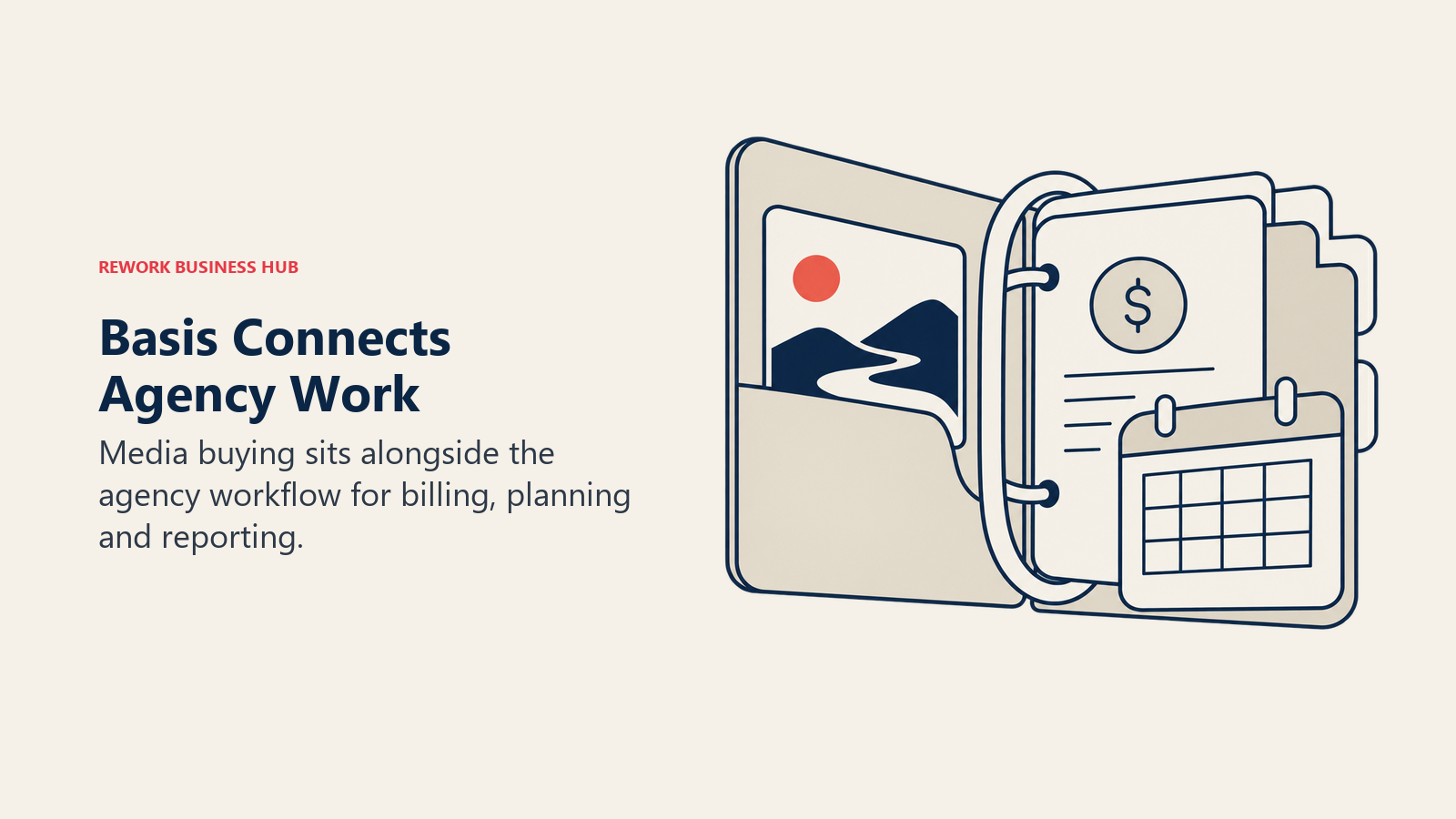
Basis publishes no pricing anywhere on its site. Third-party buyer guides describe the model as custom enterprise pricing, a technology fee tied to media spend plus platform fees for the workflow components, sold through annual contracts (reported), with no publicly stated minimum spend.
| What you get | What you don't |
|---|---|
| Media buying plus agency workflow, billing, and reporting in one | Any published price or self-serve entry point |
| Compass AI features layered on top of the DSP | A stated minimum spend to plan against (reported: none published) |
| A single operating layer built for agency-scale operations | StackAdapt's self-serve Basic tier or its creative studio |
Pricing: No published pricing; custom enterprise quote, sold through annual agency contracts (reported). Best for: Agencies wanting programmatic buying and agency operations (workflow, billing, reporting) unified in one platform. Not ideal for: A direct brand without agency-style operational needs, or anyone wanting a self-serve start.
5. Simpli.fi: Hyperlocal Targeting for SMB-Focused Agencies
Simpli.fi built its DSP around a different data problem than StackAdapt's channel breadth: unstructured, individual-level signals, contextual content, browsing behavior, apps used, GPS location, rather than a pre-built audience segment. That approach is aimed squarely at the longtail of regional agencies and small or mid-size advertisers running geofenced, hyperlocal campaigns, auto dealers, healthcare groups, local service businesses, a narrower but deeper fit than StackAdapt's broader channel mix.
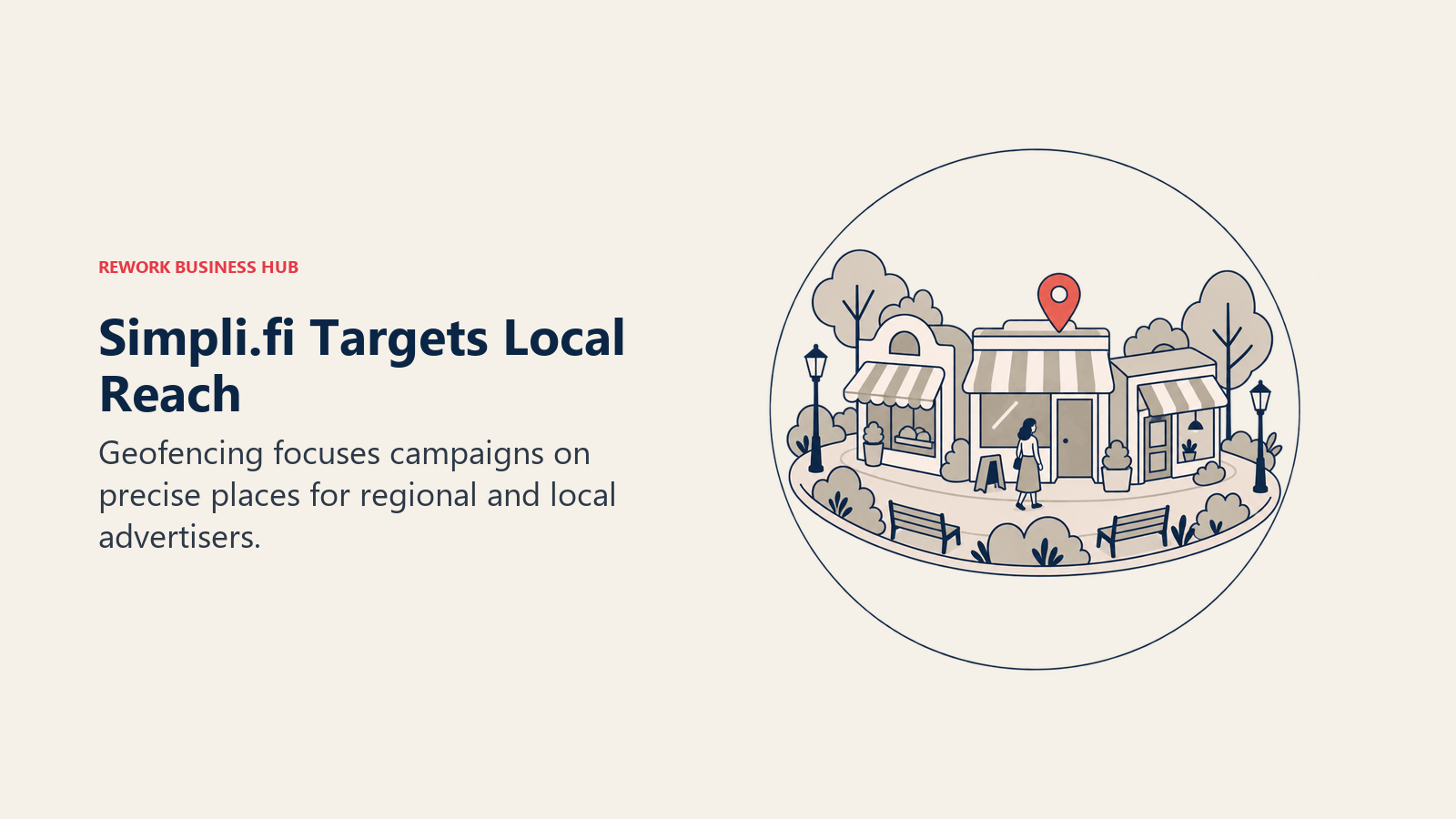
Simpli.fi's own site publishes no pricing or minimum-spend information. The primary call to action routes to a "Let's Connect" contact form rather than a signup flow, so every engagement starts as a sales conversation regardless of budget size.
| What you get | What you don't |
|---|---|
| Unstructured-data targeting built for hyperlocal precision | A self-serve signup at any spend level |
| A DSP purpose-built for the regional-agency use case | StackAdapt's CTV, DOOH, and creative-studio breadth |
| Geofencing and addressable-audience targeting depth | A published price to plan a first campaign against |
Pricing: No published pricing; every engagement routes through a sales contact form. Best for: Regional and local-focused agencies running geofenced or hyperlocal campaigns for SMB clients. Not ideal for: A national or ecommerce brand wanting broad CTV and native reach in one self-serve login.
6. Viant: Household-Level Identity Instead of a Cookie or a Segment
Viant's Adelphic DSP is built around what its own site calls "people-based advertising technology," deterministic Household ID targeting that links devices to a real residence rather than relying on a browser cookie or a third-party audience segment. For a team worried about the targeting precision StackAdapt's channel breadth doesn't specifically solve for, that identity-first approach is the actual differentiator.
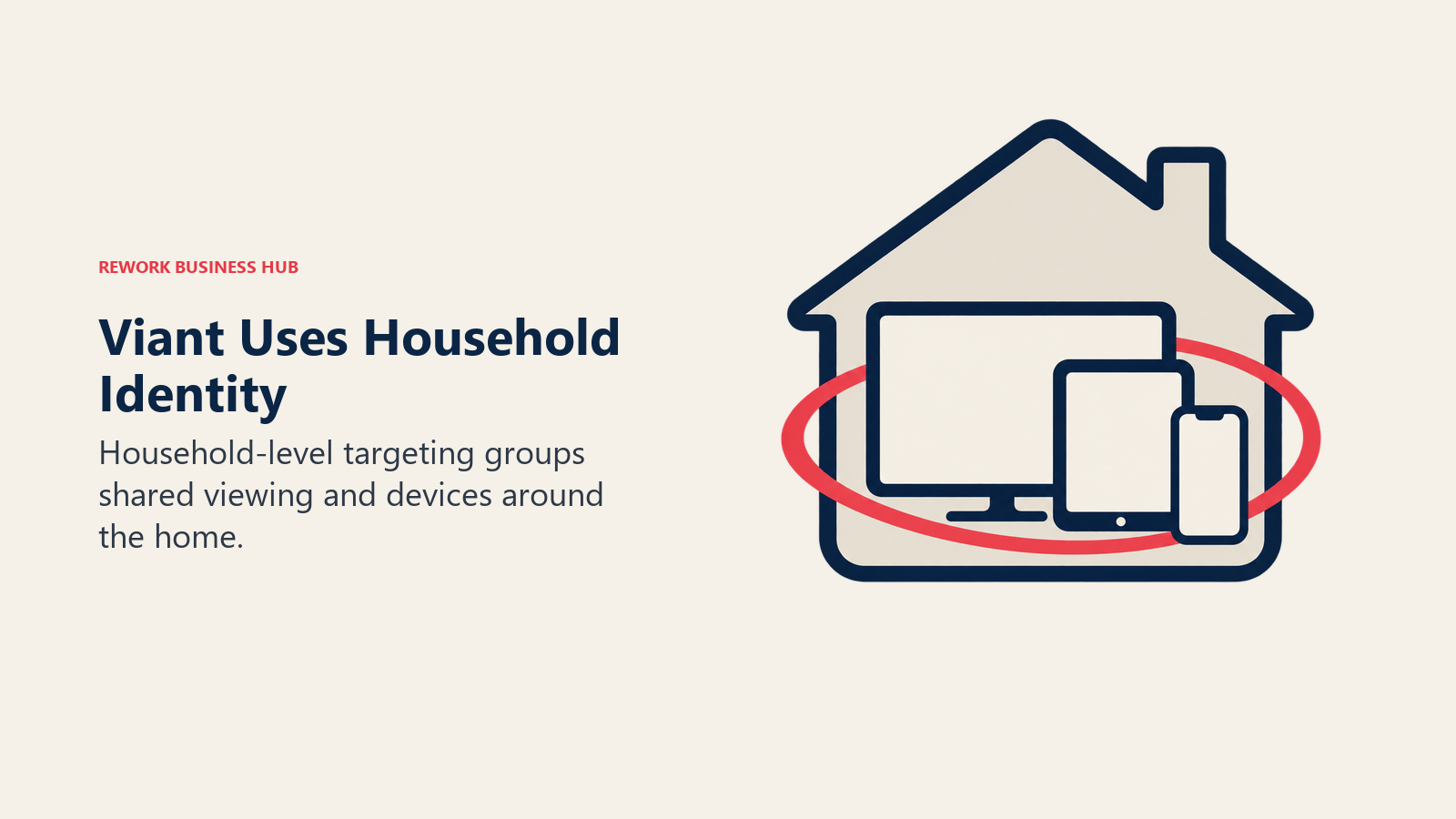
Viant's homepage publishes no pricing, fee structure, or minimum spend, and its primary call to action is "Contact Us," with a separate sign-in for existing DSP users. There's no visible self-serve path for a new advertiser to start spending without a sales conversation first.
| What you get | What you don't |
|---|---|
| Deterministic household-level identity, not a cookie proxy | A self-serve signup for new advertisers |
| A people-based approach built for a cookie-uncertain future | StackAdapt's native, DOOH, and creative-studio breadth |
| An identity graph independent of any single walled garden | A published price or minimum-spend figure |
Pricing: No published pricing; new advertisers go through a sales contact form. Best for: Advertisers prioritizing person- and household-level identity accuracy over broad channel breadth. Not ideal for: A team wanting to test a small budget today without a sales call first.
7. illumin: Visual, Journey-Based Campaign Planning
illumin's pitch is the Journey Canvas, a drag-and-drop workspace that plans, activates, and measures a campaign across the entire customer journey, awareness through conversion, in one visual map rather than separate campaigns per channel. It's a genuinely different interface model than StackAdapt's more conventional campaign-manager layout, built for a team that wants to see the whole funnel at once.
illumin's homepage carries no pricing, fee, or minimum-spend information anywhere, and its primary call to action is "Request a demo," with a separate sign-in for existing users. There's no self-serve path visible for a new advertiser to start a campaign directly.
| What you get | What you don't |
|---|---|
| A visual, full-funnel Journey Canvas most DSPs don't offer | A self-serve signup for new advertisers |
| Open Web reach across video, native, display, audio, and CTV, plus DOOH | A published price or minimum-spend figure |
| In-platform AI recommendations and audience insights | StackAdapt's genuinely self-serve Basic tier |
Pricing: No published pricing; new advertisers go through a demo request. Best for: Teams that think in customer journeys and want one visual workspace planning every touchpoint. Not ideal for: A brand wanting to start spending today without a demo call first.
8. Choozle: The Self-Serve DSP That Stopped Publishing a Price
Choozle built its early reputation as one of the more accessible self-serve DSPs on the market. That's changed. Its current pricing page states only that Choozle "offers pricing plans for teams of every size, from startups to established companies," with no dollar figures anywhere, and every call to action, "Request a Demo," "Get Started," "Find Your Winnable Market," routes to the same demo-request page rather than a signup form.
If an older "self-serve, around $99 a month" figure for Choozle is still floating around search results or third-party roundups, it isn't on the site today, and shouldn't be quoted as current. That shift matters directly to a StackAdapt Basic-tier buyer: the one competitor that used to match StackAdapt's self-serve accessibility now sits in the same demo-gated column as everyone else.
| What you get | What you don't |
|---|---|
| A lighter-weight DSP interface than some enterprise tools | Any published pricing or dollar figure |
| Broad display, native, and video inventory access | A self-serve signup path, despite the historical reputation |
| A platform historically aimed at smaller advertisers | StackAdapt's genuinely open Basic tier |
Pricing: No published pricing; every path routes to a demo request. Best for: Smaller advertisers comfortable booking a demo who want a lighter DSP than an enterprise platform. Not ideal for: Anyone specifically choosing based on Choozle's older self-serve reputation; that entry point no longer appears on the site.
9. MediaMath by Infillion: Legacy Programmatic Inside a Bigger Platform
MediaMath's story is worth telling plainly rather than glossing over. The company filed Chapter 11 in 2023, suspended platform access that June, and Infillion bought its assets for $22 million in a deal that closed that September. Today, Infillion's own site mostly refers to the combined business as the "Infillion Platform," with MediaMath surviving in legacy URLs, academy.mediamath.com, platform.mediamath.com, rather than as a standalone brand name on the current homepage.
No pricing is published anywhere on Infillion's site. The primary call to action is "Compare Your DSP Today," with "Get Started" as a secondary link to a contact page, both leading to a sales conversation rather than a signup flow.
| What you get | What you don't |
|---|---|
| An established programmatic feature set inherited from MediaMath | A self-serve signup at any spend level |
| Backing from Infillion's broader attention-measurement and CTV products | Brand continuity; MediaMath now reads as a legacy name |
| A path forward for accounts that predate the 2023 bankruptcy | A published price or minimum-spend figure |
Pricing: No published pricing; every path routes to a sales contact. Best for: Existing MediaMath accounts evaluating whether to stay inside the now-consolidated Infillion Platform. Not ideal for: A new buyer with no prior MediaMath relationship; there's little reason to start there today.
10. Criteo: The Retargeting Pioneer, Now a Commerce Media Company
Criteo built the category of dynamic product retargeting long before StackAdapt existed, and its commerce data footprint, drawn from retailer and publisher relationships across thousands of sites, still gives it targeting depth few competitors match. The catch for a buyer comparing it against StackAdapt: Criteo has never published a rate card, its margin sits inside the CPC or CPM you already pay, and its current lineup (Commerce Growth, Commerce Max, Retail Media, Criteo GO) has moved hard toward retail media rather than the classic web-retargeting pixel most advertisers came in for. For the full breakdown, see Best Criteo Alternatives and, for the direct swap most buyers actually make, AdRoll vs Criteo.
| What you get | What you don't |
|---|---|
| Deep cross-retailer commerce data most rivals can't match | A published price or a self-serve signup |
| A retail media network spanning 200-plus retailers | StackAdapt's native, CTV, and DOOH channel breadth |
| Established dynamic-retargeting methodology | A classic web-retargeting focus; the lineup has shifted |
Pricing: No published pricing; every path routes to Contact Sales. Best for: Large retailers and ecommerce brands wanting commerce-data-driven targeting across a big catalog. Not ideal for: A buyer specifically wanting classic site-visitor retargeting rather than a retail media platform.
11. AdRoll: The Self-Serve Retargeting Swap
AdRoll solves a narrower job than StackAdapt, dynamic ads that follow a known visitor after they leave your site, but it matches StackAdapt's self-serve accessibility almost exactly. AdRoll's Ads product runs on a dynamic CPM with no platform fee and no minimum-spend commitment; launching a campaign takes a minimum daily spend of $5 and a minimum daily budget of $10, low enough to test in an afternoon without a sales call.
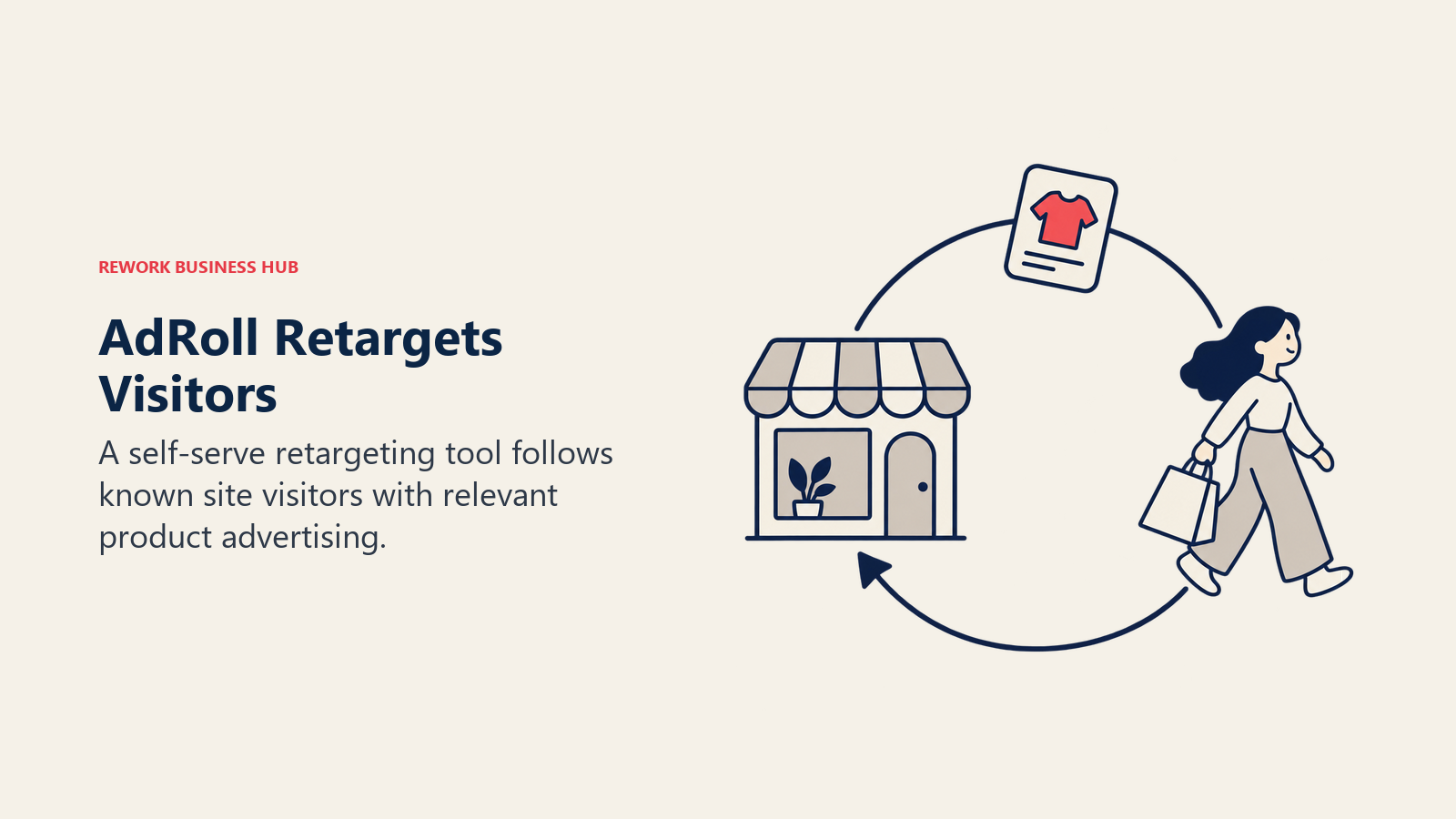
Managed services need roughly $5,000 to $10,000 in monthly spend to qualify, and the Advanced Package requires an annual commitment; AdRoll ABM, for B2B account-based retargeting, is quoted separately with no platform fee, media cost only.
| What you get | What you don't |
|---|---|
| A self-serve signup with no sales call required | StackAdapt's native, CTV, audio, and DOOH breadth |
| Email and onsite retargeting bundled with display | A dedicated retargeting methodology at RTB House's depth |
| A real, low-cost entry point on the core Ads product | Any reach beyond retargeting and prospecting display |
Pricing: Self-serve Ads: pay-as-you-go dynamic CPM, no platform fee, $5/day minimum spend, $10/day minimum budget to launch. Managed services: from roughly $5,000 to $10,000/month spend. Advanced Package: annual commitment required. Best for: Small to mid-market ecommerce brands wanting a fast, no-contract retargeting setup alongside or instead of a broader DSP. Not ideal for: Anyone needing native, CTV, or DOOH inventory; that's a different job than AdRoll solves.
12. RTB House: Deep-Learning Bidding Built for Retargeting
RTB House takes the opposite approach from StackAdapt's channel breadth: deep-learning models built specifically for one job, dynamic retargeting, rather than a general-purpose DSP that happens to support it. Third-party analysis describes RTB House billing on a dynamic cost-per-click model, bids adjusting automatically on the predicted likelihood a given impression converts (reported, Adcore); RTB House's own site publishes no rate card to confirm that independently.
There's no self-serve tier here. RTB House's site carries no pricing page and routes every inquiry to a contact form, so every engagement starts as a custom, sales-led conversation, the exact friction StackAdapt's Basic tier is built to avoid.
| What you get | What you don't |
|---|---|
| Deep-learning bidding purpose-built for retargeting | A self-serve tier or a published rate card |
| Custom campaign design for each advertiser | StackAdapt's channel breadth across native, CTV, and DOOH |
| A direct methodology match to classic dynamic retargeting | A quick, no-sales-call way to test the platform |
Pricing: No published pricing; every engagement is a custom, sales-led quote. Reported billing model: dynamic cost-per-click (reported). Best for: Mid-market to enterprise ecommerce and retail advertisers wanting a retargeting-first DSP with a deep-learning bidding engine. Not ideal for: Anyone wanting a self-serve signup or a published price before committing to a sales conversation.
13. Teads: Native Reach, Newly Consolidated With Outbrain
Teads solves a different problem than StackAdapt's programmatic breadth: native ad units placed inside premium publisher content rather than a display slot or a CTV break. The company itself is mid-transition. Outbrain acquired Teads in February 2025 and completed its corporate rename to Teads Holding Co. that June; "Outbrain Direct Response" continues as a subsidiary brand for existing customers, though Teads' own current homepage doesn't mention Outbrain by name at all.
No pricing is published on Teads' site. The primary call to action is "Contact Us," repeated throughout the homepage, directing every interested advertiser toward a sales conversation rather than a signup flow.
| What you get | What you don't |
|---|---|
| Deep native publisher relationships, now paired with video and CTV reach | Pricing stability while the merger integration continues |
| Scale across premium publisher sites StackAdapt doesn't specifically target | A published rate card on the current site |
| Combined reach from the Teads and Outbrain businesses | A self-serve signup path on the current homepage |
Pricing: No published pricing; every path routes to a sales contact form. Best for: Advertisers wanting native reach on premium publisher sites, comfortable with a platform still integrating post-merger. Not ideal for: A buyer who wants pricing and product stability right now rather than mid-transition.
14. Meta Ads Manager and Google Ads: Skip the Third-Party DSP Entirely
For plenty of teams, the honest question isn't "which DSP replaces StackAdapt" but "do we need a third-party platform at all when most of the budget already runs on Meta or Google." Meta's Advantage+ automates audience targeting, placement, creative testing, and budget allocation in one flow, and Google Ads runs its own display and video inventory (plus the free Google Ads Editor) directly inside the same account structure as search. Neither one is a real substitute for CTV, native, or DOOH reach, StackAdapt's actual specialty, but for a team whose spend is concentrated on one or both of these platforms already, adding a DSP on top may be solving a problem that doesn't exist yet.
Neither platform publishes a separate rate card: both are free tooling layered on top of the media you already buy, media cost only, no platform fee. If Meta-first AI automation across the account, not a DSP, is the actual gap, see Best Madgicx Alternatives; if creative automation across every social channel is the need, see Best Smartly Alternatives and Smartly vs Madgicx.
| What you get | What you don't |
|---|---|
| No platform fee on top of media spend, on either platform | Reach outside each platform's own properties |
| AI-automated targeting, placement, and creative tools built in | Open-web, native, CTV, or DOOH inventory |
| The simplest possible setup, no new vendor relationship at all | Any of StackAdapt's cross-channel programmatic reach |
Pricing: Free platform access on both; media cost only, no separate platform fee. Best for: Brands running most of their paid budget on Meta or Google already, testing whether native automation covers the gap before adding a DSP. Not ideal for: Any team that actually needs CTV, native, audio, or DOOH reach; neither platform sells that inventory.
Where StackAdapt Sits Against a Retargeting-Only Buy
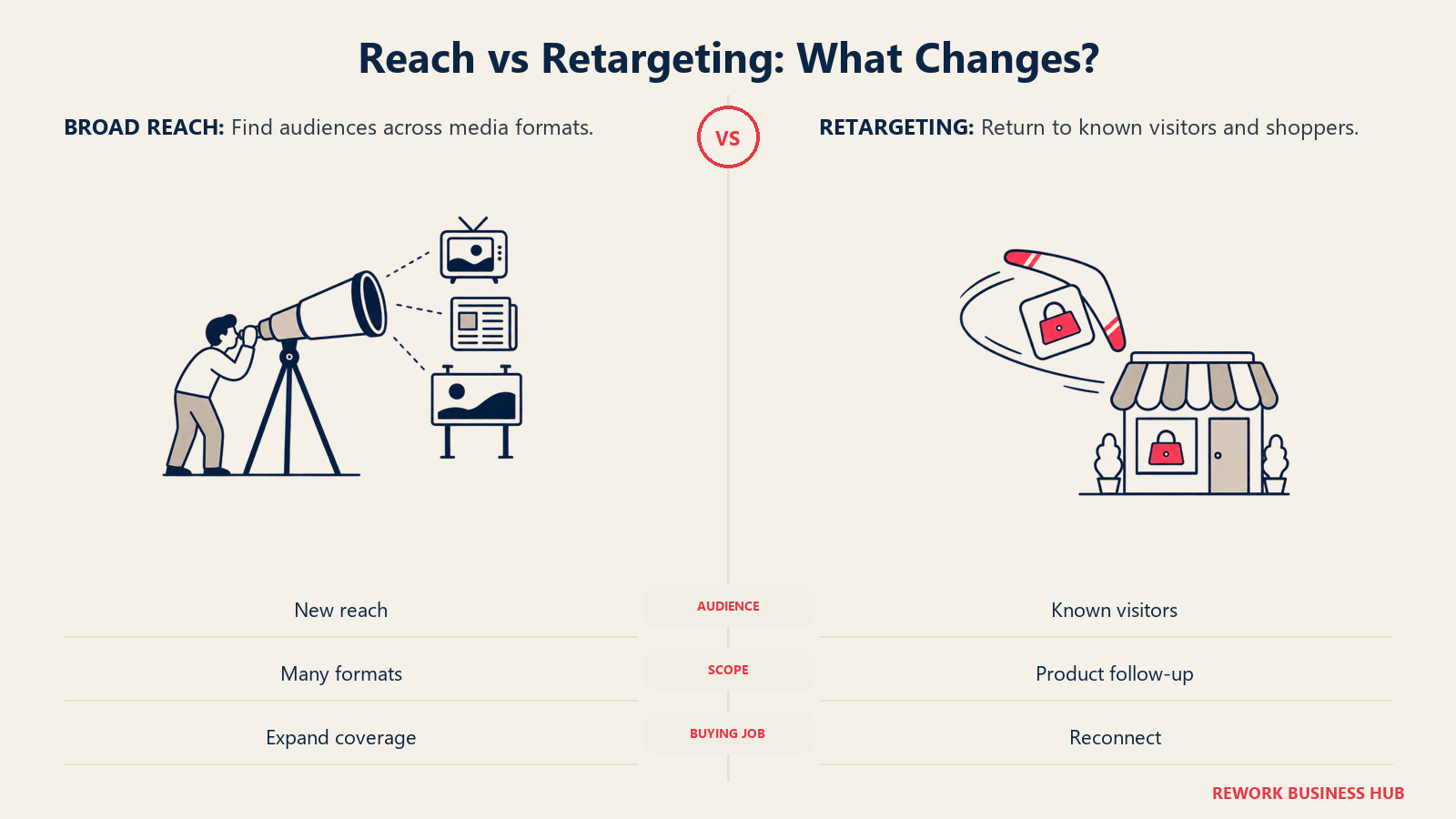
A meaningful share of StackAdapt evaluations start life as a retargeting search, a team outgrowing retargeting and remarketing basics and discovering StackAdapt's broader channel mix along the way. That's worth naming directly: if the actual job is following a known visitor or shopper with a product ad, Criteo, AdRoll, and RTB House above are a closer methodology match than a general-purpose DSP. If the job is buying broader reach across formats a retargeting specialist doesn't sell, CTV, native, audio, DOOH, StackAdapt and the enterprise DSPs above are the right comparison set instead. Layering a DSP on top of Meta and Google's own retargeting also makes attribution genuinely harder to untangle; see attribution models both teams can trust before assuming a new vendor fixes that on its own. For how StackAdapt specifically stacks up against two adjacent tools by spend level rather than by channel, see Smartly vs Madgicx vs StackAdapt.
How to Choose: Decision Framework
Start with the job you actually need to do, then use the table below to narrow the field by access model, data source, and reach.
| If you need... | Best pick |
|---|---|
| To stay self-serve past StackAdapt's Basic tier ceiling | AdRoll or Amazon DSP's self-serve option |
| The widest open-internet reach for a large, sophisticated buying team | The Trade Desk |
| Programmatic buying already unified with Google Analytics 4 | Google Display & Video 360 |
| To retarget using Amazon's own purchase and browsing data | Amazon DSP |
| A DSP unified with agency workflow, billing, and reporting | Basis Technologies |
| Hyperlocal or geofenced targeting for regional or SMB clients | Simpli.fi |
| Household-level identity instead of a cookie or a segment | Viant |
| A visual, full-funnel way to plan every touchpoint | illumin |
| A lighter DSP than an enterprise platform, and you're fine booking a demo | Choozle |
| To evaluate a legacy MediaMath account under new ownership | MediaMath by Infillion |
| Cross-retailer commerce data depth for a large catalog | Criteo |
| A no-contract, self-serve swap for classic site retargeting | AdRoll |
| The closest deep-learning match to dedicated retargeting methodology | RTB House |
| Native reach on premium publisher sites alongside existing channels | Teads |
| To test whether your existing Meta or Google spend already covers it | Meta Ads Manager or Google Ads |
Frequently Asked Questions about StackAdapt Alternatives
Is StackAdapt actually self-serve, or does that only apply to one tier?
Only the Basic (Digital) tier is genuinely self-serve, sign up directly, no demo required. Grow, Scale, Accelerate, and Enterprise all require a demo request, so the self-serve reputation applies to StackAdapt's entry point, not the whole platform.
Does StackAdapt have a minimum spend?
No minimum is stated on its current Plans and Packages page. That said, StackAdapt briefly required a $50,000-a-month minimum when it launched ChatGPT Ads in April 2026, then dropped it to zero within a month, evidence the platform is moving toward more accessible terms rather than a fixed, permanent policy.
What's the closest self-serve alternative to StackAdapt for retargeting specifically?
AdRoll, which runs on a dynamic CPM with no platform fee and a $5/day minimum spend to launch, no annual contract required on the core product. It's a narrower tool than StackAdapt (retargeting and prospecting display, not CTV or native), but it matches StackAdapt's self-serve accessibility closely.
Which alternative offers the biggest reach beyond StackAdapt's own channel mix?
The Trade Desk, for open-internet CTV, streaming audio, and premium publisher display at a larger scale, though it assumes a dedicated programmatic trader and offers no self-serve signup the way StackAdapt's Basic tier does.
Is Choozle still a genuinely self-serve DSP like StackAdapt's Basic tier?
Not any more. Choozle's current pricing page publishes no dollar figures and every call to action now routes to a demo request, a shift from its earlier reputation as an accessible self-serve option.
Should I just use Meta Ads Manager or Google Ads instead of a DSP?
Worth testing if most of your spend already runs on one or both platforms. Both are free tooling with no separate platform fee, but neither sells CTV, native, audio, or DOOH inventory, so they don't replace what StackAdapt or a dedicated DSP actually buys.
Are third-party cookies going away in Chrome, and does that affect programmatic targeting?
No. Google reversed course, keeping its existing cookie-choice approach rather than rolling out a new standalone deprecation prompt, and later retired the Privacy Sandbox APIs built to replace cookies. Chrome still carries the large majority of global browser traffic, so any platform's "built for a cookieless future" pitch is solving for an uncertain future, not a fixed deadline.
What to Do Next
Match your actual complaint, a spend ceiling on StackAdapt's Basic tier, a need for reach it doesn't sell, or a narrower retargeting job it's overbuilt for, to the framework above, then run a genuine test on your top two picks against current StackAdapt spend rather than a sandbox demo. Spend-ceiling problems: compare AdRoll or Amazon DSP's self-serve option first, both show real terms before a sales call. Reach problems: put The Trade Desk or Google DV360 head-to-head against current CTV and audio performance. Methodology problems: test RTB House or Criteo directly against your existing retargeting numbers. Whichever direction you take, revisit your cost per lead alongside the platform change too; a new vendor won't fix a measurement problem that predates it. See Best Ad Management Software 2026 for the wider category.

Principal Product Marketing Strategist
On this page
- Key Facts
- What StackAdapt Actually Costs (and Why That's the Real Question)
- The Five Groups of StackAdapt Alternatives
- Quick Comparison Table
- The Self-Serve Ceiling: Where Each Platform Actually Gates You
- 1. The Trade Desk: The Reach You Graduate Into
- 2. Google Display & Video 360: The Enterprise Pick Inside Google's Stack
- 3. Amazon DSP: Purchase-Signal Data Instead of a Generic Audience Segment
- 4. Basis Technologies: A DSP Plus the Agency Operating Layer
- 5. Simpli.fi: Hyperlocal Targeting for SMB-Focused Agencies
- 6. Viant: Household-Level Identity Instead of a Cookie or a Segment
- 7. illumin: Visual, Journey-Based Campaign Planning
- 8. Choozle: The Self-Serve DSP That Stopped Publishing a Price
- 9. MediaMath by Infillion: Legacy Programmatic Inside a Bigger Platform
- 10. Criteo: The Retargeting Pioneer, Now a Commerce Media Company
- 11. AdRoll: The Self-Serve Retargeting Swap
- 12. RTB House: Deep-Learning Bidding Built for Retargeting
- 13. Teads: Native Reach, Newly Consolidated With Outbrain
- 14. Meta Ads Manager and Google Ads: Skip the Third-Party DSP Entirely
- Where StackAdapt Sits Against a Retargeting-Only Buy
- How to Choose: Decision Framework
- What to Do Next