
Turn this article into takeaways for your work.


Each assistant summarizes the article only for you and suggests best practices for your work.
Conheça Maya. Ela administra uma agência de viagens de 5 pessoas que fecha cerca de US$ 2 milhões por ano em viagens de lazer e lua de mel. O negócio vai bem. Mas algo está quebrando silenciosamente dentro da equipe, e ela sente isso antes mesmo de conseguir nomear. Este é o playbook dela para resolver o problema, contado do jeito que realmente aconteceu.
O Problema Que Finalmente Veio à Tona
Em uma manhã de terça-feira, Maya passou por dois de seus agentes e notou algo estranho. Os dois estavam digitando uma resposta para o mesmo DM do Instagram. O prospect procurava uma lua de mel de US$ 40 mil nas Maldivas. Na hora do almoço, ele já tinha recebido duas cotações diferentes e dois tons diferentes. No dia seguinte, ele havia sumido da agência por completo.

Naquela tarde, Maya passou duas horas reconstruindo manualmente a distribuição de leads do mês. Uma planilha que sua agente sênior mantinha pela metade. Prints do WhatsApp de todo mundo. Anotações rabiscadas nas margens de uma agenda. Quando finalmente teve os números, eles eram feios. Um agente tinha reivindicado 60% dos leads recebidos. Os outros quatro disputavam o que sobrava. Sua equipe não estava sendo relapsa. Não havia sistema. "Quem vê primeiro responde" tinha deixado de ser uma regra e virado uma briga, e nada nas suas ferramentas espalhadas conseguia dizer quem viu o quê, e quando.

Sentando com os Quatro Modelos
Naquela noite, depois que os agentes foram embora, Maya se sentou com os quatro modelos de roteamento de leads que ela vinha adiando pesquisar. Desenhou cada um no quadro branco e pensou em como cada um se comportaria com a equipe específica dela.

Rodízio (Round-Robin)
A opção mais simples. Os leads giram entre os agentes em ordem estrita. O lead 1 vai para Alex, o lead 2 para Bea, o lead 3 para Carlos, depois volta para Alex. É comprovadamente justo e elimina completamente a escolha seletiva. Onde ele quebra: a agente sênior de Maya fecha 40% dos negócios dela, e a agente mais nova fecha 10%. O rodízio estrito desperdiça leads com a júnior. A solução é o rodízio ponderado. A sênior recebe 2 leads para cada 1 que a júnior recebe.

Território
Atribuir leads por destino. A agente sênior de Maya conhecia a Itália de cabo a rabo. Outra tinha morado no Japão. O território direcionaria os leads para a expertise real. Onde ele quebra: metade dos leads recebidos dizia "talvez Europa, talvez Ásia, ainda não sabemos". Esses leads ainda precisam de uma regra, e alguém acabaria ficando com a pilha de indecisos.

Especialização por Destino
Uma especialização mais estreita do que território. Em vez de regiões, os agentes ficam responsáveis por tipos de viagem. Lua de mel, corporativo, família, luxo. Maya adorou a matemática da taxa de fechamento. Uma especialista em lua de mel que fecha 3 por semana sempre vai superar uma generalista nesse nicho. Onde ele quebra: a agente especializada em viagens em família teria passado fome durante a temporada corporativa pesada do primeiro trimestre.

Baseado em Pontuação
Os leads de maior pontuação vão para os agentes sêniores; os menores vão para os júniores. Faz sentido estrutural a partir de 6 ou mais agentes. No tamanho da equipe de Maya, isso quase sempre cria ressentimento. Os júniores percebem que só recebem as sobras. E um lead de "pontuação baixa" que acaba virando uma reserva grande deixa a agente sênior irritada de qualquer forma.

A Escolha de Maya
Depois de pesar as quatro opções, Maya escolheu o rodízio ponderado. Sua agente sênior receberia 2 leads para cada 1 que fosse para a mais nova. Sua equipe era parecida o suficiente para que território e especialização fossem um exagero por enquanto. Ela poderia revisitar a decisão em 12 meses, quando já soubesse quem era naturalmente bom em quê.

Na terça-feira à tarde, ela abriu seu software de gestão de leads e configurou a regra. Todo novo lead vindo do Instagram, WhatsApp, formulário web ou Perfil do Google seria atribuído automaticamente a um agente no momento em que fosse criado. Nenhum clique necessário. O sistema tomava a decisão, não o agente que por acaso visse a notificação primeiro.

Na segunda-feira de manhã, ela explicou tudo para a equipe. Surgiram duas perguntas. Primeiro, e os clientes VIP recorrentes? Esses ficam com quem os atendeu da última vez. Segundo, e se um prospect pedir um agente específico pelo nome? O agente solicitado fica com o lead. Ela registrou as duas regras de exceção no acordo operacional da equipe para que ninguém precisasse perguntar de novo no mês seguinte.

Quatro Semanas Depois
Na revisão semanal de pipeline, Maya abriu os números de distribuição. A variação estava exatamente onde ela esperava. Sua sênior com aproximadamente o dobro da contagem da júnior. As taxas de fechamento também variavam, mas de forma previsível. Sua agente mais nova fechava leads do Instagram em 8% e leads de formulário web em 22%. Isso não era um problema de justiça. Era uma oportunidade de treinamento.

Ela também flagrou um agente burlando o sistema. Sua contratação mais recente vinha reivindicando leads com um rápido "Oi!" para marcá-los como contatados, e só respondendo de verdade horas depois. O rastreamento de SLA do software identificou o padrão. Uma conversa de orientação, e o problema foi resolvido. Nenhuma mudança de política foi necessária. A estrutura fez a fiscalização sozinha.

Seis Meses Depois
Seis meses após a mudança, as reservas subiram 40%. Zero discussões entre agentes sobre posse de leads chegaram até sua mesa. Sua agente sênior pediu para mentorear a júnior, então Maya criou uma dupla semanal de revisão de negócios. E, pela primeira vez em dois anos, Maya teve espaço para focar em conquistar contratos corporativos maiores em vez de arbitrar a própria equipe.

Principais Aprendizados
Três coisas para levar da história de Maya, na ordem de importância:
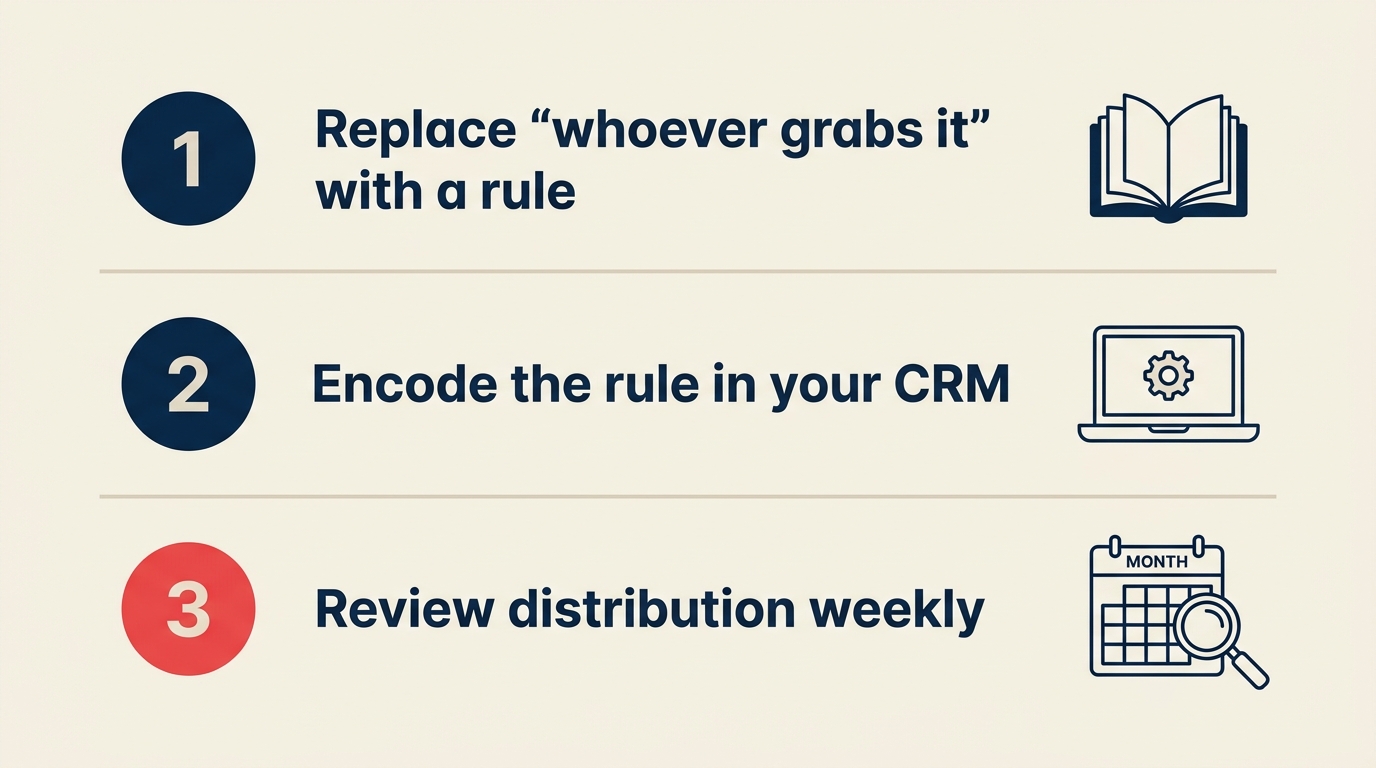
Substitua "quem pegar primeiro" por uma regra. Qualquer regra, aplicada de forma consistente, é melhor do que nenhuma regra. Mas nem todas as regras servem para todas as equipes. Escolha a que combina com o formato da sua equipe hoje.
Codifique a regra no seu CRM, não na memória de alguém. O sistema deve fazer a atribuição no momento da criação do lead. Se você depende da disciplina do agente, ela falha na primeira segunda-feira corrida.
Revise a distribuição toda semana. Dez minutos na sua revisão semanal de pipeline capturam desvios cedo. Observe tanto a contagem de leads por agente quanto as taxas de fechamento por par fonte-agente.
O objetivo não é a justiça perfeita. É a ausência de discussões sobre justiça. Quando o sistema é quem decide, seus agentes param de competir entre si. Passam a competir com o mercado, que é onde seus melhores vendedores prosperam.
O Que Fazer Esta Semana
Se você está lendo isso com o mesmo problema que Maya tinha, aqui está o plano de uma semana:
- Segunda-feira: Escolha um dos quatro modelos. Registre por escrito. Compartilhe com sua equipe.
- Terça-feira: Configure o roteamento no seu CRM. Defina regras de exceção para clientes VIP e indicações de parceiros.
- Quarta-feira: Anuncie em uma reunião rápida de 15 minutos com a equipe. Responda às perguntas com honestidade.
- Quinta e sexta-feira: Rode o primeiro dia completo com a nova regra. Ajuste os pesos se estiverem claramente errados.
- Segunda-feira seguinte: Primeira revisão semanal com dados de distribuição.
Não mude a regra por 90 dias, a menos que algo esteja estruturalmente quebrado. A maior fonte de desconfiança em equipes de agências pequenas são regras que mudam todo mês.
Leituras Complementares
- Captura de leads para pequenas agências além dos DMs do Instagram. A configuração de canais que alimenta esse sistema de roteamento.
- Estratégia de distribuição de leads. A visão multissetorial de como esse problema se desenrola, com os quatro modelos canônicos comparados lado a lado.
- Atribuição em rodízio. A mecânica do modelo que Maya escolheu, e onde ele começa a quebrar em volumes mais altos.
- Distribuição ponderada de leads. O que fazer quando você já ultrapassou um rodízio simples e precisa que agentes com capacidades diferentes recebam parcelas diferentes.

Growth Partner