Letramento em IA: A Nova Habilidade do Local de Trabalho Que Toda Organização Precisa

Turn this article into takeaways for your work.


Each assistant summarizes the article only for you and suggests best practices for your work.
"Todo mundo precisa aprender IA" é o mandato vindo de conselhos e equipes executivas em 2026. Mas o que isso significa na prática para um gerente de contas de 52 anos que nunca usou ChatGPT? Ou para um representante júnior de Customer Success que o usa diariamente para rascunhos de e-mail, mas nunca questionou se o que ele disse era preciso?
O letramento em IA não é uma habilidade. É um conjunto de competências que diferem por função, nível de responsabilidade e o perfil de risco das ferramentas de IA que cada pessoa usa. A mesma organização precisa que seus individual contributors (ICs) dominem a verificação de resultados, seus gerentes redesenhem fluxos de trabalho assistidos por IA e seus executivos governem decisões de investimento em IA, e esses são três programas diferentes, não uma sessão de treinamento obrigatória.
Entender onde cada função se encaixa no ACE Framework ajuda a calibrar quais componentes de letramento importam mais. Funcionários que operam no limite Execute precisam das habilidades de verificação mais fortes. Funcionários que usam apenas capacidades Generate precisam de profundidade em engenharia de prompt.
Este artigo define os quatro componentes do letramento em IA, os mapeia para níveis de função e fornece aos chief operating officers (COOs) e chief human resources officers (CHROs) uma estrutura de programa que realmente funciona para funcionários não técnicos, incluindo os mais céticos e os que correm maior risco de usar IA de forma inadequada.
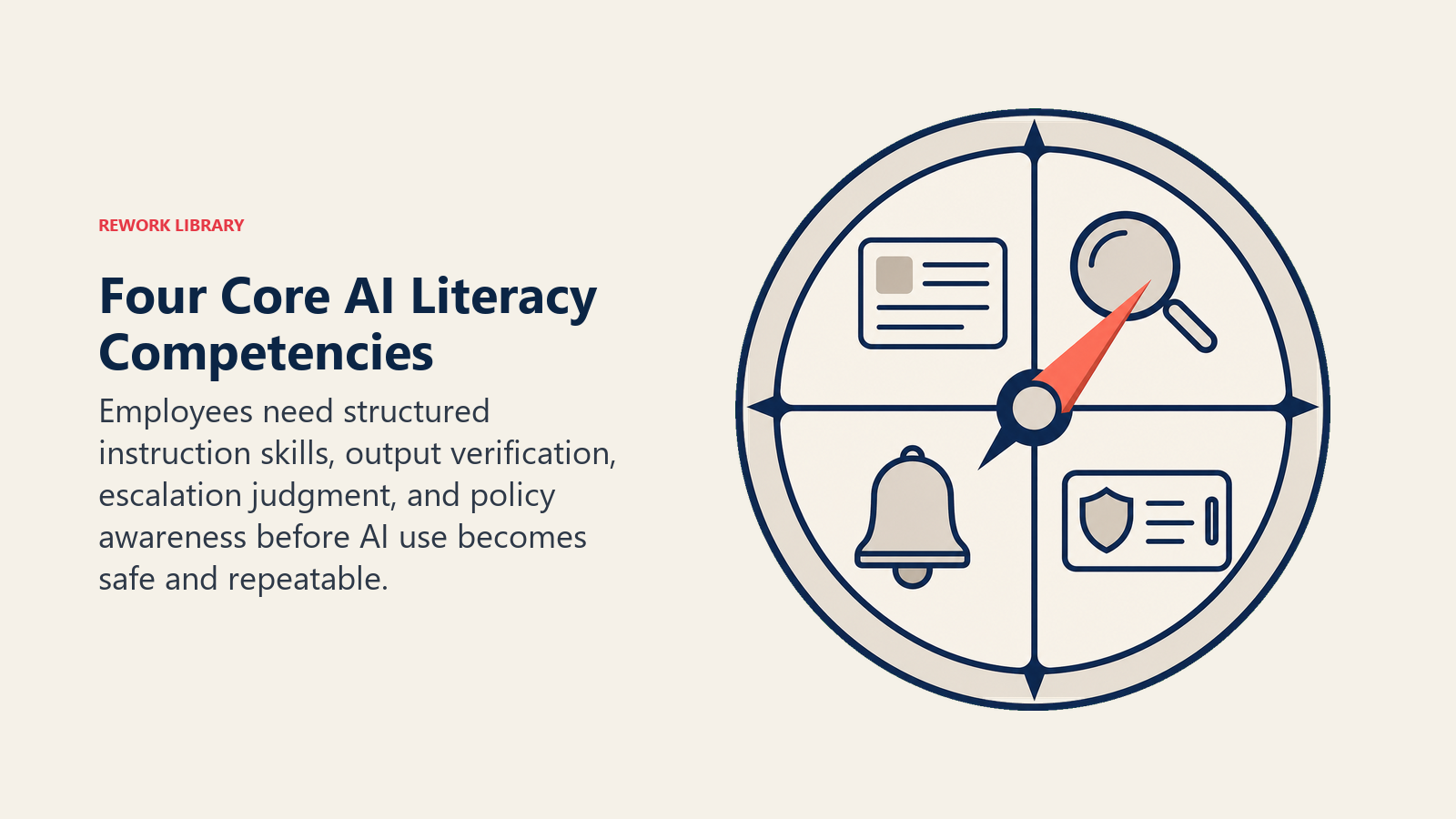
Os quatro componentes do letramento em IA
O letramento em IA é uma capacidade de trabalho composta por habilidades práticas, hábitos de verificação, julgamento de escalonamento e consciência de política.
Key Facts: Lacuna de Letramento em IA
- 59% da força de trabalho global precisará de treinamento até 2030, com IA e big data no topo da lista de habilidades necessárias, mas apenas 35% das organizações têm atualmente um programa de upskilling maduro em toda a força de trabalho. (World Economic Forum / DataCamp)
- Organizações com programas formais de treinamento em IA alcançam adoção de IA 2,3x mais rápida e ROI 67% maior em comparação com aquelas que dependem de aprendizado informal. (OECD)
- 42% dos funcionários dizem que seu empregador espera que eles aprendam IA por conta própria, enquanto 34% relatam se sentir despreparados para as mudanças impulsionadas por IA em sua função. (DataCamp 2026 Literacy Report)
Esses não são quatro níveis de sofisticação. São quatro competências distintas. Alguém pode ser excelente em engenharia de prompt e terrível em verificação de resultados. Ambas importam. Tratar o letramento em IA como um espectro de "iniciante a avançado" perde essa lacuna.
O Future of Jobs Report 2025 do WEF estima que 59% da força de trabalho global precisará de treinamento até 2030, com IA e big data no topo da lista de habilidades necessárias, mas o que "habilidades de IA" significa operacionalmente para um analista financeiro ou um representante de Customer Success difere dramaticamente do que significa para um cientista de dados.
1. Fundamentos de engenharia de prompt
Não é programação. Não é "construir sistemas de IA". É apenas disciplina de comunicação com IA.
A engenharia de prompt, no nível necessário para o letramento no local de trabalho, é a habilidade de dar à IA instruções claras e ricas em contexto que produzam resultados úteis. Inclui entender que prompts vagos produzem resultados vagos, que fornecer contexto e exemplos melhora dramaticamente os resultados, e que iterar em um prompt quando o primeiro resultado está errado é uma habilidade, não um sinal de fracasso.
Para um representante de vendas, isso significa saber que "escreva um e-mail para este prospect" produz resultados piores do que "escreva um e-mail de primeiro contato para um VP de Operações em uma empresa de logística de 150 funcionários que expressou interesse em reduzir o trabalho manual de relatórios. Tom: direto e breve. Extensão: menos de 150 palavras. Inclua uma pergunta específica no final."
Isso não é conhecimento técnico. É disciplina de comunicação que pode ser ensinada em uma tarde e refinada ao longo de algumas semanas de prática.
O que não é: aprender a escrever código, entender a arquitetura de modelos de linguagem de grande escala ou se tornar um "especialista em IA." Funcionários que ouvem "engenharia de prompt" e assumem que requer formação em ciência da computação vão se desligar. O enquadramento importa.
2. Verificação de resultados
Este é o componente mais subestimado e a lacuna mais perigosa na maioria das organizações.
Os sistemas de IA geram resultados de aparência confiante independentemente da precisão. Uma alucinação bem documentada de um grande modelo de linguagem (LLM) citou um artigo acadêmico inexistente com um autor, journal e título de aparência real. A pessoa que o recebeu não verificou. Citou em um relatório para o cliente. O cliente percebeu.
A verificação de resultados é o hábito de perguntar: isso é realmente verdade? Onde eu verificaria? Quando este resultado requer verificação antes de agir sobre ele? Quando não requer?
A maioria dos funcionários que usam ferramentas de IA não desenvolveu esse hábito porque não foi ensinado que o resultado de IA é probabilístico, não autoritativo. O modelo mental que muitos funcionários têm é mais próximo de "a IA é como um mecanismo de busca muito inteligente" do que "a IA gera respostas plausíveis que são frequentes, mas nem sempre, precisas." A diferença de comportamento entre esses dois modelos mentais é significativa.
Especificamente: um funcionário que acha que IA é como busca confiará em resultados de alta confiança. Um funcionário que entende IA como probabilística perguntará "qual é a consequência se isso estiver errado?" antes de agir sobre isso. Para um primeiro rascunho de baixo risco de um e-mail interno, a consequência é menor. Para uma resposta de conformidade, um cálculo financeiro ou uma afirmação sobre um concorrente em um documento de vendas, a consequência é significativa.
A verificação de resultados significa corresponder o esforço de verificação à consequência do erro, não verificar tudo ou confiar em tudo.
3. Julgamento de quando escalonar
Um subconjunto da verificação de resultados, mas específico o suficiente para merecer seu próprio componente.
"Quando escalonar" é o julgamento sobre quais resultados de IA requerem revisão humana antes da ação e quais podem prosseguir. Isso é especialmente importante para qualquer coisa que toque decisões de capacidade Execute: resultados de IA que serão enviados a clientes, inseridos em sistemas financeiros ou agidos sem um segundo par de olhos. O artigo Hallucination Risk by Pattern fornece aos funcionários e gerentes um mapa de risco concreto para quais padrões de IA requerem a maior disciplina de verificação.
Funcionários sem esse julgamento cometem um de dois erros. Eles verificam demais (criando um gargalo onde cada resultado de IA recebe revisão humana, eliminando os ganhos de eficiência), ou verificam de menos (enviando conteúdo gerado por IA sem verificar, criando problemas de qualidade ou pior).
A versão organizacional dessa competência é o design do caminho de escalonamento: construir regras claras sobre quais decisões de IA requerem revisão do gerente, quais requerem revisão jurídica e quais podem prosseguir autonomamente. A versão individual é a capacidade do funcionário de reconhecer em qual situação está.
Um representante de atendimento ao cliente que recebe uma sugestão de resposta gerada por IA para uma pergunta de rotina sobre status de pedido não precisa escalonar. O mesmo representante que recebe uma resposta gerada por IA para uma reclamação sobre segurança do produto deve escalonar. Saber essa distinção não é óbvio; requer treinamento e um documento de política claro.
4. Consciência de política
Entender as regras de classificação de dados da organização e a lista de ferramentas de IA aprovadas não é opcional. É um requisito de conformidade, e falhar nisso cria risco real.
O componente de consciência de política do letramento em IA inclui:
- Quais ferramentas de IA são aprovadas para uso com quais categorias de dados
- O que "dados sensíveis" significa em seu contexto (informações pessoalmente identificáveis de clientes, dados financeiros, planos estratégicos, roadmaps de produtos não lançados)
- Quando você pode colar dados em uma ferramenta de IA externa versus quando não pode
- O que fazer se você não tiver certeza
A maioria dos funcionários que usam ferramentas de IA não foi informada sobre essas questões porque a política ainda não existe, ou existe, mas não foi comunicada. Construir o letramento em IA requer ter uma política de uso de IA primeiro. Se você não tiver uma, Building Your AI Use Policy é o pré-requisito.
A consciência de política não precisa ser complicada. Para a maioria dos funcionários, se resume a uma regra: não coloque dados em uma ferramenta de IA externa que você não colaria em um fórum público. Isso não é um framework de conformidade completo, mas é um princípio inicial que previne a exposição de dados inadvertida mais comum.
Letramento em IA por nível de função
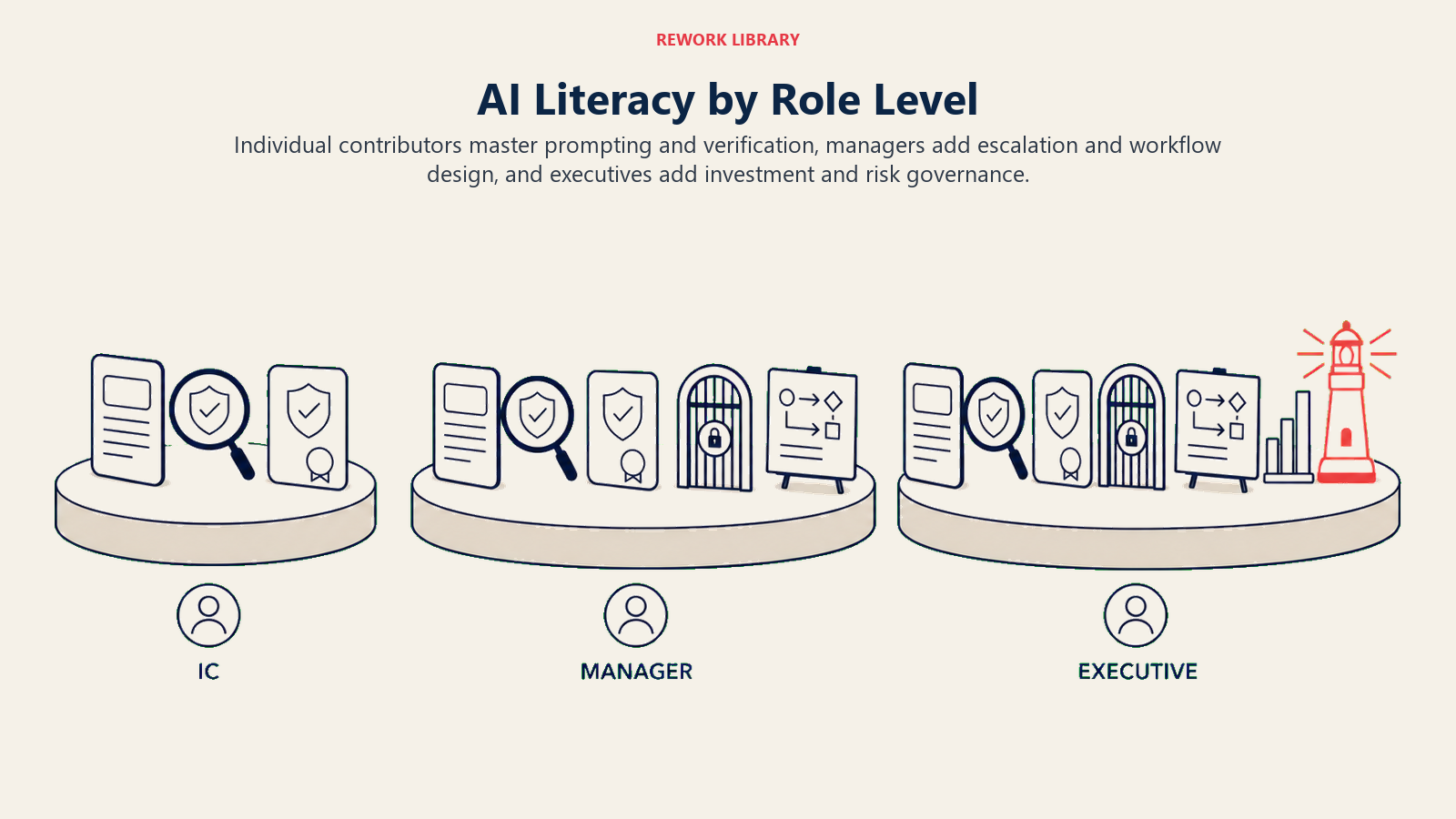
Os quatro componentes são universais, mas a profundidade e o foco diferem por nível.
Individual contributors
O conjunto de competências central é fundamentos de engenharia de prompt mais verificação de resultados. Todo o resto se baseia nesses.
Os individual contributors (ICs) usam IA principalmente como ferramenta de produtividade. Estão gerando rascunhos, analisando conjuntos de dados, resumindo documentos e às vezes executando tarefas rotineiras de fluxo de trabalho com assistência de IA. Sua superfície de risco é principalmente qualidade: resultado de IA de baixa qualidade que eles não detectam antes de ir a algum lugar que importa.
Meta de treinamento: todo IC pode escrever um prompt estruturado que produz consistentemente resultados utilizáveis, sabe quando verificar antes de agir e entende quais ferramentas são aprovadas para sua função.
Investimento de tempo: 4 a 6 horas de treinamento inicial, 1 hora de atualização trimestral.
Gerentes
Os gerentes precisam das competências de IC mais duas áreas adicionais: julgamento de quando escalonar e redesenho de fluxo de trabalho para trabalho assistido por IA.
Os gerentes precisam de "quando escalonar" porque estão definindo as normas de escalonamento para suas equipes. Se um gerente trata todos os resultados de IA como pré-verificados, sua equipe também vai. Se um gerente está explicitamente verificando as afirmações de IA antes de usá-las em relatórios, sua equipe vê esse comportamento modelado.
O redesenho de fluxo de trabalho é a habilidade especificamente gerencial: dado que sua equipe agora tem produtividade assistida por IA, como você reestrutura o trabalho? Qual é o novo padrão de qualidade para um primeiro rascunho? Quem revisa o resultado de IA antes de ir externamente? Como você mede a produtividade quando a IA está fazendo parte do trabalho? Essas são questões de design de gestão que requerem letramento em IA para responder bem.
Meta de treinamento: os gerentes podem redesenhar fluxos de trabalho de equipe em torno das capacidades de IA, definir normas de verificação apropriadas e explicar a política de escalonamento para seus subordinados.
Investimento de tempo: 6 a 8 horas de treinamento inicial, 2 horas de atualização trimestral.
Executivos
Os executivos precisam de tudo o acima mais letramento estratégico em IA: a capacidade de tomar decisões de investimento, governar o risco de IA e avaliar as capacidades dos fornecedores sem entender a implementação técnica.
O letramento estratégico em IA inclui entender a diferença entre as capacidades de IA (o que o ACE Framework chama de Ingest, Analyze, Predict, Generate, Execute) bem o suficiente para avaliar se um investimento proposto em IA corresponde às necessidades reais da organização. Inclui a governança de risco: saber quais decisões de IA requerem supervisão executiva, qual é a exposição à responsabilidade da organização por erros de IA em contextos voltados ao cliente e como avaliar as afirmações de ROI (retorno sobre investimento) em IA honestamente.
Um executivo que não distingue entre as capacidades Generate e Predict aprovará investimentos em IA que não correspondem ao seu caso de uso. Um executivo que não consegue avaliar as afirmações de ROI com ceticismo apropriado vai ou comprar demais com base nas promessas dos fornecedores ou comprar de menos devido ao medo de retornos não comprovados.
Meta de treinamento: os executivos podem fazer as perguntas certas em reuniões com fornecedores, tomar decisões de investimento em IA defensáveis e governar o risco de IA sem delegar completamente ao chief technology officer (CTO).
Investimento de tempo: workshop de meio dia, briefing trimestral sobre desenvolvimentos de IA relevantes para o negócio.
O Padrão de Letramento em IA com 5 Componentes
O 5-Component AI Literacy Standard define a prontidão organizacional para IA em cinco dimensões mensuráveis: competência em engenharia de prompt (prompts estruturados que produzem resultados utilizáveis), hábito de verificação de resultados (correspondendo o esforço de verificação à consequência do erro), julgamento de escalonamento (saber quais resultados de IA requerem revisão humana antes da ação), consciência de política (entender ferramentas aprovadas e regras de classificação de dados) e capacidade de redesenho de fluxo de trabalho (para gerentes: reestruturar o trabalho da equipe em torno da produtividade assistida por IA). Uma organização tem letramento em IA quando todos os cinco são ativamente praticados, não apenas treinados.
Quotable: "Organizações com programas formais de treinamento em IA alcançam adoção de IA 2,3x mais rápida e ROI 67% maior em comparação com aquelas que dependem de aprendizado informal ou autodirigido." (OECD)
Quotable: "A verificação de resultados é a lacuna que causa o maior dano real. A lacuna de engenharia de prompt é visível: funcionários que não sabem como fazer prompts obtêm resultados ruins e percebem. A lacuna de verificação de resultados é invisível: funcionários que confiam no resultado de IA, não verificam e agem errado."
Quotable: "42% dos funcionários dizem que seu empregador espera que eles aprendam IA por conta própria, mas funcionários que não recebem treinamento formal em letramento em IA são significativamente mais propensos a usar ferramentas de IA para tarefas de alta consequência sem verificação." (DataCamp 2026 AI Literacy Report)
| Nível de Função | Competências Centrais | Profundidade Adicional | Investimento em Treinamento |
|---|---|---|---|
| Individual contributors | Engenharia de prompt + verificação de resultados | Consciência de política | 4-6 horas inicial, 1h trimestral |
| Gerentes | Todas as competências de IC | Julgamento de escalonamento + redesenho de fluxo de trabalho | 6-8 horas inicial, 2h trimestral |
| Executivos | Todas as competências de gerente | Avaliação de investimento em IA + governança de risco | Workshop de meio dia, briefing trimestral |
Rework Analysis: Com base em padrões de programas de letramento em IA empresariais, organizações que constroem a verificação de resultados como uma competência distinta e explicitamente nomeada (em vez de incorporá-la na "engenharia de prompt") veem taxas significativamente mais baixas de erros gerados por IA chegando a stakeholders externos. Os programas que funcionam tratam a verificação como um hábito a ser construído, não uma precaução a ser mencionada uma vez em um deck de treinamento.
Opções de formato de treinamento
Três formatos, cada um com contrapartidas reais.
A prática no trabalho é a mais barata e frequentemente a mais eficaz para indivíduos que já estão motivados. Forneça aos funcionários acesso a ferramentas de IA aprovadas, uma biblioteca de prompt estruturada para seus casos de uso mais comuns e um loop de feedback onde eles podem compartilhar exemplos de resultados de IA que os surpreenderam. A limitação: não funciona bem para funcionários que são céticos ou ansiosos. A prática pressupõe vontade de tentar. Um programa obrigatório no trabalho para um gerente de contas de 52 anos relutante produz frustração, não letramento.
Programas estruturados foram desenvolvidos por fornecedores incluindo Section School (AI for Business, amplamente usado para treinamento em nível de IC), CoreLabs (certificação de IA no local de trabalho com trilhas específicas por função) e Microsoft AI Skills Initiative (integrado com implantações do Microsoft 365 Copilot). Esses são úteis para as competências centrais porque criam um vocabulário compartilhado e uma linha de base. A limitação: são genéricos, e o genérico não cobre as ferramentas, políticas ou normas de escalonamento específicas da sua organização. Funcionam melhor como ponto de partida que você personaliza com sua camada de política interna.
O treinamento fornecido pelo fornecedor está disponível na Anthropic (currículo AI Fluency), Google (Grow with Google AI) e Microsoft (programas de adoção do Copilot). Esses são específicos para ferramentas e frequentemente gratuitos ou de baixo custo. São excelentes para verificação de resultados e engenharia de prompt dentro da ferramenta específica. A limitação: não cobrem a política da organização, o framework de escalonamento ou a conscientização entre ferramentas.
A recomendação prática: use um programa estruturado (Section School ou CoreLabs) para as competências centrais em nível de IC, sobreponha seu conteúdo de política específico da organização e use o treinamento do fornecedor para o onboarding específico da ferramenta. Não tente construir tudo do zero.
Estrutura de onboarding de 4 semanas:
- Semana 1: Fundamentos de IA e visão geral das ferramentas aprovadas (foco na consciência de política)
- Semana 2: Prática de engenharia de prompt com exemplos específicos da função (prático)
- Semana 3: Exercícios de verificação de resultados usando exemplos reais dos seus fluxos de trabalho
- Semana 4: Cenários de quando escalonar e design de fluxo de trabalho da equipe
Atualização trimestral: Sessão de 60 minutos cobrindo um exemplo real da organização de resultado de IA que exigiu correção, mais quaisquer atualizações de política ou novas aprovações de ferramentas.
A lacuna de letramento que a maioria das organizações subestima
A verificação de resultados é a lacuna que causa o maior dano real, e é a que a maioria das organizações pula em seus programas de treinamento de IA porque não parece urgente. A pesquisa da McKinsey sobre prioridades de upskilling em IA para a era da IA generativa constata que a maioria das empresas gasta desproporcionalmente em programas de letramento que são visíveis e fáceis de medir, enquanto subinveste na qualidade da adoção, que é onde a verificação de resultados e o julgamento de escalonamento residem.
A lacuna de engenharia de prompt é visível: funcionários que não sabem como fazer prompts obtêm resultados ruins e percebem. Eles reclamam da ferramenta ou param de usá-la. Esse feedback cria pressão para treinar.
A lacuna de verificação de resultados é invisível: funcionários que não verificam obtêm resultados ruins, não percebem e agem com base nisso. Eles enviam a informação errada a um cliente. Usam uma estatística fabricada em uma apresentação ao conselho. Tomam uma decisão baseada em uma análise de IA que interpretou incorretamente os dados. O erro aparece depois, frequentemente sem uma trilha clara de volta à ferramenta de IA.
A causa raiz da maioria dos erros de fluxo de trabalho de IA nas organizações é os funcionários confiando no resultado de IA sem o hábito de perguntar "isso está realmente certo?" Construir esse hábito requer treinamento explícito que nomeia o problema diretamente: a IA gera respostas erradas de aparência confiante, e você precisa saber quando verificar.
Mensurando o letramento em IA
Como você sabe quando a organização tem letramento em IA suficiente?
Os indicadores antecedentes funcionam melhor do que as taxas de conclusão de certificação, que medem presença, não competência.
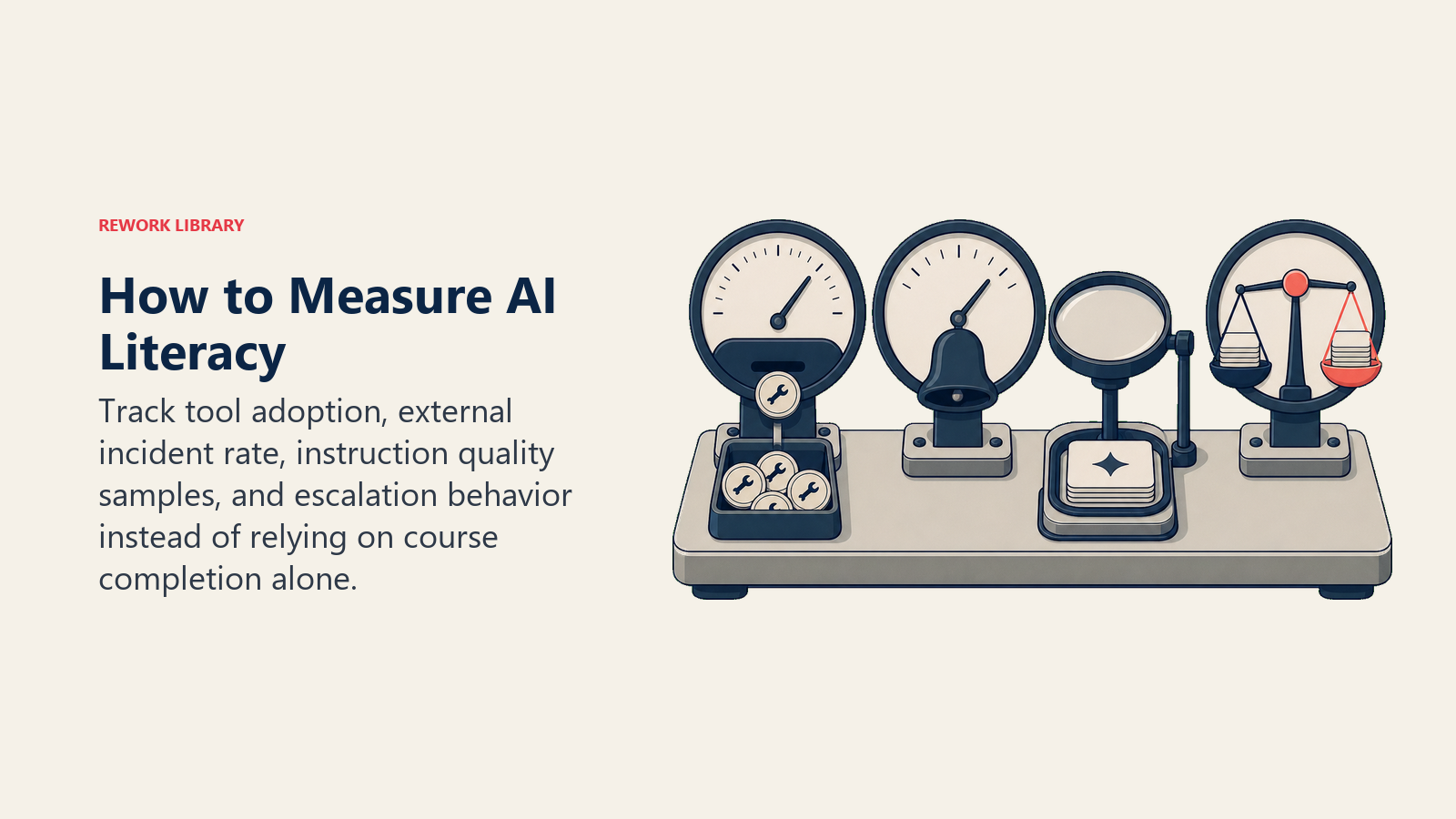
A taxa de adoção de ferramentas diz se os funcionários estão usando as ferramentas. Baixa adoção 90 dias após o treinamento sugere uma barreira de fluxo de trabalho (a ferramenta não está integrada ao modo como as pessoas realmente trabalham) ou uma barreira de habilidade (tentaram, obtiveram resultados ruins e pararam). Distinga entre esses antes de intervir.
A taxa de incidentes é a taxa em que erros gerados por IA chegam a stakeholders externos (clientes, parceiros). Rastreie-os separadamente dos erros internos. Os incidentes externos de IA são os que têm consequências reais e os que mais justificam o investimento em treinamento de verificação de resultados. O AI Risk Register: What to Track fornece o formato de rastreamento de incidentes, incluindo como pontuar o risco de alucinação por tipo de sistema de IA.
A qualidade do prompt é avaliável por amostragem. Pegue 20 prompts que os funcionários enviaram às ferramentas de IA na semana passada (com o tratamento de privacidade adequado) e avalie-os em relação aos critérios de prompt estruturado do treinamento. Uma equipe onde 70% ou mais dos prompts incluem contexto e instruções específicas de resultado absorveu o treinamento. Uma equipe onde 80% ou mais dos prompts são solicitações vagas de uma linha não absorveu.
O comportamento de escalonamento pode ser medido como a proporção de resultados de IA revisados antes do uso externo versus total de resultados gerados. Esta é uma métrica proxy: você pode rastreá-la observando as etapas de fluxo de trabalho onde a revisão é documentada, mas requer que a etapa de revisão seja integrada ao fluxo de trabalho em vez de deixada como opcional.
Uma organização tem letramento em IA quando os funcionários podem distinguir quando usar IA versus quando não usar, sabem como fazer prompts bem o suficiente para obter resultados utilizáveis, verificam resultados antes de importarem e entendem quais ferramentas são permitidas para quais dados. Esse é um padrão alcançável. A maioria das organizações ainda não está lá, mas a maioria pode chegar lá dentro de seis meses de um programa deliberado.
Para contexto sobre como o letramento em IA se conecta ao design de funções, veja Evolução de Funções com IA: O Que Muda Para Quem. A conversa mais difícil sobre por que os funcionários estão ansiosos com IA em primeiro lugar está em Medo de Substituição: O Tema Desconfortável, a leitura complementar que muitos líderes precisam antes de começar um programa de letramento.
A política fundamental que os funcionários devem entender antes que o treinamento de letramento possa se consolidar é abordada em Building Your AI Use Policy. E porque um funcionário que teme que seu emprego está desaparecendo não se engajará honestamente com o treinamento de IA independentemente de quão bem o currículo foi projetado, Comunicando Mudanças de IA para Funcionários cobre como ter essa conversa primeiro. Execute-o antes do programa de letramento, não depois.
Perguntas Frequentes
O que é letramento em IA no local de trabalho?
O letramento em IA é um conjunto de quatro competências: fundamentos de engenharia de prompt (dar à IA instruções claras e ricas em contexto), verificação de resultados (verificar os resultados de IA em relação à sua consequência antes de agir), julgamento de quando escalonar (saber quais resultados de IA precisam de revisão humana antes do uso) e consciência de política (entender quais ferramentas são aprovadas para quais dados). Essas quatro competências diferem das habilidades de programação ou engenharia de IA e podem ser aprendidas por qualquer funcionário, independentemente do histórico técnico.
Quanto tempo leva para construir letramento em IA em uma organização?
Um individual contributor pode atingir competência básica em 4 a 6 horas de treinamento estruturado mais algumas semanas de prática. Os gerentes requerem 6 a 8 horas para adicionar o redesenho de fluxo de trabalho e a definição de normas de escalonamento. A maioria das organizações pode alcançar letramento básico em toda a força de trabalho dentro de seis meses de um programa deliberado e estruturado que sobrepõe conteúdo de política específico da organização em cima de um currículo padrão.
Qual componente de letramento em IA causa o maior dano organizacional quando está ausente?
A verificação de resultados é a lacuna mais prejudicial porque suas falhas são invisíveis. Funcionários sem habilidades de engenharia de prompt percebem seus resultados ruins e param de usar a ferramenta. Funcionários sem verificação de resultados confiam no conteúdo gerado por IA, não o verificam e agem com informações erradas. O erro aparece em um relatório para o cliente, uma apresentação ao conselho ou um documento de conformidade, frequentemente sem uma trilha clara de volta à ferramenta de IA.
Quais são os melhores programas de treinamento em letramento em IA para empresas?
Os programas estruturados da Section School (AI for Business), CoreLabs (certificação de IA no local de trabalho) e Microsoft AI Skills Initiative funcionam bem para competências centrais em nível de IC porque criam vocabulário compartilhado e linhas de base. Sobreponha o conteúdo de política específico da sua organização, regras de escalonamento e lista de ferramentas aprovadas. O treinamento fornecido pelo fornecedor da Anthropic, Google Grow e Microsoft Copilot é útil para onboarding específico de ferramentas, mas não cobre a política da organização.
Como você mede o letramento em IA em uma organização?
Quatro indicadores antecedentes funcionam melhor do que as taxas de conclusão de certificação. Taxa de adoção de ferramentas 90 dias após o treinamento (baixa adoção sinaliza barreira de fluxo de trabalho ou habilidade). Taxa de incidentes de IA (erros gerados por IA chegando a stakeholders externos). Amostragem de qualidade de prompt (20 prompts revisados semanalmente para estrutura e contexto). Proporção de comportamento de escalonamento (resultados de IA revisados antes do uso externo versus total de resultados gerados). Juntos, esses indicam se o letramento está se construindo ou estagnanado.
Qual é o ROI de investir em programas de letramento em IA?
Organizações com programas formais de treinamento em IA alcançam adoção de IA 2,3x mais rápida e ROI 67% maior em comparação com aquelas que dependem de aprendizado informal, de acordo com pesquisa da OECD. O retorno de R$18,50 por R$5 investidos em IA que os benchmarks empresariais reportam pressupõe que as equipes saibam como aplicar IA produtivamente. Sem letramento básico, os investimentos em ferramentas de IA têm desempenho abaixo do esperado consistentemente porque os funcionários evitam as ferramentas ou as usam sem verificação.

Co-Founder, Rework.com
On this page
- Os quatro componentes do letramento em IA
- 1. Fundamentos de engenharia de prompt
- 2. Verificação de resultados
- 3. Julgamento de quando escalonar
- 4. Consciência de política
- Letramento em IA por nível de função
- Individual contributors
- Gerentes
- Executivos
- O Padrão de Letramento em IA com 5 Componentes
- Opções de formato de treinamento
- A lacuna de letramento que a maioria das organizações subestima
- Mensurando o letramento em IA