Bahasa Indonesia
Program vs Project Management: Perbedaan Kunci yang Dijelaskan
Turn this article into takeaways for your work.


Each assistant summarizes the article only for you and suggests best practices for your work.
Program vs project management adalah salah satu perbedaan yang terdengar jelas sampai Anda benar-benar harus memutuskan cara menyusun inisiatif besar. Kedua disiplin ini sama-sama menggerakkan pekerjaan ke depan, tetapi keduanya beroperasi pada ketinggian yang berbeda, menjawab kriteria keberhasilan yang berbeda, dan membutuhkan pola pikir yang berbeda dari orang yang memimpinnya.
Apa perbedaan antara program dan project management?
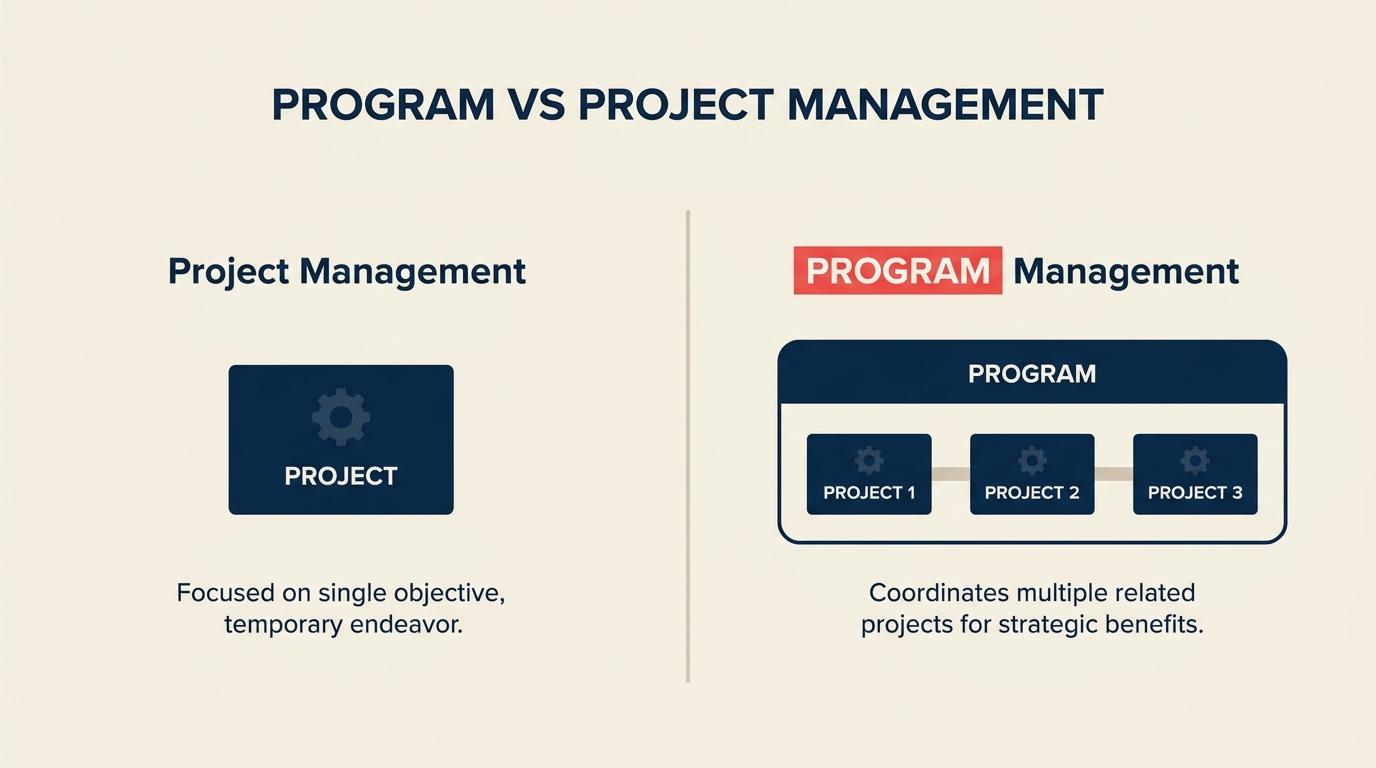
Sebuah proyek menghasilkan satu output tunggal yang terdefinisi dalam ruang lingkup, jadwal, dan anggaran yang tetap; sebuah program mengoordinasikan sekelompok proyek yang saling terkait untuk mewujudkan manfaat strategis yang tidak bisa dicapai oleh satu proyek saja.
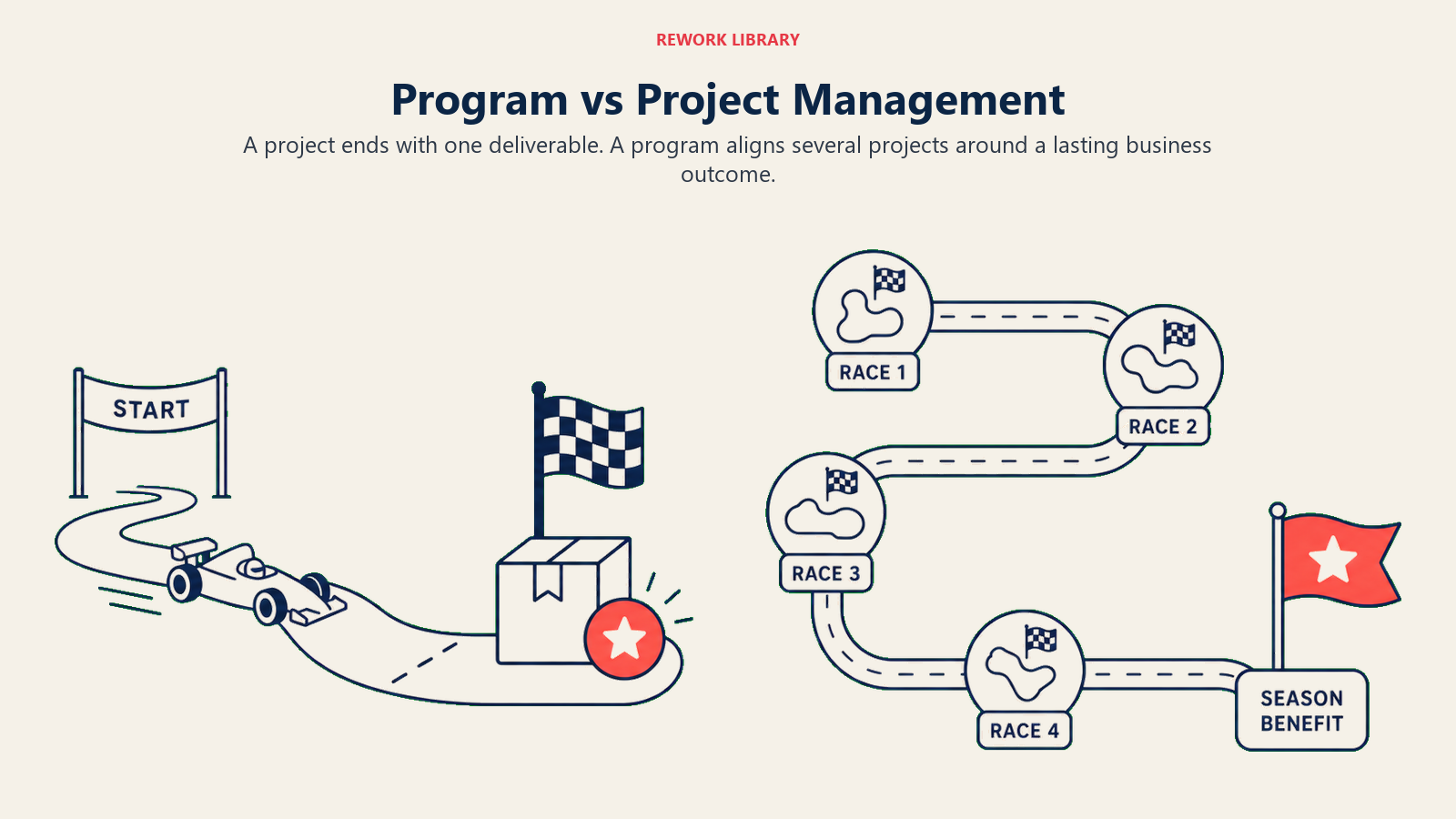
Bayangkan proyek sebagai sprint menuju garis akhir yang jelas. Program adalah kampanye sepanjang musim yang menentukan lomba mana yang akan dijalankan, dalam urutan apa, dan bagaimana hasilnya digabungkan menjadi sebuah kejuaraan. Proyek memiliki titik akhir, sedangkan program berkembang seiring strategi organisasi berkembang.
Fakta Kunci
- Laporan PMI's 2023 Pulse of the Profession menemukan bahwa organisasi dengan praktik program management yang matang membuang uang 11 kali lebih sedikit untuk inisiatif yang gagal dibandingkan organisasi tanpa pengawasan terstruktur.
- Menurut data gaji PMI (2022), program manager di AS memperoleh gaji median sebesar $130.000 per tahun, sekitar 20-25% lebih tinggi dari project manager di industri yang sebanding, mencerminkan akuntabilitas peran yang lebih luas.
- Project Management Institute mendefinisikan program sebagai "sekelompok proyek terkait, program anak, dan aktivitas program yang dikelola secara terkoordinasi untuk memperoleh manfaat yang tidak tersedia jika dikelola secara terpisah" (PMBOK Guide, edisi ke-7).
Apa itu proyek?
Proyek adalah upaya sementara dengan awal yang jelas, akhir yang jelas, dan hasil kerja yang spesifik. Bisa berupa peluncuran fitur payroll baru, relokasi kantor, atau menjalankan migrasi data pelanggan. Setelah hasil kerja diserahkan, proyek pun ditutup.
Proyek diatur oleh triple constraint: ruang lingkup, waktu, dan biaya. Setiap keputusan yang dibuat project manager adalah tentang menyeimbangkan ketiganya. Project charter mendefinisikan seperti apa keberhasilan sejak awal, dan project life cycle memandu bagaimana tim bergerak dari inisiasi hingga penutupan.
Proyek membutuhkan requirement yang jelas, work breakdown structure yang stabil, dan tim yang bisa fokus pada satu tujuan tanpa tertarik ke prioritas organisasi yang lebih luas.
Apa itu program?
Program adalah kumpulan proyek terkait (dan terkadang program yang lebih kecil) yang dikelola bersama karena hasilnya saling bergantung atau karena manfaat gabungannya lebih besar daripada jumlah bagian-bagiannya.
Perusahaan yang meluncurkan sistem CRM baru mungkin menjalankan lima proyek terpisah: migrasi data, pelatihan pengguna, integrasi API, penyiapan pelaporan, dan pendesainan ulang proses penjualan. Jika dikelola secara independen, setiap proyek bisa berhasil menurut standarnya sendiri namun tetap meninggalkan organisasi dengan kekacauan yang tidak saling terhubung. Jika dikelola sebagai program, program manager memastikan migrasi data selesai sebelum pelatihan dimulai, tim integrasi API tidak menimpa skema yang dibutuhkan tim pelaporan, dan perubahan proses penjualan selaras dengan cara kerja sistem baru yang sebenarnya.
Program cenderung berlangsung lebih lama daripada proyek, tidak memiliki satu hasil kerja tetap, dan keberhasilannya diukur dari apakah manfaat bisnis yang dituju benar-benar terwujud, bukan sekadar apakah hasil kerjanya dikirim tepat waktu.
Program vs project management: perbandingan berdampingan
| Dimensi | Project Management | Program Management |
|---|---|---|
| Ruang lingkup | Terdefinisi dan tetap sejak inisiasi | Berkembang seiring strategi organisasi |
| Durasi | Tanggal akhir tetap | Berlangsung terus hingga manfaat terwujud, lalu ditutup |
| Tujuan utama | Menghasilkan output spesifik (fitur, produk, sistem) | Mewujudkan manfaat strategis dari output yang terkoordinasi |
| Metrik keberhasilan | Tepat waktu, sesuai anggaran, sesuai ruang lingkup | Manfaat bisnis tercapai (pendapatan, efisiensi, kapabilitas) |
| Peran | Project Manager | Program Manager |
| Hasil kerja utama | Output nyata: software, bangunan, laporan | Kapabilitas atau perubahan organisasi yang terwujud |
| Tata kelola | Steering committee proyek atau sponsor | Program board dengan kepemimpinan lintas fungsi |
| Fokus risiko | Risiko terhadap ruang lingkup, jadwal, biaya proyek ini | Risiko ketergantungan antar berbagai proyek |
| Struktur tim | Satu tim proyek khusus | Beberapa tim proyek, dikoordinasikan secara terpusat |
Peran program manager vs project manager
Project manager memiliki tanggung jawab atas eksekusi. Tugas mereka adalah menjaga tim tetap pada jalurnya, mengelola stakeholder analysis matrix, menyelesaikan hambatan, dan melaporkan status. Mereka dekat dengan pekerjaan, sering terlibat langsung dalam sprint planning, eskalasi risiko, dan koordinasi vendor.
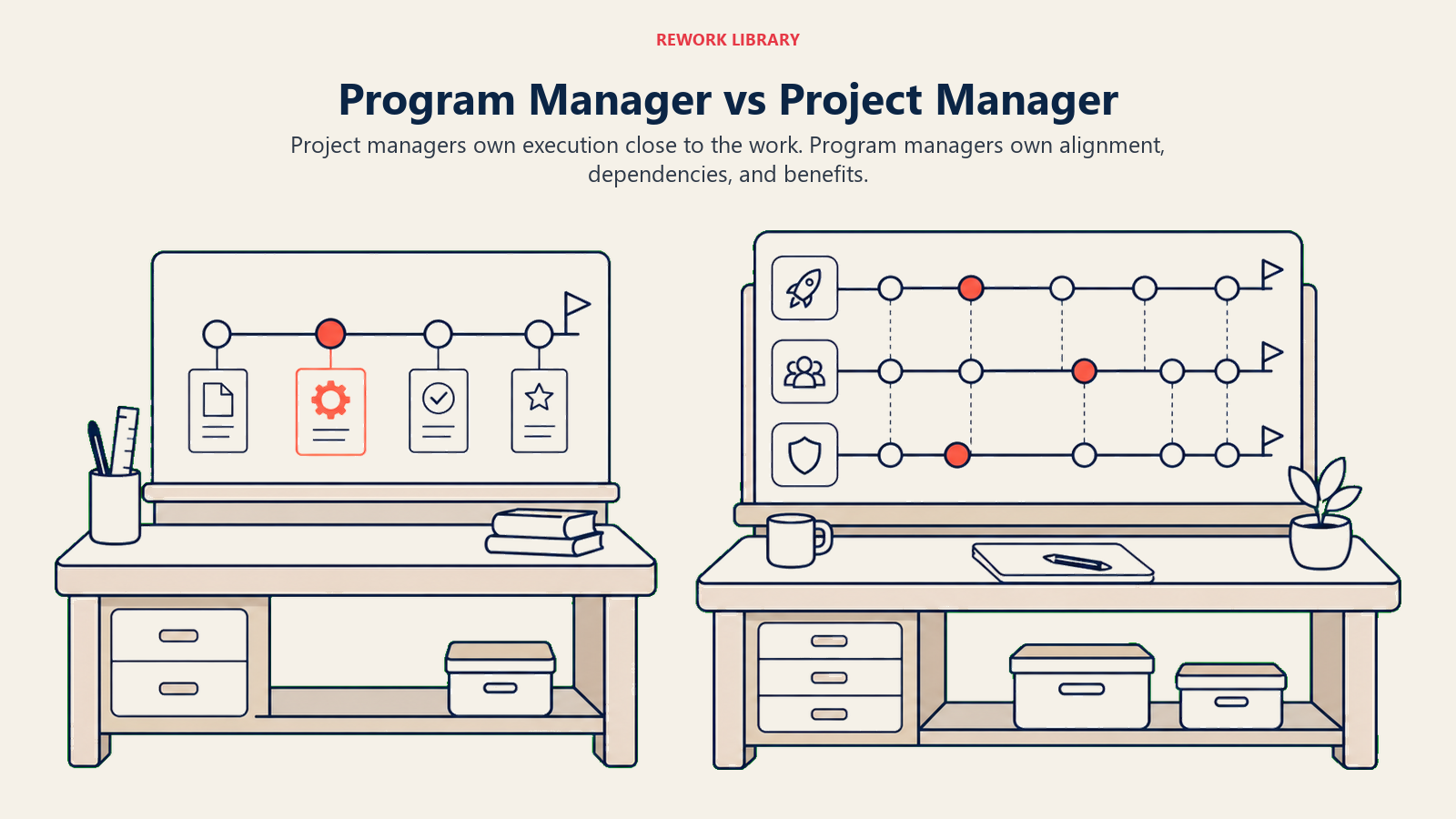
Program manager memiliki tanggung jawab atas keselarasan. Tugas mereka adalah memastikan proyek yang tepat berjalan pada waktu yang tepat, bahwa ketergantungan di antara proyek-proyek itu terlihat dan terkelola, dan bahwa hasil dari setiap proyek terhubung dengan outcome bisnis yang terukur. Mereka menghabiskan lebih banyak waktu dengan stakeholder senior dan lebih sedikit waktu pada detail level tugas.
Berikut cara praktis untuk merasakan perbedaannya: jika dua proyek dalam sebuah program sama-sama berjalan tepat waktu tetapi titik integrasinya masih tiga bulan lagi dan belum ada tim yang mulai saling berkomunikasi, masing-masing project manager mungkin melaporkan status hijau. Program manager melihatnya sebagai merah.
Program manager juga mengelola anggaran program secara keseluruhan, membuat keputusan trade-off (haruskah kita menunda Proyek B agar Proyek A bisa meminjam dua engineer?), dan memiliki benefits realization plan, yaitu dokumen yang menjelaskan seperti apa seharusnya organisasi terlihat ketika program selesai.
Kapan Anda membutuhkan program, bukan sekadar proyek
Tidak semua inisiatif besar membutuhkan program. Beberapa proyek yang benar-benar besar tetap saja proyek: membangun jembatan, merilis versi software besar, menyelenggarakan konferensi tahunan. Mereka kompleks, tetapi memiliki satu hasil kerja dan akhir yang terdefinisi.
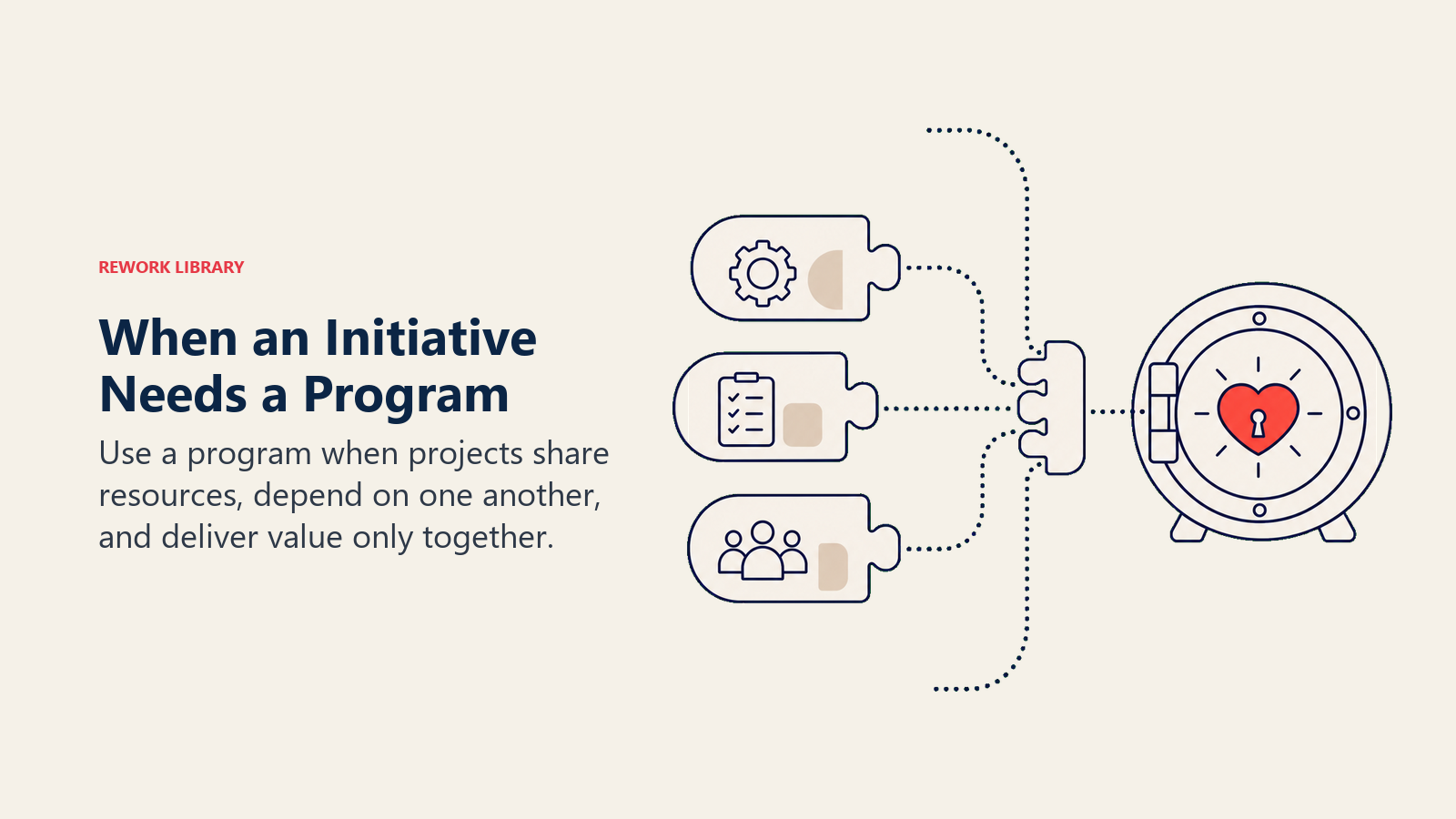
Program masuk akal ketika:
- Beberapa proyek berbagi sumber daya dan akan menimbulkan konflik jika dikelola secara independen.
- Proyek-proyek tersebut berurutan: Proyek B tidak bisa dimulai sampai Proyek A selesai.
- Manfaat yang Anda tuju hanya bisa diukur setelah semua proyek selesai (misalnya, penurunan 15% dalam customer churn dari kombinasi peningkatan produk, dukungan, dan onboarding).
- Ruang lingkup diperkirakan akan berkembang karena organisasi belajar sambil berjalan (umum dalam transformasi digital dan pendesainan ulang organisasi).
- Manajemen stakeholder perlu disentralisasi karena eksekutif yang sama mensponsori beberapa workstream yang saling bergantung.
Jika tidak ada satu pun kondisi tersebut yang berlaku, proyek besar dengan project management office (PMO) yang kuat untuk pengawasan biasanya lebih sederhana dan sudah cukup.
Contoh
Perusahaan SaaS yang berekspansi ke penjualan enterprise mungkin menjalankan program yang mencakup: roadmap fitur produk untuk keamanan dan audit log enterprise (Proyek 1), perombakan sales enablement dan pelatihan (Proyek 2), tinjauan hukum dan kepatuhan untuk kontrak enterprise (Proyek 3), dan jalur onboarding customer success baru (Proyek 4). Tidak ada satu proyek pun yang menghasilkan "siap enterprise" sendirian. Programlah yang mewujudkannya.
Produsen otomotif yang mengurangi biaya produksi mungkin menjalankan program yang mencakup negosiasi ulang pemasok (Proyek 1), otomatisasi pabrik (Proyek 2), dan pendesainan ulang proses lean (Proyek 3). Target pengurangan biaya hanya terlihat ketika ketiganya tercapai.
Universitas yang mendigitalisasi layanan mahasiswanya mungkin menjalankan program dengan proyek terpisah untuk registrasi, bantuan keuangan, perumahan, dan konseling. Setiap proyek bisa diluncurkan secara independen, tetapi manfaat pengalaman mahasiswa membutuhkan semuanya bekerja bersama.
Praktik terbaik
Definisikan manfaatnya sebelum mendefinisikan proyeknya. Program yang dimulai dengan "ini enam proyek yang perlu kita kerjakan" sudah bermasalah sejak awal. Mulailah dengan "ini kapabilitas atau outcome yang dibutuhkan organisasi" dan bekerja mundur untuk menentukan proyek mana yang akan mewujudkannya.
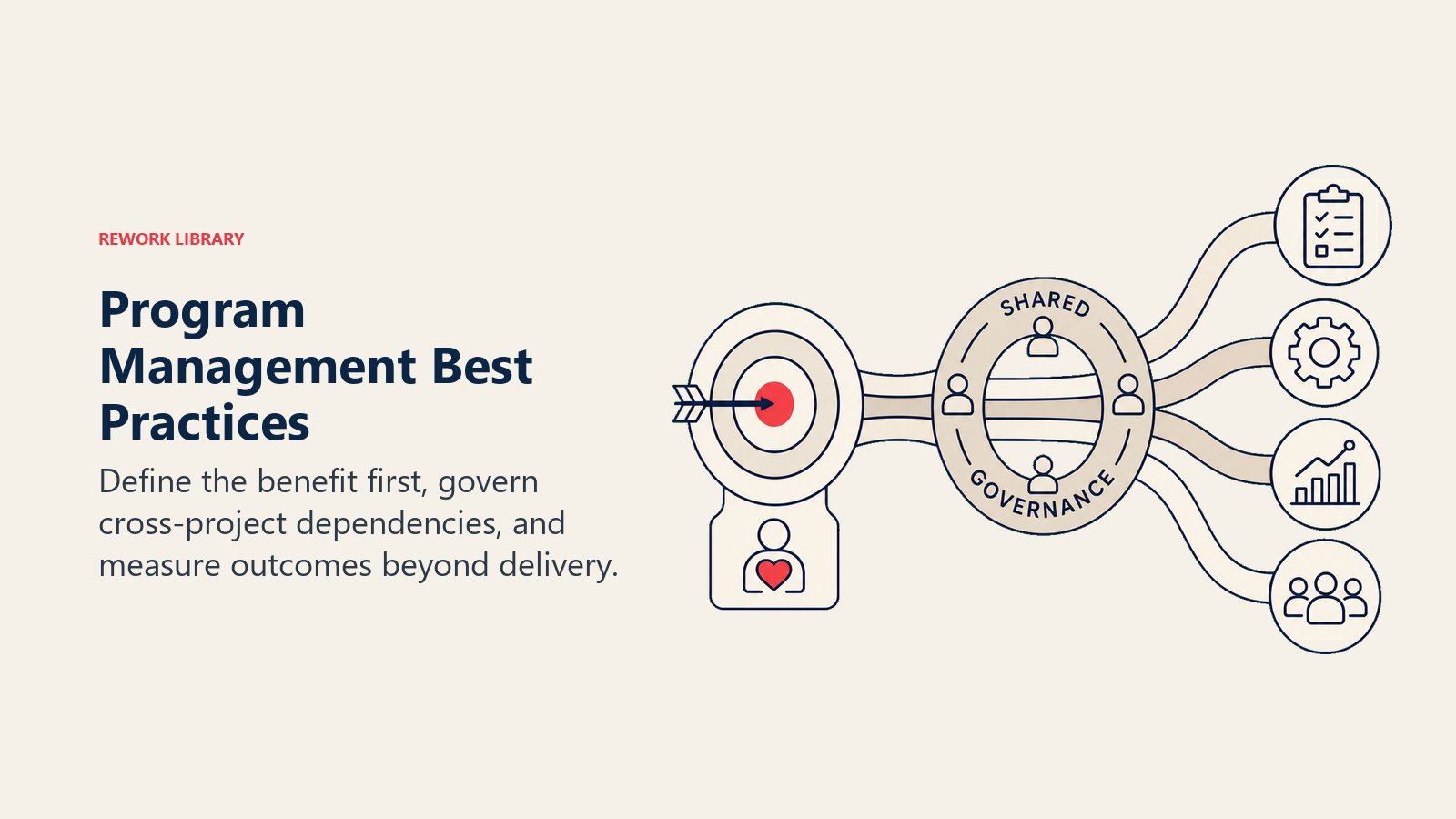
Susun benefits realization plan sejak awal. Dokumen ini menyebutkan manfaat yang spesifik dan terukur (bukan sekadar "meningkatkan kepuasan pelanggan" tetapi "menurunkan tingkat NPS detractor dari 18% menjadi 10% pada Q3") dan menugaskan seseorang yang bertanggung jawab untuk mengukurnya setelah program ditutup.
Petakan ketergantungan sebelum proyek mana pun dimulai. Gunakan dependency register untuk mencatat setiap serah terima antar proyek. Perlakukan ketergantungan yang tidak terkelola sama seperti project manager memperlakukan risiko yang belum dimitigasi: itu adalah kegagalan program yang menunggu untuk terjadi.
Adakan tinjauan level program secara rutin, terpisah dari rapat status proyek. Rapat status proyek menjawab "apakah kita masih di jalur yang benar?" Tinjauan program menjawab "apakah kita masih menyelesaikan masalah yang tepat?" Ritme dan pesertanya berbeda.
Jaga agar project manager tetap fokus pada eksekusi. Kesalahan umum adalah menarik project manager ke dalam percakapan tata kelola program yang konteksnya tidak cukup mereka kuasai untuk memberi pengaruh. Program manager mensintesis lintas proyek dan menerjemahkannya untuk pimpinan, project manager mengeksekusi.
Selaraskan program dengan prioritas portofolio. Program tidak berdiri sendiri. Mereka bersaing untuk anggaran dan sumber daya dengan setiap inisiatif lain dalam portofolio organisasi. Memahami di mana posisi program dalam hierarki project portfolio management membantu program manager membuat keputusan trade-off yang tepat ketika sumber daya terbatas.
Cara paling jelas untuk sampai pada struktur yang tepat: tanyakan seperti apa keberhasilan setelah pekerjaan selesai. Jika keberhasilan adalah satu hal yang dihasilkan, Anda punya proyek. Jika keberhasilan adalah perubahan terukur dalam cara bisnis beroperasi, dan perubahan itu membutuhkan beberapa upaya terkoordinasi untuk mencapainya, Anda punya program. Pastikan pertanyaan itu terjawab dengan benar terlebih dahulu, lalu bangun tata kelola di sekitar jawabannya.