Mengapa SaaS Adalah Pengguna AI dengan Kecepatan Tertinggi

Turn this article into takeaways for your work.


Each assistant summarizes the article only for you and suggests best practices for your work.
Sebagian besar industri membicarakan adopsi AI. Perusahaan SaaS mengirimkannya sebagai produk.
Kalimat itu terdengar seperti tagline pemasaran, tetapi menggambarkan realitas struktural. Sebuah perusahaan manufaktur yang mengadopsi AI harus terlebih dahulu mendigitalisasi prosesnya, meyakinkan operator pabrik untuk mempercayai sistem baru, menavigasi siklus pengadaan 12 bulan, dan berintegrasi dengan infrastruktur berusia 30 tahun. Sistem rumah sakit harus mendapatkan persetujuan kepatuhan, memperoleh dukungan staf klinis, dan melewati komite pengadaan yang bergerak paling cepat setiap kuartal.
Perusahaan SaaS dengan fitur AI baru? Mereka menulis kode, menjalankan A/B test di staging, mendorong ke production pada hari Kamis, memantau telemetry pada hari Jumat, lalu mengirimkan ke 100% pengguna atau melakukan rollback. Seluruh siklus memakan waktu hari, bukan tahun.
Ini bukan tentang perusahaan SaaS yang lebih pintar atau lebih inovatif. Ini tentang keunggulan struktural yang tertanam dalam model bisnis dan arsitektur produk. Dan ketika Anda menumpuk keunggulan tersebut, Anda mendapatkan adopsi AI dengan kecepatan tertinggi di dunia.
Keunggulan struktural SaaS: produknya ADALAH datanya
Sebelum perusahaan manufaktur dapat melatih AI pada operasinya, ia harus mengekstrak data dari sistem SCADA dan catatan kertas. Sebelum sistem layanan kesehatan dapat menjalankan model prediktif, ia harus merekonsiliasi data dari selusin vendor EMR yang tidak saling beroperasi. Sebelum jaringan ritel dapat mempersonalisasi dalam skala besar, ia harus menggabungkan transaksi di dalam toko, data web, dan catatan program loyalitas dari database berbeda.
Key Facts: Adopsi AI SaaS
- Perusahaan teknologi memimpin semua industri dalam adopsi AI absolut, dengan 78% menggunakan AI setidaknya dalam satu fungsi bisnis (McKinsey State of AI, 2025)
- AI adalah kategori aplikasi yang tumbuh paling cepat dalam portofolio SaaS di 2025, berkembang 181% dalam jumlah aplikasi AI di enterprise stack (Zylo SaaS Management Index, 2025)
- Intervensi AI yang dipersonalisasi mengurangi churn SaaS sebesar 10-18%, sementara rekomendasi berbasis AI meningkatkan adopsi fitur sebesar 25-35%, menghasilkan peningkatan NRR secara langsung (xillentech.com, 2025)
Perusahaan SaaS melewati fase digitalisasi sepenuhnya. Produknya adalah perangkat lunak. Perangkat lunak menghasilkan data kejadian sebagai produk sampingan dari keberadaannya. Setiap klik, sesi, aktivasi fitur, panggilan API, dan penyelesaian workflow sudah merupakan catatan terstruktur dalam database di suatu tempat.
Data tersebut juga bersih dengan cara yang jarang dicapai industri lain. Produk SaaS menerapkan schema. Mereka memancarkan typed events. Mereka memberi timestamp pada segalanya. Ketika Anda menerapkan kemampuan Predict, misalnya model risiko churn, Anda tidak memulai dari nol dalam pengolahan data. Sinyal perilaku pengguna sudah ada di data warehouse Anda. Tanggal perpanjangan langganan sudah ada di sistem penagihan Anda. Riwayat tiket dukungan sudah ada di Zendesk. Anda menghubungkannya dan mulai melatih. Layanan kesehatan dan manufaktur akan menghabiskan 18 bulan untuk mencapai titik awal itu.
Perusahaan SaaS menghasilkan data perilaku terstruktur sebagai produk sampingan dari keberadaannya. Aplikasi B2B SaaS dengan 1.000 pengguna aktif menghasilkan jutaan catatan kejadian yang diberi tipe dan timestamp per minggu. Tidak ada industri lain yang menghasilkan kepadatan sinyal perilaku yang bersih seperti itu tanpa proyek rekayasa data yang didedikasikan.
Ekonomi berlangganan menciptakan urgensi AI
Inilah argumen yang jarang dikemukakan: matematika SaaS adalah alasan mengapa ROI AI begitu terukur dan begitu cepat.
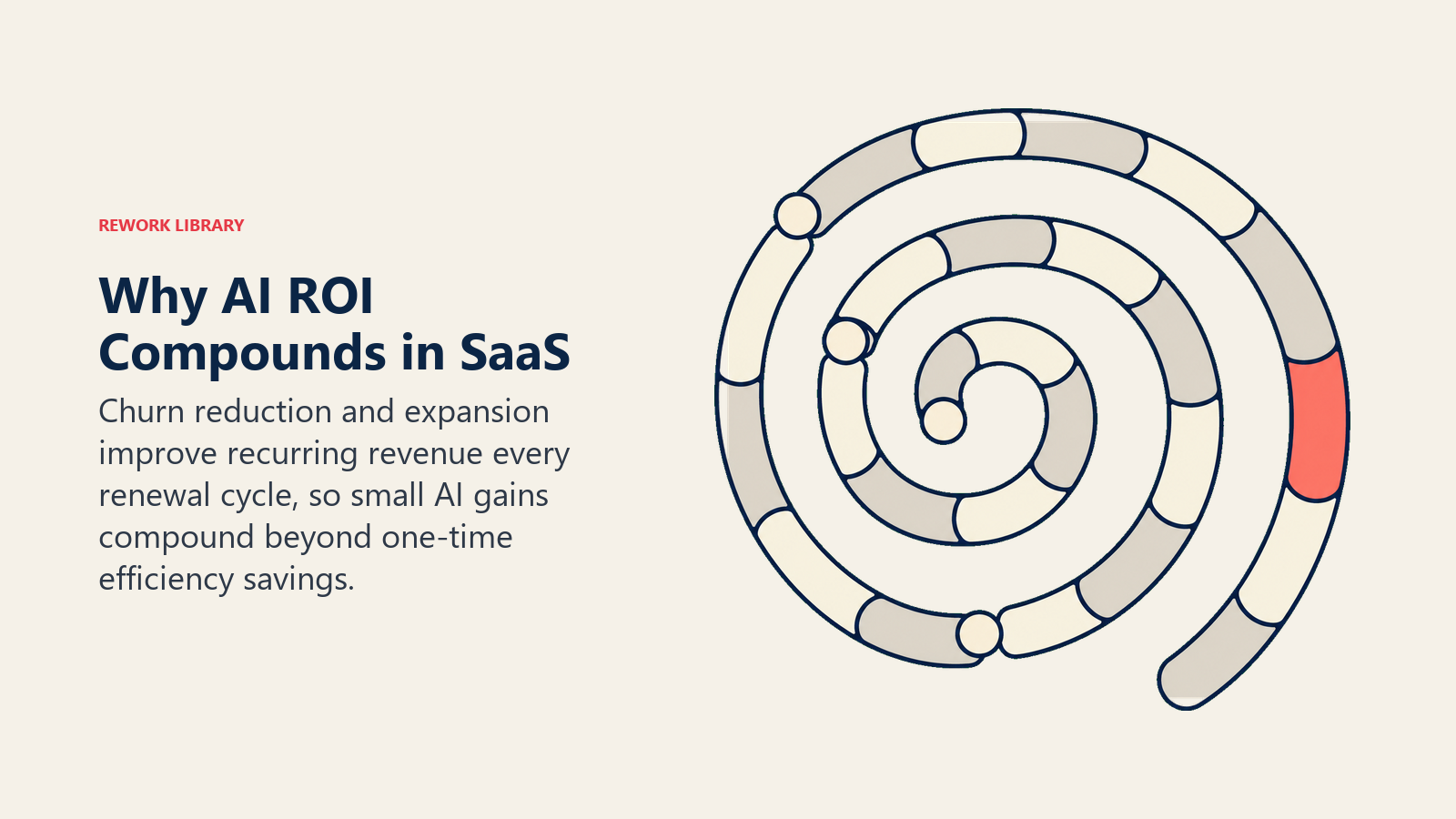
Dalam bisnis berbasis proyek, peningkatan efisiensi 5% adalah peningkatan efisiensi 5%. Anda menyelesaikan pekerjaan 5% lebih cepat, menghemat biaya gaji, dan melanjutkan. Keuntungan tidak berganda.
Dalam bisnis berlangganan, pengurangan churn 5% adalah angka yang berbeda.
Perusahaan SaaS dengan motion ekspansi yang didedikasikan mencapai NRR 15-25% lebih tinggi dibandingkan yang mengandalkan ekspansi organik saja, menurut benchmark ChartMogul 2024 di 2.100 perusahaan SaaS yang didukung modal ventura. AI adalah mekanisme yang membuat motion ekspansi yang didedikasikan dapat diskalakan.
Misalkan Anda menjalankan perusahaan SaaS dengan ARR $5M (Annual Recurring Revenue) dan churn bulanan 2%. Itu adalah tingkat churn tahunan 22%. Pada tingkat tersebut, Anda menggantikan hampir seperempat pendapatan Anda setiap tahun hanya untuk tetap datar. Benchmark SaaS ChartMogul menunjukkan bahwa B2B SaaS terbaik mencapai NRR 110-125%, dan perusahaan dengan NRR di atas 100% tumbuh 1,5-3x lebih cepat dari pesaing. Jika Anda memotong churn bulanan dari 2% menjadi 1,5% menggunakan Customer Success Manager bertenaga AI yang menandai akun berisiko lebih awal, churn tahunan Anda turun dari 22% menjadi sekitar 16%. Efek penggandaan pada ARR selama tiga tahun sangat besar.
Matematika yang sama berlaku untuk ekspansi. Peningkatan 2% dalam NRR dari identifikasi upsell yang lebih baik berganda menjadi kurva pendapatan yang sangat berbeda pada titik 36 bulan. AI yang dapat mengidentifikasi pelanggan mana yang siap berkembang, dan merutekan CSM yang tepat pada waktu yang tepat, tidak hanya meningkatkan satu kuartal. Ini membentuk kembali lintasan pendapatan.
Dan karena recurring revenue dapat diukur secara real time, Anda mengetahui dalam 90 hari apakah penerapan AI berhasil. Bukan pada akhir tahun fiskal, bukan setelah analisis atribusi yang rumit. Delta MRR (Monthly Recurring Revenue) muncul di dashboard penagihan Anda. Loop umpan balik itulah mengapa tim SaaS terus berinvestasi: ROI-nya terlihat, cepat, dan terkait langsung dengan metrik bisnis inti.
Kerangka 4-Driver Velocity Stack
4-Driver Velocity Stack adalah penjelasan struktural mengapa SaaS mencapai ROI AI lebih cepat dari setiap industri lainnya. Ini menggabungkan empat keunggulan pengganda: product telemetry yang bersih (data dihasilkan secara pasif dalam schema terstruktur), matematika penagihan berlangganan (peningkatan churn dan NRR berganda dari waktu ke waktu dengan cara yang tidak dilakukan oleh pendapatan proyek), sinyal perilaku PLG (product-led growth) (tindakan dalam produk memberikan data pelatihan yang tidak tersedia untuk bisnis yang dipimpin penjualan atau offline), dan ritme pengiriman mingguan (SaaS dapat menguji, mengukur, dan mengiterasi fitur AI dalam hari bukan kuartal). Tidak ada industri lain yang memiliki keempatnya. Sebagian besar memiliki satu. SaaS memiliki keempatnya secara default.
PLG sebagai akselerator AI
Perusahaan PLG (product-led growth) memiliki keunggulan data yang tidak dimiliki oleh bisnis yang dipimpin penjualan.
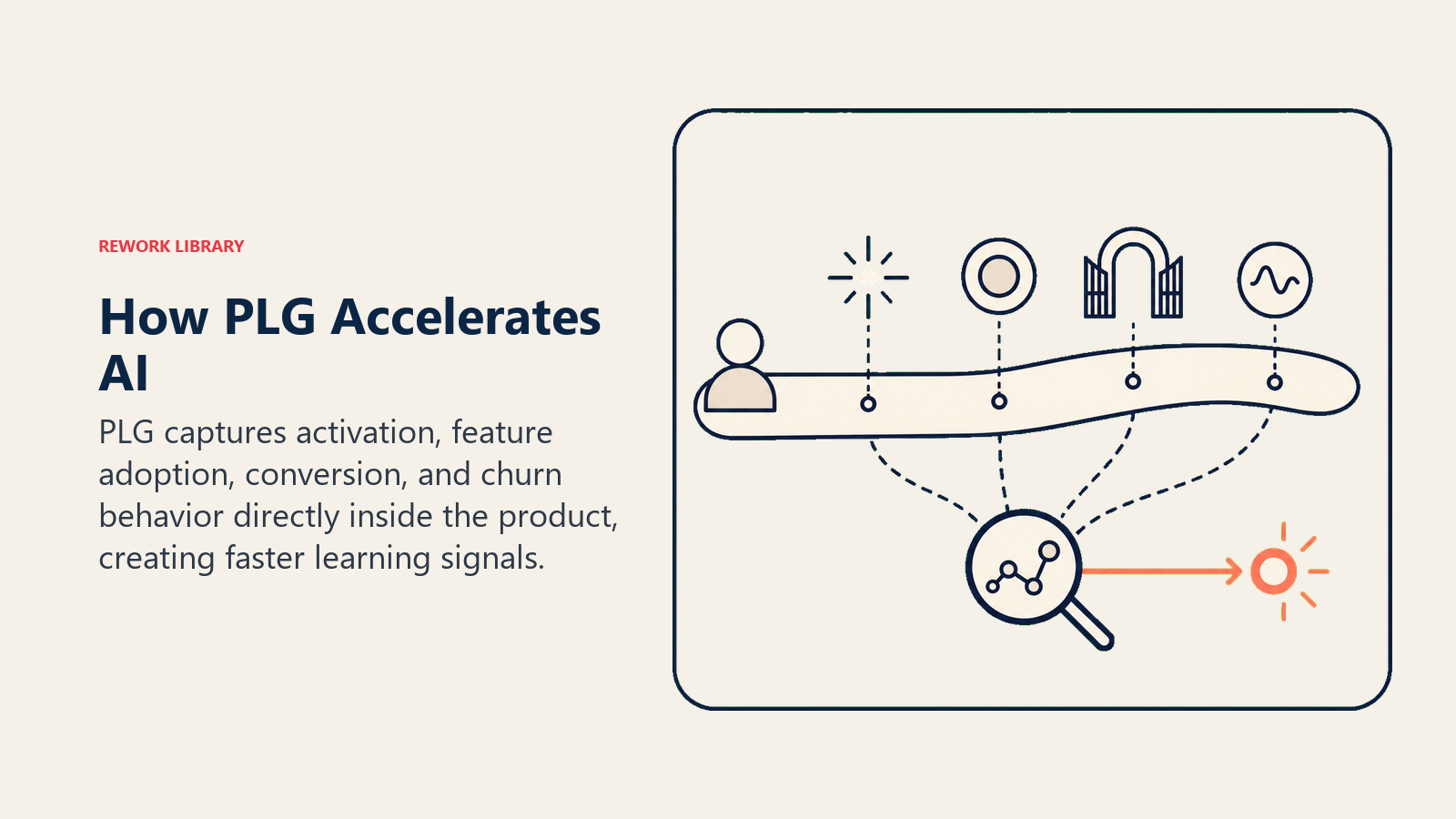
Perusahaan SaaS dengan motion freemium atau free trial tahu kapan pengguna pertama kali diaktifkan. Ia tahu fitur mana yang mereka gunakan dalam tiga sesi pertama. Ia tahu berapa lama waktu yang dibutuhkan untuk menyelesaikan workflow pertama mereka yang bermakna. Ia tahu pengguna mana yang berkonversi dari gratis ke berbayar, dan fitur apa yang mereka adopsi sebelum berkonversi. Ia tahu pengguna berbayar mana yang churn dan seperti apa penggunaan fitur mereka dalam dua minggu sebelum mereka membatalkan. Penelitian PLG OpenView mendokumentasikan bagaimana perusahaan PLG menggunakan data perilaku dalam produk secara real time di berbagai saluran dan perangkat untuk mendorong konversi.
Tidak ada data seperti itu dalam proses penjualan enterprise tradisional. Sinyal pertama yang bermakna yang Anda dapatkan adalah "mereka menandatangani" atau "mereka tidak menandatangani." Perusahaan PLG mendapatkan ratusan sinyal per pengguna per sesi, semuanya diberi timestamp dan dapat diatribusikan.
Ini membuat dataset pelatihan AI jauh lebih kaya. Perusahaan PLG yang membangun model prediksi churn tidak memprediksi dari segenggam tiket dukungan dan respons survei perpanjangan. Mereka memprediksi dari 90 hari telemetri perilaku granular. Perusahaan PLG yang mempersonalisasi pengalaman onboarding tidak menebak segmen pengguna. Mereka menggunakan perilaku dalam produk aktual untuk mengadaptasi pengalaman secara real time.
Linear menggunakan data penggunaan fitur untuk memprioritaskan kemampuan AI mana yang diprioritaskan dalam roadmap-nya. Notion telah menggunakan telemetri onboarding untuk mengidentifikasi urutan tindakan mana yang memprediksi retensi jangka panjang, dan membangun nudge onboarding bertenaga AI di sekitar sinyal tersebut. Stripe Radar dilatih pada jutaan pola transaksi yang hanya ada karena Stripe memproses pembayaran dalam skala besar di dalam produk perangkat lunak.
Perusahaan SaaS PLG yang membangun model prediksi churn dapat melatihnya pada 90 hari telemetri perilaku dalam produk granular per pengguna. Vendor perangkat lunak enterprise tradisional yang membangun model yang sama hanya memiliki akses ke segenggam tiket dukungan dan satu survei perpanjangan tahunan. Kesenjangan sinyal itulah mengapa model churn SaaS PLG mengungguli padanannya yang non-PLG dengan margin yang besar.
Perusahaan non-SaaS tidak memiliki padanan sumber sinyal ini. Tetapi mengetahui keunggulan ada hanyalah awal.
4 agen yang paling penting dalam SaaS
ACE Framework mengidentifikasi empat AI agent Level 3 yang mendominasi ROI AI SaaS, yang secara langsung sesuai dengan model bisnis akuisisi dan retensi:
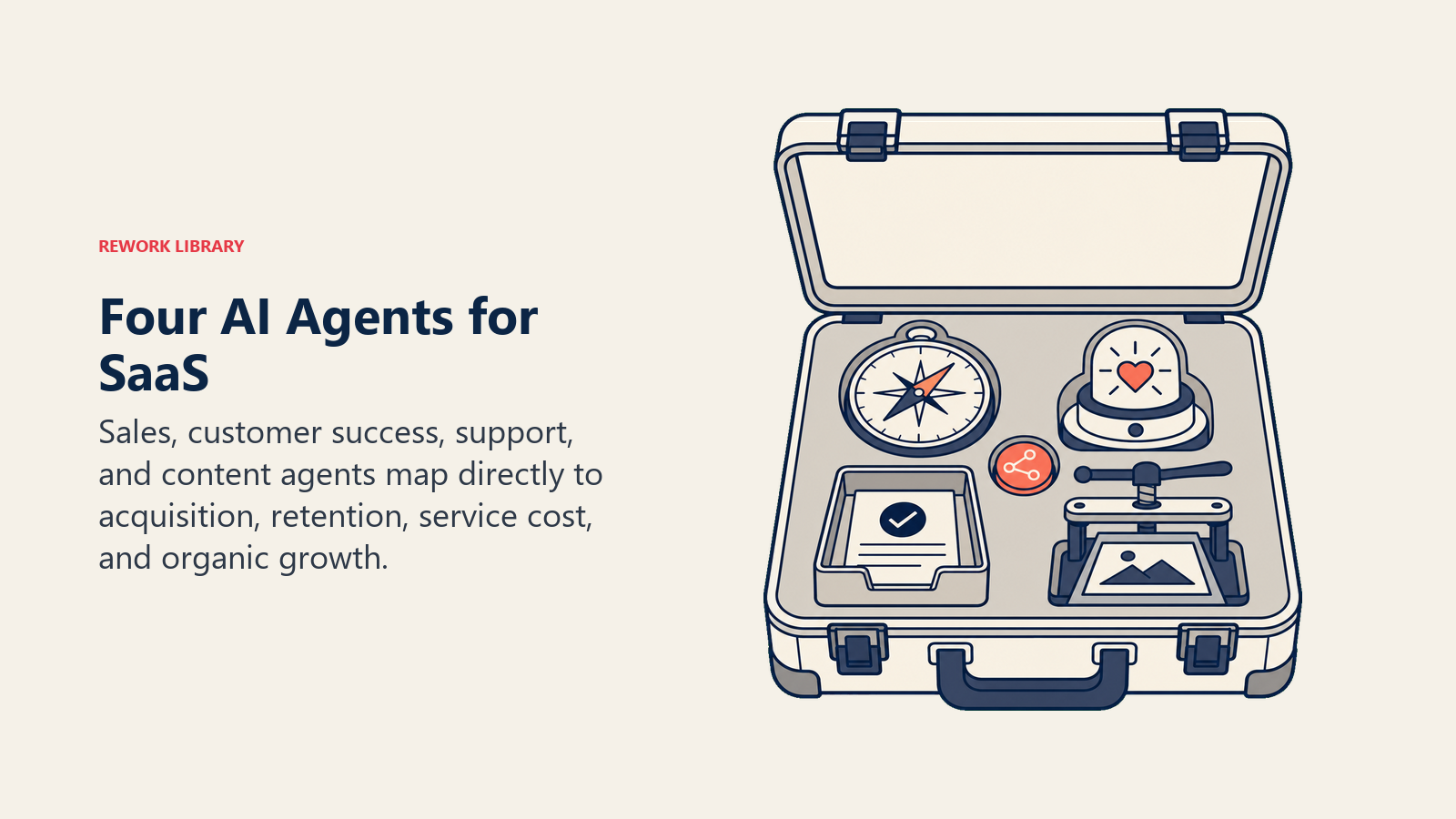
AI Sales Operator menangani lead scoring, call intelligence, riset akun, dan draft tindak lanjut. Untuk SaaS, ini berarti siklus konversi trial-ke-berbayar yang lebih pendek dan kualifikasi sinyal upgrade gratis-ke-berbayar yang lebih baik. Gong, Clari, Salesforce Einstein, dan Rework Sales AI semuanya bermain di sini.
AI Customer Success Manager (CSM) memantau sinyal churn, menyiapkan deck QBR, mengidentifikasi kandidat ekspansi, dan menyusun outreach. Untuk SaaS, setiap poin persentase peningkatan NRR berganda menjadi ARR. Gainsight AI, ChurnZero, dan Planhat adalah vendor utama. Lihat AI Customer Success Manager untuk B2B SaaS untuk rincian lengkapnya.
AI Support Agent menangani tiket L1, menampilkan resolusi sebelumnya, dan mengeskalasi anomali. Untuk SaaS, mengurangi biaya dukungan per pelanggan secara langsung meningkatkan gross margin. Intercom Fin dan Zendesk AI telah menjadi infrastruktur standar.
AI Content Operator menghasilkan konten, mempersonalisasi kampanye, dan menampilkan pendidikan produk yang tepat kepada pengguna yang tepat pada waktu yang tepat. Untuk SaaS dengan siklus evaluasi yang panjang, konten adalah pipeline. Jasper, Writer.com, dan HubSpot AI melayani fungsi ini.
Rincian lengkap setiap agen dan sinyal ROI yang diharapkan mencakup apa yang sebenarnya dilakukan masing-masing dan vendor mana yang layak dievaluasi.
| AI Agent | Lever Pendapatan SaaS | Sinyal ROI Utama | Payback Tipikal |
|---|---|---|---|
| AI Sales Operator | Kurangi CAC, persingkat siklus penjualan | Periode payback CAC | 2-3 kuartal |
| AI Customer Success Manager | Tingkatkan NRR, kurangi churn | Net revenue retention | 1-2 kuartal |
| AI Support Agent | Tingkatkan gross margin | Biaya per tiket yang didefleksi | 30-60 hari |
| AI Content Operator | Turunkan organic CAC | Kontribusi pipeline organik | 3-6 bulan |
Sumber: Benchmark agregat dari McKinsey, Gainsight, Intercom, Forrester (2024-2025)
Kecepatan iterasi: SaaS mengirimkan AI secara berbeda
Perusahaan SaaS tidak hanya mengadopsi alat AI. Mereka mengirimkan AI sebagai produk. Itulah setengah lainnya dari argumen kecepatan.
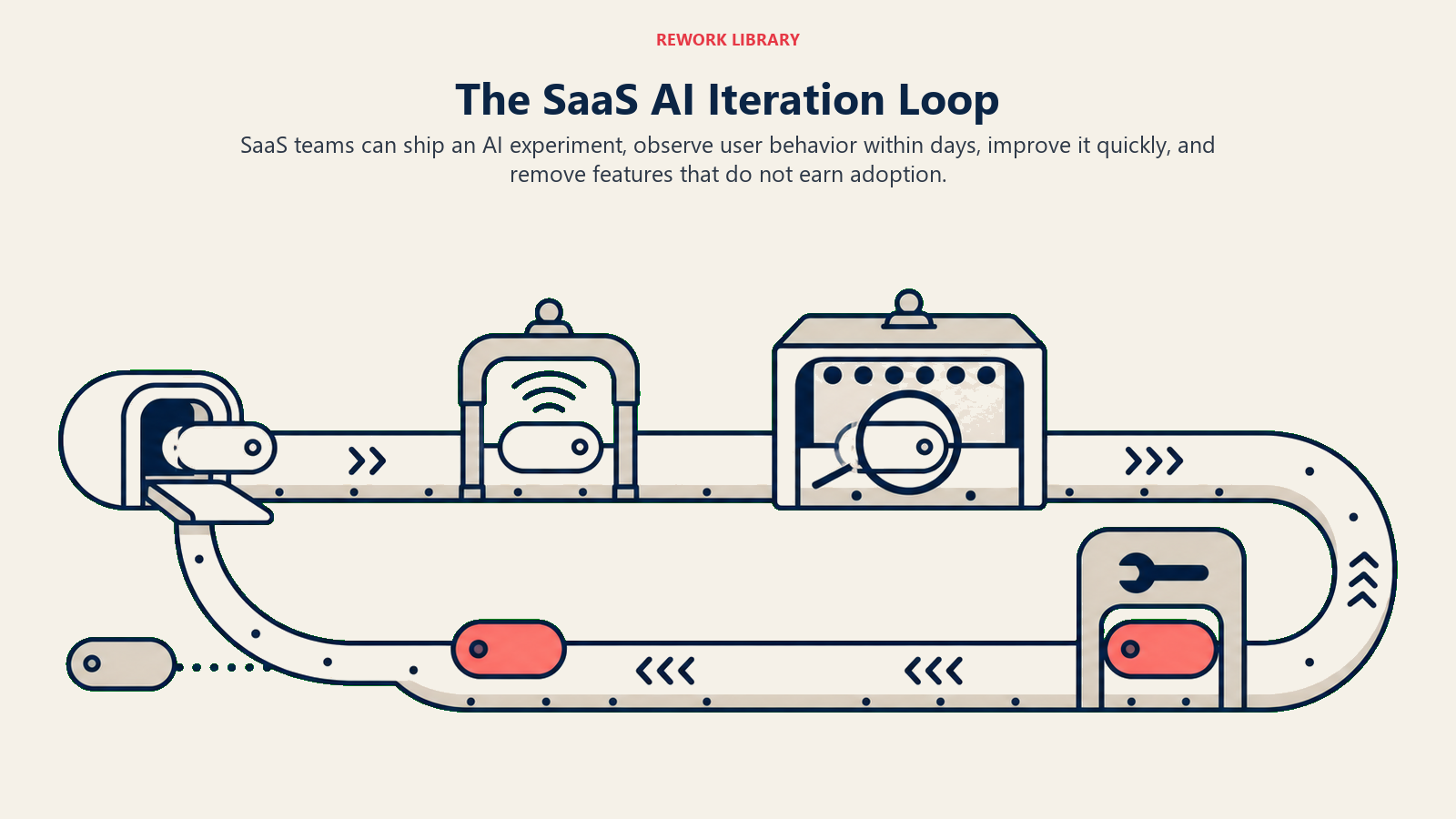
Perusahaan manufaktur yang menggunakan AI untuk pemeliharaan prediktif mungkin menerapkan satu model, menyetelnya selama enam bulan, dan menyebutnya selesai selama dua tahun. Tim produk SaaS mengirimkan eksperimen fitur AI setiap minggu. Changelog produk terlihat seperti roadmap AI yang berkelanjutan.
Ini menciptakan sesuatu yang tidak dimiliki industri lain: loop umpan balik yang ketat antara investasi AI dan sinyal pelanggan. Fitur AI yang dikirimkan pada hari Senin mendapatkan data perilaku pengguna nyata pada hari Rabu. Jika tidak digunakan, Anda mengetahuinya pada hari Jumat. Jika membantu pengguna menyelesaikan workflow lebih cepat, metrik aktivasi Anda mencerminkannya dalam beberapa hari.
Ritme tersebut memaksakan disiplin. Tim SaaS tidak dapat bersembunyi di balik siklus penerapan yang panjang. Mereka belajar cepat, mengiterasi cepat, dan memangkas apa yang tidak berhasil. Tim yang paling baik dalam hal ini, GitHub dengan Copilot, Notion dengan penulisan AI, Linear dengan backlog yang diprioritaskan AI, telah membangun loop pembelajaran AI yang berkelanjutan langsung ke dalam proses pengembangan produk mereka.
Tekanan kompetitif sangat intens
Ketika Intercom meluncurkan Fin pada 2023, setiap pemimpin dukungan pelanggan di setiap perusahaan SaaS memiliki pertanyaan dari dewan untuk dijawab minggu berikutnya. Bukan kuartal berikutnya. Minggu berikutnya.
Bukan begitu cara kerjanya di layanan kesehatan, manufaktur, atau layanan keuangan. Di industri tersebut, peluncuran teknologi besar menciptakan siklus evaluasi pengadaan multi-tahun. Di SaaS, mereka menciptakan kecemasan kompetitif yang instan.
Dinamika perlombaan senjata ini adalah fitur struktural pasar. Perusahaan SaaS menjual kepada bisnis lain. Pengambil keputusannya adalah VP ke atas. Mereka membaca TechCrunch dan menghadiri SaaStr. Mereka melihat setiap pengumuman produk. Ketika pesaing mengirimkan fitur AI yang bermakna, itu segera terlihat, dan tekanan untuk merespons datang dengan cepat.
Tekanan ini, meskipun tidak nyaman, mendorong kecepatan adopsi. Tim yang mungkin sebelumnya "menunggu dan melihat" ditarik ke dalam urgensi oleh dinamika kompetitif. Dan loop umpan balik yang ketat yang disebutkan di atas berarti urgensi itu diterjemahkan menjadi penerapan nyata, bukan sekadar evaluasi.
Apa yang salah dilakukan perusahaan SaaS
Dengan semua keunggulan struktural, ada dua mode kegagalan yang muncul secara konsisten.
Berinvestasi berlebihan pada fitur AI yang tidak digunakan pelanggan. Hal termudah yang dapat dilakukan tim produk SaaS adalah menambahkan AI ke produk. Hal yang sulit adalah memastikan pelanggan benar-benar mengadopsinya. Kurva adopsi fitur untuk fitur AI tidak berbeda secara material dari fitur lainnya. Pelanggan menggunakan apa yang memecahkan masalah langsung. AI kosmetik tidak.
Mengabaikan use case retensi. Tim yang berfokus pada akuisisi sering menjangkau AI untuk meningkatkan efisiensi outbound: lebih banyak email, penargetan yang lebih baik, pipeline yang lebih cepat. Tetapi dalam bisnis berlangganan, matematika retensi biasanya lebih menarik. Peningkatan 1% dalam churn bulanan bernilai lebih dari ARR berganda dibandingkan peningkatan 10% dalam volume lead, di sebagian besar tahap pertumbuhan perusahaan. Analisis McKinsey tentang potensi ekonomi AI generatif mengidentifikasi operasi pelanggan dan pemasaran sebagai dua use case bernilai tertinggi, tepatnya fungsi tempat retensi SaaS berada. AI CSM dan AI Support Agent seringkali merupakan investasi dengan ROI tertinggi yang tersedia, dan mereka secara sistematis kurang diinvestasikan relatif terhadap alat AI sisi penjualan.
Model operasi SaaS yang dibentuk kembali oleh AI mencakup bagaimana bagan organisasi berubah ketika Anda menghubungkan agen-agen ini dengan benar.
Rework Analysis: Perusahaan SaaS yang menerapkan AI ke dalam workflow retensi terlebih dahulu, sebelum otomatisasi penjualan, secara konsisten mengungguli rekan-rekan dalam pertumbuhan ARR pada titik 24 bulan. Alasannya: pengurangan churn bulanan 1% bernilai lebih dari pendapatan berganda daripada peningkatan 10% dalam volume lead di sebagian besar tahap pertumbuhan. Namun sebagian besar pengeluaran AI SaaS masuk ke alat akuisisi. Tingkat churn B2B SaaS median mencapai 3,5% bulanan pada 2025 (benchmark ChartMogul). Untuk perusahaan ARR $5M, menutup kesenjangan dari 3,5% menjadi 2,5% bulanan melalui customer success bertenaga AI akan memulihkan sekitar $600K dalam pendapatan yang dipertahankan secara tahunan. Angka itu hampir selalu melebihi ROI sisi akuisisi dari investasi AI yang sama.
Urutan yang berhasil
SaaS memiliki setiap keunggulan struktural untuk menang dengan AI. Pertanyaannya adalah urutan.
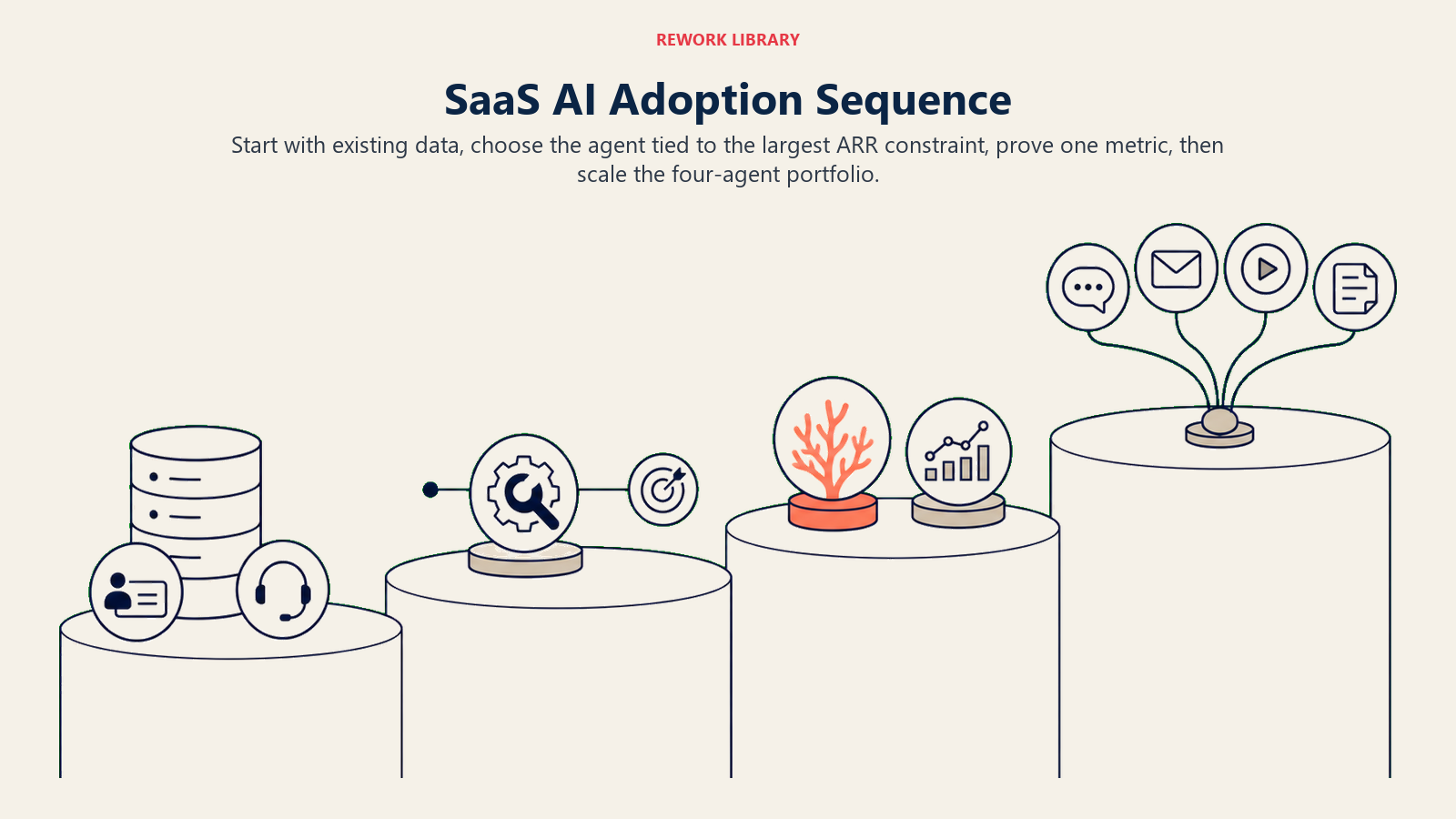
Mulailah dengan data yang sudah Anda miliki. Perusahaan SaaS memiliki product telemetry, catatan CRM, dan riwayat dukungan. Itu sudah cukup untuk menjalankan kemampuan Predict dan Generate yang bermakna hari ini tanpa infrastruktur data baru.
Pilih agen yang sesuai dengan lever ARR terbesar Anda. Jika churn adalah masalah Anda, AI CSM membayar kembali paling cepat. Jika konversi pipeline adalah kendalanya, AI Sales Operator adalah investasinya. Jika biaya dukungan mengikis margin, Intercom Fin atau Zendesk AI dapat menggerakkan metrik dalam 90 hari.
Jalankan empat agen yang penting untuk SaaS sebagai portofolio. Setiap agen menangani tahap siklus hidup pelanggan yang berbeda. Penggandaan terjadi ketika keempatnya diterapkan dan berbagi konteks, tetapi Anda tidak perlu melakukannya sekaligus. Mulailah dengan satu, buktikan ROI-nya, dan urutkan dari sana.
Keunggulan strukturalnya nyata. Pertanyaannya adalah apakah Anda menggunakannya secara sengaja atau membiarkan pesaing bergerak lebih cepat sementara Anda mengevaluasi.
Pertanyaan yang Sering Diajukan
Mengapa SaaS adalah pengguna AI dengan kecepatan tertinggi dibandingkan industri lain?
SaaS menggabungkan empat keunggulan struktural yang tidak dimiliki industri lain: product telemetry yang bersih yang dihasilkan secara pasif dalam schema terstruktur, matematika penagihan berlangganan di mana peningkatan kecil berganda dari waktu ke waktu, sinyal perilaku PLG yang tidak tersedia untuk bisnis yang dipimpin penjualan atau offline, dan ritme pengiriman mingguan yang memampatkan eksperimen AI dari kuartal menjadi hari. Keempat faktor ini bersama-sama disebut 4-Driver Velocity Stack. Manufaktur dan layanan kesehatan harus mendigitalisasi dan mengintegrasikan data sebelum penerapan AI bahkan dapat dimulai. Perusahaan SaaS memulai proyek AI dari hari pertama dengan data perilaku berkualitas produksi.
Seberapa lebih cepat perusahaan SaaS mengadopsi AI dibandingkan industri lain?
Perusahaan teknologi (termasuk SaaS) memiliki tingkat adopsi AI 78% di setidaknya satu fungsi bisnis, tingkat absolut tertinggi dari industri mana pun (McKinsey State of AI, 2025). Portofolio aplikasi AI dalam enterprise SaaS stack tumbuh 181% dalam satu tahun pada 2025, kategori perangkat lunak yang tumbuh paling cepat dengan selisih yang besar (Zylo SaaS Management Index, 2025). Gartner memperkirakan 80% perusahaan akan telah menerapkan aplikasi yang diaktifkan GenAI pada 2026, naik dari kurang dari 5% beberapa tahun lalu.
Apa itu 4-Driver Velocity Stack?
4-Driver Velocity Stack adalah framework yang menjelaskan kecepatan adopsi AI SaaS. Ini menamai empat keunggulan struktural yang saling menguatkan: product telemetry yang bersih (data perilaku terstruktur yang dihasilkan secara pasif), matematika penagihan berlangganan (peningkatan churn dan NRR berganda secara berbeda dari pendapatan proyek), sinyal PLG (data perilaku dalam produk memberikan input pelatihan AI yang tidak tersedia di tempat lain), dan ritme pengiriman mingguan (tim SaaS dapat menguji dan mengiterasi fitur AI dalam hari). Setiap keunggulan mempercepat ROI AI secara independen. Keempatnya bersama-sama menciptakan kesenjangan kecepatan antara SaaS dan setiap industri lainnya.
Apa ROI AI yang dapat diharapkan perusahaan SaaS dari mengatasi churn?
Intervensi AI yang dipersonalisasi mengurangi churn SaaS sebesar 10-18%, menurut benchmark industri 2025, dengan rekomendasi fitur berbasis AI meningkatkan adopsi sebesar 25-35%. Untuk perusahaan ARR $5M yang menjalankan churn bulanan 3,5% (median 2025 untuk B2B SaaS), menurunkannya bahkan 1% per bulan melalui alat customer success AI menghasilkan sekitar $600K dalam pendapatan yang dipertahankan tahunan yang dipulihkan. ROI retensi itu biasanya melebihi investasi AI sisi akuisisi dengan ukuran yang sama.
Apa empat AI agent yang paling penting untuk SaaS?
Empat agen secara langsung sesuai dengan persamaan pendapatan SaaS: AI Sales Operator (mengurangi CAC dengan membuat rep lebih produktif), AI Customer Success Manager (meningkatkan NRR dengan mendeteksi churn lebih awal dan mengidentifikasi kandidat ekspansi), AI Support Agent (meningkatkan gross margin dengan mendefleksi tiket L1), dan AI Content Operator (mengurangi organic CAC dengan menskalakan produksi konten). Setiap agen menangani tahap siklus hidup pelanggan yang berbeda, dan menerapkan keempatnya secara terkoordinasi menghasilkan pengembalian yang berganda.
Bagaimana ekonomi berlangganan membuat ROI AI berbeda di SaaS?
Dalam bisnis berbasis proyek, keuntungan efisiensi 5% adalah penghematan satu kali. Dalam bisnis berlangganan, peningkatan 5% dalam pengurangan churn atau NRR berganda menjadi lintasan ARR yang secara material berbeda pada titik 36 bulan. Loop umpan baliknya juga lebih cepat: tim SaaS melihat dampak MRR dalam 90 hari setelah penerapan AI, bukan pada akhir tahun fiskal setelah analisis atribusi. Kecepatan umpan balik itulah mengapa perusahaan SaaS berinvestasi kembali dalam AI lebih cepat dari industri lain.
Mengapa perusahaan PLG memiliki keunggulan AI yang lebih besar dibanding SaaS yang dipimpin penjualan?
Perusahaan PLG mengumpulkan ratusan sinyal perilaku per pengguna per sesi: aktivasi fitur, penyelesaian workflow, waktu-ke-nilai-pertama, dan pola penggunaan sebelum churn. Perusahaan yang dipimpin penjualan mendapatkan sinyal biner: "mereka menandatangani" atau "mereka tidak." Model prediksi churn PLG yang dilatih pada 90 hari telemetri granular secara signifikan mengungguli model yang dilatih pada survei perpanjangan tahunan dan tiket dukungan. Keunggulan data pelatihan itu berarti model AI PLG lebih akurat, lebih cepat untuk diterapkan, dan lebih mudah dikalibrasi.
Terkait:

Co-Founder, Rework.com
On this page
- Keunggulan struktural SaaS: produknya ADALAH datanya
- Ekonomi berlangganan menciptakan urgensi AI
- Kerangka 4-Driver Velocity Stack
- PLG sebagai akselerator AI
- 4 agen yang paling penting dalam SaaS
- Kecepatan iterasi: SaaS mengirimkan AI secara berbeda
- Tekanan kompetitif sangat intens
- Apa yang salah dilakukan perusahaan SaaS
- Urutan yang berhasil