AI Marketer untuk Demand Generation SaaS: Mempersingkat Waktu dari Ide hingga Pipeline
Turn this article into takeaways for your work.


Each assistant summarizes the article only for you and suggests best practices for your work.
Pembeli B2B SaaS memulai riset mereka sebelum menghubungi vendor mana pun. Riset Gartner tentang perjalanan pembelian B2B menunjukkan bahwa pembeli hanya menghabiskan 17% dari total waktu pembelian mereka untuk bertemu dengan calon pemasok, dengan sisa waktu dihabiskan untuk riset digital mandiri. Tugas Anda sebagai pemimpin demand generation bukan hanya menarik perhatian saat pembeli melakukan pencarian. Tugasnya adalah muncul secara kredibel di saluran yang dipercaya pembeli Anda, sebelum mereka siap membeli.
Itu adalah masalah volume. Dan masalah volume adalah tempat AI Marketer pattern memberikan hasil paling cepat.
Tapi ini bukan tentang menggantikan tim marketing Anda dengan robot. Ini tentang apa yang terjadi ketika tim marketing beranggotakan empat orang mendapatkan leverage output delapan orang. Bottleneck berpindah dari produksi konten ke strategi konten. Dan pergeseran itu mengubah apa yang dihabiskan waktu para marketer.
Apa sebenarnya AI Marketer itu
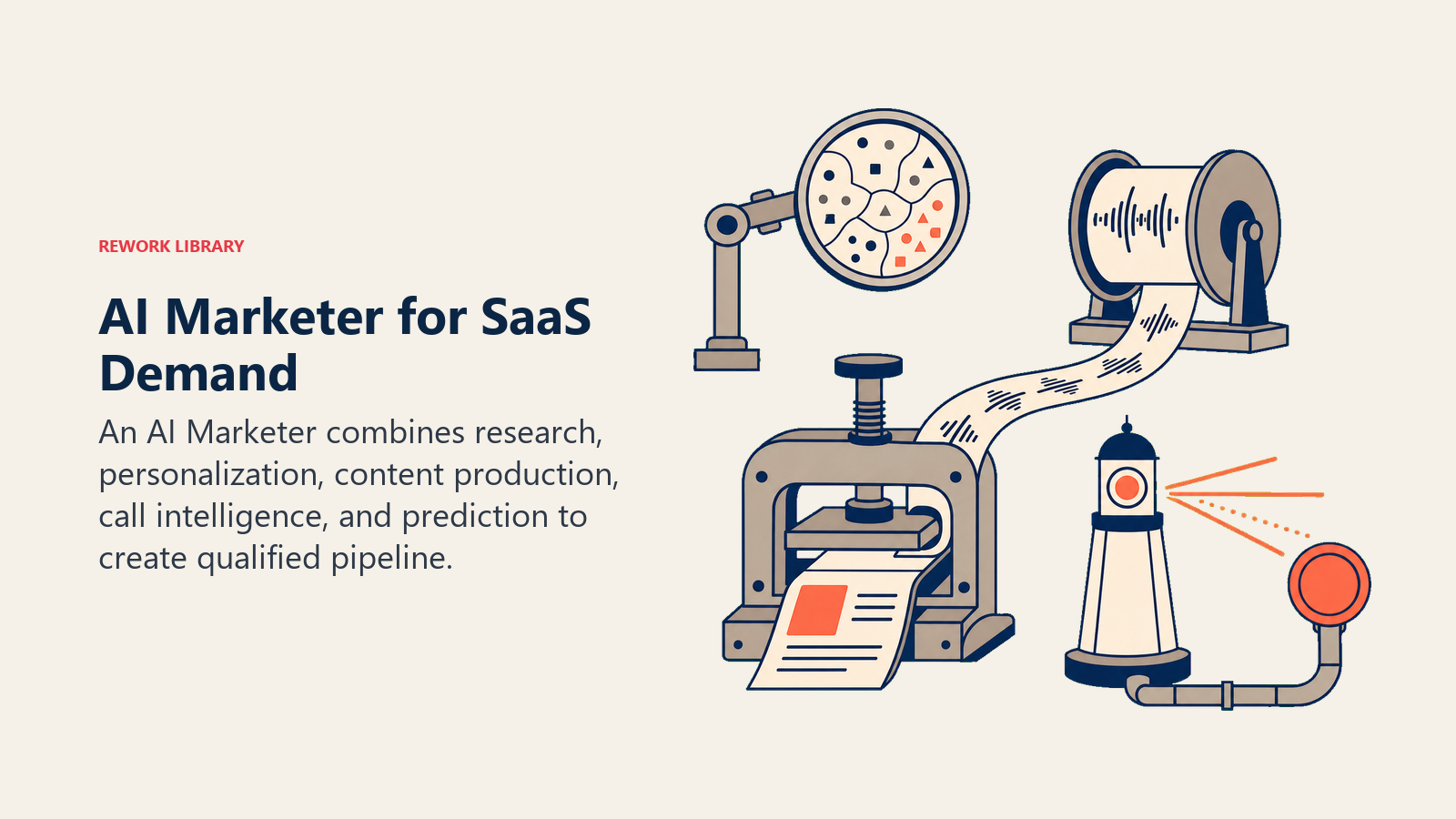
AI Marketer adalah workflow agent untuk riset, segmentasi, produksi konten, dan iterasi kampanye, bukan pengganti strategi.
Dalam ACE Framework, AI Marketer adalah agent Level 3 yang dibangun dari empat pattern inti:
- Generative Research untuk ideasi konten dan intelijen audiens
- Personalization Engine untuk penargetan kampanye dan personalisasi web
- Meeting Intelligence untuk mengubah panggilan pelanggan menjadi bahasa yang siap digunakan sebagai pesan
- Predict untuk memperkirakan kampanye mana yang menghasilkan pipeline, bukan sekadar klik
Key Facts: AI dalam Demand Generation SaaS
- Perusahaan yang memanfaatkan AI dalam marketing dan sales mengalami ROI 10-20% lebih tinggi, dengan kampanye AI memberikan ROI 22% lebih baik, konversi 32% lebih banyak, dan biaya akuisisi 29% lebih rendah dibanding metode tradisional (LeadSpot 2025 AI Demand Gen Benchmark Report)
- Program B2B SaaS dengan content marketing yang dieksekusi dengan baik melaporkan rata-rata ROI 3 tahun sebesar 844%, dengan SEO menghasilkan $22 untuk setiap $1 yang diinvestasikan, compounding selama periode tersebut (averi.ai Content Marketing ROI Benchmarks, 2025)
- Perusahaan yang menerbitkan 16 atau lebih posting blog per bulan mengalami traffic inbound 3,5x lebih banyak dibanding penerbit sporadis, ambang volume yang dirancang untuk dicapai AI Content Operator dengan biaya terjangkau (HubSpot, dikutip oleh LeadSpot 2025)
Tidak ada pattern ini yang baru. Marketer telah melakukan keempat hal ini secara manual selama bertahun-tahun. Yang diubah AI adalah rasio usaha terhadap output. Brief konten yang dulu membutuhkan tiga jam riset kata kunci, analisis kompetitor, dan wawancara audiens kini hanya butuh empat puluh menit. Proyek personalisasi website yang dulu membutuhkan sumber daya engineering kini berjalan melalui UI konfigurasi. Kemampuan Predict yang dulu membutuhkan tim BI kini muncul secara native di sebagian besar platform marketing automation.
Implikasinya bagi demand gen SaaS: kendala utama Anda bergeser dari "bisakah kita memproduksi cukup?" menjadi "apa yang harus kita produksi selanjutnya?"
Demand berbasis konten dalam kecepatan SaaS
Pembeli SaaS membaca sebelum membeli. Ini lebih terasa di sini karena produknya kompleks, biaya penggantiannya nyata, dan para evaluatornya canggih. VP of Sales yang mengevaluasi CRM membaca blog, mengecek G2, scroll Twitter, dan berbicara dengan dua atau tiga rekan sebelum memesan demo.
Konten adalah titik sentuh pertama Anda, dan sering kali yang paling dipercaya. Masalahnya adalah memproduksinya sesuai kecepatan konsumsi pembeli itu mahal. Posting blog yang baik membutuhkan penulis terampil tiga hingga lima jam. Cluster SEO yang tepat dengan sepuluh artikel pendukung membutuhkan berminggu-minggu. Pada saat konten Anda tayang, peluang kata kunci tersebut sudah sebagian tertutup.
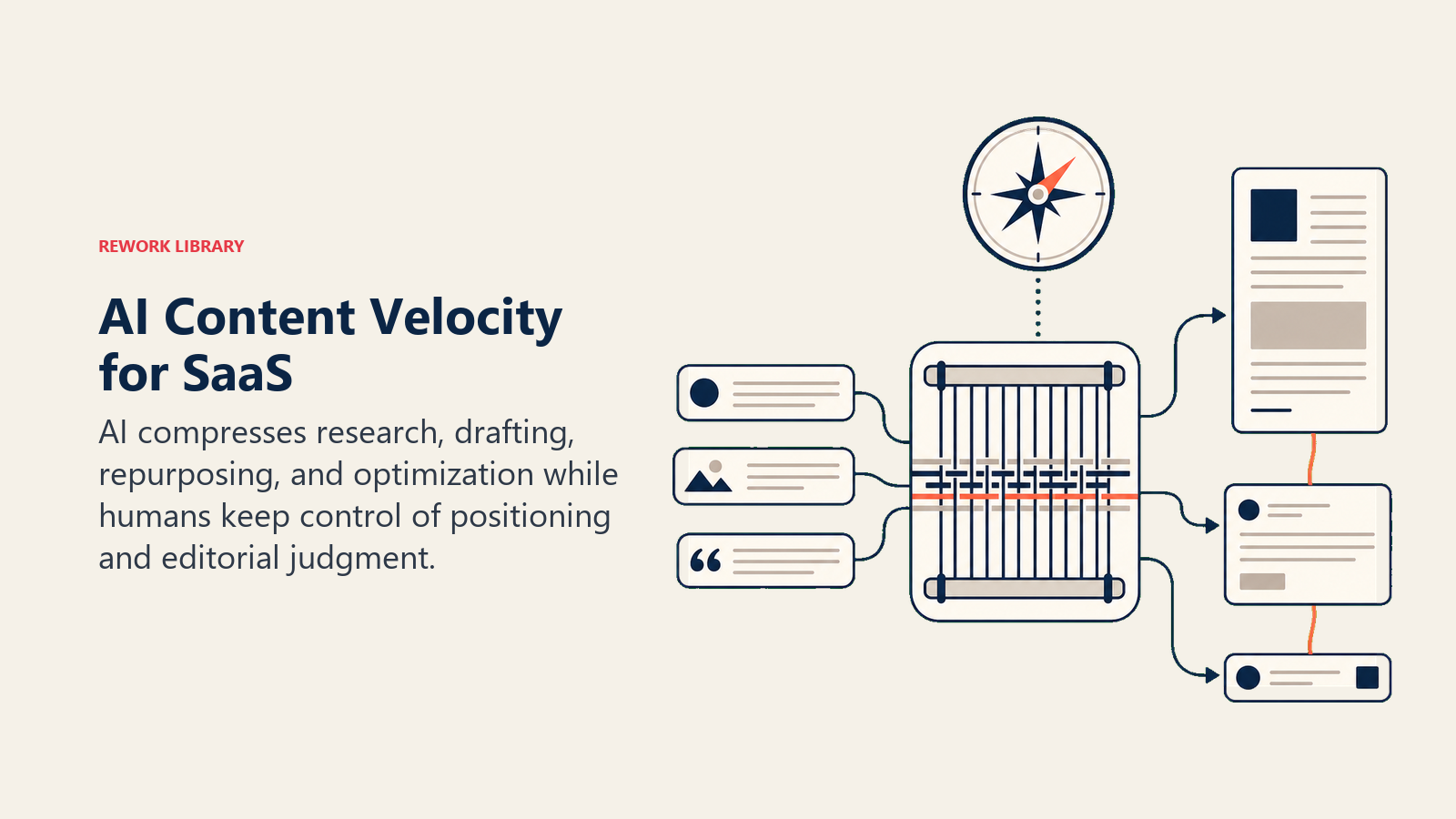
Generative Research pattern mengubah perhitungan ini. Tools seperti Writer.com, Jasper, dan tools konten AI HubSpot menggunakan Ingest (brand voice, artikel lama, konten kompetitor Anda) dan Generate (draft terstruktur) untuk mempersingkat jarak antara "kita harus menulis tentang X" dan "draft sudah ada untuk diedit."
Kata kuncinya adalah "mengedit." Bottleneck tidak hilang. Ia berpindah. Anda masih membutuhkan marketer berpengalaman untuk menilai ide mana yang layak dikejar, draft mana yang siap diterbitkan, dan mana yang membutuhkan pengerjaan ulang signifikan. Tapi memproduksi lima draft artikel per minggu alih-alih dua berarti Anda bisa menerbitkan tiga sambil mengirim dua kembali untuk direvisi. Anda memainkan permainan yang berbeda.
Perusahaan SaaS yang menjalankan workflow konten berbantuan AI melaporkan pengurangan waktu dari brief ke draft sebesar 40-60%. Analisis Forrester 2025 tentang konten digital mencatat bahwa sembilan dari sepuluh pembeli B2B kini menggunakan tools AI untuk mempercepat riset mereka sebelum terlibat dengan vendor, artinya kualitas konten organik Anda menentukan apakah Anda masuk dalam sesi riset tersebut. Namun nilai nyata muncul dalam kontribusi pipeline organik enam hingga dua belas bulan kemudian, saat compounding interest konten terbayar.
Personalisasi skala besar: pendekatan PLG vs. sales-led berbeda
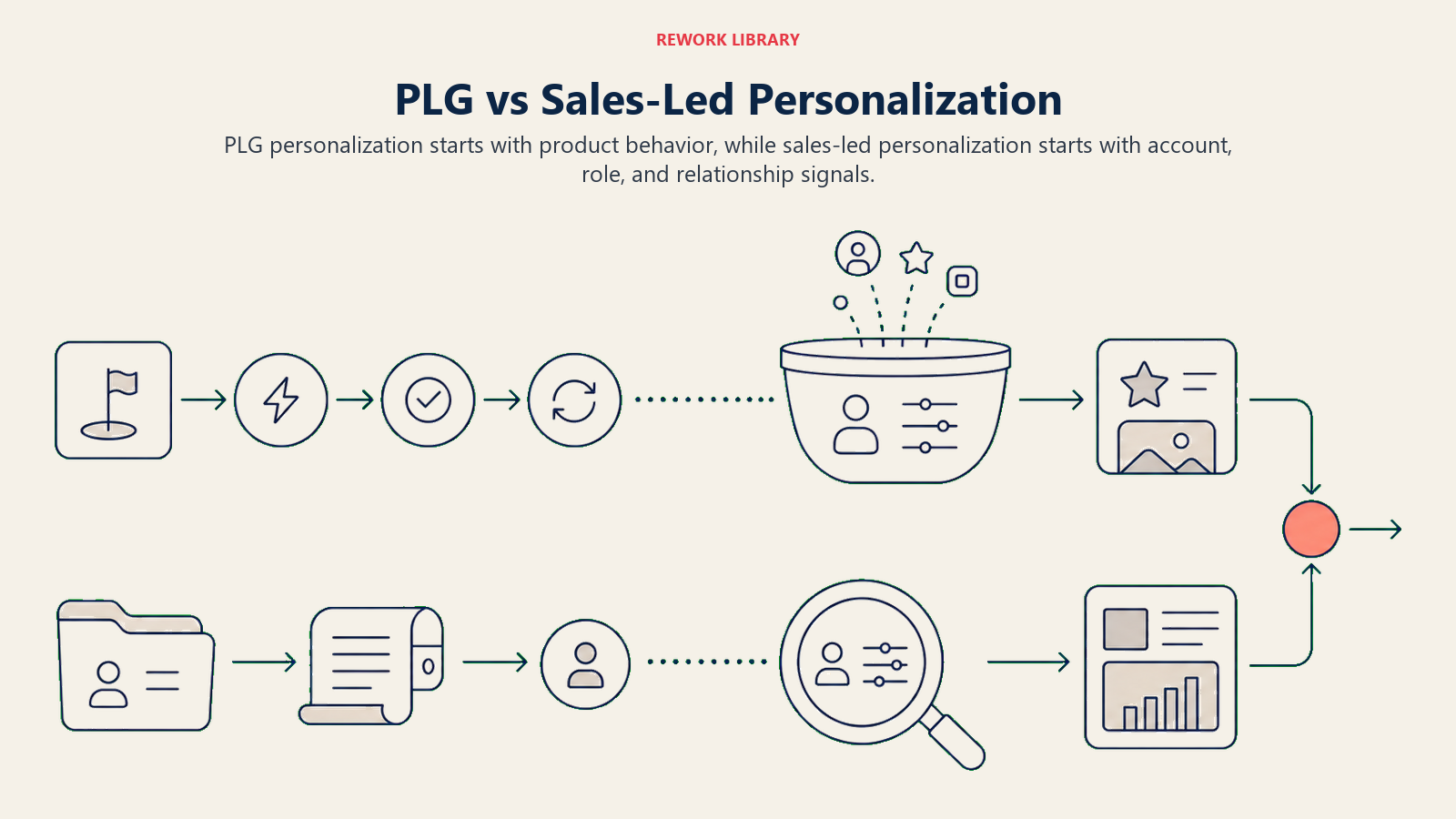
Personalisasi berubah menurut motion karena tim PLG memulai dari perilaku produk, sedangkan tim sales-led lebih mengandalkan sinyal akun dan hubungan.
Di sinilah AI Marketer pattern menyimpang secara bermakna berdasarkan model go-to-market Anda.
Untuk perusahaan SaaS sales-led, Personalization Engine berjalan terutama di website dan dalam kampanye outbound. Mutiny dan Clearbit memungkinkan Anda menyajikan pesan homepage yang berbeda kepada pengunjung Fortune 500 versus startup 20 orang. Halaman produk yang sama dapat memimpin dengan "kurangi pengeluaran IT enterprise" untuk satu segmen dan "siapkan tim Anda dalam sehari" untuk yang lain. AI membuatnya dapat dieksekusi tanpa sprint engineering khusus setiap kali Anda ingin menguji segmen baru.
Metrik SaaS yang penting di sini adalah konversi ke demo-request berdasarkan segmen. Setup personalisasi yang disetel dengan baik dapat menggeser angka tersebut sebesar dua hingga empat persen poin. Pada situs dengan 50.000 pengunjung bulanan dan tingkat konversi demo dasar 2%, itu berarti 100-200 percakapan berkualitas tambahan per bulan tanpa meningkatkan pengeluaran traffic. Riset personalisasi McKinsey menunjukkan bahwa perusahaan yang unggul dalam personalisasi menghasilkan 40% lebih banyak pendapatan dari aktivitas tersebut dibanding rata-rata. Payback CAC (Customer Acquisition Cost) pada infrastruktur personalisasi biasanya enam hingga dua belas bulan.
Untuk perusahaan PLG (product-led growth), Personalization Engine muncul secara berbeda. Kasus penggunaan utamanya bukan konversi website. Ini adalah pesan berbasis perilaku dalam produk. Ketika pengguna baru menyelesaikan tiga tindakan pertama mereka dalam produk Anda, nudge apa yang mereka lihat selanjutnya? Ketika tim mencapai ambang penggunaan yang memprediksi mereka akan membutuhkan tier berbayar, pesan apa yang mereka terima dan kapan? Urutan ini berjalan pada pattern perilaku yang dideteksi AI, bukan pemicu yang dikonfigurasi secara manual. Ini terhubung langsung dengan keunggulan product telemetry dalam AI SaaS.
6sense dan Demandbase memperluas personalisasi ke sisi demand: mengidentifikasi akun mana yang menunjukkan buyer intent berdasarkan sinyal riset pihak ketiga, kemudian memprioritaskan outreach dan konten untuk akun-akun tersebut sebelum mereka muncul di CRM Anda. Untuk enterprise SaaS dengan siklus penjualan panjang dan ACV (Annual Contract Value) tinggi, ini adalah salah satu tempat terbaik untuk menerapkan kemampuan Predict.
Prediksi performa kampanye: pipeline, bukan klik
Sebagian besar tim marketing masih mengoptimalkan untuk metrik aktivitas: klik, tayangan, open rate. Ini terukur dan langsung, sehingga nyaman untuk dilaporkan. Tapi korelasinya lemah dengan apa yang benar-benar penting bagi dewan Anda: pipeline yang dihasilkan, CAC per saluran, dan periode CAC payback.
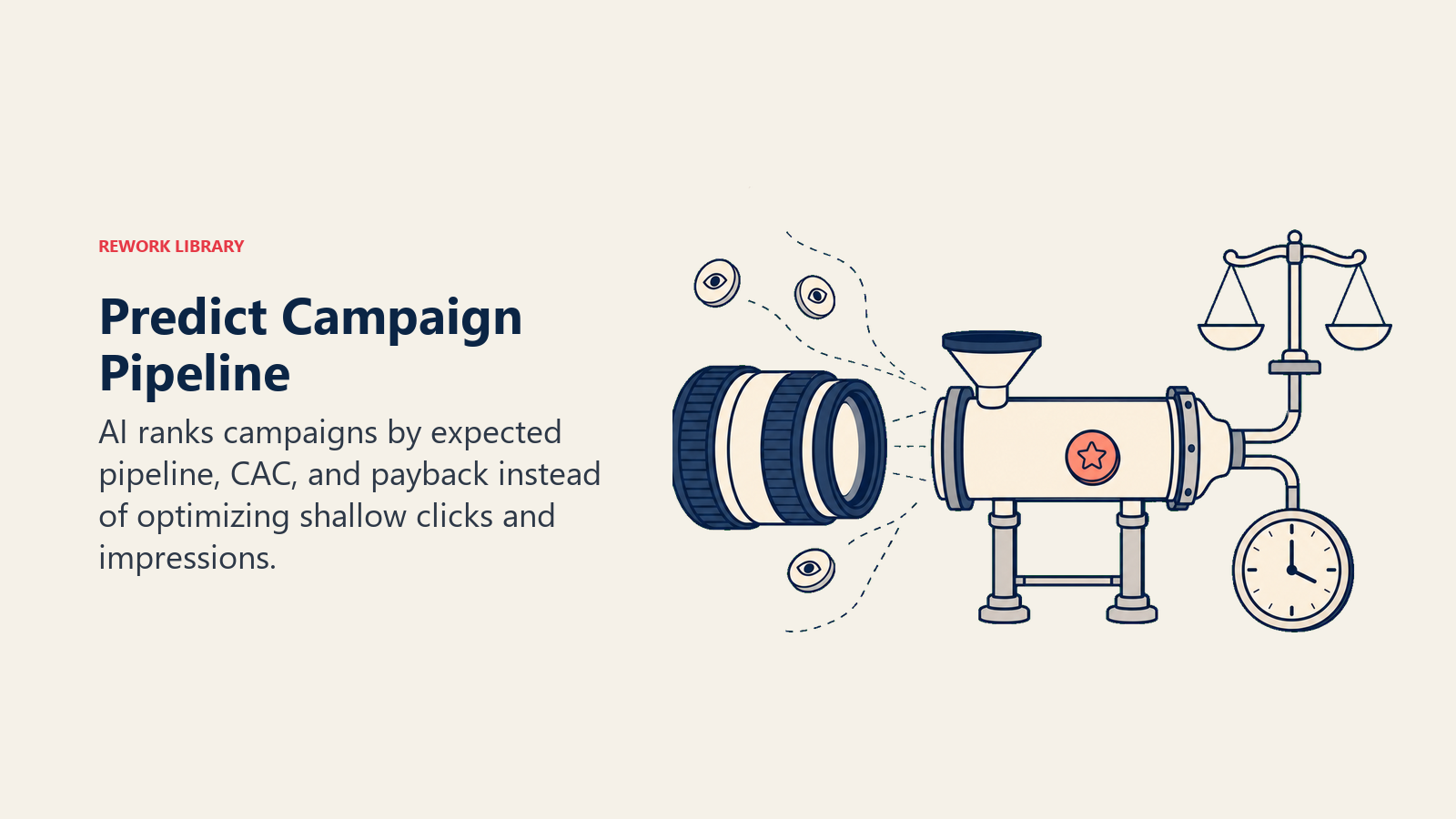
Predict pattern yang diterapkan pada performa kampanye mengubah apa yang Anda optimalkan. HubSpot AI dan Marketo Predict dapat memodelkan sinyal kampanye mana (materi iklan, varian baris subjek, struktur halaman arahan, kombinasi parameter penargetan) yang berkorelasi dengan hasil pipeline downstream, bukan hanya klik perantara. Kesenjangan antara "kampanye mana yang mendapat klik terbanyak" dan "kampanye mana yang menghasilkan peluang berbobot ARR terbanyak" sering kali besar. Dan kampanyenya biasanya berbeda.
Tiga metrik yang menunjukkan apakah AI marketing stack Anda bekerja di level demand gen:
Pipeline yang diatribusikan AI sebagai persentase dari total pipeline. Ukur konten dan kampanye mana yang menyentuh deals sebelum ditutup. Jika konten SEO Anda menyentuh 40% deals tapi paid social menyentuh 15%, pertanyaan alokasi anggaran menjadi lebih mudah.
Biaya per qualified lead berdasarkan saluran. Bukan biaya per lead. Biaya per lead yang sebenarnya akan ditelepon SDR. Predict pattern membantu Anda mendefinisikan "qualified" lebih tepat dan mengukurnya lebih konsisten.
Content velocity vs. pipeline yang diatribusikan organik. Berapa banyak artikel yang Anda terbitkan per bulan, dan berapa banyak pipeline yang dapat Anda lacak kembali ke konten organik? Ini adalah metrik north star untuk kasus penggunaan AI Content Operator, yang dibahas mendalam dalam AI Content Operator: Scaling SEO Content for SaaS.
Panggilan pelanggan sebagai bahan bakar pesan
Ada sumber intelijen marketing yang kurang dimanfaatkan sebagian besar tim: semua yang dikatakan pelanggan Anda dalam panggilan.
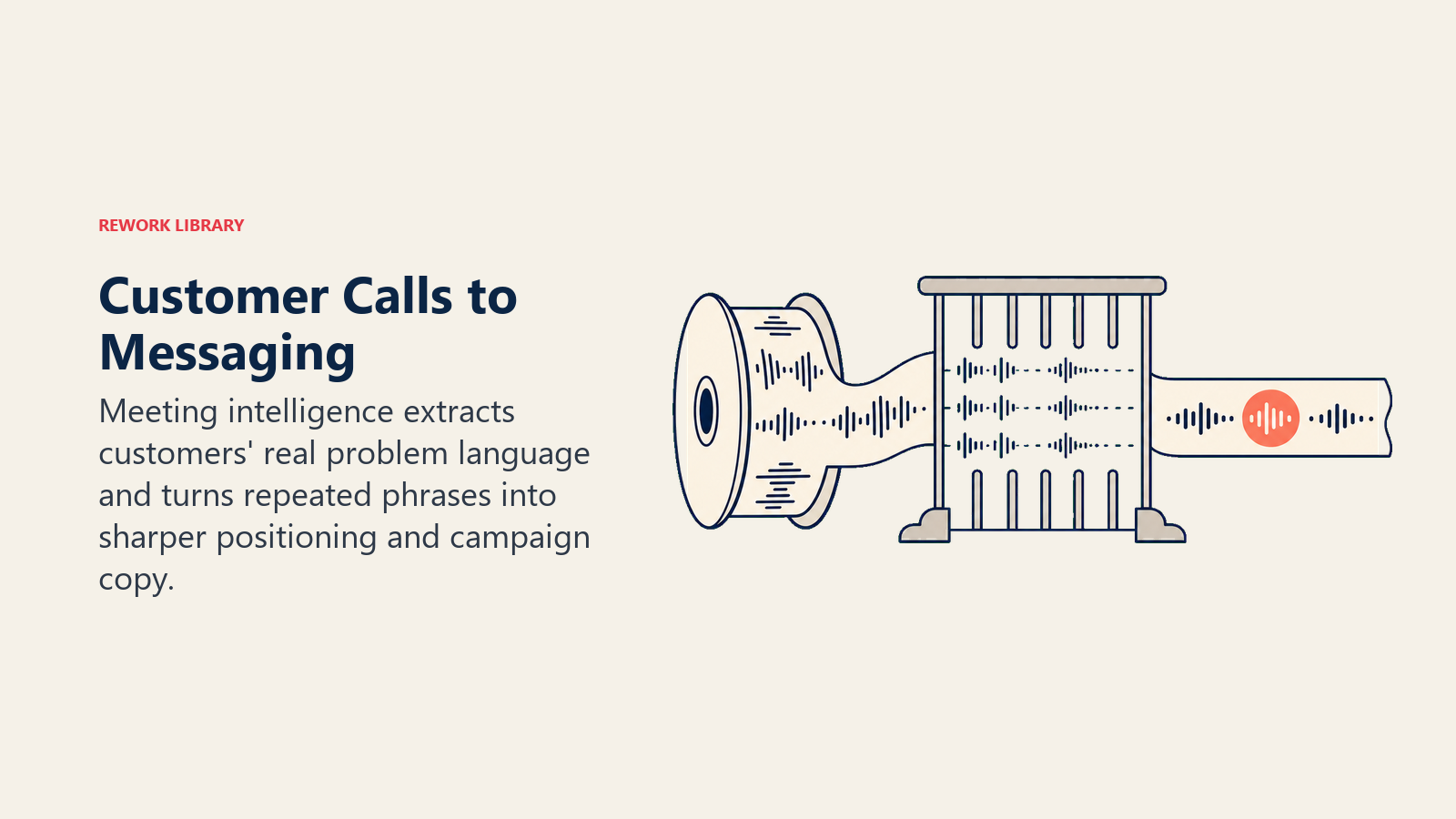
Meeting Intelligence pattern, diterapkan pada panggilan customer discovery, percakapan onboarding, dan eskalasi support, mengekstrak bahasa yang benar-benar digunakan pelanggan untuk menggambarkan masalah mereka. Bukan bahasa yang ditemukan tim marketing Anda dalam workshop. Kata-kata nyata.
Ini penting karena pembeli SaaS canggih, dan mereka bisa mencium positioning yang tidak autentik. Ketika website Anda mengatakan "sederhanakan kolaborasi lintas fungsi pada skala" dan pelanggan Anda mengatakan "kami tidak bisa mengetahui siapa yang bertanggung jawab antara sales dan CS," keduanya memecahkan masalah yang sama dengan deskripsi yang sangat berbeda. Bahasa pelanggan hampir selalu lebih baik.
Tools seperti Gong, Chorus, dan kemampuan Meeting Intelligence Rework menangkap panggilan sales dan CS, mengekstrak tema berulang, dan menampilkan frasa spesifik yang paling sering muncul dalam percakapan di mana deals ditutup atau pelanggan tetap. Tim konten Anda dapat menggunakan frasa tersebut langsung dalam headline, baris subjek email, dan salinan halaman arahan. Ini adalah Meeting Intelligence pattern yang menerapkan Ingest dan Analyze untuk menampilkan input Generate yang beresonansi.
Satu praktik taktis yang berhasil: lakukan tinjauan kuartalan atas dua puluh keberatan pelanggan teratas yang diekstrak dari panggilan deals yang hilang. Keberatan-keberatan itu adalah brief konten. Masing-masing adalah artikel yang perlu dibaca pembeli Anda sebelum mereka siap membeli.
Kerangka Demand AI Trio
Demand AI Trio adalah inti tiga pattern dari AI Marketer agent untuk SaaS: Generative Research (riset kesenjangan kompetitif dan draft pada skala), Personalization Engine (sajikan pesan yang berbeda untuk segmen berbeda di seluruh permukaan web, email, dan in-product), dan Predict (perkirakan kampanye mana yang menghasilkan pipeline, bukan sekadar klik). Setiap pattern mengatasi kendala yang berbeda dalam demand generation SaaS: Generative Research memecahkan bottleneck volume, Personalization Engine memecahkan masalah relevansi, dan Predict memecahkan masalah target optimisasi (metrik aktivitas vs. hasil pipeline). Ketiga pattern itu bersenyawa: riset menampilkan topik yang personalisasi arahkan ke segmen yang tepat, dan prediksi terus-menerus mengkalibrasi ulang kombinasi topik, segmen, dan saluran mana yang menghasilkan peluang berkualitas.
ABM demand untuk enterprise SaaS
Bagi perusahaan yang menjual di atas ACV $50K, account-based marketing (ABM) adalah strategi demand dominan. AI Marketer pattern yang diterapkan pada ABM mengubah beban kerja riset dan personalisasi.
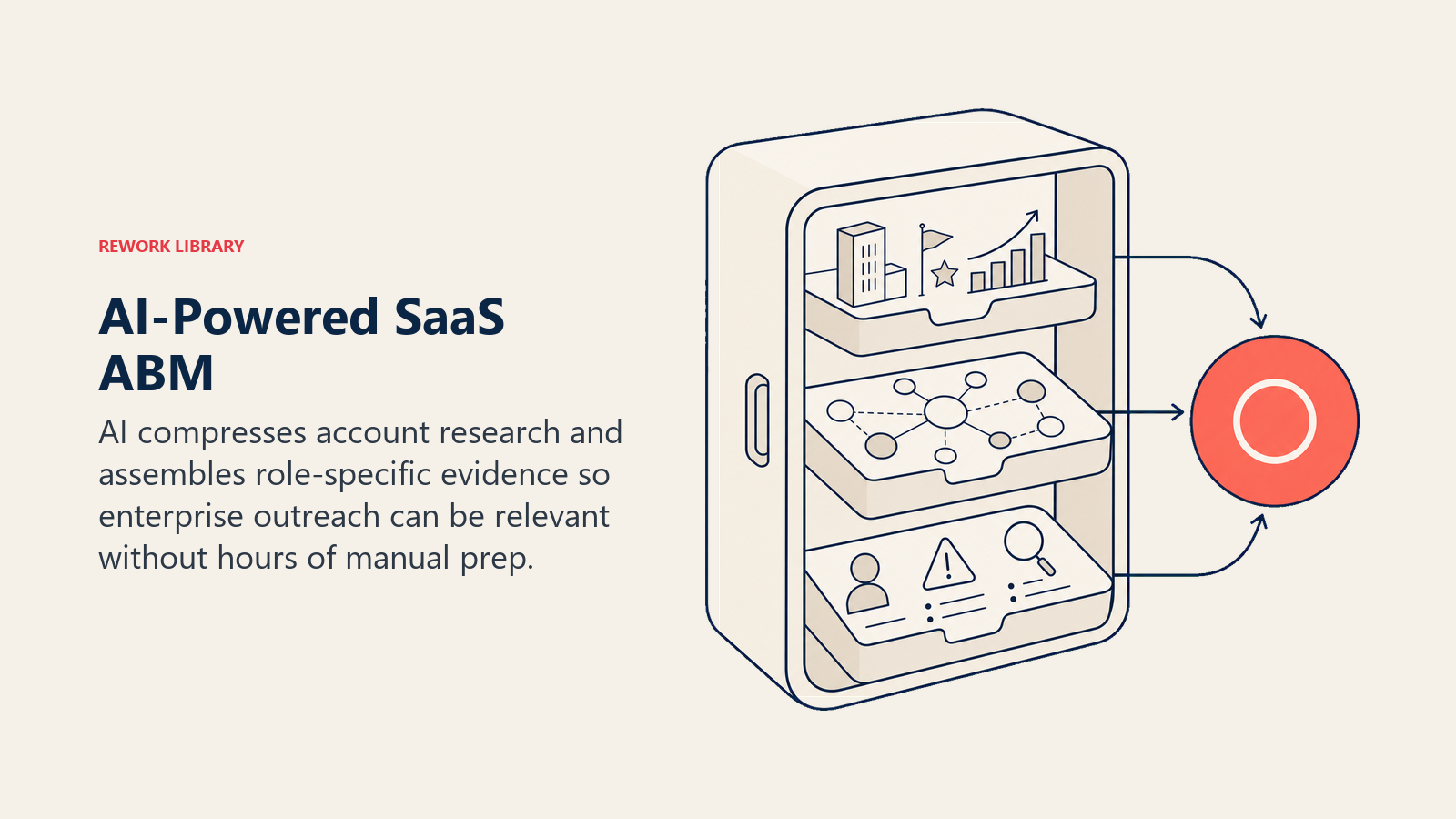
Riset akun dulu berarti SDR menghabiskan empat puluh lima menit sebelum setiap outreach untuk membangun profil perusahaan secara manual: membaca website, memeriksa berita terbaru, menarik data LinkedIn, memindai ulasan G2. Dengan Generative Research, pekerjaan tersebut menjadi sepuluh menit atau kurang. SDR meninjau brief yang sudah dibuat sebelumnya dan mempersonalisasi baris pertama outreach alih-alih membangun seluruh konteks dari awal.
Dampak demand yang lebih luas terlihat dalam cara Anda menjalankan kampanye berbasis akun. 6sense dan Demandbase mengidentifikasi akun yang menunjukkan sinyal intent (pencarian kompetitor, kunjungan halaman harga, perubahan tech stack) dan menampilkannya untuk ditargetkan marketing dengan urutan iklan yang disesuaikan. Predict pattern di balik ini menilai kemungkinan setiap akun sedang in-market saat ini.
Metrik SaaS yang ditingkatkan ini adalah efisiensi pipeline: pipeline yang dibuat per dolar pengeluaran marketing. Untuk perusahaan enterprise SaaS yang menjalankan ABM, AI demand gen stack yang terintegrasi dengan baik biasanya mengurangi cost-per-qualified-opportunity sebesar 20-35% dengan mengkonsentrasikan pengeluaran pada akun yang sudah menunjukkan buying intent daripada menyiarkan secara luas.
Untuk melihat lebih dalam bagaimana AI mempercepat sisi riset akun dari gerakan ini, AI Account Research at SaaS Sales Velocity mencakup workflow riset lengkap. Lihat juga AI Sales Operator untuk B2B SaaS tentang bagaimana data intent mengisi pipeline penjualan.
PLG demand: SEO sebagai saluran utama
Untuk perusahaan PLG SaaS dengan ACV di bawah $1K dan jalur konversi self-serve, model demand berbeda secara fundamental. CAC perlu sangat rendah karena tidak ada gerakan penjualan outbound untuk membenarkan $500-$1.000 per trial yang diperoleh. Pencarian organik, viralitas produk, dan komunitas adalah mesin pertumbuhan.
Aplikasi AI Marketer yang paling berdampak dalam konteks PLG adalah scaling konten organik. Programmatic SEO, content clustering, dan cakupan kata kunci long-tail semuanya mendapat manfaat dari AI Content Operator pattern. Tujuannya adalah memiliki posisi teratas hasil pencarian untuk setiap masalah yang diselesaikan produk Anda, di seluruh varian cara masalah tersebut dicari.
Perbedaan antara tim marketing PLG dan tim marketing sales-led bukan hanya anggaran. PLG team mengukur tingkat pendaftaran trial dari konten secara langsung. Setiap artikel harus dapat dilacak ke pendaftaran, bukan hanya traffic. Loop konversi langsung tersebut mengubah cara Anda menulis (lebih actionable, lebih cepat mencapai nilai) dan apa yang Anda optimalkan (time-on-page kurang penting dibanding tingkat pendaftaran trial per seribu tampilan).
Untuk mekanisme lengkap scaling konten SEO dengan AI, termasuk pembuatan brief, analisis kesenjangan konten, dan internal linking pada skala, AI Content Operator: Scaling SEO Content for SaaS mencakup workflow secara detail.
Apa yang tidak digantikan AI dalam demand generation
Artikel ini tidak lengkap tanpa jujur tentang apa yang tidak diotomatisasi.
Strategi konten tetap manusiawi. Memutuskan topik mana yang akan dikejar, segmen audiens mana yang diprioritaskan, positioning apa yang diuji kuartal ini, dan saluran mana yang digandakan membutuhkan penilaian yang tidak dimiliki AI. AI dapat menampilkan data yang menginformasikan keputusan tersebut. Tapi AI tidak bisa membuatnya.
Brand voice sulit dilatih dengan cepat. Tools awal seperti Writer.com telah membuat kemajuan nyata dalam kepatuhan panduan gaya, tapi memproduksi konten yang terdengar autentik seperti brand Anda masih membutuhkan pengeditan manusia. AI menghasilkan draft yang secara arah sudah tepat; editor terampil membuat draft itu khas milik Anda.
Saluran berbasis hubungan tidak berskala dengan AI. Partner marketing, hubungan analis, pembangunan komunitas, dan co-marketing membutuhkan hubungan manusia. Ini sering kali adalah sumber pipeline berkualitas tertinggi untuk enterprise SaaS, dan hampir sepenuhnya tahan terhadap otomasi.
Pandangan ringkasan
AI Marketer pattern membuat tim marketing SaaS yang ramping mampu mencapai kecepatan output yang sebelumnya membutuhkan tim dua kali lebih besar. Generative Research pattern mempersingkat produksi konten. Personalization Engine menskalakan relevansi tanpa segmentasi manual. Predict pattern memindahkan target optimisasi Anda dari metrik aktivitas ke hasil pipeline. Dan Meeting Intelligence pattern mengubah percakapan pelanggan menjadi sumber pesan autentik yang berkelanjutan.
CAC payback pada AI demand gen stack yang ditingkatkan AI biasanya enam hingga delapan belas bulan, tergantung pada ukuran tim saat ini dan kematangan konten. Risiko utamanya bukan toolsnya. Ini tentang menerapkannya sebelum strategi Anda jelas. AI memperkuat apa yang sudah Anda ketahui cara melakukannya. Jika Anda tidak tahu segmen mana yang paling banyak berkonversi atau saluran mana yang mendorong pipeline, AI akan membantu Anda memproduksi lebih banyak konten lebih cepat untuk audiens yang salah.
Dapatkan strategi yang tepat terlebih dahulu. Kemudian biarkan AI mempersingkat timeline produksi.
Rework Analysis: Pattern yang paling konsisten kami lihat dalam deployment AI marketing SaaS adalah ketidaksesuaian antara apa yang diukur tim dan apa yang benar-benar ditingkatkan AI. AI unggul dalam metrik aktivitas: ini dapat meningkatkan volume konten, tayangan, open rate, dan jumlah klik secara dramatis dan cepat. Tapi hanya 13% MQL yang berkonversi ke SQL di sebagian besar perusahaan B2B SaaS (benchmark Gartner 2026), yang berarti sistem yang menghasilkan lebih banyak MQL tanpa meningkatkan kualitas MQL menciptakan lebih banyak pemborosan untuk tim penjualan, bukan lebih sedikit. Deployment AI Marketer yang paling efektif yang kami amati adalah yang menetapkan metrik berbobot pipeline terlebih dahulu, sebelum mengaktifkan tools AI apa pun, sehingga lapisan Predict mengoptimalkan untuk hasil yang benar sejak awal.
Pertanyaan yang Sering Diajukan
Apa itu AI Marketer untuk demand generation SaaS?
AI Marketer adalah ACE Framework Level 3 agent yang dibangun dari tiga pattern demand generation inti: Generative Research (mempersingkat ideasi konten dan drafting dari hari menjadi jam), Personalization Engine (menyajikan pesan yang berbeda untuk segmen berbeda di seluruh permukaan web, email, dan in-product), dan Predict (memperkirakan kampanye mana yang menghasilkan pipeline, bukan sekadar klik). Ketiganya membentuk the Demand AI Trio. Pattern keempat adalah Meeting Intelligence, yang mengubah panggilan pelanggan menjadi bahasa yang siap digunakan sebagai pesan. Agent ini memungkinkan tim marketing yang ramping menghasilkan output tim dua kali lebih besar.
ROI apa yang dapat diharapkan marketer SaaS dari demand generation bertenaga AI?
Perusahaan yang menggunakan AI dalam marketing mengalami ROI 22% lebih baik, konversi 32% lebih banyak, dan biaya akuisisi 29% lebih rendah dibanding metode tradisional (LeadSpot 2025 AI Demand Gen Benchmark Report). Program konten B2B SaaS khususnya melaporkan rata-rata ROI 3 tahun sebesar 844% dengan strategi konten yang dieksekusi dengan baik. ABM dengan data intent bertenaga AI memberikan ROI lebih baik dibanding strategi marketing lainnya bagi 79% marketer B2B. Payback pada infrastruktur AI demand gen biasanya 6-18 bulan.
Bagaimana AI Marketer berbeda untuk perusahaan PLG vs. SaaS sales-led?
Untuk SaaS sales-led, Personalization Engine berjalan terutama pada konversi website dan kampanye outbound, menyajikan pesan homepage yang berbeda untuk segmen firmografi yang berbeda. Metrik ROI-nya adalah konversi demo-request berdasarkan segmen. Untuk perusahaan PLG, Personalization Engine berjalan dalam produk: pemicu perilaku, nudge berbasis penggunaan, dan prompt upgrade yang didorong product telemetry. Metrik ROI-nya adalah tingkat pendaftaran trial dan konversi free-to-paid. Marketer PLG mengoptimalkan untuk konten yang mendorong pendaftaran trial secara langsung; marketer sales-led mengoptimalkan untuk konten yang menghasilkan percakapan berkualitas.
Bagaimana Meeting Intelligence mengisi demand generation?
Meeting Intelligence yang diterapkan pada panggilan customer discovery dan eskalasi support mengekstrak bahasa yang benar-benar digunakan pelanggan untuk menggambarkan masalah mereka. Pembeli SaaS dapat mendeteksi positioning yang tidak autentik secara langsung, dan bahasa pelanggan hampir selalu mengungguli positioning yang diciptakan tim marketing. Tools seperti Gong dan Chorus menampilkan frasa spesifik yang paling sering muncul dalam panggilan di mana deals ditutup, yang digunakan tim konten langsung dalam headline, baris subjek email, dan salinan halaman arahan. Tinjauan kuartalan atas 20 keberatan pelanggan teratas dari panggilan deals yang hilang adalah generator brief konten paling andal yang tersedia.
Volume penerbitan konten apa yang diaktifkan AI untuk tim marketing SaaS?
Tim konten beranggotakan 5 orang yang menjalankan produksi manual secara realistis dapat menerbitkan 10 artikel per bulan dengan kualitas baik. Dengan workflow AI Content Operator, tim yang sama dapat memproduksi dan mengedit 40-60 artikel per bulan. Perusahaan yang menerbitkan 16 atau lebih posting blog per bulan mengalami traffic inbound 3,5x lebih banyak dibanding penerbit sporadis. Bottleneck berpindah dari produksi ke penilaian editorial: tim membutuhkan editor yang kuat yang dapat dengan cepat mengidentifikasi kesalahan AI, bukan sekadar penulis yang dapat memproduksi dari awal.
Apa itu the Demand AI Trio?
Demand AI Trio adalah inti tiga pattern dari AI Marketer: Generative Research (riset dan draft pada skala), Personalization Engine (sajikan pesan yang berbeda berdasarkan segmen), dan Predict (optimalkan untuk hasil pipeline, bukan metrik aktivitas). Setiap pattern mengatasi kendala demand generation yang berbeda. Trio bersenyawa: riset menampilkan topik, personalisasi mengarahkannya ke segmen yang tepat, dan prediksi mengkalibrasi ulang kombinasi topik, segmen, dan saluran mana yang menghasilkan pipeline berkualitas.
Related:

Co-Founder, Rework.com
On this page
- Apa sebenarnya AI Marketer itu
- Demand berbasis konten dalam kecepatan SaaS
- Personalisasi skala besar: pendekatan PLG vs. sales-led berbeda
- Prediksi performa kampanye: pipeline, bukan klik
- Panggilan pelanggan sebagai bahan bakar pesan
- Kerangka Demand AI Trio
- ABM demand untuk enterprise SaaS
- PLG demand: SEO sebagai saluran utama
- Apa yang tidak digantikan AI dalam demand generation
- Pandangan ringkasan