AI Knowledge Base Maintenance untuk SaaS Docs
Turn this article into takeaways for your work.


Each assistant summarizes the article only for you and suggests best practices for your work.
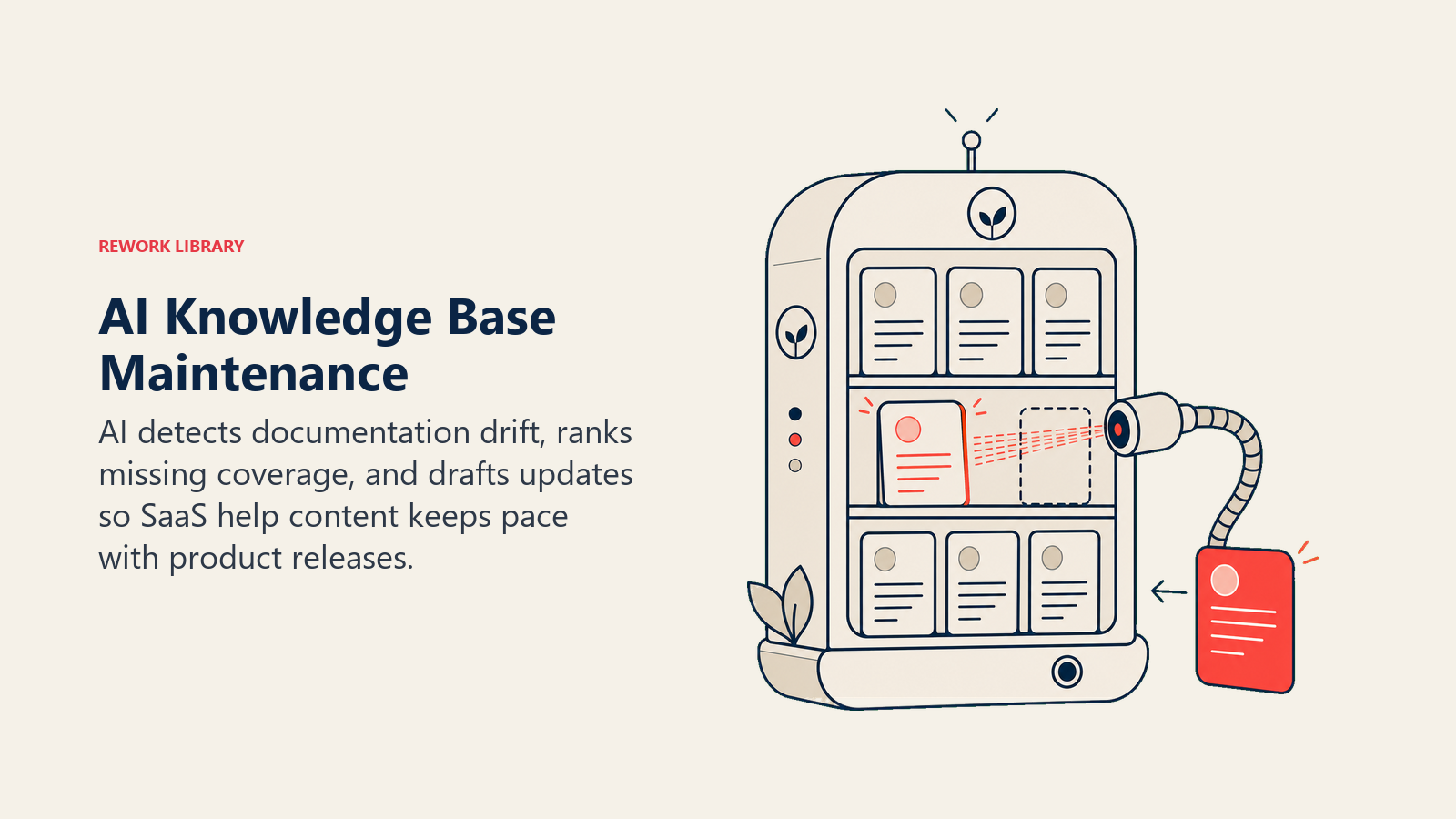
AI support agent Anda hanya sebaik dokumen yang dibacanya.
Itulah bagian yang dilewatkan sebagian besar tim SaaS dalam pitch AI dukungan mereka. Mereka membeli tier Intercom Fin atau Zendesk AI, mengarahkannya ke knowledge base (KB), merayakan angka defleksi minggu pertama, lalu bertanya-tanya enam bulan kemudian mengapa tiket terus meningkat. AI tidak menjadi lebih buruk. Dokumennya yang menjadi buruk.
Perusahaan SaaS terus-menerus merilis produk. Fitur diganti namanya. Workflow didesain ulang. Screenshot menjadi salah. Endpoint API dihentikan. Dan tim dokumentasi, jika ada, biasanya dua sprint penuh di belakang tim produk, berusaha semaksimal mungkin mengikuti perubahan yang mereka dengar secara tidak langsung.
Masalahnya bukan kualitas AI dukungan. Ini adalah kesegaran dokumentasi. Dan kini ada kelas perkakas AI yang khusus dibangun untuk menutup kesenjangan tersebut.
Mengapa Pemeliharaan Dokumentasi adalah Masalah Spesifik SaaS
Sebagian besar industri memiliki dokumentasi yang berubah perlahan. Hukum, keuangan, kesehatan, manufaktur. Workflow, regulasi, dan fitur produk mereka berkembang selama berbulan-bulan atau bertahun-tahun.
SaaS berbeda. Anda mengirimkan kode beberapa kali per minggu. Fitur berganti nama. Jalur navigasi berpindah. Seluruh alur didesain ulang dalam satu sprint. Dan pengguna diharapkan melayani diri sendiri melalui dokumentasi yang ditulis untuk versi yang mungkin sudah tidak ada.
Key Facts: Kesegaran Knowledge Base dan Kinerja AI Dukungan
- Fungsi pencarian yang buruk dan konten yang sudah usang menyebabkan hampir 40% upaya self-service yang gagal di lingkungan enterprise, dengan 43% pelanggan melaporkan tidak dapat menemukan konten self-service yang relevan (Gartner, 2025)
- Perusahaan dengan knowledge base berbasis data yang matang mengalami rata-rata pengurangan 23% dalam volume tiket dukungan dibandingkan perusahaan dengan dokumentasi yang sudah kedaluwarsa (ProProfs KB Research, 2025)
- Sistem AI yang menerapkan knowledge graph ke layanan pelanggan berbasis RAG mencapai peningkatan akurasi retrieval 77,6% dan pengurangan waktu resolusi 28,6% (penelitian LinkedIn/MIT, 2024)
Kerangka KB Freshness Drift Detector
KB Freshness Drift Detector adalah kerangka pemantauan berkelanjutan yang menandai dokumentasi yang berisiko menjadi usang sebelum merusak kualitas dukungan AI. Tiga sinyal memicu tanda tinjauan kesegaran: artikel bantuan belum diperbarui dalam 90 hari terakhir dan area produk yang dicakupnya telah mengalami perubahan sejak pembaruan terakhir; artikel tersebut termasuk dalam 10 dokumen yang paling banyak diambil dalam korpus RAG tetapi menghasilkan tingkat eskalasi di atas rata-rata; atau tiket dukungan baru diajukan yang cocok dengan topik artikel yang ada tetapi mendeskripsikan perilaku yang bertentangan dengan instruksi artikel. Artikel yang ditandai masuk ke antrean tinjauan, bukan pembaruan otomatis. Tinjauan manusia diperlukan sebelum dokumen mana pun diubah.
Ini menciptakan pola kegagalan pemeliharaan yang spesifik:
Pelanggan membuka tiket dukungan. AI support agent Anda mencoba menjawabnya dengan pencarian RAG. Pola RAG (Retrieval-Augmented Generation) bekerja dengan benar pada tingkat teknis. Tapi dokumen dengan peringkat teratas dalam knowledge base mendeskripsikan workflow lama, sebelum desain ulang UI tiga bulan lalu. AI menghasilkan jawaban yang percaya diri berdasarkan materi sumber yang sudah usang. Pelanggan mengikuti langkah-langkah tersebut. Tidak berhasil. Tiket lain dibuka.
Tingkat defleksi tampak baik di atas kertas. Tapi kualitas jawaban menurun. Dan kepercayaan pelanggan terkikis.
Masalah mendasarnya sederhana: dokumentasi memiliki lag kesegaran, dan tidak ada yang mengukurnya secara sistematis.
AI untuk Deteksi Kesenjangan: Tiket sebagai Backlog Dokumentasi
Tiket support mengungkap kesenjangan knowledge base yang paling sering dialami pelanggan, sehingga menjadi bahan baku terbaik untuk pemeliharaan.
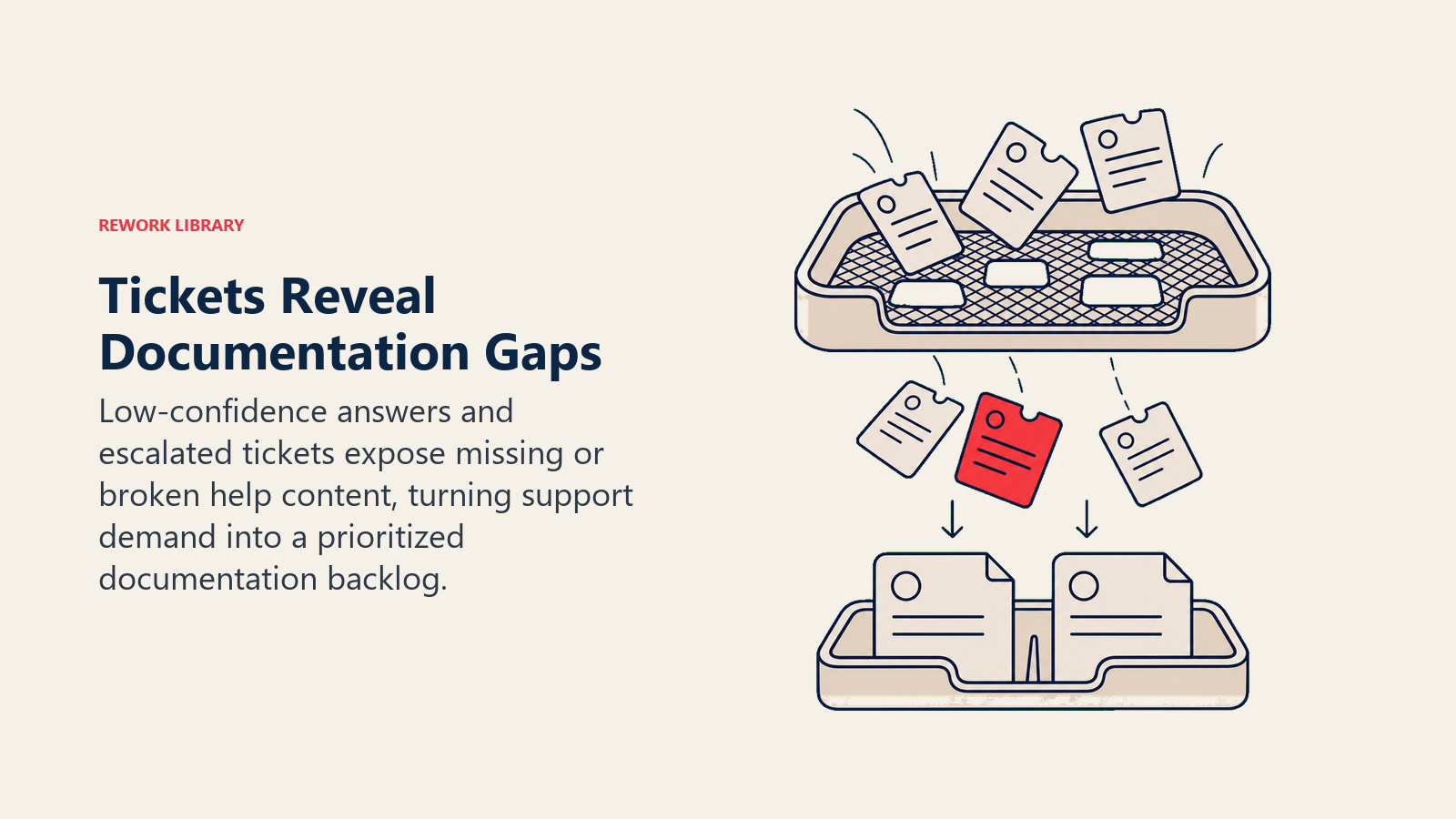
Tempat pertama AI membantu adalah mengidentifikasi apa yang tidak dicakup KB Anda.
Data tiket dukungan adalah proksi langsung untuk kesenjangan dokumentasi. Setiap tiket yang dieskalasi karena AI tidak dapat menemukan jawaban, atau memberikan jawaban yang percaya diri tetapi salah, mewakili dokumen yang hilang atau rusak.
Perkakas seperti fitur AI Zendesk Guide, analitik AI Intercom, dan analitik konten Helpjuice dapat menampilkan ini sebagai daftar yang diberi peringkat. "Ini adalah pertanyaan yang diajukan pelanggan bulan ini yang tidak bisa kami jawab." Itu adalah backlog dokumentasi Anda, yang dibuat secara otomatis dari data dukungan.
Pola ACE Framework di sini adalah Analyze. Sistem sedang Ingesting aliran tiket dukungan, Analyzing-nya untuk mengidentifikasi kueri yang tidak terjawab atau berkepercayaan rendah, dan Generating backlog tugas dokumentasi yang diprioritaskan. Satu-satunya hal yang tersisa adalah bagi manusia untuk menulis atau memperbarui dokumen. Apa itu kemampuan AI Analyze menjelaskan lapisan ACE Analyze penuh dan sinyal apa yang dapat diproses di luar tiket dukungan.
Beberapa tim melangkah lebih jauh dan mengotomatiskan laporan kesenjangan langsung ke workflow teknik/produk. Ketika sebuah fitur dikirimkan, antrean kesenjangan dokumentasi secara otomatis diperbarui dengan "artikel yang sekarang merujuk ke versi sebelumnya dari fitur ini." Manajer produk dapat melihat, pada daftar periksa peluncuran mereka, dokumen mana yang perlu diperbarui sebelum pengguna mulai mencari.
AI untuk Pemantauan Kesegaran: Mendeteksi Konten yang Usang
Pemantauan kesegaran penting karena dokumentasi SaaS membusuk setiap kali perilaku produk berubah tanpa pembaruan konten yang sepadan.
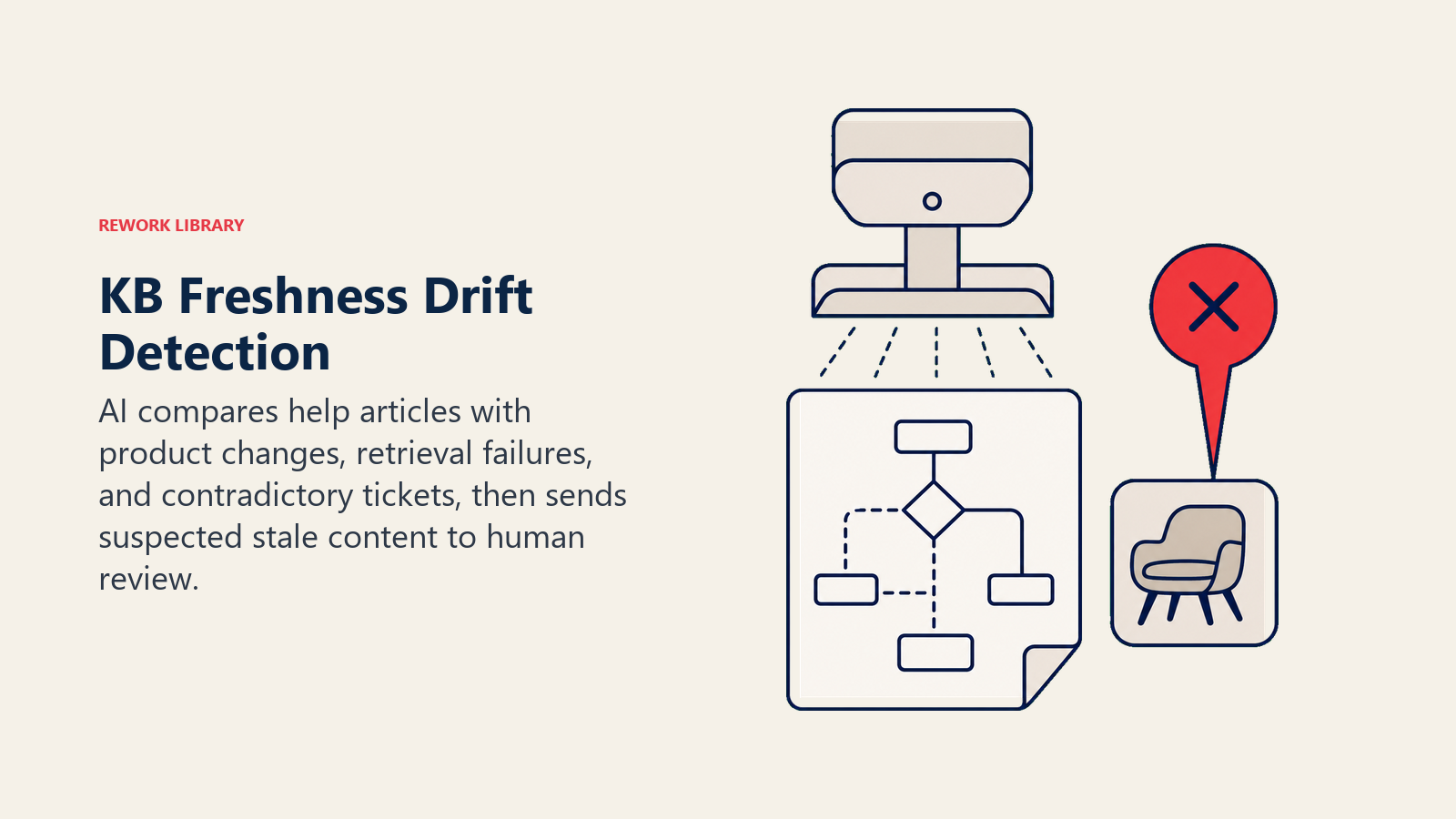
Deteksi kesenjangan menemukan apa yang hilang. Pemantauan kesegaran menemukan apa yang salah.
Ini lebih sulit dilakukan secara manual dan lebih mudah dilakukan dengan AI. Polanya adalah menelusuri knowledge base Anda dan membandingkan konten artikel dengan status produk Anda saat ini, apakah itu berarti screenshot langsung, changelog API, atau riwayat catatan rilis.
Secara konkret: sistem AI membaca artikel yang mendeskripsikan cara menavigasi ke halaman pengaturan. Sistem membandingkan jalur navigasi yang dideskripsikan dengan UI produk saat ini. Jika jalurnya telah berubah, artikel ditandai sebagai berpotensi usang. Tim konten mendapat tugas: tinjau artikel ini, perbarui langkah-langkah, ambil screenshot ulang.
Fitur kesehatan konten AI Document360 melakukan versi dari ini. Integrasi AI Gitbook dapat memantau konten yang tertaut yang merujuk ke endpoint API yang sudah dihentikan dan menampilkannya sebagai item tinjauan. Implementasi spesifik bervariasi berdasarkan perkakas, tetapi polanya konsisten: Ingest korpus dokumen, Ingest changelog produk, Analyze untuk ketidaksesuaian, Execute tugas tinjauan.
Outputnya bukan dokumentasi yang diperbarui secara otomatis. AI tidak seharusnya menerbitkan pembaruan dokumen secara otomatis, karena tidak mengetahui apakah perubahan UI disengaja, soft launch, atau bug yang akan di-rollback. Tugas AI adalah menandai potensi keusangan dan menampilkannya ke peninjau manusia. Tim konten atau manajer produk yang memiliki pembaruan sebenarnya.
KB freshness lag adalah metrik yang tepat untuk dilacak di sini. Ini mengukur rata-rata usia artikel relatif terhadap perubahan produk terakhir yang dicakupnya. Jika produk Anda rilis mingguan tetapi dokumen Anda diperbarui bulanan, lag kesegaran Anda adalah tiga minggu. Sebagian besar tim SaaS tidak mengetahui apa lag kesegaran mereka. Mengukurnya adalah langkah pertama untuk mengelolanya. The Forrester Wave: Knowledge Management Solutions Q4 2024 menemukan bahwa solusi KM terkemuka kini mengintegrasikan AI secara mendalam untuk mengotomatiskan penemuan dan distribusi pengetahuan, tepatnya karena manajemen kesegaran manual pada kecepatan pengiriman SaaS tidak berkelanjutan.
AI untuk Penyusunan Dokumen: Dari Catatan Rilis ke Draf Pertama
Setelah Anda mengetahui apa yang perlu ditulis atau diperbarui, AI dapat secara dramatis mengurangi waktu yang dibutuhkan untuk menghasilkan draf pertama.
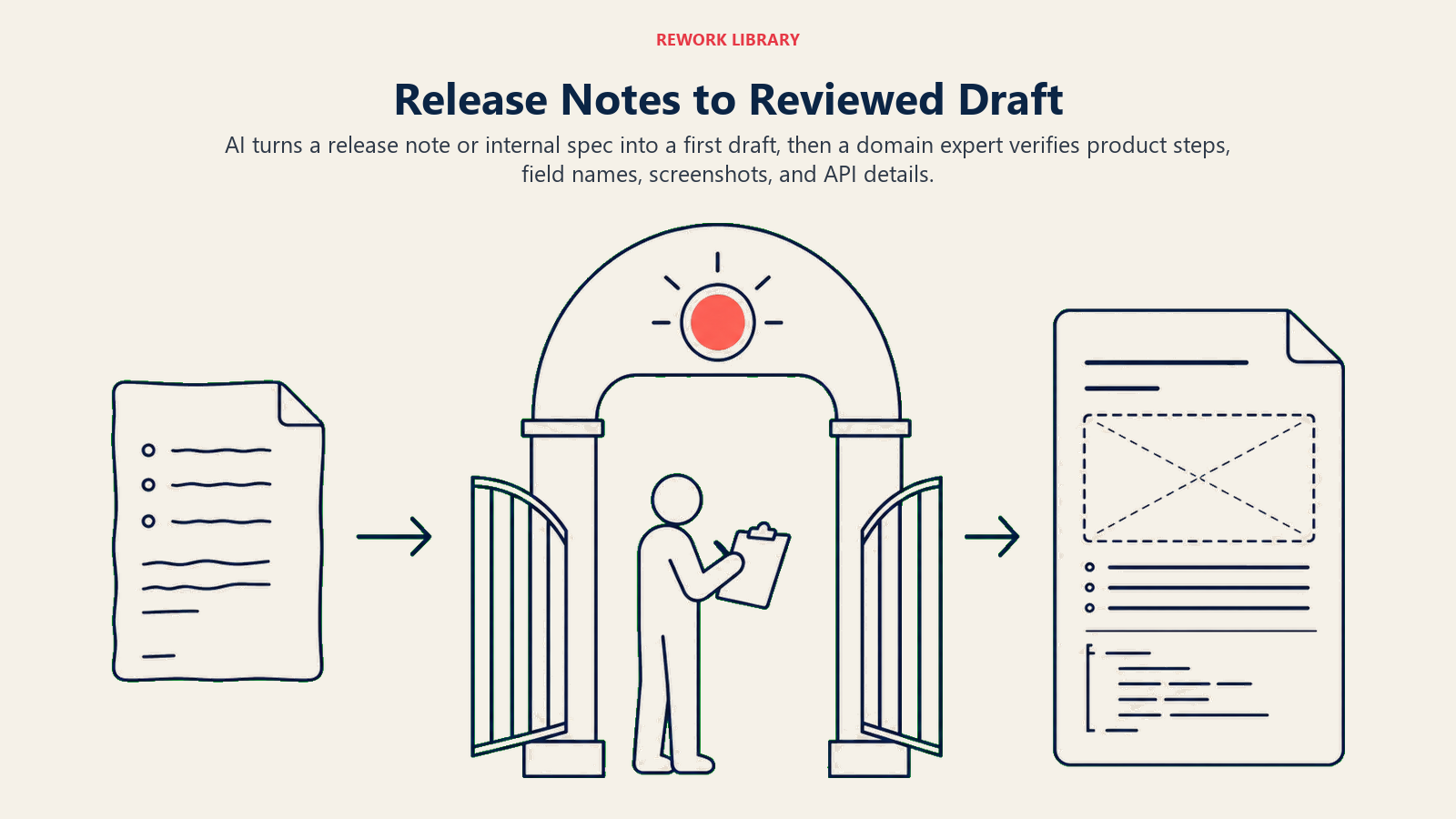
Workflownya seperti ini: sebuah fitur dikirimkan. Teknik atau manajemen produk menulis catatan rilis singkat atau spesifikasi internal. Spesifikasi tersebut dimasukkan ke perkakas penyusunan AI (Writer.com untuk tim yang menginginkan penegakan panduan gaya, Notion AI untuk tim yang sudah ada di Notion, AI Gitbook untuk tim yang menggunakan Gitbook sebagai platform dokumentasi). Perkakas menghasilkan artikel draf pertama atau saran pembaruan.
Penulis teknis atau manajer produk kemudian meninjau draf, mengoreksi ketidakakuratan, menambahkan screenshot, dan menerbitkan.
Ini penting karena hambatan dalam sebagian besar workflow dokumen bukanlah kemauan. Ini adalah waktu. Penulis teknis di perusahaan SaaS mid-size mungkin bertanggung jawab atas 200 atau 300 artikel di tiga area produk. Meminta mereka menyusun setiap pembaruan dari awal berarti dokumen tetap ada di backlog lebih lama. Memberi mereka draf pertama yang wajar untuk diedit mengurangi waktu per artikel sebesar 60 hingga 70 persen, yang berarti lag kesegaran menyusut. Pola Workflow Copilot mendeskripsikan bagaimana model draf-dan-tinjauan ini berlaku untuk pekerjaan pengetahuan secara lebih luas.
Tapi bagian "tinjauan manusia diperlukan" tidak dapat dinegosiasikan. Dokumentasi yang dihasilkan AI untuk produk teknis memiliki mode kegagalan yang sulit ditangkap tanpa keahlian domain. AI akan dengan percaya diri mendeskripsikan langkah-langkah menggunakan nama bidang yang salah. AI akan menggunakan sintaks parameter API yang ada di versi 2 tetapi tidak di versi 3. AI akan mendeskripsikan pesan error yang diganti namanya dalam rilis minor. Tinjauan manusia, terutama dari seseorang yang benar-benar menggunakan fitur tersebut, adalah gerbang kualitas.
"Tingkat defleksi dukungan AI adalah skor kualitas dokumentasi. Tim yang membeli tier Intercom Fin atau Zendesk AI, mengarahkannya ke knowledge base yang sebagian sudah kedaluwarsa, dan merayakan angka defleksi minggu pertama akan menemukan tingkat defleksi mereka terkikis 6 bulan kemudian. AI tidak menjadi lebih buruk. Dokumennya yang menjadi buruk." (Rework Analysis, 2025)
"AI dapat mengurangi waktu per artikel dokumentasi sebesar 60-70% melalui generasi draf pertama dari catatan rilis dan spesifikasi. Tapi tinjauan manusia tidak opsional untuk dokumen SaaS teknis. Dokumentasi yang dihasilkan AI akan dengan percaya diri mendeskripsikan langkah-langkah menggunakan nama bidang yang salah, sintaks parameter API yang sudah dihentikan, dan pesan error yang diganti namanya dalam rilis minor. Keahlian domain saat tinjauan adalah gerbang kualitas, bukan AI." (Rework Analysis, berdasarkan data workflow Gitbook dan Writer.com, 2025)
Kemampuan Perkakas KB Maintenance
| Perkakas | Penggunaan Utama | Kemampuan AI KB | Terbaik Untuk |
|---|---|---|---|
| Zendesk Guide | Hosting KB | Deteksi kesenjangan, analisis kualitas pencarian, artikel yang disarankan | Tim di ekosistem Zendesk |
| Intercom Articles | KB + defleksi | Loop tertutup dengan Fin AI: pola tiket mengisi saran pembaruan dokumen | Pengguna Intercom Fin |
| Gitbook | Platform dokumentasi | Pemantauan kesegaran, deteksi referensi rusak | SaaS yang menghadap pengembang |
| Helpjuice | Analitik KB | Mengidentifikasi artikel dengan tingkat resolusi terendah (proksi keusangan) | Tim yang membutuhkan pendekatan utama analitik |
| Writer.com | Penyusunan dokumen | Draf pertama dengan penegakan panduan gaya dari spesifikasi dan catatan rilis | Tim dengan banyak kontributor |
Sumber: ProProfs Knowledge Base Trends 2025, Forrester Wave Knowledge Management Solutions Q4 2024
Rework Analysis: Investasi bernilai tertinggi sebelum membeli perkakas dukungan AI adalah audit dokumentasi, bukan evaluasi vendor. Tarik 30 tipe tiket paling umum dari 90 hari terakhir. Periksa apakah pusat bantuan Anda dapat secara spesifik menjawab masing-masingnya dengan artikel yang terkini dan akurat. Jika kurang dari 70% memiliki cakupan spesifik, investasi dokumentasi akan menghasilkan ROI lebih tinggi daripada evaluasi vendor. Perkakas dukungan AI yang Anda beli hanya sebaik korpus yang Anda berikan. Tim yang menyelesaikan audit dokumentasi terlebih dahulu mendapatkan ROI 2-3x lebih banyak dari hubungan vendor AI dukungan mereka daripada tim yang melewatinya.
Pipeline Rilis-ke-Dokumen
Pipeline rilis-ke-dokumen mengubah perubahan produk menjadi tugas dokumentasi sebelum pelanggan menemukan ketidakcocokan tersebut di support.
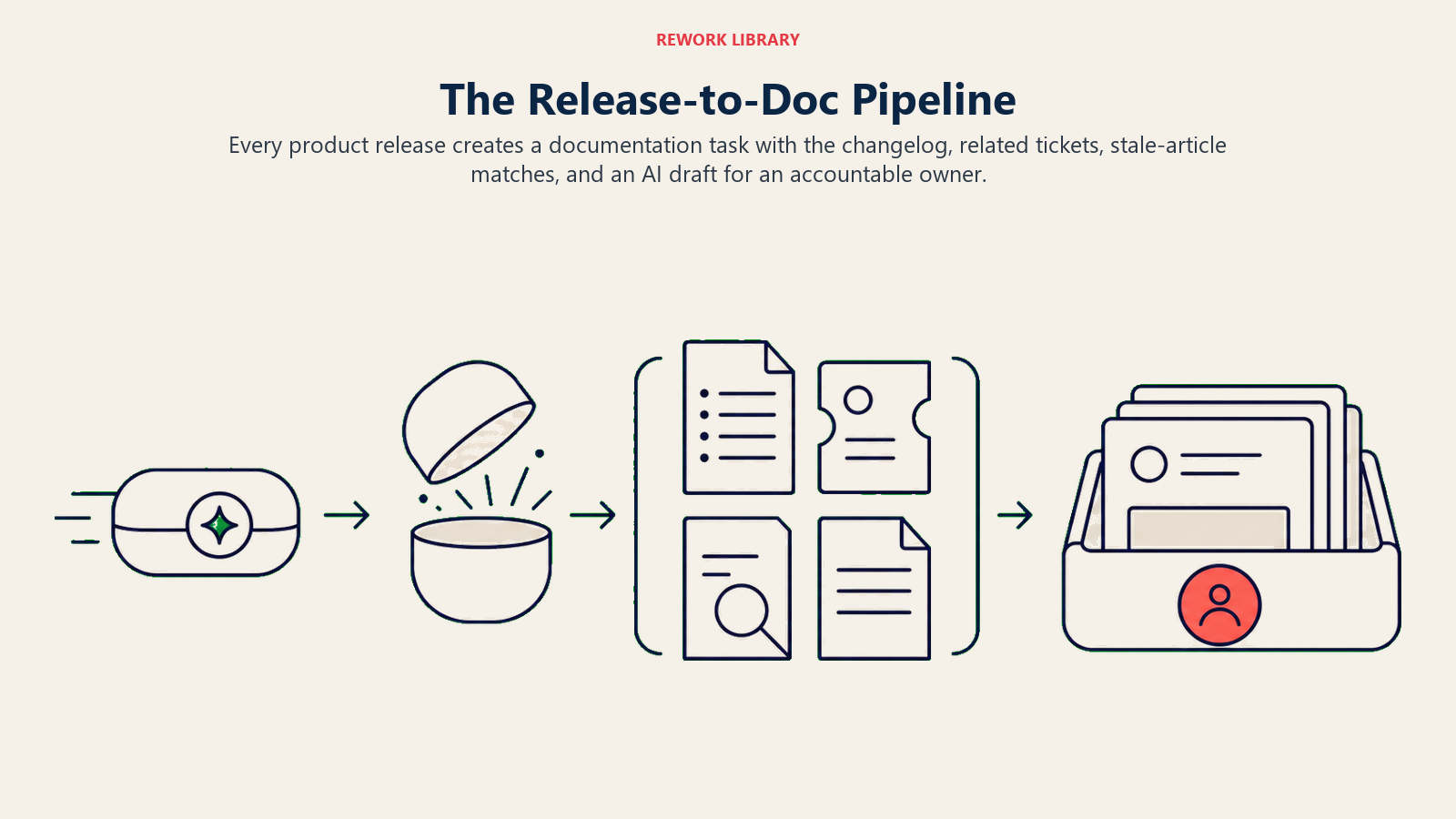
Tim dokumentasi SaaS yang paling matang menghubungkan ini menjadi pipeline formal.
Ketika sebuah fitur dikirimkan, tugas secara otomatis muncul di antrean dokumen. Tugasnya mencakup: catatan rilis, diff changelog, tiket dukungan terkait dari periode beta, dan saran pembaruan yang dibuat AI untuk artikel mana pun yang terdeteksi sebagai usang.
Pekerjaan penulis teknis menjadi triase dan pengeditan alih-alih penelitian dan penyusunan. Mereka membuka antrean setiap pagi, meninjau item yang ditandai, mengedit draf AI yang sudah mendekati, dan menulis dari awal hanya untuk area fitur yang benar-benar baru.
Pipeline ini memiliki efek langsung pada tingkat defleksi yang didorong KB, yaitu persentase kontak dukungan yang diselesaikan oleh knowledge base daripada agen manusia. Tim yang menjalankan pipeline rilis-ke-dokumen yang ketat secara konsisten melihat tingkat defleksi mereka tetap stabil atau meningkat meskipun produk dikirimkan lebih cepat. Tim yang membiarkan pipeline itu merosot melihat tingkat defleksi terkikis dari waktu ke waktu, bahkan dengan perkakas dukungan AI yang baik. Ticket Deflection dengan RAG dalam Dukungan SaaS membahas cara kualitas defleksi diukur di luar volume defleksi mentah.
Pipeline rilis-ke-dokumen memerlukan koordinasi antara produk, teknik, dan dukungan. Di sebagian besar perusahaan SaaS, tidak ada yang memilikinya secara default. Ini jatuh di celah antara ketiga fungsi tersebut. Secara eksplisit menugaskan kepemilikan dokumentasi adalah yang membuat pipeline bekerja. Tanpanya, semua perkakas AI di dunia tidak akan menutup lag kesegaran.
Kualitas Pencarian sebagai Proksi Kualitas Dokumentasi
Berikut adalah diagnostik yang berguna: jika AI dukungan Anda memiliki kepercayaan pencarian yang tinggi tetapi pelanggan masih mengeskalasi, dokumen Anda terstruktur salah, bukan hilang.
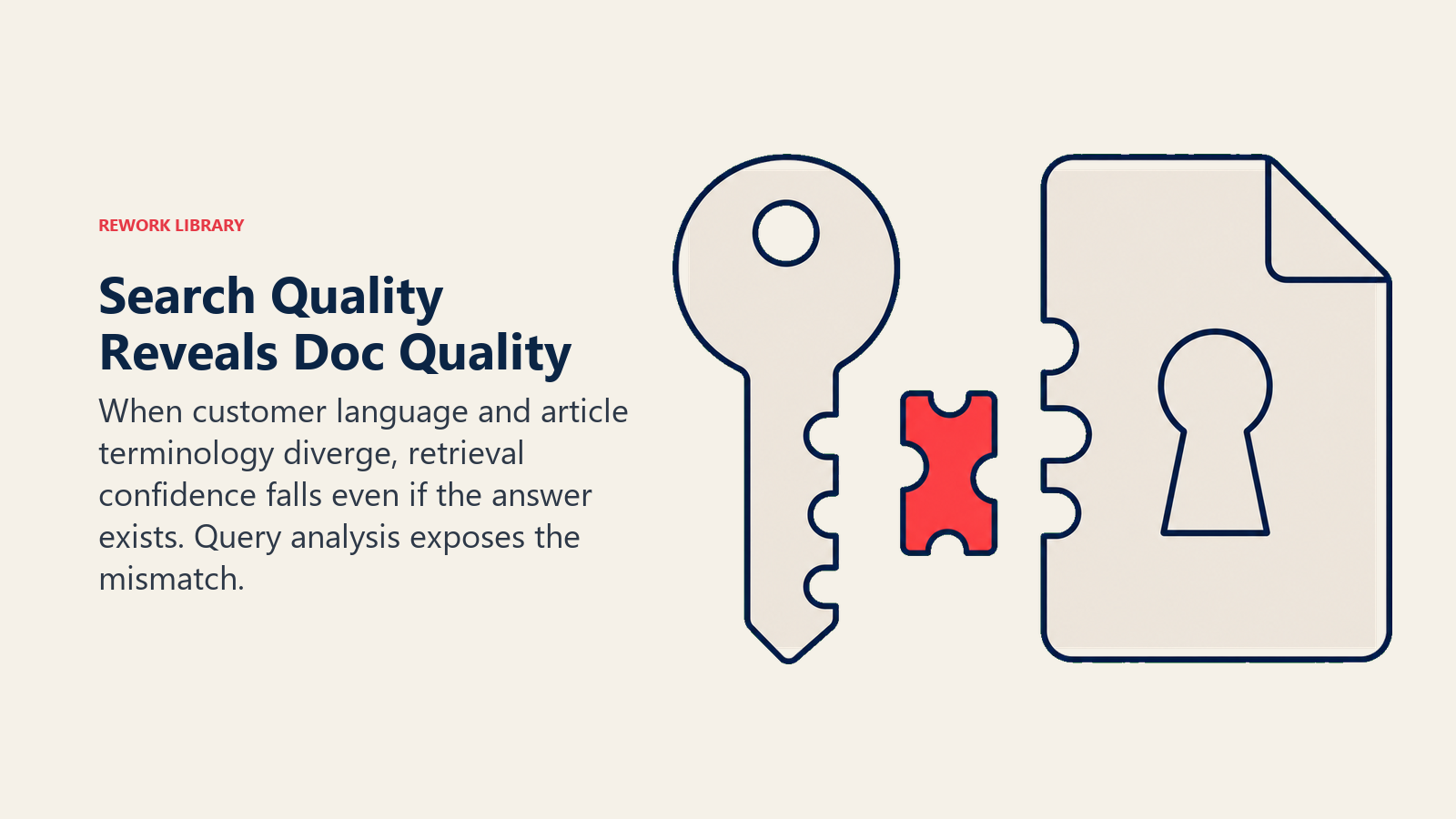
AI dukungan berbasis RAG bergantung pada kualitas retrieval. Jika artikel ditulis dengan terminologi yang tidak cocok dengan cara pelanggan mendeskripsikan masalah mereka, langkah retrieval gagal bahkan ketika informasinya secara teknis ada dalam KB.
Pelanggan bertanya "bagaimana cara menghapus akun saya?" Artikel Anda berjudul "Prosedur deaktivasi akun dan offboarding." RAG mencari "hapus akun" dan mengembalikan kepercayaan rendah. Pelanggan mengeskalasi.
AI dapat menganalisis log pencarian untuk menemukan kesenjangan kata kunci ini. Kemampuan Analyze berjalan di seluruh log kueri (apa yang dicari pelanggan) dan korpus dokumen (bagaimana topik tersebut dideskripsikan) dan menampilkan ketidaksesuaian. Analitik pencarian Intercom dan rekomendasi AI Zendesk Guide keduanya melakukan versi dari ini.
Perbaikannya sering kali adalah penulisan ulang judul artikel dan paragraf pendahuluan, bukan pembaruan konten penuh. Tapi tanpa analisis pencarian berbantuan AI, sebagian besar tim tidak akan pernah menemukan ketidaksesuaian tersebut.
Kepemilikan Dokumentasi di Organisasi SaaS
Perusahaan dengan tingkat defleksi KB tertinggi memiliki satu kesamaan: dokumentasi memiliki pemilik. Penelitian Forrester tentang AI generatif dan manajemen pengetahuan mencatat bahwa adopsi pengguna perkakas KM sangat penting untuk keberhasilannya, dan akuntabilitas kepemilikan adalah faktor organisasi yang paling menentukan apakah draf yang dihasilkan AI dan laporan kesenjangan benar-benar bergerak dari ditandai ke diterbitkan.
Bukan komite. Bukan tanggung jawab bersama. Seorang pemilik. Seseorang atau tim yang KPI-nya mencakup lag kesegaran KB, tingkat defleksi yang didorong KB, dan cakupan dokumentasi dari fitur yang dikirimkan.
Di beberapa perusahaan, itu adalah penulis teknis khusus atau tim dokumentasi. Di perusahaan lain, itu adalah tim Dukungan, menggunakan dokumentasi sebagai pengungkit utama untuk mengurangi volume tiket. Di perusahaan SaaS yang lebih kecil, sering jatuh ke Produk atau Customer Success, menggunakan perkakas bersama.
Model spesifik kurang penting daripada kepemilikan yang eksplisit. Perkakas AI untuk pemeliharaan dokumentasi, apakah mereka menandai konten yang usang, menghasilkan draf pertama, atau menganalisis kesenjangan pencarian, menghasilkan item pekerjaan. Item pekerjaan tersebut perlu pergi ke suatu tempat. Jika tidak ada pemilik, mereka tidak pergi ke mana-mana.
Stack Perkakas
Perkakas dokumentasi dengan kemampuan pemeliharaan AI yang paling relevan pada 2026:
Zendesk Guide menangani hosting knowledge base dengan analitik AI bawaan untuk deteksi kesenjangan, analisis kualitas pencarian, dan artikel yang disarankan berdasarkan pola tiket.
Intercom Articles dipasangkan dengan Fin AI untuk membuat loop tertutup antara pola tiket dan saran pembaruan dokumentasi. Dua produk berbagi data dengan cara yang tidak dapat direplikasi oleh perkakas KB pihak ketiga.
Gitbook mendukung ekstensi AI untuk pemantauan kesegaran konten dan dapat memantau referensi yang rusak ke API atau dokumen eksternal.
Helpjuice menawarkan analitik untuk mengidentifikasi artikel mana yang memiliki tingkat resolusi terendah, yang merupakan proksi untuk keusangan atau struktur yang buruk.
Writer.com dan Notion AI adalah perkakas draf pertama utama, dengan Writer.com menambahkan penegakan panduan gaya yang penting untuk tim dengan banyak kontributor.
Tidak ada perkakas ini yang merupakan solusi lengkap sendiri. Pipeline rilis-ke-dokumen bekerja paling baik ketika setidaknya dua di antaranya terhubung: platform KB dengan analitik kesenjangan/kesegaran AI yang mengisi tugas ke perkakas penyusunan.
Kesimpulan
Tingkat defleksi dukungan AI adalah skor kualitas dokumentasi.
Itu layak diulangi karena mengubah cara tim harus berpikir tentang investasi AI dukungan. Membeli perkakas dukungan AI yang lebih baik adalah pengungkit terakhir. Pengungkit pertama adalah kualitas, cakupan, dan kesegaran dokumentasi.
Perkakas AI untuk pemeliharaan knowledge base membuatnya mungkin untuk menjaga dokumentasi terkini pada kecepatan pengiriman SaaS. Mereka mendeteksi pergeseran, menampilkan kesenjangan, dan menyusun pembaruan. Tapi mereka tidak menggantikan penilaian manusia yang memutuskan apakah pembaruan akurat, apakah draf siap diterbitkan, atau apakah perubahan fitur permanen atau dalam flux.
Tim yang mendapatkan manfaat paling banyak dari AI dukungan berinvestasi dalam dokumen terlebih dahulu. Perkakas AI kedua.
Pertanyaan yang Sering Diajukan
Mengapa tingkat defleksi dukungan AI menurun dari waktu ke waktu?
SaaS terus-menerus rilis. Dokumentasi tertinggal. Ketika sebuah fitur berubah, dokumentasi lama tetap ada dalam korpus RAG dan dikembalikan sebagai hasil retrieval untuk pertanyaan baru. AI menghasilkan jawaban yang percaya diri berdasarkan materi sumber yang sudah usang. Tingkat defleksi terkikis seiring kesenjangan antara apa yang dilakukan produk dan apa yang dideskripsikan dokumen semakin melebar. Perbaikannya adalah pipeline rilis-ke-dokumen yang memperlakukan pembaruan dokumentasi sebagai bagian dari proses rilis, bukan tugas tindak lanjut.
Apa itu KB freshness lag dan bagaimana cara mengukurnya?
KB freshness lag adalah rata-rata usia artikel relatif terhadap perubahan produk terakhir yang dicakupnya. Jika produk Anda rilis mingguan tetapi dokumen Anda diperbarui bulanan, lag kesegaran Anda adalah 3 minggu. Sebagian besar tim SaaS tidak mengetahui apa lag kesegaran mereka. Pengukuran awal adalah: untuk 20 artikel bantuan yang paling banyak diambil, kapan terakhir diperbarui, dan apa yang telah dikirimkan di area produk tersebut sejak itu?
Bagaimana AI mendeteksi konten yang usang dalam knowledge base?
Dua pendekatan. Pemantauan kesegaran membandingkan konten artikel dengan changelog produk, catatan rilis, atau status UI langsung dan menandai artikel yang mendeskripsikan perilaku yang tidak lagi cocok. Deteksi kesenjangan menganalisis peristiwa retrieval berkepercayaan rendah: ketika pelanggan mengajukan pertanyaan yang tidak mengembalikan hasil kemiripan tinggi dari korpus, tipe tiket tersebut menjadi backlog dokumentasi. Kedua pendekatan menghasilkan tugas untuk tinjauan manusia, bukan pembaruan otomatis.
Bagaimana AI membantu menulis dokumentasi lebih cepat?
AI menghasilkan draf pertama dari catatan rilis atau spesifikasi internal, mengurangi waktu per artikel sebesar 60-70%. Penulis teknis menerima draf untuk diedit dan diverifikasi daripada menulis dari awal. Hambatan dalam sebagian besar workflow dokumen adalah waktu, bukan kemauan. Draf pertama AI memampatkan lag kesegaran dengan mengurangi waktu yang dibutuhkan setiap pembaruan. Tapi tinjauan manusia tidak dapat dinegosiasikan: dokumen SaaS yang dihasilkan AI mengandung kesalahan nama bidang, sintaks API yang sudah dihentikan, dan pesan error yang diganti namanya yang hanya dapat ditangkap oleh keahlian domain.
Siapa yang harus memiliki pemeliharaan dokumentasi di perusahaan SaaS?
Satu pemilik atau tim yang bernama yang KPI-nya secara eksplisit mencakup lag kesegaran KB dan tingkat defleksi yang didorong KB. Di beberapa perusahaan itu adalah penulis teknis atau tim dokumentasi. Di perusahaan lain itu adalah tim Dukungan, menggunakan dokumentasi sebagai pengungkit untuk pengurangan volume tiket. Di perusahaan SaaS yang lebih kecil sering jatuh ke Produk atau CS. Model spesifik kurang penting daripada kepemilikan yang eksplisit. Tanpa pemilik yang bernama, laporan kesenjangan yang dihasilkan AI dan tanda kesegaran menghasilkan tugas yang tidak pergi ke mana-mana.
Apa itu pipeline rilis-ke-dokumen?
Workflow formal yang menghubungkan rilis produk ke pembaruan dokumentasi. Ketika sebuah fitur dikirimkan, tugas secara otomatis muncul dalam antrean dokumentasi dengan catatan rilis, diff changelog, tiket terkait dari periode beta, dan saran pembaruan yang dibuat AI untuk artikel mana pun yang ditandai sebagai usang. Penulis teknis melakukan triase dan pengeditan daripada penelitian dan penyusunan dari awal. Tim dengan pipeline rilis-ke-dokumen yang ketat melihat tingkat defleksi mereka tetap stabil seiring produk dikirimkan lebih cepat. Tim tanpanya melihat tingkat defleksi terkikis.
Pelajari Lebih Lanjut:
- Pola RAG Assistant: arsitektur retrieval yang mendukung AI dukungan berbasis KB
- Pola Workflow Copilot: cara workflow AI draf-dan-tinjauan berlaku untuk pemeliharaan dokumentasi
- Apa itu Kemampuan AI Analyze: lapisan ACE Analyze dan sinyal apa yang dapat diproses
- AI Support Agent untuk Self-Service SaaS: bagaimana kualitas KB langsung menentukan kinerja AI dukungan
- Ticket Deflection dengan RAG dalam Dukungan SaaS: mengukur kualitas defleksi di luar volume defleksi mentah
- Multi-Tier AI Routing dalam SaaS Help Desk: bagaimana lapisan routing bergantung pada akurasi KB di setiap tier

Co-Founder, Rework.com
On this page
- Mengapa Pemeliharaan Dokumentasi adalah Masalah Spesifik SaaS
- Kerangka KB Freshness Drift Detector
- AI untuk Deteksi Kesenjangan: Tiket sebagai Backlog Dokumentasi
- AI untuk Pemantauan Kesegaran: Mendeteksi Konten yang Usang
- AI untuk Penyusunan Dokumen: Dari Catatan Rilis ke Draf Pertama
- Kemampuan Perkakas KB Maintenance
- Pipeline Rilis-ke-Dokumen
- Kualitas Pencarian sebagai Proksi Kualitas Dokumentasi
- Kepemilikan Dokumentasi di Organisasi SaaS
- Stack Perkakas
- Kesimpulan