Best Canny Alternatives in 2026: 12 Customer Feedback Tools Compared
Turn this article into takeaways for your work.


Each assistant summarizes the article only for you and suggests best practices for your work.
Canny is a genuinely good customer feedback board: submit an idea, vote on it, watch it move from "Under Review" to "Planned" to "Shipped." For a small product team collecting feature requests, that loop is most of what you need, and Canny built it well.
The catch shows up as you grow. Canny bills by tracked users (the end users whose feedback you're capturing), not by team seat, and that number climbs a lot faster than headcount does. Below are 12 alternatives, evaluated on how they bill, whether they fuse feedback into a real roadmap, and how they hold up for a small team on a budget.
Key Facts
- 84% of product teams worry the products they're building won't succeed in the market, per Atlassian's State of Product 2026 report.
- Best-in-class product teams hit a 15.6% feature adoption rate, based on benchmark data pulled from 6,800+ live applications across 2,500 customers, per Pendo's Product Benchmarks report.
- Only 34% of product teams say they regularly collect customer insights and use them to guide prioritization, per Product-Led Alliance's 2026 product management statistics.
- 47.1% of product teams now use AI just to summarize customer feedback, the single most common AI use case in product work today, per the same Product-Led Alliance research.
- The average company now runs 118 SaaS applications, up 11% year over year and reversing two years of consolidation, per BetterCloud's 2026 State of SaaS Report.
Why Teams Look Beyond Canny
Three reasons come up again and again when teams start shopping for a Canny alternative, and each one points to a different shape of tool.
The tracked-user math stops working. Canny's Free plan caps out at 25 tracked users and 5 managers, and Pro runs $79/month billed yearly for 100+ tracked users. That's fine at launch, and stops being fine once your product has a few thousand active users, all candidates to submit or vote on feedback. UserVoice (never bills by seat or volume), Sleekplan and Upvoty (unlimited tracked users on every paid tier), and Nolt (flat per-board pricing) exist to get you off that curve.
Feedback needs to live next to the roadmap, not beside it. Canny is a feedback board first, with a changelog and basic status tracking, but no RICE scoring, goal-to-feature linking, or discovery workflow. Teams that want insight extraction and prioritization scoring in the same tool as feedback capture tend to land on Productboard, Aha! Ideas, Jira Product Discovery, or Savio.
A small product just needs something cheap. Not every team needs 12 integrations and an AI triage agent. A flat-fee board like Sleekplan's free Indie tier, Upvoty's $15/month Power plan, or Nolt's per-board pricing gets the job done without a tracked-user meter running in the background. If your actual requirement is self-hosting rather than just a lower bill, none of the 12 below are open source; that points toward a project like Fider instead.
If you're mapping your entire product stack rather than just the feedback layer, our guide to the best product management software covers the categories around this one.
Quick Comparison Table
| Tool | Best For | Starting Price | Key Strength | Key Limitation |
|---|---|---|---|---|
| Productboard | Feedback-to-roadmap linking | $19/maker/month (annual) | AI insight extraction tied to roadmap features | Contributor-friendly, but makers add up fast |
| Featurebase | Feedback plus AI ticket deflection | Free (1 seat) | Fibi AI agent resolves support tickets too | AI resolutions cost $0.49 each on top of any plan |
| UserVoice | Never billed by seat or tracked user | Not published | Pricing scales with feedback volume, not headcount | No public pricing to compare against |
| Jira Product Discovery | Atlassian shops | $10/creator/month | Ideas link natively to Jira issues | Thin outside the Atlassian ecosystem |
| Aha! Ideas | Ideas inside a full strategy suite | $20/user/month (annual) | Ties directly into Aha! Roadmaps and OKRs | Full value needs the wider Aha! suite |
| Sleekplan | A real free tier with no tracked-user cap | $0 (Indie) | Unlimited tracked users on every tier, paid included | Team seats, not tracked users, are the paid limit |
| Upvoty | Flat monthly price, no per-user math | $15/month | Unlimited boards and tracked users on every tier | Multiple projects require the top Hyper tier |
| Nolt | Flat per-board pricing | $29/month (reported, annual) | Unlimited users on every tier | No free plan; boards are the billing unit |
| Savio | Feedback tied to revenue data | $39/month | Prioritizes by MRR and ARR, not vote count alone | Paid seats add up quickly past one teammate |
| Pendo Listen | Feedback inside a product analytics platform | Not published (Ultimate tier) | Feedback sits next to real usage data | No dedicated feedback price; must buy into Pendo |
| Frill | Budget-friendly board | $25/month (reported) | Simple setup, low cost of entry | No permanent free plan reported |
| Craft.io | Broader roadmapping with feedback intake | $19/editor/month (Starter, annual) | Full roadmap and strategy platform, not just a board | The Feedback portal is a paid add-on, not part of the base seat |
The Real Axis: How Each Tool Actually Bills You
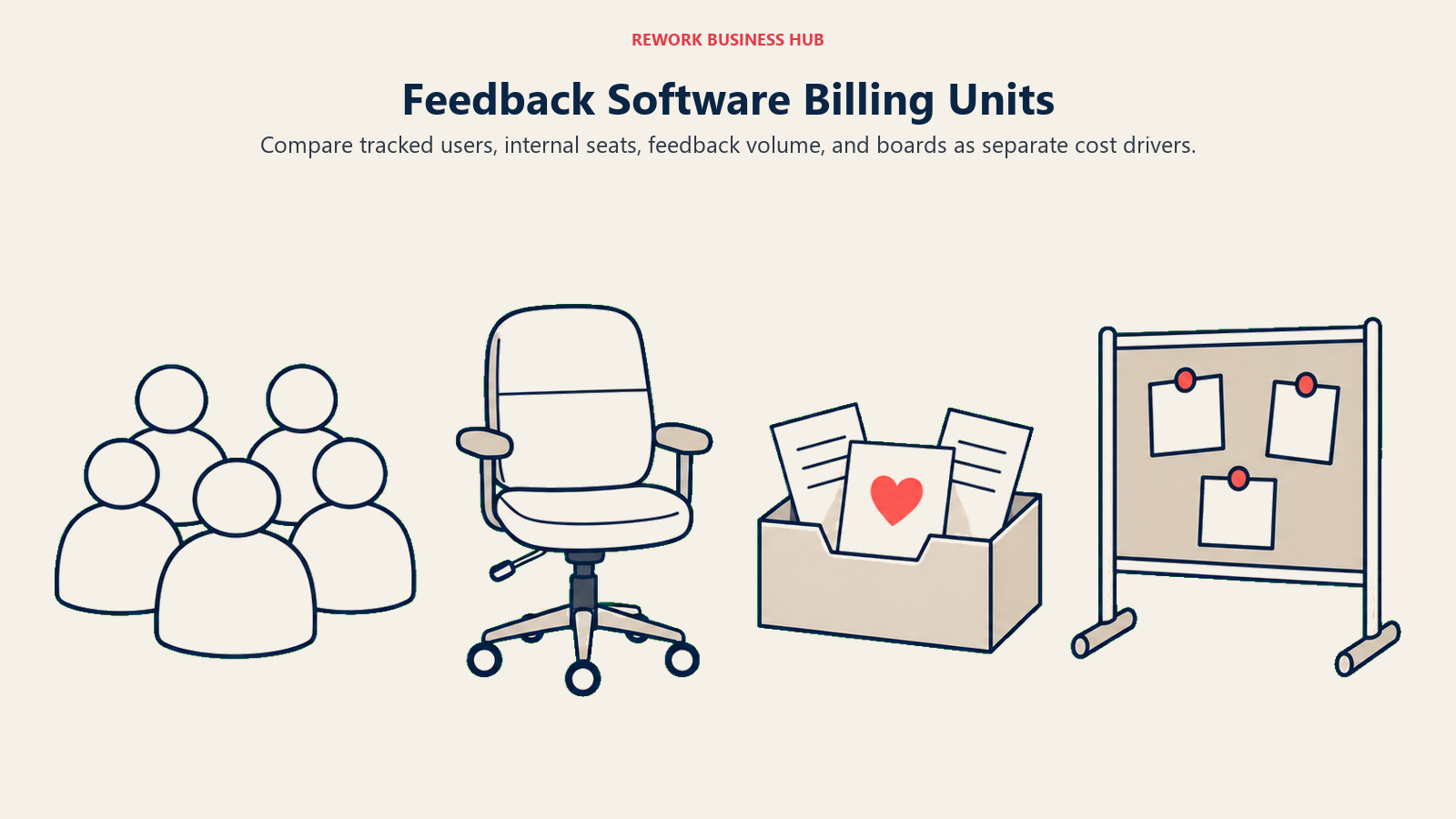
This is the table that matters more than the one above. Canny's tracked-user model is what surprises buyers as they scale, so here's how every alternative bills, and where the cost actually climbs.
| Tool | Bills By | What's Free | Where Cost Climbs |
|---|---|---|---|
| Canny | Tracked users | 25 tracked users, 5 managers | Tracked-user count past 100 (Pro) |
| Productboard | Maker seats (contributors free) | 1 maker, 25 contributors | Each added maker seat |
| Featurebase | Seats | 1 seat, no AI | Seats plus metered AI resolutions |
| UserVoice | Usage (feedback volume, tools, integrations) | No published free tier | Volume and integration count |
| Jira Product Discovery | Creator seats (contributors free, unlimited) | 3 creators | Each added creator seat |
| Aha! Ideas | User seats | No free tier | Per-user monthly cost |
| Sleekplan | Team seats (tracked users always unlimited) | Unlimited tracked users, forever | Team seat count, not end users |
| Upvoty | Flat monthly fee per project | No free tier (14-day trial) | Number of projects, not users |
| Nolt | Flat monthly fee per board | No free tier (10-day trial) | Number of boards |
| Savio | Paid teammates (free viewers unlimited) | No free tier (14-day trial) | Added paid teammates plus roadmap count |
| Pendo Listen | Bundled into Pendo's MAU-based plans | 500 MAU on Free, Listen ships in Ultimate | Monthly active users overall |
| Frill | Seats and idea caps (reported) | No permanent free plan reported | Plan tier and add-ons |
| Craft.io | Editor seats, Contributors free | No free tier, 14-day trial of Pro | Editor seat count, workspace count, and add-ons |
Stage and Sizing Fit
| Tool | Early-Stage Startup | Growth (20-200) | Mid-Market (200-500) | Company-Wide or Product-Team-Only |
|---|---|---|---|---|
| Productboard | Possible | Strong fit | Strong fit | Team-only (product) |
| Featurebase | Strong fit | Strong fit | Possible | Team-only (product and support) |
| UserVoice | Possible | Strong fit | Strong fit | Team-only (product) |
| Jira Product Discovery | Strong fit | Strong fit | Strong fit | Team-only (product and engineering) |
| Aha! Ideas | Too heavy alone | Possible | Strong fit | Team-only (product) |
| Sleekplan | Strong fit | Strong fit | Possible | Team-only (product) |
| Upvoty | Strong fit | Strong fit | Possible | Team-only (product) |
| Nolt | Strong fit | Possible | Weak | Team-only (product) |
| Savio | Possible | Strong fit | Possible | Team-only (product) |
| Pendo Listen | Weak alone | Possible | Strong fit | Team-only (product) |
| Frill | Strong fit | Possible | Weak | Team-only (product) |
| Craft.io | Possible | Strong fit | Strong fit | Team-only (product) |
1. Productboard: Feedback That Flows Straight Into the Roadmap
Productboard's whole pitch is that feedback shouldn't sit in a separate tool from the roadmap it's supposed to inform. It pulls feedback in from multiple channels, uses AI to extract insights, and links those insights directly to features, which you then score with frameworks like RICE. If you outgrew Canny because you wanted feedback to actually drive prioritization instead of just getting counted, this is the natural next step up.
Target audience: Dedicated product teams that want insight-to-feature linking as the core workflow, not an add-on.
Sizing fit: Works from a single maker up, though cost scales with makers, not company size.
Pros and Cons:
| Pros | Cons |
|---|---|
| AI-powered insight extraction tied to roadmap items | Makers are the billed seat, and cost climbs with product-team headcount |
| RICE scoring and prioritization frameworks built in | Business tier has a 5-maker minimum |
| 25 contributors included free on every paid tier | A dedicated product-discovery tool, not a general work platform |
| Customer-facing portal for status updates | Enterprise pricing is fully custom |
Pricing: Productboard Free ($0, 1 maker, 25 contributors); Plus $19/maker/month billed annually or $25/maker/month billed monthly (2 maker minimum, 25 contributors); Business $59/maker/month billed annually or $75/maker/month billed monthly (5 maker minimum, 25 contributors); Enterprise custom (5 maker minimum, unlimited contributors).
Best for: Teams that want Canny's voting layer to plug directly into full-scale discovery and prioritization instead of stopping at "collect and count." For a deeper look at this specific swap, see our Productboard alternatives guide.
2. Featurebase: The Closest Modern Match, With AI Ticket Deflection Built In
Featurebase is probably the closest like-for-like swap on this list: boards, roadmap, and changelog in the same shape Canny uses, plus a help center with a unified inbox and an AI support agent called Fibi that resolves customer questions before they become tickets.
Target audience: Product and support teams that want feedback boards and lightweight ticket deflection under one roof.
Sizing fit: Works from a single seat up; AI resolution costs scale with support volume, not headcount.
Pros and Cons:
| Pros | Cons |
|---|---|
| Fibi AI agent resolves tickets, not just feedback | AI resolutions are a metered add-on at $0.49 each on every paid tier |
| Free plan for a single seat | Monthly-billed rates aren't published; yearly billing is the norm |
| API, MCP, and webhook access from the Growth tier up | Fibi only deploys through Featurebase's own messenger and email |
| Professional and Enterprise include free Lite seats for viewers | Full AI features require a paid tier |
Pricing: Featurebase Free ($0, 1 seat, no AI); Growth $29/seat/month billed yearly (Fibi AI agent, API, MCP, webhooks); Professional $59/seat/month billed yearly (20 free Lite seats included); Enterprise $99/seat/month billed yearly (50 free Lite seats, demo required).
Best for: Teams that want a Canny-shaped board with AI-assisted support triage layered on top.
3. UserVoice: Pricing That Was Never Built Around Seats or Tracked Users
UserVoice is one of the older names in this category, and it made a deliberate choice most of this list hasn't: it doesn't publish plan names or per-seat prices at all. Pricing scales with what you actually use, based on feedback volume, connected tools, and integrations, never by seat. If the tracked-user model is the specific thing driving you off Canny, this is the most direct opposite on the list.
Target audience: Teams that want feedback pricing tied to how much they actually use the tool, not to how many people show up in a dashboard.
Sizing fit: Broad; pricing is negotiated rather than tiered by size.
Pros and Cons:
| Pros | Cons |
|---|---|
| Never billed by seat, tracked user, or MAU | No public pricing, so budgeting requires a sales conversation |
| Long track record in the customer feedback category | Plan names and feature splits aren't published either |
| 30-day trial available through a guided demo | Harder to comparison-shop against tools with public pricing |
| Feedback volume-based pricing can favor low-traffic products | Could favor high-traffic products less than a flat fee would |
Pricing: UserVoice does not publish plan names or prices. The vendor states pricing scales with feedback volume, connected tools, and integrations, and is never based on seat count. A 30-day trial is available via demo.
Best for: Teams that specifically want to escape per-user or per-tracked-user billing and are willing to talk to sales to get there.
4. Jira Product Discovery: The Cheapest Way Into Structured Discovery
If your engineering org already lives in Jira, Jira Product Discovery (JPD) is the lowest-friction way to connect customer feedback to what actually ships. Ideas link natively to Jira issues, contributors (anyone commenting or voting) are free and unlimited, and only the "creators" building out the discovery workspace count against the bill.
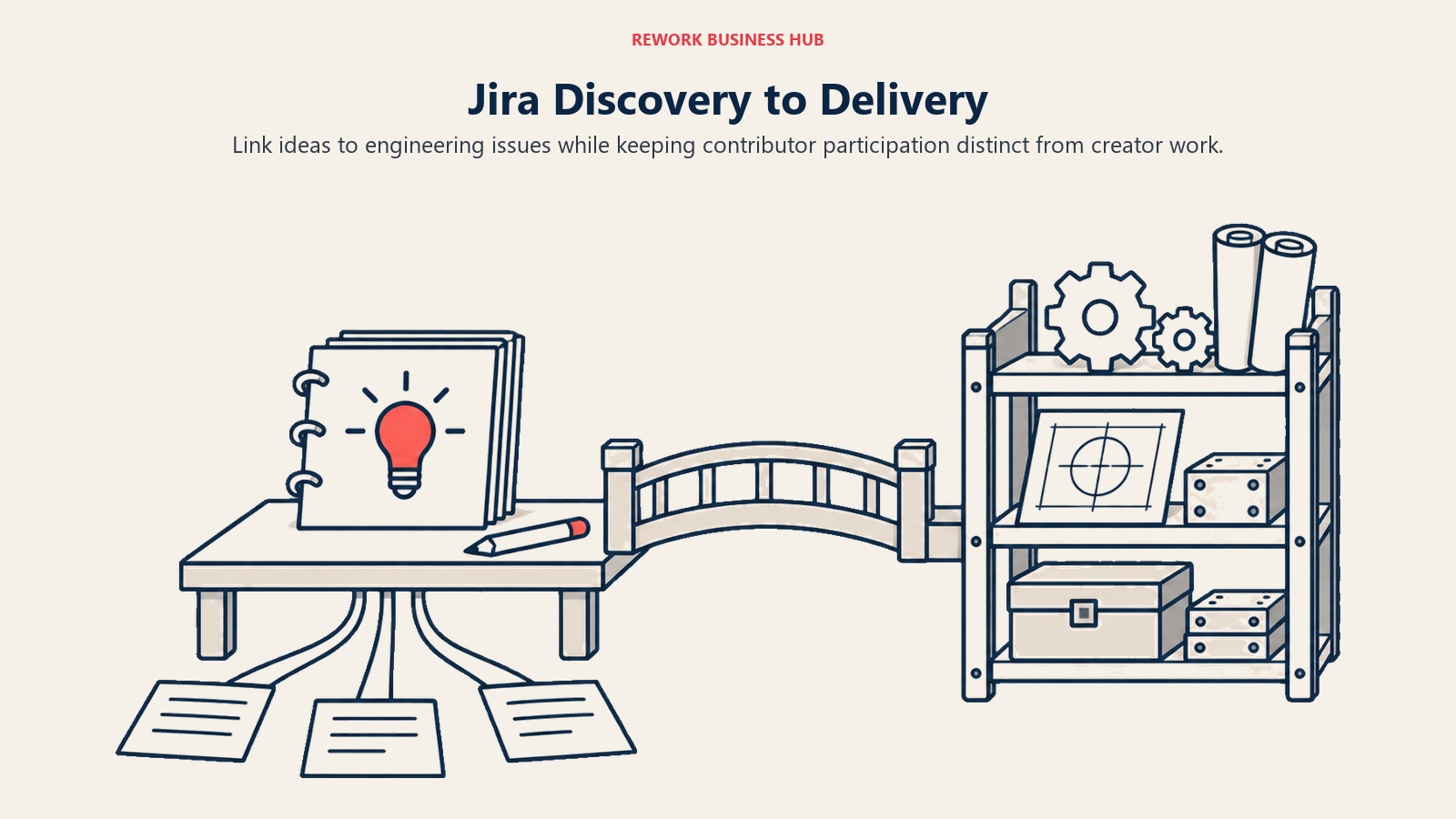
Target audience: Product teams at companies already standardized on Atlassian tools.
Sizing fit: Scales from a 3-person free tier up through large enterprise deployments.
Pros and Cons:
| Pros | Cons |
|---|---|
| Native idea-to-Jira-issue flow | Weak value outside the Atlassian ecosystem |
| Free tier for up to 3 creators, 2GB storage | Contributors need an Atlassian account, even if free |
| Cheapest per-seat structured discovery tool here | No standalone public feedback portal in the Canny sense |
| Annual billing saves up to 17% over monthly | Exact discounted annual rate isn't published on the pricing page |
Pricing: Jira Product Discovery Free ($0, 3 creators, community support); Standard $10 per creator per month, billed monthly; Premium $25 per creator per month, billed monthly (annual billing saves up to 17%, though Atlassian doesn't list the exact annual figure on the page); Enterprise custom.
Best for: Product managers at Atlassian shops who want discovery to feed directly into the engineering backlog without a separate feedback tool bolted on.
5. Aha! Ideas: The Feedback Module Inside a Full Strategy Suite
Aha! Ideas is the feedback and voting layer of the broader Aha! product suite. Ideas submitted here can be scored, linked to goals, and pulled straight into a release plan if you're also running Aha! Roadmaps, which is the real draw: feedback that connects to strategy, not just a backlog.
Target audience: Product-led organizations already using or considering Aha!'s wider strategy-to-release suite.
Sizing fit: Best for teams of 10 or more that can justify per-user cost across the suite.
Pros and Cons:
| Pros | Cons |
|---|---|
| Voting and idea scoring tie directly into Aha! Roadmaps and OKRs | Full value requires buying into the wider Aha! suite |
| Standalone Ideas available from $39 for smaller teams | Advanced tier pricing gets expensive at scale |
| Mature, enterprise-grade reporting | Steeper learning curve than a standalone board like Canny |
| Strong customer-facing portal for status updates | Overkill if all you need is a lightweight voting board |
Pricing: Aha! Ideas Advanced $20/user/month billed annually or $25/user/month billed monthly; standalone Ideas starts from $39. If you're deciding between the two full suites rather than just the feedback module, see our Productboard vs Aha! comparison and our wider Aha! alternatives guide.
Best for: Teams that want feedback and voting to feed a real strategy layer, and are already leaning toward Aha! for roadmapping.
6. Sleekplan: A Genuinely Free Tier With No Tracked-User Cap
Sleekplan takes the opposite approach to Canny on the exact axis that trips people up: its free Indie plan includes unlimited tracked users, unlimited feedback, and unlimited subscribers, forever. Paid tiers add team seats and AI credits, not a tracked-user ceiling. Pricing runs per workspace, and you can embed one workspace's widget on as many sites as you like.
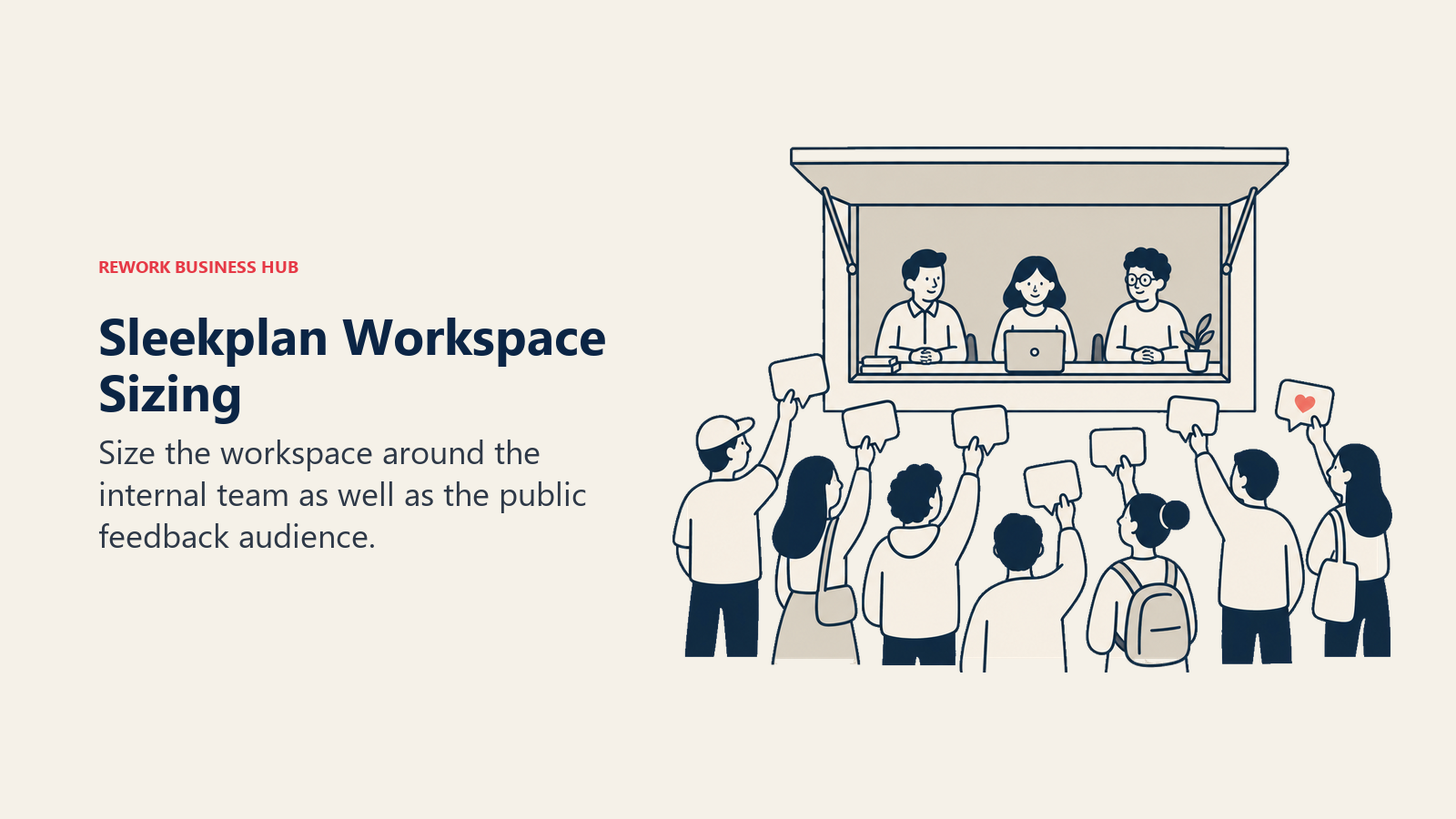
Target audience: Small to mid-size product teams that want to never think about a tracked-user counter again.
Sizing fit: Strong from solo products up through growth-stage teams; team-seat limits (not user limits) are what constrain the paid tiers.
Pros and Cons:
| Pros | Cons |
|---|---|
| Free Indie tier with unlimited tracked users, permanently | Paid tiers are billed per workspace, so multi-product teams pay per product |
| Starter and Business tiers still keep tracked users unlimited | AI credits are capped and sold as an add-on past the included amount |
| 30-day free trial on paid tiers | Smaller brand recognition than Canny or Productboard |
| Low cost of entry for a small team | Team-seat limits mean a growing internal team, not just users, eventually costs more |
Pricing: Sleekplan Indie free forever (unlimited tracked users, unlimited feedback items); Starter $13/month billed yearly (3 team seats, 1,000 AI credits, unlimited tracked users); Business $38/month billed yearly (10+ team seats available as an add-on, 5,000+ AI credits available as an add-on, unlimited tracked users); Enterprise custom.
Best for: Small teams that specifically want to escape tracked-user billing without giving up a public voting board.
7. Upvoty: Flat Monthly Price, No Per-User Math
Upvoty keeps its pricing deliberately simple: every paid tier includes unlimited boards and unlimited tracked users, and the only thing that changes between tiers is how many separate projects you can run. For a single product, that means the bill never moves no matter how many users show up to vote.
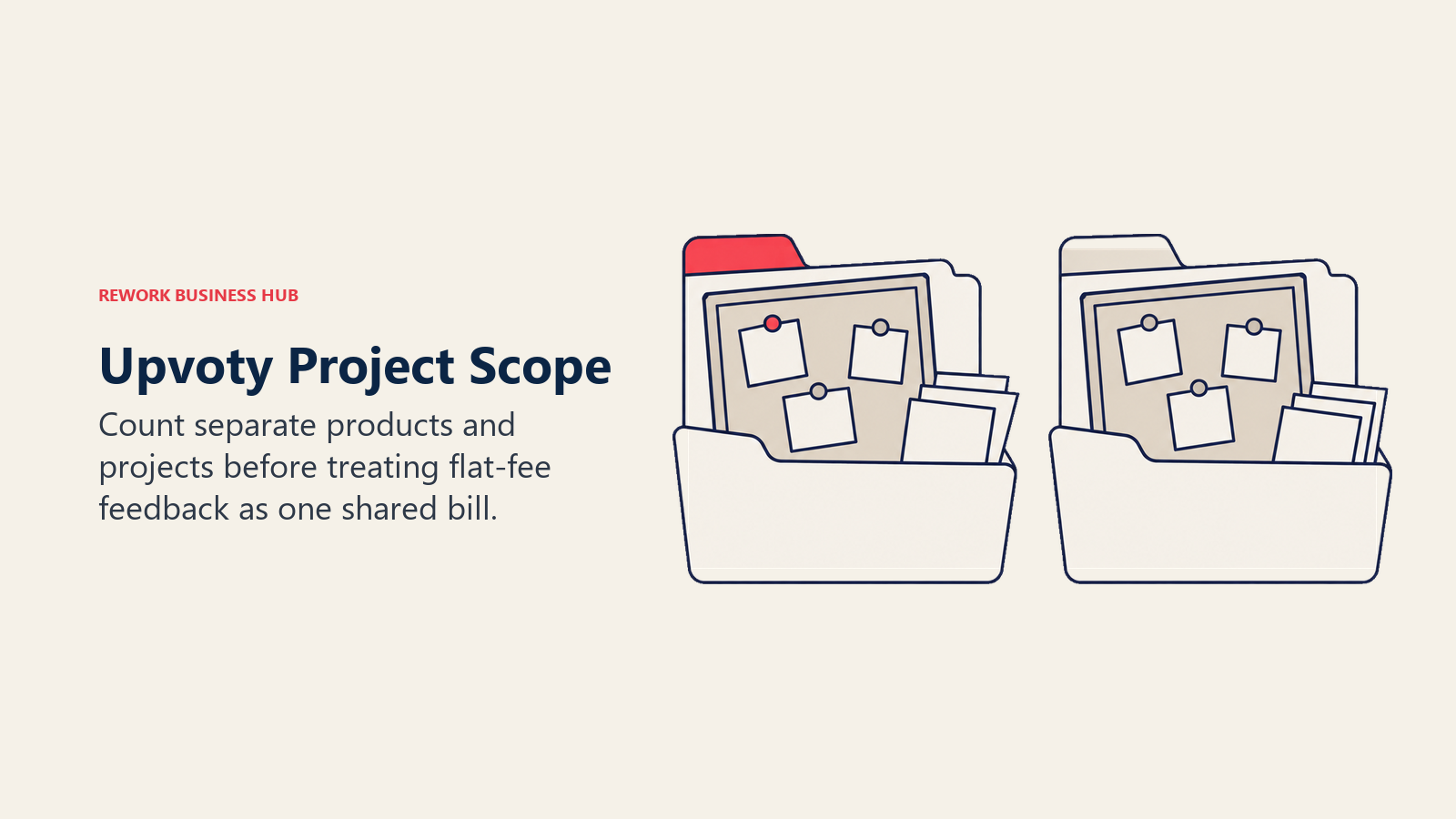
Target audience: Small to mid-size teams running one or two products that want predictable, flat monthly pricing.
Sizing fit: Best for one-project teams on Power or Super; multi-product teams need Hyper.
Pros and Cons:
| Pros | Cons |
|---|---|
| Unlimited tracked users and unlimited boards on every tier | Only one project included below the Hyper tier |
| Flat monthly pricing, easy to budget | No free tier; 14-day trial only |
| 10% discount available on annual billing | Exact annual dollar figures aren't listed on the pricing page |
| Enterprise adds SAML SSO and a dedicated success manager | Smaller ecosystem of integrations than Canny or Featurebase |
Pricing: Upvoty Power $15/month (1 project, unlimited boards, unlimited tracked users); Super $25/month (same limits, marked most popular); Hyper $49/month (unlimited projects, boards, and tracked users); Enterprise custom. Monthly pricing shown; an annual toggle saves 10%, though exact annual rates aren't published. 14-day free trial, no card required.
Best for: A single-product team that wants Canny's board format without ever worrying about a tracked-user count.
8. Nolt: Flat Per-Board Pricing With Unlimited Users
Nolt bills per board, not per user or tracked user at all. Every tier includes unlimited users, posts, and admins; the only thing you're paying for is how many separate boards you're running. The figures below come from a third-party breakdown (reported); confirm current pricing with Nolt.
Target audience: Small teams running one or a handful of products that want flat, predictable pricing with zero per-user calculation.
Sizing fit: Strong for a single board; Pro's 5-board cap covers most small-to-mid product suites.
Pros and Cons:
| Pros | Cons |
|---|---|
| Unlimited users, posts, and admins on every tier (reported) | No free plan; only a 10-day Pro trial |
| Flat, predictable per-board pricing (reported) | Essential tier is capped at a single board |
| No per-user or tracked-user billing at all | Advanced integrations (Jira, Asana, Linear, Teams) require the Pro tier |
| Custom domains and SSO included even on the entry tier | Confirm current pricing with Nolt |
Pricing (reported, per fdback.io's 2026 Nolt pricing breakdown): Essential $29/month billed annually or $39/month billed monthly (1 board); Pro $69/month billed annually or $89/month billed monthly (5 boards); Enterprise custom. No free plan.
Best for: A small team running one or two products that wants to pay for boards, not for how many users show up.
9. Savio: Feedback Tied to Revenue Data, Not Just Vote Count
Savio takes a different cut at prioritization: instead of ranking requests purely by vote count, it connects feedback to customer data pulled from Intercom, Zendesk, Help Scout, Salesforce, and HubSpot, so you can sort requests by MRR, ARR, or account importance. It also handles closing the loop, flagging which customers to notify once a requested feature ships.
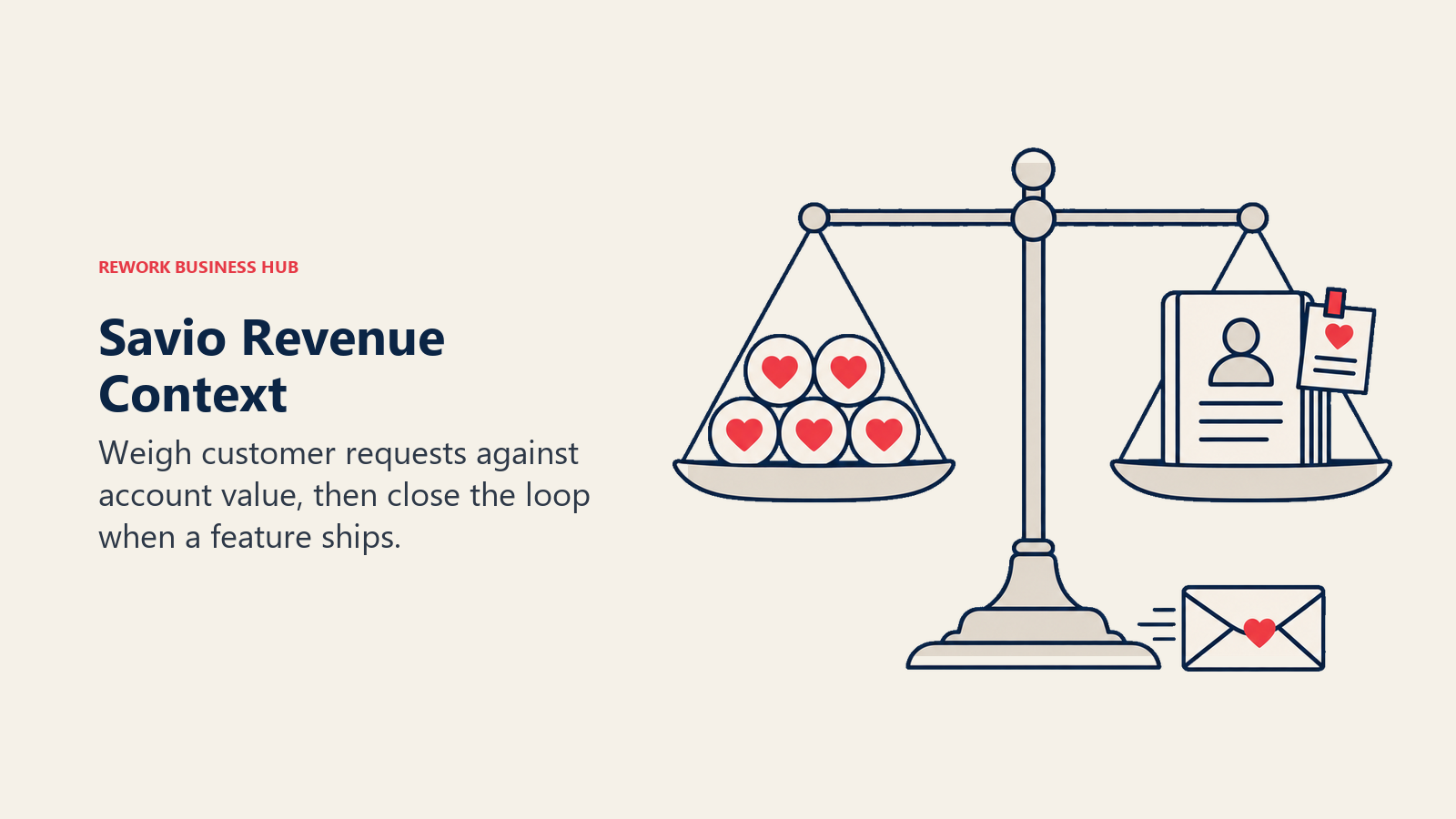
Target audience: B2B teams that want feedback prioritized by revenue impact, not just by how many people clicked upvote.
Sizing fit: Best for small product teams; cost scales with paid teammates, not tracked users.
Pros and Cons:
| Pros | Cons |
|---|---|
| Prioritizes by MRR, ARR, and account data, not just votes | Only one paid user is included per tier; more teammates cost extra |
| Free, unlimited viewer and submitter roles | Roadmap count is capped by tier (1, 5, or unlimited) |
| Direct integrations with Intercom, Zendesk, Salesforce, HubSpot | No published free plan; 14-day trial only |
| Built-in close-the-loop emails to customers who requested a shipped feature | Chrome extension approach to capture feels less polished than a native widget |
Pricing: Savio Essential $39/month (1 paid user, 1 roadmap, additional paid users $23/month, unlimited free users); Professional $79/month (1 paid user, 5 roadmaps, additional paid users $39/month); Business $249/month (1 paid user, unlimited roadmaps, multiple products, additional paid users $49/month). Two months free when paid annually, per the vendor's pricing page; 14-day free trial.
Best for: B2B teams that want feedback prioritization weighted by customer revenue rather than raw vote totals.
10. Pendo Listen: Feedback Capture Inside a Product Analytics Platform
Pendo retired its classic Feedback module on August 1, 2026, folding that functionality into Pendo Listen, now Pendo's qualitative insights tool. The pitch differs from every other tool here: feedback capture sits next to actual in-product usage data, so a request can be weighed against how people really use your product, not just how loudly they asked.
Target audience: Teams already running Pendo for product analytics that want feedback in the same platform instead of a separate tool.
Sizing fit: Makes the most sense once you're already paying for Pendo's analytics; a poor fit as a standalone feedback tool.
Pros and Cons:
| Pros | Cons |
|---|---|
| Feedback sits alongside real usage and adoption data | Listen ships in Pendo's Ultimate tier, which has no published price |
| Classic Feedback's request-and-respond workflow is fully folded in | Not a fit if you don't already use or want Pendo's analytics |
| Free tier covers up to 500 MAU for the base analytics product | Free tier's feature set for Listen specifically isn't published |
| Backed by Pendo's own product benchmark data across 6,800+ apps | Buying in means buying into MAU-based pricing overall |
Pricing: Pendo Free ($0, 500 MAU, unlimited web and mobile app keys); Base, Core, and Ultimate plans are not publicly priced. Listen ships as part of the Ultimate tier. Any dollar figure you've seen elsewhere for Pendo is third-party and should be treated as unverified.
Best for: Teams that want feedback weighed against real usage data and are willing to buy into Pendo's broader analytics platform to get it. If analytics, not feedback, is your actual starting point, our Pendo alternatives guide covers that comparison directly.
11. Frill: A Budget-Friendly Board for Simple Setups
Frill keeps things simple: an idea board, a roadmap view, and a changelog, without the AI layer or deep integrations some newer entrants here carry. Treat the figures below as reported.
Target audience: Small teams that want a low-cost, no-frills feedback board and don't need deep CRM or support-desk integrations.
Sizing fit: Best for a single small product; the reported idea cap on the entry tier limits larger-volume use.
Pros and Cons:
| Pros | Cons |
|---|---|
| Reported entry price is among the lowest on this list | No permanent free plan reported; 14-day trial only |
| Simple setup with a familiar board-plus-roadmap format | Add-ons (privacy, surveys, white-label) cost extra on top |
| Reported unlimited ideas from the Business tier up | Confirm current pricing with Frill |
| Straightforward for teams that don't need deep integrations | Fewer integrations than Canny, Featurebase, or Savio |
Pricing (reported): Startup $25/month (50 ideas, 1 survey); Business $49/month (unlimited ideas); Growth $149/month (white label); Enterprise $349+/month. Add-ons reported at $25/month for privacy, $25/month for surveys, and $100/month for white-label. No permanent free plan reported.
Best for: A small team that wants the cheapest board-plus-changelog setup and doesn't need CRM-grade integrations.
12. Craft.io: A Broader Roadmapping Platform With Feedback Intake Built In
Craft.io is the widest-scope tool on this list: a full product management platform covering strategy, roadmapping, and requirements management, with a feedback intake module rather than a standalone board. It's the right pick if a dedicated feedback tool was never really the goal, and what you actually want is one platform for the whole workflow. Craft.io's pricing page is readable again as of September 2026, so the figures below are vendor-confirmed, and the one that matters most for a feedback buyer is that the Feedback portal is a paid add-on rather than part of the base seat.
Target audience: Product teams that want feedback, requirements, and roadmapping unified in one platform rather than stitched together.
Sizing fit: Works from a single workspace up through multi-workspace enterprise use.
Pros and Cons:
| Pros | Cons |
|---|---|
| Feedback intake feeds directly into roadmap and requirements docs | Pricing is per editor, so cost climbs with the product team |
| Starter tier covers a single workspace at $19/editor/month annual | Starter is limited to one workspace; Pro is needed for more |
| Pro tier adds unlimited workspaces and dev integrations | Not a good fit if you only need a lightweight voting board |
| 14-day trial of Pro, no credit card, unlimited free Contributors | The Feedback portal is a $15/editor/month add-on on top of the seat |
Pricing: Starter $19/editor/month billed annually or $24/editor/month billed monthly (1 workspace); Pro $79/editor/month billed annually or $99/editor/month billed monthly (unlimited workspaces, dev integrations); Enterprise custom, billed annually. The Feedback portal, OKRs and Product Strategy, and Capacity planning are each add-ons at $15/add-on/editor/month annually ($20 monthly), so a feedback buyer on Pro is really at $94/editor/month. Contributors are unlimited and free, and there is a 14-day trial of Pro. See craft.io/pricing.
Best for: Teams that decided the real fix isn't a better feedback board, it's one platform for strategy, roadmap, and requirements together.
How to Choose: Decision Framework
| If you need this... | Go with... |
|---|---|
| To stop tracked-user billing from climbing as your product grows | UserVoice, Sleekplan, Upvoty, or Nolt |
| Feedback that feeds directly into a real roadmap and prioritization scoring | Productboard, Aha! Ideas, or Savio |
| The lowest-cost structured discovery tool for an Atlassian shop | Jira Product Discovery |
| A genuinely free tier with no tracked-user cap | Sleekplan |
| The closest like-for-like swap to Canny's format, plus AI ticket deflection | Featurebase |
| Feedback prioritized by customer revenue, not vote count | Savio |
| Feedback capture next to real in-product usage data | Pendo Listen |
| The cheapest possible board for a single small product | Nolt or Frill (reported pricing on both) |
| One platform for feedback, roadmap, and requirements, not a standalone board | Craft.io |
| A lighter-weight option, tracking requests inside a general PM tool instead of a dedicated board | See our ClickUp alternatives or Notion alternatives guides |
Frequently Asked Questions about Canny Alternatives
Does Canny still have a free plan in 2026?
Yes. Canny's Free plan is capped at 25 tracked users and 5 managers, with unlimited contributors and unlimited boards. It was not discontinued, but it also isn't unlimited, which is a common misconception.
What makes Canny's pricing different from most project management tools?
Canny bills by tracked users (the end users whose feedback you capture), not by team seat. That's the opposite of how most PM tools price, and it's why costs can climb fast as your user base grows even if your internal team stays small.
Which Canny alternative avoids tracked-user pricing entirely?
UserVoice never bills by seat or tracked user; it scales with feedback volume and integrations instead. Sleekplan and Upvoty keep tracked users unlimited on every paid tier and bill by team seats or flat monthly fee instead.
What's the best Canny alternative for a team that also wants a real product roadmap?
Productboard and Aha! Ideas both link feedback directly to roadmap items with prioritization scoring. Jira Product Discovery and Savio are cheaper routes to a similar outcome.
Is there a self-hosted, open-source alternative to Canny?
None of the 12 tools compared here are open source or self-hosted. That's a different category of tool, such as the open-source project Fider, rather than any of the hosted options above.
What to Do Next
Start by figuring out which of the three reasons actually applies to you: the tracked-user bill, the lack of roadmap depth, or wanting something cheaper for a small product. That narrows 12 tools to two or three fast. Pick your top two, run each trial against your real feedback volume for two weeks, and check what the bill looks like at your tracked-user count six months out, not just today. That's the number Canny's pricing model hides until you're already past it.

Customer Success Operations Manager
On this page
- Key Facts
- Why Teams Look Beyond Canny
- Quick Comparison Table
- The Real Axis: How Each Tool Actually Bills You
- Stage and Sizing Fit
- 1. Productboard: Feedback That Flows Straight Into the Roadmap
- 2. Featurebase: The Closest Modern Match, With AI Ticket Deflection Built In
- 3. UserVoice: Pricing That Was Never Built Around Seats or Tracked Users
- 4. Jira Product Discovery: The Cheapest Way Into Structured Discovery
- 5. Aha! Ideas: The Feedback Module Inside a Full Strategy Suite
- 6. Sleekplan: A Genuinely Free Tier With No Tracked-User Cap
- 7. Upvoty: Flat Monthly Price, No Per-User Math
- 8. Nolt: Flat Per-Board Pricing With Unlimited Users
- 9. Savio: Feedback Tied to Revenue Data, Not Just Vote Count
- 10. Pendo Listen: Feedback Capture Inside a Product Analytics Platform
- 11. Frill: A Budget-Friendly Board for Simple Setups
- 12. Craft.io: A Broader Roadmapping Platform With Feedback Intake Built In
- How to Choose: Decision Framework
- What to Do Next