Best Aha! Alternatives in 2026: 11 Product Roadmap and Planning Tools Compared

Turn this article into takeaways for your work.


Each assistant summarizes the article only for you and suggests best practices for your work.
Aha! is legitimately the most feature-complete product roadmap platform available. You get idea portals, WSJF scoring, strategy models, release management, Aha! Develop for engineering, and Aha! Whiteboards, all under one roof. No competitor has that breadth. But that comprehensiveness comes with real trade-offs: the Roadmaps product starts at $59 per creator per month, the contributor and viewer seat math compounds fast, onboarding takes weeks, and the sheer number of features can feel like overkill for a team that simply wants a clean, shareable product roadmap.
If you're a PM, product leader, or ops lead who has either outgrown your budget for Aha! or never needed its full depth in the first place, this comparison covers the eleven most relevant alternatives, with honest pricing, genuine ICP framing, and a decision framework at the end. The tools range from purpose-built roadmap products (Productboard, ProductPlan) to engineering-focused trackers (Linear, Jira Product Discovery) to broader work platforms (ClickUp, Asana, Notion).
Quick Comparison Table
| Tool | Best For | Starting Price | Key Strength | Key Limitation |
|---|---|---|---|---|
| Productboard | Product-led teams needing customer feedback loops | $19/maker/month (Plus, annual, 2-maker minimum) | Feedback portal + prioritization in one flow | Business tier jumps to a 5-maker minimum |
| Jira Product Discovery | Atlassian shops that already run Jira | $10/creator/month (Standard) | Native Jira integration, free contributors | Limited as a standalone roadmap tool |
| ProductPlan | Stakeholder-facing visual roadmaps | Quote on request (no public price) | Clean timeline views, viewers always free | No feedback or idea management built in |
| airfocus | Strategy-first teams prioritizing by impact | Quote on request (no public price) | Flexible scoring frameworks, OKR alignment | Lighter on execution tracking |
| Roadmunk | Simple roadmap visualization | $19/user/month (Starter) | Quick setup, clean swimlane views | Limited prioritization and feedback features |
| Craft.io | Mid-size product teams needing strategy depth | $19/user/month (Starter) | Strategy hierarchy from vision to features | Steeper learning curve than simpler tools |
| monday dev | Dev teams wanting sprints plus roadmaps | $9/seat/month (Basic, annual) | Sprint boards, roadmaps, and backlogs in one | Becomes expensive with larger teams |
| ClickUp | Teams wanting everything in one place | Free; $7/user/month (Unlimited) | Unmatched feature breadth | Complexity and noise for pure roadmap use |
| Notion | Flexible wiki-style roadmap documentation | Free; $10/user/month (Plus) | Maximum flexibility, team buy-in | No native prioritization or scoring logic |
| Linear | Engineering teams who own the product backlog | Free; $10/user/month (Basic) | Speed, keyboard shortcuts, clean UX | Scoped to eng teams, not whole-company roadmaps |
| Asana | Cross-functional teams tracking roadmap execution | $10.99/user/month (Starter) | Timeline, portfolios, goal tracking | Not purpose-built for product discovery |
1. Productboard: Best for Product-Led Teams With a Customer Feedback Loop
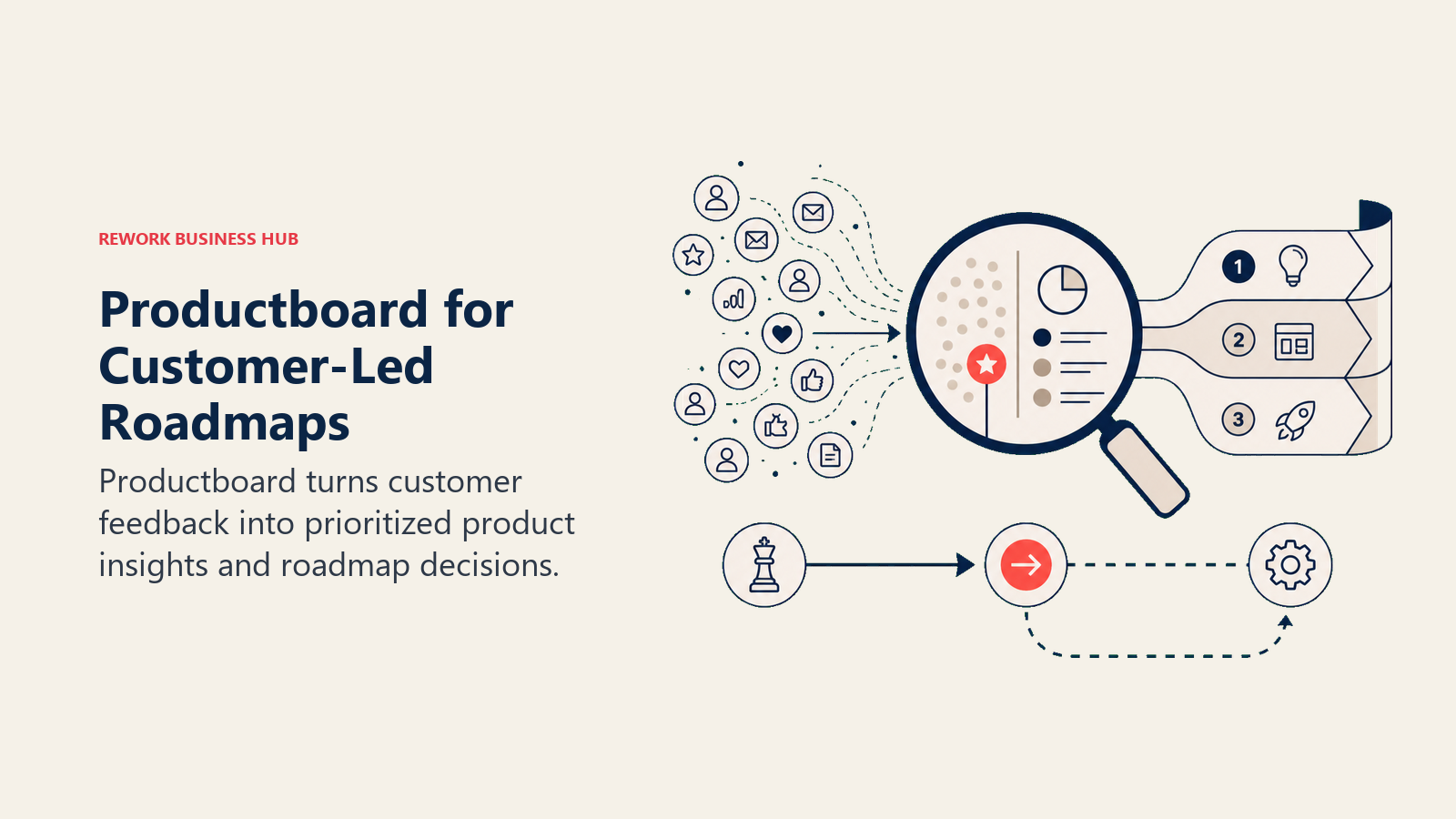
Productboard is what most product teams picture when they outgrow a spreadsheet roadmap. The platform centers on the feedback-to-roadmap loop: you collect raw customer insights from email, Zendesk, Intercom, or a public portal, link them to features, score features by customer impact and effort, then build and share a prioritized roadmap. It's a tighter, more opinionated workflow than Aha!, and for many product managers that focus is an advantage.
The pricing model pivots around "makers" (active product contributors) with contributors and viewers free. Productboard publishes a free tier (1 maker, 25 contributors), then Plus at $19/maker/month billed annually ($25 monthly, 2-maker minimum), which includes AI-assisted triage, prioritization boards, roadmap views, and the feedback portal. Business is $59/maker/month annually ($75 monthly) behind a 5-maker minimum, and Enterprise remains custom pricing for SSO, audit logs, and dedicated support.
Productboard is a strong direct Aha! alternative if what you need most is customer feedback capture and prioritization, but you don't need Aha!'s strategy-modeling depth or integrated development tracking.
ICP: 2 to 50-person product teams with an active customer feedback stream and a structured discovery process.
Sizing fit: Works from solo PMs up through mid-market; pricing stays low for small teams thanks to the maker model.
| Pros | Cons |
|---|---|
| Best-in-class feedback portal and triage | Can feel siloed from engineering execution |
| Clean per-maker pricing (viewers free) | Enterprise pricing is opaque |
| AI-assisted feature scoring (Spark) | Limited sprint or delivery tracking |
| Deep Jira, GitHub, Azure DevOps sync | Roadmap sharing limited on lower tiers |
Pricing: Free ($0, 1 maker, 25 contributors). Plus $19/maker/month annual, $25/maker/month monthly, 2-maker minimum. Business $59/maker/month annual, $75/maker/month monthly, 5-maker minimum. Enterprise custom, 5-maker minimum, unlimited contributors. See productboard.com/pricing.
Best for: Product teams that prioritize based on customer evidence and want a dedicated discovery-to-roadmap workflow. Read the full Productboard alternatives comparison for context on where it sits.
2. Jira Product Discovery: Best for Atlassian Shops Already Running Jira
If your engineering team runs Jira Software, Jira Product Discovery (JPD) is the fastest path to a connected product roadmap. Ideas in JPD link directly to Jira issues in Software, so PMs can plan at the feature and initiative level while engineers see the same work in their sprint boards. Contributors, stakeholders, and viewers don't need paid seats, which makes the per-seat cost manageable even for large orgs.
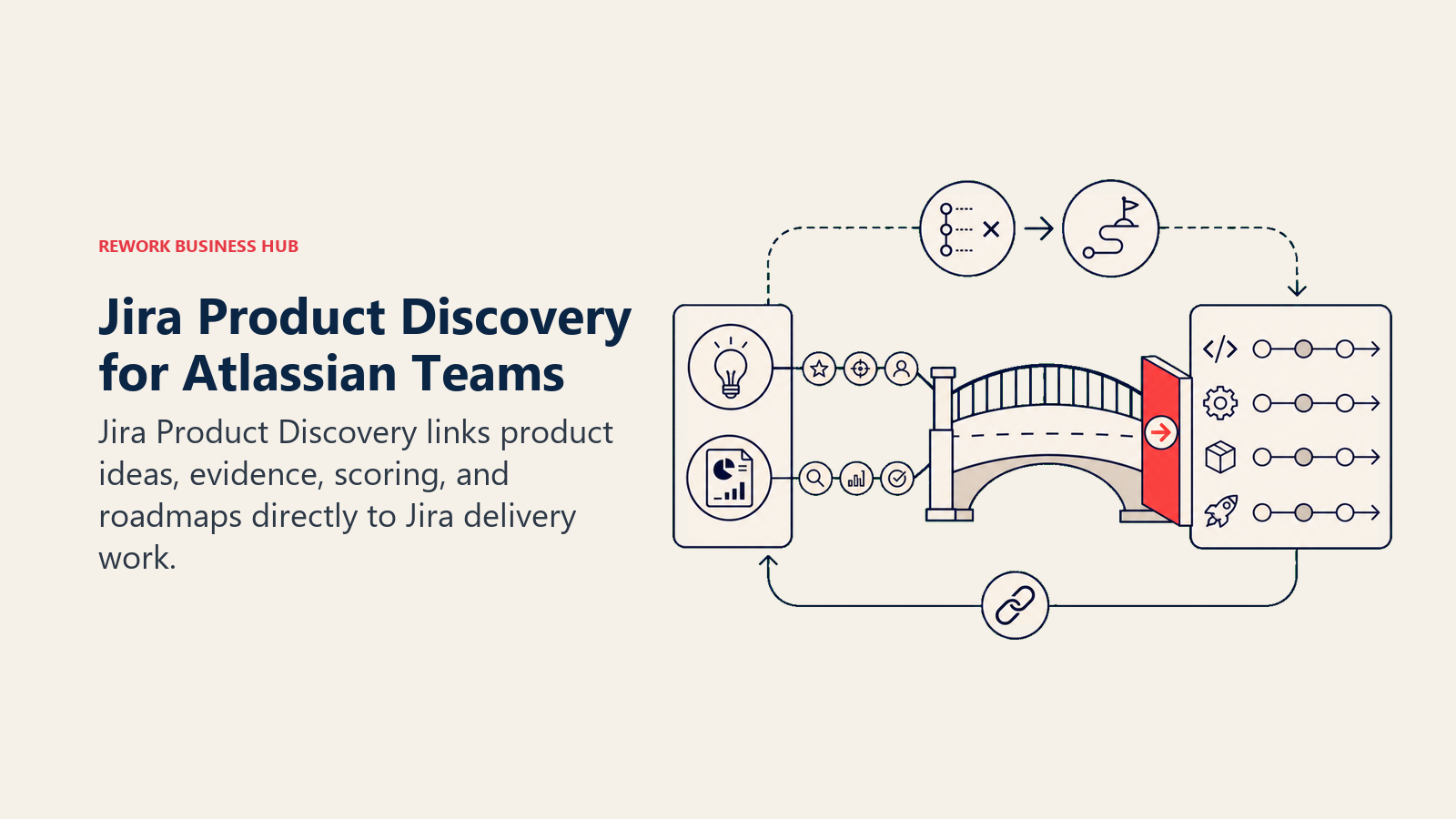
The platform covers idea capture, voting, prioritization views, and timeline roadmaps. What it lacks is the depth of a pure roadmap tool: the strategy hierarchy, idea portals, and scoring frameworks you'd get from Aha! or Productboard aren't there. And outside the Atlassian ecosystem, JPD loses most of its value proposition.
ICP: Product teams at Atlassian-native companies (Jira Software in active use, 5 to 500+ engineers).
Sizing fit: Scales well because the free contributor model keeps costs down. Standard at $10/creator/month is accessible even at 100+ users.
| Pros | Cons |
|---|---|
| Free creators under 3 (Free plan) | Weak standalone: designed for Atlassian stack |
| Deep Jira issue linking | Limited idea portal vs. Aha! or Productboard |
| Contributors and viewers free | Strategy features thin at Standard tier |
| $10/month Standard is competitive | Can feel like a bolt-on rather than a native PM tool |
Pricing: Free (up to 3 creators), Standard $10/creator/month, Premium $25/creator/month. See Atlassian pricing.
Best for: Atlassian-stack teams that want the PM planning layer to live inside their existing Jira workspace.
3. ProductPlan: Best for Stakeholder-Facing Visual Roadmaps
ProductPlan does one thing better than almost any other tool: it makes beautiful, shareable product roadmaps that non-technical stakeholders can understand at a glance. The drag-and-drop timeline, color-coded lanes, and milestone tracking are built for exec reviews and customer-facing roadmap pages, not sprint planning or backlog grooming.
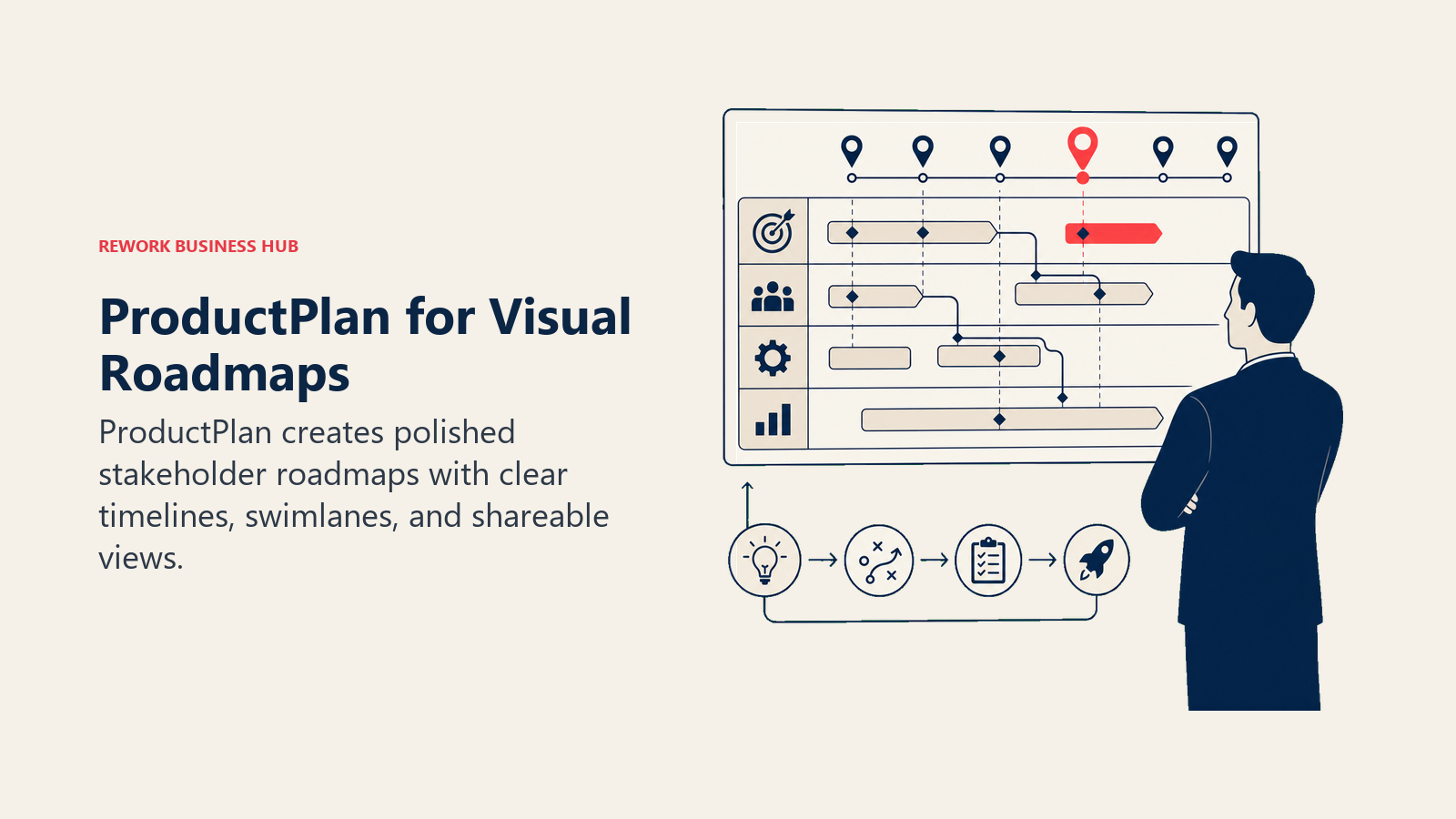
It's a narrower tool than Aha!, which makes it simpler to learn and faster to adopt. But you'll hit limits quickly if you want feedback management, idea scoring, or delivery tracking. Teams often pair ProductPlan with Jira or Linear for execution.
ICP: Product leaders and program managers who present roadmaps to executives, customers, or boards on a regular basis.
Sizing fit: Works well from 2-person product teams up to mid-market. You pay only for the people actually building roadmaps, since viewers are always free, but you cannot size the bill without a sales conversation.
| Pros | Cons |
|---|---|
| Cleanest timeline roadmap UI in this list | No feedback or idea management |
| Easy stakeholder sharing via public link | No published price at any tier |
| Fast onboarding (hours, not days) | No scoring or prioritization frameworks |
| Multiple roadmap views (timeline, list, kanban) | A demo is required before you see a number |
Pricing: Not published. ProductPlan's pricing page is a "Book a Demo" form with no tiers or dollar figures; you add seats as your team of builders grows and everyone else views for free. See productplan.com/pricing.
Best for: Product teams that need polished, shareable roadmap presentations and don't need discovery or execution features.
4. airfocus: Best for Strategy-First Teams That Prioritize by Impact
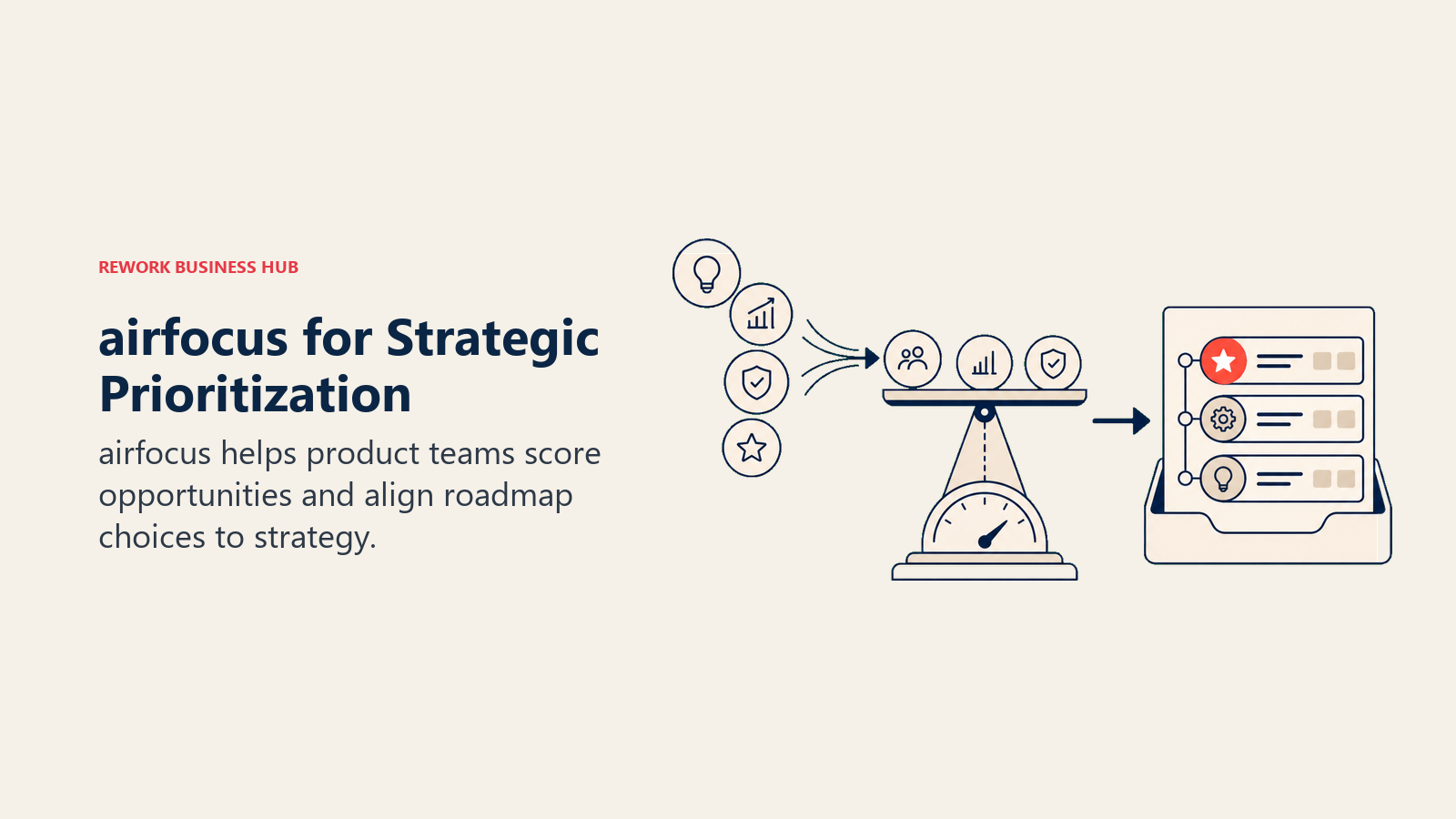
airfocus positions itself as the "strategy layer" of product management. The platform's core differentiator is its flexible scoring system: you can build custom priority frameworks (RICE, weighted scoring, OKR alignment) and run them across your entire backlog. The result is a roadmap grounded in strategic rationale rather than whatever the loudest customer requested.
The Essential plan starts at $19/editor/month (annual), with free viewer seats. Advanced ($69/editor/month) adds advanced integrations and customer portal features. The pricing is mid-range between Aha! (expensive, all-inclusive) and lighter tools like Roadmunk.
airfocus requires some setup investment to configure scoring frameworks, but teams that do the work get a defensible, data-driven prioritization process. It integrates with Jira, Azure DevOps, GitHub, and Intercom.
ICP: Product managers and heads of product at 10 to 100-person companies who want structured, rationale-based roadmaps over intuition-driven backlogs.
Sizing fit: Most cost-effective between 5 and 50 editors. Viewer seats are free, so stakeholder access doesn't inflate the bill.
| Pros | Cons |
|---|---|
| Best custom scoring and prioritization in this class | Setup overhead to build scoring frameworks |
| OKR-to-roadmap alignment | Lighter on delivery tracking |
| Modular: buy only what you need | Discovery portal thin at Essential tier |
| Viewer seats free | Fewer native integrations than Jira-native tools |
Pricing: airfocus by Lucid no longer publishes prices. The pricing page lists only Professional and Enterprise, both quote-based, and states plainly that airfocus does not offer a free trial (demos only). See airfocus.com/pricing.
Best for: Product teams that need custom prioritization frameworks and OKR alignment baked into their roadmap process.
5. Roadmunk: Best for Simple, Visual Roadmap Creation
Roadmunk (now marketed as Strategic Roadmaps) is the most approachable roadmap tool in this list. Setup takes minutes, the swimlane views are clean, and you can have a professional-looking roadmap in front of stakeholders the same day. It's the right choice when the team's primary frustration is "our roadmaps live in PowerPoint and they're always outdated."
It doesn't match Aha!'s depth in feedback management, strategy modeling, or release tracking. But for teams that just want a dedicated home for their roadmap (without the overhead of a full product management platform), Roadmunk delivers.
ICP: Small product teams (2 to 20 people) switching off PowerPoint or Confluence roadmaps for the first time.
Sizing fit: Starter at $19/user/month suits teams up to 10. Business ($49) adds feedback and portfolio views.
| Pros | Cons |
|---|---|
| Fast setup, no training required | Limited prioritization depth |
| Clean swimlane and timeline views | Weak feedback management vs. Aha! or Productboard |
| Affordable entry at $19/user | No free plan |
| Easy stakeholder sharing | Fewer integrations than larger platforms |
Pricing: Starter $19/user/month, Business $49/user/month, Professional $99/user/month. 14-day trial. See roadmunk.com.
Best for: Teams that want a dedicated roadmap tool without the complexity or cost of a full product management platform.
6. Craft.io: Best for Mid-Size Product Teams Wanting Strategy Depth
Craft.io sits between the simplicity of Roadmunk and the enterprise heft of Aha!. It supports a full strategy hierarchy (from company vision down to epics and features), customer feedback capture via an ideation portal, and dev integrations with Jira, GitHub, and Azure DevOps. The Pro tier at $79/user/month adds CRM integrations and unlimited contributors.
Where Craft.io punches above its weight is in connecting strategy to delivery. You can tie features to business outcomes, track progress against product goals, and share roadmaps with external stakeholders, all within a single tool. The onboarding is more involved than Roadmunk or ProductPlan but far less steep than Aha!.
ICP: Product teams at 20 to 200-person SaaS companies that want strategy-to-delivery traceability without the full Aha! price tag.
Sizing fit: Starter ($19/user/month) is accessible for small teams; Pro ($79) is competitive at mid-market.
| Pros | Cons |
|---|---|
| Strategy hierarchy from vision to features | Steeper onboarding than lighter tools |
| Ideation portal for customer feedback | Pro tier pricing adds up for larger teams |
| Strong dev integrations (Jira, GitHub) | Smaller user community than Aha! or Productboard |
| Single-license multi-workspace pricing | Mobile app limited |
Pricing: Starter $19/user/month, Pro $79/user/month. Free trial available. See craft.io/pricing.
Best for: Growing product teams that need strategy-to-roadmap-to-delivery traceability at a mid-market price point.
7. monday dev: Best for Dev Teams Managing Sprints and Roadmaps Together
monday dev is monday.com's product for software development teams. It brings sprint planning, backlog management, and product roadmaps onto the same canvas as the broader monday Work OS. If your product, engineering, and design teams already use monday.com for work management, monday dev is a natural extension rather than a new tool to adopt.
The roadmap views (Gantt, timeline, kanban) are solid, the integrations with GitHub and GitLab are useful, and the sprint boards feel familiar to teams coming from Jira. What monday dev doesn't have is the customer-feedback and strategy depth of a dedicated PM tool: no idea portals, no scoring frameworks, no strategy hierarchy.
ICP: Development teams (10 to 200 people) already on monday.com who want product roadmaps and sprints without adding another tool.
Sizing fit: Basic at $9/seat/month (annual) makes this one of the more affordable dev-PM options at small team sizes.
| Pros | Cons |
|---|---|
| Native integration with monday Work OS | Requires monday ecosystem buy-in |
| Sprint boards + roadmaps in one tool | No customer feedback portal or idea scoring |
| Affordable Basic entry point | Costs rise with seat count |
| GitHub, GitLab, Jira sync | Overkill if you only need roadmaps |
Pricing: Basic $9/seat/month (annual), Standard $12/seat/month, Pro $19/seat/month. Minimum 3 seats. Enterprise custom. See monday.com/pricing.
Best for: Dev teams on monday.com who want roadmap and sprint planning in the same workspace. See the full monday.com alternatives breakdown for broader context.
8. ClickUp: Best for Teams That Want a Single Platform for Everything
ClickUp's selling point is range. Tasks, docs, goals, roadmaps, OKRs, dashboards, time tracking, and whiteboards all live under one roof. For teams frustrated by tool sprawl, ClickUp is compelling. The Unlimited plan at $7/user/month (annual) is hard to beat on price given the feature set.
The caveat is well documented: ClickUp is complex. Teams that need a clean, focused product roadmap often find themselves buried in configuration options, notification noise, and half-finished features. It's better suited to teams that genuinely want to consolidate multiple tools than to pure PM teams looking for a dedicated roadmap experience.
ICP: Ops-heavy teams (10 to 200 people) running mixed work (projects, OKRs, product, support) who want one tool for everything.
Sizing fit: Scales from small teams on the free plan up to enterprise. Business at $12/user/month is the sweet spot for most growing teams.
| Pros | Cons |
|---|---|
| Unmatched feature breadth per dollar | High complexity and notification noise |
| Strong roadmap, OKR, and sprint views | No dedicated feedback portal or idea scoring |
| Free plan available | Feature quality inconsistent across modules |
| Large integration library | Learning curve can slow adoption |
Pricing: Free plan. Unlimited $7/user/month (annual), Business $12/user/month. Business Plus $19/user/month. Enterprise custom. ClickUp Brain AI add-on: $9/user/month. See clickup.com/pricing. Read the ClickUp alternatives piece for more.
Best for: Teams consolidating multiple tools into one platform, particularly those mixing product, project, and ops work.
9. Notion: Best for Teams That Want Maximum Flexibility
Notion is a blank canvas, which is both its greatest strength and its most significant limitation as a roadmap tool. With the right templates, you can build a functional roadmap, backlog, and product wiki in Notion. Many early-stage product teams do exactly this. The Plus plan at $10/user/month (annual) is accessible, AI is bundled into the Business plan at $15/user/month.
But Notion has no built-in prioritization logic, no scoring frameworks, no idea portals, and no native integrations with dev tools beyond basic embeds. Every PM who uses Notion for roadmapping also builds (and rebuilds) the structure from scratch as the team grows.
ICP: Early-stage teams (1 to 15 people) using Notion for their wiki who want their roadmap in the same workspace without adding a new tool.
Sizing fit: Best at small scale. As teams grow, the lack of structure becomes a productivity cost.
| Pros | Cons |
|---|---|
| Extremely flexible, team already knows it | No native prioritization or scoring |
| Strong wiki and documentation layer | Requires manual template maintenance |
| Affordable (Plus at $10/user) | No feedback portal or idea management |
| AI bundled in Business plan | Not a dedicated PM tool at any tier |
Pricing: Free plan. Plus $10/user/month (annual), Business $15/user/month. Enterprise custom. See notion.com/pricing. Full breakdown in the Notion alternatives guide.
Best for: Early-stage teams that already live in Notion and want a lightweight roadmap without switching tools.
10. Linear: Best for Engineering-Led Teams That Own the Roadmap
Linear is built for software engineering teams and it shows. The UX is keyboard-first, blazingly fast, and opinionated. Issues, cycles (sprints), and projects connect cleanly. The roadmap view in Linear's Business plan shows initiative-level planning tied directly to engineering work.
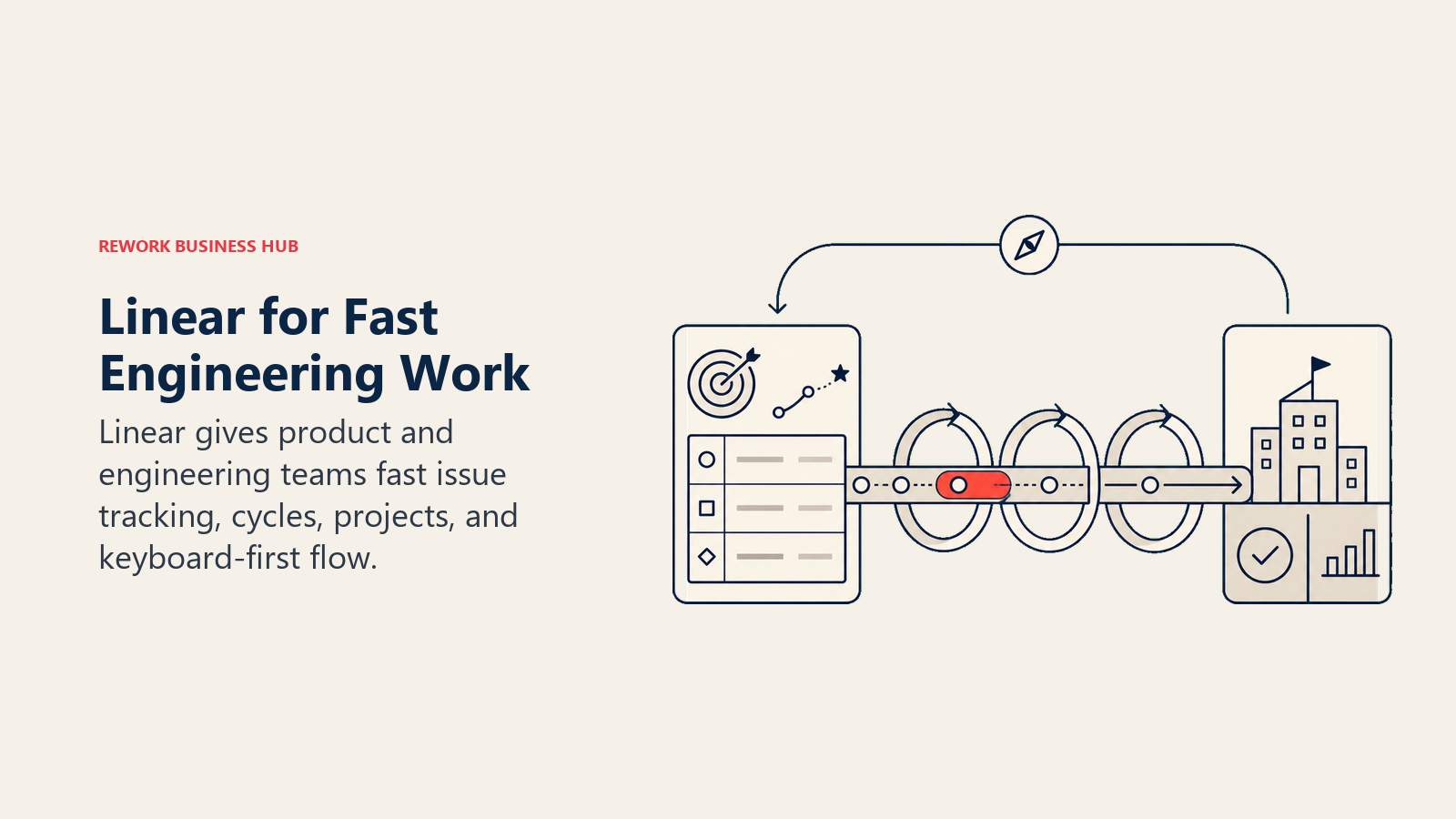
It's not a PM-first tool. There's no customer feedback portal, no idea scoring, and no executive-facing stakeholder roadmap sharing. Product managers who use Linear tend to work closely with their engineering counterparts and are comfortable with a more technical interface.
ICP: Engineering-led teams (5 to 200 people) where the PM and engineering lead are the same person or closely aligned.
Sizing fit: Free plan (limited to 250 issues) works for tiny teams. Business at $16/user/month unlocks the roadmap views worth having.
| Pros | Cons |
|---|---|
| Fastest, cleanest UX of any tool in this list | Not suitable for non-technical stakeholders |
| Sprint cycles tied to roadmap initiatives | No feedback portal or scoring |
| Strong GitHub, GitLab, Jira sync | Limited portfolio view |
| Free plan available | Business plan needed for real roadmap use |
Pricing: Free (250 issues, 2 teams). Basic $10/user/month. Business $16/user/month. Enterprise custom. See linear.app/pricing.
Best for: Engineering-led teams that want fast issue tracking and roadmap planning in one tool, without a product-discovery layer.
11. Asana: Best for Cross-Functional Roadmap Execution
Asana is a project management platform, not a product management one. But its Timeline, portfolios, and goal-tracking features make it genuinely useful for managing roadmap execution across multiple teams. If you need product, marketing, design, and engineering all aligned on the same quarterly roadmap, Asana handles that better than most dedicated PM tools.
It doesn't do discovery. There's no feedback portal, no customer insights triage, and no idea scoring. Teams that use Asana for roadmapping typically pair it with a lighter discovery tool for the PM layer.
ICP: Cross-functional teams (20 to 500 people) where the roadmap spans multiple departments and execution alignment is the primary problem.
Sizing fit: Starter at $10.99/user/month suits teams of 5 to 50. Advanced at $24.99/user/month adds portfolios and goals for mid-market.
| Pros | Cons |
|---|---|
| Strong cross-functional roadmap execution | No product discovery or feedback features |
| Timeline, portfolios, and goals in one view | Seat-rounding rules inflate costs |
| Large integration library | Not a standalone PM tool |
| Familiar to most ops and marketing teams | No idea scoring or customer portal |
Pricing: Starter $10.99/user/month (annual), Advanced $24.99/user/month. Enterprise custom. See asana.com/pricing. The Asana alternatives guide covers its full competitive landscape.
Best for: Companies that need roadmap execution coordinated across marketing, product, design, and engineering, not pure product discovery teams.
Stage Fit Matrix
| Stage | Best Fit |
|---|---|
| Pre-product / 1-5 person startup | Notion (free, flexible), Linear (free plan), Jira Product Discovery (Free tier) |
| Seed / early growth (5-20 people) | Roadmunk, Productboard Spark, Linear Business |
| Growth / Series A-B (20-100 people) | Productboard, airfocus, Craft.io, Jira Product Discovery Standard |
| Mid-market (100-500 people) | Aha!, airfocus Advanced, monday dev |
| Enterprise (500+ people) | Aha! Enterprise, Productboard Enterprise, Jira Product Discovery Premium |
Sizing and Persona
| Team Size | Buyer Persona | Top Picks |
|---|---|---|
| 1-5 | Solo PM, founder | Notion, Linear Free, Jira Product Discovery Free |
| 5-20 | Head of Product, PM lead | Productboard Spark, Roadmunk, airfocus Essential |
| 20-50 | Director of Product, VP Product | Craft.io, airfocus Advanced, Aha! Roadmaps Starter |
| 50-200 | CPO, Head of Eng, Ops lead | monday dev, ClickUp Business, Aha! |
| 200+ | CPO, CTO, Program Management | Aha! Enterprise, Productboard Enterprise, Jira Product Discovery Premium |
How to Choose: Decision Framework
| If you need... | Pick |
|---|---|
| The deepest roadmap and strategy platform, price is secondary | Aha! (stay or return) |
| Customer feedback connected to prioritization | Productboard |
| A roadmap integrated with your existing Jira workflow | Jira Product Discovery |
| Clean, stakeholder-friendly visual roadmaps fast | ProductPlan or Roadmunk |
| Custom scoring frameworks and OKR-to-roadmap alignment | airfocus |
| Strategy-to-delivery traceability at mid-market price | Craft.io |
| Planning tied to cross-team execution in one platform | Asana |
| Sprint planning and roadmaps for a dev team | Linear or monday dev |
| One platform for all your ops and project work | ClickUp or Asana |
What to Do Next
The right answer depends on where your pain actually is. Aha! refugees fall into a few clear buckets.
If you left because of price, Productboard's free tier or Jira Product Discovery Standard will give you most of the discovery workflow at a fraction of the cost.
If you left because of complexity, Roadmunk or ProductPlan will have you up and running the same day.
If you left because you wanted tighter execution alignment rather than a standalone product suite, ClickUp, monday dev, or Asana might be closer to what you actually need.
And if you're still deciding, most of these tools offer free trials of two weeks or more. Start with the one that matches your biggest bottleneck today, not the most comprehensive feature list on paper.
See also:
- Best PM Software in 2026 for a broader look at general project management tools
- Best Productboard Alternatives for alternatives focused on customer feedback and discovery
- Best Wrike Alternatives if execution management is your primary gap

Customer Success Operations Manager
On this page
- Quick Comparison Table
- 1. Productboard: Best for Product-Led Teams With a Customer Feedback Loop
- 2. Jira Product Discovery: Best for Atlassian Shops Already Running Jira
- 3. ProductPlan: Best for Stakeholder-Facing Visual Roadmaps
- 4. airfocus: Best for Strategy-First Teams That Prioritize by Impact
- 5. Roadmunk: Best for Simple, Visual Roadmap Creation
- 6. Craft.io: Best for Mid-Size Product Teams Wanting Strategy Depth
- 7. monday dev: Best for Dev Teams Managing Sprints and Roadmaps Together
- 8. ClickUp: Best for Teams That Want a Single Platform for Everything
- 9. Notion: Best for Teams That Want Maximum Flexibility
- 10. Linear: Best for Engineering-Led Teams That Own the Roadmap
- 11. Asana: Best for Cross-Functional Roadmap Execution
- Stage Fit Matrix
- Sizing and Persona
- How to Choose: Decision Framework
- What to Do Next