Best airfocus Alternatives in 2026: 11 Prioritization and Roadmap Tools
Turn this article into takeaways for your work.


Each assistant summarizes the article only for you and suggests best practices for your work.
If you're researching airfocus alternatives, you're probably not leaving over a missing feature. Two changes happened to the product itself. First, Lucid Software acquired airfocus in April 2025, and it now trades as "airfocus by Lucid." Second, the pricing page that used to show Essential, Advanced, and Pro tiers with real dollar figures now shows only Professional and Enterprise, both labeled "Request pricing," and there's no free trial anymore, only a demo. Neither change is a dealbreaker alone, but together they're a reasonable reason to shop around.
This guide covers 11 tools evaluated on pricing transparency, prioritization depth, and roadmap-to-execution fit. Jira Product Discovery and Strategic Roadmaps (Roadmunk) suit teams that mainly want published, self-serve pricing. Productboard and Craft.io lead for teams that specifically want airfocus's scoring-framework depth without the acquisition uncertainty. The rest ranges from purpose-built roadmap tools to engineering-first trackers to broader work platforms, so there's a fit here whether your complaint is price, direction, or both.
Key Facts
- Over 60% of prioritization frameworks get overridden by leadership escalations, per the 2026 State of Product Management Report from ProductPlan and Product-Led Alliance.
- 84% of product teams worry their current products won't succeed in the market, per Atlassian's State of Product 2026 report.
- 80% of product teams don't involve engineers early in the roadmap process, according to the same Atlassian report.
- Nearly half of product teams say they lack enough time for strategic planning, roadmap development, or data analysis, per Atlassian's State of Product 2026.
- Nearly three-quarters of product managers expect their role to blend across multiple disciplines in the next few years, per the ProductPlan/Product-Led Alliance report.
Quick Comparison Table
| Tool | Best For | Starting Price | Key Strength | Key Limitation |
|---|---|---|---|---|
| Productboard | Product-led teams that need a customer feedback loop | $19/maker/month annual ($25/maker/month monthly) | Feedback-to-roadmap workflow in one product | Enterprise pricing stays opaque, weak on delivery tracking |
| Aha! Roadmaps | Teams that want the most complete roadmap suite available | $59/user/month annual ($74 monthly) | Deepest strategy, scoring, and release feature set on the market | Steep price, long ramp, no Starter tier |
| Jira Product Discovery | Atlassian shops already running Jira Software | $10/creator/month (Standard) | Free contributors, native Jira issue linking | Thin as a standalone tool outside the Atlassian stack |
| Craft.io | Mid-size teams wanting strategy-to-delivery traceability | $19/editor/month annual ($24 monthly) | Full strategy hierarchy from vision down to features | Strategy, feedback and capacity are paid add-ons on top |
| Strategic Roadmaps (Roadmunk) | Teams that want a dedicated roadmap tool, fast | $19/editor/month annual (Starter) | Fastest setup, cleanest swimlane views | Limited prioritization and feedback depth |
| ProductPlan | Stakeholder-facing visual roadmaps | Not published; demo required | Cleanest timeline roadmap UI, viewers always included | No self-serve signup, no public pricing at all |
| Dragonboat | Enterprise portfolio-level product operations | Not published; demo required | Outcome-based portfolio roadmapping across many teams | No pricing transparency, heavier setup |
| Canny | Capturing and prioritizing customer feature requests | Free (25 tracked users); $79/month billed yearly (Pro) | Prices by tracked users, not internal seats | Free plan capped at 25 tracked users and 5 managers |
| Featurebase | Feedback boards with an AI resolution agent | Free (1 seat); $29/seat/month billed yearly (Growth) | Fibi AI agent plus feedback boards in one product | AI resolutions are a metered add-on at $0.49 each |
| Linear | Engineering-led teams that own the roadmap themselves | Free (250 issues); $10/user/month billed yearly (Basic) | Fastest, cleanest UX of any tool on this list | No feedback portal, no scoring, not stakeholder-facing |
| ClickUp | Teams consolidating several tools into one platform | Free; $7/user/month annual ($10 monthly, Unlimited) | Enormous feature breadth per dollar | Complexity and notification noise at scale |
1. Productboard: Best for a Customer Feedback Loop You Can Prioritize Against
Productboard is the closest thing to a direct swap for what airfocus used to promise: a structured way to turn raw signal into a scored, defensible roadmap. The workflow centers on collecting customer feedback from email, Zendesk, Intercom, or a public portal, linking it to features, scoring by customer impact and effort, then publishing a prioritized roadmap stakeholders can actually read.
The pricing model bills on "makers" (the PMs driving strategy) while contributors and viewers stay free, 25 of them included on every tier below Enterprise. Plus starts at $19/maker/month billed annually ($25/maker/month billed monthly) with a 2-maker minimum, and Business runs $59/maker/month annually ($75/maker/month monthly) with a 5-maker minimum. Enterprise is custom.
If what pulled you to airfocus was structured scoring plus a feedback pipeline, Productboard covers both, and its pricing page still has numbers on it. Torn between the two most feature-complete picks on this list? See Productboard vs Aha!.
ICP: 2 to 50-person product teams with an active customer feedback stream and a real discovery process, not just a backlog.
Sizing fit: Works from a solo PM through mid-market; the maker-based model keeps early costs manageable.
| Pros | Cons |
|---|---|
| Best-in-class feedback portal and triage | Enterprise pricing stays opaque until you talk to sales |
| Clean per-maker pricing, viewers and contributors free | Can feel siloed from engineering execution |
| Deep Jira, GitHub, and Azure DevOps sync | Limited native sprint or delivery tracking |
| 25 free contributor seats on every paid tier below Enterprise | Business plan has a 5-maker minimum |
Pricing: Plus $19/maker/month annual ($25 monthly), 2-maker minimum. Business $59/maker/month annual ($75 monthly), 5-maker minimum. Enterprise custom, 5-maker minimum. See productboard.com/pricing.
Best for: Teams that prioritize on customer evidence and want a dedicated discovery-to-roadmap workflow, the exact job airfocus used to compete for.
2. Aha! Roadmaps: Best If You Want the Deepest Suite Available, Full Stop
Aha! Roadmaps is still the most feature-complete product roadmap platform on the market: idea portals, custom scoring models, strategy canvases, release tracking, and companion products (Aha! Develop, Aha! Whiteboards, Aha! Knowledge) under one account. No tool on this list matches its breadth.
That breadth costs real money and real ramp time. Premium runs $59/user/month billed annually ($74/user/month billed monthly), and there's no Starter tier on the Roadmaps pricing page, despite what a few third-party posts still claim. Enterprise runs $99/user/month annually ($124 monthly), and Enterprise+ adds a $149/user/month annual-only tier. Enterprise and Enterprise+ include unlimited free reviewers and viewers, and there's a 30-day free trial across the line.
Coming from airfocus, Aha! is the "go bigger, not leaner" answer: if airfocus's scoring and strategy tools felt thin rather than excessive, Aha! is the upgrade. See the full Aha! alternatives breakdown if price is the bigger issue for your team.
ICP: Product leaders at 20 to 500-person companies who want one platform to own strategy, scoring, roadmap, and release, and have the budget for it.
Sizing fit: Cost climbs fast per seat; the value case strengthens at mid-market and up, where the alternative is stitching three separate tools together.
| Pros | Cons |
|---|---|
| Most complete strategy-to-release feature set here | Highest per-seat cost on this list at scale |
| Unlimited free reviewers and viewers on Enterprise tiers | No Starter tier, no cheap entry point |
| 30-day free trial across every plan | Long onboarding and setup investment |
| Companion products cover engineering, whiteboards, and knowledge | Can feel like overkill for a team that just wants a clean roadmap |
Pricing: Premium $59/user/month annual ($74 monthly). Enterprise $99/user/month annual ($124 monthly). Enterprise+ $149/user/month, annual only. See aha.io/roadmaps/pricing.
Best for: Teams that want the deepest roadmap and strategy platform available and are done trying to make a lighter tool stretch to fit.
3. Jira Product Discovery: Best for Teams Already Living in Jira
If your engineering org runs Jira Software, Jira Product Discovery (JPD) is the fastest path to a roadmap that actually reflects what's shipping. Ideas in JPD link straight to Jira Software issues, so PMs plan at the initiative level while engineers see the same work in their sprint boards. Contributors and viewers don't need paid seats, which keeps the per-seat math manageable even at scale.
JPD covers idea capture, voting, prioritization views, and timeline roadmaps. It doesn't try to match the strategy hierarchy or idea-portal depth of Aha! or Productboard, and outside the Atlassian ecosystem it loses most of its case.
ICP: Product teams at Atlassian-native companies, meaning Jira Software is already the engineering system of record.
Sizing fit: The free-contributor model keeps costs down even past 100 users; Standard at $10/creator/month stays accessible well into mid-market.
| Pros | Cons |
|---|---|
| Free plan covers up to 3 creators | Weak as a standalone tool outside the Atlassian stack |
| Deep, native Jira issue linking | Lighter idea portal than Aha! or Productboard |
| Contributors and viewers cost nothing | Strategy features stay thin at Standard |
| $10/creator/month is competitive at any team size | Feels like a bolt-on if you don't already run Jira |
Pricing: Free, up to 3 creators. Standard $10/creator/month. Premium $25/creator/month. Enterprise custom. See Atlassian's JPD pricing.
Best for: Atlassian-stack teams that want the PM planning layer to live inside the workspace engineering already uses.
4. Craft.io: Best for Strategy-to-Delivery Traceability at Mid-Market Price
Craft.io sits between simple visual roadmap tools and the enterprise heft of Aha!. It covers a full strategy hierarchy, from company vision down to epics and features, plus a customer feedback portal and dev integrations with Jira, GitHub, and Azure DevOps. It earns its keep connecting strategy to delivery: tie features to business outcomes and track progress against product goals in one tool instead of three.
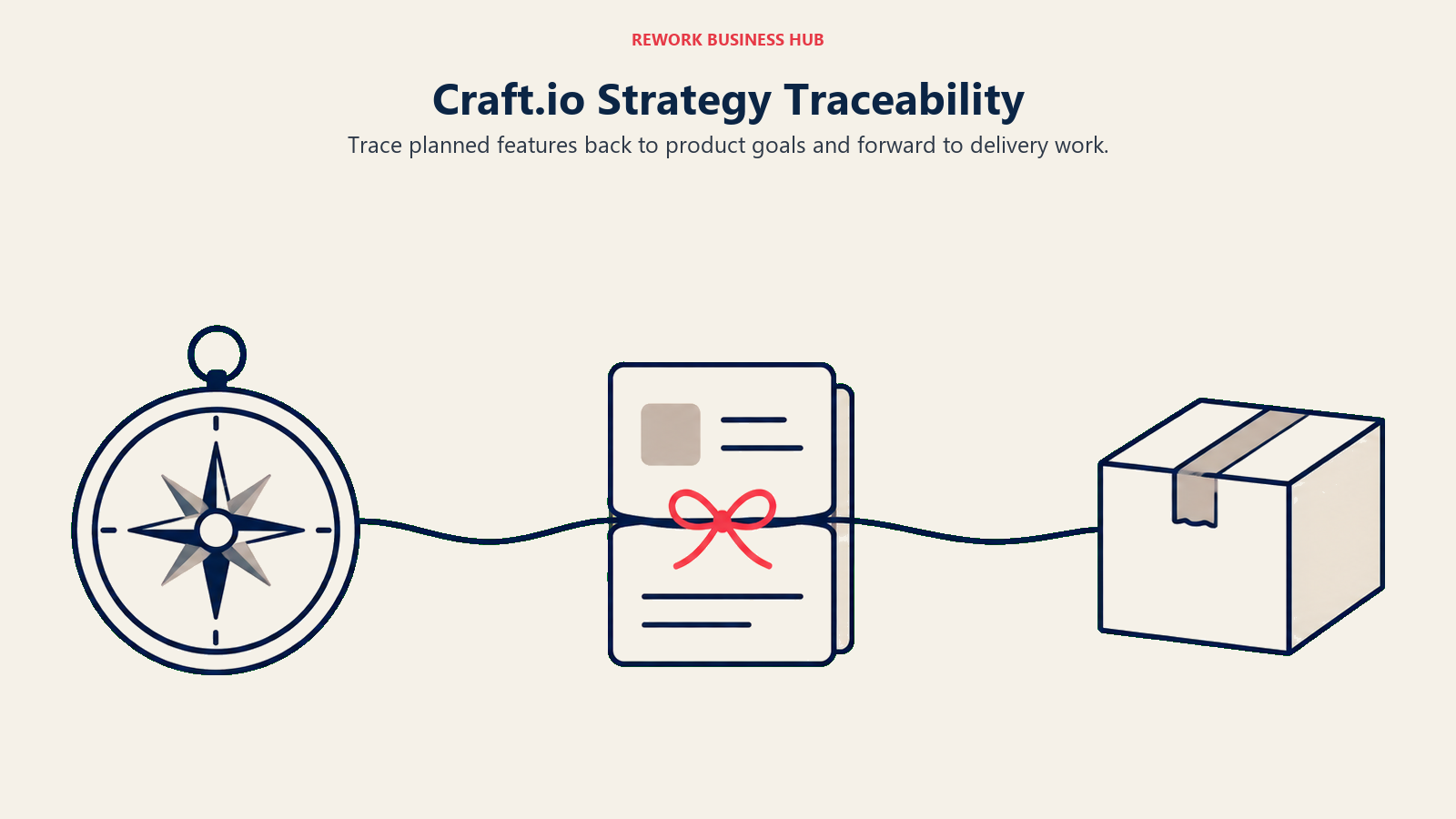
Craft.io's pricing page is readable again as of September 2026, so these are vendor-confirmed: Starter $19/editor/month annual ($24 monthly), Pro $79/editor/month annual ($99 monthly), Enterprise custom and billed annually, 14-day trial of Pro. Budget for the add-ons before you compare it to anything: OKRs and Product Strategy, the Feedback portal, and Capacity planning are each $15/add-on/editor/month annually ($20 monthly), which takes a fully loaded Pro seat to $124/editor/month.
ICP: Product teams at 20 to 200-person SaaS companies that want strategy-to-delivery traceability without Aha!'s full price tag.
Sizing fit: The reported Starter tier stays accessible for small teams; Pro is competitive at mid-market if the reported figures hold.
| Pros | Cons |
|---|---|
| Strategy hierarchy from vision down to features | Steeper onboarding than Roadmunk or ProductPlan |
| Ideation portal for structured customer feedback | Vendor pricing page isn't fetchable, so figures are reported |
| Strong dev integrations (Jira, GitHub, Azure DevOps) | Pro tier adds up for larger teams if reported pricing holds |
| Single license covers multiple workspaces | Smaller community than Aha! or Productboard |
Pricing: Starter $19/editor/month annual ($24 monthly). Pro $79/editor/month annual ($99 monthly). Add-ons $15/add-on/editor/month annual ($20 monthly). Enterprise custom, billed annually. Unlimited free Contributors on every tier, 14-day trial. See craft.io/pricing.
Best for: Growing product teams that want strategy-to-roadmap-to-delivery traceability at a mid-market price, and are comfortable confirming the exact rate with sales first.
5. Strategic Roadmaps (Roadmunk): Best for a Dedicated Roadmap Tool, Fast
Roadmunk, now sold by Tempo under the name Strategic Roadmaps, is the most approachable dedicated roadmap tool on this list. Setup takes minutes, the swimlane views are clean, and you can have something presentable in front of stakeholders the same day. Note the branding: roadmunk.com now redirects straight to tempo.io, so this is a Tempo product, not an independent one.
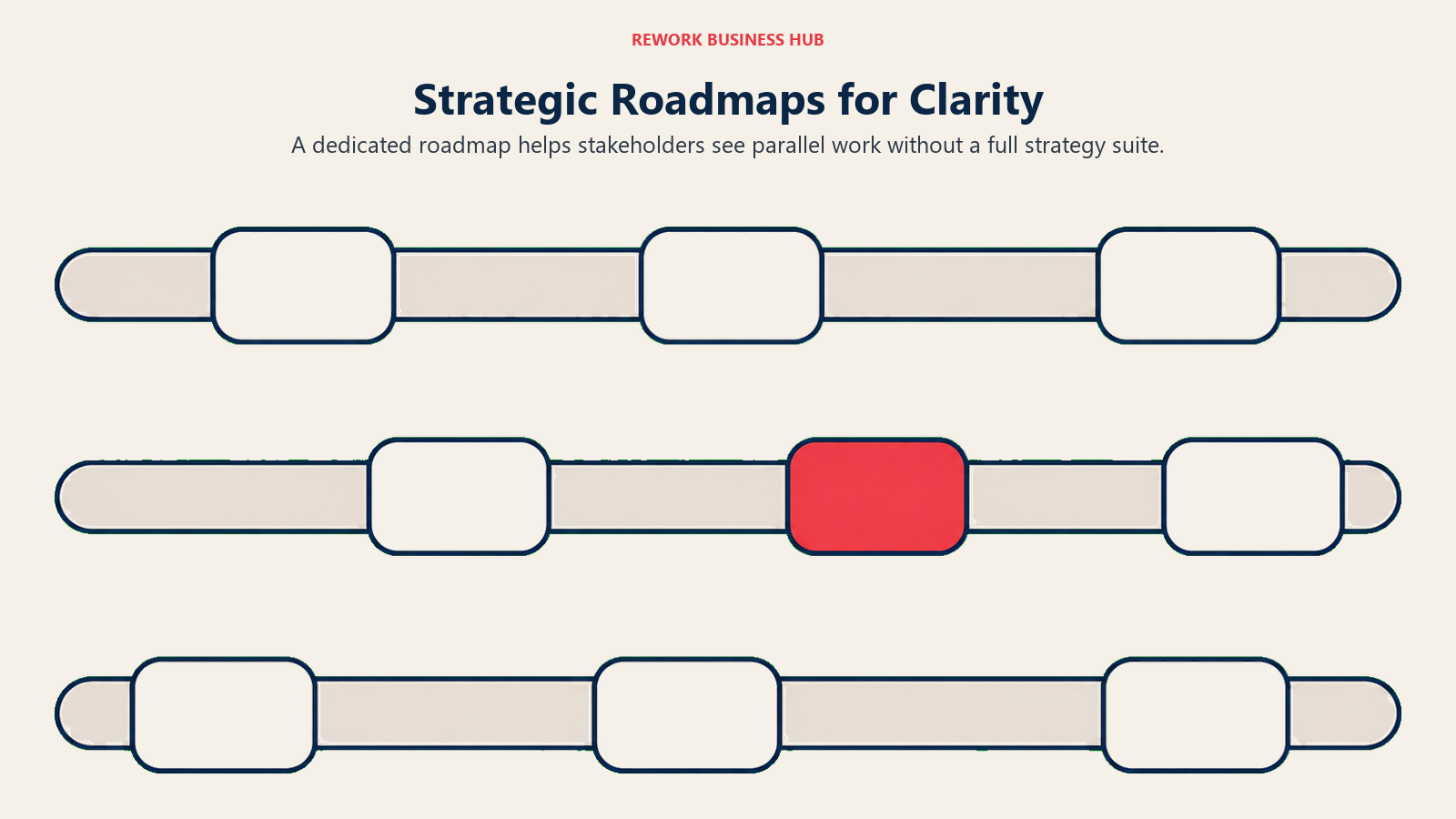
It doesn't match Aha!'s depth in feedback management or release tracking, and it's a narrower tool than airfocus was before the acquisition. But for a team whose actual complaint is "our roadmap lives in slides and it's always stale," that narrowness is the point.
ICP: Small product teams (2 to 20 people) moving off slides or Confluence for the first time.
Sizing fit: Starter at $19/editor/month annual (3 reviewers included) suits small teams; Business at $49/editor/month (5 reviewers) and Professional at $99/editor/month (10 reviewers) scale up from there. Extra reviewers cost $5/reviewer/month.
| Pros | Cons |
|---|---|
| Fast setup, effectively no training curve | Limited prioritization depth versus Aha!, Productboard, or Craft.io |
| Clean swimlane and timeline views | No free plan |
| Published, per-editor annual pricing | Fewer integrations than the larger platforms |
| 14-day free trial on every paid tier | Weaker feedback management |
Pricing: Starter $19/editor/month annual (3 reviewers). Business $49/editor/month (5 reviewers). Professional $99/editor/month (10 reviewers). Extra reviewers $5/reviewer/month. Enterprise custom. See Tempo's Strategic Roadmaps pricing.
Best for: Teams that want a dedicated roadmap home without the cost or complexity of a full product management platform.
6. ProductPlan: Best for Stakeholder-Facing Visual Roadmaps, If You're Willing to Skip Self-Serve
ProductPlan does one thing better than almost anyone else here: it makes clean, shareable roadmaps that non-technical stakeholders understand at a glance. The drag-and-drop timeline and milestone views are built for exec reviews and public roadmap pages, not sprint planning.
As of 2026, ProductPlan sells a single "Product Intelligence Platform" plan rather than tiers. Viewers are always included at no extra cost; you only pay for the people building and managing roadmaps. No dollar figure is published anywhere on the site, and there's no self-serve signup at all, only a booked consultation. If a published price matters to you as much as it did with airfocus, that's worth knowing going in.
ICP: Product leaders and program managers who present roadmaps to executives, customers, or boards on a regular cadence.
Sizing fit: Works from small product teams through mid-market, but every deal starts with a sales conversation regardless of size.
| Pros | Cons |
|---|---|
| Cleanest timeline roadmap UI on this list | No published pricing anywhere on the site |
| Viewers always included free | No self-serve trial or signup |
| Fast onboarding once you're in | No feedback or idea management built in |
| Single unified plan, no tier confusion | Sales-led motion for even small teams |
Pricing: Not published. Single "Product Intelligence Platform" plan, viewers included, demo required to get a number. See productplan.com/pricing.
Best for: Product teams that need polished, stakeholder-facing roadmap presentations and are fine skipping self-serve entirely.
7. Dragonboat: Best for Enterprise Portfolio-Level Product Operations
Dragonboat plays a different game than most tools on this list. It's built as an operating layer for product portfolio management across many teams at once, connecting strategy, intake, planning, roadmapping, and delivery into one semantic model so leaders can see ripple effects and dependencies across the whole portfolio, not just one team's roadmap.
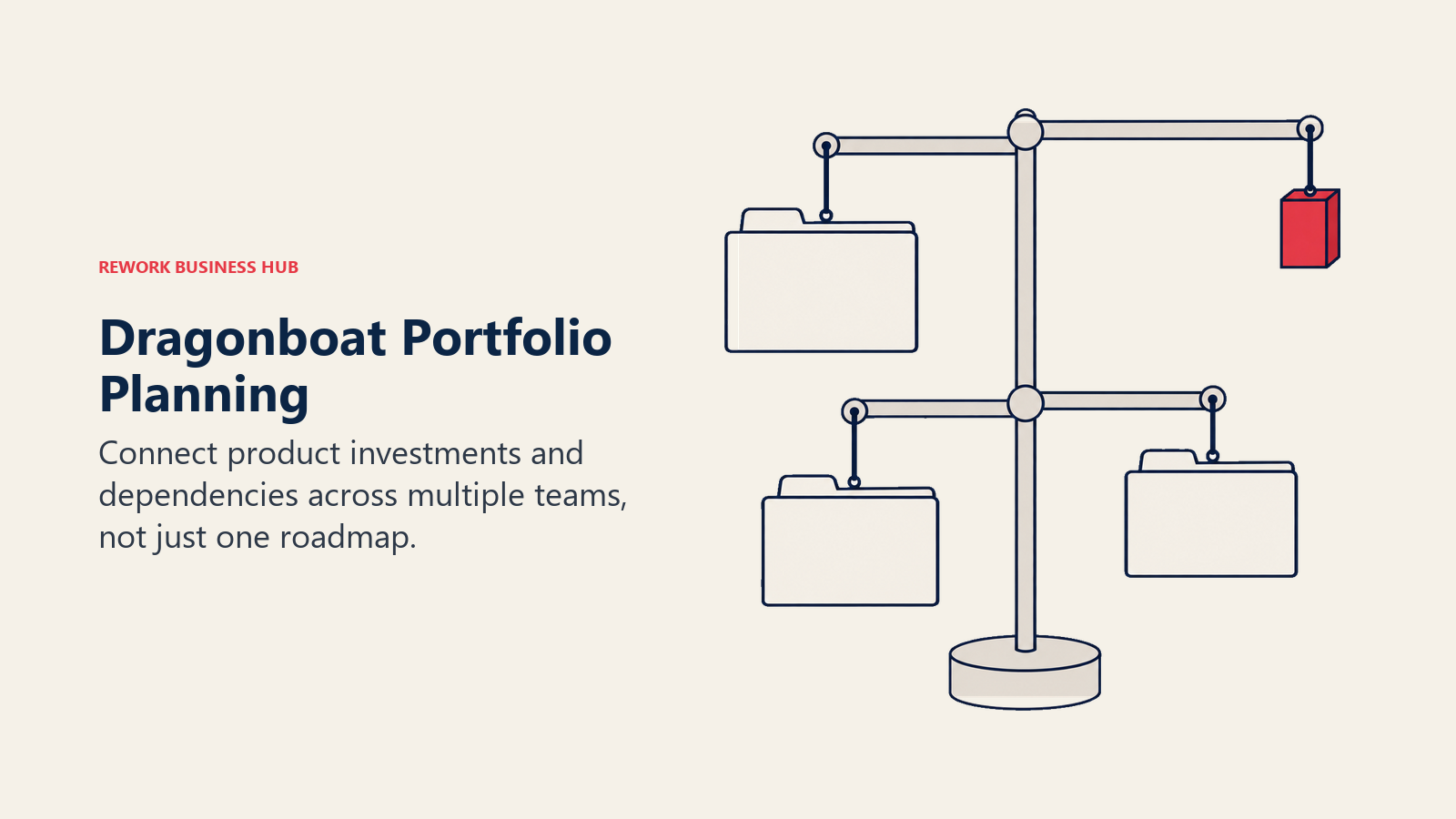
That scope points at larger organizations running complex, multi-team portfolios, not a 10-person startup choosing its first roadmap tool. Pricing follows the same enterprise pattern: two tiers, Starter and Enterprise, both requiring a sales conversation, with no dollar figures published anywhere on the site. Starter does include up to 100 free read-only and requestor accounts.
ICP: Chief product officers, product operations teams, and tech executives coordinating product investment across several teams or business units.
Sizing fit: Built for scale. The minimum viable use case looks like a multi-team product organization, not a single squad.
| Pros | Cons |
|---|---|
| Outcome-based portfolio roadmapping across many teams | No published pricing at all, demo required to see a number |
| Runtime visibility into cross-team dependencies and risk | Heavier setup than a single-team roadmap tool |
| Up to 100 free read-only or requestor accounts on Starter | Overkill for a small or single-team product org |
| Headless API and MCP access for agent integration | Steep learning curve versus lighter tools |
Pricing: Not published. Starter and Enterprise, both "Contact Us." See dragonboat.io/pricing.
Best for: Large, multi-team product organizations that need portfolio-level visibility, not just a departmental roadmap.
8. Canny: Best for Turning Customer Requests Into a Prioritized Backlog
Canny flips the usual roadmap-tool axis: instead of pricing by internal seats, it prices by tracked users, the end customers whose feedback you're capturing and voting on. That's a meaningfully different cost model than every scoring-and-strategy tool above, and it's worth understanding before you compare sticker prices directly.
The free plan is real and still active in 2026, but it's capped at 25 tracked users and 5 managers, not unlimited. Pro runs $79/month billed yearly and covers 100+ tracked users and 10 managers; Business is custom, billed yearly, starting around 5,000+ tracked users. Monthly-billed Pro pricing isn't published, only the yearly figure.
ICP: Product and support teams that want a public or private feedback board where customers post, vote, and get status updates on requests.
Sizing fit: The free tier fits an early product with a small, engaged user base; Pro is the right jump once tracked users cross 25.
| Pros | Cons |
|---|---|
| Free plan still exists in 2026 | Capped at 25 tracked users and 5 managers on Free |
| Prices by tracked users, not internal seats | No published monthly rate for Pro, yearly only |
| Unlimited boards and contributors even on Free | Lighter on strategy and roadmap depth than Aha! or Craft.io |
| Clear upvoting and status-update workflow for customers | Business tier pricing is fully custom |
Pricing: Free, 25 tracked users, 5 managers. Pro $79/month billed yearly, 100+ tracked users. Business custom, billed yearly, 5,000+ tracked users. See canny.io/pricing.
Best for: Teams whose real bottleneck is customer feedback volume, not internal prioritization scoring.
9. Featurebase: Best for Feedback Boards With an AI Agent Attached
Featurebase pairs a public feedback board and changelog with Fibi, an AI agent that can triage and resolve support-style requests automatically. It's a newer entrant than most tools on this list, and it's aimed squarely at teams that want the Canny-style feedback loop plus AI handling the repetitive part of it.
Pricing is billed yearly across every paid tier: Growth runs $29/seat/month, Professional runs $59/seat/month with 20 free Lite seats included, and Enterprise runs $99/seat/month with 50 free Lite seats and a required demo. AI resolutions aren't included in the base price; they're metered separately at $0.49 per resolution on every paid plan, so budget for that if you plan to lean on Fibi heavily.
ICP: Product and support teams that want a feedback board, API, and webhooks, and are comfortable paying per resolution for AI handling.
Sizing fit: Free covers a single seat with no AI. Growth is the realistic entry point for a small team that wants the AI agent live.
| Pros | Cons |
|---|---|
| Fibi AI agent handles routine feedback triage | AI resolutions are a metered add-on, not included |
| API, MCP, and webhooks on Growth and above | Monthly-billed rates aren't published, yearly only |
| Free Lite seats included on Professional and Enterprise | Enterprise requires a demo to get started |
| Public feedback board and changelog in one product | Younger product than Canny or UserVoice |
Pricing: Free, 1 seat, no AI. Growth $29/seat/month billed yearly. Professional $59/seat/month billed yearly, 20 free Lite seats. Enterprise $99/seat/month billed yearly, 50 free Lite seats, demo required. AI resolutions $0.49 each. See featurebase.app/pricing.
Best for: Teams that want a feedback board and are willing to pay per AI resolution to cut down on manual triage.
10. Linear: Best for Engineering-Led Teams That Own Their Own Roadmap
Linear is built for software engineering teams, and it shows in every part of the interface. Issues, cycles, and projects connect cleanly, the UX is fast and keyboard-first, and the Business plan's roadmap view shows initiative-level planning tied directly to the engineering work behind it.
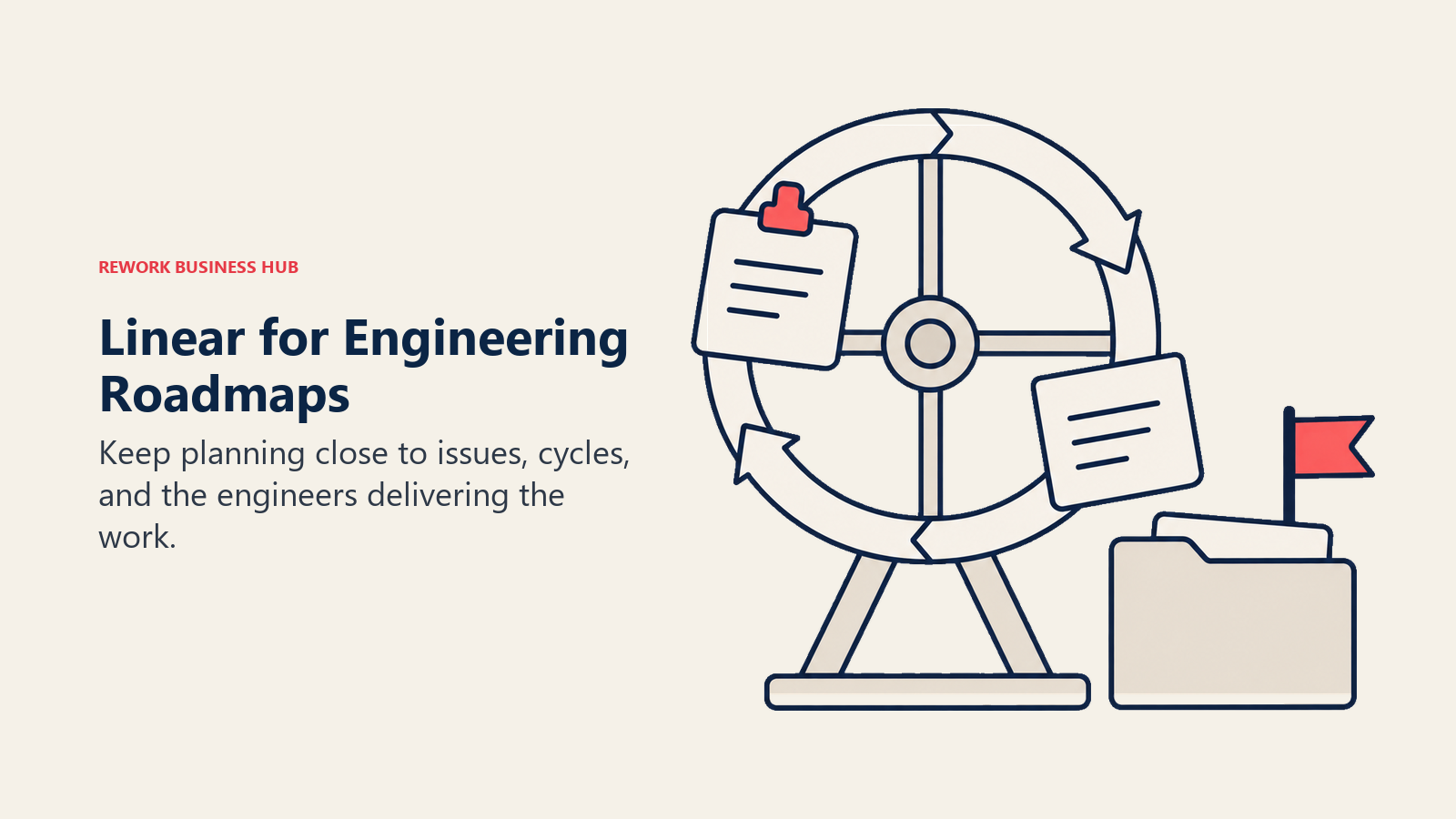
It isn't a PM-first tool. There's no customer feedback portal, no scoring model, and no executive-facing stakeholder roadmap the way ProductPlan or Roadmunk offer. Product managers who reach for Linear tend to work closely with engineering and don't need a separate discovery layer.
ICP: Engineering-led teams (5 to 200 people) where the PM and the engineering lead are effectively the same function.
Sizing fit: Free covers 250 issues and 2 teams, which suits a very small team. Business at $16/user/month billed yearly unlocks the roadmap view worth having.
| Pros | Cons |
|---|---|
| Fastest, cleanest UX of any tool on this list | Not built for non-technical stakeholders |
| Cycles tied directly to roadmap initiatives | No feedback portal or prioritization scoring |
| Strong GitHub, GitLab, and Jira sync | Limited portfolio-level view across many teams |
| Generous free plan for small teams | Business plan needed before roadmap is genuinely useful |
Pricing: Free, 250 issues, 2 teams. Basic $10/user/month billed yearly. Business $16/user/month billed yearly. Enterprise custom. See linear.app/pricing.
Best for: Engineering-led teams that want fast issue tracking and a lightweight roadmap without a separate discovery tool. Read the best ClickUp alternatives guide too if speed matters more to you than any single vendor's roadmap.
11. ClickUp: Best for Consolidating Several Tools Into One Platform
ClickUp's whole pitch is range: tasks, docs, goals, roadmaps, OKRs, dashboards, time tracking, and whiteboards under one roof. For a team tired of paying for airfocus plus a separate delivery tool, that consolidation argument lands, and Unlimited at $7/user/month billed annually ($10 monthly) is hard to beat on price for the feature list.
The trade-off is well known: ClickUp is a lot. Teams that want a clean, focused roadmap experience often find themselves buried in configuration options and notification noise. It fits teams that want fewer tools more than teams that want one dedicated, opinionated roadmap product.
ICP: Ops-heavy teams (10 to 200 people) running a mix of projects, OKRs, product, and support work who want one tool for all of it.
Sizing fit: Scales from the free plan up through Enterprise; Business at $12/user/month annual ($19 monthly) is the practical sweet spot for most growing teams.
| Pros | Cons |
|---|---|
| Enormous feature breadth per dollar | High complexity and notification noise |
| Roadmap, OKR, and sprint views in one product | No dedicated feedback portal or scoring model |
| Free plan available for very small teams | Feature quality is inconsistent across modules |
| Large integration library | Learning curve can slow early adoption |
Pricing: Free plan available. Unlimited $7/user/month annual ($10 monthly). Business $12/user/month annual ($19 monthly). Enterprise custom. Brain AI add-on $9/user/month ($7.20 annual). See clickup.com/pricing.
Best for: Teams consolidating multiple tools into one platform, particularly those mixing product, project, and ops work in the same org.
Stage Fit Matrix
| Stage | Best Fit |
|---|---|
| Pre-product / 1-5 person startup | Linear (free plan), Jira Product Discovery (Free tier), Canny (free plan) |
| Seed / early growth (5-20 people) | Strategic Roadmaps (Roadmunk), Productboard Plus, Featurebase Growth |
| Growth / Series A-B (20-100 people) | Productboard, Craft.io, Jira Product Discovery Standard |
| Mid-market (100-500 people) | Aha!, Craft.io Pro, ClickUp Business |
| Enterprise (500+ people) | Aha! Enterprise, Productboard Enterprise, Dragonboat, ProductPlan |
Sizing and Persona
| Team Size | Buyer Persona | Top Picks |
|---|---|---|
| 1-5 | Solo PM, founder | Linear Free, Jira Product Discovery Free, Canny Free |
| 5-20 | Head of Product, PM lead | Productboard Plus, Strategic Roadmaps (Roadmunk), Featurebase |
| 20-50 | Director of Product, VP Product | Craft.io, Productboard Business |
| 50-200 | CPO, Head of Eng, Ops lead | Aha!, ClickUp Business |
| 200+ | CPO, CTO, Program Management | Aha! Enterprise, Dragonboat, Productboard Enterprise, ProductPlan |
How to Choose: Decision Framework
| If you need... | Pick |
|---|---|
| Transparent, self-serve pricing you can see without a demo | Jira Product Discovery or Strategic Roadmaps (Roadmunk) |
| Custom scoring frameworks and a customer feedback loop | Productboard |
| The deepest strategy-to-release feature set, budget secondary | Aha! Roadmaps |
| A roadmap that lives inside your existing Jira workflow | Jira Product Discovery |
| Strategy-to-delivery traceability at mid-market price | Craft.io |
| A dedicated roadmap tool you can set up today | Strategic Roadmaps (Roadmunk) |
| Polished stakeholder-facing visuals, price is no object | ProductPlan |
| Portfolio-level visibility across many product teams | Dragonboat |
| Feedback capture priced by customers, not seats | Canny |
| A feedback board with AI handling routine triage | Featurebase |
| Fast, engineering-owned issue tracking and roadmap | Linear |
| One platform for product, project, and ops work | ClickUp |
Frequently Asked Questions about airfocus Alternatives
Is airfocus still a good product management tool in 2026?
It's still capable, but ownership and pricing changed. Lucid Software acquired airfocus in April 2025, and the pricing page now shows only quote-based Professional and Enterprise tiers with no free trial. Evaluate it on those current terms.
What happened to airfocus's pricing?
The old self-serve tier ladder (Essential, Advanced, Pro) is gone. As of August 2026, the pricing page lists only Professional and Enterprise, both marked "Request pricing," with no per-editor figure published anywhere on the vendor site.
Does airfocus offer a free trial?
No. airfocus states plainly on its pricing page that it does not offer a free trial. You can book a demo instead.
Who owns airfocus now?
Lucid Software, which announced the acquisition in April 2025. The product is marketed as "airfocus by Lucid," and its help center redirects to help.lucid.co.
What's the best free alternative to airfocus?
Jira Product Discovery's Free plan (up to 3 creators) and Canny's Free plan (25 tracked users, 5 managers) are the most usable free tiers here. Linear's free plan is strong too, but it's built for engineering issue tracking, not product discovery.
Which airfocus alternative is closest on prioritization scoring depth?
Productboard and Craft.io both offer structured scoring and a strategy layer close to what airfocus built its reputation on. Aha! Roadmaps goes deeper still if budget isn't the constraint.
What to Do Next
Your next step depends on which of the two real reasons brought you here.
If it's pricing opacity, start with Jira Product Discovery or Strategic Roadmaps (Roadmunk), both publish real numbers you can act on without a sales call. If it's the acquisition and product-direction worry, Productboard and Craft.io are the closest matches to airfocus today, minus the ownership uncertainty. If your gap was never really about airfocus but about connecting roadmap planning to execution, read the best product management software roundup for the full category view first.
Whichever way you go, get a real quote or run a trial with your top two picks before signing anything annual. A roadmap tool is only as good as the pricing model you can actually plan around.
See also:
- Best Product Management Software in 2026 for a broader category view beyond airfocus alternatives specifically
- Productboard vs Aha! if you're deciding between the two most feature-complete picks on this list
- Best Notion Alternatives if your team is choosing its first roadmap home from scratch
- Best Monday.com Alternatives if execution alignment across departments matters more than roadmap depth

Customer Success Operations Manager
On this page
- Key Facts
- Quick Comparison Table
- 1. Productboard: Best for a Customer Feedback Loop You Can Prioritize Against
- 2. Aha! Roadmaps: Best If You Want the Deepest Suite Available, Full Stop
- 3. Jira Product Discovery: Best for Teams Already Living in Jira
- 4. Craft.io: Best for Strategy-to-Delivery Traceability at Mid-Market Price
- 5. Strategic Roadmaps (Roadmunk): Best for a Dedicated Roadmap Tool, Fast
- 6. ProductPlan: Best for Stakeholder-Facing Visual Roadmaps, If You're Willing to Skip Self-Serve
- 7. Dragonboat: Best for Enterprise Portfolio-Level Product Operations
- 8. Canny: Best for Turning Customer Requests Into a Prioritized Backlog
- 9. Featurebase: Best for Feedback Boards With an AI Agent Attached
- 10. Linear: Best for Engineering-Led Teams That Own Their Own Roadmap
- 11. ClickUp: Best for Consolidating Several Tools Into One Platform
- Stage Fit Matrix
- Sizing and Persona
- How to Choose: Decision Framework
- What to Do Next