Best Webex Alternatives in 2026: 12 Video Conferencing Platforms Compared
Turn this article into takeaways for your work.


Each assistant summarizes the article only for you and suggests best practices for your work.
Webex earns its place in regulated industries for reasons easy to underrate if you've never had to pass a security review. FedRAMP authorization, end-to-end encryption, HIPAA and SOC 2 coverage, tight Cisco room-hardware interoperability, and real-time translation are not small things, and they're often already paid for inside an existing Cisco agreement. If your organization runs on Cisco switches, phones, and collaboration devices, Webex is the path of least resistance.
But "path of least resistance" isn't the same as "still the right tool." IT and ops leaders who've lived with Webex a few renewal cycles name the same complaints: the interface feels a generation behind Zoom and Teams, licensing gets expensive at Suite-level seats, and switching without losing compliance posture feels riskier than it should. This roundup evaluates 12 platforms against exactly that brief: an IT or ops buyer who wants a modern client and a lower bill without giving up the audit trail. For the broader stack, see Zoom alternatives, Google Meet alternatives, and Slack alternatives.
Key Facts
- The global UCaaS market, the category Webex, RingCentral, and 8x8 compete in, is projected to reach $78.15 billion in 2026, per Fortune Business Insights.
- Time in Microsoft Teams meetings has more than doubled (2.5x) globally since February 2020, and the average meeting has grown from 35 to 45 minutes, per Microsoft's Work Trend Index.
- 62% of calls and meetings happen unscheduled or ad hoc rather than booked on a calendar, per the same research.
- Gartner projects AI-enabled, consumption-based UCaaS spend will grow from roughly 5% of the total in 2026 to 30% by 2029, per Gartner data cited by UC Today.
Quick Comparison Table
| Tool | Best For | Starting Price | Key Strength | Key Limitation |
|---|---|---|---|---|
| Zoom | Broad adoption, webinars | Free; $16.99/host/mo Pro (reported) | Universal client | Per-host math adds up |
| Microsoft Teams | Orgs on Microsoft 365 | Free plan; Essentials $4/user/mo | Bundled into M365 | Heavy, complex admin |
| RingCentral | Replacing Cisco phone plus video | Free (Video Pro); Pro+ $11.99/user/mo | UCaaS bundle, one vendor | Overkill for video-only |
| 8x8 | Enterprise UCaaS compliance stack | Quote only | SOC 2, HIPAA, ISO 27001 | No public pricing |
| Pexip | Sovereign deployment, Cisco interop | Quote only | FedRAMP cloud, full control | No public pricing |
| Google Meet | Google Workspace orgs | Free (bundled); Starter $7/user/mo | Zero extra cost | Thin outside Google |
| GoTo Meeting | Simple licensing, fixed hosts | $12/organizer/mo (reported) | Easy, no bloat | Stings at scale |
| Dialpad Meetings | AI-first mid-market | Free; Business $15/host/mo (reported) | Built-in AI summaries | Lower participant cap |
| Zoho Meeting | Budget buyers, Zoho stack | Free; Standard $10/host/mo (reported) | Cheapest credible tier | Weak outside Zoho |
| Whereby | Frictionless external calls | Free; Pro $10.99/host/mo | No download, shareable link | 200-person ceiling |
| Jitsi Meet | Full data sovereignty | Free, open source | Zero licensing cost | Needs DevOps |
| Livestorm | CRM-integrated webinars | Credit-based, €2.50/attendee | No install, strong CRM | Cost scales per attendee |
Compliance and Security Posture
Built from each vendor's own trust center where one exists. "Not published" means the claim isn't publicly documented, not that the vendor lacks the control.
| Tool | SOC 2 | FedRAMP | HIPAA (BAA) | End-to-end encryption | Data residency |
|---|---|---|---|---|---|
| Zoom | Yes | ZoomGov only | Yes, Business+ | Optional | Regional (Business+) |
| Microsoft Teams | Yes | High (GCC High) | Yes | Optional, 1:1 only | Yes, add-on |
| RingCentral | Yes | Moderate (Gov edition) | Yes | On RingEX video | Limited regions |
| 8x8 | Yes | Not published | Yes | Not standard | Limited (US/EU) |
| Pexip | Not published | Authorized (Gov Cloud) | Not published | Yes, point-to-point | Full (self-hosted) |
| Google Meet | Yes | High (Assured Workloads) | Yes, Standard+ | Add-on (Enterprise) | Yes, Enterprise |
| GoTo Meeting | Yes | Not published | Yes | Optional | Limited |
| Dialpad Meetings | Yes | Not published | Yes, one-click BAA | Not standard | Limited |
| Zoho Meeting | Yes, platform-wide | Not published | Yes, platform-wide | Not standard | Yes, 4 regions |
| Whereby | Not published | Not published | Not published | Not standard | Limited, EU default |
| Jitsi Meet | N/A, self-hosted | N/A | On you to build | Yes | Full (self-hosted) |
| Livestorm | Yes, ISO 27001 | Not published | Not published | Not standard | EU-hosted |
For reference, Webex itself holds FedRAMP authorization (marketplace listing), SOC 2, HIPAA, and default end-to-end encryption, the bar the options above are measured against.
1. Zoom: Best for Broad Adoption and Webinar Scale
Zoom is the tool your clients and partners already have installed, removing friction Webex can't match outside a Cisco-to-Cisco call. Basic runs free up to 100 participants with a 40-minute cap. Pro removes the cap at a 30-hour limit. Business scales to 300 participants and adds a full admin portal, multi-region storage, and SSO.
Zoom's pricing page renders its figures dynamically, so treat these as reported: Pro runs $16.99/host/month billed monthly, about $13.33/host/month billed annually; Business runs about $21.99/host/month monthly, roughly $18.33/host/month annual. Enterprise is custom-quoted with 1,000+ participant capacity and full Zoom Phone.
The tradeoff versus Webex is licensing philosophy, not capability: Zoom is still priced per host, so a 40-person team where everyone occasionally hosts pays for 40 seats, and its security incident history still surfaces in vendor risk reviews despite heavy investment in waiting rooms and opt-in E2EE since.
Pricing: Free (100 participants, 40-min cap). Pro ~$16.99/host/month monthly, ~$13.33/host/month annual (reported). Business ~$21.99/host/month monthly, ~$18.33/host/month annual (reported). See Zoom pricing.
Best for: Teams that need universal external-partner adoption and can manage per-host licensing themselves.
| Pros | Cons |
|---|---|
| Client nearly everyone already has installed | Per-host pricing scales awkwardly with occasional hosts |
| Zoom Rooms hardware ecosystem is mature | E2EE is opt-in, not default |
| Huge third-party app marketplace | Security incident history still surfaces in procurement reviews |
2. Microsoft Teams: Best for Organizations Already Paying for Microsoft 365
If your company already has Microsoft 365 licenses, Teams is functionally free video, bundled into every business tier alongside Exchange, SharePoint, and OneDrive. Teams Essentials, the standalone entry tier, runs $4.00/user/month annual for 30-hour meetings, 300 participants, and 10GB storage per user. Business Basic, which adds Teams plus the full app suite, runs $7.00/user/month annual. Business Standard now bundles Copilot by default at $23.50/user/month annual, a jump from the pre-Copilot pricing many buyers remember: Microsoft's mid-2026 restructuring folded it in rather than selling it as an add-on.
Teams competes with Webex on compliance too: GCC High gives it FedRAMP High, and Advanced Data Residency lets regulated buyers pin data to specific geographies. The tradeoff is the client itself, a heavy desktop app that drags chat, file storage, and task tracking along even for a team that just wants a meeting link.
Pricing: Free plan available. Teams Essentials $4/user/month annual. Business Basic (incl. Teams) $7/user/month annual. Business Standard with Copilot $23.50/user/month annual. See Microsoft Teams pricing.
Best for: Organizations already standardized on Microsoft 365 who want video folded into a license they already pay for.
| Pros | Cons |
|---|---|
| Bundled into M365 at little or no added cost | Heavy client, high resource usage |
| GCC High gives FedRAMP High for regulated buyers | Business Standard's Copilot bundling raised the effective price |
| 300 participants and 30-hour meetings on Essentials | Full collaboration suite is more than some teams want |
3. RingCentral: Best for Replacing Cisco Phone and Video with One Bill
RingCentral's pitch is specific: if you're also carrying a separate Cisco phone or Webex Calling contract, RingCentral folds phone, video, and messaging into one platform and one invoice. Video Pro, the free tier, is generous on capacity: 100 participants and no per-host licensing. The duration cap is less certain. RingCentral's own video page would not render its plan limits for us and third-party trackers disagree on whether the free tier still runs to 24 hours, so confirm it before you rely on it.
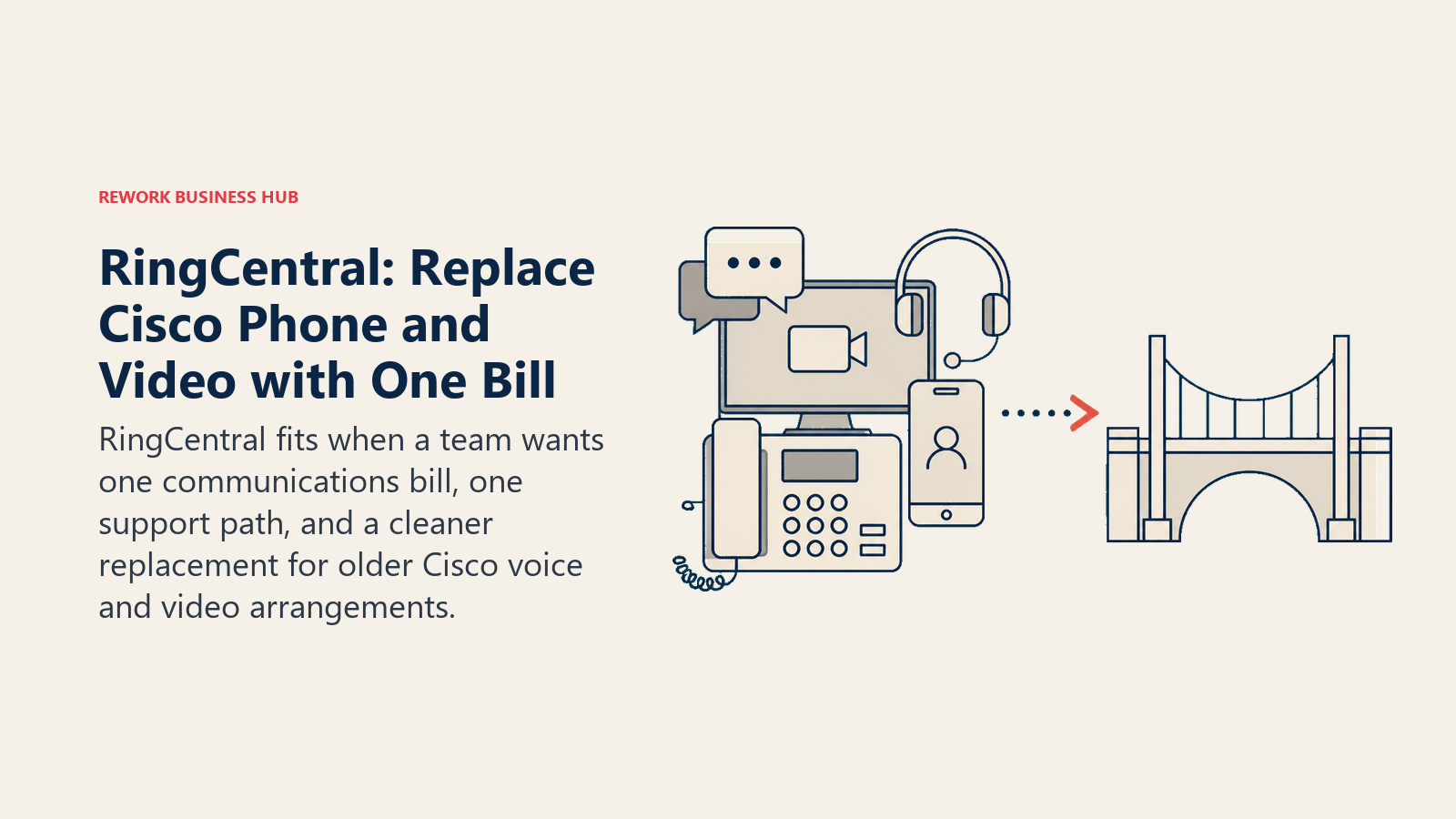
Video Pro+ layers on recording, transcription, and AI summaries. The vendor's page renders its numbers dynamically, so treat this as reported: Pro+ runs about $11.99/user/month annual (about $14.99 monthly) under 100 users, dropping to roughly $10.99 at larger scale. The bigger play is RingEX, the full UCaaS bundle with phone, SMS, and video at roughly $20/user/month annual, where RingCentral competes on total cost against a Cisco phone-plus-Webex stack.
RingCentral carries FedRAMP Moderate through its Government offering and SOC 2 Type II. The tradeoff is scope: if you only need video, its breadth is more platform than the job requires.
Pricing: Video Pro free (100 participants, 24-hr). Video Pro+ ~$11.99/user/month annual (reported). RingEX Core ~$20/user/month annual (reported). See RingCentral Video pricing.
Best for: Mid-market and enterprise teams replacing a Cisco phone system alongside Webex who want one vendor for both.
| Pros | Cons |
|---|---|
| Free tier is unusually generous (100 participants, 24-hr) | Full platform is over-engineered for video-only needs |
| One contract replaces phone plus video plus messaging | Onboarding complexity scales with platform breadth |
| FedRAMP Moderate and SOC 2 Type II | Per-user cost climbs once phone is added |
4. 8x8: Best for Enterprise UCaaS with a Deep Compliance Stack
8x8 doesn't sell a standalone Meet product anymore. Video is now part of the 8x8 Work and Engage platforms, sold through a fully quote-based, sales-led process with no public per-seat number. For a buyer used to Webex's published tiers, that's a real adjustment: you're in a sales cycle before you see a number.
What 8x8 brings to that conversation is a compliance stack that's hard to beat on paper: SOC 2 Type II, HIPAA with a third-party-audited SOC-to-HIPAA control mapping, PCI-DSS, and ISO 27001 with the 27017/27018 extensions, all covering the full platform. That's why 8x8 shows up on shortlists for healthcare and financial services buyers doing exactly the kind of security review a Webex renewal usually triggers.
The downside beyond pricing opacity is scale of commitment: like RingCentral, 8x8 bundles phone and contact center capability most video-only buyers don't need.
Pricing: Not published. Work/Engage plans are quote-only. See 8x8's compliance page.
Best for: Regulated enterprise buyers who want one UCaaS vendor with an already-audited compliance stack and will negotiate price directly.
| Pros | Cons |
|---|---|
| SOC 2, HIPAA, PCI-DSS, ISO 27001 all in one platform | No public pricing to benchmark against |
| Third-party audited SOC-to-HIPAA control mapping | Meet was discontinued as a standalone product |
| Enterprise-grade support and SLAs | Full UCaaS platform is more commitment than video alone |
5. Pexip: Best for Self-Hosted or Sovereign Deployment and Cisco Device Interop
Pexip is the option for the buyer whose real objection to Webex isn't the UI, it's where the data lives. It runs as a managed cloud service or a fully self-hosted deployment, handing a security team complete control over data residency rather than a regional-selection checkbox.
Pexip's Government Cloud carries FedRAMP authorization for video interop with Microsoft Teams, letting a regulated buyer keep Teams as the client while routing the session through authorized infrastructure. More relevant to a Cisco estate, its SIP/H.323 Rooms tier makes existing Cisco and Poly hardware behave like a modern room without a forklift upgrade.
Pexip publishes no pricing anywhere; every tier routes to "buy now" or "contact sales." This is a deployment with implementation work attached, not a self-serve signup.
Pricing: Not published, all tiers require sales contact. See Pexip plans.
Best for: IT teams with existing Cisco or SIP/H.323 room hardware who want interoperability without replacing it, or who need full data sovereignty via self-hosting.
| Pros | Cons |
|---|---|
| FedRAMP-authorized Government Cloud tier | Zero published pricing anywhere |
| Self-hosted option gives full data control | Implementation is a project, not a signup |
| Extends life of existing Cisco/Poly room hardware | Smaller ecosystem and community than the majors |
6. Google Meet: Best for Google Workspace Organizations
If your company runs Gmail and Google Calendar, Meet is close to a zero-decision default: meetings launch from calendar invites, no download is needed, and the free tier already outruns Webex's free-tier 40-minute cap.
Business Starter, at $7/user/month, raises the Meet ceiling to 100 participants. Standard, at $14/user/month, adds Drive recording and a 150-cap. Plus, at $22/user/month, extends to 500 participants and attendance tracking. Enterprise is custom-quoted at 1,000. Google is currently running a promotional 50% off Starter and 40% off Standard for a customer's first 20 users, changing the year-one math versus Webex.
On compliance, Google Workspace holds FedRAMP High via Assured Workloads and SOC 2 Type II, with HIPAA BAAs from Business Standard up. The limitation is depth outside Google's ecosystem: no on-premises option, and webinar tooling thinner than Webex Webinars.
Pricing: Free up to 100 participants. Starter $7/user/month, Standard $14/user/month, Plus $22/user/month (annual; promo 50%/40% off first 20 users for 12 months). Enterprise: custom. See Google Workspace pricing.
Best for: Teams already on Google Workspace who want video included at effectively no incremental tool cost.
| Pros | Cons |
|---|---|
| Included in Workspace at no separate line item | No on-premises or self-hosted deployment |
| FedRAMP High and SOC 2 Type II | Thinner webinar tooling than Webex Webinars |
| Scales to 500-1,000 participants at higher tiers | Weak standalone value outside Google's ecosystem |
7. GoTo Meeting: Best for Simple, Predictable Licensing
GoTo Meeting's entire pitch is restraint: no sprawling feature set, no AI companion upsell, just meetings, screen sharing, recording, and calendar integration that's been reliable for over a decade. For an IT team tired of Webex's tiered matrix, that simplicity is the actual feature.
Treat these as reported figures from third-party 2026 pricing trackers, and confirm current pricing with GoTo: Professional runs about $12/organizer/month annual (about $14 monthly) for up to 150 participants; Business runs about $16/organizer/month annual (about $19 monthly) for 250 participants plus unlimited cloud recording and co-organizer controls. Enterprise is custom-quoted for up to 3,000 participants.
GoTo carries SOC 2 Type II (SOC 3 reports published) and can be used in a HIPAA-aligned way with a signed BAA, a less flashy story than Webex's but a real one. Per-organizer licensing is cheaper if only a handful of people schedule calls, but scales poorly once most of the team needs hosting rights.
Pricing: Professional ~$12/organizer/month annual (reported). Business ~$16/organizer/month annual (reported). Enterprise: custom. See GoTo Meeting pricing.
Best for: IT teams that want a narrow, reliable tool for a fixed set of hosts without ecosystem lock-in.
| Pros | Cons |
|---|---|
| Deliberately simple, easy to train non-technical staff | Per-organizer pricing stings once everyone needs to host |
| SOC 2 Type II with published SOC 3 reports | No bundled messaging or file storage |
| HIPAA-aligned with a signed BAA | Feature set is intentionally narrow |
8. Dialpad Meetings: Best for AI-First Mid-Market Teams
Dialpad builds AI into the core product rather than selling it as an add-on: every meeting gets a live transcript, extracted action items, and a summary with no one taking notes. For teams evaluating Webex's AI Assistant bundle, Dialpad's version ships in the base paid tier.
The free plan covers 10 participants for 45 minutes. Business, reported at roughly $15/host/month annual (about $20 monthly) since Dialpad's dedicated Meetings pricing page no longer resolves independently, unlocks 100 participants, unlimited duration, and the full AI suite. Dialpad often discounts Meetings when bundled with its Talk phone product, an appealing path without RingCentral's or 8x8's full commitment.
On compliance, Dialpad holds SOC 2 Type II, ISO 27001/27017/27018, and HIPAA with a one-click BAA, a strong stack for a mid-market vendor. The tradeoff is scale: 100 participants on standard Business is well below a company-wide town hall, and brand recognition lags Zoom's or Teams'.
Pricing: Free (10 participants, 45 min). Business ~$15/host/month annual, ~$20 monthly (reported). See Dialpad pricing.
Best for: SMB and mid-market sales or ops teams who want AI call intelligence bundled in rather than purchased separately.
| Pros | Cons |
|---|---|
| AI transcription and summaries in the base tier | 100-participant ceiling on standard Business |
| SOC 2 Type II, ISO 27001, one-click HIPAA BAA | Lower external brand recognition than Zoom or Teams |
| Bundles well with Dialpad Talk for full UC | Free plan capped at 45 minutes |
9. Zoho Meeting: Best for Budget-Conscious Buyers
Zoho Meeting is the cheapest credible paid option here, and if your team runs Zoho CRM, Projects, or Desk, it's a natural extension: meetings launch from CRM records, recordings attach to project cards, and support calls log to tickets automatically.
Zoho's free tier now supports up to 100 participants for 60-minute meetings, a jump from the 10-participant cap it carried a year ago. Standard, reported at $10/host/month annual, adds 5GB of cloud recording, two co-hosts, and 24-hour meetings. Professional, reported at $19/host/month annual, adds a custom domain, breakout rooms, and API access.
Zoho's SOC 2 Type II and combined SOC-2-plus-HIPAA audit apply platform-wide, and the company offers a genuine choice of data-center region (US, EU, India, or Australia) at signup. The limitation is polish outside Zoho's ecosystem: integrations with Google or Microsoft work but feel secondary.
Pricing: Free (100 participants, 60 min). Standard ~$10/host/month annual (reported). Professional ~$19/host/month annual (reported). See Zoho Meeting pricing.
Best for: Budget-conscious IT or ops teams, especially those already on Zoho, who want the lowest credible price with real compliance coverage.
| Pros | Cons |
|---|---|
| Cheapest credible paid tier in this roundup | Weaker polish and reach outside Zoho's ecosystem |
| Platform-wide SOC 2 Type II and combined HIPAA audit | Fewer third-party integrations than Meet or Teams |
| Choice of data-center region at signup | UI reflects Zoho's dense, utilitarian design language |
10. Whereby: Best for Frictionless External and Client Calls
Whereby solves a specific problem Webex doesn't solve well: the join experience for someone outside your organization. A persistent room URL like whereby.com/yourcompany opens in a browser with no download, no account, and no launcher prompt, which matters when the other side of the call doesn't want to install anything.
The free plan covers one room with up to four attendees and a 30-minute cap. Pro, at $10.99/host/month, extends to 100 attendees with recording and custom branding. Business, at $13.99/host/month with a three-host minimum, scales to 200 attendees; annual billing saves roughly 17%. Whereby also sells an Embedded product, billed per room-minute, for companies that want video inside their own product, common in telehealth and support widgets.
Whereby doesn't publish SOC 2, HIPAA, or FedRAMP claims, which rules it out for the most compliance-sensitive use cases even though its WebRTC architecture is sound. The 200-person ceiling also rules out a town-hall replacement; it's a specialist tool layered alongside whatever handles internal meetings.
Pricing: Free (1 room, 4 attendees, 30-min cap). Pro $10.99/host/month. Business $13.99/host/month (3-host minimum). See Whereby pricing.
Best for: Client-facing teams and consultants who want a permanent, no-download room for calls with people outside the company.
| Pros | Cons |
|---|---|
| No download for attendees, true browser-based join | No published SOC 2, HIPAA, or FedRAMP claims |
| Permanent, shareable room URL | 200-person ceiling rules out large meetings |
| Embeddable via API into other products | Three-host minimum on Business plan |
11. Jitsi Meet: Best for Full Data Sovereignty
Jitsi Meet is the answer for the buyer whose objection to every SaaS option here, Webex included, is that the vendor sees the traffic at all. It's fully open source, free at meet.jit.si with no account required, and can be self-hosted entirely on infrastructure you control.
Since Jitsi carries no license fee, the real cost is infrastructure and operations. A small-team deployment typically runs on a VPS costing roughly $10-20/month, scaling with call volume and TURN server needs. There's no enterprise support contract unless you engage a managed provider or 8x8, which acquired Jitsi's commercial arm.
Jitsi supports end-to-end encryption for smaller calls via Insertable Streams, and because you own the deployment, every compliance requirement is achievable, but it's on you to build and document it, the exact inverse of Webex's model.
Pricing: Free and open source. Self-hosted infrastructure typically $10-20/month for a small-team VPS. See Jitsi.
Best for: Security-conscious organizations with in-house DevOps capacity who need full control over where meeting data lives.
| Pros | Cons |
|---|---|
| Zero licensing cost, ever | Requires real DevOps capability to run well |
| Full data control when self-hosted | Public meet.jit.si instance can be unreliable under load |
| End-to-end encryption available | No vendor-backed compliance certifications to point to |
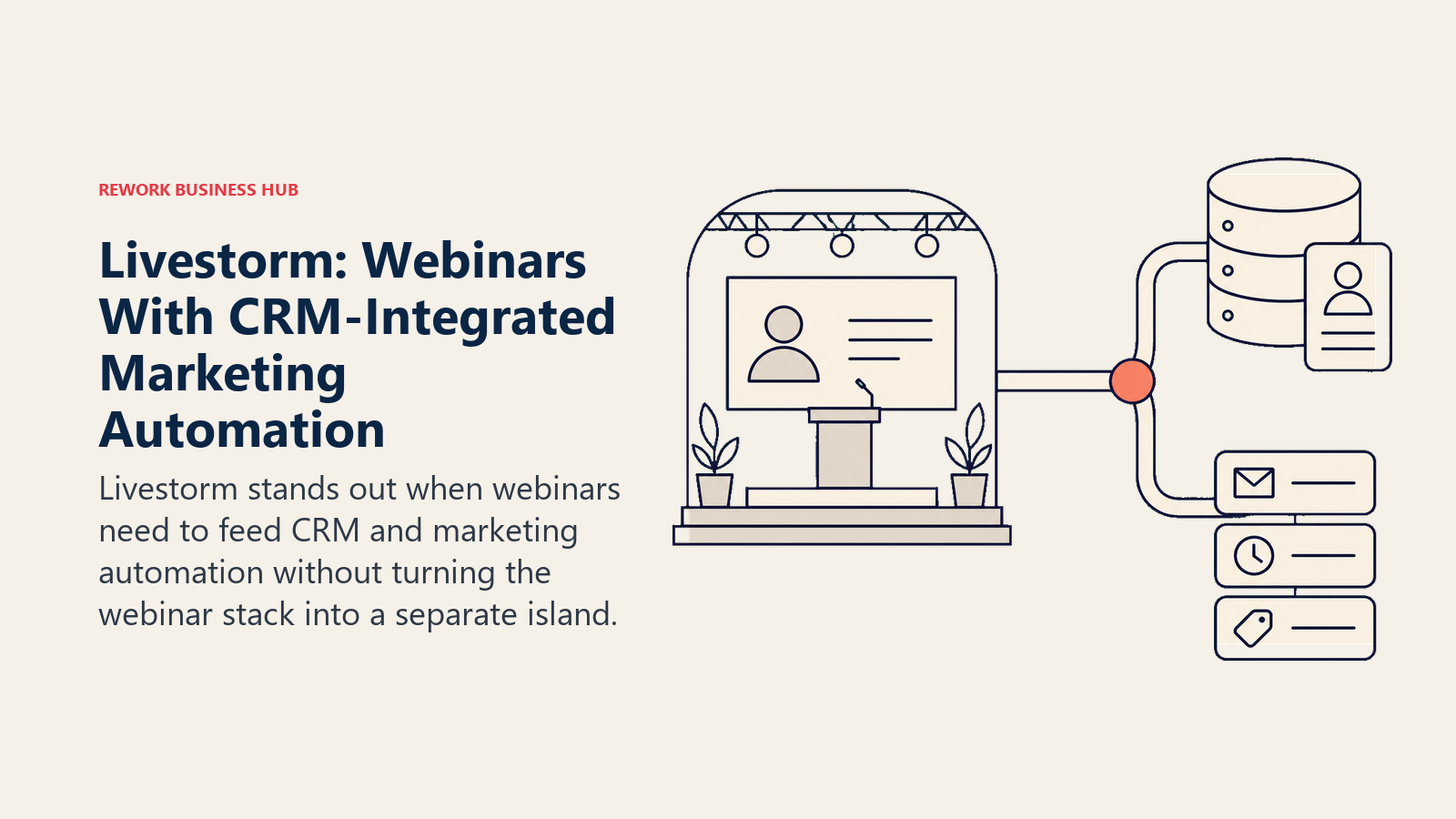
12. Livestorm: Best for Webinars with CRM-Integrated Marketing Automation
Livestorm competes with Webex Webinars for a narrower job: registration-driven virtual events rather than daily internal meetings. Everything runs in the browser, so attendees never install a client, removing the single biggest drop-off point in webinar attendance.
Livestorm's pricing changed meaningfully since we last reviewed this category: no more flat monthly subscription with a standalone free tier. Pro is now priced entirely through attendee credits, an annual pack at €2.50 per credit, one credit per unique attendee per session, sessions up to four hours. There's no permanent free plan anymore, only a Pro trial. Enterprise is custom-quoted, extends sessions to 12 hours, and adds Salesforce, Marketo, and Dynamics integrations.
That credit model rewards a smaller, high-intent registrant list and penalizes large, low-conversion webinars, since every attendee burns a credit regardless of how the event performs. Livestorm holds ISO 27001 and SOC 1/SOC 2 attestation, is GDPR-first with EU-hosted data, and doesn't publish HIPAA claims: a marketing tool first, a compliance platform second.
Pricing: Pro priced by attendee credit, €2.50/credit (annual pack), sessions up to 4 hours. Enterprise: custom. See Livestorm pricing.
Best for: Marketing and demand-gen teams running registration-based webinars who want strong CRM integration, not daily-meeting features.
| Pros | Cons |
|---|---|
| No client install for hosts or attendees | No standalone free plan anymore, only a Pro trial |
| Strong CRM and marketing automation integrations | Credit-based pricing punishes high-volume, low-conversion events |
| ISO 27001 and SOC 1/SOC 2 attestation | No published HIPAA compliance |
Stage Fit Matrix
| Tool | Startup (0-10) | Growth (10-50) | Mid-Market (50-200) | Enterprise (200+) |
|---|---|---|---|---|
| Zoom | Strong | Strong | Strong | Strong |
| Microsoft Teams | Moderate | Strong | Strong | Strong |
| RingCentral | Weak | Moderate | Strong | Strong |
| 8x8 | Weak | Weak | Strong | Very strong |
| Pexip | Weak | Weak | Moderate | Strong (regulated/gov) |
| Google Meet | Strong | Strong | Strong | Strong |
| GoTo Meeting | Strong | Strong | Moderate | Weak |
| Dialpad Meetings | Strong | Strong | Moderate | Weak |
| Zoho Meeting | Strong | Strong | Moderate | Weak |
| Whereby | Very strong | Strong | Moderate | Weak |
| Jitsi Meet | Moderate (DevOps) | Moderate | Strong (self-host) | Strong |
| Livestorm | Moderate | Strong | Strong | Strong (events) |
Sizing and Persona Table
| Tool | Team Size Sweet Spot | Primary Buyer | Secondary Buyer |
|---|---|---|---|
| Zoom | Any size | IT Admin | Department head |
| Microsoft Teams | 10-2,000 | IT Admin | COO or CTO |
| RingCentral | 50-1,000 | IT Admin or CTO | CFO |
| 8x8 | 100-2,000+ | CISO or IT Director | Procurement |
| Pexip | 50-1,000+ (regulated/gov) | CISO or Network Architect | Facilities/AV lead |
| Google Meet | Any, on Workspace | IT Admin | Department head |
| GoTo Meeting | 5-100 hosts | Office Manager | IT Admin |
| Dialpad Meetings | 10-200 | VP of Sales | Ops Lead |
| Zoho Meeting | 5-250, on Zoho | IT or Ops Manager | Finance |
| Whereby | 2-50 | Founder or Head of Sales | Ops Manager |
| Jitsi Meet | Any, with DevOps | DevOps or Security Lead | CTO |
| Livestorm | 10-500 (events) | Marketing Manager | RevOps |
What Webex Still Does Best
Be honest before you switch: Webex's real strengths are exactly why regulated buyers choose it, and they're not trivial to replicate.
| Webex Strength | Why It Matters |
|---|---|
| FedRAMP authorization | Listed on the FedRAMP Marketplace, a hard requirement for many government contracts |
| Default end-to-end encryption | Not an opt-in toggle you have to remember to enable |
| Cisco device interoperability | Native fit with existing Cisco phones and room systems |
| Real-time translation | Live translation across a wide language set for global orgs |
| Already inside your Cisco agreement | Often sunk cost, so the marginal price of staying is close to zero |
If your actual complaint is the interface or the per-seat cost on a Suite-level plan, run the math first. A renegotiated tier inside your existing Cisco relationship sometimes solves the problem cheaper than a full migration and re-training cycle.
How to Choose: Decision Framework
| If you need... | Choose |
|---|---|
| Universal adoption and webinar scale | Zoom |
| Already paying for Microsoft 365 | Microsoft Teams |
| To replace a Cisco phone contract too | RingCentral |
| One audited UCaaS vendor, quote-based | 8x8 |
| Self-hosted or legacy room hardware interop | Pexip |
| Already paying for Google Workspace | Google Meet |
| Simple per-organizer licensing | GoTo Meeting |
| Built-in AI transcription | Dialpad Meetings |
| Lowest credible price with real compliance | Zoho Meeting |
| Frictionless, no-download external calls | Whereby |
| Full data sovereignty, in-house DevOps | Jitsi Meet (self-hosted) |
| CRM-integrated marketing webinars | Livestorm |
Frequently Asked Questions about Webex Alternatives
What's the single biggest reason IT teams leave Cisco Webex?
Usually an outdated interface and Suite-level licensing cost, not a security gap. Webex's compliance coverage is genuinely strong, so switchers need a replacement that matches that posture, not just a nicer meeting UI.
Is Microsoft Teams really free if we already pay for Microsoft 365?
Teams is bundled into every M365 business tier at no separate charge, so Business Basic ($7/user/month annual) or higher already includes it. Off M365, standalone Teams Essentials runs $4/user/month annual.
Which Webex alternative keeps FedRAMP and HIPAA compliance intact?
Microsoft Teams (GCC High) and Google Meet (Assured Workloads) both hold FedRAMP High with HIPAA BAAs available. Zoom's FedRAMP coverage applies only to ZoomGov, not commercial Zoom. Pexip's Government Cloud is FedRAMP-authorized for Teams video interop specifically.
Can we keep our existing Cisco Webex Room hardware if we switch platforms?
Pexip is built for this: its SIP/H.323 Rooms tier lets existing Cisco and Poly room systems join modern meetings without a hardware swap. Most SaaS-only alternatives expect eventual migration to their own certified hardware.
Is Zoom actually cheaper than Webex?
Reported 2026 figures put Zoom Business at roughly $18.33/host/month annual versus Webex Suite at roughly $22.50/user/month annual. Both use per-seat licensing, so total cost depends on how many people need to host.
What's the best Webex alternative for a small IT budget?
Zoho Meeting, at roughly $10/host/month for Standard. GoTo Meeting and Dialpad Meetings are close behind at a similarly modest price.
Do any of these tools offer real end-to-end encryption, not just encryption in transit?
Zoom, Teams, and Jitsi Meet all support it, but except for Webex it's opt-in rather than default, and enabling it typically disables cloud recording. Pexip supports E2EE for point-to-point calls.
How long does a Webex-to-alternative migration usually take at a mid-market company?
Plan 60-90 days for a straightforward SaaS-to-SaaS switch: procurement, calendar re-integration, training. Add several months if room hardware or a self-hosted deployment like Pexip or Jitsi is involved.
What to Do Next
Shortlist two candidates from the decision framework above and run a 30-day parallel pilot with a real team on each. Have your security owner sign off on the SOC 2, HIPAA, or FedRAMP posture of your top pick before a single license gets bought, and track whether external partners join without friction and whether IT's per-seat math beats your current Webex renewal. After 30 days you'll have a real answer instead of a spec-sheet guess.
For the rest of your meeting stack, see Confluence alternatives for documentation, Loom alternatives for async video, and fixing pointless meetings. For teams rethinking their whole collaboration footprint, remote work productivity is a useful next read.
Camellia writes about productivity and collaboration tooling for B2B teams. Last updated August 2026.

Principal Product Marketing Strategist
On this page
- Key Facts
- Quick Comparison Table
- Compliance and Security Posture
- 1. Zoom: Best for Broad Adoption and Webinar Scale
- 2. Microsoft Teams: Best for Organizations Already Paying for Microsoft 365
- 3. RingCentral: Best for Replacing Cisco Phone and Video with One Bill
- 4. 8x8: Best for Enterprise UCaaS with a Deep Compliance Stack
- 5. Pexip: Best for Self-Hosted or Sovereign Deployment and Cisco Device Interop
- 6. Google Meet: Best for Google Workspace Organizations
- 7. GoTo Meeting: Best for Simple, Predictable Licensing
- 8. Dialpad Meetings: Best for AI-First Mid-Market Teams
- 9. Zoho Meeting: Best for Budget-Conscious Buyers
- 10. Whereby: Best for Frictionless External and Client Calls
- 11. Jitsi Meet: Best for Full Data Sovereignty
- 12. Livestorm: Best for Webinars with CRM-Integrated Marketing Automation
- Stage Fit Matrix
- Sizing and Persona Table
- What Webex Still Does Best
- How to Choose: Decision Framework
- What to Do Next