Best AI Tools for Clinical Trial Patient Recruitment in 2026
Turn this article into takeaways for your work.


Each assistant summarizes the article only for you and suggests best practices for your work.
Patient recruitment is still the single biggest reason clinical trials run late. Nearly 80% of trials miss their original enrollment timeline, and the tools trying to fix that split into a few distinct jobs: EHR-based matching engines that mine structured and unstructured patient records at scale (Tempus's Deep 6 AI, ConcertAI, Mendel), oncology-specific copilots built for cancer center coordinators (Triomics, Massive Bio), site selection and feasibility platforms sponsors use before a protocol is even finalized (H1, Reify Health's StudyTeam), marketplaces and diversity-focused outreach platforms that widen who gets asked to enroll (Inato, Paradigm Health, Antidote, Acclinate), and one open-source research tool from the NIH that most vendors on this list either cite or build on (TrialGPT). This guide ranks 13 of them by the job they actually do, not a generic AI list repackaged for life sciences.
Every tool below was evaluated on its actual recruitment function (patient matching, chart abstraction, site selection, or outreach). Nearly every enterprise vendor on this list is quote-based with no public rate card, a pattern this guide states plainly rather than papering over with invented numbers. None of this is medical, legal, or regulatory advice: matching a patient to a trial is not the same as determining eligibility, and every tool here still routes final decisions through an investigator and an IRB.
What Changed in 2026
The 2026 market moved beyond isolated matching demos toward larger networks, operational platforms, and stronger real-world evidence.
- Tempus finished folding Deep 6 AI (acquired March 2025) into its oncology trial-matching stack, extending reach to more than 750 provider sites and over 30 million patient records for real-time EHR mining, per BiopharmaTrend.
- Triomics raised a $22 million Series B in May 2026 and, in January 2026, launched its PRISM matching platform at Mount Sinai's Tisch Cancer Center, joining Memorial Sloan Kettering, MD Anderson, Yale Cancer Center, and Texas Oncology, per Mount Sinai.
- Massive Bio published a peer-reviewed prospective study in April 2026 covering 3,804 metastatic cancer patients, then previewed a broader "Reticulum Nexus" AI operating system for oncology access at ASCO 2026, per BusinessWire.
- ConcertAI launched Accelerated Clinical Trials (ACT), an agentic platform built on its CARAai engine, in February 2026, then expanded its CancerLinQ trial-matching capability in May 2026, per HLTH.
- Paradigm Health, backed by a $203 million Series A, kept expanding its PACT Collective diversity coalition across a research-ready provider network spanning 2,100 care locations, per Fierce Healthcare.
- The FDA's draft Diversity Action Plan guidance, which would have required sponsors to submit formal diversity enrollment plans for certain studies, was quietly pulled from the agency's website following a 2025 executive order on DEI, leaving sponsors without a finalized federal framework even as diversity-focused vendors keep building toward it, per AJMC.
Key Facts
- Nearly 80% of clinical trials fail to hit their original enrollment timeline, and 9 out of 10 end up doubling that timeline to reach target enrollment, per the University of California's research office.
- A single day of trial delay costs sponsors roughly $40,000 in direct trial costs and translates to about $800,000 in unrealized prescription drug sales, per the Tufts Center for the Study of Drug Development's updated 2024 estimate, published in Therapeutic Innovation & Regulatory Science.
- Nearly 40% of the US population belongs to a racial or ethnic minority, yet White participants still make up 80% to 90% of clinical trial groups, per FDA guidance summarized by RTI Health Solutions.
- TrialGPT, the NIH's open-source large language model for eligibility screening, retrieves over 90% of relevant trials while reviewing less than 6% of a site's full trial list, and cut patient screening time by 42.6% in pilot testing, per the peer-reviewed study on PMC/Nature Communications.
- Triomics' oncology trial-matching copilot increased trial matches by 40% and enrollments by more than 30%, while cutting chart review time by 67%, across cancer centers including Memorial Sloan Kettering and MD Anderson, per PR Newswire.
- Massive Bio's AI matching platform found trial matches roughly four times faster than conventional methods in a prospective study spanning 3,804 metastatic cancer patients and generating more than 17,000 oncologist-confirmed matches, per BusinessWire.
Quick Comparison Table
| Tool | Best For | Standout Capability | Starting Price | Free Tier / Trial? |
|---|---|---|---|---|
| Tempus (Deep 6 AI) | Large health systems and pharma sponsors matching at EHR scale | Real-time NLP mining of structured and unstructured EHR data across 750+ sites | Custom, enterprise quote only | No; institutional contract only |
| ConcertAI | Pharma sponsors wanting one agentic platform for the whole recruitment funnel | CARAai agents automate feasibility, site selection, and matching together | Custom, enterprise quote only | No; sales-led enterprise deal |
| Mendel (Hypercube) | Pharma and CRO teams buried in manual chart review | LLM-based chart abstraction plus natural-language trial matching queries | Custom, enterprise quote only | No; demo and pilot required |
| Triomics (PRISM) | Academic cancer centers wanting a coordinator-facing matching copilot | OncoLLM-powered itemized rationale with source citations per match | Custom, institutional quote | No; institutional deployment |
| Massive Bio | Community oncology networks referring patients into trials | Neuro-symbolic multi-agent matching validated in a 3,804-patient study | Custom, network/partner quote | No; partner onboarding required |
| H1 | Sponsors and CROs doing site selection and feasibility, not patient matching itself | Real-world HCP and site-level data for feasibility scoring | Custom, enterprise quote only | No; demo required |
| Reify Health (StudyTeam) | Sites and sponsors wanting shared enrollment visibility across a portfolio | Enrollment forecasting and site-level pre-screening dashboards | Custom, enterprise quote only | No; sales-led onboarding |
| Inato | Community and mid-size sites wanting sponsor trial access without a broker fee | Free-for-sites marketplace matching sites to sponsor trials | Free for sites; sponsors quoted | Yes, free for research sites |
| Paradigm Health | Sponsors building a formal diversity enrollment plan via a provider network | EHR- and genomics-linked matching across a 2,100-location provider network | Custom, enterprise quote only | No; sponsor/provider partnership |
| Antidote | Patient-facing trial search and pharma recruitment marketing | Consumer trial-search engine reaching 15M+ patients a month | Free for patients; sponsors quoted | Yes, free for patients |
| Acclinate | Sponsors needing trusted outreach into underrepresented communities | NOWINCLUDED community-trust layer plus e-DICT enrollment platform | Custom, engagement-based quote | No; program-based engagement |
| Unlearn.AI | Late-stage sponsors shrinking a control arm, not recruiting more patients | AI digital twins with a 2022 EMA qualification opinion | Custom, usage/engagement-based | No; enterprise engagement only |
| TrialGPT (NIH/NCI) | Researchers and health systems wanting a free, published matching pipeline | Open-source retrieval-matching-ranking pipeline, 87.3% matching accuracy | Free, open-source, not a vendor product | Yes, fully open-source |
Org-Type Fit Matrix
Use this as a first filter. "Strong fit" means the deployment model and buying process actually match how an organization that size procures software.
| Tool | Individual Site | Community Network (2-50 sites) | Academic Medical Center | Enterprise Sponsor / CRO |
|---|---|---|---|---|
| Tempus (Deep 6 AI) | - | Possible | Strong fit | Strong fit |
| ConcertAI | - | - | Possible | Strong fit |
| Mendel (Hypercube) | - | Possible | Possible | Strong fit |
| Triomics (PRISM) | - | Possible | Strong fit | Possible |
| Massive Bio | Possible | Strong fit | Possible | Possible |
| H1 | - | Possible | Possible | Strong fit |
| Reify Health (StudyTeam) | Strong fit | Strong fit | Strong fit | Strong fit |
| Inato | Strong fit | Strong fit | Possible | Possible (sponsor side) |
| Paradigm Health | - | Possible | Possible | Strong fit |
| Antidote | Strong fit | Strong fit | Strong fit | Strong fit |
| Acclinate | - | Possible | Possible | Strong fit |
| Unlearn.AI | - | - | Possible | Strong fit |
| TrialGPT (NIH/NCI) | Strong fit (free) | Strong fit | Strong fit | Possible (build layer) |
Sizing and Persona Table
| Tool | Ideal User Base | Primary Buyer Persona |
|---|---|---|
| Tempus (Deep 6 AI) | Health systems with 750+ sites in mind, large pharma sponsors | CMIO, VP of Clinical Informatics, sponsor recruitment lead |
| ConcertAI | Enterprise pharma running multi-trial portfolios | VP Clinical Operations, Head of Real-World Data |
| Mendel (Hypercube) | Pharma and CRO teams with heavy chart-review workloads | Clinical operations director, data abstraction lead |
| Triomics (PRISM) | Academic and NCI-designated cancer centers | Research coordinator, oncology CMIO, trial office director |
| Massive Bio | Community oncology practices, patient referral networks | Community oncologist, patient navigator |
| H1 | Sponsors and CROs planning site selection before a protocol locks | Feasibility lead, site identification manager |
| Reify Health (StudyTeam) | Sites and sponsors on a shared enrollment platform | Site coordinator, sponsor enrollment operations lead |
| Inato | Community and mid-size research sites, small-to-mid sponsors | Site business development lead, sponsor feasibility manager |
| Paradigm Health | Sponsors formalizing diversity enrollment commitments | Head of clinical diversity, provider network partnerships lead |
| Antidote | Patients and caregivers searching for trials directly | Patient, caregiver, patient advocacy organization |
| Acclinate | Sponsors targeting Black, Hispanic, and Indigenous communities | Head of health equity, patient engagement director |
| Unlearn.AI | Late-stage sponsors optimizing statistical trial design | Biostatistician, VP of clinical development |
| TrialGPT (NIH/NCI) | Health systems and researchers building custom matching tools | Clinical informatics engineer, academic researcher |
1. Tempus (Deep 6 AI): Broadest EHR-Scale Matching Network
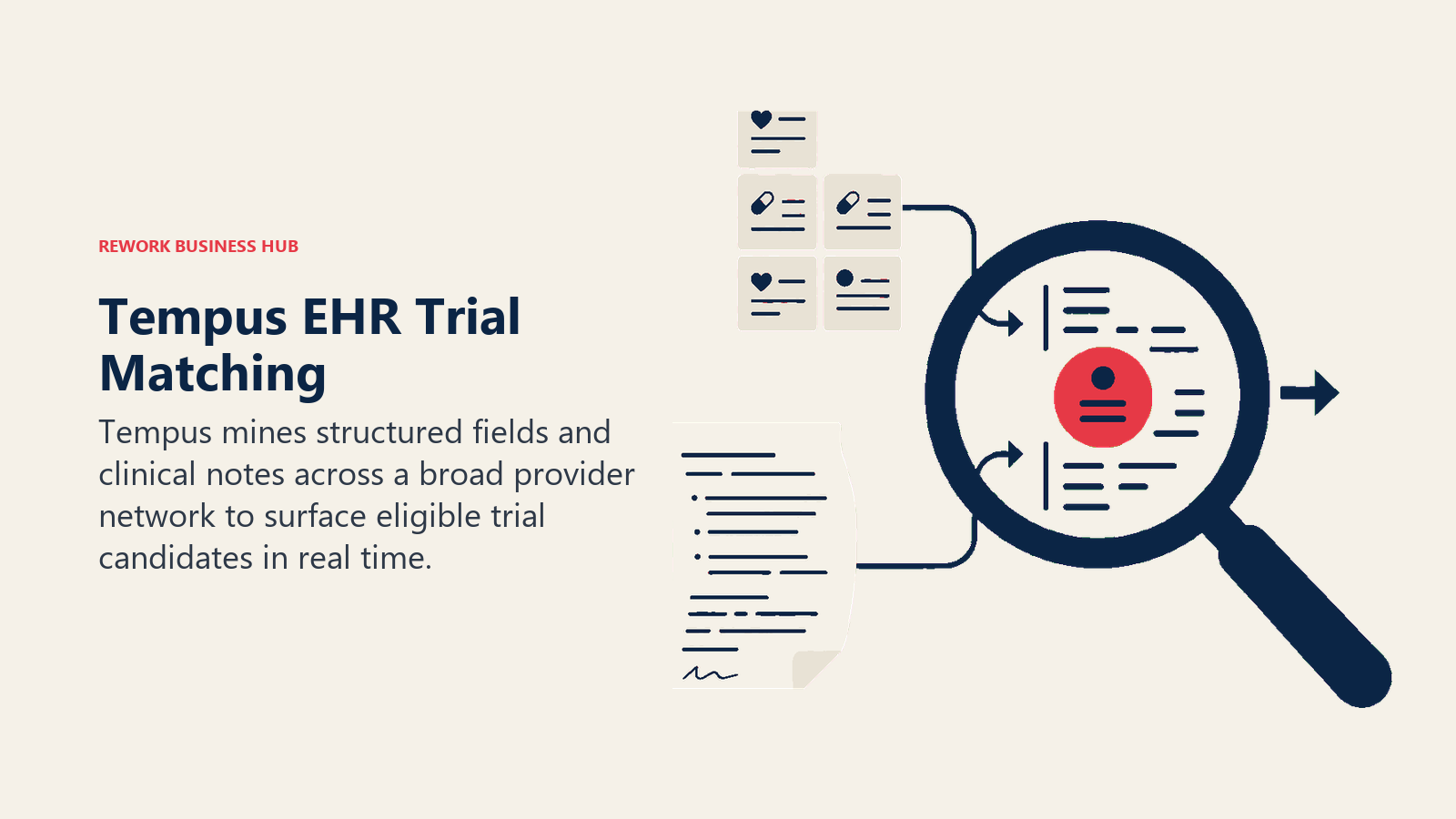
Tempus acquired Deep 6 AI in March 2025 and has spent the time since folding its EHR-mining engine into a broader oncology data platform. The core capability hasn't changed: Deep 6 AI reads both structured fields (ICD-10 codes, demographics) and unstructured notes (pathology reports, physician narratives) in real time to surface eligible patients in minutes instead of the weeks a manual chart review takes.
| What you get | What you don't |
|---|---|
| Real-time NLP mining across structured and unstructured EHR data | No published pricing; every deal is custom-negotiated |
| Access to 750+ provider sites and 30M+ patient records | Enterprise-only; no self-serve path for a single site |
| Backed by Tempus's broader oncology data and genomic platform | Integration complexity scales with health system size |
Pricing: No public list price. Deals are negotiated per health system or sponsor engagement, per BiopharmaTrend's coverage of the acquisition.
Best for: Large health systems and pharma sponsors that need EHR-scale patient discovery across hundreds of sites, not a single-center pilot.
2. ConcertAI: Agentic AI Across the Whole Recruitment Funnel
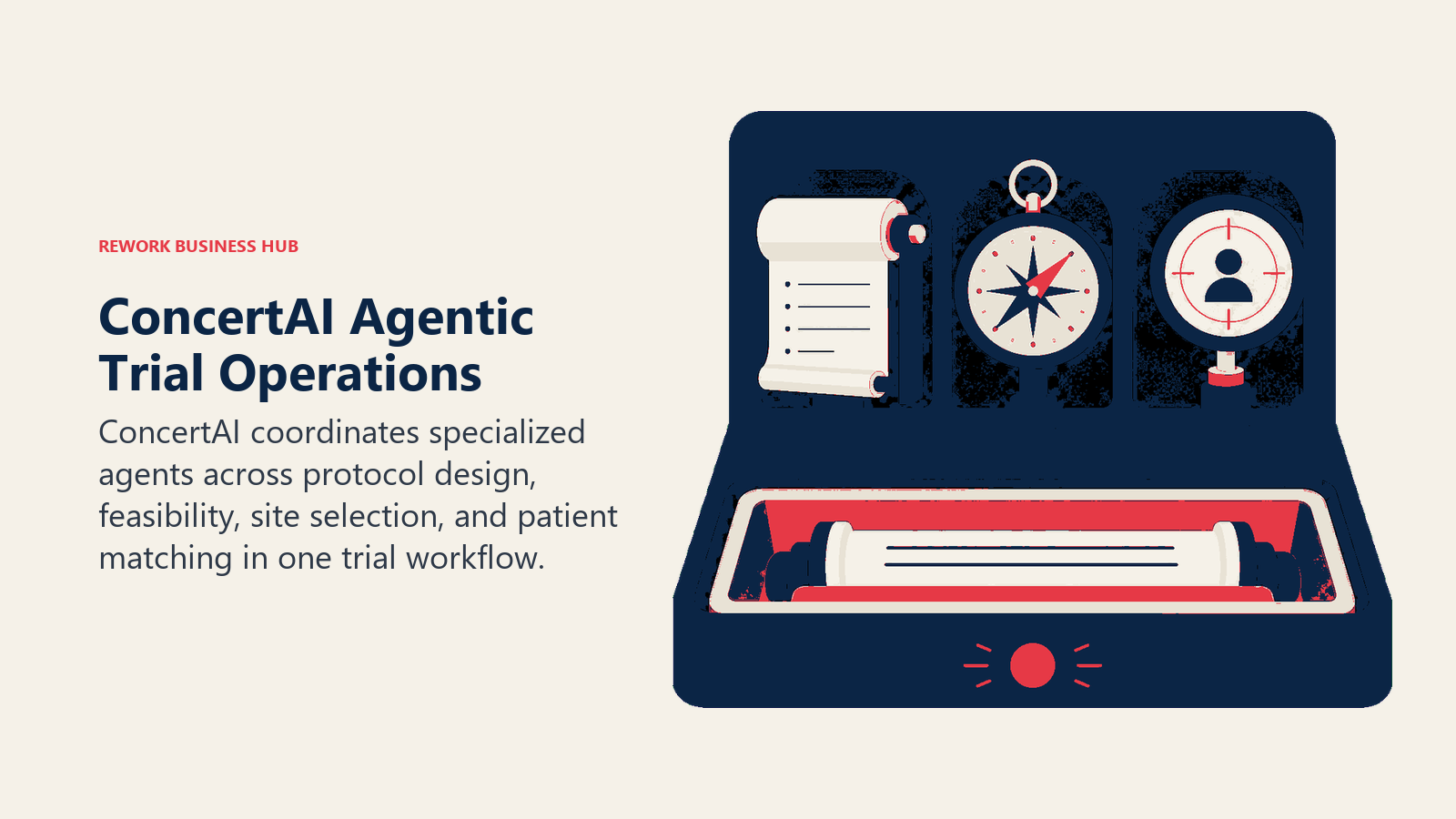
ConcertAI's bet is that recruitment shouldn't be one tool bolted onto a separate feasibility tool bolted onto a separate site-selection tool. Its Accelerated Clinical Trials (ACT) platform, launched in February 2026 on top of its CARAai agentic engine, deploys specialized agents across literature review, protocol design, feasibility analysis, site selection, and patient matching in one workflow, drawing on more than 13 million patient records.
| What you get | What you don't |
|---|---|
| One agentic platform spanning feasibility through matching, not point tools | No published pricing; fully enterprise sales-led |
| Weekly-refreshed matching pools that catch patients while still eligible | Requires real commitment to ConcertAI's broader data ecosystem |
| Trial-eligible patient identification reported 3.3x faster in its CancerLinQ suite | Built for large sponsors, not a fit for a single research site |
Pricing: No public rate card. ConcertAI sells enterprise engagements scoped to trial portfolio size, per ConcertAI's own ACT announcement.
Best for: Enterprise pharma sponsors running multiple concurrent trials who want feasibility, site selection, and matching handled by one connected AI layer.
3. Mendel (Hypercube): Chart Abstraction Meets Trial Matching
Mendel's flagship product, Hypercube, starts from a different premise than most matching tools: the real bottleneck isn't finding candidate trials, it's the hundreds of hours spent abstracting messy clinical data before any matching can happen. Hypercube automates chart review and lets clinical teams query patient cohorts in natural language, then apply that same structured data to trial matching.
| What you get | What you don't |
|---|---|
| LLM-based chart abstraction that collapses days of manual review | No published pricing; sales-led enterprise engagement |
| Natural-language querying for both cohort building and trial matching | Requires clean-enough source data integration to be effective |
| Matching that reportedly cuts a multi-hundred-day process to about a day | Newer entrant with a smaller public track record than Tempus |
Pricing: Not publicly listed. Mendel sells to pharma and CRO teams on a custom, engagement-scoped basis, per Meta's AI blog on Mendel's use of Llama.
Best for: Pharma and CRO teams whose recruitment bottleneck is chart review and cohort assembly, not just trial search.
4. Triomics (PRISM): The Coordinator-Facing Oncology Copilot
Triomics built PRISM specifically for the person actually doing pre-screening: an oncology research coordinator staring at a stack of charts. PRISM, powered by Triomics' own OncoLLM, reads patient records, identifies eligible trials, and returns an itemized rationale with source citations, so a coordinator can verify the match instead of trusting a black box.
| What you get | What you don't |
|---|---|
| Itemized, source-cited rationale for every match, built for coordinator review | Institutional/enterprise sales cycle; no self-serve signup |
| Adopted across MSK, MD Anderson, Yale, Mount Sinai, and Texas Oncology | Oncology-specific; not built for non-cancer therapeutic areas |
| Documented 40% more matches, 30%+ more enrollments, 67% faster chart review | Newer company (Series B, May 2026); shorter track record than incumbents |
Pricing: Not publicly listed; deployed through institutional agreements with cancer centers, per Triomics' Series B announcement.
Best for: Academic and NCI-designated cancer centers wanting a matching tool their own coordinators can verify and trust, not just an automated black box.
5. Massive Bio: Matching for Patients Outside Academic Centers
Most matching tools assume a patient is already inside a health system with a rich EHR. Massive Bio's network works the other way: it plugs into community oncology practices, where most cancer patients are actually treated, and uses a neuro-symbolic, multi-agent AI system to match them into trials that would otherwise require a referral to a distant academic center.
| What you get | What you don't |
|---|---|
| Purpose-built for community oncologists, not academic-center-only workflows | No published pricing; onboarding runs through partner networks |
| Validated in a prospective, peer-reviewed 3,804-patient study | Oncology-specific; not built for other therapeutic areas |
| Reported 4x faster matching, 17,000+ oncologist-confirmed matches | Newer platform expansion (Reticulum Nexus) still rolling out in 2026 |
Pricing: Not publicly listed; access typically runs through partner and referral network agreements, per Massive Bio's study announcement.
Best for: Community oncology practices and patient navigators trying to connect patients to trials they'd otherwise never hear about.
6. H1: Site Selection and Feasibility, Not Patient Matching
H1 solves a different, earlier problem than the tools above: before you can match a single patient, you need to know which sites and investigators can actually run the protocol. H1's real-world HCP and site data addresses what it calls the "feasibility gap," the disconnect between planning a trial and having integrated country-, site-, and investigator-level data to plan it well.
| What you get | What you don't |
|---|---|
| Real-world site and investigator data for feasibility scoring | Not a patient-matching tool; it informs site selection upstream of that |
| Directly addresses the stat that 9 of 10 trials double their enrollment timeline | No published pricing; enterprise demo and quote required |
| Used by sponsors and CROs planning site strategy before protocol lock | Value depends on how early in planning a team brings it in |
Pricing: Not publicly listed; sold as an enterprise data platform subscription, per H1's own coverage of the feasibility gap.
Best for: Sponsors and CROs who need data-driven site selection and feasibility analysis before a protocol is finalized, not a matching engine after the fact.
7. Reify Health (StudyTeam): Portfolio-Wide Enrollment Visibility
Reify Health's StudyTeam platform, under the OneStudyTeam brand, takes the site's perspective: it's the tool a research coordinator logs into to pre-screen patients and the tool a sponsor uses to see enrollment status across every site in a trial at once. It's less a matching algorithm and more the operational layer that makes recruitment activity visible and forecastable.
| What you get | What you don't |
|---|---|
| End-to-end sponsor visibility into recruitment activity across all sites | Not a deep AI-matching engine; it's an operations and forecasting layer |
| Used across 7,000+ research sites in 100+ countries | No published pricing; enterprise sales-led onboarding |
| Actively adding ML-based enrollment forecasting and LLM-powered agents | Value scales with how many sites and sponsors are on the same platform |
Pricing: Not publicly listed; sold as an enterprise site-and-sponsor platform, per OneStudyTeam's own site.
Best for: Sponsors and CRO teams that need shared, real-time enrollment visibility across a large, multi-site trial portfolio.
8. Inato: Free-for-Sites Trial Marketplace
Inato flips the usual sales model. Instead of charging community and mid-size research sites to access sponsor trials, it operates as a free marketplace: sites build a profile, get matched to trials that fit their patient population, and sponsors pay for access to a network of more than 5,000 sites across 50+ countries and 70+ disease areas.
| What you get | What you don't |
|---|---|
| Genuinely free for research sites, no broker fee to join or apply | Sponsor-side pricing isn't publicly listed |
| 5,000+ sites across 50+ countries, weighted toward community-based research | A marketplace model, not a deep patient-level EHR-matching engine |
| Directly expands access for sites that rarely get large-sponsor trials | Site quality and readiness still varies across such a large network |
Pricing: Free for research sites; sponsor access is negotiated, per Inato's own description of its free site marketplace.
Best for: Community and mid-size research sites wanting access to sponsor trials without paying a broker, and sponsors wanting to diversify beyond their usual site list.
9. Paradigm Health: Diversity Built Into the Provider Network
Paradigm Health launched with $203 million in Series A funding specifically to fix the diversity gap in trial recruitment, not as an afterthought bolted onto a general matching tool. Its platform links real-time EHR and genomic data across a research-ready network of 2,100 care locations, and it co-launched the PACT Collective with the CEO Roundtable on Cancer to align sponsors around FDA-style diversity goals.
| What you get | What you don't |
|---|---|
| Diversity-by-design provider network, not a bolt-on diversity feature | No published pricing; sponsor and provider partnerships are custom |
| EHR- and genomic-data-linked matching across 2,100 care locations | Newer entrant; smaller public track record than Tempus or ConcertAI |
| PACT Collective gives sponsors a structured framework post-FDA-guidance-pullback | Best value requires committing to Paradigm's provider network model |
Pricing: Not publicly listed; sold through sponsor and health-system partnership agreements, per Fierce Healthcare's coverage of Paradigm's launch.
Best for: Sponsors that need a formal, structured approach to diverse enrollment, especially with federal diversity guidance currently in limbo.
10. Antidote: Patient-Facing Trial Search at Scale
Antidote is the tool a patient or caregiver actually finds, not the one a coordinator uses behind the scenes. Antidote Match works as a public trial search engine embedded across more than 250 patient communities and health portals, reaching an estimated 15 million patients a month, with sponsors and advocacy organizations paying to distribute trial information through those trusted channels.
| What you get | What you don't |
|---|---|
| Free, public-facing trial search for patients and caregivers | Sponsor-side campaign pricing isn't publicly listed |
| Reach across 250+ patient communities, ~15M patients a month | A recruitment marketing channel, not an EHR-based matching engine |
| Long track record, including pharma partnerships (e.g., Merck) | Effectiveness depends heavily on which communities a sponsor targets |
Pricing: Free for patients; sponsor recruitment marketing is quoted per campaign, per PatientPoint's coverage of the Antidote partnership.
Best for: Sponsors running patient-facing recruitment marketing, and patients or caregivers searching for trials directly.
11. Acclinate: Trust-Based Recruitment for Underrepresented Communities
Acclinate's argument is that diversity recruitment fails when it's just an algorithm mining EHR data for the right demographic checkboxes. Its NOWINCLUDED community, now around 200,000 members, is built by and for Black, Hispanic, and Indigenous communities specifically to build trust before a trial invitation ever arrives, paired with its e-DICT enrollment platform to convert that trust into actual participation.
| What you get | What you don't |
|---|---|
| Community-trust layer built with, not just for, underrepresented groups | No published pricing; engagements are program-scoped |
| NOWINCLUDED community has grown to roughly 200,000 members | Not a general-purpose matching engine; focused on health equity outreach |
| New 30-day mobilization commitment for sponsor recruitment timelines | Best results depend on sponsor commitment to sustained engagement |
Pricing: Not publicly listed; sold as a program-based engagement scoped to sponsor recruitment goals, per Acclinate's community-scaling announcement.
Best for: Sponsors and CROs that need genuine, trust-based recruitment into historically underrepresented communities, not just a demographic filter.
12. Unlearn.AI: Digital Twins to Shrink the Control Arm
Unlearn.AI solves a different problem than every other tool on this list: instead of finding more patients to enroll, it reduces how many you need. Its AI-generated digital twins forecast an individual trial participant's likely control-group outcome, which lets sponsors shrink control-arm enrollment, by roughly 20% to 50% in Unlearn's own analyses, while preserving statistical power.
| What you get | What you don't |
|---|---|
| EMA qualification opinion (2022) for its virtual control methodology | Not a patient-recruitment tool; it reduces how many patients you need |
| Reported 20-50% reduction in enrolled sample size without loss of power | US regulatory status is less defined than in the EU |
| Directly attacks recruitment cost and timeline from the design side | No published pricing; usage- and engagement-based enterprise deals only |
Pricing: Not publicly listed; priced per trial engagement based on indication and design, per an independent overview of digital twins in trials.
Best for: Late-stage sponsors and biostatisticians looking to reduce control-arm size and total enrollment burden through trial design, not a recruitment tool in the traditional sense.
13. TrialGPT (NIH/NCI): The Open-Source Baseline Everyone Cites
TrialGPT isn't a company and it isn't for sale. It's an open-source, peer-reviewed algorithm built by researchers at the NIH's National Library of Medicine and National Cancer Institute, working with the University of Illinois Urbana-Champaign, University of Pittsburgh, and Albert Einstein College of Medicine. It works in three stages: retrieving candidate trials, scoring criterion-level eligibility, and ranking trials by fit, with faithful, explainable output at each step.
| What you get | What you don't |
|---|---|
| Fully open-source, peer-reviewed, and free to build on | Not a supported commercial product; no vendor, no SLA |
| 87.3% matching accuracy, over 90% retrieval recall reviewing under 6% of trials | Requires in-house engineering to deploy and integrate |
| Cut patient screening time by 42.6% in pilot testing | Built for research and internal tooling, not a turnkey site solution |
Pricing: Free and open-source; there is no vendor relationship or support contract, per the peer-reviewed study on PMC and NCI's own coverage.
Best for: Health systems, academic researchers, and engineering teams that want a free, published, independently validated starting point to build custom matching tools, rather than buying a commercial platform outright.
How to Choose: Decision Framework
| If your biggest need is... | Pick... | Why |
|---|---|---|
| Enterprise EHR-scale matching across hundreds of sites | Tempus (Deep 6 AI) | Largest EHR-mining network here: 750+ sites, 30M+ records |
| One agentic platform covering feasibility, site selection, and matching | ConcertAI | CARAai agents automate the full funnel, not just matching |
| Automating chart review before matching even starts | Mendel (Hypercube) | LLM-based abstraction collapses hundred-day reviews to about a day |
| A coordinator-facing copilot at an academic cancer center | Triomics (PRISM) | Purpose-built for oncology, adopted at MSK, MD Anderson, Mount Sinai |
| Matching community oncology patients outside academic centers | Massive Bio | Built around a referral network of community oncologists |
| Independent, data-driven site selection before a protocol locks | H1 | Real-world site and investigator data, not matching itself |
| Shared enrollment visibility across an entire trial portfolio | Reify Health (StudyTeam) | Enrollment forecasting used across 7,000+ research sites |
| Free access to sponsor trials for a community or mid-size site | Inato | Free-for-sites marketplace, no broker fee |
| A formal, structured diversity enrollment plan | Paradigm Health | Built the PACT Collective around FDA-aligned diversity goals |
| Patient-facing trial search and recruitment marketing | Antidote | Reaches roughly 15M patients a month across patient communities |
| Trusted outreach into historically underrepresented communities | Acclinate | Community-trust layer built with, not just for, those communities |
| Shrinking a control arm instead of recruiting more patients | Unlearn.AI | EMA-qualified digital twins reduce enrolled sample size 20-50% |
| A free, published starting point to build custom matching in-house | TrialGPT (NIH/NCI) | Open-source, peer-reviewed, no vendor lock-in |
By Access Model
| Access Model | Tools |
|---|---|
| Free or open-source | TrialGPT (fully open-source), Antidote (free for patients), Inato (free for research sites) |
| Community/engagement-based custom pricing | Acclinate, Paradigm Health |
| Enterprise quote, EHR/data-platform pricing | Tempus (Deep 6 AI), ConcertAI, Mendel, H1 |
| Enterprise quote, oncology-specific | Triomics, Massive Bio |
| Enterprise quote, portfolio/site-network platform | Reify Health (StudyTeam) |
| Usage/engagement-based, statistical methodology | Unlearn.AI |
AI in Patient Recruitment: HIPAA, IRB Oversight, and No Medical Advice
Nothing in this guide should be read as clinical, legal, or regulatory advice, and none of these tools replace an investigator's judgment or an IRB's authority over a protocol. They surface candidate matches and operational data; they do not determine eligibility, diagnose, or approve a patient for a study.
Three governance questions matter more than any feature comparison here. First, any tool touching identifiable patient data, structured or unstructured EHR fields, pathology notes, genomic data, needs a signed Business Associate Agreement and a clear commitment that patient data isn't used to train shared models without consent. Confirm this in writing before any patient-level data moves into a third-party system. Second, patient-facing recruitment materials and outreach language, including anything an AI tool generates or personalizes, typically still need IRB (or equivalent ethics committee) review before use, the same as any other recruitment material; if a pre-screening algorithm touches identifiable data as part of a study, IRB visibility into that process usually applies too. Third, where a tool produces or manages records that become part of the regulatory file, eConsent, audit trails tied to enrollment decisions, trial master file entries, those specific record-keeping components fall under 21 CFR Part 11 and need validated audit trails, access controls, and e-signature handling, even though the underlying matching or discovery step usually isn't itself a Part 11 record.
The diversity picture adds a fourth layer of uncertainty in 2026. The FDA's draft Diversity Action Plan guidance was pulled from the agency's website in 2025 without a finalized replacement, so sponsors currently have no single federal framework to point to, even as nearly 40% of the US population belongs to a racial or ethnic minority against 80% to 90% White trial participation. That's exactly the gap tools like Paradigm Health and Acclinate are built around, but it also means diversity commitments right now are voluntary and vendor-specific rather than regulator-mandated. If your organization is building broader AI governance beyond recruitment specifically, AI security and compliance and AI ethics and data privacy cover the controls worth having in place before any patient data touches a third-party AI system, and HIPAA-compliant marketing covers the parallel rules for any patient-facing outreach. The AI tool selection framework is a useful structure for comparing recruitment platforms on more than price, and healthcare marketing compliance is worth a read before any patient-facing recruitment campaign goes live.
Clinical and legal AI adoption are following a similar pattern in 2026: fast uptake, real efficiency gains, and governance that hasn't caught up. Our best AI tools for doctors guide covers the parallel story in direct patient care, and if general-purpose AI chat sits anywhere in your recruitment or protocol-drafting workflow, Claude vs ChatGPT vs Gemini is worth reading before defaulting to whichever model your organization already licenses.
Frequently Asked Questions about AI Tools for Clinical Trial Recruitment
What is the best AI tool for clinical trial patient recruitment in 2026?
There's no single best tool for every sponsor or site. Tempus (Deep 6 AI) and ConcertAI lead EHR-scale matching for large health systems and pharma, Triomics and Massive Bio lead oncology-specific matching for cancer centers and community oncology practices, H1 and Reify Health's StudyTeam handle site selection and portfolio-wide enrollment visibility, and Inato, Paradigm Health, Antidote, and Acclinate each widen who gets access to trials in a different way.
Are AI clinical trial matching tools HIPAA compliant?
It depends on the vendor's terms, not the category. Enterprise tools built for health systems and pharma sponsors (Tempus, ConcertAI, Mendel, Triomics, H1) are built around signed Business Associate Agreements as a baseline requirement. Confirm BAA terms and any model-training data policy in writing before any identifiable patient data moves into a third-party AI system, including patient-facing tools.
Do AI recruitment tools need IRB approval?
The matching software itself typically isn't submitted to an IRB, but the recruitment materials, outreach scripts, and pre-screening processes built around it usually are, the same as any other recruitment material. If a pre-screening algorithm touches identifiable patient data as part of a study, IRB visibility into that process generally applies. Check with your IRB or ethics committee before deploying AI-generated outreach language.
How much do AI clinical trial recruitment tools cost?
Almost none of the enterprise tools on this list publish pricing. Tempus, ConcertAI, Mendel, Triomics, Massive Bio, H1, Reify Health, Paradigm Health, Acclinate, and Unlearn.AI are all custom-quoted based on trial scope, site count, or engagement size. Inato is free for research sites (sponsors are quoted separately), Antidote is free for patients (sponsors pay for campaign placement), and TrialGPT is fully free and open-source since it isn't a commercial product at all.
Can AI tools actually improve diversity in clinical trial enrollment?
There's real evidence they help, but no tool solves it alone. Paradigm Health built its provider network specifically around diversity goals and co-launched the PACT Collective, and Acclinate's NOWINCLUDED community (roughly 200,000 members) is built specifically to establish trust in Black, Hispanic, and Indigenous communities before recruitment outreach begins. Both approaches matter because nearly 40% of the US population is a racial or ethnic minority, yet White participants still make up 80% to 90% of trial groups.
What's the difference between a patient-matching tool and a site-selection tool?
A matching tool (Tempus, ConcertAI, Mendel, Triomics, Massive Bio) reads patient records and surfaces which specific patients are eligible for which trials. A site-selection or feasibility tool (H1) helps a sponsor decide which research sites and investigators can actually run a protocol well, before any individual patient matching happens. Reify Health's StudyTeam and Inato sit in between, focused on site-level enrollment operations and access rather than deep per-patient EHR matching.
Is TrialGPT something I can actually buy and deploy?
Not in the traditional sense. TrialGPT is an open-source, peer-reviewed research pipeline from the NIH's National Library of Medicine and National Cancer Institute, not a company selling a product. There's no vendor relationship, sales team, or support contract; a health system or research team would need in-house engineering to deploy and integrate it, which is exactly why several commercial vendors reference it as a credibility benchmark.
How current is this pricing and analysis, and how often should I re-check it?
Re-check before you commit, because this category is moving fast: Triomics raised a new round and expanded to Mount Sinai in the first half of 2026, ConcertAI launched a new agentic platform in February 2026, and the FDA's own diversity guidance was pulled from its website with no finalized replacement. Re-verify pricing and regulatory status directly with any vendor before committing budget, and check current FDA guidance before finalizing a diversity enrollment plan.
Related Reading
- Best AI Tools for Doctors in 2026: 12 Clinical AI Platforms Ranked by Use Case
- Best AI Tools in 2026: The Top 25 Across Every Category
- Best AI Tools for Lawyers in 2026: 12 Legal AI Platforms Ranked by Use Case
- Best AI Meeting Assistants and Notetakers in 2026
- Claude vs ChatGPT vs Gemini: Which LLM Fits Your Business in 2026
- AI Security and Compliance: Protect Your Business While Using AI Tools
- AI Ethics and Data Privacy: Responsible AI Productivity Tool Adoption
- AI Productivity Tool Selection: 6-Criteria Framework
- HIPAA-Compliant Marketing for Healthcare Practices
- Healthcare Marketing Compliance: Rules Every Practice Needs to Know
- Healthcare Technology Stack: Building an Integrated Practice Technology System
Methodology
Every tool on this list was evaluated on its actual recruitment function: EHR-based patient matching, oncology-specific chart abstraction and matching, site selection and feasibility, enrollment operations, marketplace access, diversity outreach, or trial-design methodology that reduces enrollment burden. Vendor claims come from the vendor's own announcements and, where available, independent or peer-reviewed coverage: Triomics' and Massive Bio's performance numbers come from press releases tied to peer-reviewed publications, TrialGPT's accuracy figures come from a study published via PMC (Nature Communications), and industry-wide enrollment and diversity statistics come from the University of California's research office, the Tufts Center for the Study of Drug Development, and FDA guidance summarized by RTI Health Solutions, each linked at first mention. Almost every enterprise vendor here withholds public pricing, a pattern stated plainly rather than filled in with invented numbers.
What to Do Next
Start by identifying which job you actually need done, because these 13 tools solve different problems and almost none of them overlap completely. If you're a health system or large pharma sponsor needing EHR-scale matching, start with Tempus or ConcertAI and get a real pilot with your own data before signing a multi-year contract. If you're an academic cancer center, Triomics is worth a direct look given its adoption at peer institutions. If your patients are mostly in community oncology settings, Massive Bio's referral-network model fits better than an academic-center-first tool. If diversity is the priority, or if your organization is trying to build a formal enrollment plan while federal guidance is unsettled, start with Paradigm Health or Acclinate rather than bolting diversity onto a generic matching tool after the fact. And if your bottleneck is actually trial design and control-arm size rather than recruitment volume, Unlearn.AI addresses a different problem than every other tool on this list. Whatever you evaluate, get BAA terms, IRB implications, and any Part 11-relevant record-keeping in writing before a single patient's data moves into a new system.

Principal Product Marketing Strategist
On this page
- What Changed in 2026
- Key Facts
- Quick Comparison Table
- Org-Type Fit Matrix
- Sizing and Persona Table
- 1. Tempus (Deep 6 AI): Broadest EHR-Scale Matching Network
- 2. ConcertAI: Agentic AI Across the Whole Recruitment Funnel
- 3. Mendel (Hypercube): Chart Abstraction Meets Trial Matching
- 4. Triomics (PRISM): The Coordinator-Facing Oncology Copilot
- 5. Massive Bio: Matching for Patients Outside Academic Centers
- 6. H1: Site Selection and Feasibility, Not Patient Matching
- 7. Reify Health (StudyTeam): Portfolio-Wide Enrollment Visibility
- 8. Inato: Free-for-Sites Trial Marketplace
- 9. Paradigm Health: Diversity Built Into the Provider Network
- 10. Antidote: Patient-Facing Trial Search at Scale
- 11. Acclinate: Trust-Based Recruitment for Underrepresented Communities
- 12. Unlearn.AI: Digital Twins to Shrink the Control Arm
- 13. TrialGPT (NIH/NCI): The Open-Source Baseline Everyone Cites
- How to Choose: Decision Framework
- By Access Model
- AI in Patient Recruitment: HIPAA, IRB Oversight, and No Medical Advice
- Related Reading
- Methodology
- What to Do Next