Best AI Agents for Startups in 2026: 14 Tools Ranked by What to Buy First
Turn this article into takeaways for your work.


Each assistant summarizes the article only for you and suggests best practices for your work.
The best AI agents for startups in 2026 aren't the ones with the longest feature list, they're matched to a stage: Lindy or Zapier Agents for a solo founder with zero ops headcount, Clay and Apollo once there's an outbound motion to run, Claude Code or Cursor the day code starts shipping daily, and Ramp or Vanta once a first enterprise buyer asks for proof of controls. This guide ranks 14 agent products against that stage question instead of a generic feature grid. Every agent here was evaluated on one test: does it plan multiple steps and call tools on its own, or does it just assist a human at each step. Noted plainly wherever a vendor doesn't publish one.
A startup is a different buyer than the other audiences this collection covers. It isn't a non-technical small-business owner with no time to evaluate a tool, and it isn't an enterprise with a procurement team standardized on one ecosystem (for that buyer, see best enterprise AI agent platforms). A startup usually has genuine technical ability and close to zero headcount, a different constraint: the question isn't "can our team build this," it's "should the two engineers we have spend a week building this instead of shipping product." For the plain difference between an agent and an assistive tool, what is an AI agent covers the plan-act-observe loop every product below implements some version of. And if you want the broader assistive AI stack a founder reaches for day to day (ChatGPT, Claude, note-taking, general productivity), best AI tools for startups covers that layer; this guide stays one level up, on agents that plan and act rather than tools that only assist. For the full agent-platform landscape across every buyer type, see best AI agent platforms in 2026.
What Changed in 2026 for Startups
- Mercury shipped Command, a free natural-language finance agent built into every account, plus virtual cards scoped specifically for AI agents to make autonomous purchases.
- Vanta's Agentic Trust Platform rolled out through the year, crossing 16,000+ customers and $300 million ARR by April 2026, with more autonomous execution (a dedicated Agent for Risk) landing in June.
- Attio raised Plus and Pro pricing since earlier in the year. Verify current numbers before you budget off an older screenshot or an article dated before August 2026.
- Salesforce signed a definitive agreement in June 2026 to acquire Intercom, Fin's parent company, for roughly $3.6 billion, not yet closed. Budget for roadmap uncertainty if you commit to Fin.
- Devin's self-serve pricing was rebuilt on April 14, 2026, replacing the old Core and Team plans with a simpler ladder.
- Cursor discontinued promo codes and referral discounts in July 2026, leaving Cursor for Startups as the main official discount route left standing.
Key Facts
- The top 1% of "AI-pilled" companies now spend $7,500 per employee per month on AI tools, while the median company spends just $11.38, about one enterprise software subscription, per Ramp's AI Index (August 2026).
- Per-employee AI spend among that top-spending cohort grew another 14.1% in a single month even as the broader market adopts more slowly, per the same Ramp AI Index.
- Enterprises buying ready-made AI agents instead of building their own rose from 53% in 2024 to 76% in 2025, the buy-versus-build shift much of this guide is built around, per Menlo Ventures' State of Generative AI in the Enterprise.
- Gartner predicts over 40% of agentic AI projects will be canceled by the end of 2027, citing unclear business value as the leading cause, worth taking seriously before a five-person team commits budget to the wrong layer.
- Vanta customers pay a median of $20,000 per year for compliance automation across 373 verified purchases, per SaaS-pricing tracker Vendr, useful context for the stage where that cost becomes real.
Quick Comparison Table
| Tool | Job | Best For | Starting Price | Key Strength | Key Limitation |
|---|---|---|---|---|---|
| Lindy | General ops / recruiting | Delegating a whole function with zero ops headcount | $29.99/mo/user | AI "employee" framing beats assembling a workflow | Pooled credits burn fast on voice or research tasks |
| Zapier Agents | General ops | Extending automation you already run | Free (400 activities/mo) | 9,000+ app integrations available as agent tools | Bills apart from your Zap task pool |
| Gumloop | GTM/ops research | A technical operator automating research for the team | $37/mo (Pro) | Unlimited seats plus a Python escape hatch | 8% orchestration fee stacks on credit spend |
| Clay | GTM outbound | Building a custom enrichment workflow | Free; $167/mo (Launch) | 150+ providers plus a Claygent research agent | Two credit systems; a steep learning curve |
| Apollo | GTM outbound | One subscription for database, sequencing, and agent | Free; $49/user/mo (Basic) | 210M+ contacts, plus a 50%-off startup program | Actual spend often lands 2 to 4x the sticker price |
| Attio AI | GTM / CRM | A flexible CRM with the research agent built in | Free (3 seats); $44/mo (Plus) | Agent triggers workflow actions automatically | Enterprise governance depth still maturing |
| Fin | Support | Deflecting support before you hire a support team | $0.99/resolution + ~$29/seat/mo | Grounds answers in live product data | Outcome pricing scales fast once volume grows |
| Chatbase | Support | A custom-trained agent live in minutes | Free; $32/mo (Hobby) | Genuine tool-calling from the $120/mo Standard tier | Entry tiers are Q&A only, not yet agentic |
| Claude Code | Coding | Terminal-native agent for deep repo awareness | $20/mo (Pro) | No indexing step; long, unattended sessions | No fully async, walk-away cloud mode |
| Cursor | Coding | The most polished supervised agent inside an IDE | Free (Hobby); $20/mo (Pro) | Multi-file edits with a diff before anything lands | Means leaving your existing editor |
| Devin | Coding | Handing off a well-scoped ticket entirely | Free; $20/mo (Pro) | Fully async; opens a PR while you do something else | ACU overage can inflate the actual bill fast |
| Ramp | Finance | Spend policy enforced the moment you issue cards | Free (core) | Policy Agent blocks out-of-policy spend in real time | Full agent enforcement needs the paid Plus tier |
| Mercury Command | Finance | The agent already inside your bank account | Free (bundled) | Executes financial actions from plain English | Only useful if you already bank with Mercury |
| Vanta AI Agent | Compliance / ops | Passing a first SOC 2 questionnaire without a hire | Not published (~$20K/yr reported) | Evidence collection and policy drafting in one agent | Quote-gated; no self-serve price |
The Honest Sequencing Question: What to Buy First
Most "best AI agents" roundups treat every tool as equally relevant on day one. For a startup, none of them are. The real question isn't which agent is best in the abstract, it's which one solves the constraint you actually have right now, and that constraint changes at every stage.
| Stage | The Real Constraint | Buy First | Why |
|---|---|---|---|
| Pre-seed (founders only, product still taking shape) | No time, no ops headcount, everything is manual | Lindy or Zapier Agents | Delegate whatever eats the most founder hours this week before buying anything category-specific |
| Seed (first 5-15 hires, an active GTM motion starting) | Founder-led sales stops scaling; support tickets start piling up | Clay or Apollo for outbound; Fin or Chatbase once support volume grows | Outbound becomes a full-time job, and a first dedicated support hire is usually 12-18 months away |
| Series A (10-50+ people, first enterprise deals, engineering scaling) | An enterprise buyer wants SOC 2; engineering velocity now affects revenue, not just speed | Claude Code or Cursor for engineering; Vanta the week a security questionnaire lands; Ramp for spend control | A compliance gap or a slow eng team now blocks a specific deal, not just efficiency in the abstract |
Startup Programs, Credits, and Discounts Worth Checking First
Several vendors here give away meaningful money before you pay list price, and a few discounts are large enough to change the buying order above.
| Vendor | Program | What It's Worth | Eligibility |
|---|---|---|---|
| Fin (Intercom) | Early Stage program | 93% off Intercom, plus a full year of Fin free | Early-stage startups; apply directly |
| Apollo | Apollo for Startups | 50% off Basic or Professional for 1 year, up to 5 seats | Under 20 employees, no existing subscription |
| Claude Code (Anthropic) | Anthropic Startup Program | Free API credits and priority rate limits; exact tiers unpublished (reported up to $100,000 via a top-tier VC referral) | Venture-backed, founded within the last 4 years |
| Clay | Startup program | Credits toward a paid plan (reported around $5,000) | Apply through an accelerator or VC partner |
| Cursor | Cursor for Startups | Discounted or free Pro access; terms vary | Early-stage teams; apply directly |
| Ramp | Ramp for Startups / VC partnerships | Sign-on bonus, scaled pricing, and a rewards marketplace of partner perks | Pre-seed through Series B, US-based |
Usage-Based vs Per-Seat: Which Pricing Survives Hiring
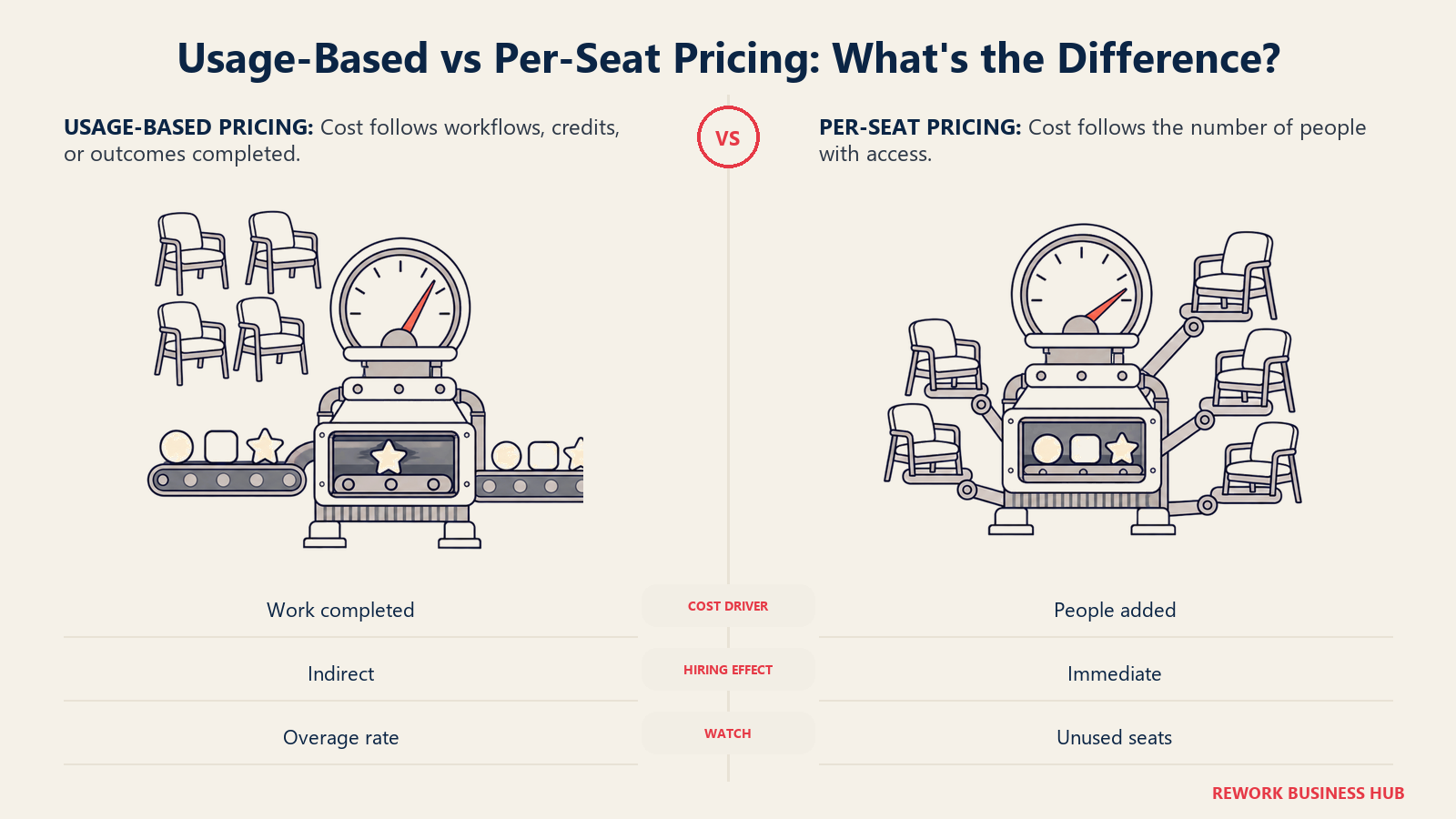
A per-seat price punishes exactly what a growing startup wants to do: hire. Usage-based and outcome-based pricing scale with the work an agent actually does instead of how many people happen to have a login, which matters more here than in most categories, because a 3-person team can genuinely out-run a 10-person team's usage.
| Pricing Shape | What It Means as You Grow | Agents That Use It Here |
|---|---|---|
| Per-seat / per-user | Cost rises every time you hire, whether usage rises with it or not | Lindy, Attio AI, Cursor Teams, Claude Code Team |
| Usage or credit-based | Cost tracks actual workflows run, not headcount | Clay, Gumloop, Zapier Agents, Chatbase, Devin (ACUs) |
| Outcome-based | You pay only when the agent actually resolves something | Fin |
| Bundled into a free core product | No separate agent line item to budget at all | Ramp's Policy Agent, Mercury Command |
Buy vs Build: The Trade-off a Technical Team Actually Faces
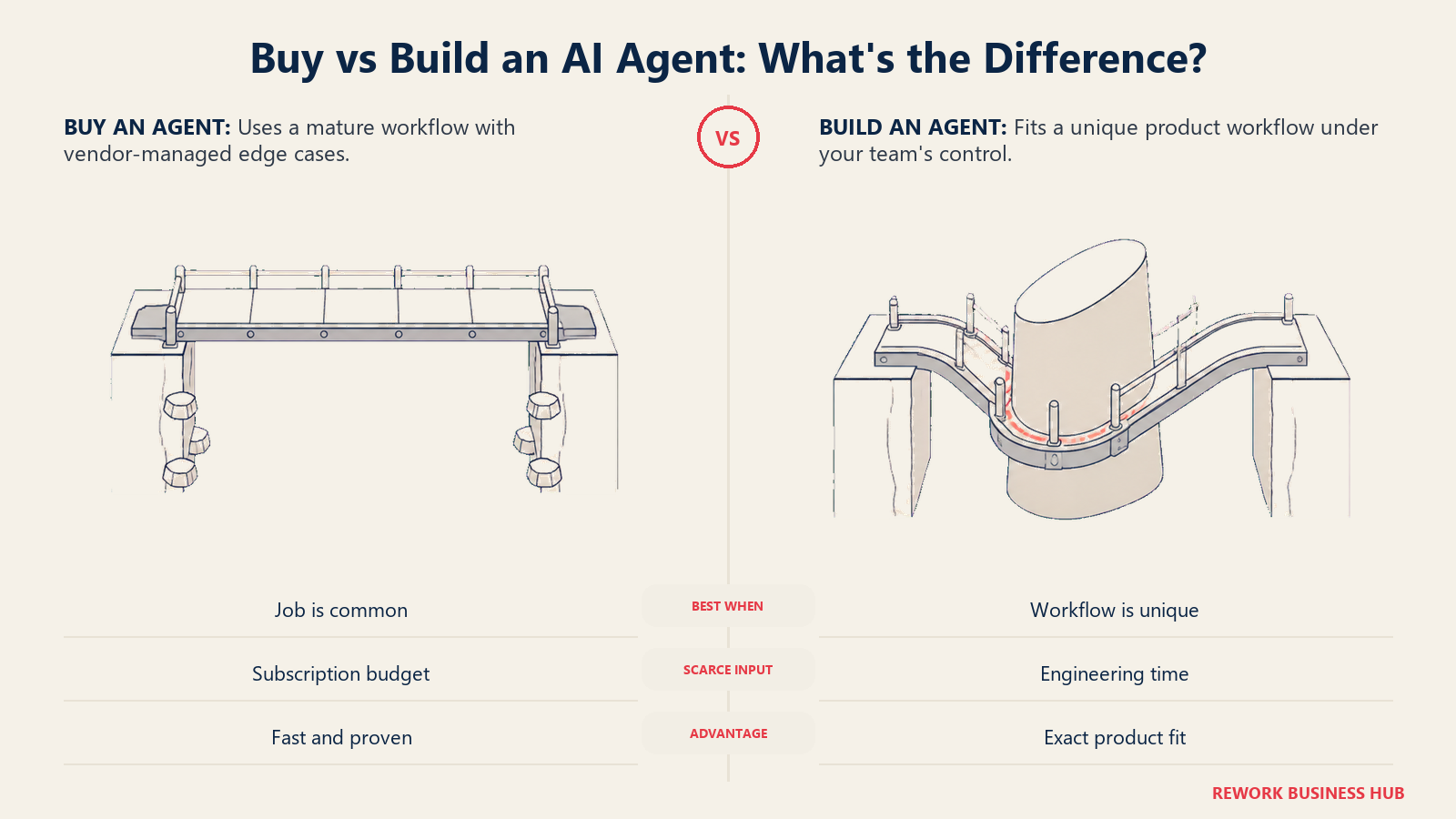
A startup with engineers can build almost anything on this list. That doesn't mean it should. When to use an AI agent has the full readiness framework; the short version for a small team is that buying wins whenever the job is common enough that a vendor has already solved the edge cases, and building only wins when the workflow is specific enough to your own product that no vendor's grounding fits it.
| Job | Buy (from this list) | When Building Wins Instead |
|---|---|---|
| Outbound research and enrichment | Clay, Apollo | Rarely, until Clay's usage cost exceeds an engineer's time at meaningful volume |
| Support deflection | Fin, Chatbase | Only if your product is novel enough that no vendor's grounding fits it |
| Writing and shipping code | Claude Code, Cursor, Devin | Never; these are the build tools your engineers use for everything else |
| Compliance evidence collection | Vanta | Almost never past 10 people; a spreadsheet doesn't survive an actual audit |
| A workflow specific to your own product | None of the above cleanly fit | Build one with Lindy, or a code framework once the logic outgrows no-code |
Sizing and Persona Table
| Tool | Ideal Team Size | Primary Buyer |
|---|---|---|
| Lindy | 1-15 employees | Founder, generalist first ops hire |
| Zapier Agents | 1-50 employees | Founder, ops lead already on Zapier |
| Gumloop | 5-50 employees | Growth marketer, RevOps, technical operator |
| Clay | 5-100 employees | RevOps, growth marketer, GTM engineer |
| Apollo | 1-50 employees | Founder, first SDR or BDR hire |
| Attio AI | 1-100 employees | Founder, first RevOps hire |
| Fin | 10-200 employees | Head of Support, founder before a support hire |
| Chatbase | 1-50 employees | Founder, developer setting up a first agent |
| Claude Code | 2-100 employees | Engineering founder, early engineering hires |
| Cursor | 2-100 employees | Engineering founder, early engineering hires |
| Devin | 10-200 employees | Engineering lead with an active ticket backlog |
| Ramp | 1-200 employees | Founder, first finance hire or controller |
| Mercury Command | 1-200 employees | Founder, whoever already manages the bank account |
| Vanta AI Agent | 15-500 employees | Founder or first security hire, right after a first enterprise deal |
1. Lindy: The Fastest First Agent When You Have No Ops Headcount at All
Lindy skips the workflow-builder metaphor entirely. Instead of wiring triggers to actions, you delegate an entire job function, inbox triage, call screening, meeting scheduling, first-pass candidate screening, to an AI "employee" that runs continuously. For a founder or two-person team with zero operations hires, that framing (hand off a job, not a task) is usually why Lindy is the first agent a pre-seed startup buys, often before it buys any GTM or support tool on this list. It also doubles as the closest thing to a recruiting agent in this guide: teams use it to screen resumes against a rubric and handle first-round scheduling long before they can justify a dedicated recruiting tool.
| What you get | What you don't |
|---|---|
| Purpose-built AI "employees" instead of assembled workflow steps | Pooled per-user credits burn fast on voice or research-heavy tasks |
| Pre-built templates cover inbox, calls, scheduling, and light recruiting ops | Complex branching logic gets awkward past a certain point |
| Delegate a whole function on day one, no workflow design required | No published startup discount, unlike several tools later in this list |
Pricing: Plus $29.99/month per user (3,000 credits). Pro $99.99/month (15,000 credits). Max $199.99/month (35,000 credits). Enterprise custom, adds HIPAA BAA, SSO, and audit logs. See lindy.ai/pricing.
Best for: A pre-seed or seed founder with no ops hire yet who needs to hand off a whole function, not assemble a workflow.
2. Zapier Agents: The Natural Second Buy Once a Workflow Needs Judgment
Zapier's agent layer sits on top of the automation platform most startups already run for something. Instead of a fixed trigger-then-action Zap, an agent reasons over a task and calls any of Zapier's 9,000+ app integrations as a tool, which matters the moment a workflow needs a judgment call ("is this lead worth routing to sales today") that a plain Zap can't make. It's a natural second buy after Lindy, not because it's more powerful, but because it extends infrastructure you're not ripping out anyway. For a deeper look at this whole category, see best no-code AI agent builders.
| What you get | What you don't |
|---|---|
| 9,000+ app integrations available as agent tools | Agent pricing runs on its own separate meter from core Zap tasks |
| Works alongside existing Zaps, no rebuild required | Non-technical builders may still need a Zapier admin for anything complex |
| Free tier is a genuine starting point, not a stripped demo | Not built for deep custom or heavily branching logic |
Pricing: Free (400 agent activities/month). Pro about $33/month billed annually (1,500 activities/month). Enterprise custom. Core Zapier billed separately: Free (100 tasks/month), Professional from $19.99/month, Team from $69/month. See the Agents tab at zapier.com/pricing.
Best for: Teams already running Zaps that need one or two decisions automated with actual judgment, not just a new trigger.
3. Gumloop: Ops and Research Automation for a Technical Operator, No Engineer Required
Gumloop is built for the work that eats a growth or ops hire's week: pulling data from many sources, enriching it, writing it somewhere useful. The canvas is no-code, but Python code blocks drop directly into any flow, so the one technical person on a five-person team can extend what a non-technical teammate started without switching tools. Unlimited seats on the Pro plan matters more here than at most vendors in this guide: a startup can put its whole team inside Gumloop without a per-seat bill growing every time it hires.
| What you get | What you don't |
|---|---|
| Unlimited seats even on the entry Pro plan | An 8% orchestration fee stacks on top of credit spend |
| Python code blocks let a technical operator extend any flow | Only 5 concurrent workflow runs on Pro |
| Company Brain feature keeps context across workflows | No self-serve tier below $37/month, only a 14-day trial |
Pricing: Pro $37/month (20,000 credits, unlimited seats and agents), plus an 8% orchestration fee on credit spend. Enterprise custom. See gumloop.com/pricing.
Best for: A startup's one technical operator automating research and data work for a whole team without waiting on engineering.
4. Clay: The Research Agent Once Apollo's Database Has Holes
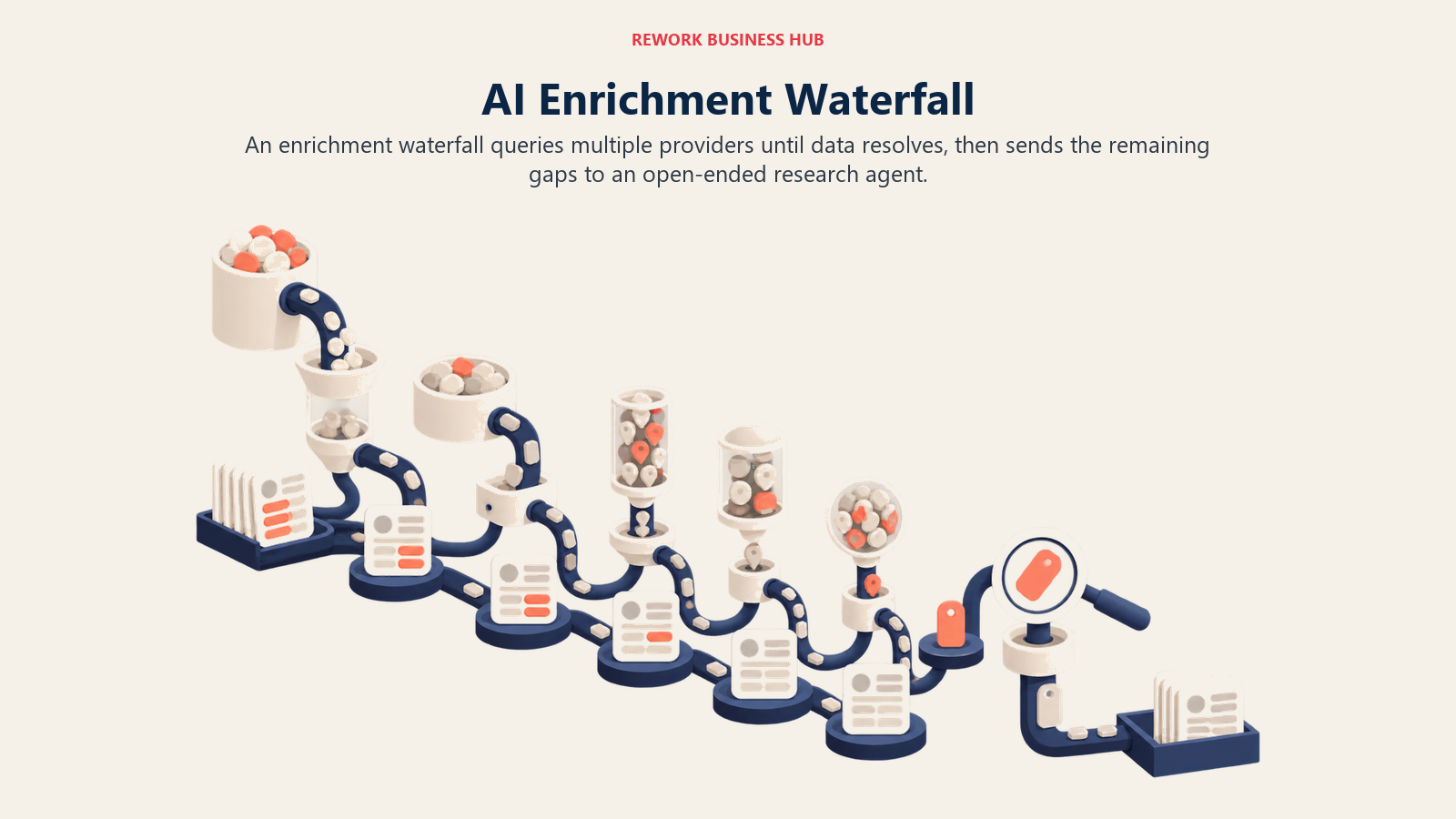
Clay isn't a database, it's a workflow canvas that queries 150+ data providers in sequence until something resolves, then hands unresolved gaps to Claygent, its own research agent, for open-ended web research. That's the pitch for a technical GTM hire who's outgrown a single vendor's coverage: build the exact enrichment waterfall your ICP needs instead of accepting whatever one database happens to have on file. The honest cost is a learning curve; a workflow built wrong burns through credits fast, which is why Clay is usually a second GTM buy, not a startup's first. For the wider outbound category, see best AI agents for lead generation.
| What you get | What you don't |
|---|---|
| 150+ data providers in one waterfall, plus Claygent for open research | Two separate credit systems (actions and data credits) to track |
| Working free tier to test before paying (500 actions, 100 data credits/month) | A genuine learning curve, closer to a platform than an app |
| Startup program offers credits toward a paid plan | Credit top-ups cost a 30% premium over the plan rate |
Pricing: Free (500 actions/month, 100 data credits/month). Launch $167/month, or $54/month billed annually (180,000 actions and 30,000 data credits per year). Growth $446/month, or $185/month annually (480,000 actions, 72,000 data credits, adds CRM auto-sync). Enterprise custom. See clay.com/pricing. Clay's startup program adds credits toward a paid plan for eligible early-stage teams (reported around $5,000; apply through an accelerator or VC partner).
Best for: A technical GTM or RevOps hire building a custom enrichment workflow no single database covers.
5. Apollo: The Default First Outbound Subscription, With a Meaningful Startup Discount
Apollo remains the most common first purchase for a startup that needs a prospect database, sequencing, and early agentic prospecting without managing three separate vendors. The free tier is genuinely usable for a first campaign. The catch is credits: mobile lookups cost roughly eight times an email credit, and active teams commonly report actual spend of $150 to $400 per user per month once add-ons are factored in, well above the $49 sticker price. Apollo for Startups is one of the more concrete discounts in this guide: half off for a full year.
| What you get | What you don't |
|---|---|
| Free tier is genuinely usable, not a stripped demo | Mobile and export credits run out fast; actual spend often lands 2 to 4x the sticker price |
| 210M+ contacts plus built-in AI agents and a dialer in one subscription | Organization tier requires a 3-user minimum |
| Apollo for Startups cuts the entry tiers in half for a year | UI gets cluttered running several sourcing workflows at once |
Pricing: Free tier available. Basic $49/user/month. Professional $79/user/month. Organization $119/user/month (3-user minimum), billed annually. See apollo.io/pricing. Apollo for Startups: 50% off Basic or Professional for one year, up to 5 seats, for companies under 20 employees without an existing subscription. See apollo.io/startups.
Best for: A startup's first outbound subscription, before the enrichment depth of Clay is worth the learning curve.
6. Attio AI: A CRM Whose Data Model Isn't Fixed, With the Agent Built In
Attio's bet is that a startup's CRM shouldn't force a rigid contact-company-deal shape onto a business model that's still changing. Its AI research agent runs inside that flexible data model rather than bolted on top: point it at a company, and it researches ICP fit, decision-makers, or funding history on the open web using existing Attio data as context, then can trigger a workflow action automatically based on what it finds. That's a meaningfully different shape than a chatbot that just answers a question and stops.
| What you get | What you don't |
|---|---|
| Research agent triggers workflow actions automatically, not just answers | Enterprise governance and workflow depth still trail HubSpot or Salesforce |
| Data model adapts to your business instead of forcing a fixed shape | Pro tier's unlimited seats sit at the higher $79-$99/month price point |
| Free tier covers 3 seats with meaningful enrichment, not a stripped demo | Newer product, less battle-tested at scale |
Pricing: Free (3 seats). Plus $44/month, or $35/month billed annually (10 seats). Pro $99/month, or $79/month billed annually (unlimited seats). Enterprise custom. See attio.com/pricing.
Best for: A startup that wants its GTM data model to stay flexible while it's still figuring out its sales motion, with the research agent living inside the CRM itself.
7. Fin: Deflect Support Before You Hire a Support Team, Nearly Free in Year One
Fin resolves support conversations using a startup's actual product documentation and account data, not a script of canned replies, which is the difference that matters once a founder or the first generalist hire can't keep up with a growing inbox. Pricing is outcome-based: you pay only when it actually resolves something, hands off with full context, or disqualifies a request, not a flat fee for a tool that might sit idle. The detail that changes the math for an early-stage team specifically: Intercom's Early Stage program bundles a full year of Fin in for free. For the wider support category, see best AI agents for live chat.
| What you get | What you don't |
|---|---|
| Resolves from live product data, not FAQ keyword matching | Outcome pricing gets expensive fast once volume grows |
| Outcome-based pricing means you pay for results, not idle seats | Full value requires committing to Intercom's helpdesk underneath it |
| Early Stage program includes a full year of Fin at no cost | Salesforce's pending acquisition of Intercom adds roadmap uncertainty |
Pricing: $0.99 per resolution, procedure handoff, or disqualification; $9.99 per completed qualification outcome; a 50-outcome monthly minimum outside Intercom's own helpdesk. Intercom seats run from about $29/month per seat on the annual Essential plan. 14-day trial, unlimited outcomes, no credit card required. See fin.ai/pricing. Intercom's Early Stage program offers 93% off Intercom plus a full year of Fin free for qualifying startups.
Best for: A startup fielding meaningful support volume before it can justify a first support hire.
8. Chatbase: A Custom-Trained Support Agent Without an Engineer, Genuine Tool-Calling From $120/Month
Chatbase's pitch is speed: point it at a website, docs, or uploaded files, and it's answering from that content within minutes, no engineer required. The honest caveat belongs up front: the Free and Hobby tiers are genuinely just question-answering. Actual agentic behavior, the kind that looks something up in Stripe or Zendesk or triggers a workflow rather than describing one, needs the Standard tier and up.
| What you get | What you don't |
|---|---|
| Live and answering from your own content within minutes | Free and Hobby tiers are Q&A only, not yet agentic |
| Genuine tool-calling and integrations (Stripe, Zendesk, Salesforce, Shopify) from Standard | Jump from Hobby to Standard roughly quadruples the price |
| Unlimited agents possible via add-on, not locked to one bot | Smaller footprint than Fin for complex, high-volume support |
Pricing: Free ($0, 50 message credits, 1 agent). Hobby $32/month (700 credits, 2 members, Q&A only). Standard $120/month (4,000 credits, 3 members, unlocks API access and integrations). Pro $400/month (15,000 credits, 5 members). Enterprise custom. See chatbase.co/pricing.
Best for: A startup that wants a custom-trained agent live today and is willing to commit to Standard once it needs to take actions, not just answer questions.
9. Claude Code: The Terminal-Native Agent for a Startup That Lives There Already
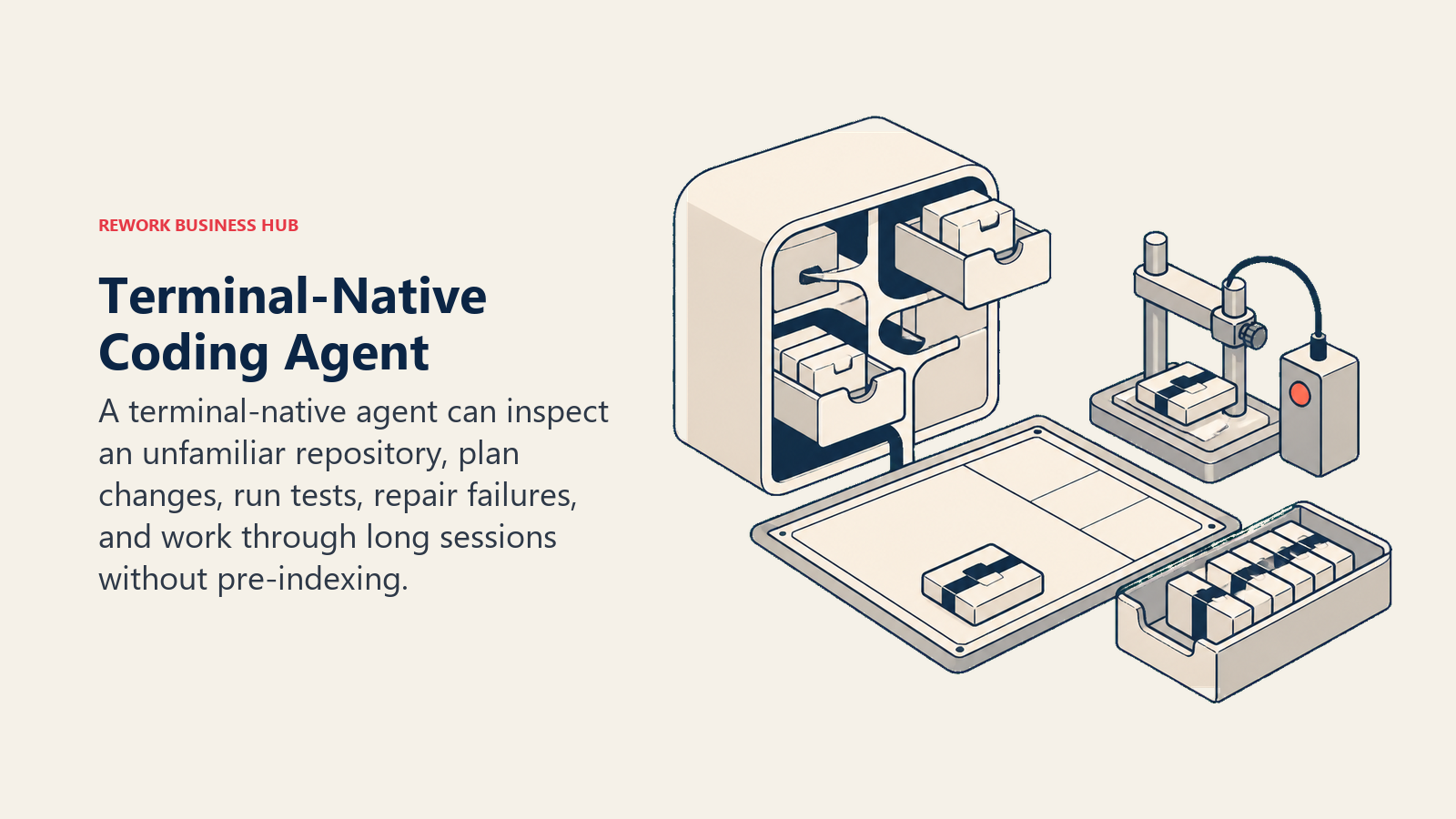
Claude Code reads a repository through agentic search instead of a pre-built index, so it works on a codebase it has never seen before, useful for a startup moving fast enough that yesterday's index would already be stale. Plan mode lays out an approach before touching a file, and it runs long, mostly unattended sessions: writing code, running tests, fixing what breaks. Anthropic's own startup program is worth checking before you buy anything else on this list: free API credits and priority rate limits for venture-backed companies founded within the last four years. For the wider coding-agent category, see best AI coding agents.
| What you get | What you don't |
|---|---|
| Deep repo awareness with no indexing step required | No fully async, walk-away cloud mode built in, unlike Devin |
| Plan mode and permission prompts keep a founder in control | Usage shares the same budget as regular Claude chat use on lower tiers |
| Anthropic's startup program can offset actual usage cost early on | Requires comfort with a CLI-first workflow |
Pricing: Pro $17/month billed annually, or $20/month billed monthly. Max from $100/month (5x usage), with a higher 20x tier above. Team $20 to $25/seat/month, with a $100/seat/month premium-seat option. Enterprise custom. See claude.com/pricing. Anthropic's startup program offers free API credits and priority rate limits to venture-backed startups founded within the last four years, applied through the Claude Console; the program page doesn't publish exact tier amounts, though third-party guides commonly report figures up to $100,000 for startups referred by a top-tier VC partner (reported). See claude.com/programs/startups.
Best for: An engineering-heavy startup already living in the terminal that wants the deepest repo awareness for long sessions.
10. Cursor: The Most Polished Supervised Agent for a Team That Wants to Stay in an IDE
Cursor's agent mode is still the benchmark other IDE agents get compared against: describe a change in plain language, and it plans across multiple files, edits them, runs terminal commands with your approval, and shows a diff before anything lands. Cloud background agents push further, letting you kick off a task, keep working elsewhere, and come back to an opened pull request. For a small team that would rather stay inside an editor than drop into a terminal, that's the practical difference from Claude Code.
| What you get | What you don't |
|---|---|
| Most mature supervised multi-file agent experience in an IDE | Full functionality means leaving your existing editor for Cursor's fork |
| Cloud background agents add a lighter-weight async mode | Every paid tier is a dollar-denominated credit pool that can run past budget |
| Free Hobby tier plus a 14-day Pro trial to test before paying | Promo codes and referral discounts were discontinued in July 2026 |
Pricing: Hobby free (limited agent requests). Pro $20/month. Pro+ $60/month (3x Pro's limits). Ultra $200/month (20x). Teams Standard $40/user/month, with a 5x Premium tier above. Enterprise custom. See cursor.com/pricing. Cursor for Startups offers discounted or free Pro access to eligible early-stage teams; apply directly for current terms.
Best for: A small team that wants the most polished supervised coding agent without leaving a familiar editor.
11. Devin: Assign a Ticket, Get a Pull Request, Without Babysitting the Session
Devin is the clearest example of the fully async tier: hand it a task through Slack, Linear, or its own web app, and it spins up a sandboxed VM, plans the work, writes and tests code, and opens a pull request while you do something else entirely. That's a genuinely different fit than Claude Code or Cursor for a startup: less useful as a founder's own daily driver, more useful the moment there's a backlog of well-scoped tickets and not enough engineering hours to work them all directly.
| What you get | What you don't |
|---|---|
| The clearest fully autonomous, assign-and-forget workflow here | Agent Compute Unit overage can turn a $20 plan into a much larger actual bill |
| DeepWiki and Devin Search help it navigate a codebase it doesn't know yet | Best results assume well-scoped tickets, not vague requests |
| Devin Review adds a second-agent pass before a human looks | Own model trails frontier leaders by a few points on hard benchmarks |
Pricing: Free $0 (limited access). Pro $20/month. Max $200/month (both single-seat). Teams from $80/month plus $40/month per full seat. Enterprise custom, still billed in Agent Compute Units. See Cognition's pricing announcement, April 14, 2026.
Best for: A startup with an active ticket backlog and not enough engineering hours, wanting a finished pull request rather than a supervised session.
12. Ramp: The Finance Agent Already Bundled Into a Free Corporate Card
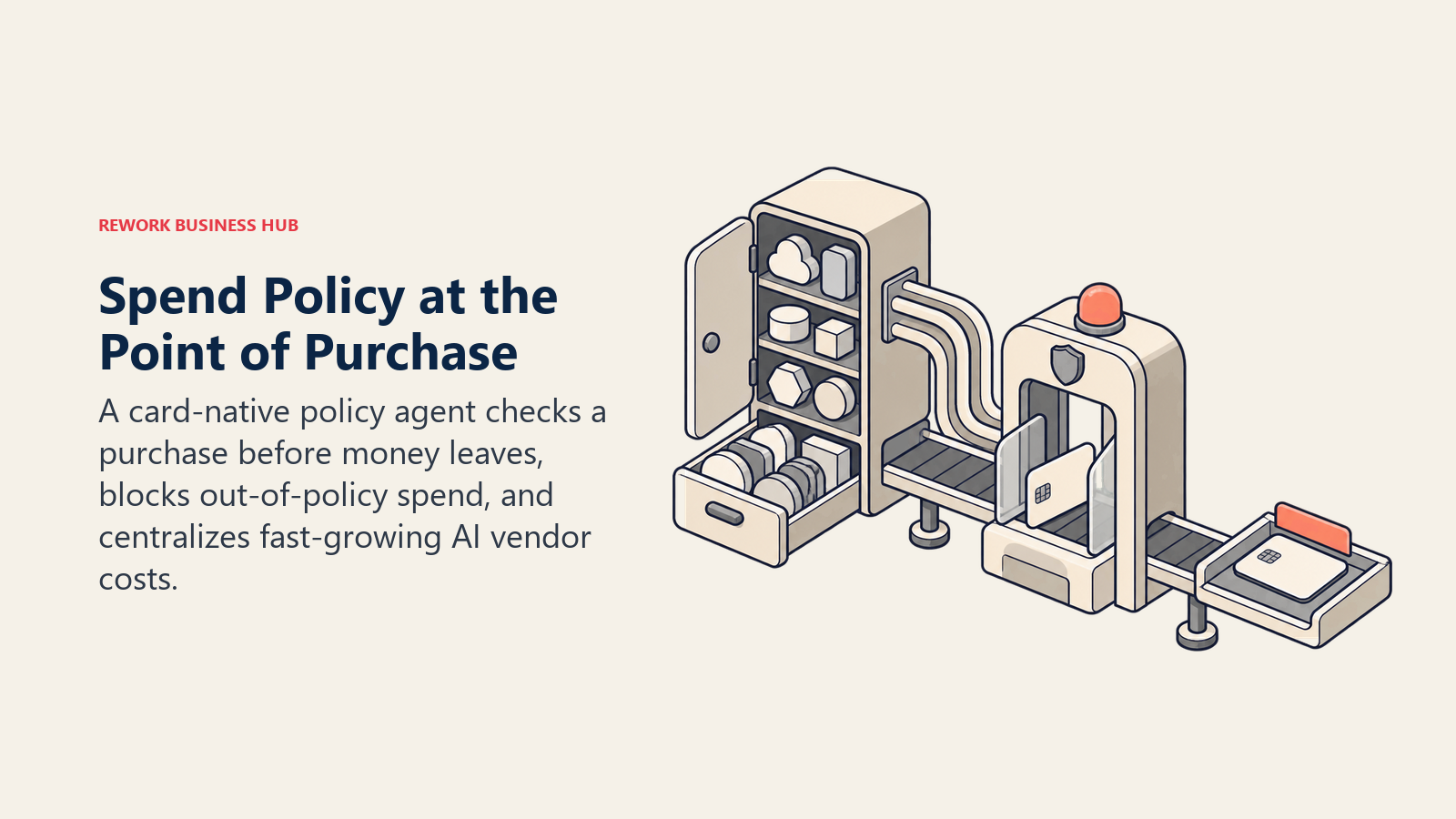
Ramp's core product is corporate cards and spend management, and its AI Policy Agent sits directly on the card itself: it reviews a purchase against written policy and can block it in real time, not surface the violation in a review queue three weeks later. Because the core platform, including accounting sync, is free, Ramp is usually the first finance agent a startup has without ever consciously deciding to "buy an AI agent" at all. The 2026 addition worth knowing: AI Token Spend Intelligence, which rolls up what a startup is actually spending on Anthropic, OpenAI, Cursor, and Gemini into one dashboard, useful given how fast that specific line item grows once engineering picks up a coding agent from this same list. For the wider finance-agent category, see best AI agents for finance teams.
| What you get | What you don't |
|---|---|
| Free core tier includes genuine accounting sync, not a stripped trial | Deeper agent enforcement (the Policy Agent itself) needs the paid Plus tier |
| Policy Agent blocks out-of-policy spend at the point of purchase | Platform fee on top of the per-user price complicates a clean comparison |
| Startup and VC-partnership program adds a rewards marketplace | Best value assumes actual spend routes through Ramp cards, not just software |
Pricing: Free (core spend management and accounting sync). Plus $15/user/month plus a platform fee. Enterprise custom. See ramp.com. Ramp for Startups and its VC-partnership program add a sign-on bonus, scaled pricing, and a rewards marketplace for pre-seed through Series B companies. See ramp.com/vc-partnerships.
Best for: A startup that wants spend policy enforced automatically the moment it issues its first corporate cards.
13. Mercury Command: The Agent Already Sitting Inside Your Bank Account
If a startup already banks with Mercury, which a large share of venture-backed companies do, Command is arguably the easiest "buy" decision in this entire guide, because there's nothing new to buy. It's a natural-language agent built into the free Mercury account: send a payment, issue a virtual card with a spending limit, bulk-categorize transactions, set an auto-transfer rule, or draft an invoice, all from a plain-English instruction instead of clicking through a banking UI. Mercury also now issues virtual cards specifically scoped for AI agents to make autonomous purchases, a genuinely new category of spend control.
| What you get | What you don't |
|---|---|
| Runs on Mercury's free account, no separate agent subscription | Not a standalone product; only useful if you already bank with Mercury |
| Executes tangible financial actions (payments, invoices, transfers), not just chat | No published detail on where Command's autonomy ends and approval begins |
| New AI agent cards extend spend control to autonomous purchasing | Deeper invoicing and API features still sit behind the paid Plus and Pro tiers |
Pricing: Mercury's core banking account is free, and Command runs on top of it at no separate cost. Mercury Plus $29.90/month adds ACH debit invoicing, recurring invoices, and an invoicing API. Mercury Pro $299/month adds a dedicated relationship manager and NetSuite integration. See mercury.com/pricing and mercury.com/command.
Best for: A startup that already banks with Mercury and wants finance actions handled in plain English instead of a banking UI.
14. Vanta AI Agent: The Series A Agent, Bought the Week a Security Questionnaire Lands
Vanta's Agentic Trust Platform automates the parts of a compliance program that eat a founder's week the first time an enterprise buyer sends a security questionnaire: drafting policies, verifying evidence with specific feedback on what's missing, suggesting questionnaire answers from a knowledge base at a claimed 95% acceptance rate, and monitoring vendor risk with real-time alerts. Today's agent recommends and a human reviews and submits, not fully unattended execution; Vanta is rolling out more autonomous handling (a dedicated Agent for Risk shipped in June 2026) through the rest of the year. This is usually not a pre-seed purchase. It becomes one the week a deal is blocked on SOC 2.
| What you get | What you don't |
|---|---|
| Automates policy drafting, evidence checks, and questionnaire answers in one agent | No published self-serve price; every tier is quote-gated |
| Real-time vendor risk monitoring and policy-to-practice comparison | Reported real-world cost runs well above most other tools in this guide |
| Agentic Trust Platform is expanding toward more autonomous execution through 2026 | Fully autonomous execution is still rolling out, not complete today |
Pricing: Not published; Essentials, Plus, Professional, and Enterprise tiers all require a custom quote. Third-party purchase-tracking data (Vendr, 373 tracked deals) reports a median of $20,000 per year, ranging from about $7,500 to $57,200 depending on framework count and company size (reported). See vanta.com/pricing.
Best for: A startup whose first enterprise deal is blocked on a security questionnaire it doesn't have staff to answer manually.
Switching Cost: What Happens When You Outgrow the First Pick
| If you outgrow... | Switching Cost | What Actually Carries Over |
|---|---|---|
| Lindy or Zapier Agents | High: no-code workflows don't export to code | The logic has to be rebuilt from scratch in whatever comes next |
| Clay | Low to moderate: it's a research layer, not a system of record | Data already synced to your CRM stays there even if you stop paying |
| Chatbase (entry tiers) | Low: a knowledge base re-points to a new tool easily | Your actual support content, not the bot configuration itself |
| Claude Code or Cursor | Low: both work against the same codebase and git history | Nothing proprietary is locked in; switch any week you want |
| Vanta | High once a first audit is attached to it | The completed audit and framework mapping, not the tooling |
How to Choose: Decision Framework
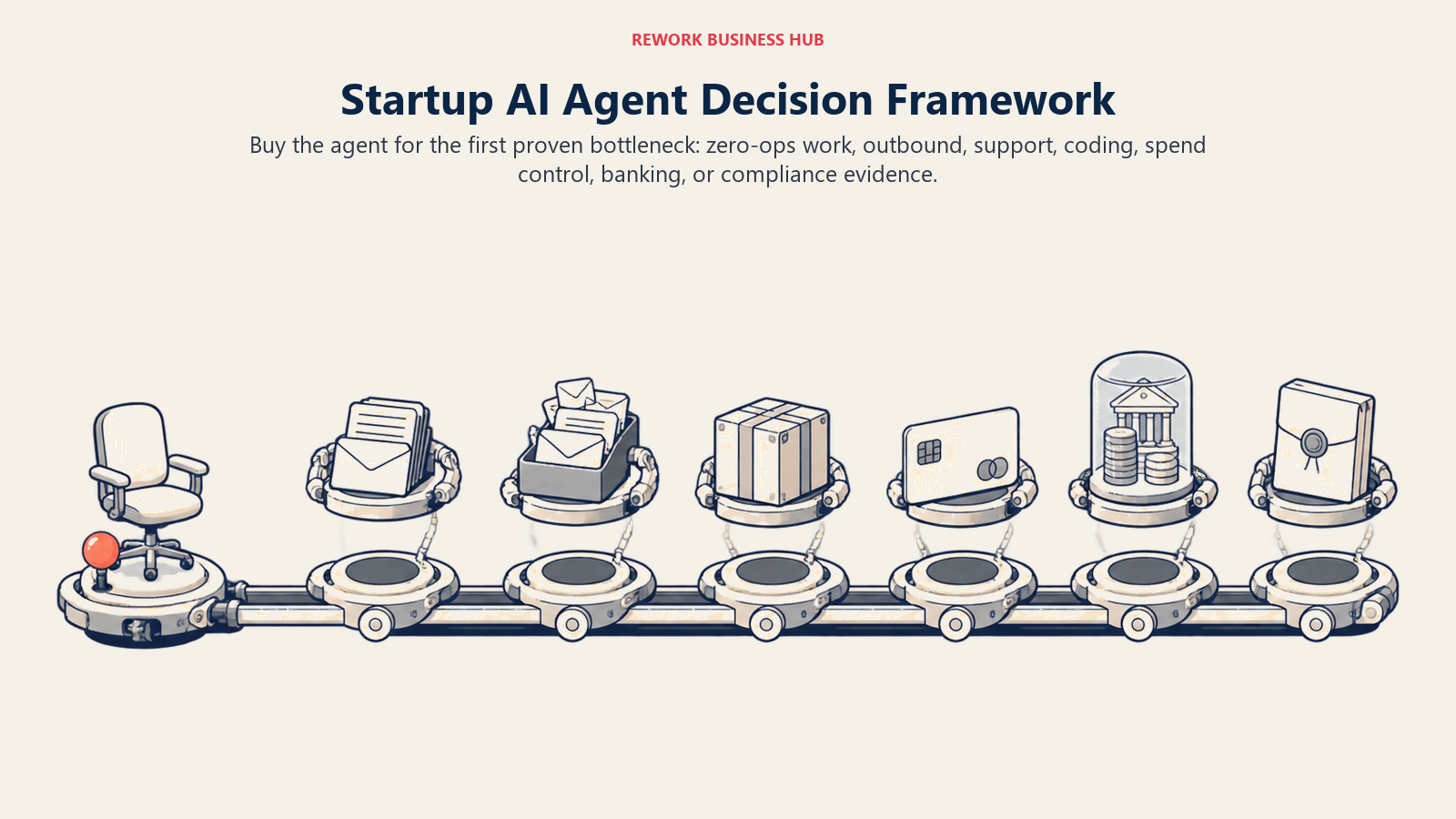
Sequence AI agents around the operating bottleneck that appears at each stage of the company. This map keeps support, outbound, coding, finance, banking, compliance, and general automation tied to the moment each job becomes real.
| If you need... | Pick... | Why |
|---|---|---|
| To delegate a whole function with zero ops headcount | Lindy | AI "employee" framing beats assembling a workflow yourself |
| To extend automation you already run | Zapier Agents | Sits on 9,000+ connectors you likely already use |
| Ops and research automation with a code escape hatch | Gumloop | Python blocks inside a no-code canvas for a technical operator |
| Outbound research depth beyond a static database | Clay | A waterfall across 150+ providers plus a research agent |
| One subscription for prospecting database plus sequencing | Apollo | Broadest all-in-one coverage, plus a meaningful startup discount |
| A CRM whose data model isn't fixed, with a research agent inside it | Attio AI | Agent lives in the system of record, not bolted on |
| To deflect support before you hire a support team | Fin | Grounds answers in live product data; year one can be nearly free |
| A custom-trained support agent without engineers | Chatbase | Genuine tool-calling from the $120/mo Standard tier |
| The deepest terminal-native coding agent | Claude Code | Reads a repo with no indexing step; long unattended sessions |
| The most polished supervised agent inside an IDE | Cursor | Multi-file edits with a diff before anything lands |
| To hand off a well-scoped ticket entirely | Devin | Fully async; opens a PR while you do something else |
| Spend control tied to the corporate card you already use | Ramp | Free core tier, policy enforcement at the point of spend |
| The agent already inside your bank account | Mercury Command | No new vendor, no new bill, if you already bank with Mercury |
| To pass a first SOC 2 questionnaire without a compliance hire | Vanta AI Agent | Evidence collection and questionnaire drafting in one agent |
What to Do Next
Don't buy category by category. Buy by constraint. If you're pre-seed, install Lindy or Zapier Agents this week and delegate whatever is eating the most founder time, before you evaluate anything else on this list. If you're at seed with an active GTM motion, add Apollo or Clay next, and Fin or Chatbase the moment support tickets stop being a once-a-day job. And if you're heading into Series A conversations, get Vanta's evidence collection running before a security questionnaire is due, not after one arrives. Check the startup programs table above before you pay list price for any of them; a few of those discounts are large enough to change which one you buy first.

Principal Product Marketing Strategist
On this page
- What Changed in 2026 for Startups
- Key Facts
- Quick Comparison Table
- The Honest Sequencing Question: What to Buy First
- Startup Programs, Credits, and Discounts Worth Checking First
- Usage-Based vs Per-Seat: Which Pricing Survives Hiring
- Buy vs Build: The Trade-off a Technical Team Actually Faces
- Sizing and Persona Table
- 1. Lindy: The Fastest First Agent When You Have No Ops Headcount at All
- 2. Zapier Agents: The Natural Second Buy Once a Workflow Needs Judgment
- 3. Gumloop: Ops and Research Automation for a Technical Operator, No Engineer Required
- 4. Clay: The Research Agent Once Apollo's Database Has Holes
- 5. Apollo: The Default First Outbound Subscription, With a Meaningful Startup Discount
- 6. Attio AI: A CRM Whose Data Model Isn't Fixed, With the Agent Built In
- 7. Fin: Deflect Support Before You Hire a Support Team, Nearly Free in Year One
- 8. Chatbase: A Custom-Trained Support Agent Without an Engineer, Genuine Tool-Calling From $120/Month
- 9. Claude Code: The Terminal-Native Agent for a Startup That Lives There Already
- 10. Cursor: The Most Polished Supervised Agent for a Team That Wants to Stay in an IDE
- 11. Devin: Assign a Ticket, Get a Pull Request, Without Babysitting the Session
- 12. Ramp: The Finance Agent Already Bundled Into a Free Corporate Card
- 13. Mercury Command: The Agent Already Sitting Inside Your Bank Account
- 14. Vanta AI Agent: The Series A Agent, Bought the Week a Security Questionnaire Lands
- Switching Cost: What Happens When You Outgrow the First Pick
- How to Choose: Decision Framework
- What to Do Next