More in
Sales Tech News
AI Sales Teams Grow 2.6x Faster. Gartner Says Buyers Still Want a Rep
Jun 6, 2026
Aircall Bought Piper AI to Turn Every Sales Call Into Pipeline
Jun 6, 2026
Salesforce Just Handed Marketers AI Agents That Build Sales Pipeline
Jun 6, 2026
Revenue Intelligence Showed You the Risk. Revenue Execution Acts on It.
Jun 5, 2026
Meta Put an AI Agent in WhatsApp That Closes Sales for Any Business
Jun 4, 2026
VCs Poured Over $200M Into AI Sales Startups: The GTM Stack Signal
Jun 4, 2026
Are AI SDRs Worth It in 2026? The Data Says Build a Hybrid Team
Jun 3, 2026
GTM Engineering in 2026: The Sales Hire That Replaces Three Roles
Jun 3, 2026
ZoomInfo Feeds Verified Data to Your AI Sales Agents: The Single-Vendor Tradeoff
Jun 3, 2026
Salesforce Summer '26 Drops Multi-Agent Orchestration June 15. Here's the Sales Ops Audit Before Your Agents Start Handing Off
Jun 2, 2026
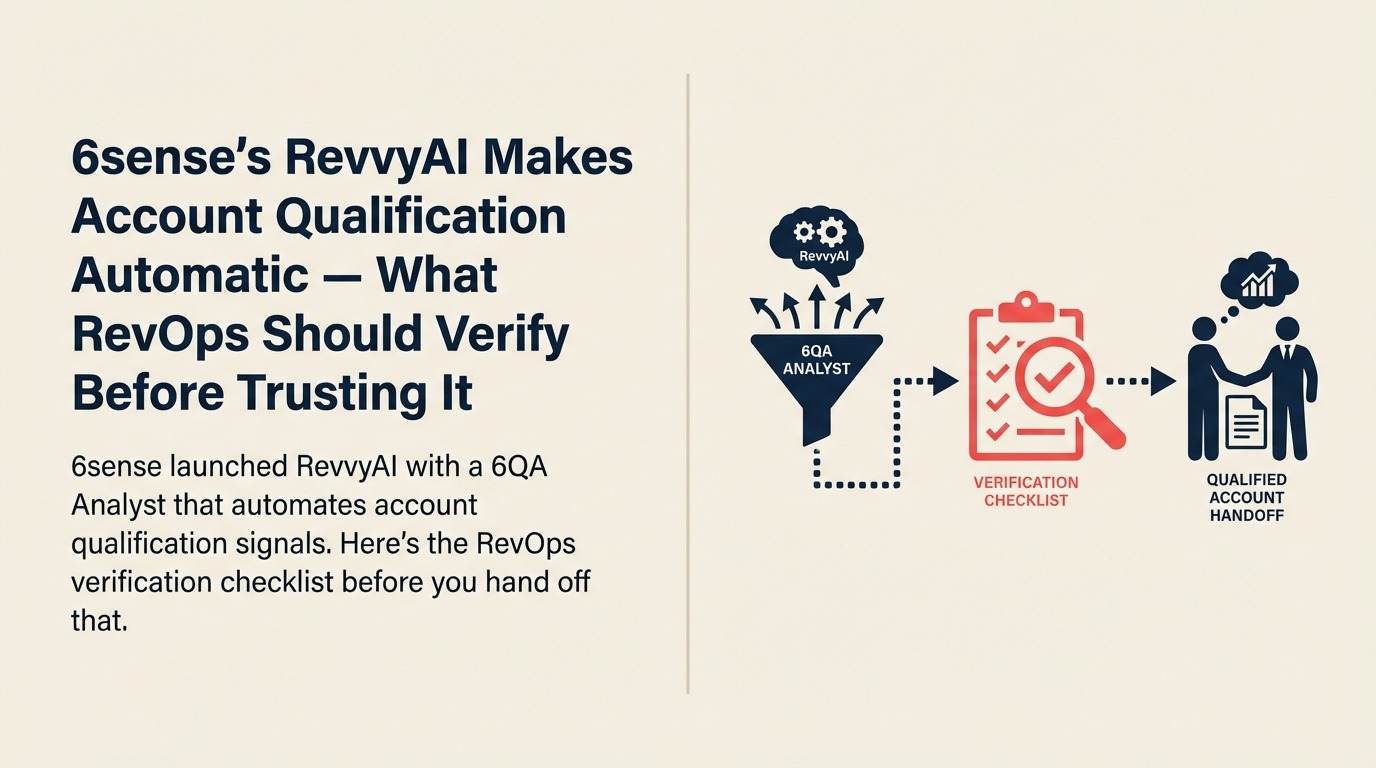
6sense's RevvyAI Makes Account Qualification Automatic: What RevOps Should Verify Before Trusting It
Turn this article into takeaways for your work.


Each assistant summarizes the article only for you and suggests best practices for your work.
Account qualification has always been one of RevOps' most expensive manual workflows. Someone has to define what a good account looks like, someone has to build the scoring model, someone has to maintain it when the ICP shifts, and someone has to get sales to trust the output enough to actually prioritize it. That's four distinct problems. And 6sense just announced it's trying to solve all of them with a single AI release.
The question isn't whether the ambition is real. It's whether RevOps should trust the output.
What 6sense Actually Launched
According to the 6sense newsroom announcement, RevvyAI was introduced in November 2025 at the company's Breakthrough conference. 6sense described it as the most significant product update in the company's history, which is the kind of framing worth stress-testing before acting on.
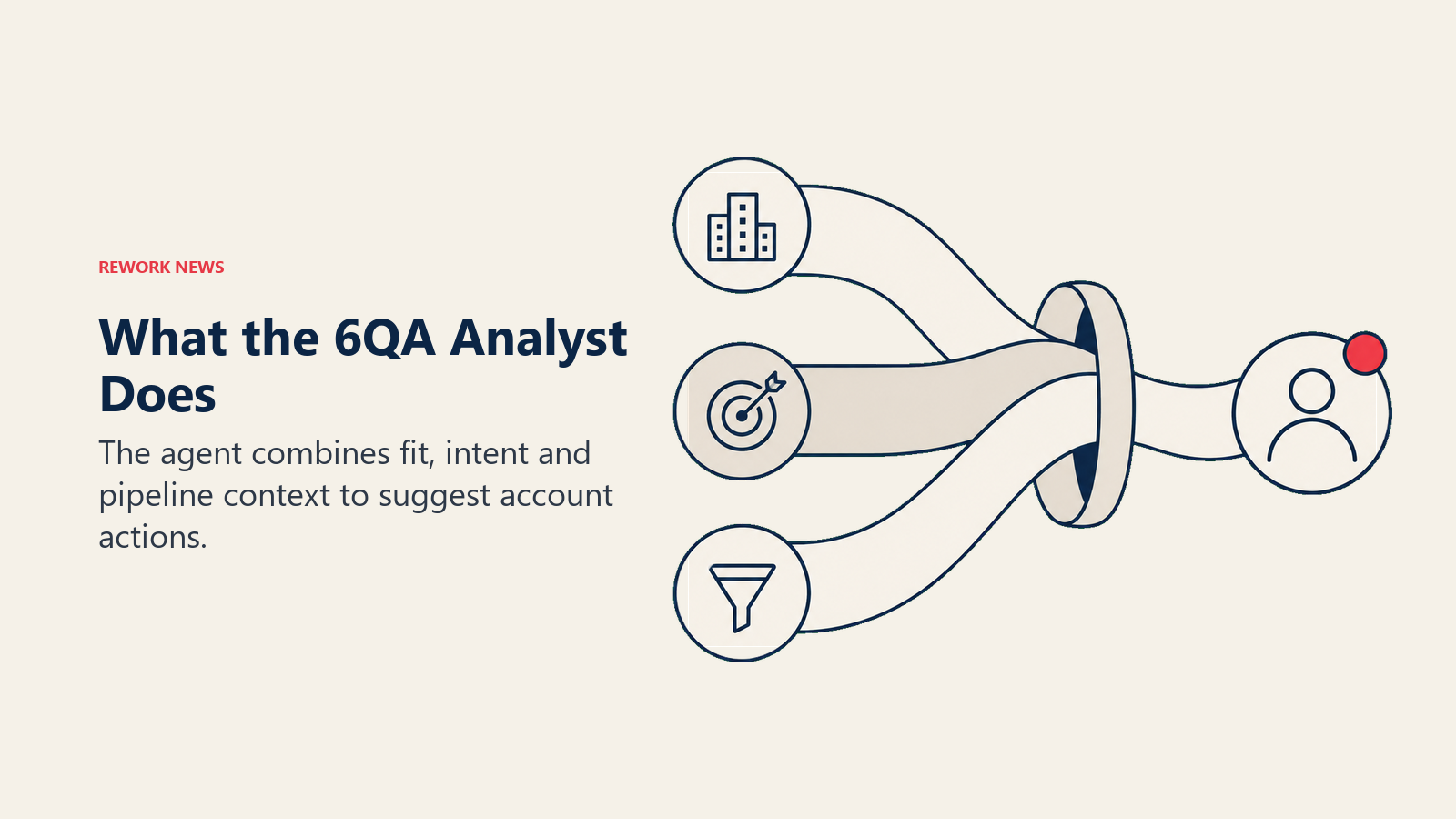
The core components are:
The 6QA Analyst is an AI agent that evaluates account qualification across signals, pipeline activity, and broader tech stack data to surface next-best account actions. In practical terms, it's doing the job that a RevOps analyst historically did manually: cross-referencing intent signals, firmographic fit, engagement history, and pipeline context to determine which accounts the SDR team should prioritize this week.
Persona-based Agentic Workspaces let different roles within a revenue team configure their own purpose-built views. An SDR workspace looks different from an AE workspace, which looks different from a CS renewal workspace. Each workspace surfaces the agents, data, and tools most relevant to that role's workflow, rather than everyone navigating the same generic dashboard.
Conversational Interface allows non-technical users to set up signal configurations, launch campaigns, build audience segments, and generate reports through natural language. The intent is to remove the RevOps dependency from routine 6sense platform administration. Instead of a RevOps analyst building every audience and every signal configuration, a sales manager could theoretically do it themselves by describing what they want.
Sales Intelligence Enhancements add AI-generated summaries and contextual recommendations across contacts, opportunities, and segments, making the underlying data more actionable for reps who don't want to read a 6sense dashboard before every call.
Why the 6QA Analyst Is the Part RevOps Should Focus On
Most of the RevvyAI announcement is about user experience and workflow efficiency. But the 6QA Analyst is something structurally different: it's an attempt to automate a judgment call that RevOps has always owned.
Account qualification is where marketing's definition of "good account" meets sales' definition of "ready to buy." Getting that handoff wrong (because your ICP definition is stale, your intent signals are noisy, or your scoring model doesn't reflect actual closed-won patterns) costs your SDR team significant time and your pipeline significant accuracy.
An AI-driven 6QA Analyst makes that judgment call faster and at scale. The upside is obvious. The risk is that the model's definition of a qualified account drifts away from your actual ICP without anyone noticing until pipeline quality drops.
A Verification Framework for RevOps
Before you hand account qualification decisions to any AI system, including the 6QA Analyst, run through these checks.
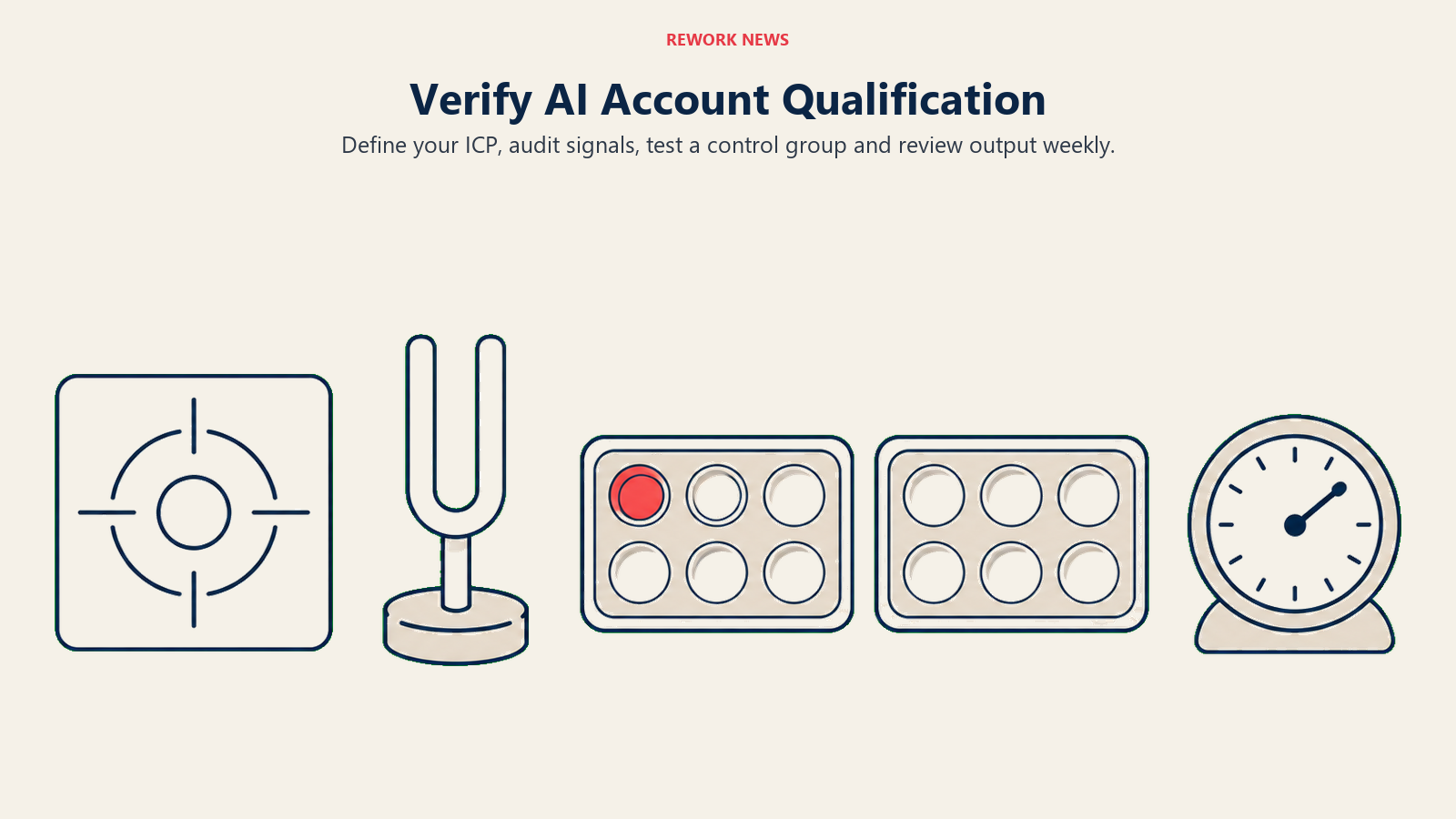
1. Define what "qualified" means for your business, explicitly. Before any AI model can qualify accounts accurately, you need a documented ICP definition that's less than 12 months old and reflects your most recent cohort of closed-won deals. If your ICP documentation was written when you had a different pricing model or a different primary buyer, the AI will optimize for the wrong target. This isn't a 6sense problem. It's a prerequisite for any signal-based scoring.
2. Audit your current intent signal quality. 6sense's qualification signals are only as good as the underlying data inputs. Pull a sample of 20 accounts the platform has flagged as high-intent over the last 90 days. How many converted to pipeline? How many were touched by an SDR and went nowhere? If the signal-to-pipeline conversion rate is below your manual qualification rate, the model needs calibration before you trust it for automated prioritization.
3. Establish a control group before going all-in. When you activate the 6QA Analyst for SDR prioritization, keep one cohort of accounts on your existing manual qualification workflow for 60 days. Compare pipeline creation rates, deal velocity, and stage progression between the AI-prioritized set and the manually prioritized set. That comparison is the only honest evaluation.
4. Set a review cadence for the model's output. AI qualification models drift. Your ICP shifts. Market conditions change. Assign someone (a RevOps analyst or a senior SDR lead) to review 6QA Analyst output weekly for the first quarter. Look for systematic patterns: are there account types it's consistently over-ranking that go nowhere? Are there segments it's missing that your best reps are closing?
5. Evaluate the conversational interface risk. RevvyAI's natural language configuration capability reduces the RevOps gatekeeping role for routine platform tasks. That's genuinely useful for reducing request queue depth. But it also means that a sales manager who doesn't fully understand the implications of an audience configuration change could push an incorrect filter live without RevOps review. Build approval workflows for anything that affects SDR prioritization logic before opening the conversational interface broadly.
For a deeper look at how to build governance structures around AI-driven GTM signals, the RevOps insights library has frameworks that apply directly to this kind of signal automation decision.
The Consolidation Angle
6sense is also making an implicit consolidation argument with RevvyAI. If the 6QA Analyst handles account qualification and the persona workspaces handle role-based dashboards, 6sense starts to compete with the lightweight RevOps orchestration tools teams have assembled from Notion, Salesforce reports, and custom dashboards.
For RevOps leaders who've built their workflow visibility infrastructure outside of 6sense, the question isn't whether to replace it all immediately. It's whether the 6sense-native versions of these capabilities are good enough to simplify your stack over time.
The Forrester recognition (6sense was named a Leader in the Forrester Wave for Revenue Marketing Platforms in Q1 2026) adds analyst credibility to the platform's broader positioning. But analyst quadrant placement doesn't tell you whether the 6QA Analyst's qualification logic matches your specific ICP. Only your own data does.
For context on how AI-native pipeline qualification fits into a broader sales process redesign, the qualification frameworks guide covers the signal-to-action flow in more practical terms.
What to Do This Week
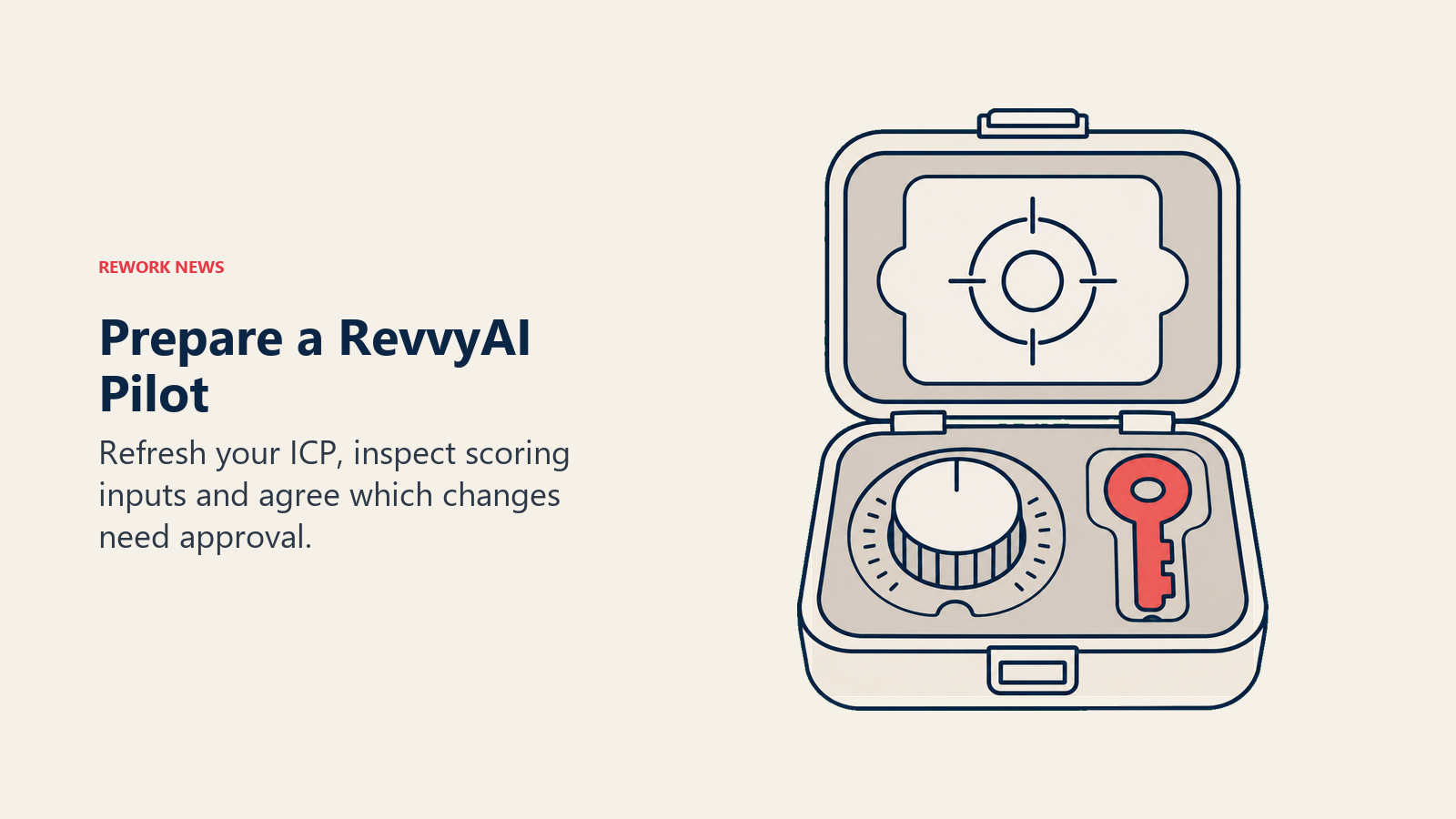
Prepare the account data, ICP definition and approval rules before running a RevvyAI pilot.
- Pull your 6sense dashboard and check what data inputs currently drive your highest-scoring accounts. Understanding the existing signal weighting before RevvyAI is the baseline you'll need to evaluate whether the 6QA Analyst changes it for better or worse.
- Schedule a RevvyAI demo focused specifically on the 6QA Analyst, not the full platform tour. Ask to see a live account qualification example using your own account data if possible. The closer to your real ICP, the better the evaluation.
- Draft an ICP refresher document before activating the 6QA Analyst. It doesn't need to be long. Five firmographic criteria and three behavioral signals that characterize your best closed-won accounts in the last 90 days is enough. Hand it to your 6sense CSM as configuration context.
- Flag the conversational interface for governance discussion with your ops team. Decide now, before rollout, which configuration actions require RevOps approval and which ones can be self-served by sales managers.
RevvyAI is a genuine platform push, not a marketing repackage. The 6QA Analyst addresses a real RevOps pain point. But "automatic account qualification" is only as trustworthy as the verification work you do before and after you turn it on. The teams that will get the most out of this release are the ones who treat AI qualification as a system they own and maintain, not a black box they hand keys to.
Learn More
- AI Agents Are Taking Over Revenue Workflows: Why automatic account qualification needs the same governance as any other AI agent in your stack
- Qualification Frameworks: The ICP documentation that drives accurate AI account scoring
- RevOps Maturity Model: Where AI-powered qualification fits in a mature RevOps function
- AI Lead Scoring and the EU AI Act: Compliance considerations for AI tools that score or rank individual accounts
Source: 6sense Introduces RevvyAI, Turning the Platform Into an AI-Powered GTM Command Center | 6sense Newsroom, November 2025
