More in
AI Jobs & Skills News
Finance Keeps Shedding Jobs as the Economy Hires: The White-Collar Warning
Jun 6, 2026
AI Skills Just Became the Hardest Hire in the World. You Won't Recruit Your Way Out
Jun 6, 2026
Is AI Actually Killing Jobs? May's Hiring Numbers Say Not So Fast
Jun 5, 2026
You Put Your AI Agents on the Org Chart. Accountability Quietly Dropped
Jun 5, 2026
Everyone Blames AI for the Gen Z Job Crisis. The Fed Points at Remote Work
Jun 5, 2026 · Currently reading
AI's Net Job Drag Fell to 11,000 a Month. Construction Is Hiding the Truth
Jun 4, 2026
AI Blamed for a Record 40% of May's US Layoffs, the Third Month Running
Jun 4, 2026
Four Futures for Jobs by 2030: The Mid-2026 Checkpoint for CEOs
Jun 3, 2026
Can Federal AI Apprenticeships Fix Your Skills Gap Cheaper Than Hiring?
Jun 3, 2026
AI Engineer Pay Split Into Two Markets. Only the Top Is a Bubble
Jun 3, 2026
Everyone Blames AI for the Gen Z Job Crisis. The Fed Points at Remote Work
Turn this article into takeaways for your work.


Each assistant summarizes the article only for you and suggests best practices for your work.
For two years the story has been simple. AI ate the entry-level job. Recruiters stopped posting junior roles, the bots took over the grunt work, and the class of 2026 got locked out. It is a clean narrative. It might also be wrong.
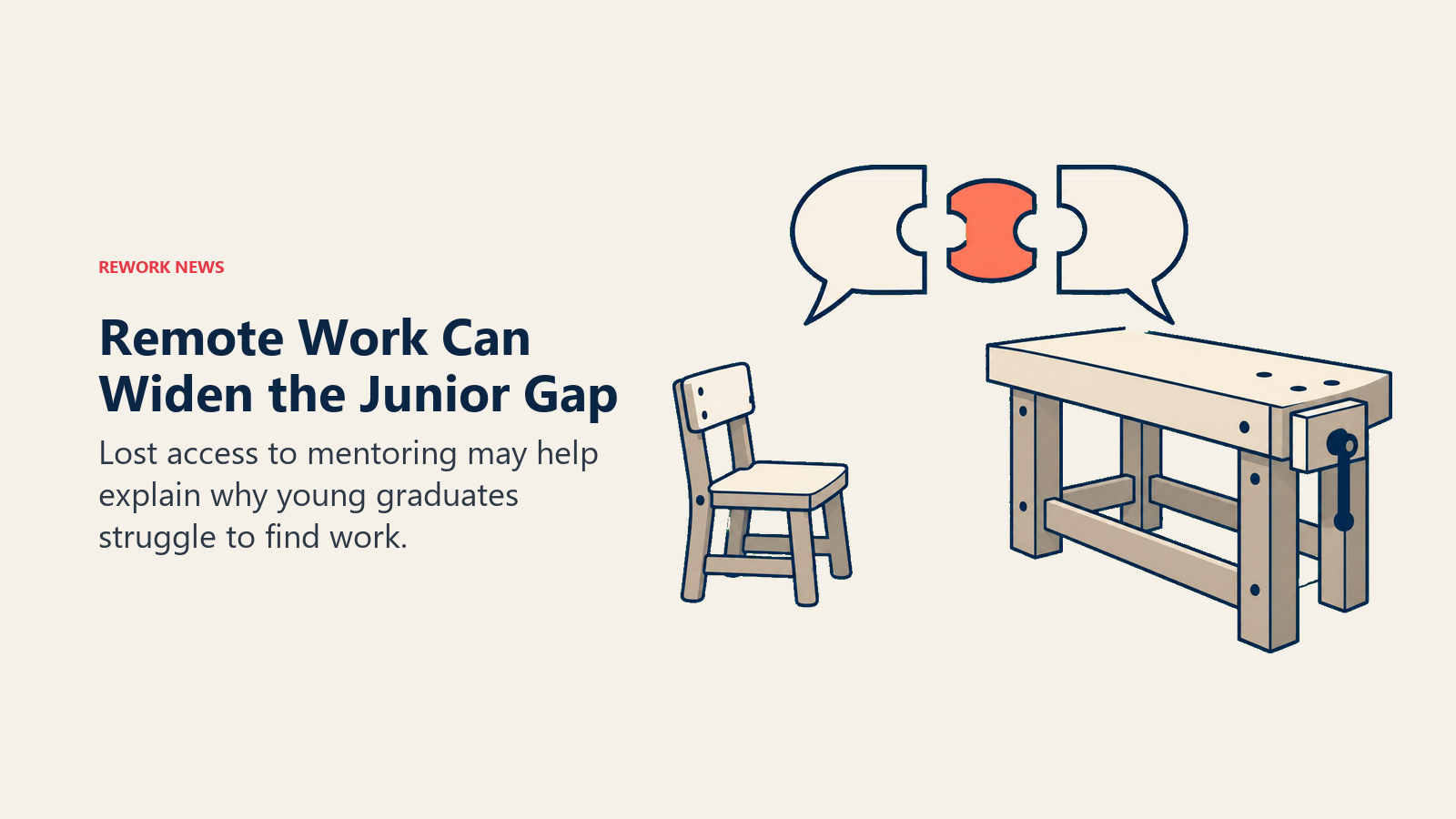
New research from the Federal Reserve Bank of New York points at a different culprit, and it is one you actually control. According to a Fortune report on the New York Fed's findings, remote work could account for as much as 64% of the overall rise in youth unemployment since the pandemic. Not AI. The way you structured where people sit.
That should change how a founder reads the Gen Z hiring panic. If the problem were AI demand destruction, there would be little you could do beyond riding it out. If the problem is remote-work design, it is a choice, and choices can be reversed.
What the Fed Actually Found
The pattern in the data is specific, and it is what makes the remote-work explanation hard to wave away.
The jobless rate for college graduates under 29 climbed from roughly 3.1% to 3.7% in recent years. For graduates over 29, it edged the other way, down from 1.9% to 1.8%. Same economy, same AI tools, two different outcomes split almost entirely by age. Whatever is hurting young grads is barely touching their older colleagues.
Then look at where the age gap shows up. It persists in "remotable" fields like software engineering and financial analysis, the desk jobs that can run from anywhere. It mostly disappears in physical-presence roles like nursing, where the work has to happen in a room with other people. If AI were the driver, you would expect the damage to track AI exposure. Instead it tracks remotability. The jobs that went remote are the jobs where young people stopped getting hired and stopped getting kept.
Key Facts
- Remote work may explain as much as 64% of the rise in youth unemployment since the pandemic (Federal Reserve Bank of New York, reported by Fortune, June 2026)
- Unemployment for college grads under 29 rose from about 3.1% to 3.7%, while for grads over 29 it fell from 1.9% to 1.8% (NY Fed via Fortune)
- Feedback on coding work rose 18.3% when employees worked in the office, with younger workers benefiting most (NY Fed research)
The Mechanism Is Mentorship, Not Magic
Here is why remote work hits juniors hardest, and it has nothing to do with whether they are good at their jobs.
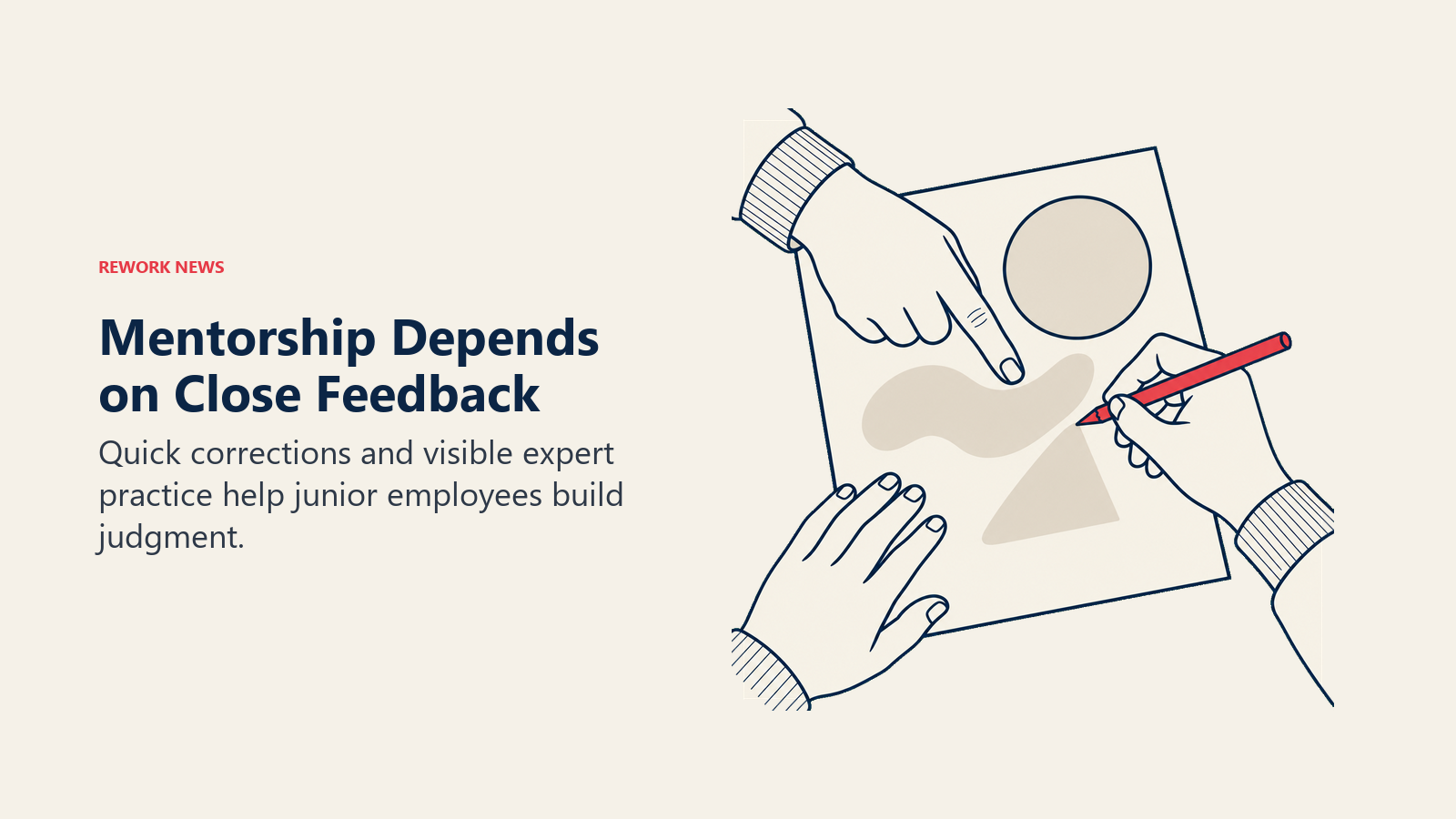
Young employees learn by proximity. They overhear the deal call. They get the two-minute correction before the work goes out, not the formal review three weeks later. They watch how a senior person handles a difficult client and absorb it without anyone scheduling a session. The Fed research put a number on one slice of this: feedback on coding work rose 18.3% when people were in the office, and younger workers were the ones who benefited most.
Remote work quietly removes that. A senior engineer will answer a direct question on Slack. They will not narrate their thinking to a junior who happens to be nearby, because nobody is nearby. The result is that a remote junior is more expensive to develop and slower to become useful. So a rational hiring manager, looking at a remote-first team, does the math and hires someone who is already senior. Multiply that decision across an economy and you get exactly what the data shows: a youth hiring freeze that looks like AI but is really a mentorship gap.
This is the part founders keep missing. The existing coverage frames the entry-level collapse as an AI demand problem. That is real, and it is part of the story. But the Fed is describing something more fixable than a demand collapse. It is describing a development problem you created by accident when you went remote.
Why This Is a Founder Problem, Not an HR Footnote
A big company can absorb a thin junior bench for a while. It has layers of mid-level people to lean on. A startup cannot. Your future senior engineer, your future first sales manager, your future head of ops, almost always grows up inside the company. If you stop hiring and developing juniors now, you are not saving money. You are deferring a hole that opens in three years, right when you can least afford to fill it at market rate.
MIT's Andrew McAfee made a version of this argument in May, warning that automating away entry-level work can backfire and cost companies their future workforce. The logic holds whether the junior roles vanished because of AI or because of remote structure. Either way, the company that stops growing its own talent ends up renting all of it, forever, at the highest price in the market.
And the market is not actually as closed as the panic suggests. CNBC's class-of-2026 data shows 77.2% of new grads landed a role within three months, up from 63.3% a year earlier, with employers projecting hiring up 5.6%. Young people are getting hired. The question is whether they are getting hired and developed by you, or by the competitor who figured out the mentorship structure first.
What To Do About It
The fix is not a blanket return-to-office mandate. The Fed's finding is narrower than that, and so is the response. You need deliberate, in-person development time for the people who are early in their careers, not five days of commuting for everyone.
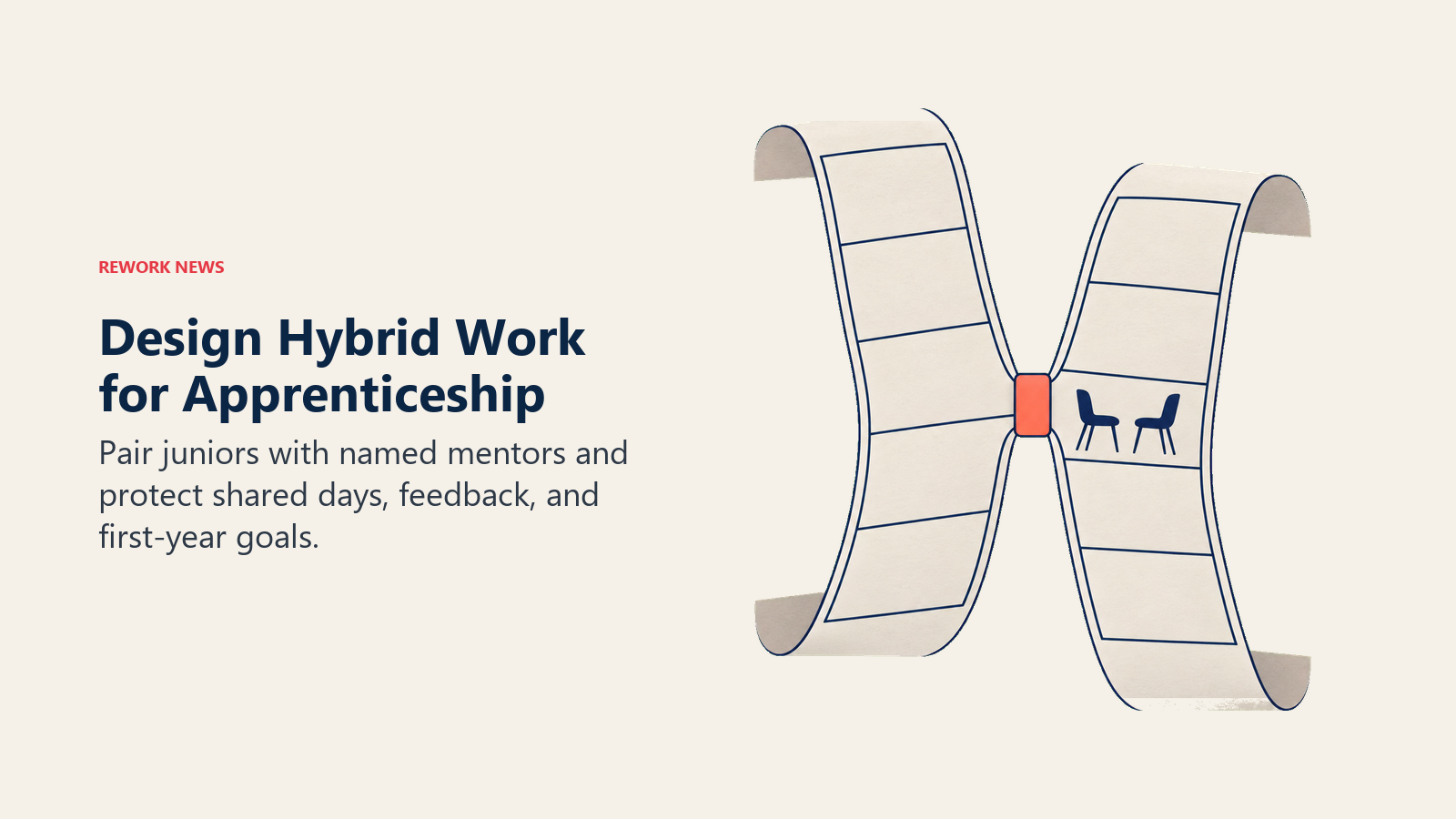
Concentrate juniors around mentors, in person, on purpose. If you run hybrid, do not let people pick random days. Put each early-career hire in the building on the same days as the senior person they should be learning from. Proximity is the whole mechanism. Scattering it across a calendar defeats it.
Make feedback a scheduled thing, not an ambient one. Remote killed the ambient correction, so replace it with structure. Weekly work reviews, recorded loom walkthroughs of how a senior person approached a task, and standing time for questions. The coaching and mentoring fundamentals are the same as ever. What changed is that you now have to engineer them instead of relying on the office to produce them.
Design the hybrid model around development, not just collaboration. Most hybrid policies optimize for meetings. The Fed data says the bigger payoff is in early-career growth. Strong hybrid team leadership treats in-person time as the apprenticeship layer, and protects it accordingly.
Build a real first-year plan for junior hires. A junior with a structured onboarding and a named mentor becomes productive far faster than one left to absorb things that remote work no longer lets them absorb. A deliberate first-year plan for a new hire is the difference between a junior who pays off and one who churns out in eight months.
The companies that win the next few years will not be the ones that cut juniors to look lean. They will be the ones that quietly kept building their own bench while everyone else blamed AI and stopped hiring. The Fed just handed you the reason, and the fix is cheaper than the problem.
Frequently Asked Questions
Is AI causing young graduate unemployment in 2026?
AI is part of the picture, but New York Fed research suggests it is not the main driver. The Fed found that remote work could account for as much as 64% of the rise in youth unemployment since the pandemic. The damage shows up in remotable desk jobs and barely in physical-presence roles, which tracks remotability rather than AI exposure. AI is reshaping specific tasks, but the youth hiring freeze looks more like a mentorship and development problem than a demand collapse.
Why does remote work hurt young workers more than experienced ones?
Young employees develop through proximity: overheard calls, quick corrections, and watching senior people work. Remote setups remove that ambient learning, which makes juniors more expensive and slower to develop. The Fed found feedback on coding work rose 18.3% in the office, with younger workers benefiting most. Experienced workers already learned those lessons, so distributed work costs them far less.
Should founders force everyone back to the office?
No. The fix is targeted, not blanket. Concentrate early-career hires in person on the same days as the mentors they learn from, schedule feedback that remote work no longer produces on its own, and design hybrid policy around development rather than just meetings. The goal is to rebuild apprenticeship, not to reverse remote work for everyone.
Learn More
- AI Is Breaking the Entry-Level Job: The Talent-Pipeline Risk No One Is Pricing In
- Remote AI Roles Are Exploding, Rewriting Where Companies Can Source Talent
- Coaching and Mentoring
- Hybrid Team Leadership
Source: Fortune, June 2, 2026 (Federal Reserve Bank of New York research) | Fortune, May 1, 2026 (MIT / Andrew McAfee) | CNBC, class of 2026 hiring data
