More in
AI Jobs & Skills News
Finance Keeps Shedding Jobs as the Economy Hires: The White-Collar Warning
Jun 6, 2026 · Currently reading
AI Skills Just Became the Hardest Hire in the World. You Won't Recruit Your Way Out
Jun 6, 2026
Is AI Actually Killing Jobs? May's Hiring Numbers Say Not So Fast
Jun 5, 2026
You Put Your AI Agents on the Org Chart. Accountability Quietly Dropped
Jun 5, 2026
Everyone Blames AI for the Gen Z Job Crisis. The Fed Points at Remote Work
Jun 5, 2026
AI's Net Job Drag Fell to 11,000 a Month. Construction Is Hiding the Truth
Jun 4, 2026
AI Blamed for a Record 40% of May's US Layoffs, the Third Month Running
Jun 4, 2026
Four Futures for Jobs by 2030: The Mid-2026 Checkpoint for CEOs
Jun 3, 2026
Can Federal AI Apprenticeships Fix Your Skills Gap Cheaper Than Hiring?
Jun 3, 2026
AI Engineer Pay Split Into Two Markets. Only the Top Is a Bubble
Jun 3, 2026
Finance Keeps Shedding Jobs as the Economy Hires: The White-Collar Warning
Turn this article into takeaways for your work.


Each assistant summarizes the article only for you and suggests best practices for your work.
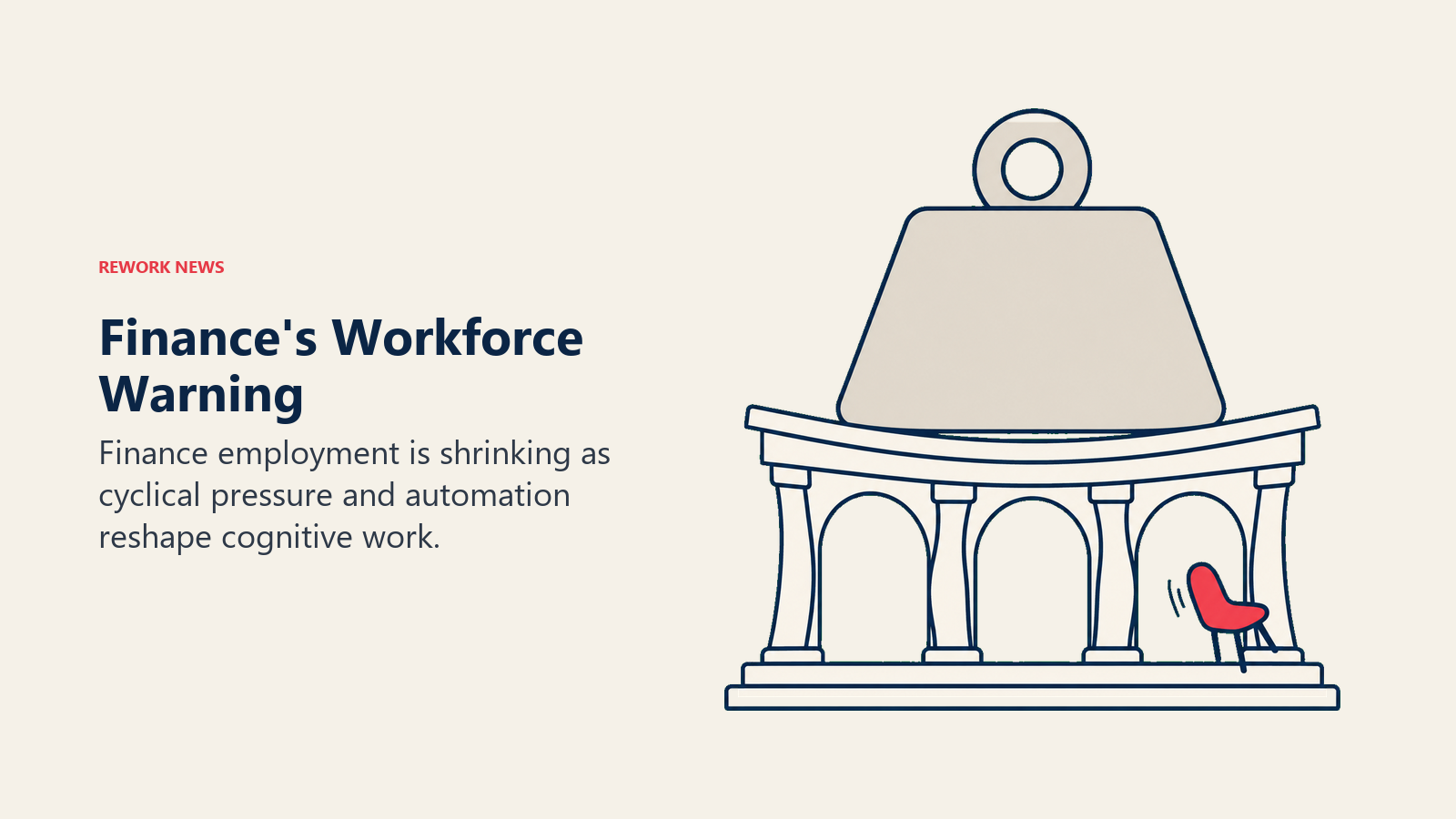
Last Friday's jobs report looked encouraging at the macro level. But if you zoom in past the headline number, one high-wage sector is quietly moving in the opposite direction from everyone else.
The Bureau of Labor Statistics (BLS) released the May 2026 Employment Situation on June 5, showing nonfarm payrolls rose by 172,000, well above the roughly 80,000 consensus, with the unemployment rate holding at 4.3% and average hourly earnings up 0.3% to $37.53. Leisure and hospitality added jobs. Local government and health care kept hiring. Even manufacturing picked up slightly. But financial activities employment declined again in May, extending a contraction that has now run for roughly a year.
That one sentence deserves a lot more attention than it gets in the weekend roundups.
The May Report in Plain Numbers
The aggregate picture was genuinely solid. Gains spread across multiple sectors, wages ticked up without reigniting inflation fears, and the labor force participation numbers held steady. If you want the optimistic read on May's data, that story is covered in the ADP private-payrolls piece here. This article is not a rehash of that debate.
The specific question here is: why is financial activities, one of the highest-paying, most cognitively demanding sectors in the economy, losing ground in a job market that is otherwise adding people?
Key Facts
- U.S. nonfarm payrolls rose 172,000 in May 2026, beating consensus, while financial activities employment fell again, extending roughly a year of decline. (BLS, June 5, 2026)
- Bloomberg Intelligence has projected up to approximately 200,000 bank roles could be cut over the next three to five years, roughly 3% of the sector's workforce, as firms automate back- and middle-office operations.
- PwC's AI Jobs Barometer found roughly fourfold productivity growth in AI-exposed financial roles, the highest measured rate of any sector studied.
Why Finance Is the White-Collar Canary
Finance did not arrive here because of one thing. Three forces are running in parallel, and separating them matters if you are trying to read the signal correctly.
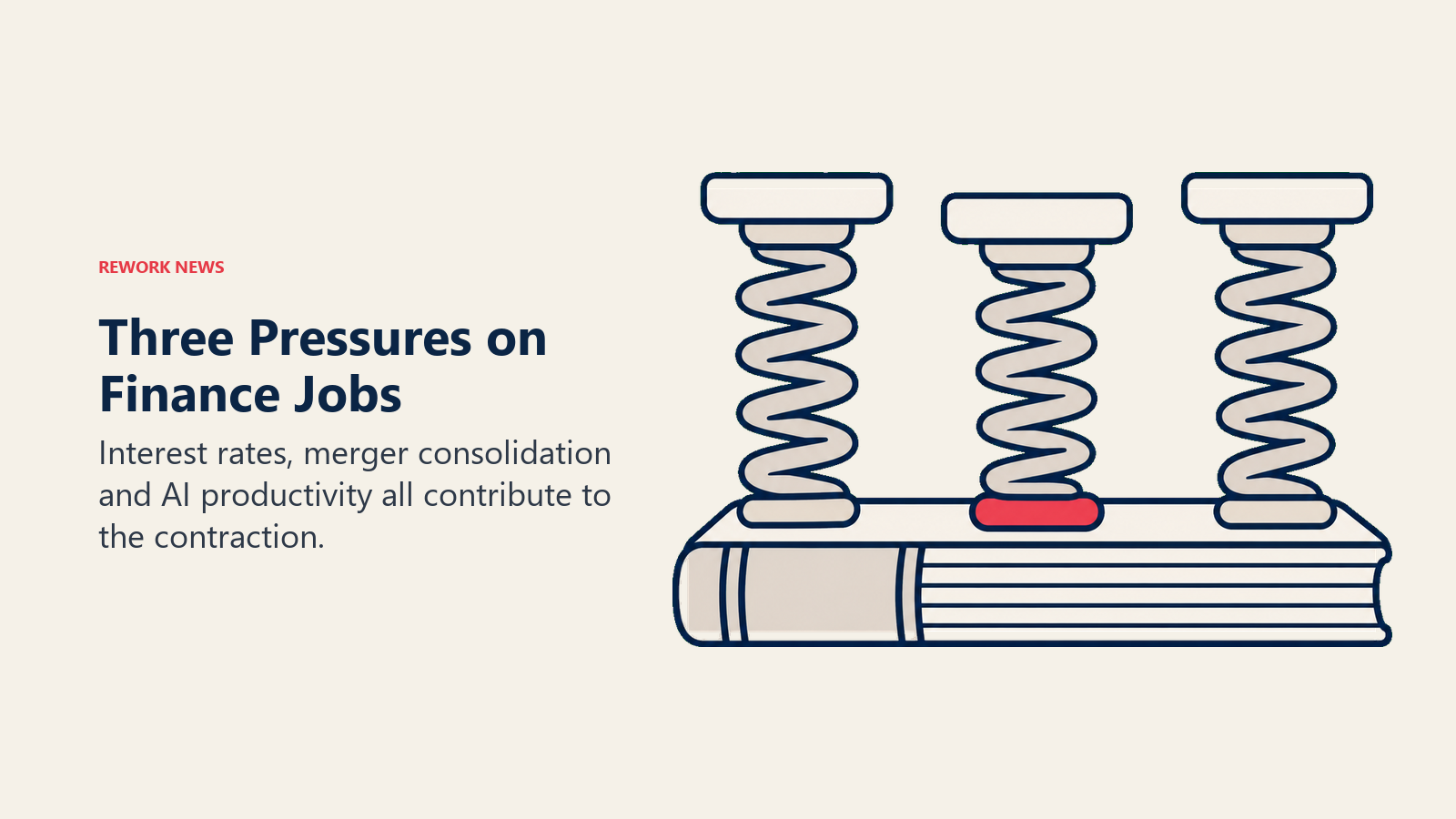
Higher-for-longer interest rates. Elevated rates have compressed mortgage origination volumes, slowed deal activity in investment banking, and squeezed net interest margins at regional lenders. Fewer transactions mean fewer people processing them. This is a cyclical force, not a structural one, but it is real and it is still running.
Post-merger consolidation. The wave of bank mergers and acquisitions from 2022 to 2025 left behind redundant back-office teams that are still being absorbed. Two risk departments become one. Two compliance functions get rationalized. The headcount math is unavoidable.
Genuine AI-driven productivity gains. This is where the structural story starts. Loan underwriting models, fraud detection systems, regulatory reporting tools, and document review platforms have all become materially more capable in the past two years. Bloomberg Intelligence has projected that up to approximately 200,000 bank roles could be eliminated over the next three to five years (roughly 3% of the sector) as banks automate back- and middle-office work at scale. That is not a fringe forecast. JPMorgan Chase chief executive Jamie Dimon said at the World Economic Forum that he expects the bank to hire fewer people in coming years because of AI.
The causation is mixed. But the direction is not.
The Structural Numbers Behind the Trend
The finance-sector signal matters because the conditions for AI substitution are unusually concentrated there.
What makes finance the right sector to watch is not the scale of job losses so far. It is the combination of factors that make AI adoption fast and deep here: high wages that justify automation investment, high volumes of repetitive cognitive tasks (document review, data entry, reconciliation, compliance checks), and extremely high existing AI adoption rates relative to other sectors.
PwC's AI Jobs Barometer found roughly fourfold productivity growth in AI-exposed financial roles, the highest rate of any sector studied. That is not a future projection. It is happening now. And when productivity grows fourfold for the same headcount, firms face a straightforward choice: grow revenue proportionally (rare) or reduce headcount proportionally (common).
The Goldman Sachs research on net AI job drag already flagged finance as a sector to monitor. The monthly BLS data is starting to confirm what the models projected.
What This Does Not Mean
Before overstating the case: finance is not in freefall. The sector still employs roughly 9 million people. The decline in any given month is measured in thousands, not tens of thousands. And some of the contraction reflects the cyclical forces described above, which could reverse when rates come down or deal activity picks back up.
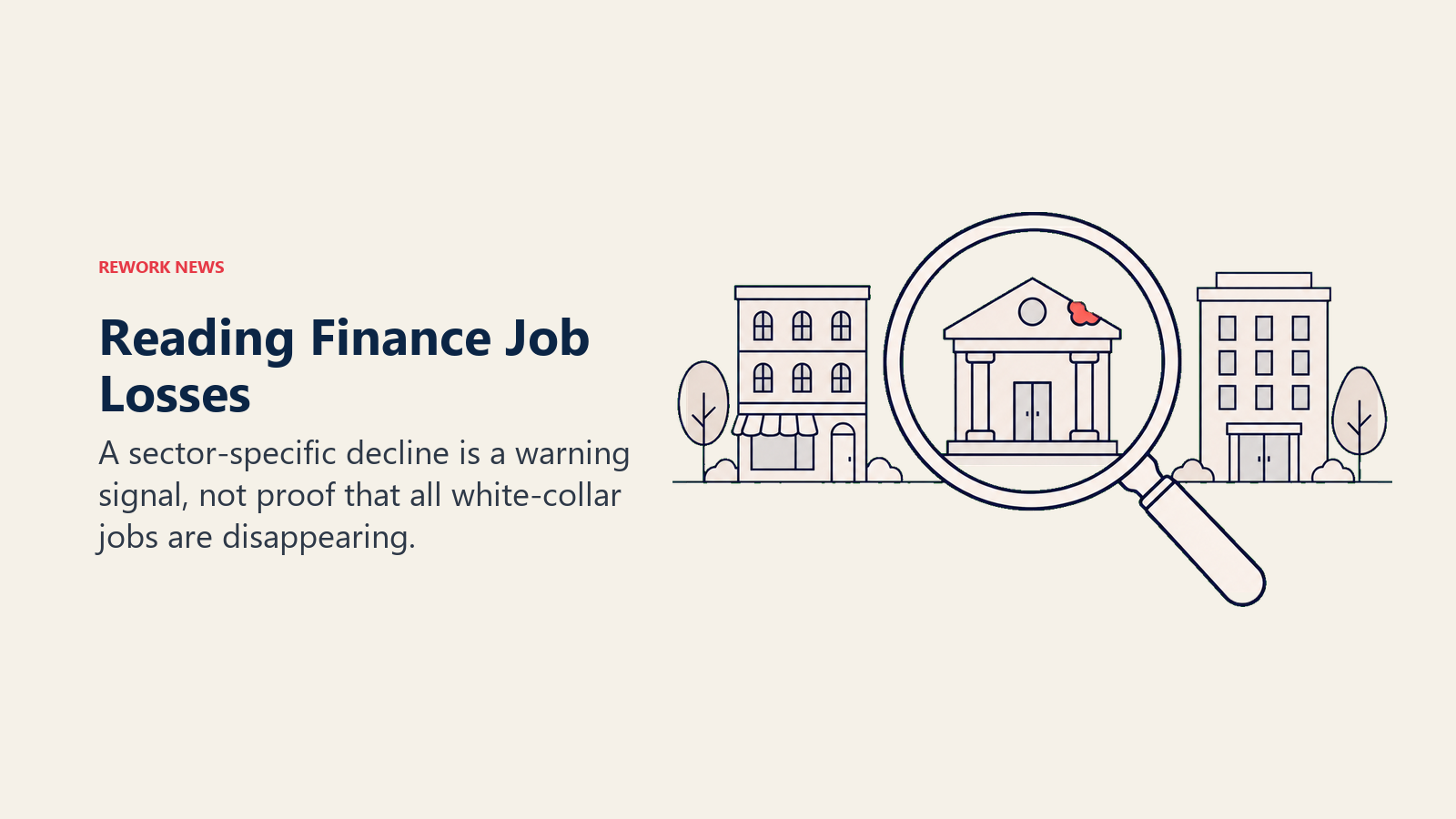
This is not a general "AI is killing all jobs" argument. The May BLS data actually argues the opposite for the broad economy: strong hiring in services, health care, and government means aggregate employment is fine. The macro picture remains more nuanced than the AI apocalypse narrative allows.
The finance contraction is worth watching precisely because it is isolated. When one high-wage, cognitively intensive sector consistently shrinks during a broader expansion, that is signal, not noise. It suggests AI-driven automation is already producing measurable structural change in at least one corner of the white-collar economy. The question for CEOs is whether their own sector is next, and how far away "next" is.
For a broader framework on how roles evolve under AI pressure across different job types, see AI Role Evolution: What Changes for Whom. And for thinking through future workforce scenarios under multiple automation trajectories, WEF's Four Futures of Jobs for 2030 provides a useful planning frame.
What CEOs Should Do Now
The finance data does not require panic. It does require a specific kind of attention.
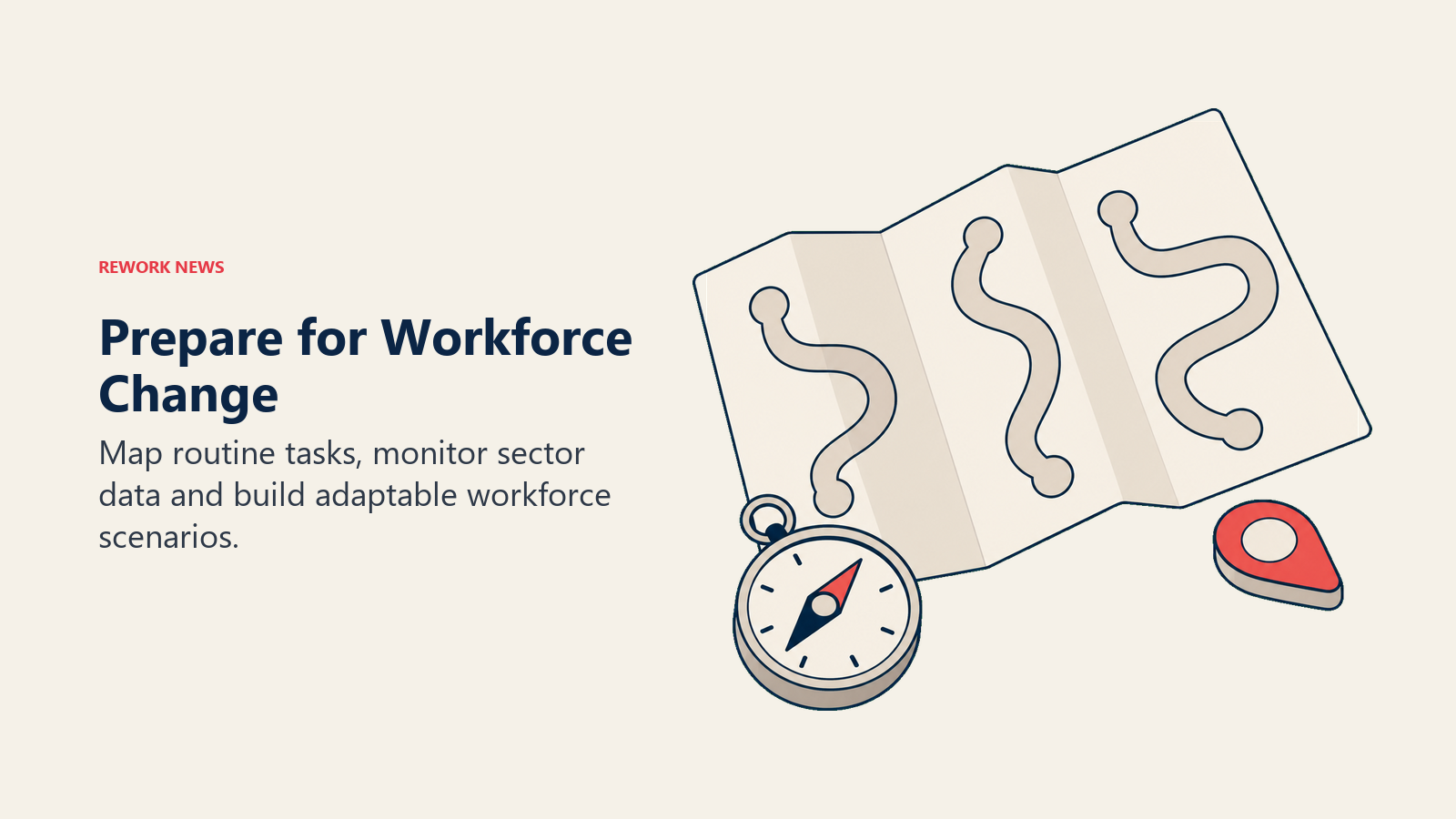
First, map your own cognitive task inventory. Finance is contracting partly because its core workflows (document analysis, data reconciliation, compliance review) are high-volume and structurally similar across firms. If your industry has analogous workflow categories, your exposure timeline is probably shorter than you think.
Second, watch the BLS sector data monthly, not just the headline. The signal in finance was visible for several months before analysts started writing about it. If employment in your sector starts moving against the broader trend, that is worth investigating before it becomes a restructuring conversation.
Third, invest in workforce adaptability now, not reactively. The firms that handled the finance consolidation cleanest were the ones that had already built skills mobility programs before the headcount math got uncomfortable. See Skills-Based Talent Strategy for a practical framework on building that kind of organizational flexibility.
Fourth, do your scenario planning before you need it. The range of outcomes in AI-driven workforce change is genuinely wide. Having pre-built scenarios (moderate automation, aggressive automation, reversal) means you are not starting from scratch when the data forces the conversation. Scenario Planning covers how to run that process.
The finance sector is not a perfect proxy for every white-collar industry. But it is the most data-rich, most AI-invested, and most clearly measurable corner of the cognitive economy. If you want to understand where AI-driven structural change is heading, watch the BLS financial activities number every month. It is the best leading indicator we have.
Frequently Asked Questions
Is AI the main reason finance employment is falling?
Not exclusively. The contraction reflects at least three forces: higher interest rates reducing transaction volumes, post-merger consolidation eliminating redundant functions, and genuine AI productivity gains allowing firms to process the same workload with fewer people. The defensible claim is that AI is accelerating a decline that was already underway, not that it is the sole cause. That distinction matters for policy and for workforce planning.
How many finance jobs have actually been lost?
The BLS Employment Situation for May 2026 confirms that financial activities employment declined again in May, continuing a trend that has run for roughly a year. The monthly figures are not catastrophic in isolation but the direction is consistent. Bloomberg Intelligence's longer-term projection of up to approximately 200,000 bank-sector roles over three to five years provides the structural scale estimate, with the caveat that projections carry uncertainty.
Should my company treat this as a warning for our own workforce?
It depends on how similar your core workflows are to finance's cognitive task profile: high volume, rule-bound, document-heavy, data-intensive. If your industry matches that profile and has similarly high AI adoption investment, the finance experience is a relevant reference point. If your workflows are more relational, creative, or physically embedded, the timeline and shape of AI impact will look different.
Learn More
- Why the May Hiring Beat Does Not Settle the AI Jobs Debate
- Goldman's AI Net Job Drag: Construction's Gains Mask the White-Collar Story
- WEF Four Futures of Jobs 2030: The CEO Checkpoint
- AI Role Evolution: What Changes for Whom
Source: U.S. Bureau of Labor Statistics, Employment Situation Summary, May 2026 (released June 5, 2026). Supporting projections: Bloomberg Intelligence bank workforce analysis; PwC AI Jobs Barometer; Jamie Dimon remarks, World Economic Forum.
