Customer Acquisition Cost (CAC): Cara Mengiranya
Turn this article into takeaways for your work.


Each assistant summarizes the article only for you and suggests best practices for your work.
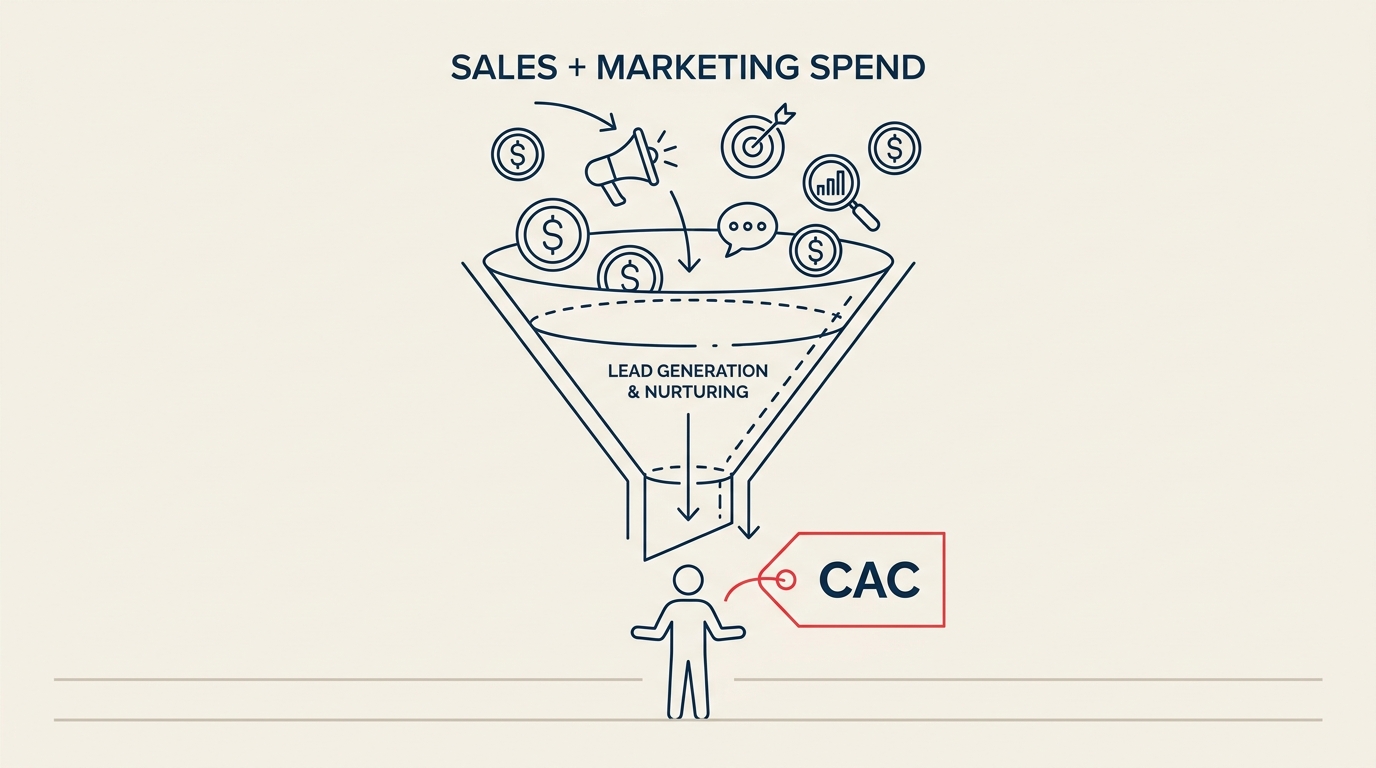
Customer acquisition cost adalah jumlah yang Anda belanjakan untuk jualan dan pemasaran bagi memenangi satu pelanggan baharu yang membayar. CAC adalah metrik unit ekonomi yang asas: kenali ia, dan Anda boleh menjawab sama ada pertumbuhan Anda sebenarnya menguntungkan.
Apakah customer acquisition cost (CAC)?
Customer acquisition cost adalah jumlah perbelanjaan jualan dan pemasaran yang diperlukan untuk menukar prospek kepada pelanggan baharu yang membayar, dibahagikan dengan bilangan pelanggan baharu yang dimenangi dalam tempoh yang sama. Ia merangkumi segala yang Anda belanjakan untuk mendapatkan pelanggan.
CAC yang rendah bermakna enjin go-to-market Anda cekap. CAC yang tinggi bermakna Anda berbelanja lebih daripada yang sepatutnya untuk berkembang, yang diam-diam menghakis margin walaupun hasil kelihatan sihat.
Fakta utama: customer acquisition cost
- Tempoh bayar balik CAC median bagi syarikat SaaS melebihi 24 bulan pada 2023, naik daripada 18 bulan sebelum pandemik (Lighter Capital, 2024)
- Syarikat dengan tempoh bayar balik CAC di bawah 12 bulan berkembang 2x lebih pantas berbanding syarikat dengan bayar balik melebihi 24 bulan (OpenView Partners, 2023)
- Syarikat B2B SaaS biasanya membelanjakan $1.18 untuk jualan dan pemasaran bagi setiap $1 ARR baharu, menjadikan pengoptimuman CAC tuas teratas untuk meningkatkan unit ekonomi (SaaS Capital, 2024)
Formula CAC
Formula asasnya adalah mudah:
CAC = Jumlah perbelanjaan jualan dan pemasaran / Bilangan pelanggan baharu yang diperoleh
Kedua-dua angka mesti merangkumi tempoh masa yang sama. Gunakan suku atau tahun penuh untuk melicinkan bunyi bermusim.
Contoh praktikal
Syarikat Anda membelanjakan $180,000 untuk jualan dan pemasaran dalam S1 dan menutup 60 pelanggan baharu.
CAC = $180,000 / 60 = $3,000 setiap pelanggan baharu
Kini tambahkan sedikit nuansa. Jika 15 daripada 60 pelanggan itu datang melalui kempen iklan berbayar yang berharga $45,000, CAC untuk saluran itu sahaja ialah $45,000 / 15 = $3,000. Jika 45 lagi datang melalui kandungan organik dan rujukan yang berharga $25,000 dalam masa tenaga pekerja, CAC organik ialah $25,000 / 45 = $556.
CAC bergabung yang sama, kisah pada peringkat saluran yang sangat berbeza. Itulah sebabnya analisis CAC peringkat saluran sama pentingnya dengan nombor utama.
Blended CAC vs paid CAC
Kebanyakan syarikat menjalankan campuran saluran pemerolehan berbayar dan tidak berbayar. Nombor bergabung tunggal menyembunyikan isyarat sebenar.
| Jenis | Apa yang dimasukkan | Bila digunakan |
|---|---|---|
| Blended CAC | Semua perbelanjaan jualan dan pemasaran merentas setiap saluran dibahagikan dengan semua pelanggan baharu | Laporan lembaga, penanda aras peringkat syarikat, perbincangan pelabur |
| Paid CAC | Hanya perbelanjaan saluran berbayar (iklan, kandungan tajaan, SEM) dibahagikan dengan pelanggan dari sumber berbayar | Mengoptimumkan bajet iklan, membandingkan ROI saluran berbayar |
| Organic CAC | Perbelanjaan kandungan, SEO, rujukan, dan jenama dibahagikan dengan pelanggan dari sumber tidak berbayar | Menilai pelaburan kandungan, mengukur kecekapan jenama |
| Fully-loaded CAC | Semua di atas ditambah gaji, alatan, overhed, dan yuran agensi | Unit ekonomi sebenar, ketepatan peringkat lembaga |
| Partial CAC | Perbelanjaan langsung sahaja, tidak termasuk gaji dan overhed | Perbandingan operasi pantas; kurang tepat untuk keputusan penetapan harga |
Untuk unit ekonomi peringkat pelabur, sentiasa gunakan fully-loaded CAC. Mengecualikan gaji merendah kos pertumbuhan sebenar Anda dan boleh menjadikan perniagaan kelihatan lebih cekap daripada hakikatnya.
Apa yang perlu dimasukkan dalam CAC
Di sinilah kebanyakan pasukan silap. CAC bukan sekadar perbelanjaan iklan Anda.
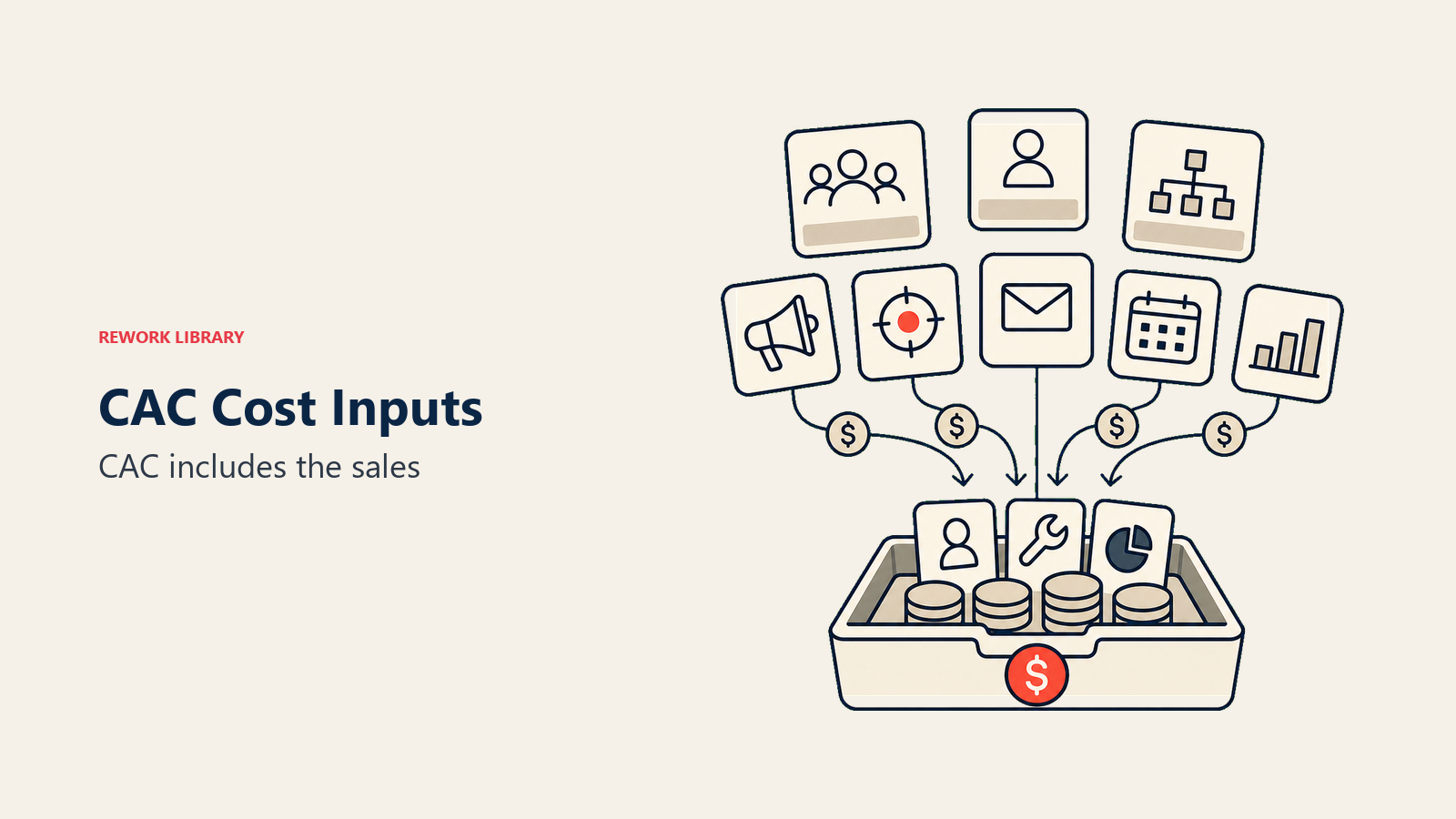
Kos jualan untuk dimasukkan:
- Gaji dan komisen wakil jualan (dikira mengikut tempoh)
- Gaji pengurus jualan dan jualan ops
- CRM dan alatan jualan (dikira mengikut tempoh)
- Kos latihan jualan dan enablement
- Perjalanan dan acara yang berkaitan dengan penjanaan pipeline
Kos pemasaran untuk dimasukkan:
- Pengiklanan digital berbayar (carian, sosial, paparan, retargeting)
- Headcount pemasaran kandungan dan SEO atau yuran agensi
- Program penjanaan permintaan (webinar, kempen e-mel, acara)
- Alatan dan perisian pemasaran
- Kos agensi dan pekerja bebas
- Perbelanjaan penjenamaan yang berkaitan dengan pemerolehan pelanggan
Overhed untuk dimasukkan (untuk fully-loaded CAC):
- Ruang pejabat dan infrastruktur yang diperuntukkan kepada pasukan jualan dan pemasaran
- Kos HR untuk merekrut dan onboarding penambahan jualan dan pemasaran
Apa yang perlu dikecualikan:
- Kos customer success (selepas jualan, bukan pemerolehan)
- Gaji produk dan kejuruteraan
- Overhed am dan pentadbiran yang tidak berkaitan dengan go-to-market
Sempadan antara jualan/pemasaran dan customer success patut ditakrifkan dengan jelas dalam organisasi Anda, kerana ia mempengaruhi nombor CAC secara langsung. Jika pasukan jualan Anda mengendalikan onboarding, sebahagian masa itu termasuk dalam CAC.
Tempoh bayar balik CAC
Tempoh bayar balik menjawab soalan: berapa lama masa yang diperlukan untuk memulihkan apa yang Anda belanjakan untuk memperoleh seorang pelanggan?
Tempoh bayar balik CAC = CAC / (Monthly recurring revenue setiap pelanggan x Margin kasar)
Contoh praktikal
CAC: $3,000. Monthly recurring revenue setiap pelanggan: $250. Margin kasar: 75%.
Bayar balik CAC = $3,000 / ($250 x 0.75) = $3,000 / $187.50 = 16 bulan
Ini bermakna Anda mencapai titik pulang modal ke atas kos memperoleh pelanggan tersebut selepas 16 bulan hasil langganan. Hasil sebelum titik itu sedang membayar balik pelaburan pemerolehan; hasil selepas itu adalah keuntungan sebenar.
Mengapa margin kasar penting: Memasukkan margin kasar memberikan Anda sumbangan tunai sebenar daripada setiap ringgit hasil, bukan hanya nombor teratas. Pelanggan yang membayar $250/bulan dengan margin kasar 40% menyumbang separuh kurang ke arah bayar balik CAC berbanding pelanggan dengan margin 80% pada harga yang sama.
Penanda aras mengikut peringkat:
- Di bawah 12 bulan: kukuh, kecekapan mod pertumbuhan
- 12 hingga 18 bulan: boleh diterima untuk kebanyakan SaaS disokong modal teroka
- 18 hingga 24 bulan: boleh diurus jika LTV tinggi dan churn rendah
- Melebihi 24 bulan: menandakan masalah kecekapan go-to-market yang perlu ditangani sebelum meningkatkan perbelanjaan
Lihat tempoh kitaran jualan untuk bagaimana masa kitaran mempengaruhi bayar balik: kitaran jualan purata yang lebih panjang menolak bayar balik lebih jauh walaupun CAC itu sendiri kelihatan munasabah.
Mengapa CAC penting
Ia adalah penyebut dalam nisbah LTV:CAC Anda. Nisbah ini adalah penanda aras yang paling biasa digunakan pelabur untuk menilai sama ada model perniagaan Anda pada asasnya kukuh. LTV:CAC yang kukuh sebanyak 3:1 atau lebih tinggi menandakan bahawa Anda menjana nilai yang bermakna berbanding apa yang Anda belanjakan untuk memperoleh pelanggan. Lihat nisbah LTV:CAC untuk pengiraan penuh.
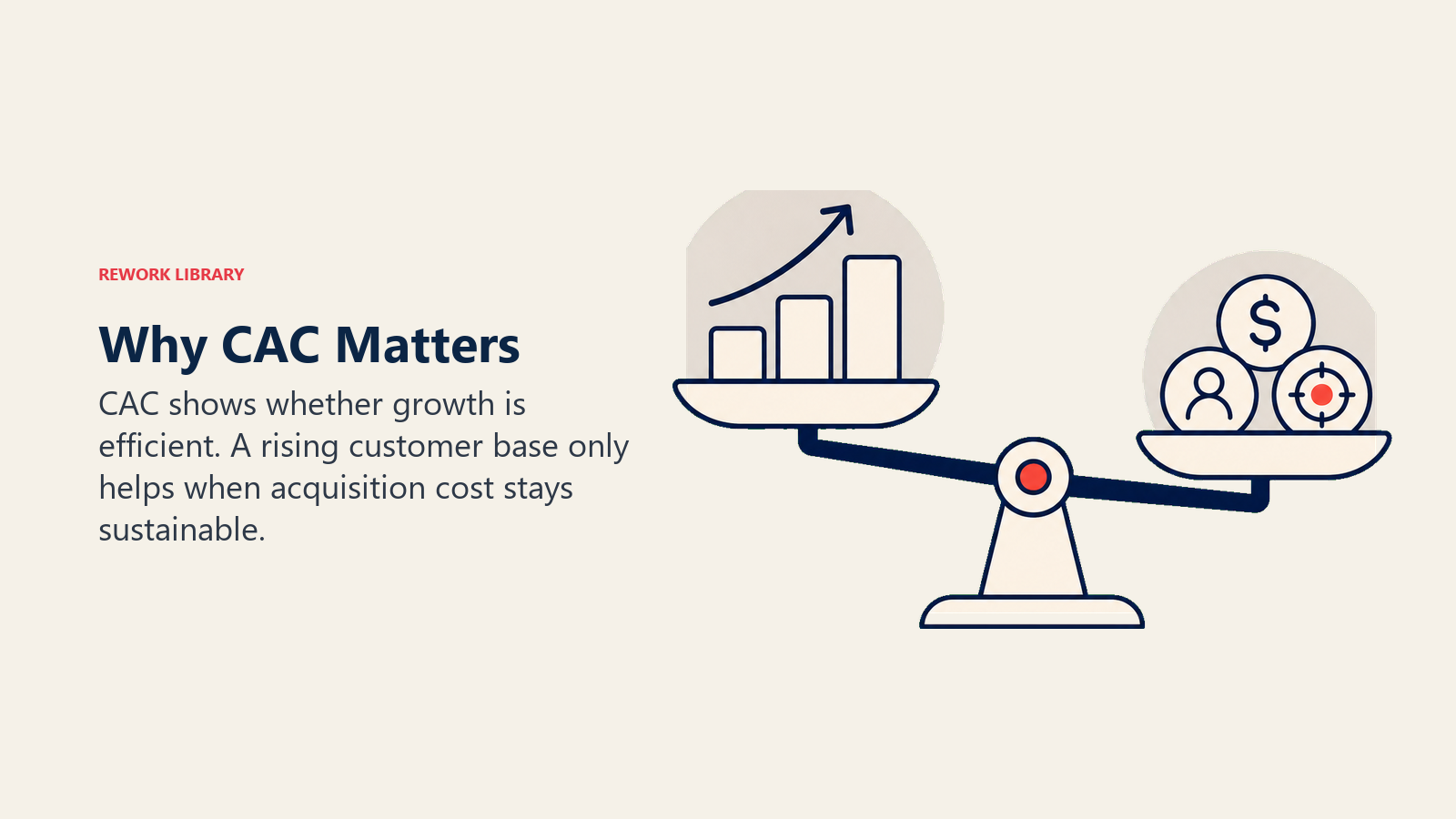
Ia menentukan lantai penetapan harga. Jika CAC Anda ialah $4,000 dan kontrak purata Anda ialah $2,400 setahun, Anda berada jauh dalam keadaan defisit unit ekonomi pada margin kasar semasa. Mengetahui CAC membolehkan Anda menetapkan harga dan minimum kontrak yang melindungi margin.
Ia berkait langsung dengan kos pertumbuhan ARR. Setiap ringgit annual recurring revenue mempunyai kos pemerolehan. Pelabur dan lembaga ingin tahu berapa kos untuk menjana setiap ringgit ARR tambahan, dan CAC adalah input kepada pengiraan tersebut.
Ia mendedahkan ketidakcekapan saluran. Blended CAC Anda boleh kelihatan baik sementara satu atau dua saluran diam-diam membakar wang. Memecahkan CAC mengikut saluran mendedahkan tempat Anda melabur berlebihan berbanding apa yang setiap sumber sebenarnya sampaikan.
Ia menjadi asas keputusan bajet jualan dan pemasaran. Jika Anda tahu CAC Anda ialah $3,000 dan LTV Anda ialah $18,000, Anda mempunyai asas yang beralasan untuk mengatakan Anda boleh membelanjakan sehingga $X untuk kempen baharu dan masih mencapai pulangan sasaran. Tanpa CAC, keputusan bajet adalah andaian semata-mata. Lihat analisis kadar penukaran untuk bagaimana meningkatkan penukaran corong secara langsung mengurangkan CAC.
Cara mengurangkan CAC
Langkah 1: Tingkatkan penyasaran
Kebanyakan masalah CAC bermula di bahagian atas corong. Jika ideal customer profile (ICP) Anda terlalu luas, Anda membelanjakan sama rata untuk prospek yang menukar dan yang tidak akan pernah menukar. Ketatkan definisi ICP Anda menggunakan data daripada pelanggan terbaik sedia ada: firmografi, jawatan, dan pencetus pembelian yang mana yang meramalkan penutupan pantas dan churn rendah? Masukkan isyarat itu kembali ke dalam prospek dan penyasaran berbayar untuk berhenti membazir perbelanjaan pada padanan yang lemah.
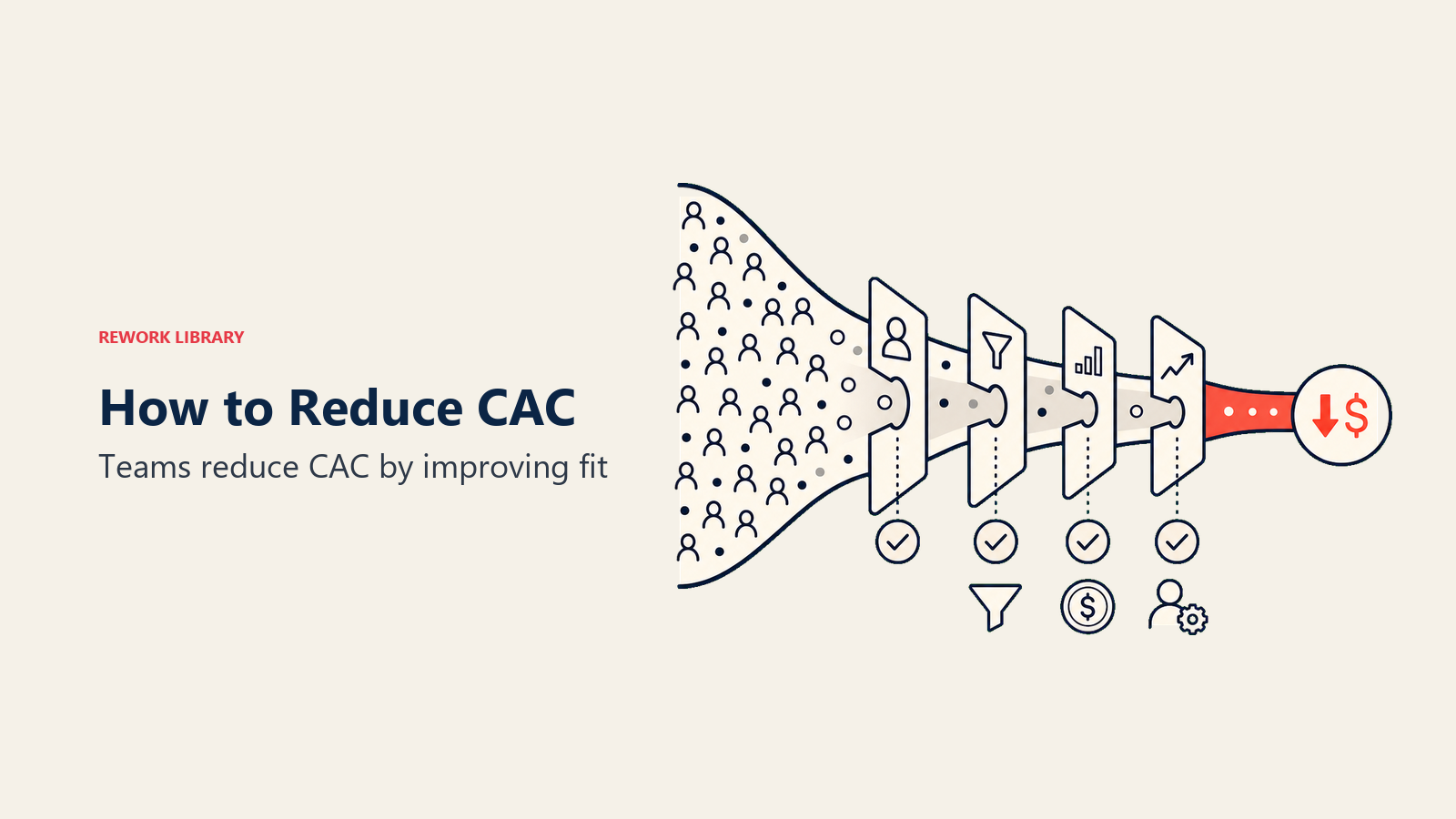
Gunakan metrik kelajuan pipeline untuk melihat segmen pipeline yang bergerak paling pantas. Segmen yang bergerak lebih pantas hampir selalu mempunyai CAC efektif yang lebih rendah.
Langkah 2: Tingkatkan kadar penukaran di setiap peringkat
Peningkatan 10% dalam kadar penukaran di setiap daripada tiga peringkat corong berganda kepada pengurangan CAC kira-kira 33%, walaupun tanpa perubahan dalam perbelanjaan bahagian atas corong. Petakan peringkat corong Anda, kenal pasti titik penurunan terbesar, dan jalankan ujian berstruktur. Kelayakan yang lebih baik, skrip demo yang lebih kukuh, dan urutan susulan yang lebih ketat masing-masing menggerakkan nombor itu.
Langkah 3: Pendekkan kitaran jualan
Tawaran yang ditutup dalam 30 hari berharga jauh lebih sedikit dalam masa wakil jualan berbanding yang berlarutan sehingga 90 hari. Semak data tempoh kitaran jualan Anda mengikut segmen dan saluran. Tawaran berbilang pemegang kepentingan, kelewatan perolehan, dan langkah seterusnya yang tidak jelas adalah penyebab yang biasa. Mengurangkan masa kitaran purata sebanyak 20% adalah salah satu cara paling pantas untuk memangkas CAC efektif tanpa menyentuh headcount atau bajet iklan.
Langkah 4: Bina saluran rujukan dan komuniti
Pelanggan yang dirujuk biasanya berharga sebahagian kecil daripada kos pelanggan saluran berbayar untuk diperoleh, dan mereka sering menutup lebih pantas dan mengekalkan dengan lebih baik. Program rujukan pelanggan berstruktur, saluran rakan kongsi, atau gerak kerja pertumbuhan dipacu komuniti boleh mengalihkan blended CAC Anda ke bawah secara bermakna dari semasa ke semasa. Saluran ini mengambil masa lebih lama untuk dibina, tetapi bayar balik CAC ke atas pelaburan program berganda dengan cara yang saluran berbayar tidak lakukan.
Langkah 5: Kekal dan kembangkan pelanggan sedia ada
Ini kedengarannya seperti strategi pengekalan, bukan strategi pemerolehan. Tetapi inilah hubungannya: setiap ringgit yang dikekalkan adalah ringgit yang tidak perlu digantikan dengan pemerolehan baharu yang mahal. Jika kadar churn tahunan Anda ialah 20%, Anda membina semula seperlima daripada asas hasil Anda setiap tahun pada CAC penuh. Menurunkan churn kepada 10% secara efektif memotong beban pelanggan baharu kepada separuh. Expansion ARR yang kukuh daripada akaun sedia ada juga membolehkan Anda menumbuhkan hasil tanpa menambah CAC langsung. Lihat peningkatan win rate untuk taktik yang mengurangkan CAC dan churn secara serentak.
Contoh dan penanda aras CAC
CAC berbeza-beza secara drastik mengikut industri, saiz tawaran, dan gerak kerja pemerolehan.
| Segmen / Saluran | Julat CAC biasa | Nota |
|---|---|---|
| B2B SaaS (SMB, layan diri) | $200 - $700 | Sentuhan rendah, dipacu produk; bayar balik pendek |
| B2B SaaS (mid-market, jualan dalaman) | $3,000 - $8,000 | Dibantu jualan; sasaran bayar balik 12-18 bulan |
| B2B SaaS (enterprise, jualan lapangan) | $15,000 - $50,000+ | ACV tinggi diperlukan untuk justifikasi; bayar balik 18-24+ bulan |
| Carian berbayar (SaaS) | $800 - $2,500 | Berbeza mengikut persaingan kata kunci dan kadar penukaran |
| Organik / dipacu kandungan | $300 - $1,200 | Pelaburan kandungan awal lebih tinggi; CAC marginal lebih rendah |
| Rujukan / rakan kongsi | $150 - $500 | Biasanya saluran CAC terendah; berkembang perlahan |
| E-dagang (DTC) | $50 - $300 | Jumlah tinggi, margin per unit lebih rendah |
Ini adalah penanda aras arah, bukan sasaran. CAC Anda perlu dinilai berbanding LTV dan margin kasar Anda, bukan berbanding purata industri secara berasingan. CAC enterprise $50,000 adalah sangat sihat jika ACV Anda ialah $200,000 dan NRR ialah 120%.
Soalan yang betul bukan "adakah CAC saya rendah?" Ia adalah "adakah CAC saya menghasilkan pulangan yang membenarkan pelaburan?" Gunakan kaedah ramalan jualan Anda untuk mengunjurkan sama ada trajektori CAC semasa Anda mampan pada kadar pertumbuhan yang dirancang.
Soalan Lazim tentang Customer Acquisition Cost
Apakah perbezaan antara blended CAC dan paid CAC?
Blended CAC merangkumi perbelanjaan daripada setiap saluran pemerolehan, berbayar dan organik, dibahagikan dengan semua pelanggan baharu. Paid CAC mengasingkan hanya perbelanjaan saluran berbayar berbanding pelanggan yang diperoleh dari sumber berbayar. Paid CAC biasanya lebih tinggi daripada blended kerana saluran organik seperti SEO dan rujukan kelihatan percuma dari segi perbelanjaan langsung. Tiada satu pun yang salah; masing-masing menjawab soalan yang berbeza.
Patut saya masukkan gaji dalam CAC?
Ya, untuk sebarang keputusan yang memerlukan unit ekonomi sebenar. Gaji sering merupakan item terbesar dalam perbelanjaan jualan dan pemasaran, dan mengecualikannya membuatkan CAC kelihatan lebih baik daripada hakikatnya. Lembaga dan pelabur umumnya menjangkakan fully-loaded CAC untuk pengumpulan dana dan pemodelan kewangan.
Seberapa kerap patut saya mengira semula CAC?
Suku tahunan adalah kadens standard bagi kebanyakan syarikat SaaS. Pengiraan semula bulanan boleh memperkenalkan bunyi bising daripada masa tawaran dan kitaran kempen yang tidak sekata. Angka tahunan terlalu banyak melicinkan isyarat. Trend CAC suku ke suku memberitahu Anda sama ada kecekapan go-to-market Anda semakin baik.
Apakah tempoh bayar balik CAC yang sihat?
Di bawah 12 bulan umumnya dianggap kukuh untuk SaaS disokong modal teroka. Antara 12 dan 24 bulan boleh diterima jika LTV besar dan churn rendah. Melebihi 24 bulan adalah tanda amaran melainkan Anda menjual kontrak enterprise yang sangat besar di mana nilai sepanjang hayat membenarkan penantian. Syarikat pertumbuhan dipacu produk sering menyasarkan bayar balik di bawah 6 bulan kerana model pemerolehan sentuhan lebih rendah.
Bolehkah CAC menurun apabila syarikat berkembang?
Ya, dan ia sepatutnya begitu. Apabila kesedaran jenama berkembang, rangkaian rujukan semakin dalam, dan pustaka kandungan berganda, saluran organik menyampaikan lebih ramai pelanggan pada kos marginal yang lebih rendah. Penskalaan yang cekap bermakna blended CAC Anda turun walaupun perbelanjaan mutlak meningkat. Jika CAC meningkat apabila Anda berkembang, ini biasanya bermakna Anda telah menghabiskan saluran paling cekap Anda dan beralih ke wilayah pemerolehan yang lebih mahal. Mendapatkan CAC yang betul memerlukan disiplin dalam perakaunan dan konsistensi dalam pengukuran. Tetapi setelah Anda mempunyai nombor yang boleh dipercayai, ia menjadi salah satu tuas paling berkuasa dalam perancangan go-to-market Anda, memberitahu Anda di mana untuk berbelanja, di mana untuk berhenti, dan sama ada pertumbuhan Anda sedang membina ke arah keuntungan atau membakarnya.
Bacaan berkaitan

On this page
- Apakah customer acquisition cost (CAC)?
- Formula CAC
- Contoh praktikal
- Blended CAC vs paid CAC
- Apa yang perlu dimasukkan dalam CAC
- Tempoh bayar balik CAC
- Contoh praktikal
- Mengapa CAC penting
- Cara mengurangkan CAC
- Langkah 1: Tingkatkan penyasaran
- Langkah 2: Tingkatkan kadar penukaran di setiap peringkat
- Langkah 3: Pendekkan kitaran jualan
- Langkah 4: Bina saluran rujukan dan komuniti
- Langkah 5: Kekal dan kembangkan pelanggan sedia ada
- Contoh dan penanda aras CAC
- Bacaan berkaitan