Professional Network Development for Healthcare Practices: Beyond Physician Referrals
Turn this article into takeaways for your work.


Each assistant summarizes the article only for you and suggests best practices for your work.
Ask most practice administrators where new patients come from and they'll say two things: insurance directories and physician referrals. Those are important. But practices that rely on those two channels exclusively are one policy change or one retiring referral partner away from a significant problem.
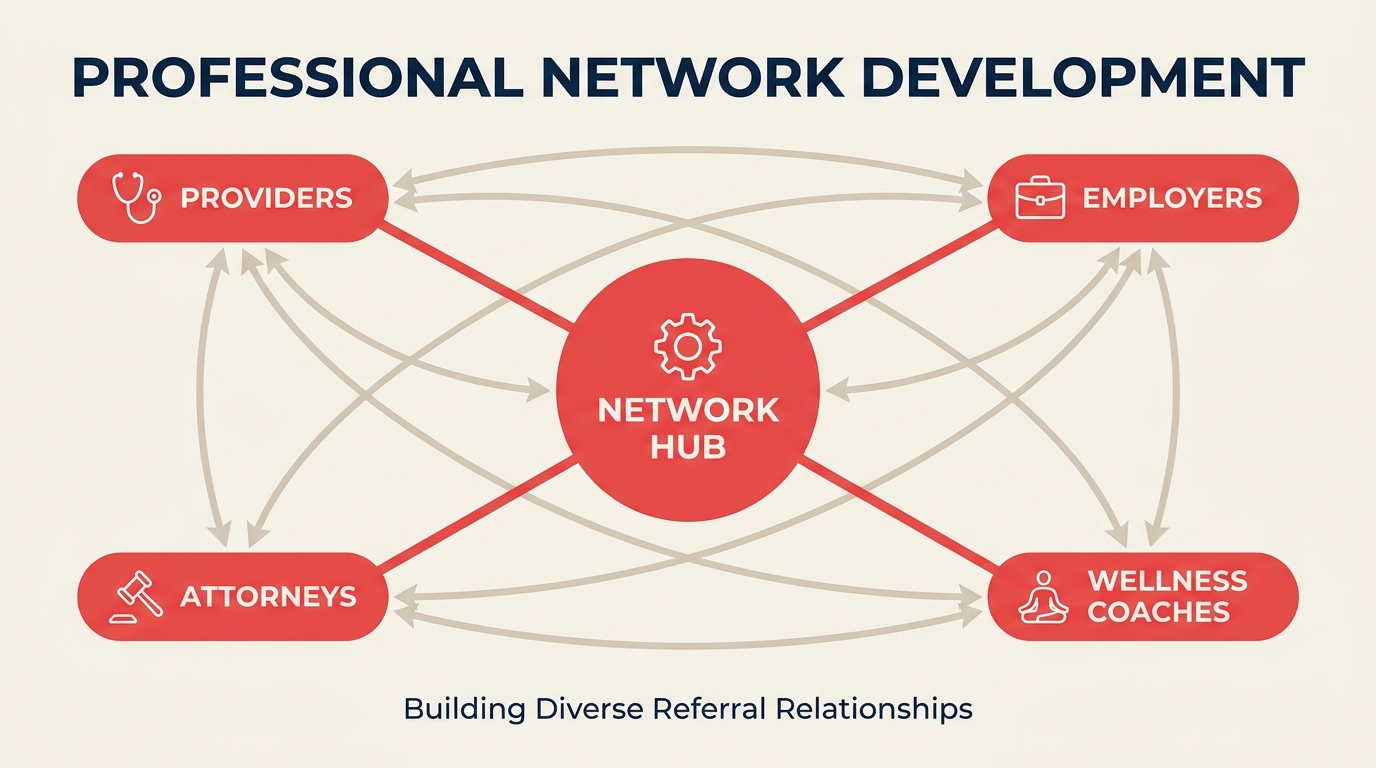
Professional network development expands the referral base beyond the medical community. Employers, attorneys, human resources professionals, coaches, school administrators, and community leaders all have relationships with people who need healthcare services. Many of them don't have a go-to healthcare provider they refer to. That's an opportunity.
This guide focuses on building the non-physician professional relationships that create a diversified, resilient referral network.
Why Expand Beyond Physician Referrals
Physician referral network development is well-documented and important. But it has limits.
Physician referrals are highly regulated. The Stark Law and Anti-Kickback Statute govern relationships between healthcare providers and referring physicians. There are compliance rules about meals, gifts, and anything that could be interpreted as compensation for referrals. Navigating that correctly requires care.
Physician-to-physician relationships also take time to build and are subject to competitive pressure. A specialist who loses a hospital privileges dispute, moves practices, or starts competing for primary care patients can see referral volume drop quickly.
Non-physician professional networks operate under different dynamics. An employment attorney who refers clients experiencing workplace injury to an occupational medicine practice isn't subject to Stark Law considerations. A corporate HR director who recommends an employee wellness program to their benefit team is acting as a trusted advisor, not generating a regulated referral.
The regulatory environment is different, the relationship dynamics are different, and the patient profiles are often different in valuable ways. Patients who come through professional networks frequently have insurance coverage, are motivated to address their health issues, and have some form of pre-qualification from the referring professional. A structured professional referral exchange turns these one-off introductions into a reliable, two-way stream.
Categories of Non-Physician Professional Referrers
Different practice types benefit from different non-physician networks. Here's a framework by referral category.
Employer and Human Resources Relationships
Employers have a direct interest in the health of their workforce. Workers' compensation costs, absenteeism, disability claims, and productivity all connect to healthcare quality and access.
HR directors, benefits managers, and occupational health coordinators at mid-size companies (50-500 employees) are particularly valuable targets. They make decisions about which providers to recommend through their employee assistance programs, occupational health panels, and informal wellness initiatives.
What you offer them: faster access, coordination for work-related injuries, clear communication about work capacity, and outcomes data.
What they want from you: reliability, speed of service for their employees, clear documentation for workers' comp, and a contact person they can call when something complicated comes up.
Practice types that benefit most: occupational medicine, orthopedics, physical therapy, mental health, primary care.
Legal Professionals
Personal injury attorneys, workers' compensation attorneys, and social security disability attorneys frequently need to refer clients to medical providers for evaluation, treatment, and expert testimony.
The relationship requires transparency and professionalism. You're not adjusting findings to support legal claims; you're providing objective medical evaluation and documentation. Attorneys who understand that distinction become consistent referral sources. Those who don't aren't referral partners you want.
General practice and estate planning attorneys often refer clients to elder care specialists, cognitive assessment practices, or specialists who work with aging populations. That's a less obvious connection but a consistent one.
Build these relationships through bar association health committee participation, speaking at CLE events on medical-legal topics, or simply making direct contact with attorneys in your referral area.
Wellness and Fitness Professionals
Personal trainers, nutritionists, yoga studios, chiropractors (for non-competing specialties), and wellness coaches all interact regularly with people who have healthcare needs.
A personal trainer whose client is experiencing persistent joint pain needs a trusted referral they can make with confidence. A nutritionist working with a client managing type 2 diabetes needs a primary care physician who understands metabolic health. A wellness coach working with executives on stress reduction may refer to mental health providers.
These relationships are informal but high-quality. The referrer has genuine knowledge of the patient, the patient trusts the referrer, and the match tends to be appropriate.
Connect with wellness professionals through shared facilities, community health events, or professional associations. Send back-referrals when appropriate (recommending their services to your patients builds the reciprocal relationship).
School and Educational Institutions
School nurses, athletic trainers, and counselors at K-12 schools and universities are in regular contact with students and families who need healthcare referrals. Sports medicine practices, pediatric specialists, and mental health providers benefit most from these relationships.
Educational relationships also work in the other direction: offering school health education, sports physical screenings, or lunch-and-learn sessions for staff puts your practice in front of school communities.
Universities often have formal processes for approving off-campus referral relationships. Primary and secondary schools tend to work more informally. Both are worth pursuing.
Financial Advisors and Accountants
This category surprises most practice owners. But financial advisors working with clients approaching retirement or managing chronic illness often need trusted healthcare referrals. Long-term care planning involves healthcare assessments. Estate planning intersects with cognitive and functional capacity evaluations.
CPAs and financial planners who work with self-employed professionals often see the healthcare side of their clients' decisions: what's worth paying out-of-pocket, which specialists are worth the premium cost, where to go for complex diagnoses.
These relationships work best for specialty practices and high-value service lines. An orthopedic surgeon or fertility specialist whose services are often paid out-of-pocket benefits from referrals from advisors who know their clients can and will pay.
Building the Network: Practical Approach
Knowing who to target is one thing. Actually building relationships with non-physician professionals takes consistent, deliberate activity.
Community Engagement Events
Community health events serve double duty: they demonstrate community commitment and create natural relationship-building opportunities with exactly the kinds of professionals described above.
A free screenings event at a local gym creates connections with fitness professionals. A lunch-and-learn for HR managers at a local business association builds employer relationships. A joint event with an attorney's office on legal rights for injured workers positions you with the legal community.
These events require planning and coordination but create authentic relationship context. People who met you at an event where you were serving the community are different from cold-call contacts.
Association Membership and Participation
Every professional category has associations. HR professionals have SHRM chapters. Attorneys have bar associations. Personal trainers have NASM and ACSM. Financial advisors have FPA chapters.
Join the associations where your target referral partners gather. Attend meetings consistently enough that people recognize you. Look for speaking opportunities on health-related topics relevant to their professional work. A presentation on "Managing Workers' Comp Costs" for a local HR association is genuinely valuable to that audience and positions you as an expert and resource.
Systematic Relationship Management
Professional network development fails when it's treated as a project rather than an ongoing activity. Build contact management into your practice operations.
Track non-physician referral relationships in your CRM or practice management system. Note how you met each contact, what they've referred, and when you last had meaningful contact. Set reminders for follow-up.
The practices with the strongest non-physician networks aren't the ones who attended the most networking events. They're the ones who maintained consistent contact over years with the contacts who had the most potential.
Reciprocal Value and Back-Referrals
Professional relationships work when both parties receive value. When your patients need services you don't provide, refer them to your network contacts. A physical therapist who refers shoulder injuries to an orthopedic surgeon expects that surgeon to refer post-surgical patients back for rehabilitation.
The same principle applies to non-healthcare professionals. When your patients need an employment attorney, a financial advisor, or a personal trainer, make specific referrals to trusted contacts in your network. That reciprocity, over time, is what converts a casual acquaintance into a consistent referral source.
Compliance Considerations
Non-physician professional relationships carry fewer regulatory constraints than physician relationships, but they're not regulation-free.
Healthcare marketing compliance principles apply to referral relationships. Don't offer or imply financial compensation for referrals. Maintain documentation of professional relationships. Be careful about arrangements that could be interpreted as patient steering.
For employment relationships, understand the requirements for treating workers' compensation patients in your state. Know what documentation employers need and provide it promptly. Clean execution on the operational side keeps employer relationships strong.
For legal relationships, understand what documentation and communication requirements exist for medicolegal cases. Ask attorneys what they need from you before they start sending cases.
Measuring Network Development
Track non-physician referral sources as part of your overall healthcare practice metrics. Monitor:
- New patients by referral source category (employer, legal, wellness, etc.)
- Volume trends by individual referral partner
- Conversion rate from referral to scheduled appointment
- Patient outcomes and satisfaction for different referral sources
Review these quarterly. Double down on relationships that produce consistent, qualified referrals. Be honest about relationships that haven't developed despite your investment.
Not every professional relationship becomes a referral source. But the ones that do tend to be durable, since they're based on genuine professional trust rather than directory placement or ad spend.
Integration with Practice Growth Strategy
Professional network development works best as part of a broader growth system, not as a standalone initiative.
When specialty practice marketing creates awareness among potential referring professionals, network development converts that awareness into relationships. When those relationships send patients, your patient retention strategy keeps them engaged and increases lifetime value.
The practices that grow most sustainably build multiple referral channels in parallel: physician referrals, digital lead generation, professional networks, and patient referrals from satisfied existing patients. No single channel is large enough to carry the full load indefinitely, but together they create the consistent, diverse patient flow that makes a practice genuinely resilient.
Start with the professional category most relevant to your specialty and market. Build one relationship at a time. Stay consistent, provide value, and follow through on your referrals. Over two to three years, a serious professional network development effort transforms your referral mix in ways that physician referrals and advertising alone can't match.
Key Facts
- Non-physician referral relationships (employers, attorneys, wellness professionals) operate under fewer regulatory constraints than physician referral relationships.
- Employer and HR relationships are particularly valuable for occupational medicine, orthopedics, physical therapy, and mental health practices.
- Personal injury and workers' comp attorneys need reliable medical evaluation and documentation; practices that deliver consistently become preferred referral partners.
- Back-referrals (sending your patients to network contacts when appropriate) are what convert casual acquaintances into consistent referral sources.
Frequently Asked Questions about Professional Network Development for Healthcare Practices
Does Stark Law apply to non-physician referral relationships?
Stark Law and the Anti-Kickback Statute primarily govern financial relationships between healthcare providers and referring physicians/entities that receive Medicare/Medicaid payments. Non-physician professional relationships (employers, attorneys, fitness professionals) are generally not subject to Stark Law, though Anti-Kickback principles about avoiding compensation for referrals still apply broadly.
How long does it take to build a productive non-physician referral network?
Expect 12-24 months before seeing consistent referral volume from new professional relationships. The relationships that produce the highest volume typically have been cultivated for 2-3 years before reaching full productivity. Prioritize contacts with the highest potential early so they have more time to develop.
What's the best way to approach an HR director about a professional relationship?
Lead with value, not a sales pitch. Offer something specific: a lunch-and-learn for their team on occupational health, a guide to workers' compensation management, or a direct contact for urgent employee health questions. The HR director who sees you as a resource rather than a vendor wanting their business is far more likely to recommend you.
Should we track non-physician referrals separately from physician referrals?
Yes. Track each referral source category separately, and track individual relationships within categories. The data reveals which professional categories and which specific contacts produce the most value, which lets you invest your relationship-building time where it matters most.

Senior Operations & Growth Strategist
On this page
- Why Expand Beyond Physician Referrals
- Categories of Non-Physician Professional Referrers
- Employer and Human Resources Relationships
- Legal Professionals
- Wellness and Fitness Professionals
- School and Educational Institutions
- Financial Advisors and Accountants
- Building the Network: Practical Approach
- Community Engagement Events
- Association Membership and Participation
- Systematic Relationship Management
- Reciprocal Value and Back-Referrals
- Compliance Considerations
- Measuring Network Development
- Integration with Practice Growth Strategy
- Key Facts