Dental Practice Lead Funnel: Converting Inquiries to Lifetime Patients
Turn this article into takeaways for your work.


Each assistant summarizes the article only for you and suggests best practices for your work.
The dental marketplace is more competitive than ever. Patients have abundant choices, easy access to online reviews, and high expectations for both clinical quality and customer experience. Winning practices don't just generate leads. They build systematic funnels that convert inquiries into appointments and first-time patients into loyal advocates.
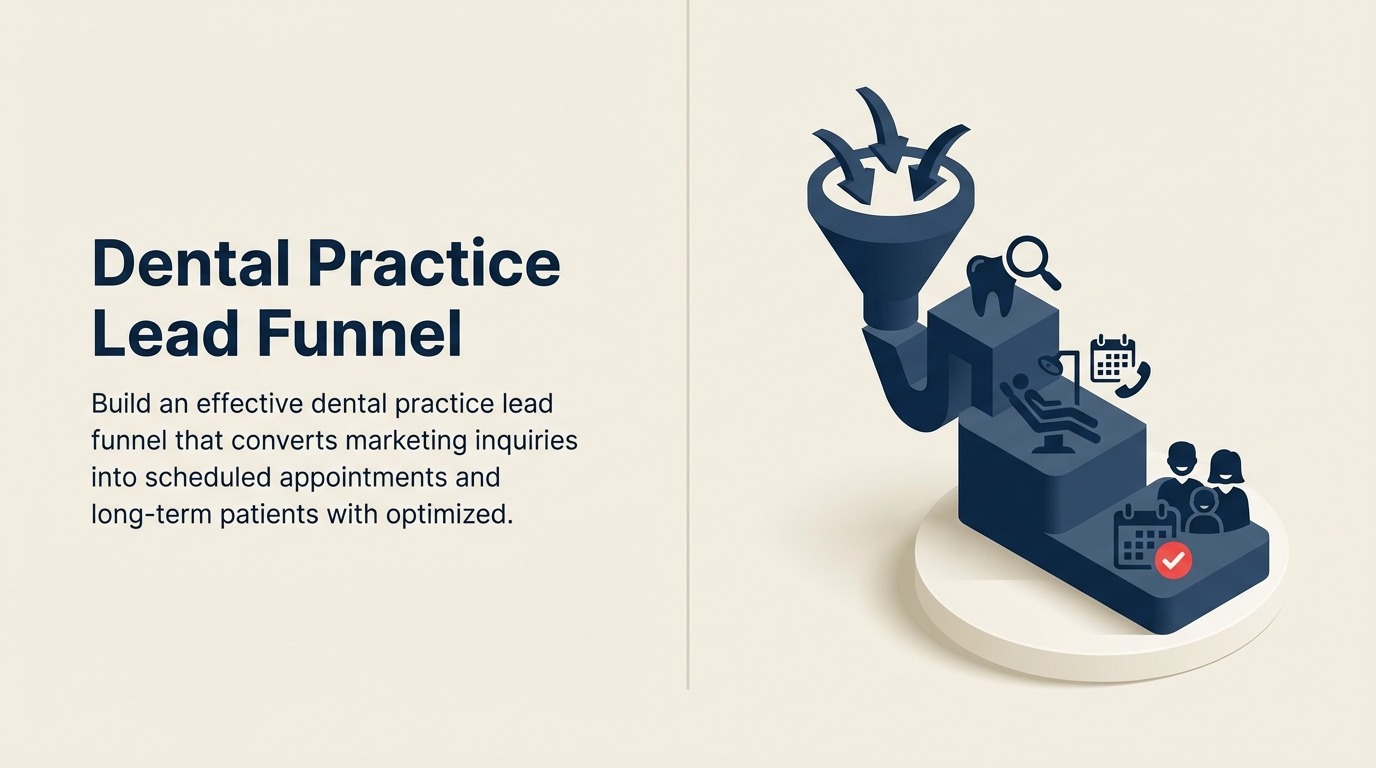
Your lead funnel represents the patient's journey from first awareness of your practice through becoming a regular patient. Every stage presents opportunities for optimization and risks of losing prospects to competitors.
If you're struggling with lead conversion, experiencing high drop-off rates, or wondering why marketing investments don't translate to new patients, understanding and optimizing your funnel is essential for sustainable growth.
Understanding the Dental Patient Journey
Before building your funnel, understand the psychological and practical journey prospective patients travel when selecting a dental practice.
Awareness Triggers
Different circumstances drive people to seek new dental providers:
Acute Pain or Dental Emergency: Immediate need creates urgency but also makes price and convenience primary decision factors. These patients often become loyal if you solve their problem effectively and demonstrate long-term value.
Cosmetic Interest: Desire for smile improvement (whitening, veneers, orthodontics) creates a more considered purchase decision. These patients research extensively and prioritize results and provider credentials over price.
Life Changes: Moving to a new area, changing insurance, or family changes (new baby, marriage) create natural switching points when patients seek new providers.
Insurance Changes: Annual open enrollment or job changes often drive dental practice selection based on network participation.
Preventive Care Timing: When it's been too long since their last cleaning, many patients seek a new practice rather than returning to a provider they've neglected.
Understanding which triggers dominate your lead sources helps you tailor messaging and conversion tactics.
Research and Comparison Behavior
Modern dental patients are informed consumers who research before calling:
Online Reviews: 90%+ of patients check online reviews before contacting a dental practice. The Federal Trade Commission (FTC) provides guidance on review solicitation and testimonial regulations. Your Google, Yelp, and Healthgrades ratings significantly impact whether prospects even enter your funnel.
Website Evaluation: Your website creates first impressions. Prospects evaluate professionalism, service offerings, technology, and whether the practice "feels right" before making contact.
Insurance Verification: Most patients prioritize in-network providers. They'll check your website and call to confirm insurance acceptance before booking.
Convenience Factors: Location, parking, hours, and appointment availability all factor into the decision. Practices offering evening/weekend hours or same-day appointments have competitive advantages.
Social Proof: Before/after galleries, patient testimonials, and social media presence build credibility, particularly for cosmetic services.
Decision Factors
When comparing practices, patients weigh multiple factors:
Trust and Credibility: Provider credentials, experience, technology, and professional affiliations influence perceived quality.
Cost and Insurance: While not always the primary factor, out-of-pocket costs matter. Clear communication about insurance and payment options reduces friction.
Convenience: Proximity to home/work, appointment availability, and ease of scheduling significantly impact choice.
Patient Experience: Friendly staff, comfortable environment, minimal wait times, and respectful treatment differentiate practices.
Technology: Digital x-rays, same-day crowns, or other advanced technology appeals to patients valuing modern care.
Specialty Services: Comprehensive service offerings (implants, orthodontics, sedation) attract patients preferring one-stop care.
Booking Preferences
How patients want to schedule affects your conversion rates:
Phone Calls: Still the dominant booking method, especially for older demographics and complex needs. Phone handling quality directly impacts conversion.
Online Scheduling: Growing rapidly, particularly for younger patients and routine appointments. 24/7 availability captures patients researching outside business hours.
Text/Chat: Emerging preference for quick questions and simple scheduling. Practices offering text communication see higher engagement.
Forms/Email: Least preferred but acceptable for non-urgent inquiries and information requests.
Supporting multiple booking channels maximizes conversion across different patient preferences.
Top of Funnel - Lead Generation
Filling your funnel with qualified prospects requires multi-channel lead generation aligned with your target patient profile.
Digital Marketing Channels
Online channels dominate dental lead generation:
Search Engine Optimization: Ranking for keywords like "dentist near me," "emergency dentist [city]," or "cosmetic dentistry [area]" captures high-intent searches. Your healthcare SEO strategy should prioritize local search dominance.
Google Ads: Pay-per-click advertising for competitive keywords provides immediate visibility. Target specific services (implants, orthodontics, emergency care) with dedicated landing pages.
Google Business Profile: Optimized Google My Business for healthcare listings capture the majority of local search traffic. Photos, reviews, posts, and attributes significantly impact visibility and conversion.
Social Media Marketing: Facebook and Instagram ads targeted by location and demographics drive awareness and appointment bookings, particularly for cosmetic services.
Content Marketing: Educational blog posts, videos, and FAQs attract search traffic while building trust and demonstrating expertise.
Referral Programs
Existing patients are your best lead sources when properly motivated through referral-based growth strategies:
Structured Referral Incentives: Clear programs rewarding patients who refer friends and family through a client referral program. Common incentives include credit toward services, discounted whitening, or gift cards.
Making Referrals Easy: Provide referral cards, shareable links, and simple ways for patients to recommend your practice.
Ask Explicitly: Train staff to request referrals from satisfied patients during checkout or follow-up communications.
Highlight New Patient Experience: When existing patients understand you'll take great care of their referrals, they're more willing to recommend you.
Community Presence
Local visibility generates leads and builds brand recognition:
Community Events: Health fairs, school events, and local festivals put your practice in front of potential patients.
School Programs: Educational presentations about dental health in schools create family awareness.
Business Networking: Chamber of Commerce membership and B2B networking generate leads and employer partnerships.
Sponsorships: Local sports teams, charity events, or community organizations build brand visibility.
Strategic Partnerships: Relationships with pediatricians, orthodontists, or other healthcare providers create referral channels.
Insurance Directory Listings
Don't overlook traditional lead sources. The American Dental Association (ADA) provides resources on insurance participation and provider directory management:
Insurance Website Listings: Ensure your practice appears in online provider directories for all accepted insurance plans with complete, accurate information.
Healthgrades, Zocdoc, and Directories: Maintain comprehensive profiles on healthcare directories where patients search for providers.
Profile Optimization: Complete all profile fields, add photos, describe your practice personality, and encourage reviews on these platforms.
Quality new patient lead generation requires consistent investment across multiple channels rather than over-reliance on any single source.
Middle of Funnel - Lead Nurturing
Once prospects enter your funnel, systematic nurturing moves them toward booking appointments.
Website Conversion Optimization
Your website must convert visitors to contacts:
Clear Call-to-Action: Prominent "Book Appointment" or "Call Now" buttons on every page, particularly above the fold on the homepage.
Click-to-Call: Phone numbers that dial directly from mobile devices remove friction for phone-preferred patients.
Online Scheduling Integration: Embedded scheduling from online scheduling systems allows immediate booking without phone calls.
Trust Indicators: Display credentials, technology, patient reviews, and professional associations prominently.
Service Information: Clear descriptions of services offered with pricing transparency when possible.
New Patient Information: Dedicated page explaining what new patients should expect, required paperwork, insurance process, and first-visit experience.
Forms and Paperwork: Downloadable or online-completable forms let patients prepare before arrival.
Mobile Optimization: With 60%+ of traffic from mobile devices, ensure seamless mobile experience.
Phone Call Handling
Phone interactions remain critical conversion points:
Answer Promptly: Every ring increases abandonment risk. Answer within 3-4 rings or use call services that ensure someone always answers.
Professional, Friendly Greeting: "Thank you for calling [Practice Name], this is [Name], how may I help you?" sets a welcoming tone.
Needs Assessment: Ask questions to understand the caller's situation, urgency, and preferences before jumping to scheduling.
Insurance Discussion: Proactively address insurance questions. Know which plans you accept and communicate financial expectations clearly through financial policy communication.
Overcome Objections: Train staff to address common hesitations about cost, timing, or treatment needs.
Schedule Immediately: Don't let callers hang up without appointments. Offer specific dates/times rather than vague "when would you like to come in?" using appointment scheduling optimization techniques.
Confirmation and Follow-Up: Confirm appointment details, provide directions/parking info, and send confirmation via text or email.
Strong first contact process systems ensure consistency regardless of which team member answers.
Online Scheduling
Online scheduling captures leads outside business hours:
24/7 Availability: Patients researching at night or on weekends can book immediately rather than waiting to call.
Real-Time Availability: Display actual available appointment times rather than request forms requiring staff follow-up.
Minimal Friction: Keep required information minimal, name, contact info, preferred appointment time, and basic reason for visit.
Confirmation and Reminders: Automated confirmation emails/texts and appointment reminders reduce no-shows.
Integration with Phone System: Online appointments should appear in the same schedule system as phone bookings to prevent double-booking.
Mobile-Friendly Interface: Ensure the scheduling experience works seamlessly on smartphones.
Follow-Up Sequences
Not all prospects book immediately. Systematic follow-up recovers leads that would otherwise be lost:
Abandoned Form Follow-Up: If someone starts but doesn't complete an online scheduling form, automated email or text follow-up within 24 hours can recover the lead.
Post-Inquiry Follow-Up: After initial contact, if no appointment was scheduled, follow up within 2-3 days via their preferred contact method.
Pre-Appointment Reminders: 1-2 week reminder, 2-3 day reminder, and day-before confirmation maximize show rates.
Post-Appointment Follow-Up: After the first visit, thank you messages, satisfaction checks, and next appointment reminders keep patients engaged.
Re-Engagement Campaigns: For patients who inquired but never booked, periodic re-engagement (seasonal promotions, new services, special offers) may convert them eventually.
Bottom of Funnel - Conversion
When prospects arrive for their first visit, your focus shifts to delivering excellent experiences that create loyalty.
New Patient Experience
First impressions determine whether one-time patients become long-term relationships:
Welcoming Environment: Clean, comfortable office with friendly greeting immediately upon arrival.
Minimal Wait Time: Respect patients' time. If delays occur, communicate proactively and apologize.
Streamlined Intake: If you've collected information in advance, don't make patients repeat it. Confirm and update rather than starting fresh.
Provider Introduction: Spend time building rapport, understanding patient history and concerns, and explaining your approach.
Comprehensive Examination: Thorough initial exam establishes clinical credibility and identifies needs requiring follow-up.
Clear Communication: Explain findings in patient-friendly language, use visual aids, and ensure patients understand their oral health status.
Professional Interaction: Every team member interaction should be friendly, competent, and respectful.
Insurance and Financial Discussions
Money conversations handled poorly drive patients away:
Verification Before Visit: Verify insurance coverage before the appointment so you can discuss benefits accurately.
Transparent Pricing: Provide clear estimates for recommended treatment, breaking down what insurance covers and patient responsibility.
Payment Options: Offer multiple payment methods including payment plans, third-party financing (CareCredit, LendingClub), and discounts for cash payment.
No Surprises: Patients hate unexpected bills. Communicate all costs upfront and get agreement before proceeding.
Membership Plans: For uninsured patients, consider offering membership plans that provide preventive care and discounts. More on this in dental membership plans.
Treatment Plan Acceptance
Moving from diagnosis to treatment acceptance requires skill:
Prioritization: Present treatment options in priority order. What's urgent vs. what can wait?
Option Presentation: Offer good/better/best options when multiple approaches exist.
Value Communication: Explain benefits of treatment, not just clinical details. How will it improve their life?
Visual Aids: Use photos, models, or digital imaging to help patients understand problems and solutions.
Address Concerns: Invite questions and address fear, pain, cost, or time concerns explicitly.
Same-Day Treatment: When appropriate, offer to complete treatment the same day. This improves case acceptance rate optimization and patient convenience.
Scheduling Future Visits
Don't let patients leave without next appointments:
Schedule Before Leaving: Book the next visit while the patient is in the office. "Let's get your next cleaning scheduled before you leave."
Series Scheduling: For multi-visit treatment plans, schedule all appointments at once when possible.
Reminder Systems: Automated text/email reminders significantly reduce no-shows.
Reschedule Immediately: If someone cancels, work to reschedule during the cancellation call rather than leaving it open-ended.
Hygiene Recall: Systematic recall reactivation programs for 6-month cleanings create predictable appointment flow through your dental hygiene recall system.
Funnel Optimization
Systematic measurement and testing improves conversion at every stage.
Stage-by-Stage Conversion Tracking
Measure performance at each funnel stage:
Lead Volume: How many inquiries (calls, form submissions, online bookings) arrive each month?
Contact-to-Appointment Rate: What percentage of contacts convert to scheduled appointments? Benchmark: 60-80%
Appointment-to-Show Rate: What percentage of scheduled appointments actually arrive? Benchmark: 85-90%
New Patient-to-Active Patient Rate: What percentage of new patients return for second visits? Benchmark: 70-85%
Active Patient Retention: What percentage of active patients remain active year-over-year? Benchmark: 80%+
Drop-Off Analysis
Where are you losing prospects?
High Abandonment After Hours: If many website visitors come during evenings/weekends but don't convert, adding online scheduling or extended phone hours could help.
Low Phone Conversion: If many calls don't result in appointments, review call recordings (with consent) to identify training opportunities.
High No-Show Rate: Excessive no-shows suggest scheduling problems, inadequate reminders, or mismatch between patient urgency and appointment availability.
One-Visit Patients: If new patients don't return, examine the new patient experience. Exit surveys can reveal problems.
A/B Testing Opportunities
Systematic testing improves results:
Website Elements: Test different calls-to-action, page layouts, imagery, or messaging to increase conversion.
Phone Scripts: Try different approaches to common questions and measure appointment booking rates.
Follow-Up Timing: Test different timing for appointment reminders and follow-up sequences.
Offer Testing: Compare conversion rates for different new patient offers (free exam, discounted cleaning, etc.).
Email vs. Text: Measure which communication method generates better response for different patient segments.
Technology Integration
Modern technology stack improves efficiency:
Integrated Scheduling: Seamlessly connect online scheduling, phone system, and practice management software.
CRM Systems: Track leads through the funnel, automate follow-up, and measure conversion by source.
Call Tracking: Dedicated phone numbers for different marketing channels reveal which generate highest-quality leads.
Analytics Integration: Connect website analytics, call tracking, and practice management data for comprehensive funnel visibility.
Patient Communication Platforms: Centralize email, text, and patient portal communication for consistent engagement.
Metrics and Measurement
You can't improve what you don't measure. Key metrics guide optimization efforts:
Lead-to-Patient Conversion Rate
Overall funnel efficiency from initial inquiry to active patient:
Formula: (New active patients / Total leads) × 100
Benchmark: 40-60% depending on lead sources and practice type
Improvement Opportunities: If below benchmark, identify the specific stage where drop-off is highest and focus improvement there.
Cost Analysis
Understanding lead costs enables ROI-focused marketing:
Cost per Lead: Total marketing spend ÷ Number of leads generated
Cost per New Patient: Total marketing spend ÷ Number of new patients acquired
Cost per Active Patient: Total marketing spend ÷ Number of new patients who remain active after 6-12 months
Compare costs across different marketing channels to allocate budget to highest-ROI sources.
ROI Tracking
Patient lifetime value justifies lead generation investments:
Average Patient Lifetime Value: Calculate the average revenue a patient generates over their lifetime with your practice (typically 5-10 years).
Acceptable Acquisition Cost: If average patient lifetime value is $5,000, spending $200-400 to acquire a patient is highly profitable.
Channel-Specific ROI: Calculate return on investment for each marketing channel: (Revenue from channel - Channel cost) ÷ Channel cost
Break-Even Analysis: Know how much you can afford to spend per patient acquisition while maintaining profitability.
Building an effective dental lead funnel isn't about dramatic innovations, it's about systematic execution of proven conversion principles at every stage. The practices winning new patients consistently understand their funnel metrics, eliminate friction points, deliver excellent experiences, and continuously optimize based on data.
Your funnel's strength determines whether marketing investments translate to practice growth or waste money generating leads that never convert. By understanding the patient journey, optimizing each stage, tracking performance, and refining based on results, you create a patient acquisition machine that supports sustainable growth while delivering experiences that build loyalty and drive referrals.
Whether you're just starting to think systematically about lead conversion or already have established processes, there's always opportunity for improvement. Small optimizations to conversion rates at multiple stages compound into significant growth over time, more patients, higher retention, better profitability, and a more successful practice.

Senior Operations & Growth Strategist
On this page
- Understanding the Dental Patient Journey
- Awareness Triggers
- Research and Comparison Behavior
- Decision Factors
- Booking Preferences
- Top of Funnel - Lead Generation
- Digital Marketing Channels
- Referral Programs
- Community Presence
- Insurance Directory Listings
- Middle of Funnel - Lead Nurturing
- Website Conversion Optimization
- Phone Call Handling
- Online Scheduling
- Follow-Up Sequences
- Bottom of Funnel - Conversion
- New Patient Experience
- Insurance and Financial Discussions
- Treatment Plan Acceptance
- Scheduling Future Visits
- Funnel Optimization
- Stage-by-Stage Conversion Tracking
- Drop-Off Analysis
- A/B Testing Opportunities
- Technology Integration
- Metrics and Measurement
- Lead-to-Patient Conversion Rate
- Cost Analysis
- ROI Tracking