Multi-Location Practice Management: Scaling Healthcare Operations
Turn this article into takeaways for your work.


Each assistant summarizes the article only for you and suggests best practices for your work.
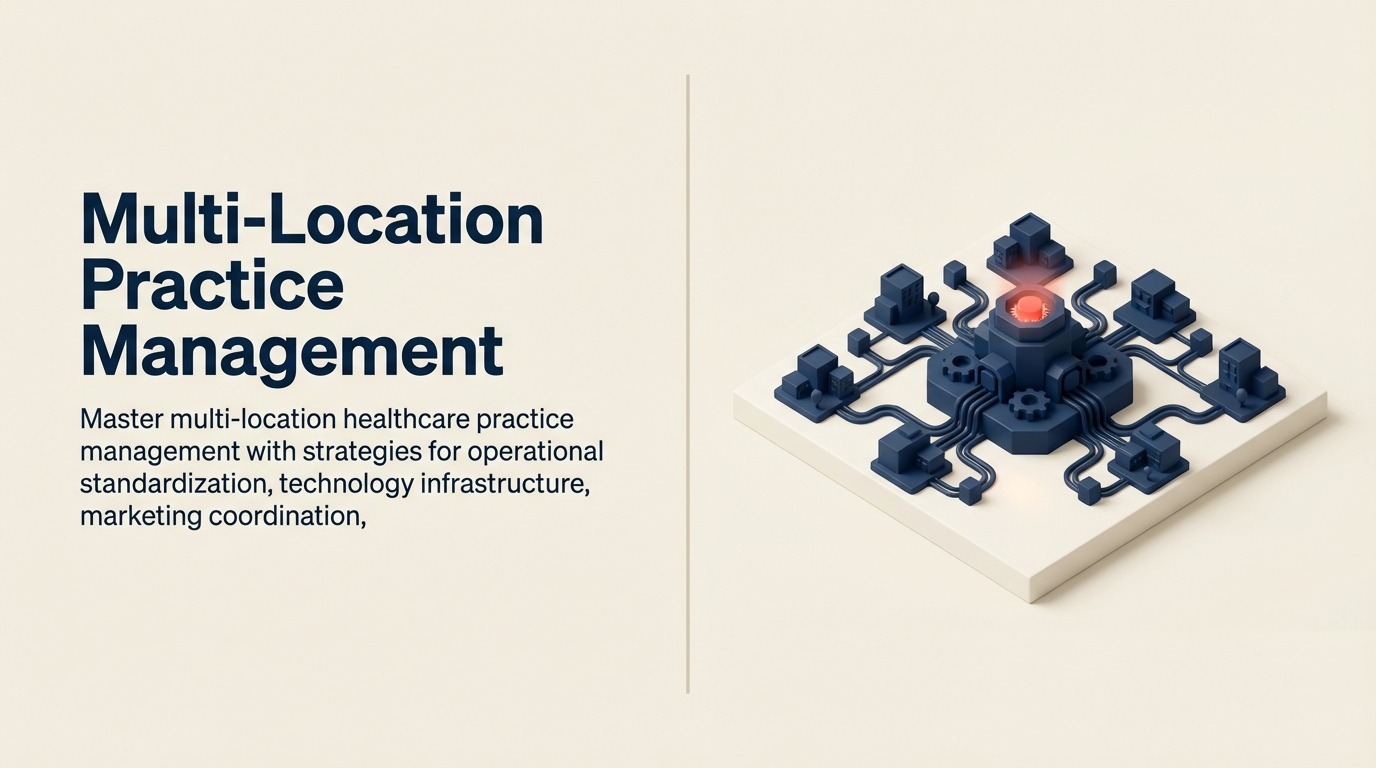
Operating multiple practice locations offers significant advantages: broader market reach, improved patient access, operational redundancy, and economies of scale. But it also introduces complexity that can undermine efficiency and quality if you don't manage it strategically.
The most successful multi-location practices don't just replicate their original site. They build systems that enable consistent operations, unified branding, and coordinated growth across all locations while allowing appropriate local flexibility.
If you're planning expansion or already managing multiple sites, understanding how to standardize operations, leverage technology, coordinate marketing, and maintain accountability is essential for capturing the benefits of scale without the chaos that often accompanies growth.
Strategic Planning for Expansion
Opening additional locations requires the same disciplined planning you applied to your first practice, but with added consideration for how new sites integrate with existing operations.
Market Analysis for New Locations
Before committing to a new location, conduct thorough market analysis:
Population Demographics: Evaluate the patient population size, age distribution, income levels, and insurance coverage patterns. Your new location should have sufficient density of your target patient population.
Competition Assessment: Identify existing providers serving the area. While some competition validates market demand, saturation can make patient acquisition prohibitively expensive.
Geographic Accessibility: Consider convenience factors like proximity to residential areas, parking availability, public transportation access, and visibility from main roads.
Payer Mix: Understand which insurance plans dominate the area and whether they align with your practice's payer relationships. Different neighborhoods can have dramatically different insurance profiles.
Growth Trajectories: Look at population trends, new housing developments, and economic indicators. Opening ahead of population growth captures market share early.
Site Selection Criteria
Once you've identified a promising market, specific site selection becomes critical:
Physical Space Requirements: Ensure adequate square footage for exam rooms, waiting areas, administrative space, and storage. Plan for future growth within the location.
Lease Terms: Negotiate favorable terms including renewal options, build-out allowances, and exit clauses if performance doesn't meet projections.
Proximity to First Location: Consider whether locations should be clustered for operational efficiency or spread across markets for broader reach. Locations 15-25 minutes apart often allow provider and staff flexibility while serving distinct patient populations.
Brand Consistency: The physical environment should align with your established brand. Patients visiting different locations should experience similar aesthetics and quality.
Financial Modeling
Develop detailed financial projections for each new location:
Startup Costs: Build-out, equipment, technology infrastructure, initial staffing, and working capital requirements. Second and subsequent locations often cost less than your first due to existing vendor relationships and operational knowledge.
Ramp-Up Timeline: Model realistic patient acquisition curves. New locations typically take 12-18 months to reach steady-state volume, depending on whether you're opening with established patient relationships or starting fresh.
Profitability Targets: Establish minimum performance thresholds for keeping locations open. What's the acceptable timeline to profitability? What's the break-even visit volume?
Cash Flow Management: Multiple locations strain cash flow during expansion. Ensure adequate reserves or credit facilities to cover operating expenses during the ramp-up phase.
ROI Analysis: Calculate expected return on investment including both tangible financial returns and strategic value (market presence, patient convenience, referral network expansion).
Timeline and Phasing
Rushing expansion creates operational chaos. Develop realistic timelines:
Pre-Opening Phase (6-12 months):
- Site selection and lease negotiation
- Design and build-out
- Licensing and credentialing
- Staff recruitment and training
- Technology setup
- Marketing campaign development
Soft Opening (1-3 months):
- Limited hours or services
- Staff training with real patients
- Process refinement
- Patient feedback collection
Full Operations:
- Complete service offering
- Full hours
- Performance monitoring against projections
Next Location Planning: Wait until a location reaches stable operations (typically 12-18 months) before opening another, unless you have exceptional capital and management capacity.
Operational Standardization
Consistency across locations creates efficiency, quality assurance, and a coherent patient experience while allowing economies of scale.
Policies and Procedures
Document every operational process so locations operate identically. The Joint Commission provides comprehensive standards for healthcare quality and safety that can guide policy development:
Clinical Protocols: Standardized approaches to common conditions, preventive care guidelines, referral processes, and quality measures ensure consistent care quality regardless of location.
Administrative Procedures: Uniform processes for appointment scheduling optimization, insurance verification process, patient check-in, payment collection, and billing reduce errors and enable staff to work across locations when needed.
Customer Service Standards: Scripted greetings, phone answering protocols, and patient communication guidelines create consistent patient experiences.
Compliance Requirements: Standardized HIPAA training, workplace safety procedures, and regulatory compliance protocols protect the entire organization.
Create an operations manual that's accessible to all staff and updated regularly as processes improve.
Training and Onboarding
New employees at any location should receive identical training:
Centralized Orientation: Bring new hires to your most established location for initial training. This exposes them to your culture and highest-performing operations.
Role-Specific Training: Develop training curricula for each position with specific competencies required for job performance.
Cross-Location Exposure: Have staff work shifts at multiple locations during training to understand that standards apply everywhere, not just their home location.
Ongoing Education: Regular training on new procedures, technology updates, and skill development keeps all locations current.
Mentorship Programs: Pair new staff with experienced employees who exemplify your practice culture and operational standards.
Your staff training and development systems become even more critical when scaling across locations.
Quality Standards
Define measurable quality metrics and monitor performance across all locations. The National Committee for Quality Assurance (NCQA) provides standardized quality measures used across healthcare:
Clinical Quality:
- Patient satisfaction scores
- Clinical outcome measures
- Infection rates and safety indicators
- Preventive care completion rates
Operational Quality:
- Wait time management averages
- Appointment availability
- Insurance verification accuracy
- Billing clean claim rates
Patient Experience:
- Net Promoter Scores
- Online reviews management ratings
- Patient retention rates
- Complaint resolution timeframes
When one location consistently underperforms, investigate whether it's a training issue, staffing problem, or systemic operational difference that needs correction through your provider productivity analysis.
Brand Consistency
Patients should recognize your practice regardless of which location they visit:
Visual Identity: Identical signage, logo usage, color schemes, and interior design create instant recognition.
Marketing Materials: Standardized brochures, forms, business cards, and patient education materials reinforce brand unity.
Communication Style: Consistent tone in phone interactions, emails, and patient communications establishes your practice personality.
Service Offerings: While locations might emphasize different services based on local demand, core offerings should be available at all sites.
Centralized vs Distributed Functions
Deciding which functions to centralize and which to localize significantly impacts efficiency and cost structure.
Administration and Billing
Most practices centralize these functions for significant cost savings:
Centralized Billing: Single billing department handling all locations eliminates duplicate positions and enables specialized expertise. Revenue cycle management benefits from economies of scale.
Centralized Credentialing: One team managing provider enrollment, revalidation, and payer relationship maintenance for all locations.
Centralized HR: Recruitment, benefits administration, payroll, and compliance oversight operate more efficiently when consolidated.
Distributed Reception: Front desk staff at each location handle scheduling, check-in, and basic patient questions but escalate complex issues to centralized specialists.
Marketing Coordination
Balance centralized strategy with localized execution:
Centralized Strategic Planning: Overall brand strategy, annual marketing plans, budget allocation, and campaign development benefit from unified direction.
Centralized Content Creation: Website management, social media content through digital lead generation, advertising creative, and marketing materials achieve better quality and consistency when produced centrally.
Localized Implementation: Community health events, local partnerships, location-specific promotions, and grassroots outreach work best when executed by people embedded in each market.
Shared Marketing Budget: While each location might have discretionary funds for local initiatives, major campaigns benefit from pooled resources enabling higher-impact initiatives.
HR and Staffing
Hybrid approaches often work best for staffing:
Centralized Recruitment: Dedicated HR staff managing the hiring pipeline, interviewing, background checks, and offer processes ensure consistent hiring standards.
Localized Management: Location managers supervise day-to-day staff performance, handle scheduling, and address local personnel issues.
Centralized Performance Management: Standardized performance review processes, compensation structures, and promotion criteria ensure fairness across locations.
Cross-Location Flexibility: Enable staff to pick up shifts at multiple locations, providing flexibility for both employees and practice needs.
Supply Chain and Procurement
Centralized purchasing captures volume discounts and reduces administrative burden:
Standardized Supplies: Use identical equipment, supplies, and materials across locations to simplify purchasing and enable bulk discounts.
Centralized Negotiation: Negotiate contracts with vendors for all locations simultaneously rather than site by site.
Distributed Inventory Management: Each location manages its own inventory but orders from approved vendor lists with pre-negotiated pricing.
Shared Equipment: For expensive equipment used infrequently, consider equipment-sharing arrangements between nearby locations.
Technology Infrastructure
Your technology stack must support multi-location operations while enabling centralized visibility and control.
Unified Systems Approach
Resist the temptation to have different systems at different locations. Unified technology is essential for efficiency:
Single EHR Instance: All locations operate on the same EHR system with shared patient records. Patients seen at multiple locations have unified medical histories.
Centralized Scheduling: Unified scheduling system allows patients to book at any location and enables staff to view availability across all sites.
Integrated Billing: Single billing system with location-specific tracking enables consolidated financial management while allowing performance analysis by site.
Unified Communication: Shared phone system with intelligent routing, unified voicemail, and the ability to transfer calls between locations.
Your comprehensive healthcare technology stack must be designed from the start to support multi-location operations.
Communication Platforms
Enable seamless communication across locations:
Team Collaboration Tools: Platforms like Microsoft Teams, Slack, or specialized healthcare communication tools allow staff across locations to collaborate effectively.
Video Conferencing: Regular all-hands meetings, provider consultations, and administrative meetings via video maintain organizational cohesion.
Shared Documentation: Cloud-based file storage with appropriate access controls ensures everyone works from current policies and procedures.
Intranet or Knowledge Base: Central repository for operational information, protocols, forms, and resources accessible from all locations.
Performance Dashboards
Visibility into operational performance across locations drives accountability and improvement:
Financial Dashboards: Revenue, collections, expenses, and profitability by location with drill-down capability.
Operational Metrics: Visit volume, provider productivity, appointment availability, and no-show rates by location and in aggregate.
Quality Indicators: Patient satisfaction, clinical outcomes, and safety metrics tracked consistently across sites.
Marketing Analytics: Patient acquisition sources, cost per patient, and marketing ROI by location.
Comparative Analytics: Rank locations on key metrics to identify top performers and those needing support.
Real-time dashboards accessible to location managers create accountability and enable rapid response to emerging issues.
Data Centralization
Centralized data enables sophisticated analysis:
Data Warehouse: Aggregate data from all systems (EHR, billing, scheduling, marketing) for comprehensive analytics.
Predictive Analytics: Use historical data to forecast patient demand, optimize staffing, and identify growth opportunities.
Benchmarking: Compare locations against each other and industry standards to drive continuous improvement.
Strategic Planning: Data-driven decisions about where to expand, what services to emphasize, and how to allocate resources.
Marketing Multi-Location Practices
Marketing complexity increases significantly with multiple locations, but coordinated strategies maximize impact.
Brand Management
Maintain unified brand identity while acknowledging location differences:
Single Website: One practice website with location-specific pages rather than separate websites for each location. This consolidates SEO value and simplifies patient navigation.
Unified Social Media: Single accounts for major platforms with location-specific content tagged appropriately. This builds larger audiences than multiple small accounts.
Consistent Messaging: Core value propositions, service descriptions, and brand personality remain constant across all locations.
Location-Specific Elements: Staff bios, directions, hours, and local partnerships are customized by location.
Local SEO for Each Location
Each location needs its own local search optimization:
Google Business Profile per Location: Separate, fully optimized profiles for each site with unique photos, reviews, posts, and attributes.
Location-Specific Landing Pages: Dedicated web pages for each location with unique content about the community, staff, and local directions/parking information.
Local Citations: Consistent NAP (name, address, phone) information across directories like Healthgrades, Zocdoc, Yelp, and insurance provider directories for every location.
Location-Specific Content: Blog posts, videos, and social media content featuring each location builds local relevance.
Geo-Targeted Advertising: PPC and social media ads targeted to specific radius around each location.
Centralized Campaigns
Leverage scale with practice-wide marketing initiatives:
Brand Awareness Campaigns: Broader media buys (TV, radio, billboards) promoting the overall practice with "multiple locations" messaging.
Content Marketing: Blog posts, videos, and educational content created centrally but distributed across all channels.
PR and Media Relations: Physician experts positioned for media opportunities promote the entire practice.
Patient Referral Programs: Practice-wide referral incentives work regardless of which location patients visit.
Seasonal Campaigns: Flu shot promotions, back-to-school physicals, or other seasonal initiatives executed consistently across all locations.
Location-Specific Promotion
Allow locations to respond to their unique market opportunities:
Community Partnerships: Relationships with local schools, businesses, and organizations.
Health Fairs and Events: Participation in neighborhood events and health screenings.
Local Sponsorships: Youth sports teams, community events, or charity partnerships.
Neighborhood Promotion: Direct mail, local newspaper ads, or community newsletter advertising.
Chamber of Commerce: Membership and active participation in local business organizations.
Performance Management
Clear accountability structures and performance monitoring ensure all locations contribute to overall success.
Location Benchmarking
Regular comparison of locations on key metrics:
Financial Performance:
- Revenue per provider FTE
- Collection rate percentage
- Operating expense ratio
- Profitability per location
Operational Efficiency:
- Visits per provider per day
- Patient wait times
- Schedule utilization rates
- Staff productivity metrics
Growth Indicators:
- New patient acquisition rate
- Patient retention percentage
- Service line growth
- Market share trends
Quality Metrics:
- Patient satisfaction scores
- Clinical quality measures
- Safety indicators
- Staff satisfaction and retention
Identify top performers to learn from and struggling locations requiring intervention.
Accountability
Establish clear ownership for location performance:
Location Managers: Responsible for day-to-day operations, staff performance, patient experience, and achievement of location-specific goals.
Regional Directors: If you grow beyond 3-4 locations, regional oversight of multiple locations provides an accountability layer between location managers and executive leadership.
Practice Leadership: Ultimate accountability for overall performance while supporting location leaders with resources, guidance, and strategic direction.
Transparent Reporting: Share performance data openly so location managers understand how their site compares and can learn from high performers.
Continuous Improvement
Create systems for identifying and scaling best practices:
Regular Leadership Meetings: Monthly or quarterly meetings of all location managers to share successes, challenges, and solutions.
Best Practice Documentation: When one location develops an innovative solution, document and implement across all sites.
Mystery Shopping: Periodic anonymous patient experience evaluations identify service gaps and training needs.
Patient Feedback Review: Regular analysis of patient comments and complaints to identify systemic issues.
Operational Audits: Periodic reviews ensure locations maintain compliance with policies and procedures.
The most successful multi-location practices view each location as both independent (requiring local accountability) and interdependent (benefiting from shared resources and knowledge). This balance enables scaling while maintaining the quality and culture that made the original practice successful.
Your healthcare practice metrics framework must be designed to capture both individual location performance and aggregate practice-wide results, enabling you to manage the complexity while pursuing your practice expansion strategy.
Managing multiple locations successfully requires discipline, systems, and commitment to both standardization and continuous improvement. When executed well, you create a practice that's more valuable than the sum of its parts, achieving scale efficiency, market dominance, and improved patient access while providing physicians with better work environments and staff with greater career opportunities. The complexity is real, but so are the rewards for practices that build the operational infrastructure to support sustainable multi-location growth in alignment with their overall healthcare services growth model.

Senior Operations & Growth Strategist
On this page
- Strategic Planning for Expansion
- Market Analysis for New Locations
- Site Selection Criteria
- Financial Modeling
- Timeline and Phasing
- Operational Standardization
- Policies and Procedures
- Training and Onboarding
- Quality Standards
- Brand Consistency
- Centralized vs Distributed Functions
- Administration and Billing
- Marketing Coordination
- HR and Staffing
- Supply Chain and Procurement
- Technology Infrastructure
- Unified Systems Approach
- Communication Platforms
- Performance Dashboards
- Data Centralization
- Marketing Multi-Location Practices
- Brand Management
- Local SEO for Each Location
- Centralized Campaigns
- Location-Specific Promotion
- Performance Management
- Location Benchmarking
- Accountability
- Continuous Improvement