What is Supply Chain? Why One Ship Stuck in a Canal Cost the World $400 Billion
Turn this article into takeaways for your work.


Each assistant summarizes the article only for you and suggests best practices for your work.
Remember March 2021? One ship blocks the Suez Canal. Within days:
- Car factories shut down (no parts)
- Coffee prices spike (no shipments)
- Toilet paper vanishes (again)
- Global trade loses $400 billion
That's supply chain. Invisible when it works. Catastrophic when it doesn't.
Supply Chain: Your Business's Circulatory System
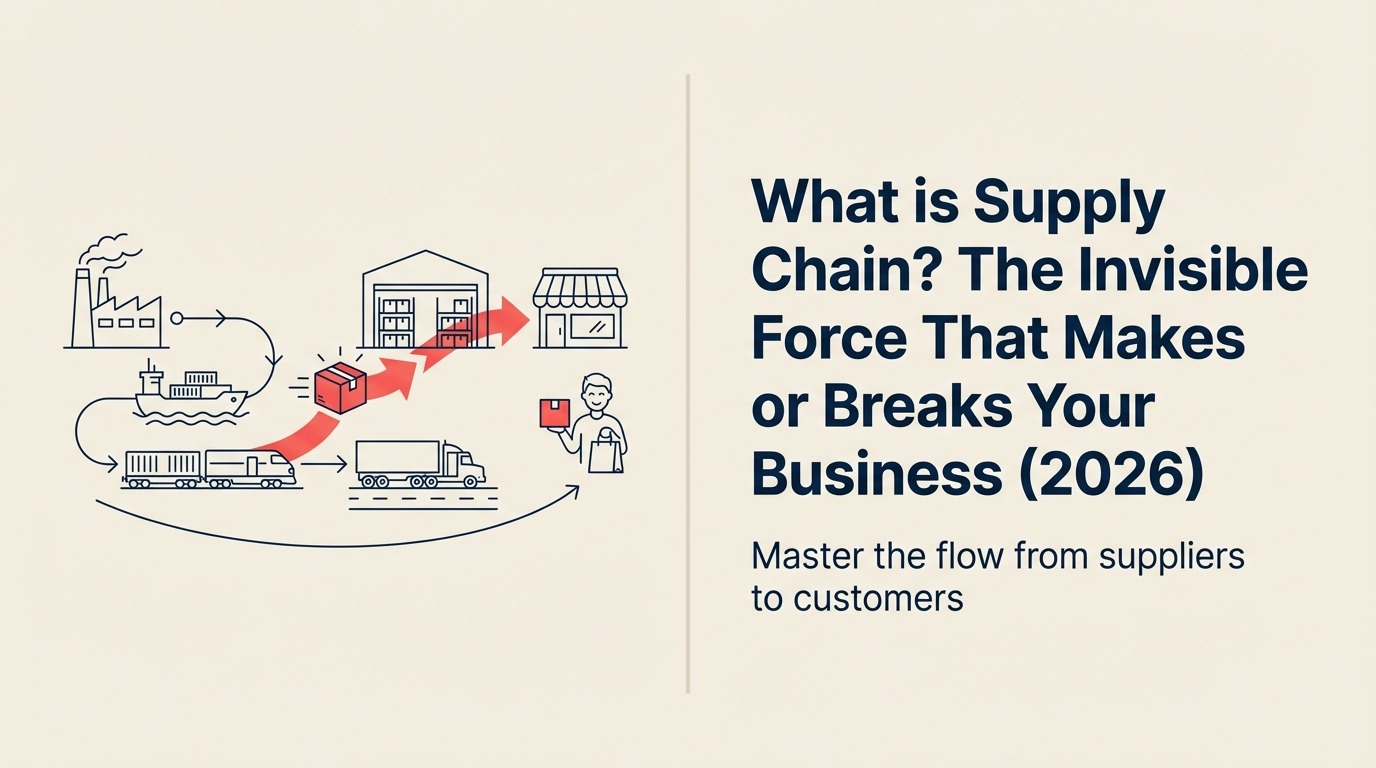
Supply Chain = The entire journey from raw materials to customer delivery
Think of it like your body's blood flow:
- Suppliers = Heart (pumping materials)
- Manufacturing = Organs (transforming inputs)
- Distribution = Arteries (moving products)
- Customers = Cells (receiving value)
Block any part, the whole system fails.
The Supply Chain Anatomy
Upstream (Where It Starts)
- Raw Material Suppliers - The very beginning
- Component Manufacturers - Making parts
- Sub-assemblies - Combining parts
- Your Suppliers - Direct relationships
Midstream (Where You Are)
- Inbound Logistics - Getting materials
- Operations - Making products
- Inventory - Storing products
- Quality Control - Ensuring standards
Downstream (Where It Goes)
- Outbound Logistics - Shipping out
- Distribution Centers - Regional hubs
- Retailers/Channels - Sales points
- End Customers - Final destination
Most CEOs focus on midstream. Winners manage end-to-end.
The Hidden Costs in Your Supply Chain
Average company supply chain costs: 10-15% of revenue Best-in-class: 4-8% of revenue Difference on $10M revenue: $600K-1.1M straight to bottom line
Where Money Hides
Inventory Carrying: 20-30% of inventory value annually
- Storage: 6%
- Capital: 10%
- Obsolescence: 8%
- Insurance: 3%
Transportation: 50-60% of logistics costs
- Fuel: 30%
- Labor: 25%
- Equipment: 20%
- Inefficiency: 25%
Poor Planning: 10-30% waste
- Rush shipments
- Stock-outs
- Excess inventory
- Quality issues
Supply Chain Metrics That Matter
The Cash-to-Cash Cycle
Days Inventory + Days Receivables - Days Payables = Cash Cycle
World-class: Negative (paid before paying) Good: 30-45 days Average: 60-90 days Poor: 120+ days
Perfect Order Rate
Orders delivered complete, on-time, damage-free, with correct documentation
Best-in-class: >95% Average: 85-90% Poor: <80%
Impact: Each 1% improvement = 1-3% revenue increase
Inventory Turnover
Cost of Goods Sold ÷ Average Inventory = Turns per Year
By Industry:
- Grocery: 12-15x
- Electronics: 8-10x
- Apparel: 4-6x
- Automotive: 6-8x
Higher turns = Less cash tied up
Supply Chain Resilience Score
- Single source dependencies: -20 points each
- Geographic concentration: -10 points per region
- Inventory buffers: +5 points per week
- Alternative suppliers: +10 points each
- Demand flexibility: +15 points
Score >70 = Resilient Score <50 = Vulnerable
The Amazon Supply Chain Revolution
How they redefined the game:
Traditional Model
Manufacturer → Distributor → Retailer → Customer Timeline: 30-60 days Markups: 50-100%
Amazon Model
Manufacturer → Amazon FC → Customer Timeline: 1-2 days Efficiency gain: 60%
The Innovations
- Predictive positioning - Products near you before you order
- Cross-docking - Never enters warehouse
- Robotic fulfillment - 5x faster picking
- Dynamic routing - Real-time optimization
Result: $500B revenue, 40% e-commerce market share
Supply Chain Strategies by Business Model
Just-In-Time (JIT)
Best for: Stable demand, reliable suppliers Benefits: Minimal inventory, high efficiency Risks: No buffer for disruption Example: Toyota (invented it)
Just-In-Case (JIC)
Best for: Volatile demand, critical products Benefits: Always have stock Risks: High carrying costs Example: Medical supplies post-COVID
Hybrid Approach
Best for: Most businesses Strategy: JIT for predictable, JIC for critical Benefits: Balanced risk/cost Example: Apple (JIT assembly, JIC chips)
Dropshipping
Best for: Low-capital startups Benefits: No inventory investment Risks: No control, low margins Example: Most Shopify stores
The 2026 Supply Chain Disruptions
Geopolitical Risks
- China tensions: 40% of global manufacturing
- Ukraine conflict: Grain, energy, metals
- Trade wars: Tariffs change overnight
- Mitigation: Diversify geography
Climate Impact
- Extreme weather: 2x more disruptions
- Water scarcity: Affecting production
- Carbon regulations: New costs
- Mitigation: Climate-proof routes
Technology Shifts
- AI demand forecasting: 50% better accuracy
- Blockchain tracking: Full transparency
- Autonomous vehicles: 24/7 delivery
- Mitigation: Invest or get left behind
Labor Challenges
- Driver shortage: 80,000 in US alone
- Warehouse workers: 70% turnover
- Port congestion: Months of delays
- Mitigation: Automation + better pay
Building Supply Chain Resilience
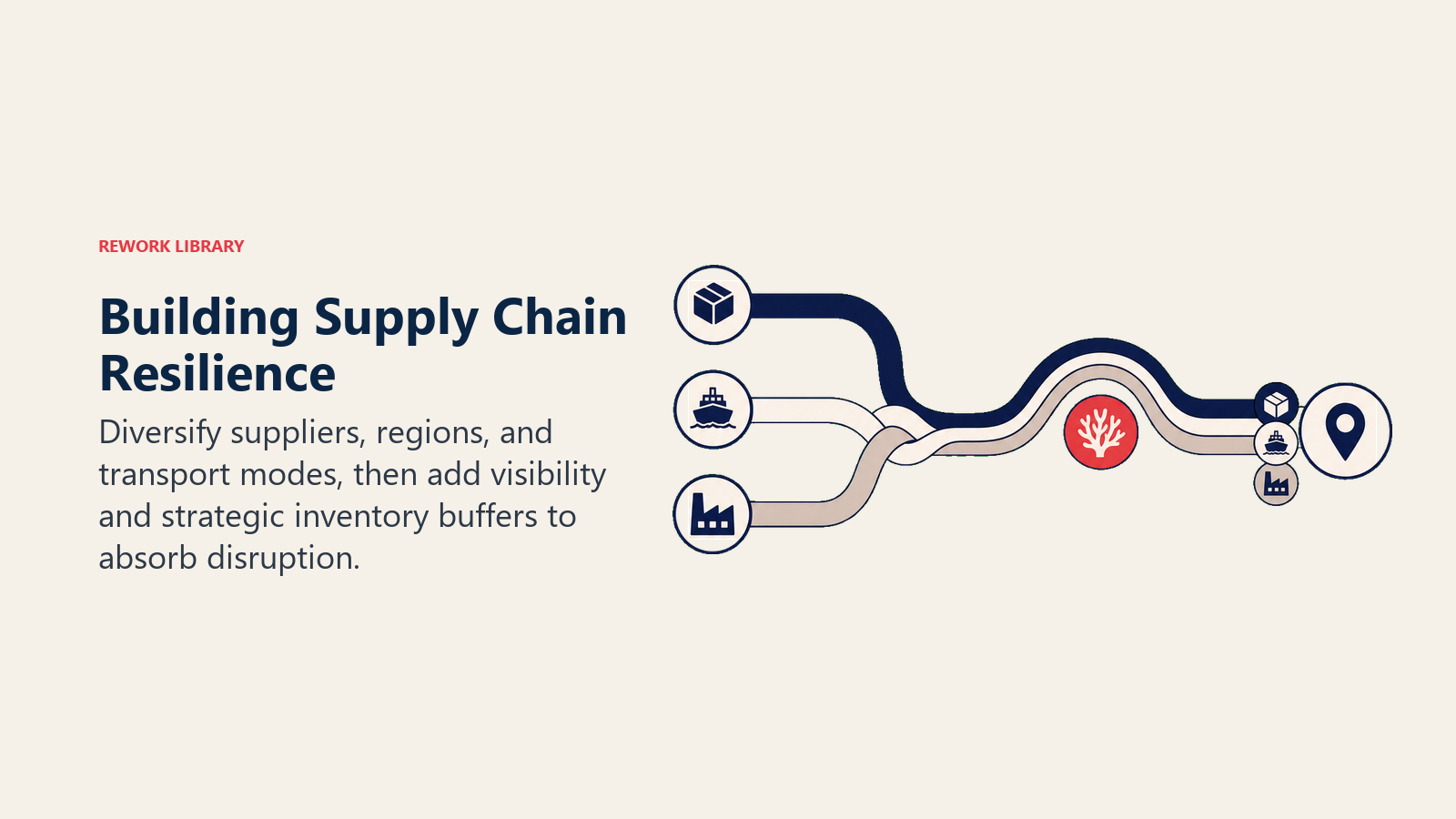
Resilience comes from giving critical flows more than one viable route, then using visibility and buffers to keep those routes available during disruption.
The Rule of Three
Never depend on:
- One supplier (have 3+)
- One region (spread across 3)
- One transportation mode (use 3)
Cost: 5-10% premium Benefit: 90% risk reduction
Visibility Technology
Without visibility: Flying blind
- React to problems after they happen
- Customers complain first
- Expensive rush solutions
With visibility: Full control
- GPS tracking on everything
- Predictive alerts
- Proactive solutions
- 30% cost reduction
Tools: Project44, FourKites, Shippeo
Inventory Strategy
Old way: Minimize at all costs New way: Strategic positioning
The 80/20 approach:
- 20% of SKUs = 80% of revenue → Extra stock
- 80% of SKUs = 20% of revenue → JIT
- Critical components → 3-6 month buffer
- Commodity items → Minimal stock
Supplier Relationships
Transactional (Old way):
- Lowest bid wins
- Switch frequently
- Adversarial negotiations
Partnership (New way):
- Long-term contracts
- Shared risk/reward
- Joint innovation
- 20-30% total cost reduction
Your Supply Chain Optimization Playbook
Week 1: Map Your Chain
- List all suppliers (tier 1, 2, 3)
- Track physical flow
- Document lead times
- Identify bottlenecks
Month 1: Measure Performance
- Calculate cash cycle
- Track perfect orders
- Analyze inventory turns
- Benchmark costs
Quarter 1: Quick Wins
- Negotiate payment terms
- Consolidate suppliers
- Optimize inventory
- Improve forecasting
Year 1: Transform
- Implement visibility tools
- Redesign network
- Build resilience
- Create competitive advantage
Technology Stack for Modern Supply Chain
Planning
- Demand Planning: o9, Kinaxis
- S&OP: SAP IBP, Oracle
- Inventory: Netstock, Lokad
Execution
- WMS: Manhattan, Blue Yonder
- TMS: Project44, Transporeon
- Track & Trace: FourKites, Shippeo
Analytics
- Dashboards: Tableau, PowerBI
- Optimization: Llamasoft, anyLogistix
- Risk Management: Resilinc, Interos
The Future of Supply Chain
Autonomous Everything
- Self-driving trucks: 2027 highways
- Drone delivery: 2026 rural
- Robot warehouses: Already here
- Impact: 50% cost reduction
Circular Economy
- Design for recycling
- Return chains
- Waste = raw material
- Regulation driven
Localization
- Regional manufacturing
- 3D printing
- Vertical farms
- Shorter chains
Real-time Everything
- Dynamic pricing
- Instant rerouting
- Predictive maintenance
- AI optimization
Your Action Plan
Today:
- Map your top 5 suppliers
- Calculate inventory days
- Find your weakest link
- Call that supplier
This Week:
- Complete supply chain map
- Analyze last disruption
- Get 3 visibility quotes
- Start resilience plan
This Month:
- Implement one visibility tool
- Negotiate better terms
- Add backup supplier
- Reduce one bottleneck
This Quarter:
- Full optimization plan
- 10% cost reduction
- 20% risk reduction
- Competitive advantage
The Bottom Line
Supply chain used to be about cost. Now it's about survival.
The companies that thrive in 2026 won't be those with the lowest costs. They'll be those with supply chains that bend but don't break.
Every day you ignore supply chain is a day you're one disruption away from disaster. But every improvement compounds into competitive advantage.
Your supply chain is either your biggest risk or your biggest moat. Which one is yours?
Start with visibility. Build in resilience. Optimize for flexibility. Because in today's world, the best supply chain wins.
Ready to go deeper? Master Operations Management for internal optimization or explore Risk Management for crisis preparation.
Part of the [Business Terms Collection]. Last updated: 2026-07-21
On this page
- Supply Chain: Your Business's Circulatory System
- The Supply Chain Anatomy
- Upstream (Where It Starts)
- Midstream (Where You Are)
- Downstream (Where It Goes)
- The Hidden Costs in Your Supply Chain
- Where Money Hides
- Supply Chain Metrics That Matter
- The Cash-to-Cash Cycle
- Perfect Order Rate
- Inventory Turnover
- Supply Chain Resilience Score
- The Amazon Supply Chain Revolution
- Traditional Model
- Amazon Model
- The Innovations
- Supply Chain Strategies by Business Model
- Just-In-Time (JIT)
- Just-In-Case (JIC)
- Hybrid Approach
- Dropshipping
- The 2026 Supply Chain Disruptions
- Geopolitical Risks
- Climate Impact
- Technology Shifts
- Labor Challenges
- Building Supply Chain Resilience
- The Rule of Three
- Visibility Technology
- Inventory Strategy
- Supplier Relationships
- Your Supply Chain Optimization Playbook
- Week 1: Map Your Chain
- Month 1: Measure Performance
- Quarter 1: Quick Wins
- Year 1: Transform
- Technology Stack for Modern Supply Chain
- Planning
- Execution
- Analytics
- The Future of Supply Chain
- Autonomous Everything
- Circular Economy
- Localization
- Real-time Everything
- Your Action Plan
- The Bottom Line