日本語

Tiered Commissions That Retain Your Top Producers

Maya at her desk reviewing three paper printouts of tier-bracket bars, the top tier rendered in coral red, focused calm expression

The first thing Maya's new Sales Ops hire told her, three weeks in, was that two of her top producers were sandbagging. Not on purpose, exactly, they'd just learned that the structure rewarded a smooth month over a great month. Maya's flat 8% commission, which had felt fair when the agency was five people, was now quietly training the team to play small.

This is the rebuild she did over the next quarter, the math that determined the thresholds, and the conversation she had with each agent before it went live.


Why Flat Commission Stops Working at Twenty-Five Agents

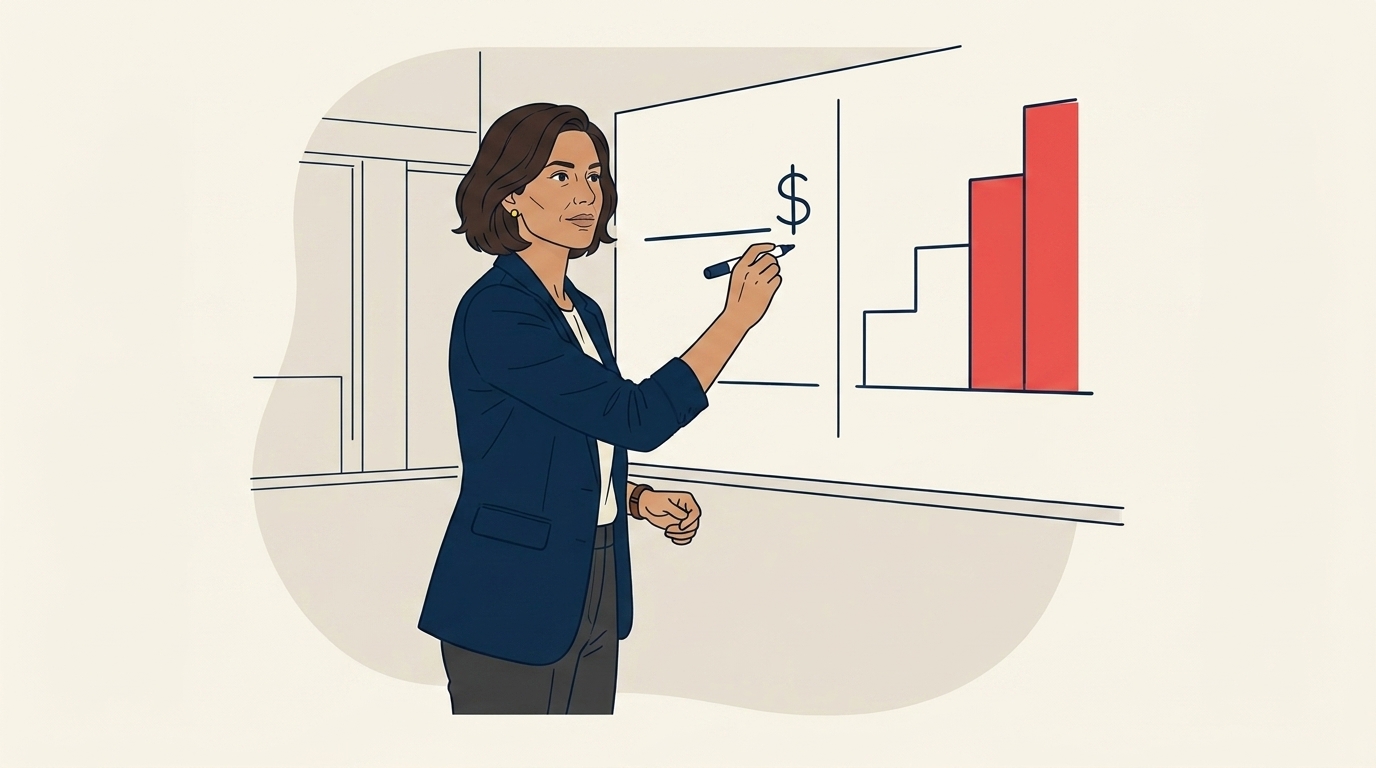
Maya at a whiteboard sketching a flat horizontal line representing flat commission, then drawing three rising steps beside it for tiers

A flat commission says: every dollar of bookings is worth the same to you. That's elegant when you're five people who all know what good looks like. At twenty-five it stops fitting because top producers know they can hit the agency's average with a fraction of the effort, and the structure offers them no reason to push past it.

The other failure mode is more subtle. Predictable months book payouts cleanly. Lumpy months, the kind top producers create when they land a big group booking, generate variance the agent has to absorb personally, because the flat structure pays the same percentage on every dollar regardless of difficulty.

What you want is the opposite. You want the structure to lean forward, to pay disproportionately more for the bookings that matter most.


The Three Tiers Maya Settled On

Maya at her laptop with three rising tier brackets visible on her screen, each labeled with a clean threshold number suggested by a thin coral line above it

The structure is three tiers, payable on a rolling-quarter basis (so a single big month doesn't permanently bump an agent down a tier the next month).

Tier 1 covers everything up to the agent's quota. Standard commission rate.

Tier 2 covers the dollars between quota and 130% of quota. Rate goes up by ~50%.

Tier 3 covers everything above 130% of quota. Rate effectively doubles compared to Tier 1.

The exact percentages aren't the point, agencies vary based on margin, deal size, and what the previous structure was. The structural point is that the math should make every additional dollar above quota visibly worth more than the one below it.


Where the Thresholds Come From

Maya at her desk with the Sales Ops hire, the two of them looking at a quarterly performance distribution chart on a laptop screen

Maya didn't set the thresholds by gut. The Sales Ops hire pulled the previous year's data and showed her the distribution. The median agent was hitting roughly 95% of quota. The top quintile was hitting 130-160%. The bottom quintile was hitting 60-75%.

The 130% threshold for Tier 3 wasn't aspirational. It was where the existing top performers were already operating. The point of the new structure wasn't to raise the bar. It was to start paying them properly for what they were already doing.

If your top agents are operating at 110%, your Tier 3 threshold sits at 110%. If they're at 150%, it sits at 150%. The threshold is descriptive, not prescriptive.


The Conversation She Had With the Top Performers

Maya at her office couch in a one-on-one with an agent figure, both visibly engaged, the agent leaning forward, Maya holding a printout of the new structure

Two of her top producers were the ones quietly sandbagging. She walked each of them through the new tiers individually before the agency-wide announcement. The conversation was four sentences long and she rehearsed it.

"Here's what your last four quarters would have paid under the new structure. Here's what they actually paid. The difference is X. We've been undervaluing the bookings you've been bringing in. This goes live next quarter."

Both producers stayed. Both were measurably more aggressive in the following quarter, not because they trusted the new structure yet, but because they wanted to test whether it would actually pay out. It did, and Q3 became the first quarter the agency exceeded plan in eighteen months.


What Happens to the Mid-Performers

Maya at a Friday team lunch with five agents around a table, casual mood, conversation visible, no whiteboard or formality

The bigger fear with tiered commission isn't the top performers. It's the middle. Mid-performers see the new top tier, decide they can't reach it, and disengage.

What actually happened in Maya's agency was different. Three mid-performers, watching the top producers chase Tier 3, started asking questions about how those producers were structuring their pipelines. The agency had quietly created an internal coaching motion that no manager had to organize.

One of those three mid-performers became a top performer over the following two quarters. The agency had unlocked a path that the flat structure had been hiding.


What Goes Wrong

Maya at her desk staring at a single underperforming agent's record on screen, considered expression, late afternoon light

Two failure modes show up in the first two quarters of any new tiered structure.

The first is a top performer hitting Tier 3 once and then expecting Tier 3 rates to stick on Tier 1 dollars the next quarter. The rolling-quarter design fixes this, tier rate applies only to the dollars in their quarter's bracket, not retroactively.

The second is a bottom performer who can't see how to make Tier 1 anymore and starts visibly disengaging. The structure hasn't caused this. The structure has revealed it. Maya's response was to have the manager do the conversation that had been overdue for two quarters, not to soften the structure.


When to Revise

Maya and the Sales Ops hire at a whiteboard reviewing the year-end distribution, their bodies positioned to suggest a planned annual review

The structure gets reviewed once a year, not quarterly. The point of stability is that agents can plan their year against it. Mid-year tinkering destroys trust.

The annual review looks at three things: did anyone live in Tier 3 for all four quarters (raise the threshold), did nobody hit Tier 2 for two consecutive quarters (lower the threshold or check whether quotas are off), and is the agency's blended commission cost still inside the planned envelope.

The structure Maya rebuilt has been revised twice in the three years since. Both times the change was a five-percentage-point shift in one threshold. Stability is more valuable than precision.


Further Reading