ブルー・オーシャン戦略:フレームワーク、ツール、事例
Turn this article into takeaways for your work.


Each assistant summarizes the article only for you and suggests best practices for your work.
ブルー・オーシャン戦略は、一世代の経営幹部に「競争を止め、創造を始める」ことを教えた戦略フレームワークです。飽和した市場での消耗戦に代わり、競合他社がまったく存在しない新たな市場空間を開拓する方法を提示します。
主要なポイント
- ブルー・オーシャン戦略の書籍は、2005年の発売以来46の言語で400万部以上を売り上げ、ビジネス戦略書の中で最も売れた書籍の一つとなっています(INSEAD Blue Ocean Strategy Institute、2024年)。
- KimとMauborgneは100年にわたる30業界での150のブルー・オーシャンの動きを研究してこのフレームワークを開発しました(Harvard Business Review、2004年)。
- シルク・ドゥ・ソレイユは、従来のサーカス業界に対してERRCフレームワークを適用することで、ケベックの小さな団体から年間収益10億ドル超の組織へと成長しました(Cirque du Soleil、2019年)。
ブルー・オーシャン戦略とは何ですか?
ブルー・オーシャン戦略は、企業が既存市場で競合他社と戦うことによってではなく、新たな未開拓の市場空間を創出することで競争を無意味にすることで、持続的な競争優位性を生み出せるという経営理論です。この概念は、INSEADの教授であるW. Chan KimとRenée Mauborgneによって開発され、2005年の同名の画期的な著書で発表されました。
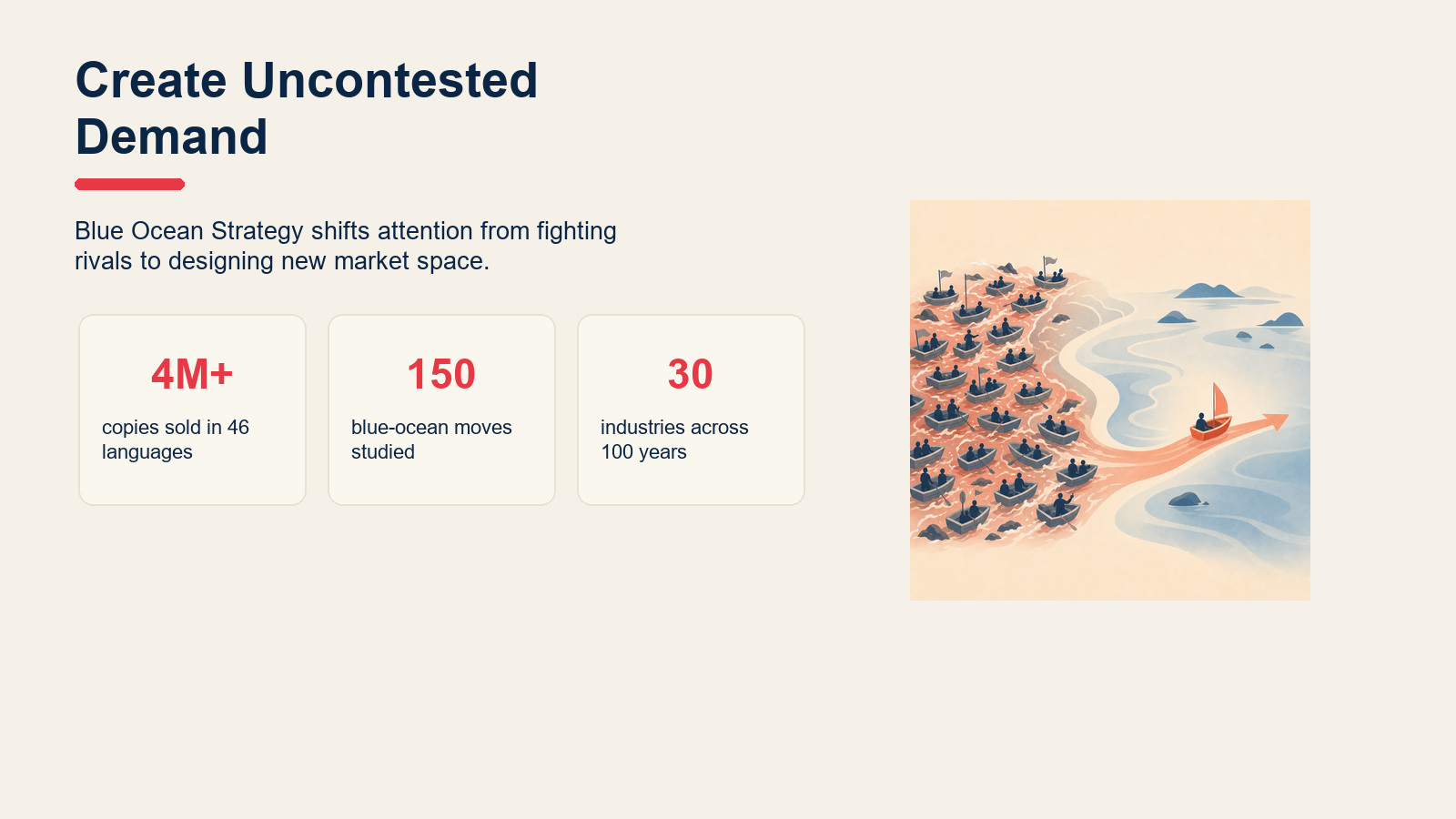
中核となる洞察は、ほとんどの企業がレッド・オーシャンの中で競争しているという点です。業界の境界が定まっており、企業同士が同じ顧客プールをめぐって争い、利益率を低下させ、製品・サービスのコモディティ化が進みます。ブルー・オーシャンはまだ存在しない市場空間です。競争に汚染されることなく、収益性の高い成長の可能性に満ちています。
このフレームワークは、Porterのファイブフォースやアンゾフマトリクスとともに戦略的計画の定番ツールとして位置づけられています。しかし、それらのツールが既存の競争を上手く乗り越える方法を教えてくれるのに対し、ブルー・オーシャン戦略はより根本的な問いを投げかけます。「そもそも競争しなくて済むとしたら?」
ブルー・オーシャンとレッド・オーシャン
2つの状態の対比を並べると理解しやすくなります。
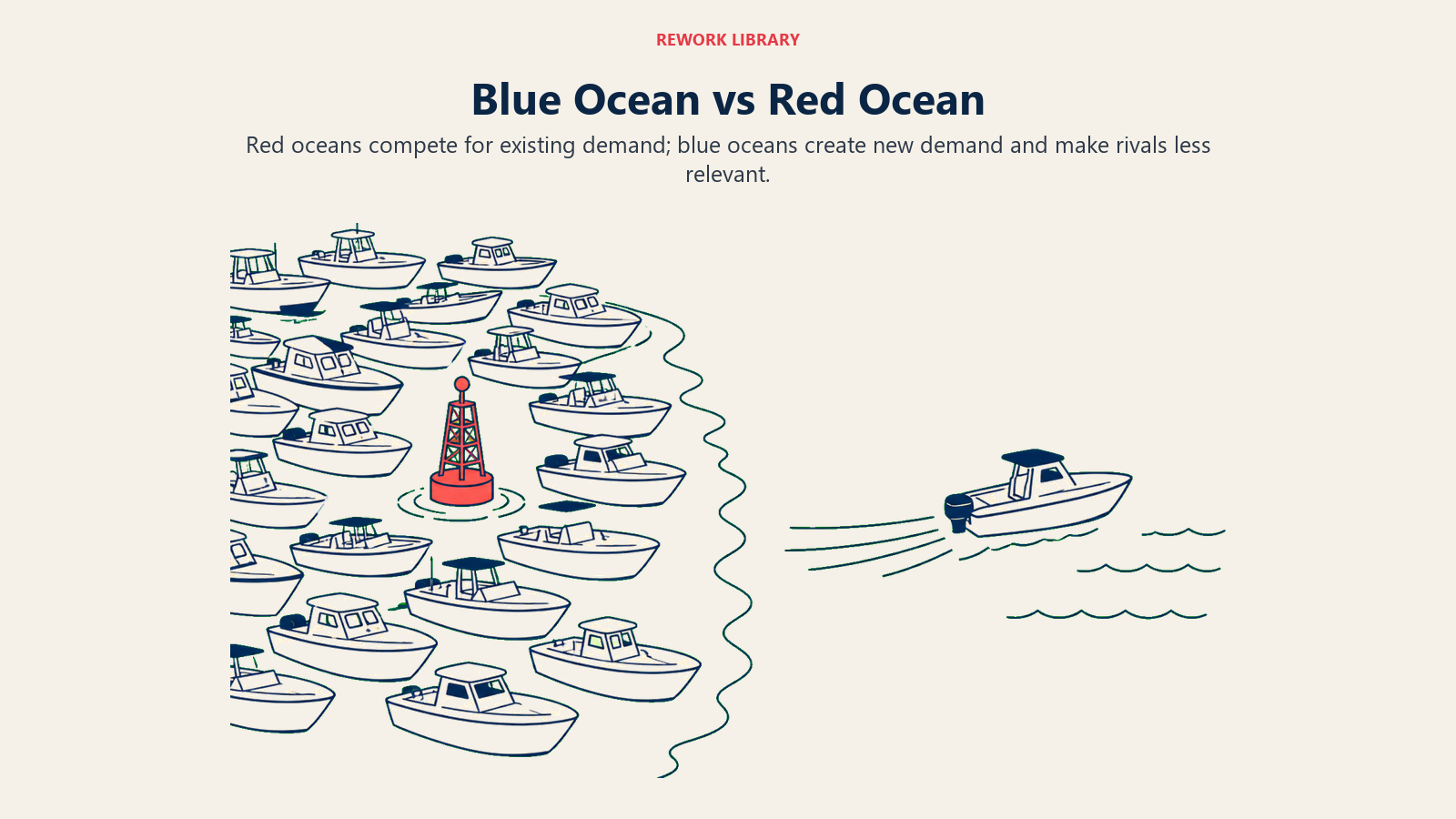
| 次元 | レッド・オーシャン | ブルー・オーシャン |
|---|---|---|
| 市場空間 | 既存かつ定義済み | 新規かつ未開拓 |
| 競争 | 既存の土俵で競合に勝つ | 競争を無意味にする |
| 需要 | 競合と奪い合う | 創出して取り込む |
| 価値とコストのトレードオフ | 受け入れる:差別化かコスト削減のどちらか | 打ち破る:差別化とコスト削減を同時に実現 |
| 戦略的フォーカス | 競争してシェアを獲得する | 新たな需要を創出する |
| 成長モデル | 漸進的、利益率圧縮型 | 指数的、利益率拡大型 |
SWOT分析からPESTEL分析に至るほとんどの戦略フレームワークは、業界が固定されているという前提から出発します。ブルー・オーシャン戦略はその前提をまったく否定します。
核心となる考え方:バリュー・イノベーション
ブルー・オーシャン戦略の根幹にあるのはバリュー・イノベーションです。差別化とコスト低減を同時に追求することで、買い手にとっての価値を飛躍的に高めながら、企業のコストも削減するアプローチです。
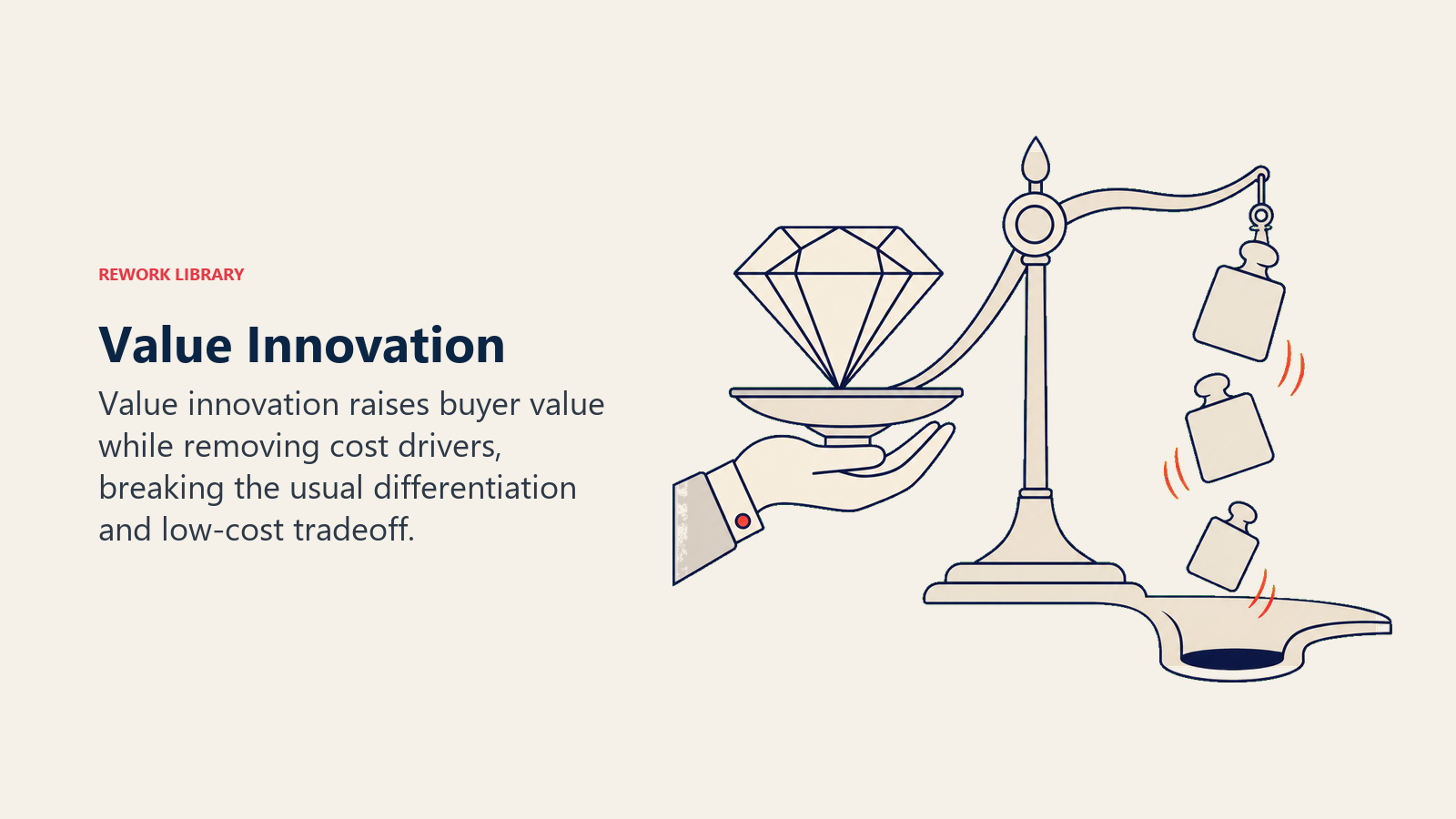
従来の戦略論では選択を迫られます。低コストのプレイヤー(コモディティ生産者など)か、差別化されたプレイヤー(高級ブランドなど)かです。Porterの一般戦略はこの二項対立の論理に基づいています。KimとMauborgneは、このトレードオフは誤った選択だと主張しました。
バリュー・イノベーションが機能するのは、既存の業界属性をめぐる競争をしていないからです。代わりに、業界が提供するものの境界を再構築します。買い手が価値を認めない機能を排除し、業界が過剰提供している機能を削減し、最も重要な機能を高め、買い手がこれまで経験したことのないまったく新しい機能を創出します。その結果として、生産コストを低く抑えながらより高い価値を提供できる製品・サービスが生まれます。
これは破壊的イノベーションとは異なります。破壊的イノベーションは通常、市場の低価格帯から始まって徐々に上位市場へと移行します。バリュー・イノベーションはどの価格帯でも起こりえます。また、通常はプレミアム価格とともにコストも上昇する単なる製品差別化とも異なります。バリュー・イノベーションは、コスト曲線と価値曲線の両方を同時に動かします。
4つのアクションフレームワーク(ERRCグリッド)
ERRCグリッド(排除Eliminate、削減Reduce、高めるRaise、創造Create)は、バリュー・イノベーションを設計するための実践的なツールです。「何を追加または改善するか」だけに焦点を当てる習慣を破り、4つの次元すべてを同時に考えることを戦略担当者に求めます。
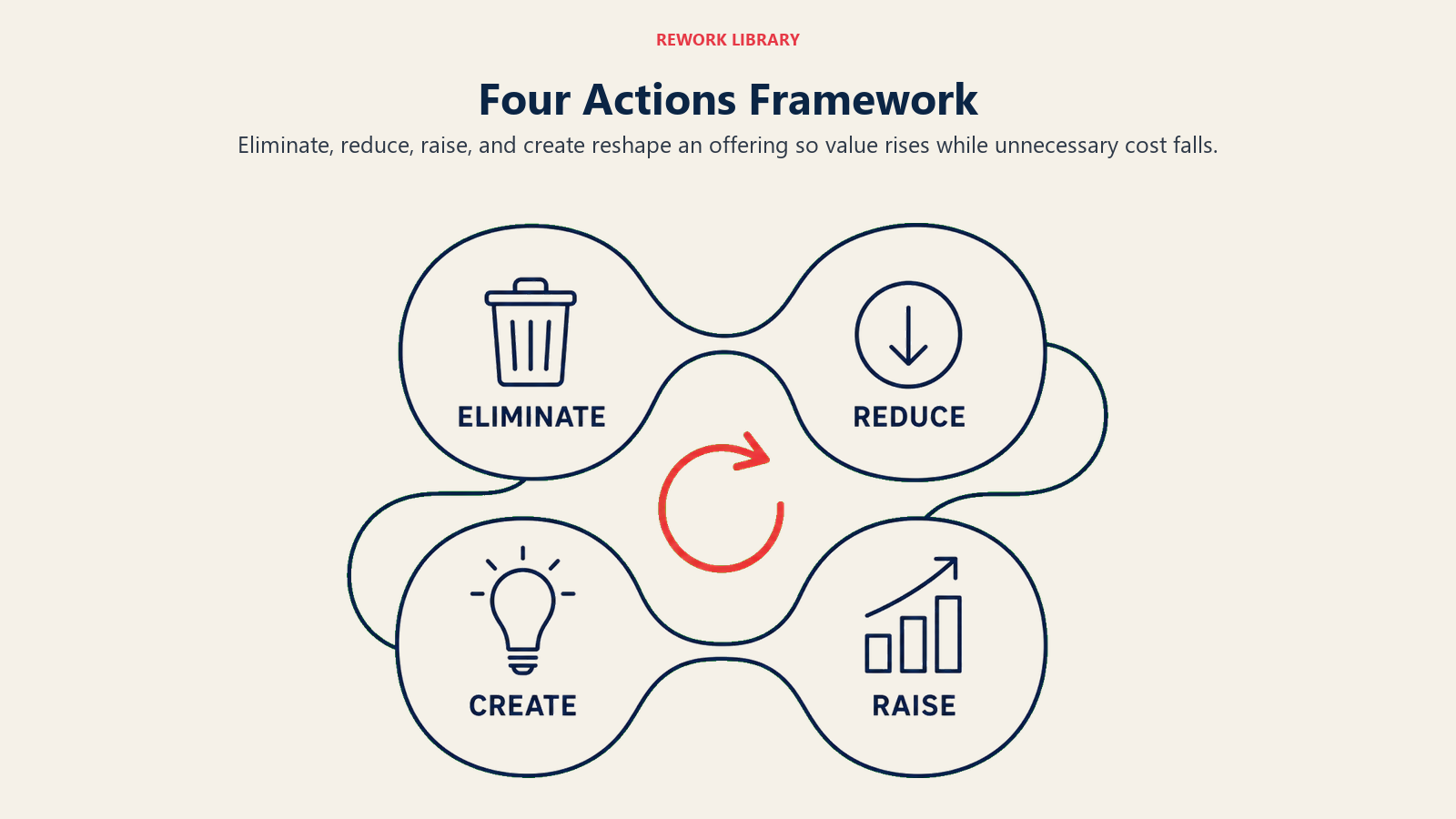
| 排除(Eliminate) | 削減(Reduce) |
|---|---|
| 業界が当然のこととして提供しているが、完全に廃止すべき要因はどれか?これらは実際の買い手価値のないコスト要因です。 | 買い手が実際に必要としている以上に過剰提供されている要因はどれか?これらは比例した価値を生まずにコストを膨らませています。 |
| 高める(Raise) | 創造(Create) |
| 業界標準を大きく上回るレベルに引き上げるべき要因はどれか?買い手が本当にもっと欲しいのに十分提供されていない部分です。 | 業界がこれまで提供したことのない、新たに導入すべき要因はどれか?これがブルー・オーシャンそのものを定義します。 |
4つの象限すべてを検討することで、コスト削減なしに機能を追加するだけ(高めると創造のみ)という、ブルー・オーシャン的思考の陥りがちな罠を防げます。排除と削減によるコスト優位があってこそ、新たな提供価値が財務的に実現可能になります。
ERRCグリッドはバリュープロポジション・キャンバスと組み合わせることで、各象限が顧客のJobs、課題、便益とどう結びつくかをマッピングできます。
戦略キャンバス
戦略キャンバスは、ブルー・オーシャンを可視化するための診断ツールです。2つの軸を持つ折れ線グラフです。
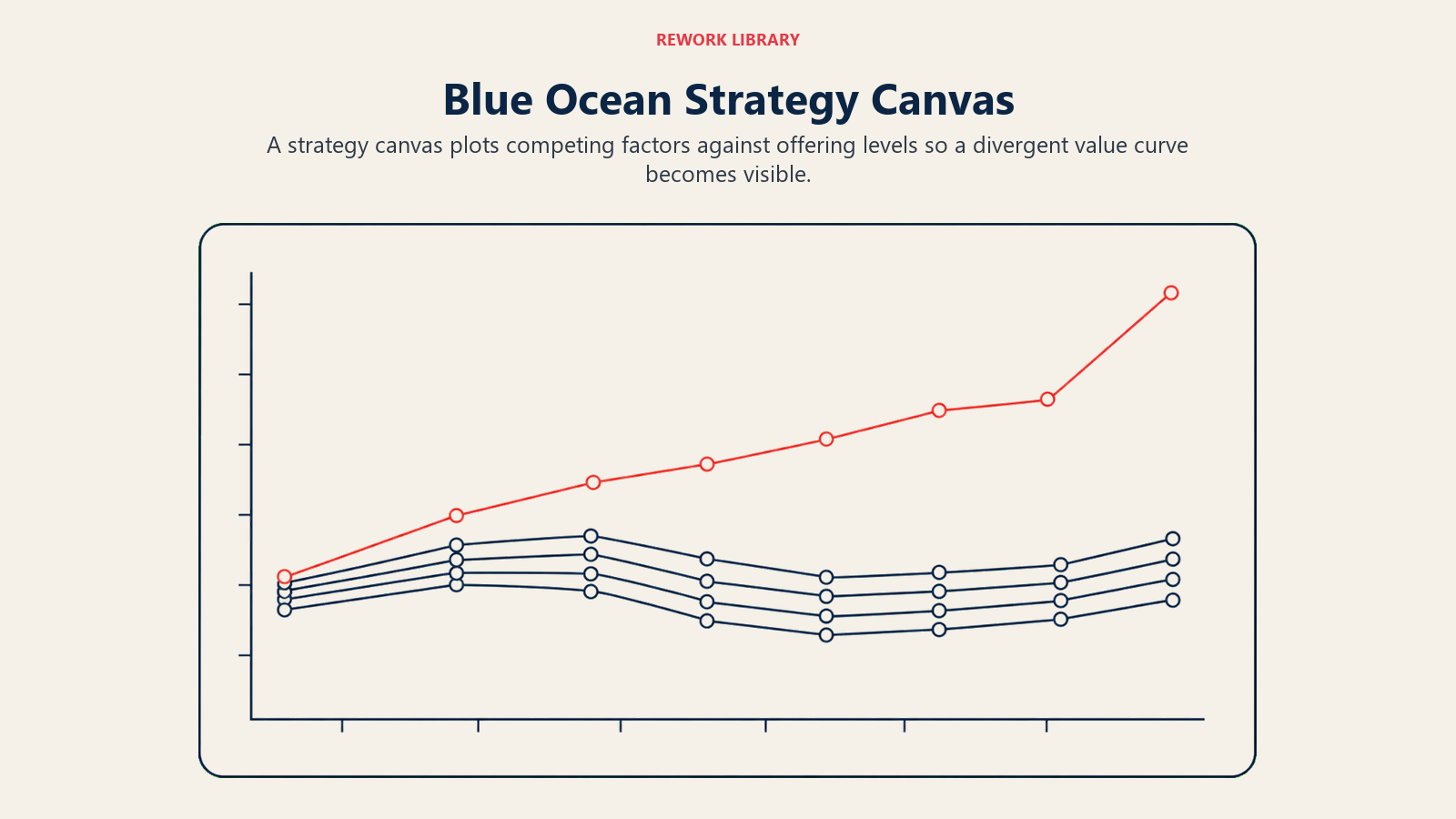
- 横軸:業界内の主要な競争要因(価格、サービス水準、製品ラインアップ、ブランドなど)
- 縦軸:各要因において買い手が受け取る提供レベル(低から高)
業界の各プレイヤーはバリューカーブとしてプロットされます。すべての競争要因における提供レベルを結んだ折れ線です。主要プレイヤー全員をプロットすると、通常はバリューカーブがほぼ同じ形に収束していることがわかります。この収束がレッド・オーシャンの視覚的なサインです。全員が同じ要因で、同じようなレベルで、同じ顧客をめぐって競争しています。
ブルー・オーシャンへの移行は発散したバリューカーブをもたらします。いくつかの要因を排除・削減し、他の要因を高め、まったく新しい要因を創造しているため、競合他社のカーブとは根本的に異なる形をしています。この発散こそが、戦略の模倣を難しくする要因です。競合他社は後追いするためにビジネスモデル全体を逆転させなければなりません。
戦略キャンバスは、ブルー・オーシャンを創出しようとする前に、現在の立ち位置のベースラインを示す役割も担います。現在のカーブが競合他社と区別がつかない場合、認識していなくてもすでにレッド・オーシャンにいます。キャンバスはその現実を明確にします。
ブルー・オーシャンを創出する方法:ステップバイステップ
ブルー・オーシャンを創出するのは1回のミーティングで完結する作業ではありません。診断から設計、実行へと進む体系的なプロセスです。
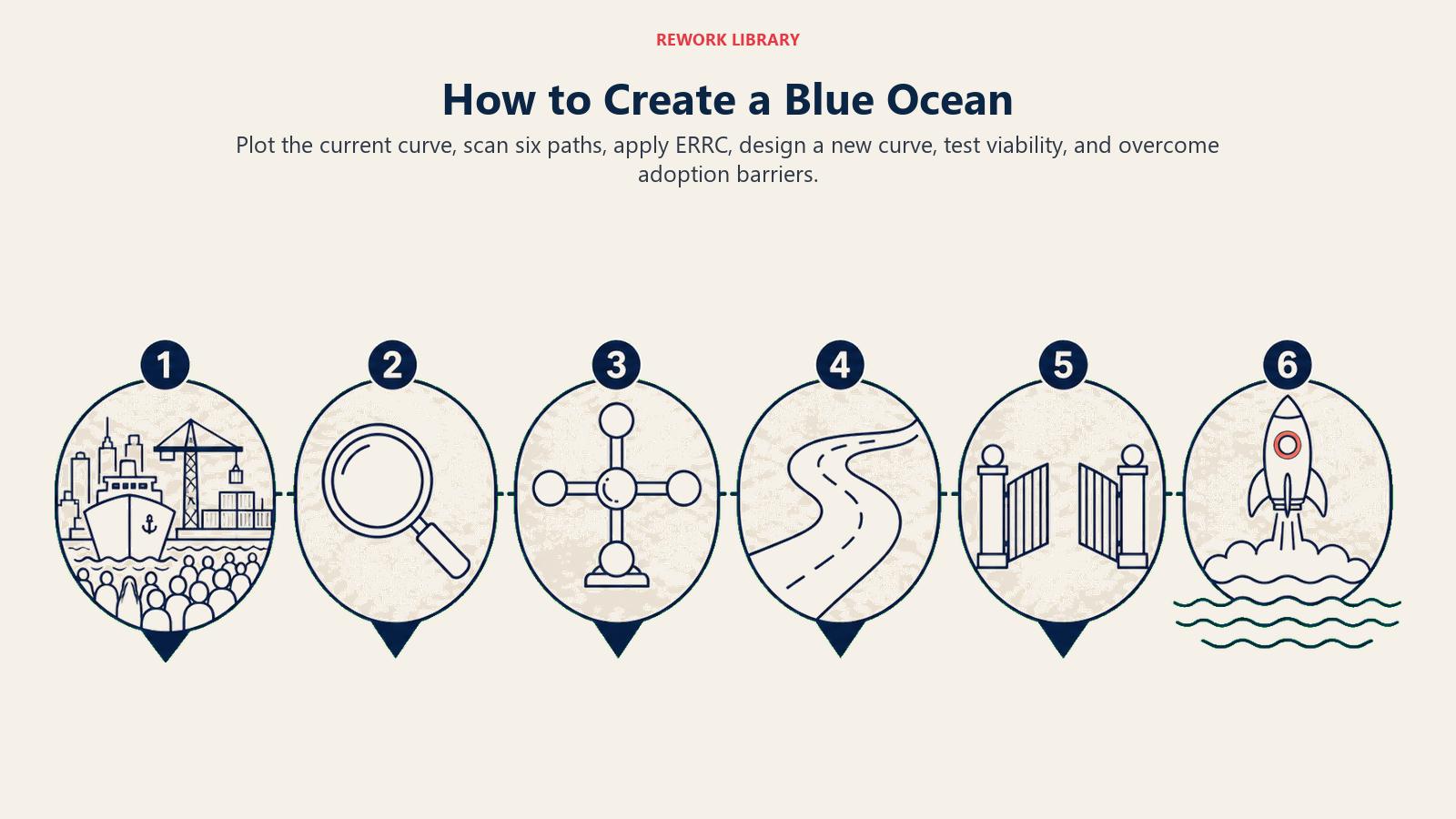
ステップ1:現在のバリューカーブを研究する
自組織と上位3〜5社の競合を戦略キャンバスにプロットします。正直に取り組んでください。多くのリーダーシップチームは、自社のバリューカーブが競合とほぼ同じだと気づきます。この居心地の悪さこそが、その後のプロセスを推し進める動機になります。
ステップ2:6つの経路フレームワークを適用する
6つの経路フレームワーク(次のセクションで詳しく解説)は、ノンカスタマーや代替業界を見つけるための6つの体系的な視点を提供します。これを活用して、現在需要が満たされていない部分や、カテゴリそのものから離れてしまった人々がどこにいるかを特定します。
ステップ3:ERRCグリッドを実施する
4つの象限すべてを検討します。「排除」と「削減」は「高める」と「創造」よりも難しいことが多いです。組織がコンピテンシーを積み上げてきた機能を削ることが必要になるからです。その難しさこそが、競合他社が容易に真似できないコスト優位を生む理由です。
ステップ4:新しい戦略キャンバスを構築する
ERRCの決定が示すバリューカーブを描きます。既存のプレイヤーと意味ある形で乖離していますか?新しい提供価値の本質を捉えた説得力のある「タグライン」がありますか?なければ、まだレッド・オーシャンから十分に離れられていません。
ステップ5:戦略を正しい順序で進める
KimとMauborgneは、ブルー・オーシャン戦略には4つのハードルを順番にクリアする必要があると主張しています。買い手効用(買い手は本当にこれを望んでいるか?)、価格(対象とする買い手の大多数にとって手が届くか?)、コスト(その価格でリターンを得ながら提供できるか?)、採用(従業員、パートナー、社会からどのような障壁が存在するか?)の4つです。このステップを省略することが、戦略的に優れていても商業的に失敗するブルー・オーシャンの立ち上げによくある原因です。
ステップ6:組織的な障壁を乗り越える
ほとんどの組織には、認知的、資源的、動機的、政治的な変革への障壁が存在します。バランスト・スコアカードとOKRフレームワークは、新しい戦略を測定可能な目標に変換し、チームの方向を合わせ実行を追跡するのに役立ちます。この変換なしには、優れた設計のブルー・オーシャン戦略もスライド上の絵に終わります。
ブルー・オーシャン戦略の事例
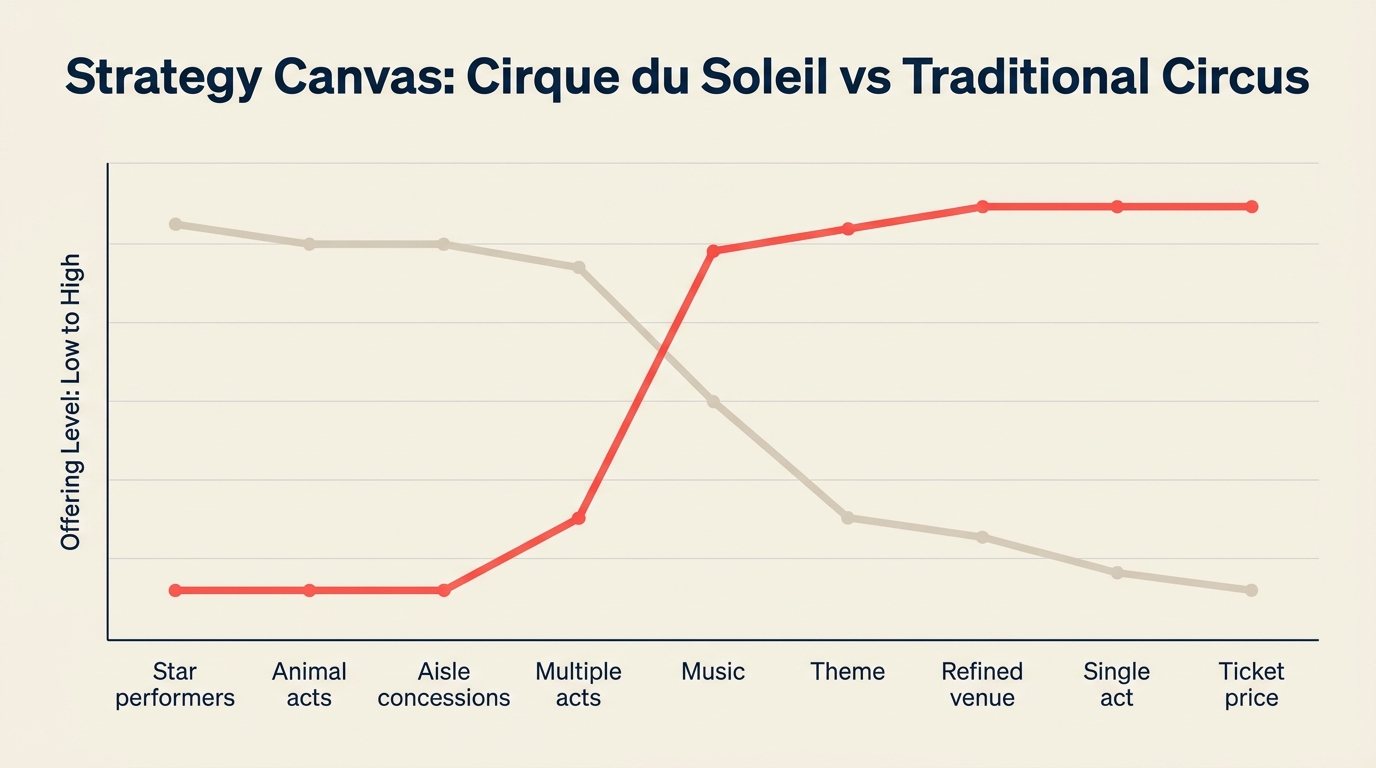
戦略フレームワークの真価を試す最良の方法は、それが実際の結果を説明できるかどうかです。ブルー・オーシャン戦略は、業界と時代を超えてこのテストに十分合格しています。
| 企業 | 業界 | 排除したもの | 創造したもの |
|---|---|---|---|
| シルク・ドゥ・ソレイユ | エンターテインメント | 動物の演技、スター出演者、通路での飲食販売 | 劇的なテーマ、芸術的な音楽、洗練された会場体験 |
| Netflix | ビデオレンタル | 物理店舗、延滞料、品揃えの制限 | 無制限のストリーミング、アルゴリズムによるコンテンツ発見、オリジナルコンテンツ |
| 任天堂Wii | ゲームコンソール | 高処理能力、複雑なコントローラー | モーション操作のゲームプレイ、家族向けのアクセシビリティ |
| イエローテール・ワイン | ワイン | 熟成の複雑さ、ワイン専門用語、幅広い品揃え | 飲みやすい味わい、楽しいブランディング、親しみやすい2種類の品揃え |
| サウスウエスト航空 | 商業航空 | 複数のクラス、機内食、ハブ経由接続 | 高頻度のポイントツーポイント運航、低運賃、迅速な折り返し |
シルク・ドゥ・ソレイユが定番の事例となっているのは、排除の決断が非常に大胆だからです。同社は従来のサーカスで最もコストのかかる2つの要素(動物と有名パフォーマー)を廃止し、従来のサーカスが提供したことのないもの、つまり演劇の物語性と制作クオリティに置き換えました。その結果、演劇価格を支払うことを厭わない大人に訴求する新しい提供価値が生まれ、従来のサーカスのコア客層だった子供は対象外となりました。これがバリュー・イノベーションの実践です。
サウスウエスト航空も同様に示唆に富む事例です。同社は新しい旅行カテゴリを発明したわけではありません。価格に敏感な近距離旅行者にとって、競合航空会社ではなくバスや自動車を選択していた層にとっての航空旅行を再定義したのです。
6つの経路フレームワーク
6つの経路フレームワークは、ブルー・オーシャンの機会を特定するための体系的な視点を提供します。各経路は、異なる業界の境界前提に疑問を投げかけます。
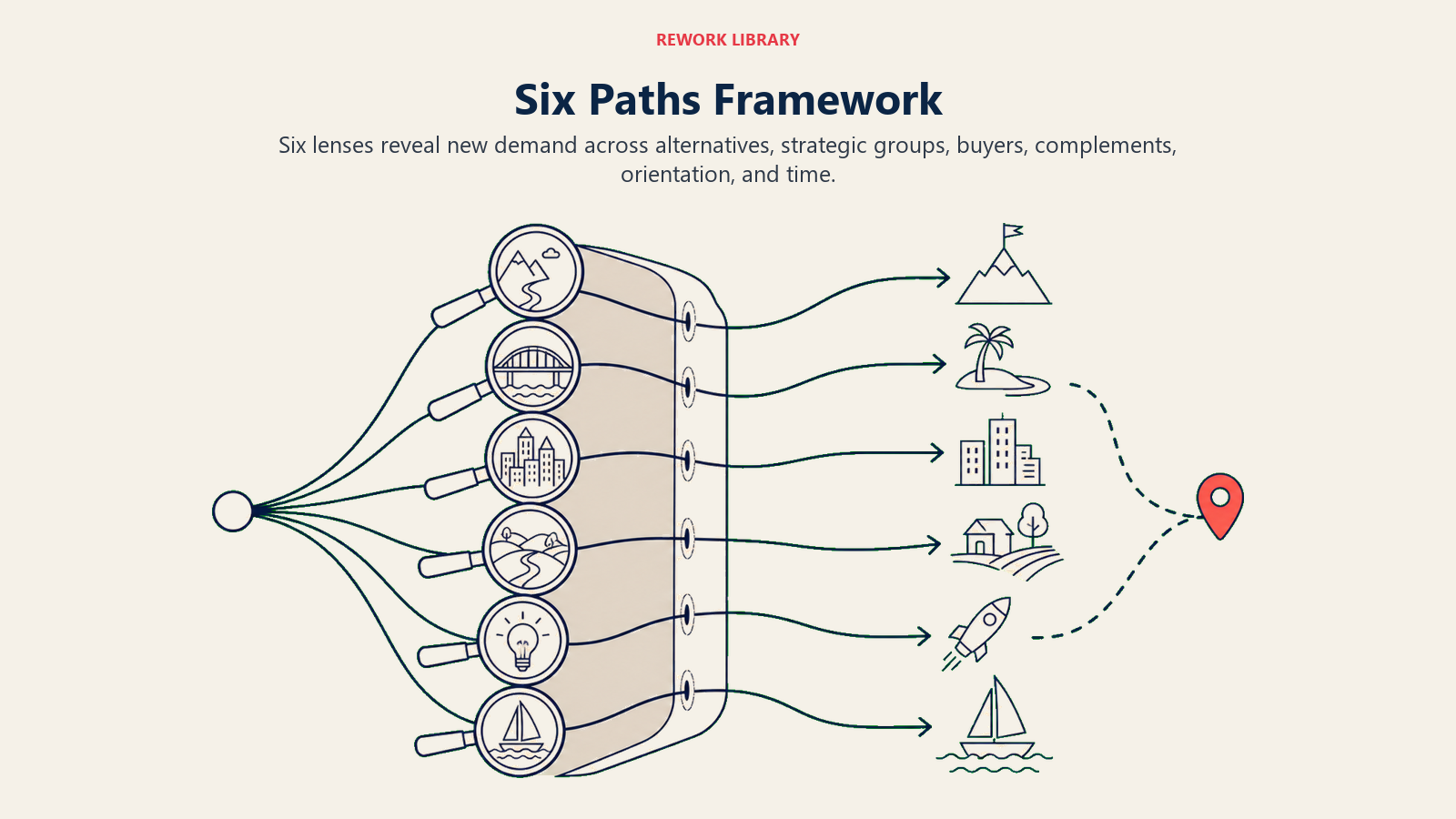
- 代替業界を見渡す:顧客が満たそうとしているのと同じニーズに応える他の業界はどこにあるか?非購買行動はしばしば隣接業界で起きています。
- 業界内の戦略グループを見渡す:ほとんどの業界には品質と価格の段階があります。ブルー・オーシャンはその段階の間に存在することがよくあります。
- 買い手の連鎖を見渡す:購入者、使用者、影響者はしばしば異なる価値優先度を持つ異なる人々です。別の買い手に焦点を移すことで新しい空間が開けます。
- 補完的な製品・サービスを見渡す:顧客が自社の製品を使用する前後に何が起きているか?未活用の価値はそれを取り巻く体験の中にあることが多いです。
- 機能的・感情的志向を見渡す:業界は機能的(合理的、機能ベース)または感情的(ブランド、関係ベース)などちらかの競争に偏りがちです。志向を切り替えることでバリューカーブ全体をリセットできます。
- 時間を見渡す:業界を形成しているトレンドは何か、そしてそれは不可逆か?明確なトレンドのアーリームーバーは、他者が気づく前にブルー・オーシャンを定義できます。
この6つの経路は、創出プロセスのステップ2に直接つながります。抽象的な視点ではなく、リーダーシップワークショップのための実践的な問いのセットです。
限界と批判
ブルー・オーシャン戦略は、その人気とともに真剣な批判も受けています。フレームワークのバランスの取れた理解には、どこで不十分かを知ることも必要です。
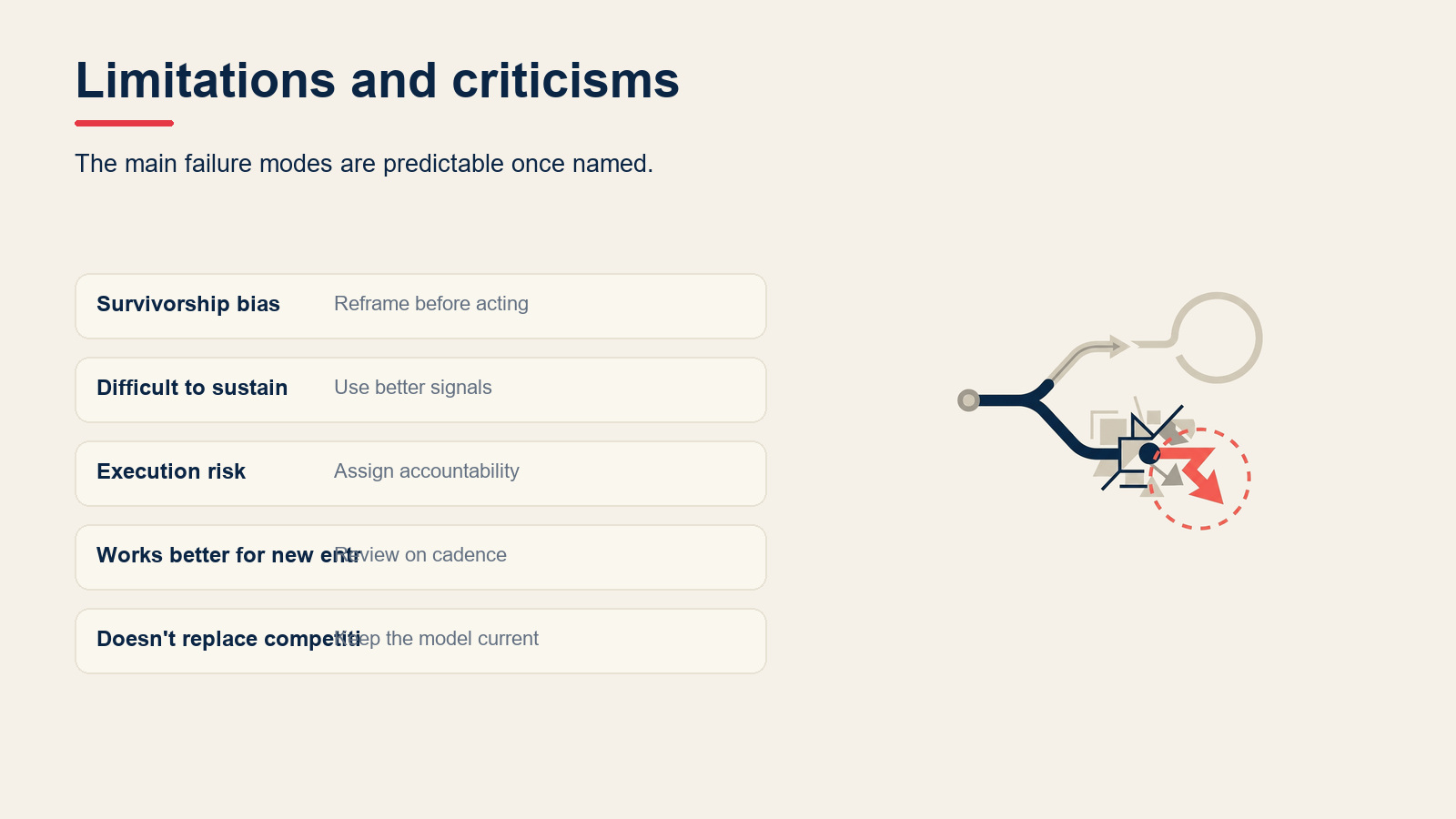
- 生存者バイアス:事例研究はほぼ成功した企業のみから引用されています。ブルー・オーシャンへの移行を試みて失敗した企業は分析から抜け落ちており、書籍だけからはフレームワークの成功率を評価することができません。
- 持続が難しい:ブルー・オーシャンはいつまでも青くありません。競合他社は成功した動きを観察して模倣します。任天堂Wiiの優位性は数年以内に侵食されました。フレームワークはこの点を認識していますが、競合他社が追い上げてきた後に優位性をどう維持するかについてのガイダンスは限定的です。
- 実行リスク:戦略キャンバス上でブルー・オーシャンを設計することと、実際の組織の中でそれを実行することは全く異なる課題です。フレームワークは診断と設計において強く、実装においては弱い面があります。
- 新規参入者により適している:既存企業は、自社の業務が積み上げてきた機能を廃止する際のスイッチングコストが高くなります。フレームワークは新興企業や新市場に参入する企業に最も強力に機能します。
- 競合分析の代替にはならない:ブルー・オーシャンにいる企業でも、収益性の高い実行のためにはポートフォリオのBCGマトリクスの動態や、業務のバリューチェーン分析を理解する必要があります。
ベストプラクティス
以下ではベストプラクティスの要点を項目ごとに整理しており、比較しやすくなっています。
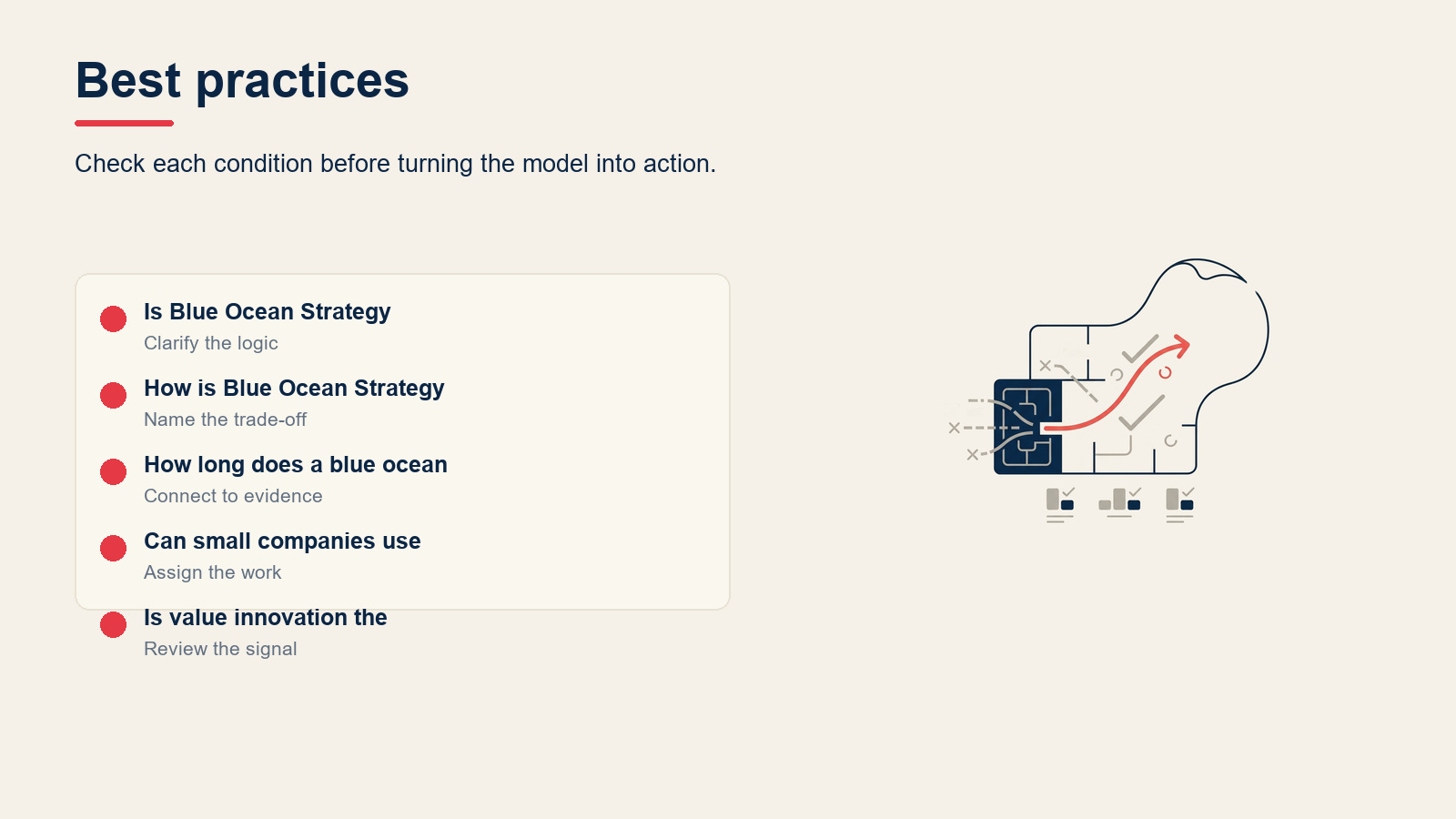
- ERRCの作業を始める前に戦略キャンバスから着手してください。現在のレッド・オーシャンを明確に把握してから、そこから抜け出す設計をしてください。
- ERRCの検討にはリーダーシップだけでなく現場チームも参加させてください。顧客が不満を言う機能と、気づかれない機能を知っているのは現場の担当者です。
- 「排除」の象限を優先してください。ほとんどのチームは「創造」と「高める」に90%の時間を費やします。「排除」が「創造」の財源になります。
- バリューカーブのタグラインをノンカスタマーでテストしてください。なぜ違うのかが即座に伝わらないなら、カーブの発散が十分ではありません。
- ニッチ市場とブルー・オーシャンを混同しないでください。ブルー・オーシャンは競合他社が無視した小さなセグメントではなく、規模のある新たな需要を創出します。
- 買い手効用を価格より先に、価格をコストより先に検討してください。この順序を逆にすると、ほぼ必ずコストは安いが誰も欲しがらない提供価値になります。
- McKinsey 7Sフレームワークを活用して、立ち上げ前の組織的な準備状況を評価してください。新しい戦略が根付くには、組織構造、システム、人材の変革が必要なことが多いです。
- 12〜18ヶ月ごとに戦略キャンバスを見直してください。レッド・オーシャンへの逆流は現実に起こり、多くのリーダーシップチームが想定するよりも早く進みます。
よくある質問
ブルー・オーシャン戦略は今でも有効ですか?
はい。ただし、ブルー・オーシャンが有効な時間の窓は縮まっています。デジタル流通とグローバル競争により、競合他社が動きを観察して模倣するスピードが2005年より格段に速くなっています。戦略的な論理は依然として正しいです。既存の需要をめぐって争うよりも、新たな需要を創出する方が収益性は高いです。しかし、ブルー・オーシャンを維持するには、当初のフレームワークが強調していた以上に継続的なイノベーションが必要です。
ブルー・オーシャン戦略は差別化戦略とどう違いますか?
Porterの差別化戦略は既存の業界の境界内で機能し、通常はコストプレミアムを伴います。ブルー・オーシャン戦略は業界の境界を完全に打ち破り、バリュー・イノベーションによって差別化とコスト削減を同時に達成することを目指します。差別化は競合他社を上回ることを目的とし、ブルー・オーシャンは競合他社を無意味にすることを目的とします。
ブルー・オーシャンはどのくらい持続しますか?
大きく異なります。サウスウエスト航空は、格安競合他社がモデルを複製するまで20年以上にわたって意味のあるブルー・オーシャンの特性を維持しました。Netflixのブルー・オーシャンは、スタジオやテクノロジー企業が競合する動画ストリーミングサービスを立ち上げたことで、約10年で侵食されました。持続期間は、排除と創造がどれだけ概念的だけでなく業務的に模倣しにくいかにかかっています。
小規模な企業もブルー・オーシャン戦略を活用できますか?
もちろんです。小規模な組織にとってはよりnatural(自然)な場合が多いです。スタートアップには廃止すべきレガシー業務がなく、維持すべき既存の顧客関係もなく、現在の機能を守る社内政治もありません。フレームワークは大企業の研究から生まれましたが、ERRCグリッドと戦略キャンバスは地域市場を再定義しようとしている10名の企業にも同様に適用できます。
バリュー・イノベーションと破壊的イノベーションは同じですか?
いいえ。Clayton Christensenが定義した破壊的イノベーションは、市場の低価格帯からよりシンプルで安価な提供価値でスタートし、時間とともに上位市場へと移行します。バリュー・イノベーションはどの価格帯でも起こりえ、低価格から始める必要はありません。また、Christensenの破壊モデルの定義的特徴である「主流の属性において最初は劣る」必要もありません。2つの概念は補完的ですが、異なるものです。
次のステップ
ブルー・オーシャン戦略は、単独の答えとしてではなく、より広い戦略的なツールキットの一部として最もよく機能します。Porterのファイブフォースと組み合わせることで、そこから抜け出す設計をする前に現在の業界の構造的な圧力を把握できます。Business Model Canvasを活用して、新しいバリューカーブを実行可能な事業モデルに落とし込んでください。そしてSMARTビジネス目標にアウトプットを照らし合わせ、ブルー・オーシャンの野心が測定可能な近期マイルストーンと繋がっていることを確認してください。
このフレームワークの核心的な教訓は、競争が悪いということではありません。ほとんどの組織が同じことで、同じ方法で、同じ競合他社に対して競争し続け、そうしないと決める者が現れるまでそれが続くということです。その決断を、ERRCグリッドと戦略キャンバスの厳格な活用によって裏付けることが、市場の創造者を市場の戦闘者から区別するものです。

Co-Founder & COO