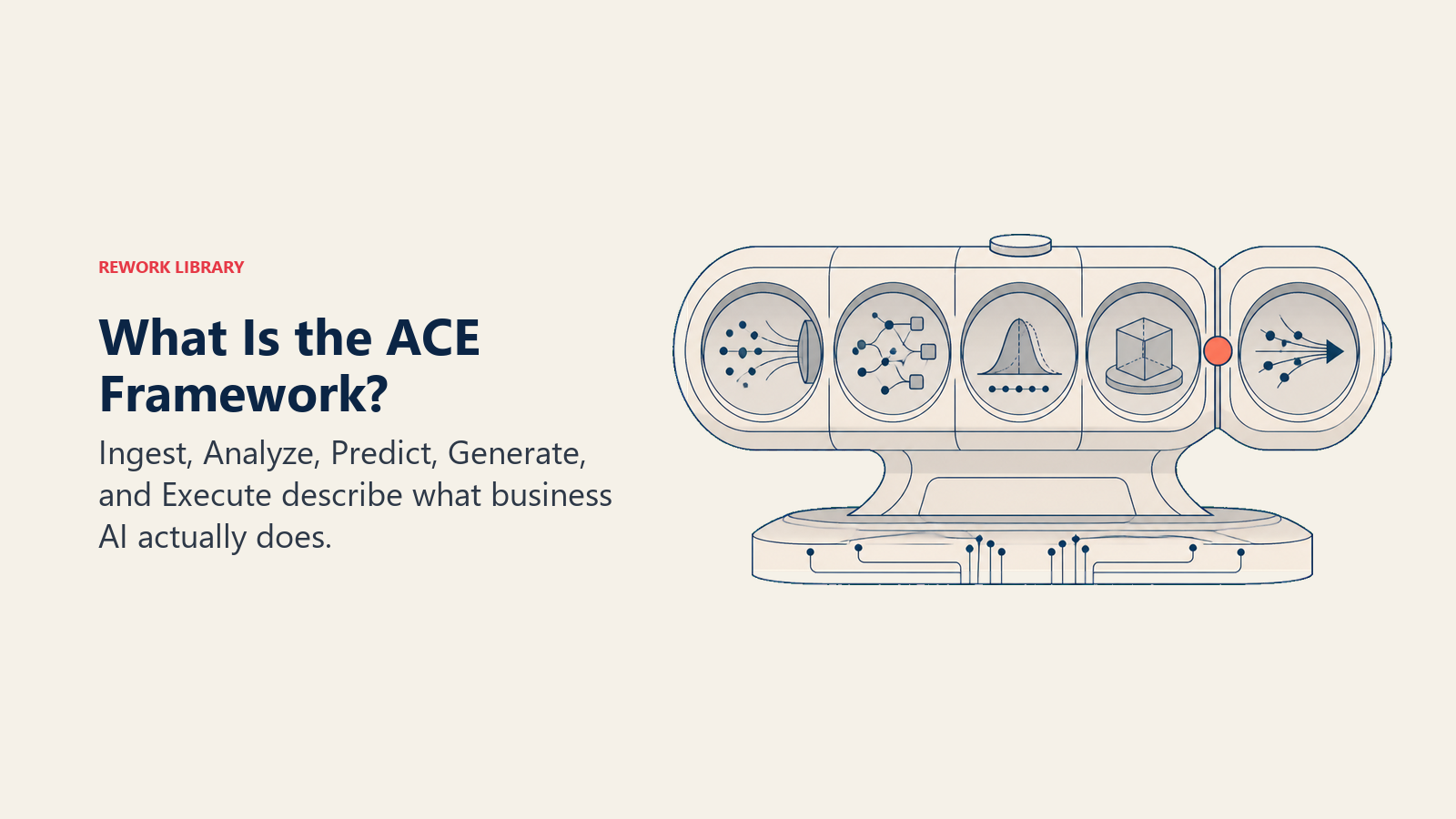
ACEフレームワーク:ビジネスAIの周期表
Turn this article into takeaways for your work.


Each assistant summarizes the article only for you and suggests best practices for your work.
「AI」という言葉は、まったく異なるものを指しています。1秒間に100万件の取引をスコアリングする不正検知モデル。メールの返信を下書きするチャットボット。頼まれなくても経費精算を処理する自律型エージェント。これらの製品が共有しているのはマーケティング上のカテゴリだけで、ほかにはほとんど何も共通点がありません。
これは現場のオペレーターにとって現実的な問題です。ベンダーのピッチは検証のしようがありません。「AI搭載」「インテリジェントオートメーション」「ワークフローを変革」。こうした言葉からは、製品が実際に何をするのか、どのようなデータが必要なのか、人間がどこでループに残るのか、間違えたときに何が起きるのかがわかりません。購買の判断が、何を買うのかという明確な理解ではなく、デモと雰囲気で下されてしまいます。
足りないのは、より多くの情報ではありません。語彙です。あらゆるAI製品やイニシアチブを実際の構成要素に分解するための、精密な少数の用語です。化学者が周期表を使ってどんな分子も既知の元素の組み合わせとして読み解けるように、ビジネスAIのフレームワークがあれば、オペレーターはどんなAIピッチも既知の機能の組み合わせとして読み解けるはずです。
それがこのフレームワークの役割です。戦略ではありません。成熟度モデルでもありません。5つのコア機能のための語彙であり、その組み合わせ方によって、あなたのスタックやロードマップにあるあらゆるビジネスAIを記述できます。5つを押さえれば、ベンダーのピッチは読み解きやすくなります。スタックの監査は速くなります。ガバナンスの議論はより的確になります。そして「AI」という言葉はカテゴリではなく、説明になります。
インサイト:有限のアルファベット、無限の表現力
少数の基本的なプリミティブを組み合わせることで、あらゆるものを記述できます。炭素、水素、酸素、窒素で有機化学のほとんどが成り立ちます。ゼロと1で、書かれたすべてのプログラムが動きます。26文字で、すべての英語の作品が書かれています。化学がこのように機能するのは、そうでなければならないからです。宇宙は組み合わせによって成り立っています。
ビジネスAIも同じです。Salesforce Einsteinがリードをスコアリングし、Intercom Finがサポートチケットに答え、Gongがセールスコールを文字起こしする、あなたのビジネスにおけるすべてのAIユースケースは、データに作用する5つのコア機能のレシピとして記述できます。5つを理解すれば、あらゆるAI製品のピッチを読み解き、社内イニシアチブにタグをつけ、スタック内のあらゆるツールを監査できます。
これがこのフレームワークの役割です。語彙を提供します。戦略でも、ロードマップでもなく、語彙を。
5つの機能:Ingest・Analyze・Predict・Generate・Execute
Ingestは情報を取り込みます。領収書のOCR。セールスコールの文字起こし。PDF請求書の解析。API経由のCRMレコード取得。生のシグナル(画像、音声、文書、ストリーム)をAIが処理できる形式に変換するすべての処理です。
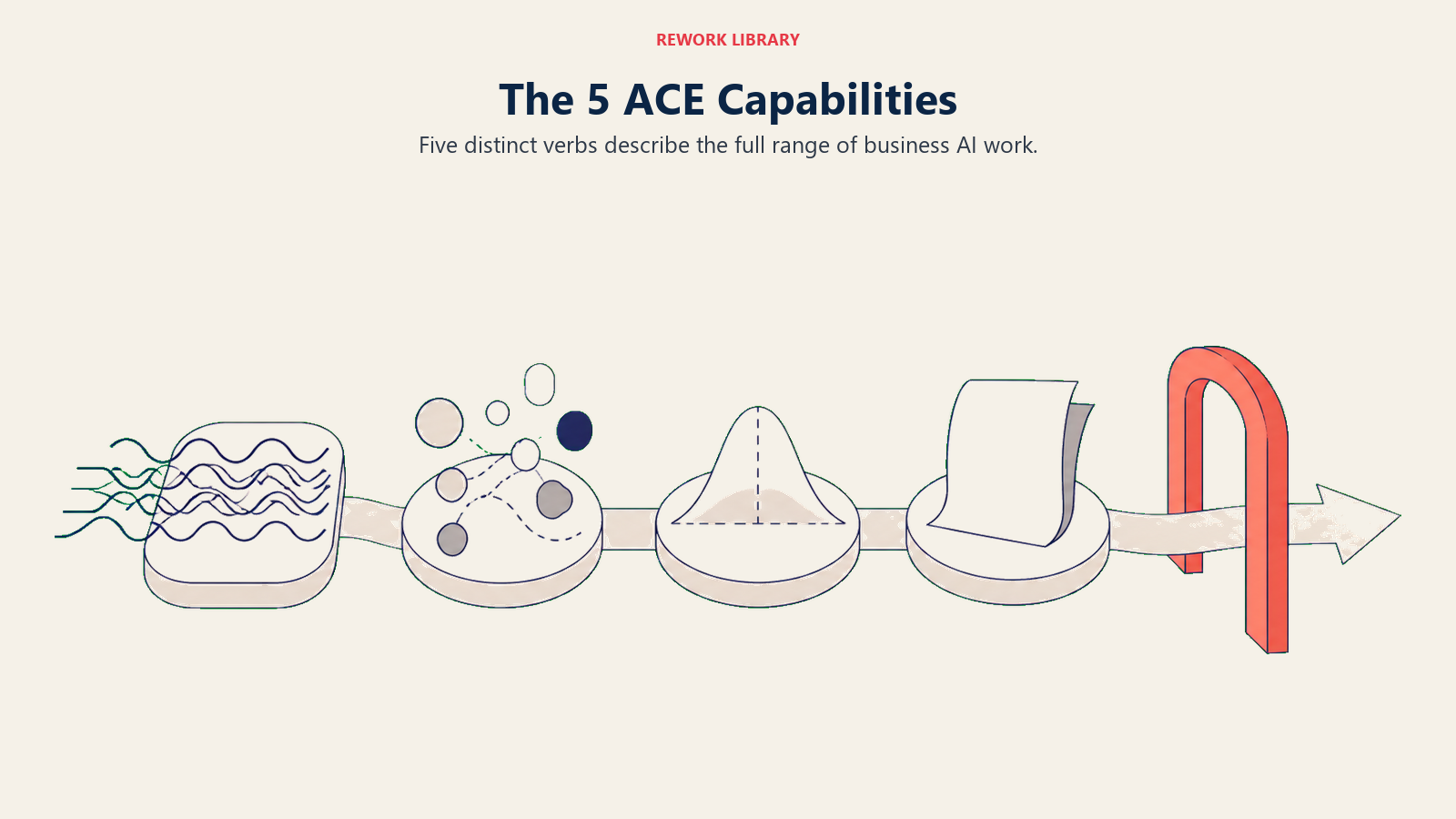
Analyzeは取り込んだ情報を理解します。メールを「緊急」か「FYI」に分類します。契約書からベンダー名を抽出します。60ページのレポートを要約します。カスタマーレビューのセンチメントを検出します。Analyzeは「これは何か?」という問いに答えます。
Predictは次に何が起きるかを予測します。リードが87%の確率でクローズすると評価します。Q2のクローズド成約収益を420万ドルと予測します。取引が99.5%の確率で異常だとフラグを立てます。Predictは「何が起きそうか?」に答えます。
Generateは新しいものを生成します。メールを下書きします。コードを書きます。画像を作成します。プロジェクト計画を作成します。Generateはアーティファクトを生み出します。それは何か別のもの(人間または別のシステム)が外に送り出すまで下書きの状態にとどまるものです。
ExecuteはAIの外部でステートを変更します。メールを送信します。コードをコミットします。CRMを更新します。カードに請求します。注文を行います。Executeには多くの場合取り消し不可能な結果が伴います。
以上です。5つの機能。すべてのビジネスAIはこのうち1つ以上を実行します。
なぜこの5つが網羅的なのか
今週使っているAI製品を何でも考えてみてください。それはこれらの機能のうち1つ以上を使っています。コンサルティングデッキにある「変革の10の柱」ではありません。「AIレディネスの7つのドライバー」でもありません。データに適用され、ワークフローに組み合わされた5つの動詞です。
AIが行うすべての情報処理は、これらのカテゴリのどれかに当てはまります。データを取り込む(Ingest)。それを理解する(Analyze)。それで予測する(Predict)。そこから新しいものを生み出す(Generate)。それを使って世界を変える(Execute)。どこかに6番目のアクションが隠れているわけではありません。
このセットは将来変わる可能性があります。3年後には「Remember」(セッション横断のAI記憶)や「Coordinate」(マルチエージェントオーケストレーション)が第一級の機能に昇格するかもしれません。それで構いません。フレームワークは進化するべきです。今日の時点では、この5つが分野をカバーしています。
このフレームワークがしないことは、それらを混同することです。ほとんどのコンサルティング会社のAIフレームワークは、すべてを「AI変革」や「AI戦略」に一括りにします。重要そうに感じるが来週ツールを選ぶ助けにならない曖昧なカテゴリです。明確な語彙は、明確な思考の前提条件です。
6層スタック
機能は単独では存在しません。それらは積み重なります。各レベルはその下のレベルの上に構築されます。
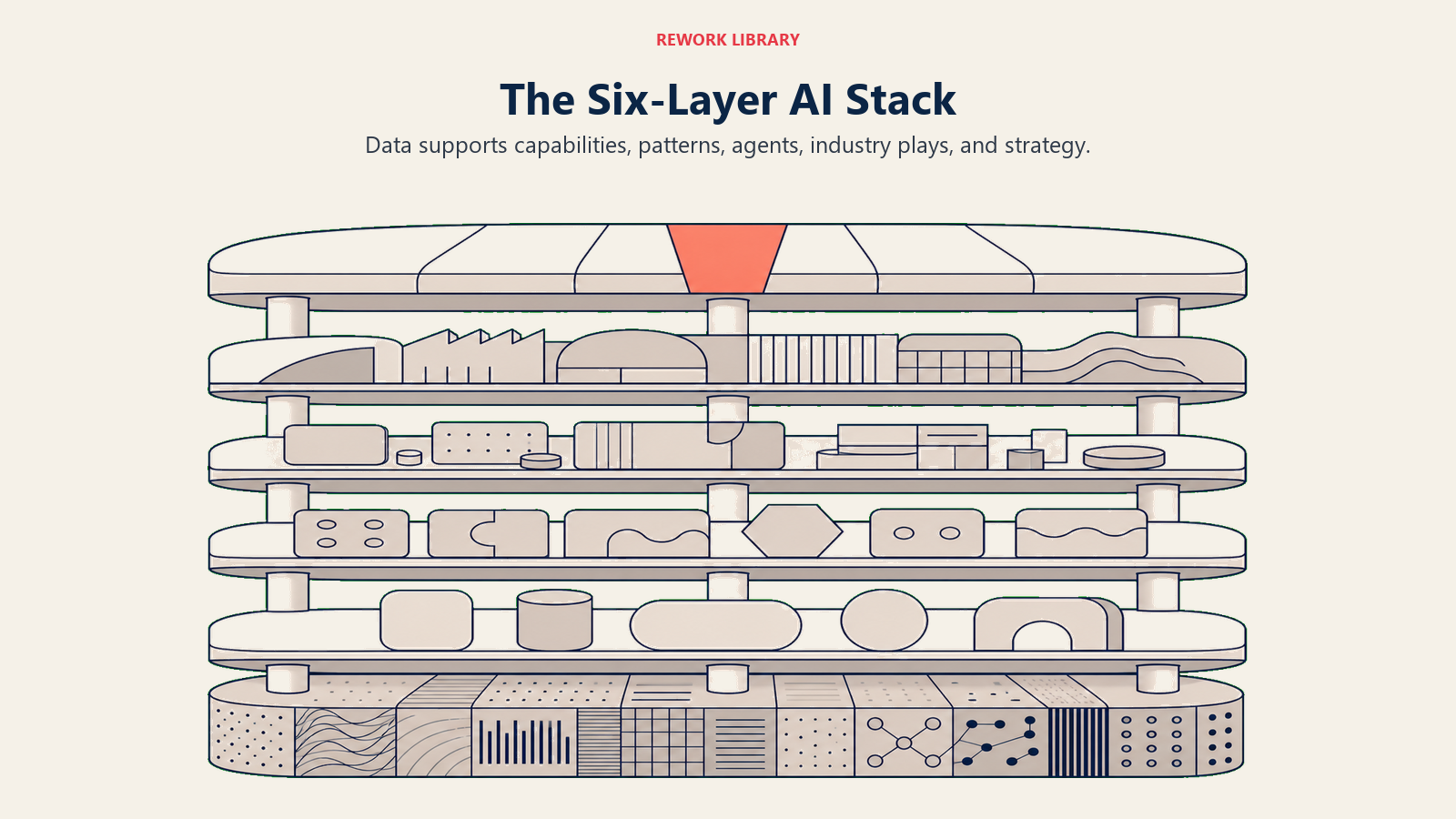
| レベル | 名称 | 内容 | 例 |
|---|---|---|---|
| 5 | Transformation Strategy | 企業レベルのラッパー | ガバナンス、成熟度モデル、ROI測定、変革管理、ベンダー評価 |
| 4 | Industry Plays | 業界特化型バンドル | SaaS、ヘルスケア、製造業、金融サービス、不動産のAI |
| 3 | AI Agents | ロールレベルのワークフロー | Sales Operator、Support Agent、採用担当者、Finance Analyst、マーケター |
| 2 | Patterns | 繰り返し使われる機能の組み合わせ(約10種類が90%のユースケースをカバー) | RAG Assistant、Scoring+Routing、Vision Extract、Meeting Intelligence、Anomaly Agent |
| 1 | Capabilities (ACE) | 5つの動詞 | Ingest、Analyze、Predict、Generate、Execute |
| Foundation | Data | AIが消費するもの | テキスト、構造化データ、画像、音声、動画、コード、時系列データ |
すべてはFoundationから始まります。 どの機能も機能する前に、データレディネスが必要です。アクセス可能で、構造化され、最新で、適切に権限設定されたデータです。クリーンなデータは、機能するAIと恥をかくAIの違いであることが多いです。Gartnerは、2026年までにAIレディなデータに支えられていないAIプロジェクトの60%が中断されると報告しています。地味な作業ですが、決定的な結果をもたらします。
スタックはモデルであり、手順ではありません。Level 1を習得してからLevel 3に触れる必要はありません。実際のビジネスは、データ(Foundation)がまだ整備途中で戦略(Level 5)が半分しか形成されていない状態でも、AIツール(Level 3)を導入します。スタックは地図を提供しますが、ルートを提供するわけではありません。
5分でAIユースケースを読み解く
これがフレームワークの適用方法です。使っているAI製品を1つ選んでください。次の5つの問いを通して考えてみましょう。
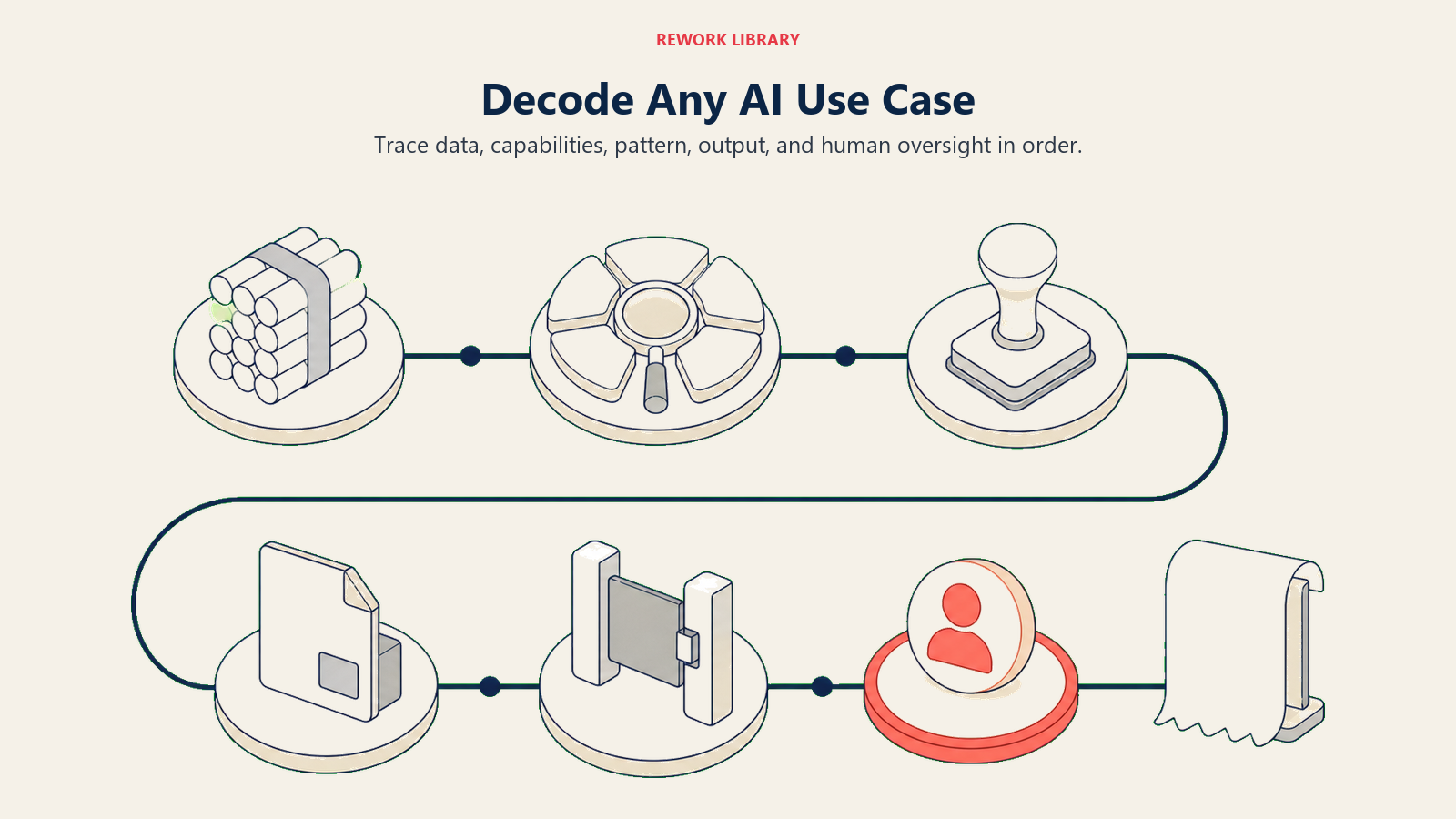
- どのデータを消費しているか? (テキスト、構造化データ、画像、音声、動画、コード、時系列データ)
- どの機能を使っているか? (Ingest、Analyze、Predict、Generate、Execute)
- 主要なパターンは何か? (RAG、Scoring+Routing、Vision Extractなど)
- 出力はアーティファクトかステート変更か? (Generateのみ、またはExecuteも含むか)
- 人間はどこに位置するか? (レビューゲート、モニタリング、不在)
実例:Gong(セールスコール分析プラットフォーム)
- データ:音声(録音されたコール)+テキスト(文字起こし)+構造化データ(CRMレコード)
- 機能:Ingest(コール音声→文字起こし)、Analyze(トピック、異議、センチメント)、Generate(サマリー+CRMノート)、Execute(Salesforceに書き戻し)
- パターン:Meeting Intelligence
- 出力:両方。人間が読めるサマリーを生成し、CRMレコードを更新することでExecuteを実行します。
- 人間:担当者がサマリーをレビューします。マネージャーがコーチングインサイトをレビューします。Gong内でAIが顧客に対して自動的にアクションを起こすことはありません。
5つの箇条書きで、Gongが何をするか、そしてあなたのスタックにどう適合するかを完全に記述できました。今度はChatGPTで試してみましょう(Analyze + Generate、純粋なアーティファクト、人間がExecuteを行う必要がある)。Stripe Radarで試してみましょう(Ingest + Analyze + Predict + Execute、不正を自動フラグ)。Salesforce Einsteinで試してみましょう(Ingest + Analyze + Predict、その後人間がスコアをレビューし、オプションで自動ルーティングでExecute)。
この練習を1週間続けると、ベンダーのピッチの見方が変わります。「AI搭載」に感銘を受けるのをやめ、実際にどの機能がアクティブで、人間がどこでループにとどまるのかを問うようになります。
予測AIと生成AI:マッピング
テクノロジー業界は現在、AIを2つの陣営に分けています:Predictive AI(スコアリング、予測、分類)とGenerative AI(テキスト、画像、コードの生成)です。この分類は、ChatGPTが生成AIの側を新たに可視化した2022年以降に普及しました。
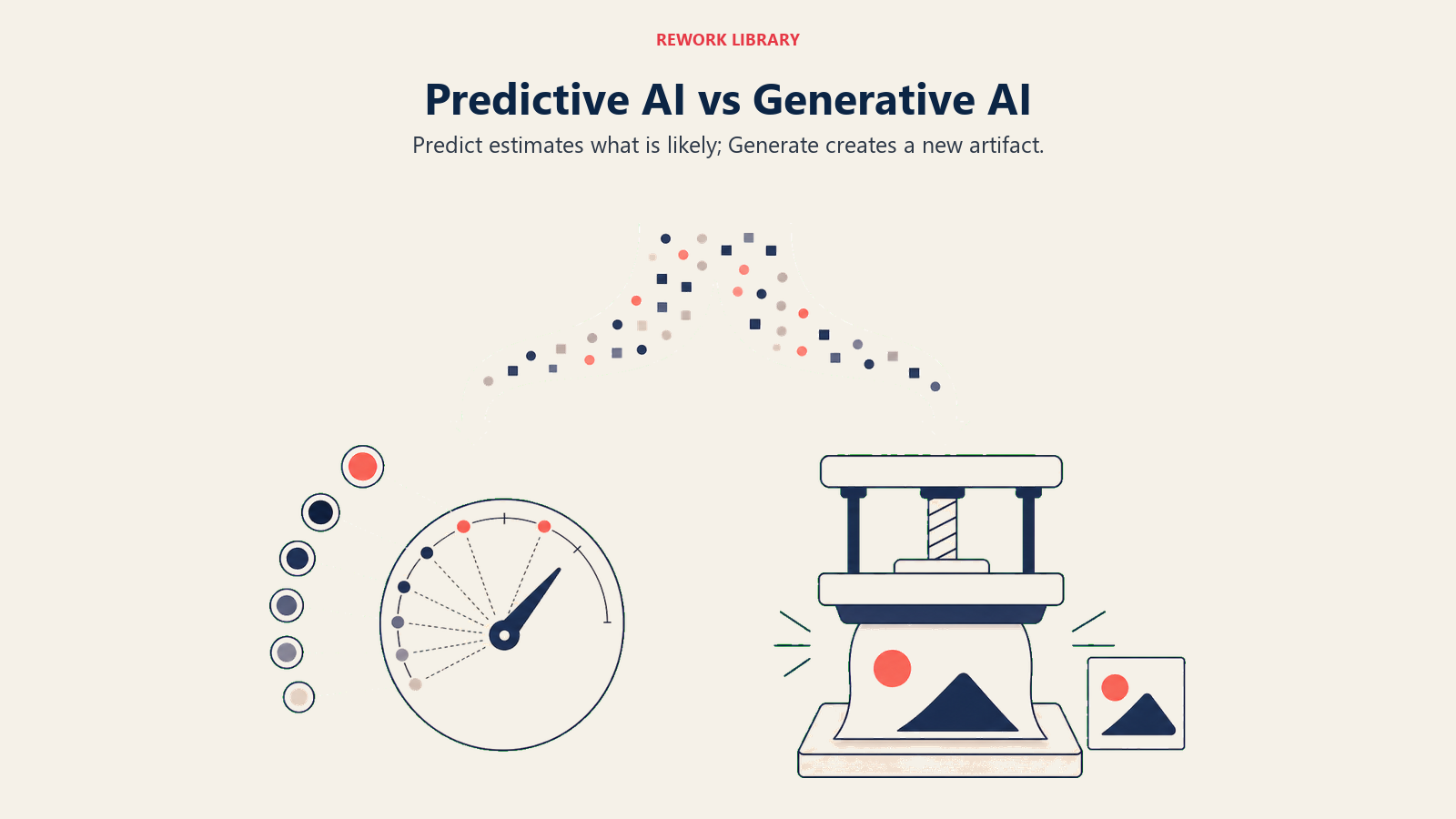
ACEフレームワークはこの両方にマッピングされます。
Predictive AIは主にPredict機能を使用し、Analyzeがサポートします。Salesforce Einstein、HubSpot Predictive Lead Scoring、Stripe Radar、レコメンデーションエンジンがこれにあたります。
Generative AIは主にGenerate機能を使用し、Analyzeがサポートします。ChatGPT、GitHub Copilot、Midjourney、Jasper、Writerがこれにあたります。
最新の製品のほとんどは両方を組み合わせています。カスタマーサポートエージェントは意図を予測し(Predict)、返答を下書きします(Generate)。自律型コーディングエージェントはバグを分析し(Analyze)、修正アプローチを予測し(Predict)、コードを書き(Generate)、それをコミットします(Execute)。「Predictive対Generative」の二項対立は便利な略語ですが、IngestとExecuteを完全に見落としています。
生成AI市場は単独で2026年に1,210億ドルと予測され、年率33.2%で成長しています。企業のAI支出は2023年以降17億ドルから370億ドルに成長しています。だからこそ、すべてのソフトウェアベンダーがどちらかまたは両方の陣営でポジションを確立しようと競争しているのです。
このフレームワークがしないこと
正直な限界を最初に示します。
処方箋ではありません。 このフレームワークは語彙と構造を提供します。月曜日にどのAIを導入するか、どのベンダーを購入するか、変革管理をどのように行うかは教えません。そのためには、このフレームワークの上に構築されたPlaybookが必要です。
成熟度モデルではありません。 6つのレイヤーは、順番に進む段階ではありません。Transformation Strategy(Level 5)なしに洗練されたPatterns(Level 2)を持つビジネスも、その逆もあり得ます。スタックは構造的であり、順次的ではありません。
静的ではありません。 AIは急速に進化します。このフレームワークは、おそらく四半期ごとに改訂が必要です。機能が分割されるかもしれません。新しいものが生まれるかもしれません。永遠に正しくあることではなく、常に最新であり続けることをお約束します。
テクノロジー固有ではありません。 GPT-5、LangChain、または特定のツールへの依存はありません。それらは半年ごとに変わります。機能は製品よりも長続きします。
それ自体では十分ではありません。 フレームワークを引用することは分析ではありません。フレームワークに基づいて構築された実際の記事は、実例、失敗モード、そして誠実なROIデータを加える必要があります。
新しいものです。 このフレームワークは2026年に公開されました。時間をかけて自らを証明する必要があります。一部の要素は有効であり続けるでしょう。一部は改訂が必要になるでしょう。学びに応じてこの記事を更新します。
これらの限界があってもなお、今週使えるフレームワークとして余地があるなら、読み続けてください。
このフレームワークの使い方
1. 現在のAIスタックを監査する。 会社が使っているすべてのAIツールをリストアップしてください。それぞれについて、ACE機能にタグをつけてください。冗長性(3つのツールがGenerate+Textを実行している)、ギャップ(「予測分析」にお金を払っているのにPredict機能がゼロ)、そして驚き(最新だと思っていたツールが実はチャットUIを持つAnalyzeに過ぎない)が見えてくるでしょう。
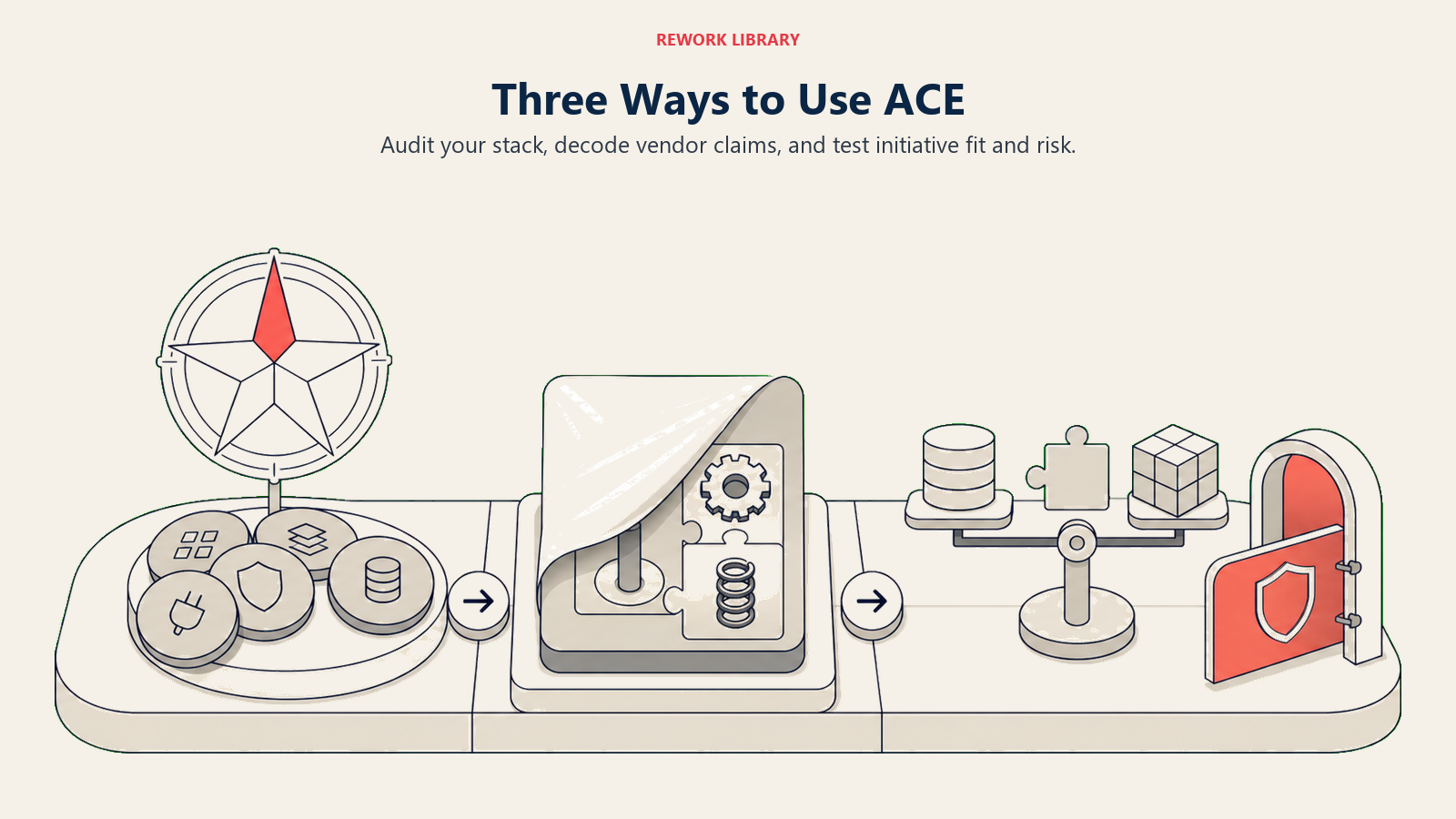
2. ベンダーのピッチを懐疑的に読む。 ほとんどのAIベンダーのピッチは「インテリジェント」「自動化」「変革的」といった言葉を使います。それらをACE機能に置き換えると、突然ピッチが明確になります。「セールスワークフローを変革する」ツールは、具体的にはおそらくAnalyze + Generate + おそらくExecuteです。ベンダーが自社製品がどの機能を実行するかを正確に説明できないなら、それ自体が情報です。
3. 自社のAIイニシアチブを評価する。 機能のバランスよく投資しているか、それともすべてGenerateに偏っているか?リスクの高いワークフローには、Executeの境界に適切な人間のループが設けられているか?最新のLLMを追いかけるのではなく、地味なFoundationの作業をしているか?
OECDによると、61%のSMBがAI導入の主要な障壁としてコストを挙げ、次いで専門知識の欠如(54%)とデータ品質(41%)が続きます。ACEフレームワークはコストを解決しません。専門知識のギャップ、つまりMcKinseyに200万ドルを払わずに情報に基づいた意思決定をするために必要な語彙を解決します。これが限定的な主張であり、我々はそれを支持します。
次のステップ
このコレクションの残りは各レイヤーを詳しく説明します。
- Foundation:7つのデータタイプとAIを可能にするデータレディネスの作業
- 5つの機能:実例と失敗モードを含む機能ごとのディープダイブ:Ingest、Analyze、Predict、Generate、Execute
- 機能を超えて:境界、実践的な活用、進化、AIイニシアチブのタグ付け
このコレクションの後には、Patternsコレクション(Level 2)が実際のビジネス問題の90%を解決する10の繰り返し機能の組み合わせをカバーします。次にAI for [あなたのロール](Level 3)でロール別の深掘りをします。その後、上位レベルのための業界・戦略コンテンツが続きます。
ACEフレームワークはツールです。仕事に役立つときに使ってください。役立たないときは置いておいてください。仕事は仕事です。
ACEフレームワークはReworkのコンテンツ・リサーチチームによって2026年4月に構築されました。このドキュメントはAI環境の変化に合わせて改訂されるリビング・リファレンスです。誤りを発見した場合や提案がある場合は、ぜひお知らせください。
