Bahasa Indonesia
Pipeline Velocity: Mengukur dan Mempercepat Deal Flow Melalui Stages
Turn this article into takeaways for your work.


Each assistant summarizes the article only for you and suggests best practices for your work.
Ini sesuatu yang banyak revenue leaders salah paham: mereka lihat pipeline size dan think mereka understand revenue trajectory mereka. Mereka tidak.
$10M pipeline terlihat impressive sampai Anda realize deals butuh 180 hari untuk close daripada 90. At velocity itu, pipeline Anda tidak generating revenue yang Anda think. Anda sitting on stalled capital, dan problemnya compounds quarter setelah quarter.
Pipeline velocity tell Anda truth. Ini show seberapa cepat revenue actually flows melalui sales operation Anda, bukan berapa banyak sitting di stages collecting dust.
Jika Anda building predictable revenue forecasting, Anda need understand ini. Pipeline velocity bukan vanity metric lainnya. Ini operational indicator yang determine apakah pipeline Anda translate ke actual bookings atau just looks good di board decks.
Apa itu Pipeline Velocity?
Pipeline velocity mengukur speed di mana opportunities move melalui sales pipeline Anda dan convert menjadi revenue. Ini composite metric yang capture bukan just berapa banyak deals Anda punya, tapi seberapa cepat mereka moving, berapa besar mereka, dan seberapa likely mereka untuk close.
Think dari ini sebagai revenue throughput. High velocity means pipeline Anda converting efficiently ke closed-won deals. Low velocity means revenue stuck, stalled, atau leaking out melalui losses.
Pipeline velocity force Anda untuk look di semua factors yang impact revenue generation simultaneously, bukan just individual metrics dalam isolation.
Rumus Pipeline Velocity
Rumus velocity menunjukkan bagaimana volume opportunity, ukuran deal, win rate, dan panjang siklus berpadu menjadi kecepatan pendapatan.
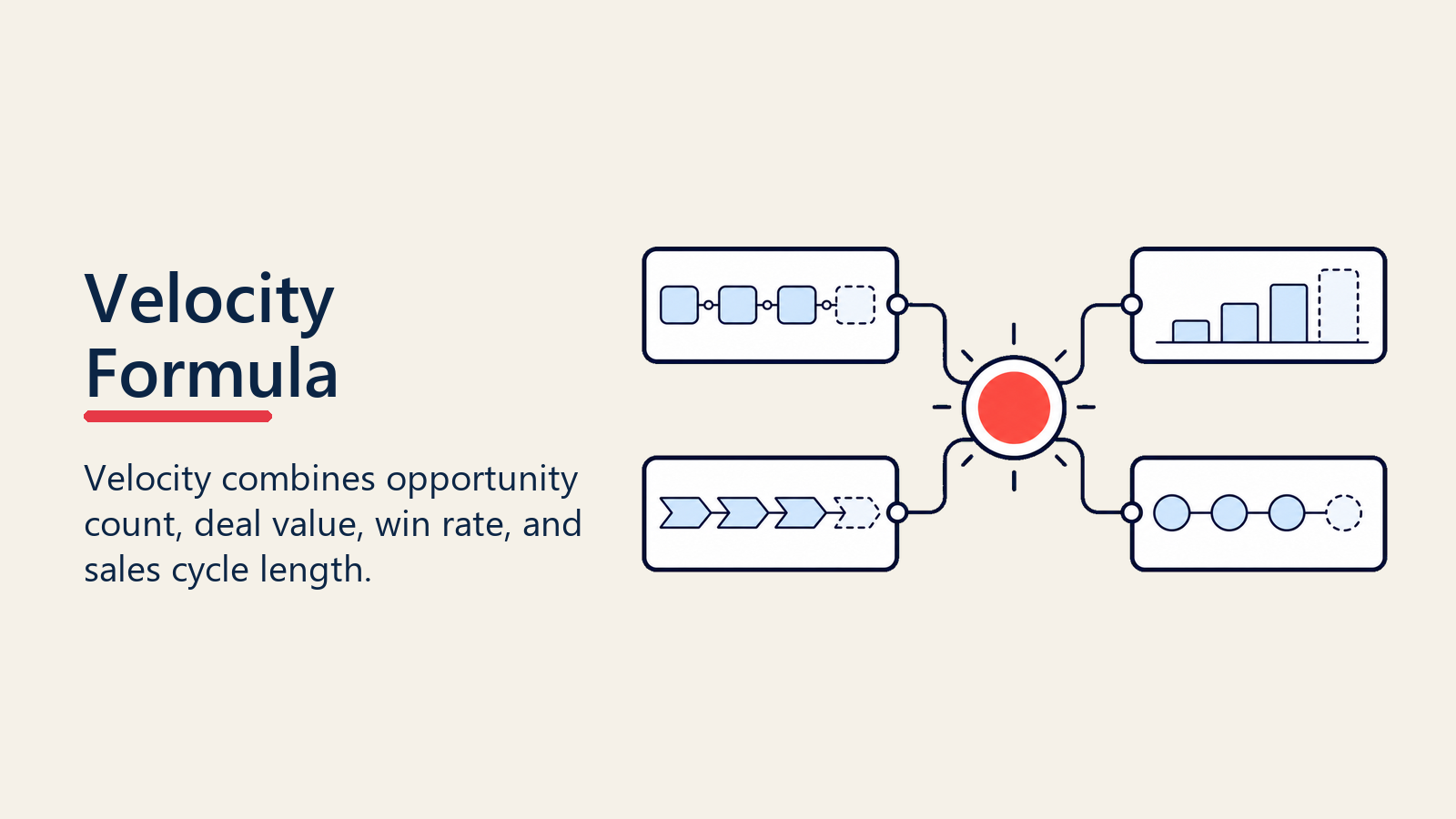
Pipeline velocity dikalkulasi using empat core components:
Pipeline Velocity = (Number of Opportunities × Average Deal Value × Win Rate %) / Sales Cycle Length (Days)
Mari break down apa formula ini actually tell:
Number of Opportunities: Volume dari active deals dalam pipeline Anda. Lebih banyak opportunities increase velocity, assuming factors lain stay constant.
Average Deal Value: Typical size dari deals Anda. Larger deals generate lebih banyak revenue per opportunity, accelerating velocity.
Win Rate Percentage: Close rate Anda, percentage dari opportunities yang convert ke closed-won. Higher win rates means less wasted effort dan faster revenue generation.
Sales Cycle Length: Average time dari opportunity creation ke close (won atau lost). Shorter cycles means revenue arrives faster, directly increasing velocity.
Contoh Perhitungan
Mari say Anda punya:
- 50 opportunities dalam pipeline
- $25,000 average deal size
- 30% win rate
- 60-day sales cycle
Pipeline Velocity = (50 × $25,000 × 0.30) / 60 days = $6,250 per day
Ini daily revenue generation rate Anda. Multiply by 30 untuk get monthly velocity ($187,500) atau by 90 untuk get quarterly velocity ($562,500).
Power dari metric ini adalah ini show Anda exactly mana levers untuk pull untuk accelerate revenue generation.
Empat Komponen Velocity: Apa yang Diungkapkannya kepada Anda
Setiap komponen velocity menunjuk ke tuas yang berbeda untuk meningkatkan output pipeline.
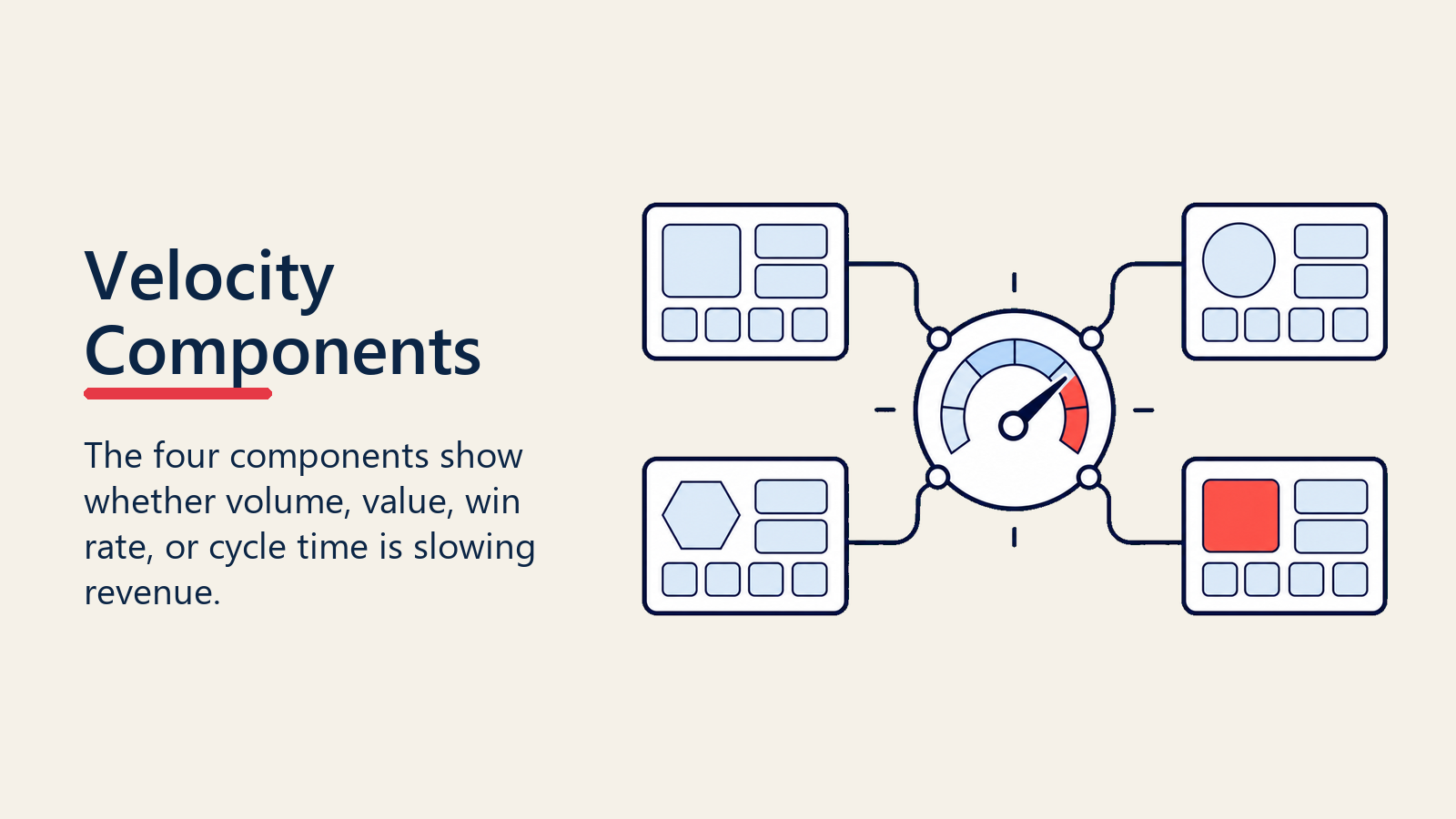
Setiap component dari velocity formula mengungkap different aspects dari pipeline health:
1. Jumlah Opportunity (Volume)
Ini measure pipeline generation capacity, ability Anda untuk create qualified opportunities.
Apa yang impacts ini:
- Marketing lead generation effectiveness
- SDR/BDR prospecting productivity
- Inbound conversion rates
- Partner dan referral programs
Warning signs:
- Declining opportunity volume quarter-over-quarter
- Inconsistent opportunity creation (feast atau famine)
- Heavy dependence pada single source
2. Rata-Rata Nilai Deal (Ukuran)
Ini measure deal quality dan solution pricing power.
Apa yang impacts ini:
- Product/service pricing strategy
- Upsell dan cross-sell effectiveness
- Customer segment targeting (enterprise vs. SMB)
- Sales rep ability untuk expand deal scope
Warning signs:
- Declining average deal size over time
- High variance dalam deal sizes (lack dari ICP focus)
- Discounting yang erodes deal value
3. Persentase Win Rate (Konversi)
Ini measure qualification quality dan competitive positioning through effective opportunity qualification.
Apa yang impacts ini:
- Lead qualification rigor
- Sales methodology execution
- Product-market fit
- Competitive differentiation
- Pricing dan value communication
Warning signs:
- Win rates below 25% (poor qualification)
- Declining win rates (competitive pressure)
- Wide variation dalam rep win rates (skill gaps)
4. Panjang Siklus Penjualan (Waktu)
Ini measure operational efficiency dan buyer friction.
Apa yang impacts ini:
- Deal complexity dan decision-maker access
- Internal approval processes (both yours dan customers')
- Sales process effectiveness
- Champion strength dan internal selling
Warning signs:
- Lengthening sales cycles over time
- Deals stuck dalam specific stages untuk extended periods
- High variance dalam cycle length (unpredictable close timing)
Clear stage gate criteria bisa help identify dan address issues ini sebelum mereka impact velocity.
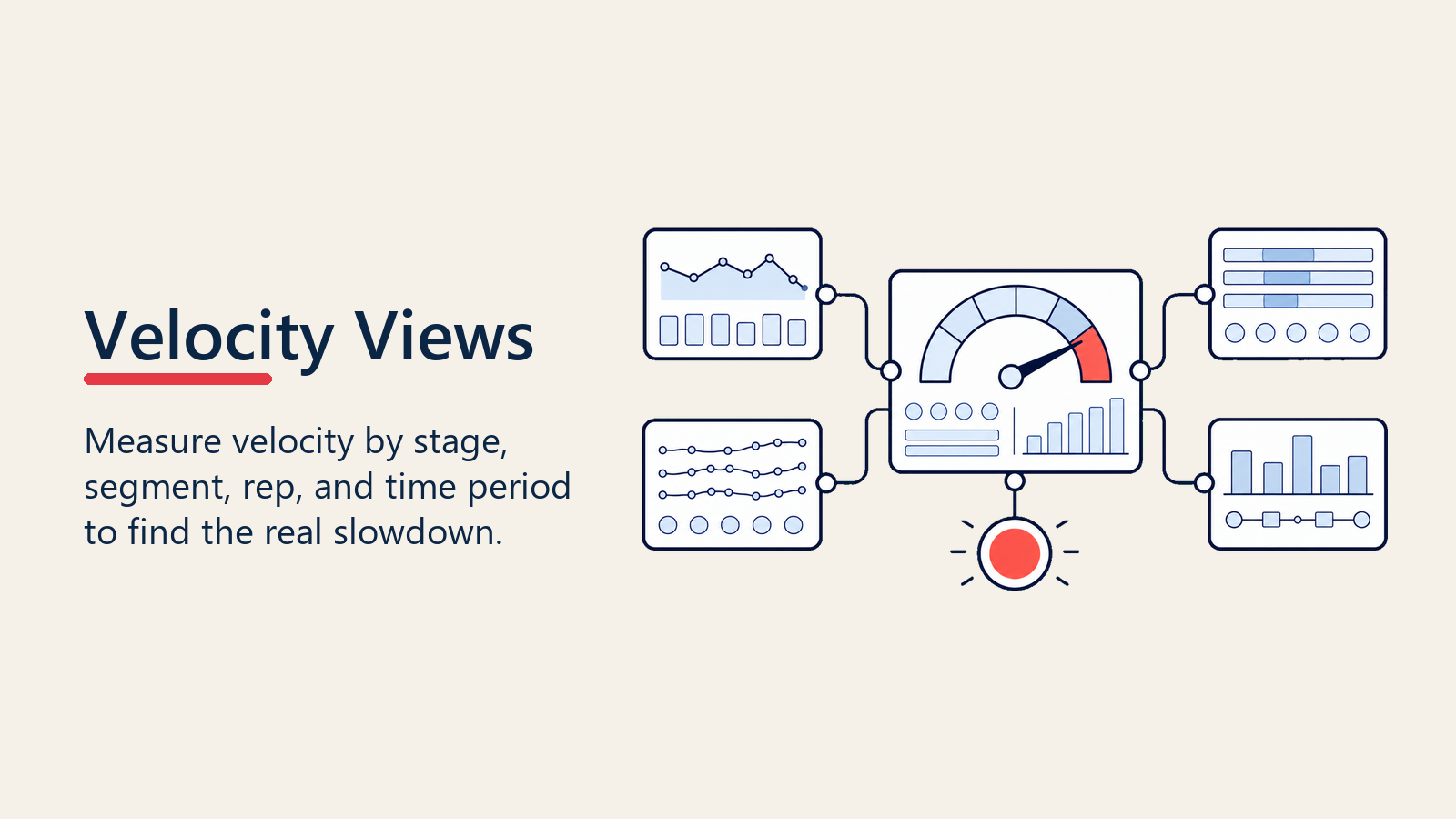
Mengukur Pipeline Velocity: Empat Tampilan Penting
Velocity bukan just single number. Anda need multiple views untuk understand apa yang actually happening:
1. Pipeline Velocity Keseluruhan
Aggregate velocity Anda across semua opportunities, segments, dan reps. Ini give Anda headline number untuk executive reporting dan trend tracking.
Track ini monthly dan quarterly untuk identify apakah revenue generation capacity Anda improving atau declining.
2. Velocity per Stage
Calculate velocity untuk opportunities di setiap pipeline stage. Ini reveal di mana deals accelerating versus di mana mereka stalling.
Untuk example:
- Discovery to Demo: 12 hari average
- Demo to Proposal: 18 hari average
- Proposal to Negotiation: 45 hari average (red flag!)
- Negotiation to Close: 10 hari average
Stage-specific velocity pinpoint exactly di mana pipeline bottlenecks exist.
3. Velocity per Rep
Compare velocity across individual sales reps. Ini identify top performers (siapa yang closing faster dan pada win rates apa?) dan coaching opportunities.
Rep-level velocity mengungkap:
- Siapa closing right-sized deals
- Siapa qualifying effectively (high win rates)
- Siapa getting deals through stages efficiently
Data ini invaluable untuk pipeline coaching conversations dan identifying best practices untuk replicate across team.
4. Velocity per Segmen
Break velocity down by customer segment (enterprise, mid-market, SMB), vertical, atau product line.
Ini show mana segments generate revenue fastest dan di mana sales motion Anda paling efficient. Ini juga reveal misalignment, seperti pouring resources ke segments dengan slow velocity dan low returns.
Benchmark Pipeline Velocity: Seperti Apa yang "Baik" Itu
Velocity benchmarks vary significantly by business model, deal size, dan market segment. Ini apa typical terlihat seperti:
Berdasarkan Sales Motion
High-Velocity Transactional (SMB)
- Sales Cycle: 7-30 hari
- Win Rate: 25-35%
- Deal Size: $5K-$25K
- Expected Velocity: $5K-$15K per hari per rep
Mid-Market Consultative
- Sales Cycle: 30-90 hari
- Win Rate: 30-40%
- Deal Size: $25K-$100K
- Expected Velocity: $10K-$30K per hari per rep
Enterprise Complex
- Sales Cycle: 90-180 hari
- Win Rate: 20-30%
- Deal Size: $100K-$500K+
- Expected Velocity: $15K-$50K per hari per rep
Konteks Industri Itu Penting
SaaS companies typically lihat shorter cycles (30-60 hari untuk SMB, 90-120 untuk enterprise) karena lower switching costs dan standardized implementations.
Professional services dan complex technology sales sering lihat longer cycles (120-240 hari) karena customization requirements, procurement processes, dan stakeholder complexity.
Apa yang paling matters bukan hitting arbitrary benchmarks, ini improving velocity Anda over time dan understanding mana levers drive improvement. Use pipeline coverage analysis alongside velocity untuk ensure Anda punya sufficient pipeline untuk hit targets di current velocity rate Anda.
Analisis Durasi Stage: Di Mana Waktu Menghilang
Analisis durasi stage mengungkap di mana deal menunggu paling lama dan penundaan mana yang wajar versus yang dapat diatasi.
Sales cycle length adalah average, tapi deals tidak move evenly through stages. Beberapa stages fast, others drag. Identifying di mana time disappears adalah crucial untuk acceleration.
Memetakan Durasi Stage
Calculate average time spent dalam setiap stage:
Discovery: 8 hari
Qualification: 5 hari
Demo/Presentation: 12 hari
Proposal: 22 hari (bottleneck!)
Negotiation: 18 hari
Contracting: 15 hari
Dalam example ini, 22 hari dalam Proposal stage adalah clear bottleneck. Itu di mana deal progression stalling.
Mengapa Durasi Stage Lebih Penting dari yang Anda Kira
Jika proposal stage Anda average 22 hari tapi top performer Anda close stage itu dalam 10 hari, Anda punya 12-day acceleration opportunity. Scale itu across 50 deals per quarter dan Anda've shaved 600 hari dari cycle time, Anda've essentially doubled velocity Anda.
Stage duration analysis mengungkap:
- Mana stages need operational improvements
- Di mana reps butuh enablement atau coaching
- Di mana buyers face decision friction
- Di mana internal processes Anda create delays
Velocity Killer: Tujuh Faktor Penghambat Deal
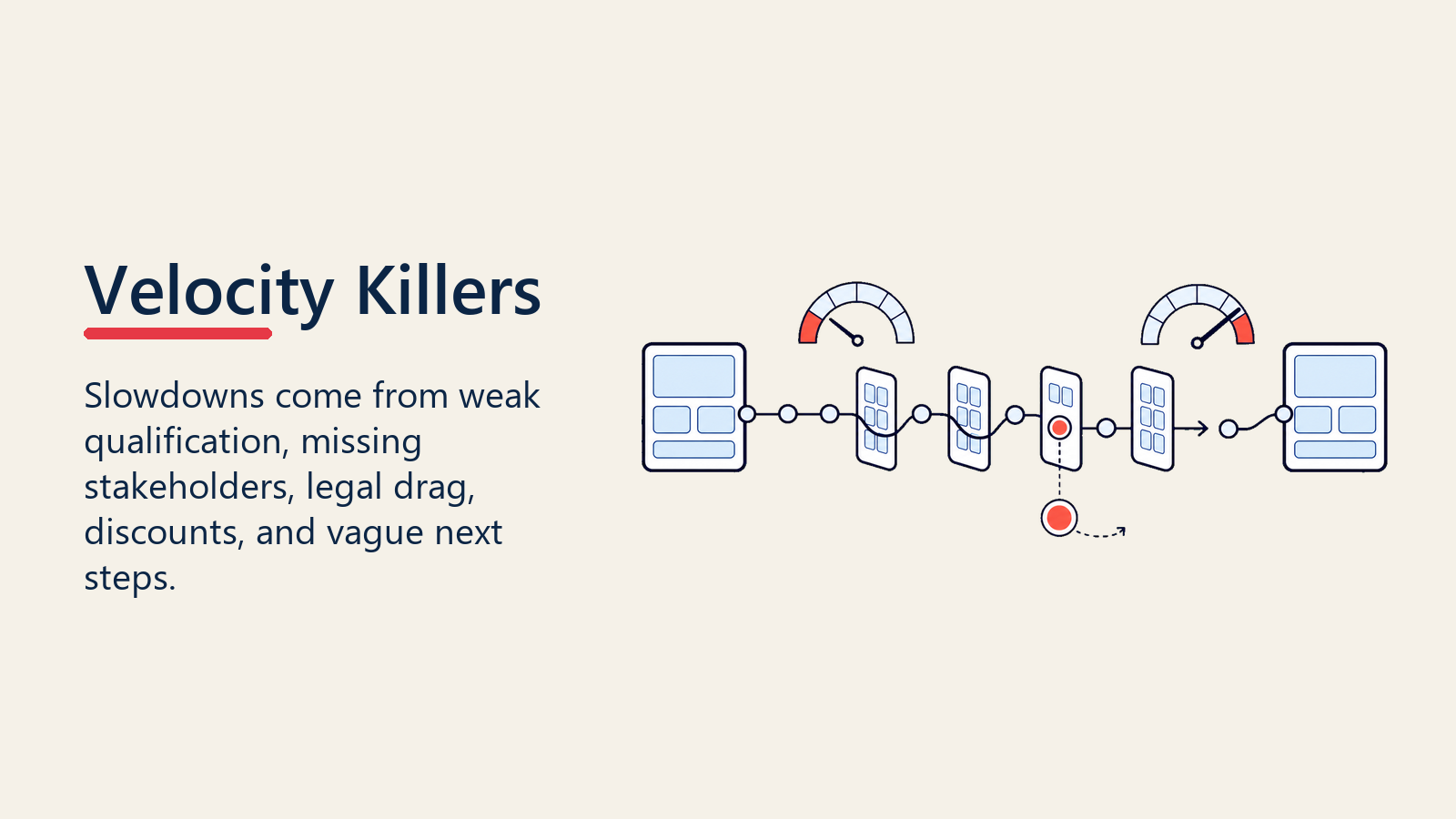
Certain patterns consistently slow pipeline velocity. Recognize ini dan Anda bisa address:
1. Masalah Akses ke Pengambil Keputusan
Deals stall ketika Anda talking ke influencers tapi tidak bisa reach decision-makers. Champion Anda bisa love solution Anda, tapi jika CFO atau VP yang sign contracts tidak engaged, Anda stuck.
Acceleration strategy: Multi-threading, intentionally building relationships pada multiple levels, termasuk economic buyer dan executive sponsors.
2. Keterlambatan Persetujuan Internal
Both yours dan customer's. Complex approval chains (procurement, legal, security reviews) add weeks ke cycles.
Acceleration strategy: Map approval processes early. Identify semua stakeholders dan address concerns mereka proactively. Di your side, streamline pricing approvals dan contract templates.
3. Scope Creep dan Perluasan Persyaratan
Deals yang start simple get complicated saat lebih banyak stakeholders add requirements. Apa began sebagai single-department solution becomes enterprise-wide initiative.
Acceleration strategy: Anchor scope early dengan mutual action plans. Phase implementations jadi initial deals close faster, dengan expansion opportunities addressed post-launch.
4. Champion yang Hilang atau Lemah
Deals tanpa internal champions, people yang sell solution Anda ketika Anda tidak dalam room, stall atau die. Weak champions lack influence, access, atau urgency.
Acceleration strategy: Qualify champion strength explicitly. Jika Anda tidak punya one, develop one. Jika yours weak, find stronger advocate.
5. Situasi Kompetitif dan Kelelahan Evaluasi
Multiple vendor evaluations extend cycles. Prospects schedule demos dengan five vendors, kemudian butuh weeks untuk compare dan deliberate.
Acceleration strategy: Create urgency through limited-time offers, highlight switching costs dan opportunity costs dari delayed decisions, dan differentiate strongly untuk short-circuit lengthy comparisons.
6. Persyaratan yang Tidak Jelas atau Berubah-ubah
Ketika prospects tidak tahu exactly apa yang mereka butuh, atau requirements change mid-cycle, deals restart atau stall entirely.
Acceleration strategy: Lead dengan discovery. Facilitate requirements definition daripada waiting untuk prospects figure out. Position yourself sebagai expert yang clarify needs.
7. Ketidakselarasan Anggaran dan Waktu
Deals yang tidak align dengan budget cycles atau fiscal planning drag on saat prospects wait untuk "next quarter" atau "next year."
Acceleration strategy: Qualify budget availability dan timing early. Jika timing genuinely later, schedule follow-up untuk when budget becomes available daripada letting deals linger artificially.
Strategi Akselerasi Pipeline: Meningkatkan Setiap Komponen
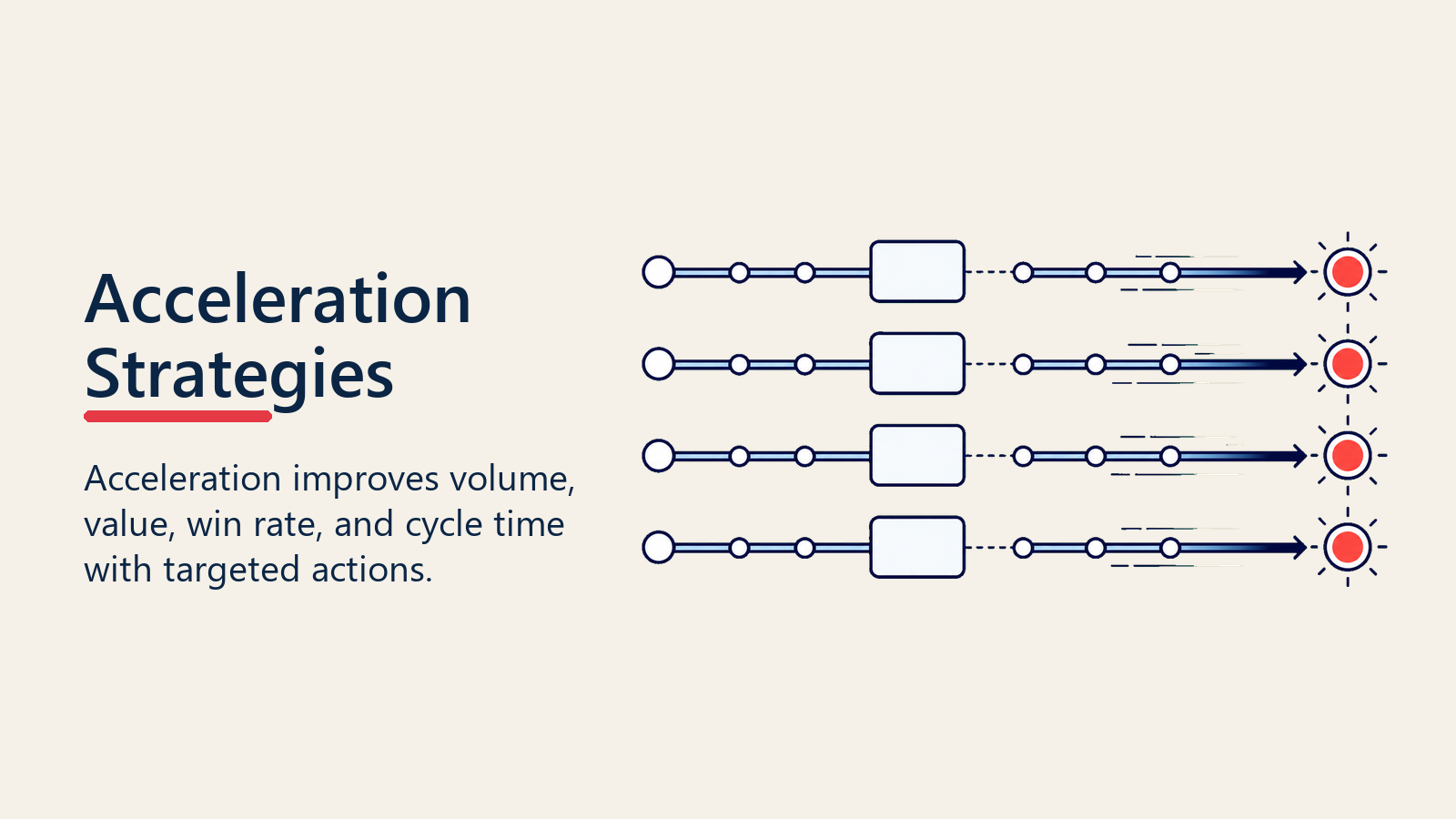
Velocity formula show exactly di mana untuk focus acceleration efforts. Ini cara untuk improve setiap component:
Mempercepat Volume Opportunity
Optimize high-converting sources: Double down pada channels dengan best MQL-to-opportunity conversion rates.
Improve SDR effectiveness: Better prospecting sequences, higher-quality accounts, dan improved qualification handoffs increase opportunity creation.
Expand partner dan referral programs: Warm introductions convert faster dan pada higher rates daripada cold outbound.
Meningkatkan Rata-Rata Nilai Deal
Target larger accounts: Adjust ICP dan prospecting focus toward bigger organizations dengan higher budget capacity.
Improve solution packaging: Bundle features dan services untuk increase deal size tanpa requiring upsells.
Train reps pada value-based selling: Help prospects lihat ROI daripada competing pada price, yang expands deal scope.
Meningkatkan Win Rate
Tighten qualification criteria: Focus hanya pada prospects dengan genuine need, budget, authority, dan timeline. Disqualify faster untuk avoid wasting cycles pada low-probability deals.
Strengthen competitive positioning: Clearer differentiation, better battle cards, dan proof points yang win competitive evaluations.
Improve sales methodology execution: MEDDIC, Challenger, atau whichever framework Anda gunakan, execution quality determine win rates.
Mempersingkat Siklus Penjualan
Front-load discovery: Ask hard questions early. Uncover objections, identify stakeholders, dan qualify urgency sebelum investing time dalam demos dan proposals.
Use mutual action plans: Collaborate dengan prospects untuk create joint close plans dengan specific milestones dan deadlines. Ini create momentum dan accountability.
Eliminate internal friction: Streamline approvals, contracts, dan onboarding jadi Anda bukan bottleneck ketika prospects ready untuk close.
Deploy social proof dan urgency: Case studies, testimonials, dan limited-time incentives accelerate decision-making.
Untuk comprehensive approach ke shortening cycles, explore sales cycle reduction dan pipeline acceleration strategies.
Memantau Pipeline Velocity: Dashboard dan Alert
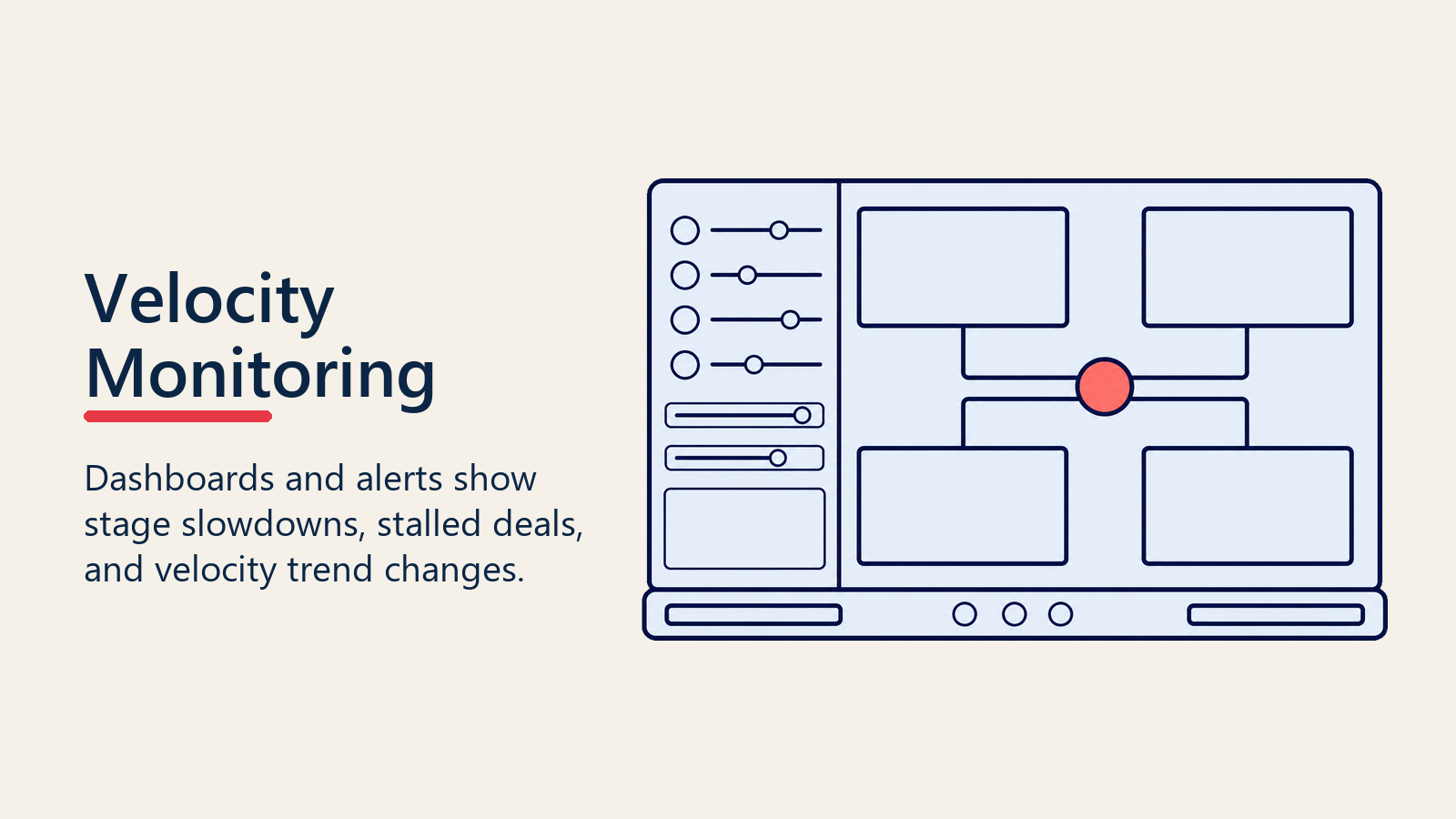
Pipeline velocity bukan set-it-and-forget-it metric. Ini require continuous monitoring untuk spot trends dan take corrective action.
Tampilan Dashboard Esensial
Build views ini ke regular pipeline reviews Anda untuk maintain visibility ke velocity trends.
1. Velocity Trend Over Time Track monthly dan quarterly velocity untuk lihat jika revenue generation capacity Anda improving, declining, atau flat.
2. Component Breakdown Display empat velocity components separately jadi Anda bisa lihat mana factors driving changes dalam overall velocity.
3. Stage Duration Waterfall Visualize time spent dalam setiap stage untuk quickly identify bottlenecks.
4. Rep Performance Matrix Compare reps across velocity, win rate, dan average deal size untuk identify coaching opportunities dan best practices untuk replicate.
5. Segment Velocity Heatmap Show velocity by segment (vertical, deal size, region) untuk inform resource allocation dan go-to-market strategy.
Alert Kritis
Set up automated alerts untuk:
- Velocity drops 20%+ month-over-month: Investigate cause immediately
- Stage duration exceeds threshold: Flag deals stuck longer dari typical stage duration
- Win rate declines 10%+ dari baseline: Signals competitive pressure atau qualification issues (see win rate improvement strategies)
- Sales cycle length increases 15%+: Indicates systemic slowdown requiring intervention
Menggunakan Data Velocity untuk Forecasting
Pipeline velocity directly improve forecast accuracy. Daripada gut-feel predictions berdasarkan pipeline size, Anda bisa calculate expected revenue berdasarkan historical velocity.
Jika velocity Anda $6,250 per hari dan Anda punya 90 hari dalam quarter, Anda bisa forecast $562,500 dalam new bookings dengan statistical confidence.
Saat Anda track velocity trends, Anda bisa adjust forecasts up atau down berdasarkan leading indicators, velocity changes sebelum bookings.
Untuk broader context pada measurement, review pipeline metrics overview untuk understand bagaimana velocity fits ke overall pipeline health framework Anda.
Peningkatan Velocity: Proses Optimasi Berkelanjutan
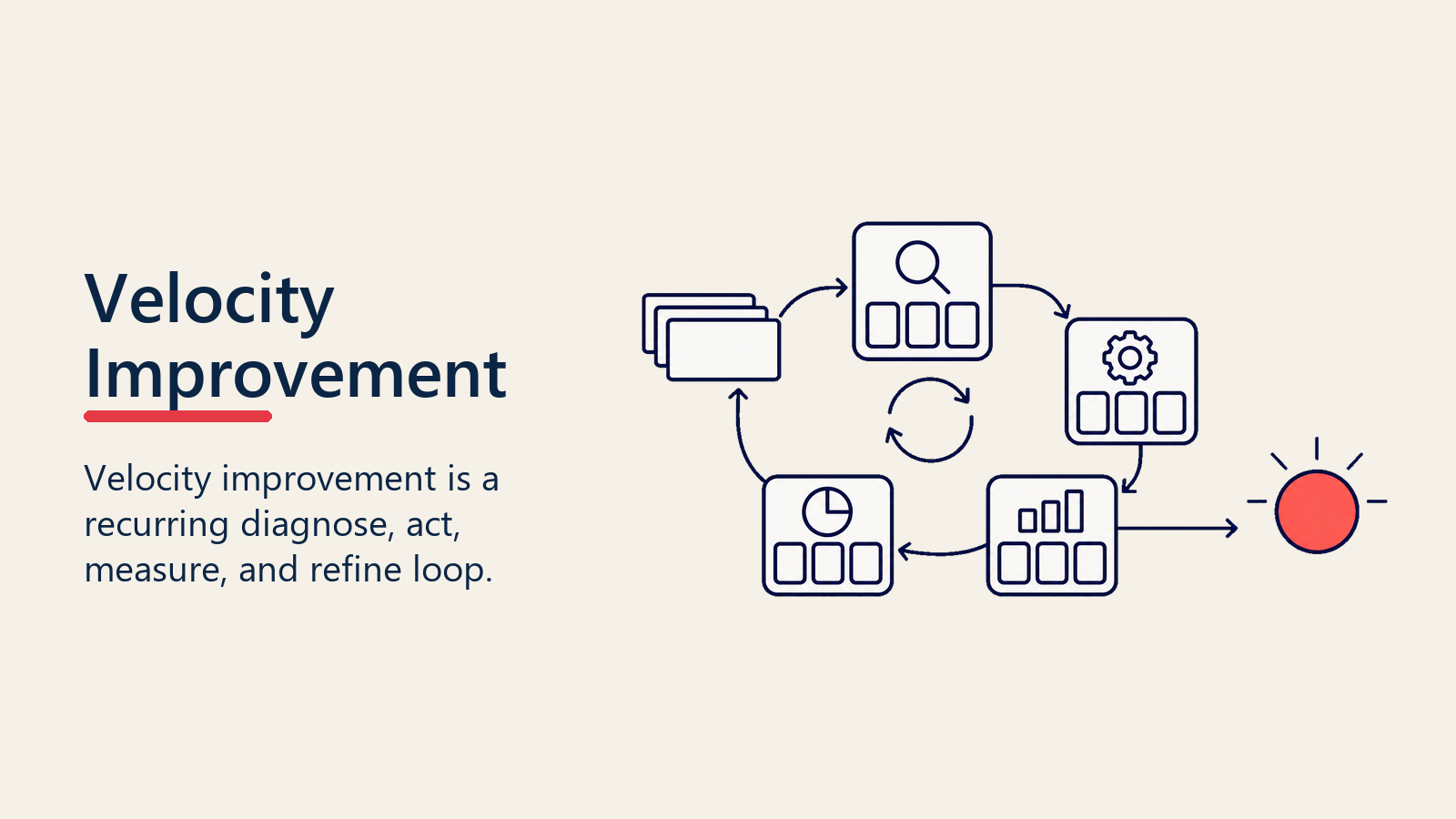
Improving pipeline velocity bukan one-time project. Ini operational discipline yang require ongoing attention.
Review Velocity Kuartalan
Setiap quarter, conduct structured velocity review:
- Analyze trends: Apakah velocity improving atau declining? Mengapa?
- Identify bottlenecks: Mana stages slowing down?
- Compare segments dan reps: Di mana biggest gaps?
- Select focus area: Choose satu atau dua components untuk improve quarter ini
- Define experiments: Apa specific changes akan Anda test?
- Measure impact: Track results dan iterate
Coaching per Rep
Use velocity data untuk inform coaching conversations:
"Win rate Anda strong di 35%, tapi average cycle length Anda adalah 95 hari dibandingkan team average 65 hari. Mari kita talk tentang apa causing delays dalam deals Anda dan bagaimana kami bisa accelerate them."
Ini far lebih actionable daripada generic "close lebih banyak deals lebih cepat" feedback.
Eksperimen dan Pembelajaran
Treat velocity improvement sebagai continuous learning process:
- Test berbagai qualification criteria
- Experiment dengan mutual action plan templates
- Try new demo formats atau proposal structures
- Adjust target account profiles
Measure impact pada velocity components dan double down pada apa yang works.
Kesimpulan: Velocity sebagai Prediktor Pendapatan
Pipeline velocity bukan just metric. Ini operational indicator yang tell Anda apakah sales engine Anda accelerating atau grinding ke halt.
Companies yang monitor dan optimize velocity tidak just understand pipeline mereka, mereka control revenue trajectory mereka. Mereka tahu exactly mana levers untuk pull untuk hit targets, dan mereka lihat problems coming sebelum mereka show up dalam missed quotas.
Mereka yang ignore velocity? Mereka constantly surprised oleh shortfalls, scrambling untuk add lebih banyak pipeline tanpa understanding mengapa existing opportunities tidak converting efficiently.
Formula adalah simple. Discipline adalah hard. Tapi result, predictable, accelerating revenue growth, worth operational rigor.
Build dashboards. Run analyses. Hold reviews. Improve components. Make velocity leadership discipline, dan watch revenue generation capacity Anda compound.
Ready untuk accelerate pipeline Anda? Start dengan conducting pipeline bottleneck analysis untuk identify di mana deals stalling, kemudian implement systematic deal progression management untuk keep opportunities moving.
Learn more:

Head of Enterprise Solutions
On this page
- Apa itu Pipeline Velocity?
- Rumus Pipeline Velocity
- Contoh Perhitungan
- Empat Komponen Velocity: Apa yang Diungkapkannya kepada Anda
- 1. Jumlah Opportunity (Volume)
- 2. Rata-Rata Nilai Deal (Ukuran)
- 3. Persentase Win Rate (Konversi)
- 4. Panjang Siklus Penjualan (Waktu)
- Mengukur Pipeline Velocity: Empat Tampilan Penting
- 1. Pipeline Velocity Keseluruhan
- 2. Velocity per Stage
- 3. Velocity per Rep
- 4. Velocity per Segmen
- Benchmark Pipeline Velocity: Seperti Apa yang "Baik" Itu
- Berdasarkan Sales Motion
- Konteks Industri Itu Penting
- Analisis Durasi Stage: Di Mana Waktu Menghilang
- Memetakan Durasi Stage
- Mengapa Durasi Stage Lebih Penting dari yang Anda Kira
- Velocity Killer: Tujuh Faktor Penghambat Deal
- 1. Masalah Akses ke Pengambil Keputusan
- 2. Keterlambatan Persetujuan Internal
- 3. Scope Creep dan Perluasan Persyaratan
- 4. Champion yang Hilang atau Lemah
- 5. Situasi Kompetitif dan Kelelahan Evaluasi
- 6. Persyaratan yang Tidak Jelas atau Berubah-ubah
- 7. Ketidakselarasan Anggaran dan Waktu
- Strategi Akselerasi Pipeline: Meningkatkan Setiap Komponen
- Mempercepat Volume Opportunity
- Meningkatkan Rata-Rata Nilai Deal
- Meningkatkan Win Rate
- Mempersingkat Siklus Penjualan
- Memantau Pipeline Velocity: Dashboard dan Alert
- Tampilan Dashboard Esensial
- Alert Kritis
- Menggunakan Data Velocity untuk Forecasting
- Peningkatan Velocity: Proses Optimasi Berkelanjutan
- Review Velocity Kuartalan
- Coaching per Rep
- Eksperimen dan Pembelajaran
- Kesimpulan: Velocity sebagai Prediktor Pendapatan