Bahasa Indonesia
Weighted Pipeline: Penilaian Opportunity Berbasis Probabilitas dan Forecasting
Turn this article into takeaways for your work.


Each assistant summarizes the article only for you and suggests best practices for your work.
Weighted pipeline adalah sales forecast yang mengalikan nilai tiap opportunity dengan probabilitas closing-nya, sehingga totalnya mencerminkan expected bookings, bukan raw pipeline. Deal $200K di probabilitas 30% dihitung sebagai $60K. Tampilan yang disesuaikan probabilitas ini menunjukkan kepada Anda apa yang secara realistis akan closing, itulah sebabnya finance dan revenue leader mengandalkannya dibanding total nilai pipeline.
VP Sales Anda mengumumkan: "Kita memiliki $4,2 juta dalam pipeline untuk Q2. Kita hanya perlu menutup $1,2 juta. Kita aman."
Tiga minggu sebelum akhir kuartal, Anda telah menutup $600K. Separuh "hal-hal yang sudah pasti" ditunda. Rapat board Anda baru saja menjadi sangat tidak nyaman.
Ini terjadi karena sebagian besar perusahaan melacak total nilai pipeline, angka yang tidak bermakna yang memperlakukan setiap opportunity sebagai sama-sama berpeluang untuk ditutup. Deal $100K dalam discovery (kemungkinan 10%) dihitung sama dengan deal $100K dalam tinjauan kontrak (kemungkinan 90%). Dashboard pipeline Anda menampilkan kelimpahan sementara forecast Anda adalah fiksi.
Weighted pipeline mengatasi ini dengan mengalikan nilai opportunity dengan probabilitas penutupan. Ini adalah perbedaan antara melacak apa yang ada dalam pipeline versus apa yang akan benar-benar Anda bukukan. Bagi CFO yang menuntut pendapatan yang dapat diprediksi dan CRO yang lelah dengan forecast yang meleset, weighted pipeline bukan analitik opsional, ini adalah realitas operasional.
Apa itu Weighted Pipeline?
Weighted pipeline menerapkan pengali probabilitas ke nilai opportunity berdasarkan seberapa besar kemungkinan mereka ditutup. Alih-alih menjumlahkan semua deal Anda pada nilai nominalnya, Anda menghitung nilai yang diharapkan dari masing-masing.
Formulanya sederhana:
Nilai Berbobot = Nilai Opportunity × Probabilitas Penutupan
Opportunity $200K dengan probabilitas 30% berkontribusi $60K ke weighted pipeline Anda. Opportunity $50K dengan probabilitas 80% berkontribusi $40K. Tampilan yang disesuaikan probabilitas ini menunjukkan apa yang secara realistis akan Anda tutup, bukan apa yang secara teoritis Anda kejar.
Mengapa Total Pipeline Menyesatkan
Total pipeline menciptakan tiga masalah:
Rasa aman palsu dari deal early-stage yang menggelembung. Rep dengan sepuluh opportunity $500K dalam discovery menunjukkan $5 juta dalam pipeline. Jika discovery berkonversi pada 15%, nilai sebenarnya adalah $750K. Itu perbedaan yang sangat besar ketika Anda merencanakan pencapaian kuota.
Tidak bisa membedakan kualitas dari kuantitas. Dua rep keduanya menampilkan $2 juta dalam pipeline. Satu memiliki 40 deal dengan rata-rata probabilitas 20%. Yang lain memiliki 8 deal dengan rata-rata probabilitas 70%. Total pipeline mengatakan mereka setara. Weighted pipeline mengungkapkan bahwa rep kedua akan menutup 3-4x lebih banyak pendapatan.
Coverage model yang tidak selaras. Jika Anda menggunakan coverage 3x terhadap total pipeline, Anda secara dramatis membangun terlalu banyak stage awal dan terlalu sedikit stage akhir. Model berbobot mengukur coverage berdasarkan probabilitas stage dengan tepat.
Konsekuensinya? Sales leader membuat keputusan perekrutan, kuota, dan wilayah berdasarkan pipeline phantom yang menguap seiring kematangan opportunity.
Metode Penentuan Probabilitas
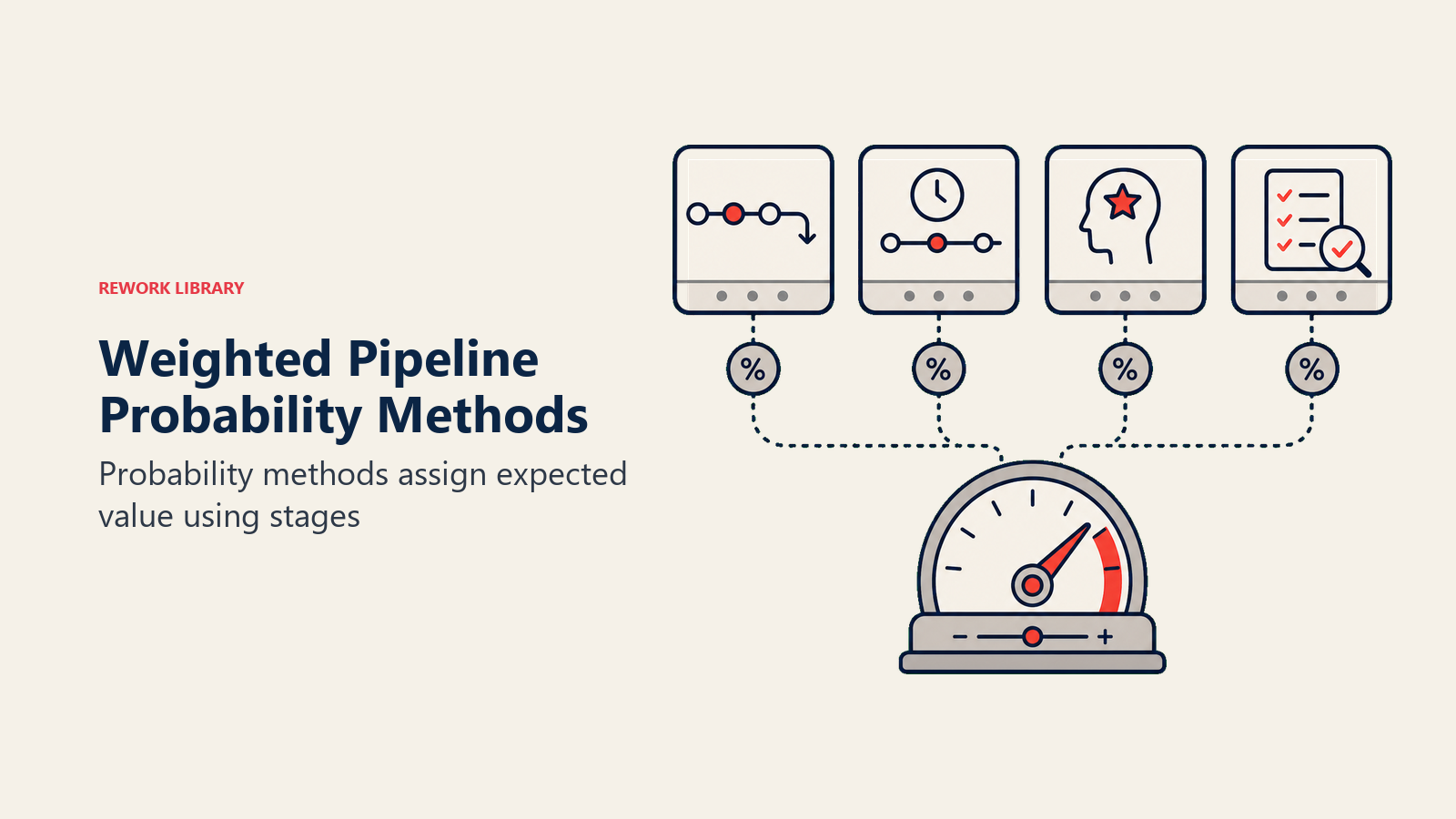
Akurasi weighted pipeline sepenuhnya bergantung pada penentuan probabilitas. Empat metode mendominasi:
1. Penentuan Otomatis Berbasis Stage
Pendekatan yang paling umum menetapkan probabilitas tetap ke setiap stage pipeline berdasarkan conversion rate historis. Ketika opportunity maju ke "Proposal," ia secara otomatis menerima probabilitas yang ditetapkan untuk stage tersebut (biasanya 40-50%). Metode ini selaras erat dengan kriteria stage gate yang mengatur kemajuan deal.
Keuntungan:
- Sederhana, konsisten, tidak memerlukan input rep
- Mudah diimplementasikan dalam workflow CRM
- Menciptakan kategori forecast yang terstandarisasi
- Menghilangkan bias individu dari penilaian probabilitas
Kerugian:
- Mengabaikan keadaan spesifik deal (situasi kompetitif, timing anggaran, kekuatan champion)
- Mengasumsikan semua opportunity dalam satu stage memiliki kemungkinan penutupan yang sama
- Dapat menciptakan permainan seputar kemajuan stage
- Tidak beradaptasi dengan perbedaan wilayah atau segmen
Berbasis stage bekerja paling baik untuk penjualan transaksional dengan velocity deal tinggi, pola pembelian yang konsisten, dan diskresi rep yang terbatas.
2. Penilaian Rep (Override Manual)
Rep menetapkan probabilitas penutupan secara manual berdasarkan penilaian mereka tentang kesehatan deal, posisi kompetitif, dan komitmen pembeli. Ini menimpa atau melengkapi default berbasis stage.
Keuntungan:
- Menangkap intelijen spesifik deal (dukungan eksekutif, anggaran dikonfirmasi, kompetisi dieliminasi)
- Menggabungkan pengalaman dan penilaian rep
- Menyesuaikan untuk keadaan yang tidak biasa atau timeline yang dipercepat
- Mencerminkan perubahan real-time dalam dinamika deal
Kerugian:
- Memperkenalkan bias, rep yang optimis terlalu tinggi, rep yang pesimis terlalu rendah
- Standar yang tidak konsisten di seluruh tim
- Sulit untuk divalidasi atau di-benchmark
- Dapat memungkinkan sandbagging atau forecast agresif berdasarkan insentif
Override manual bekerja ketika kompleksitas dan keunikan deal membuat probabilitas yang terstandarisasi tidak bermakna, deal enterprise, layanan kompleks, implementasi khusus.
3. Prediksi AI/ML
Model machine learning menganalisis data deal historis untuk memprediksi probabilitas penutupan berdasarkan lusinan sinyal: karakteristik deal, perilaku pembeli, pola keterlibatan, aktivitas penjualan, dan hasil historis.
Keuntungan:
- Memproses jauh lebih banyak variabel daripada manusia atau sistem berbasis aturan
- Belajar dari hasil untuk terus meningkatkan akurasi
- Mengidentifikasi pola prediktif yang tidak jelas
- Menghilangkan bias manusia dari penilaian probabilitas
Kerugian:
- Memerlukan data historis yang signifikan (biasanya 2+ tahun, ribuan opportunity)
- Prediksi black box kurang transparan
- Dapat memperpanjang bias historis dalam data
- Kesulitan dengan pergeseran pasar atau produk baru yang kekurangan pola historis
Probabilitas berbasis AI bekerja untuk organisasi penjualan dengan velocity tinggi dengan riwayat data yang substansial dan kecanggihan teknis untuk mengimplementasikan dan memelihara model.
4. Pendekatan Hibrida
Sebagian besar operasi forecast yang matang menggunakan model hibrida yang menggabungkan beberapa metode:
- Probabilitas berbasis stage sebagai baseline
- Override rep ketika kondisi spesifik menjamin (anggaran yang disetujui, LOI yang ditandatangani, tanggal implementasi dikonfirmasi)
- Model AI untuk menandai perbedaan antara penilaian rep dan probabilitas prediktif
- Tinjauan manajer atas deal di mana override rep menyimpang secara signifikan dari prediksi model
Pendekatan berlapis ini menyeimbangkan konsistensi, penilaian, dan prediksi berbasis data sambil mempertahankan akuntabilitas.
Probabilitas Stage Standar
Probabilitas standar memberikan model awal untuk membobotkan pipeline berdasarkan konversi yang diharapkan di tiap stage.
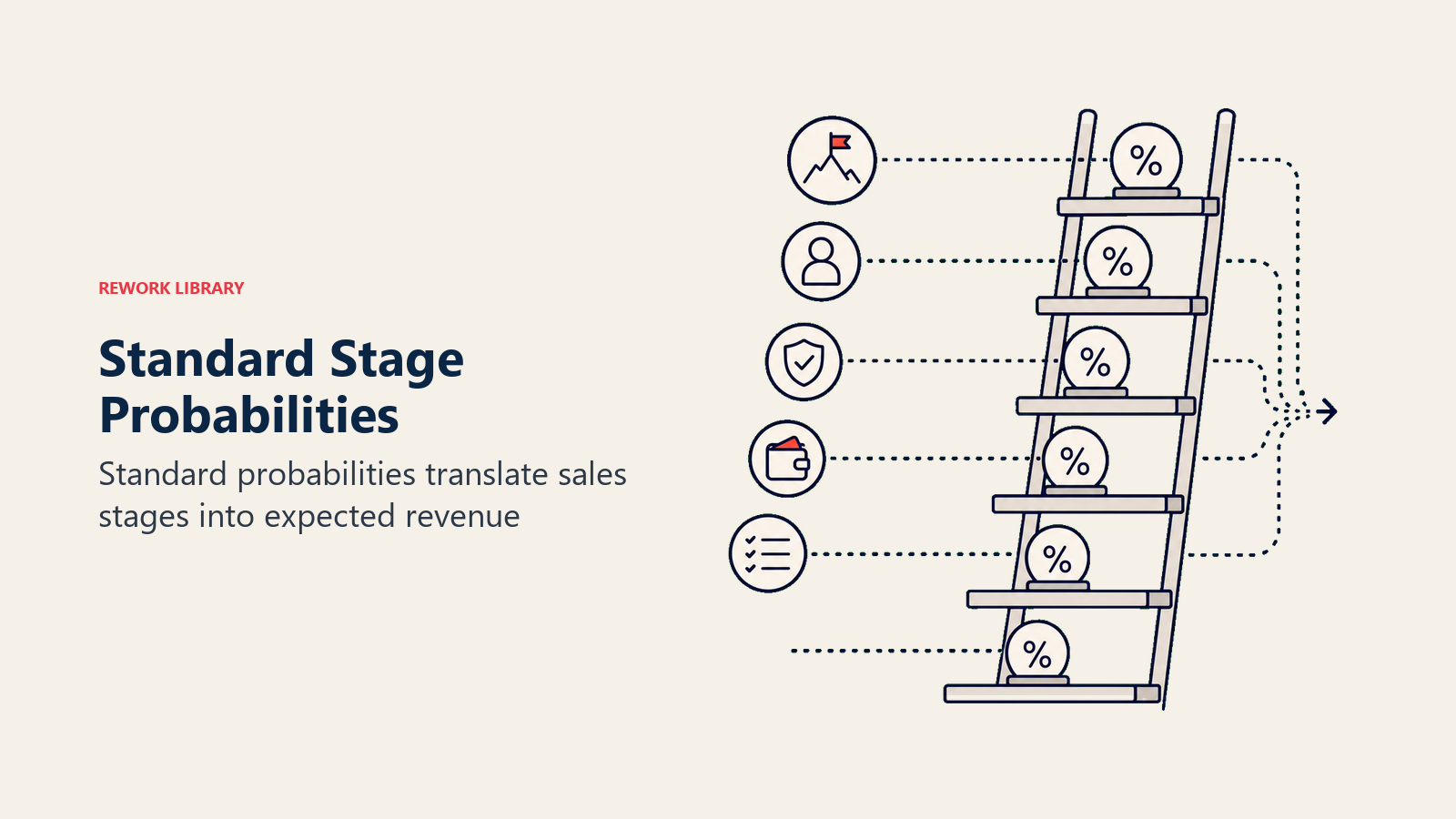
Meskipun setiap proses penjualan berbeda, benchmark industri memberikan titik awal untuk penentuan probabilitas berbasis stage:
Discovery / Kontak Awal (10-20%)
Opportunity baru saja masuk ke pipeline. Kualifikasi masih awal. Pembeli menyatakan minat tetapi belum mengkonfirmasi anggaran, timeline, atau otoritas. Pada tahap ini, sebagian besar deal akan didiskualifikasi atau terhenti.
Karakteristik tipikal:
- Penilaian kebutuhan awal dilakukan
- Kesesuaian dasar dikonfirmasi (ukuran perusahaan yang tepat, industri, use case)
- Pembeli setuju untuk percakapan eksplorasi
- Tidak ada anggaran atau timeline yang divalidasi
Kualifikasi opportunity yang efektif pada tahap ini mencegah pipeline bloat dari deal yang tidak memenuhi syarat.
Konversi ke stage berikutnya: 25-35%
Kualifikasi / Analisis Kebutuhan (20-30%)
Deal melewati kualifikasi awal. Pembeli mengkonfirmasi masalah yang nyata, timeline kasar, dan kisaran anggaran. Anda telah mengidentifikasi stakeholder kunci dan economic buyer. Namun, alternatif kompetitif tetap ada, dan pembeli belum berkomitmen pada pendekatan solusi tertentu.
Karakteristik tipikal:
- Kualifikasi BANT atau MEDDIC selesai
- Economic buyer diidentifikasi dan dapat diakses
- Compelling event atau business driver dikonfirmasi
- Timeline ditetapkan (kuartal atau bulan)
Konversi ke stage berikutnya: 40-50%
Proposal / Presentasi Solusi (40-50%)
Pembeli meminta proposal formal atau menghadiri presentasi solusi. Anda telah menyajikan harga dan pendekatan implementasi. Deal memiliki momentum, meskipun keberatan dan tekanan kompetitif tetap ada.
Karakteristik tipikal:
- Proposal formal disampaikan
- Harga dibagikan dan dibahas
- Rencana implementasi diuraikan
- Beberapa pertemuan multi-stakeholder terjadi
Konversi ke stage berikutnya: 50-60%
Negosiasi / Tinjauan Kontrak (60-75%)
Pembeli secara aktif menegosiasikan persyaratan atau meninjau bahasa kontrak. Tim hukum dan pengadaan terlibat. Deal akan ditutup atau kalah berdasarkan persyaratan, bukan kesesuaian atau nilai. Diskusi diskon dan konsesi sedang berlangsung.
Karakteristik tipikal:
- Ditandai sebagai "Commit" atau "Closed Won - Forecast"
- Tim hukum meninjau kontrak
- Pengadaan menegosiasikan persyaratan
- Persetujuan eksekutif dicari
- Timeline implementasi dibahas
Konversi ke stage berikutnya: 70-85%
Komitmen Verbal / Menunggu Tanda Tangan (80-90%)
Pembeli secara verbal berkomitmen untuk membeli. Persyaratan kontrak disetujui. Menunggu tanda tangan, persetujuan akhir, atau pemrosesan pembayaran. Deal akan ditutup kecuali ada keadaan luar biasa (pembekuan anggaran, kepergian eksekutif, akuisisi).
Karakteristik tipikal:
- Komitmen verbal dari economic buyer
- Semua keberatan diselesaikan
- Persyaratan diselesaikan
- Nomor PO diterima atau tanda tangan tertunda
- Kickoff implementasi dijadwalkan
Konversi ke close: 85-95%
Probabilitas ini mewakili rata-rata di seluruh penjualan B2B. Conversion rate aktual Anda, dihitung dari data historis, harus menginformasikan penentuan probabilitas spesifik Anda.
Menyesuaikan Probabilitas Menggunakan Data Historis
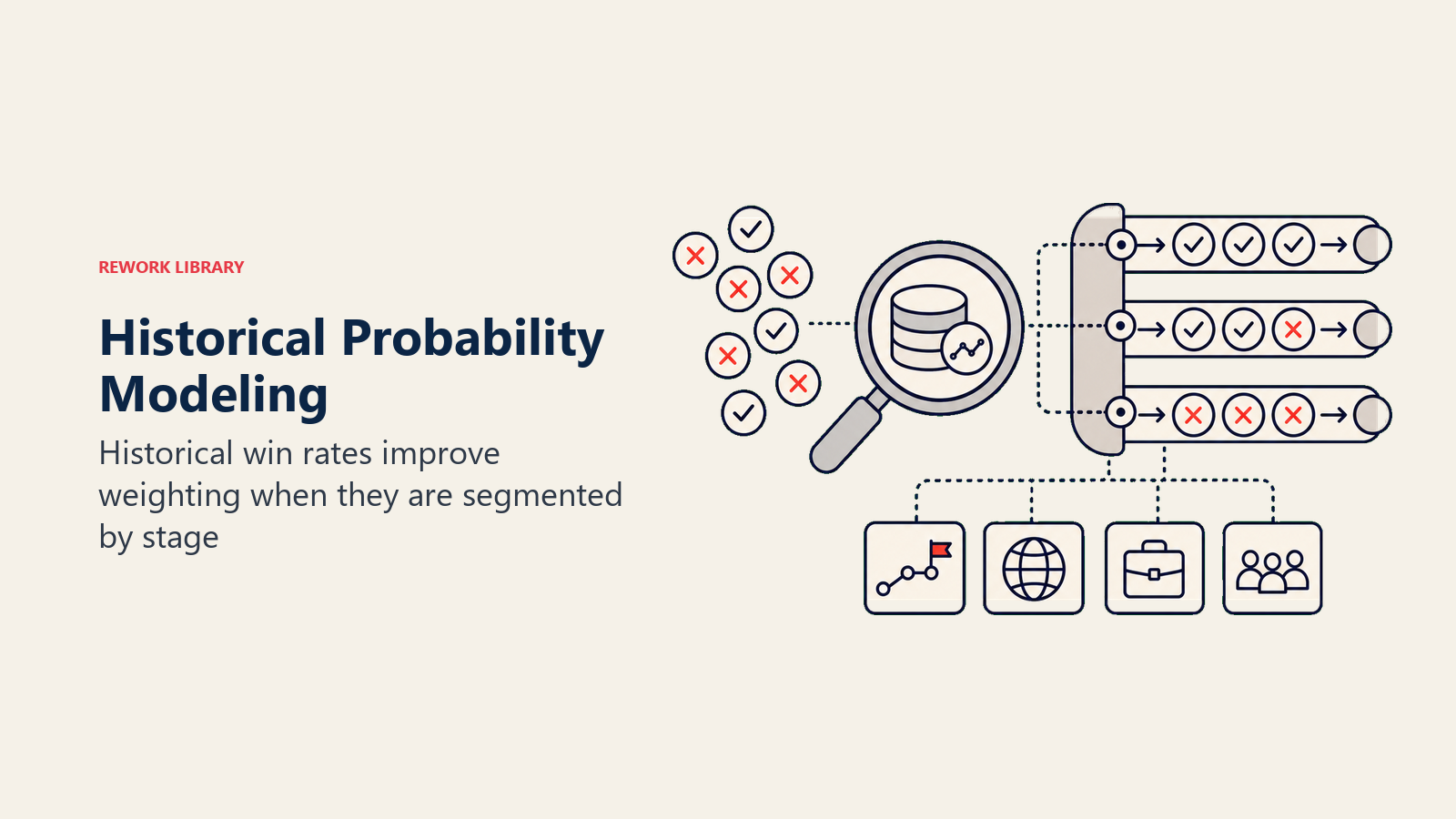
Probabilitas stage generik adalah titik awal, bukan aturan mutlak. Operasi forecast yang matang mengkalibrasi probabilitas berdasarkan data konversi aktual mereka.
Hitung Conversion Rate Historis
Ambil 12-24 bulan opportunity yang ditutup (menang dan kalah). Untuk setiap stage, hitung:
Tingkat Konversi Stage = (Opportunity yang maju ke stage berikutnya) / (Total opportunity yang mencapai stage ini)
Jika 250 opportunity mencapai stage "Proposal" dan 125 maju ke "Negosiasi," konversi Proposal → Negosiasi Anda adalah 50%.
Kalikan conversion rate stage bersama untuk mendapatkan probabilitas penutupan kumulatif dari setiap stage:
Probabilitas Penutupan Proposal = Tingkat Proposal → Negosiasi × Tingkat Negosiasi → Verbal × Tingkat Verbal → Close
Perhitungan ini mengungkapkan close rate aktual Anda per stage berdasarkan hasil historis, bukan rata-rata industri atau intuisi.
Segmentasi berdasarkan Karakteristik Deal
Conversion rate agregat menyembunyikan variasi yang signifikan. Segmentasi analisis Anda berdasarkan:
Ukuran deal: Deal enterprise (>$100K) biasanya memiliki probabilitas stage yang lebih rendah tetapi siklus penjualan yang lebih panjang daripada deal SMB (<$25K)
Segmen penjualan: New business berkonversi berbeda dari opportunity expansion atau renewal
Vertikal industri: Industri yang diregulasi (healthcare, layanan keuangan) sering memiliki probabilitas yang lebih rendah di stage awal karena proses persetujuan yang kompleks
Sumber lead: Opportunity inbound dari channel dengan intent tinggi (permintaan demo, pertanyaan harga) berkonversi pada 2-3x tingkat opportunity cold outbound
Masa jabatan rep: Rep dalam tahun pertama mereka biasanya memiliki conversion rate 15-25% lebih rendah dari rep yang sudah berpengalaman
Bangun matriks probabilitas yang menyesuaikan probabilitas baseline berdasarkan karakteristik ini. Deal new business enterprise senilai $200K dalam healthcare mungkin membawa probabilitas 25% di stage Proposal, sementara deal ekspansi senilai $30K dengan pelanggan yang ada membawa 60% pada stage yang sama. Pendekatan ini membutuhkan segmentasi pipeline yang efektif untuk mengorganisir deal berdasarkan karakteristik-karakteristik ini.
Lacak Win Rate berdasarkan Masuk Stage
Di luar konversi stage-ke-stage, lacak win rate akhir untuk deal yang mencapai setiap stage. Ini mengungkapkan probabilitas penutupan kumulatif:
- Opportunity yang mencapai Discovery: 12% pada akhirnya ditutup
- Opportunity yang mencapai Kualifikasi: 28% pada akhirnya ditutup
- Opportunity yang mencapai Proposal: 45% pada akhirnya ditutup
- Opportunity yang mencapai Negosiasi: 68% pada akhirnya ditutup
- Opportunity yang mencapai Komitmen Verbal: 87% pada akhirnya ditutup
Win rate kumulatif ini memvalidasi penentuan probabilitas Anda. Jika opportunity yang mencapai Proposal ditutup 45% dari waktu, probabilitas stage Proposal Anda harus mendekati 45% untuk menghasilkan forecast berbobot yang akurat.
Weighted vs. Unweighted Pipeline: Use Case
Tampilan pipeline berbobot dan tidak berbobot keduanya memiliki tujuan yang berbeda:
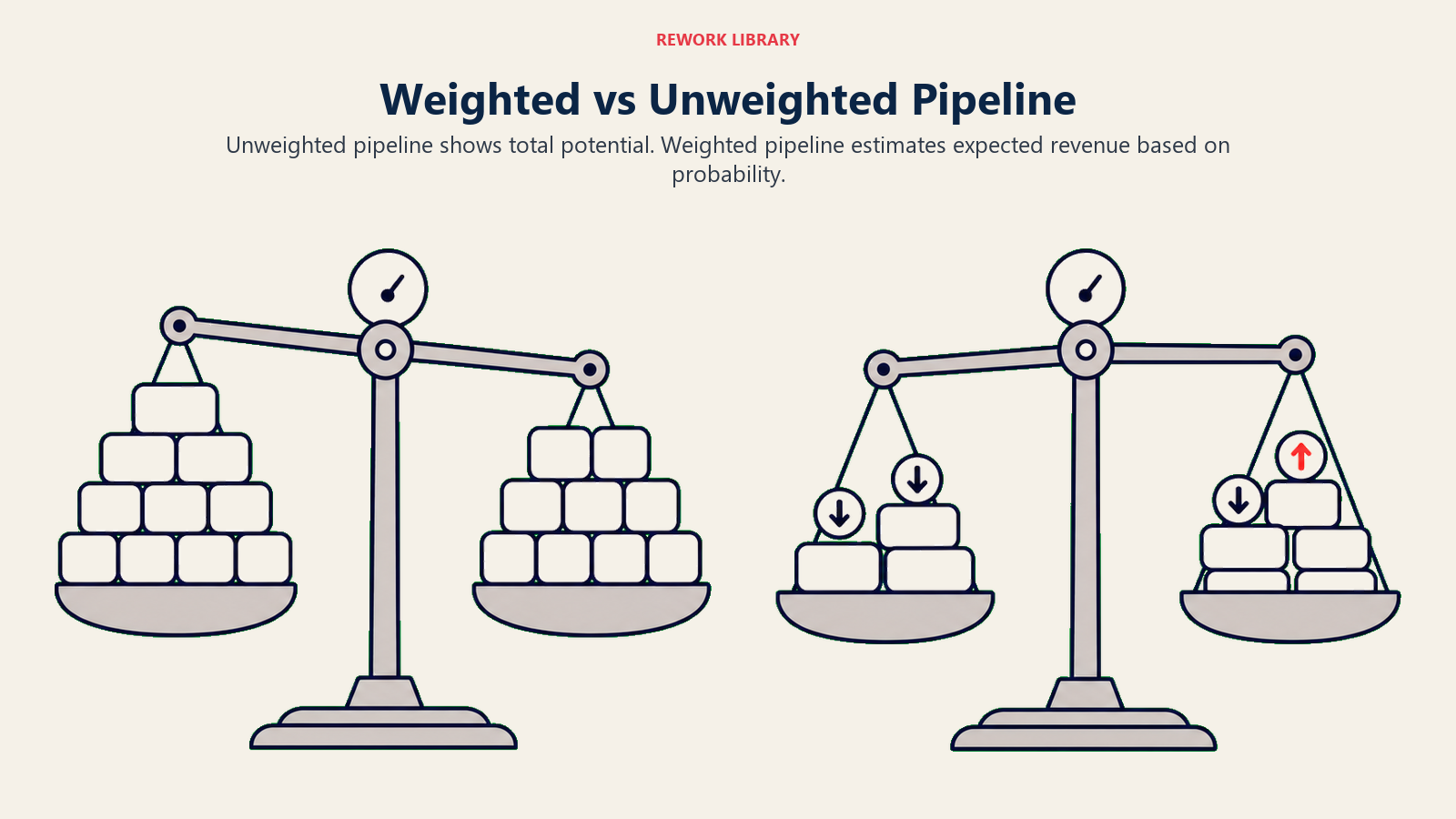
Kapan Menggunakan Unweighted Pipeline
Perencanaan kapasitas dan beban kerja rep: Total jumlah dan nilai opportunity menunjukkan seberapa sibuk rep, terlepas dari probabilitas penutupan. Rep dengan 60 opportunity membutuhkan lebih banyak waktu dan dukungan dari rep dengan 15 opportunity, bahkan jika nilai berbobot setara.
Target pemasaran dan lead gen: Pemasaran menghasilkan volume top-of-funnel. Metrik keberhasilan mereka melacak total pipeline yang dibuat, bukan weighted pipeline, karena penentuan probabilitas terjadi di hilir setelah kualifikasi.
Kesehatan pipeline early-stage: Kesehatan stage discovery dan kualifikasi penting untuk kuartal mendatang. Unweighted early-stage pipeline memprediksi weighted late-stage pipeline 2-3 kuartal ke depan.
Desain insentif untuk aktivitas: Beberapa rencana kompensasi menghargai pembuatan pipeline untuk mendorong aktivitas prospecting. Metrik tidak berbobot mencegah sandbagging dengan menghilangkan manipulasi probabilitas.
Kapan Menggunakan Weighted Pipeline
Forecast pendapatan: Weighted pipeline berkorelasi langsung dengan bookings yang diharapkan. Ini adalah fondasi prediksi pencapaian kuota dan pendapatan yang akurat.
Analisis coverage: Menentukan pipeline yang diperlukan untuk mencapai target bergantung pada weighted pipeline. Jika Anda membutuhkan $2M dalam bookings dan weighted pipeline Anda adalah $1,8M, Anda memiliki kesenjangan coverage terlepas dari total nilai pipeline.
Prioritisasi deal: Rep harus berfokus pada opportunity probabilitas tinggi yang mendekati close. Nilai berbobot mengidentifikasi deal $50K pada probabilitas 80% lebih berharga dari deal $200K pada probabilitas 15%.
Evaluasi kinerja: Efektivitas rep lebih baik diukur dengan kemajuan weighted pipeline daripada inflasi total pipeline. Rep yang memajukan deal melalui stage meningkatkan nilai berbobot bahkan tanpa menambahkan opportunity baru. Praktik manajemen kemajuan deal secara langsung berdampak pada pertumbuhan weighted pipeline.
Alokasi sumber daya: Sales engineering, solutions consulting, dan dukungan eksekutif harus memprioritaskan deal berbobot probabilitas tinggi daripada long-shot early-stage.
Sistem forecast terbaik menyajikan kedua tampilan dengan konteks yang jelas tentang kapan masing-masing berlaku.
Analisis Pipeline Coverage Berbobot
Analisis weighted coverage membandingkan pipeline yang sudah disesuaikan risiko terhadap kebutuhan quota dan forecast.
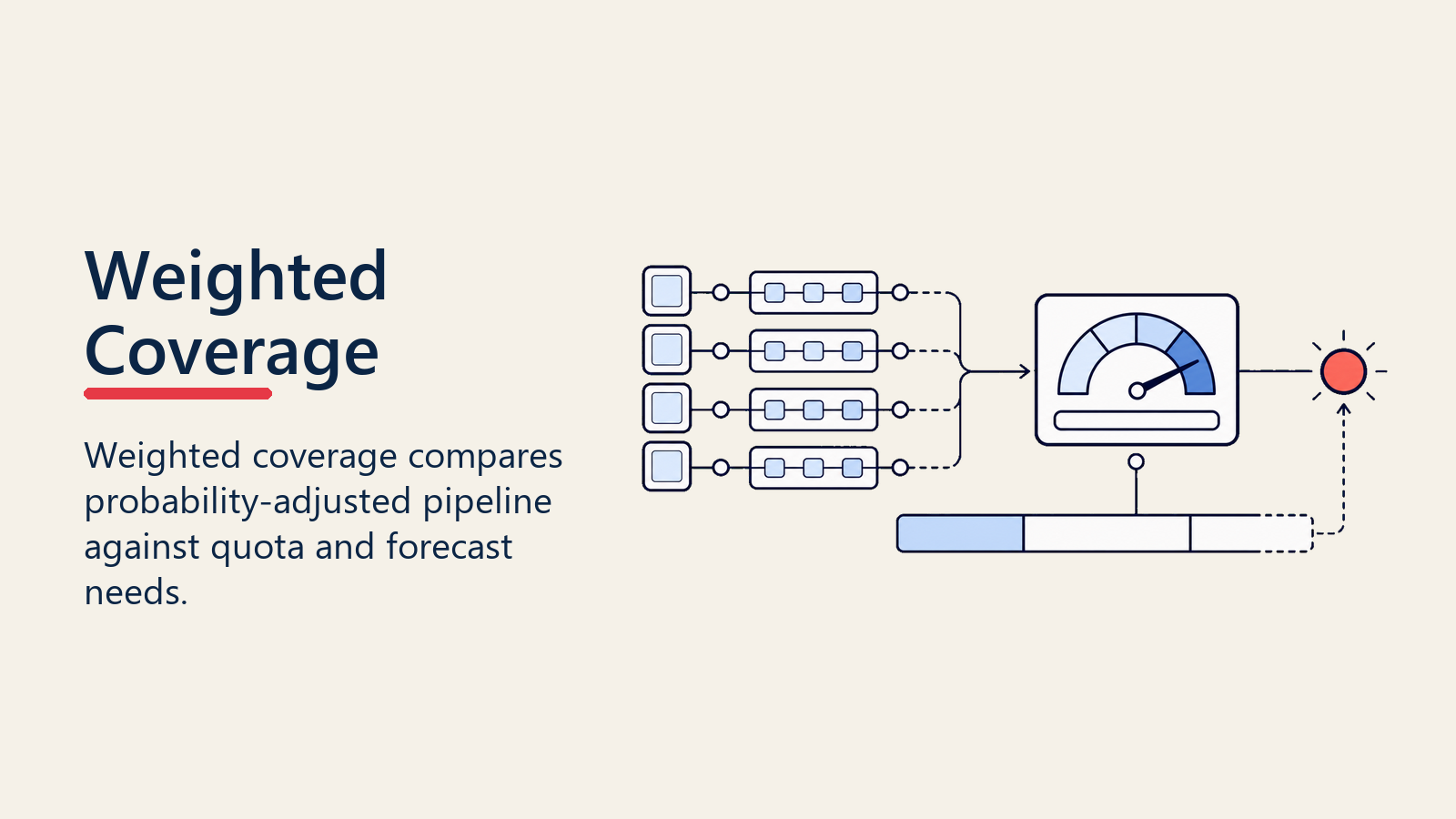
Rasio coverage, kelipatan pipeline yang diperlukan untuk mencapai kuota, bergeser secara dramatis ketika dihitung terhadap pipeline berbobot vs. tidak berbobot.
Coverage Tradisional (Tidak Berbobot)
Model standar mengatakan Anda memerlukan coverage pipeline 3-5x:
- Kuota: $1M
- Pipeline yang diperlukan: $3-5M (total nilai)
- Asumsi: 20-33% dari total pipeline ditutup
Ini berfungsi sebagai heuristik kasar tetapi kurang presisi. Tidak membedakan antara $3M dari opportunity late-stage (kemungkinan besar mencapai target) dan $3M dari opportunity early-stage (kemungkinan besar akan meleset secara signifikan).
Model Coverage Berbobot
Pendekatan berbobot mengakui bahwa coverage yang diperlukan bervariasi berdasarkan komposisi pipeline:
Jika sebagian besar pipeline adalah early-stage (rata-rata probabilitas 20%):
- Kuota: $1M
- Weighted pipeline yang diperlukan: $1M (untuk mencapai target)
- Total pipeline yang diperlukan: $5M (tidak berbobot)
- Kelipatan coverage: 5x
Jika sebagian besar pipeline adalah late-stage (rata-rata probabilitas 70%):
- Kuota: $1M
- Weighted pipeline yang diperlukan: $1M
- Total pipeline yang diperlukan: $1,4M (tidak berbobot)
- Kelipatan coverage: 1,4x
Ini mengungkapkan mengapa rasio coverage yang sederhana menyesatkan. Kelipatan yang diperlukan sepenuhnya bergantung pada kualitas pipeline (distribusi stage dan probabilitas penutupan).
Persyaratan Coverage Spesifik Stage
Manajemen pipeline yang matang menetapkan target coverage per stage:
- Stage Discovery: coverage 10x (probabilitas 10%)
- Kualifikasi: coverage 4x (probabilitas 25%)
- Proposal: coverage 2,5x (probabilitas 40%)
- Negosiasi: coverage 1,5x (probabilitas 67%)
- Komitmen verbal: coverage 1,1x (probabilitas 90%)
Pipeline yang seimbang mempertahankan coverage yang tepat di setiap stage untuk memastikan kemajuan yang berkelanjutan. Jika coverage Proposal turun di bawah 2x, Anda akan melewatkan target bahkan dengan pipeline early-stage yang melimpah.
Integrasi Kategori Forecast dan Weighted Pipeline
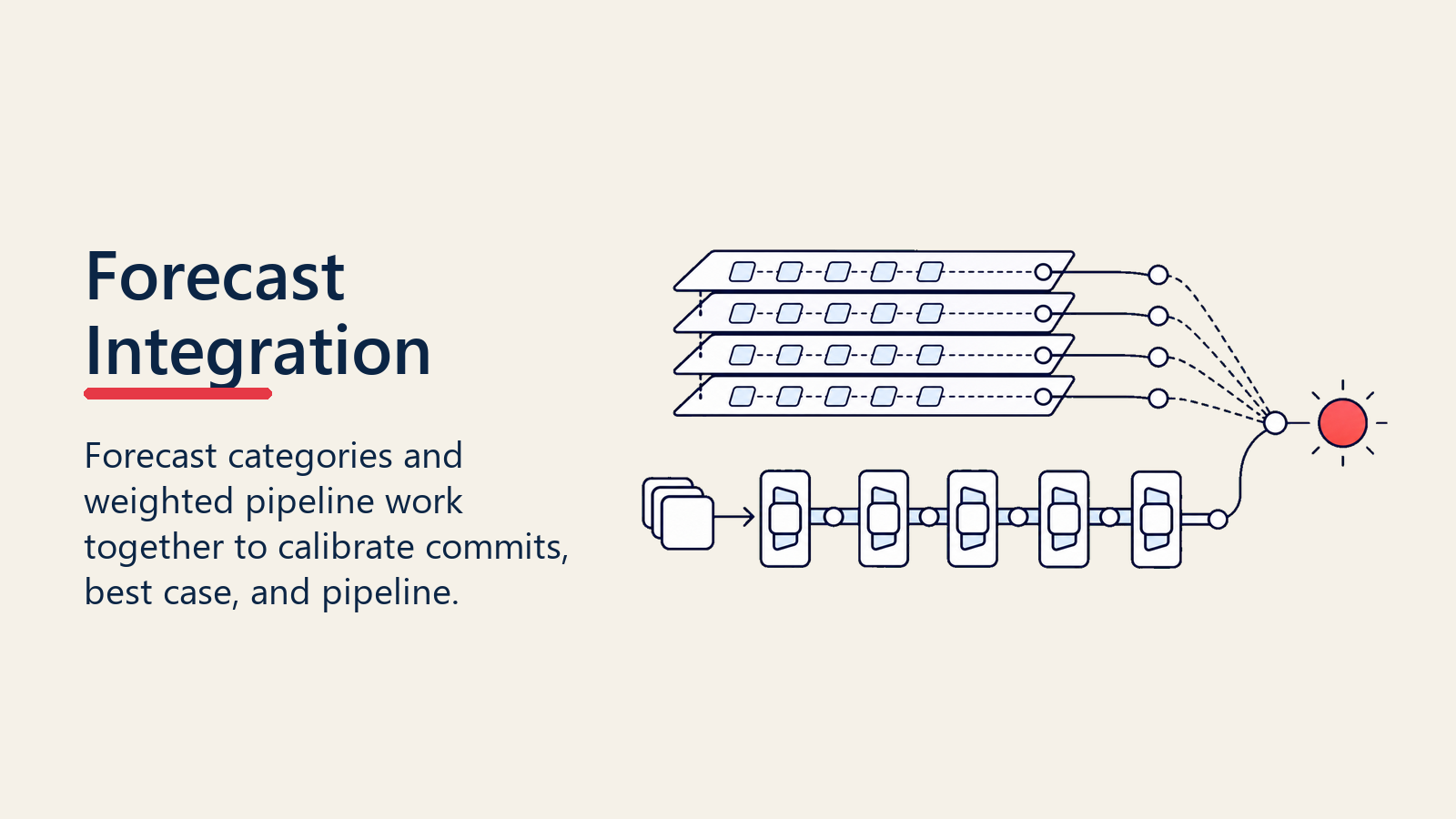
Sebagian besar CRM menggunakan kategori forecast untuk mengklasifikasikan kepercayaan deal: Commit, Best Case, Pipeline, Omitted. Kategori-kategori ini terintegrasi dengan weighted pipeline melalui band probabilitas:
Commit (Probabilitas 90-100%)
Deal yang dijamin rep akan ditutup periode ini. Komitmen verbal diterima, kontrak dalam tinjauan akhir, atau sudah dimenangkan menunggu tanda tangan. Deal-deal ini terdiri dari "Commit Forecast" yang dilaporkan pimpinan ke board.
Perlakuan weighted pipeline: Nilai penuh atau hampir penuh (pengali 90-100%)
Best Case (Probabilitas 60-89%)
Deal yang kemungkinan besar akan ditutup tetapi tidak dijamin. Dalam negosiasi atau tinjauan kontrak dengan momentum positif tetapi hambatan potensial. Terdiri dari "Best Case Forecast" (Commit + Best Case).
Perlakuan weighted pipeline: Pengali 60-89% berdasarkan stage spesifik
Pipeline (Probabilitas 1-59%)
Deal early dan mid-stage. Opportunity yang dikualifikasi dengan potensi yang sah tetapi ketidakpastian yang signifikan. Digunakan untuk analisis pipeline coverage dan perencanaan periode mendatang.
Perlakuan weighted pipeline: Pengali 1-59% berdasarkan stage spesifik
Omitted (Probabilitas 0%)
Deal yang diyakini rep tidak akan ditutup periode ini, didorong ke kuartal mendatang atau kemungkinan akan kalah. Dihapus dari forecast periode saat ini tetapi dipertahankan dalam CRM untuk visibilitas pipeline.
Perlakuan weighted pipeline: Pengali 0% (dikecualikan dari perhitungan berbobot)
Keselarasan kategori-probabilitas ini memastikan rollup forecast sesuai dengan perhitungan weighted pipeline. "Commit Forecast" Anda harus sama dengan jumlah deal yang dibobotkan pada 90-100%, menciptakan konsistensi internal antara analisis pipeline dan pelaporan forecast.
Override Probabilitas: Kapan dan Bagaimana Rep Menyesuaikan
Meskipun probabilitas berbasis stage memberikan konsistensi, keadaan spesifik deal menjamin override manual. Kuncinya adalah menetapkan tata kelola yang jelas tentang kapan override tepat dan memerlukan justifikasi.
Alasan Valid untuk Meningkatkan Probabilitas
Anggaran dikonfirmasi secara tertulis: Pembeli memberikan nomor PO, dokumentasi pendanaan yang disetujui, atau konfirmasi anggaran tertulis
Kompetisi dieliminasi: Pembeli secara eksplisit menyatakan bahwa mereka melanjutkan hanya dengan solusi Anda dan telah berhenti mengevaluasi alternatif
Sponsorship eksekutif diamankan: Champion C-level secara aktif mendorong deal maju dan berkomitmen pada timeline spesifik
Tinjauan hukum sedang berlangsung: Kontrak telah pindah ke tinjauan hukum, menunjukkan niat yang serius dan milestone persetujuan internal terlewati
Tanggal implementasi dijadwalkan: Pembeli menjadwalkan implementasi, menugaskan manajer proyek, atau menetapkan tanggal kickoff
Alasan Valid untuk Menurunkan Probabilitas
Anggaran dipertanyakan: Tim keuangan mendorong kembali pada biaya atau meminta penundaan ke periode mendatang
Stakeholder baru diperkenalkan: Masuknya late-stage dari decision-maker yang sebelumnya tidak diketahui yang perlu di-sell
Tekanan kompetitif meningkat: Kompetitor yang kuat muncul dengan diferensiasi yang menarik atau hubungan yang sudah ada
Timeline bergeser: Pembeli mendorong tanggal keputusan target tanpa justifikasi yang jelas atau timeline baru
Champion pergi: Advokat internal meninggalkan perusahaan, dipindahkan, atau kehilangan pengaruh
Kurangnya keterlibatan: Pembeli berhenti merespons outreach atau menjadwal ulang pertemuan berkali-kali
Tata Kelola Override
Menetapkan batasan mencegah manipulasi probabilitas:
Wajibkan justifikasi tertulis: Rep harus mendokumentasikan alasan spesifik untuk override dalam catatan CRM
Tetapkan batas override: Batasi rentang override (misalnya, ±20% dari default stage) tanpa persetujuan manajer
Aktifkan tinjauan manajer: Deal dengan override yang signifikan (terutama peningkatan >20%) muncul dalam antrian tinjauan manajer
Lacak akurasi override: Ukur close rate untuk deal yang di-override vs. deal default-stage untuk mengidentifikasi over-optimisme yang konsisten atau sandbagging
Audit override bernilai tinggi: Deal mana pun >$100K (atau ambang Anda) dengan override probabilitas memerlukan persetujuan manajer atau VP
Tata kelola ini menyeimbangkan penilaian rep dengan konsistensi organisasi dan akuntabilitas.
Pelacakan Akurasi dan Validasi Model
Weighted pipeline hanya memberikan nilai jika probabilitas mencerminkan realitas. Validasi berkelanjutan memastikan model Anda menghasilkan forecast yang akurat.
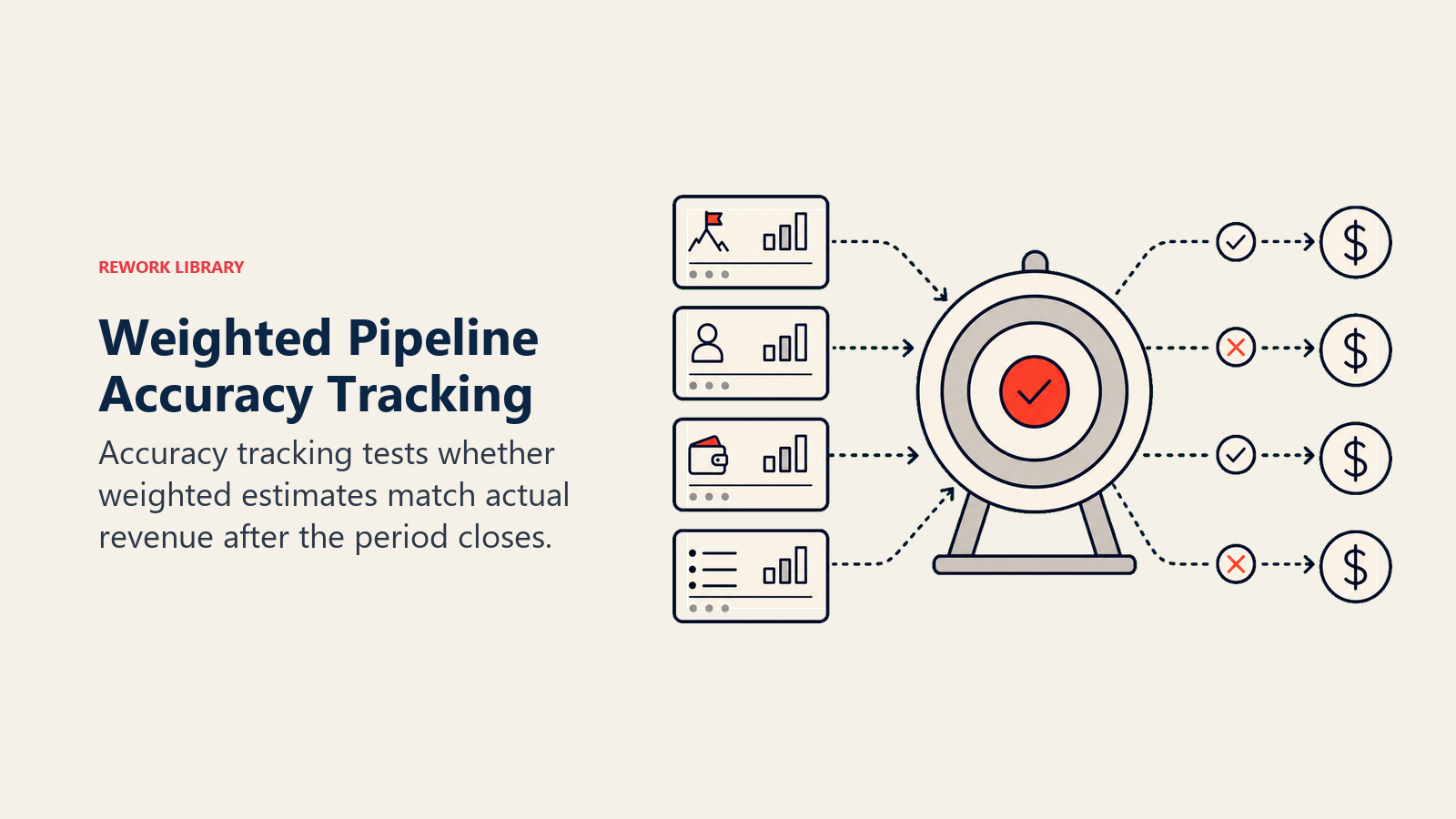
Analisis Forecast vs. Aktual
Setiap periode, bandingkan pendapatan yang di-forecast (jumlah weighted pipeline pada awal periode) dengan bookings aktual. Hitung:
Tingkat Akurasi Forecast = (Bookings Aktual / Bookings yang Di-forecast) × 100
Organisasi yang matang menargetkan akurasi forecast 90-95% pada tingkat "Commit" dan 80-85% pada tingkat "Best Case".
Lacak tren akurasi dari waktu ke waktu. Peningkatan akurasi menunjukkan kalibrasi probabilitas berhasil. Penurunan akurasi menandakan model drift atau gaming.
Pengujian Kalibrasi Probabilitas
Untuk setiap band probabilitas (0-20%, 21-40%, 41-60%, 61-80%, 81-100%), hitung close rate aktual:
Jika deal yang ditetapkan probabilitas 60-80% sebenarnya ditutup pada tingkat 45%, probabilitas Anda mengembang. Jika deal yang ditetapkan 40-60% ditutup pada 65%, probabilitas Anda terlalu konservatif.
Kalibrasi ideal: close rate aktual sesuai dengan band probabilitas yang ditetapkan dalam 5-10%. Penyimpangan besar memerlukan penyesuaian probabilitas.
Analisis Kemajuan Stage
Lacak berapa banyak deal yang maju dari setiap stage vs. berapa banyak yang terhenti, didorong, atau kalah:
- Maju ke stage berikutnya: memvalidasi penilaian probabilitas
- Didorong ke periode mendatang: menunjukkan probabilitas terlalu tinggi untuk timing saat ini
- Kalah: mengkonfirmasi deal yang seharusnya tidak membawa probabilitas tinggi
- Terhenti >60 hari: menunjukkan deal mati yang masih menggelembungkan pipeline
Hitung stage velocity: rata-rata hari di setiap stage untuk deal yang menang vs. kalah. Deal menang yang ditutup dengan cepat menghabiskan lebih sedikit waktu di stage awal. Jika deal bertahan dalam Proposal >45 hari, probabilitas harus menurun. Memahami metrik pipeline velocity membantu mengkalibrasi penyesuaian probabilitas berbasis timing.
Penilaian Akurasi Tingkat Rep
Ukur akurasi forecast rep individu untuk mengidentifikasi bias sistematis:
Rep yang optimis: Secara konsisten memprediksi lebih tinggi dari close rate aktual (akurasi forecast <80%)
Rep sandbagging: Secara konsisten memberikan di atas forecast (akurasi forecast >120%)
Rep yang akurat: Secara konsisten memprediksi dalam 10% dari bookings aktual (akurasi 90-110%)
Gunakan data ini untuk coaching, penyesuaian kompensasi, dan menentukan berapa banyak bobot yang diberikan pada override rep dalam forecast agregat.
Mengimplementasikan Weighted Pipeline: Rollout Praktis
Beralih dari total pipeline ke weighted pipeline memerlukan pengaturan teknis, perubahan proses, dan keselarasan organisasi.
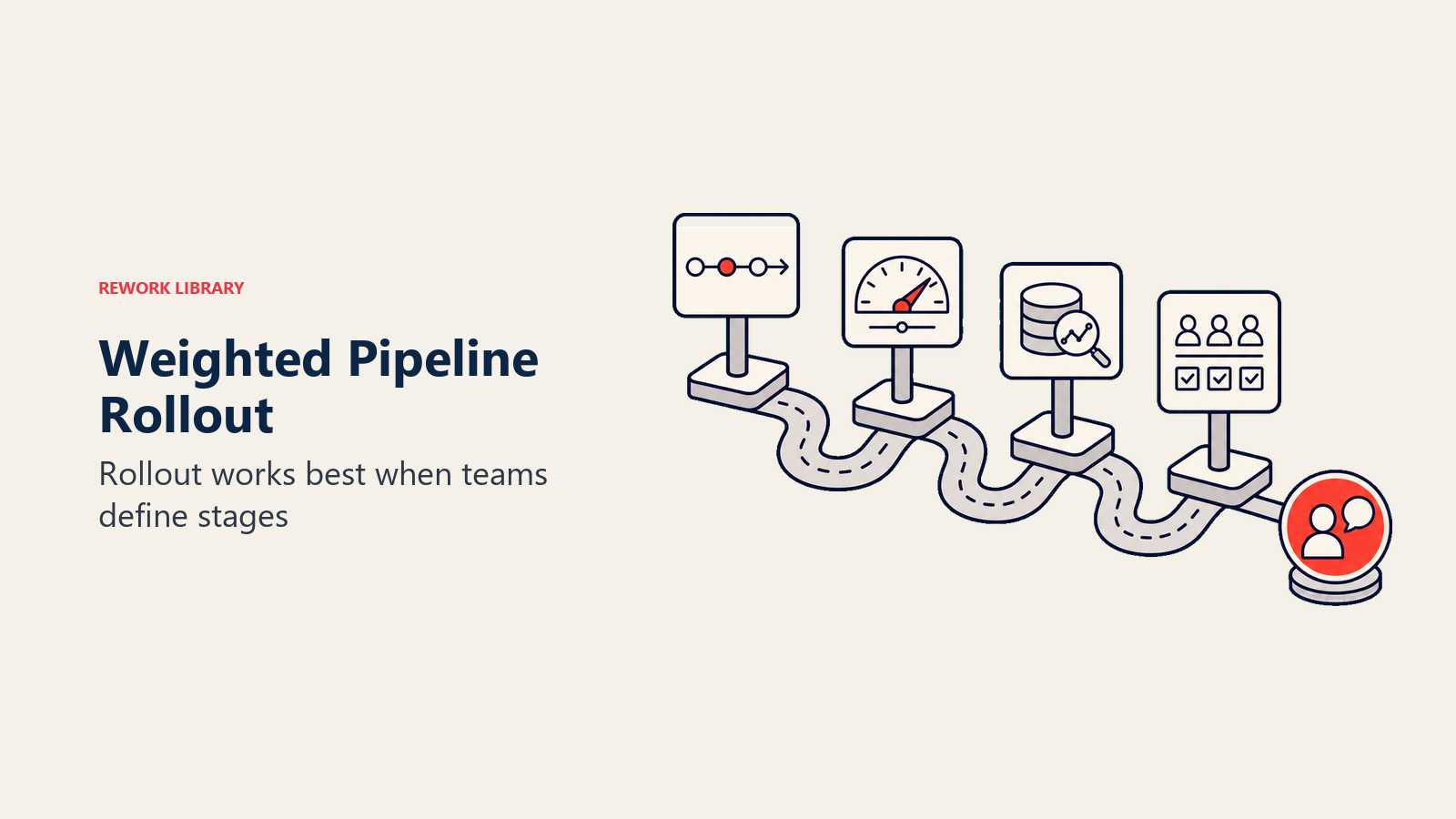
Konfigurasi Teknis
Pengaturan CRM:
- Konfigurasi field probabilitas per stage dengan default
- Buat pemetaan kategori forecast ke band probabilitas
- Bangun laporan dan dashboard weighted pipeline
- Tetapkan workflow override dengan routing persetujuan
Pembersihan data:
- Hapus opportunity yang usang yang mengacaukan pipeline (>90 hari tanpa aktivitas), lihat praktik terbaik pipeline hygiene
- Standarisasi definisi stage dan kriteria masuk
- Isi kembali data probabilitas historis untuk baseline akurasi
Implementasi Proses
Tentukan kriteria masuk stage: Kriteria yang jelas dan objektif menentukan kapan opportunity maju (bukan hanya diskresi rep)
Tetapkan kebijakan override: Dokumentasikan kapan penyesuaian probabilitas manual tepat dan tingkat persetujuan yang diperlukan
Tetapkan frekuensi forecast: Pengajuan forecast rep mingguan, rollup manajer, dan analisis varian
Buat ritual tinjauan: Pipeline review berfokus pada nilai berbobot, coverage per stage, dan kemajuan deal
Manajemen Perubahan Organisasi
Pelatihan tim penjualan: Jelaskan mengapa weighted pipeline menghasilkan forecast yang lebih baik dan bagaimana cara mengubah pengajuan forecast mereka
Enablement manajer: Latih manajer tentang kalibrasi probabilitas, tata kelola override, dan coaching rep untuk forecast yang akurat
Keselarasan eksekutif: Pastikan pimpinan memahami metrik berbobot vs. tidak berbobot dan mana yang digunakan untuk keputusan yang berbeda
Keselarasan insentif: Pertimbangkan untuk memasukkan pencapaian weighted pipeline ke dalam kompensasi untuk menghargai kualitas daripada kuantitas
Transisi membutuhkan 1-2 kuartal. Periode awal akan menunjukkan volatilitas forecast karena probabilitas dikalibrasi dan perilaku disesuaikan. Bertahan melalui periode penyesuaian ini, akurasi meningkat secara dramatis pada kuartal ketiga.
Kesimpulan: Dari Feeling ke Forecast Statistik
Perbedaan antara perusahaan yang secara konsisten mencapai target dan yang berayun secara liar? Metodologi forecast. Total pipeline menawarkan kelimpahan yang menghibur sambil menutupi realitas. Weighted pipeline memaksa kejujuran tentang apa yang sebenarnya akan ditutup.
Forecast berbasis probabilitas mengubah manajemen pipeline dari seni subjektif menjadi ilmu yang dapat diukur. Ini mengalihkan percakapan dari "Apakah kita memiliki cukup pipeline?" (tidak bermakna tanpa konteks) ke "Apakah kita memiliki cukup weighted coverage di stage Proposal untuk mencapai target Q3?" (dapat ditindaklanjuti dan spesifik).
Organisasi yang mengimplementasikan metodologi weighted pipeline yang disiplin mendapatkan tiga keuntungan:
Pendapatan yang dapat diprediksi: Forecast Anda menjadi cukup andal untuk mendorong keputusan perekrutan, investasi, dan komitmen board.
Alokasi sumber daya yang efisien: Dukungan penjualan, keterlibatan eksekutif, dan sumber daya akselerasi deal mengalir ke opportunity probabilitas tinggi.
Perencanaan kapasitas yang akurat: Desain wilayah, penetapan kuota, dan keputusan headcount berdasarkan konversi pipeline yang realistis daripada total yang menggelembung.
Implementasinya memerlukan konfigurasi teknis, disiplin proses, dan perubahan budaya. Tetapi alternatifnya, terus memprediksi berdasarkan harapan dan total agregat, menjamin volatilitas berkelanjutan dan target yang terlewat.
Weighted pipeline tidak sempurna. Probabilitas tidak akan pernah menangkap setiap nuansa deal. Tetapi jauh lebih akurat daripada berpura-pura setiap opportunity sama-sama berpeluang untuk ditutup. Dalam forecasting, kira-kira benar jauh lebih baik daripada secara presisi salah.
CFO Anda yang menuntut pendapatan yang dapat diprediksi, CRO Anda yang lelah dengan forecast yang meleset, dan board Anda yang mengharapkan pertumbuhan yang konsisten semua membutuhkan hal yang sama: realitas berbobot probabilitas daripada fantasi total pipeline.
Siap mengimplementasikan forecast berbasis probabilitas? Jelajahi ikhtisar metrik pipeline dan forecast berbasis stage untuk membangun sistem forecast yang lengkap.
Pertanyaan yang Sering Diajukan
Apa itu weighted pipeline? Weighted pipeline menerapkan pengali close-probability ke nilai tiap opportunity, lalu menjumlahkan hasilnya. Alih-alih menghitung deal $100K sebagai $100K terlepas dari stage-nya, Anda menghitungnya sebagai expected value-nya (misalnya, $100K dengan probabilitas 40% menjadi $40K). Totalnya menunjukkan apa yang kemungkinan besar akan Anda bukukan, bukan apa yang sedang Anda kejar.
Bagaimana cara menghitung nilai weighted pipeline? Gunakan formula Nilai Berbobot = Nilai Opportunity dikali Close Probability untuk tiap deal, lalu jumlahkan semuanya. Deal $200K dengan probabilitas 30% berkontribusi $60K, dan deal $50K dengan probabilitas 80% berkontribusi $40K, sehingga weighted pipeline gabungannya $100K.
Apa perbedaan antara weighted dan unweighted pipeline? Unweighted (total) pipeline menjumlahkan tiap deal pada nilai nominalnya dan berguna untuk perencanaan kapasitas dan target lead-gen. Weighted pipeline menyesuaikan dengan close probability dan menjadi basis yang lebih baik untuk revenue forecasting, analisis coverage, dan prioritisasi deal.
Close probability apa yang seharusnya digunakan tiap pipeline stage? Benchmark B2B umum berkisar sekitar 10-20% di discovery, 20-30% di qualification, 40-50% di proposal, 60-75% di negotiation, dan 80-90% di verbal commitment. Kalibrasikan angka-angka ini terhadap data konversi historis Anda sendiri, bukan memperlakukan benchmark sebagai angka tetap.
Sumber Daya Terkait

On this page
- Apa itu Weighted Pipeline?
- Mengapa Total Pipeline Menyesatkan
- Metode Penentuan Probabilitas
- 1. Penentuan Otomatis Berbasis Stage
- 2. Penilaian Rep (Override Manual)
- 3. Prediksi AI/ML
- 4. Pendekatan Hibrida
- Probabilitas Stage Standar
- Discovery / Kontak Awal (10-20%)
- Kualifikasi / Analisis Kebutuhan (20-30%)
- Proposal / Presentasi Solusi (40-50%)
- Negosiasi / Tinjauan Kontrak (60-75%)
- Komitmen Verbal / Menunggu Tanda Tangan (80-90%)
- Menyesuaikan Probabilitas Menggunakan Data Historis
- Hitung Conversion Rate Historis
- Segmentasi berdasarkan Karakteristik Deal
- Lacak Win Rate berdasarkan Masuk Stage
- Weighted vs. Unweighted Pipeline: Use Case
- Kapan Menggunakan Unweighted Pipeline
- Kapan Menggunakan Weighted Pipeline
- Analisis Pipeline Coverage Berbobot
- Coverage Tradisional (Tidak Berbobot)
- Model Coverage Berbobot
- Persyaratan Coverage Spesifik Stage
- Integrasi Kategori Forecast dan Weighted Pipeline
- Commit (Probabilitas 90-100%)
- Best Case (Probabilitas 60-89%)
- Pipeline (Probabilitas 1-59%)
- Omitted (Probabilitas 0%)
- Override Probabilitas: Kapan dan Bagaimana Rep Menyesuaikan
- Alasan Valid untuk Meningkatkan Probabilitas
- Alasan Valid untuk Menurunkan Probabilitas
- Tata Kelola Override
- Pelacakan Akurasi dan Validasi Model
- Analisis Forecast vs. Aktual
- Pengujian Kalibrasi Probabilitas
- Analisis Kemajuan Stage
- Penilaian Akurasi Tingkat Rep
- Mengimplementasikan Weighted Pipeline: Rollout Praktis
- Konfigurasi Teknis
- Implementasi Proses
- Manajemen Perubahan Organisasi
- Kesimpulan: Dari Feeling ke Forecast Statistik
- Pertanyaan yang Sering Diajukan
- Sumber Daya Terkait