Bahasa Indonesia
Pipeline Bottleneck Analysis: Mengidentifikasi dan Mengatasi Kendala Aliran Deal
Turn this article into takeaways for your work.


Each assistant summarizes the article only for you and suggests best practices for your work.
Anda sedang meninjau dashboard pipeline dan ada yang terasa janggal. Dua puluh deal menumpuk di tahap proposal. Lima belas lagi macet menunggu validasi teknis. Forecast Anda mengatakan kuota akan tercapai, tetapi tidak ada satu pun dari deal-deal ini yang bergerak.
Ini bukan masalah forecasting. Ini masalah bottleneck.
Bottleneck pipeline adalah tempat deal mati secara perlahan. Inilah tahap-tahap tempat opportunity menumpuk, conversion rate anjlok, dan sesuatu yang seharusnya selesai dalam hitungan hari malah molor berminggu-minggu. Yang membuatnya berbahaya, bottleneck sering kali tidak terlihat sampai sudah menghabiskan kuartal Anda.
Jika Anda menjalankan sales operations atau memimpin tim revenue, Anda memerlukan analisis bottleneck yang sistematis. Bukan tinjauan triwulanan di mana seseorang baru menyadari deal tidak bergerak, melainkan visibilitas operasional harian yang mengidentifikasi kendala sebelum merembet menjadi angka yang meleset. Memahami apa itu sales pipeline secara mendasar membantu Anda mengenali kapan aliran deal sedang terhambat.
Apa Itu Bottleneck Pipeline?
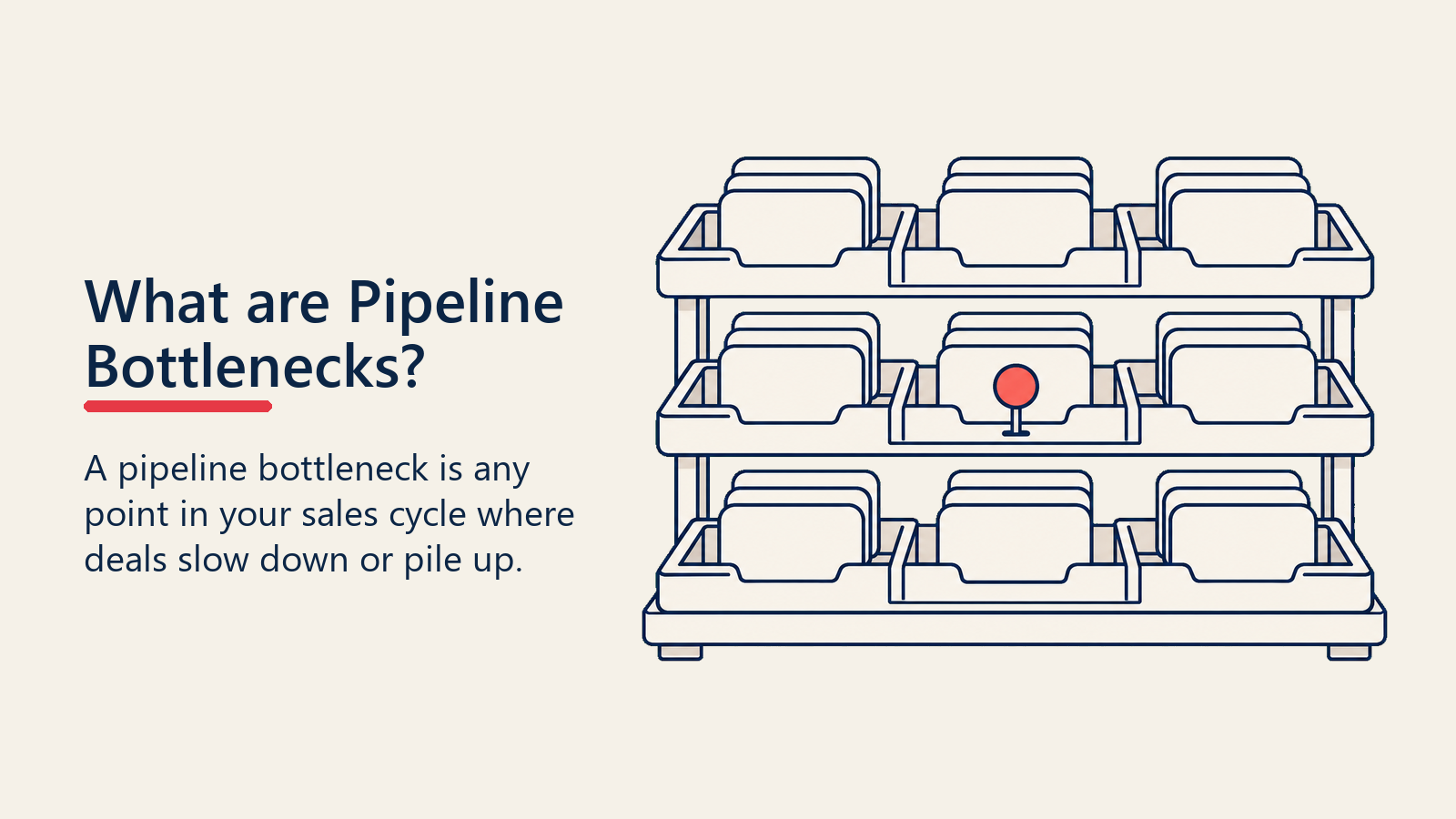
Bottleneck pipeline adalah titik mana pun dalam sales cycle Anda di mana deal melambat atau menumpuk. Sesederhana itu.
Bayangkan sebuah lini perakitan pabrik. Bahan baku masuk dari satu ujung, produk jadi keluar dari ujung lainnya. Jika satu stasiun kerja hanya bisa memproses 10 unit per jam sementara stasiun lain menangani 50 unit, titik lambat itulah yang menjadi bottleneck. Seluruh lini produksi hanya bisa bergerak secepat stasiun yang paling lambat.
Sales pipeline Anda bekerja dengan cara yang sama. Deal masuk dari atas, melewati kualifikasi, discovery, proposal, negosiasi, dan closing. Ketika satu tahap kekurangan kapasitas, prosesnya tidak jelas, atau terbentur hambatan organisasi, deal mulai menumpuk di sana. Conversion rate keseluruhan Anda turun, dan tiba-tiba semua orang bertanya-tanya kenapa tidak ada yang bergerak. Desain pipeline stages yang tepat dapat mencegah banyak bottleneck struktural terbentuk sejak awal.
Tiga Karakteristik Bottleneck
Bottleneck yang sesungguhnya memiliki tiga ciri:
Penumpukan: deal menumpuk dibandingkan tahap lain. Jika sebagian besar tahap Anda menampung 8-12 opportunity, tetapi satu tahap konsisten menampung 25-30, Anda telah menemukan kendalanya.
Durasi yang memanjang: deal menghabiskan waktu jauh lebih lama di tahap ini dari yang direncanakan. Discovery Anda biasanya memakan 12 hari, tetapi deal di tahap proposal rata-rata 31 hari. Itu bukan variasi biasa. Itu bottleneck.
Penurunan conversion: lebih sedikit deal yang berhasil naik ke tahap berikutnya. Jika 65% opportunity yang terkualifikasi biasanya mencapai proposal, tetapi hanya 38% dari proposal yang mencapai negosiasi, bottleneck Anda ada di tahap proposal.
Mengapa Deal Menumpuk: Akar Penyebabnya
Deal menumpuk ketika kriteria tahap, komitmen buyer, perilaku rep, atau langkah persetujuan menghentikan pergerakan tanpa membuat risikonya terlihat.
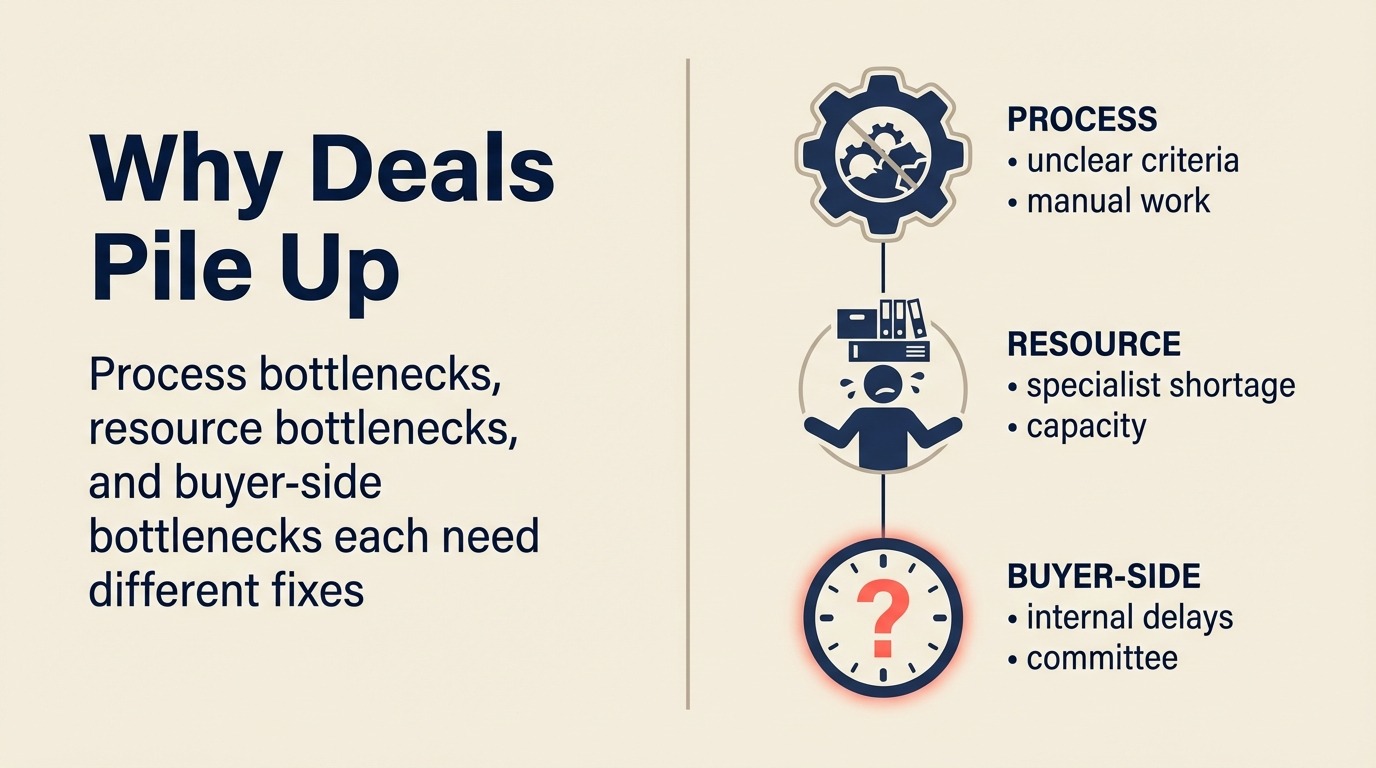
Bottleneck tidak muncul secara acak. Ia terbentuk ketika permintaan (deal yang masuk) melebihi kapasitas (kemampuan memproses deal tersebut) pada tahap tertentu. Memahami akar penyebabnya menentukan strategi penyelesaian Anda.
Bottleneck Proses
Ini terjadi ketika pekerjaan itu sendiri tidak efisien atau tidak terdefinisi dengan jelas. Pola yang umum ditemui:
Kriteria kelulusan tahap yang tidak jelas membuat rep tidak tahu kapan sebuah deal siap untuk naik tahap, sehingga opportunity mengendap sementara rep mengumpulkan "satu hal lagi." Anda akan melihat deal berdiam 2-3 kali lebih lama dari seharusnya karena tidak ada yang yakin seperti apa "selesai" itu. Menerapkan kriteria stage gate yang jelas menghilangkan ambiguitas ini.
Pekerjaan manual yang berulang menciptakan keterlambatan pemrosesan. Jika setiap proposal membutuhkan 6 jam untuk pemformatan khusus, copy-paste tabel harga, dan alur persetujuan manual, tahap proposal Anda akan menjadi kendala terlepas dari berapa banyak orang yang Anda tugaskan di sana.
Kompleksitas persetujuan mengubah keputusan sederhana menjadi proses berminggu-minggu. Rantai persetujuan tiga lapis, di mana setiap approver membutuhkan 3-5 hari, berarti tahap negosiasi Anda sudah memiliki keterlambatan bawaan 9-15 hari.
Bottleneck Sumber Daya
Ini terjadi ketika Anda tidak memiliki cukup orang, alat, atau perhatian untuk menangani volume deal yang masuk ke suatu tahap.
Kendala spesialis adalah yang paling umum. Anda punya 8 sales rep yang closing deal tetapi hanya 2 solutions engineer yang melakukan validasi teknis. Setiap deal membutuhkan waktu SE, sehingga validasi teknis menjadi titik kendala Anda.
Kapasitas kepemimpinan menciptakan bottleneck di level eksekutif. Deal di atas $100 ribu membutuhkan persetujuan VP, tetapi VP Anda hanya bisa meninjau 2-3 deal per minggu. Anda kini punya batas kapasitas keras untuk deal-deal besar.
Keterbatasan alat muncul sebagai bottleneck sistem. Sistem pembuatan kontrak Anda hanya bisa memproses satu dokumen dalam satu waktu, sehingga menciptakan antrean saat volume sedang tinggi.
Bottleneck Skill
Ini muncul ketika orang yang mengerjakan pekerjaan tersebut belum punya kemampuan untuk mengerjakannya secara efisien.
Kesenjangan skill discovery terlihat sebagai tahap kualifikasi yang memanjang, di mana rep menghabiskan 4-5 panggilan untuk memahami apa yang seharusnya bisa ditangkap dalam satu pertemuan discovery yang kompeten. Skill kualifikasi opportunity yang kuat mencegah keterlambatan semacam ini.
Minimnya pengalaman negosiasi menciptakan bottleneck di tahap proposal, tempat rep terjebak pada keberatan, pertanyaan harga, atau positioning kompetitif yang tidak mereka kuasai cara menanganinya.
Kekurangan pengetahuan teknis muncul ketika rep tidak dapat menjawab pertanyaan produk dengan percaya diri, sehingga terus-menerus melempar pertanyaan ke tim teknis untuk hal-hal yang seharusnya sudah menjadi kemampuan dasar.
Bottleneck di Sisi Buyer
Terkadang kendalanya bukan berasal dari internal, melainkan dari sisi pelanggan.
Keputusan multi-stakeholder secara alami memperlambat deal saat buyer membangun konsensus internal. Deal Anda macet di negosiasi karena champion perlu meyakinkan tim finance, IT, operasi, dan legal.
Waktu siklus anggaran menciptakan bottleneck musiman. Deal yang masuk ke pipeline Anda pada bulan November tiba-tiba terbentur tembok karena pelanggan tidak akan membuat keputusan pembelian sampai tahun fiskal baru dimulai pada Januari.
Kesiapan implementasi menghambat closing ketika buyer perlu menyelesaikan pekerjaan infrastruktur, mendapatkan persetujuan internal, atau mengalokasikan sumber daya sebelum bisa mengadopsi solusi Anda.
Bottleneck Organisasi
Ini adalah masalah struktural dalam cara perusahaan Anda beroperasi.
Ketergantungan lintas fungsi menciptakan keterlambatan ketika sales membutuhkan marketing untuk membuat konten khusus, legal untuk meninjau kontrak, finance untuk menyetujui ketentuan non-standar, atau product untuk memastikan ketersediaan fitur.
Komunikasi yang terkotak-kotak memperlambat deal ketika informasi penting tersimpan di sistem, saluran, atau kepala orang yang berbeda-beda. AE Anda tidak tahu bahwa SE sudah mengidentifikasi hambatan teknis, sehingga deal mengendap sementara alur kerja paralel tanpa sadar saling bertabrakan.
Insentif yang tidak selaras menciptakan bottleneck yang halus. Jika deal desk Anda diukur berdasarkan pengurangan risiko, mereka akan memperlambat setiap deal non-standar untuk tinjauan tambahan, bahkan ketika kecepatan lebih penting daripada mitigasi risiko yang marjinal.
Mengidentifikasi Bottleneck: Framework yang Sistematis
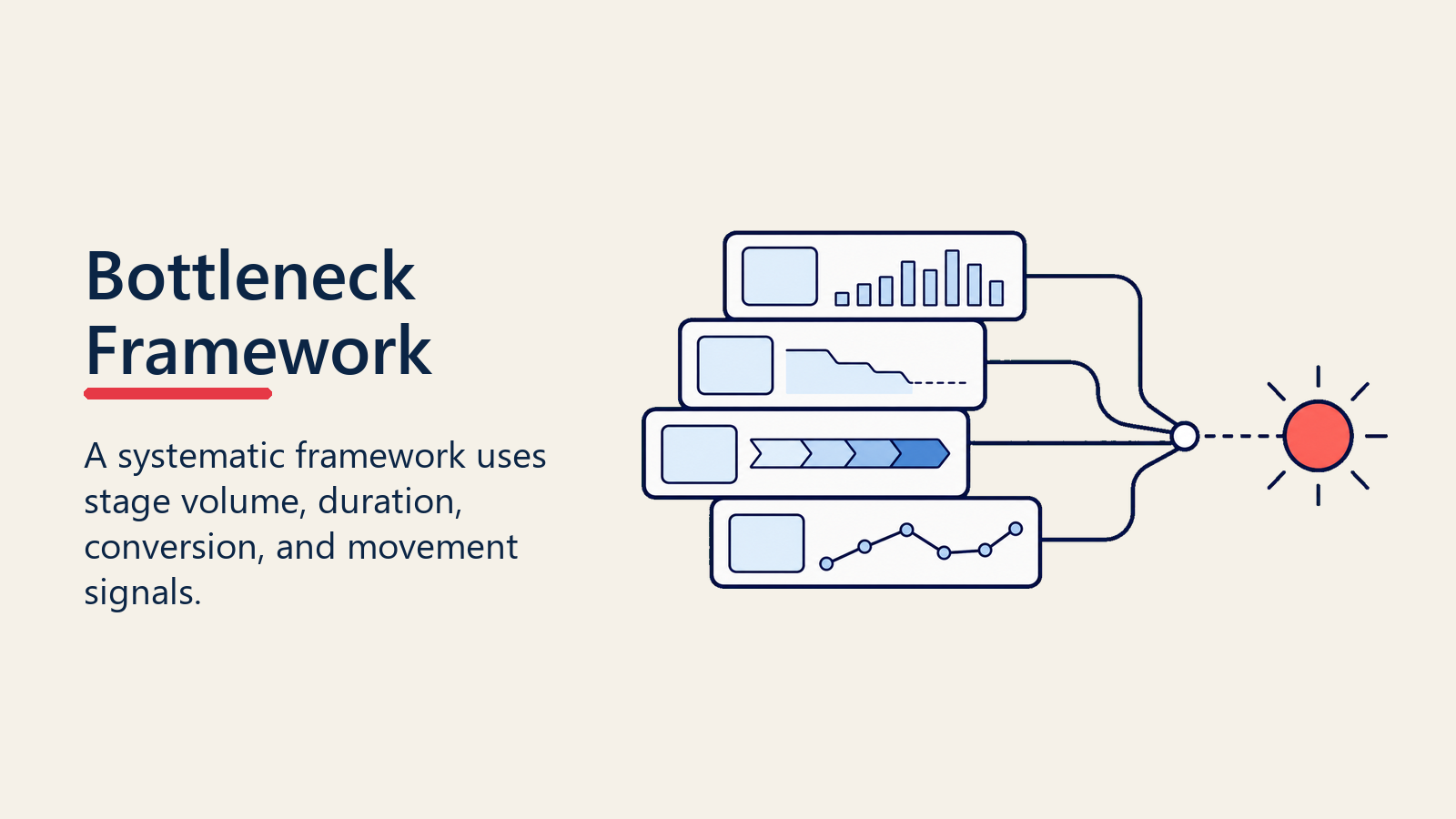
Menemukan bottleneck memerlukan analisis nyata, bukan sekadar firasat. Pemimpin sales sering merasa tahu di mana deal macet berdasarkan cerita lama dan ingatan terbaru. Data biasanya bercerita berbeda. Pipeline review rutin menyediakan forum terstruktur untuk memunculkan masalah-masalah ini.
Analisis Konsentrasi Tahap
Hitung persentase total nilai dan jumlah pipeline pada setiap tahap. Pipeline yang sehat menunjukkan distribusi yang relatif seimbang dengan penyusutan alami seiring deal maju dan sebagian gugur.
Cara menghitung: untuk setiap tahap, bagi jumlah deal dengan total jumlah pipeline Anda, dan bagi nilai tahap dengan total nilai pipeline. Jika Discovery menampung 18% deal dan 22% nilai, itu normal. Jika Proposal menampung 38% deal dan 41% nilai, Anda telah menemukan bottleneck Anda.
Yang perlu diperhatikan: tahap mana pun yang menampung lebih dari 30% jumlah pipeline Anda layak diselidiki. Tahap mana pun yang persentasenya tumbuh lebih dari 10 poin dari bulan ke bulan menandakan kendala yang sedang muncul.
Analisis Durasi Tahap
Lacak berapa lama deal benar-benar berada di setiap tahap dibandingkan durasi tahap yang direncanakan.
Cara menghitung: untuk deal closed-won dalam 90 hari terakhir, hitung median hari di setiap tahap. Bandingkan dengan target cycle time untuk tahap tersebut. Jika target kualifikasi Anda 10 hari tetapi median aktualnya 19 hari, kualifikasi adalah bottleneck Anda.
Yang perlu diperhatikan: tahap yang durasi aktualnya melebihi durasi yang direncanakan lebih dari 50% menandakan masalah sistemik, bukan variasi normal. Perhatikan baik median (kasus umum) maupun persentil ke-75 (deal yang lebih lambat) untuk memahami distribusinya.
Analisis Conversion Rate
Ukur persentase deal yang berhasil naik dari satu tahap ke tahap berikutnya.
Cara menghitung: dari deal yang masuk Tahap A pada kuartal terakhir, berapa persen yang maju ke Tahap B? Jika 100 deal masuk Discovery dan 68 mencapai Proposal, konversi Discovery-ke-Proposal Anda adalah 68%.
Yang perlu diperhatikan: penurunan signifikan dibandingkan conversion rate dasar Anda. Jika sebagian besar tahap berkonversi di 60-70% tetapi satu tahap hanya 38%, itulah bottleneck Anda. Perhatikan juga tren konversi yang menurun dari waktu ke waktu, tahap yang berkonversi 65% kuartal lalu tapi hanya 51% kuartal ini sedang menjadi kendala.
Pola Penumpukan Deal
Lacak berapa lama deal sudah mengendap di setiap tahap saat ini.
Cara menghitung: untuk semua opportunity yang terbuka, kelompokkan berdasarkan berapa lama mereka sudah berada di tahap saat ini: 0-14 hari, 15-30 hari, 31-60 hari, 60+ hari. Tahap yang sehat memiliki sebagian besar deal di kelompok 0-14 hari. Bottleneck memiliki deal yang tidak proporsional di kelompok 31+ hari. Manajemen usia deal yang efektif membantu Anda melacak dan menindaklanjuti pola-pola ini.
Yang perlu diperhatikan: tahap di mana lebih dari 40% deal sudah mengendap lebih lama dari durasi target Anda. Ini menandakan kemacetan aktif, bukan sekadar kelambatan historis.
Lokasi Bottleneck yang Umum Terjadi
Meski setiap sales process itu unik, tahap-tahap tertentu cenderung menjadi bottleneck di berbagai industri dan tingkat kompleksitas deal.
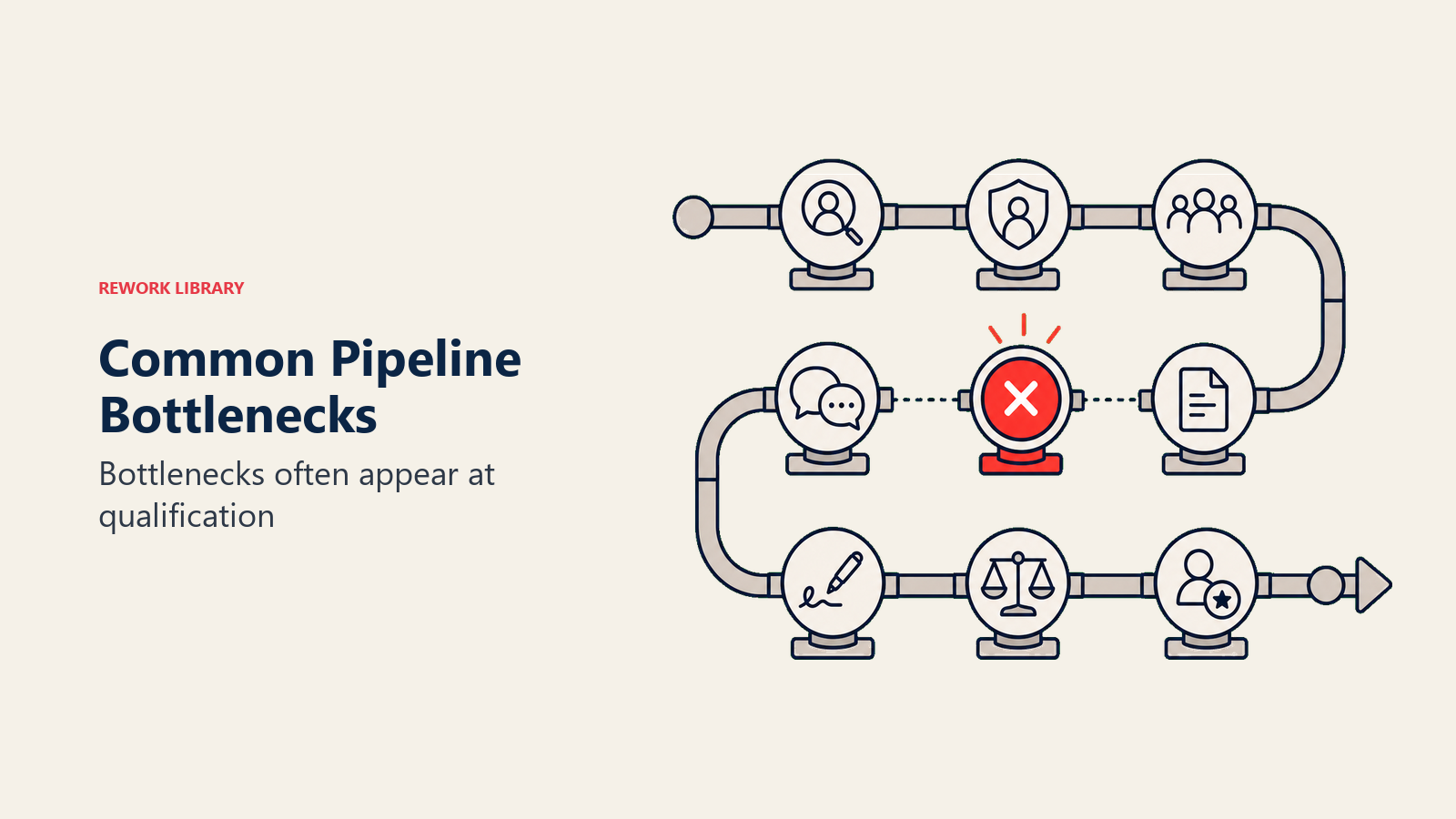
Tahap Validasi Teknis
Ini adalah tahap di mana prospek mengevaluasi apakah solusi Anda benar-benar bekerja untuk kebutuhan spesifik mereka. Pendorong bottleneck yang umum:
Kompleksitas POC: proyek proof-of-concept yang membutuhkan setup ekstensif, konfigurasi khusus, atau periode pengujian yang panjang menciptakan bottleneck secara alami. Validasi teknis selama 6 minggu secara alami membatasi berapa banyak deal yang bisa melewati tahap ini.
Kapasitas SE: solutions engineer biasanya menjadi sumber daya yang langka. Ketika setiap deal membutuhkan 15-20 jam waktu SE dan Anda hanya punya 2 SE untuk mendukung 8 rep, validasi teknis menjadi kendala matematis.
Ketergantungan pada environment: deal macet menunggu environment pelanggan disiapkan, kredensial akses diberikan, atau stakeholder teknis meluangkan waktu untuk aktivitas validasi.
Tahap Proposal/Pricing
Tahap ini mencakup pembuatan proposal, penentuan harga deal, dan penyajian opsi kepada prospek. Pendorong bottleneck:
Beban kustomisasi: setiap proposal yang membutuhkan dokumen scope khusus, model harga khusus, dan ketentuan unik menciptakan keterlambatan pemrosesan. Pekerjaan proposal yang high-touch tidak bisa diskalakan.
Otoritas harga: rep yang tidak punya wewenang untuk memberi diskon atau mengatur harga harus mengeskalasi setiap deal yang menyimpang dari harga daftar, sehingga menciptakan keterlambatan dan penumpukan antrean.
Kompleksitas persetujuan: rantai persetujuan berlapis-lapis untuk ketentuan non-standar, diskon di atas ambang batas tertentu, atau deal dengan karakteristik khusus menambah hari-hari ke setiap proposal.
Negosiasi Legal/Kontrak
Setelah pelanggan setuju untuk melanjutkan, detail legal dan kontrak harus difinalisasi. Pendorong bottleneck:
Kompleksitas redline: pelanggan dengan persyaratan legal yang ekstensif mengirimkan kontrak yang sudah ditandai, yang membutuhkan tinjauan legal internal, negosiasi bolak-balik, dan persetujuan eksekutif sebelum dieksekusi.
Kapasitas legal: tim legal yang kecil mendukung volume deal yang tinggi menciptakan antrean. Ketika legal hanya bisa meninjau 5 kontrak per minggu tetapi sales closing 12 deal per minggu, Anda punya bottleneck struktural.
Ketentuan non-standar: setiap deal yang membutuhkan ketentuan khusus, SLA unik, atau ketentuan khusus lainnya memperlambat proses legal dibandingkan dokumen standar.
Persetujuan Eksekutif
Deal besar, akun strategis, atau pengaturan non-standar sering membutuhkan persetujuan eksekutif. Pendorong bottleneck:
Keterbatasan jadwal: eksekutif dengan ketersediaan terbatas menciptakan waktu tunggu. Jika VP Anda meninjau deal sekali seminggu dan setiap tinjauan butuh seminggu untuk dijadwalkan, Anda telah menambahkan 7-14 hari ke setiap deal besar.
Kesenjangan informasi: eksekutif yang membutuhkan konteks ekstensif, dokumentasi pendukung, atau jawaban atas pertanyaan detail sebelum menyetujui deal memperpanjang siklus persetujuan.
Keengganan mengambil risiko: pengambilan keputusan eksekutif yang konservatif dan membutuhkan validasi tambahan, bukti pendukung, atau mitigasi risiko memperlambat kecepatan persetujuan.
Pengembangan Champion
Dalam sales B2B yang kompleks, Anda membutuhkan champion internal yang menjual atas nama Anda. Pendorong bottleneck:
Kompleksitas multi-stakeholder: deal macet di discovery atau proposal saat champion Anda berupaya membangun konsensus di antara finance, IT, operasi, dan stakeholder lain yang masing-masing punya hak veto.
Dinamika politik: politik internal, prioritas yang bersaing, atau resistensi organisasi memperlambat kemampuan champion Anda untuk mendorong deal maju.
Kapabilitas champion: champion yang lemah, yang kurang kredibilitas, modal politik, atau skill menjual, tidak bisa menavigasi organisasinya secara efektif, menyebabkan deal macet tanpa batas waktu.
Mengukur Dampak Bottleneck
Mengidentifikasi bottleneck saja tidak cukup. Anda perlu mengukur dampaknya untuk memprioritaskan upaya penyelesaian dan membenarkan investasi sumber daya. Ini terhubung langsung dengan pipeline metrics overview Anda dan membantu Anda mengomunikasikan masalah ke jajaran pimpinan.
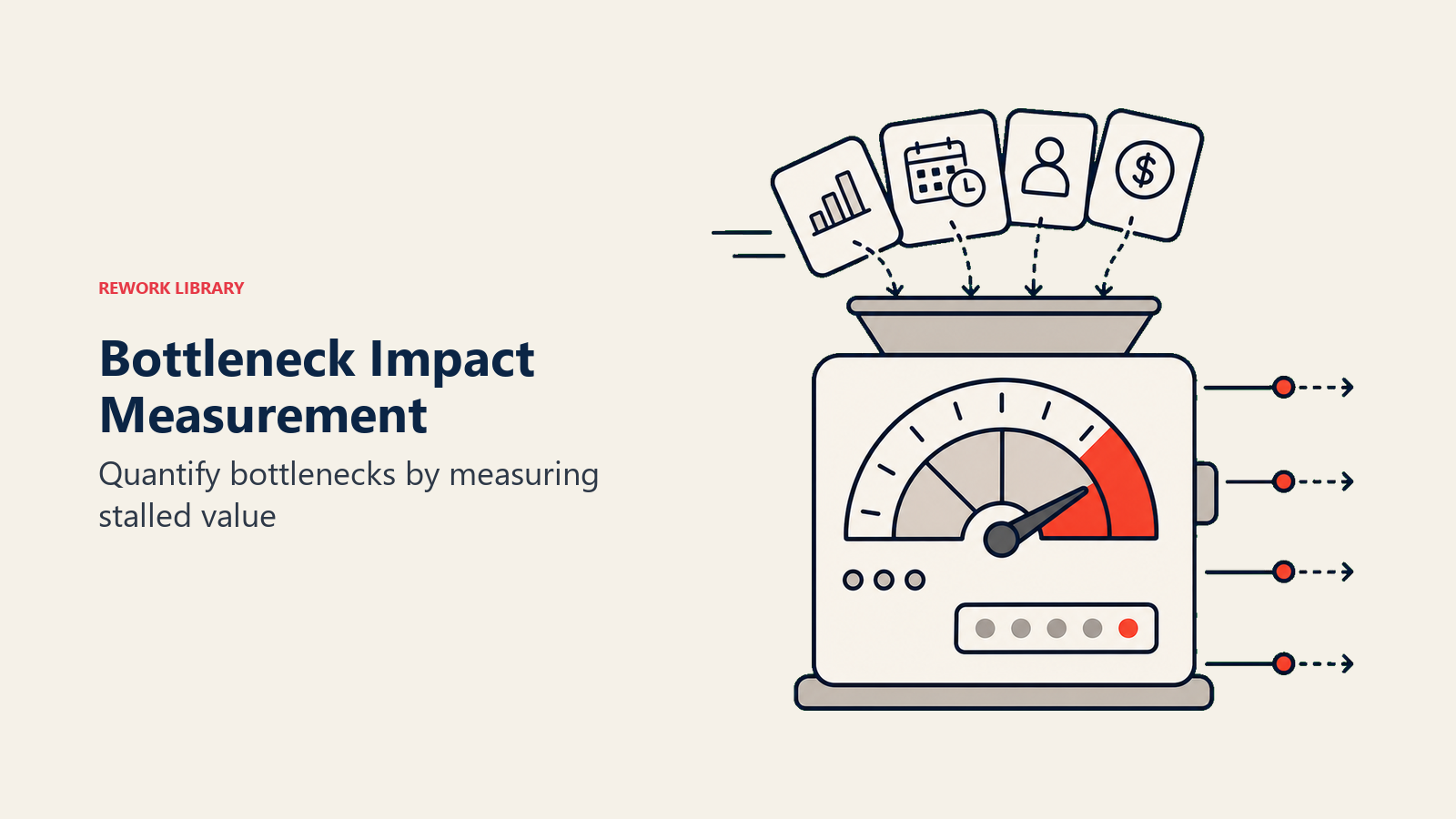
Perhitungan Keterlambatan Pendapatan
Hitung berapa banyak pendapatan yang tertunda akibat sebuah bottleneck.
Rumus: (rata-rata ukuran deal) × (jumlah deal yang tersangkut di bottleneck) × (kelebihan hari di luar target) × (biaya keterlambatan harian)
Contoh: 25 deal tersangkut di proposal dengan nilai rata-rata $50 ribu, menghabiskan 32 hari versus target 15 hari = 25 deal × $50 ribu × 17 hari kelebihan × biaya harian $0,08 (mengasumsikan biaya peluang tahunan 30%) = $170 ribu pendapatan yang tertunda.
Utilisasi Kapasitas
Ukur seberapa besar kendala yang diciptakan sebuah bottleneck terhadap kapasitas pipeline Anda secara keseluruhan.
Rumus: (throughput bottleneck saat ini per periode) ÷ (throughput yang dibutuhkan untuk mencapai target)
Contoh: tim SE Anda memvalidasi 16 deal per bulan, tetapi untuk mencapai kuota dibutuhkan 28 deal tervalidasi per bulan. Utilisasi kapasitas Anda adalah 16 ÷ 28 = 57%. Anda beroperasi 43% di bawah kapasitas yang dibutuhkan.
Kehilangan Conversion
Hitung berapa banyak deal yang Anda hilangkan akibat keterlambatan yang disebabkan oleh bottleneck.
Rumus: (deal yang masuk ke tahap bottleneck) × (conversion rate saat ini dikurangi conversion rate dasar)
Contoh: 100 deal masuk tahap proposal setiap bulan. Konversi ke negosiasi saat ini 42%, tetapi baseline Anda 64%. Anda kehilangan 22 deal per bulan (100 × 0,22) akibat masalah di tahap proposal. Dengan rata-rata ukuran deal $50 ribu dan close rate 35%, itu setara $385 ribu pipeline bulanan yang hilang.
Strategi Penyelesaian Berdasarkan Akar Penyebab
Penyelesaian harus disesuaikan dengan akar penyebabnya, karena coaching, perancangan ulang proses, dan perubahan kualifikasi menyelesaikan bottleneck yang berbeda-beda.
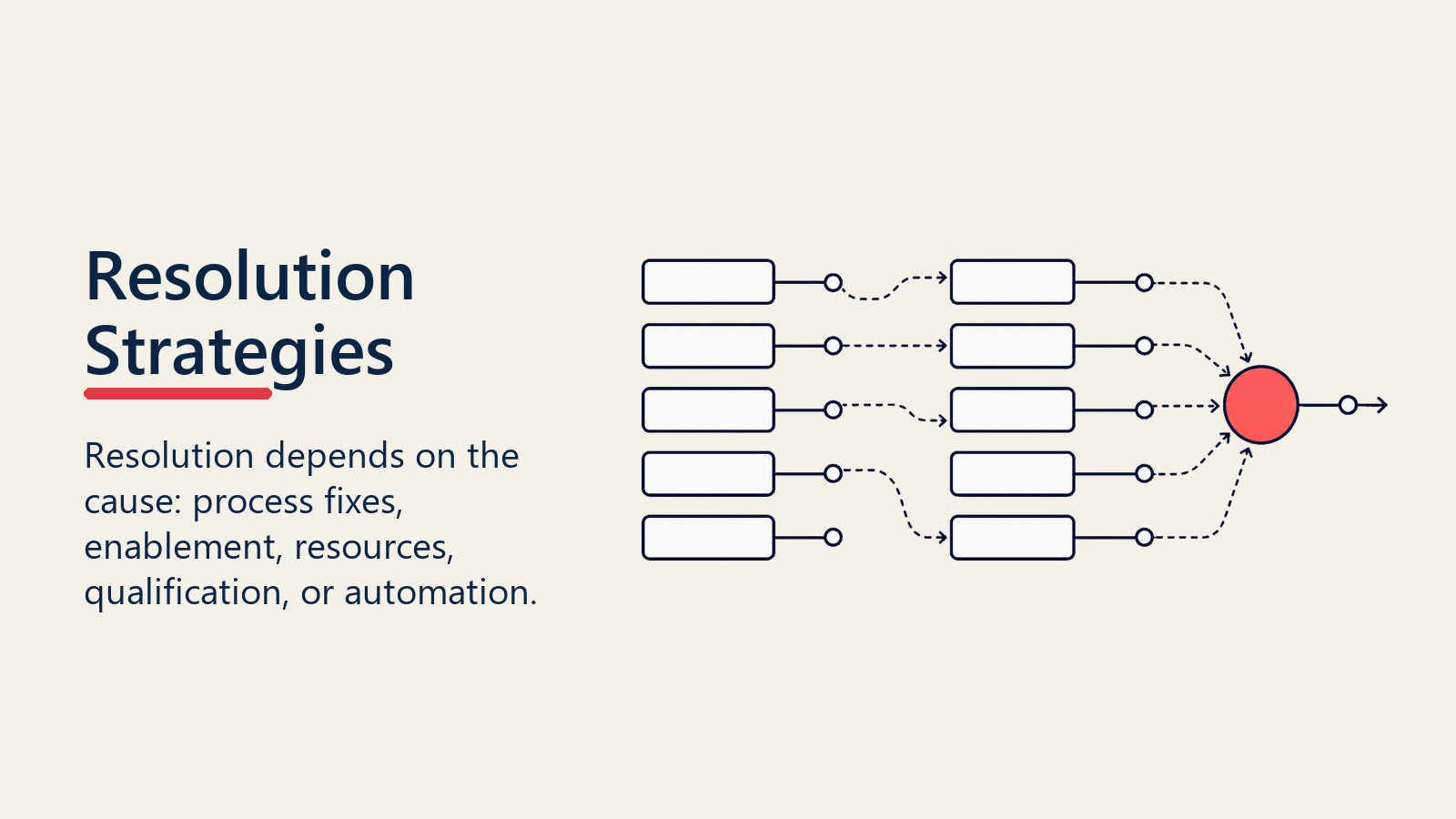
Jenis bottleneck yang berbeda membutuhkan solusi yang berbeda pula. Masalah proses butuh perbaikan proses. Kendala sumber daya butuh investasi kapasitas. Kesenjangan skill butuh enablement.
Solusi Optimasi Proses
Tentukan kriteria kelulusan tahap yang jelas: dokumentasikan secara persis apa yang harus terpenuhi agar sebuah deal bisa naik tahap. Gunakan checklist yang harus diselesaikan rep sebelum memajukan opportunity. Hilangkan ambiguitas tentang seperti apa "selesai" itu.
Otomasi pekerjaan yang berulang: bangun template proposal, otomatiskan perhitungan harga, buat alur persetujuan self-service. Ubah pekerjaan manual berjam-jam menjadi proses otomatis 15 menit.
Sederhanakan persetujuan: naikkan wewenang diskon rep dari 10% menjadi 20%. Beri manajer persetujuan akhir untuk deal di bawah $100 ribu, alih-alih mewajibkan VP. Hilangkan lapisan persetujuan yang menambah keterlambatan tanpa pengurangan risiko yang sepadan.
Pemrosesan paralel: susun ulang urutan aktivitas agar pekerjaan berjalan bersamaan, bukan berurutan. Mulai tinjauan legal sementara harga masih difinalisasi, alih-alih menunggu proposal selesai sepenuhnya.
Solusi Alokasi Sumber Daya
Tambah kapasitas spesialis: rekrut solutions engineer tambahan, datangkan dukungan kontrak, perluas jumlah personel deal desk. Peningkatan kapasitas langsung sering kali menjadi jalan tercepat untuk menyelesaikan bottleneck sumber daya.
Distribusikan ulang beban kerja: seimbangkan beban kerja secara lebih merata dengan menugaskan ulang akun, membentuk tim spesialis, atau menerapkan aturan routing load-balancing yang mencegah penumpukan pada individu tertentu.
Ciptakan leverage: bangun model dukungan berjenjang, di mana sumber daya junior menangani kasus standar dan spesialis fokus pada situasi kompleks. Solutions consultant bisa menangani pertanyaan teknis sederhana, menyisakan SE untuk tinjauan arsitektural yang mendetail.
Alihdayakan kelebihan beban: libatkan sumber daya kontrak, konsultan eksternal, atau dukungan sementara selama periode puncak untuk mencegah penumpukan saat lonjakan musiman.
Solusi Pelatihan dan Enablement
Pelatihan khusus skill: berikan pelatihan yang ditargetkan pada teknik negosiasi, framework discovery, pengetahuan produk teknis, atau penanganan keberatan berdasarkan kesenjangan skill yang teridentifikasi.
Sales playbook: dokumentasikan pendekatan yang terbukti berhasil untuk menangani skenario umum. Ubah pengetahuan yang tersebar menjadi proses yang dapat diulang dan dijalankan dengan percaya diri oleh rep baru.
Program coaching: pasangkan performer yang lebih lemah dengan performer terbaik untuk deal review, call shadowing, dan coaching real-time pada opportunity yang sedang berjalan. Pipeline coaching yang terstruktur mempercepat pengembangan skill dan mengurangi bottleneck yang disebabkan oleh minimnya pengalaman.
Persyaratan sertifikasi: tetapkan standar kompetensi minimum sebelum rep bisa memajukan deal melalui tahap tertentu. Seorang rep harus menunjukkan kecakapan teknis sebelum menjalankan POC tanpa pengawasan.
Solusi Edukasi Buyer
Stakeholder mapping: bantu buyer mengidentifikasi semua pengambil keputusan sejak awal, susun rencana pembangunan konsensus, dan tangani kekhawatiran dari finance, legal, IT, dan operasi secara proaktif.
Pengembangan business case: sediakan template, kalkulator ROI, dan materi pendukung yang bisa digunakan champion untuk menjual secara internal. Permudah buyer membenarkan pembelian kepada para stakeholder mereka.
Keselarasan eksekutif: libatkan eksekutif Anda dengan eksekutif mereka untuk menghilangkan hambatan organisasi, menangani kekhawatiran strategis, dan mempercepat persetujuan internal.
Perencanaan implementasi: susun bersama roadmap implementasi yang menjawab kekhawatiran buyer soal kesiapan, kebutuhan sumber daya, dan manajemen perubahan, sehingga menghilangkan keberatan "kami belum siap."
Eskalasi Eksekutif dan Perubahan Organisasi
Waktu khusus untuk deal review: kunci jadwal eksekutif untuk deal review mingguan dengan SLA yang dipublikasikan. "VP meninjau semua deal di atas $100 ribu dalam 48 jam" menghilangkan keterlambatan penjadwalan.
Wewenang yang didelegasikan: berdayakan manajer untuk menyetujui deal di bawah ambang batas tertentu, menyisakan tinjauan eksekutif untuk akun strategis atau situasi yang berisiko tidak biasa.
SLA lintas fungsi: tetapkan service level agreement dengan legal (kontrak ditinjau dalam 3 hari kerja), finance (persetujuan harga dalam 24 jam), dan fungsi lain yang menciptakan ketergantungan.
Kepemilikan proses: tunjuk pemilik yang jelas untuk alur deal end-to-end, yang punya wewenang untuk memecah kemacetan, mengeskalasi masalah, dan berkoordinasi lintas departemen.
Pencegahan: Merancang Pipeline yang Tahan Bottleneck
Strategi bottleneck terbaik adalah mencegahnya terbentuk sejak awal. Memahami hubungan antara pipeline vs forecast membantu Anda merancang sistem yang mendukung aliran deal sekaligus prediktabilitas.
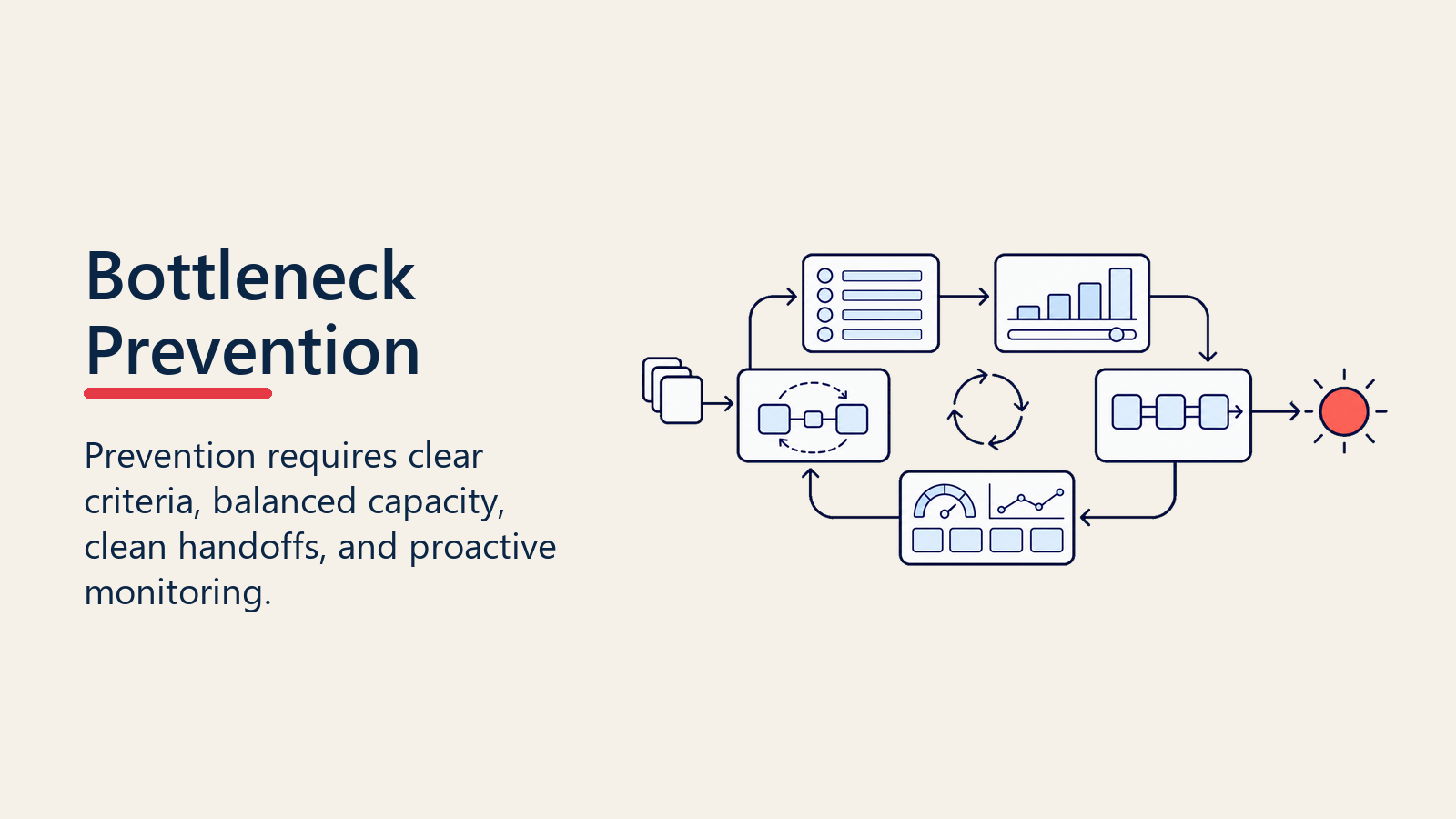
Prinsip Desain Tahap
Kapasitas yang seimbang: rancang tahap-tahap dengan kapasitas pemrosesan yang relatif setara. Jangan membuat proses kualifikasi yang bisa menangani 100 deal per bulan tetapi mengalir ke proses discovery yang hanya sanggup menangani 40.
Kepemilikan yang jelas: setiap tahap memiliki pemilik yang teridentifikasi dan bertanggung jawab agar deal maju tepat waktu. Kepemilikan yang ambigu menciptakan kesenjangan akuntabilitas tempat deal macet.
Work-in-progress yang dibatasi: tetapkan kapasitas maksimum untuk setiap tahap. Ketika proposal mencapai 25 deal aktif, tidak ada deal baru yang masuk sampai sebagian keluar. Ini mencegah penumpukan tanpa batas.
Handoff yang eksplisit: tentukan secara persis apa yang terjadi saat deal berpindah antar tahap, siapa yang bertanggung jawab atas apa, dan informasi apa yang harus dipindahkan. Handoff yang buruk menciptakan bottleneck kecil di setiap transisi.
Perencanaan Kapasitas
Hitung kapasitas tahap: pahami throughput maksimum yang bisa ditangani setiap tahap berdasarkan sumber daya yang tersedia dan waktu pemrosesan yang biasa.
Forecast permintaan: proyeksikan berapa banyak deal yang akan masuk ke setiap tahap berdasarkan pola historis, kampanye mendatang, dan faktor musiman.
Identifikasi kesenjangan kapasitas sejak dini: ketika permintaan yang diforecast melebihi kapasitas tahap lebih dari 20%, Anda punya 60-90 hari untuk menambah sumber daya, mengoptimalkan proses, atau menyesuaikan ekspektasi sebelum bottleneck terbentuk. Pipeline coverage analysis yang kuat membantu Anda mengantisipasi kebutuhan kapasitas ini.
Bangun buffer kapasitas: pertahankan 15-20% kelebihan kapasitas pada tahap-tahap kritis untuk menyerap lonjakan volume tak terduga tanpa menciptakan penumpukan.
Sistem Intervensi Dini
Peringatan durasi tahap: tandai secara otomatis deal yang sudah berada di suatu tahap lebih lama dari persentil ke-75. Ini adalah indikator dini kemacetan sebelum berubah menjadi bottleneck.
Peringatan penumpukan: hasilkan peringatan ketika tahap mana pun melebihi ambang kapasitas yang direncanakan (misalnya, "Tahap proposal memiliki 23 deal aktif, target maksimum adalah 18").
Pemantauan conversion rate: lacak conversion rate mingguan antar tahap. Penurunan 15% dari baseline menandakan masalah yang sedang muncul sebelum berkembang menjadi bottleneck penuh.
Dashboard manajer: beri manajer lini depan visibilitas real-time atas deal yang berisiko macet, memungkinkan intervensi proaktif alih-alih upaya penyelamatan reaktif.
Pemantauan: Deteksi Bottleneck yang Berkelanjutan
Analisis bottleneck bukan latihan satu kali. Pasar berubah, proses berkembang, tim tumbuh, dan kendala baru bermunculan. Pemantauan berkelanjutan menangkap bottleneck sejak dini. Praktik pipeline hygiene yang baik mendukung pemantauan berkelanjutan ini.
Metrik Kunci yang Perlu Dilacak
Persentase konsentrasi tahap: berapa persen dari total pipeline yang berada di setiap tahap? Lacak setiap minggu. Tahap mana pun yang konsisten di atas 25% layak diselidiki.
Median durasi tahap: berapa lama deal biasanya berada di setiap tahap. Lacak setiap bulan. Perhatikan tahap-tahap yang median durasinya terus meningkat dari waktu ke waktu.
Conversion rate antar tahap: berapa persen deal yang maju dari satu tahap ke tahap berikutnya? Lacak setiap bulan. Conversion rate yang menurun menandakan masalah yang sedang muncul.
Deal yang melewati ambang usia: berapa banyak deal di setiap tahap yang sudah berada di sana lebih lama dari durasi target Anda? Lacak setiap minggu. Jumlah yang meningkat menandakan bottleneck yang semakin membesar.
Konfigurasi Dashboard
Bangun dashboard kesehatan pipeline yang menampilkan:
- Distribusi tahap (bar chart yang menunjukkan jumlah dan nilai deal per tahap)
- Tren durasi tahap (line chart yang menunjukkan median hari di tahap dari waktu ke waktu)
- Conversion funnel (waterfall chart yang menunjukkan penurunan antar tahap)
- Deal yang menua (heat map yang menunjukkan jumlah deal berdasarkan tahap dan kelompok usia)
- Peringatan bottleneck (sorotan otomatis ketika metrik melebihi ambang batas)
Frekuensi pembaruan: dashboard harus diperbarui setiap hari dengan data langsung, bukan cuplikan bulanan yang menyembunyikan masalah yang sedang muncul.
Akses: terlihat oleh sales rep (melihat deal mereka sendiri), manajer (melihat performa tim), dan jajaran pimpinan (melihat tren organisasi).
Kadensi Tinjauan yang Direkomendasikan
Harian: sales manager meninjau deal yang menua dan konsentrasi tahap dalam tim mereka. Identifikasi deal yang berisiko macet dan intervensi secara proaktif.
Mingguan: operations meninjau metrik kesehatan pipeline di seluruh tim. Identifikasi bottleneck yang sedang muncul dan peringatkan manajer yang terdampak.
Bulanan: jajaran pimpinan meninjau tren bottleneck, perubahan conversion rate, dan utilisasi kapasitas. Buat keputusan sumber daya dan proses berdasarkan data.
Triwulanan: audit bottleneck menyeluruh yang menilai semua tahap, memperbarui metrik dasar, dan mengkalibrasi ulang ambang batas berdasarkan pertumbuhan bisnis.
Studi Kasus: Bottleneck Umum dan Solusinya
Studi Kasus 1: Kendala Validasi Teknis
Situasi: perusahaan SaaS dengan 12 AE enterprise tetapi hanya 3 solutions engineer. Validasi teknis menjadi bottleneck seiring meningkatnya volume deal.
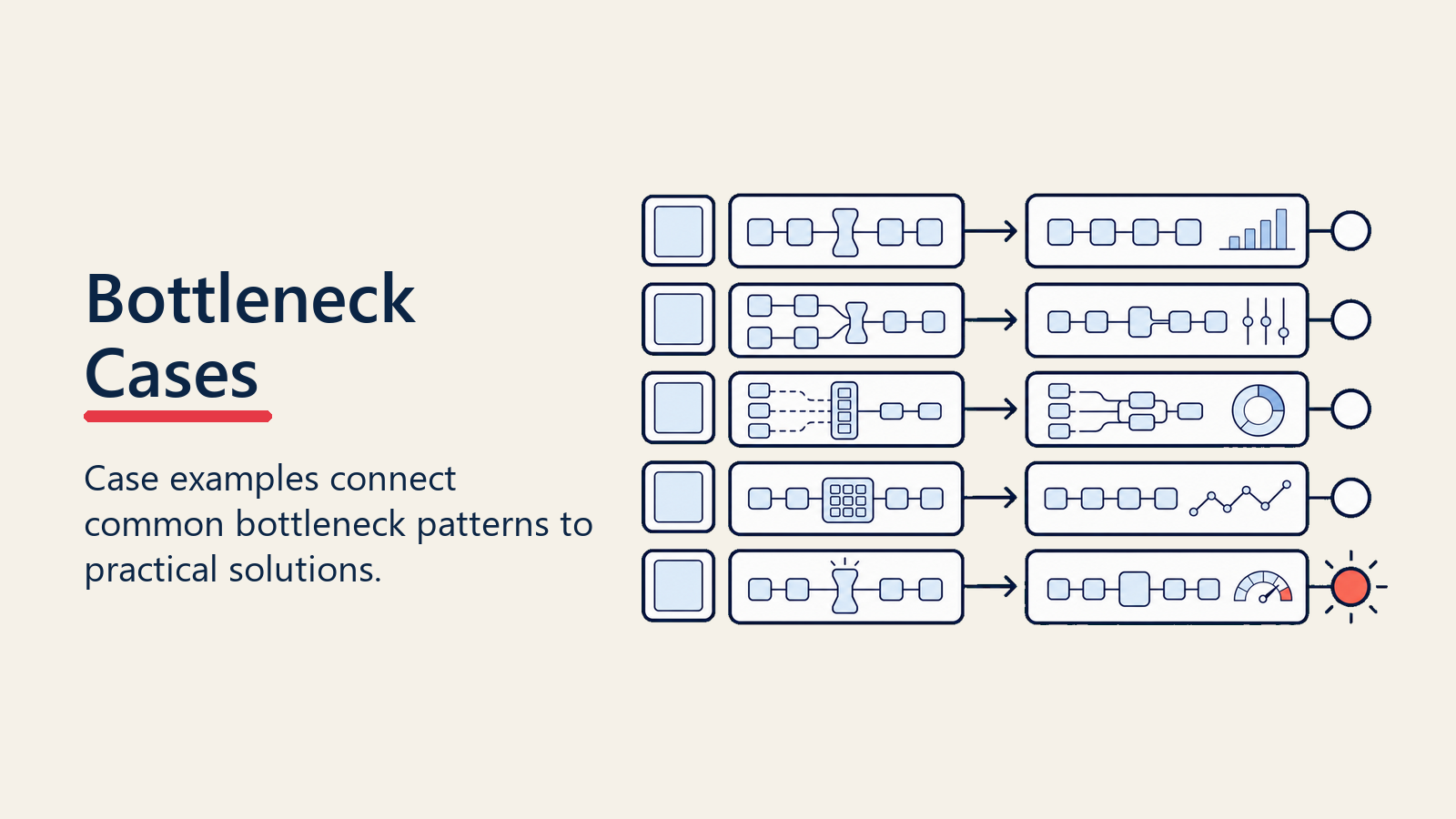
Analisis: analisis konsentrasi tahap menunjukkan 34% pipeline tersangkut di validasi teknis, naik dari 18% enam bulan sebelumnya. Durasi validasi rata-rata 23 hari versus target 12 hari. Analisis utilisasi SE menunjukkan kapasitas 98%, secara matematis sudah maksimal.
Solusi: pendekatan tiga bagian:
- Membuat peran solutions consultant junior untuk menangani pertanyaan teknis yang lebih sederhana
- Membangun environment demo self-service yang mengurangi keterlibatan SE pada validasi awal
- Merekrut dua senior SE tambahan, meningkatkan kapasitas sebesar 67%
Hasil: konsentrasi validasi teknis turun menjadi 21% dalam 60 hari. Durasi rata-rata menurun menjadi 14 hari. Pipeline velocity membaik 31%, berkontribusi pada peningkatan 22% booking kuartalan. Memahami dan meningkatkan metrik win rate improvement menjadi hasil langsung dari inisiatif ini.
Studi Kasus 2: Bottleneck Pembuatan Proposal
Situasi: perusahaan jasa profesional di mana setiap proposal membutuhkan scoping, penentuan harga, dan pemformatan khusus yang ekstensif. Pembuatan proposal memakan 12-18 jam per deal.
Analisis: deal menghabiskan median 19 hari di tahap proposal versus target 8 hari. Analisis durasi tahap mengungkap bahwa sebagian besar waktu tidak terpakai untuk pengambilan keputusan, melainkan untuk pembuatan dokumen. 78% proposal memiliki 60-80% konten yang sama meskipun disebut "kustom."
Solusi:
- Membangun pustaka proposal modular dengan blok konten yang sudah disetujui sebelumnya
- Membuat kalkulator harga yang secara otomatis menghasilkan tabel harga
- Menerapkan alat otomasi proposal yang mengurangi waktu pembuatan dari 12 jam menjadi 2 jam
Hasil: durasi tahap proposal turun menjadi 9 hari. Kapasitas sales meningkat 25% karena rep menghabiskan lebih sedikit waktu untuk pekerjaan administratif. Win rate proposal meningkat 8% berkat waktu respons yang lebih cepat.
Studi Kasus 3: Bottleneck Persetujuan Eksekutif
Situasi: perusahaan B2B di mana semua deal di atas $75 ribu membutuhkan persetujuan VP. VP meninjau deal sekali seminggu, menciptakan keterlambatan 5-10 hari.
Analisis: 19 deal tersangkut menunggu persetujuan eksekutif, mewakili $1,4 juta pendapatan yang tertunda. Forecast akhir kuartal berisiko. Akar penyebab: volume deal yang membutuhkan persetujuan melebihi kapasitas realistis VP.
Solusi:
- Menaikkan ambang persetujuan dari $75 ribu menjadi $150 ribu untuk deal standar
- Mendelegasikan wewenang persetujuan kepada direktur untuk deal antara $75 ribu hingga $150 ribu
- Membuat proses persetujuan cepat untuk deal dengan ketentuan standar
Hasil: antrean persetujuan eksekutif terselesaikan dalam satu minggu. Deal yang membutuhkan persetujuan VP turun dari 24 per bulan menjadi 8 per bulan. Rata-rata waktu persetujuan menurun dari 8 hari menjadi 2 hari. Kuartal ditutup pada 104% dari kuota.
Kesimpulan: Analisis Bottleneck sebagai Disiplin Operasional
Bottleneck pipeline bukanlah anomali. Ia tidak terhindarkan dalam operasi sales yang kompleks. Deal akan menumpuk. Tahap akan melambat. Conversion rate akan turun. Pertanyaannya bukan apakah bottleneck akan terbentuk, melainkan apakah Anda akan menemukan dan memperbaikinya sebelum menghancurkan kuartal Anda.
Perbedaan antara tim sales yang konsisten mencapai target dan yang kesulitan? Disiplin operasional. Tim yang menang memiliki analisis bottleneck sistematis yang menangkap kendala sebelum berkembang. Tim yang gagal mengandalkan anekdot, firasat, dan pemadaman kebakaran triwulanan.
Ketika Anda memperlakukan analisis bottleneck sebagai praktik berkelanjutan, bukan tinjauan triwulanan, Anda membangun mesin pendapatan yang dapat diprediksi. Anda melihat kendala terbentuk berminggu-minggu sebelum memukul forecast Anda. Anda mengukur dampaknya dan memprioritaskan solusi berdasarkan data nyata. Anda memperbaiki akar penyebab, bukan gejalanya.
Abaikan bottleneck sampai deal berhenti closing, dan Anda menerima keterlambatan pendapatan, kendala kapasitas, dan kuota yang meleset sebagai sekadar "begitulah cara kerja sales." Salah. Bottleneck bisa diselesaikan ketika Anda mengidentifikasi, menganalisis, dan memperbaikinya secara sistematis.
Alat dan framework-nya sudah tersedia. Yang dibutuhkan adalah komitmen untuk memantau kesehatan pipeline secara berkelanjutan dan kemauan untuk bertindak berdasarkan apa yang dikatakan data.
Siap mengoptimalkan aliran pipeline Anda? Pelajari bagaimana pipeline velocity dan conversion rate analysis bekerja sama untuk mengidentifikasi kendala sebelum berdampak pada pendapatan.
Bacaan terkait:

Head of Enterprise Solutions
On this page
- Apa Itu Bottleneck Pipeline?
- Tiga Karakteristik Bottleneck
- Mengapa Deal Menumpuk: Akar Penyebabnya
- Bottleneck Proses
- Bottleneck Sumber Daya
- Bottleneck Skill
- Bottleneck di Sisi Buyer
- Bottleneck Organisasi
- Mengidentifikasi Bottleneck: Framework yang Sistematis
- Analisis Konsentrasi Tahap
- Analisis Durasi Tahap
- Analisis Conversion Rate
- Pola Penumpukan Deal
- Lokasi Bottleneck yang Umum Terjadi
- Tahap Validasi Teknis
- Tahap Proposal/Pricing
- Negosiasi Legal/Kontrak
- Persetujuan Eksekutif
- Pengembangan Champion
- Mengukur Dampak Bottleneck
- Perhitungan Keterlambatan Pendapatan
- Utilisasi Kapasitas
- Kehilangan Conversion
- Strategi Penyelesaian Berdasarkan Akar Penyebab
- Solusi Optimasi Proses
- Solusi Alokasi Sumber Daya
- Solusi Pelatihan dan Enablement
- Solusi Edukasi Buyer
- Eskalasi Eksekutif dan Perubahan Organisasi
- Pencegahan: Merancang Pipeline yang Tahan Bottleneck
- Prinsip Desain Tahap
- Perencanaan Kapasitas
- Sistem Intervensi Dini
- Pemantauan: Deteksi Bottleneck yang Berkelanjutan
- Metrik Kunci yang Perlu Dilacak
- Konfigurasi Dashboard
- Kadensi Tinjauan yang Direkomendasikan
- Studi Kasus: Bottleneck Umum dan Solusinya
- Studi Kasus 1: Kendala Validasi Teknis
- Studi Kasus 2: Bottleneck Pembuatan Proposal
- Studi Kasus 3: Bottleneck Persetujuan Eksekutif
- Kesimpulan: Analisis Bottleneck sebagai Disiplin Operasional