SDR-Workload-Balancing mit KI-gesteuertem Routing
Turn this article into takeaways for your work.


Each assistant summarizes the article only for you and suggests best practices for your work.
Der Sales Development Representative (SDR), der Lead 47 des Tages erhält, kontaktiert ihn 4 Stunden nach der Zuweisung. Derjenige, der Lead 3 erhalten hat, hat ihn in 8 Minuten kontaktiert. Dieser 4-Stunden-Abstand ist kein Motivationsproblem. Es ist ein Workload-Problem. Bei Lead 47 ist die Task-Queue dieses Reps gesättigt, sein Kontext fragmentiert, und seine Call-Qualität hat sich verschlechtert, weil er noch kein Mittagessen hatte.
Speed-to-First-Contact ist eine der am meisten untersuchten Variablen bei Inbound-Conversions. Die Forschung ist eindeutig: Leads, die innerhalb von 5 Minuten kontaktiert werden, konvertieren 3 bis 5 Mal häufiger als Leads, die nach 30 Minuten kontaktiert werden. Unternehmen, die ihre besten SDRs mit Inbound überschwemmen, bis diese Reps langsamer werden, betreiben kein High-Performance-Outbound-Team. Sie betreiben ein sich selbst torpedierendes Verteilungsmodell.
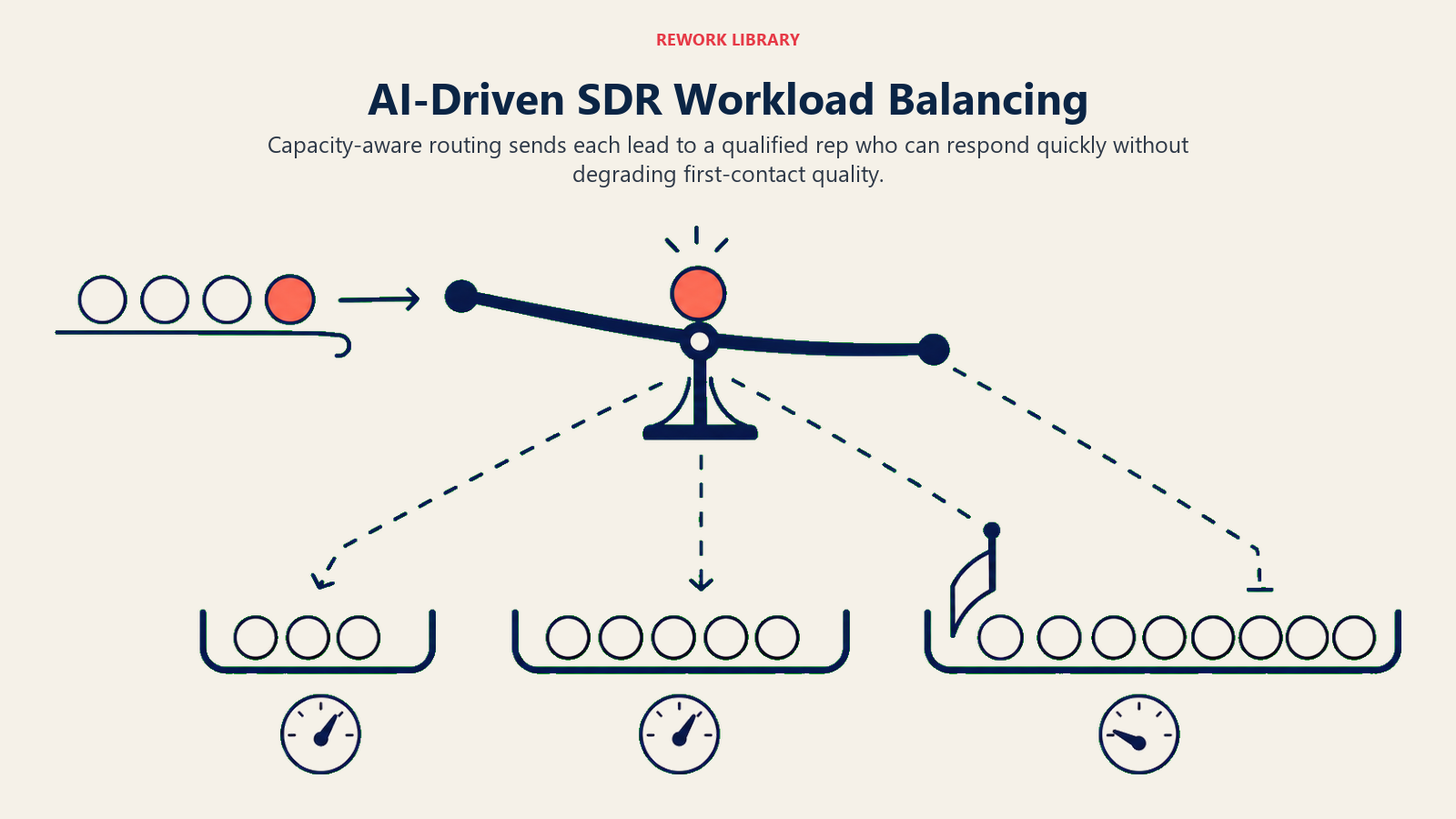
KI-gesteuertes Workload-Balancing behebt dies, indem Kapazität als erstklassiger Routing-Input behandelt wird, neben Lead-Qualität und Rep-Match-Profil. Das ist eine Verfeinerung des Scoring and Routing Pattern: nicht nur, wer den Lead bekommt, sondern wann diese Person ihn realistischerweise gut bearbeiten kann.
Das Workload-Imbalance-Problem
Standard-Round-Robin-Routing weiß nicht, ob ein Rep überlastet ist. Es bewegt sich sequenziell durch die Queue und weist den nächsten Lead dem nächsten Rep zu, unabhängig von dessen aktuellem Task-Volumen.
Das praktische Ergebnis ist eine Mehr-oder-Weniger-Verteilung. Hochleistungsreps, die schnell reagieren, erhalten mehr Leads, weil die Queue schneller zu ihnen vorrückt. Langsamere Responder häufen einen Rückstand an, der die Response-Zeiten weiter verlängert, die Connect-Rate senkt, das Vertrauen der Manager in ihre Leistung reduziert und oft entweder zu mehr Coaching-Druck oder weniger Leads führt. Keines dieser Ergebnisse ist nützlich.
Manuelle Zuweisung korrigiert einiges davon, erfordert aber einen Manager, der die Queue in Echtzeit beobachtet und Urteile über die Kapazität fällt. Bei 30+ Inbound-Leads pro Tag ist manuelle Aufsicht operativ nicht realistisch. Tools, die die Produktivität von Verkäufern steigern sollen, erschweren oft die Arbeit, wenn sie kognitive Belastung hinzufügen, anstatt sie zu reduzieren. Genau das tut eine unkontrollierte Routing-Queue.
Round-Robin berücksichtigt auch nicht die Qualitätslücke zwischen dem 47. Call eines überlasteten Reps und dem 5. Call eines ausgeruhten Reps. Beide Calls zählen im Customer Relationship Management (CRM) als „kontaktiert". Nur einer wird wahrscheinlich konvertieren.
Wichtige Fakten: SDR-Workload und Conversion
- Leads, die innerhalb von 5 Minuten kontaktiert werden, konvertieren 3 bis 5 Mal häufiger als Leads, die nach 30 Minuten kontaktiert werden, wobei die Lücke für Kontakte, die nach 2 Stunden stattfinden, weiter wächst (HBR, 2011)
- Die SDR-Benchmarking-Forschung der Bridge Group zeigt, dass Response-Zeit und Follow-up-Konsistenz die zwei Variablen sind, die am stärksten mit SDR-Quota-Erreichung in Hunderten von B2B-Unternehmen korrelieren
- SDRs, deren tägliches Zuweisungsvolumen ihren Kapazitätsschwellenwert überschreitet, zeigen einen messbaren Rückgang der Connect-Rate, der typischerweise im rollierenden 7-Tage-Response-Time-Trend sichtbar ist, bevor er in Quota-Metriken erscheint
Die Capacity-Aware SDR Routing Rule
Die Capacity-Aware SDR Routing Rule besagt: Kein Inbound-Lead sollte an einen Rep geroutet werden, dessen rollierender 7-Tage-Durchschnitt der Response-Zeit das 2-fache des Team-Medians überschreitet, dessen offene Task-Queue seinen individuellen Basis-Kapazitätsschwellenwert überschreitet oder der für mehr als 50% der nächsten 4 Stunden als nicht verfügbar markiert ist. Wenn alle Reps gleichzeitig über dem Schwellenwert liegen (Volume-Spike), sollte das System hochprioritäre Leads in einer markierten Queue halten und den SDR-Manager benachrichtigen, anstatt an einen überlasteten Rep zu routen. Ein Lead, der 15 Minuten auf den richtigen Rep-Kontext wartet, konvertiert besser als derselbe Lead, der sofort an einen Rep geroutet wird, dessen Effektivität unter dem Volumen gelitten hat.
Was KI-Workload-Balancing verfolgt
Effektives Workload-Balancing erfordert ein Modell des aktuellen Zustands jedes Reps. Das sind die relevanten Inputs:
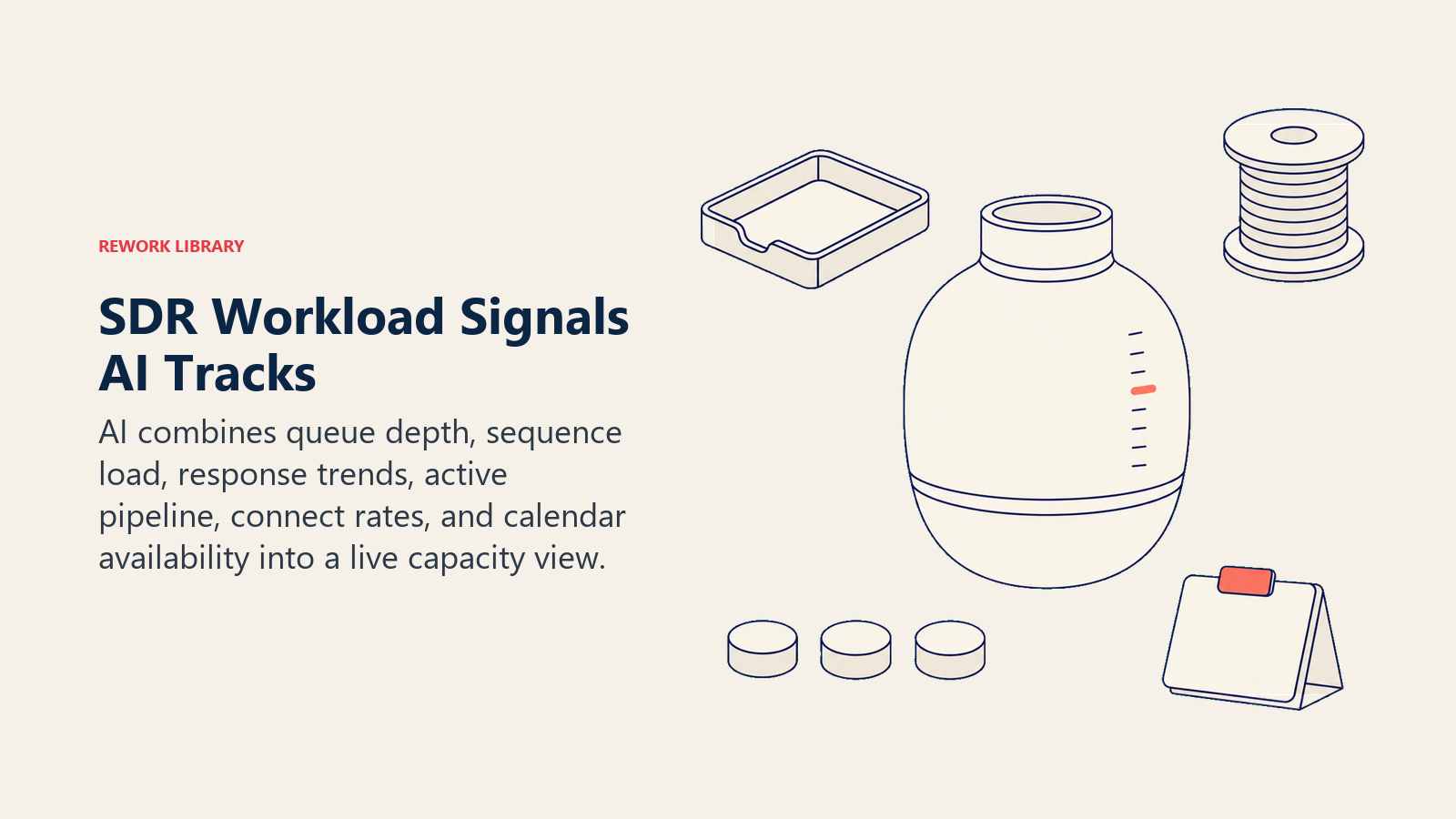
Aktive Sequence-Enrollment-Anzahl: An wie vielen Prospects arbeitet dieser Rep aktuell in automatisierten Cadences? Ein Rep mit 400 Kontakten in aktiven Sequences hat mehr Hintergrund-Task-Last als einer mit 80, selbst wenn ihr geplanter Kalender ähnlich aussieht.
Offene Task-Queue-Tiefe: Sofortige ausstehende Aufgaben (Calls, Follow-up-E-Mails, LinkedIn-Nachrichten) erzeugen kognitive Belastung. Ein Rep mit 30 überfälligen Tasks ist nicht in der richtigen Verfassung, um bei einem neuen Lead qualitativ hochwertigen ersten Kontakt herzustellen.
Response-Time-Trend (rollierend 7 Tage): Was ist die durchschnittliche Zeit bis zum ersten Kontakt dieses Reps bei kürzlich zugewiesenen Leads? Ein Rep, dessen Durchschnitt in der vergangenen Woche von 12 auf 55 Minuten gestiegen ist, zeigt Workload-Belastung, bevor sie als Leistungsmetrik erscheint.
Aktiver Pipeline-Wert in Bearbeitung: SDRs, die Pipeline in Qualifizierungsstufen tragen, haben kognitive Belastung durch diese aktiven Deals, die reine Task-Count-Metriken nicht erfassen. Ein Rep, der 3 Prospects tief im Qualifizierungsprozess bearbeitet, ist stärker ausgelastet, als seine Sequence-Anzahl vermuten lässt.
Tägliche Connect-Rate: Wenn die Connect-Rate eines Reps diese Woche im Vergleich zu seiner 30-Tage-Baseline um 20% gesunken ist, ist das ein Echtzeit-Signal, dass sein aktuelles Volumen seine Output-Qualität beeinträchtigt.
Geplante Verpflichtungen: Kalenderblöcke, Team-Meetings und bekannte OOO-Zeiten reduzieren die verfügbare Arbeitskapazität für einen bestimmten Tag. Das Routing sollte einem Rep, der 3 Stunden Produkttraining geplant hat, keine 8 neuen Leads schicken.
Das Rep-Kapazitätsmodell
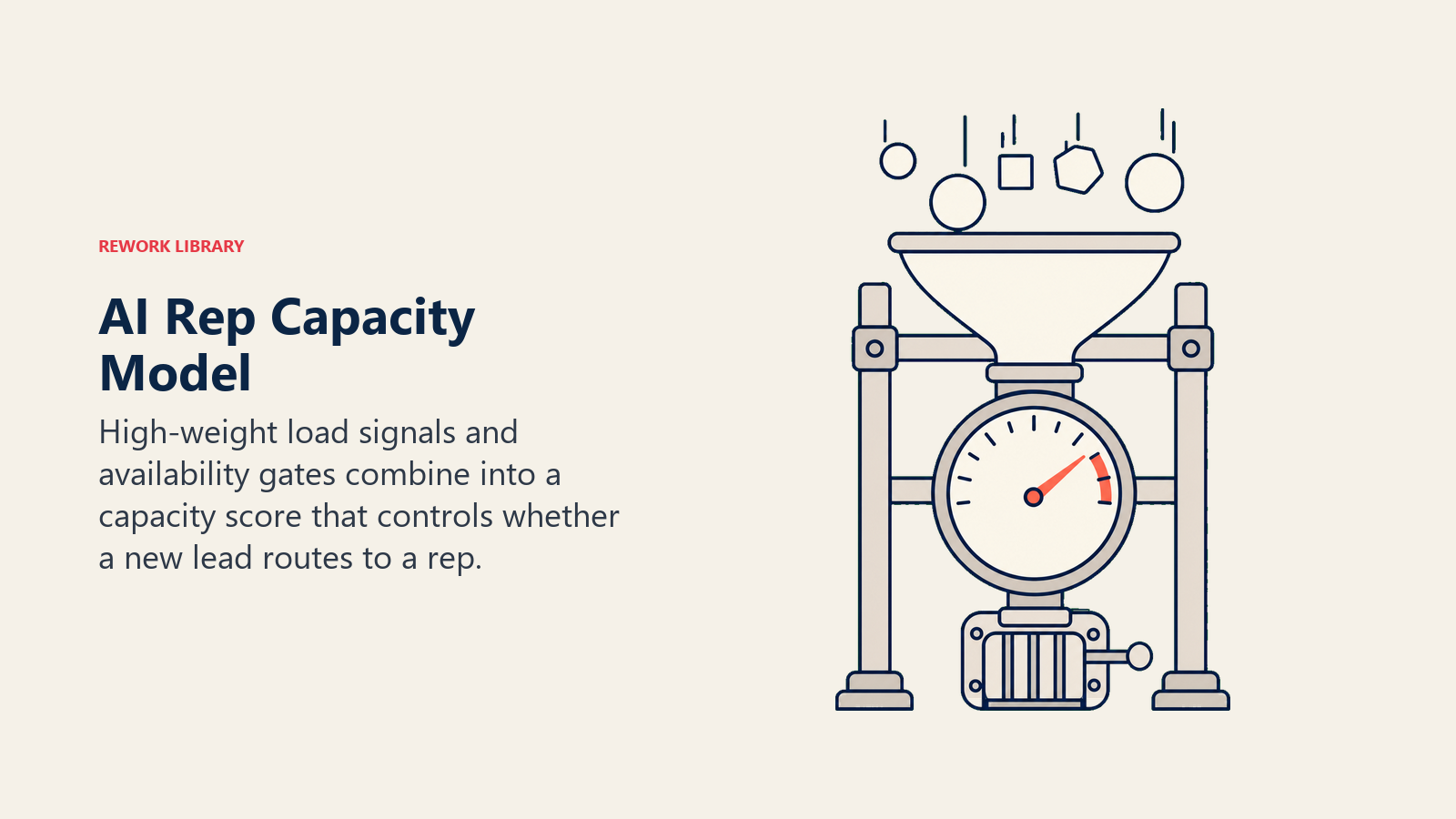
Hier ist eine vereinfachte Version, wie ein Kapazitätsmodell in der Praxis aussieht:
| Input | Gewichtung | Hinweise |
|---|---|---|
| Offene Task-Queue-Tiefe | Hoch | Direktes Maß für sofortige Belastung |
| Aktive Sequence-Anzahl | Mittel | Hintergrund-Belastungsindikator |
| Rollierender 7-Tage-Durchschnitt Response-Zeit | Hoch | Vorlaufender Indikator für Überlastung |
| Pipeline-Deal-Anzahl in Bearbeitung | Mittel | Kognitiver Komplexitätsindikator |
| Geplante Nichtverfügbarkeit (heute) | Hartes Gate | Keine Zuweisung an nicht verfügbare Reps |
| Täglicher Connect-Rate-Trend | Mittel | Output-Qualitätssignal |
Das Modell gibt einen Kapazitätsscore von 0 (an oder nahe der Grenze) bis 100 (vollständig verfügbar) aus. Neue Leads werden an Reps geroutet, deren Kapazitätsscore über einem definierten Schwellenwert liegt, gefiltert nach Match-Profil. Wenn kein Rep den Schwellenwert überschreitet, kommt der Lead in eine Queue mit einem Prioritäts-Flag, und der SDR-Manager wird benachrichtigt.
Tools wie LeanData, Outreach und Apollo unterstützen kapazitätsbewusstes Routing in unterschiedlichem Maße. LeanData's Match-basierte Routing-Engine ermöglicht Kapazitätsbeschränkungen als primären Routing-Filter neben firmografischen Match-Regeln. Outreach's Kaia-Produkt und Apollo's Sequencing-Layer bieten ähnliche Logik innerhalb ihrer jeweiligen Engagement-Plattformen.
Der Zuweisungsalgorithmus in klarer Sprache
Wenn ein neuer Lead eintrifft, führt das System diese Sequenz aus:
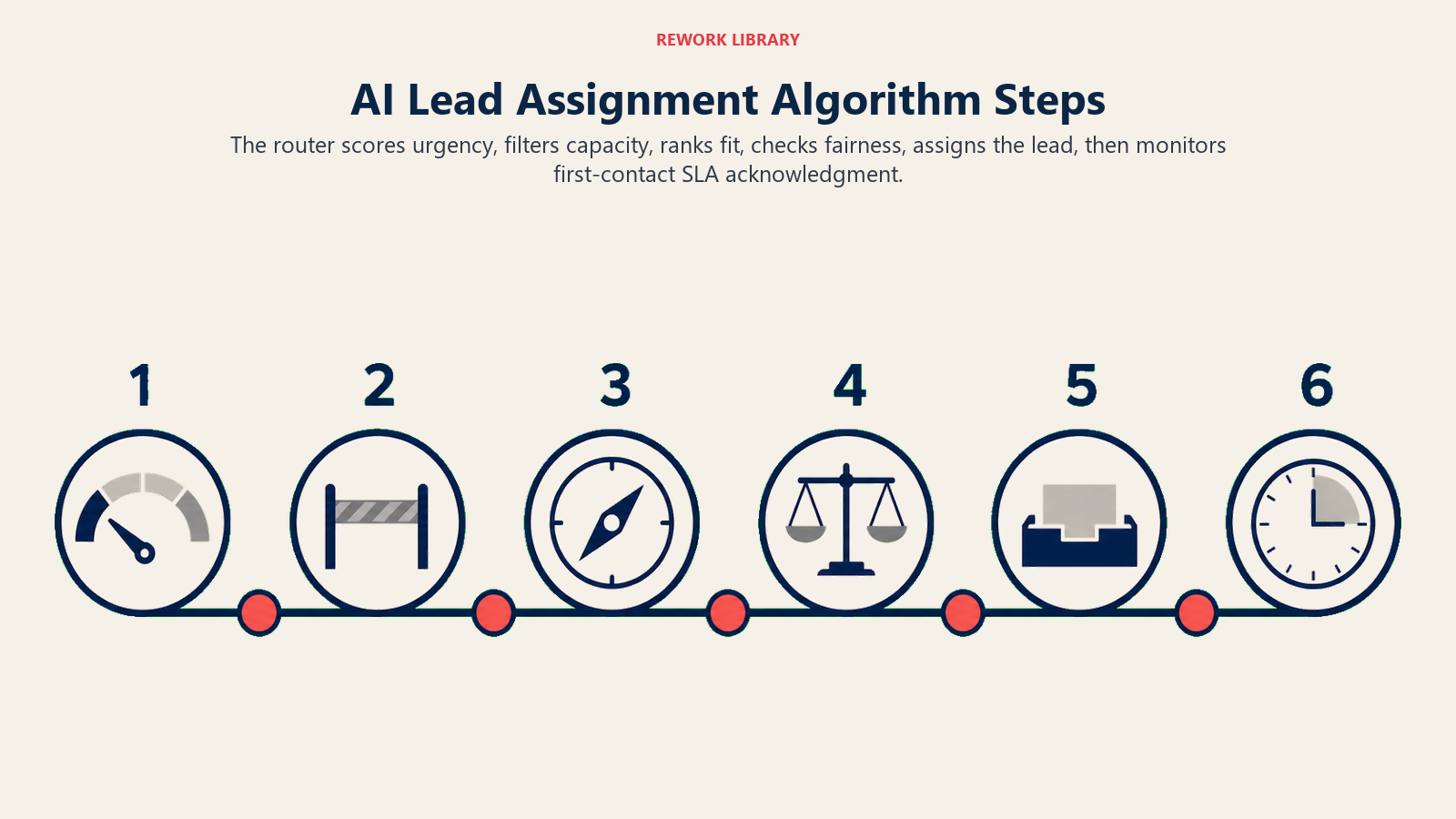
Lead bewerten: Das Lead-Scoring-Modell anwenden, um den Dringlichkeits-Tier zu bestimmen (hochprioritär, standard, nurture).
Verfügbare Reps filtern: Jeden Rep mit einem Kapazitätsscore unter dem Schwellenwert oder der heute nicht verfügbar ist, entfernen.
Match-Kriterien anwenden: Aus dem verfügbaren Pool Reps nach firmografischem Match (Branchenexpertise, Deal-Größen-Historie, Zeitzonenpassung) ranken.
Fairness-Untergren überprüfen: Sicherstellen, dass der am besten passende Rep heute nicht bereits einen unverhältnismäßig großen Anteil hochprioritärer Leads im Vergleich zum Team-Durchschnitt erhalten hat.
Zuweisung ausführen: An den am höchsten gerankten verfügbaren Rep routen. Den Kapazitätsscore dieses Reps aktualisieren, um die neue Zuweisung zu reflektieren.
Bestätigung monitoren: Wenn der zugewiesene Rep innerhalb des Service Level Agreement (SLA)-Fensters keine First-Contact-Aktivität protokolliert (15 Minuten für hochprioritäre, 60 Minuten für standard), einen Neuzuweisungs-Alert an den Manager auslösen.
Das ist komplexer als „Wer ist der Nächste in der Queue?". Aber die Komplexität wird vom Routing-System gehandhabt, nicht vom SDR-Manager. Die Aufgabe des Managers verlagert sich von reaktiver Queue-Beobachtung zu proaktivem Kapazitätsmonitoring. Das ist eine bessere Nutzung seines Urteilsvermögens.
Schutz von Top-Performer-SLAs
Der Fairness-Einwand gegen leistungsgewichtetes Routing ist im SDR-Kontext legitim. Wenn Sie 80% der hochprioritären Leads an Ihre Top-3-Reps routen, brennen diese Reps schneller aus, weniger erfahrene Reps entwickeln sich nicht weiter, und Sie erzeugen Single-Point-of-Failure-Risiko in Ihrem Outbound-Team.
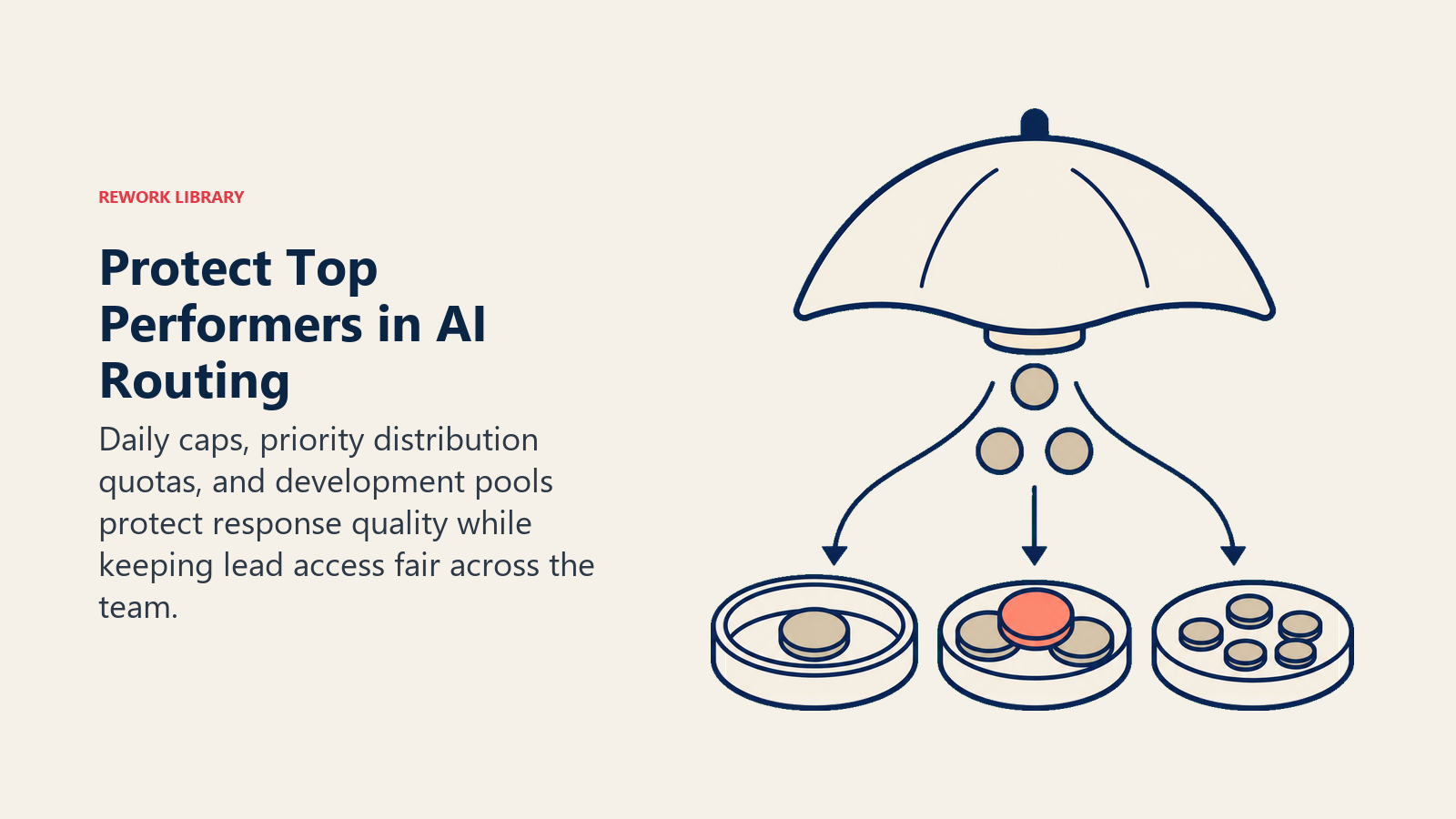
Die Lösung ist cap-basierter Schutz:
Tägliche Volumen-Caps pro Rep: Kein Rep erhält mehr als X neue Leads an einem einzigen Tag, unabhängig vom Match-Score. Das verhindert das „Alle besten Leads gehen zu Sarah"-Problem, selbst wenn Sarahs Match-Score am höchsten ist.
Prioritäts-Lead-Verteilungsquoten: Hochprioritäre Leads werden auf alle Reps verteilt, die einen Mindestleistungsschwellenwert erfüllen, nicht ausschließlich an Top-Performer. Den Schwellenwert hoch genug setzen, um die Qualität zu erhalten, niedrig genug, um Entwicklung zu ermöglichen.
Development-Lead-Pools: Ein definierter Prozentsatz des täglichen Volumens wird speziell an sich entwickelnde Reps geroutet, auch wenn ihre Match-Scores niedriger sind. Das sind typischerweise niedrigdringlichere Inbound-Leads, bei denen die Kosten etwas längerer Response-Zeiten akzeptabel sind.
Das Ziel ist, den Qualitätsschwellenwert zu erhalten (kein Lead geht an einen Rep, der an seiner Kapazitätsgrenze oder messbar überlastet ist), während das Konzentrationsproblem vermieden wird, das Rep-Entwicklungs-Pipelines zerstört.
Zu beobachtende Metriken
Das sind die Metriken, die Workload-Imbalance aufdecken, bevor sie zum Deal-Verlust führt:
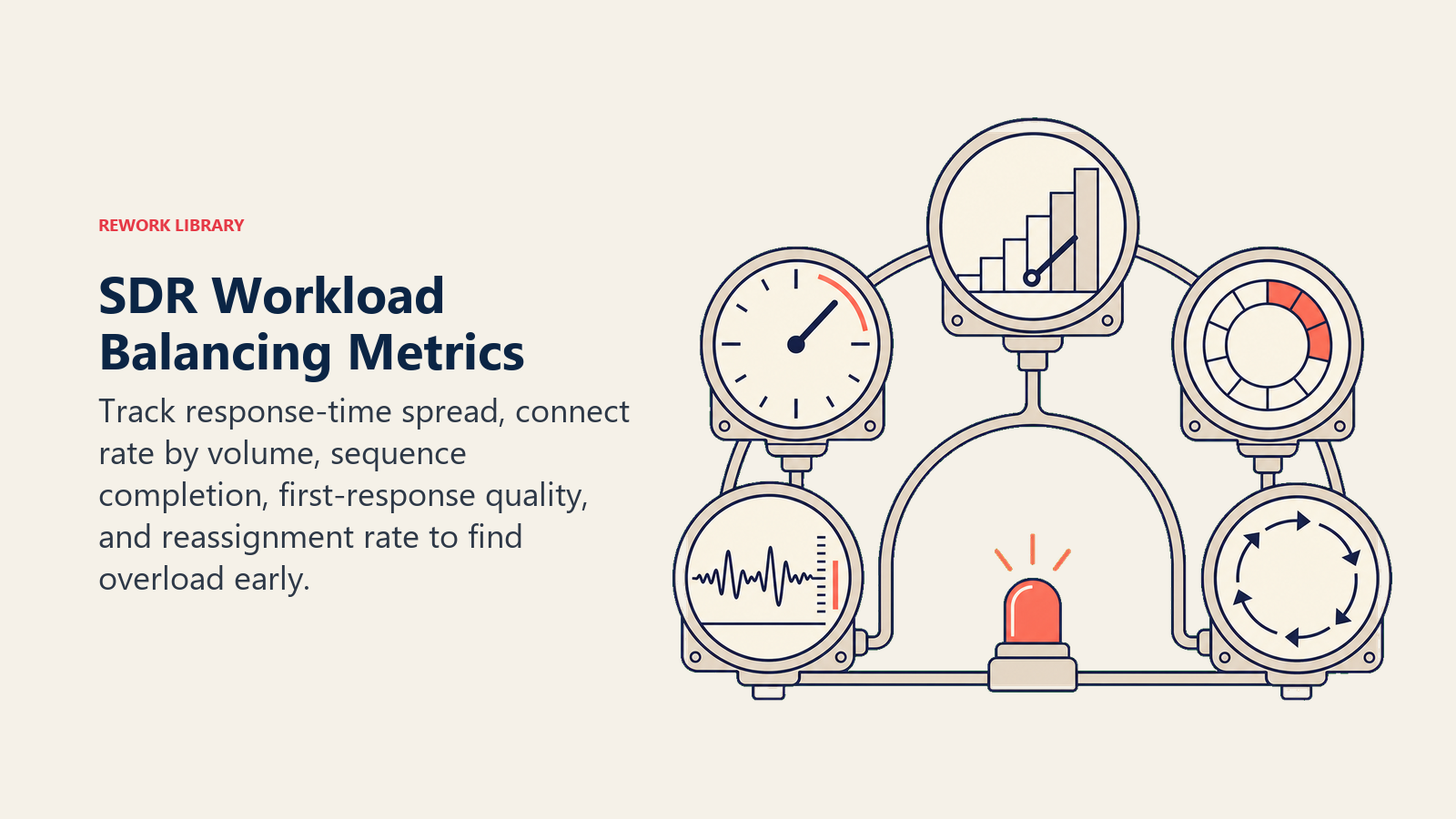
Durchschnittliche Zeit bis zum ersten Kontakt nach Rep und Tag: Nicht nur Team-Durchschnitt. Variation zwischen Reps ist das Signal. Wenn drei Reps im Durchschnitt 8 Minuten und zwei im Durchschnitt 85 Minuten bei denselben Lead-Typen benötigen, muss das Verteilungsmodell angepasst werden.
Connect-Rate nach Zuweisungsvolumen-Quintil: Das tägliche Zuweisungsvolumen jedes Reps in Quintile gruppieren (niedrigstes 20%, 20-40% usw.) und Connect-Rate pro Quintil messen. Wenn die Connect-Rate im oberen Quintil für die meisten Reps signifikant sinkt, haben Sie den Volumenschwellenwert gefunden, ab dem Überlastung den Output beeinflusst.
Sequence-Completion-Rate: Welcher Prozentsatz der einem Rep zugewiesenen Leads schließt die vollständige Outreach-Sequence ab vs. stagniert in der Queue? Niedrige Completion-Rates bei hohem Zuweisungsvolumen zeigen an, dass ein Rep zurückfällt.
First-Response-Quality-Score: Wenn Sie Conversation Intelligence (Gong, Chorus, Fireflies) haben, können Sie die Qualität des ersten Calls bewerten. Die Call-Qualität eines überlasteten Reps zeigt sich typischerweise in mehr Füllwörtern, weniger Vorbereitung und kürzeren Calls. Das mit Volumen-Metriken korrelieren, um den Qualitätskipppunkt zu finden.
Neuzuweisungsrate: Wie oft löst das System aufgrund eines SLA-Bruchs eine Neuzuweisung aus? Hohe Neuzuweisungsraten weisen entweder auf ein Volumen-Problem (zu viele Leads für das Team) oder ein Routing-Problem hin (Leads gehen immer wieder an Reps, die nicht schnell genug reagieren können).
Eine monatliche SDR-Workload-Überprüfung mit diesen fünf Metriken gibt einem Manager genug Transparenz, um Routing-Parameter proaktiv anzupassen, anstatt das Problem erst nach einem Quartal mit verschlechterter Conversion zu entdecken. Die SDR-Benchmarking-Forschung der Bridge Group, die Hunderte von B2B-Unternehmen über mehrere Jahre umfasst, stellt konsequent fest, dass Response-Zeit und Follow-up-Konsistenz die zwei Variablen sind, die am stärksten mit SDR-Quota-Erreichung korrelieren, was genau das ist, was Workload-Balancing schützen soll.
Rework-Analyse: Die Metrik, die Workload-Imbalance am konsistentesten aufdeckt, bevor sie zum Deal-Verlust führt, ist die Connect-Rate nach Zuweisungsvolumen-Quintil. Bei SDR-Leistungsdaten finden Teams, die diese Metrik messen, einen klaren Inflektionspunkt, typischerweise um den Bereich von 35 bis 40 Leads pro Tag für die meisten Inbound-SDRs, wo die Connect-Rate um 15 bis 25% im Vergleich zu den niedrigeren Quintilen sinkt. Dieser Schwellenwert ist für jedes Team und jedes Rep-Profil unterschiedlich. Aber die Metrik selbst ist universell. Teams, die ihn früh genug finden, können Routing-Parameter anpassen, bevor die verlorene Conversion als verpasstes Quartal erscheint.
Wann man KI-Routing übersteuern sollte
KI-Routing ist kein Ersatz für den SDR-Manager. Es gibt spezifische Fälle, in denen ein manueller Override der richtige Schritt ist:
Leadership-Eskalation: Eine Führungskraft eines Named Accounts sendet ein Inbound-Formular, und der CEO möchte, dass eine bestimmte Person das Gespräch führt. Override die KI und routen Sie direkt.
Strategischer Account-Beziehungskontext: Ein Prospect, der drei frühere Meetings mit einem bestimmten Rep hatte, aber keine aktive Opportunity, wird unabhängig vom aktuellen Kapazitätsscore an diesen Rep zurückgerouted. Beziehungskontinuität überwiegt Load-Balancing bei Accounts, bei denen vorherige Vertrautheit besteht.
Rep-angeforderte Swaps: Manchmal weiß ein Rep, dass er in einer Stunde eine lange Produktdemo hat, und bittet darum, neue Zuweisungen für 2 Stunden zurückzuhalten. Das sollte eine Self-Service-Option in der Routing-Oberfläche sein, keine von einem Manager vermittelte Ausnahme.
Skills-Mismatch nicht im Modell erfasst: Ein neuer Rep, der gerade spezialisiertes Training zu einer Produktlinie abgeschlossen hat, die das Modell noch nicht kennt. Bis das Modell aktualisiert ist, ermöglicht ein manueller Override dem Manager, entsprechend zu routen.
Das Override-Log ist genauso wichtig wie die Override-Entscheidung. Wenn Sie KI-Routing übersteuern, notieren Sie den Grund. Diese Daten verbessern die Modellkonfiguration über Zeit und schaffen Rechenschaft für Ausnahmen.
Die Rolle des Managers in einem ausgewogenen Routing-System
KI-Workload-Balancing bedeutet nicht „KI ersetzt den SDR-Manager". Die Rolle des Managers verlagert sich, schrumpft aber nicht.
Vor KI-Routing verbringt der SDR-Manager erhebliche Zeit damit, die Queue zu beobachten, Ad-hoc-Zuweisungsentscheidungen zu treffen und Reps wegen SLA-Verstößen zu verfolgen. Nach KI-Routing geht diese Zeit in Kapazitätsmonitoring (die obigen Metriken überprüfen), Modellkalibrierung (Routing-Parameter anpassen, wenn Ergebnisse abweichen) und Coaching basierend auf den Qualitätssignalen, die KI-Routing aufdeckt.
Ein Manager, der Transparenz über den Echtzeit-Kapazitätsscore, den Response-Time-Trend und die Connect-Rate nach Volumen jedes Reps hat, hat bessere Daten für Coaching-Gespräche als einer, der eine rohe Queue beobachtet. Und sobald der SDR Kontakt hergestellt hat, stellt sich die nächste Herausforderung: was mit dieser Pipeline tun. Inbound Lead Triage im großen Maßstab behandelt, was passiert, wenn das Volumen auf eine Größe steigt, bei der selbst KI-balanciertes Routing nicht mit der menschlichen Kapazität Schritt halten kann und automatisiertes Sequencing für die unteren Tiers übernimmt.
Das ehrliche Fazit
Workload-Balancing dreht sich nicht um Fairness im Abstrakten. Es geht darum, die Qualität bei der ersten Kontaktaufnahme jedes Leads aufrechtzuerhalten.
Round-Robin-Routing behandelt alle Zuweisungsslots als gleichwertig. Das sind sie nicht. Lead 3 des Tages und Lead 47 des Tages sind kategorisch unterschiedliche Erfahrungen für den Prospect, weil sie kategorisch unterschiedliche Arbeitsbedingungen für den Rep sind.
KI-Workload-Balancing deckt die Signale auf, die Ihnen sagen, wann die Effektivität eines Reps unter dem Volumen nachlässt, bevor diese Verschlechterung als verlorene Deals auftaucht. Es ist genauso ein Manager-Tool wie ein Routing-Tool. Der Manager entscheidet immer noch über die Parameter, überprüft die Metriken und handhabt Ausnahmen. Das System übernimmt das Monitoring und die Zuweisungsoptimierung, die kein Mensch mit der Geschwindigkeit durchführen kann, die ein inbound-intensives Team benötigt.
Häufig gestellte Fragen
Was ist SDR-Workload-Balancing?
SDR-Workload-Balancing ist die Praxis, Inbound-Leads an Sales Development Representatives basierend auf ihrer aktuellen Kapazität und Effektivität zu verteilen, nicht nur nach Queue-Position. Es verwendet Inputs wie offene Task-Anzahl, rollierende Response-Time-Trends, aktive Sequence-Enrollment-Anzahl und Connect-Rate, um die verfügbare Kapazität jedes Reps zu schätzen, und routet neue Leads entsprechend. Das Ziel ist sicherzustellen, dass kein Lead an einen Rep geht, der zu überlastet ist, um ihn effektiv zu bearbeiten.
Warum schadet Workload-Imbalance der SDR-Conversion-Rate?
Der 47. Call eines überlasteten SDRs am Tag schneidet deutlich schlechter ab als sein 5. Call. Response-Zeiten verlängern sich, die Vorbereitungsqualität sinkt, und die kognitive Belastung durch eine gesättigte Queue senkt die Call-Qualität. Da Leads, die innerhalb von 5 Minuten kontaktiert werden, 3 bis 5 Mal häufiger konvertieren als solche, die nach 30 Minuten kontaktiert werden, zerstört das Routen von Leads an überlastete Reps die Conversion direkt, selbst wenn der Lead selbst hochwertig ist.
Welche Inputs verwendet ein KI-Kapazitätsmodell zur Messung der SDR-Verfügbarkeit?
Die wichtigsten Inputs sind: offene Task-Queue-Tiefe (sofortige ausstehende Calls und E-Mails), aktive Sequence-Enrollment-Anzahl (Hintergrundworkload), rollierender 7-Tage-Durchschnitt der Response-Zeit (vorlaufender Indikator für Überlastung), täglicher Connect-Rate-Trend (Output-Qualitätssignal) und geplante Nichtverfügbarkeit (Kalenderblöcke). Das Modell kombiniert diese zu einem Kapazitätsscore von 0 (am Limit) bis 100 (vollständig verfügbar) und verwendet diesen Score als primären Routing-Filter.
Wie verhindert man, dass KI-Routing alle Leads bei Top-Performern konzentriert?
Drei Policy-Beschränkungen verhindern Konzentration: tägliche Volumen-Caps pro Rep (kein Rep erhält mehr als X neue Leads unabhängig vom Match-Score), Prioritäts-Lead-Verteilungsquoten (hochprioritäre Leads werden auf alle Reps verteilt, die einen Mindestleistungsschwellenwert erfüllen, nicht nur Top-Performer) und Development-Lead-Pools (ein definierter Prozentsatz des täglichen Volumens wird speziell an sich entwickelnde Reps geroutet). Diese erhalten den Qualitätsschwellenwert, verhindern aber das Rep-Entwicklungsproblem, das rein leistungsgewichtetes Routing erzeugt.
Welche Metriken decken SDR-Workload-Imbalance am besten auf?
Die prädiktivste Metrik ist die Connect-Rate nach Zuweisungsvolumen-Quintil: das tägliche Lead-Volumen jedes Reps in Quintile gruppieren und Connect-Rate pro Gruppe messen. Ein signifikanter Rückgang im oberen Quintil zeigt den Volumenschwellenwert, ab dem Überlastung den Output beeinträchtigt. Unterstützende Metriken sind durchschnittliche Zeit bis zum ersten Kontakt pro Rep und Tag, Sequence-Completion-Rate und Neuzuweisungsrate (wie oft das System aufgrund von SLA-Verstößen eine Neuzuweisung auslöst).
Wann sollte ein Manager das KI-Workload-Routing übersteuern?
Vier Situationen rechtfertigen einen manuellen Override: Executive-Eskalation (eine Führungskraft eines Named Accounts sendet ein Inbound-Formular und der CEO möchte, dass ein bestimmter Rep es übernimmt), strategische Beziehungskontinuität (ein Prospect mit vorheriger Vertrautheit zu einem bestimmten Rep sollte zu diesem zurückkehren), Rep-angeforderte Pausen (ein Rep, der kurz vor einer 2-stündigen Demo steht, sollte neue Zuweisungen pausieren können) und Skills-Mismatch, der noch nicht im Modell erfasst ist (ein Rep, der kürzlich zu einer Produktlinie geschult wurde, die das Routing-Modell noch nicht kennt).
Wie verändert KI-Workload-Balancing die Rolle des SDR-Managers?
Vor KI-Routing verbringen SDR-Manager erhebliche Zeit damit, die Queue zu beobachten und Ad-hoc-Zuweisungsentscheidungen zu treffen. Nach KI-Routing verschiebt sich diese Zeit zu Kapazitätsmonitoring (Überprüfen von 5-Metrik-Workload-Dashboards), Modellkalibrierung (Routing-Parameter anpassen, wenn Ergebnisse abweichen) und Coaching basierend auf Qualitätssignalen, die das Routing-System aufdeckt. Das Urteilsvermögen des Managers nimmt nicht ab; es steigt von Queue-Beobachtung zu Systemgovernance.
Mehr erfahren
- Automatisiertes Lead Routing: Round Robin vs. AI-gesteuerte Zuweisung
- AI Lead Scoring jenseits regelbasierter Modelle
- Inbound Lead Triage im großen Maßstab
- Häufige Fehler beim AI Lead Scoring
- Failure Modes: Wenn AI Sales Ops nach hinten losgeht
- Next Best Action für jeden offenen Deal
- Scoring and Routing: AI Triage at Scale

Co-Founder, Rework.com
On this page
- Das Workload-Imbalance-Problem
- Die Capacity-Aware SDR Routing Rule
- Was KI-Workload-Balancing verfolgt
- Das Rep-Kapazitätsmodell
- Der Zuweisungsalgorithmus in klarer Sprache
- Schutz von Top-Performer-SLAs
- Zu beobachtende Metriken
- Wann man KI-Routing übersteuern sollte
- Die Rolle des Managers in einem ausgewogenen Routing-System
- Das ehrliche Fazit
- Mehr erfahren