KI-Sales-Ops-Implementierungs-Roadmap: Ein 12-Monats-Plan

Turn this article into takeaways for your work.


Each assistant summarizes the article only for you and suggests best practices for your work.
Die meisten KI-Sales-Ops-Implementierungen scheitern in den ersten 90 Tagen. Nicht weil die Tools nicht funktionieren. Weil Teams die Voraussetzungsarbeit übersprungen haben.
Das Muster ist vorhersehbar: Die Führung begeistert sich für eine Gong-Demo oder einen Salesforce-Einstein-Pitch. Sie unterzeichnen den Vertrag. Das Customer-Success-Team des Anbieters führt das Onboarding durch. Drei Monate später nutzen Reps das Tool nicht, die Forecast-Genauigkeit hat sich nicht verbessert, und das Scoring-Modell flaggt die falschen Leads. Der Anbieter beschuldigt das Change Management. Das RevOps-Team beschuldigt den Anbieter. Beide liegen nicht ganz falsch.
Die Implementierung scheiterte bei Schritt null: niemand überprüfte, ob die Daten bereit waren.
Diese Roadmap ist rückwärts von dem aufgebaut, was tatsächlich funktioniert. Sie ist bewusst konservativ. Teams mit sauberen Daten und starker RevOps-Ownership können den Zeitplan verdichten. Aber die Phasen sind aus einem Grund sequenziell, und ihr Überspringen kostet mehr Zeit als ihr Befolgen. Für das breitere Muster-Sequenzierungs-Framework behandelt KI-Muster in einer Mehrjahres-Roadmap sequenzieren denselben phasenweisen Ansatz auf ACE-Ebene.
Phase 0 (Wochen 1-4): Datenbereitschafts-Audit
Key Facts: Erfolgs- und Misserfolgsquoten bei KI-Implementierungen
- 80,3 % der KI-Projekte scheitern daran, den beabsichtigten Business-Wert zu liefern, wobei 33,8 % vor der Production aufgegeben werden und 28,4 % das Deployment abschließen, aber den erwarteten ROI nicht produzieren. (RAND Corporation, 2025)
- 42 % der Unternehmen haben 2025 mindestens eine KI-Initiative aufgegeben, mit durchschnittlichen versunkenen Kosten von 7,2 Millionen Dollar pro aufgegebenem Projekt. (Deloitte, 2025)
- Organisationen, die 20-30 % ihres KI-Implementierungsbudgets für Change Management und Stakeholder-Adoption einsetzen, erzielen 3-4x bessere ROI-Ergebnisse als solche, die die Implementierung als rein technisches Projekt behandeln. (MIT Sloan, 2025)
Dies ist das Gate, das darüber entscheidet, ob sich alles andere überhaupt lohnt.
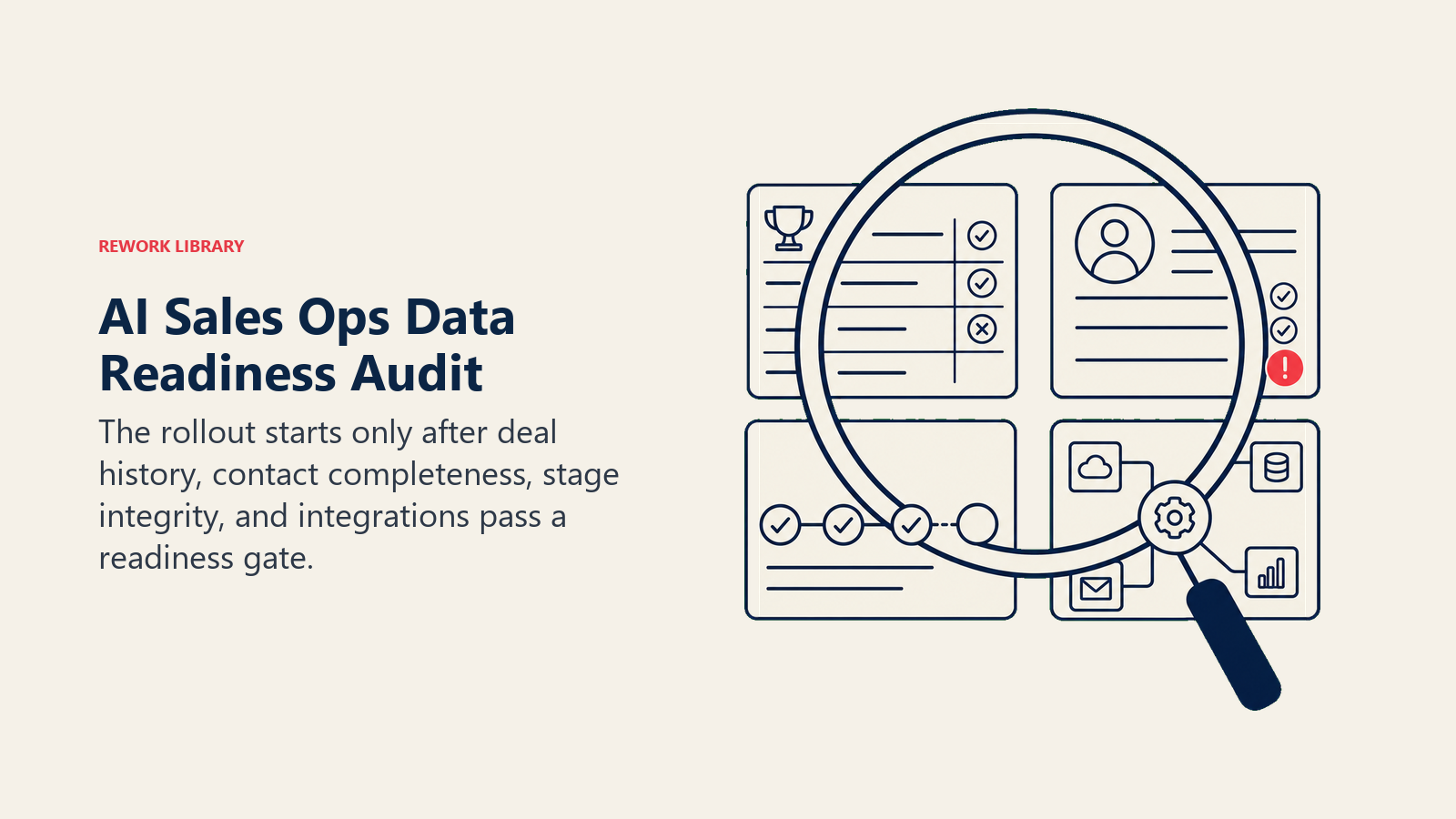
Das ist das Tor, das bestimmt, ob alles andere es wert ist, versucht zu werden.
Was zu auditieren ist:
CRM-Deal-Historie-Vollständigkeit. Sie benötigen mindestens 12 Monate abgeschlossener Deals mit konsistenten Won/Lost-Labels. Wenn Reps Deals in verschiedenen Zeiträumen mit unterschiedlichen Gründen als "Closed Lost" markiert haben (manche sagen "No Decision", andere "Lost to Competitor", andere lassen es leer), vergiftet diese Inkonsistenz jedes Scoring-Modell, das Sie darauf trainieren. Der Artikel zur Datenbereitschafts-Voraussetzung behandelt genau, warum das auf Fundament-Ebene wichtig ist.
Kontaktfeld-Vollständigkeit. Welcher Prozentsatz Ihrer Kontaktdatensätze hat Unternehmen, Titel und Branche ausgefüllt? Unter 70 % Vollständigkeit bei diesen Kernfeldern arbeitet Ihr Scoring-Modell auf unvollständigen Daten. Die Ausgabe wird im Verhältnis zur Lücke unzuverlässig sein.
Phasenfortschritts-Integrität. Deals sollten vorwärts durch Phasen gehen, nicht rückwärts. Wenn Ihre Daten zeigen, dass Deals regelmäßig von "Proposal Sent" zurück zu "Discovery" gehen, ist das entweder ein Prozessproblem (Reps bewegen Phasen falsch) oder ein Dateneingabeproblem. Beheben Sie es in beiden Fällen, bevor Sie etwas darauf trainieren.
Integrations-Inventar. Welche Tools schreiben derzeit in Ihr CRM? Welche müssen nach dem KI-Deployment darin schreiben? Kartieren Sie den vollständigen Datenfluss: Marketing-Automatisierung, Meeting-Scheduling-Tools, Call-Systeme, Abrechnung, Support. Jede Lücke ist ein Ort, an dem die KI nicht den Kontext hat, den sie benötigt.
Tor-Kriterium: Mindestens 12 Monate saubere Deal-Historie mit Won/Lost-Labels, 70 %+ Kontaktfeld-Vollständigkeit bei Unternehmen und Titel, keine systematischen Phasen-Sprung-Probleme.
Verantwortlicher: VP RevOps oder Sales-Ops-Manager.
Was passiert, wenn Sie das Tor nicht bestehen: Bewegen Sie sich nicht zu Phase 1. Verbringen Sie 4-8 Wochen mit der Datenbereinigung zuerst. Die meisten CRM-Bereinigungsprojekte dauern für ein Team, das weiß, was es tut, 4-6 Wochen. Die Versuchung, diesen Schritt zu überspringen und "Daten unterwegs zu bereinigen", funktioniert nie. Das Modell lernt aus den schmutzigen Daten, bevor die Bereinigung abgeschlossen ist.
Change-Management-Hinweis: Datenbereitschafts-Audits bringen unbequeme Wahrheiten über Rep-Prozesskompliance an die Oberfläche. Einige Reps haben Phasen nicht konsistent aktualisiert. Einige Deals wurden zum falschen Abschlussdatum als Won markiert. Einige Kontaktdatensätze sind Duplikate. Diese Erkenntnisse zu präsentieren erfordert politisches Feingefühl. Rahmen Sie es als "hier ist, was wir reparieren müssen, damit KI funktioniert", nicht als "hier ist, was Reps falsch gemacht haben".
Der 12-monatige Phasen-Rollout
Der 12-monatige Phasen-Rollout ist die Vier-Phasen-Implementierungsstruktur, die KI-Sales-Ops-Deployments in der Reihenfolge der Daten-Voraussetzungs-Komplexität und Change-Management-Last sequenziert. Phase 0 (Wochen 1-4) ist der Datenbereitschafts-Audit, der alle folgenden Phasen bedingt. Phase 1 (Wochen 5-12) deployed Scoring and Routing, das die niedrigste Rep-Verhaltensänderungs-Anforderung hat. Phase 2 (Monate 4-6) deployed Meeting Intelligence, die Zustimmungsprozesse und Manager-Coaching-Workflow-Adoption erfordert. Phase 3 (Monate 6-9) deployed Generative Research, die Datenquellen-Lizenzierung und Brief-Template-Design erfordert. Phase 4 (Monate 9-12) deployed Workflow Copilot, der saubere Daten aus allen drei vorherigen Phasen benötigt, um zuverlässige Empfehlungen zu generieren. Organisationen, die versuchen, diese Sequenz zu verdichten oder neu zu ordnen, berichten konsistent von Deployment-Fehlern, die auf Datenlücken oder Adoption-Widerstand zurückzuführen sind, die die phasenweise Struktur verhindern soll.
Vertriebsteams zeigen 70 % Widerstand, wenn neue Technologien ohne angemessene Change-Management-Vorbereitung ankommen. (MIT Sloan, 2025) Die Phasenstruktur adressiert das, indem Tools in der Reihenfolge ihrer Rep-Verhaltensauswirkung sequenziert werden: Scoring ist für Reps unsichtbar, Meeting Intelligence ist passiv, Research ist opt-in und Copilot ist aktiv. Jede Phase baut Rep-Vertrauen in KI auf, bevor die nächste Phase mehr von ihnen verlangt.
Phase 1 (Wochen 5-12): Quick Wins: Scoring and Routing
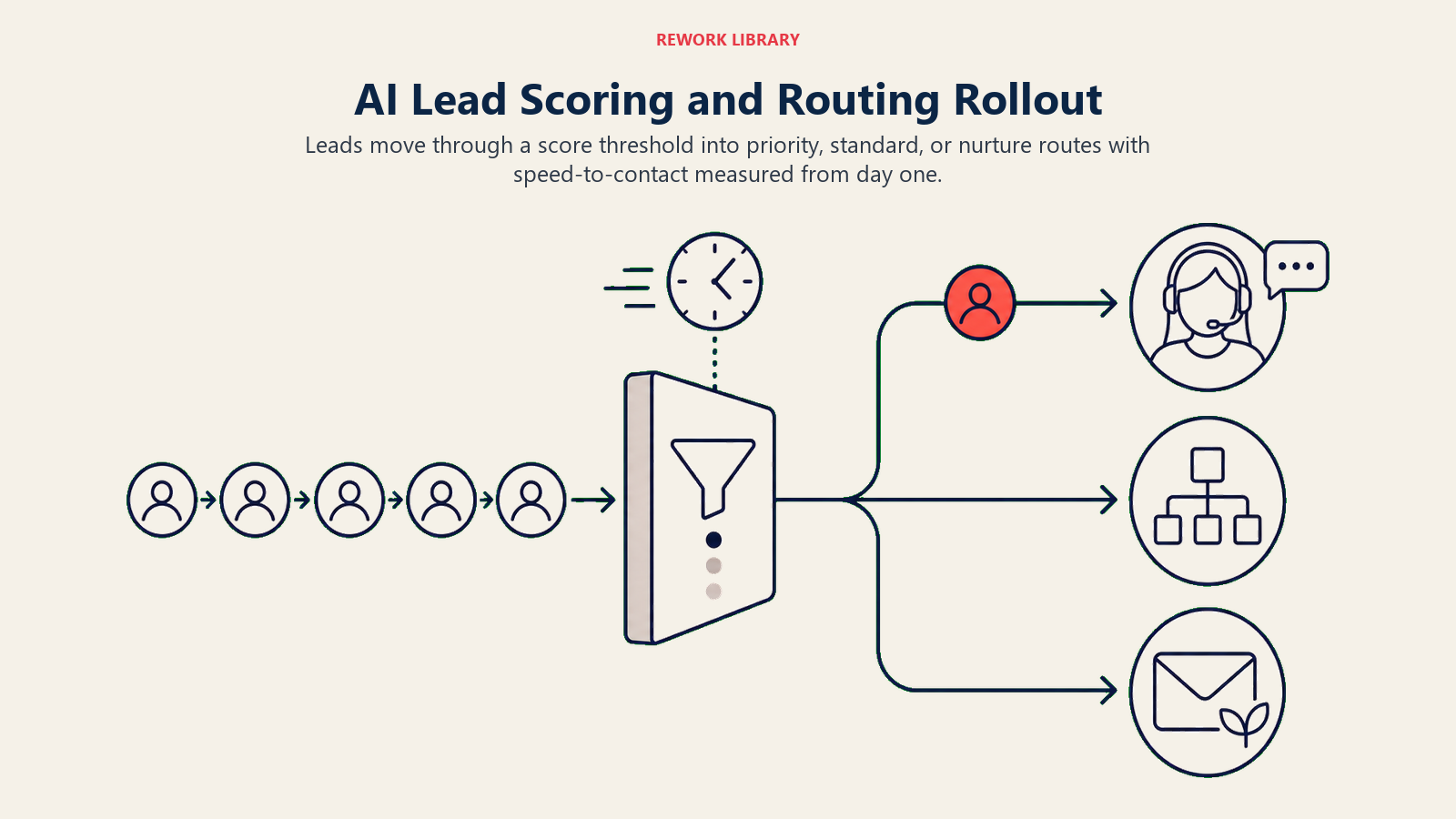
Beginnen Sie mit Lead-Scoring und automatisiertem Routing. Dieses Muster hat den schnellsten Weg zu messbarem ROI und die niedrigsten Daten-Voraussetzungen der vier Muster.
Was zu deployen ist:
Lead-Scoring-Modell. Wählen Sie einen Anbieter (sehen Sie sich die Anbieterlandschaft für KI-Sales-Ops für Optionen nach Budget an) und verbinden Sie ihn mit Ihrem CRM. Konfigurieren Sie das Modell mit Ihrer Won-Deal-Historie aus Phase 0. Legen Sie erste Scoring-Schwellenwerte fest: typischerweise erhalten die Top-20 % der Leads Prioritäts-Routing und menschlichen Kontakt innerhalb von 1 Stunde, die nächsten 40 % erhalten Standard-Routing innerhalb von 4 Stunden, die unteren 40 % gehen zu Nurture-Sequenzen.
Routing-Regeln. Kartieren Sie Ihre Territory- oder Rep-Zuteilungslogik. Wenn Sie ein einfaches Routing-Modell haben (geografiebasiert oder Round-Robin), konfigurieren Sie es direkt im CRM. Wenn Sie Produktspezialisierung oder named Accounts mit dedizierten Reps haben, kartieren Sie diese Regeln, bevor Sie automatisieren.
Speed-to-Lead-Messung. Richten Sie eine Baseline-Messung ein, bevor Sie deployen. Was ist Ihre aktuelle durchschnittliche Zeit von der Lead-Erstellung bis zum ersten Kontakt? Das wird Ihre Vor-KI-Baseline. Nach 4-6 Wochen KI-Routing vergleichen.
Meilensteine:
- Woche 6: Scoring-Modell live auf neuen Inbound-Leads
- Woche 8: Routing-Automatisierung bearbeitet 80 %+ der Inbound-Leads ohne manuelle Priorisierung
- Woche 12: Erste Genauigkeits-Review: Konvertieren hoch-bewertete Leads tatsächlich zu einer höheren Rate als niedrig-bewertete?
Tor-Kriterium für Phase 2: Routing-Genauigkeit bei 80 %+ (gemessen daran, dass Reps Zuteilungen nicht bestreiten), Speed-to-First-Contact um mindestens 20 % verbessert.
Verantwortlicher: Sales-Ops-Manager (Implementierung und Konfiguration); Sales Director (Rep-Adoption und Feedback).
Change-Management-Hinweis: Scoring ist für Reps größtenteils unsichtbar. Sie bekommen bessere Leads. Die Herausforderung ist, Reps dazu zu bringen, dem Score zu vertrauen, wenn er ihrem Instinkt widerspricht. Erwarten Sie etwas Gegenwehr von Senior-Reps, die glauben, es besser zu wissen als das Modell. Streiten Sie nicht mit dem Instinkt. Richten Sie stattdessen einen 6-Wochen-Vergleich ein: Lassen Sie den Rep Ihnen sagen, welche hoch-bewerteten Leads er übersprungen hätte, und verfolgen Sie, ob diese Leads konvertiert haben. Daten gewinnen das Argument schneller als Debatte.
Phase 2 (Monate 4-6): Meeting Intelligence
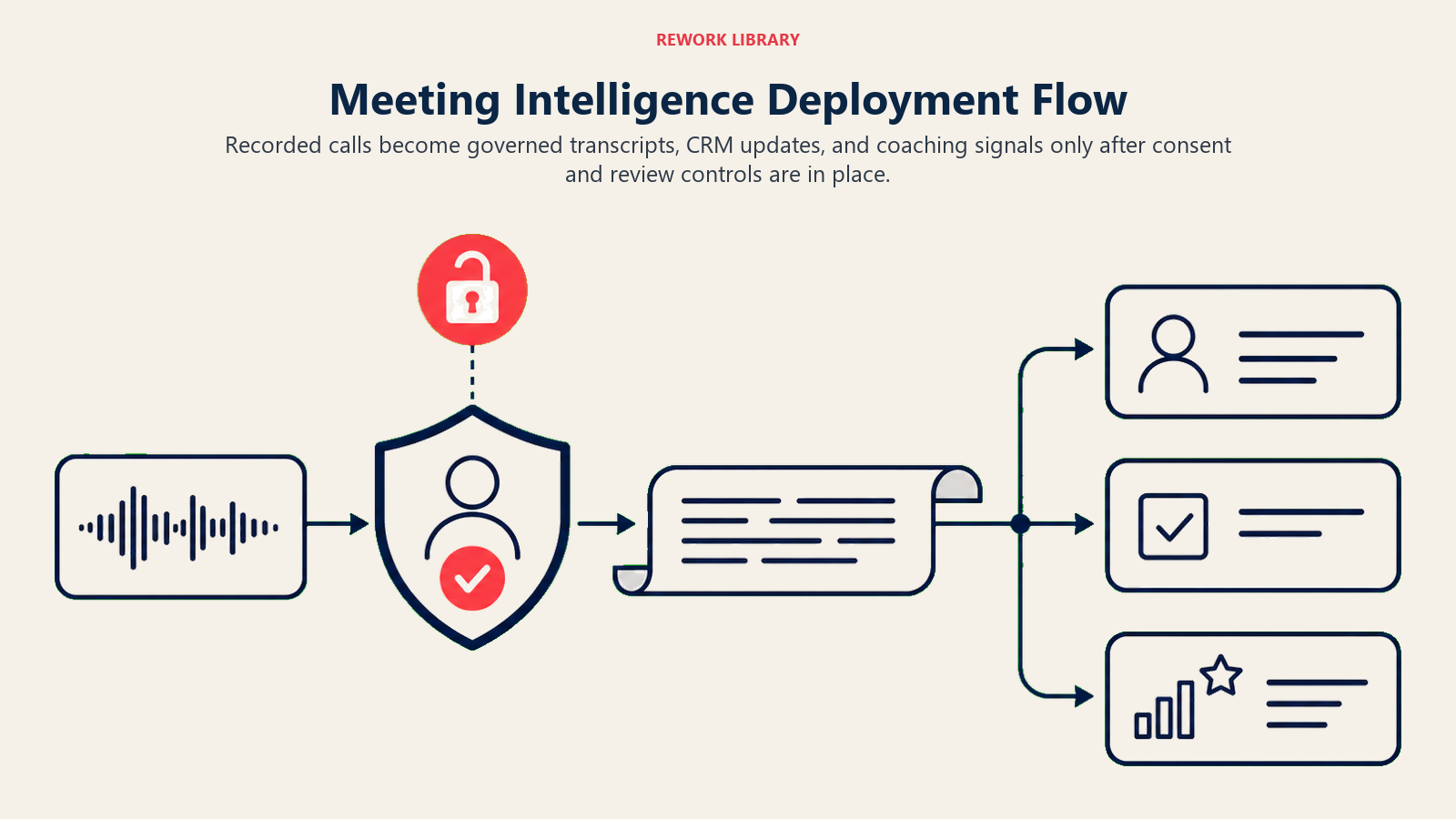
Deployen Sie Call-Recording und Protokoll-Analyse. Diese Phase erfordert mehr Change-Management-Arbeit als Phase 1, weil sie Rep-Verhalten direkt berührt.
Was zu deployen ist:
Recording-Zustimmungsprozess. Bevor Anrufe aufgezeichnet werden, muss Legal Ihre Zustimmungs-Offenlegungssprache überprüfen und genehmigen. In Zwei-Parteien-Zustimmungs-Bundesstaaten (Kalifornien, Florida, Illinois und anderen) benötigen Sie aufgezeichnete mündliche Zustimmung oder eine Offenlegungserklärung, bevor die Aufzeichnung beginnt. Konfigurieren Sie das in Ihrem Calling-Tool vor dem Launch. Das ist nicht optional. Sehen Sie sich KI-Sales-Ops-Governance und Audit Trails für die Compliance-Anforderungen an.
Protokoll-zu-CRM-Write-back. Konfigurieren Sie, welche Protokolldaten automatisch in welche CRM-Felder geschrieben werden. Mindestens: Anruf-Zusammenfassung, Action Items aus dem Anruf, vereinbarte nächste Schritte. Entscheiden Sie, welche Felder auto-commiten vs. Rep-Review vor dem Speichern erfordern.
Coaching-Workflow. Identifizieren Sie, welche Coaching-Metriken für Ihr Team wichtig sind. Talk-Time-Verhältnis? Frageraten? Wettbewerber-Erwähnungen? Wählen Sie 3-5 Metriken, die Manager tatsächlich wöchentlich überprüfen. Ein Dashboard, auf das niemand schaut, ist keine Governance; es ist Shelfware.
Meilensteine:
- Monat 4: Recording live auf 100 % der Demo- und Discovery-Anrufe; Zustimmungsprozess dokumentiert und live
- Monat 5: CRM-Write-back konfiguriert; CRM-Feldvollständigkeitsrate vor und nach messen
- Monat 6: Erster Coaching-Review-Zyklus abgeschlossen; Manager-Rep-1:1-Format aktualisiert, um Protokoll-Review einzuschließen
Tor-Kriterium für Phase 3: CRM-Feldvollständigkeitsrate (Anruf-Zusammenfassung, nächste Schritte, Wettbewerber-Erwähnungen) von Vor-KI-Baseline verbessert. Reps umgehen die Aufzeichnung nicht aktiv (Teilnahmequote über 85 %).
Verantwortlicher: Sales-Ops-Manager (Konfiguration und CRM-Write-back); VP RevOps (Zustimmungsprozess mit Legal); Sales Director (Coaching-Workflow-Adoption).
Change-Management-Hinweis: Meeting Intelligence ist das Tool mit der höchsten Angst im Stack für Reps. "Jeder Anruf wird aufgezeichnet und analysiert" landet anders als "KI bewertet Ihre Leads". Seien Sie explizit darüber, wofür Manager die Daten verwenden und wofür nicht. Zusagen wie "Aufzeichnungen sind für Coaching, nicht für Leistungsbeurteilungen" müssen eingehalten werden, sonst bricht die Adoption zusammen. Reps, die sich überwacht statt unterstützt fühlen, finden kreative Wege, das Tool zu vermeiden.
Phase 3 (Monate 6-9): Generative Research
Account-Research-Briefings und Outreach-Personalisierung. Diese Phase hat das sauberste ROI-Signal, wenn Sie Account-based oder Enterprise-Sales-Motions betreiben.
Was zu deployen ist:
Datenquellen-Integrationen. Verbinden Sie Ihr Research-Tool (Clay, Apollo, ZoomInfo oder die eingebauten Research-Features Ihrer Plattform) mit den externen Datenquellen, die es benötigt: Unternehmensdaten-Anbieter, LinkedIn Sales Navigator und eine Nachrichten/Ereignis-Monitoring-Quelle. Hier häufen sich Datenquellen-Lizenzierungskosten, wenn Sie diese noch nicht zahlen.
Research-Brief-Template. Definieren Sie, was in ein Standard-Account-Brief geht: Unternehmenshintergrund, aktuelle Nachrichten, bekannter Tech-Stack, Schlüsselkontakte und Titel, warum sie sich für Ihr Produkt interessieren könnten, bekannte verwendete Wettbewerber. Das Template bestimmt, welche Daten das System abrufen muss und was das LLM synthetisieren muss.
Outreach-Personalisierungs-Integration. Wenn Sie Sequenzen in Outreach, Salesloft oder einem ähnlichen Tool betreiben, verbinden Sie die Research-Ausgabe mit den Sequenz-Eingaben. Das Ziel ist die Einzel-Klick-Brief-Generierung für einen neuen Account, gefolgt von der Auto-Befüllung von Personalisierungsvariablen in der First-Touch-E-Mail.
Meilensteine:
- Monat 7: Research-Brief live für die Top-20-Ziel-Accounts; Manager-Review der Brief-Qualität
- Monat 8: Sequenz-Personalisierung mit Research-Briefings verbunden; Antwortquoten vs. nicht-personalisierter Kontrolle messen
- Monat 9: Vor-Anruf-Research-Zeit gemessen und berichtet (Ziel: unter 10 Minuten für ein Standard-Account-Brief)
Tor-Kriterium für Phase 4: Vor-Anruf-Research-Zeit um mindestens 40 % von der Baseline reduziert. Antwortquoten auf KI-personalisierten Outreach innerhalb von 10 % des Rep-geschriebenen Outreach (oder besser).
Verantwortlicher: Sales-Ops-Manager (Integrationen und Template-Design); SDR- oder AE-Team-Lead (Adoption und Feedback zur Brief-Qualität).
Change-Management-Hinweis: Generative Research ist die Phase, in der Reps entweder enthusiastische Adopter werden oder passive Nicht-Nutzer. Der Adoptions-Treiber ist Zeitersparnis: wenn Reps derzeit 45 Minuten mit der Recherche eines neuen Accounts vor dem ersten Anruf verbringen und das Brief das auf 10 Minuten reduziert, haben Sie ihnen 35 Minuten pro neuem Account zurückgegeben. Machen Sie das konkret. Zeigen Sie Reps ihre Zeitersparnis in Woche eins und die Adoption folgt. Der Artikel zu KI-gestützter Account-Recherche vor dem ersten Kontakt zeigt, wie ein Production-Account-Brief aussieht, wenn diese Phase gut funktioniert.
Phase 4 (Monate 9-12): Workflow Copilot
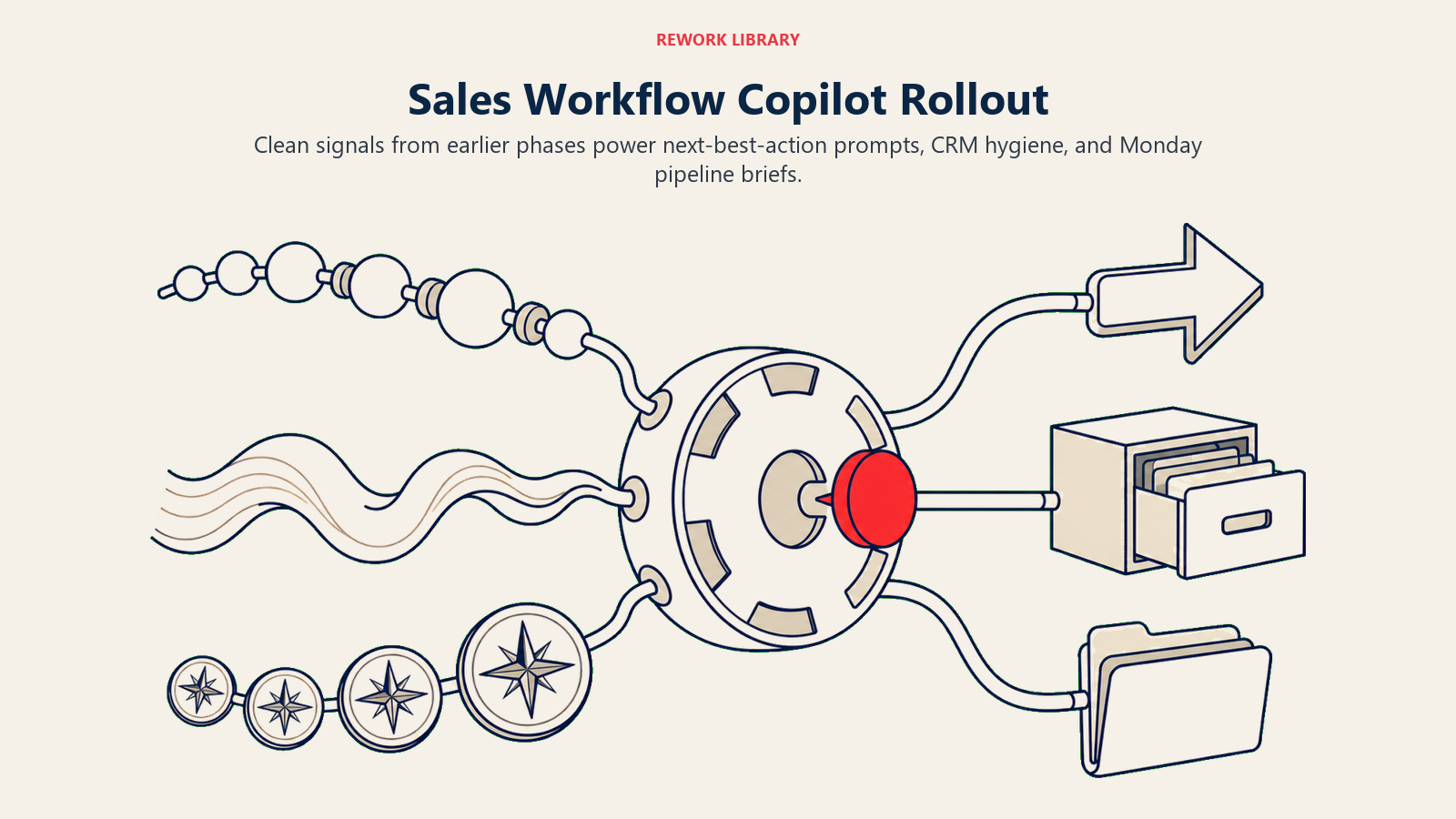
Next Best Action, CRM-Hygiene-Automatisierung und Pipeline-Review-Vorbereitung. Diese Phase erfordert, dass die Phasen 1-3 saubere Daten generieren. Der Copilot ist nur so gut wie die Eingaben, die er liest.
Was zu deployen ist:
Next-Best-Action-Engine. Konfigurieren Sie, welche Deal-Signale welche Empfehlungen auslösen. Deal seit 14 Tagen ohne Aktivität blockiert: "Senden Sie eine Check-in-E-Mail" vorschlagen. Deal von 60 % auf 80 % Phase ohne Proposal: "Proposal entwerfen" vorschlagen. Wettbewerber im letzten Anruf erwähnt: "Vergleichsdok senden" vorschlagen. Beginnen Sie mit 5-10 Hochkonfidens-NBA-Regeln. Fügen Sie mehr basierend auf Adoption-Daten hinzu.
CRM-Hygiene-Automatisierung. Automatisieren Sie die CRM-Updates, die Reps konsistent überspringen: Post-Call-Notizen-Befüllung aus Protokollen, Abschlussdatum-Updates basierend auf Meeting-Aktivität, Phasenprogression, wenn Meeting-Meilensteine erreicht werden. Das Ziel ist die Reduzierung der manuellen CRM-Update-Zeit auf nahezu null für Standard-Post-Call-Logging.
Pipeline-Review-Vorbereitung. Konfigurieren Sie das Montagmorgen-Pipeline-Briefing (sehen Sie sich Pipeline-Review-Vorbereitung mit KI-Copilot für das vollständige Setup an). Briefing bis 8 Uhr montags an den Manager zugestellt. Jeder Rep bekommt seine individuelle Ansicht bis 9 Uhr.
Meilensteine:
- Monat 10: NBA-Empfehlungen live in CRM-Sidebar; Akzeptanzrate messen (Ziel: 30 %+ der Vorschläge werden ausgeführt)
- Monat 11: CRM-Hygiene-Automatisierung live; Admin-Zeitreduzierung messen
- Monat 12: Pipeline-Review-Vorbereitung live; Meeting-Längenreduzierung und Forecast-Genauigkeitsverbesserung messen
Tor-Kriterium für Abschluss: Scoring, Meeting Intelligence, Research und Copilot alle live in Production. Vierteljährlicher ROI-Bericht für Führung vorbereitet.
Verantwortlicher: VP RevOps (Gesamtverantwortlichkeit und ROI-Reporting); Sales-Ops-Manager (Konfiguration und Feinabstimmung); Sales Director (Rep-Adoption und Nutzungsüberwachung).
Change-Management-Hinweis: Copilot-Features berühren den täglichen Workflow des Reps direkt. Im Gegensatz zu Scoring (unsichtbar) oder Meeting Intelligence (passive Aufzeichnung) erfordern Copilot-Features, dass Reps aktiv mit KI-Vorschlägen interagieren. Reps, die die Vorschläge als irrelevant empfinden, werden sie ignorieren. Relevanz erfordert Datenqualität aus den Phasen 1-3. Wenn Sie diese Phasen übereilten, wird die Phase-4-Copilot-Qualität leiden.
Phasen-Zeitplan-Zusammenfassung
| Phase | Zeitplan | Hauptliefergegenstände | Tor-Kriterium | Primärer Verantwortlicher |
|---|---|---|---|---|
| Phase 0: Datenbereitschaft | Wochen 1-4 | CRM-Audit-Bericht; Datenbereinigungsplan | 12 Monate saubere Deal-Historie; 70 %+ Feld-Vollständigkeit | VP RevOps |
| Phase 1: Scoring + Routing | Wochen 5-12 | Lead-Scoring live; Routing-Automatisierung | 80 %+ Routing-Genauigkeit; 20 %+ Speed-to-Contact-Verbesserung | Sales-Ops-Manager |
| Phase 2: Meeting Intelligence | Monate 4-6 | Aufzeichnung live; CRM-Write-back konfiguriert; Coaching-Workflow | CRM-Vollständigkeitsrate verbessert; 85 %+ Aufzeichnungs-Teilnahme | VP RevOps + Sales Director |
| Phase 3: Generative Research | Monate 6-9 | Account-Briefings live; Sequenz-Personalisierung | 40 %+ Research-Zeitreduzierung; Antwortquoten aufrechterhalten | Sales-Ops-Manager |
| Phase 4: Workflow Copilot | Monate 9-12 | NBA live; CRM-Hygiene automatisiert; Pipeline-Briefing | 30 %+ NBA-Akzeptanzrate; messbare Admin-Zeitreduzierung | VP RevOps |
Der schnellere Weg für gut vorbereitete Teams
Teams, die Phase 0 mit sauberen CRM-Daten, einem bestehenden Meeting-Intelligence-Tool bereits integriert und einem RevOps-Team, das zuvor CRM-Migrationen verwaltet hat, erreichen, können diesen Zeitplan erheblich verdichten.
Mit sauberen Daten: Phase 0 wird 1 Woche, nicht 4. Phasen 1 und 2 können parallel laufen. Gesamtzeit bis Phase 4 sinkt auf 6-7 Monate.
Ohne saubere Daten: Fügen Sie Phase 0 4-8 Wochen für die Bereinigung hinzu. Und seien Sie ehrlich darüber. Teams, die sagen "wir bereinigen Daten unterwegs", beenden Phase 1 fast nie mit ausreichend guter Datenqualität für Phase 2.
Der 12-Monats-Zeitplan ist konservativ, weil die meisten Unternehmen die vollständige Phase-0-Arbeit benötigen. Wenn Sie in den letzten 6 Monaten ein CRM-Datenqualitäts-Audit durchgeführt haben und wissen, dass Ihre Daten in guter Form sind, haben Sie einen legitimen Vorsprung.
Governance in jeder Phase
Governance ist keine separate Arbeitsspur, die am Ende stattfindet. Sie ist eine Anforderung pro Phase.
Phase 0: Datenzugriffsrichtlinien etablieren. Welche Systeme kann die KI lesen? Welche persönlichen Datenfelder sind für das Scoring in Scope (Titel, Unternehmen, Verhalten) vs. nicht in Scope (geschützte Eigenschaften)? Gartners Hype Cycle für Revenue and Sales Technology, 2025 identifiziert KI-Agenten für den Vertrieb als derzeit auf dem Gipfel der überzogenen Erwartungen, was bedeutet, dass in 2026 etablierte Governance-Frameworks kritisch sein werden, bevor Fähigkeiten das Plateau der Produktivität erreichen.
Phase 1: Routing-Streitprozess. Wenn ein Rep glaubt, ein Lead wurde falsch weitergeleitet, was ist der Weg zur Überprüfung? Wer hat Override-Autorität? Wie wird die Entscheidung protokolliert?
Phase 2: Recording-Zustimmungs-Dokumentation. Rechtliche Genehmigung der Zustimmungssprache. DPA (Datenverarbeitungsvereinbarung) mit Meeting-Intelligence-Anbieter. Datenaufbewahrungsrichtlinie für Aufzeichnungen.
Phase 3: Research-Brief-Quellangabe. Welche externen Datenquellen sind für die kommerzielle Nutzung lizenziert? Ist der Datenlieferant DSGVO- und CCPA-konform für die Zielregionen?
Phase 4: NBA-Genehmigungstore. Welche Copilot-Aktionen werden automatisch ausgeführt vs. erfordern Rep-Genehmigung? E-Mail-Entwürfe: Nur Generate (Rep überprüft vor dem Senden). CRM-Feld-Updates: Auto-commit nach 24-Stunden-Review-Fenster. Lead-Routing-Änderungen: Manager-Genehmigung erforderlich.
Sehen Sie sich den dedizierten Governance-und-Audit-Trails-Leitfaden für das vollständige Compliance-Framework an.
Der ROI-Bericht bei Monat 12
Die abschließende Leistung der Implementierung ist ein Bericht für die Führung, der vier Fragen beantwortet:
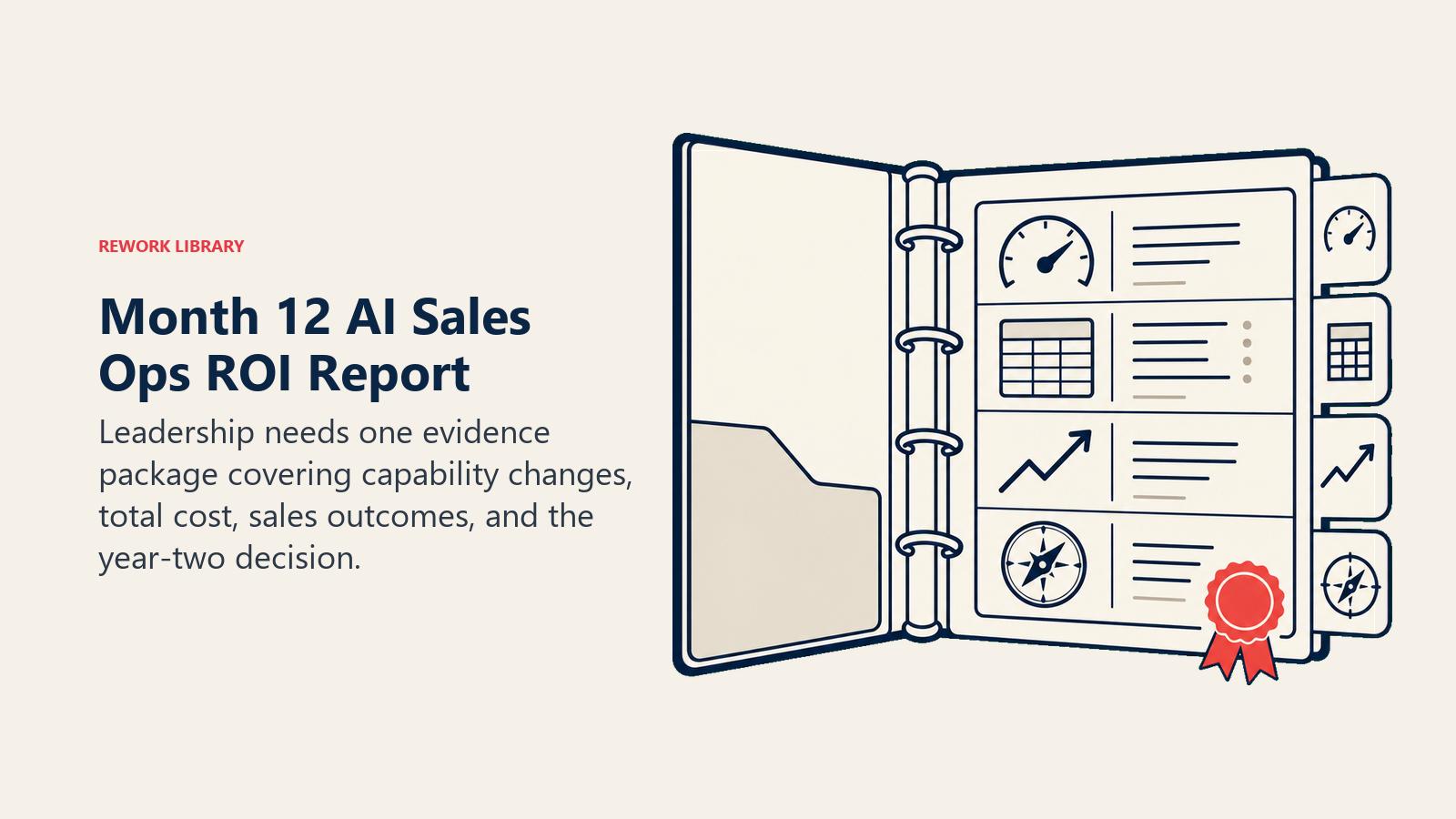
- Was hat sich in jedem Muster verändert? (Metriken: Scoring-Genauigkeitsrate, Routing-Geschwindigkeit, Protokoll-Vollständigkeitsrate, Research-Zeit pro Account, NBA-Akzeptanzrate)
- Was hat es gekostet? (Software, Implementierungszeit, laufender Betrieb)
- Was hat sich in den Vertriebsergebnissen verbessert? (Quota-Erfüllung, Pipeline-Velocity, Forecast-Genauigkeit, Deal-Größe)
- Was tun wir in Jahr zwei? (Welche Muster müssen abgestimmt werden, welche neuen Fähigkeiten hinzuzufügen sind, ob der aktuelle Anbieter-Stack beibehalten werden soll)
Dieser Bericht macht KI-Sales-Ops zu einer dauerhaften Fähigkeit statt zu einem Einmalprojekt. Implementierungen, die keinen Jahresend-ROI-Bericht produzieren, werden im nächsten Budget-Zyklus unabhängig von tatsächlichen Ergebnissen deprioritiert, weil die Ergebnisse nicht dokumentiert sind.
Beginnen Sie mit dem Entwurf des ROI-Bericht-Frameworks bei Monat 6. Bis Monat 12 füllen Sie Zahlen ein, nicht Beginn von Grund auf. Und die Teams, die bis Monat 12 mit dokumentierten Ergebnissen kommen, sind diejenigen, die das Budget für Jahr zwei bekommen. Die Teams, die das Framework übersprungen haben, können sich oft nicht einmal mehr an die Baseline erinnern.
Rework-Analyse: In 12-monatigen KI-Sales-Ops-Rollouts, die wir verfolgt haben, teilen Teams, die alle vier Phasen erfolgreich abschließen, ein Merkmal: Sie hatten einen benannten RevOps-Eigentümer, der gegenüber den vierteljährlichen Tor-Kriterien verantwortlich war, nicht nur gegenüber dem endgültigen Deployment. Implementierungen, bei denen die Ownership verteilt war ("alle sind verantwortlich") oder wo der VP RevOps vollständig an das Customer-Success-Team des Anbieters delegiert hatte, stagnierten konsistent bei Phase 2 oder Phase 3. Der 12-monatige Phasen-Rollout funktioniert als Management-Verantwortlichkeits-Framework ebenso wie als technische Deployment-Sequenz.
| Phase | Häufigster Failure-Modus | Wiederherstellungszeit bei frühem Erkennen | Wiederherstellungszeit bei spätem Erkennen |
|---|---|---|---|
| Phase 0 | Fortfahren ohne Abschluss des Daten-Audits | 4-6 Wochen Bereinigung | 3-6 Monate Nacharbeit |
| Phase 1 | Routing-Schwellenwerte ohne Rep-Feedback gesetzt | 2-3 Wochen Neuabstimmung | 1-2 Monate Vertrauenswiederaufbau |
| Phase 2 | Zustimmungsprozess vor Launch nicht abgeschlossen | Deployment stoppen; 4-6 Wochen Rechts-Review | Compliance-Haftung |
| Phase 3 | Research-Briefings zu generisch; Reps hören auf sie zu nutzen | 2-4 Wochen Template-Neuaufbau | Programm wird still aufgegeben |
| Phase 4 | NBA-Empfehlungen ignoriert; Feedback-Schleife fehlt | 4-6 Wochen Neutraining | ROI materialisiert sich nie |
Häufig gestellte Fragen
Warum scheitern die meisten KI-Sales-Ops-Implementierungen in den ersten 90 Tagen?
Der häufigste Fehler ist das Überspringen der Datenbereitschaftsarbeit. Teams unterzeichnen einen Anbietervertrag, starten das Onboarding und entdecken 60 Tage später, dass die CRM-Daten, die dem Scoring-Modell zugrunde liegen, inkonsistent sind, die Deal-Historie falsch beschriftete Won/Lost-Datensätze hat, oder die Kontaktdatensätze die benötigten Felder fehlen. RAND Corporations 2025-Analyse ergab, dass 80,3 % der KI-Projekte den beabsichtigten Business-Wert nicht liefern, wobei Datenlücken und Change-Management-Defizite als führende Ursachen angegeben wurden. Der 12-monatige Phasen-Rollout beginnt mit einem obligatorischen Daten-Audit genau dafür.
Was ist der 12-monatige Phasen-Rollout für KI-Sales-Ops?
Der 12-monatige Phasen-Rollout ist eine Vier-Phasen-Implementierungsstruktur: Phase 0 (Wochen 1-4) ist der Datenbereitschafts-Audit und das Tor; Phase 1 (Wochen 5-12) deployed Scoring and Routing; Phase 2 (Monate 4-6) deployed Meeting Intelligence mit Zustimmungsprozessen; Phase 3 (Monate 6-9) deployed Generative Research; Phase 4 (Monate 9-12) deployed Workflow Copilot. Die Phasen sind nach Daten-Voraussetzungs-Komplexität und Rep-Verhaltensänderungs-Last geordnet, mit den wirkungsvollsten und reibungslosesten Tools zuerst.
Was sind die Phase-0-Datenbereitschafts-Anforderungen?
Phase 0 erfordert: mindestens 12 Monate abgeschlossener Deals mit konsistenten Won/Lost-Labels; 70 %+ Kontaktfeld-Vollständigkeit bei Unternehmen, Titel und Branche; keine systematischen Deal-Phasen-Sprung-Probleme in den historischen Daten; und ein vollständiges Integrations-Inventar, das kartiert, welche Tools derzeit in das CRM schreiben und von ihm lesen. Das Fehlen dieser Anforderungen bedeutet 4-8 Wochen Datenbereinigung vor dem Beginn von Phase 1. Das Fortfahren zu Phase 1 ohne Bestehen von Phase 0 produziert konsistent Scoring-Modelle, denen Reps innerhalb von 8 Wochen nicht mehr vertrauen.
Wie viel Budget sollte für Change Management vs. Technologie eingeplant werden?
Organisationen sollten 20-30 % ihres KI-Implementierungsbudgets für Change Management, Stakeholder-Adoption und Training einsetzen, nicht nur für Technologie-Lizenzierung und Konfiguration. MIT-Sloan-Forschung zeigt, dass Teams, die angemessen in Change Management investieren, 3-4x bessere ROI erzielen als solche, die die Implementierung als rein technisches Projekt behandeln. Für eine 150.000-Dollar-Jahr-1-KI-Sales-Ops-Investition bedeutet das 30.000-45.000 Dollar, die explizit für Training, Rep-Kommunikation, Manager-Coaching-Workflow-Design und Feedback-Schleife-Management budgetiert werden.
In welcher Reihenfolge sollen die vier KI-Sales-Ops-Muster deployed werden?
Scoring and Routing zuerst (niedrigste Rep-Verhaltensänderung, schnellstes ROI-Signal), dann Meeting Intelligence (passive Aufzeichnung erfordert Zustimmungsprozess-Arbeit), dann Generative Research (opt-in für Reps, erfordert Datenquellen-Lizenzierung), dann Workflow Copilot zuletzt (erfordert saubere Daten aus allen drei vorherigen Phasen). Diese Reihenfolge baut schrittweise Rep-Vertrauen in KI auf: Scoring ist für Reps unsichtbar, Meeting Intelligence ist passiv, Research ist optional, Copilot ist aktiv. Das Umkehren der Reihenfolge oder das Verdichten von Phasen produziert konsistent niedrigere Adoption in jedem Stadium.
Welche Governance-Schritte sind in jeder Implementierungsphase erforderlich?
Phase 0: Datenzugriffsrichtlinien und Umfang der im Scoring verwendeten persönlichen Daten etablieren. Phase 1: Routing-Streitprozess mit klarer Override-Autorität und Protokollierung. Phase 2: Rechtlich geprüfte Zustimmungssprache für Call-Recording, Datenverarbeitungsvereinbarung mit Anbieter, Datenaufbewahrungsrichtlinie. Phase 3: Datenquellen-Lizenzierung für die kommerzielle Nutzung und DSGVO/CCPA-Compliance für Interessenten-Regionen verifizieren. Phase 4: Explizite NBA-Aktions-Governance (welche Aktionen auto-ausführen vs. Rep-Genehmigung vor Ausführung erfordern).
Was als nächstes lesen
- KI-Muster in einer Mehrjahres-Roadmap sequenzieren: die Muster-Sequenzierungslogik, die diese Sales-Ops-Roadmap informiert
- KI-Sales-Ops-Anbieterlandschaft 2026: Anbieteroptionen für jede Phase der Roadmap
- Buy vs. Build für KI-Sales-Operations: die Wirtschaftsentscheidung, die bestimmt, welche Tools Sie pro Phase deployen
- KI-Sales-Ops-Governance und Audit Trails: das Compliance-Framework, das in jeder Phase erforderlich ist
- Failure-Modi: Wenn KI-Sales-Ops nach hinten losgeht: was schiefgeht, wenn Phasen verdichtet oder Daten nicht bereit sind

Co-Founder, Rework.com
On this page
- Phase 0 (Wochen 1-4): Datenbereitschafts-Audit
- Der 12-monatige Phasen-Rollout
- Phase 1 (Wochen 5-12): Quick Wins: Scoring and Routing
- Phase 2 (Monate 4-6): Meeting Intelligence
- Phase 3 (Monate 6-9): Generative Research
- Phase 4 (Monate 9-12): Workflow Copilot
- Phasen-Zeitplan-Zusammenfassung
- Der schnellere Weg für gut vorbereitete Teams
- Governance in jeder Phase
- Der ROI-Bericht bei Monat 12
- Was als nächstes lesen