Heijunka: Production Leveling Explained
Turn this article into takeaways for your work.


Each assistant summarizes the article only for you and suggests best practices for your work.
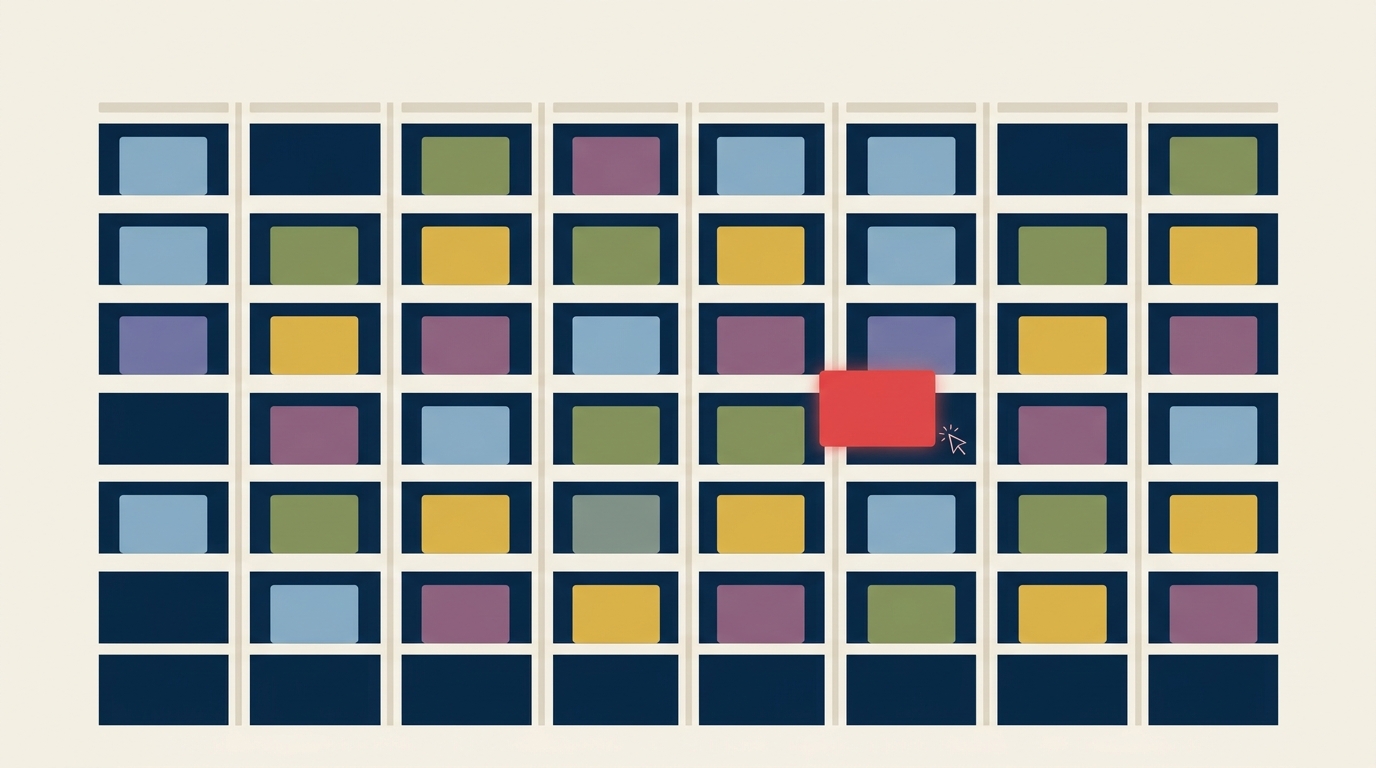
Heijunka is the Toyota Production System practice of smoothing the type and quantity of production over a set period so demand variation doesn't ripple through your entire operation. Most factories and service teams experience the opposite: a surge of one product on Monday, a scramble for another on Friday, and a planning headache in between. Heijunka is the discipline that breaks that pattern.
What Is Heijunka?
Heijunka (平準化) is the Japanese term for production leveling. The Lean Lexicon defines it as "the technique of leveling the type and quantity of production over a fixed period of time." In plain terms: instead of building in big batches matched to raw customer order sequences, you spread both the volume and the product mix evenly across each shift or day.
The goal is to remove unevenness before it can generate waste. When production is uneven, every upstream process must buffer against unpredictable demand, more raw material inventory, more floor space, more overtime on peak days and idle time on slow ones. Heijunka attacks that at the source.
Quotable framing: "Heijunka doesn't chase demand. It tames demand into a pattern every part of your operation can reliably serve."
Key Facts
- Toyota developed heijunka as part of the Toyota Production System built between 1948 and 1975 by Taiichi Ohno and Eiji Toyoda.
- Toyota reported cutting production lead times by 50% and reducing inventory by 60% through the leveled-flow principles at the core of the TPS.
- General Electric increased production efficiency by 30% and cut defects by 25% when it applied heijunka-style production leveling across its manufacturing operations.
Heijunka and the 3 Wastes (Muda, Mura, Muri)
Lean identifies three enemies of operational efficiency. Understanding where heijunka sits among them explains why it's foundational rather than optional.
| Waste type | Japanese term | What it looks like | Heijunka's role |
|---|---|---|---|
| Waste | Muda | Defects, waiting, overproduction, excess motion | Indirect target, leveling reduces the root cause |
| Unevenness | Mura | Boom-and-bust schedules, inconsistent cycle times | Direct target, heijunka eliminates mura |
| Overburden | Muri | Workers or machines pushed past rated capacity | Secondary target, leveling prevents overload spikes |
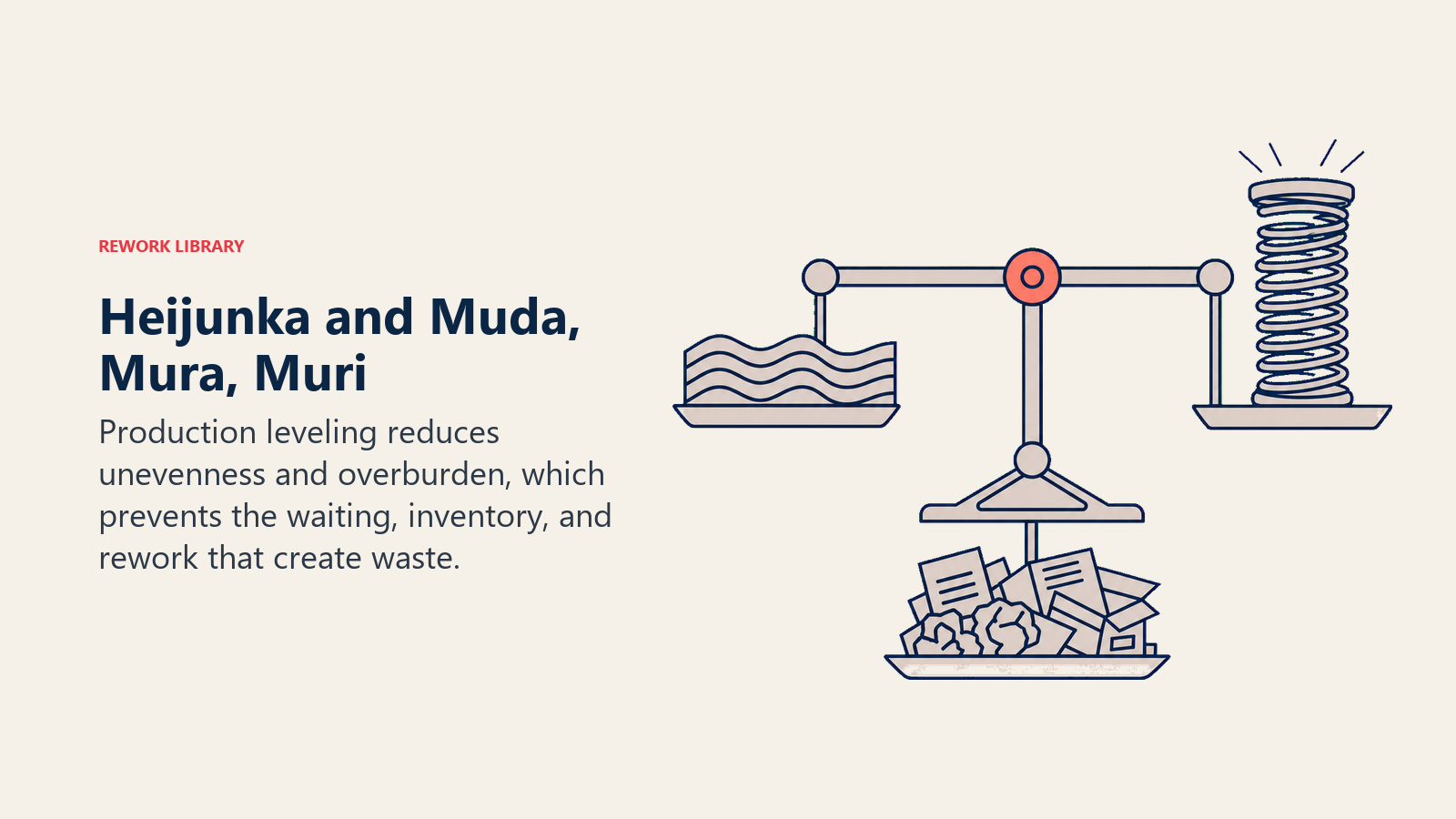
Heijunka's primary job is to eliminate muda, mura, and muri, specifically mura. But because unevenness is usually the source of both waste and overburden, fixing it cascades across all three.
A plant that builds 500 units in a Monday rush then idles Wednesday creates mura. That mura forces excess raw-material stock (muda) and punishing Monday line speeds (muri). Level the schedule and all three shrink together.
Two Types of Leveling: Volume vs. Type (Product Mix)
Heijunka has two distinct levers. Most operations need both.
| Leveling type | What you smooth | When it applies | Example |
|---|---|---|---|
| Volume leveling | Total output quantity per time period | Any production environment | Build 100 units/day instead of 600 Monday, 50 Tuesday |
| Type leveling (product mix) | Sequence of product variants | Multi-SKU or mixed-model lines | Alternate A-B-A-B instead of AAAAA-BBBBB |
Volume leveling is usually the first step. Once total output is steady, type leveling sequences variants so changeovers happen in short, predictable intervals rather than in long infrequent batches. The combination is what enables true one-piece or small-batch flow.
The Heijunka Box
The heijunka box (also called a pitch board or leveling box) is the physical or digital tool that makes the leveled schedule visible on the shop floor. It's a grid with two axes:
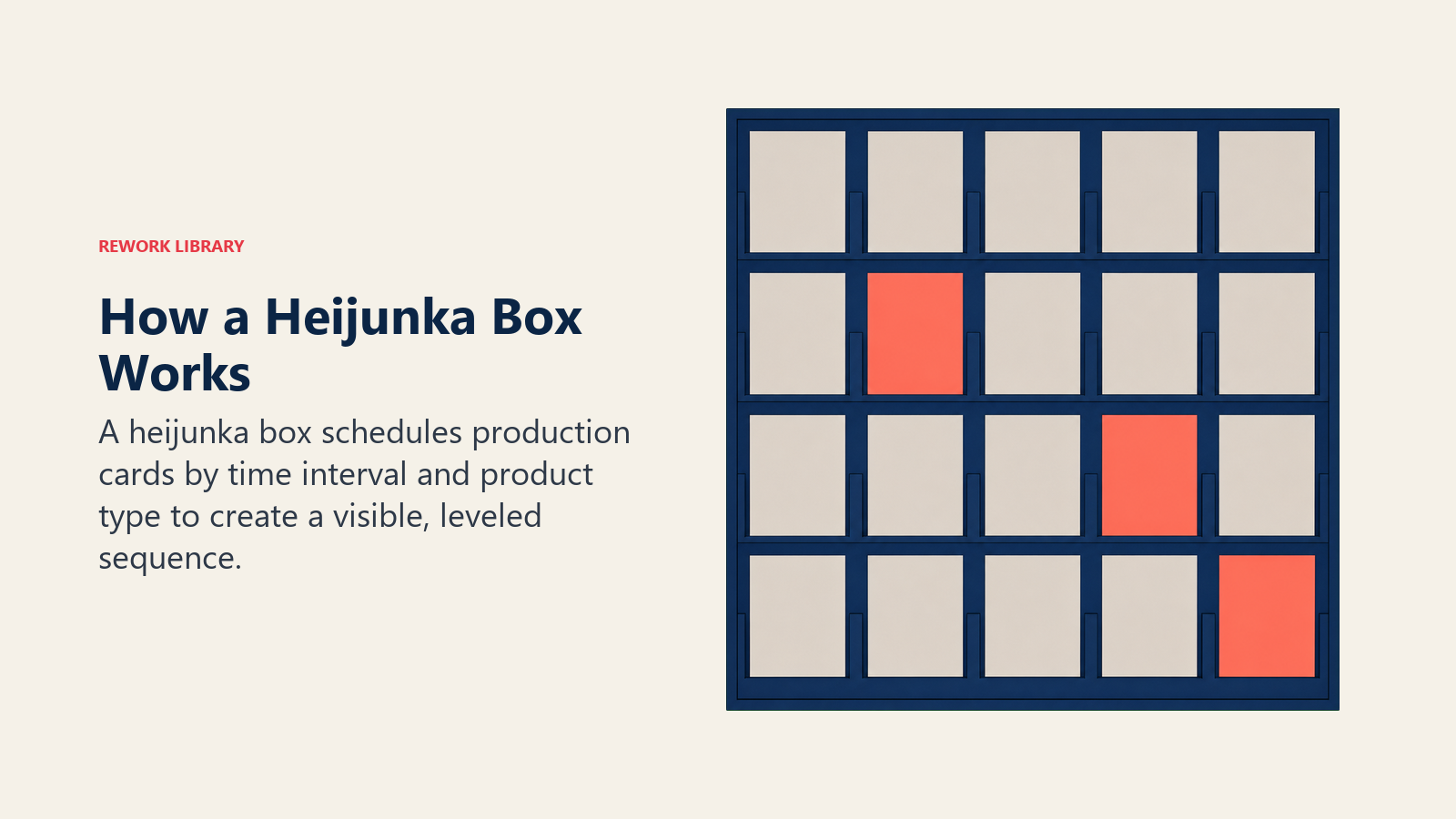
- Columns represent time intervals, typically one column per pitch (a short time bucket, often 20-60 minutes, derived from takt time multiplied by pack-out quantity).
- Rows represent product types or part numbers.
Each cell in the grid holds a kanban card, work order, or production card for that product in that time slot. A runner collects the cards column by column at the start of each pitch interval and delivers them to the relevant workstations. The result is a physical pull signal that sequences production without relying on a centralized MRP push.
When the heijunka box is full and balanced, every shift looks the same. Workers know what's coming, material handlers know what to pre-stage, and quality problems surface quickly because the pattern is stable enough to notice deviations.
Heijunka, Takt Time, and Just-in-Time
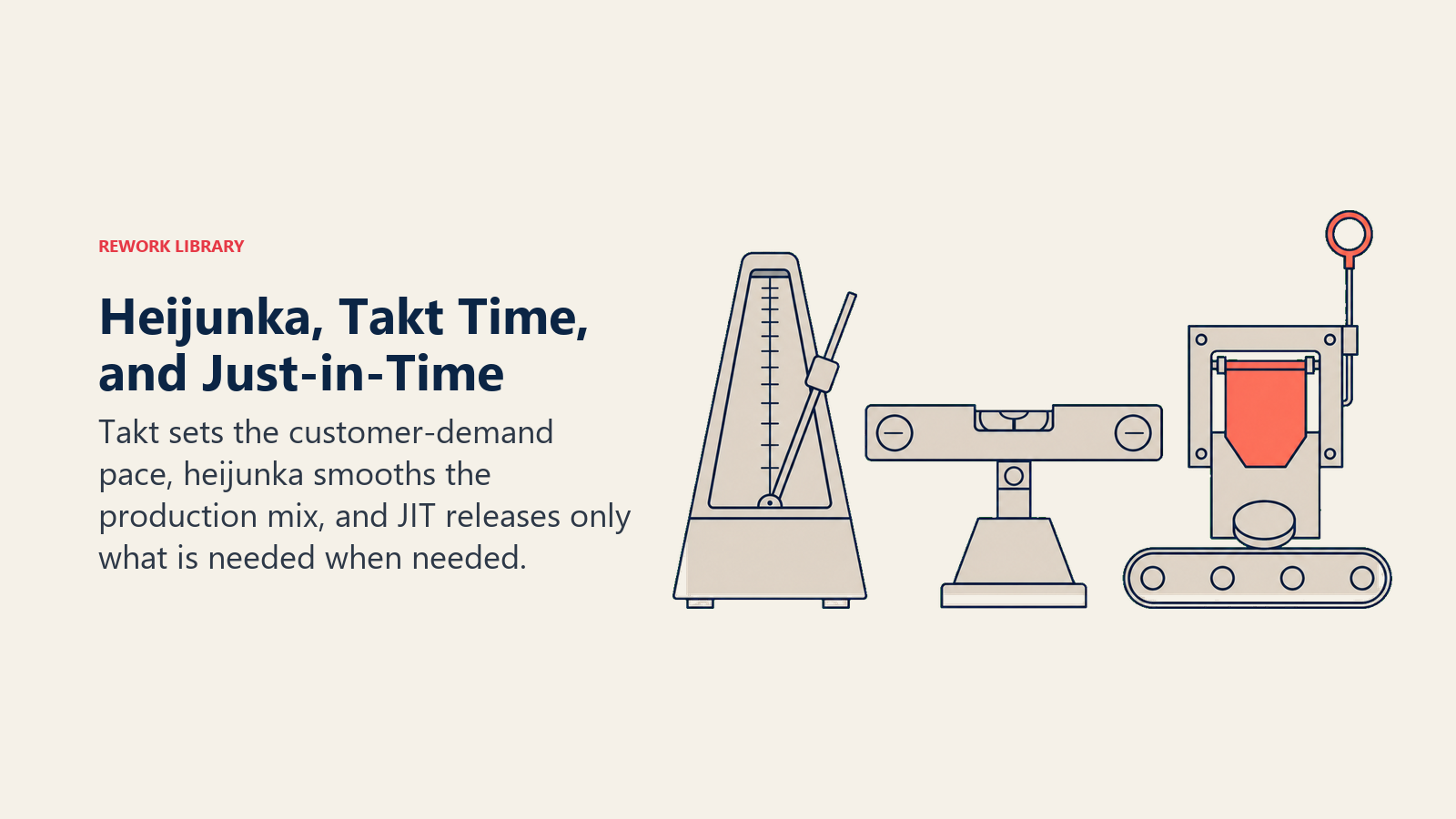
Heijunka doesn't work in isolation. It's the scheduling layer that makes two other lean concepts operational.
| Concept | What it provides | How heijunka connects |
|---|---|---|
| Takt time | The heartbeat, available time divided by customer demand rate | Heijunka uses takt time to set pitch intervals and size the heijunka box columns |
| Just-in-time (JIT) | Delivering exactly the right part, in the right quantity, at the right time | JIT requires stable, predictable flow, heijunka creates that flow |
| Pull system | Downstream demand signals upstream production | The heijunka box is a pull mechanism; leveling makes pull signals consistent |
Without leveled production, JIT degrades into a reactive firefight. Kanban card quantities become guesses, safety stock creeps back in, and the system reverts to push. Heijunka is what keeps the pull system honest.
How to Implement Heijunka
Implementation follows a logical sequence. Skipping steps, especially changeover reduction, is the most common reason heijunka fails in practice.
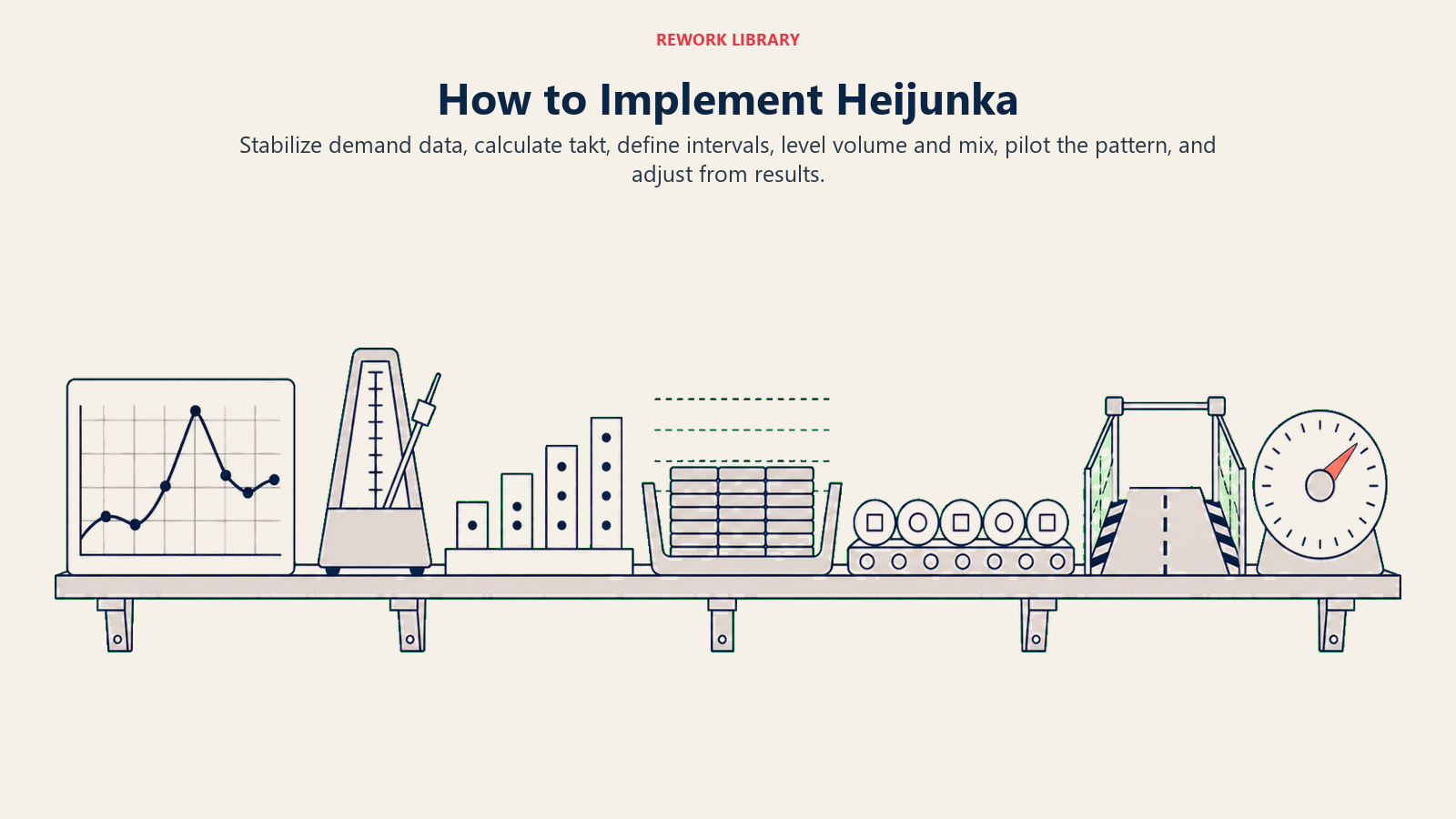
Step 1: Calculate Demand and Takt Time
Start with real demand data. Gather at least 13 weeks of order history per product type. Identify average daily demand, demand variability (coefficient of variation), and seasonal patterns. Use that to calculate takt time: divide available production time per shift by the number of units customers need per shift.
Step 2: Group Products
Cluster products by family, similar setup requirements, similar cycle times, shared tooling. Each family will share a row in the heijunka box. Families with high demand get more frequent slots; low-volume items might appear once per day rather than every pitch.
Step 3: Build the Heijunka Box Schedule
Design the pitch interval first (takt time x pack-out quantity). Then fill the box: assign a repeating sequence of product types across the pitch columns. The sequence should reflect demand proportions, if Product A is 60% of volume and Product B is 40%, a simple two-pitch cycle might be A-B-A-B-A-A across six slots. Run a pilot week with paper cards before going digital.
Step 4: Reduce Changeover and Batch Size
This is non-negotiable. A leveled schedule with frequent product changeovers only works if changeover time is short. Apply SMED (Single-Minute Exchange of Die) techniques: separate internal from external setup, convert internal steps to external where possible, and standardize tooling. Target changeover times below one pitch interval. Simultaneously shrink batch sizes, smaller batches shorten lead times and make leveling practical.
Step 5: Stabilize and Improve
Run the leveled schedule for at least four weeks before assessing. Use gemba walks to observe where the schedule breaks down, which pitch intervals consistently slip, which changeovers run long, which material deliveries arrive late. Build standard problem-response routines. Only after the schedule holds reliably do you tighten the pitch interval or narrow batch sizes further.
Heijunka Examples
Heijunka originated on automotive assembly lines but the logic applies wherever demand variability creates operational unevenness.
| Setting | Problem without heijunka | Heijunka applied |
|---|---|---|
| Automotive plant (mixed model) | Build all sedans Monday-Wednesday, SUVs Thursday-Friday; line rebalancing required twice a week | Alternate sedan-SUV-sedan-SUV every pitch; line stays balanced, changeovers are quick and predictable |
| Electronics contract manufacturer | Rush 10,000 units of one PCB variant on day 1 of the order; quality escapes spike under pressure | Level 2,000 units/day across five days; defect rate falls, rework drops, overtime disappears |
| Hospital scheduling (service) | All routine procedures booked Monday morning, wait times spike; staff overloaded early in week | Distribute appointment types evenly across weekday slots; nursing load stabilizes, patient wait time drops 35% |
| Back-office claims processing | New claims batched and released Friday afternoon; Monday is a frenzy | Release claims in small daily batches; processors handle consistent daily volumes, backlog shrinks |
The hospital and back-office rows show that heijunka isn't manufacturing-only. Any operation where work arrives in uneven batches can benefit from deliberately leveling the input rate.
Common Mistakes
Leveling the schedule without reducing changeover time. This is the most frequent failure mode. If changeovers take 90 minutes and the pitch interval is 30 minutes, you can't alternate products every pitch. The schedule collapses into batching anyway, and people lose faith in the system. Fix changeover first, then level.
Ignoring demand variability when setting the leveled rate. Teams sometimes level to the average without accounting for coefficient of variation. If demand swings 40% week to week, a single fixed heijunka rate will leave you short during high weeks and produce waste during low weeks. Build in a small flex buffer, a surge capacity rule, for demand that genuinely exceeds the leveled plan. The leveled plan handles normal variation; the flex rule handles true spikes.
Treating heijunka as a scheduling tool rather than a flow philosophy. Filling a heijunka box is straightforward. Getting every upstream process, materials, people, maintenance, to support a leveled rhythm is the real work. Heijunka without jidoka (the ability to stop and fix problems instantly) means the leveled schedule hides quality problems rather than exposing them.
Related Reading
- Lean Methodology, the broader system heijunka lives inside
- Muda, Mura, Muri, the three wastes heijunka targets
- Takt Time, how to set the production heartbeat
- Just-in-Time (JIT), pull-based flow that heijunka enables
- Jidoka, built-in quality that makes leveled flow sustainable
- Gemba Walk, how to observe where your leveled schedule actually breaks
Frequently Asked Questions about Heijunka
What is the difference between heijunka and just-in-time?
Just-in-time (JIT) is the goal: deliver exactly the right part, in the right quantity, at the right time. Heijunka is a method that makes JIT achievable. Without a leveled production schedule, the pull signals that JIT relies on become erratic, kanban quantities go wrong, safety stock creeps back in, and the system reverts to push. Heijunka creates the stable, predictable flow that JIT needs to function.
What is a heijunka box?
A heijunka box is a physical or digital scheduling board arranged as a grid. Columns represent time intervals (called pitch intervals) derived from takt time. Rows represent product types. Production cards, one per unit or small batch, are placed in the cells to sequence the day's work. A runner collects cards column by column and delivers them to workstations as each pitch interval begins. The box makes the leveled schedule visible and actionable without relying on a centralized planning system.
Does heijunka work for service operations?
Yes. Any environment where demand arrives in uneven batches can apply heijunka logic. Hospitals level appointment types across the week to balance clinical staff workload. Software teams level the intake of support tickets or change requests. Back-office operations release work in controlled daily batches instead of dumping a full week's queue on Monday. The heijunka box may look like a sprint board or a daily work queue rather than a factory pitch board, but the principle is identical.
How long does it take to implement heijunka?
A basic pilot, leveling one product family on one line, can show results within 4 to 8 weeks if changeover reduction is started in parallel. Full implementation across a multi-line facility with mixed-model production typically takes 6 to 18 months, including the changeover reduction work, standard work documentation, and operator training. The limiting factor is almost always changeover time, not the scheduling logic itself.
What is a pitch interval?
A pitch interval is the smallest scheduling time bucket in a heijunka system. It's calculated as takt time multiplied by pack-out quantity (the number of units in a standard container or order release). For example, if takt time is 2 minutes and pack-out is 20 units, the pitch interval is 40 minutes. The heijunka box has one column per pitch interval per shift. Shorter pitch intervals create tighter flow but require faster changeovers and more frequent material deliveries. Production leveling isn't about ignoring demand, it's about absorbing demand variation in a planned way so your operation doesn't have to scramble. Start with one line, one product family, and a realistic changeover target. The stability that emerges from a true heijunka rhythm tends to spread quickly once people see it work.

Senior Operations & Growth Strategist
On this page
- What Is Heijunka?
- Heijunka and the 3 Wastes (Muda, Mura, Muri)
- Two Types of Leveling: Volume vs. Type (Product Mix)
- The Heijunka Box
- Heijunka, Takt Time, and Just-in-Time
- How to Implement Heijunka
- Step 1: Calculate Demand and Takt Time
- Step 2: Group Products
- Step 3: Build the Heijunka Box Schedule
- Step 4: Reduce Changeover and Batch Size
- Step 5: Stabilize and Improve
- Heijunka Examples
- Common Mistakes
- Related Reading