Best AI Tools for Multilingual Customer Service in 2026
Turn this article into takeaways for your work.


Each assistant summarizes the article only for you and suggests best practices for your work.
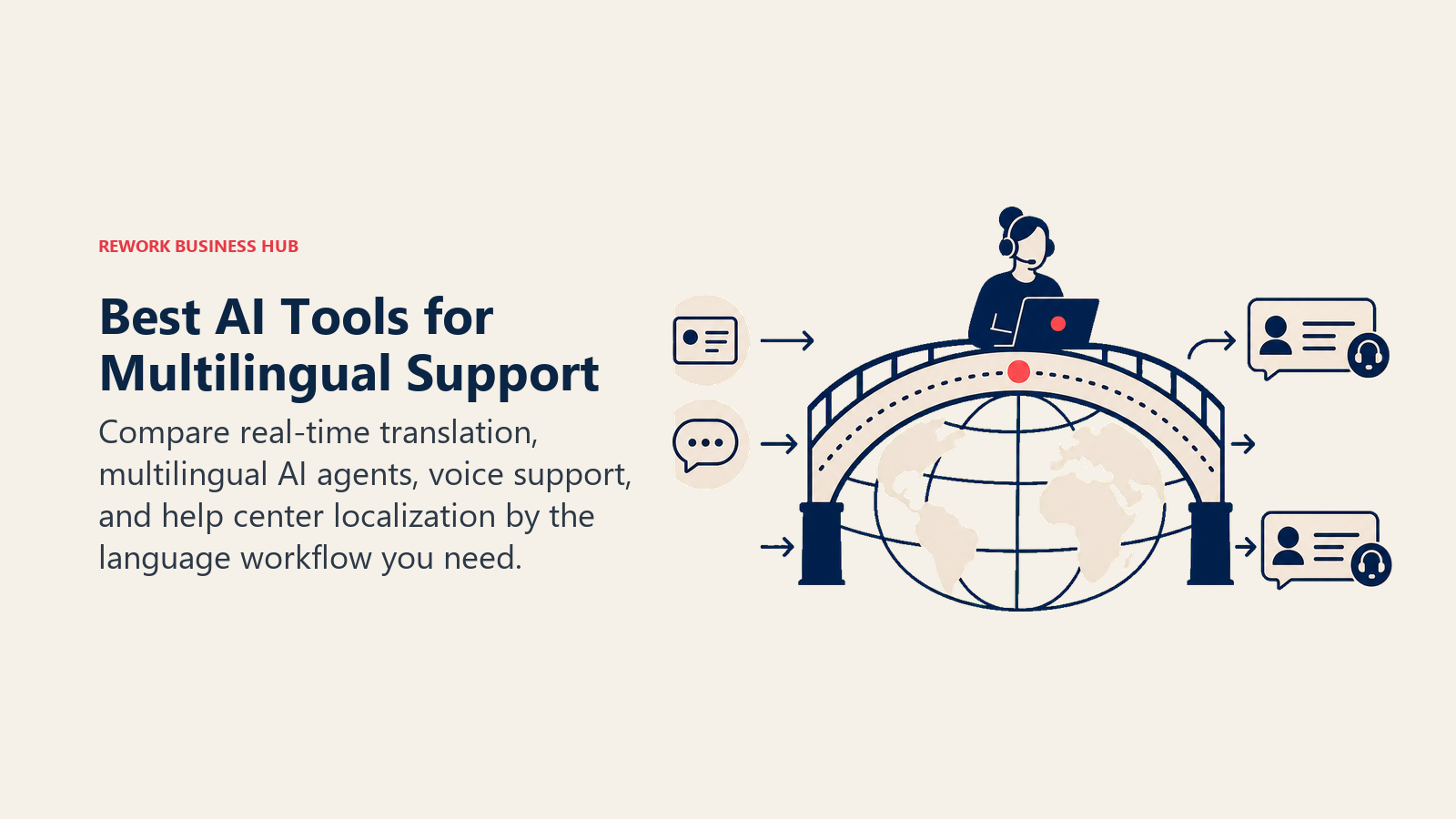
Most "best AI tools for customer service" roundups quietly assume your customers all speak English. This one doesn't. If your support org is hiring bilingual agents for every market, paying a translation agency by the word, or watching customers bounce because the help center only ships in one language, you're solving a different problem than "which resolution bot should we buy." This guide ranks 12 tools built specifically around language: real-time translation layered onto the helpdesk you already run, multilingual AI agents that work in dozens of languages from one set of content, real-time voice and accent translation for live calls, and localization platforms that keep your help center current in every market you sell into.
This is deliberately not the same list as our other AI customer service guides. Best AI Tools for Customer Support in 2026 ranks resolution agents like Intercom Fin and Zendesk AI Agents on ticket-closing ability, in whatever language they happen to run, and covers the agent-assist, QA, and voice AI layer that surrounds human reps. Best AI Translation Tools in 2026 ranks general-purpose engines like DeepL and Google Translate for any translation job, not just support. This guide sits at the intersection: it only ranks tools whose reason for existing is making a support team work across languages, and it re-covers a handful of names from those lists (Intercom Fin, Zendesk AI Agents, PolyAI, DeepL) specifically for their language coverage and translation mechanics, not their general feature set.
What Changed in 2026
- DeepL's native Zendesk app was discontinued on October 1, 2025. Teams now translate inside Zendesk through DeepL's browser extension or a direct API integration instead of a purpose-built marketplace app, which changes the setup story for anyone evaluating DeepL as a helpdesk translation layer.
- Intercom's Fin AI Agent moved out of beta into general access at 45 languages, with a real-time translation mode that lets a team write help content once in one language and have Fin answer in all 45 without translating the underlying articles.
- Zendesk began expanding voice AI agents to 60+ languages with native-sounding accents, with 10 live now (English, Portuguese, Spanish, German, French, Dutch, Italian, Polish, Romanian, Turkish) and 50+ more announced as coming.
- Salesforce added Hindi to Agentforce Voice in May 2026, part of a broader rollout that took Agentforce Voice from a handful of languages to 25+, still in beta for most of them.
- Sanas expanded its real-time accent and language translation to 30+ languages and opened its platform to developers and small businesses, not just its existing BPO enterprise base.
- Lokalise's June 2026 pricing overhaul (usage-based "processed words" billing, no more free plan) also affects teams using it to localize help center content, not just product UI strings.
Key Facts
- 75% of consumers are more likely to repurchase from a brand when customer care is delivered in their own language, per CSA Research's Can't Read, Won't Buy survey of 8,709 consumers across 29 countries.
- Even consumers confident in English still prefer support in their own language 60% of the time, per the same CSA Research survey.
- 88% of support teams say they offer service in more than one language, but only 28% of end users report actually seeing support in their native language, a gap identified in Intercom's own survey of 170 non-native-English-speaking SaaS customers and 135 support leads (vendor-commissioned, labeled accordingly).
- The global language services market is projected to reach roughly $75.5 billion in 2026, growing at a 5.1% CAGR through 2031, per Mordor Intelligence's Language Services Market report.
- Real-time accent and speech translation delivered more than $2 million in savings and a 70% reduction in speech clarity complaints for UnitedHealth Group, per Sanas's own case study (vendor-labeled).
Quick Comparison Table
| Tool | Best For | Standout Capability | Starting Price | Free Tier? |
|---|---|---|---|---|
| Language I/O | Adding real-time translation to Zendesk, Salesforce, or ServiceNow without switching platforms | 150+ languages across chat, email, and voice transcripts | From $958/mo + per-word usage | No |
| Unbabel | Human-reviewed AI translation for high-volume support tickets and chat | AI draft plus human post-edit, fast enough for live conversations | Custom (Starter ~$10,000/mo) | No |
| Sanas | Real-time voice accent and speech translation for contact center agents | Sub-200ms latency, works with existing CCaaS platforms out of the box | Advertised free for contact centers | Yes (per vendor) |
| PolyAI | Enterprise voice AI that switches languages mid-call automatically | Handles concurrency and language switching a scripted IVR can't | Est. from $150K/yr + per-minute | No |
| Intercom Fin | Multilingual resolution agent built on one set of source content | 45 languages, real-time translation so you write help content once | $0.99/outcome, 50-outcome/mo minimum | No |
| Zendesk AI Agents | Teams already on Zendesk wanting AI multilingual coverage layered onto ticketing | Generative replies in 100+ languages, voice AI expanding to 60+ | Suite from $55/agent/mo + per-resolution AI | No |
| Freshworks Freddy AI | Budget-conscious teams wanting translated replies without a specialist vendor | Copilot translates incoming messages and drafts replies in 40+ languages | $19/agent/mo (Freshdesk) + $0.49/session AI | No |
| Salesforce Agentforce for Service | Salesforce-native teams wanting multilingual voice on Service Cloud data | Agentforce Voice expanding past 25 languages, Hindi added May 2026 | $2/conversation or $500/100K credits | Partial (Foundations credits) |
| DeepL | Teams wanting the highest-accuracy MT engine layered into support workflows | Best-in-class quality for supported language pairs, now API/extension-based on Zendesk | Free; Starter $10.49/mo; API from free tier | Yes |
| Crowdin | Dev-first teams localizing help center articles alongside product strings | In-context screenshots and string-level QA for support docs | Free; Pro $59/mo | Yes |
| Smartling | Enterprise teams automating help center translation across CMS platforms | Configurable AI-plus-human workflows tied to content type | Core free to start; custom quotes typical | Limited |
| Weglot | No-code translation of a Zendesk Guide or other web-based help center | Syncs automatically so new articles are never left untranslated | Free (2,000 words); Starter $17/mo | Yes |
Language Coverage Table
| Tool | Languages Supported | Channel | Real-Time or Pre-Built |
|---|---|---|---|
| Language I/O | 150+ | Chat, email, voice transcript | Real-time |
| Unbabel | Major global languages across quality tiers (not marketed by raw count) | Chat, ticket | Real-time (AI draft plus human post-edit) |
| Sanas | 30+ | Voice (live calls) | Real-time |
| PolyAI | 40+, with automatic mid-call switching | Voice | Real-time |
| Intercom Fin | 45 (general access) | Chat, Messenger | Real-time (one source, all 45 languages) |
| Zendesk AI Agents | 100+ (generative replies), 40+ (triage), 60+ (voice, expanding) | Ticket, chat, voice | Mixed |
| Freshworks Freddy AI | 40+ (Copilot translation), narrower for autonomous Autopilot | Ticket, email, chat | Mixed |
| Salesforce Agentforce for Service | 25+ (voice, mostly beta), broader for Enhanced Chat | Voice, chat | Real-time (expanding) |
| DeepL | 30+, fewer than Google Translate but highest rated for covered pairs | Text (via API or browser extension) | Real-time |
| Crowdin | Any language pair a translator or AI model supports | Help docs, product strings | Pre-built content workflow |
| Smartling | Any language pair, unlimited | Help center, CMS content | Pre-built content workflow |
| Weglot | 100+ | Website, help center | Pre-built (auto-detected and cached) |
How to Choose: Decision Framework
| If you need... | Pick... | Why |
|---|---|---|
| Real-time translation bolted onto the helpdesk you already run (Zendesk, Salesforce, ServiceNow) | Language I/O | Purpose-built for CX platforms, 150+ languages across chat, email, and voice |
| Human-reviewed accuracy for tickets and chat at real support volume | Unbabel | AI draft plus human post-edit, fast enough for live conversations |
| Live call agents to be instantly understood across accents and languages | Sanas | Sub-200ms latency, works with existing dialers and CCaaS platforms |
| Enterprise voice AI that can hold a natural conversation in dozens of languages | PolyAI | Automatic mid-call language switching, built for real call concurrency |
| A resolution agent that answers in 45 languages from one set of source content | Intercom Fin | Real-time translation means you don't maintain 45 separate content sets |
| To extend the Zendesk AI you already pay for across more languages | Zendesk AI Agents | Generative replies in 100+ languages, voice AI expanding fast |
| Multilingual AI resolution on a budget, using Freshdesk you may already run | Freshworks Freddy AI | Per-session pricing keeps entry cost lower than most on this list |
| Multilingual voice AI built on Salesforce Service Cloud data | Salesforce Agentforce for Service | Reuses existing case data, Agentforce Voice actively adding languages |
| The single highest-accuracy MT engine to plug into your own workflow | DeepL | Consistently rated highest for translation nuance in its covered languages |
| To localize help center articles the same way you localize product strings | Crowdin | In-context screenshots and string-level QA built for continuous content |
| Enterprise-scale help center and support content translation with CMS automation | Smartling | Configurable AI-plus-human routing keeps published content current |
| A multilingual self-service help center live in an afternoon, no engineering | Weglot | Script-tag install, auto-syncs new articles into every language |
Framework: By Team Size and Language Need
| Situation | Budget Signal | Best Fits |
|---|---|---|
| Small team, one or two extra languages, mostly self-service | Free to a few hundred $/mo | Weglot, DeepL, Crowdin Free |
| Growing team layering translation onto an existing helpdesk | Roughly $1,000-$5,000/mo | Language I/O, Freshworks Freddy AI, DeepL API |
| Mid-market team standardizing help center localization across a CMS | Roughly $2,000-$20,000/mo | Crowdin, Smartling (entry contracts), Lokalise |
| Contact center needing live voice translation or accent support | A few thousand $/mo to enterprise contract | Sanas, PolyAI (smaller deployments) |
| Global enterprise support org, high ticket and call volume across many markets | $50,000-$150,000+/yr | Unbabel, PolyAI (enterprise), Smartling (enterprise) |
1. Language I/O: Real-Time Translation Layered Onto the Helpdesk You Already Run
Language I/O doesn't ask a team to switch ticketing platforms to get multilingual support. It plugs directly into Zendesk, Salesforce Service Cloud, ServiceNow, and Oracle, and adds real-time translation across chat, email, and voice transcripts on top of whatever workflow already exists.
Best for: Support orgs on Zendesk, Salesforce, or ServiceNow that want any agent to handle any language without hiring bilingual staff or switching platforms
Key strengths:
- 150+ languages, the widest coverage of any purpose-built CX translation layer on this list
- Native integrations mean agents translate inside the ticketing tool they already use, no separate app to check
- Works across chat, email, and voice transcripts, not just one channel
Limitations:
- No published flat-rate pricing; entry cost starts around $958/month plus pay-as-you-go word volume
- Adds a second vendor relationship and bill on top of your existing helpdesk subscription
- Real cost scales with conversation volume, harder to predict than a flat per-agent fee
Pricing: From $958/month plus pay-as-you-go, per-word pricing. Three tiers (Pilot, Economy, Premium) with cost determined by interaction volume; requires a sales conversation for an exact quote.
| What you get | What you don't |
|---|---|
| 150+ languages across chat, email, and voice | No published flat-rate pricing |
| Native integration inside your existing helpdesk | Second vendor bill on top of your ticketing platform |
| Works across Zendesk, Salesforce, ServiceNow, Oracle | Cost scales with volume, harder to forecast |
For the ticketing platform underneath this layer, Best Help Desk Software in 2026 ranks 13 platforms by fit.
2. Unbabel: Human-Reviewed AI Translation for Support at Scale
Unbabel's model is deliberately hybrid. AI drafts the translation, and a network of human linguists reviews and edits it before it reaches the customer, all within a latency window fast enough for live support conversations. For support teams where a mistranslated reply costs trust, not just accuracy points, that human layer is the point.
Best for: Customer support organizations translating high volumes of tickets and chats where accuracy directly affects customer trust
Key strengths:
- AI draft plus human post-edit in one pipeline, fast enough for live chat and ticket replies
- Built specifically for support and CS content, not general documents or marketing copy
- Quality tiers let teams choose AI-only, AI-plus-human, or full human translation by content type
Limitations:
- Pricing starts at enterprise support-volume levels, not built for occasional or low-volume translation
- No published self-serve plan, every account is quote-based
- Overkill for marketing or product content, where its support-specific workflow doesn't add value
Pricing: Pay As You Go (custom); Starter roughly $10,000/month; Standard roughly $30,000/month; Enterprise roughly $120,000/month, based on volume, quality tier, and language pairs.
| What you get | What you don't |
|---|---|
| AI draft plus human post-edit for live conversations | Enterprise-level pricing floor, no self-serve plan |
| Built specifically for support and CS content | Overkill outside high-volume ticket or chat translation |
| Quality tiers matched to content risk | Custom quotes only, no published rate card |
3. Sanas: Real-Time Voice Accent and Speech Translation for Contact Centers
Sanas modifies accents and translates speech in real time during a live call, so an agent and a customer who don't share a first accent, or even a first language, can understand each other without either side slowing down. Latency stays under 200 milliseconds, low enough that neither party notices a delay. It's deployed at scale through BPO partners including Teleperformance, Concentrix, and TaskUs.
Best for: Contact centers and BPOs that want agents on live calls to be instantly understood, regardless of accent or first language
Key strengths:
- Sub-200ms latency keeps live conversations natural, not choppy
- Language Translation now covers 30+ languages with automatic language detection
- Works with nearly every major contact center platform and CRM out of the box, no call-flow changes required
Limitations:
- Advertises a free-forever model for contact centers, but real enterprise deployment terms typically route through a CCaaS partner marketplace and a sales conversation
- Accent translation and full language translation are related but distinct capabilities, confirm which one a given plan actually includes
- Voice-only; it doesn't touch chat, email, or help center content
Pricing: Advertised as free for contact centers and enterprise businesses; enterprise deployment and integration terms are typically negotiated through partner platforms like Talkdesk AppConnect. Confirm current terms directly with Sanas.
| What you get | What you don't |
|---|---|
| Sub-200ms real-time voice translation | Voice-only, no chat or content translation |
| Works with existing CCaaS platforms and dialers | "Free" claim needs verification for your specific deployment |
| Deployed at scale through major BPO partners | Accent vs. full-language translation distinction needs clarifying |
4. PolyAI: Enterprise Voice AI That Switches Languages Mid-Call
PolyAI's core premise, covered from the resolution-agent angle in our customer service AI guide, is that a scripted IVR is a worse experience than a voice AI a caller can just talk to naturally. For multilingual support specifically, the differentiator is that PolyAI can detect and switch languages mid-call without losing context, something a human agent switching scripts manually usually can't do as cleanly.
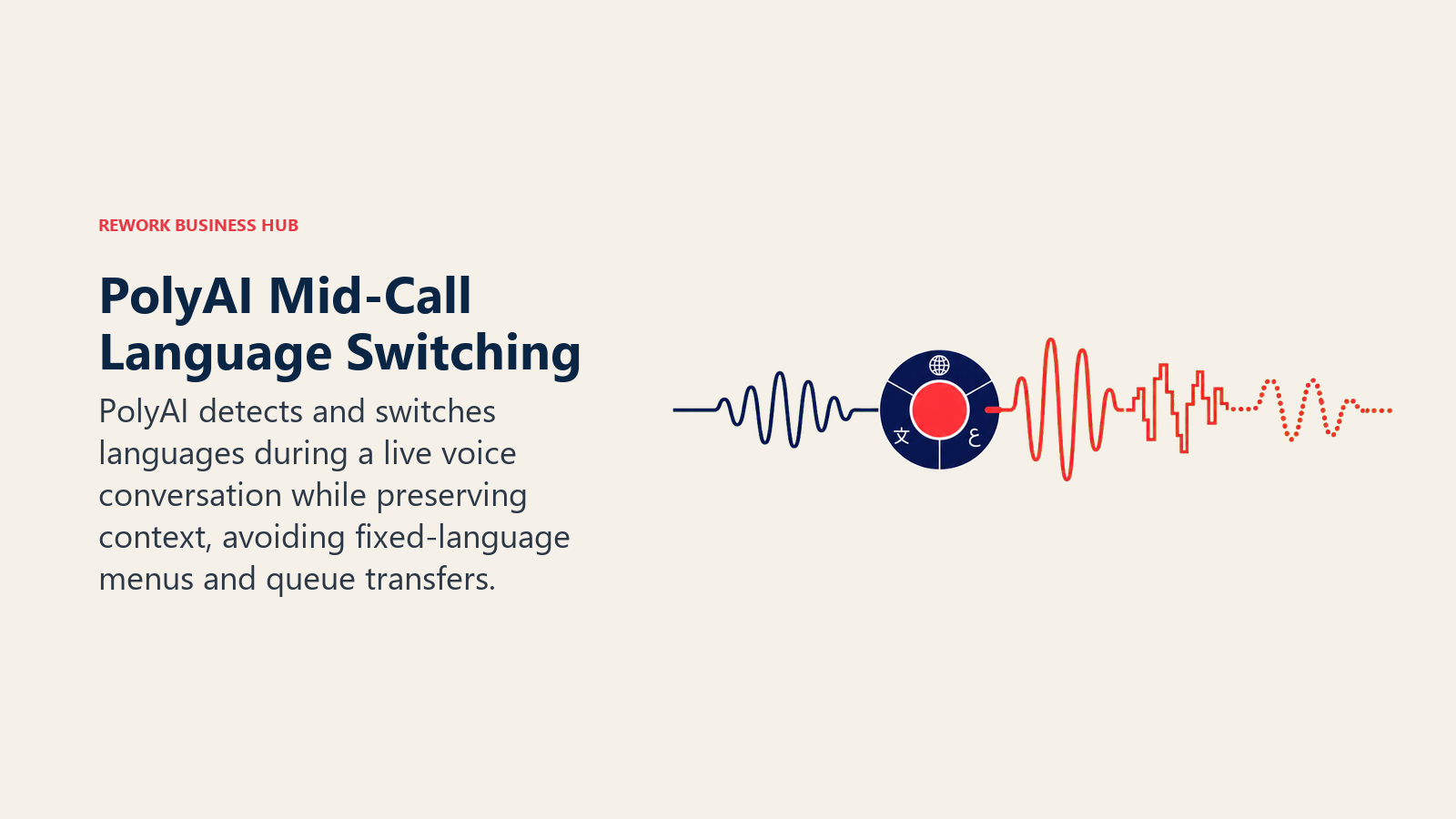
Best for: High call-volume enterprises that need voice AI to serve callers in whatever language they start speaking, without routing them to a different queue
Key strengths:
- Automatic language detection and mid-call switching, not a fixed language selected at call start
- Third-party 2026 platform reviews put core language support at 40+, built for real call concurrency
- Ongoing per-minute pricing includes maintenance, monitoring, and 24/7 support
Limitations:
- No published rate card and no self-serve signup, every deal starts with a six-figure base contract
- Per-minute usage fees on top of the base contract mean cost scales directly with call volume
- Overkill below true enterprise call volume; smaller teams should look at Sanas or a lighter voice layer first
Pricing: Custom, quote-only. Base contracts commonly start around $150,000/year, with an additional per-minute usage fee layered on top depending on call volume and languages.
| What you get | What you don't |
|---|---|
| Automatic mid-call language detection and switching | Six-figure minimum base contract |
| Built for real enterprise call concurrency | No published pricing, no self-serve |
| 24/7 support and maintenance included | Per-minute fees scale cost with volume |
For the broader agent-assist and voice AI layer PolyAI competes in, see Best AI Tools for Customer Support in 2026.
5. Intercom Fin: A Resolution Agent That Answers in 45 Languages From One Set of Content
Fin's multilingual support moved from beta to general access, and the mechanic that makes it useful here is real-time translation: a team writes help content once in one language, and Fin translates and answers in any of its 45 supported languages without anyone maintaining 45 separate content sets.
Best for: Support teams that want multilingual coverage without duplicating help center content or hiring language-specific staff
Key strengths:
- 45 languages in general access, covering everything from Arabic and Hindi to Vietnamese and Ukrainian
- Real-time translation means source content only needs to exist in one language
- Outcome-based pricing ($0.99/outcome) keeps the multilingual capability accessible without a separate enterprise quote
Limitations:
- Fin can only respond in languages explicitly configured in your workspace, it isn't automatic for every language it technically supports
- 50-outcome monthly minimum sets a $49.50/month floor even for testing multilingual coverage lightly
- Translation quality across all 45 languages hasn't been independently benchmarked the way DeepL's core language pairs have
Pricing: $0.99 per outcome (resolution, procedure handoff, or disqualification); 50-outcome/month minimum. Intercom's own seat plans priced separately.
| What you get | What you don't |
|---|---|
| 45 languages from one set of source content | Languages must be explicitly configured, not fully automatic |
| Outcome-based pricing, accessible at small scale | 50-outcome/month minimum floor |
| Real-time translation avoids content duplication | Quality across all 45 languages not independently benchmarked |
For the resolution-agent comparison this tool is best known for, see Best AI Tools for Customer Support in 2026, or best Intercom alternatives if the platform itself is the thing you're reconsidering.
6. Zendesk AI Agents: Extending the AI You Already Pay For Across More Languages
Zendesk's multilingual coverage isn't one number, it varies by product. Generative AI replies handle 100+ languages, the broadest native count on this list. Advanced AI's Intelligent Triage detects language on incoming tickets across 40+ languages. Voice AI agents are the newest push, expanding to 60+ languages with native-sounding accents, 10 live now and 50+ announced as coming.
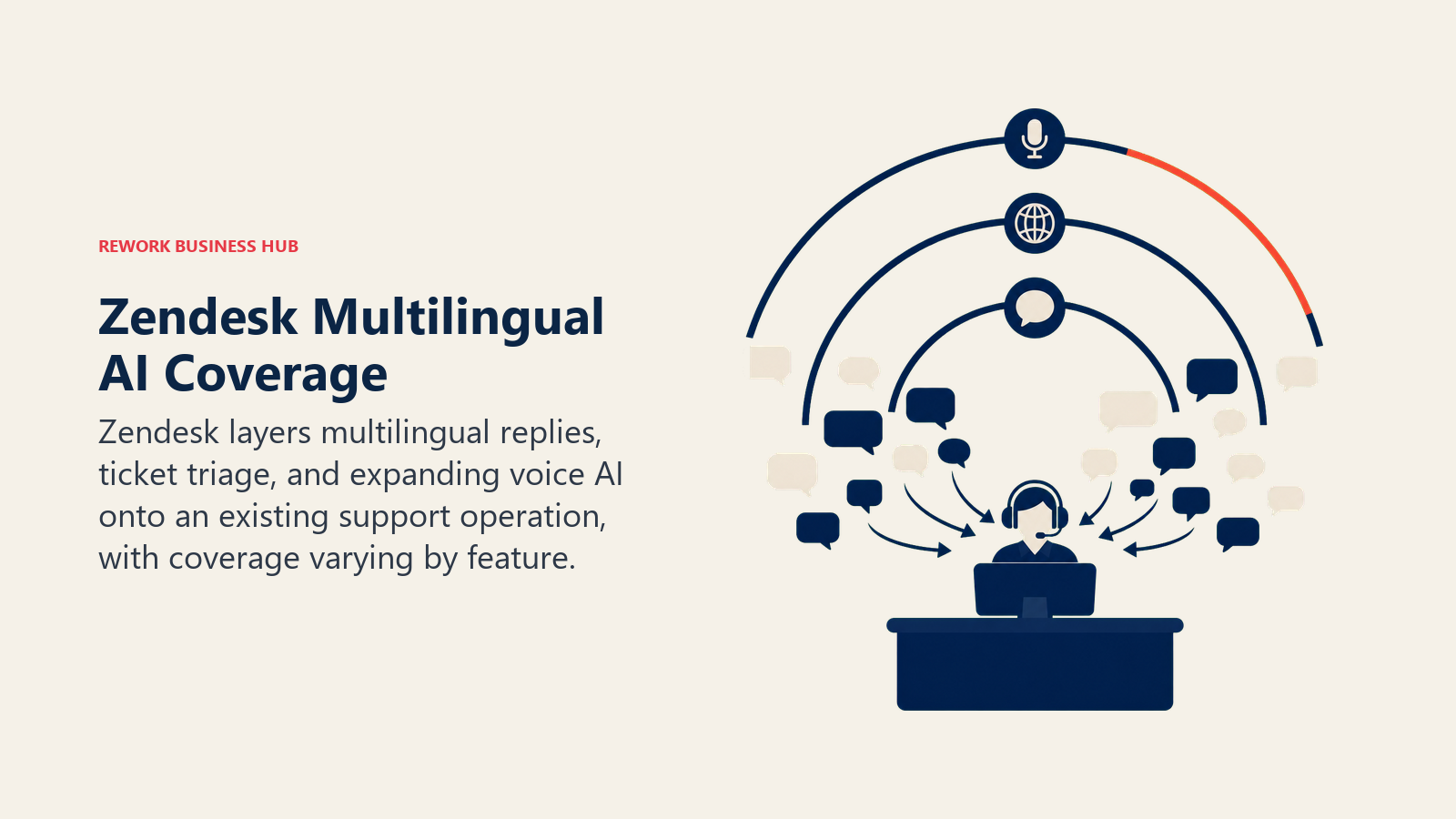
Best for: Support orgs already running Zendesk who want multilingual AI coverage layered onto ticketing and routing they've already built, rather than adding a separate translation vendor
Key strengths:
- Generative AI replies draft in 100+ languages, the widest native coverage of any tool on this list
- Voice AI language expansion (60+ languages targeted) is actively rolling out through 2026, not a static feature
- No separate SKU for basic multilingual capability, it's part of the AI resolution features already bundled into Suite and Support plans
Limitations:
- Language coverage varies meaningfully by product tier and feature, worth confirming exactly which languages your plan covers before committing
- Voice AI multilingual support is still mostly ahead of general availability, only 10 languages live today
- Per-resolution overage still applies once you're past bundled AI volume, regardless of language
Pricing: Suite plans from $55/agent/month (Suite Team) to $115/agent/month (Suite Professional), annual. AI resolutions run roughly $1.20-$2.00 each depending on volume commitment.
| What you get | What you don't |
|---|---|
| Generative replies in 100+ languages | Coverage varies by product tier and feature |
| Voice AI actively expanding to 60+ languages | Voice multilingual mostly still rolling out, 10 live |
| Multilingual bundled into existing Suite plans | Per-resolution overage still applies |
If total AI cost is the concern, best Zendesk alternatives covers 12 lighter options, and the resolution-agent angle on this same platform is covered in Best AI Tools for Customer Support in 2026.
7. Freshworks Freddy AI: Multilingual Coverage on a Budget
Freddy AI's translation layer is genuinely more accessible than most enterprise-quote vendors on this list. Copilot translates incoming messages and drafts replies in the customer's language across 40+ languages, priced per session rather than a specialist vendor's flat monthly floor. Autonomous Autopilot handling a full conversation end-to-end in a non-English language is narrower, covering the major European and Asian languages rather than the full 40+.
Best for: Budget-conscious mid-market teams that want translated replies inside the Freshdesk ticketing they may already run, without adding a dedicated translation vendor
Key strengths:
- Copilot-level translation covers 40+ languages for agent-facing draft replies
- Per-session AI pricing is more approachable at small scale than most quote-only vendors here
- Runs inside Freshdesk ticketing already in place, no separate multilingual platform to maintain
Limitations:
- Autonomous, end-to-end multilingual resolution (Autopilot) covers a narrower set of languages than Copilot's translation feature
- Three separate Freddy products billed independently means the real multilingual AI bill is rarely the advertised base price
- Less purpose-built for translation depth than dedicated tools like Language I/O or Unbabel
Pricing: Freshdesk base plans $19-$89/agent/month. AI Agent $49 per 100 email sessions ($0.49/session) after 500 free sessions; Copilot translation add-on from $29/agent/month.
| What you get | What you don't |
|---|---|
| 40+ language translation on agent-facing tools | Autopilot's full multilingual resolution is narrower |
| Per-session pricing, approachable at small scale | Three separate Freddy products billed independently |
| Runs inside Freshdesk ticketing already in use | Less translation depth than dedicated specialist tools |
See best Freshdesk alternatives if Freshdesk's layered pricing doesn't fit your team.
8. Salesforce Agentforce for Service: Multilingual Voice on Data You Already Have
Agentforce's multilingual push in 2026 has focused heavily on voice. Agentforce Voice expanded past 25 languages, with Hindi added in May 2026 specifically to serve India's multilingual market, and Salesforce has signaled more Indian subcontinent languages are coming. Most of this remains in beta, which matters if you're planning a production rollout on a fixed timeline.
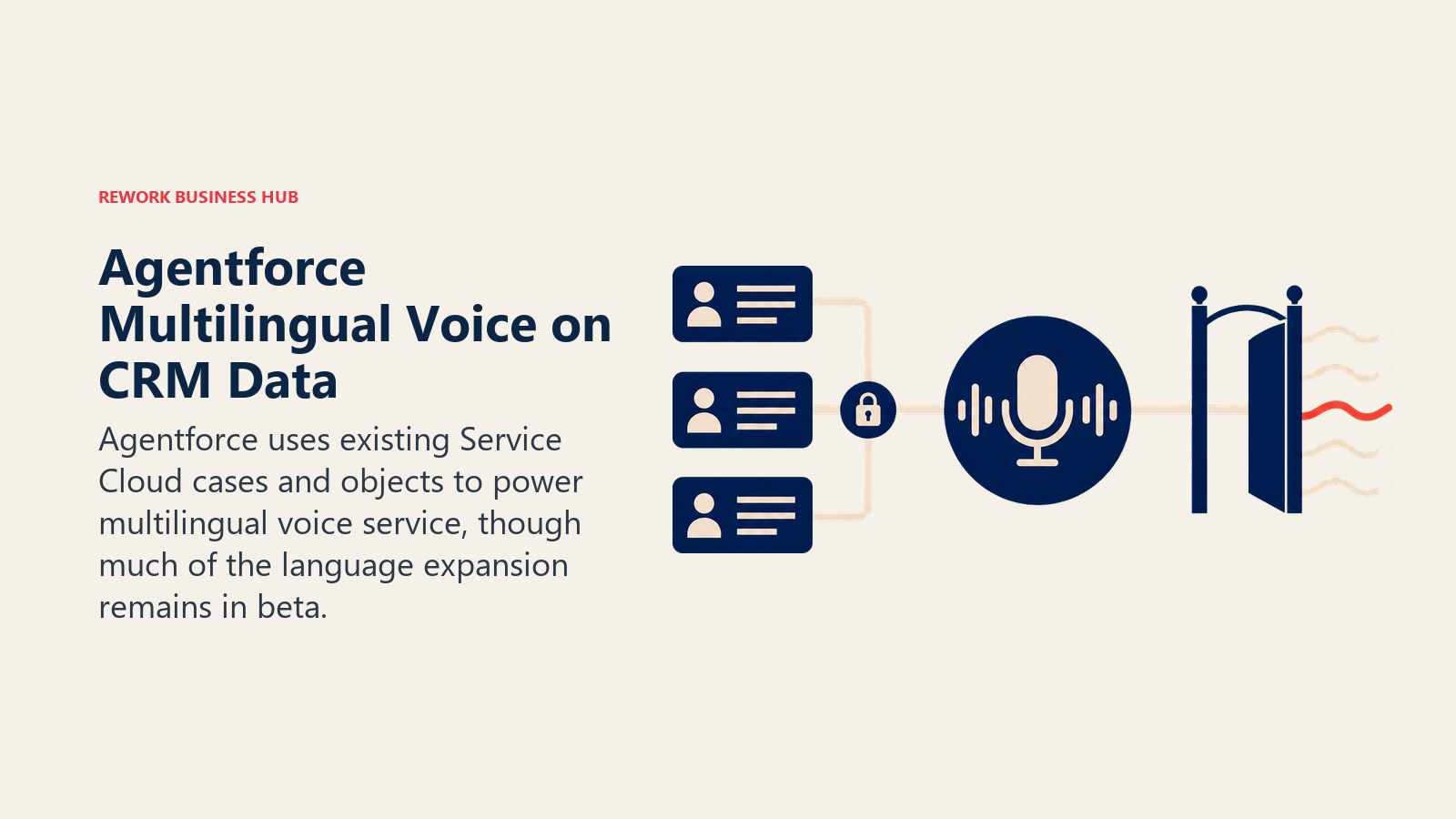
Best for: Teams already running Salesforce Service Cloud who want multilingual voice AI built on case data they already have, rather than a bolt-on integration
Key strengths:
- Agentforce Voice actively expanding, 25+ languages and growing, with regional pushes like Hindi tied to real market demand
- Reuses existing Service Cloud objects and case data instead of standing up a separate multilingual data layer
- Enhanced Chat supports additional languages beyond the original seven (English, Japanese, French, German, Italian, Portuguese, Spanish)
Limitations:
- Most voice language support is still in beta, not a production guarantee for every listed language
- Requires an existing Salesforce Service Cloud license, not a standalone product
- Real cost is hard to forecast until you know actual multilingual conversation and voice-action volume
Pricing: $2 per conversation for customer-facing agents, or $500 per 100,000 Flex Credits (agent actions cost 20 credits, voice actions cost 30). Foundations tier includes 200,000 Flex Credits. Requires a Salesforce Service Cloud license.
| What you get | What you don't |
|---|---|
| Agentforce Voice actively adding languages | Most voice language support still in beta |
| Built on existing Service Cloud case data | Requires an existing Salesforce license |
| Enhanced Chat covers more languages than voice | Usage-based cost hard to forecast up front |
For how this compares to a lighter AI-in-CRM approach, see Rework vs Salesforce Agentforce.
9. DeepL: The Highest-Accuracy Engine, Now API-First for Helpdesks
DeepL's translation quality is still the benchmark most competitors get compared against, particularly for European language pairs. What changed for support teams specifically is the integration path: DeepL's native Zendesk marketplace app was discontinued on October 1, 2025, and teams now connect DeepL to a helpdesk through its browser extension or a direct API call instead of a dedicated app.
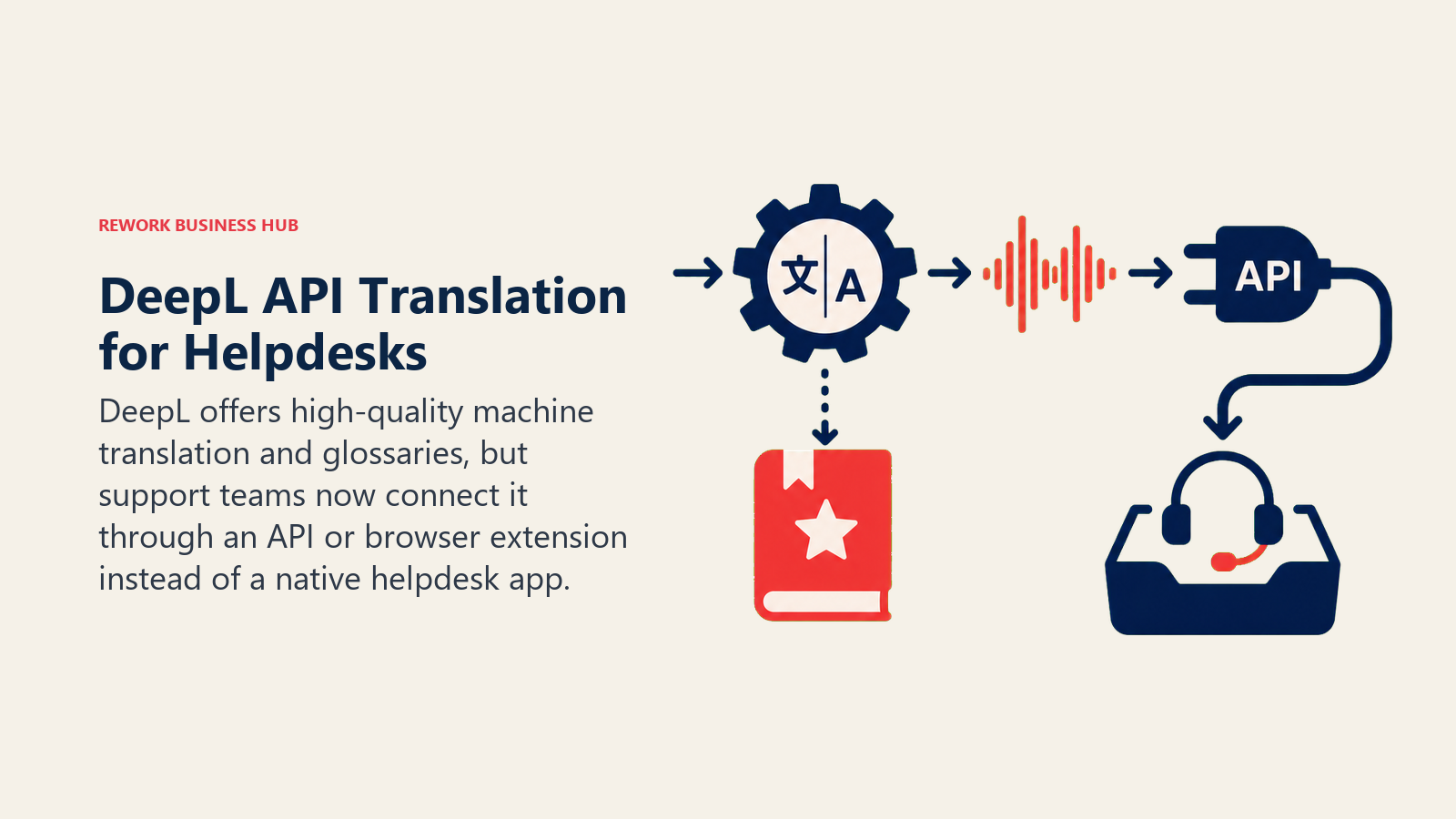
Best for: Teams that want the most accurate machine translation available and are willing to wire it into their own support workflow via API or browser extension, rather than buying a purpose-built CX translation layer
Key strengths:
- Consistently rated highest for translation nuance among independent evaluators, for the languages it covers
- API pricing includes a genuinely usable free tier (500,000 characters/month) before any paid commitment
- Glossary support keeps brand terms and product names consistent across translated replies
Limitations:
- Fewer supported languages than Google Translate or Language I/O, especially outside Europe and major Asian languages
- No native Zendesk app anymore, requires an API integration or browser extension instead of a marketplace install
- No built-in support-specific workflow, review routing, or ticketing context, it's a translation engine, not a CX platform
Pricing: Free (50,000 characters/month); Starter $10.49/mo; Advanced $34.49/mo; Ultimate $68.99/mo. API: Free (500,000 characters/month); Pro $5.49/mo + $25 per million characters; Growth $26/mo; Enterprise custom.
| What you get | What you don't |
|---|---|
| Highest-rated translation quality for covered languages | Fewer supported languages than broader CX-specific tools |
| Genuinely usable free API tier | No native Zendesk app since October 2025 |
| Glossary support for brand-term consistency | No built-in support workflow or ticketing context |
For DeepL's fit against other general-purpose translation engines, see Best AI Translation Tools in 2026.
10. Crowdin: Localizing Help Center Content the Same Way You Localize Product Strings
Crowdin grew out of the developer and open-source localization world, and that shows in how it handles help center content: the same in-context screenshots, string-level QA, and CI/CD-friendly workflow used for product UI strings apply to help articles and knowledge base content too, not just software.
Best for: Product-led teams that want help center localization to run through the same pipeline as their product string localization
Key strengths:
- In-context screenshots show translators exactly how a help article renders, reducing guesswork
- Genuinely usable free tier for smaller teams or open-source-adjacent support content
- AI translation suggestions alongside translation memory keep repeated phrasing consistent across articles
Limitations:
- More oriented toward dev-first teams than marketing or CX teams managing help content independently
- Advanced workflow automation sits behind higher-priced Team+ and Business tiers
- Not built for real-time conversation translation, this is a content pipeline, not a live chat or ticket layer
Pricing: Free; Pro $59/mo; Team $179/mo; Team+ $450/mo; Business custom-quoted (16% discount on annual billing).
| What you get | What you don't |
|---|---|
| Help center content on the same pipeline as product strings | More dev-oriented than CX-team-oriented |
| Genuinely usable free tier | Advanced automation behind higher tiers |
| In-context screenshots reduce translator guesswork | Not built for real-time conversation translation |
11. Smartling: Enterprise Automation for Help Center and Support Content
Smartling's argument is that help center translation shouldn't be a manual export-translate-import cycle every time an article changes. Content connects directly from a CMS or help center platform, routes through AI translation with human review layered in where the content type demands it, and republishes automatically.
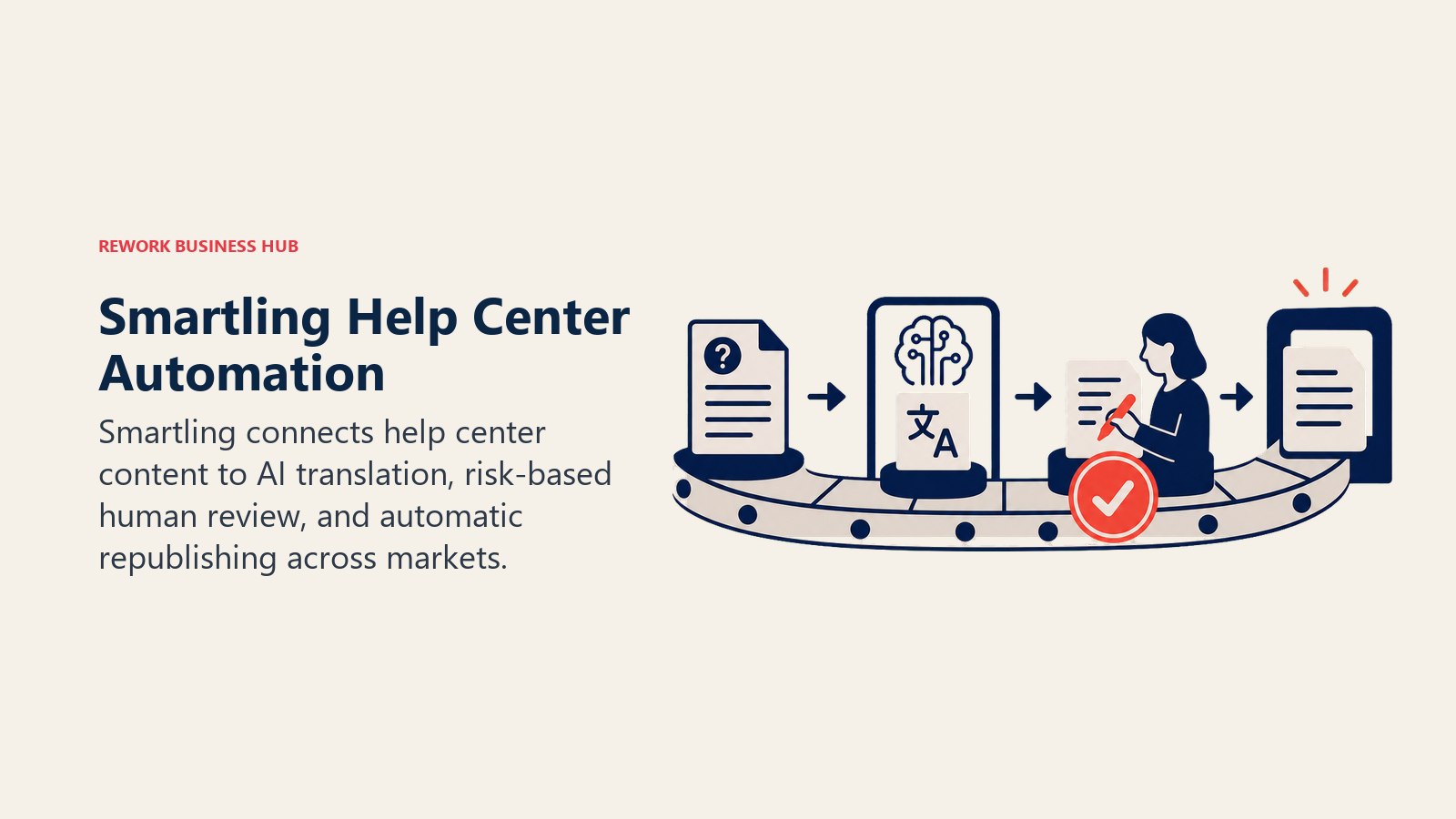
Best for: Enterprise support orgs publishing help center content continuously across many languages who need automated workflows, not one-off translation projects
Key strengths:
- Deep CMS and content-platform connectors automate the translate-and-publish cycle for help center articles
- Configurable workflows route content through AI, human review, or both based on content risk
- Strong reporting and quality visibility for localization managers overseeing multiple markets
Limitations:
- No published list pricing, every deal is custom-quoted based on volume and languages
- Overkill for teams translating occasional help articles rather than continuous content streams
- Implementation and workflow setup takes real time compared to a plug-and-play tool like Weglot
Pricing: Core plan free to start; paid plans custom-quoted based on projected annual word volume and languages, with typical annual contracts ranging from roughly $20,000 for smaller programs to $200,000+ for larger multi-language deployments.
| What you get | What you don't |
|---|---|
| Automated translate-and-publish for help center content | No published list pricing |
| AI-plus-human routing matched to content risk | Overkill below continuous content volume |
| Strong multi-market quality reporting | Real implementation time before it pays off |
12. Weglot: A Multilingual Help Center Live in an Afternoon
Weglot solves a specific problem well: a support or marketing team needs a Zendesk Guide (or other web-based) help center in multiple languages fast, without an engineering project. Install one script tag, and Weglot detects, translates, and serves the entire help center automatically, syncing new articles into every language as they're published.
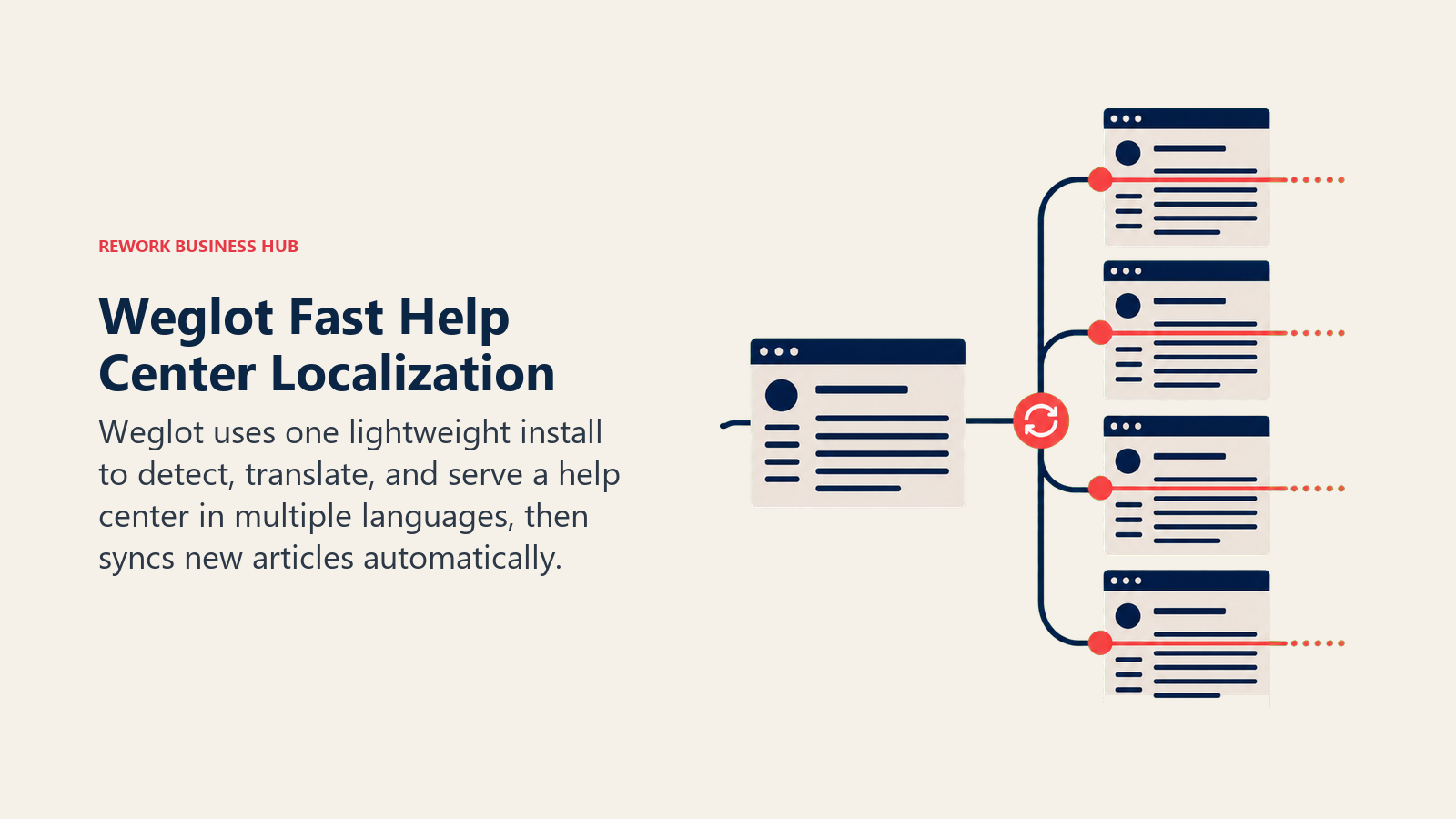
Best for: Support teams that want their self-service help center translated without a development project or a dedicated localization platform
Key strengths:
- Dedicated Zendesk Guide integration installs in minutes via a code snippet, no dev sprint required
- Automatically syncs new help articles into every configured language, so nothing goes untranslated by accident
- SEO-friendly translated URLs and hreflang tags built in, useful if the help center also drives organic search traffic
Limitations:
- Word allowance is a fixed total across the site, not a monthly refill, so growing help centers need to plan tier upgrades
- Translation quality depends on the underlying MT engine; high-stakes articles still benefit from a manual review pass
- Not built for real-time conversation translation or ticket-level multilingual support, this is a content layer only
Pricing: Free (2,000 words, 1 language); Starter $17/mo (10,000 words); Business $32/mo (50,000 words, 3 languages); Pro $87/mo (200,000 words, 5 languages); Advanced $329/mo (1,000,000 words, 10 languages); Enterprise custom.
| What you get | What you don't |
|---|---|
| Zendesk Guide help center live in minutes | Fixed word allowance, not a monthly refill |
| Auto-syncs new articles into every language | Quality still needs review for high-stakes content |
| SEO-friendly translated URLs built in | Content-only, no conversation-level translation |
Pricing at a Glance
| Tool | Entry Price | Pricing Model | Free Tier? |
|---|---|---|---|
| Language I/O | From $958/mo + per-word | Platform fee + usage | No |
| Unbabel | Est. $10,000/mo | Enterprise volume tiers | No |
| Sanas | Advertised free (contact centers) | Free-forever claim, verify per deployment | Yes (per vendor) |
| PolyAI | Est. from $150K/yr + per-minute | Base contract + usage | No |
| Intercom Fin | $0.99/outcome (50-outcome/mo minimum) | Outcome-based | No |
| Zendesk AI Agents | Suite from $55/agent/mo + $1.20-$2.00/resolution | Seat + per-resolution | No |
| Freshworks Freddy AI | $19/agent/mo + $0.49/session | Seat + per-session | No |
| Salesforce Agentforce for Service | $2/conversation or $500/100K credits | Usage-based, requires SF license | Partial (Foundations credits) |
| DeepL | Free; Starter $10.49/mo | Tiered, consumer + API | Yes |
| Crowdin | Free; Pro $59/mo | Tiered, word/seat hybrid | Yes |
| Smartling | Core free to start; custom quotes | Custom, volume-based | Limited |
| Weglot | Free (2,000 words); Starter $17/mo | Word-volume tiers | Yes |
Where This Layer Is Headed
The pattern across nearly every tool on this list is the same: multilingual support used to mean either hiring bilingual agents market by market, or duplicating content into every target language by hand. Real-time translation, whether it's Language I/O sitting on top of an existing helpdesk, Fin translating from one source article into 45 languages, or Sanas neutralizing accents mid-call, is collapsing that into "build once, serve in every language you support." Expect the biggest 2026-2027 competition to happen in voice: Zendesk, Salesforce, and PolyAI are all racing to expand real-time voice language coverage, the hardest and most recently solved piece of this stack, while text and content translation (Language I/O, Crowdin, Smartling, Weglot) is comparatively mature.
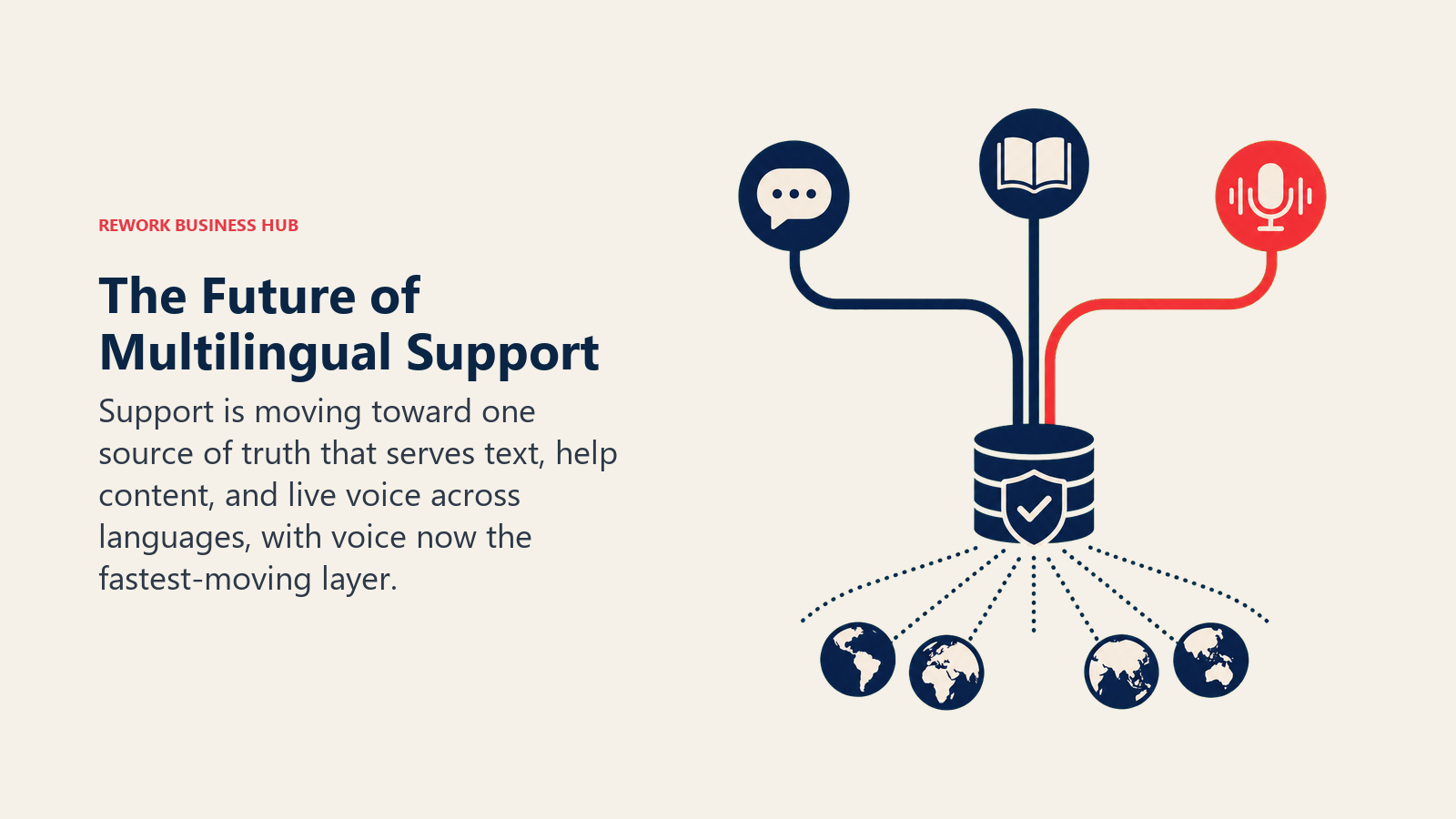
The gap CSA Research keeps finding, that most support teams claim multilingual coverage but most customers don't actually experience it, is the real opportunity here. If your team already handles a few extra languages by improvising with Google Translate and a patient agent, the tools above turn that into an actual capability instead of a workaround. For the resolution-agent and agent-assist layers this guide deliberately sits outside of, see Best AI Tools for Customer Support in 2026, and for the customer success side of the same language question, see Best AI Tools for Customer Success in 2026.
What to Do Next
Start with the actual gap costing you the most: agents fielding tickets in languages they can't read, a help center that only exists in English, or live calls where accent and language differences slow every conversation down. Shortlist two tools against the decision framework above and run a real pilot in your highest-volume non-English market before signing an annual contract, since language quality and coverage vary more in practice than any vendor's marketing page suggests. If your evaluation also spans resolution agents or the agent-assist layer, read this guide alongside Best AI Tools for Customer Support in 2026.

Principal Product Marketing Strategist
On this page
- What Changed in 2026
- Key Facts
- Quick Comparison Table
- Language Coverage Table
- How to Choose: Decision Framework
- Framework: By Team Size and Language Need
- 1. Language I/O: Real-Time Translation Layered Onto the Helpdesk You Already Run
- 2. Unbabel: Human-Reviewed AI Translation for Support at Scale
- 3. Sanas: Real-Time Voice Accent and Speech Translation for Contact Centers
- 4. PolyAI: Enterprise Voice AI That Switches Languages Mid-Call
- 5. Intercom Fin: A Resolution Agent That Answers in 45 Languages From One Set of Content
- 6. Zendesk AI Agents: Extending the AI You Already Pay For Across More Languages
- 7. Freshworks Freddy AI: Multilingual Coverage on a Budget
- 8. Salesforce Agentforce for Service: Multilingual Voice on Data You Already Have
- 9. DeepL: The Highest-Accuracy Engine, Now API-First for Helpdesks
- 10. Crowdin: Localizing Help Center Content the Same Way You Localize Product Strings
- 11. Smartling: Enterprise Automation for Help Center and Support Content
- 12. Weglot: A Multilingual Help Center Live in an Afternoon
- Pricing at a Glance
- Where This Layer Is Headed
- What to Do Next