Best AI Tools for Agile Teams in 2026: 13 Tools for Sprint Planning, Backlog Grooming, and Retros
Turn this article into takeaways for your work.


Each assistant summarizes the article only for you and suggests best practices for your work.
If you run scrum or kanban with an actual engineering team, Atlassian Intelligence inside Jira and Linear's AI agent cover sprint boards and backlog risk for most software orgs, Shortcut and monday dev fit teams that want scrum built in without Jira's setup weight, GitHub Copilot is the AI layer that touches the sprint's real output (code) rather than the planning around it, and Parabol, Geekbot, and EasyRetro handle the specific ceremonies (retros, standups) that a general PM tool treats as an afterthought. This guide ranks 13 tools by the actual agile job you need done, not by which vendor slapped an AI label on a kanban board.
Most "AI tools for agile teams" lists just repeat a generic project-management roundup with a scrum coat of paint. That's not useful when your real question is narrower: does this tool cut the time your team spends manually grooming a backlog before sprint planning, catch a sprint that's about to blow its commitment, or turn a standup into something async engineers don't resent. Each tool below is evaluated on what it does for a specific agile ceremony or dev-team workflow, sized correctly.
Updated July 2026: What Changed
- GitHub Copilot moved to usage-based AI Credits on June 1, 2026. Code completions stay unlimited on every paid plan, but chat, agent mode, code review, and CLI now draw from a monthly credit pool (1 credit = $0.01), replacing the old flat "premium requests" system.
- Linear's Business tier added Code Intelligence and Linear Agent automations, both still in beta, on top of the existing Triage Intelligence rollout, pushing more of Linear's AI value into the $16/user/month tier rather than the $10 Basic plan.
- Height, the AI-native tool many 2025 "best for agile teams" lists recommended for kanban and sprints, shut down on September 24, 2025. This list doesn't carry it forward; Shortcut and monday dev cover the sprint-board-plus-AI use case Height served.
- Atlassian's Rovo credit pools (25/70/150 per seat by tier) are still unmetered for overage as of mid-2026, though Atlassian has flagged usage-based billing is coming with 90 days' notice, the same signal it gave before restructuring other product lines.
- monday dev rebuilt its AI layer around AI Sidekick, a context-aware assistant gated to Standard tier and above, replacing the more generic AI blocks that monday's core product still uses.
Key Facts
- 80% of new developers on GitHub used Copilot within their first week of joining the platform in 2025, per GitHub's Octoverse 2025 report.
- Developers using GitHub Copilot complete coding tasks up to 55% faster than developers without it, per GitHub's own SPACE-framework research.
- Teams in the top-performing 14% are 5.6 times more likely to say AI helps with planning and prioritization, per Atlassian's State of Teams 2026 report.
- AI coordination gaps, reviews, and sign-offs that can't keep pace with AI-accelerated work cost Fortune 500 companies an estimated $161 billion a year, the same Atlassian State of Teams 2026 report found.
- 87% of knowledge workers say they lack the time or capacity to coordinate with teammates while heads-down in execution mode, per Atlassian's State of Teams 2026 research.
- Adoption of the Scaled Agile Framework (SAFe) among agile teams fell to 26% of respondents, a drop of more than 50% from the year before, per Businessmap's analysis of the State of Agile Report.
Quick Comparison Table
| Tool | Best For | Standout Capability | Starting Price | Free Tier? |
|---|---|---|---|---|
| Atlassian Intelligence (Jira) | Sprint planning and backlog risk in engineering-led orgs | Rovo AI chat, search, and agents native to sprint boards | Free (10 users); Standard $7.91/user/mo | Yes |
| Linear | Fast-moving dev teams running cycles instead of sprints | Triage Intelligence auto-routes and flags incoming issues | Free; Basic $10/user/mo | Yes |
| Shortcut | Small-to-mid software teams that want scrum built in, not bolted on | Korey AI agent handles product-engineering workflows | Free (10 users); Team $8.50/user/mo | Yes |
| GitHub Copilot | AI pairing on the actual sprint work: code | Coding agent authored over 1 million PRs in 5 months platform-wide | Free; Pro $10/mo | Yes |
| monday dev | Cross-functional dev squads on a visual board | AI Sidekick + AI-generated sprint summaries | Basic $9/seat/mo + AI credits | 14-day trial |
| ClickUp Brain | Teams that want sprints, docs, and AI in one workspace | Sprint Points and Agile Dashboards under a unified AI layer | Business $12/user/mo + Brain $9/user/mo | Yes (no Brain) |
| Parabol | AI-facilitated sprint retrospectives | Suggest Groups auto-clusters retro cards; unlimited AI summaries on Team | Free (2 teams); Team $8/active user/mo | Yes |
| Geekbot | Async AI-summarized daily standups in Slack/Teams | Sentiment analysis and topic tracking across standup responses | Free (10 participants); Scale-up $3/user/mo | Yes |
| EasyRetro | Lightweight AI-summarized retro boards | AI board summaries plus an AI retro-template generator | Free (1 board/mo); paid from ~$25/mo flat | Yes |
| Swarmia | AI-tracked DORA metrics and sprint delivery health | Tracks AI coding-tool adoption (Copilot, Cursor, Claude Code) alongside DORA | Free (up to 9 devs); paid from ~$4,500/yr | Yes (small teams) |
| Jellyfish | Engineering intelligence at scale for VP Eng and CTOs | Sprint- and initiative-level velocity analytics tied to business outcomes | Custom (~$20-40/dev/mo reported) | No |
| Zeda.io | AI-assisted backlog prioritization tied to customer feedback | AI Product Intelligence clusters feedback into prioritized backlog items | $499/mo (annual commitment) | 14-day trial |
| Rework Work Ops | Cross-team work management for mixed business + eng teams | Opinionated workflows across ops, not scrum-native ceremonies | Project Engine $99/mo billed yearly (5 seats) | No (14-day trial) |
How to Choose: Decision Framework
| If you need... | Pick... | Why |
|---|---|---|
| Sprint planning and backlog risk inside an engineering org already on Jira | Atlassian Intelligence (Jira) | Native to the stack engineering already runs on; Rovo AI included from Standard tier up |
| Fast issue triage and lightweight cycles instead of heavyweight sprints | Linear | Triage Intelligence auto-routes incoming work; built for speed over ceremony |
| A scrum tool that's simple out of the box, not configured into shape | Shortcut | Kanban, sprints, and roadmaps ship pre-built; Korey handles engineering-workflow AI |
| AI that touches the actual code your sprint produces | GitHub Copilot | Pairs directly with development, not just the planning layer around it |
| A visual board for a cross-functional dev squad that isn't all engineers | monday dev | AI Sidekick and sprint summaries without Jira's engineering-only feel |
| One workspace for sprints, docs, and AI together | ClickUp Brain | Sprint Points and Agile Dashboards sit inside the same AI-layered workspace |
| Retrospectives that don't need a human to synthesize sticky notes after | Parabol | Suggest Groups clusters retro input automatically; unlimited AI summaries on Team |
| Standups your engineers actually complete without a meeting | Geekbot | Async, Slack-native, with sentiment and topic tracking built in |
| A lightweight, flat-priced retro tool for a small team | EasyRetro | Flat per-team pricing beats per-seat billing for small squads |
| Delivery health and DORA metrics tied to your AI coding-tool rollout | Swarmia | Tracks Copilot/Cursor/Claude Code adoption alongside deployment frequency and lead time |
| Engineering intelligence a VP or CTO can take into a board meeting | Jellyfish | Ties sprint and velocity data to initiatives and business outcomes, not just burndown |
| AI-assisted backlog prioritization driven by real customer feedback | Zeda.io | Clusters feedback into prioritized backlog items instead of a gut-feel ranking |
| Cross-team work management alongside (not inside) your scrum stack | Rework Work Ops | Opinionated workflows fit mixed business-and-eng teams, not dedicated scrum delivery |
Framework: By Agile Ceremony
| Ceremony | What Matters Most | Best Fits |
|---|---|---|
| Backlog grooming / refinement | AI-assisted clustering, prioritization, estimate suggestions | Zeda.io, Atlassian Intelligence, ClickUp Brain |
| Sprint planning | Capacity awareness, risk flagging, dependency mapping | Atlassian Intelligence, Linear, monday dev |
| Daily standups | Async capture, sentiment/topic tracking, low meeting overhead | Geekbot, monday dev |
| Sprint execution / dev work | AI pairing on the actual code being shipped | GitHub Copilot, Linear |
| Sprint review / demo prep | AI-generated summaries of what shipped | monday dev, ClickUp Brain |
| Retrospectives | Auto-clustering feedback, AI-generated summaries | Parabol, EasyRetro |
| Velocity and delivery health | DORA metrics, historical trend analysis | Swarmia, Jellyfish |
| Cross-team coordination beyond engineering | Opinionated workflows spanning ops and business functions | Rework Work Ops |
If you're weighing this against a broader PM AI stack rather than an engineering-specific one, Best AI Tools for Project Managers in 2026 covers the general planning, resourcing, and status-reporting layer this list deliberately leaves out. And if Jira itself, not just its AI layer, is the thing you're evaluating, Best Jira Alternatives covers the wider field.
1. Atlassian Intelligence (Jira): AI for Sprint Planning and Backlog Risk
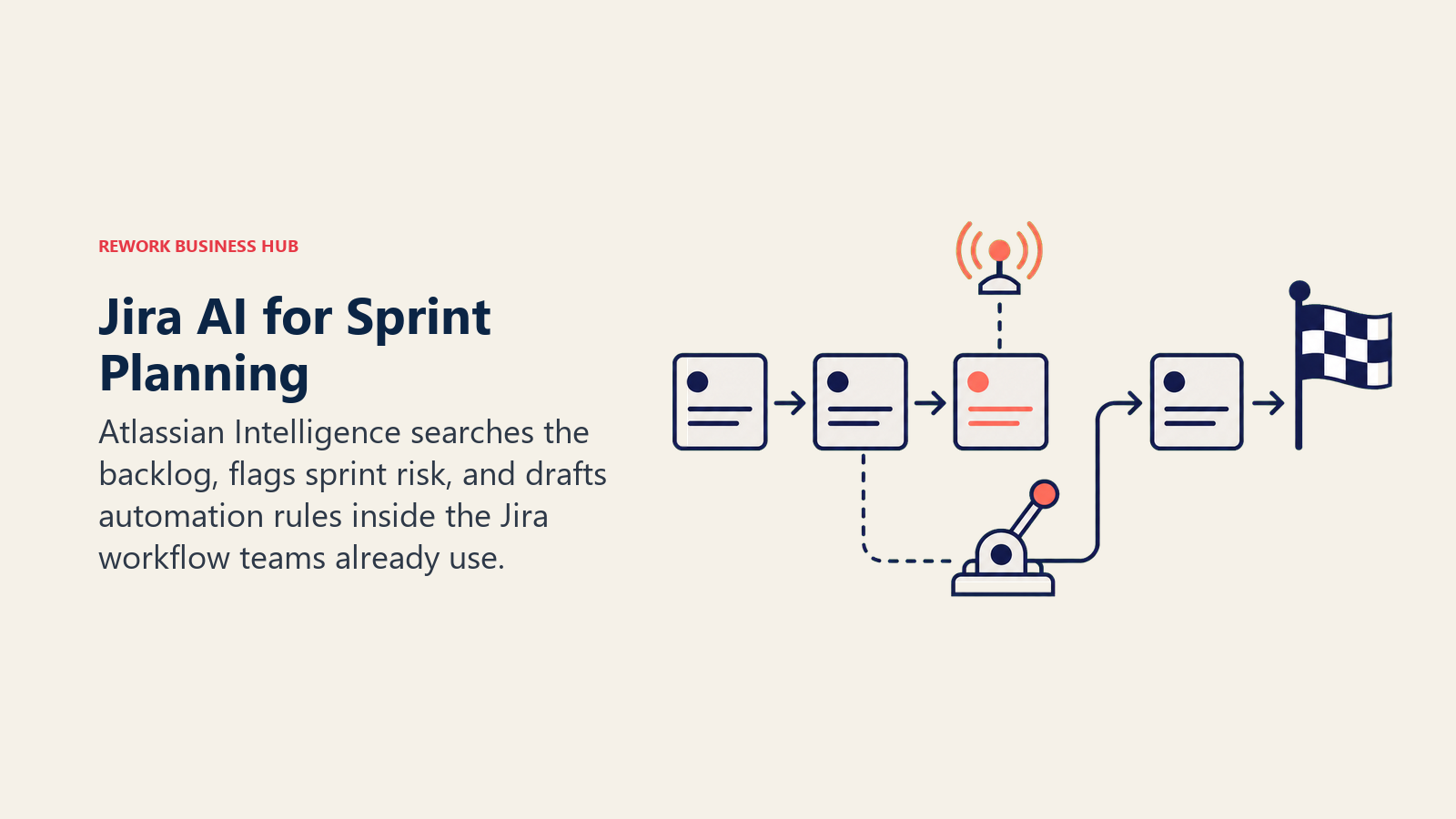
Jira remains the default for teams running scrum or kanban alongside an engineering org, and Atlassian Intelligence (branded Rovo) is now included from the Standard tier up. It handles AI chat and search across your backlog, flags at-risk sprint items from historical patterns, and drafts automation rules without a PM needing to learn Jira's rules-builder syntax first.
Best for: Engineering-led teams running sprint-based scrum or kanban who already live in Jira and want AI native to the backlog and board
Not ideal for: Teams whose engineering work doesn't already run through Jira, or who find Jira's setup overhead heavier than the ceremony needs
| What you get | What you don't |
|---|---|
| Rovo AI included from Standard tier, no separate SKU | Standard's 25 monthly Rovo credits per seat can feel thin under heavy daily use |
| AI-generated automation rules skip the rules-builder learning curve | Usage-based billing above the included allowance is expected, just not active yet |
| Native to the same ecosystem engineering already runs sprints in | Weaker fit if your team's actual delivery work happens outside Jira |
Pricing: Free plan supports up to 10 users. Standard is $7.91/user/month annually. Premium is $14.54/user/month annually, with a larger Rovo credit pool and cross-team planning. Enterprise is custom, annual billing only.
For the wider Jira alternative landscape beyond its AI layer, see best Jira alternatives.
2. Linear: AI Triage for Teams Running Cycles Instead of Sprints
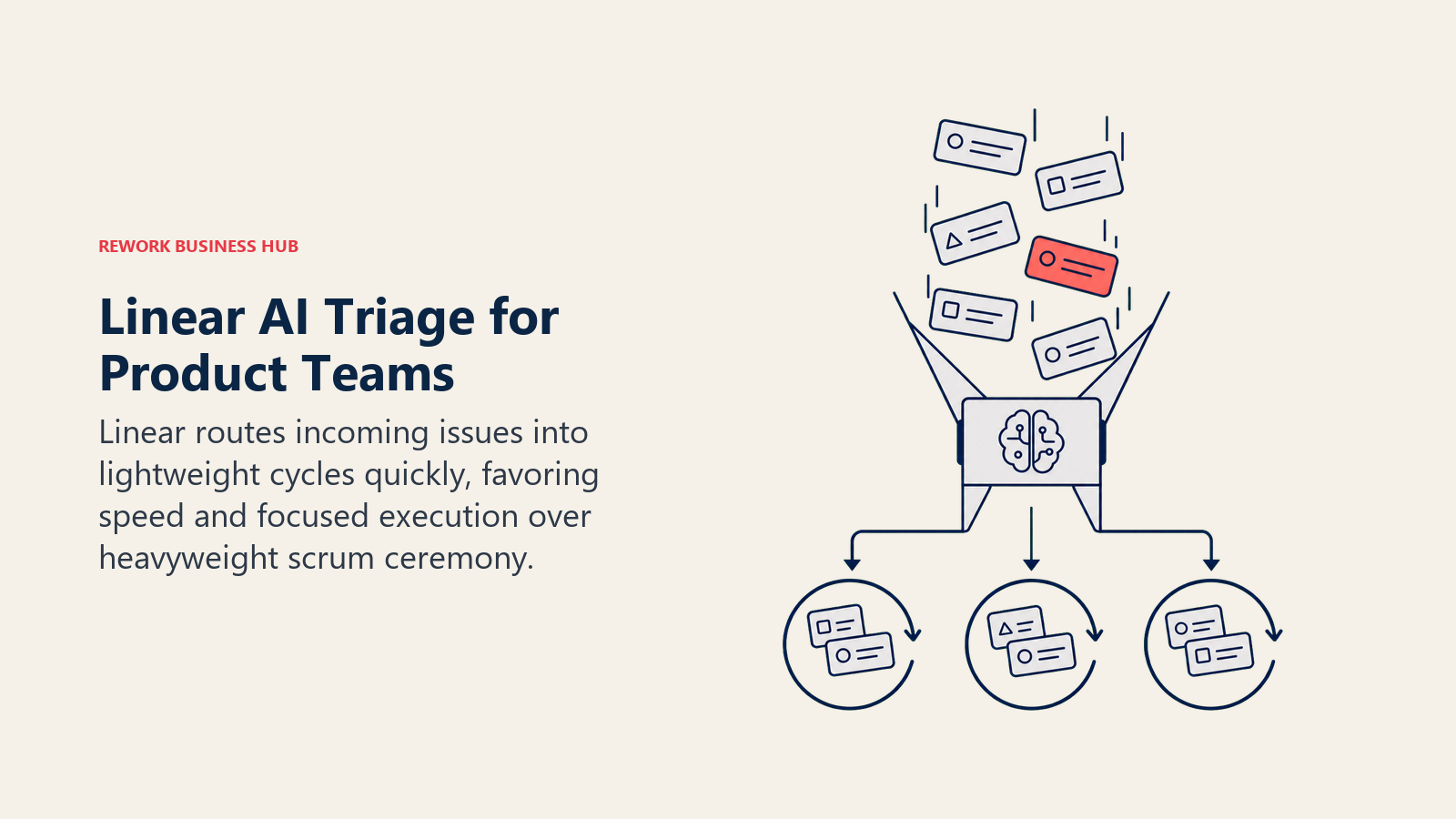
Linear's bet is speed over ceremony: instead of a heavyweight sprint-planning ritual, teams run short cycles, and Triage Intelligence auto-routes and flags incoming issues before a human has to sort them. Business tier adds Linear Agent automations and Code Intelligence, both still in beta, extending the same AI layer from triage into lightweight execution support.
Best for: Fast-moving product and engineering teams that run lightweight cycles rather than formal two-week scrum sprints
Not ideal for: Teams that need heavyweight scrum ceremony (story points, formal sprint commitments, burndown reporting) baked in natively
| What you get | What you don't |
|---|---|
| Triage Intelligence auto-routes incoming issues before manual sorting | Deeper AI (Code Intelligence, Agent automations) is still beta and Business-tier only |
| Fast, opinionated UI built for engineering speed over ceremony | Formal scrum reporting (velocity charts, burndown) is thinner than Jira's |
| Every plan, including free, includes the base agent platform | Free tier caps at 2 teams and 250 issues, tight for anything beyond a pilot |
Pricing: Free supports unlimited members, 2 teams, and 250 issues. Basic is $10/user/month billed yearly. Business is $16/user/month billed yearly, adding Triage Intelligence, Linear Agent automations, and Code Intelligence. Enterprise is custom, annual billing required.
3. Shortcut: Scrum and Kanban Built In, Not Configured In
Shortcut's pitch to engineering teams is that scrum shouldn't require a setup project of its own. Sprints, kanban boards, and roadmaps ship pre-built rather than assembled from scratch, and Korey, Shortcut's AI agent, handles product-engineering workflows like drafting stories and summarizing sprint activity from inside the same workspace.
Best for: Small-to-mid software teams that want scrum and kanban to work out of the box without a week of Jira configuration first
Not ideal for: Large, multi-team engineering orgs that need Jira's depth of cross-project reporting and governance
| What you get | What you don't |
|---|---|
| Sprints, kanban, and roadmaps pre-built, minimal setup required | Less configurable than Jira for complex multi-team governance needs |
| Korey AI agent handles product-engineering workflows from Team tier up | AI feature depth isn't broken out plan-by-plan as clearly as some competitors |
| 12 months free for startups under 50 employees | Free tier caps at 10 users and a single workspace |
Pricing: Free supports up to 10 users on 1 workspace. Team is $8.50/user/month. Business is $12/user/month, adding OKRs and advanced custom fields. Enterprise is custom, with SSO, SCIM, and premier support SLAs.
4. GitHub Copilot: AI That Touches the Sprint's Actual Output
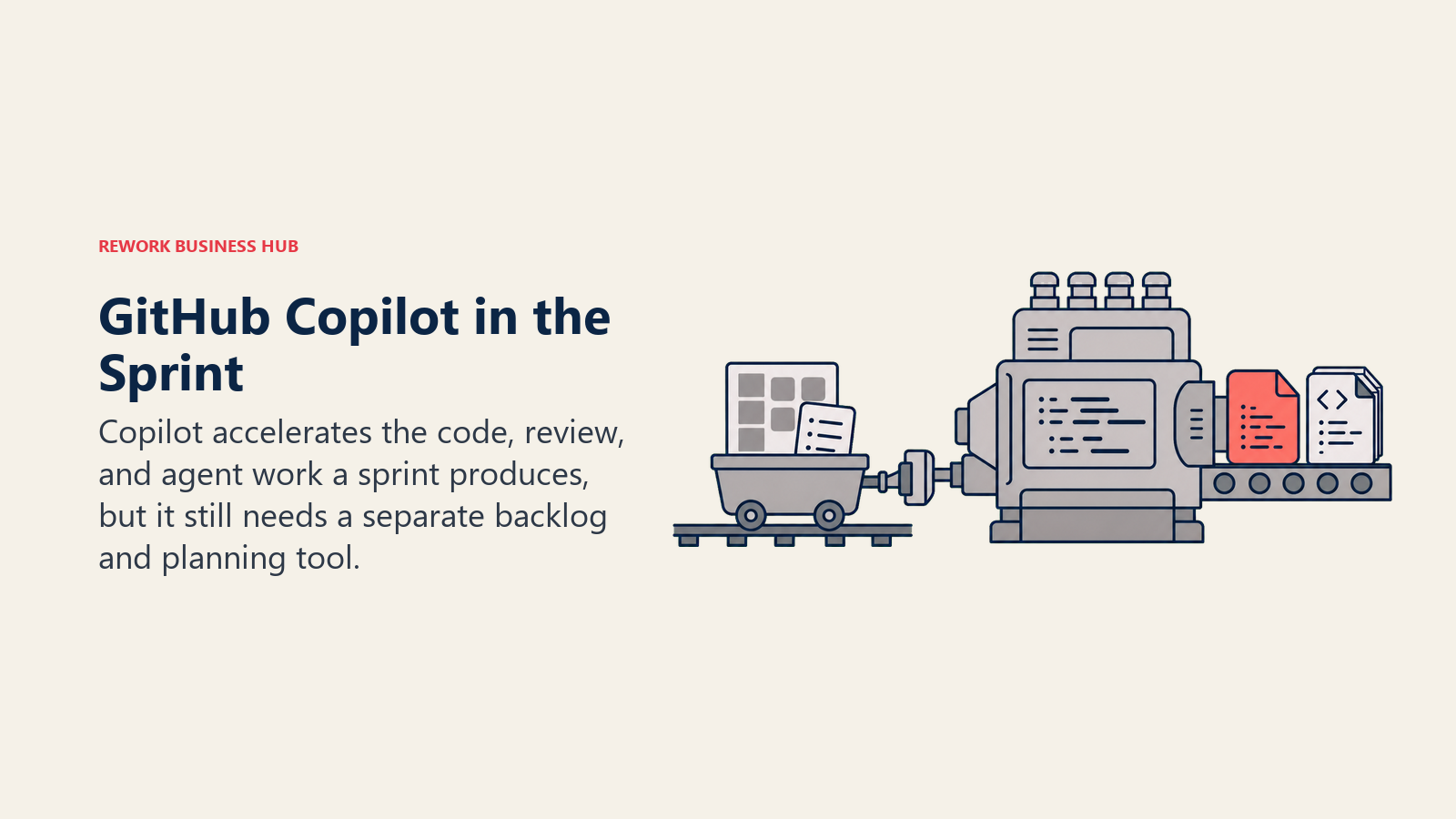
Every tool on this list helps plan, track, or discuss the work. GitHub Copilot is the one AI layer that touches the work itself: the code a sprint actually produces. Since June 1, 2026, Copilot runs on a usage-based AI Credits system where unlimited code completions stay free on every paid plan, but chat, agent mode, code review, and CLI draw from a monthly credit pool.
Best for: Engineering teams whose biggest AI opportunity in the sprint isn't planning better, it's writing and reviewing code faster
Not ideal for: Non-technical roles on a cross-functional agile team; Copilot has no sprint board, backlog, or standup feature at all
| What you get | What you don't |
|---|---|
| Unlimited code completions on every paid tier, no credit cost | No sprint board, backlog, or planning surface of its own |
| Coding agent authored over 1 million pull requests platform-wide in 5 months | Chat, agent mode, and code review now consume metered AI Credits |
| Broadest model access (GPT, Claude, Gemini) of any coding assistant | Needs to be paired with a PM/scrum tool for the ceremonies around the code |
Pricing: Free tier available (2,000 completions, 50 chat requests/month). Pro is $10/month with $15 in monthly AI Credits. Pro+ is $39/month with $70 in AI Credits. Business is $19/user/month with $19 in AI Credits. Enterprise is $39/user/month. Max is $100/month with $200 in AI Credits.
See best GitHub Copilot alternatives if the new credit-metered chat and agent usage doesn't fit your team's budget.
5. monday dev: A Visual Board for Cross-Functional Dev Squads
monday dev extends monday.com's visual-board philosophy to software teams that aren't purely engineering, product managers, designers, and QA sharing a sprint board with developers. AI Sidekick, gated to Standard tier and up, drafts sprint summaries and answers context-aware questions about the board without leaving the view.
Best for: Cross-functional dev squads (eng plus product, design, QA) who want a visual board instead of Jira's engineering-first feel
Not ideal for: Engineering-only teams that would rather have Jira's deeper backlog and release-management tooling
| What you get | What you don't |
|---|---|
| Visual board designed for mixed eng/product/design squads | AI Sidekick's deeper capability is gated to Standard tier and above |
| AI-generated sprint summaries and daily standup features on Basic | Automation and integration actions are capped by tier (250/mo on Standard) |
| 14-day free trial, no credit card required | AI credits are a required part of the pricing model, not a bundled freebie |
Pricing: Basic is $9/seat/month annually, including AI credits and AI sprint summaries. Standard is $12/seat/month, adding AI Sidekick (lite) and GitHub two-way sync. Pro is $20/seat/month, adding cross-team roadmap views. Enterprise is custom, with AI Sidekick (plus) and expanded automation limits.
6. ClickUp Brain: Sprints, Docs, and AI in One Workspace
ClickUp's Agile Dashboards and Sprint Points features give it native scrum functionality, and ClickUp Brain layers AI across that same workspace, docs, tasks, and chat included, so a scrum master can groom a backlog, draft a sprint summary, or search a spec without switching tools.
Best for: Teams that want sprints, documentation, and AI assistance in a single workspace instead of stitching Jira, Confluence, and a chat tool together
Not ideal for: Teams that want scrum reporting as polished and battle-tested as Jira's out of the box
| What you get | What you don't |
|---|---|
| Native Agile Dashboards and Sprint Points, not a bolted-on scrum plugin | Brain is billed per workspace member, not per active AI user |
| Unified AI across docs, tasks, and chat in one workspace | More setup time needed before views feel as clean as a purpose-built scrum tool |
| Cheaper base plans than dedicated engineering PM tools | Everything AI tier ($28/user/mo) pushes cost close to enterprise PM software |
Pricing: Free Forever plan available. Unlimited is $7/user/month annually. Business is $12/user/month annually. Enterprise is custom. ClickUp Brain adds $9/user/month on top of any paid plan, billed per workspace member.
7. Parabol: AI-Facilitated Sprint Retrospectives
Parabol treats the retrospective as a specific, ownable problem, not a generic meeting. Suggest Groups automatically clusters similar retro cards as the team submits them, and AI Meeting Summaries turn the whole session into a shareable recap without someone manually typing up sticky notes after the call ends.
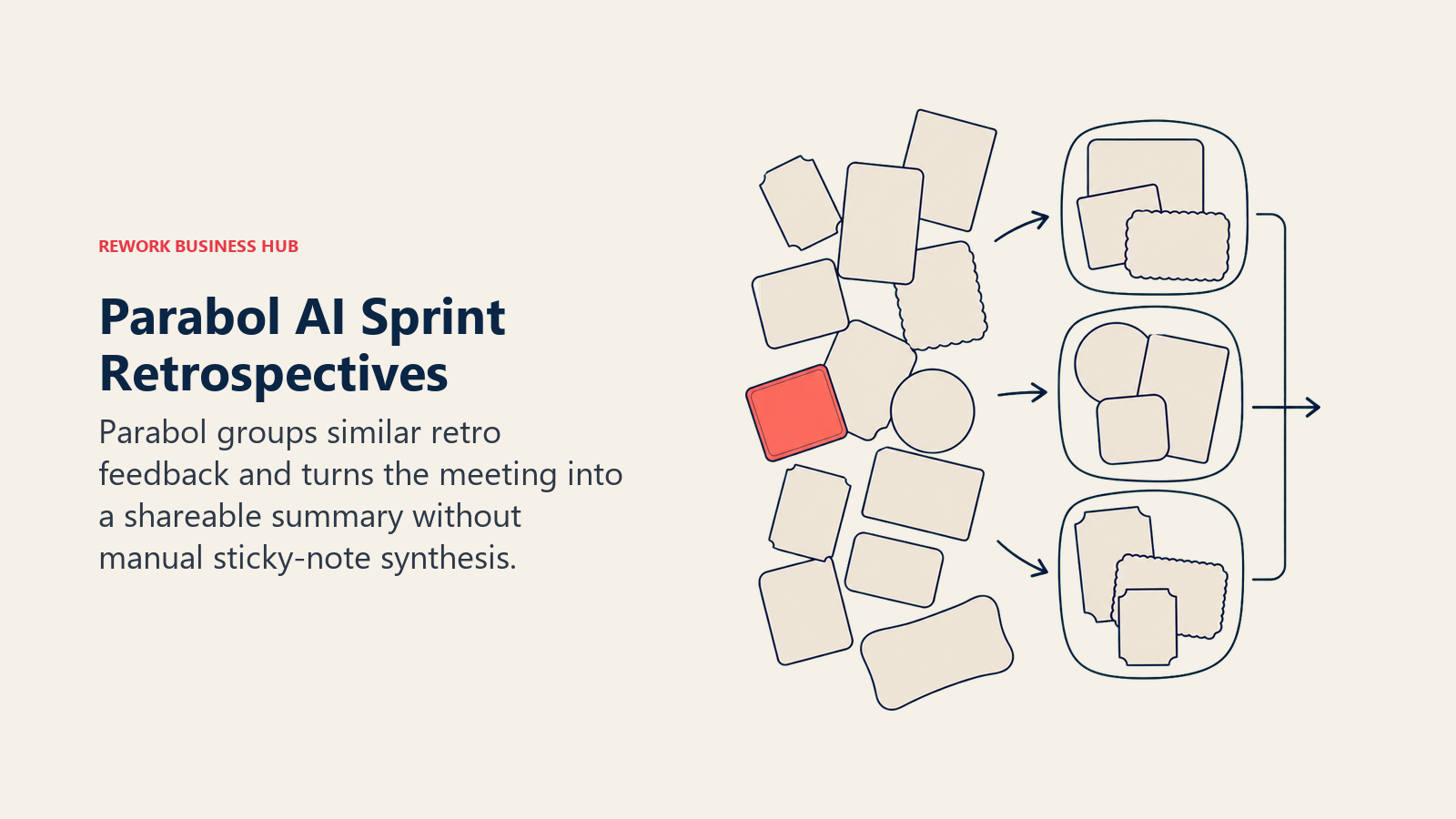
Best for: Scrum teams that run frequent retros and want the synthesis work (clustering themes, writing the recap) handled by AI, not a volunteer
Not ideal for: Teams looking for a full sprint-management tool; Parabol is a meeting/ceremony tool, not a backlog or board
| What you get | What you don't |
|---|---|
| Suggest Groups auto-clusters retro cards as they come in | Not a sprint board or backlog tool; pairs alongside one |
| Unlimited AI meeting summaries on the Team plan | Free plan caps at 2 teams and 10 meetings per month |
| Flat per-active-user pricing, inactive users don't count toward billing | Deeper security (SAML SSO, SCIM) requires Enterprise |
Pricing: Starter is free for up to 2 teams and 10 meetings per month, with 3 AI retro summaries included. Team is $8 per active user/month, with unlimited AI summaries and Suggest Groups. Enterprise is custom, annual billing, with SSO and on-prem hosting options.
8. Geekbot: Async AI Standups Inside Slack
Geekbot's bet is that a daily standup doesn't need to be a meeting at all. Team members answer a few prompts asynchronously in Slack or Teams, and Geekbot's AI layer runs sentiment analysis and topic tracking across the responses, surfacing morale dips or recurring blockers a scrum master would otherwise have to notice manually.
Best for: Distributed or async-first engineering teams that want standup accountability without a synchronous daily meeting
Not ideal for: Teams that value the real-time discussion a live standup enables; Geekbot replaces the meeting, not the conversation
| What you get | What you don't |
|---|---|
| Fully async standups inside the chat tool your team already uses | No sprint board, backlog, or planning features of its own |
| AI sentiment and topic tracking flags patterns across responses | Free plan caps at 10 participants |
| Volume discounts kick in for teams over 50 active participants | Plus tier's per-participant pricing scales with headcount, no flat option |
Pricing: Free Start-up plan for up to 10 participants. Scale-up is $3/user/month ($2.50 annually) for teams above 10. Plus is $5/participant/month annually ($6 monthly). Enterprise is custom.
9. EasyRetro: Lightweight, Flat-Priced AI Retro Boards
EasyRetro keeps the retrospective simple: a board, 200-plus templates, and, since January 2024, an AI layer that summarizes the board's key themes after the session wraps and generates custom retro formats from a theme and column count. Unlike most tools on this list, it's priced flat per team, not per seat.
Best for: Small agile teams that want a simple, affordable retro tool without per-user billing creep
Not ideal for: Larger orgs needing retro data rolled up across many teams with admin controls and reporting
| What you get | What you don't |
|---|---|
| Flat per-team pricing with unlimited participants on every tier | Free plan caps at 1 public board and 1 survey per month |
| AI board summaries plus an AI template generator | No sprint board or backlog features; retro-only tool |
| 200+ templates covering retros, icebreakers, and post-mortems | Less enterprise tooling (SSO, cross-team rollups) than TeamRetro or Parabol Enterprise |
Pricing: Free plan includes 1 public board and 1 survey per month with unlimited participants. Paid plans run flat-rate, roughly $25-30/month per team depending on region and billing term.
10. Swarmia: AI-Tracked DORA Metrics and Delivery Health
Swarmia doesn't run your ceremonies, it measures whether they're working. It automatically tracks all four DORA metrics (deployment frequency, lead time, change failure rate, MTTR) and, as of 2026, tracks AI coding-tool adoption itself: licenses, active users, and idle seats across Copilot, Cursor, and Claude Code.
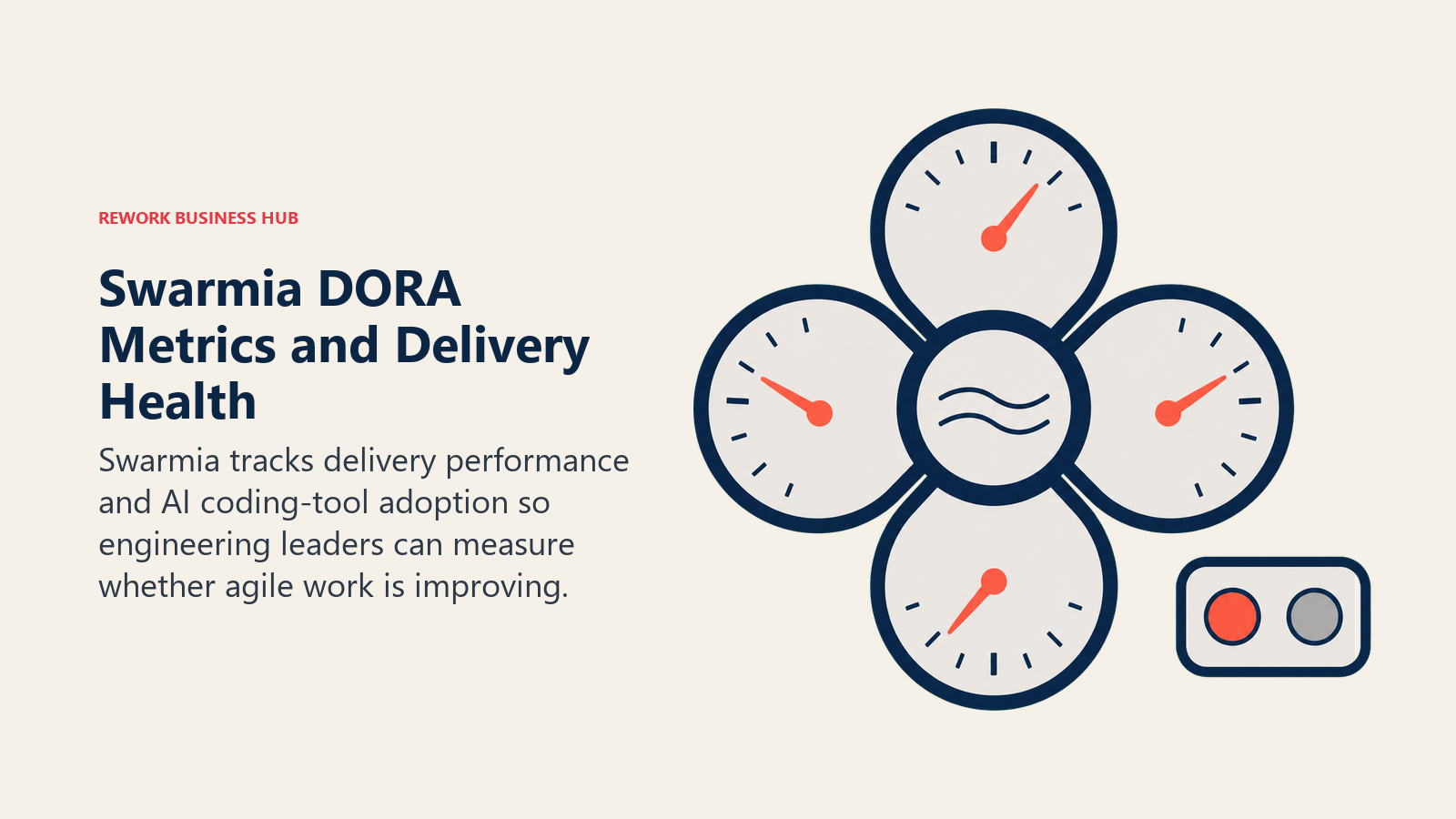
Best for: Engineering leaders who want objective delivery-health data instead of relying on sprint velocity alone to know if agile is working
Not ideal for: Teams without the engineering maturity or GitHub/GitLab/Jira integration depth to make DORA metrics actionable yet
| What you get | What you don't |
|---|---|
| Automatic DORA metric tracking (deployment frequency, lead time, MTTR, change failure rate) | Not a sprint board or backlog tool; sits alongside Jira or Linear |
| AI coding-tool adoption tracking (Copilot, Cursor, Claude Code) built in | Full-suite pricing for 50 developers runs into the tens of thousands annually |
| Developer Productivity module free for teams up to 9 developers | Needs real integration depth (GitHub, GitLab, Jira, Linear) to deliver its value |
Pricing: Free for the Developer Productivity module on teams up to 9 developers. Paid plans are quoted per developer, typically ranging from about $4,500 to $27,000 annually depending on team size and modules purchased; a 50-developer team on the full suite commonly reports $14,300-$24,700 per year.
11. Jellyfish: Engineering Intelligence for VP Eng and CTOs
Jellyfish targets a different buyer than most of this list: not the scrum master running the ceremony, but the VP of Engineering or CTO who needs sprint and velocity data tied to business initiatives for a board conversation. It rolls up delivery data across many teams into investment and outcome reporting rather than a single team's burndown chart.
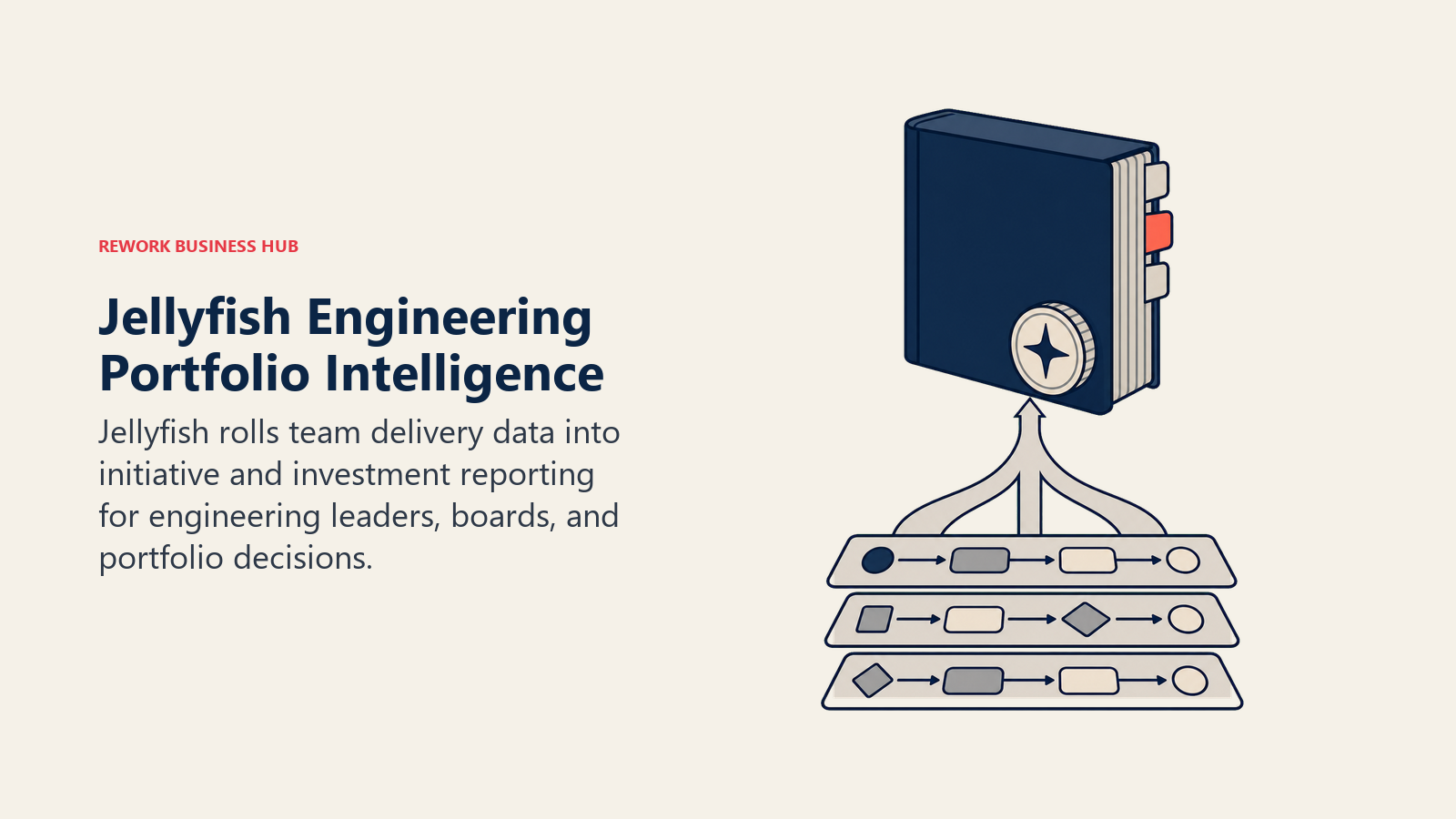
Best for: Engineering leadership at larger orgs who need sprint and velocity data connected to business initiatives, not just team-level reporting
Not ideal for: A single scrum team looking for ceremony-level tooling; Jellyfish operates at the portfolio level, not the sprint board
| What you get | What you don't |
|---|---|
| Sprint and velocity data rolled up to initiative and investment reporting | No published self-serve pricing; every deal requires a sales conversation |
| Built for the VP Eng/CTO reporting layer, not day-to-day ceremony management | Minimum annual contracts commonly start around $30,000 |
| Integrates across many teams' Jira, GitHub, and Linear data | Overkill for a single team or small engineering org |
Pricing: Not published. Buyer-reported figures put per-developer cost around $20-40/month, with minimum annual contracts commonly starting at $30,000 or more; request a quote directly from the vendor.
12. Zeda.io: AI Backlog Prioritization Tied to Customer Feedback
Zeda.io approaches backlog grooming from the product side: instead of grooming based on gut feel or whoever argued loudest in the meeting, its AI Product Intelligence clusters customer feedback, sentiment, and requests into prioritized backlog items, then syncs the prioritized list into Jira or Linear for the engineering team to pull from.
Best for: Product teams that want backlog prioritization driven by clustered customer feedback rather than a subjective ranking exercise
Not ideal for: Teams without a real customer-feedback intake problem to solve; Zeda.io's value is proportional to how much unstructured feedback you're drowning in
| What you get | What you don't |
|---|---|
| AI Product Intelligence clusters feedback into prioritized backlog items | Single-tier pricing with an annual commitment; no cheaper monthly option |
| Direct Jira/Linear sync keeps the prioritized backlog in your engineering tool | Focused on the product-prioritization layer, not sprint execution itself |
| Revenue-first roadmap prioritization ties features to business impact | 14-day trial is short for evaluating a feedback-clustering tool properly |
Pricing: Standard plan starts at $499/month, billed on an annual commitment. A 14-day free trial and a 90-day money-back guarantee are available; contact sales for exact pricing at scale.
13. Rework Work Ops: Cross-Team Work Management, Not Scrum-Native
Rework's Work Ops product is honest to include here with a caveat: it's built for cross-team operations, opinionated workflows and service flows spanning sales, ops, and delivery, not dedicated engineering scrum. It fits a mixed team where "agile" means a lightweight kanban-style workflow shared across business and technical roles, not a pure dev team running story points and velocity charts.
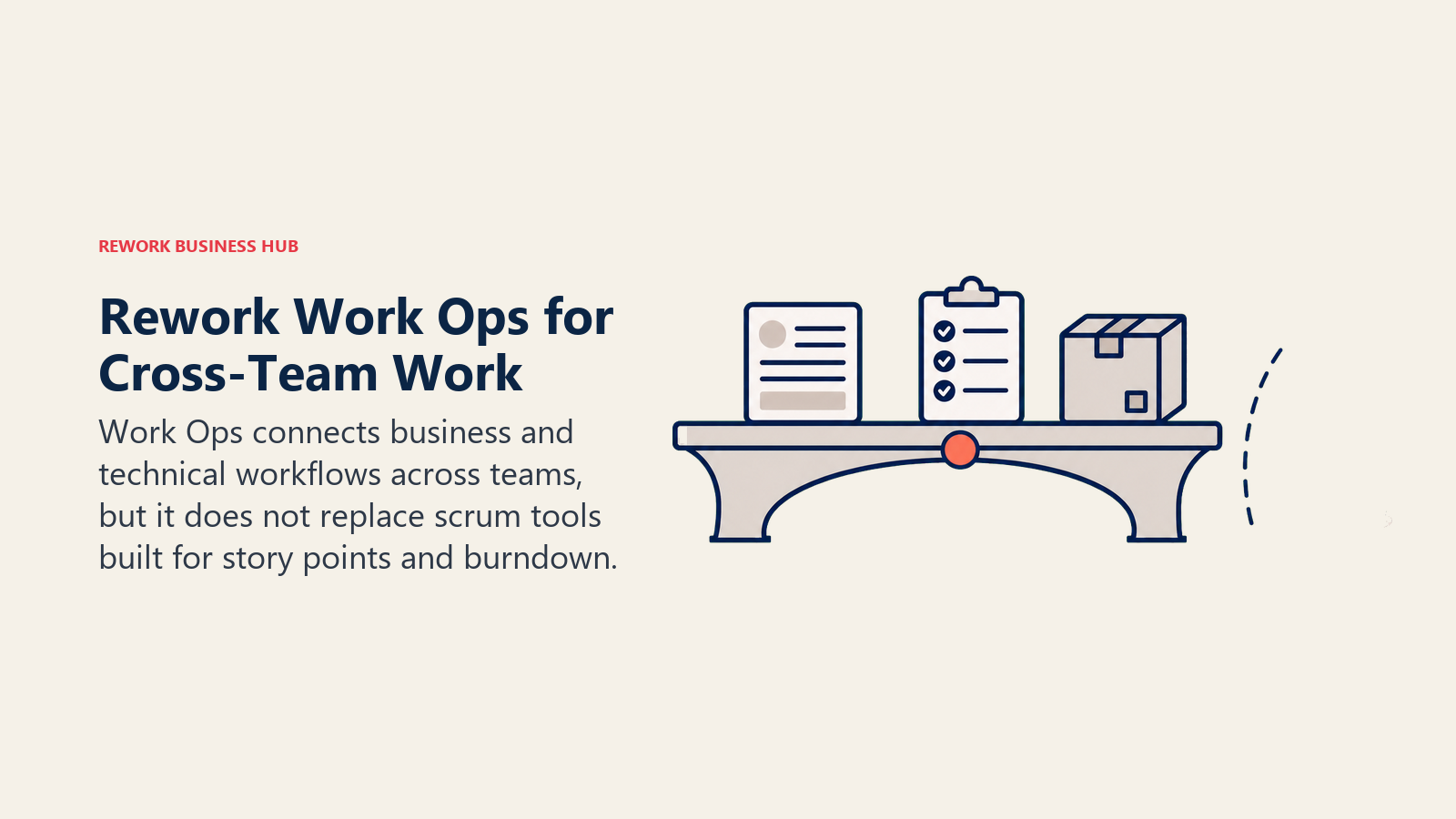
Best for: Mid-size organizations (roughly 10-200 people) that want one workflow tool spanning both business operations and a lighter, cross-functional agile process, not a dedicated engineering scrum stack
Not ideal for: Dedicated software engineering teams that need native story points, velocity charts, sprint burndown, and deep Git integration. Pick Jira, Linear, or Shortcut for that job instead.
| What you get | What you don't |
|---|---|
| Opinionated workflows spanning ops, sales, and delivery in one platform | No native story points, velocity tracking, or sprint burndown charts |
| Fits mixed business-and-technical teams sharing one workflow tool | Not built to replace Jira, Linear, or Shortcut for engineering-only scrum |
| Packaged pricing, no per-seat AI add-on to budget separately | Best suited to 10-200 person orgs, not solo builders or huge engineering orgs |
Pricing: the Project Engine is $99/month billed yearly or $120 month to month, with 5 work seats included. Extra seats come in blocks of 5 at $13/month per block on yearly billing, so 10 seats run $112/month and 25 seats $151/month, billed yearly. See rework.com/pricing for current details.
Pricing at a Glance
| Tool | Entry Price | Pricing Model | Free Tier? |
|---|---|---|---|
| Atlassian Intelligence (Jira) | Standard $7.91/user/mo (AI included) | Per-user; AI credit pool by tier | Yes |
| Linear | Basic $10/user/mo | Per-user, tiered | Yes |
| Shortcut | Team $8.50/user/mo | Per-user, tiered | Yes (10 users) |
| GitHub Copilot | Pro $10/mo | Flat monthly + metered AI Credits | Yes |
| monday dev | Basic $9/seat/mo + AI credits | Per-seat + required AI credits | No (14-day trial) |
| ClickUp Brain | Business $12/user/mo + Brain $9/user/mo | Per-user base + AI add-on | Yes (no Brain) |
| Parabol | Team $8/active user/mo | Per-active-user | Yes (2 teams) |
| Geekbot | Scale-up $3/user/mo | Per-user | Yes (10 participants) |
| EasyRetro | ~$25-30/mo flat | Flat per-team | Yes (1 board/mo) |
| Swarmia | ~$4,500/yr and up | Per-developer, quoted | Yes (up to 9 devs) |
| Jellyfish | Custom (~$30K/yr minimum reported) | Custom, sales-quoted | No |
| Zeda.io | $499/mo (annual) | Single tier, annual commitment | No (14-day trial) |
| Rework Work Ops | Project Engine $99/mo billed yearly (5 seats) | Engine plus seat blocks of 5 | No (14-day trial) |
Where AI in Agile Delivery Is Headed
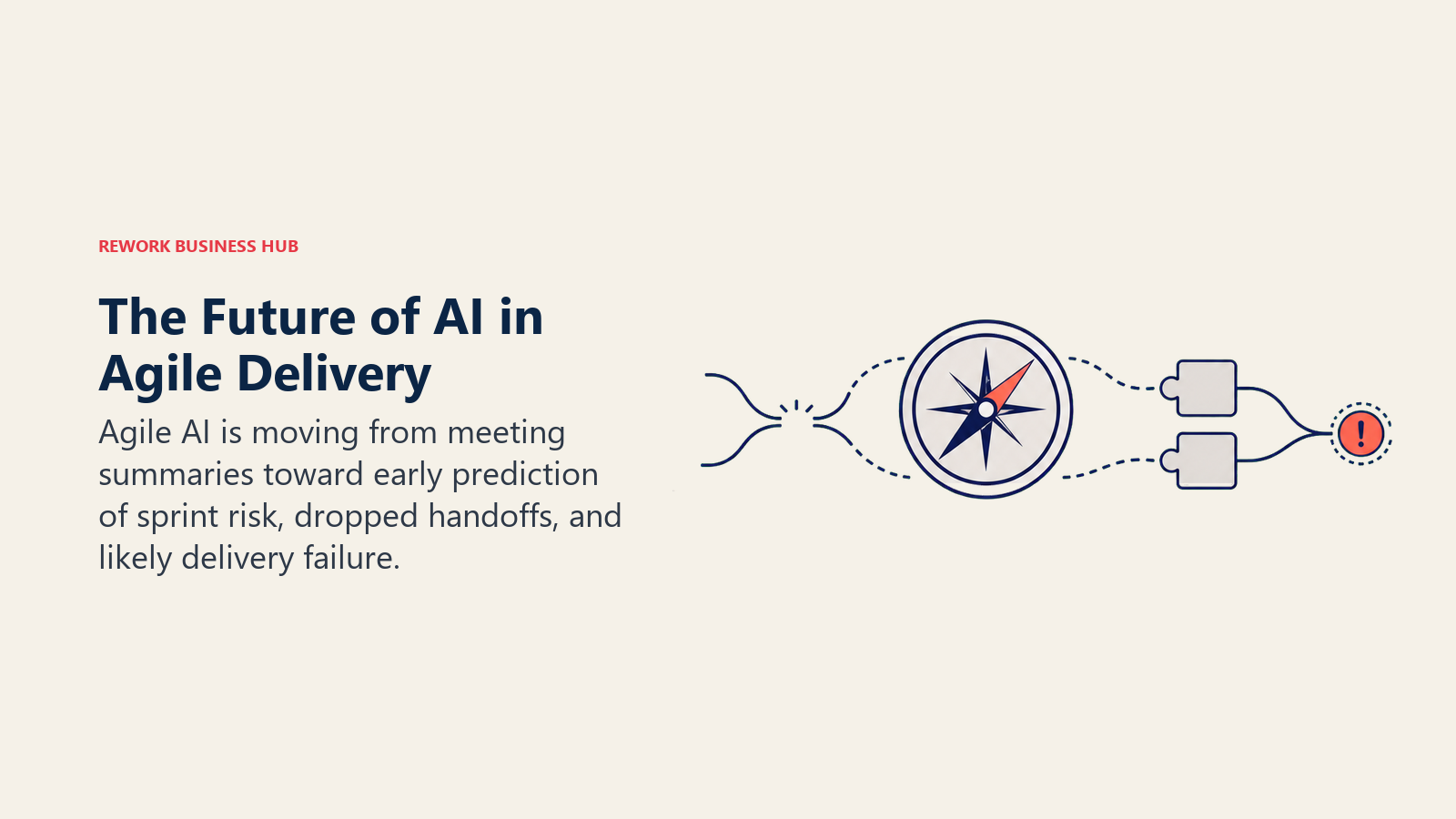
The gap between AI adoption and AI results shows up clearly in Atlassian's 2026 research: most knowledge workers use AI individually, but coordination across a team hasn't kept pace, and that mismatch is costing large organizations real money in dropped handoffs and duplicated work. That's the exact problem sprint ceremonies exist to solve, and it's why the tools gaining ground in 2026 aren't the ones that just summarize a standup after the fact. They're the ones that catch a sprint risk before it happens (Atlassian Intelligence, Swarmia's DORA tracking), or remove a synthesis task a human used to do by hand (Parabol's clustering, Geekbot's sentiment tracking). Expect the next wave to push further into prediction: not "here's what the team said in standup" but "here's which backlog item is most likely to blow the sprint," a harder problem most of these tools are only beginning to tackle.
Frequently Asked Questions about AI Tools for Agile Teams
What is the best AI tool for agile teams in 2026?
There's no single best tool because agile has several distinct ceremonies. Atlassian Intelligence and Linear cover sprint planning and backlog risk, GitHub Copilot covers the actual coding work, and Parabol, Geekbot, and EasyRetro handle retros and standups specifically. Match the tool to the ceremony rather than expecting one platform to do everything well.
Is Jira's AI (Atlassian Intelligence) worth it for a scrum team?
For teams already running sprints in Jira, yes, it's included from the Standard tier ($7.91/user/month) at no extra cost and handles backlog search, risk flagging, and automation drafting natively. It's a weaker pick if your engineering team's actual delivery work happens outside Jira.
What happened to Height, the AI-native agile tool?
Height shut down on September 24, 2025, after roughly seven years in operation, with a six-month transition window for users to migrate their data. Teams that used Height for AI-assisted kanban and sprints have largely moved to Shortcut or monday dev.
Can AI actually predict a sprint will miss its commitment?
Some tools are getting closer. Swarmia and Jellyfish track historical delivery patterns and DORA metrics to flag risk before a sprint ends, and Atlassian Intelligence surfaces backlog and sprint-health signals inside Jira. None of them fully replace a scrum master reading the room, but per Atlassian's research, teams that embed AI into planning and prioritization see meaningfully better outcomes than teams using it only for individual tasks.
Do I need a separate tool for retrospectives, or can my sprint board handle it?
General sprint tools like Jira, Linear, and ClickUp can technically run a retro board, but dedicated tools like Parabol and EasyRetro exist because synthesizing themes from a retro (clustering feedback, writing the recap) is exactly the kind of task AI handles well, and a bolted-on retro feature in a PM tool usually doesn't do that clustering at all.
Are there free AI tools for agile teams?
Yes, with limits. Jira, Linear, Shortcut, GitHub Copilot, Parabol, Geekbot, and EasyRetro all offer usable free tiers, though most cap team size, meeting volume, or usage. Heavier AI features (Linear's Triage Intelligence, monday dev's AI Sidekick, ClickUp Brain) require at least the entry paid tier.
Does Rework work for agile software development teams?
Only partially. Rework's Work Ops product is built for cross-team operations and lightweight, opinionated workflows, not dedicated engineering scrum. It fits a mixed business-and-technical team sharing one workflow tool, but it has no native story points, velocity charts, or sprint burndown. Dedicated software teams should look at Jira, Linear, or Shortcut instead.
Is my sprint and backlog data safe with these AI tools?
Most vendors on this list, including Atlassian, GitHub, and Linear, publish SOC 2 compliance details and standard data processing agreements. Smaller, newer AI-layer tools (Geekbot, EasyRetro, Zeda.io) vary more in published security documentation, so ask directly whether your backlog, code, or standup data trains models beyond your own account before connecting a production repository or customer feedback source.
What to Do Next
Don't adopt all 13 of these at once. Start with whichever ceremony is currently the biggest drag on your team, a backlog nobody's groomed properly in three sprints, a standup half the team dreads, or a retrospective that produces the same three action items every time and never actually changes anything, and pilot one focused tool against it for a single sprint. If backlog quality is the real problem, pair whichever tool you pick with a disciplined backlog refinement process and a clear definition of done; AI can cluster and suggest, but the team still has to agree on what "ready" means. If your estimates keep drifting, read up on story points and velocity in agile before leaning on an AI sprint-summary feature to explain why the last three sprints missed commitment. And if you're still deciding between scrum and kanban as your underlying framework, Scrum vs. Kanban is worth reading before you pick the AI layer on top of it. For the broader AI tool stack beyond agile delivery specifically, Best AI Tools in 2026 covers the top picks across every function.

Principal Product Marketing Strategist
On this page
- Updated July 2026: What Changed
- Key Facts
- Quick Comparison Table
- How to Choose: Decision Framework
- Framework: By Agile Ceremony
- 1. Atlassian Intelligence (Jira): AI for Sprint Planning and Backlog Risk
- 2. Linear: AI Triage for Teams Running Cycles Instead of Sprints
- 3. Shortcut: Scrum and Kanban Built In, Not Configured In
- 4. GitHub Copilot: AI That Touches the Sprint's Actual Output
- 5. monday dev: A Visual Board for Cross-Functional Dev Squads
- 6. ClickUp Brain: Sprints, Docs, and AI in One Workspace
- 7. Parabol: AI-Facilitated Sprint Retrospectives
- 8. Geekbot: Async AI Standups Inside Slack
- 9. EasyRetro: Lightweight, Flat-Priced AI Retro Boards
- 10. Swarmia: AI-Tracked DORA Metrics and Delivery Health
- 11. Jellyfish: Engineering Intelligence for VP Eng and CTOs
- 12. Zeda.io: AI Backlog Prioritization Tied to Customer Feedback
- 13. Rework Work Ops: Cross-Team Work Management, Not Scrum-Native
- Pricing at a Glance
- Where AI in Agile Delivery Is Headed
- What to Do Next