Best Harvey Alternatives in 2026: 10 Legal AI Platforms Compared
Turn this article into takeaways for your work.


Each assistant summarizes the article only for you and suggests best practices for your work.
The best Harvey alternatives depend on who you are. Legora is the closest like-for-like rival for large and mid-sized firms, Thomson Reuters CoCounsel and Lexis+ with Protégé are the picks if your research already runs on Westlaw or Lexis, Clio Work and Vincent fit firms that live in Clio, and Spellbook, Luminance and Eudia are better matches if most of your work is contracts or sits in-house. This guide compares ten of them on who each is built for, how it's sold, what it costs where a price exists, and where it falls short.
Harvey is a strong product, and plenty of firms should stay on it. The reason to look around is usually practical: a seat minimum that doesn't fit a small practice, a research workflow that already depends on another publisher's content, a contract-heavy job that a general platform handles less directly than a specialist, or simply the wish to see a second demo before signing. Nearly every legal AI vendor sells by quote, so this guide says "Pricing on request" wherever a vendor publishes no figure, and labels third-party estimates as reported. Nothing here is legal advice. It describes products.
Key Facts
- 8am's 2026 Legal Industry Report found that 69% of legal professionals use general-purpose generative AI for work, and 34% of firms have adopted legal-specific AI tools, up from 21% a year earlier, per LawSites' March 5, 2026 coverage. The survey is self-reported.
- Harvey says on its homepage that it serves 3,500+ legal organizations and 80+ AmLaw 100 firms. Those are vendor figures.
- Legora raised a $550 million Series D at a $5.55 billion valuation, led by Accel, per Bloomberg Law's March 10, 2026 report.
- Clio completed its $1 billion acquisition of vLex on November 10, 2025, which brought the Vincent AI research product into Clio, per Clio's press release.
- LexisNexis cites Forrester studies it commissioned that put three-year ROI at 344% for large law firms and 284% for corporate legal departments, per its Lexis+ with Protégé page. Both are vendor-commissioned figures.
Why Teams Look Beyond Harvey
Nobody swaps a legal AI platform for fun. Lawyers have built habits, precedents and review steps around the tool they use, and a rollout costs training time and some partner patience. So when people search for Harvey alternatives, one of five things is usually behind it.
- The price is a conversation. Harvey publishes no rates and its homepage offers only a demo request. Third-party reports put it at roughly $1,000 to $1,200 or more per user per month with a 20 to 25 seat minimum and 12-month terms, per Casefleet's pricing roundup. Casefleet is a competitor, so treat that as a reported range, not a quote.
- The firm is too small. If a minimum of twenty-odd seats is the reported floor, a four-lawyer practice isn't the target buyer. Several alternatives have plans written for firms of one to ten attorneys.
- Research content lives elsewhere. If the firm already pays for Westlaw or Lexis, the publisher's own AI sits on top of content you already license, and verification links back to the source.
- The work is mostly contracts or mostly one practice area. A contract specialist, a personal injury platform or an in-house tool can be a tighter fit than a general platform.
- A second opinion before a big commitment. Law firms rarely buy on one demo, and a competing quote tends to sharpen both.
There's a sixth reason that rarely makes it into a search query: the platform has to fit how your people work. A tool that lives in Word, Outlook and your document management system gets used. A tool that asks lawyers to open another tab gets a launch email and a quiet decline. Keep that in mind as you read the vendor sections.
Where Harvey Stands Today
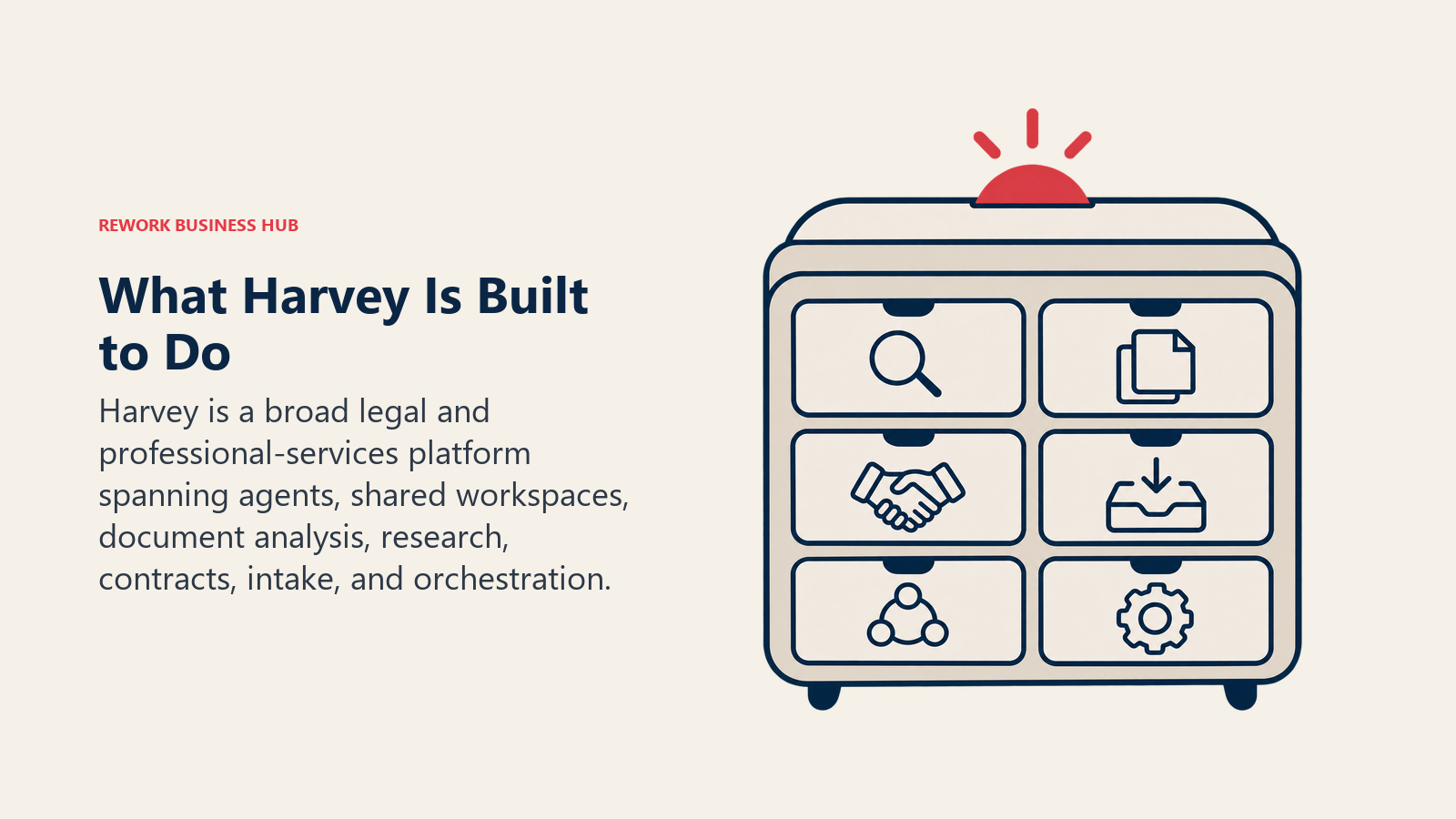
Harvey describes itself as AI software for legal and professional services. Its homepage lists Agents, Spaces for shared workspaces with clients and co-counsel, Vault for document storage and bulk analysis, Knowledge for legal, regulatory and tax research, Command Center for usage analytics, Contract Intelligence, Horizon Scanning, Intake, a Connector Library, and Legal Work Orchestration for assigning work across agents and staff.
The homepage also cites 200,000+ professionals in 85+ countries and customers including A&O Shearman, Latham & Watkins, Reed Smith, KKR, Bayer and Deutsche Telekom. Its headline announces a raise of $550M at a $15.5B valuation. All of that is Harvey's own account of itself.
| Dimension | What Harvey offers | What to ask in a switch decision |
|---|---|---|
| Scope | Research, drafting, contract work, intake and orchestration | Which of these do your lawyers use weekly? |
| Buyer | Large firms and enterprise legal teams (80+ AmLaw 100 firms per its site) | Does your seat count meet the reported minimum? |
| Pricing | Quote-only, seat-based per third-party reports | What does a 12-month term cost at your headcount? |
| Self-serve | None, demo request only | How fast do you need a pilot? |
| Proof | Vendor-published customer counts | Can you speak to a firm of your size? |
Quick Comparison Table
| Tool | Best For | Starting Price | Key Strength | Key Limitation |
|---|---|---|---|---|
| Legora | Law firms and in-house teams wanting a direct Harvey rival | Pricing on request | Agent, Word add-in, tabular review and a mid-sized firm track | Quote-only, no published price |
| Thomson Reuters CoCounsel | Westlaw and Practical Law users | Pricing on request (plans for 1-10 attorney firms) | Grounded in Westlaw and Practical Law content | Value depends on the TR content bundle |
| Lexis+ with Protégé | Lexis users, small to large firms | Pricing on request | Shepard's citation checking and Vault | Quote-only, bundled with content |
| Clio Work and Vincent | Firms already on Clio | Pricing on request | Practice data plus a 1B+ document research library | Best value only inside the Clio ecosystem |
| Spellbook | Contract drafting and review in Word | Pricing on request (7-day trial) | Redlining and playbooks inside Word | Contract-focused, not a research tool |
| Luminance | Enterprise contract review and repository | Pricing on request | Negotiation, repository and workflows | Built for enterprise contract volume |
| DeepJudge | Firms wanting search across their own knowledge | Pricing on request | Searches firm data without migration | Needs well-organized internal data |
| Eudia | Large in-house and government legal teams | Pricing on request | Forward-deployed lawyers and engineers | Enterprise sales motion |
| EvenUp | Personal injury firms | Pricing on request | Demand drafting for PI cases | Built for one practice area |
| Supio | Plaintiff and mass tort firms | Pricing on request | Chronologies, intake and cross-case analysis | Built for plaintiff work |
How the Alternatives Are Sold
Pricing model is a recurring reason to shop around, so here is what each vendor's own pages say about how they sell, and where a third party reports a range, it's labeled.
| Tool | How it's sold | Published rate? |
|---|---|---|
| Harvey | Demo request, seat-based per reports | No (reported roughly $1,000-$1,200+ per user per month) |
| Legora | Book a demo; Agent Pro billed by consumption per reports | No (competitor-sourced reports of about $3,000 per user per year, 10-seat minimum) |
| CoCounsel | Plans by firm size; sales rep above 10 attorneys | Not on the plans page |
| Lexis+ with Protégé | Quote, varies by organization size and content | No, 2-day free trial |
| Clio Work and Vincent | Not stated | No |
| Spellbook | Custom, based on team members on the license | No, 7-day free trial |
| Luminance | Demo request | No |
| DeepJudge | Demo request | No |
| Eudia | Demo request | No |
| EvenUp | Schedule a call or demo | No |
| Supio | Book a demo | No |
Every figure marked reported comes from Casefleet's legal AI pricing roundup. That page lists CoCounsel tiers between about $220 and $500 per user per month, Lexis+ at about $128 (Essential) and $494 (Professional) per user per month, and Spellbook at about $99 for a starter plan and $149 for a professional plan per user per month. None of those come from the vendors, and Casefleet itself says Harvey, Legora and the others publish no official prices. Use them to size a budget conversation and nothing more.
Reading the Numbers Vendors Publish
Every vendor in this guide publishes impressive percentages: Spellbook's 75% time saved, Luminance's 75% reduction in repetitive review, Eudia's 82% time saved at one customer, DeepJudge's 4x first-year ROI, EvenUp's 9+ hours saved per case. They're all self-reported and they measure different things. Time saved on what task, compared with what baseline, measured by whom? A figure drawn from a handful of power users says little about a firm-wide rollout.
Three questions cut through most of it. Who ran the measurement, the vendor or the customer? What was the comparison, a lawyer working unaided or a lawyer with a different tool? And does the customer in the case study look like you in size, practice area and document mix? If a vendor can't answer in writing, run your own pilot.
Fit by Firm Type
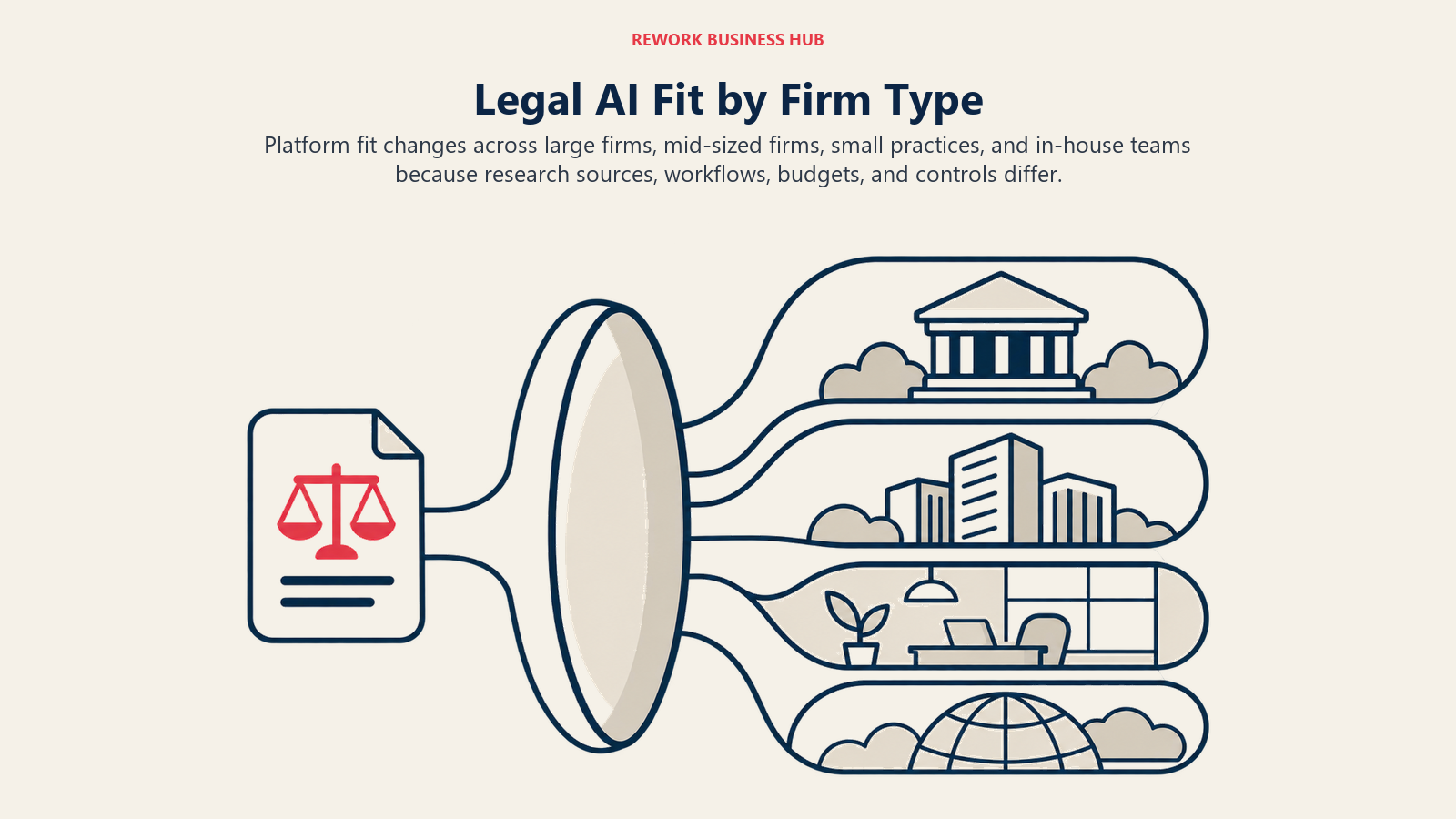
Firm size changes the value of a legal AI platform because research libraries, document systems, review structures, and procurement capacity differ. The matrix below treats fit as an operating-model question rather than a popularity ranking.
| Tool | Large firm | Mid-sized firm | Small firm | In-house |
|---|---|---|---|---|
| Legora | Yes | Yes (dedicated mid-sized firm track) | Confirm with the vendor | Yes (including in-house SMB) |
| CoCounsel | Yes | Yes | Yes (plans for 1-3 and 4-10 attorneys) | Yes (corporate counsel plans) |
| Lexis+ with Protégé | Yes | Yes | Yes | Yes |
| Clio Work and Vincent | Yes (Vincent Enterprise, Clio for Enterprise) | Yes | Yes | Enterprise legal teams |
| Spellbook | Yes | Yes | Yes | Yes |
| Luminance | Confirm with the vendor | Confirm with the vendor | Confirm with the vendor | Yes (enterprise) |
| DeepJudge | Yes | Yes | Confirm with the vendor | Yes |
| Eudia | Not a stated focus | Not a stated focus | Not a stated focus | Yes (large in-house, government) |
| EvenUp | PI firms of any size | PI firms | PI firms | No |
| Supio | Plaintiff firms | Plaintiff firms | Plaintiff firms | No |
Sizing and Persona
| Tool | Typical buyer | Technical skill needed | Deployment style |
|---|---|---|---|
| Legora | Managing partner, innovation lead, GC | Low to medium | Word add-in, web platform, integrations |
| CoCounsel | Research partners, small firm owners | Low | Inside Westlaw and Microsoft 365 |
| Lexis+ with Protégé | Associates, librarians, KM | Low | Platform plus DMS connections |
| Clio Work and Vincent | Firm owners on Clio | Low | Inside the Clio ecosystem |
| Spellbook | Transactional lawyers, in-house counsel | Low | Word and Google Docs add-in |
| Luminance | Legal ops, GC, procurement | Medium | Enterprise platform |
| DeepJudge | KM and innovation teams | Medium | Enterprise search and workflow platform |
| Eudia | GC and legal ops at large companies | Medium | Vendor-supported with forward-deployed staff |
| EvenUp | PI firm owners and case managers | Low | Case-lifecycle platform |
| Supio | Plaintiff firm owners and attorneys | Low to medium | Case platform with integrations |
1. Legora: The Closest Like-for-Like Rival
Legora is the name that comes up first when a firm tells its vendors it's talking to Harvey. Its site calls its core "Legora aOS," described as the agentic operating system for legal work, with an Agent for end-to-end tasks, Monitors for scanning regulation, Lists, Tabular Review, Workflows, Legal Research, Intake, a Word add-in, an Outlook add-in and a mobile app. It organizes its audience by segment: law firms, mid-sized firms, in-house and in-house SMB, plus public sector and private equity. That mid-sized and SMB framing is a real difference for firms below the biggest tier.
On proof, Legora cites a study of 30 customers across nine countries in which 70% said they respond to stakeholders faster and 60% said they accomplish more in the same time. That's a small, vendor-run sample. Its security page lists ISO 42001, ISO 27001, SOC 2 Type II, GDPR and HIPAA. On funding, Bloomberg Law reported a $550 million Series D at $5.55 billion led by Accel on March 10, 2026, which is substantial but well under the valuation Harvey announces on its own site.
| What you get | What you don't |
|---|---|
| Agent, tabular review and Word add-in in one platform | No published pricing |
| Dedicated mid-sized firm and in-house SMB framing | No customer names in the page text |
| Broad security certifications | Consumption billing on the top Agent tier, per Casefleet |
Pricing: Pricing on request. Casefleet reports competitor-sourced figures of about $3,000 per user per year with a 10-seat minimum, and says the top Agent Pro tier has been billed by consumption since June 23, 2026 (reported). Source: legora.com.
Best for: Large and mid-sized firms and in-house teams that want a direct Harvey rival and a second quote. Not ideal for: firms that want a published price.
2. Thomson Reuters CoCounsel: Westlaw and Practical Law Underneath
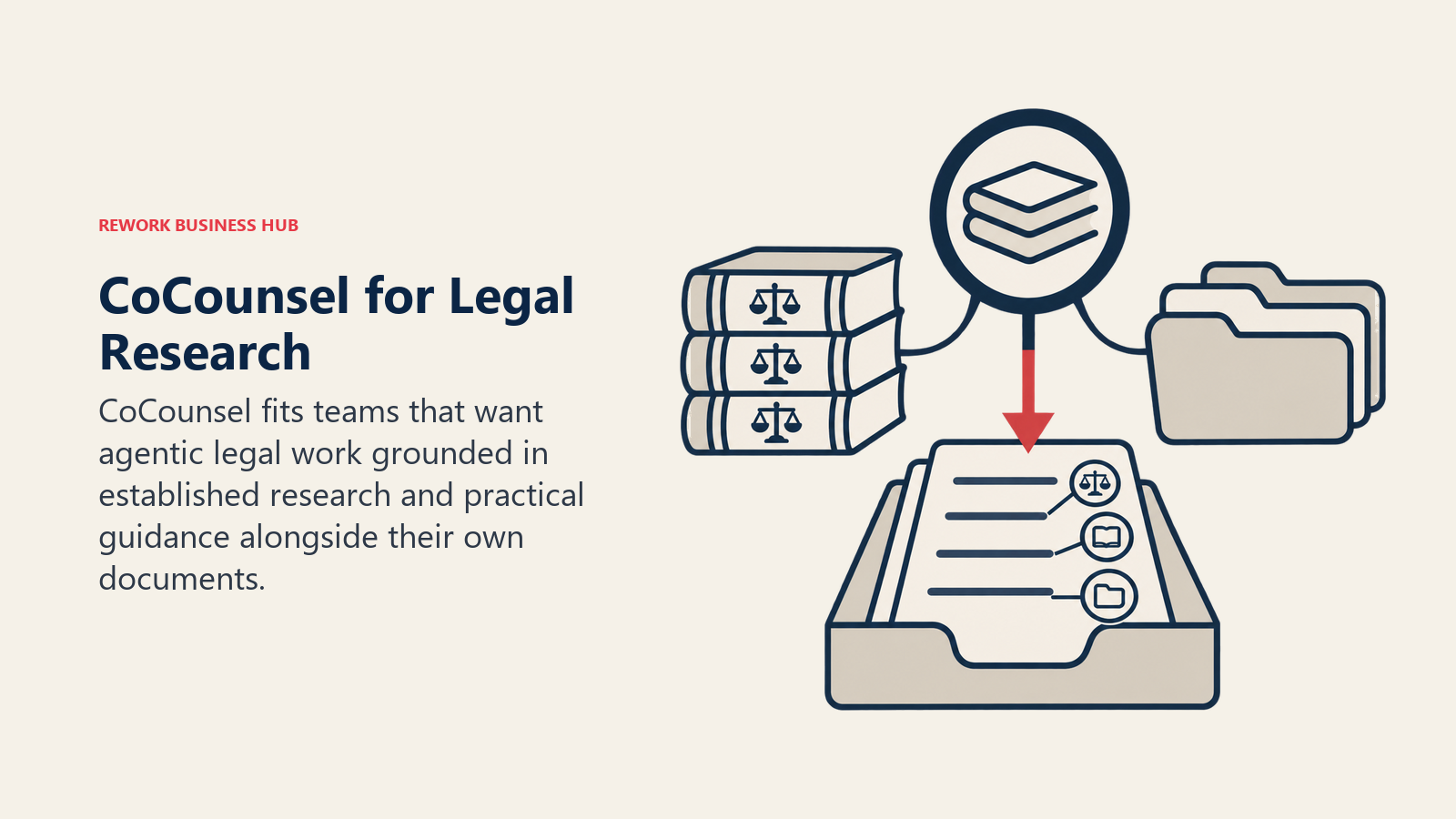
CoCounsel is the pick when your research already runs through Thomson Reuters. Its product page says it builds an inspectable plan from a plain-language description of a matter, draws on Westlaw content, Practical Law guidance covering more than 100 jurisdictions and your own documents, and drafts with linked citations. It includes Westlaw Brief Builder and Tabular Analysis that reviews up to 10,000 documents against 100 questions.
Integrations include iManage, NetDocuments, SharePoint, HighQ, DeepJudge, Smokeball, Box and Litify, plus Word, Outlook and Teams. The page reports Forrester-study results commissioned by Thomson Reuters: 76% agreed it improved research and drafting quality, and the average time spent on document review, research and drafting fell by 33%. Those are the publisher's own commissioned figures.
The plans page is notable for small firms. It lists plans for firms of 1 to 3 attorneys and 4 to 10 attorneys, a separate corporate counsel track and a government track, and asks firms above 10 attorneys to contact a sales rep. That's the most explicit small-firm path on this list.
| What you get | What you don't |
|---|---|
| Westlaw and Practical Law grounding | Cost depends on the content bundle you pick |
| Plans for firms of 1 to 10 attorneys | Prices not shown on the plans page |
| Strong document management integrations | Larger firms go through a sales rep |
Pricing: Pricing on request; the plans page shows no figures. Casefleet reports tiers of roughly $220 to $500 per user per month depending on the bundle (reported). Source: Thomson Reuters.
Best for: Firms and corporate teams that already license Westlaw or Practical Law. Not ideal for: firms that don't want to buy research content with their AI.
3. Lexis+ with Protégé: The Lexis Answer
LexisNexis renamed Lexis+ AI to Lexis+ with Protégé in February 2026, according to its product page. Protégé is the assistant inside the platform, and it drafts agreements, motions, briefs and client communications, researches across LexisNexis content, your organization's knowledge and web sources, and checks citations with Shepard's Verify.
The page describes a Vault that holds up to 50 Vaults of 1 to 500 documents each, reusable agent skills, Workrooms for team collaboration, and connections to iManage, SharePoint and NetDocuments. It targets small and large firms, corporate legal departments, government and academic institutions. Pricing varies by organization size, capabilities and content access, with a 2-day free trial.
The Forrester ROI figures in the Key Facts above were commissioned by LexisNexis, so read them as the vendor's.
| What you get | What you don't |
|---|---|
| Shepard's citation validation | Quote-only |
| Vault for document-based tasks | Vault caps: up to 50 Vaults, 500 documents each |
| Works for small and large organizations | Bundled with Lexis content |
Pricing: Pricing on request. Casefleet reports about $128 (Essential) and $494 (Professional) per user per month (reported). Source: LexisNexis.
Best for: Lexis subscribers who want citation checking built into drafting. Not ideal for: firms standardizing on Westlaw.
4. Clio Work and Vincent: The Practice Management Route
Clio is practice management software that bought itself a research library. On November 10, 2025 it completed a $1 billion acquisition of vLex alongside a $500 million Series G at a $5 billion valuation led by NEA. The release says Vincent, vLex's AI, draws on more than one billion editorially enriched documents across 110 jurisdictions, and names Clio Work as one of Clio's AI capabilities, with Clio for Enterprise as a division for large firms and corporate legal departments.
Clio's product menu describes Clio Work as a way to take on complex legal work, from research and analysis to strategy and drafting, and Vincent Enterprise as citation-verifying AI for large firms and legal teams. The menu mentions 300+ apps that connect to Clio. Pricing for the AI products isn't shown.
The logic is simple. If your matters, time entries and billing already live in Clio, an AI that reads that data and the law together saves a copy-and-paste step.
| What you get | What you don't |
|---|---|
| AI grounded in your matter data and a research library | Pricing not shown |
| Enterprise division for large firms | Best value if you're already on Clio |
| 300+ connected apps | Packaging of the AI products isn't spelled out publicly |
Pricing: Pricing on request. Source: Clio.
Best for: Small and mid-sized firms on Clio, and enterprise teams exploring Clio for Enterprise. Not ideal for: firms on another practice management system.
If you're weighing the whole category beyond Harvey, see best AI tools for lawyers.
5. Spellbook: Contract Work Inside Word
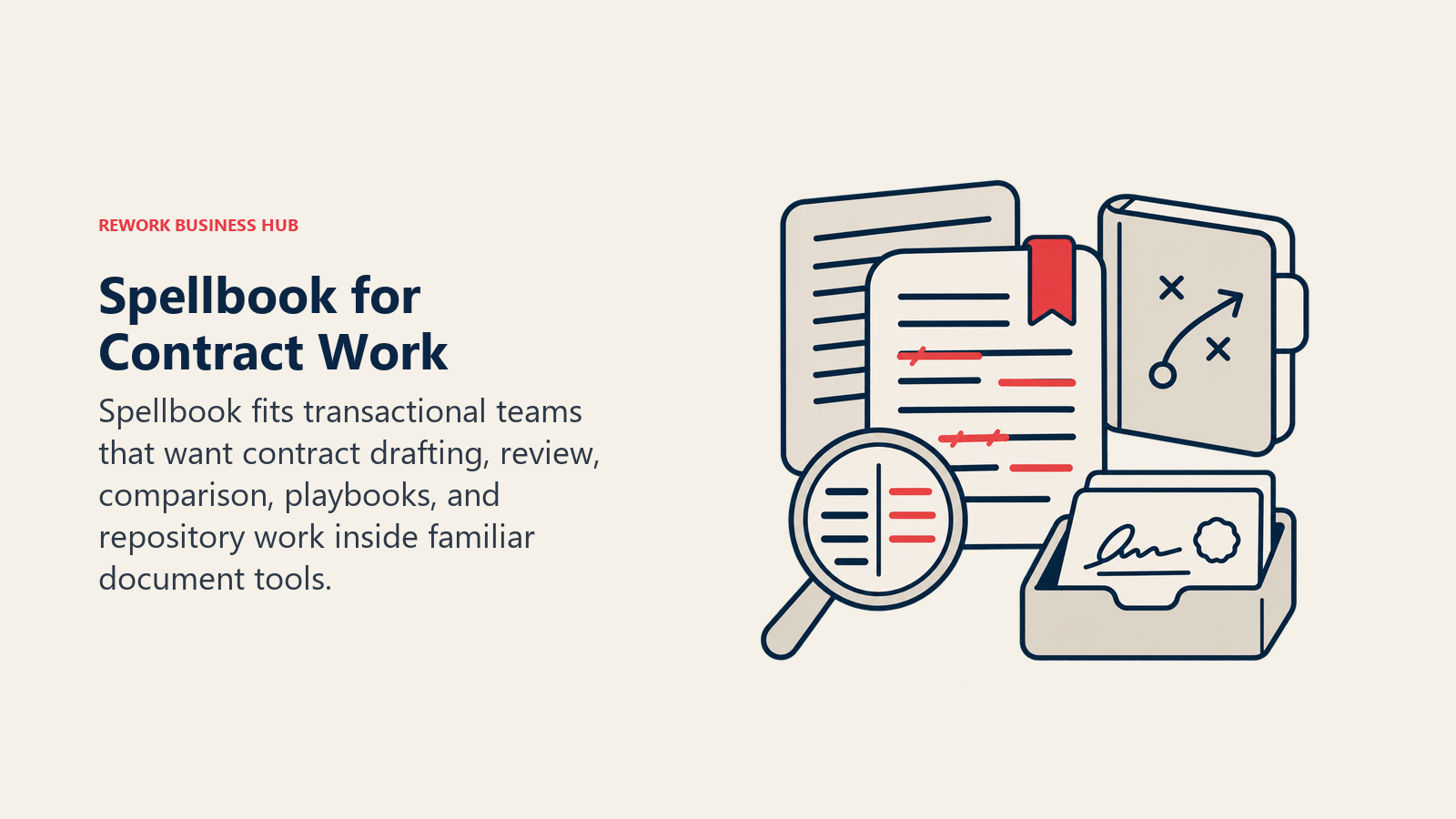
Spellbook is a specialist. Its site calls it "the complete contract AI suite," with Review for redlines and risk, Associate for multi-document workflows, Draft, Compare, Ask, Playbooks that encode your standards, and a Repository for signed contracts. It also announces Autonomous Contract Management as early access. It works inside Word and Google Docs and connects with Slack, SharePoint, iManage and others.
The site says more than 5,000 legal teams and law firms use it and shows a 4.7 rating on G2. It also lists SOC 2 Type II, HIPAA and GDPR compliance and zero data retention by its LLM providers. Its pricing page says pricing is custom and structured around team members on the license, with a 7-day free trial and dedicated support for teams over 10.
If your lawyers spend their week redlining, Spellbook is a tighter fit than a general platform. If they spend it on research and litigation, it isn't.
| What you get | What you don't |
|---|---|
| Redlining and drafting inside Word | Not a legal research platform |
| Playbooks for in-house and firm standards | Quote-only pricing |
| 7-day free trial | Contract-only scope |
Pricing: Pricing on request, 7-day free trial. Casefleet reports about $99 and $149 per user per month for starter and professional plans (reported). Source: spellbook.com/pricing.
Best for: Transactional lawyers and in-house counsel who live in Word. Not ideal for: litigators.
For contract tooling beyond AI assistants, read best contract management software.
6. Luminance: Contract Intelligence at Enterprise Scale
Luminance sells what its site calls a Contract Intelligence Platform: Negotiation, which applies precedent and playbooks during review, Repository, which turns a contract portfolio into insights on risk and obligations, and Workflows from intake through signature. Department solutions cover Legal, Finance, Procurement, Compliance, Sales, Executive and HR.
The site says Luminance is trusted by 1,000+ enterprises and claims a 75% reduction in repetitive contract review work, though it gives no methodology. Security lists ISO 27001 and SOC 2 Type II. It's the pick when the problem is a contract portfolio across a whole company, not a lawyer's research workflow.
| What you get | What you don't |
|---|---|
| Negotiation, repository and workflows | Demo-only, no published pricing |
| Solutions beyond legal (procurement, finance) | Enterprise contract focus |
| Enterprise security posture | Not a research or litigation tool |
Pricing: Pricing on request. Source: luminance.com.
Best for: Enterprises with a large contract estate. Not ideal for: litigation and research-led work.
7. DeepJudge: Search Across What Your Firm Already Knows
DeepJudge starts from a different premise. Per its site, it indexes firm data across SharePoint, OneDrive, DMS, HighQ, email and intranets without data migration, then adds AI workflows with LLM-agnostic agents, negotiation intelligence that finds whether opposing counsel agreed to a point in a past deal, matter overviews and multi-document chat. Thomson Reuters also lists DeepJudge as a CoCounsel integration.
Customers on the site include Greenberg Traurig, Holland & Knight, Cozen O'Connor, Gunderson Dettmer and Homburger. Its vendor-reported figures include 65 hours saved per user per year searching and a 4x first-year ROI. It makes the most sense for a firm with decades of precedent and a knowledge management team to look after it.
| What you get | What you don't |
|---|---|
| Search across your own precedent and matters | Demo-only, no pricing |
| LLM-agnostic workflows | Depends on how organized your data is |
| Pairs with other platforms | Not a standalone research publisher |
Pricing: Pricing on request. Source: deepjudge.ai.
Best for: Mid-sized to large firms with deep internal knowledge. Not ideal for: teams with little internal precedent to search.
8. Eudia: In-House and Government Legal Teams
Eudia targets in-house legal and procurement teams at large companies and government legal work. Its site lists an Assistant with sentence-level citations, Agents for multi-step work returned for human approval, Knowledge across 100k+ agreements, Contracting with redlining inside Word, and Compliance for checking marketing assets against approved claims. It also describes Forward Deployment, with embedded lawyers and engineers building tailored workflows.
Customers shown include Bayer, Cargill, Intuit, Duracell and Dolby, and several US government bodies. The site claims 82% time saved on contract review at Coherent, among other self-reported results. It lists SOC 2 Type II and ISO 27001.
| What you get | What you don't |
|---|---|
| In-house and government focus | No published pricing |
| Embedded lawyers and engineers | Enterprise sales motion |
| Compliance and contracting tools | Aimed at in-house and government teams |
Pricing: Pricing on request. Source: eudia.com.
Best for: General counsel at large companies. Not ideal for: law firms.
9. EvenUp: Personal Injury Demand Work
EvenUp is built for one job. Its site describes an AI platform for personal injury firms that covers the case from intake through trial, including AI-drafted demands, treatment tracking, negotiation support, discovery and medical chronologies. It says more than 2,000 PI firms use it and cites a settlement dataset of 250K+ verdicts and settlements.
The outcome claims on the page, such as +69% likelihood of hitting policy limit and 9+ hours saved per case, are the vendor's own. If you're a PI firm, EvenUp and Supio are the two to demo before any general platform.
| What you get | What you don't |
|---|---|
| PI-specific demand drafting | Only useful for PI work |
| Case lifecycle coverage | No published pricing |
| Settlement dataset | Vendor-reported outcomes |
Pricing: Pricing on request. Source: evenuplaw.com.
Best for: Personal injury firms. Not ideal for: firms in other practice areas.
10. Supio: Plaintiff and Mass Tort Firms
Supio calls itself an agentic legal AI platform for plaintiff law and mass torts. Its site lists Supio Agent for chronologies, demand letters and litigation drafting, firm-level tools for cross-case analysis and mass torts, and Supio Intake. It integrates with Westlaw and case and document management systems and says it's SOC 2 Type II certified and HIPAA compliant.
The site names plaintiff firms as customers and shows case-study results like 437 hours saved across six cases at one firm. Those are vendor claims. The mass tort angle is its clearest difference from EvenUp.
| What you get | What you don't |
|---|---|
| Mass torts and cross-case analysis | Plaintiff-only focus |
| Intake tooling | No published pricing |
| Integrations with Westlaw and case systems | Vendor-reported case studies |
Pricing: Pricing on request. Source: supio.com.
Best for: Plaintiff and mass tort firms. Not ideal for: defense and transactional practices.
Who Should Stay on Harvey
Switching has a cost: retraining, new security reviews and a pilot. Staying put is the right call when:
| Situation | Why staying makes sense |
|---|---|
| Your lawyers use it weekly across research, drafting and contracts | One platform already covers what alternatives split up |
| You're a large firm in the segment Harvey serves | Its customer base looks like you |
| Your concern is only the quote | Ask for a multi-year proposal and a competing quote side by side |
| Your clients or co-counsel already work in Harvey Spaces | Collaboration beats switching |
| Security review is done and approved | A new vendor restarts that clock |
If price is the complaint, get a Legora quote and a CoCounsel or Lexis quote before you decide. A competing proposal is the cheapest negotiating tool you have.
How to Choose: Decision Framework
For wider market context, see best AI agents for legal teams and best AI research agents.
| If you need... | Pick... | Why |
|---|---|---|
| A direct Harvey rival for a big or mid-sized firm | Legora | Agent, Word add-in and a mid-sized firm track |
| Research on Westlaw and Practical Law | CoCounsel | Grounded in Thomson Reuters content, plans for small firms |
| Research on Lexis content with citation checks | Lexis+ with Protégé | Shepard's Verify and Vault |
| AI inside your practice management system | Clio Work and Vincent | Matter data plus a research library |
| Contract redlining in Word | Spellbook | Playbooks and review inside Word |
| Enterprise contract portfolio control | Luminance | Negotiation, repository and workflows |
| Search across your own precedent | DeepJudge | Indexes firm data in place |
| Large in-house legal team support | Eudia | In-house focus, embedded staff |
| Personal injury demands | EvenUp | PI case lifecycle |
| Plaintiff and mass tort work | Supio | Cross-case analysis and intake |
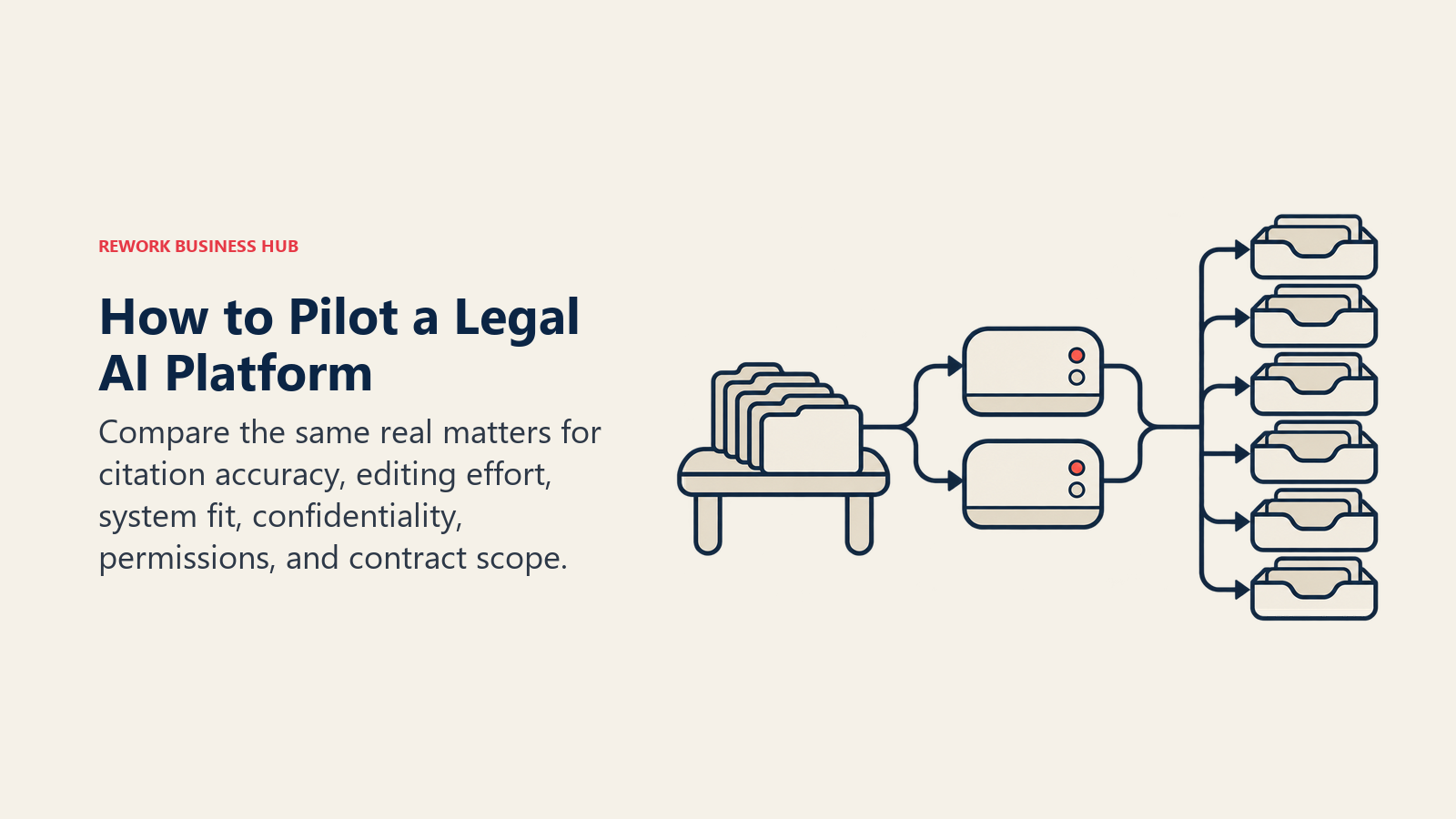
What to Test in a Pilot
| Test | What to measure | Red flag |
|---|---|---|
| Real matters | Same five tasks run in two tools | Vendor chooses the tasks |
| Citation accuracy | Partner checks every cite in a sample | Unverifiable authorities |
| Output editing time | Minutes a lawyer spends fixing a draft | Faster to draft from scratch |
| Fit with Word and your DMS | Does it run where lawyers work? | Lawyers copy and paste |
| Confidentiality terms | Data retention, training and subprocessors in writing | Vague answers |
Run the pilot for at least two to four weeks with a mix of senior and junior users. Pick the matters you most want to speed up, not the easiest ones, since easy tasks flatter every vendor. Have a lawyer review a random sample of outputs against the vendor's own claims. And name an owner. Legal AI without a champion tends to fade after the first month, whichever vendor you choose.
For support staff workflows, best AI tools for paralegals covers the adjacent tools. Teams planning a broader AI rollout beyond legal can start with best AI agent platforms and best AI agents for enterprise. In-house teams buying alongside procurement may also read best AI agents for procurement.
What to Do Next
Pick two alternatives that match your firm type, ask each for a pilot on the same five real matters, and compare the edited output and the quote side by side. If neither beats your Harvey proposal on a like-for-like basis, you've got your answer, and you'll negotiate from evidence.

Co-Founder, Rework.com
On this page
- Key Facts
- Why Teams Look Beyond Harvey
- Where Harvey Stands Today
- Quick Comparison Table
- How the Alternatives Are Sold
- Reading the Numbers Vendors Publish
- Fit by Firm Type
- Sizing and Persona
- 1. Legora: The Closest Like-for-Like Rival
- 2. Thomson Reuters CoCounsel: Westlaw and Practical Law Underneath
- 3. Lexis+ with Protégé: The Lexis Answer
- 4. Clio Work and Vincent: The Practice Management Route
- 5. Spellbook: Contract Work Inside Word
- 6. Luminance: Contract Intelligence at Enterprise Scale
- 7. DeepJudge: Search Across What Your Firm Already Knows
- 8. Eudia: In-House and Government Legal Teams
- 9. EvenUp: Personal Injury Demand Work
- 10. Supio: Plaintiff and Mass Tort Firms
- Who Should Stay on Harvey
- How to Choose: Decision Framework
- What to Test in a Pilot
- What to Do Next