Best AI Agents for FP&A in 2026: 13 Agents for Forecasting, Budgeting, and Board-Ready Reporting
Turn this article into takeaways for your work.


Each assistant summarizes the article only for you and suggests best practices for your work.
If your team refuses to leave Excel, Cube and Datarails lead because their agents run on the model you already trust instead of replacing it. If you're a Microsoft shop, Vena's Copilot agents live inside Excel and Teams today, with a deeper Planning Agent still in beta. If you need enterprise-scale connected planning across finance, sales, and workforce, Anaplan, Pigment, and Workday Adaptive Planning each ship a named agent suite, with real differences in what's generally available versus still in preview. This guide ranks 13 real agents against the same bar covered in best AI agent platforms: does the AI plan and execute multi-step planning work on its own, or does it answer a question and wait for a click. Selection method: every forecast-accuracy claim had to name its methodology, and one popular candidate was dropped because its AI turned out to be a forecast generator, not an agent.
This guide covers the forward-looking half of the CFO's office specifically: driver-based forecasting, budget building and reforecasting, variance and flux analysis, scenario and what-if modeling, headcount planning, and the board or management reporting pack that closes out the month. That's a narrower, more forward-looking job than the finance function as a whole (AP, AR, treasury, audit) and a different direction of travel than accounting, which looks backward at what already happened and reconciles it. Several names below also show up in best AI tools for finance teams, which covers the same FP&A category from the assistive side. Here the bar is narrower: an AI tool answers a question and waits for you to act on it; an agent plans a sequence of steps and executes them, pulling actuals, updating a model, flagging a variance, drafting the narrative, and checks in with a human only at the boundary you set.
Updated August 2026: What Changed
- Pigment announced a network of three specialist agents in April 2026 (Analyst, Planner, Modeler), but all three were still in private preview, not something you can buy and turn on today.
- Cube quietly dropped its published Go and Pro pricing. As of August 2026 its site shows Bronze, Silver, and Gold tiers with no dollar figures anywhere, joining Pigment and Anaplan's AI add-ons in moving to fully custom quotes.
- Vena completed its acquisition of Acterys and pushed its Planning Agent into closed beta, with general availability expected in November 2026; only the Analytics and Reporting Agents are live today.
- Datarails repositioned entirely as "FinanceOS" in March 2026, declaring traditional FP&A software dead and shifting from a planning application to a governed data layer that feeds Claude, ChatGPT, and Microsoft Copilot directly.
- HiBob's 2025 acquisition of Mosaic is now fully absorbed. The independent Mosaic product is no longer sold separately; its FP&A engine ships as HiBob's Finance Suite (marketed as Bob Finance), bought as part of an HRIS, not as standalone software.
- Causal, acquired by Lucanet in late 2024, shipped a new Modeler Agent in July 2026 under the Lucanet xP&A name, generating a full planning model from a plain-language prompt.
- Board rolled its FP&A and Controller Agents out to general availability starting March 31, 2026, built on Microsoft Foundry, and Prophix shipped a second wave of Prophix One Agents in April 2026, bundled into existing subscriptions rather than sold as an add-on.
Key Facts
- 96% of FP&A professionals use spreadsheets as a planning tool at least weekly, even at organizations that already run a dedicated platform, per the AFP 2025 FP&A Benchmarking Survey.
- 51% of CFOs rank improving forecast accuracy and quality among their top five priorities for 2026, per a Gartner survey of more than 200 finance chiefs conducted in August 2025.
- FP&A teams still spend 46% of their time on data collection and validation rather than analysis, and only 31% on high-value insight and action, per FP&A Trends' 2025 benchmark research.
- 44% of finance chiefs already use AI specifically for financial planning and budgeting, per Deloitte's Q2 2026 CFO Signals survey (Deloitte).
- Only 23% of FP&A practitioners report actually using AI day to day, well behind stated CFO ambition, per an AFP-sourced survey covered by CFO.com.
- The median company expects full-time headcount to grow just 1.7% in 2026, with 15% of firms planning cuts, per the Duke CFO Global Business Outlook survey of 548 finance executives.
Quick Comparison Table
| Agent | Best For | Starting Price | Key Strength | Key Limitation |
|---|---|---|---|---|
| Cube | Excel/Sheets-native teams wanting agents without leaving their model | Quote-only (Bronze/Silver/Gold) | Agentic finance layer included on every tier | Moved off published pricing in 2026; real cost only after a call |
| Datarails | Excel-native teams wanting a governed data layer for any AI engine | Quote-only (Professional/Premium/Expert) | Three named agents plus a FinanceOS layer that feeds outside AI tools | March 2026 repositioning makes it as much a data layer as a planning app |
| Vena | Microsoft-ecosystem budgeting and reporting | Quote-only, ~$75K-250K/yr mid-market (reported) | Analytics and Reporting Agents live in Excel and Teams today | The deeper Planning Agent is still in closed beta |
| Pigment | Mid-market teams wanting AI-native planning without Anaplan's price tag | Quote-only | Three specialist agents (Analyst, Planner, Modeler) announced | All three are in private preview, not generally available |
| Anaplan | Enterprise connected planning at real scale | Quote-only, ~$102K/yr median mid-market | Role-based agent suite: CoModeler, CoPlanner, Analyst, Agent Studio | CoPlanner is bundled free only through October 15, 2026 |
| Workday Adaptive Planning | Enterprises already on Workday HCM or Financials | Quote-only, $300-1,200/planner/yr + platform fee | Planning Agent reasons over live Workday data, no migration | Platform fee alone runs $30K-120K before per-user pricing |
| Planful | Mid-market teams wanting ML forecasting plus a persona-based assistant | Predict add-on ~$35K-90K/yr (reported) | Planner Assistant (GA April 2026) plus Signals and Projections | Predict is still a separate paid module on top of core Planful |
| Abacum | AI-native FP&A for SaaS and ARR-based mid-market | Quote-only, ~$37K/yr median | Workflow Intelligence automates budget input collection and routing | Markets itself against "bolted-on agents" while shipping one |
| Prophix | Mid-market teams wanting agents bundled into an existing contract | Not published (reported ~$50K+/yr) | Architect and Consolidation Agents included in the standard subscription | No public pricing; reported renewal increases of 7-12%/yr |
| Board | Enterprise Office of Finance wanting governed, auditable agents | Not published | FP&A and Controller Agents built on Microsoft Foundry, GA since March 2026 | Enterprise implementation; no self-serve tier |
| Runway | High-growth startups and scaleups | Not published (reported ~$6K-18K/yr early-stage) | Ambient Intelligence automates variance analysis without a data team | Lives at runway.cfo.ai, not the runway.com most people search |
| Bob Finance (formerly Mosaic) | Companies wanting FP&A and headcount planning on one HR data model | Bundled into HiBob's per-employee pricing (reported) | Headcount data is native, not a bolted-on integration | Only buyable as part of adopting HiBob as your HRIS |
| Lucanet xP&A (formerly Causal) | Teams that liked Causal's modeling and want a vendor-backed roadmap | Not published (reported ~$1,200/user/yr) | New Modeler Agent builds a full planning model from a text prompt | Causal's standalone brand and self-serve pricing no longer exist |
What Actually Counts as an FP&A Agent Here
A chatbot that answers "what was Q2 revenue" is not an agent because a vendor's slide deck calls it one. The bar matches best AI agent platforms: something that pulls data from more than one source (the GL, the CRM pipeline, the HRIS headcount roster), takes multi-step action on its own (builds a forecast, flags a variance, drafts the narrative behind it, updates a model from a plain-language prompt), and leaves a result a human can actually check before it goes to the board. A tool that suggests an answer and waits for a click is real and useful, it's just a different buying decision, covered instead in best AI tools for finance teams and, for the ledger and close side specifically, best AI tools for accounting.
That bar is also why Jirav did not make the numbered list despite being a real, well-reviewed FP&A platform for small businesses. Its Intelligent Auto-Forecast genuinely auto-generates a P&L, balance sheet, and cash flow forecast from historical data, but Jirav's own materials describe forecast generation and scenario comparison, not a multi-step process that pulls fresh data, takes an action, and checks its own work. That is a real AI feature, just not the product category this guide ranks. Better to say so than pad the list to fourteen.
The Spreadsheet Gravity Problem: Layered on Excel vs. Replacing It
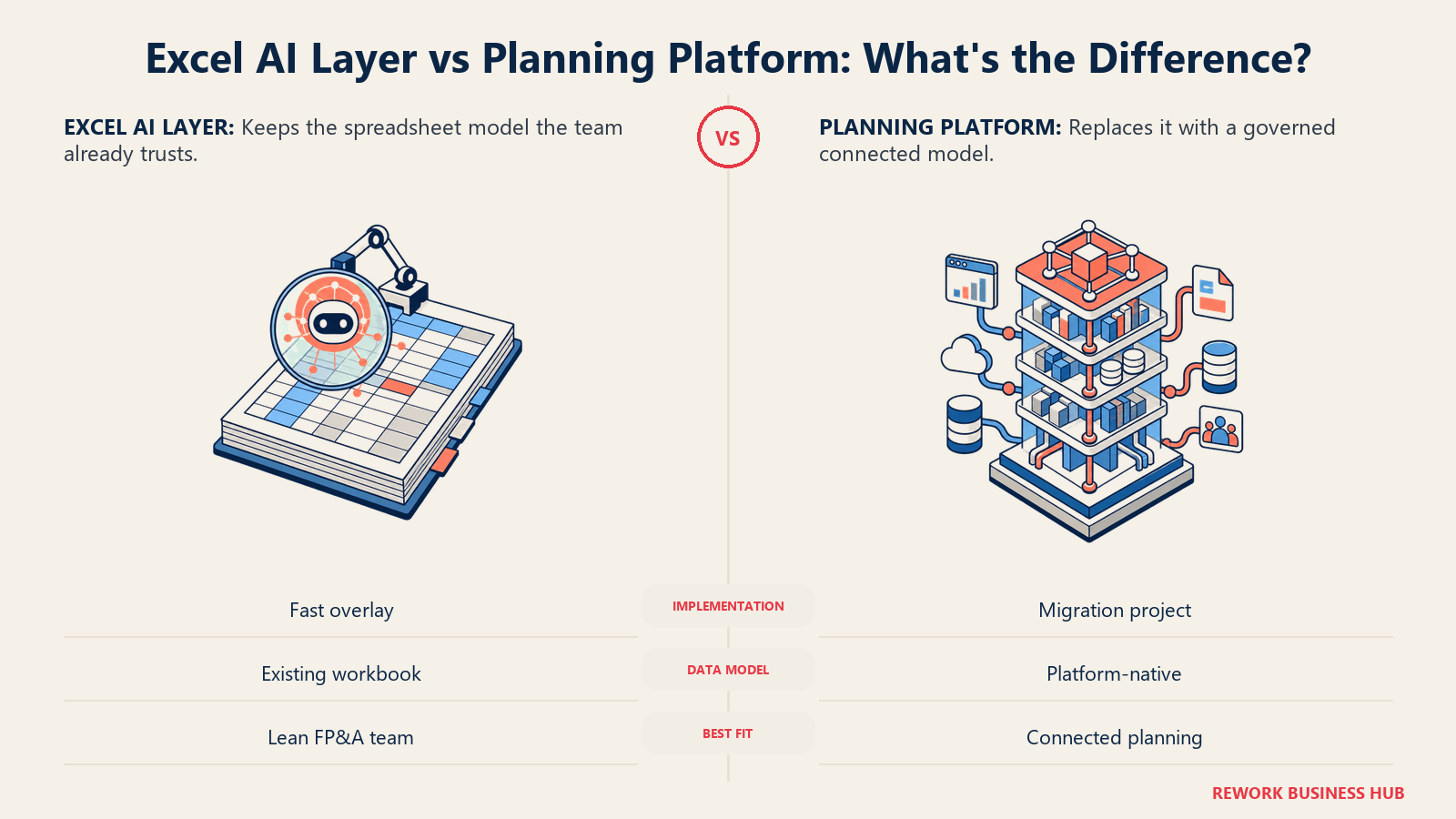
96% of FP&A professionals touch a spreadsheet at least weekly, cited above, and that number barely moves at companies that already run a dedicated planning platform. Any agent that expects your team to abandon Excel is fighting gravity. The honest split among the 13 below:
| Relationship to Excel/Sheets | Agents | What That Means for You |
|---|---|---|
| Layers on top, keeps your model | Cube, Datarails, Vena, Runway (spreadsheet-familiar UX) | Fastest path to value; the agent reasons over logic your analysts already trust |
| Replaces the spreadsheet with a proprietary model | Pigment, Anaplan, Workday Adaptive Planning, Board, Planful, Prophix, Lucanet xP&A | A real migration project before the agent has anything reliable to reason over |
| Bundled inside a platform you'd adopt for another reason first | Bob Finance (inside HiBob), Abacum (positions fast 4-8 week onboarding) | The FP&A decision is really a wider platform decision |
Neither side is automatically right. A team of five that just needs its existing model watched for anomalies gets more value faster from Cube or Datarails than from a multi-quarter Anaplan build. A 500-person company running genuinely connected planning across finance, sales, and workforce eventually needs a real data model, and a spreadsheet with an AI layer on top will not get there. Decide which problem you actually have before you sit through a demo built to make either answer look obvious.
Forecast Accuracy Claims: What to Verify Before You Believe Any of Them
Forecast accuracy is the entire sales pitch for this category, and 51% of CFOs rank it a top-five priority for 2026, cited above. It's also the number vendors are vaguest about. None of these products publishes an independently audited forecast-accuracy percentage tied to a named methodology (MAPE, WAPE, or a stated bias measure) on its own site. What you get instead is adoption metrics, cost-comparison claims, and pilot data from a handful of unnamed customers.
| Vendor Claim | What's Actually Verified | How to Test It Yourself |
|---|---|---|
| Workday: Planning Agent cuts data-exploration time 30%, about 100 hours/month for a typical enterprise | Vendor's own early pilot data; no named sample size or customer | Ask for the pilot cohort size, then time your own team's data-exploration hours for one real cycle before and after |
| Pigment: reported 40-50% cost advantage and faster time-to-ROI versus a comparable Anaplan build | Vendor positioning plus buyer-reported figures, not an accuracy claim | Ask a reference customer for their actual forecast-to-actual variance, not just the price comparison |
| Abacum: 60% of customers use Abacum Intelligence daily, 10,000+ agent interactions by Q1 2026 | Vendor's own adoption metric | Adoption tells you people click the feature, not that the numbers it produces are accurate. Ask separately for accuracy data |
| Cube: every AI-generated insight traces back to a specific GL transaction ("Trace to Truth") | A traceability claim, not an accuracy claim | Ask to see the trace applied to a forecast that missed, not just one that landed close |
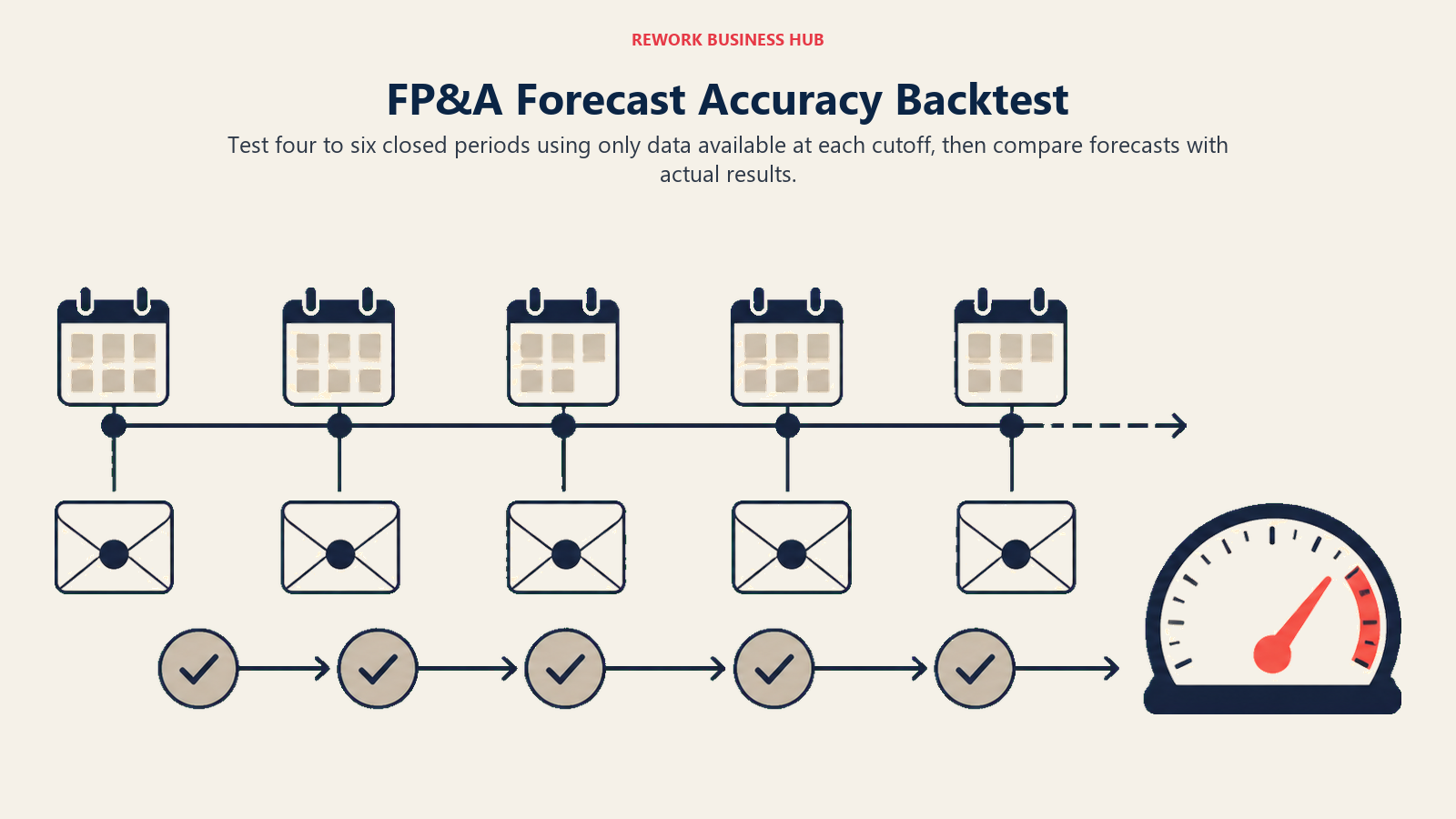
Because none of that adds up to a verifiable accuracy number, run your own backtest before you sign anything. Pull four to six of your own already-closed periods. Feed the tool only the data that would have been available as of each period's cutoff, not the actuals that came after. Let it generate a forecast for each period, then compare that forecast to what actually happened and calculate your own error rate. Ask the vendor to run this exact test, in writing, as a condition of the pilot. A vendor confident in its own accuracy will agree immediately; one that stalls or wants to pick the periods itself is telling you something.
Does It Explain Why, Not Just What: Variance and Flux Narrative Quality
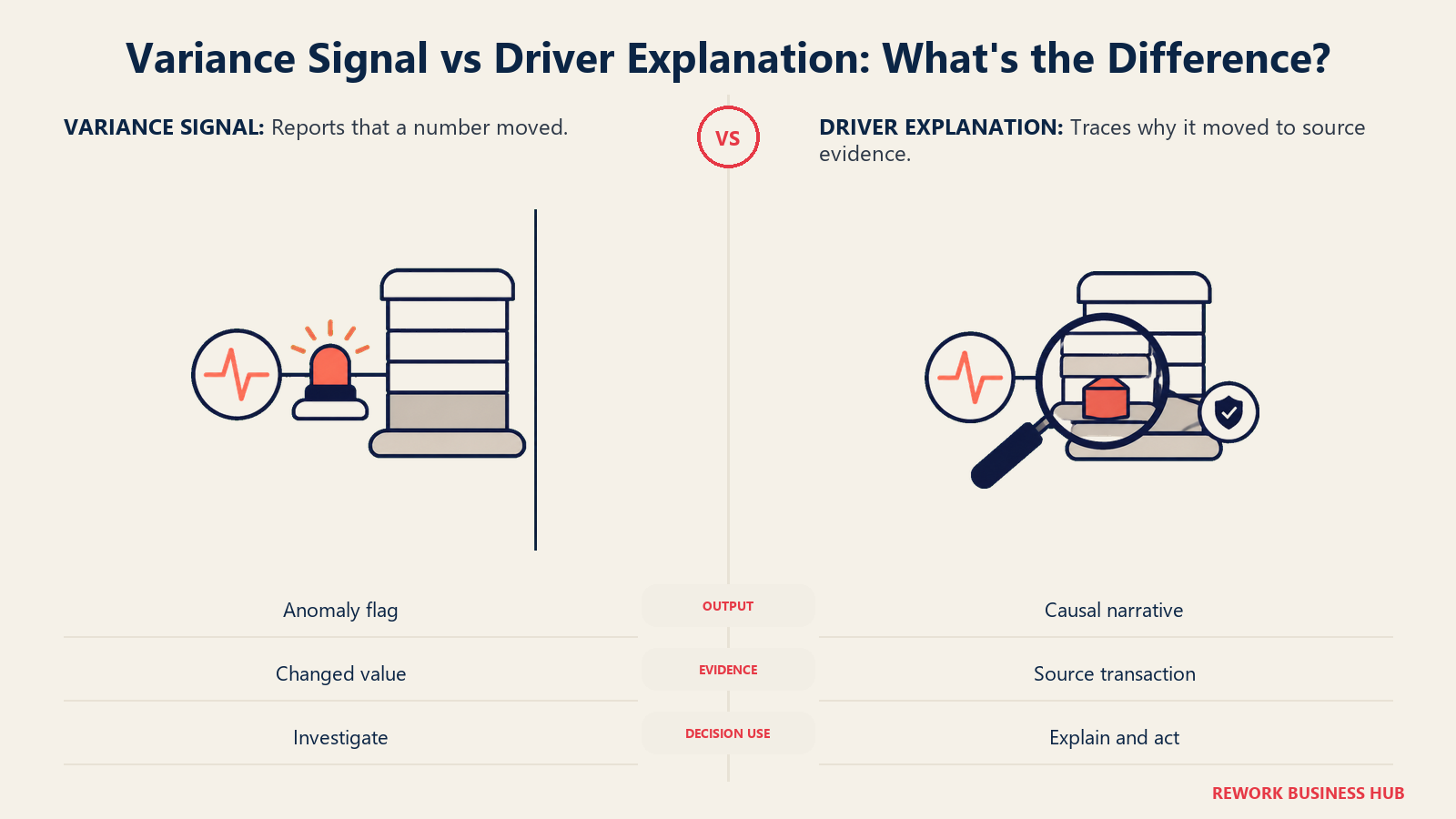
A number moving is not news to a controller who watches the dashboard. What an agent is actually worth paying for is naming the driver: which customer segment slipped, which cost center overran, which assumption in last quarter's plan turned out wrong. Coverage here varies more than the marketing suggests.
| Agent | Flags That a Number Moved | Names the Driver (the "Why") | Drafts a Narrative a Human Edits |
|---|---|---|---|
| Cube | Yes, its Analysts agent team | Traces to the source GL transaction | Yes, feeds its Business Partners team for board decks |
| Datarails | Yes, its Reporting Agent | Yes, "analyzes actuals to uncover drivers" per its own materials | Yes, the Storyboards feature is purpose-built for this |
| Vena | Yes, its Reporting Agent | Partially, surfaces trends and anomalies | Yes, generates ad hoc reports and variance write-ups |
| Board | Yes, root-cause analysis is a named FP&A Agent capability | Yes, explicitly | Not confirmed as a distinct drafting feature |
| Workday | Yes, with confidence metrics on key drivers | Yes, ranks which drivers influenced a prediction | Not confirmed beyond the forecast itself |
| Abacum | Yes, Context Intelligence flags anomalies continuously | Not clearly confirmed beyond flagging | Not confirmed |
| Anaplan, Planful, Prophix, Runway, Pigment, Lucanet xP&A, Bob Finance | Yes, in some form | Varies by product; not independently confirmed for all | Ask directly during a demo; a vendor should show you a real example, not describe one |
Where a row says "not confirmed," that isn't a knock, it's an honest gap in what each vendor's own public materials state clearly. Ask any finalist to run this on your own last-closed month: point it at a real variance, and see whether the output names a driver or just restates the number in a sentence.
What Has to Be Connected Before Any of This Works
An agent that reconciles beautifully in a demo is only as good as the data actually feeding it. Every product on this list needs the general ledger connected before it can forecast anything. Beyond that, the picture splits by what the FP&A job in front of you actually touches.
| If you're forecasting... | You also need connected | Who does this natively |
|---|---|---|
| Revenue and pipeline | CRM (Salesforce, HubSpot) | Most enterprise players via standard connectors; see best AI agents for revenue operations for the CRM-side agent layer feeding this data |
| Headcount and comp | HRIS (Workday HCM, BambooHR, or HiBob) | Bob Finance natively (it's built on the HRIS itself), Workday Adaptive Planning natively if already on Workday HCM, Anaplan via its workforce planning app; see best AI agents for HR for the HR-side agent layer |
| SaaS or subscription metrics (ARR, NRR, CAC) | Billing and usage data | Abacum natively, most others via integration |
| A rolling monthly business review pack | All of the above, plus a clean prior-period baseline | Only as reliable as the messiest source system feeding it |
Headcount planning specifically is worth a separate word given the environment: the median company expects just 1.7% FTE growth in 2026, cited above, which means most of this year's "headcount planning" is really reforecasting and scenario work on a roughly flat number, not modeling growth. That's exactly the job where HR data quality matters more than modeling sophistication, which is the real argument for Bob Finance's native HRIS tie-in over a generic FP&A platform pulling a headcount CSV export once a month. If a finalist's headcount numbers depend on someone manually exporting a spreadsheet from your HRIS, budget for that gap before you sign, not after the first missed forecast.
Sizing and Persona
| Agent | Ideal Org Size | Primary Buyer |
|---|---|---|
| Cube | 5-200 employees | FP&A Manager, Head of Finance |
| Datarails | 10-500 employees | FP&A Director, Controller |
| Vena | 50-2,000 employees (Microsoft-standardized) | VP Finance, FP&A Director |
| Pigment | 100-2,000 employees | VP Finance, Head of Planning |
| Anaplan | 1,000+ employees | CFO, VP FP&A, RevOps leadership |
| Workday Adaptive Planning | 500-10,000+ employees | CFO, VP Finance Transformation |
| Planful | 200-2,000 employees | Controller, VP Finance |
| Abacum | SaaS/subscription, $30M-500M ARR | VP Finance, Head of FP&A |
| Prophix | 200-5,000 employees | Controller, VP Finance |
| Board | 1,000-10,000+ employees | CFO, VP FP&A, Office of Finance |
| Runway | Startups and scaleups, $5M-50M ARR | CEO, Head of Finance, first FP&A hire |
| Bob Finance (formerly Mosaic) | 50-500 employees already on or evaluating HiBob | CFO, People + Finance leadership jointly |
| Lucanet xP&A (formerly Causal) | 50-1,000 employees | Controller, FP&A Lead |
1. Cube: An Agentic Finance Layer Included on Every Tier
Cube's whole bet is that your team doesn't want to abandon Excel or Google Sheets, it wants AI reasoning applied to the model it already has. In 2026 that shows up as "FP&Agents," organized into four teams: Data Managers handle data integrity, Analysts handle reporting and variance, Planners handle forecasting and modeling, and Business Partners draft board decks and investor updates. Every plan includes the full agent layer plus an MCP server, so it isn't gated to a top tier.
Cube also markets a "Trace to Truth" feature that maps every AI-generated insight back to the specific GL transaction behind it, a genuinely useful trust mechanism given how vague most competitors are about where their numbers come from. The honest catch is pricing transparency: Cube moved from published Go and Pro tiers to fully custom Bronze, Silver, and Gold quotes sometime in 2026, so the "transparent pricing" positioning on its own site now leads to the same sales call as everyone else.
| What you get | What you don't |
|---|---|
| Agentic layer (four agent teams plus MCP server) included on every tier | No published dollar figures anywhere |
| Every insight traceable to a source GL transaction | Real cost only becomes clear after a sales conversation |
| Fast onboarding relative to a full EPM platform migration | Less model depth than Anaplan or Board at true enterprise scale |
Pricing: Not published. Bronze, Silver, and Gold tiers, all quote-only as of August 2026. See cubesoftware.com/pricing.
Best for: Finance teams of 5-200 people who want agent reasoning applied to Excel or Google Sheets models without a platform migration.
2. Datarails: Three Named Agents on a Rebuilt FinanceOS Data Layer
Datarails spent years as the chat-and-storytelling AI layer for Excel-native finance teams, and in March 2026 it repositioned hard: the company declared traditional FP&A software "dead" and launched FinanceOS, a governed data layer meant to feed Claude, ChatGPT, and Microsoft Copilot directly rather than compete as a standalone planning app. Underneath that repositioning, three named agents still do the FP&A-specific work: a Strategy Agent for big-picture trade-offs, a Reporting Agent that analyzes actuals and tells the story behind them, and a Planning Agent for fast, ad hoc forecasting and what-if scenarios.
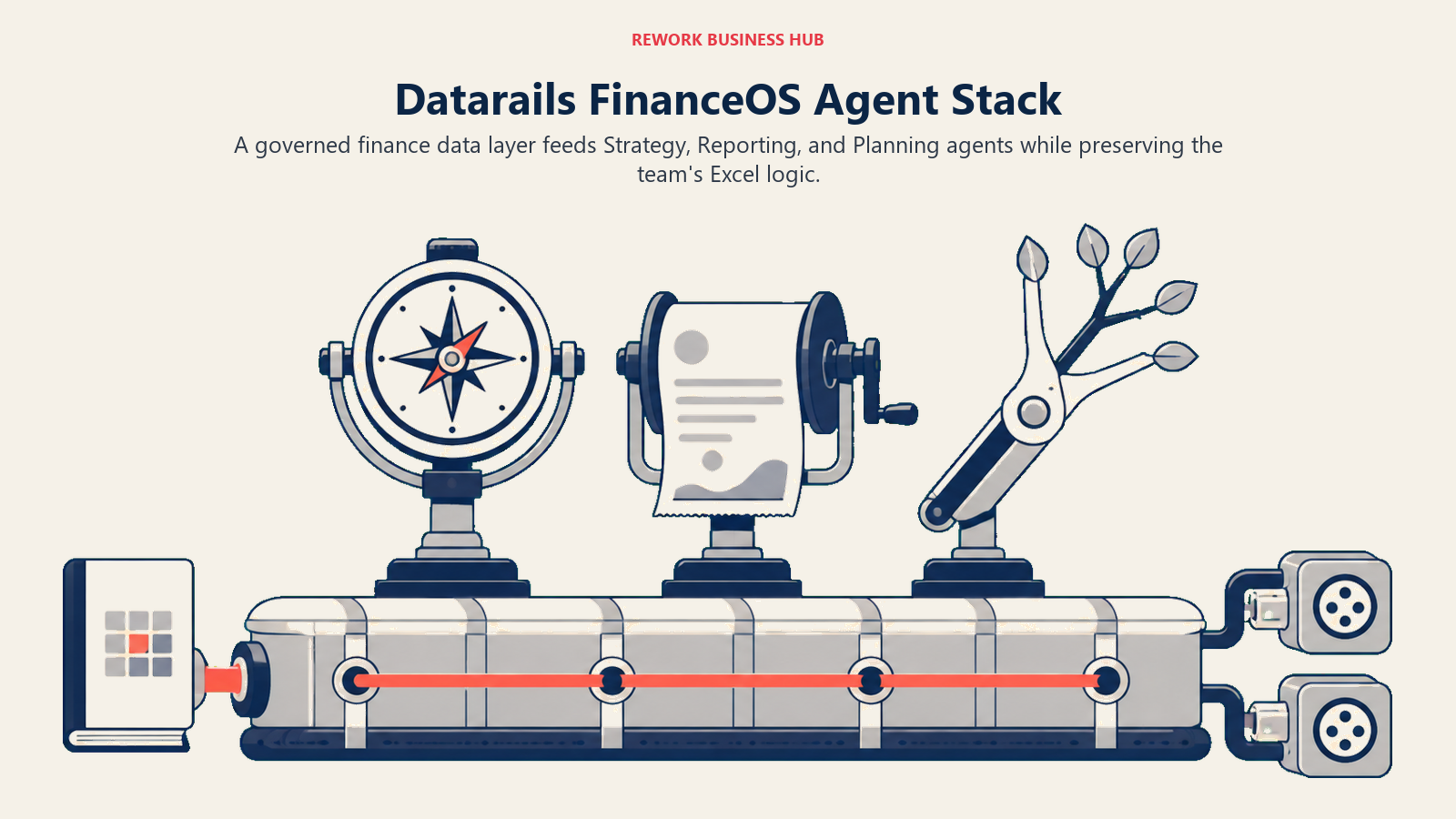
That pivot is worth taking seriously rather than dismissing as a rebrand. If your real problem is that finance data is scattered and ungoverned before any AI tool can use it well, FinanceOS is solving a genuine upstream problem. If you just want a working forecast, the three agents are still there doing that job.
| What you get | What you don't |
|---|---|
| Strategy, Reporting, and Planning Agents on top of consolidated Excel data | No public pricing; every tier requires a custom quote |
| FinanceOS layer connects the same governed data to outside AI tools you already use | A March 2026 identity shift; confirm current positioning before assuming legacy reviews still apply |
| Named tiers (Professional, Premium, Expert) scale by users and integrations | Reported prior contracts (~$24K-27K/yr) may not reflect the new FinanceOS pricing model |
Pricing: Not published. Professional (2 users, 1 integration), Premium (5 users, 2 integrations), and Expert (15 users, 3 integrations) tiers, all custom-quoted. See datarails.com/pricing.
Best for: Excel-native finance teams that want named agents for forecasting and variance storytelling, plus a governed data layer for whichever AI tool they adopt next.
3. Vena: Copilot Agents Live Inside Excel and Microsoft Teams
Vena's product philosophy hasn't changed in years: budgeting, forecasting, and reporting should live inside Excel, not a separate interface. Vena Copilot extends that into agentic territory for 2026 with two agents genuinely live today, an Analytics Agent that surfaces trends and anomalies, and a Reporting Agent that generates ad hoc reports and variance write-ups on demand inside Excel or Microsoft Teams. Vena also closed its acquisition of Acterys in 2026, aimed at deepening orchestrated planning across the Microsoft ecosystem.
The deepest capability, a Planning Agent that would let finance build a plan from a prompt, was still in closed beta with select customers, targeting general availability in November 2026. A Query Agent for natural-language questions is slated even later in the year. Buy today for what's live, not the roadmap.
| What you get | What you don't |
|---|---|
| Analytics and Reporting Agents genuinely live inside Excel and Teams | Planning Agent, the one that builds a plan from a prompt, isn't GA until roughly November 2026 |
| Deep native Microsoft 365 integration, unmatched by most on this list | No published pricing; discovery-based custom quotes only |
| Fresh Acterys acquisition aimed at broader orchestrated planning | Mid-market first-year cost commonly reported at $75,000-$250,000 |
Pricing: Not published. Professional and Complete tiers; mid-market first-year totals reported at $75,000-$250,000 including implementation. See venasolutions.com/resources/pricing.
Best for: Microsoft-standardized finance teams that want agent-assisted reporting and analytics without leaving Excel or Teams, and can wait for the Planning Agent to reach general availability.
4. Pigment: Three Specialist Agents, Still in Private Preview
Pigment built its reputation as an AI-native planning platform, and in April 2026 it went further, unveiling a coordinated network of three specialist agents. An Analyst Agent analyzes internal and external data to surface trends and anomalies as dashboards, reports, or audio. A Planner Agent translates those insights into action, simulating strategies against goals and market conditions. A Modeler Agent autonomously builds and updates the underlying Pigment model and runs data-quality checks so the other two agents have something reliable to work from.
The honest caveat is timing: all three were in private testing, not something a new customer can turn on today. What is real and buyable is Pigment's core AI-native planning platform, positioned against Anaplan on cost and speed, with buyers commonly reporting 40-50% lower total cost for comparable scope.
| What you get | What you don't |
|---|---|
| A coordinated three-agent architecture (Analyst, Planner, Modeler) announced | All three agents are in private preview, not generally available |
| Reported 40-50% cost advantage versus a comparable Anaplan deployment | No public pricing anywhere; every deal is custom |
| Modern UX and faster typical time-to-ROI than legacy EPM tools | Enterprise-scale governance still maturing relative to Anaplan |
Pricing: Not published. Quote-only, no public tiers. See pigment.com.
Best for: Mid-market to upper-mid-market finance teams that want AI-native planning without Anaplan's price tag, and are comfortable buying the platform now and the agent network later.
5. Anaplan: CoModeler, CoPlanner, and a Role-Based Agent Suite
Anaplan remains the deepest connected-planning platform for genuinely complex, multi-dimensional models spanning finance, sales, supply chain, and workforce in one hub, and in 2026 it backed that with a real suite of role-based AI agents rather than one bolted-on chatbot. CoModeler helps model builders design, build, troubleshoot, and optimize Anaplan models through natural-language conversation. Anaplan Analyst answers natural-language questions about live models and returns visualizations and dashboard links. CoPlanner supports the Demand Planning and Integrated Financial Planning applications specifically, answering questions about forecasts, headcount, and revenue. Agent Studio is the central environment for configuring and managing all of them together.
The pricing detail worth knowing before you assume any of this is free: per Anaplan's own documentation, CoPlanner is bundled with eligible versions of eligible applications only through October 15, 2026, after which its standalone pricing has not been confirmed.
| What you get | What you don't |
|---|---|
| A genuine multi-agent suite (CoModeler, CoPlanner, Analyst, Agent Studio) | CoPlanner's free bundling ends October 15, 2026, with pricing after that unconfirmed |
| Deepest connected-planning model depth of any platform on this list | Entry pricing alone runs $30,000-$50,000/year before AI modules |
| Proven at genuine Fortune 50 planning complexity | Highest total implementation cost and timeline on this list |
Pricing: Not published. Mid-market base license contracts average around $102,000/year (per Vendr data); enterprise deployments run into six to seven figures. See anaplan.com and Anaplan's CoPlanner documentation.
Best for: Large enterprises running genuinely complex, multi-department connected planning that a mid-market tool can't handle.
6. Workday Adaptive Planning: A Planning Agent Built Into the Ecosystem You Already Run
Workday Adaptive Planning's 2026 story centers on its Planning Agent, embedded natively rather than sold as a bolt-on requiring a separate system. It automates analysis, explores data through natural language, surfaces root causes, and models scenarios in one workflow, described by Workday as an expert planning partner that generates scenarios and recommends actions with confidence metrics on which drivers matter most. Early data reported by Workday showed a 30% reduction in data-exploration time, roughly 100 hours a month for a typical enterprise deployment, though that figure comes from the vendor's own early pilots rather than an independent study.
The strongest case is a company already running Workday HCM or Financials: bundling with an HCM or Financials renewal earns an 8-16% discount over standalone pricing, and headcount data is already native since it's the same platform.
| What you get | What you don't |
|---|---|
| Planning Agent embedded natively, no migration or separate system | Platform fee alone runs $30,000-$120,000 before per-planner-user pricing |
| Native headcount data if you already run Workday HCM | Weaker differentiation for companies outside the Workday ecosystem |
| 8-16% bundle discount with a Workday HCM or Financials renewal | Reported time-savings figures are vendor pilot data, not independently audited |
Pricing: Not published. Per-planner-user pricing runs roughly $300-$1,200/year plus a platform fee of $30,000-$120,000. See workday.com/adaptive-planning/pricing.
Best for: Mid-market to enterprise companies already running Workday HCM or Financials that want planning, forecasting, and headcount data in the same model.
7. Planful: Predict's ML Forecasting Plus a New Planner Assistant
Planful (formerly Host Analytics) is an established mid-market FP&A platform, and its AI shows up in two layers. Predict, a separate paid module, includes Signals (continuous anomaly detection before a bad number compounds into a bad forecast) and Projections (proprietary ML models for smarter baseline forecasts). Layered on top, Planful launched Analyst in October 2025 and followed with Planner Assistant, reaching general availability in April 2026: a conversational interface where finance leaders can ask it to model scenarios, detect anomalies, and generate forecasts, returning natural-language answers and visualizations.
Predict's list pricing has real room to move, since the module is still building its reference-customer base; buyers reportedly negotiate 40% or more off list.
| What you get | What you don't |
|---|---|
| Signals (anomaly detection) plus Projections (ML forecasting) plus a new Planner Assistant | Predict is a separate paid add-on, not included in the base platform |
| Real negotiation room since Predict is still building its reference base | List pricing for Predict runs $35,000-$90,000/year |
| Sits on a mature, well-reviewed mid-market FP&A core | Less AI-native architecture than ground-up platforms like Pigment or Abacum |
Pricing: Core platform not published. The Predict AI module runs roughly $35,000-$90,000/year as an add-on (reported). See planful.com/why-planful/planful-predict.
Best for: Mid-market finance teams already on or evaluating Planful that want ML-driven anomaly alerts and a conversational forecasting assistant on top of an established platform.
8. Abacum: AI-Native FP&A That Argues Against Bolted-On Agents
Abacum's differentiation is narrower and sharper than the general-purpose platforms above it: purpose-built for SaaS and subscription businesses roughly $30M-500M in ARR, with native handling of ARR, churn, NRR, and CAC payback instead of custom formula work to approximate SaaS metrics. In April 2026 it launched Abacum Intelligence, a platform-wide layer with four pieces: forecast generation, question answering, data classification, and anomaly detection, explicitly positioned against competitors that Abacum says "spent time adding AI agents and chatbots onto older technology."
The genuinely agentic piece, despite that framing, is Workflow Intelligence: it automates budget input collection, approval routing, and cross-team collaboration, a real multi-step process rather than a one-shot answer. By Q1 2026, Abacum reported 60% of customers using Abacum Intelligence daily and more than 10,000 agent interactions, though that's an adoption figure, not an accuracy one.
| What you get | What you don't |
|---|---|
| Native SaaS metrics (ARR, churn, NRR, CAC payback) built into the core data model | No pricing published; median contracts are third-party benchmark data |
| Workflow Intelligence automates budget collection, approvals, and cross-team routing | Narrower fit outside subscription and SaaS business models |
| Fast 4-8 week implementation without an external systems integrator | Positions against "bolted-on AI agents" while shipping agent-branded features itself |
Pricing: Not published. Median contracts run around $37,000/year; most mid-market deployments land in the $30,000-$75,000/year range (reported). See abacum.ai.
Best for: SaaS and subscription finance teams that want AI-native planning purpose-built around ARR, churn, and CAC payback, with genuine workflow automation around the budget cycle.
9. Prophix: Prophix One Agents Bundled Into an Existing Subscription
Prophix's second wave of Prophix One Agents landed in April 2026, and the notable choice is distribution: Prophix Copilot for Microsoft Teams and the Architect Agent, which speeds up model deployment by transforming raw data into a working Prophix model, both shipped to every Prophix One customer as part of the standard subscription rather than a paid add-on. A Consolidation Agent, bringing natural-language querying to audit-trail data so a team can surface group totals and unusual balances on demand, followed in the same release window.
Prophix doesn't publish pricing anywhere, and third-party trackers report entry contracts starting around $50,000 a year, scaling with user count and modules. Worth flagging directly: since Hg Capital's acquisition of Prophix, customers report annual renewal increases of 7-12%, above the 3-8% escalators typical for this category, so model that into a multi-year total before you sign.
| What you get | What you don't |
|---|---|
| Architect Agent and Copilot for Teams included in the standard subscription, not a paid add-on | No published pricing anywhere; every figure below is reported |
| Consolidation Agent brings natural-language querying to audit-trail data | Reported post-acquisition renewal increases of 7-12% annually |
| Established mid-market platform with a real implementation track record | Implementation costs reported at $5,000-$50,000 on top of licensing |
Pricing: Not published. Third-party trackers report entry contracts starting around $50,000/year, scaling with users and modules. See prophix.com.
Best for: Mid-market finance teams that want agent capability folded into an existing contract rather than negotiated as a separate line item, and can tolerate above-average renewal increases.
10. Board: FP&A and Controller Agents Built on Microsoft Foundry
Board took a distinctly enterprise-governance approach to agentic AI. Board Agents, its FP&A Agent and Controller Agent, reached global availability starting March 31, 2026, built natively on Board's existing planning engine using Microsoft Foundry and Azure-native agent services. The FP&A Agent streamlines three-statement modeling, variance validation, revenue and margin planning, adaptive forecasting, and root-cause analysis. The Controller Agent extends that into financial close and consolidation, surfacing true exceptions and validating financial statements, connecting planning and close into one continuously reinforcing loop.
The messaging leans hard on exactly what a security or procurement review will ask for: identity-driven agent lifecycle management, auditable interactions, and secure tool invocation, distributed through the Microsoft Marketplace rather than a bespoke deployment process.
| What you get | What you don't |
|---|---|
| FP&A and Controller Agents, generally available since March 31, 2026 | No self-serve tier; enterprise sales and implementation process |
| Built on Microsoft Foundry with explicit auditability and governance controls | No published pricing anywhere |
| Connects planning and close into one loop rather than two separate tools | Best fit narrows to organizations already comfortable with an enterprise EPM buy |
Pricing: Not published. See board.com/ai.
Best for: Enterprise Office of Finance teams that need agentic planning and close capability with governance and audit evidence built in from day one, and that expect this purchase to clear a real security review.
11. Runway: An Agent That Ambiently Explains Your Own Model
Runway is built for growth-stage companies that have outgrown spreadsheets but don't need Anaplan-sized complexity, with real-time data integrations across more than 750 sources and a spreadsheet-familiar modeling experience so the transition doesn't feel like abandoning Excel entirely. Its AI shows up as Ambient Intelligence, which automates variance analysis without requiring a data science background, and an AI Copilot for natural-language financial queries; Runway describes the combination as "an agent that knows your model as well as you do."
One housekeeping note before you search for it: the FP&A product here lives at runway.cfo.ai. The domain runway.com now belongs to the unrelated video-generation company also named Runway, and pricing pages found under that domain are for AI video credits, not financial planning software.
| What you get | What you don't |
|---|---|
| Ambient Intelligence automates variance analysis without a dedicated analyst | No published pricing; every quote requires a sales conversation |
| Spreadsheet-familiar modeling eases the transition off Excel | Younger platform with a shorter enterprise track record than Anaplan or Board |
| 750+ integrations, purpose-built for high-growth company data stacks | Brand confusion with an unrelated, much larger company of the same name |
Pricing: Not published. Third-party estimates (reported) range from roughly $6,000-$18,000/year for early-stage teams to £1,500-4,000/month for growth-stage teams. See runway.cfo.ai.
Best for: High-growth startups and scaleups (roughly $5M-50M ARR) that want automated variance analysis without hiring a dedicated data analyst.
12. Bob Finance (Formerly Mosaic): FP&A Folded Into an HR Platform
Mosaic was an independent, well-funded strategic finance platform until HiBob acquired it in February 2025 for a reported $35 million. As of mid-2026, the independent Mosaic product is no longer sold or developed separately; its planning, reporting, and metrics engine now ships as HiBob's Finance Suite, marketed as Bob Finance, fully embedded inside the Bob HCM platform. HiBob positions it as the first mid-market FP&A tool built natively inside an HR platform rather than integrated to one after the fact.
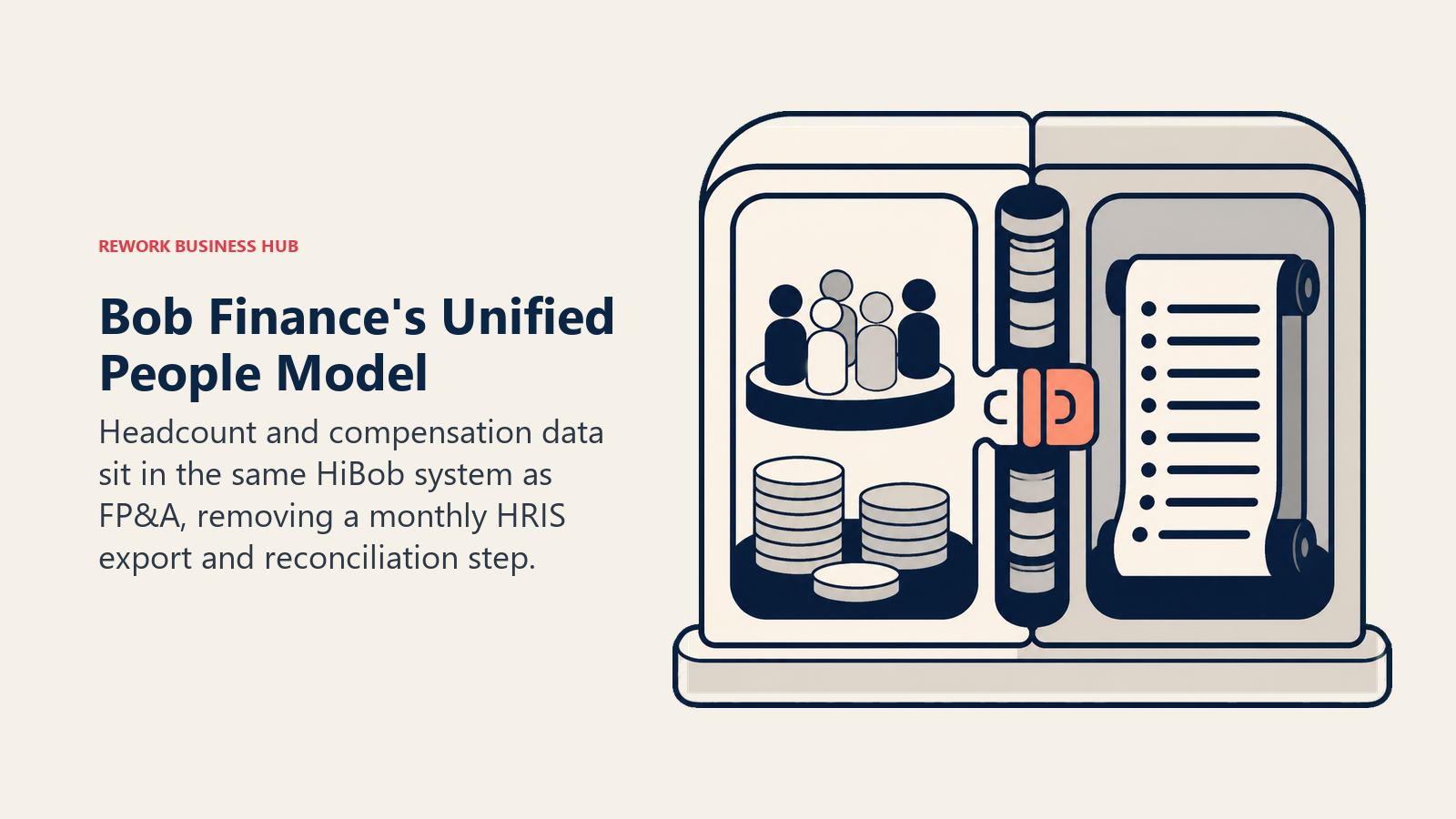
That positioning is a genuine answer to the headcount-planning prerequisite problem covered above: since Bob Finance runs on the same data model as Bob's HRIS, headcount and comp data don't need a monthly CSV export and reconciliation step, they're already there. The tradeoff is equally real: you cannot buy Bob Finance without adopting or already running HiBob as your HR system of record, which turns an FP&A software decision into an HRIS decision first.
| What you get | What you don't |
|---|---|
| Headcount and comp data native to the same platform, not a bolted-on integration | Cannot be purchased standalone; requires adopting HiBob as your HRIS |
| Mosaic's original real-time analytics and predictive reporting, now under HiBob's roadmap | Independent Mosaic product and support no longer exist |
| A genuinely unified People and Finance data model for mid-market companies | Less depth on non-headcount-driven planning than a dedicated FP&A platform |
Pricing: Not published as a standalone line item; bundled into HiBob's per-employee-per-month pricing, reported around $16-$25 PEPM blended across modules. See hibob.com.
Best for: Mid-market companies (roughly 50-500 employees) that want headcount planning and financial planning on one data model and are open to HiBob as their HR platform.
13. Lucanet xP&A (Formerly Causal): A Modeler Agent Built From a 2024 Acquisition
Causal built a loyal following for visual, spreadsheet-like financial modeling before German CFO-software group Lucanet acquired it in late 2024. The Causal team and product direction stayed intact inside Lucanet's broader CFO Solution Platform, now sold as Lucanet xP&A (extended planning and analysis), and in July 2026 Lucanet shipped a family of AI agents across planning, close, reporting, and ESG, including a new Modeler Agent for xP&A specifically: it generates a complete planning model, sections, variable groups, timesteps, aggregations, and formulas included, from a plain-language description, instead of a team building that structure by hand.
If you evaluated Causal before the acquisition, the honest thing to know is that its standalone brand, website, and self-serve pricing no longer exist; anyone buying this capability today is buying into Lucanet's platform and roadmap, not a small independent tool.
| What you get | What you don't |
|---|---|
| A Modeler Agent that builds a full planning model from a text prompt | Causal's standalone product, brand, and self-serve pricing are gone |
| Backed by an established CFO-software platform (consolidation, close, reporting, ESG) | Broader platform than a lean team may need if modeling was the only draw |
| Multi-scenario forecasting across products, locations, and time granularity | No published pricing; every deal is a custom quote |
Pricing: Not published. Third-party trackers report entry pricing around $1,200/user/year, scaling toward roughly $50,000/year at 100 users. See lucanet.com.
Best for: Teams that liked Causal's modeling approach and want it backed by a larger, funded CFO-software platform rather than an independent startup.
The FP&A Analyst's Job After the Agent
None of the 13 products above are built or marketed to run a planning cycle with no human in it, and the honest question isn't headcount, it's which parts of the job actually move.
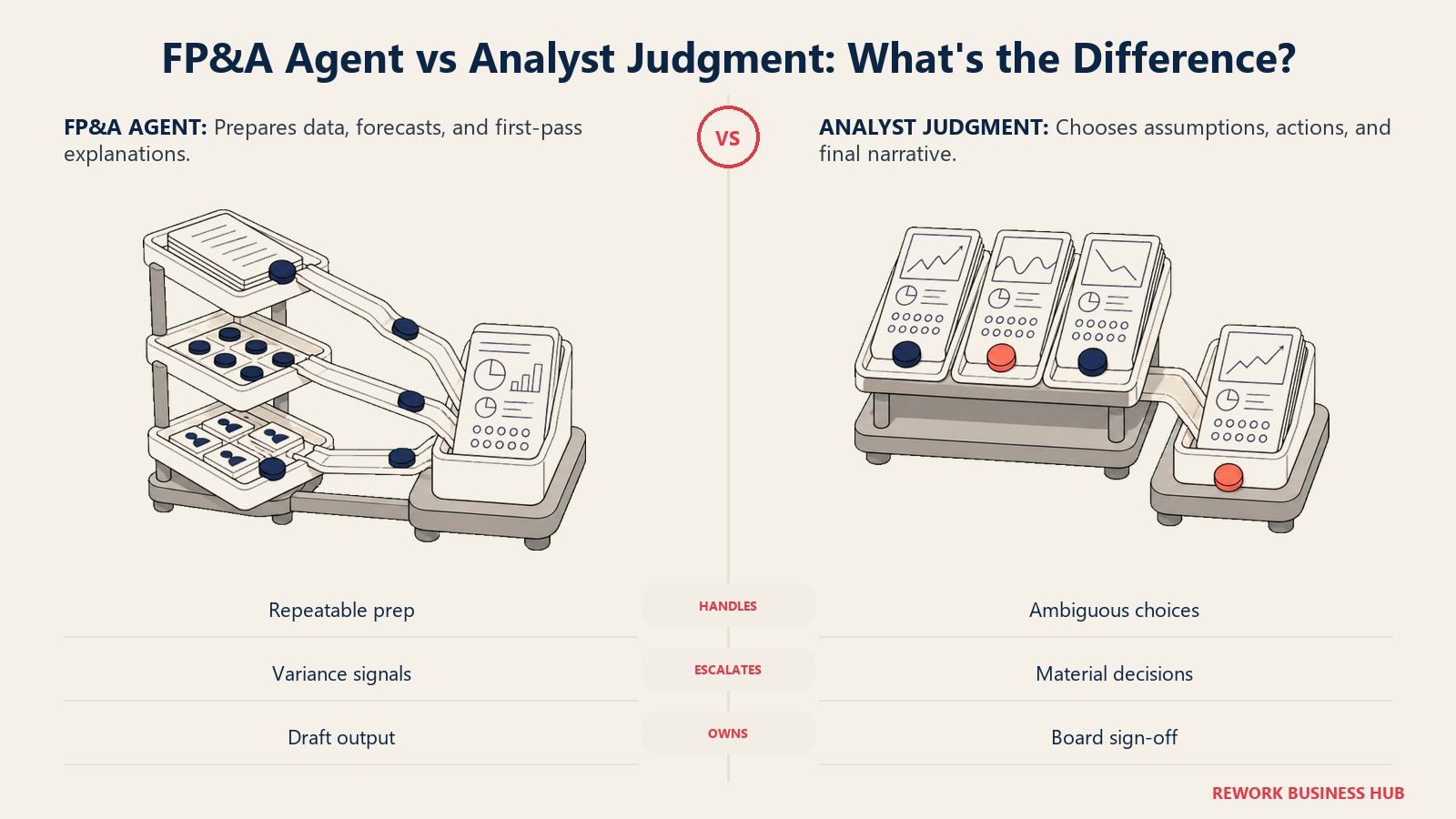
| Task | An agent can typically do this today | This stays a human decision |
|---|---|---|
| Pulling actuals from the GL, CRM, or HRIS into the model | Yes, across nearly every product here | Deciding which source system is the system of record when two disagree |
| Drafting a first-pass rolling forecast | Yes, most platforms | Choosing which assumption set the forecast should run on |
| Flagging a variance or anomaly | Yes, widely available | Deciding whether it's noise or a real signal worth escalating |
| Explaining why a number moved | Increasingly, on the products in the table above that name a driver | Approving the narrative before it reaches the board |
| Building a new scenario from a plain-language prompt | Emerging (Pigment's Planner Agent, Lucanet's Modeler Agent, Vena's Planning Agent once GA) | Choosing which scenario becomes the operating plan |
| Headcount plan updates | Native only where HR data lives in the same platform (Bob Finance, Workday Adaptive Planning, Anaplan's workforce app) | The actual hiring, freeze, or reduction decision |
| Final board or management review narrative | Draft only, across every product researched | The CFO's own framing, judgment, and sign-off |
The shift worth planning for isn't fewer analysts, it's a different ratio of hours: less time re-keying numbers out of five systems into one tab, more time deciding which of three agent-generated scenarios to actually walk into the board meeting with. If you're watching what an agent did across more than just your FP&A stack, not only the vendor dashboards listed here, best AI agent observability tools covers that monitoring layer. And if scoping a narrower, in-house agent for one specific job (rather than buying a platform) is the better starting point for your team, AI budgeting agent, AI forecasting agent, and AI reporting agent are vendor-neutral build blueprints for exactly that.
How to Choose: Decision Framework
Use these choices to match the agent to your current planning model, connected systems, and the work your team needs it to explain.
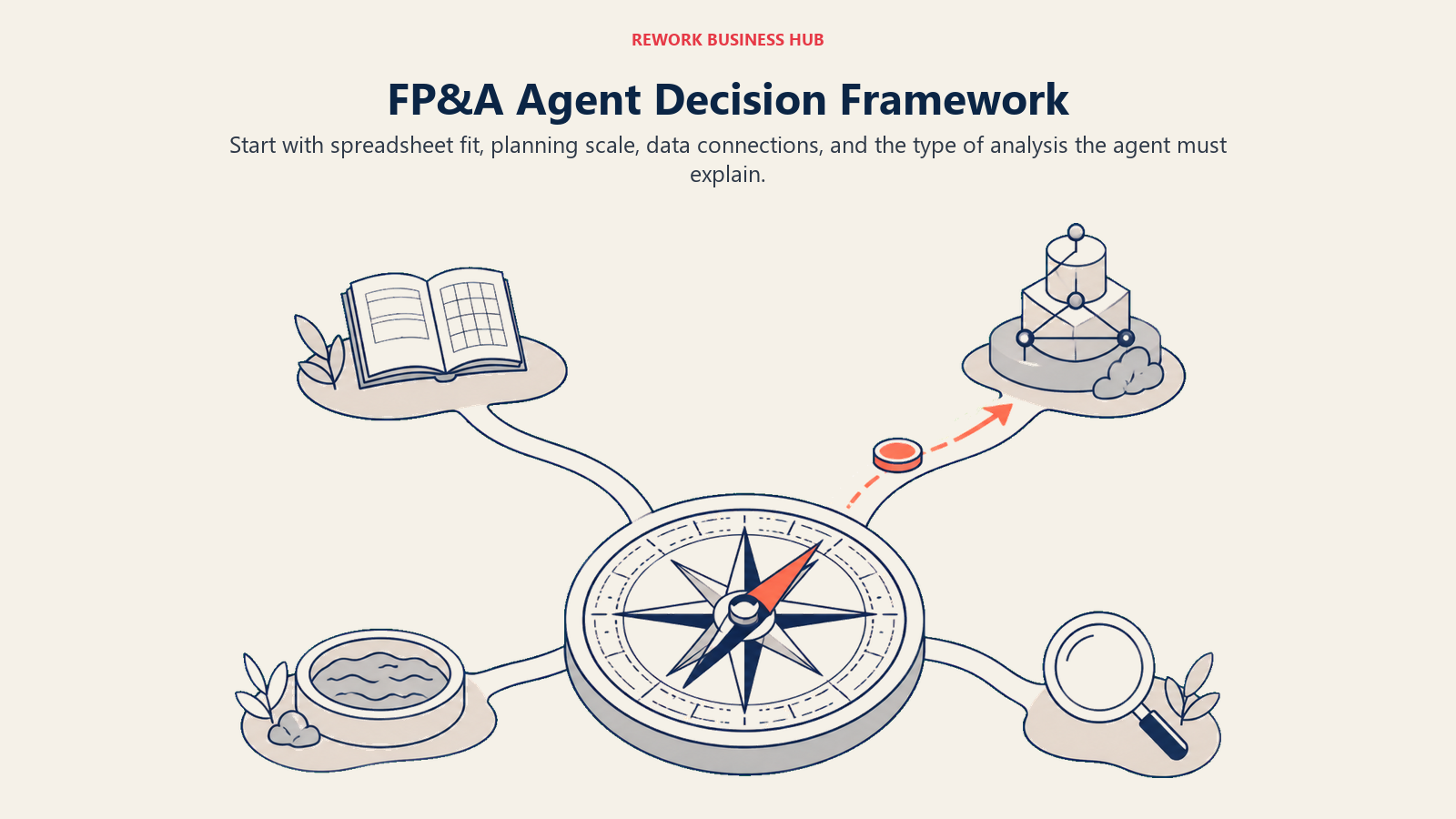
| If you need... | Pick... | Why |
|---|---|---|
| Agent reasoning on the Excel model you already trust | Cube or Datarails | Both run on your existing spreadsheet logic instead of forcing a rebuild |
| Agent-assisted reporting inside Excel and Microsoft Teams today | Vena | Analytics and Reporting Agents are live now; Planning Agent lands later in 2026 |
| AI-native planning without an Anaplan-sized budget, and you can wait on the agent network | Pigment | Reported 40-50% cost advantage versus comparable Anaplan scope |
| Enterprise connected planning at real scale | Anaplan | Deepest model depth and a genuine role-based agent suite |
| Planning already embedded in a Workday HCM/Financials contract | Workday Adaptive Planning | Planning Agent ships natively, headcount data is already in the same system |
| ML-driven forecast alerts on an established mid-market platform | Planful | Signals and Projections plus a new persona-based Planner Assistant |
| AI-native FP&A purpose-built for SaaS and ARR metrics | Abacum | Native ARR, churn, and CAC payback modeling, plus real workflow automation |
| Agent capability bundled into an existing contract, not a new line item | Prophix | Architect Agent and Copilot for Teams are part of the standard subscription |
| Enterprise-grade governance and auditability built into the agent itself | Board | Built on Microsoft Foundry with identity-driven, auditable agent actions |
| Startup or scaleup FP&A with automated variance analysis | Runway | Ambient Intelligence removes the need for a dedicated data analyst early on |
| Headcount planning and FP&A on one native data model | Bob Finance | Only option here where HR and finance data are the same system, not an integration |
| Vendor-backed modeling with a Causal-style visual approach | Lucanet xP&A | Same team and product philosophy as Causal, now inside a funded CFO platform |
Frequently Asked Questions about AI Agents for FP&A
What's the difference between an AI agent for FP&A and an AI tool for FP&A?
An AI tool answers a question or drafts a suggestion and waits for a person to act on it. An AI agent plans a sequence of steps and executes them on its own, pulling actuals from source systems, updating a forecast, flagging a variance, and drafting the explanation behind it, checking in with a human only at a defined boundary. Several vendors in this guide ship both; the agent-branded feature is usually newer and narrower than the core platform.
Should I believe a vendor's forecast accuracy claim?
Treat it as a starting point to verify, not a fact to budget around. None of the 13 products in this guide publishes an independently audited accuracy percentage tied to a named methodology on their own site. Run your own backtest: feed the tool four to six of your own already-closed periods using only the data available as of each cutoff, compare its forecast to what actually happened, and ask the vendor to run that exact test in writing before you sign.
Do these agents replace the FP&A analyst?
No, and none of the vendors covered here claim they do for the parts of the job that require judgment. What moves is the ratio of hours: less time re-keying numbers from five source systems into one tab, more time deciding which agent-generated scenario is actually right to walk into the board meeting with. See the task-by-task breakdown above for what typically shifts and what doesn't.
What happened to Causal and Mosaic? Why aren't they listed under their old names?
Both were acquired. Causal joined German CFO-software group Lucanet in late 2024 and now operates as Lucanet xP&A, with its original team intact but its standalone brand and self-serve pricing gone. Mosaic was acquired by HR platform HiBob in February 2025 and, as of mid-2026, is no longer sold separately; its engine now ships as HiBob's Bob Finance. Both are listed here under their current names with the acquisition explained, rather than described as if the old standalone product still exists.
Which agent works best if my team refuses to leave Excel?
Cube and Datarails are built specifically to layer an agent on top of the Excel or Google Sheets model you already run, rather than requiring a migration. Vena takes a similar approach for teams standardized on Microsoft 365, with its agent living inside Excel and Teams directly. Runway markets a spreadsheet-familiar modeling experience even though it isn't Excel itself.
How much do AI agents for FP&A cost in 2026?
Nearly the entire category is quote-only. The rare exceptions with any published structure (Cube's named tiers, Workday's per-planner-user rate) still don't show dollar figures without a sales conversation. Reported mid-market contracts commonly land in the $25,000-$90,000/year range once a paid AI module or add-on is included, and enterprise connected-planning deployments (Anaplan, Workday Adaptive Planning, Board) reported at $100,000 to well over $500,000 a year once implementation is factored in.
Can an AI agent actually handle headcount planning?
Only as well as the HR data feeding it. Bob Finance is the one product here where headcount and comp data live natively in the same system, since it's built on HiBob's HRIS itself. Workday Adaptive Planning gets the same advantage if you already run Workday HCM, and Anaplan has a dedicated workforce planning application. Every other product depends on a clean, current HRIS export, which is worth testing before you trust a headcount forecast for the board.
What should I require before trusting an agent's variance narrative?
Ask it to name the specific driver behind a real variance from your own last-closed month, not a demo dataset, and check whether the explanation traces to an actual transaction or account rather than restating the number in a sentence. The variance and flux table above shows which vendors' own materials confirm this capability today versus which don't confirm it clearly.
We're already on Anaplan, Workday, or another connected-planning platform. Should we still look at a standalone agent?
Check what your existing platform already ships first. Anaplan's CoModeler and CoPlanner, Workday's Planning Agent, and Board's FP&A Agent all reason directly over data you already have, with no new integration layer, which is usually the lower-friction path. A standalone tool like Cube or Datarails still makes sense if your platform's native agent is thin on a specific job, such as Excel-level flexibility for ad hoc scenarios.
How current is this pricing and how was this list chosen?
Prices are clearly labeled as reported third-party figures where a vendor keeps pricing quote-only, which is most of this category. Products were selected for genuine multi-step agentic capability specific to forecasting, budgeting, variance analysis, scenario modeling, headcount planning, or board reporting; Jirav is left out because its AI generates forecasts without the multi-step autonomous action this guide requires. This category moves fast, especially around pricing transparency, so confirm current numbers directly with each vendor before you budget.
What to Do Next
Don't start with a demo. Pull four to six of your own already-closed periods and write down, in one sentence, which job costs your team the most hours: building the forecast, explaining why it missed, updating a scenario, or assembling the board pack. That sentence, plus whether your team will actually leave Excel, narrows this list to two or three real candidates fast. Then run the backtest described above on each finalist before anyone signs: your own historical data, a forecast generated blind to what actually happened, and your own error calculation, not the vendor's. If the CRM and revenue data feeding your forecast is the bigger open question right now, best AI agents for revenue operations is the natural next read, and if this purchase needs to clear a security or procurement review before finance can sign anything, best enterprise AI agent platforms covers the governance questions that review will raise.

Principal Product Marketing Strategist
On this page
- Updated August 2026: What Changed
- Key Facts
- Quick Comparison Table
- What Actually Counts as an FP&A Agent Here
- The Spreadsheet Gravity Problem: Layered on Excel vs. Replacing It
- Forecast Accuracy Claims: What to Verify Before You Believe Any of Them
- Does It Explain Why, Not Just What: Variance and Flux Narrative Quality
- What Has to Be Connected Before Any of This Works
- Sizing and Persona
- 1. Cube: An Agentic Finance Layer Included on Every Tier
- 2. Datarails: Three Named Agents on a Rebuilt FinanceOS Data Layer
- 3. Vena: Copilot Agents Live Inside Excel and Microsoft Teams
- 4. Pigment: Three Specialist Agents, Still in Private Preview
- 5. Anaplan: CoModeler, CoPlanner, and a Role-Based Agent Suite
- 6. Workday Adaptive Planning: A Planning Agent Built Into the Ecosystem You Already Run
- 7. Planful: Predict's ML Forecasting Plus a New Planner Assistant
- 8. Abacum: AI-Native FP&A That Argues Against Bolted-On Agents
- 9. Prophix: Prophix One Agents Bundled Into an Existing Subscription
- 10. Board: FP&A and Controller Agents Built on Microsoft Foundry
- 11. Runway: An Agent That Ambiently Explains Your Own Model
- 12. Bob Finance (Formerly Mosaic): FP&A Folded Into an HR Platform
- 13. Lucanet xP&A (Formerly Causal): A Modeler Agent Built From a 2024 Acquisition
- The FP&A Analyst's Job After the Agent
- How to Choose: Decision Framework
- What to Do Next