Best AI Agents for Accounting in 2026: 13 Agents for Faster Month-End Close
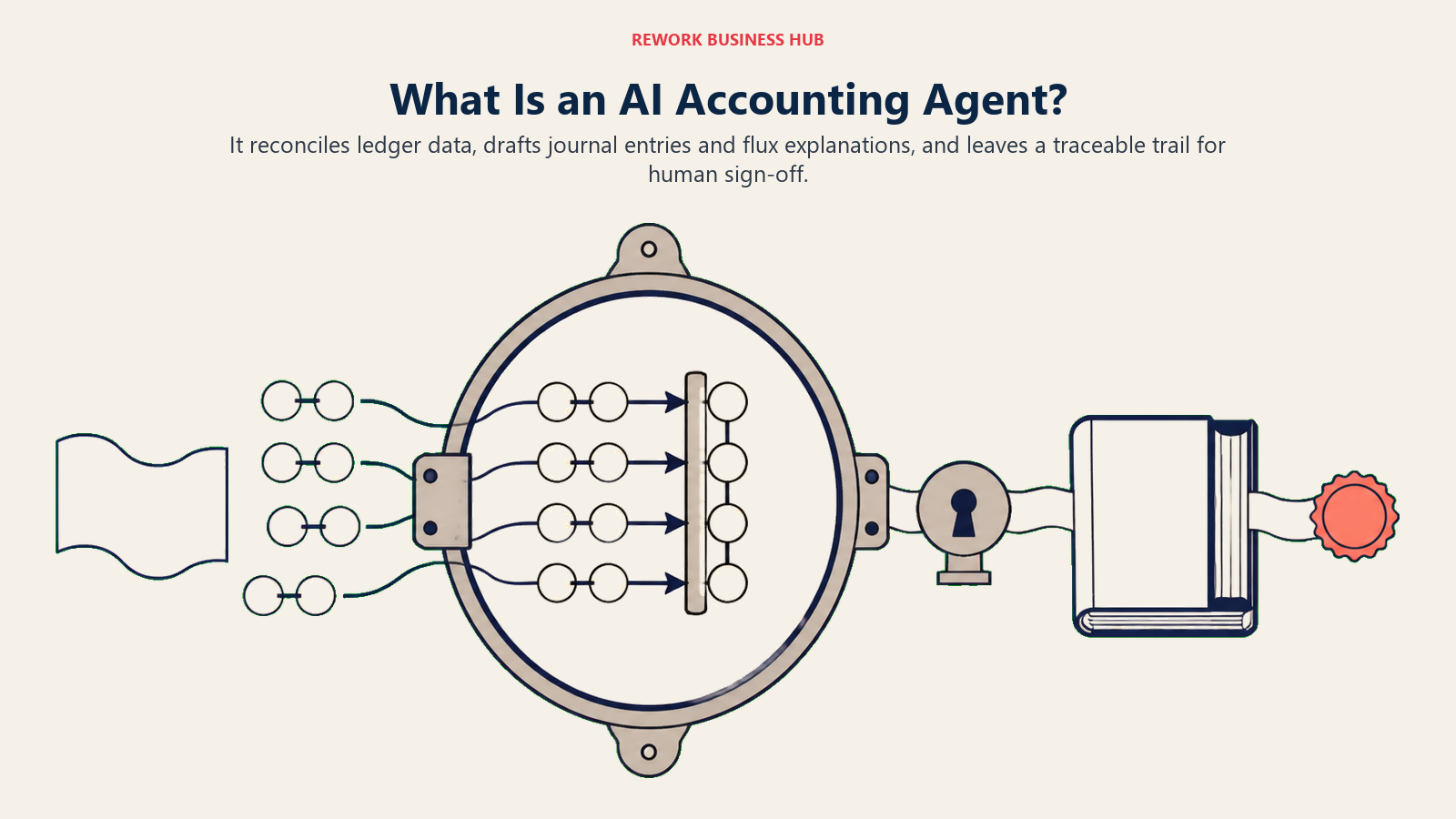
Turn this article into takeaways for your work.


Each assistant summarizes the article only for you and suggests best practices for your work.
Numeric leads this list for a mid-market or growth-stage accounting team that wants a modernized close with real published pricing, FloQast and BlackLine lead it for teams that want the close-management standard most auditors already recognize, and Basis leads it if you run an accounting firm buying agents across tax, audit, and advisory rather than a single company's books. Updated August 2026: every price below is either pulled from the vendor's own pricing page or clearly labeled as reported, and one name from the original shortlist quietly pivoted away from accounting entirely this year.
This guide covers the accounting and close job specifically: transaction categorization, bank and account reconciliation, the month-end close checklist, journal entries, accruals, flux analysis, and audit prep. It's a narrower job than the finance function as a whole (FP&A, treasury, board reporting), and a broader one than transaction-level bookkeeping for a single small business. Selection method: every vendor had to demonstrably take multi-step action inside a ledger, a bank feed, or a document, not just summarize one for a human to act on, and pricing had to trace back to the vendor's own page or be clearly labeled as a reported estimate.
Updated August 2026: What Changed
- Klarity quietly became Within, and stopped being an accounting product. The company that built a name reviewing revenue contracts for finance teams rebranded and repositioned as a horizontal "Company Brain for AI Transformation" spanning finance, IT, GTM, HR, and PE advisory. Its own homepage no longer leads with the revenue-accounting or contract-review pitch, so it's dropped from the ranking below rather than padded in on an old description.
- Basis raised $100 million at a $1.15 billion valuation in a Series B closed February 24, 2026, led by Andreessen Horowitz, and now counts roughly 30% of the Top 25 US accounting firms as customers, per this site's AI tools for accountants coverage.
- BlackLine launched "Agentic Financial Operations" in April 2026, pairing its Studio360 data-orchestration layer with a new Verity AI agent suite for reconciliation, matching, accruals, and collections, and added ISO 42001 (the new AI management standard) on top of its existing SOC 2 and ISO 27001 certifications.
- NetSuite bundled its close AI into the base platform. Starting with the 2026.1 release, Oracle folded Intelligent Close Manager, GenAI-drafted flux explanations, and new allocation agents into NetSuite licensing rather than selling them as a separate line item, according to NetSuite's own release notes.
- Sage made Copilot free at every tier, the only major accounting platform to unlock its AI assistant starting at the entry plan rather than gating it behind a premium tier.
Key Facts
- The median month-end close takes 6.4 calendar days, with top-quartile finance teams closing in 4.8 days or less and the bottom quartile taking 10 or more, per APQC's Open Standards Benchmarking survey of over 2,300 organizations (CFO.com).
- Gartner predicts that by 2028, finance organizations running cloud ERP systems with embedded AI assistants will achieve a 30% faster financial close, based on a survey of 314 organizations worldwide conducted in September and October 2025 (Gartner).
- 87% of CFOs say AI will be extremely or very important to their finance department's operations in 2026, and 54% list integrating AI agents into finance as a transformation priority, per Deloitte's Q4 2025 CFO Signals survey of 200 finance chiefs at $1 billion-plus North American companies (Deloitte).
- 64% of disclosed material weaknesses over the past year trace back to not having adequate personnel operating controls, and 98% carry a documentation component, per Audit Analytics data (December 2025) cited by Deloitte, which is the practical reason the review trail behind an agent's work matters as much as the work itself (Deloitte).
- 61% of finance and accounting leaders report more difficulty finding skilled professionals than a year prior, and 75% say skills shortages have already caused project delays, per Robert Half's Demand for Skilled Talent research (CPA Practice Advisor).
- Organization-wide generative AI usage among professionals nearly doubled to 40% in 2026 from 22% in 2025, per Thomson Reuters' 2026 AI in Professional Services report, a survey of more than 1,500 tax, audit, and legal professionals (Thomson Reuters).
Quick Comparison Table
| Tool | Best For | Starting Price | Key Strength | Key Limitation |
|---|---|---|---|---|
| Numeric | Growth or mid-market teams modernizing the close | $30/user/mo (Essentials) | Real published entry pricing, flux analysis, cash matching | Live ERP automation and flux need the custom Growth tier |
| FloQast | Teams wanting the close-management standard | Not published (reported $12K-$50K/yr) | Broadest confirmed ERP coverage, checklist plus sign-off | No transparent pricing at any tier |
| BlackLine | Enterprise reconciliation at high transaction volume | Not published (reported avg. ~$77K/yr) | Verity AI agents, SOC 2, ISO 27001, and ISO 42001 | Contract sizes and add-on structure are opaque |
| Rillet | A growth-stage SaaS company replacing its GL outright | Not published, complexity-based | AI-native GL built for a same-day close | Migration effort; you are moving off your current ERP |
| Campfire | The same AI-native GL play as Rillet | Not published, custom quote | Ember agent, 180+ currency and multi-entity support | Newer platform with a shorter public track record |
| Truewind | A managed close service, not just software | Not published (reported ~$25K/yr) | AI drafts, a human accountant reviews before posting | No self-serve tier; every deal starts with a sales call |
| Docyt | Multi-location or franchise close automation | $299/mo (up to 200 transactions) | HpAI trained across 20+ industries, per-location close | Each location needs its own subscription |
| Vic.ai | Autonomous AP at real enterprise invoice volume | Not published (reported ~$25K/12mo) | Invoice coding cost drops from ~$12 to under $2 each | Needs 1,000+ invoices/month per entity to pay off |
| BILL AI | SMB accounts payable with a visible price tag | $49/user/mo (Essentials) | Invoice Coding and W-9 Agents, real published tiers | Deeper ERP integrations gated to the Enterprise tier |
| Trullion | Lease accounting, revenue recognition, audit evidence | Not published, demo required | Trulli agent for ASC 842, IFRS 16, and ASC 606 workflows | Not a general close or reconciliation platform |
| Sage Copilot | A team already running Sage as its GL | Bundled free in every paid tier | Ledger monitoring and GL-to-subledger matching built in | Native to Sage only; not a multi-ERP option |
| NetSuite AI Agents | A team already running NetSuite as its GL | Bundled into NetSuite licensing | Intelligent Close Manager, GenAI flux, allocation agents | Native to NetSuite only; base NetSuite pricing is custom |
| Basis | Accounting firms running tax, audit, and advisory | Not published, waitlist | Agentic workflows across service lines, not one task | Built for larger firms, not a two-person practice |
What Actually Counts as an Accounting Agent Here
A dashboard that flags a stale reconciliation is not an agent just because it has an AI label on the box. The bar here matches the one covered in best AI agent platforms: something that pulls data from more than one source (a bank feed, a ledger, a contract, a receipt), takes a multi-step action on its own (matches a transaction, drafts a journal entry, writes a flux explanation, routes an exception), and leaves behind a record a reviewer can actually check. An AI tool that suggests a category and waits for a click is real and useful, it's just a different buying decision, covered instead in best AI tools for accounting and best AI tools for accountants.
That bar is also why Klarity did not make the numbered list despite being on the original shortlist. Its rebrand to Within moved the product away from a focused revenue-accounting and contract-review agent toward a broad, cross-functional "Company Brain" platform, and its current site does not name a standalone accounting product to verify. Better to drop it and say why than pad the list to a round number.
If you landed here looking for transaction-level bookkeeping instead of the close and audit-prep job, or for the finance function as a whole rather than accounting specifically, this is the wrong altitude, those are narrower and broader agent categories respectively, and this page focuses on the middle: turning transactions into a reviewed, signed-off set of books.
Close-Cycle Time: The Metric That Actually Matters
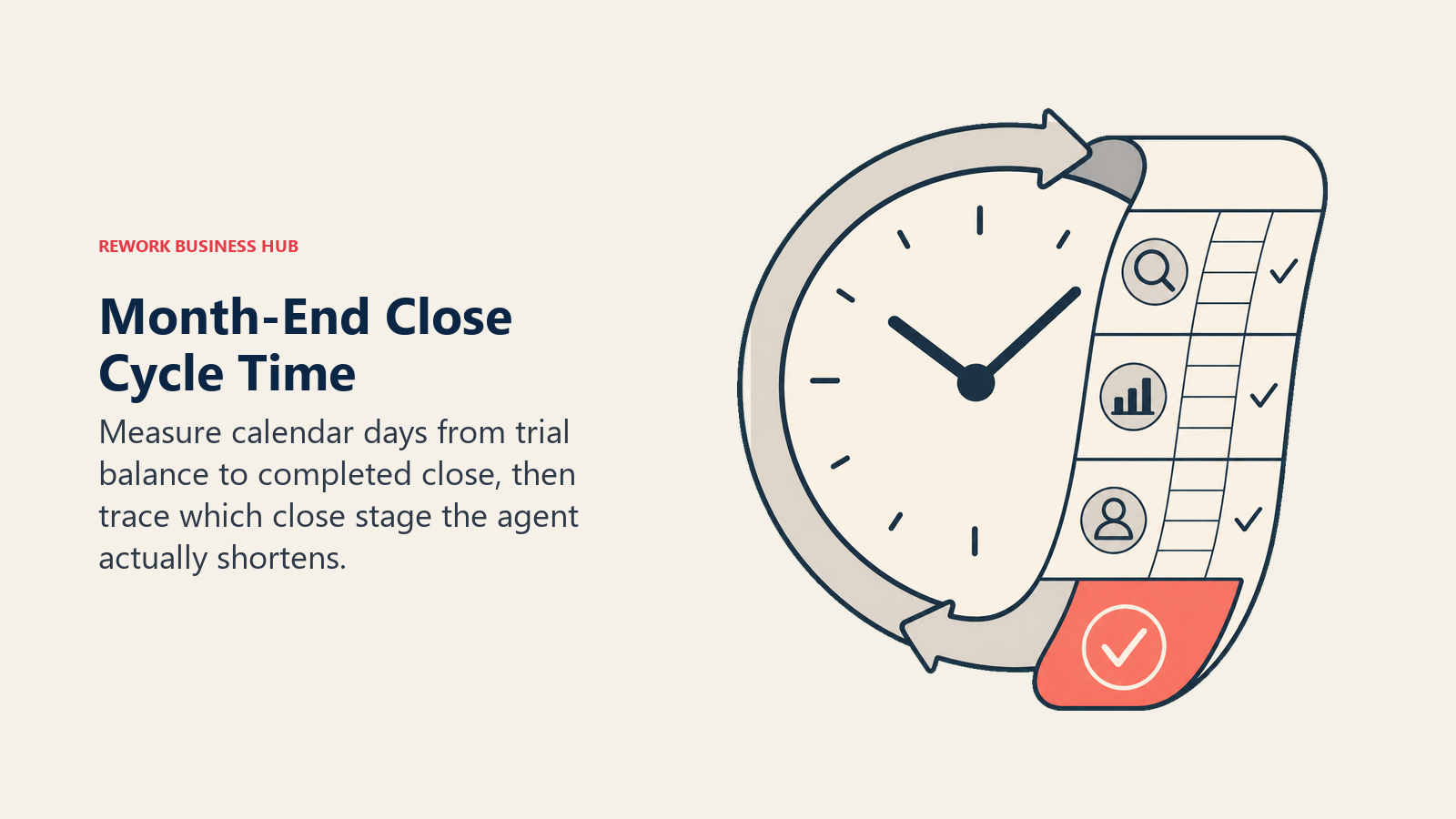
Every vendor in this category claims to save time. The number that actually tells you whether that claim is real is calendar days from trial balance to a completed close, and APQC's benchmark of over 2,300 organizations puts the median at 6.4 days, with the top quartile at 4.8 days or less and the bottom quartile at 10 or more. Gartner is betting that embedded AI moves that needle structurally, predicting a 30% faster close by 2028 for finance teams running cloud ERP with AI assistants built in, not bolted on. Before you believe either a vendor's case study or that Gartner number for your own team, ask which stage of the close a given agent actually touches, because "AI-powered close" ranges from one sub-process to the whole checklist.
| Tool | Close Scope Today | What Still Needs a Human |
|---|---|---|
| Numeric | Reconciliation, flux analysis, JE automation, cash matching | Flux narrative tone and first-time chart-of-accounts mapping |
| FloQast | Checklist, reconciliation, sign-off workflow, compliance | Orchestrates the close; the GL data itself lives elsewhere |
| BlackLine | Reconciliation, matching, accruals, AR and collections | Judgmental accruals and new account types until it's trained |
| Rillet | Full GL, close checklist, revenue recognition, AR/AP | Migration off the old ERP; non-standard rev rec edge cases |
| Campfire | Full GL, close checklist, rev rec, multi-entity consolidation | Same migration tradeoff as Rillet, plus a shorter track record |
| Truewind | Categorization, reconciliation, accrual and prepaid schedules | A human accountant reviews and finalizes before anything posts |
| Docyt | Per-location categorization, reconciliation, close, reporting | Consolidation across many locations still needs oversight |
| Vic.ai | Invoice coding and approval only | Everything else in the close; this is AP-only by design |
| BILL AI | Invoice coding, vendor tax-form collection, AP/AR workflow | Same AP/AR-only scope; no GL close orchestration |
| Trullion | Lease accounting, revenue recognition, audit evidence matching | The general ledger close outside those two technical areas |
| Sage Copilot | Ledger monitoring, GL-to-subledger matching, anomaly flags | Blocks the close on a discrepancy rather than resolving it |
| NetSuite AI Agents | Close checklist monitoring, flux drafts, allocation models | Rollout maturity still varies by license tier |
| Basis | Tax prep, audit testing, workpapers, advisory drafts (firm-side) | Engagement partner sign-off on every deliverable, by design |
Accounting Firm or In-House Team: Two Different Buys
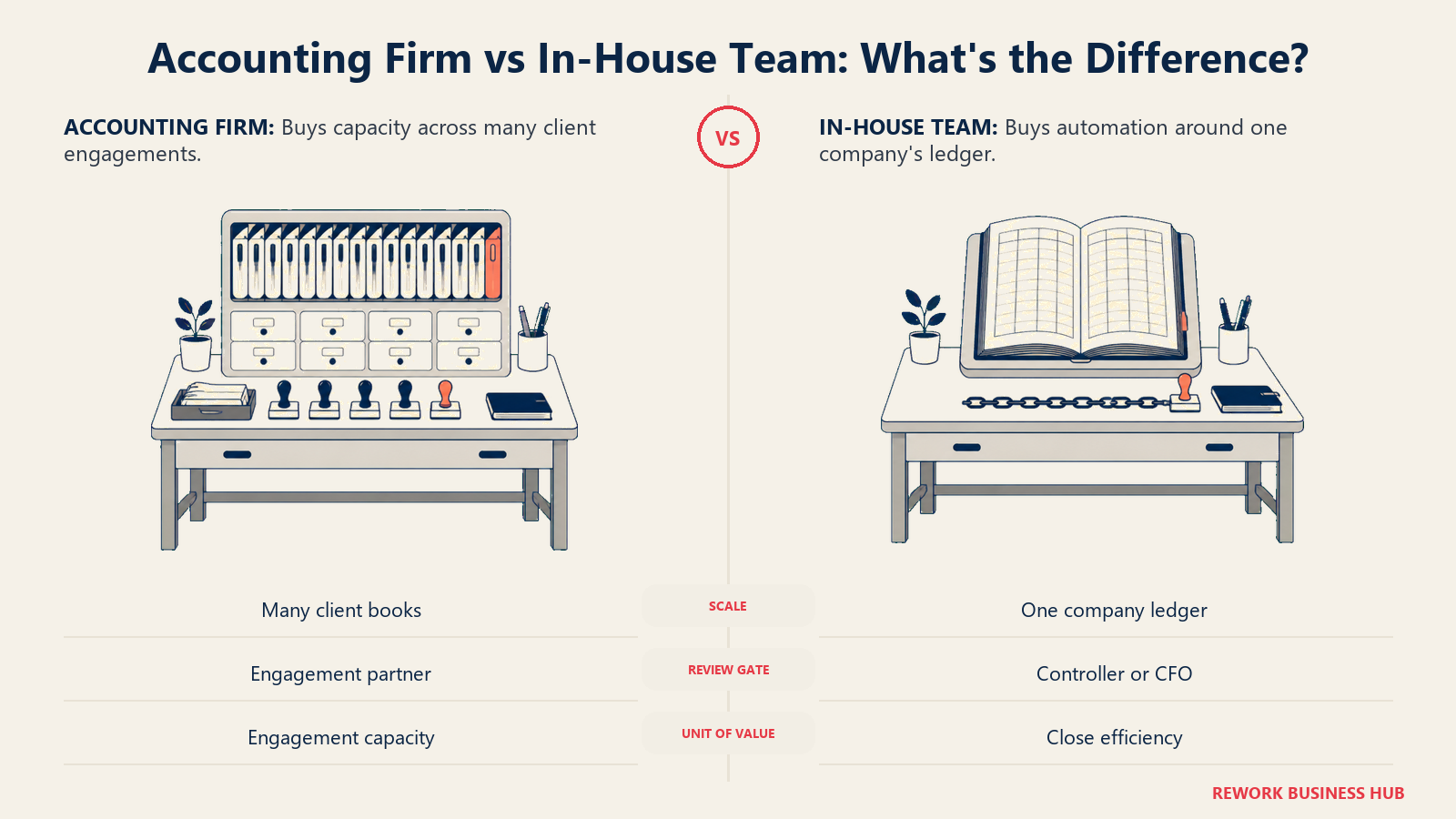
Not every name on this list is competing for the same budget line. An in-house controller is buying software that sits on top of one company's ledger. An accounting firm partner is buying capacity across dozens or hundreds of client engagements, priced and reviewed differently, with a different definition of "done." Confusing the two is the fastest way to demo the wrong product.
| Tool | Built Primarily For | Why |
|---|---|---|
| Numeric | In-house | Sits on top of one company's QuickBooks, Xero, or NetSuite ledger |
| FloQast | Both | Used by in-house teams and by firms running outsourced controllership |
| BlackLine | In-house, enterprise | Priced and built around one company's multi-entity consolidation |
| Rillet | In-house | Replaces one company's general ledger outright |
| Campfire | In-house | Same positioning as Rillet: one company's system of record |
| Truewind | Both | Sold directly to startups and to the accounting firms serving them |
| Docyt | Both | Multi-location businesses and the bookkeeping firms managing them |
| Vic.ai | In-house | Priced against one entity's invoice volume |
| BILL AI | In-house | Per-user SMB pricing tied to one company's AP team |
| Trullion | In-house, audit teams secondary | Sold to corporate accounting; external auditors also touch the data |
| Sage Copilot | Both | Bundled into Sage's business line and its Sage for Accountants line |
| NetSuite AI Agents | In-house | Bundled into one company's NetSuite license |
| Basis | Accounting firms | Built for firm engagements across many clients, not one company's books |
If you run a firm, Basis and the firm-facing side of FloQast, Truewind, Docyt, and Sage Copilot are the shortlist worth a real look. If you're building or running an internal accounting function, everything else on this page is built for that job specifically, and Trullion's audit-evidence angle is worth a look even if you're not the one being audited, since your external auditor's request list is the same either way.
Sizing and Persona Table
| Tool | Ideal Team Size | Primary Buyer Persona |
|---|---|---|
| Numeric | 20-500 employees | Controller, VP Finance, Assistant Controller |
| FloQast | 50-5,000+ employees | Controller, Corporate Controller, Close Manager |
| BlackLine | 200-10,000+ employees | CAO, VP Controllership, SOX Compliance Lead |
| Rillet | 20-500 employees (SaaS) | Controller, Head of Finance at a venture-backed company |
| Campfire | 20-500 employees (SaaS) | Controller, Head of Finance at a venture-backed company |
| Truewind | 10-200 employees | Founder, Head of Finance without a full accounting team |
| Docyt | 5-500 employees (multi-unit) | Controller or bookkeeping lead at a multi-location business |
| Vic.ai | 200-5,000+ employees | AP Manager, Controller, Shared Services Director |
| BILL AI | 5-500 employees | Controller, AP Manager, Small Business Owner |
| Trullion | 100-5,000+ employees | Controller, Technical Accounting Lead, Internal Audit |
| Sage Copilot | 1-500 employees | Small Business Owner, Bookkeeper, Sage-based Controller |
| NetSuite AI Agents | 50-5,000+ employees | Controller, ERP Administrator on NetSuite |
| Basis | Firms of 2-500+ staff | Managing Partner, Firm COO, Head of CAS |
1. Numeric: The Published-Pricing Pick for a Modernized Close
Numeric is the tool to shortlist first if you want a modernized close without a multi-month procurement cycle. It pulls live balances from the ledger, matches transactions automatically, parses bank statements into structured data, and drafts flux commentary that compares this period against last, all built around segregated preparer and reviewer roles that create the review trail a later audit needs. The Essentials tier is genuinely useful on its own for organizing the close checklist; the real automation (live ERP integration, auto-reconciliation, AI flux parsing) sits in the Growth tier, built for QuickBooks and Xero, with an Enterprise tier for NetSuite environments needing continuous transaction monitoring.
The honest tradeoff is that the number you see on the pricing page, $30 a month per user, is the entry point, not the automation. Once you need live bank feeds, auto-reconciliation, or NetSuite support, you're back to a custom quote like most of this list.
| What you get | What you don't |
|---|---|
| Real published entry pricing, rare in this category | Automation depth requires the custom Growth or Enterprise tier |
| Flux analysis, cash matching, and JE automation | NetSuite support is gated to the top Enterprise tier |
| CPA-led onboarding and segregation-of-duties workflow | Newer entrant next to BlackLine's enterprise track record |
Pricing: Essentials $30/user/month; Growth and Enterprise are custom-quoted. See numeric.io/pricing.
Best for: Growth-stage or mid-market in-house accounting teams that want a modernized close on QuickBooks, Xero, or NetSuite without an enterprise procurement process.
2. FloQast: The Close-Management Standard Most Auditors Already Recognize
FloQast built its category position on the close checklist: reconciliations, task assignments, and sign-offs tied directly to the ERP, which is why it shows up as often in an external auditor's walkthrough as in a controller's daily workflow. In 2026 that checklist got an agentic layer through FloQast Transform, which lets a team build custom AI agents for its own close and compliance workflows rather than only using packaged automation, alongside existing Close Automation, Connected Compliance, and Compliance Pro modules for SOX and internal-audit testing.
FloQast confirms integration with QuickBooks Online, Xero, NetSuite, Sage Intacct, SAP, Oracle, and Workday, the broadest confirmed ERP bench on this list. The tradeoff is pricing: there is no published number anywhere, and reported deployments run from the low five figures for a small team to well into six figures for a large multi-entity org.
| What you get | What you don't |
|---|---|
| The broadest confirmed ERP integration bench on this list | No published pricing at any tier |
| Custom AI agent building (FloQast Transform) for close workflows | Reported deployments range from $12K to well over $120K a year |
| SOC 2 Type II and ISO 27001 certified, the kind of evidence an auditor asks for | Value depends on adopting the checklist discipline, not just the software |
Pricing: Not published. Reported deployment ranges run $12,000 to $50,000 a year for smaller teams and $60,000 to $120,000 at mid-market, plus $5,000 to $30,000 or more in implementation (reported, consistent with this site's other coverage of FloQast). See floqast.com.
Best for: Controllership teams, including outsourced or fractional ones, that want the close checklist and the audit trail behind it in one recognized platform.
3. BlackLine: Enterprise-Grade Reconciliation at the Highest Volume
BlackLine's April 2026 relaunch as "Agentic Financial Operations" pairs its Studio360 data-orchestration layer with Verity, a new AI agent suite: Verity Prepare automates end-to-end reconciliation prep with full traceability, cutting creation time by more than 90% for early adopters per BlackLine's own reporting, and Verity Match uses AI to lift match rates in complex reconciliations to a reported 80-90%. It's the closest thing this category has to an established enterprise incumbent, confirmed to integrate with SAP, Oracle, NetSuite, Sage Intacct, Workday, Microsoft Dynamics, and more than 30 systems total.
BlackLine backs that scale with real, currently listed certifications: SOC 2 Type II, ISO 27001, ISO 27701, and, new in 2026, ISO 42001, the emerging standard specifically for AI management systems, per its own security page. Pricing is the opposite of transparent: contracts reportedly average around $77,000 a year and range from roughly $17,500 to $340,000, with implementation adding $5,000 to $50,000 or more.
| What you get | What you don't |
|---|---|
| Verity AI agents for reconciliation, matching, accruals, and collections | No published pricing; budget a wide, reported range |
| SOC 2, ISO 27001, and the new ISO 42001 AI-management certification | Newer AI layer may carry its own add-on cost beyond the base contract |
| Integration with 30+ ERPs, the deepest confirmed enterprise bench | Built for enterprise complexity; overkill below real multi-entity scale |
Pricing: Not published. Reported contracts average roughly $77,000/year, ranging from about $17,500 to $340,000, plus $5,000-$50,000+ implementation. See blackline.com.
Best for: Enterprise accounting teams running multi-entity, multi-ERP reconciliation who need certified AI governance evidence ready before a security or audit review.
4. Rillet: An AI-Native GL Built for a Zero-Day Close
Rillet's pitch is structural, not incremental: instead of adding AI on top of your existing ledger, it replaces the ledger itself with an AI-native general ledger built around journal entries, bank reconciliation, and revenue recognition, the three workflows that eat the most manual hours in a growing SaaS business. The stated goal is a "zero-day close," with AI drafting the routine reconciliation and JE work while accountants review and approve inside a built-in checklist.
That structural bet is also the honest catch. Rillet does not charge per seat or by revenue; pricing is custom, based on feature usage and complexity, and adopting it means migrating off whatever ERP you run today, with white-glove CPA-led onboarding typically taking four to six weeks.
| What you get | What you don't |
|---|---|
| AI drafts routine JEs and reconciliations toward a same-day close | No public pricing; every deal is a custom, complexity-based quote |
| Purpose-built for SaaS revenue recognition and multi-entity structures | You are migrating off your current ERP, not integrating with it |
| White-glove CPA onboarding built into the rollout | Newer category; fewer large-enterprise reference customers than BlackLine |
Pricing: Not published. Custom, based on features used and complexity (entities, transaction volume, integrations). See rillet.com.
Best for: Growth-stage, venture-backed SaaS companies ready to replace QuickBooks or a thin NetSuite setup with an AI-native general ledger.
5. Campfire: The Other AI-Native GL Chasing Rillet's Playbook
Campfire runs the same structural play as Rillet: an AI-native general ledger, not an add-on, with its Ember agent embedded throughout so a team can automate reconciliations, journal entries, flux analysis, and financial reporting through natural-language requests. Multi-entity and multi-currency consolidation (180+ currencies, unlimited entities) plus 100+ native integrations position it for companies outgrowing QuickBooks with more than one legal entity to consolidate.
Backed by more than $100 million in total funding from Accel and Ribbit as of 2026, Campfire is credibly funded but newer to the market than Rillet, and, like Rillet, publishes no pricing; every deal starts with a demo and a custom quote.
| What you get | What you don't |
|---|---|
| Ember AI agent for reconciliation, JEs, flux, and reporting via natural language | No public pricing; requires a sales conversation |
| 180+ currency and unlimited-entity consolidation built in | You are migrating off your current GL, the same tradeoff as Rillet |
| Well-funded (Accel, Ribbit) with over $100M raised | Shorter public track record than either Rillet or BlackLine |
Pricing: Not published. Custom quote after a product demo. See campfire.ai.
Best for: Multi-entity, multi-currency startups evaluating an AI-native GL replacement alongside Rillet before picking one.
6. Truewind: A Managed Close Service With a Human Reviewing Every Entry
Truewind is less a piece of software you operate yourself and more a managed close service built around one: its AI Accountant Agent automates transaction coding, bank and third-party reconciliation (including Stripe, Shopify, and Amazon payouts matched to lump-sum deposits), and accrual, prepaid, and fixed-asset schedule prep, then posts directly to Sage Intacct, QuickBooks Online, or Intuit Enterprise Suite. Truewind's own reporting claims a 75% cut in categorization time and books closed four days faster, with 47% of month-end close tasks automated, while a human accountant still reviews and finalizes before anything is final.
There is no self-serve tier. Every engagement starts with a sales conversation about transaction volume and workflow complexity, with reported annual contracts landing near $25,000, positioned by the company as a fraction of the $270,000 to $400,000 a year it estimates a full in-house accounting hire costs.
| What you get | What you don't |
|---|---|
| AI plus a human accountant reviewing and finalizing every close | No self-serve tier; every deal starts with a sales call |
| Native posting to Sage Intacct, QuickBooks Online, Intuit Enterprise Suite | No published pricing beyond reported example contracts |
| Reported 75% faster categorization, close four days sooner | You're buying a service relationship, not just software |
Pricing: Not published. Custom, based on transaction volume and complexity; reported example annual contracts run near $25,000 (consistent with this site's other coverage of Truewind). See truewind.ai.
Best for: Startups and growth companies that want their close fully off their plate, with a human accountant still in the loop, rather than software they operate themselves.
7. Docyt: Per-Location Close Automation for Multi-Unit Businesses
Docyt's angle is structural fit for a specific problem: businesses running the same books across many locations, hotel groups, restaurant chains, and franchises, where a general close tool built for one entity breaks down. Its AI, branded HpAI and trained on a claimed 128 billion accounting data points across 20-plus industries, runs revenue reconciliation (RevFlow), bill pay and expenses (ExpenseFlow), month-end close (ClosingFlow), and reporting (InsightFlow), synced bidirectionally with QuickBooks Online.
The tradeoff is structural too, not just a pricing detail: each location needs its own Docyt subscription, so a group running five properties needs five subscriptions, and transaction-volume tiers add up fast for a busy multi-unit operator.
| What you get | What you don't |
|---|---|
| Purpose-built per-location close, reconciliation, and reporting | Each location needs its own subscription, no bundled multi-entity plan |
| Bidirectional QuickBooks Online sync with real published pricing | Confirmed integration is QuickBooks Online; other ERPs not confirmed |
| White Glove onboarding and a dedicated bookkeeping expert included | Costs climb quickly for a large multi-property portfolio |
Pricing: Impact $299/mo (up to 200 transactions); Advanced $499/mo (500); Advanced Plus $799/mo (1,000); Enterprise $999+/mo, custom above that. See docyt.com/pricing-plans.
Best for: Multi-location businesses and the bookkeeping firms managing several client properties on QuickBooks Online.
8. Vic.ai: Autonomous AP Coding at Real Enterprise Volume
Vic.ai is built for one job and built to do it without a human in the loop by default: autonomous invoice coding and approval, trained on your historical data until it can code and approve independently rather than just suggesting a category for review. The vendor's own reporting claims processing cost drops from roughly $12 to under $2 per invoice at scale, the kind of unit-economics shift that only shows up once volume is genuinely high.
That volume threshold is also the honest limitation: Vic.ai is built for organizations processing 1,000 or more invoices a month per entity, and it's expensive overkill below that. Its own integrations page names Oracle, Microsoft Dynamics, Coupa, Sage, and Workday specifically; it does not name NetSuite, QuickBooks, or Xero on that page, worth confirming directly with sales if that's your stack, alongside an open API for other systems.
| What you get | What you don't |
|---|---|
| Fully autonomous invoice coding once trained, not just suggestions | Needs 1,000+ invoices/month per entity to be worth the cost |
| Reported cost drop from ~$12 to under $2 per invoice processed | Confirmed integrations are Oracle, Dynamics, Coupa, Sage, Workday; not NetSuite or QuickBooks by name |
| Multi-month procurement is normal, so is a mature evaluation process | No self-serve tier or public pricing |
Pricing: Not published. Custom, based on invoice volume, active ERP integrations, and selected modules; reported example 12-month contracts run near $25,000 (consistent with this site's other coverage of Vic.ai). See vic.ai.
Best for: Mid-market to enterprise AP teams or shared services centers processing at least 1,000 invoices a month who need coding autonomy, not just assistance.
9. BILL AI: Transparent Per-Seat Pricing for SMB Accounts Payable
BILL is the rare name on this list with a real, per-seat price tag published on its own pricing page: Essentials at $49 a user a month includes the Invoice Coding Agent, which reads and multi-line-codes a bill automatically, and the W-9 Agent, which emails vendors directly to collect tax forms without a human chasing them down. Team ($65/user/mo) adds two-way QuickBooks and Xero sync; Corporate ($89/user/mo) adds procurement and purchase-order matching; Enterprise is custom and unlocks QuickBooks Enterprise, NetSuite, Sage Intacct, and Microsoft Dynamics integrations specifically.
The honest limitation is exactly that tier gate: the deeper ERP integrations a growing company needs sit behind Enterprise, and a small AP team on Essentials or Team is closer to touchless invoice entry than full close automation.
| What you get | What you don't |
|---|---|
| Real, published per-seat pricing, verified on BILL's own page | NetSuite and Sage Intacct integrations require the Enterprise tier |
| Invoice Coding Agent and W-9 Agent included from the entry tier | AP/AR-only scope; no reconciliation or close-checklist layer |
| Free Spend & Expense plan for card and reimbursement workflows | Corporate and Enterprise pricing scales with feature depth, not just seats |
Pricing: Essentials $49/user/mo; Team $65/user/mo; Corporate $89/user/mo; Enterprise custom. Spend & Expense is free. See bill.com/pricing.
Best for: SMB and mid-market AP teams that want touchless invoice processing with a visible price before a sales call.
10. Trullion: The Lease Accounting and Revenue Recognition Specialist
Trullion is narrower by design: its Trulli agent extracts contract data from PDFs, generates journal entries, reconciles payments, and validates financial statements specifically for lease accounting (ASC 842, IFRS 16, GASB 87) and revenue recognition (ASC 606, IFRS 15), plus audit fieldwork, document matching, and evidence collection. That specialization is the point for a technical accounting team drowning in lease schedules or contract-by-contract revenue analysis that general close tools don't touch.
Trullion serves corporate controllership, technical accounting, and internal and external audit teams alike, backed by $34 million in VC funding, but it publishes no pricing and does not name specific ERP integrations on its public site, worth confirming directly during a demo if GL connectivity matters to your evaluation.
| What you get | What you don't |
|---|---|
| Purpose-built AI for lease accounting and revenue recognition | Not a general close, reconciliation, or checklist platform |
| Audit fieldwork and evidence-matching features built in | Specific ERP integrations are not named publicly; confirm on a demo |
| Serves both the accounting team and the auditors reviewing its work | No published pricing; demo required |
Pricing: Not published. Demo required. See trullion.com.
Best for: Technical accounting or audit teams whose real bottleneck is lease accounting or revenue recognition specifically, not the close checklist as a whole.
11. Sage Copilot: The Agent Already Inside Your Sage Ledger
Sage Copilot is the AI layer built into Sage's own accounting line (Sage Accounting, Sage 50, and Sage Intacct), and by 2026 it's the only major accounting platform bundling its AI assistant into every paid tier rather than gating it to a premium plan. It continuously monitors ledger activity, matches general ledger entries against sub-ledger records, flags anomalies and overdue items, automates categorization and approvals, and, on Sage 50's close dashboard, blocks final close until bank reconciliation discrepancies are resolved.
The honest limitation is that it's native to Sage only, so it's not an option if your GL lives elsewhere. Sage's public statements are consistent that Copilot ships free inside every paid tier rather than billing separately, and third-party trackers report Sage Accounting entry pricing in the roughly $20-$59 a month range depending on tier and region (reported); confirm current numbers directly with Sage for your market.
| What you get | What you don't |
|---|---|
| Bundled free into every paid Sage Accounting, 50, and Intacct tier | Native to Sage only; not usable outside the Sage ecosystem |
| GL-to-subledger matching and a close dashboard that blocks on discrepancies | Confirm current pricing with Sage for your market |
| No separate AI line item to negotiate or budget for | Less agentic breadth than a dedicated close platform like FloQast |
Pricing: Included free in every paid Sage Accounting, Sage 50, and Sage Intacct subscription. See sage.com.
Best for: A business or firm already running Sage as its ledger that wants close-relevant AI with no separate contract to negotiate.
12. NetSuite AI Agents: Native Close Automation for NetSuite Shops
Oracle's 2026.1 NetSuite release folded a set of AI-driven close capabilities directly into the platform: Intelligent Close Manager gives AI-powered, data-driven monitoring to keep a team on track for a timely close, a new GenAI flux analysis feature automatically detects fluctuations against configurable thresholds and drafts plain-language explanations, and a new allocation agent pair (a Model Build Assistant that generates allocation models from plain instructions and an Allocation Trace Assistant that explains allocations in natural language) targets one of the more manual corners of a close.
As of the 2026.1 release, Oracle is bundling these AI features into NetSuite licensing rather than pricing them as a separate add-on, which is a genuine shift worth confirming at your next renewal. Base NetSuite licensing itself has never published a list price and remains fully custom-quoted through an account rep.
| What you get | What you don't |
|---|---|
| Close monitoring, GenAI flux analysis, and allocation agents bundled in | Native to NetSuite only; irrelevant if that's not your GL |
| No separate AI line item as of the 2026.1 release | Base NetSuite pricing itself is custom and was not directly verifiable here |
| Deep, native write access to live NetSuite records | Feature availability and maturity vary by edition and license tier |
Pricing: Bundled into NetSuite licensing as of the 2026.1 release; base NetSuite contracts are custom-quoted and not published. See netsuite.com.
Best for: Controllers and ERP administrators already running NetSuite who want close automation with no new vendor contract.
13. Basis: Agentic Tax, Audit, and Advisory for Accounting Firms
Basis is the one product here not built for a single company's books: it's an end-to-end platform of AI agents for accounting firms, covering tax prep and planning, audit and assurance testing, client accounting services, and advisory work, built to shift accountants from execution toward review. OpenAI's own description frames it as turning frontier-model progress into "trusted agents" for firms rather than a point tool for one task, with finished output delivered ready for review at the quality level of an experienced accountant, engagement partner sign-off still required.
Basis raised $100 million in a Series B at a $1.15 billion valuation in February 2026, led by Andreessen Horowitz, and reportedly serves roughly 30% of the Top 25 US accounting firms already. There's no self-serve pricing, only a waitlist; this site's other coverage of AI tools for accounting firms estimates mid-market AI accounting platforms broadly landing between $20,000 and $80,000 a year (reported), though Basis has not confirmed where in that range it sits.
| What you get | What you don't |
|---|---|
| Agentic workflows spanning tax, audit, CAS, and advisory in one platform | No self-serve pricing; waitlist only |
| Built and trusted by roughly 30% of the Top 25 US accounting firms | Built for larger firms with existing review processes, not solo practices |
| $100M Series B (a16z, Feb 2026) signals real staying power | Output still requires full engagement-partner review before delivery |
Pricing: Not published. Waitlist; no self-serve tier. Reported mid-market AI accounting platform pricing broadly runs $20,000-$80,000/year. See getbasis.ai.
Best for: Accounting firms of meaningful size running tax, audit, and advisory as connected practices and looking to automate execution work, not a two-person shop buying its first AI tool.
If none of the 13 above fit and you'd rather scope a narrower agent yourself than buy a platform, the AI invoice and AP agent, AI audit agent, and AI reporting agent blueprints walk through the build side of exactly those three jobs, vendor-neutral.
GL Integration Depth: What Breaks at Scale
An agent that reconciles beautifully in a sales demo is only as good as its actual connection to your general ledger. Confirmed integration with the four systems this list gets asked about most (QuickBooks, Xero, NetSuite, and Sage Intacct) varies a lot, and the gaps are exactly where a rollout breaks at scale.
| Tool | QuickBooks | Xero | NetSuite | Sage Intacct | Reality Check |
|---|---|---|---|---|---|
| Numeric | Yes (Growth tier) | Yes (Growth tier) | Yes (Enterprise tier) | Not confirmed | Tier gates which ERP you get; confirm your ERP matches your plan |
| FloQast | Yes | Yes | Yes | Yes | Broadest confirmed bench here, plus SAP, Oracle, Workday |
| BlackLine | Yes | Yes | Yes | Yes | Same breadth as FloQast; they compete head to head on this |
| Rillet | N/A | N/A | N/A | N/A | Replaces the GL rather than integrating; budget a real migration |
| Campfire | N/A | N/A | N/A | N/A | Same tradeoff as Rillet |
| Truewind | Yes | Not confirmed | Not confirmed | Yes | Vendor names Sage Intacct, QuickBooks Online, Intuit Enterprise Suite |
| Docyt | Yes | Not confirmed | Not confirmed | Not confirmed | Confirmed integration is QuickBooks Online specifically |
| Vic.ai | Not confirmed | Not confirmed | Not confirmed | Yes | Vendor's own page names Oracle, Dynamics, Coupa, Sage, Workday, not NetSuite or QuickBooks |
| BILL AI | Yes | Yes (Team tier) | Yes (Enterprise tier) | Yes (Enterprise tier) | Deeper ERPs gated behind the Enterprise tier specifically |
| Trullion | Not confirmed | Not confirmed | Not confirmed | Not confirmed | Vendor describes general ERP and document connectivity, no named list |
| Sage Copilot | No | No | No | Yes (native) | Native to Sage only, by design |
| NetSuite AI Agents | No | No | Yes (native) | No | Native to NetSuite only, by design |
| Basis | Varies by client | Varies by client | Varies by client | Varies by client | Firm-side platform working across whatever ledger each client runs |
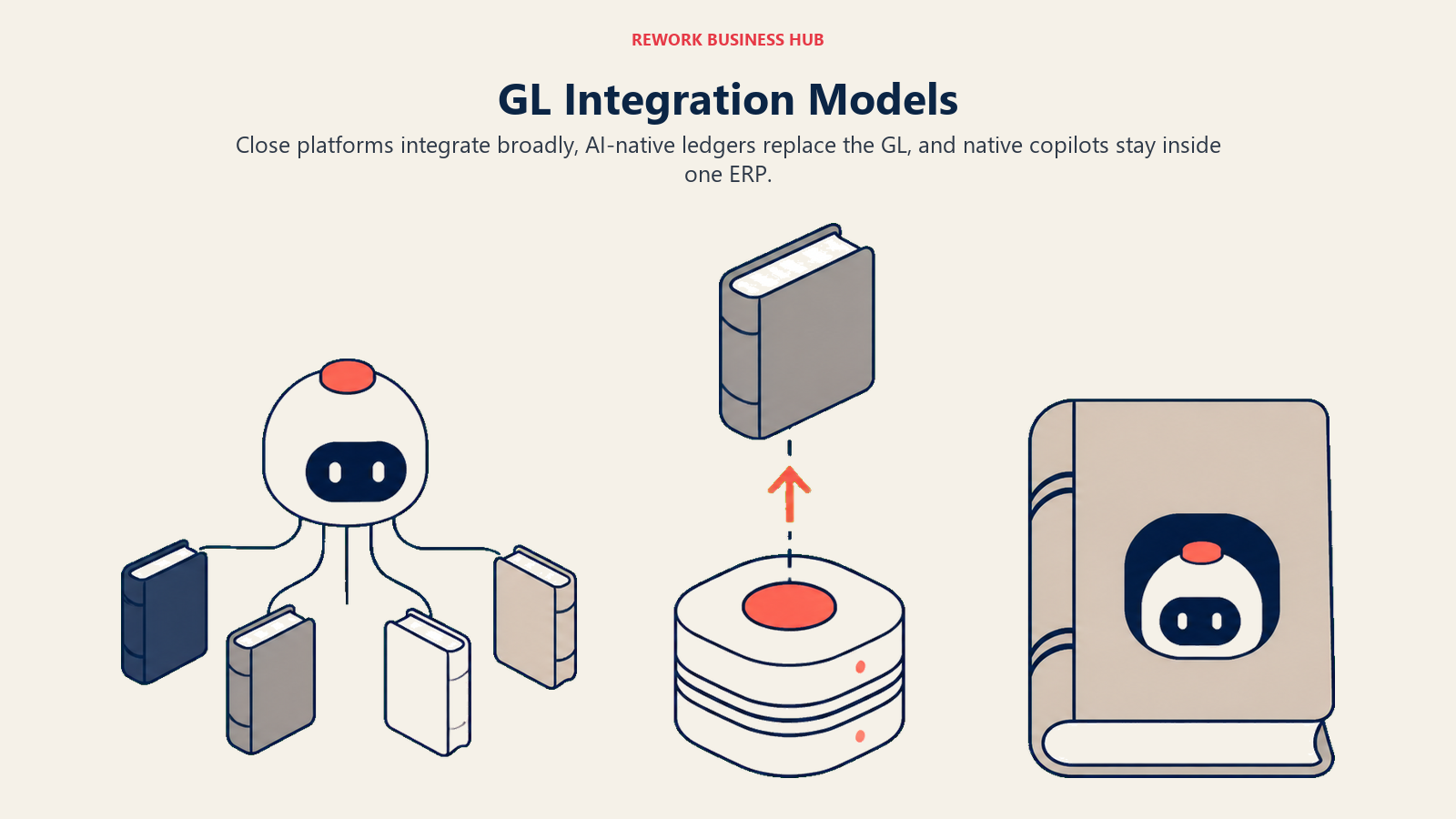
The pattern worth remembering: ERP-agnostic close platforms (FloQast, BlackLine) integrate broadly because integrating broadly is the entire product. AI-native GLs (Rillet, Campfire) don't integrate at all, they replace. And single-ERP copilots (Sage, NetSuite) trade breadth for zero-friction native access. Pick based on which of those three shapes matches what you already run, not on a features list.
How an Agent Learns Your Chart of Accounts and Coding Rules
Every agent on this list has to solve the same cold-start problem before it's useful: your chart of accounts is not standard, and neither are the coding rules your team has built up over years of exceptions. The pattern across vendors is broadly consistent even where the marketing language differs. Numeric and Truewind both let a team define categorization and coding rules explicitly, then apply AI parsing on top of bank and third-party data to route transactions against those rules, with a human correcting the exceptions the model flags rather than everything it touches. Docyt's HpAI takes the opposite starting point, trained on a claimed 128 billion accounting data points across more than 20 industries before it ever sees your books, then narrows against your specific chart of accounts as you connect QuickBooks. BILL's Invoice Coding Agent multi-line-codes a bill directly against your existing GL structure rather than a generic template.
The practical takeaway: ask every vendor on your shortlist two questions before a pilot. First, does it learn from your historical, already-coded transactions, or does it apply a generic model and wait for you to correct it. Second, where do your firm-specific coding rules live: as an explicit, editable rules table you control, or as a black box the vendor tunes on your behalf. The first answer tells you how fast it gets accurate; the second tells you how much control you keep once it does.
The Review and Sign-Off Trail an Auditor Will Actually Ask For
An agent that reconciles an account correctly but leaves no record of who reviewed it, when, and against what evidence hasn't solved your audit-readiness problem, it's just moved the paper trail somewhere less visible. That gap matters more than it might seem: 64% of disclosed material weaknesses over the past year trace back to inadequate personnel controls, and 98% carry a documentation component, per Audit Analytics data cited by Deloitte. A fast close with a thin trail behind it is a faster way to the same finding, not an escape from it.
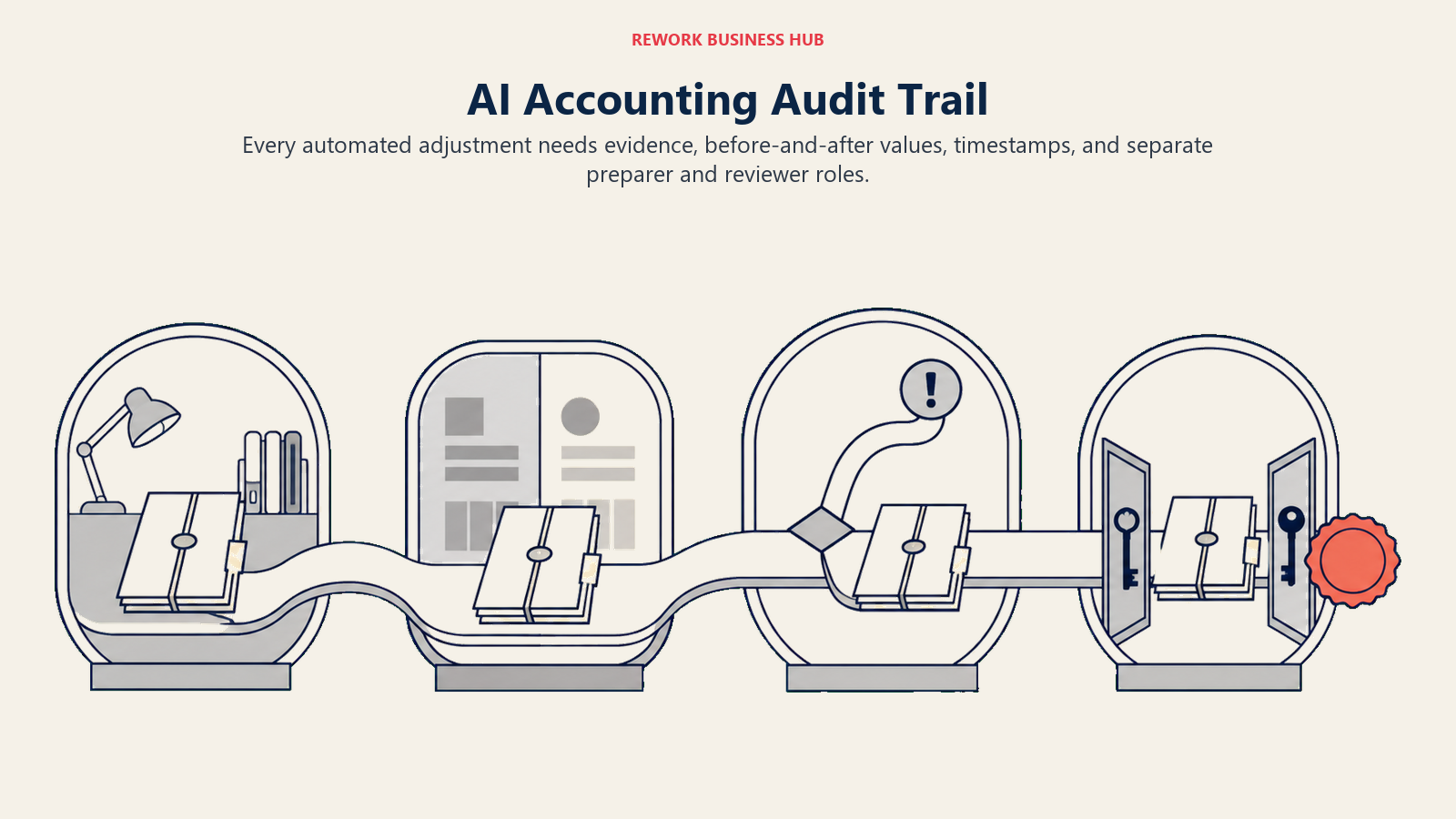
What an external auditor's request list actually wants from an agent's work, regardless of vendor: segregation between who prepared an item and who reviewed it, a timestamped log of what changed and when, before-and-after values on any automated adjustment, a documented escalation path for exceptions the agent flagged rather than resolved, and a way to sample a period's automated entries the same way a human-prepared workpaper gets sampled. Numeric and FloQast build preparer and reviewer roles into the workflow explicitly; BlackLine's Verity Prepare agent markets full traceability by design. For everything else here, ask to see the actual audit log during a demo rather than taking "audit-ready" as a given claim.
The PCAOB has been direct on vendor security posture: audit firms relying on third-party AI tools need their own basis for concluding a tool is fit for purpose, vendor marketing claims alone are not sufficient. FloQast and BlackLine both currently list SOC 2 Type II and ISO 27001 on their own security pages, and BlackLine added ISO 42001 (the new AI-management-system standard) in 2026, per blackline.com. For every other name here, treat a compliance claim as unconfirmed until you've checked the vendor's own trust page yourself. If you also need to monitor what an agent actually did in production, not just what it was supposed to do, best AI agent observability tools covers that adjacent layer.
Where the Accounting Profession Stands on AI in Audit Work
Neither PCAOB nor AICPA certifies or approves specific software, so a vendor claim of being "PCAOB-approved" is a claim to verify, not a badge to trust, and none of the products above make that specific claim. What the profession's own bodies have actually said is narrower and still worth knowing before you lean on an agent's output near an audit.
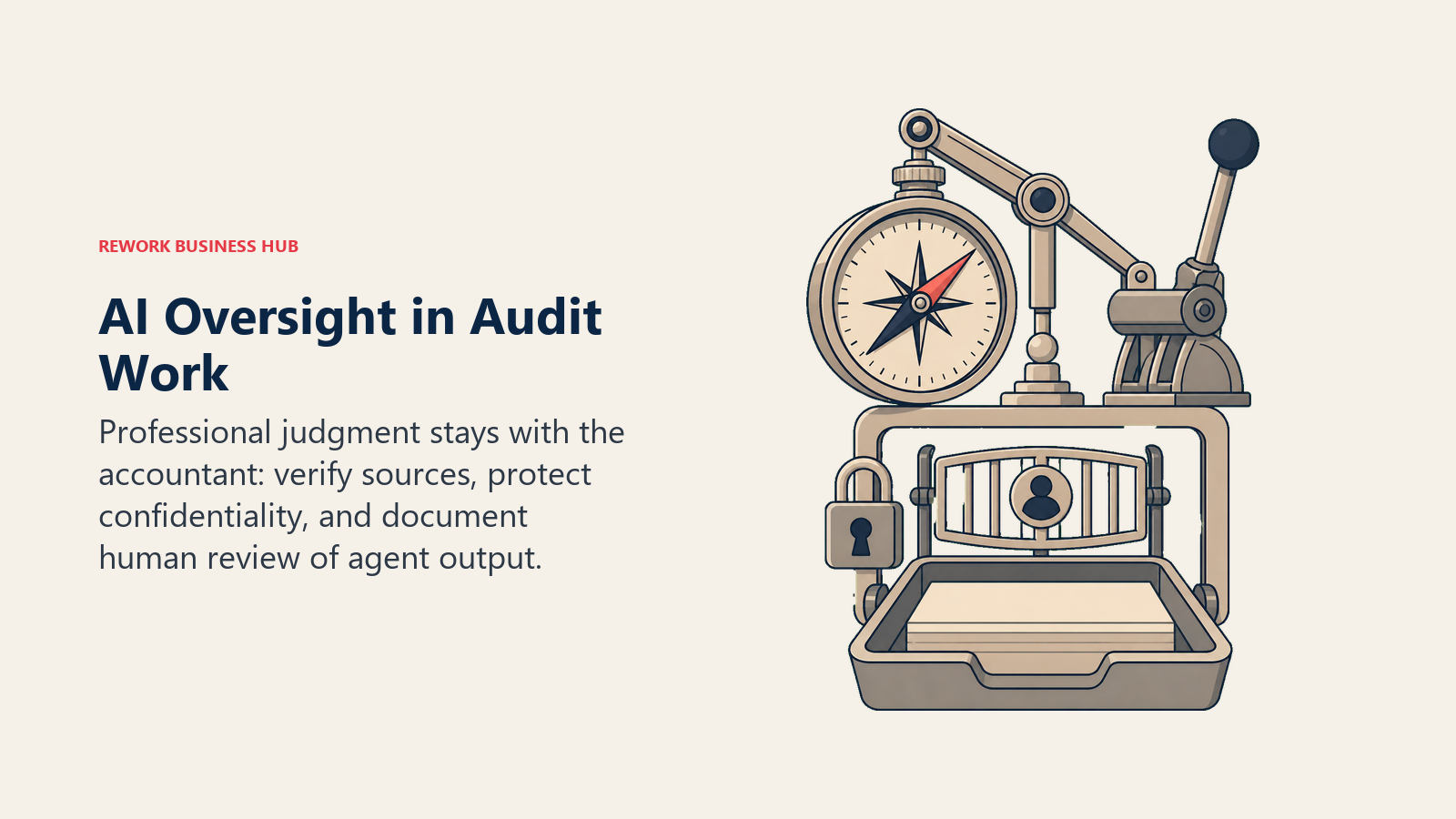
PCAOB staff published a spotlight on generative AI in audits in July 2024 (not 2026, worth getting the date right) after outreach to several firms and preparers, finding GenAI use in audits still limited and concentrated in administrative and research activities, with firms expecting broader use in planning and execution over time and strong human supervision still required. As of 2026, PCAOB has an active research project on technology-based tools that signals formal standard-setting is under consideration but not yet in force; new standards typically take a year and a half to three years to develop, so 2026 is a preparation window, not a compliance deadline.
The AICPA's position, most recently restated in the Journal of Accountancy in August 2026, applies existing rules rather than writing new ones: the Code of Professional Conduct's core requirements (competence, due care, confidentiality, independence) don't disappear because AI is involved, and professional judgment specifically cannot be delegated to a model. The "human in the loop" framing is explicit, and the AICPA calls out three cognitive traps AI use amplifies: automation bias (trusting the machine over your own reasoning), overconfidence bias (treating AI output as infallible), and anchoring bias (over-weighting whatever the model said first). Using an AI service on an attest client also raises independence questions under the existing nonattest-service rules, worth a direct read before you assume an agent vendor is neutral ground.
How to Choose: Decision Framework
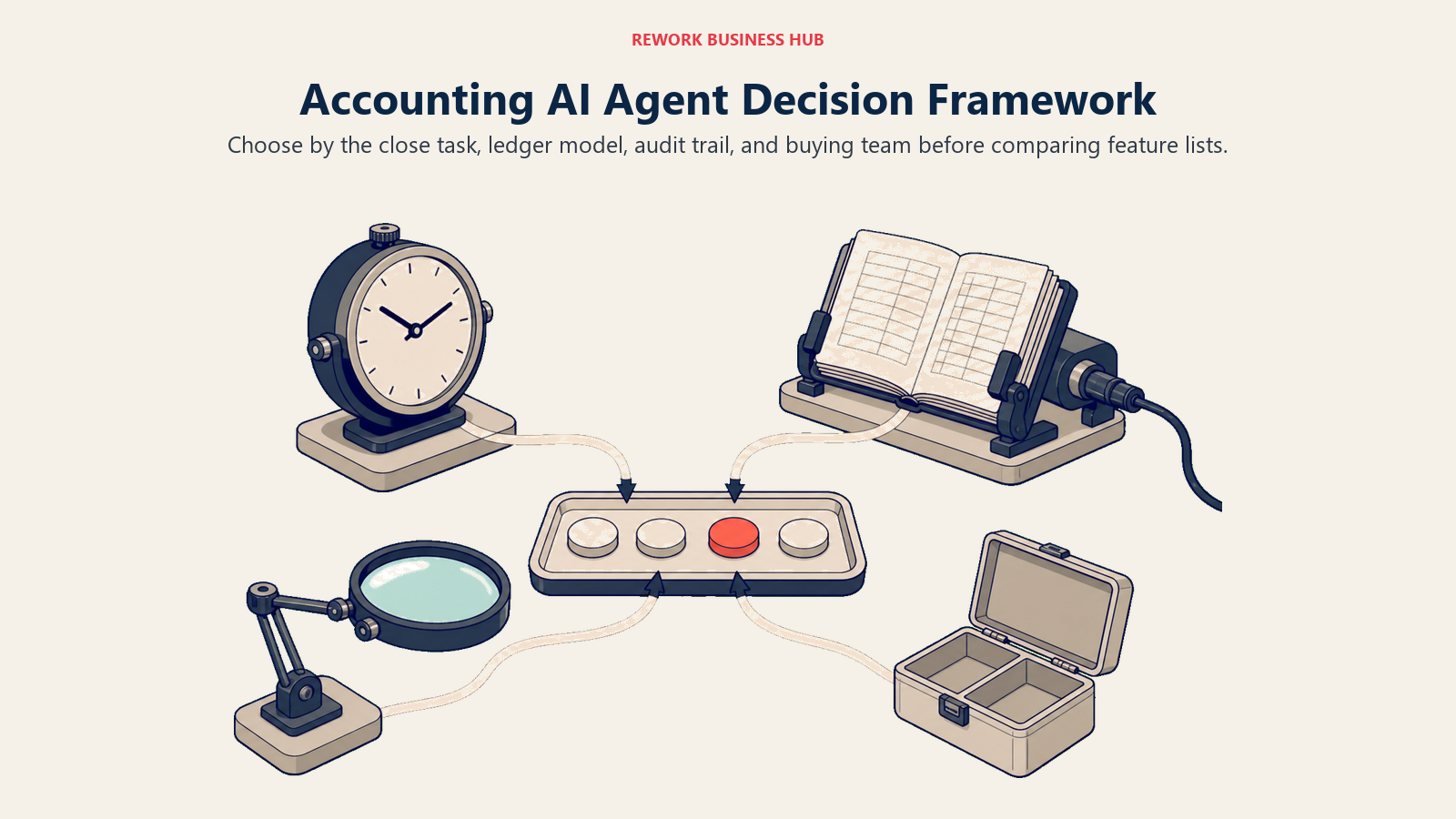
Use the table as a shortlist, then verify that each finalist fits your close task, ledger model, review trail, and buying team.
| If you need... | Pick... | Why |
|---|---|---|
| Published pricing you can see before a sales call | Numeric | Real entry-tier pricing; automation depth scales with the plan |
| The close-management standard most auditors recognize | FloQast | Broadest confirmed ERP bench, checklist plus sign-off workflow |
| Enterprise reconciliation at the highest transaction volume | BlackLine | Verity AI agents, SOC 2, ISO 27001, and ISO 42001 in place |
| A full AI-native GL replacement, not an add-on | Rillet or Campfire | Both bet the ledger itself should be AI-native; compare them directly |
| A managed close with a human reviewing every entry | Truewind | AI drafts, an accountant finalizes, priced closer to a service |
| Per-location close automation for a multi-unit business | Docyt | Purpose-built for franchises, hotel groups, and restaurant chains |
| Autonomous AP at real enterprise invoice volume | Vic.ai | Coding autonomy once trained, built for 1,000+ invoices/month |
| Transparent per-seat AP pricing for an SMB team | BILL AI | Real published tiers; Invoice Coding and W-9 Agents included |
| Lease accounting, revenue recognition, or audit evidence specifically | Trullion | Purpose-built for ASC 842, IFRS 16, and ASC 606, not the whole close |
| An agent already inside the ledger you run today | Sage Copilot or NetSuite AI Agents | Native, bundled, no new vendor contract |
| An accounting firm buying agents across tax, audit, and advisory | Basis | Built for firm engagements across many clients, not one company |
What to Do Next
Don't start with a demo. Pull your last three month-end closes and write down, in one sentence, where the actual time goes: reconciliation, flux explanations, AP coding, lease schedules, or the review and sign-off step itself. That sentence, plus whether you're buying for one company's books or a firm's worth of client engagements, determines which third of this list is even relevant. Then run your top two candidates through the same test your auditor would: ask to see the audit trail behind an automated entry, not just the entry itself, before you grant write access to a live ledger.
If your next question sits one level up from accounting, spanning FP&A, treasury, and the CFO's broader stack, best AI agent platforms is the right place to start over rather than force-fitting a close-specific agent into a job it wasn't built for. If the operations layer you're actually chasing is CRM and revenue data rather than the ledger, best AI agents for revenue operations covers that adjacent function. And if security or procurement review is the actual bottleneck before any of this gets approved, best enterprise AI agent platforms covers the certifications that review will raise.

Principal Product Marketing Strategist
On this page
- Updated August 2026: What Changed
- Key Facts
- Quick Comparison Table
- What Actually Counts as an Accounting Agent Here
- Close-Cycle Time: The Metric That Actually Matters
- Accounting Firm or In-House Team: Two Different Buys
- Sizing and Persona Table
- 1. Numeric: The Published-Pricing Pick for a Modernized Close
- 2. FloQast: The Close-Management Standard Most Auditors Already Recognize
- 3. BlackLine: Enterprise-Grade Reconciliation at the Highest Volume
- 4. Rillet: An AI-Native GL Built for a Zero-Day Close
- 5. Campfire: The Other AI-Native GL Chasing Rillet's Playbook
- 6. Truewind: A Managed Close Service With a Human Reviewing Every Entry
- 7. Docyt: Per-Location Close Automation for Multi-Unit Businesses
- 8. Vic.ai: Autonomous AP Coding at Real Enterprise Volume
- 9. BILL AI: Transparent Per-Seat Pricing for SMB Accounts Payable
- 10. Trullion: The Lease Accounting and Revenue Recognition Specialist
- 11. Sage Copilot: The Agent Already Inside Your Sage Ledger
- 12. NetSuite AI Agents: Native Close Automation for NetSuite Shops
- 13. Basis: Agentic Tax, Audit, and Advisory for Accounting Firms
- GL Integration Depth: What Breaks at Scale
- How an Agent Learns Your Chart of Accounts and Coding Rules
- The Review and Sign-Off Trail an Auditor Will Actually Ask For
- Where the Accounting Profession Stands on AI in Audit Work
- How to Choose: Decision Framework
- What to Do Next