More in
Sales Tech News
AI Sales Teams Grow 2.6x Faster. Gartner Says Buyers Still Want a Rep
Jun 6, 2026
Aircall Bought Piper AI to Turn Every Sales Call Into Pipeline
Jun 6, 2026
Salesforce Just Handed Marketers AI Agents That Build Sales Pipeline
Jun 6, 2026
Revenue Intelligence Showed You the Risk. Revenue Execution Acts on It.
Jun 5, 2026
Meta Put an AI Agent in WhatsApp That Closes Sales for Any Business
Jun 4, 2026
VCs Poured Over $200M Into AI Sales Startups: The GTM Stack Signal
Jun 4, 2026
Are AI SDRs Worth It in 2026? The Data Says Build a Hybrid Team
Jun 3, 2026
GTM Engineering in 2026: The Sales Hire That Replaces Three Roles
Jun 3, 2026
ZoomInfo Feeds Verified Data to Your AI Sales Agents: The Single-Vendor Tradeoff
Jun 3, 2026
Salesforce Summer '26 Drops Multi-Agent Orchestration June 15. Here's the Sales Ops Audit Before Your Agents Start Handing Off
Jun 2, 2026
OpenAI's Enterprise Agent Platform: What RevOps Needs to Understand Before Your Data Science Team Starts Building
Turn this article into takeaways for your work.


Each assistant summarizes the article only for you and suggests best practices for your work.
Your data science team is probably already excited. Possibly already prototyping. And if your company has an AI initiative with any momentum, someone has almost certainly mentioned building internal agents on top of OpenAI's infrastructure.
That's not a bad instinct. But it does create a RevOps problem that nobody is talking about yet.
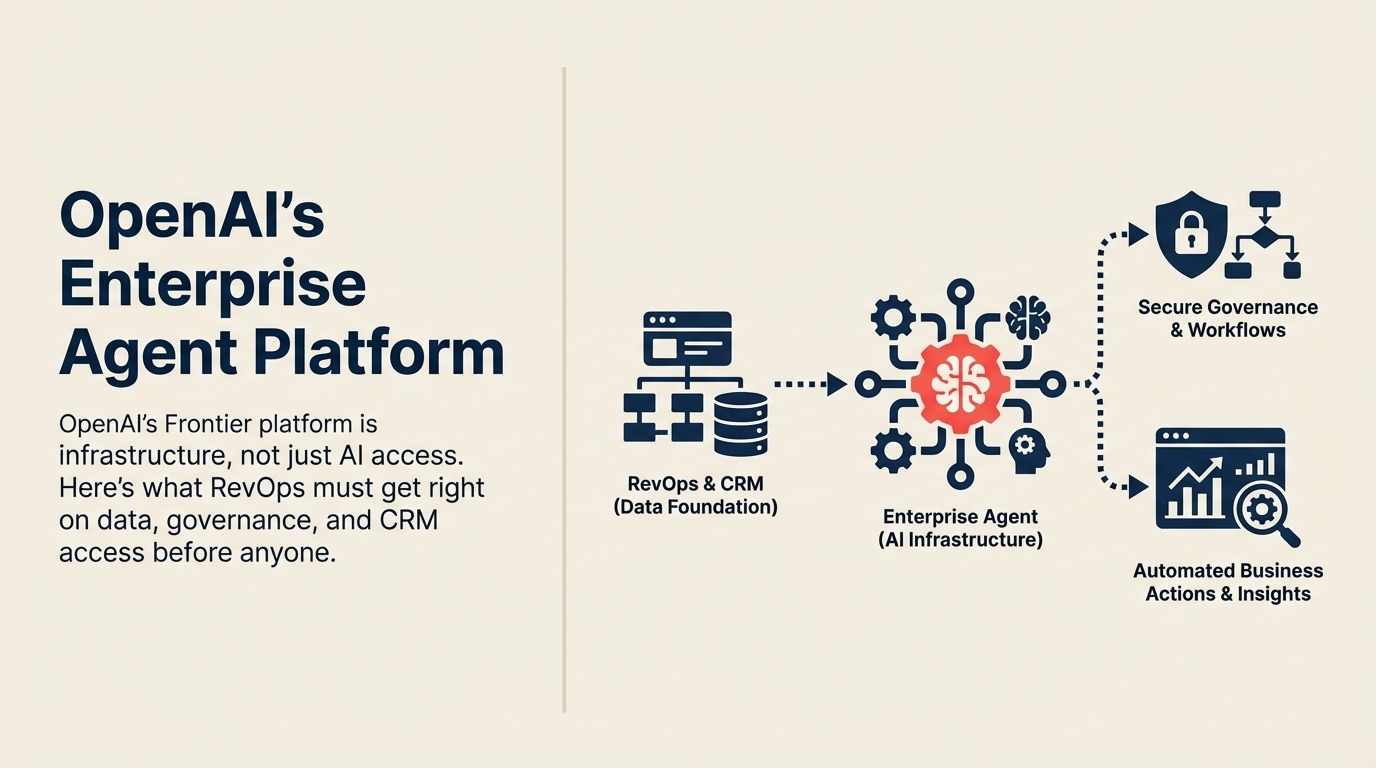
In February 2026, TechCrunch reported that OpenAI launched "Frontier," an enterprise platform designed for companies that want to build and manage their own AI agents using OpenAI's underlying models as the engine. As TechCrunch described it, the platform is built around treating agents "like human employees," with management, oversight, and deployment tooling included. This isn't a new GPT model. It's a layer of infrastructure that sits on top of the models, and it's aimed squarely at organizations that want to stop buying pre-built AI tools and start constructing their own.
That distinction (platform versus model) is the first thing RevOps needs to get right, because it changes who owns what.
Platform vs. Model: Why RevOps Needs to Care About the Difference
When your company buys access to an AI model (GPT-4, Claude, Gemini), the model does the thinking. Your data sits in your systems, and the model processes inputs you give it. The security boundary is relatively clear.
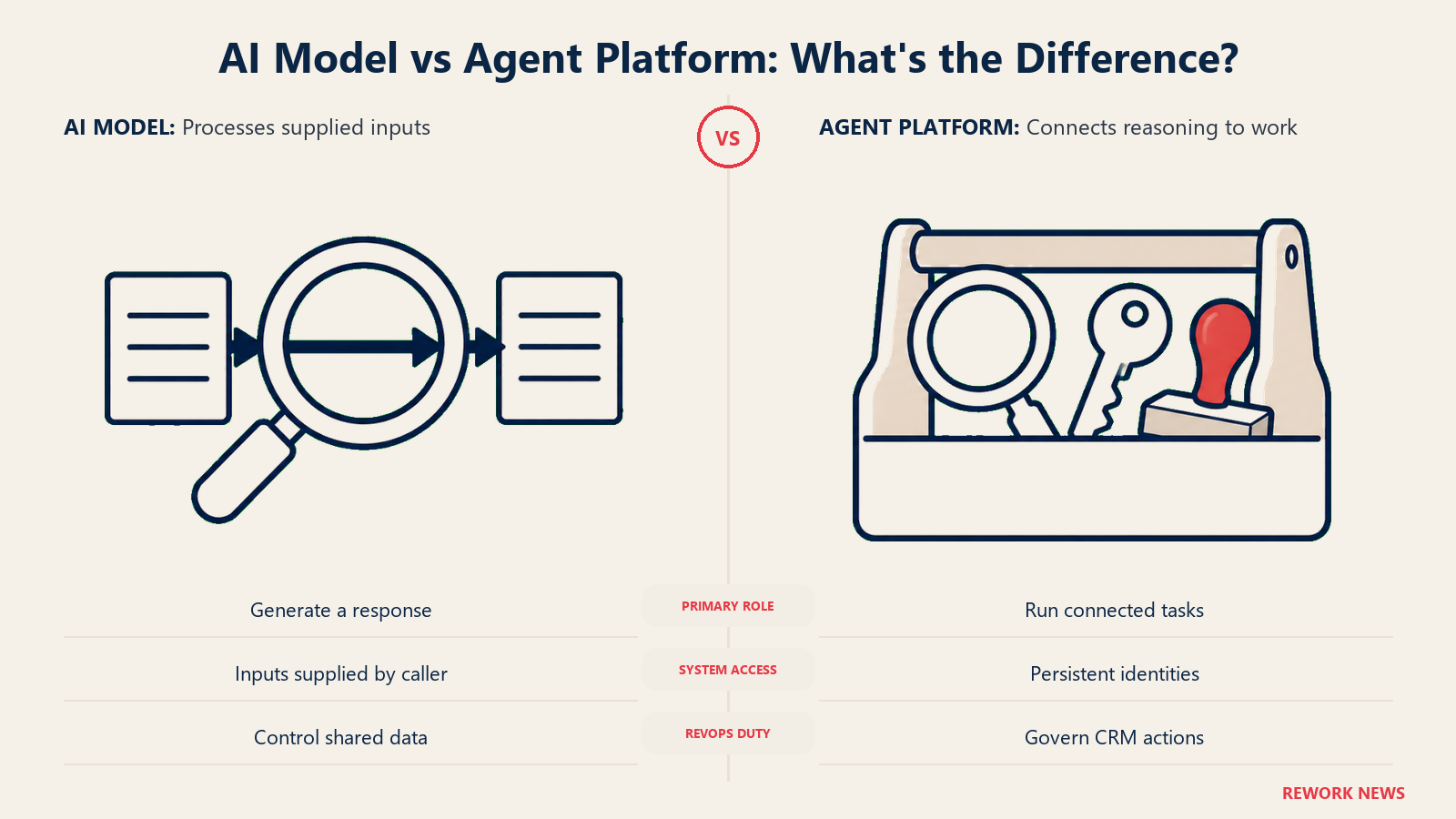
An agent platform is different. Agents are designed to act: they read data, make decisions, take actions, and write results back somewhere. They connect to systems. They authenticate. They're persistent. And critically, the data they need to function (pipeline status, contact records, deal history, forecast signals) lives in the CRM that RevOps owns and is responsible for.
This isn't theoretical. Any revenue-facing agent worth building will need CRM reads as a baseline and probably CRM writes to be useful. Think about what that means: a custom-built agent on OpenAI's Frontier platform, authorized by someone in your data science team, could be updating opportunity stages, writing notes to contact records, or modifying forecast categories. And RevOps may not even know it's running.
That's the governance gap you need to close before the first agent ships.
The RevOps Data-Readiness Checklist
Before your organization builds anything on an enterprise agent platform (whether OpenAI's Frontier, NVIDIA's open agent infrastructure, or something else), your data house needs to be in order. Here's what actually matters:
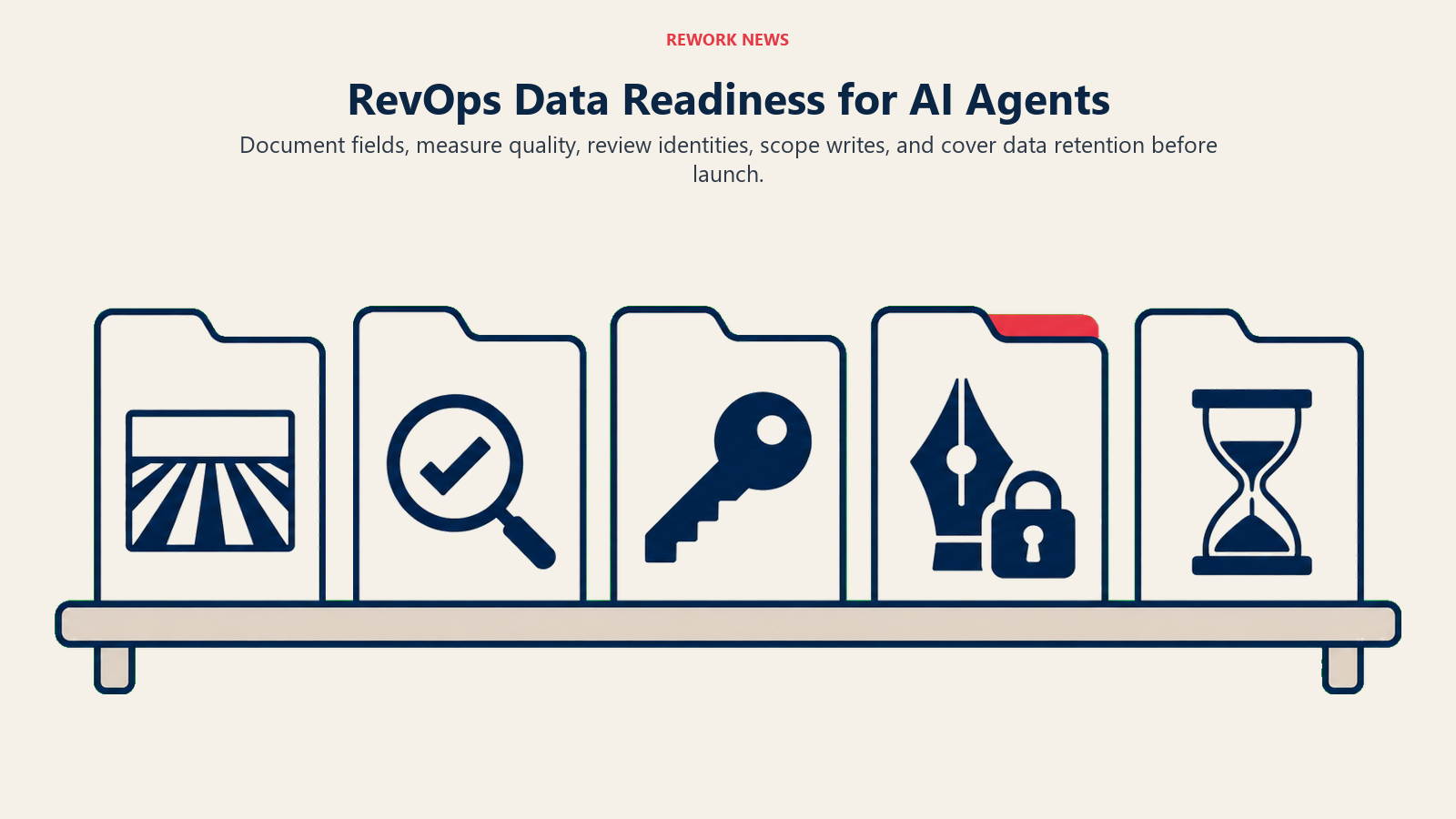
1. Schema documentation is current and accessible. Agents consume fields. If your CRM schema has 14 variations of "deal stage" because four different sales teams named things differently over the past three years, an agent will replicate that mess at scale. Before you grant any system programmatic access, document your canonical fields and enforce them.
2. Data quality baselines are established. If your win-rate by segment has never been reliable because reps don't update opportunity close dates, an agent trained to forecast on that field will produce confident-sounding bad predictions. Know your data quality floor before any system starts consuming it as truth.
3. Integration authentication is reviewed. Who currently has API access to your CRM? When was that list last audited? Agent platforms add a new category of system identity: the agent itself, not just the human who configured it. Your integration auth model needs to account for this.
4. Write access is explicitly scoped. There's a meaningful difference between an agent that reads pipeline data and one that modifies it. Read-only agents are lower risk. Agents with write access to contact records, deal stages, or custom fields need explicit approval, documented scope, and rollback protocols.
5. Your data retention and privacy policies cover automated systems. If your company operates in Europe, AI systems that process personal data from contact records may trigger obligations under GDPR and the EU AI Act. Check before you ship.
The Governance Questions Your Organization Needs to Answer
Data readiness is table stakes. The harder conversation is governance: who has authority to approve what, and what happens when something goes wrong.
These are the questions RevOps should raise before any agent goes into production:
Who approves agent access to CRM writes? This shouldn't be a data science decision alone. Any agent that modifies CRM records is, functionally, modifying your pipeline. That's a RevOps and sales leadership call. Establish an approval path now, not after the first incident.
What's the audit trail? If an agent updates 200 opportunity stages on Tuesday night, can you tell what it changed, why, and revert it? Most CRMs have field-level audit logs, but they're not always enabled by default. Turn them on and test the rollback process before any automated writes happen.
How do you handle agent errors? Human reps make mistakes in the CRM and you've built processes to catch and correct them. Agent errors are different. They tend to be systematic rather than random. One misconfigured rule can corrupt a lot of records quickly. Your error-handling protocol for automated systems should be tighter than for humans, not more lenient.
What's the escalation path when an agent takes an action nobody intended? This will happen. It always does when automation touches live systems. Define the escalation path, the incident owner, and the communication protocol before it does.
Who owns the ongoing maintenance of agent logic? Agents built today will interact with CRM schemas that change, pipelines that evolve, and business rules that get updated. Someone needs to own the logic and review it when things change. "The data science team built it" is not a sustainable answer.
The Buy-vs-Build Question Underneath All of This
It's worth stepping back and naming the decision that Frontier's launch actually forces: your organization now has a real choice between buying AI agents (Salesforce Agentforce, HubSpot Breeze) and building them on infrastructure like OpenAI's platform or NVIDIA's open-source toolkit.
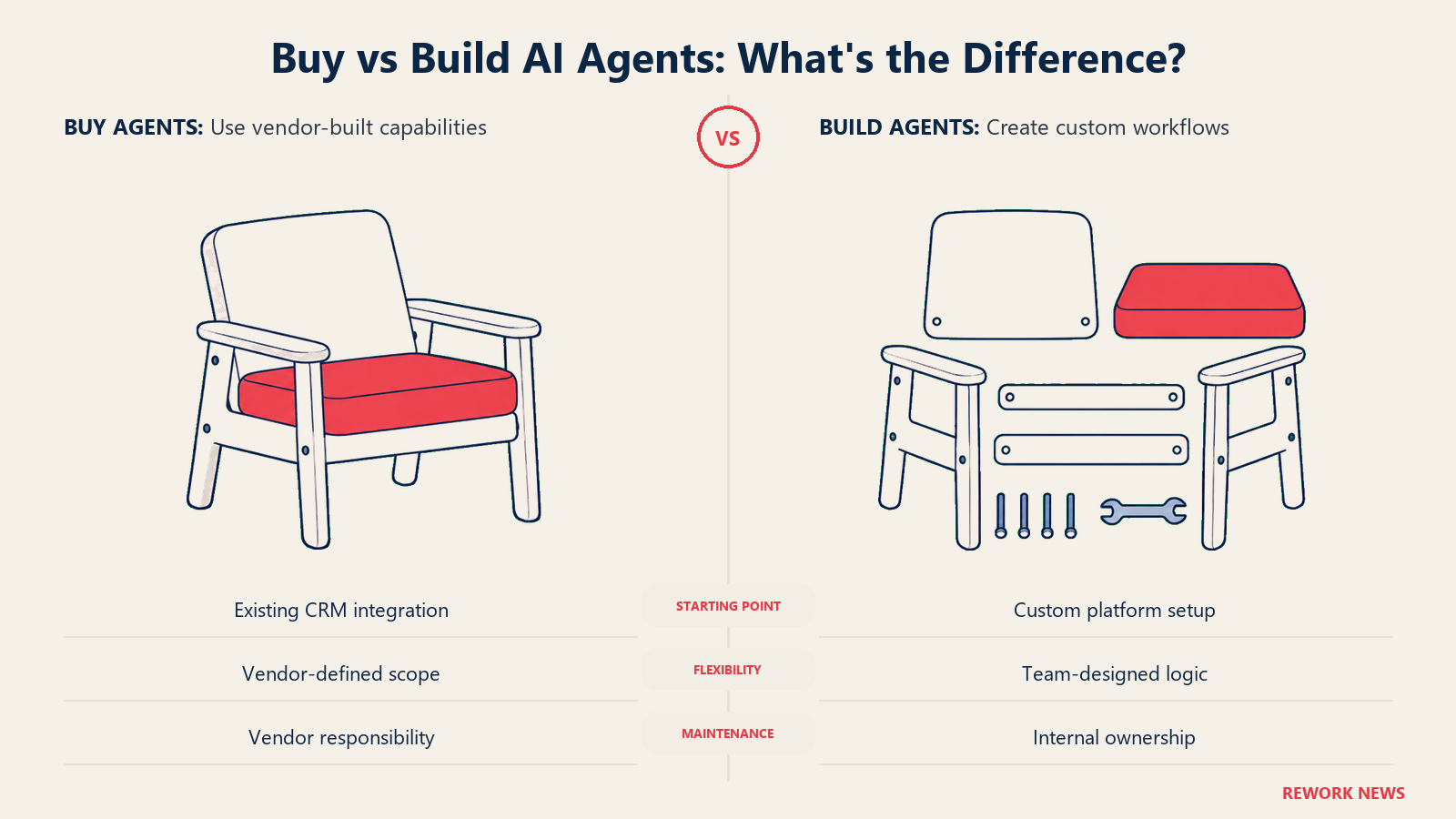
The bought path is lower risk to start. Agentforce and Breeze are already integrated with their respective CRMs. Governance tools exist. The vendor owns the maintenance. But you're constrained to what they've built.
The build path offers more flexibility and potentially better fit to your specific workflows. But it puts the data readiness burden, the governance design, and the ongoing maintenance squarely on your team.
For most RevOps orgs, the right answer right now is not "build everything from scratch." It's "understand the platform well enough to govern what gets built on it." That means being in the room when data science is prototyping, not learning about the agent after it's already been talking to your CRM for six weeks.
If you're thinking through your organization's CRM governance framework more broadly, this decision fits into the same set of questions you should already be asking about any system with pipeline access.
What to Do This Week
You probably can't stop your data science team from experimenting, and you shouldn't want to. But you can make sure that experimentation happens inside a structure that protects your pipeline integrity.
This week:
- Ask your IT or data science team directly: is anyone currently prototyping or scoping agents against our CRM? You might be surprised by the answer.
- Pull your CRM API access log and identify any integrations or system users you don't recognize. Close anything that's no longer active.
- Schedule 30 minutes with whoever leads your CRM administration to draft a one-page policy: what does an agent need to go through to get write access to production CRM data? Even a rough first draft is more than most orgs have right now.
- Identify a single low-stakes workflow (maybe logging completed activities or updating a custom field based on email engagement) where you'd be willing to pilot a simple agent in a sandboxed environment. Having a real test case gives your governance process something concrete to work against.
The platform is already out there. Your data science team is already curious about it. The RevOps role here isn't to slow things down. It's to make sure that when agents start running in your revenue infrastructure, they're running inside guardrails you designed.
Learn More
- Three No-Code Agent Platforms in One Quarter: CEO Strategy: The broader buy-vs-build decision framework across all three enterprise agent platform launches
- AI Agents Governance Checklist for RevOps: The 5-point governance framework before any agent touches your CRM data
- CRM Data Model Design: Structuring your CRM so agents have clean, consistent data to work with
- Measuring AI Adoption ROI: How to set up measurement before custom agents start running in revenue workflows
Source: TechCrunch, February 5, 2026
