Business Culture in East Asia: China, Japan, and South Korea
Turn this article into takeaways for your work.


Each assistant summarizes the article only for you and suggests best practices for your work.
Business culture in East Asia shares a recognizable core across China, Japan, and South Korea: Confucian-rooted respect for hierarchy, group loyalty ahead of individual credit, careful protection of face, and a long time horizon for decisions and relationships. Beneath that shared foundation, the three economies diverge sharply on how fast decisions move once made and how visibly authority gets exercised along the way.
A Beijing general manager who settles a decision with one phone call, a Tokyo team that has quietly resolved every objection before the meeting where the decision appears to happen, a Seoul department that ships a fix days after it looked impossible: three unrelated-looking stories that run on the same regional operating system, tuned three different ways. This guide covers the pattern East Asia's three largest economies share, where they part ways, and a working playbook for leading across them.
A scope note first. This is a regional map, not a country manual. China, Japan, and South Korea each carry their own history, language, political system, and enormous internal variation, the gap between Shanghai and a third-tier Chinese city can rival the gap between countries, that a single article cannot fully capture. Treat what follows as the shared starting hypothesis; deeper, country-specific guides sit further down this collection's roadmap.
The Shared East Asian Pattern: Hierarchy, Collectivism, Face, and the Long View
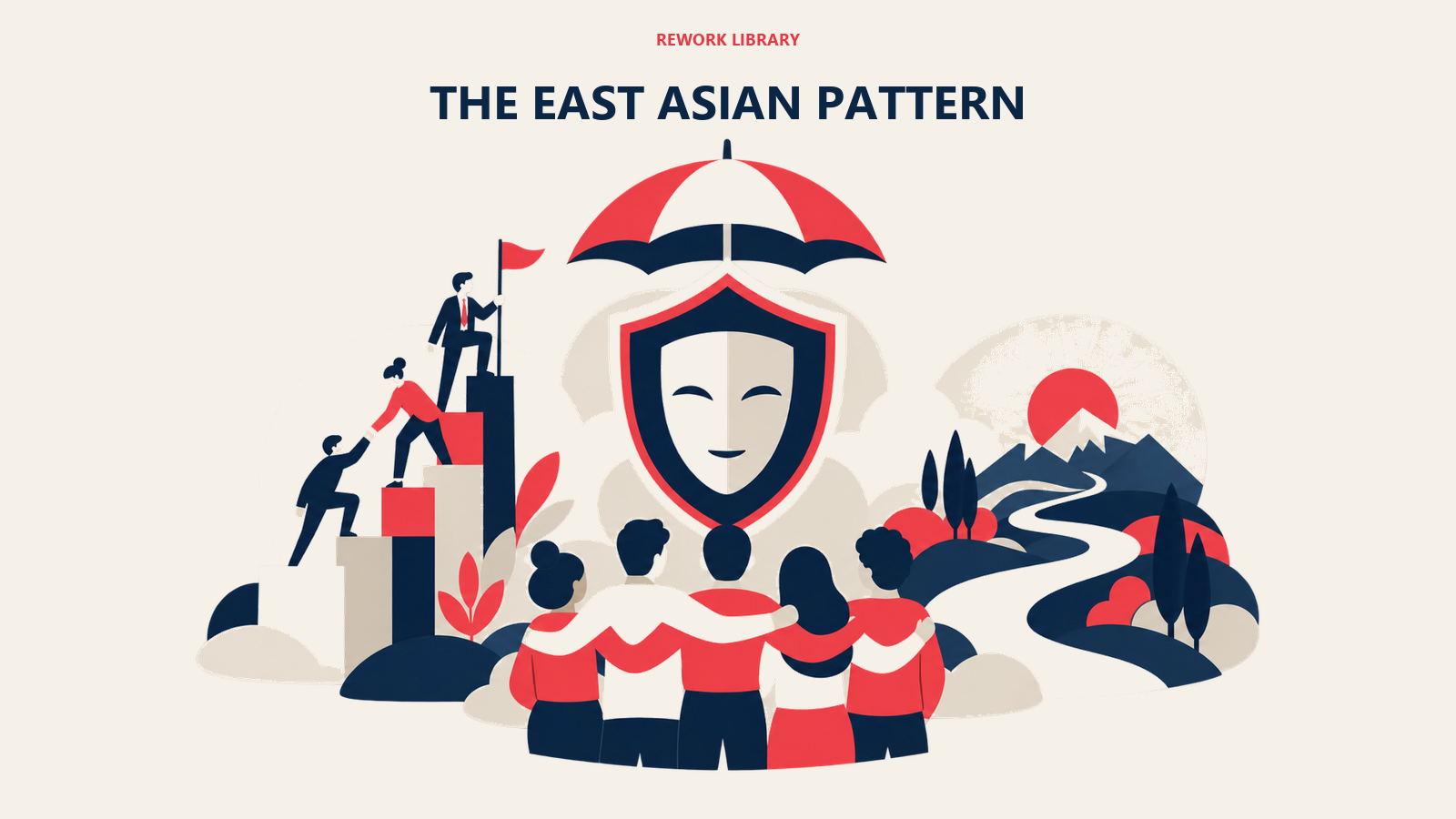
China, Japan, and South Korea each developed under a Confucian tradition that treats social order as nested obligations: junior to senior, employee to employer, individual to family, family to state. That heritage did not disappear when these countries industrialized. It shows up today in how meetings run, how promotions get decided, and how directly a junior employee is expected to speak.
| Country | Power Distance (PDI) | Individualism (IDV) | Uncertainty Avoidance (UAI) | Long-Term Orientation (LTO) |
|---|---|---|---|---|
| China | 80 | 20 | 30 | 87 |
| Japan | 54 | 46 | 92 | 88 |
| South Korea | 60 | 18 | 85 | 100 |
Source: geerthofstede.com, Hofstede's published country data. For the full six-dimension model and more country scores, see Hofstede's cultural dimensions explained. For how this region sits against the rest of the world, see how business culture differs across the world.
Two things jump out. All three countries score low on Individualism, well below the roughly 50 global midpoint, and post Long-Term Orientation scores near the top of Hofstede's dataset. But the region is far from uniform on Power Distance and Uncertainty Avoidance, which is exactly why "East Asian business culture" cannot be treated as one script. That shared and divergent pattern produces four traits worth knowing before leading across any of these three markets:
Hierarchy is structural, not just polite. Titles, seniority, and age carry real decision-making weight. A junior employee proposing an idea without a senior person's visible backing reads as skipping a step, not showing initiative.
The group outranks the individual almost everywhere. Credit, blame, and routine feedback are processed at the team or department level far more than in individualist cultures. Singling someone out for praise in front of peers can embarrass them as much as public criticism would.
Face governs how hard truths get delivered. Nobody wants to be the person who cost a colleague, a boss, or a business partner their standing in front of others. Protecting face is not evasiveness, it is what keeps a working relationship intact after a difficult conversation.
The planning horizon runs in years, not quarters. All three countries post some of the highest Long-Term Orientation scores Hofstede has measured, which shows up as patience with slow-building relationships, multi-year hiring and supplier commitments, and comfort delaying short-term wins for a longer payoff.
Why the Pattern Runs So Deep
No single cause explains a pattern this consistent across three countries with different languages, political systems, and twentieth-century histories. Confucian philosophy's emphasis on hierarchy and filial duty runs through all three, but so does a shared post-war experience of state-directed industrial growth that rewarded coordinated, top-down execution over individual improvisation. The GLOBE study's survey of leadership expectations across dozens of societies consistently places China, Japan, and South Korea in a similar cluster on collectivism and in-group loyalty, even while showing meaningfully different leadership styles within it. What matters for a working leader is less the explanation than the result: consistent enough, and different enough from Western defaults, to plan around deliberately.
Key Facts
- China's Power Distance score of 80 sits well above the global midpoint, and its Individualism score of 20 places it firmly in collectivist territory, a combination that helps explain why decisions concentrate so heavily at the top. Source: geerthofstede.com
- Japan's Uncertainty Avoidance score of 92, the highest of the three and among the highest Hofstede has measured anywhere, helps explain the emphasis on meticulous planning before a decision is finalized. Source: geerthofstede.com
- South Korea's Long-Term Orientation score of 100, the maximum in Hofstede's model, reflects a business culture built around multi-generational planning, thrift, and perseverance over short-term results. Source: geerthofstede.com
- The GLOBE study surveyed roughly 17,000 middle managers across 950 organizations in 62 societies, including China, Japan, and South Korea, to map how culture shapes what employees expect from a leader. Source: globeproject.com
- A Harvard Business Review analysis of guanxi in Chinese business found personal relationship networks can shape sales, procurement, and hiring decisions as powerfully as formal contracts, and just as easily work against a company when loyalties run to a person rather than the organization. Source: Harvard Business Review
- A former Toyota senior vice president recounted that American competitors typically planned a new production process in about three months, while Toyota spent nine to ten months on nemawashi, consulting engineers and line workers on every detail first. Source: GLOBIS Europe
Where China, Japan, and South Korea Diverge
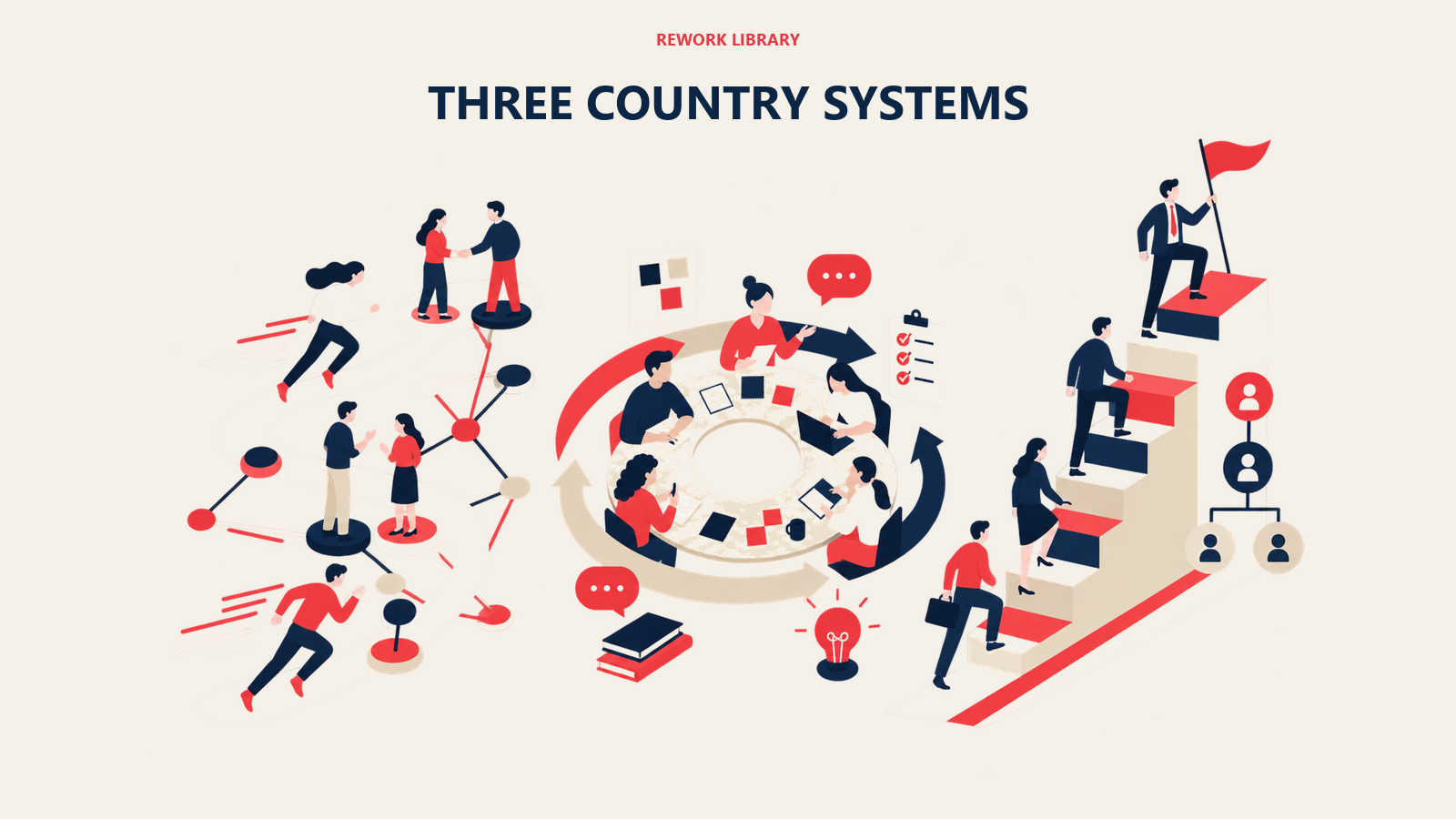
The shared foundation explains why a Western leader should expect more deference, more indirect communication, and more patience for relationship-building than at home. It does not explain what actually surprises people once they are in the room, because China, Japan, and South Korea resolve that shared hierarchy in three distinct ways.
| Country | Once a senior person decides | Before that decision gets made | The concept to know |
|---|---|---|---|
| China | Execution moves fast and top-down | Relationship networks shape who gets heard | Guanxi |
| Japan | The meeting can look like a formality | Consensus is built quietly, one-on-one | Nemawashi / ringi |
| South Korea | Teams move at high urgency, "pali-pali" | The senior person's direction is expected first | Pali-pali (bali-bali) |
China: Guanxi and Top-Down Speed
Chinese business culture concentrates authority sharply. With a Power Distance score of 80, the senior-most person in a negotiation or organization is expected to make the call, and once they do, execution moves fast: China's low Uncertainty Avoidance score (30) means teams are comparatively comfortable adjusting a plan mid-flight rather than waiting on a fully documented process.
What determines who gets heard before that decision runs through guanxi, the cultivation of personal relationships built on reciprocal favors, trust, and obligation over time. Guanxi is not simply networking. It can shape who wins a contract, who gets introduced to the right official, and whose concerns reach a decision-maker's desk at all, which is why Harvard Business Review has documented both its value and its risk: relationships built with an individual, rather than an institution, can walk out the door with that person. For how hierarchy itself shapes meeting behavior, see hierarchical vs. egalitarian cultures.
Japan: Nemawashi, Consensus, and Risk-Aversion
Japan sits closer to the middle on Power Distance (54) and Individualism (46), which matches how its business culture actually behaves: hierarchy and seniority matter, but the real decision-making happens before the meeting, not during it. Nemawashi, literally "root-binding" in gardening, describes the quiet, one-on-one process of building agreement with every stakeholder in advance, so that by the time a proposal reaches a formal meeting or the ringi sign-off process, it functions more as documentation of a decision already made than a live debate.
That process is inseparable from Japan's Uncertainty Avoidance score of 92, the highest of the three countries in this guide. A plan that reads as decisive in a low-UAI market can read as reckless or under-prepared in Japan, where thorough preparation and near-unanimous internal buy-in are the expected price of moving forward. The tradeoff, as the Toyota example above shows, is real: consensus-building costs calendar time up front and buys far fewer surprises once execution starts. How business culture differs across the world covers this consensus-versus-speed axis alongside other regions, and The Culture Map, explained breaks down Erin Meyer's framing of Japan's indirect feedback style.
South Korea: Speed and Hierarchy at the Same Time
South Korea looks, on paper, like it should behave like Japan: a similar Power Distance score (60) and one of the lowest Individualism scores in the world (18). In practice, it runs at a very different pace, captured in the widely known concept of pali-pali (also transliterated ppalli-ppalli), "hurry, hurry." Where Japan builds consensus slowly before moving, Korean teams are often expected to execute with real urgency once a senior leader has set the direction, a habit traced back to the country's compressed, state-directed industrialization after the Korean War.
The apparent tension with South Korea's high Uncertainty Avoidance score (85) resolves once you separate planning from execution. Structure and hierarchy are what make coordinated speed possible: everyone already knows their role and reporting line, so once the call is made, little ambiguity is left to slow the team down. That combination, strict hierarchy paired with urgent execution, shows up clearly inside South Korea's large family-controlled conglomerates, the chaebol (Samsung, LG, Hyundai, and similar groups), where a chairman's direction can move an enormous organization with unusual speed once it is set.
A Playbook for Western Leaders Working Across East Asia
Knowing the pattern only matters if it changes your next meeting, your next piece of feedback, and your next deadline conversation.
Reading Silence and Consensus Signals
Silence after "does anyone have concerns?" means something different in each market, but rarely agreement. In China, the real conversation is often happening in a smaller, more senior room. In Japan, nemawashi has usually already resolved whatever would otherwise surface here. In South Korea, the team may simply be waiting for the senior person present to speak first. Build a parallel channel, a private message, a short one-on-one, an anonymous form, for concerns that will not surface in the room. Why teams stay silent in meetings covers the mechanics in more depth.
Delivering Feedback Without Costing Face
Direct, in-the-moment feedback that works in a low-context, individualist culture can cost real standing across all three markets, though the preferred repair differs. Give the same substance, but deliver it privately, lead with what is genuinely working, and where hierarchy allows, route it through the person's direct manager rather than skipping a layer. Radical candor still applies here; what changes is the delivery mechanism, not the honesty. For the broader communication differences behind this, see high-context vs. low-context cultures.
Building Trust Before the Business Case
All three cultures build trust through time spent together before the transaction, not after, a pattern this collection also covers in business culture in Southeast Asia. A meal, an unhurried conversation, a genuine question about someone's team before the agenda starts is not a delay. It is the mechanism by which a counterpart decides your organization can be relied on. Skipping straight to the ask, efficient in a task-first culture, can read as presumptuous here.
Matching Your Decision Speed to the Room You Are In
A fast, top-down call plays naturally in China once the right person has signed off, and in South Korea once direction is set. The same speed in Japan, without a nemawashi pass first, can read as reckless and stall in execution because the people carrying it out never felt consulted. Budget the calendar time each market actually expects: less once a senior decision-maker is aligned, more in Japan before that alignment exists at all.
Common Mistakes to Avoid
Treating a Chinese or Korean team's fast execution as evidence they skipped planning, when it likely happened earlier and higher up. Treating Japan's slow, consensus-heavy meetings as indecisive, when the real decision was usually made through nemawashi before anyone sat down. And assuming any one country's norms can stand in for the other two, given how differently they resolve the same underlying hierarchy.
Business Culture in East Asia in the Age of AI
East Asia is home to some of the world's most aggressive corporate AI adoption: Chinese tech conglomerates, Japanese manufacturers building AI into decades-old production lines, Korean chaebol embedding it across consumer electronics and semiconductors. That adoption curve runs into the cultural patterns above rather than replacing them.
In Japan, an AI recommendation dropped into a decision without a nemawashi pass is likely to meet the same resistance a human proposal would; the tool does not exempt a decision from the consensus process the culture expects. In China and South Korea, the same top-down speed that lets a human decision move fast once made can just as easily fast-track an AI recommendation, for better or worse, if the senior decision-maker trusts the output without the internal debate a slower culture would have forced. Leaders building an ai-native culture across an East Asian team should expect hierarchy and consensus norms to shape how an AI teammate's suggestions get challenged, or not, the same way a junior employee's suggestions get treated. The risk of AI cultural debt, unclear norms about when an AI recommendation carries a senior person's weight, may run sharper in high-Power-Distance cultures where challenging any authority is already the exception. For the broader shift toward human-agent teams, see the Frontier Firm and the agent boss.
To be honest about where this stands: most writing on "AI and East Asian culture" right now is speculation dressed as insight, including some of the framing above. Guanxi, nemawashi, and pali-pali are decades old and well documented; how they bend around AI teammates specifically is still an open question, not a settled one.
For organizations running distributed teams across China, Japan, and South Korea, consistent onboarding, visible attendance records, and clean HR-to-manager handoffs are easier when not scattered across disconnected country-office tools. That is the unglamorous consistency Rework's People app is built to support; it does not replace the cultural judgment above it.
Where to Go Next
This regional overview sits alongside the broader cross-cultural pillar in this collection, what is business culture. From here:
- How business culture differs across the world, for the full global map and a general leader's playbook
- Hofstede's cultural dimensions explained, for all six dimensions and scores across more countries
- Business culture in Southeast Asia, for the region's own high-hierarchy, relationship-first pattern
- Hierarchical vs. egalitarian cultures, for a deeper look at the Power Distance axis behind this guide
- Country-specific guides for China, Japan, and South Korea are planned as this collection expands
Frequently Asked Questions about Business Culture in East Asia
What do China, Japan, and South Korea have in common in business culture?
All three share a Confucian-influenced respect for hierarchy, a collectivist orientation that puts the group ahead of the individual, careful protection of face, and some of the highest Long-Term Orientation scores in Hofstede's dataset, reflecting patience with multi-year relationships and delayed payoffs.
Are China, Japan, and South Korea culturally interchangeable?
No. They share a hierarchical, collectivist foundation but resolve it differently. China pairs high Power Distance with fast, top-down execution once a decision is made. Japan builds slow, one-on-one consensus called nemawashi first. South Korea pairs strong hierarchy with rapid, urgent execution once direction is set, widely known as pali-pali culture.
What is guanxi and why does it matter in Chinese business?
Guanxi is the cultivation of personal relationships built on reciprocal favors, trust, and obligation over time. It can shape who gets heard by a decision-maker, who wins a contract, and how quickly business gets done, and Harvard Business Review has documented both its value and its risk when relationships form around a person rather than an organization.
What is nemawashi and why do Japanese meetings feel like a formality?
Nemawashi is the Japanese practice of quietly building agreement with stakeholders one-on-one before a formal meeting. By the time a proposal reaches the meeting, most objections have already been resolved privately, which is why the meeting itself can look like it is confirming a decision rather than debating one.
What does pali-pali mean and how does it show up in South Korean business?
Pali-pali, sometimes written ppalli-ppalli, means "hurry, hurry" and describes South Korea's emphasis on speed once a decision is made. It coexists with strong hierarchy: a senior leader sets direction, and the team executes quickly, a pattern often traced to the country's compressed, state-directed industrialization after the Korean War.
Why does Japan score so much higher on Uncertainty Avoidance than China?
Hofstede's data puts Japan at 92 on Uncertainty Avoidance versus 30 for China, meaning Japanese business culture favors thorough planning and near-unanimous internal agreement before acting, while Chinese business culture is comparatively more comfortable adjusting a plan mid-flight, even though both share high Power Distance.
How should a Western leader deliver feedback to teams in East Asia?
Keep the same standard everywhere, but change the delivery. Give feedback privately rather than in an open meeting, lead with what is genuinely working, and where hierarchy allows, route sensitive feedback through the person's direct manager rather than skipping a reporting layer.
How is AI changing business culture in East Asia?
East Asian companies are adopting AI aggressively, but the region's existing hierarchy and consensus norms are shaping how that adoption plays out rather than being replaced by it. An AI recommendation in Japan still tends to need a nemawashi-style pass, while China and South Korea can fast-track an AI suggestion the way they fast-track a senior leader's call. Much of this is still an open question, not settled research.
China, Japan, and South Korea are not one culture with three flags on it, but they are close enough on hierarchy, collectivism, and the long view that a leader who understands the shared foundation will read a room in Shanghai, Tokyo, or Seoul more accurately than one who treats each market as a total unknown. Where they diverge, guanxi's networks, nemawashi's patience, pali-pali's urgency, is exactly where a generic "Asia" playbook breaks down, and where a leader who did the homework gets it right.

Co-Founder, Rework.com
On this page
- The Shared East Asian Pattern: Hierarchy, Collectivism, Face, and the Long View
- Why the Pattern Runs So Deep
- Key Facts
- Where China, Japan, and South Korea Diverge
- China: Guanxi and Top-Down Speed
- Japan: Nemawashi, Consensus, and Risk-Aversion
- South Korea: Speed and Hierarchy at the Same Time
- A Playbook for Western Leaders Working Across East Asia
- Reading Silence and Consensus Signals
- Delivering Feedback Without Costing Face
- Building Trust Before the Business Case
- Matching Your Decision Speed to the Room You Are In
- Common Mistakes to Avoid
- Business Culture in East Asia in the Age of AI
- Where to Go Next