Buyer Lead Qualification: Screening New Leads Before You Invest Your Time
Turn this article into takeaways for your work.


Each assistant summarizes the article only for you and suggests best practices for your work.
New leads arrive constantly: portal inquiries, website form fills, open house sign-ins, referrals. Most agents treat every one of them the same way, jumping straight into full engagement mode without a fast, deliberate screen first. That's how showings get scheduled for buyers who aren't close to ready and why some genuinely hot leads sit in a generic follow-up queue for days.
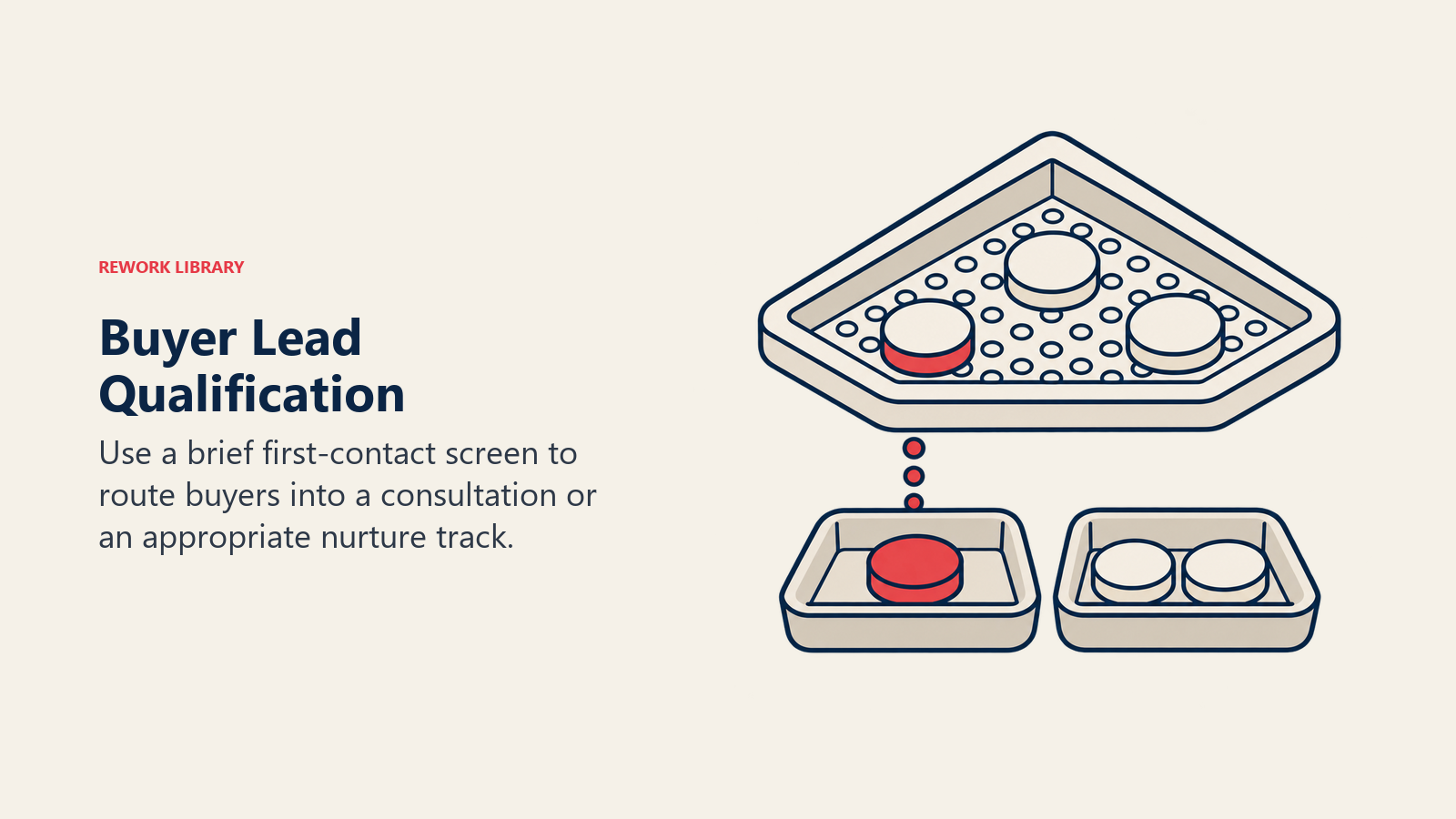
Buyer lead qualification is the first-contact triage that happens before your deeper buyer qualification framework even applies. It's a quick, lightweight pass, a few minutes on the phone or a handful of text exchanges, that tells you where to route someone next: into active pursuit, into nurture, or, occasionally, off your list entirely.
Why Lightweight Screening Matters at Volume
Online lead conversion is a numbers game by nature. Industry analysis from The Close's real estate lead generation data shows agents typically convert somewhere around 2% to 3% of internet inquiries into closed transactions. That means the vast majority of leads entering your system today aren't going to transact with you this month, and treating every single one like a five-alarm priority burns time you don't have.
Quick qualification doesn't mean giving up on the other 97%. It means routing them appropriately. The handful who are genuinely ready get your immediate, full attention. Everyone else moves into a long-term lead nurturing track that keeps them warm without consuming your calendar today.
The First-Contact Qualification Script
Keep your first-contact questions to under five minutes. You're not running a full consultation yet, you're deciding whether one is worth scheduling right now.
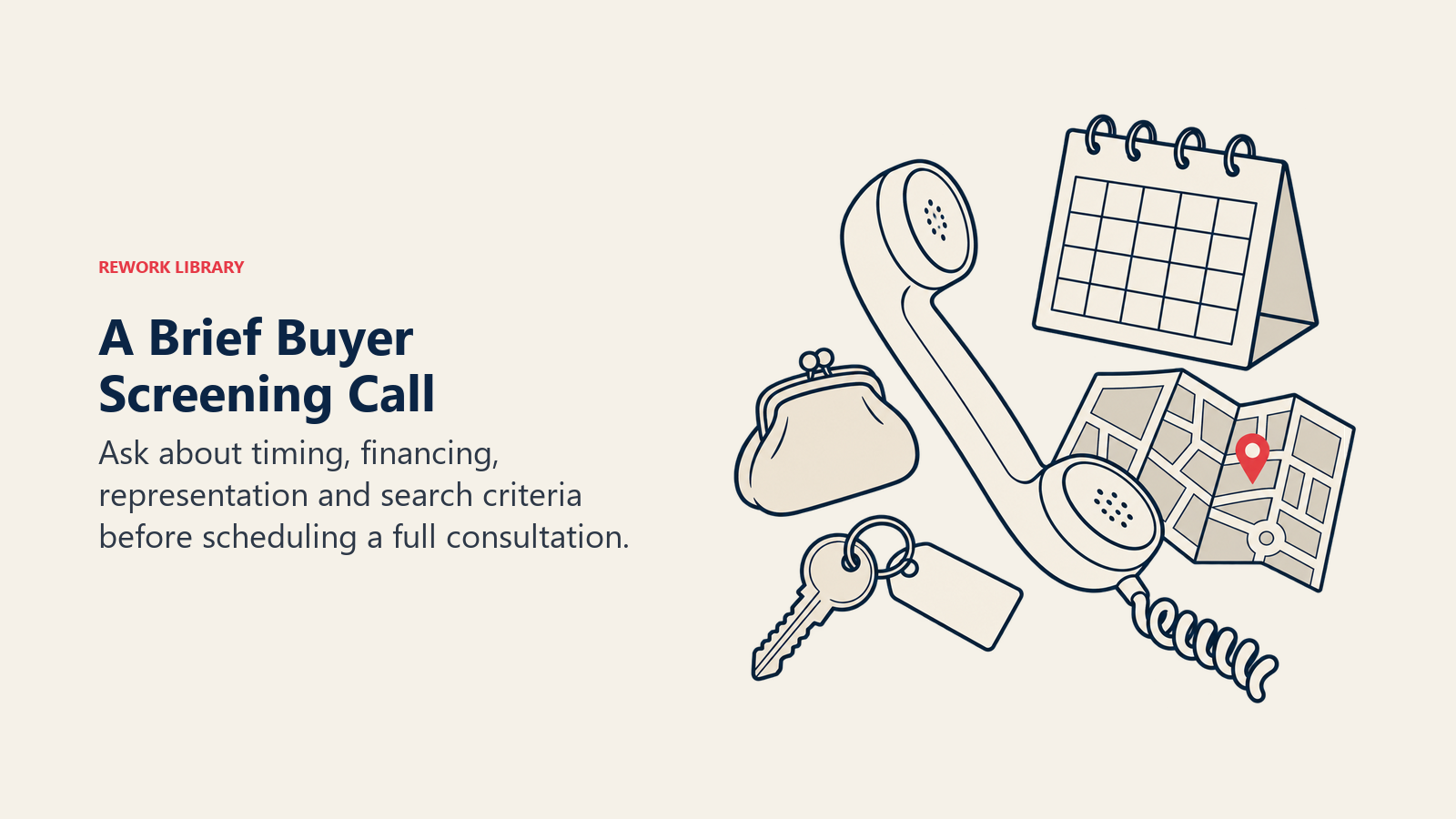
Start with timing: "What's prompting you to look right now, and when are you hoping to be moved in?" A vague answer like "just browsing" tells you something different than "our lease ends in six weeks."
Follow with financing: "Have you started talking to a lender yet?" You're not demanding proof at this stage, just gauging whether they've taken any concrete step toward the mortgage pre-approval process.
Ask about their search activity: "Are you working with another agent right now?" This single question saves enormous wasted effort. A lead already committed elsewhere needs a different, lighter-touch approach than one who's genuinely shopping for representation.
Close with a specificity check: "What area and price range are you focused on?" Buyers with a clear, realistic answer are further along than buyers who can't narrow anything down yet.
Quick-Screen Criteria: What to Listen For
You're listening for signal, not collecting a full financial profile. Four things matter most at this stage.
Timeline clarity. A specific driver (lease ending, job start date, family change) beats a vague "sometime this year" every time.
Financing awareness. They don't need pre-approval yet, but they should have at least thought about it or started the conversation with a lender.
Search specificity. Someone who knows their target neighborhood and realistic budget is further along than someone still exploring broadly.
Response behavior. How quickly and clearly do they respond to your first-contact outreach? Slow, vague responses at this earliest stage often predict the same pattern later.
Tiering New Leads: Hot, Warm, Cold, Not Yet
After the first-contact screen, sort leads into simple tiers rather than treating qualification as pass or fail.
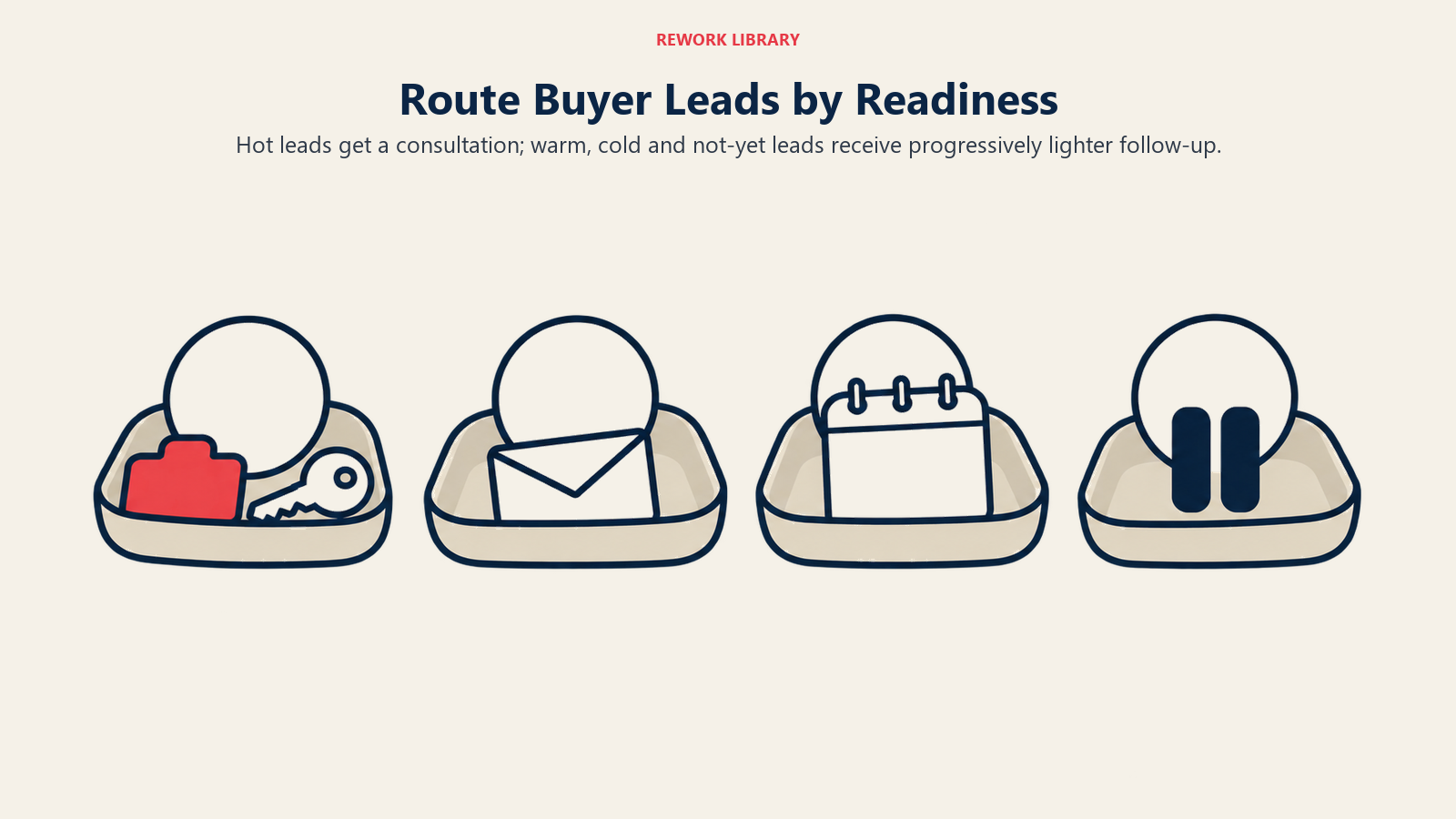
Hot leads have a clear timeline under 90 days, have started financing conversations, and respond quickly. Schedule a full consultation immediately.
Warm leads have genuine intent but a longer timeline or an unclear financing picture. Move them into active nurture with a plan to re-screen in 30 to 60 days.
Cold leads are exploring without urgency, no clear timeline, vague answers across the board. Route into long-term lead nurturing and check back quarterly.
Not yet covers leads who aren't realistic candidates right now: no path to financing, unrealistic expectations that first-contact conversation didn't resolve, or already committed to another agent. Keep them in your system but don't invest active time.
This tiering should feed directly into your lead scoring for real estate system so the sorting happens consistently instead of based on gut feeling alone.
Red Flags at First Contact
Some signals are worth noting immediately, even if they're not permanent disqualifiers.
A buyer who dodges every direct question about financing or timeline is either not serious yet or not ready to trust you with real information. A buyer who describes a budget wildly out of line with their stated must-haves needs an honest reality-setting conversation before you invest showing time. A buyer who mentions working with two or three other agents simultaneously is shopping representation, not ready to commit to one.
None of these mean you write the lead off. They mean you adjust how much of your calendar you give them before they show more commitment.
Qualifying by Lead Source
Not all leads deserve the same first-contact script. Adjust based on where they came from.
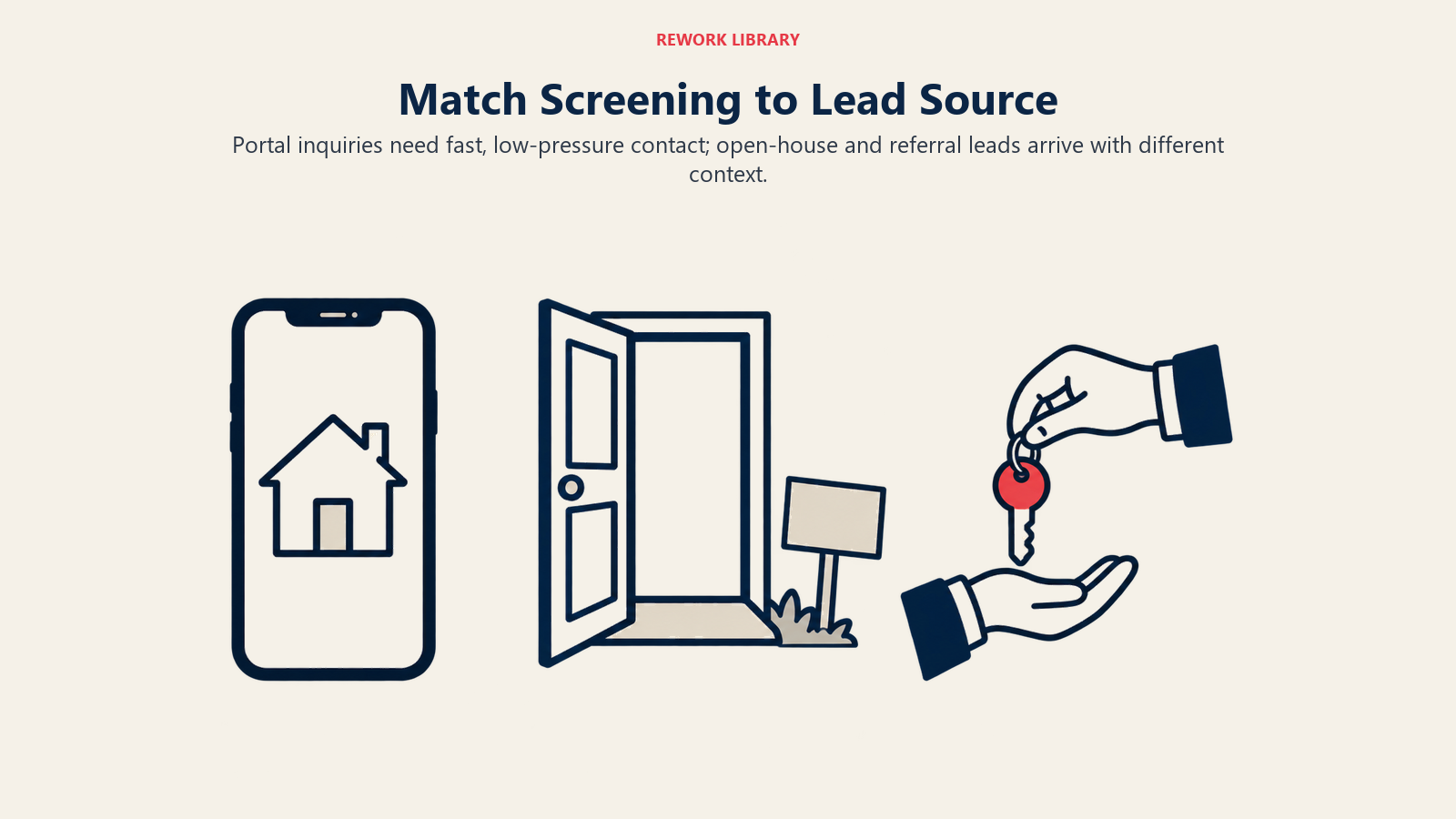
Leads from online lead sources like Zillow or Realtor.com often haven't decided on an agent yet and expect fast, no-pressure responses; a rushed or pushy qualification call here drives them straight to a competitor. Speed matters more than depth at this stage, tying directly into your speed-to-lead response standards.
Open house sign-ins already have a face-to-face relationship started, so your qualification conversation can go deeper immediately since some trust already exists.
Referrals from past clients or your sphere deserve a lighter qualification touch entirely, since the relationship already carries built-in credibility. Over-screening a warm referral can feel insulting.
When to Escalate to a Full Consultation
Move a lead from first-contact screening to a full initial buyer consultation once they show at least two of these signals together: a specific timeline under six months, some financing movement, and consistent, prompt responsiveness. Waiting for all signals to be perfect before scheduling a consultation costs you leads who would have converted with a bit more guidance.
Building Your Own Qualification Checklist
Turn this process into a short, physical or digital checklist you use on every single new lead call, so the screening stays consistent regardless of how busy your day is:
- Clear timeline stated (not "just looking")
- Financing conversation started or scheduled
- Not already committed to another agent
- Realistic search criteria for stated budget
- Responsive during first contact
- Lead source noted and appropriate tone used
A checklist this short takes under a minute to run through mentally on a call, but it keeps your triage consistent across a hundred leads instead of drifting based on how your day is going.
Common Mistakes in Early-Stage Qualification
Treating first-contact screening like a full consultation. This stage should take minutes, not the full buyer qualification framework treatment. Save the deep dive for leads who've already cleared this first filter.
Disqualifying too fast. A vague first answer doesn't always mean low intent, sometimes it means the lead hasn't thought through their own timeline yet. One good follow-up question often clarifies more than the first answer did.
Ignoring lead source context. A portal lead and a referral need different tones at first contact. Treating them identically costs you both.
No consistent tiering. Without a simple hot/warm/cold/not-yet system, qualification becomes subjective and inconsistent, especially across a team.
Connecting Qualification to Your Broader Pipeline
Buyer lead qualification is the entry gate to everything downstream. Leads who clear this screen move into full consultations and the buyer qualification framework's deeper pillars. Leads who don't clear it move into nurture rather than disappearing. Either way, every lead gets a deliberate decision instead of drifting based on whatever felt urgent that day.
Get this first filter right, and the rest of your pipeline runs on leads who genuinely deserve the time you're about to give them.
Frequently Asked Questions about Buyer Lead Qualification
How is buyer lead qualification different from a full buyer qualification framework?
Buyer lead qualification is a fast, first-contact screen, a few minutes assessing timeline, financing awareness, and responsiveness. The full buyer qualification framework is a deeper, multi-pillar assessment of readiness, willingness, and financial ability that happens once a lead has cleared this first filter and moved into an active consultation.
How long should first-contact qualification take?
Aim for under five minutes on a call or a short handful of text exchanges. You're deciding whether to invest deeper time, not conducting the full consultation itself.
What if a lead gives vague answers during first contact?
Vague answers don't automatically mean low intent. Ask one clarifying follow-up before tiering them as cold. Some leads genuinely haven't thought through their own timeline yet and clarify quickly with a good question.
Should qualification criteria differ by lead source?
Yes. Portal and website leads usually expect a fast, low-pressure response since they're comparing multiple agents. Referrals and past-client leads already carry built-in trust and can handle a more direct, deeper conversation immediately.
Related Resources
Deeper Qualification & Consultation:
- Buyer Qualification Framework - The full ready, willing, and able model for active buyers
- Initial Buyer Consultation - What happens once a lead clears first-contact screening
- Buyer Lead Funnel - How qualification fits into your overall funnel
Lead Management Systems:
- Lead Scoring for Real Estate - Automate prioritization based on qualification signals
- Speed-to-Lead Response - Why fast first contact matters before qualification even starts
- Online Lead Sources - Adjusting your qualification tone by where leads come from

On this page
- Why Lightweight Screening Matters at Volume
- The First-Contact Qualification Script
- Quick-Screen Criteria: What to Listen For
- Tiering New Leads: Hot, Warm, Cold, Not Yet
- Red Flags at First Contact
- Qualifying by Lead Source
- When to Escalate to a Full Consultation
- Building Your Own Qualification Checklist
- Common Mistakes in Early-Stage Qualification
- Connecting Qualification to Your Broader Pipeline
- Related Resources