Siguiente Mejor Acción para Cada Deal Abierto
Turn this article into takeaways for your work.


Each assistant summarizes the article only for you and suggests best practices for your work.
Un representante que gestiona 40 deals abiertos tiene un problema de priorización cada mañana.
¿Cuáles merecen atención hoy? ¿Cuáles están a punto de desaparecer? ¿Cuáles tienen un stakeholder al que no se ha contactado en tres semanas? Averiguarlo manualmente significa leer cada registro de deal, verificar las fechas de última actividad, revisar las notas de llamadas y aplicar juicio bajo presión de tiempo.
La mayoría de los representantes no hacen esto. Recurren por defecto a los deals que se sienten activos o que surgieron en una reunión reciente. Los silenciosos se escapan. Los que no tienen nada obviamente mal pero tampoco avanzan se descuidan hasta que se convierten en situaciones de emergencia o pérdidas.
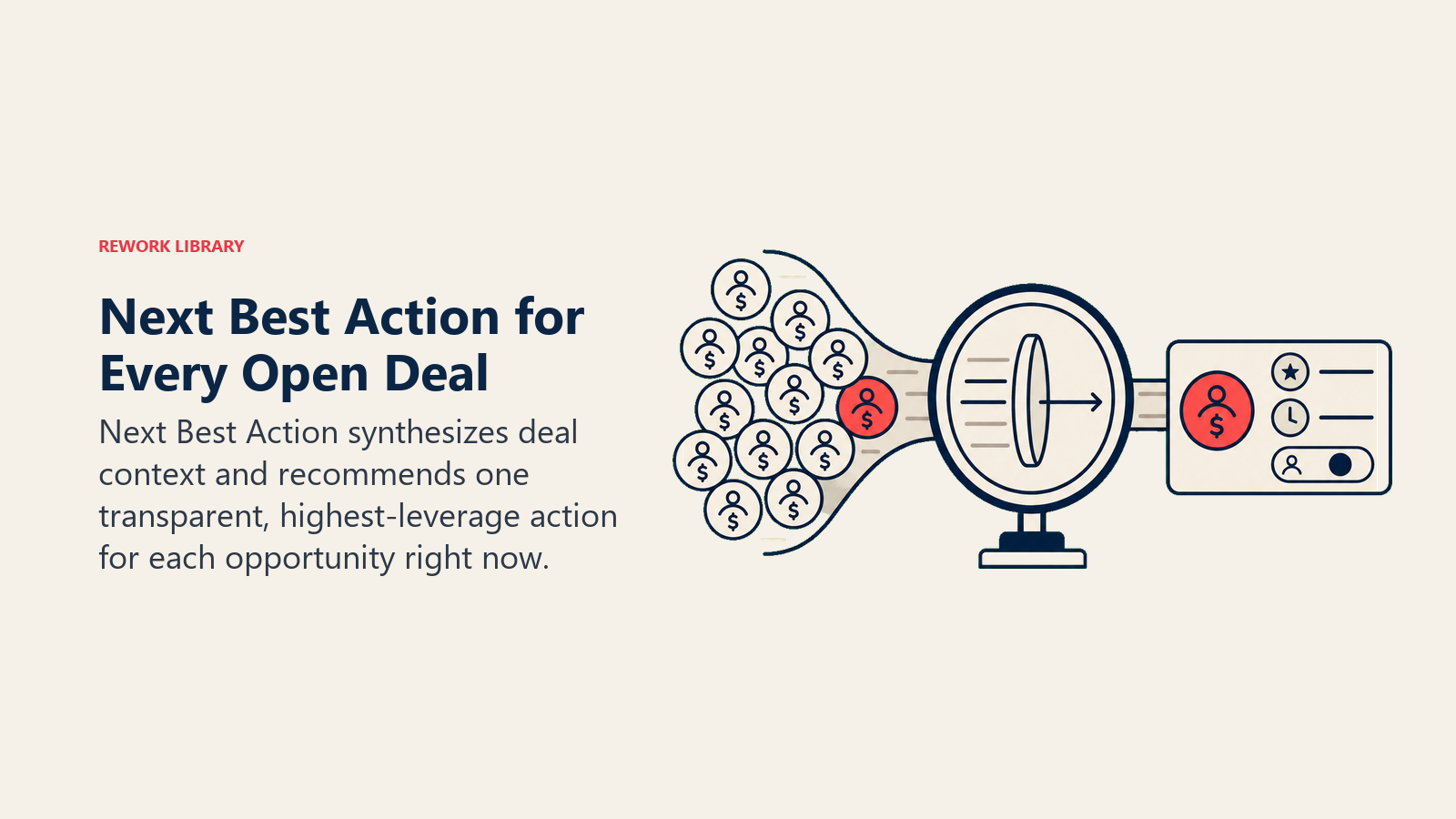
Next Best Action (NBA) es la función AI que soluciona esto. Para cada deal abierto, sintetiza las señales disponibles y produce una acción recomendada específica.
Qué produce realmente Next Best Action
Datos Clave: AI Next Best Action y Rendimiento del Pipeline
- La gestión de pipeline con AI reduce la duración promedio del ciclo de ventas en un 28% y mejora la conversión de lead a oportunidad en un 37% en despliegues B2B documentados. (Bain & Company, 2025)
- Los equipos de ventas que usan AI para orientación de siguiente mejor acción tienen 1.3 veces más probabilidades de experimentar un aumento de ingresos en comparación con los equipos que dependen de la gestión manual del pipeline. (Highspot, 2025)
- Bain & Company reporta que los primeros despliegues de AI en ventas B2B han aumentado las tasas de cierre en más del 30% en organizaciones que conectaron las recomendaciones AI con los datos de deals del CRM. (Bain & Company, 2025)
NBA no es simplemente scoring de riesgo de deals rebautizado. Esta distinción importa porque las dos funciones sirven propósitos diferentes.
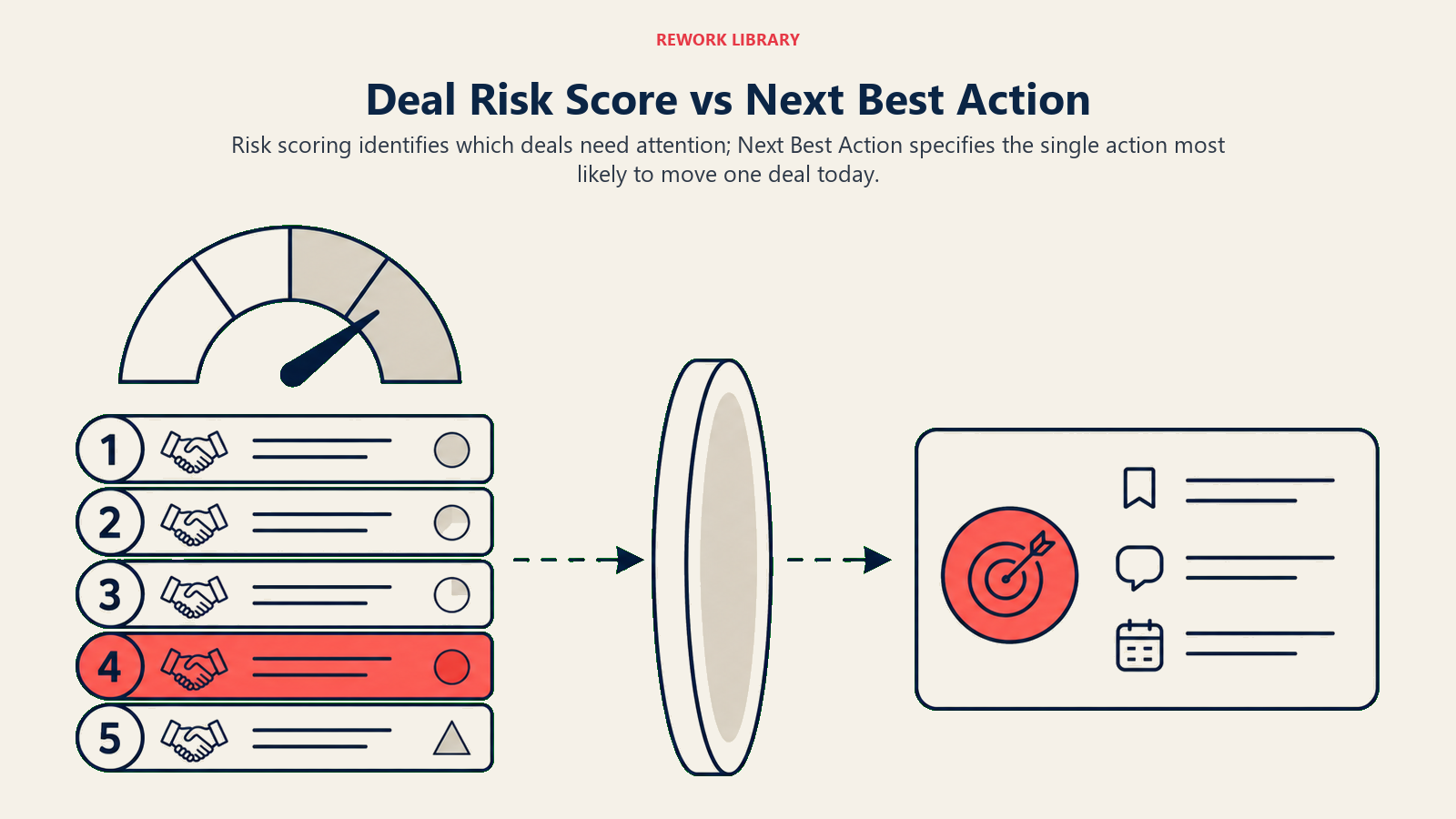
El scoring de riesgo del deal le dice la probabilidad de cierre o la categoría de riesgo (alta/media/baja). Responde "¿de qué deals debería preocuparme?". Un gerente lo usa para la inspección del pipeline. Un representante lo usa para saber dónde enfocarse en general.
Next Best Action le dice la acción específica que debe tomar ahora mismo sobre un deal específico. Responde "¿cuál es la acción de mayor impacto que puedo tomar en este deal hoy?". Es una tarea, no una puntuación. Un representante lo usa para saber qué hacer a continuación.
Ambos son útiles. Pero NBA es la capa de acción, y la acción es lo que realmente mueve los deals.
Las salidas de NBA se ven así:
- "Llame al VP de Operaciones hoy. Ella es la compradora económica, no ha estado en ninguna de las últimas 3 llamadas, y el deal tiene una revisión multi-stakeholder la próxima semana."
- "Envíe un caso de estudio de su cierre en servicios financieros. El prospecto mencionó preocupaciones de cumplimiento en la llamada del jueves que no abordó directamente."
- "Solicite un plan de acción mutuo. Este deal ha estado en la etapa de Propuesta durante 18 días sin un próximo hito establecido. Los deals en etapa de Propuesta que no avanzan a un paso siguiente claro en 14 días cierran al 28% vs. el 67% para los deals que sí lo hacen."
- "Reserve una sesión de prueba de concepto técnico. La evaluación técnica comenzó hace 10 días sin resultado registrado. No tener un POC programado en su pipeline significa que está a la deriva."
Cada recomendación incluye una condición desencadenante: ¿por qué está el AI recomendando esto? Esa transparencia importa para la adopción del representante. Los representantes que entienden por qué se generó una recomendación tienen más probabilidades de actuar sobre ella. Los representantes que ven una lista de tareas de una caja negra tienen más probabilidades de ignorarla.
El pipeline NBA en el ACE Framework
NBA es una aplicación central del Workflow Copilot. El patrón se ejecuta continuamente en segundo plano y muestra acciones a medida que cambia el contexto del representante.
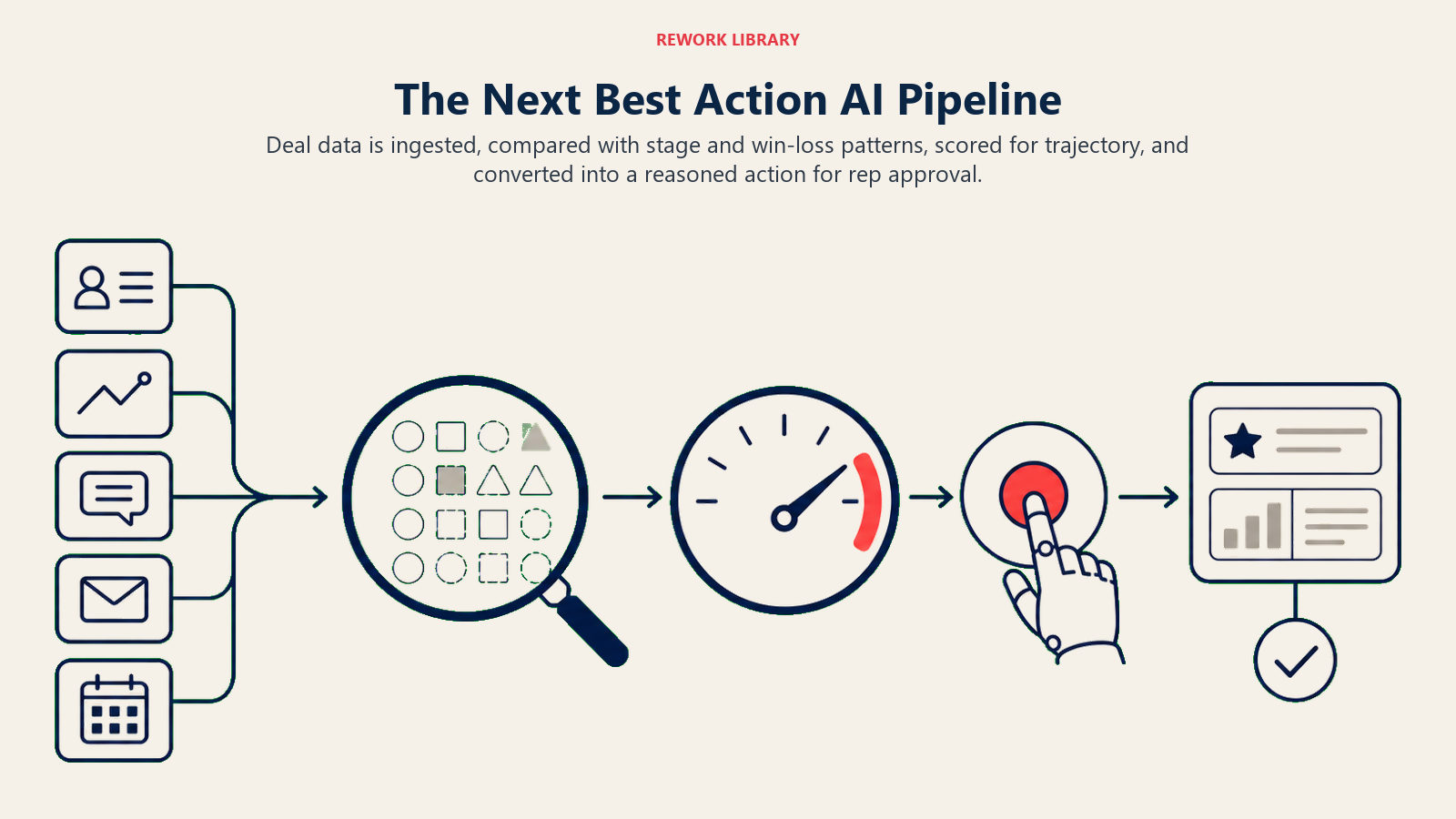
Ingest recopila de todas las fuentes de datos relacionadas con el deal:
- Registro del deal en el CRM: etapa, valor, estimación de fecha de cierre, cuenta, propietario de la oportunidad
- Log de actividad: fecha de última llamada, fecha de último correo, fecha de última reunión, nota CRM más reciente
- Transcripciones de llamadas: objeciones planteadas, sentimiento del comprador, elementos de acción comprometidos, menciones de stakeholders
- Hilos de correo electrónico: recencia de respuesta, temas discutidos, comportamiento de reenvío (señales de compartición interna)
- Calendario: próximas reuniones con esta cuenta, tiempo de preparación disponible
- Campos MEDDPICC (un marco de calificación que rastrea Métricas, Comprador Económico, Criterios de Decisión, Proceso de Decisión, Identificar el Dolor, Champion, Competencia y Proceso de Papel) o equivalentes: qué criterios están completados, cuáles faltan
Analyze compara el estado actual del deal frente a dos puntos de referencia:
- Modelo de progresión de etapa: ¿cómo debería verse un deal en esta etapa? ¿Qué actividades típicas, patrones de compromiso de stakeholders y plazos se asocian con deals que cierran desde esta etapa?
- Patrones históricos de ganancias/pérdidas: ¿qué condiciones específicas en deals en esta etapa predijeron ganancias vs. pérdidas?
El paso de Analyze identifica brechas: ¿qué debería ser verdad en esta etapa que no lo es ahora mismo? ¿Deal de hilo único sin un segundo contacto? ¿Criterios técnicos faltantes en etapa avanzada? ¿Sin actividad en los últimos 14 días durante una fecha de cierre acelerada? Cada brecha es un posible desencadenante de NBA.
Predict estima la trayectoria del deal: ¿está este deal en camino, a la deriva o en riesgo de pérdida? La predicción alimenta la urgencia de la recomendación NBA. Un deal que se está desviando lentamente muestra una recomendación de prioridad moderada. Un deal que coincide con el patrón de un evento de pérdida (regresión de etapa, champion desapareciendo, competidor mencionado por primera vez) muestra una recomendación de alta prioridad. El artículo sobre la capacidad Predict cubre cómo funcionan los modelos de trayectoria de deals en la capa ACE.
Generate produce la recomendación de acción específica con:
- La acción recomendada (llamada, correo, solicitud de reunión, enviar contenido, actualizar registro del deal)
- La razón: qué datos desencadenaron esta recomendación
- Contexto de apoyo: extracto relevante de la transcripción de llamada, datos de etapa, datos de resultados de deals comparables
- Nivel de prioridad: ¿qué tan urgente es esta acción?
El Principio de Una Sola Acción por Deal
El Principio de Una Sola Acción por Deal es la restricción de diseño que evita que NBA se convierta en una lista de tareas. Cada deal abierto muestra exactamente una acción recomendada a la vez, clasificada por el impacto esperado en la progresión del deal. Cuando un representante ve siete acciones recomendadas por deal, trata la lista como ruido. Cuando ve una acción específica con una razón, la trata como una directiva de un coach de deals. El principio obliga al AI a priorizar: si un deal tiene una señal de estancamiento, un stakeholder faltante y una objeción no abordada, el sistema produce solo la acción de mayor impacto, no las tres. Los representantes completan la primera acción antes de que aparezca la siguiente recomendación.
Los sistemas de siguiente mejor acción AI que generan recomendaciones únicas y priorizadas por deal ven tasas de adopción de recomendaciones 2-3 veces más altas que los sistemas que generan listas de tareas de múltiples acciones, porque los representantes pueden actuar de inmediato en lugar de decidir qué priorizar primero.
La taxonomía de recomendaciones
Las recomendaciones NBA caen en cinco categorías. Entender la taxonomía ayuda a los representantes a reconocer el tipo de situación en la que se encuentran.
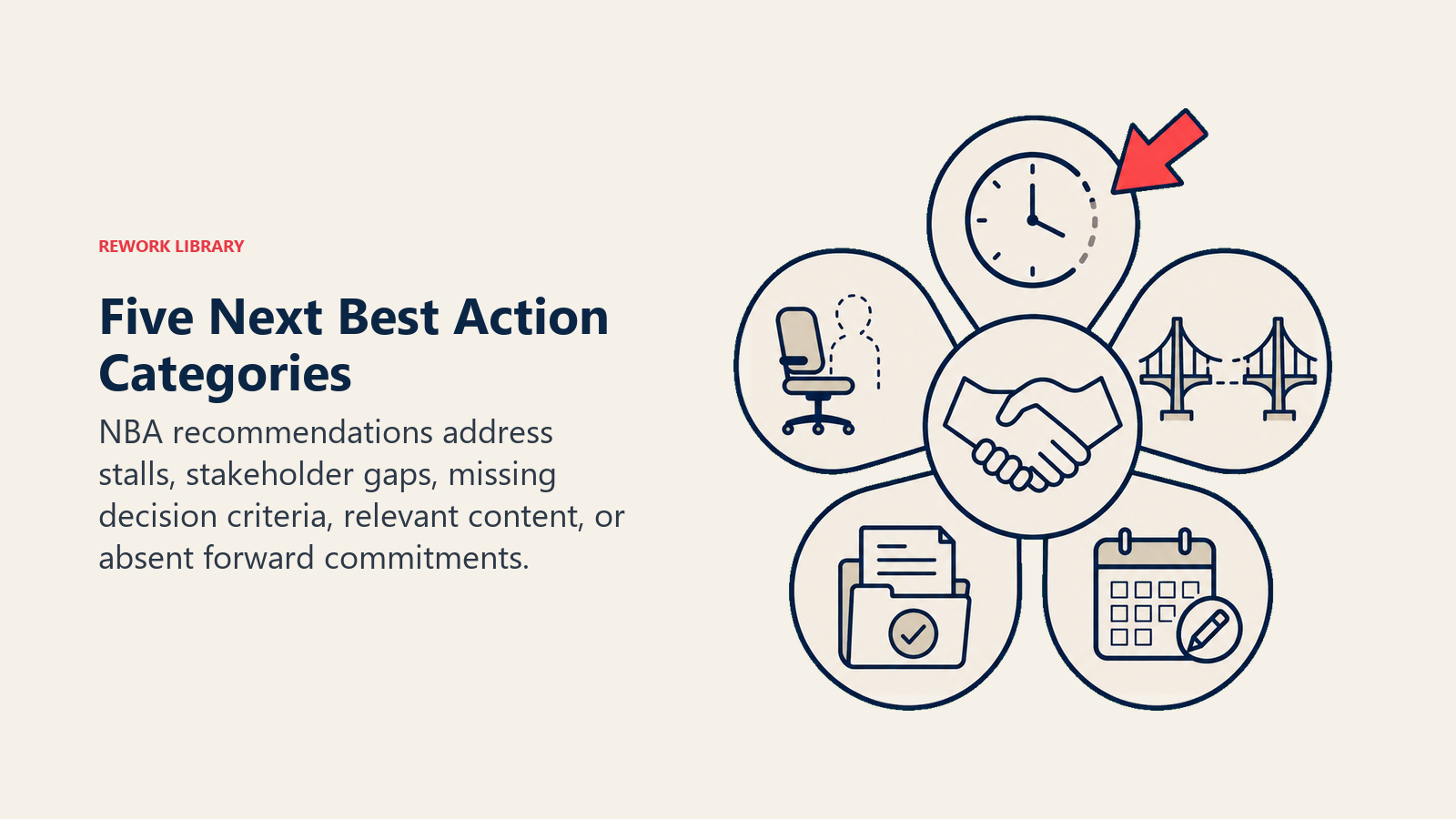
Intervención en estancamiento. Sin actividad en una ventana especificada relativa a la etapa del deal. La ventana depende de la etapa: sin actividad durante 7 días en la etapa de Propuesta es una señal de estancamiento; sin actividad durante 7 días en la prospección temprana es normal. La recomendación es una acción de re-engagement específica al último contexto conocido: seguimiento sobre el tema de la última llamada, referenciar algo relevante que ocurrió en su negocio, enviar algo genuinamente útil en lugar de simplemente hacer seguimiento.
Brecha de stakeholder. Deal de hilo único o stakeholder faltante en el proceso de decisión. Si un deal se acerca a la etapa de evaluación sin un comprador económico confirmado identificado, eso es un riesgo. Si la evaluación técnica está en curso sin un patrocinador de TI involucrado, eso es un riesgo. La recomendación es ampliar el compromiso: "Preséntese al Director de TI. Su champion principal no ha mencionado su participación. Los deals multi-hilo en esta etapa cierran un 40% más a menudo."
Brecha de criterios de decisión. Campos de MEDDPICC o marco de calificación que deberían estar completados en esta etapa pero no lo están. Un AE que se dirige a negociación en etapa avanzada sin justificación económica documentada está negociando sin saber qué necesita realmente el comprador para justificar la compra. La recomendación es recopilar la información faltante: "No tiene el impacto de negocio documentado. Antes de la próxima llamada, prepare una pregunta de descubrimiento para establecer su caso de valor cuantificado."
Entrega de contenido y recursos. Una objeción específica o tema surgió en una llamada que mapea a un contenido, caso de estudio o recurso que debería enviarse. El AI relaciona las señales de objeción en las transcripciones de llamadas con una biblioteca de recursos. La recomendación es específica: "Envíe el caso de estudio de cumplimiento del cierre en salud. El comprador mencionó el cumplimiento HIPAA dos veces el jueves."
Compromiso de avance. No existe un siguiente paso establecido o un plan de acción mutuo. Los deals sin un siguiente paso compartido claro tienen tasas de cierre significativamente más bajas. La recomendación es establecer uno: "No tiene un próximo hito confirmado. Su fecha de cierre es en 3 semanas. Solicite un plan de acción mutuo en su próxima interacción."
Dónde aparece NBA en el workflow del representante
Una buena recomendación entregada en el momento equivocado o en el lugar equivocado se ignora. Mostrar NBA de manera efectiva requiere pensar en cuándo los representantes están tomando decisiones sobre qué hacer a continuación.
Pantalla de inicio del CRM / vista del pipeline. La recomendación predeterminada: mostrar las recomendaciones NBA junto a cada deal en la vista del pipeline. El representante ve sus deals y la siguiente acción recomendada para cada uno. Limpio, relevante, en contexto. La desventaja es que requiere que los representantes abran el CRM de forma proactiva.
Correo electrónico de resumen diario o mensaje de Slack. Resumen matutino de las 5 a 7 principales recomendaciones NBA del día. Se envía al representante en lugar de esperar a que lo busque. El formato debe ser escaneable en menos de 3 minutos: nombre del deal, NBA en una oración, indicador de prioridad. Funciona bien para representantes que comienzan el día fuera del CRM.
Sidebar del registro del deal. Cuando un representante abre un registro de deal específico, el NBA para ese deal se muestra de forma prominente. Menos proactivo que una notificación push, pero de alta visibilidad cuando el representante ya está en modo de gestión de deals.
Activador de preparación de reunión. Cuando el representante tiene una reunión con una cuenta en las próximas 24 horas, enviar el NBA para cualquier deal relacionado. Combina el contexto de preparación con la recomendación de acción en el momento correcto.
La mejor implementación muestra NBA en múltiples lugares con diferentes niveles de urgencia. Una intervención de estancamiento de alta prioridad (deal en riesgo) justifica una notificación push. Una recomendación de compromiso de avance rutinaria funciona bien en el resumen diario.
El loop de retroalimentación
NBA mejora cuando los representantes interactúan activamente con él, le dicen al sistema lo que hicieron y permiten que los datos de resultados fluyan de vuelta al modelo.
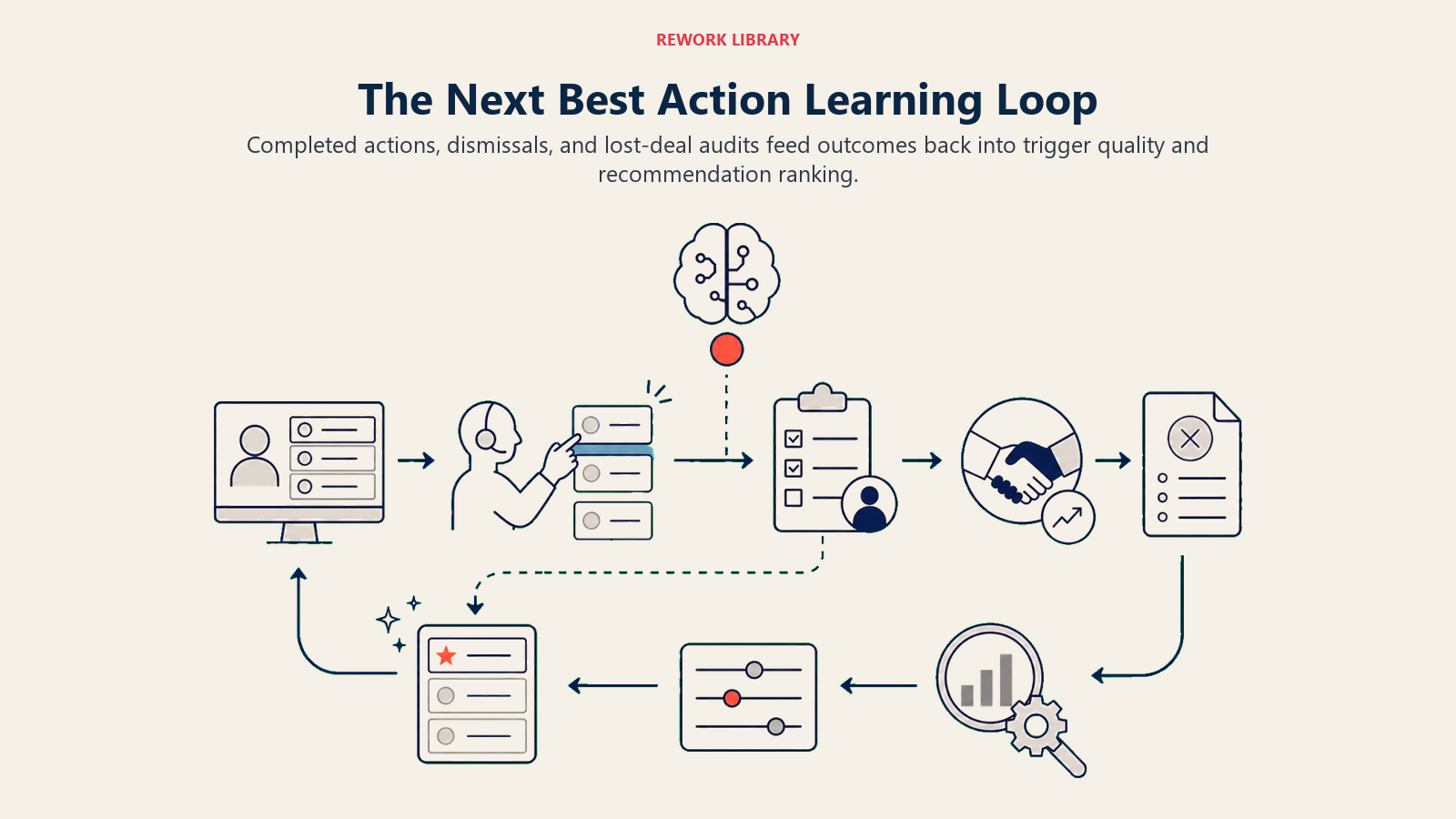
Cuando un representante toma la acción NBA: Regístrelo en el CRM (la mayoría de los buenos sistemas detectan automáticamente la actividad del CRM como "acción tomada"). Con el tiempo, rastree qué ocurrió después de que los representantes tomaron tipos de recomendación específicos. ¿Los deals con intervenciones de estancamiento tomadas dentro de las 48 horas se recuperaron a tasas más altas? ¿La entrega de contenido después de un tipo de objeción específico afectó las tasas de cierre? Estos datos de resultados mejoran la calidad de las recomendaciones futuras.
Cuando un representante descarta la recomendación: Capture la razón del descarte. "No aplicable", "Ya lo hice", "Mal momento", "Recomendación incorrecta para este deal". Las razones de descarte que se agrupan en torno a un tipo de recomendación específico señalan un problema de calidad: el AI está generando recomendaciones que los representantes experimentados encuentran irrelevantes. Esa es una señal para reajustar las condiciones desencadenantes.
Cuando se pierde un deal: Ejecute una auditoría NBA. ¿En qué momento marcó el sistema de recomendaciones NBA el riesgo? ¿El representante recibió una recomendación que no siguió? ¿La pérdida fue precedida por un tipo de recomendación que se estaba descartando de forma consistente? El análisis de pérdidas conectado al comportamiento NBA es algunos de los datos más valiosos para mejorar el sistema.
Pipeline Review Prep With an AI Copilot cubre cómo las recomendaciones NBA se conectan a la conversación de revisión semanal del pipeline entre representantes y gerentes. Los datos NBA se convierten en un punto de referencia compartido: "El sistema recomendó una llamada al patrocinador ejecutivo hace 10 días; ¿ocurrió eso?"
Autonomía del representante: el principio de diseño que determina la adopción
NBA falla cuando se siente como vigilancia. Cuando los representantes creen que los descartes de recomendaciones están siendo rastreados para evaluar su desempeño, dejan de descartar y empiezan a tomar a regañadientes acciones que no creen que sean relevantes. Ese es el peor resultado: cumplimiento performativo con recomendaciones AI que en realidad no coinciden con lo que el deal necesita.
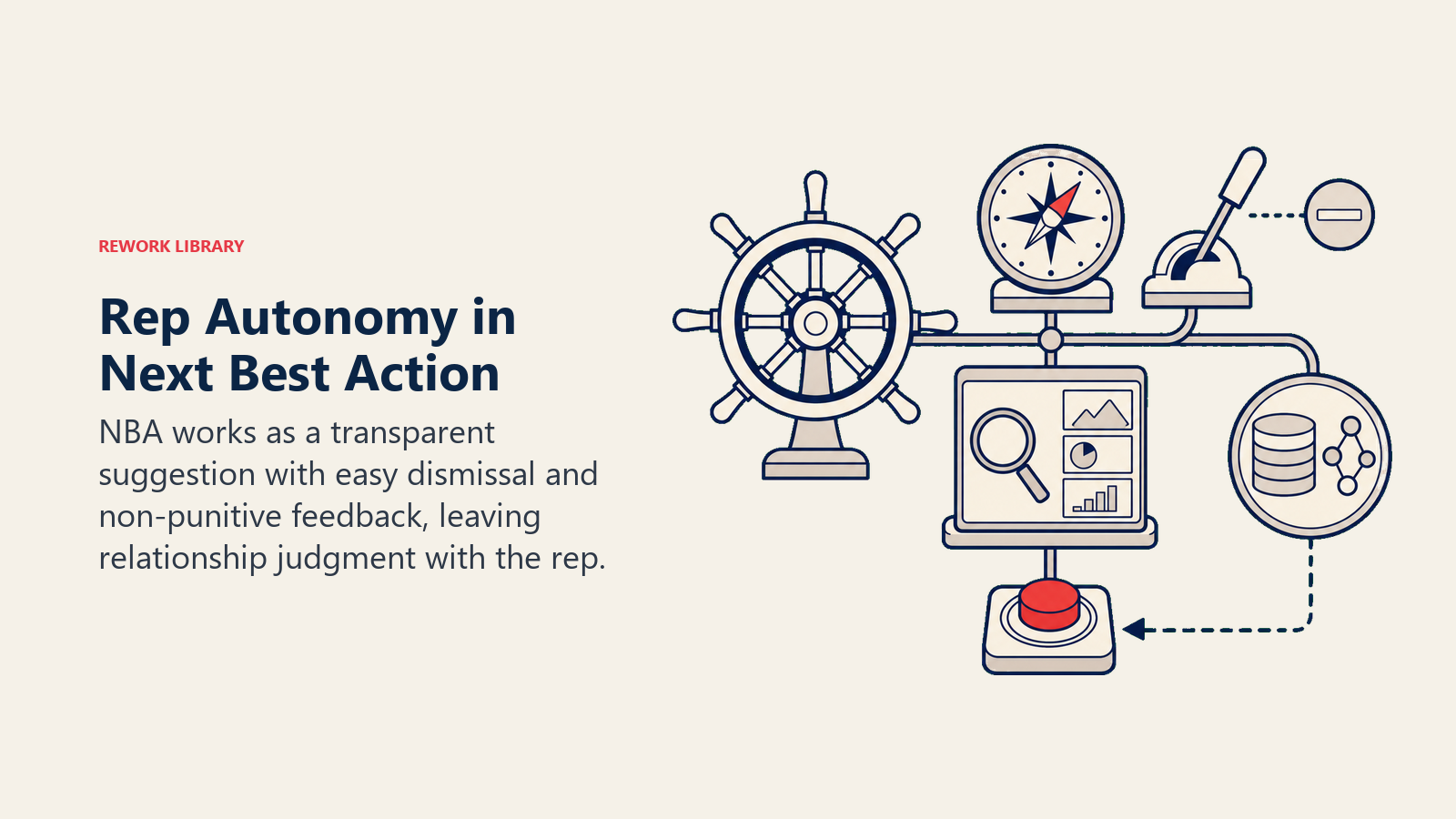
El principio de diseño: NBA es una sugerencia, no una directiva. Los representantes son profesionales con conocimiento contextual que el AI no tiene. El AI ve los datos. El representante conoce la relación, las dinámicas políticas, la personalidad del comprador y docenas de otras señales que no están en el CRM. El análisis de Forrester sobre AI en ventas B2B refuerza esto: las recomendaciones AI se vuelven estándar a menos que las organizaciones las combinen con un fuerte juicio humano y una cultura de aprendizaje. Los representantes que usan NBA como una herramienta de pensamiento, no como una lista de tareas, obtienen más de ella.
Implementando este principio:
- Haga la acción de descarte de baja fricción y no punitiva. Un botón "no aplicable" o "ya manejado" sin justificación requerida para recomendaciones de baja prioridad.
- No muestre el rendimiento de NBA a los gerentes como una métrica de desempeño del representante. "El representante descartó el 60% de las recomendaciones NBA" no es un indicador útil del desempeño del representante. Puede significar que el representante es muy competente y está tomando mejores decisiones que el modelo. O puede significar que el modelo necesita ajuste para ese tipo de deal.
- Construya el loop de retroalimentación de una manera que mejore la calidad del modelo, no de una manera que presione el cumplimiento.
El artículo CRM Data Hygiene With an AI Copilot cubre la dependencia de calidad de datos: las recomendaciones NBA son tan buenas como los datos del deal en los que se basan. Las fechas de última actividad faltantes, los criterios de calificación incompletos y la información de contacto obsoleta reducen la relevancia de las recomendaciones.
Proveedores que ofrecen funcionalidad NBA
Clari es principalmente una herramienta de pronóstico e inspección de pipeline, pero su capa AI incluye señales de riesgo del deal y acciones recomendadas. Sólido para la gestión del pipeline orientada al gerente; la experiencia NBA orientada al representante ha mejorado pero es menos madura que la capa de pronóstico.
Gong Forecast incluye recomendaciones de deals basadas en señales de conversation intelligence (CI). Particularmente sólido en recomendaciones NBA que provienen del análisis de llamadas y correos electrónicos: objeciones que no se abordaron, temas que surgieron sin seguimiento, patrones de compromiso de stakeholders. Ajuste natural para equipos que ya están en Gong.
Salesforce Einstein ofrece siguientes pasos generados por AI dentro del registro del deal de Salesforce. La calidad ha mejorado significativamente en versiones recientes. La integración más estrecha para equipos que usan Salesforce como su CRM principal.
Rework CRM incluye funcionalidad Workflow Copilot con recomendaciones NBA a nivel de deal. Conectado a datos de etapa del deal, historial de actividad y los datos de enriquecimiento que fluyen a través de la capa de higiene del CRM. Diseñado para equipos de RevOps de mercado medio que quieren una plataforma combinada de CRM y operaciones AI sin gestionar múltiples soluciones puntuales.
El patrón ACE subyacente es Workflow Copilot, con Predict realizando el trabajo de riesgo y trayectoria del deal y Generate produciendo el texto de recomendación específico. Para las consideraciones de gobernanza que determinan cuánta autonomía debería tener el sistema, consulte AI sales ops governance and audit trails.
El retorno compuesto
NBA funciona mejor como parte de un stack conectado de Workflow Copilot. La calidad de los datos del CRM alimenta el análisis. Las transcripciones de llamadas alimentan la detección de objeciones. El hilo de correo electrónico alimenta las señales de compromiso de stakeholders. Los datos de enriquecimiento alimentan la detección de brechas en los criterios de decisión. Cada input conectado hace que la recomendación sea más específica y más relevante.
Un representante cuyo AI copilot tiene acceso a datos CRM limpios, transcripciones de llamadas recientes e historial de correos obtiene recomendaciones NBA que parecen venir de un coach de deals muy atento. Un representante cuyo AI copilot está mirando un CRM con registros obsoletos y campos faltantes recibe sugerencias genéricas que se sienten como ruido.
El artículo Auto-Drafted Sales Follow-Up Emails cubre cómo las recomendaciones NBA se conectan a la ejecución: una vez que el AI recomienda un seguimiento, puede redactar el correo a partir del mismo contexto del deal. La recomendación genera la tarea; el Workflow Copilot maneja el borrador de ejecución. El representante revisa ambos y actúa.
NBA es donde el Workflow Copilot justifica su lugar en las sales operations diarias. No en la reunión de planificación, no en el pronóstico trimestral, sino en el momento en que un representante se sienta el martes por la mañana con 40 deals abiertos y necesita saber por dónde empezar. Y los representantes que tratan esa recomendación matutina como un punto de partida, no como una lista de tareas, son los que cierran más de esos deals antes de que termine el trimestre.
Rework Analysis: En despliegues de Rework CRM, las recomendaciones NBA con la tasa de adopción más alta son las intervenciones de estancamiento mostradas en el resumen diario matutino en lugar del registro del deal del CRM. Los representantes que ven "este deal no ha tenido actividad en 14 días" antes de abrir su pipeline actúan sobre ello el 68% de las veces. Los representantes que ven la misma recomendación solo cuando abren el registro del deal específico actúan sobre ello el 34% de las veces. El mecanismo de entrega determina la tasa de acción tanto como la calidad de la recomendación. La segunda categoría de mayor adopción es la recomendación de compromiso de avance, que se alinea con lo que los representantes experimentados ya saben: los deals sin un siguiente paso mutuo están en riesgo.
Preguntas Frecuentes
¿Qué es next best action en AI sales operations?
Next Best Action (NBA) es una función AI que analiza cada deal abierto y produce una acción recomendada específica y priorizada para que el representante tome ahora mismo. A diferencia del scoring de riesgo del deal (que le dice de qué deals preocuparse), NBA le dice qué hacer con cada deal. Ejemplos incluyen programar una llamada al patrocinador ejecutivo, enviar un caso de estudio específico para abordar una objeción, o solicitar un plan de acción mutuo cuando no existe ningún hito próximo. El Principio de Una Sola Acción por Deal asegura una recomendación por deal en lugar de una lista de tareas.
¿Cuánto mejora la orientación NBA con AI el rendimiento de ventas?
Los despliegues B2B que usan orientación de siguiente mejor acción con AI reportan reducciones promedio del ciclo de ventas del 28% y mejoras en la conversión de lead a oportunidad del 37%, según investigaciones de Bain & Company. Bain también reporta que los primeros despliegues de AI en ventas han aumentado las tasas de cierre en más del 30% cuando las recomendaciones están conectadas a los datos de deals del CRM. Los equipos de ventas que usan AI para la orientación del pipeline tienen 1.3 veces más probabilidades de experimentar aumentos de ingresos que los equipos que usan la gestión manual del pipeline.
¿Qué desencadena una recomendación de siguiente mejor acción?
Los desencadenantes de NBA provienen de cinco categorías: señales de estancamiento (sin actividad en el CRM en una ventana relativa a la etapa), brechas de stakeholder (deal de hilo único o comprador económico faltante), brechas de criterios de decisión (campos de calificación no completados como componentes de MEDDPICC), necesidades de entrega de contenido (objeción específica en la transcripción de llamada mapeada a un recurso) y compromisos de avance faltantes (sin próximo hito establecido). Cada recomendación incluye la razón desencadenante para que los representantes entiendan por qué se generó, lo que aumenta la adopción.
¿Dónde deben mostrarse las recomendaciones de siguiente mejor acción para maximizar la adopción del representante?
El resumen diario push (correo matutino o mensaje de Slack con las 5-7 principales recomendaciones NBA) produce las tasas de adopción más altas, especialmente para las intervenciones de estancamiento. La vista del pipeline del CRM y el sidebar del registro del deal individual proporcionan buena visibilidad cuando los representantes ya están en modo de gestión de deals. Los activadores de preparación de reuniones (24 horas antes de una llamada con la cuenta) combinan el contexto con el timing de manera efectiva. Las pestañas NBA estáticas que requieren que los representantes naveguen hasta ellas son las menos adoptadas. El canal de recomendación importa tanto como el contenido de la recomendación.
¿Cómo se evita que NBA se sienta como vigilancia para los representantes?
Trate los descartes como retroalimentación no punitiva en lugar de señales de desempeño. Use una opción de baja fricción "no aplicable" o "ya manejado" que no requiera justificación para recomendaciones de baja prioridad. No muestre las tasas de descarte de NBA a los gerentes como una métrica de desempeño. Y haga explícito el loop de retroalimentación: cuando los representantes descartan un tipo de recomendación repetidamente, el sistema debe ajustar las condiciones desencadenantes en lugar de marcar al representante. Los representantes que entienden NBA como una herramienta de pensamiento con plena autonomía para anularla lo adoptan a 3-4 veces la tasa de los representantes que lo perciben como un sistema de cumplimiento.
¿Qué datos necesita el AI para generar recomendaciones de siguiente mejor acción confiables?
La calidad de NBA depende de cuatro categorías de datos: registros de deals del CRM limpios (etapa, valor, fecha de cierre, marcas de tiempo de actividad), transcripciones de llamadas de una herramienta de conversation intelligence (para detección de objeciones y señales de compromiso de stakeholders), datos de hilo de correo electrónico (recencia de respuesta, historial de temas) y campos del marco de calificación completados (MEDDPICC o equivalente). Las fechas de última actividad faltantes, los criterios de calificación incompletos y la información de contacto obsoleta degradan directamente la precisión de las recomendaciones. La capa de higiene de datos del CRM es el prerrequisito que hace que NBA funcione de manera confiable.
Qué leer a continuación
- Workflow Copilot: AI as Peer-Level Assistant: el patrón ACE detrás de NBA y todo el coaching continuo de deals
- Higiene de Datos CRM con un AI Copilot: la base de calidad de datos que hace que las recomendaciones NBA sean precisas
- Pipeline Review Prep With an AI Copilot: cómo las recomendaciones NBA aparecen en las conversaciones de revisión del pipeline gerente-representante
- Correos de Seguimiento de Ventas Auto-Redactados: convirtiendo las recomendaciones NBA en outreach borrador automáticamente

Co-Founder, Rework.com
On this page
- Qué produce realmente Next Best Action
- El pipeline NBA en el ACE Framework
- El Principio de Una Sola Acción por Deal
- La taxonomía de recomendaciones
- Dónde aparece NBA en el workflow del representante
- El loop de retroalimentación
- Autonomía del representante: el principio de diseño que determina la adopción
- Proveedores que ofrecen funcionalidad NBA
- El retorno compuesto
- Qué leer a continuación