AI Sales Operator vs. Sales Engagement Platform: Quién Hace Qué

Turn this article into takeaways for your work.


Each assistant summarizes the article only for you and suggests best practices for your work.
Cuando un líder de ventas pregunta "¿deberíamos obtener Outreach o Gong primero?", generalmente está haciendo la pregunta equivocada.
Outreach y Gong no compiten por el mismo trabajo. Resuelven problemas diferentes en el flujo de trabajo de ventas. El hecho de que ambos proveedores ahora llamen a sus productos "impulsados por IA" y ambos se ubiquen en el kit de herramientas diario del equipo de ventas ha difuminado una distinción que realmente importa para las decisiones de compra.
Las sales engagement platforms (SEPs) hacen bien la ejecución de secuencias. Están construidas alrededor de la capacidad Execute: enviar este email el día 3, llamar el día 5, enviar un mensaje de LinkedIn el día 7. Son automatización primero, y hacen esa automatización a escala.
Los AI Sales Operators son inteligencia primero, con la ejecución como un output. Puntúan qué leads vale la pena secuenciar, analizan lo que sucedió en las llamadas, investigan cuentas antes de que los representantes las toquen y generan seguimientos basados en el contexto específico del deal. La ejecución posterior a toda esa inteligencia es donde encaja la SEP.
Estas no son categorías que compiten. Son capas diferentes. Pero entender qué capa está comprando y qué patrones ACE (Ingest, Analyze, Predict, Generate, Execute) entrega cada una determina si está resolviendo el problema correcto.
Qué hace realmente una Sales Engagement Platform
El trabajo principal de una sales engagement platform es la gestión de secuencias: construir cadencias de prospección de múltiples pasos (email, teléfono, LinkedIn, texto) y automatizar su ejecución en toda la cartera de clientes de un representante. Gartner las describe como herramientas que "ayudan a los líderes de sales operations a agilizar los flujos de trabajo diarios de los vendedores y guiar la toma de decisiones" al capturar datos de actividad y proporcionar una experiencia de usuario centrada en el vendedor.
En términos del ACE Framework, una SEP es principalmente una herramienta de Execute con una capa ligera de Analyze encima.
Execute cubre:
- Activar emails outbound según programación
- Poner en cola tareas de llamadas en el flujo de trabajo diario del representante
- Enviar solicitudes de conexión en LinkedIn a través de flujos de trabajo integrados
- Mover prospectos a través de los pasos de la cadencia según reglas de engagement
Analyze (la capa ligera):
- Tasas de apertura y clics de email
- Tasas de respuesta por paso de cadencia
- Tasas de conexión de llamadas por hora del día
- Rendimiento de pruebas A/B en líneas de asunto
Lo que las SEPs no hacen de forma nativa: no hacen Predict de qué leads vale la pena secuenciar en primer lugar. No hacen un Analyze profundo de grabaciones de llamadas para obtener señales de deal. No generan briefings de investigación de cuentas. Ejecutan la cadencia que usted les indica sobre las personas que les asigna.
Outreach y Salesloft son los líderes del mercado aquí. Apollo.io opera en territorio similar con una capa de base de datos más sólida. HubSpot Sequences es una versión más ligera del mismo concepto para PYMEs.
Key Facts: SEP vs. AI Sales Operator
- Gartner identifica la IA como una "inyección de combustible" para los ingresos y la tecnología de ventas, con la mayoría de los principales proveedores de SEP integrando ahora capacidades de IA generativa en los flujos de trabajo principales (Gartner Hype Cycle, 2024)
- Un AI Sales Operator genera emails de seguimiento usando el contenido de la transcripción de la llamada, la investigación de la cuenta y las puntuaciones de probabilidad del deal; una SEP genera seguimientos a partir de plantillas de persona y tokens de personalización
- El 50% de los vendedores se sienten abrumados por su stack tecnológico existente, por lo que la distinción arquitectónica entre herramientas de ejecución e inteligencia importa para las decisiones de compra (Gartner, 2024)
Qué hace un AI Sales Operator
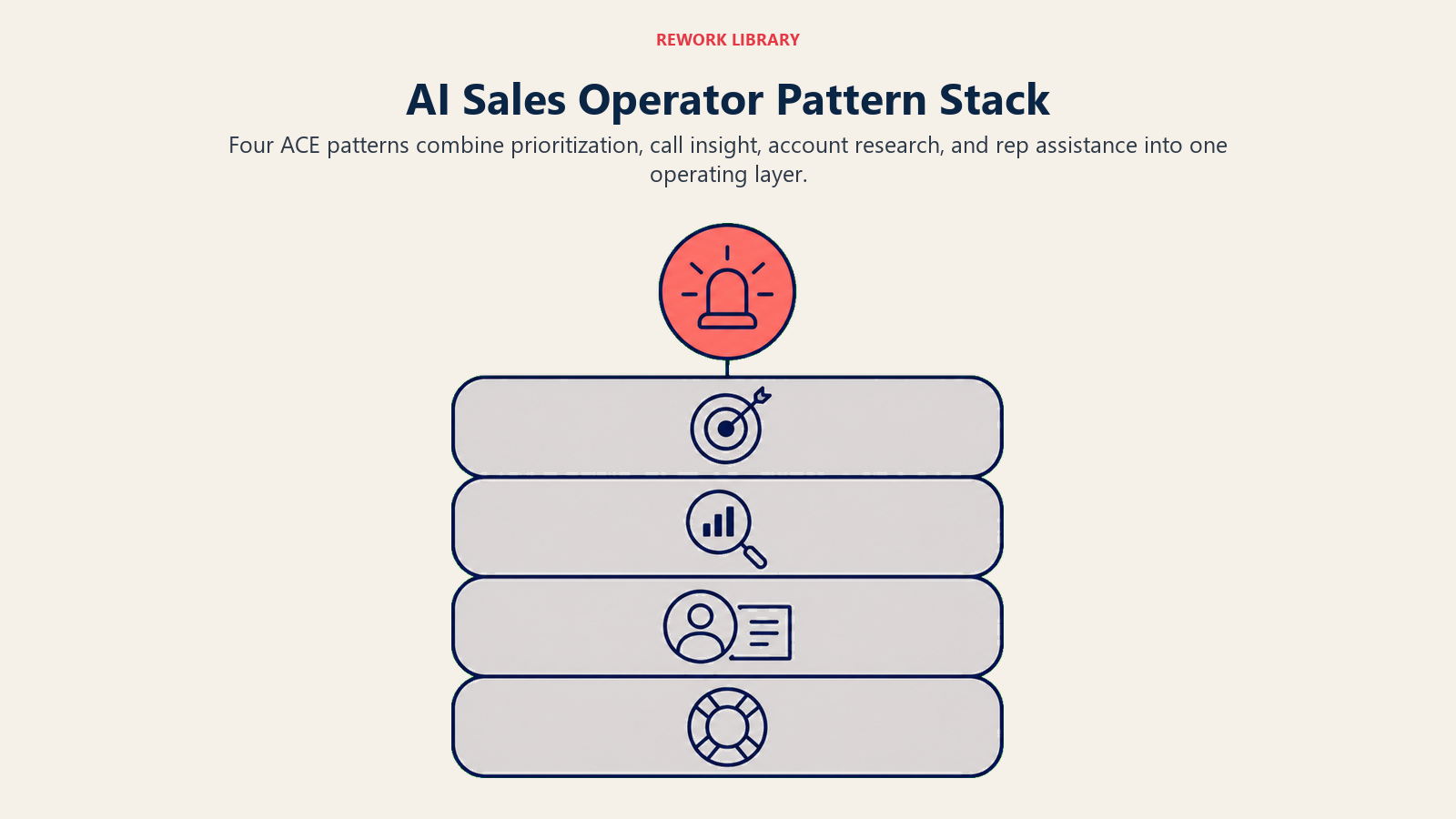
Un AI Sales Operator, tal como se define en el ACE Framework en el Nivel 3, son cuatro patrones apilados juntos:
| Patrón | Capacidades ACE Principales | Trabajo |
|---|---|---|
| Scoring+Routing | Ingest, Analyze, Predict | Qué leads y deals merecen atención y quién debe gestionarlos |
| Meeting Intelligence | Ingest, Analyze, Generate | Qué sucedió en las llamadas y qué debe suceder a continuación |
| Generative Research | Ingest, Analyze, Generate | Qué necesitan saber los representantes sobre una cuenta antes de contactarla |
| Workflow Copilot | Generate, Execute | Redactar emails, actualizar el CRM, crear tareas a partir de lo anterior |
El AI Sales Operator es inteligencia primero. Comienza con Predict (¿qué leads puntúan más alto?) y Generate (¿qué debería decir el representante, basándose en el contexto específico de esta cuenta?), luego cede a Execute. La ejecución es contextual, impulsada por señales, no solo por un horario fijo.
Una SEP ejecuta una cadencia que usted diseñó de antemano. Un AI Sales Operator determina qué acción tiene sentido dado todo lo que sabe sobre la cuenta, luego propone o ejecuta esa acción.
Gong cubre Meeting Intelligence con una profundidad líder en el mercado. Clari gestiona Scoring+Routing e inteligencia del Pipeline. Salesforce Einstein cubre Scoring+Routing y Workflow Copilot dentro del sistema CRM. Rework Sales AI empaqueta los cuatro patrones en una plataforma con integración nativa del CRM.
La Distinción Rol vs. Herramienta
La Distinción Rol vs. Herramienta separa los AI Sales Operators de las sales engagement platforms a nivel arquitectónico. Una SEP es una herramienta: ejecuta tareas que usted configura (enviar este email, poner en cola esta llamada) según un horario. Un AI Sales Operator es un rol: realiza el trabajo cognitivo de las sales ops ingiriendo señales de forma continua, puntuando resultados, generando acciones conscientes del contexto y proponiendo próximos pasos. Una herramienta automatiza un flujo de trabajo. Un rol reemplaza una categoría de juicio. La distinción importa al evaluar proveedores, porque muchas SEPs están agregando funciones de IA (herramientas ganando inteligencia), mientras que los AI Sales Operators están agregando ejecución (inteligencia ganando throughput). La pregunta correcta no es "¿cuál tiene más funciones?" sino "¿qué capa de inteligencia impulsa la ejecución?"
Dónde se superponen
La región de superposición es la redacción de emails y la asistencia al flujo de trabajo del representante, que es donde ambos proveedores están mercadeando agresivamente en 2025-2026.
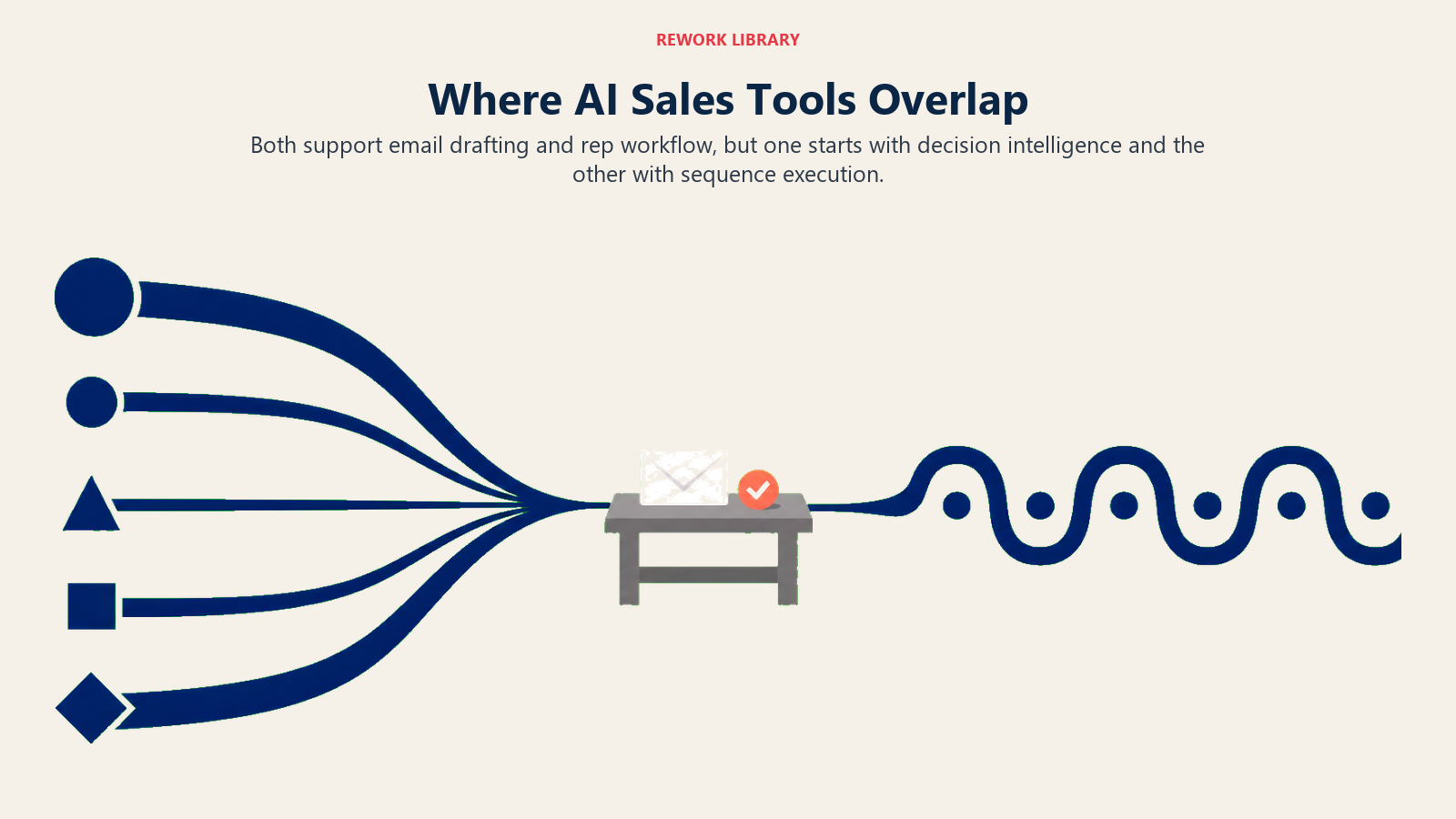
Las funciones de IA de Outreach (Kaia y Smart Email Assist) generan borradores de emails de seguimiento basados en el paso de la cadencia y algo de contexto de persona. Esa es la capacidad Generate sentada encima de la base Execute de una SEP.
El producto Engage de Gong ahora incluye gestión de secuencias: capacidad Execute sentada encima de la base Analyze de Meeting Intelligence.
Por tanto, las categorías están convergiendo en los bordes. Pero los bordes convergentes no significan que las categorías sean iguales. La pregunta no es si ambos productos pueden redactar un email de seguimiento. Es de dónde proviene la inteligencia de cada uno y cómo impulsa lo que se ejecuta.
Una SEP redacta un email basándose en: paso de cadencia (día 3), plantilla de persona (comprador SaaS mid-market) y tokens de personalización básicos (nombre, empresa). Eso es generación basada en plantillas.
Un AI Sales Operator redacta un email basándose en: todo lo que el representante dijo en la llamada de discovery de hace tres días, los pain points específicos que mencionó el prospecto, la publicación reciente de LinkedIn de la empresa sobre el lanzamiento de un nuevo producto y la puntuación del lead que indica que este deal tiene un 74% de probabilidad de cerrarse. Eso es generación contextual. La diferencia de calidad se multiplica a medida que los deals avanzan a las etapas intermedias y finales.
Dónde divergen marcadamente
Más allá de la superposición en el workflow, las dos categorías operan en territorio completamente diferente:
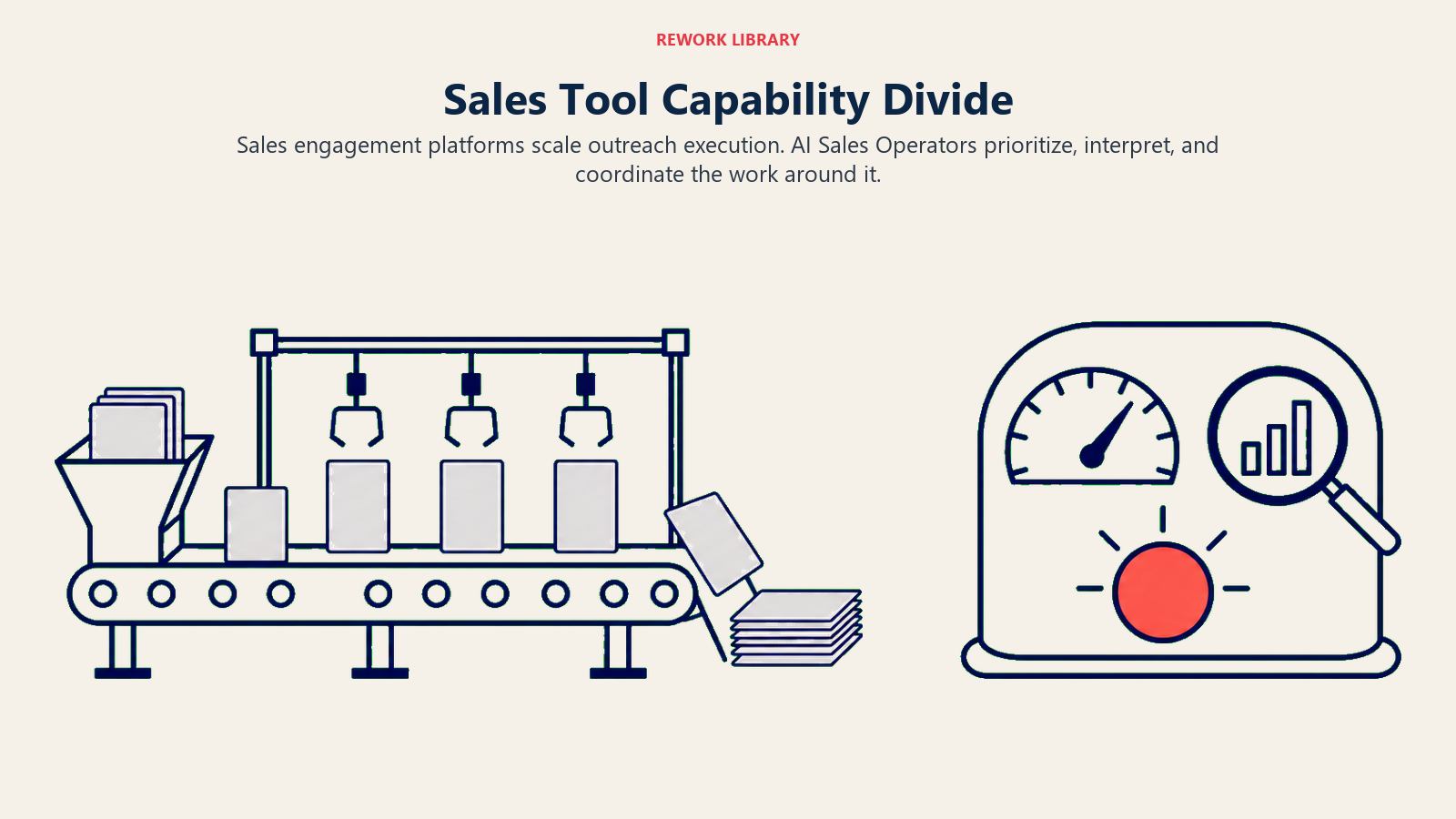
Lo que solo hacen las SEPs:
- Secuenciación outbound a gran escala (cientos de contactos por representante por mes)
- Lógica de cadencia multicanal (email el día 1, LinkedIn el día 3, llamada el día 5, árboles de reglas automatizados)
- Acceso a base de datos (Apollo, Outreach, Salesloft tienen bases de datos de contactos integradas para la prospección)
- Gestión de entregabilidad (calentamiento de dominio, monitoreo de salud del email)
Lo que solo hacen los AI Sales Operators:
- Puntuación de probabilidad de leads a partir de datos históricos de conversión
- Análisis de transcripciones de llamadas con cobertura total (cada llamada, cada representante, cada semana)
- Marcadores de riesgo de deal basados en inactividad y cambios de señales
- Briefings de cuentas a partir de datos públicos externos
- Modelado de precisión del forecast en todo el Pipeline
Una SEP no sabe qué leads vale la pena secuenciar. Un AI Sales Operator no gestiona cadencias outbound a gran escala. Ambas afirmaciones son simplificaciones de un objetivo en movimiento, pero son direccionalmente correctas para cómo se despliegan estas herramientas en la práctica hoy.
El modelo de integración: cuál alimenta a cuál
En un stack de ventas maduro, estas dos categorías trabajan juntas con una dirección clara del flujo de información.
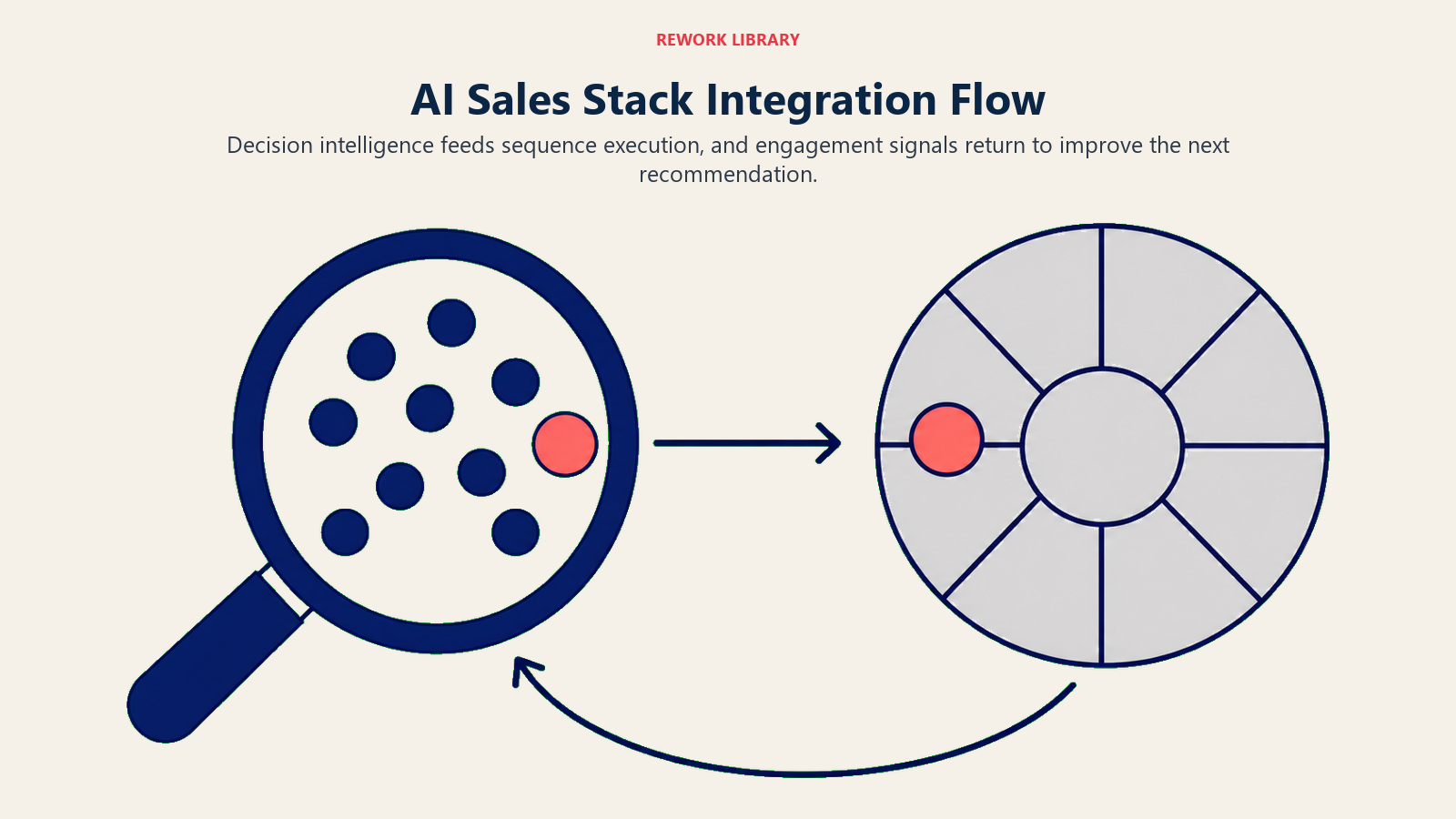
El AI Sales Operator puntúa → La SEP secuencia.
El patrón de Scoring+Routing del AI Sales Operator determina que un lead puntuó 82 y debe asignarse a un AE enterprise. El flujo de trabajo del AE: revisa el briefing de la cuenta, confirma que el lead es lo que dice la puntuación, y lo inscribe en la secuencia apropiada de Outreach o Salesloft. La SEP luego gestiona la ejecución a través de la cadencia.
Meeting Intelligence alimenta → Las decisiones de re-inscripción de la SEP.
Después de una llamada de discovery, el patrón de Meeting Intelligence muestra que el prospecto mencionó un plazo del Q3 y pidió una comparación de precios. Esa señal, mostrada en el CRM o a través del Workflow Copilot del AI Sales Operator, le dice al representante qué secuencia ejecutar a continuación: una secuencia de nurturing enfocada en precios vs. una secuencia de análisis técnico profundo. La SEP ejecuta la secuencia que selecciona el representante (o la IA).
La SEP ejecuta mejor cuando trabaja con buenos inputs. El AI Sales Operator proporciona esos inputs. Ejecutar una SEP sin la capa de inteligencia significa ejecutar a escala sin saber qué esfuerzos vale la pena escalar. Y ese es el problema de arquitectura que la mayoría de los equipos en etapa de crecimiento realmente intentan resolver.
El límite entre proveedores se está moviendo
Tanto Outreach como Salesloft están incorporando capacidades de AI Sales Operator en sus plataformas. Gartner señala que la IA se ha convertido en una "inyección de combustible" para los ingresos y las tecnologías de ventas en general, con la mayoría de los principales proveedores integrando ahora IA generativa en los flujos de trabajo principales:
Outreach tiene Kaia (inteligencia de conversación, ahora llamada Outreach Kaia), prospección con IA para investigación de cuentas y una capa de inteligencia de deals que marca riesgos del Pipeline. Estas son capacidades de Meeting Intelligence y Scoring+Routing construidas encima de su base de SEP.
Salesloft adquirió Drift (IA conversacional) y tiene un producto de inteligencia de deals llamado Conductor AI. Trayectoria similar.
La pregunta no es si los proveedores de SEP eventualmente tendrán capacidades completas de AI Sales Operator. Las tendrán. La pregunta es si quiere esperar a que ese roadmap madure o usar herramientas diseñadas específicamente para la capa de inteligencia ahora.
Si su principal problema es la ejecución de cadencias outbound a escala, una SEP es el punto de partida correcto. Si su principal problema es que los representantes no saben qué leads priorizar, las llamadas no se están revisando y la higiene del CRM es un desastre, una arquitectura de AI Sales Operator aborda la causa raíz.
Rework Analysis: La configuración incorrecta del stack más común que vemos es una empresa que usa una SEP como su principal inversión en "IA", y luego se pregunta por qué las tasas de conversión de leads no han mejorado. La SEP ejecuta secuencias eficientemente, pero si el representante todavía está decidiendo manualmente qué leads reciben qué secuencia basándose en la intuición, el problema de priorización subyacente no se ha resuelto. La capa de inteligencia (Scoring+Routing) es lo que determina si la SEP está ejecutando en los leads correctos. Ejecutar una SEP sin esa capa de inteligencia es como tener una línea de ensamblaje perfecta que alimenta las piezas equivocadas. El ROI de la SEP se multiplica cuando Scoring+Routing le está diciendo qué contactos pertenecen a qué cadencia.
Ocho preguntas de evaluación de compra
Use estas en los demos de proveedores para determinar qué categoría está evaluando realmente:
¿Cómo determina su producto qué leads debe trabajar un representante a continuación? (Respuesta SEP: secuencia asignada por reglas. Respuesta AI Sales Operator: puntuación de probabilidad basada en datos históricos de conversión.)
¿Qué pasa con las transcripciones de llamadas después de que termina una llamada? (Respuesta SEP: a menudo nada, o registro básico. Respuesta AI Sales Operator: análisis completo, resúmenes, señales de deal extraídas.)
¿Cómo ayuda la plataforma a los representantes a prepararse para una llamada que aún no han realizado? (Respuesta SEP: contexto de plantilla, información de persona. Respuesta AI Sales Operator: briefing de cuenta generado a partir de señales externas e historial del CRM.)
¿Recalibra la plataforma las puntuaciones de leads a medida que se cierran nuevos deals? (Respuesta SEP: las reglas no se recalibran. Respuesta AI Sales Operator: el modelo se vuelve a entrenar a partir de los resultados en un horario definido.)
¿Cómo detecta la plataforma el riesgo del deal? (Respuesta SEP: métricas de completitud de cadencia. Respuesta AI Sales Operator: cambios de señales en el registro del deal, marcadores de inactividad, caída de la puntuación de probabilidad de IA.)
¿Qué usa "redacción de email con IA" como input? (Respuesta SEP: plantilla de persona + tokens. Respuesta AI Sales Operator: transcripción de llamada + investigación de cuenta + contexto del deal.)
¿Cómo se integra su plataforma con nuestro CRM? (Respuesta SEP: sincronización bidireccional para contactos y actividades. Respuesta AI Sales Operator: el CRM es la fuente de datos principal para la puntuación; el output escribe de vuelta en los registros del deal.)
¿Quién administra los modelos de IA de forma continua? (Respuesta SEP: las cadencias son gestionadas por el representante. Respuesta AI Sales Operator: el líder de RevOps posee la calibración del modelo de puntuación y el ajuste de umbrales.)
Qué buscar a medida que las categorías convergen
La línea entre SEP y AI Sales Operator se difuminará aún más en 2026-2027. Ya, la prospección con IA de Outreach y la inteligencia de deals de Salesloft significan que puede obtener funcionalidad parcial de AI Sales Operator dentro de una SEP. El análisis de Forrester sobre sales engagement encontró que los proveedores están siendo presionados para entregar más inteligencia encima de la ejecución, exactamente lo que la arquitectura del AI Sales Operator proporciona por diseño.
Pero "parcial" importa. Al evaluar una SEP con funciones de AI Sales Operator, pregunte si las capacidades de IA están profundamente integradas con el motor de ejecución, o son solo módulos adicionales. Un módulo que genera un borrador de email no es lo mismo que un sistema donde cada decisión de ejecución está informada por inteligencia continua.
Verifique si la capa Predict (puntuación de leads, forecasting de deals) realmente se conecta de vuelta a la capa Execute (routing, inscripción en secuencias). Ese ciclo de retroalimentación es la diferencia entre una función de marketing y una arquitectura que funciona.
Más información
- ¿Qué es un AI Sales Operator?
- Panorama de Proveedores de AI Sales Ops 2026
- Coaching de Representantes con Conversation Intelligence
- Higiene de Datos del CRM con un AI Copilot
- Emails de Seguimiento de Ventas Redactados Automáticamente
- Execute: Cuando la IA Cambia el Estado Externo
- El Patrón de Scoring y Routing

Co-Founder, Rework.com
On this page
- Qué hace realmente una Sales Engagement Platform
- Qué hace un AI Sales Operator
- La Distinción Rol vs. Herramienta
- Dónde se superponen
- Dónde divergen marcadamente
- El modelo de integración: cuál alimenta a cuál
- El límite entre proveedores se está moviendo
- Ocho preguntas de evaluación de compra
- Qué buscar a medida que las categorías convergen
- Más información